

15 Bedroom Wall Art Ideas for Bookworms Who Live for a Good Quote
A bedroom can be much more than a place to sleep when reading is one of your favorite ways to relax. For a bookworm, the walls can become a visual reflection of favorite stories, literary memories, reading habits, and the quiet atmosphere that makes picking up a book so enjoyable.
Book-inspired wall art does not have to mean covering every surface with words or shelves. A thoughtful combination of framed pages, reading-related illustrations, personal photographs, literary-inspired artwork, and cozy decorative details can create a room that feels personal without becoming overwhelming.
You can also choose artwork based on the mood you enjoy while reading. Soft landscapes can create a peaceful atmosphere, vintage-style illustrations can add character, and minimalist typography can suit a modern bedroom.
These 15 bedroom wall art ideas for a bookworm offer different ways to make reading part of your bedroom design. From personal book collections to creative literary displays, each idea can be adapted to suit your favorite decorating style.
1. Create a Favorite Books Gallery Wall
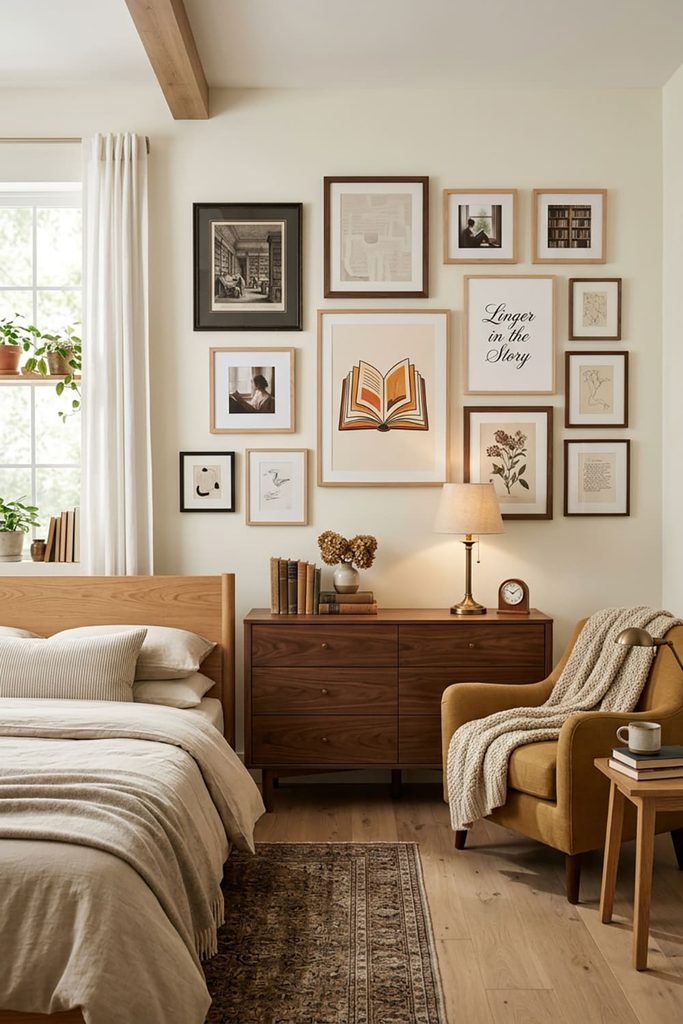
Turn your favorite books into the inspiration for a personalized gallery wall. Instead of displaying random decorative prints, choose artwork connected to stories, genres, themes, or reading memories that genuinely matter to you.
You can combine book-inspired illustrations with small photographs, abstract artwork, and simple typography. Keep the frames coordinated so the different pieces feel like one collection.
A large piece can anchor the center while smaller artwork surrounds it. Position the arrangement above a dresser, reading chair, or desk where it naturally connects with your reading routine.
2. Display Framed Book Pages
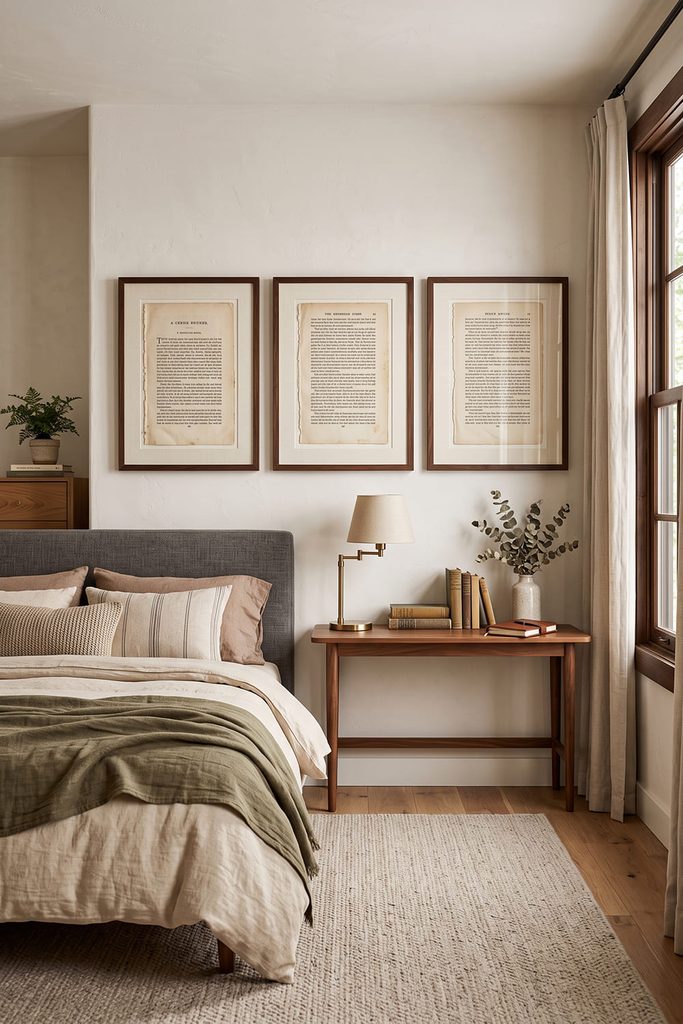
A beautifully printed page can become surprisingly elegant wall art when presented in a simple frame. Choose a page with personal significance or visually interesting typography.
Use a wide mat around the page if you want the artwork to feel more substantial. Cream paper and a dark wooden frame can create a warm, traditional appearance.
For a more contemporary bedroom, place two or three framed pages in a clean row. Keep the surrounding decoration minimal so the typography remains the main feature.
3. Create a Cozy Reading Nook Gallery
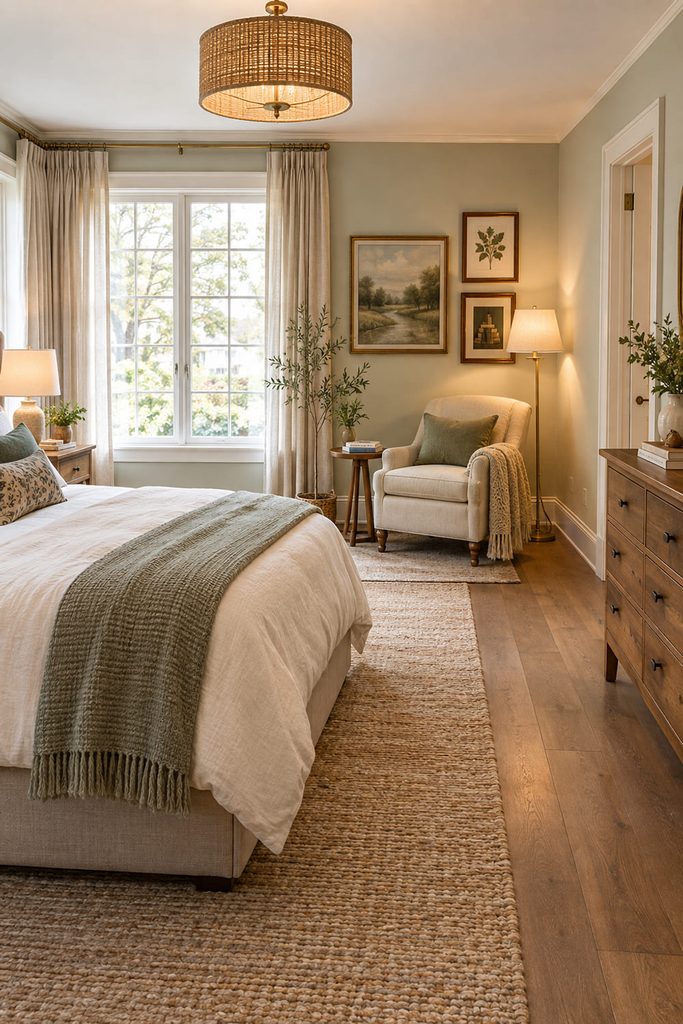
If your bedroom has enough space for a reading chair, make the wall behind it the focal point of a small literary display. Combine one large artwork with two or three smaller pieces connected to reading.
A comfortable chair, floor lamp, and small side table can complete the corner without requiring many decorative objects. The wall art gives the reading area its own visual identity.
Choose artwork that creates the mood you want while reading. Landscapes, botanical drawings, quiet illustrations, and literary-inspired graphics can all work beautifully.
4. Use a Large Vintage-Style Library Illustration
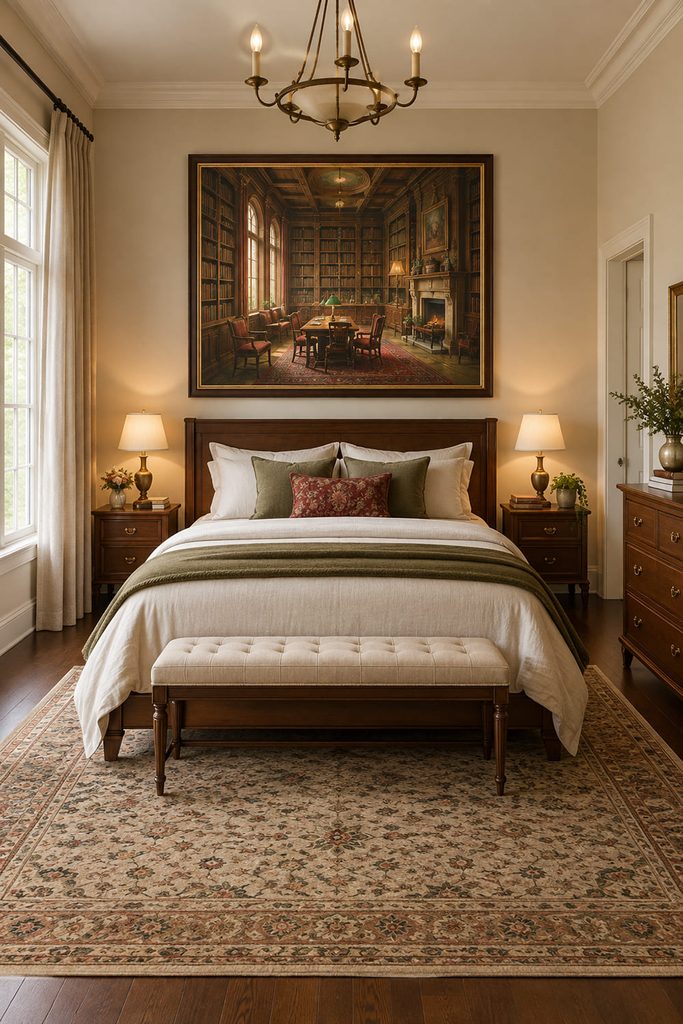
A detailed illustration of a library, bookshelves, reading room, or old-fashioned study can make a strong statement above a bed or dresser. Choose artwork with architectural details and warm neutral colors.
Brown, cream, muted green, and deep red can give the piece a classic appearance. These tones also work naturally with wooden furniture and warm bedroom textiles.
Because a large illustration already contains considerable visual detail, keep the surrounding wall relatively simple. One statement piece can be more effective than several competing decorations.
5. Create a Wall of Literary Typography
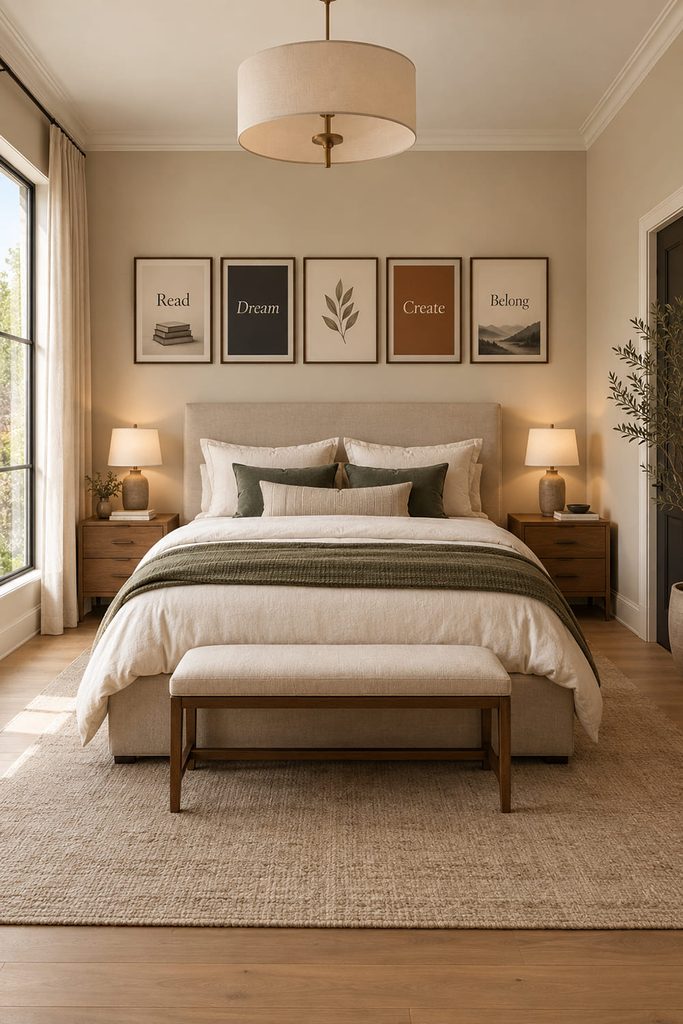
Typography can subtly connect to books without showing specific covers or characters. Choose short literary-inspired words, phrases, or concepts that reflect what reading means to you.
Use consistent framing and a limited color palette to keep the display sophisticated. Black, cream, charcoal, and warm brown can work particularly well in a bedroom.
Arrange three or five pieces in a balanced composition. Keep the wording short enough that the display feels like artwork rather than a wall covered with text.
6. Display an Oversized Open-Book Artwork
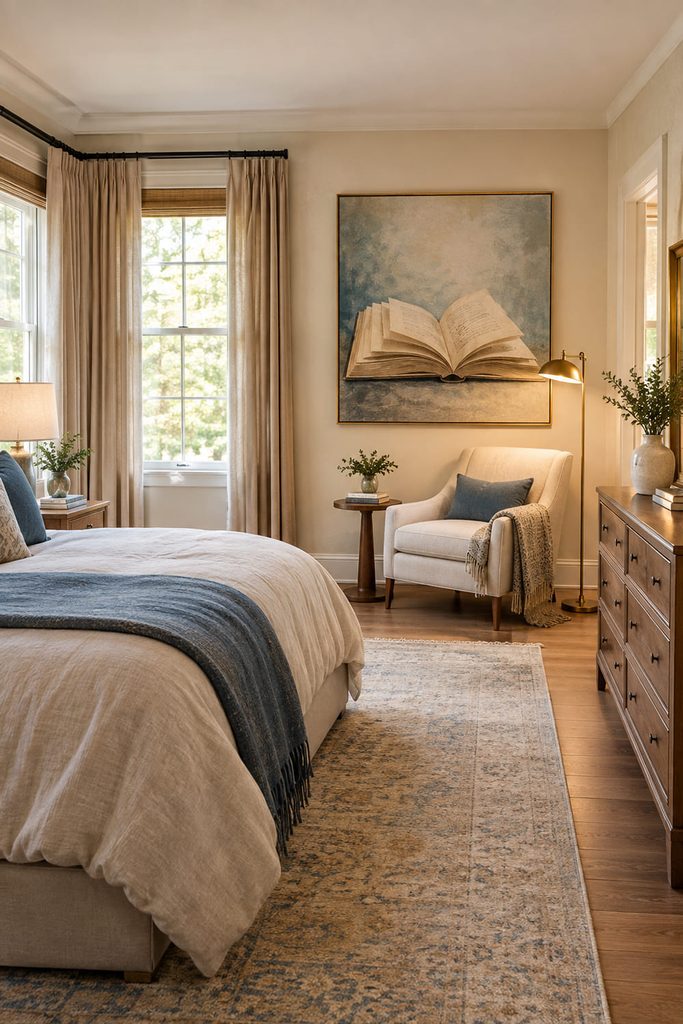
An oversized illustration or artistic photograph of an open book can become an unusual focal point. Choose a design with plenty of space around the book so the composition does not feel cramped.
This type of artwork works particularly well above a reading chair or small writing desk. It can visually connect the wall with the activity taking place beneath it.
For a softer bedroom, choose cream, beige, muted blue, or warm brown tones. A darker version can create a more dramatic look when paired with deep wood furniture.
7. Turn Your Bookshelf Into a Wall Display
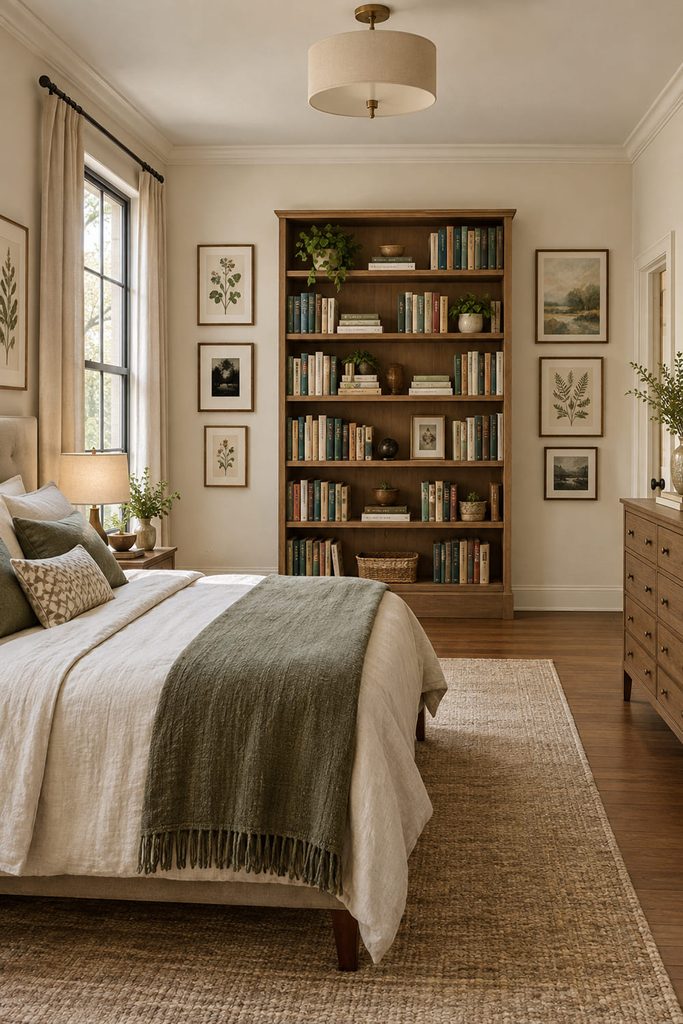
If you already have a bookshelf in the bedroom, treat the wall around it as part of the overall artwork. Hang a few carefully chosen framed pieces above or beside the shelves rather than leaving the surrounding wall empty.
Artwork can include botanical illustrations, small reading-related graphics, personal photographs, or abstract pieces. Choose colors that appear naturally among the books.
Avoid filling every available space. Leaving some open wall around the bookcase allows both the books and artwork to remain visible.
8. Create a World Map for a Book Lover
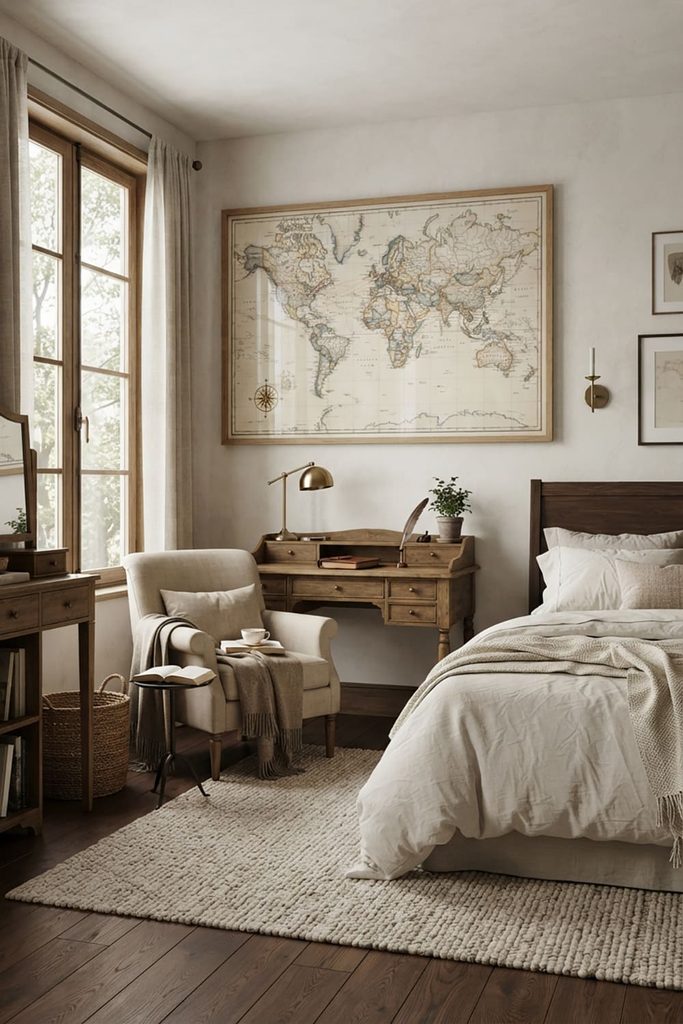
Books can take you to places you may never physically visit, making a world map an interesting addition to a reader’s bedroom. Choose a detailed map that complements the room rather than an overly colorful design.
You can mark places associated with favorite settings, authors, or stories if you want the display to become more personal. Keep the markings subtle so the map remains attractive as artwork.
A large map can work above a desk or dresser. Natural wood framing can make it especially suitable for bedrooms with warm furniture and neutral textiles.
9. Use Botanical Artwork Inspired by Reading
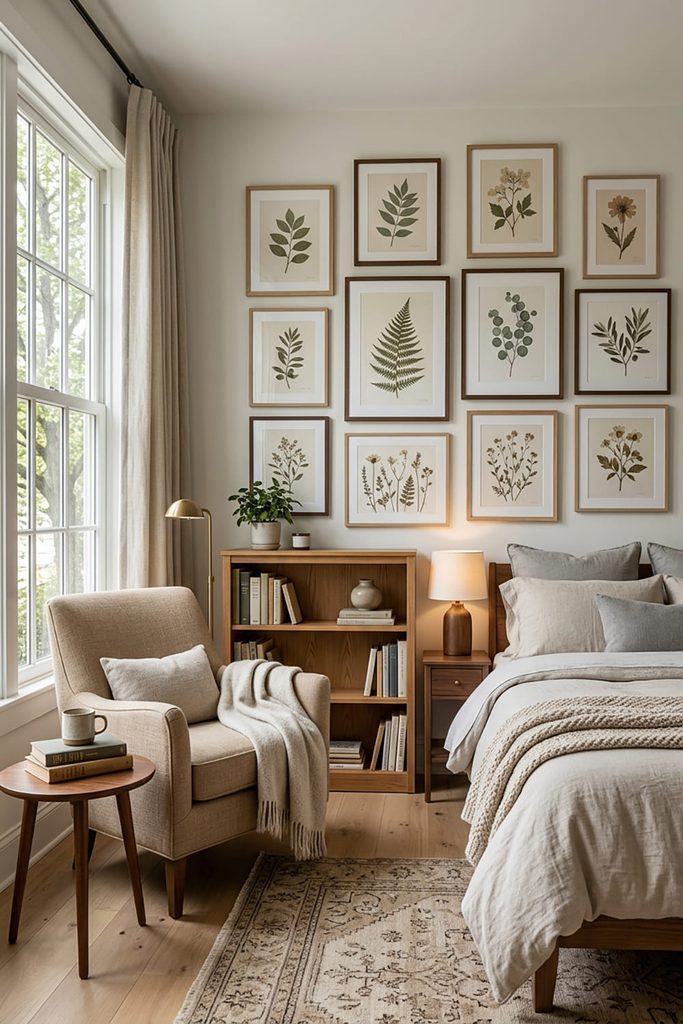
Combine two relaxing interests by pairing book-inspired decoration with botanical artwork. Framed leaves, flowers, branches, or pressed plant designs can create the quiet atmosphere often associated with a peaceful reading corner.
Arrange the artwork around a reading chair or near a bookshelf. Natural wood frames and soft green shades can connect the display with other natural elements in the room.
This idea is particularly useful if you want your bedroom to feel literary without making books the obvious subject of every piece of artwork.
10. Create a Personal Reading Memory Wall
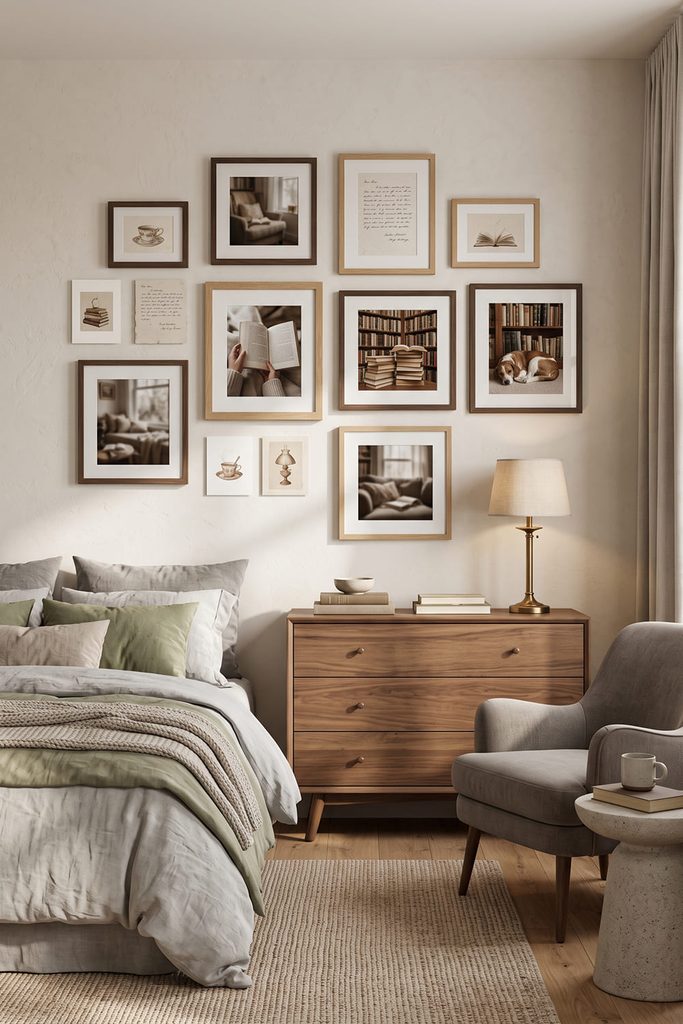
Instead of decorating only with generic book artwork, create a wall that records your own reading experiences. Include photographs of cozy reading places, handwritten notes, favorite book-related memories, or small decorative cards.
Use matching frames to give the collection structure. You can leave spaces between some pieces so new memories can be added later.
The display can change over time as your reading interests develop. This makes the wall feel personal rather than like a fixed decoration purchased all at once.
11. Hang a Literary-Inspired Landscape
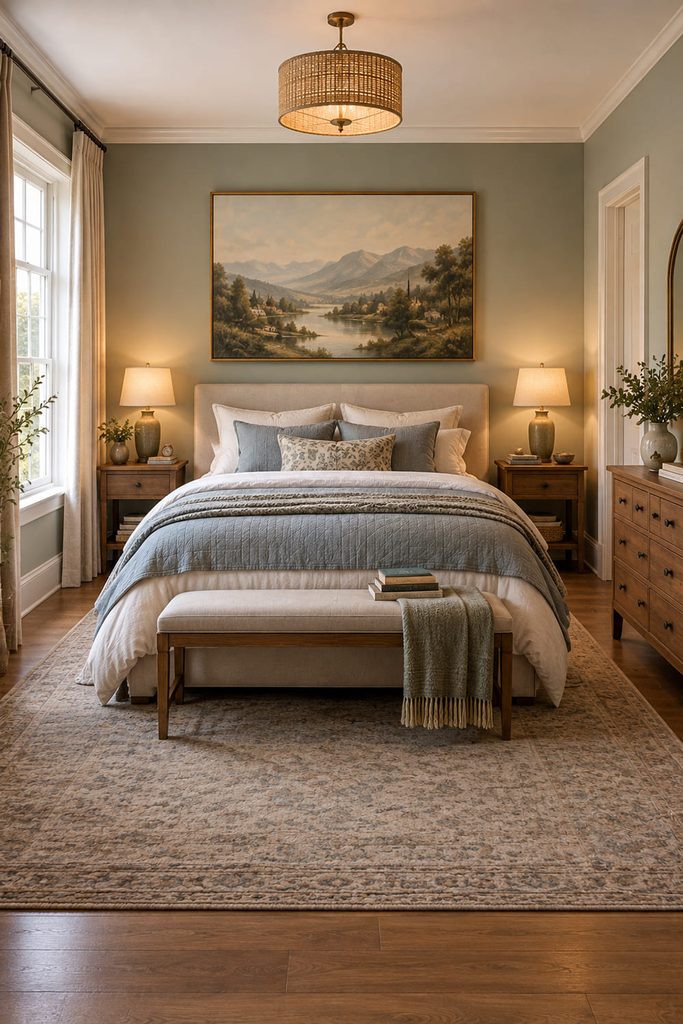
Many readers enjoy books because of the worlds they create. A landscape artwork can represent that feeling without directly showing a particular story.
Choose mountains, forests, quiet coastlines, old streets, gardens, or other scenes that remind you of the settings you enjoy reading about. Look for artwork with a calm composition that works naturally in a bedroom.
A large landscape above the bed can provide a peaceful focal point. Keep the colors compatible with your bedding so the artwork feels integrated into the room.
12. Create a Book-and-Coffee Art Display
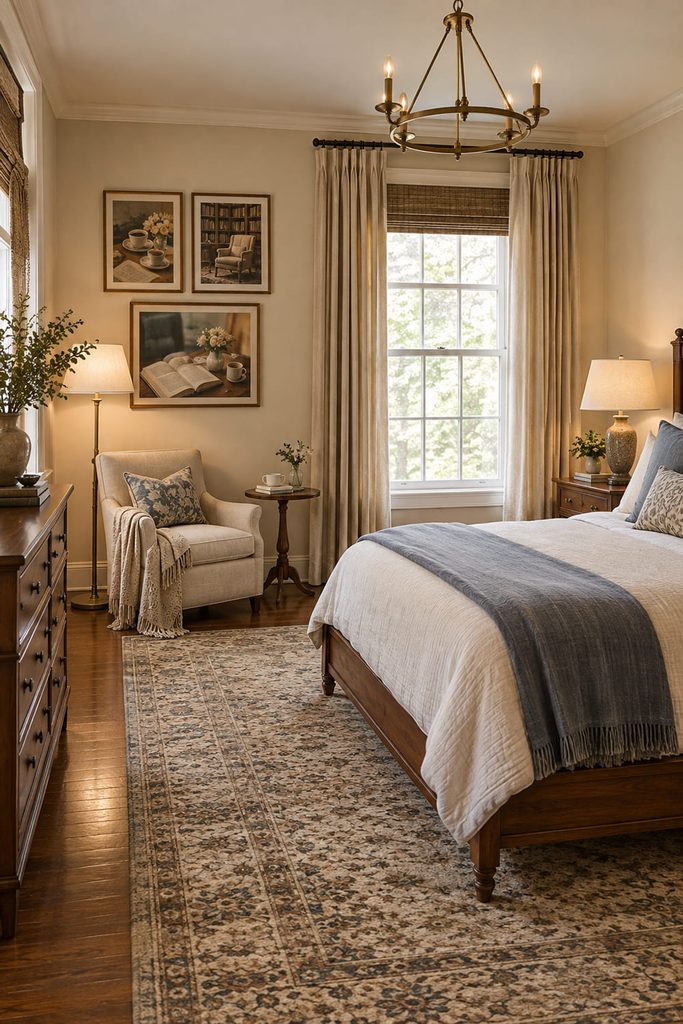
For readers who enjoy settling down with a warm drink, combine reading and coffee-inspired artwork in one small display. A simple illustration of an open book, mug, reading chair, or quiet table can capture the feeling.
Choose two or three related prints rather than creating a large themed wall. Keep the colors muted if the bedroom already contains several patterns.
Place the display near a reading chair or bedside table. The artwork can reinforce the purpose of the corner without making it look overly themed.
13. Display a Stack of Books as Photographic Art
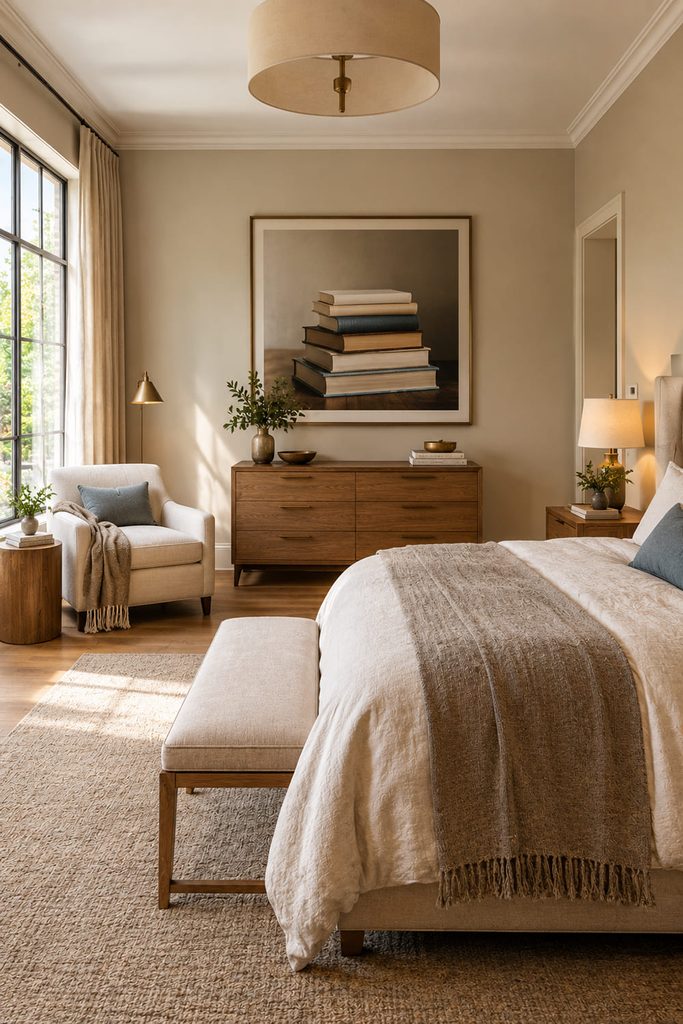
A carefully composed photograph of stacked books can become attractive wall art when enlarged and framed. Look for an image with interesting textures, shadows, or color combinations.
Choose books with neutral covers if you want a sophisticated appearance. A more colorful arrangement can work if the bedroom is otherwise simple.
One large photograph can be enough for a small wall. For a larger arrangement, pair it with a second photograph showing another quiet reading detail, such as a chair beside a window.
14. Create a Minimalist Book Lover’s Wall
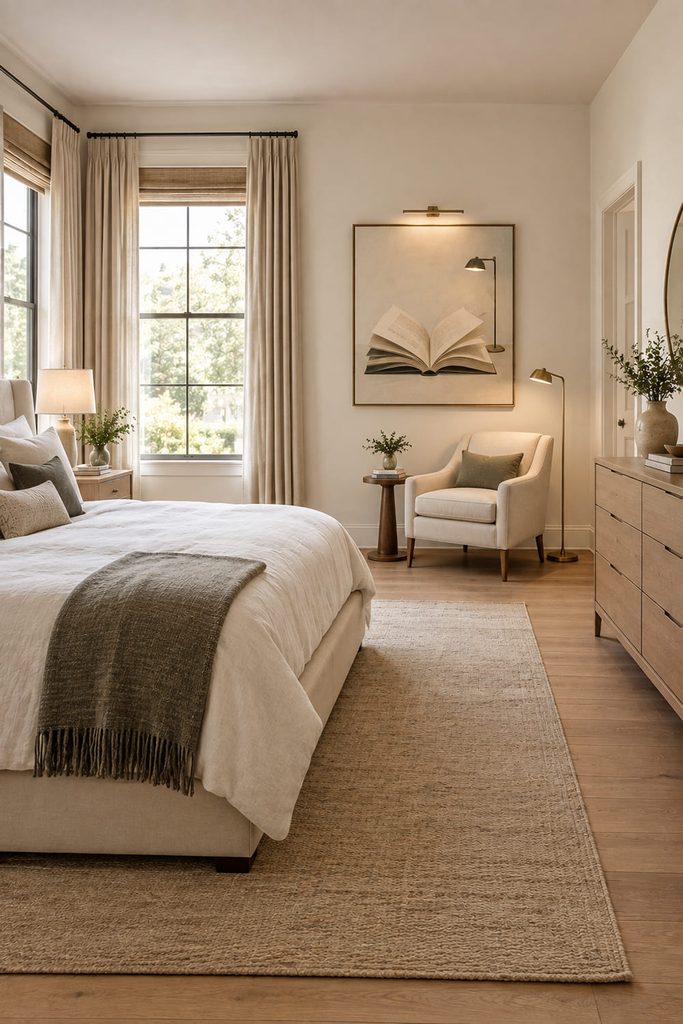
A book-themed bedroom does not have to be traditional or decorative. For a modern space, use one simple illustration of a book, reading lamp, bookshelf, or abstract literary symbol.
Choose clean lines and a restrained color palette. Black, white, beige, gray, and natural wood can create a calm modern appearance.
Position the artwork above a narrow console, desk, or reading chair. Leave plenty of empty wall around it so the minimalist design remains intentional.
15. Build a Personal Story Wall
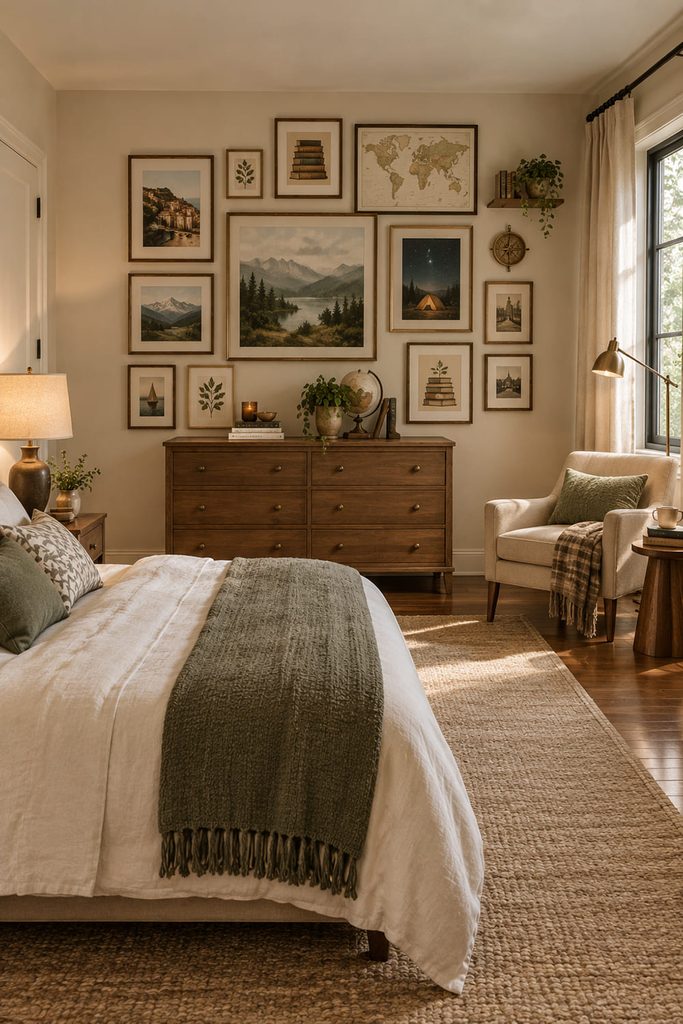
Create a collection that represents the different reasons you love reading. One piece can represent adventure, another imagination, another travel, and another the comfort of quiet evenings with a book.
Mix illustrations, photographs, typography, maps, and small decorative objects while keeping a consistent frame style. The collection can become more personal as you add pieces.
Rather than trying to make every item obviously related to books, focus on the feelings and interests that reading brings into your life. This creates a more sophisticated display with a deeper personal connection.
How to Choose Wall Art for a Bookworm Bedroom
Think about what you actually enjoy about reading before choosing the artwork. You might love fantasy worlds, historical stories, travel writing, poetry, mystery novels, biographies, or simply the peaceful routine of reading before bed.
Your favorite genre can influence the colors and imagery without forcing the entire room into a theme. A reader who enjoys nature-focused stories might prefer landscapes and botanical artwork, while someone who enjoys travel stories might choose maps and architectural photography.
Also consider the existing bedroom furniture. Wooden shelves, a reading chair, bedside tables, and a desk can all influence the size and placement of your artwork.
How to Create a Reading Wall Without Making It Look Cluttered
Start with one main piece and build around it slowly. This gives you a visual anchor and makes it easier to decide which smaller pieces genuinely improve the arrangement.
Use consistent spacing between frames and avoid filling every empty section of the wall. Open space is especially important when the artwork itself contains text or detailed illustrations.
If you already have a large bookshelf, let the books provide some of the visual interest. The wall art should support the collection rather than compete with hundreds of book covers.
Best Colors for a Bookworm Bedroom
Warm neutrals work particularly well because they create a calm background for reading. Cream, beige, warm gray, brown, muted green, and soft blue can all create a comfortable atmosphere.
Deep colors can also work when used selectively. Burgundy, forest green, navy, and charcoal can give literary-inspired artwork a richer appearance without requiring an entirely dark bedroom.
Choose colors that connect with your existing bedding, furniture, and curtains. Repeating one or two shades throughout the room is usually enough to create visual unity.
How to Combine Books and Wall Art
Books themselves can become part of the decoration when arranged thoughtfully. A bookshelf can provide the main visual feature while artwork fills the surrounding wall with additional personality.
Keep frequently used books within easy reach and reserve decorative arrangements for books that do not need to be accessed constantly. This keeps the display practical as well as attractive.
You can also place a small artwork piece directly on a shelf, leaning it against the wall rather than hanging everything. This creates variation in height and makes the arrangement feel less rigid.
Final Thoughts
A bookworm’s bedroom can celebrate reading without looking like a library squeezed into a sleeping space. Framed pages, maps, literary typography, landscapes, personal memories, and reading-inspired illustrations can all contribute to a thoughtful wall display.
The most meaningful artwork will usually connect with your own reading habits rather than simply following a generic book theme. Think about the stories, places, moods, and memories that make reading special to you.
Whether you create one quiet reading corner or an entire literary gallery wall, let the artwork make the bedroom feel more like your personal retreat. Your favorite books may live on the shelves, but their influence can extend throughout the room.


