

15 Work Outfits for Women Over 50 Working in Banking or Finance
A professional wardrobe for banking or finance should feel polished, comfortable, and appropriate for the setting. Tailored pieces, refined colors, and well-coordinated layers can create outfits that work for office days, client meetings, presentations, and formal events.
For women over 50, there is no need to rely on a wardrobe that feels overly severe or dated. Classic trousers, blazers, dresses, skirts, knitwear, and blouses can be combined in modern proportions while still maintaining a professional appearance.
Traditional banking and finance environments often lean toward business-professional clothing, particularly for client-facing or formal situations. The 15 outfits below focus on versatile combinations that can be adjusted according to your workplace dress code. The goal is to create a wardrobe that looks composed while remaining practical for a full working day.
1. Navy Suit With a Pale Blue Blouse

A navy trouser suit is one of the most useful foundations for a professional banking wardrobe. Pair it with a pale blue blouse for a subtle change from the traditional white shirt.
Choose trousers with a comfortable waistband and a jacket that sits smoothly across the shoulders. A simple watch, structured handbag, and closed-toe shoes can complete the outfit.
This combination works particularly well for important meetings, presentations, interviews, and days when you want a more formal appearance. The individual pieces can also be worn separately with other wardrobe staples.
2. Charcoal Trousers With an Ivory Blazer

Charcoal trousers provide a versatile foundation for a polished office outfit. Add an ivory or soft cream blazer to create contrast while keeping the overall appearance professional.
Wear a simple shell top or fine-gauge blouse underneath the blazer. Black, taupe, or dark brown shoes can work depending on the rest of the outfit.
This combination is useful when you want something lighter than a traditional dark suit. The blazer can later be paired with navy trousers or a dark skirt to create another office look.
3. Black Suit With a Soft Blouse
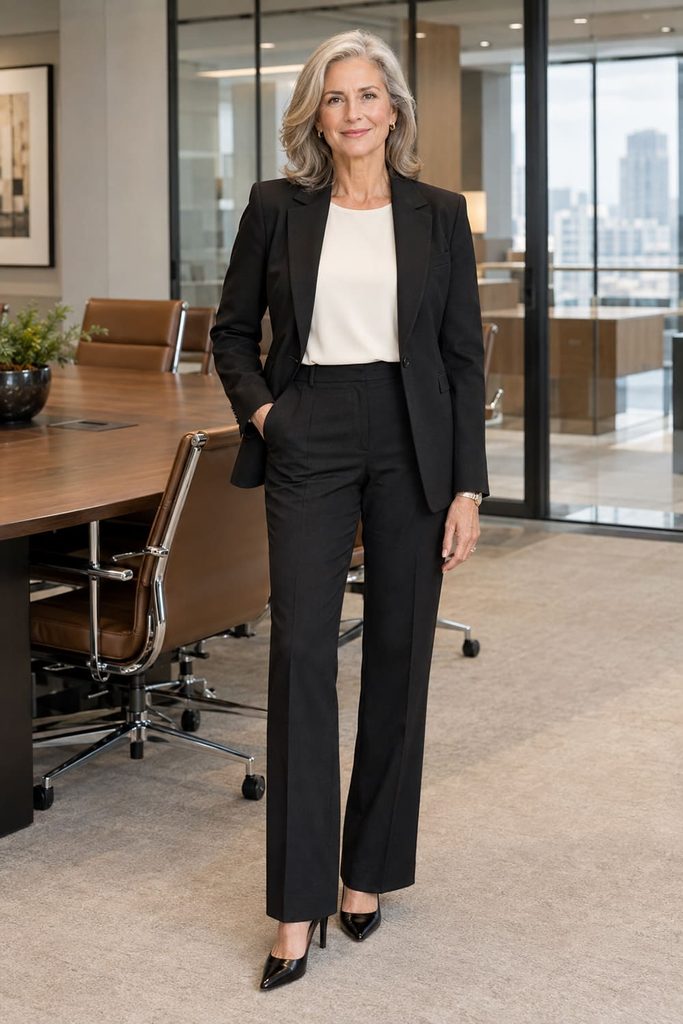
A well-fitted black suit remains useful for formal banking and finance environments. Instead of pairing it with another stark black layer, soften the outfit with a blouse in ivory, pale blue, muted rose, or another restrained shade.
Keep the blouse relatively simple so the tailoring remains the main feature. A modest neckline and smooth fabric can give the outfit a clean professional finish.
Closed-toe pumps or polished flats can complete the look. Keep jewelry understated, particularly when the outfit is being worn for an important client meeting or presentation.
4. Gray Trousers With a Burgundy Blazer

A burgundy blazer can introduce color while remaining sophisticated enough for many professional environments. Pair it with tailored gray trousers and a simple ivory or light-gray blouse.
Choose a deeper burgundy rather than an extremely bright red if you want the outfit to remain understated. The gray trousers provide a neutral foundation that allows the blazer to stand out without dominating the outfit.
Black or burgundy accessories can tie the colors together. This outfit can work well for an ordinary office day when you want something more interesting than a traditional neutral suit.
5. Navy Midi Dress With a Structured Blazer
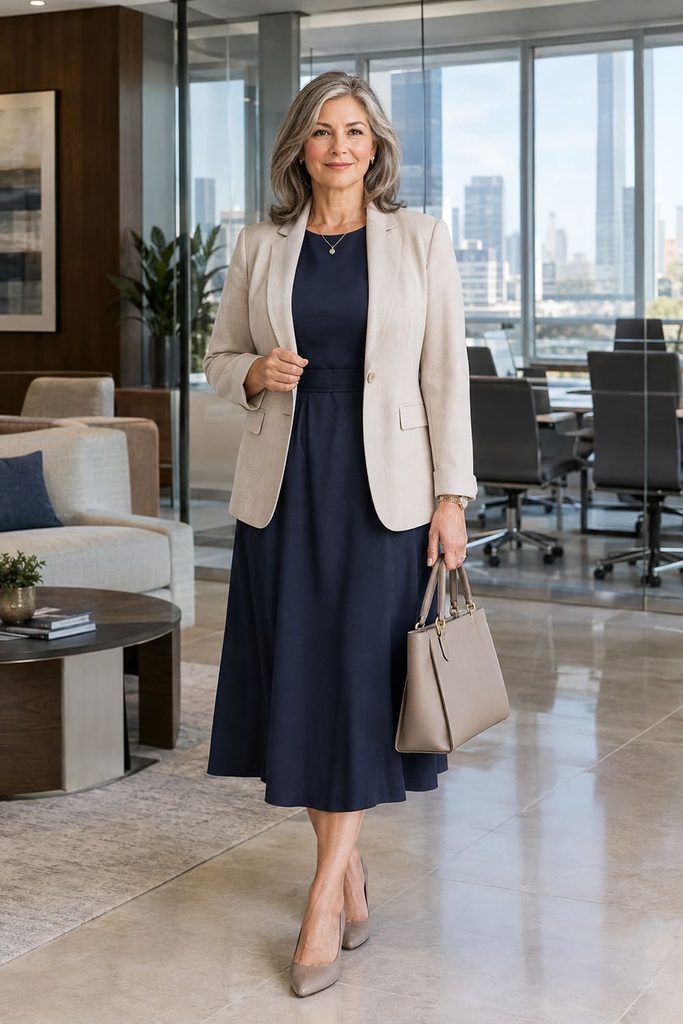
A navy midi dress can simplify the process of getting dressed while still looking highly polished. Add a structured blazer when you need a more formal appearance.
Choose a dress with a clean silhouette and comfortable movement. A simple waist detail can provide shape without making the outfit feel overly fitted.
A blazer in gray, navy, camel, or cream can change the appearance of the dress. This makes the combination useful for both regular office days and client-facing occasions.
6. Camel Blazer With Dark Trousers
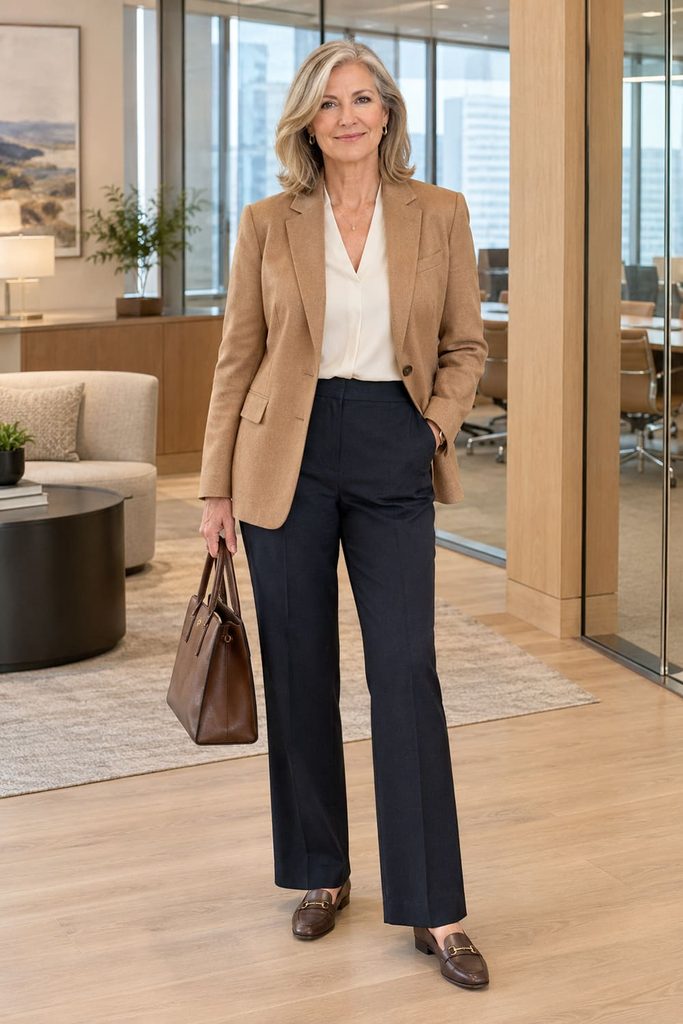
A camel blazer can bring warmth into a professional wardrobe without sacrificing a polished appearance. Pair it with dark navy, charcoal, or black trousers and a simple ivory blouse.
The contrast between the warm jacket and dark trousers creates a balanced outfit. Keep the accessories relatively simple so the color combination remains the main point of interest.
This outfit can be especially useful during transitional seasons when a heavy dark suit feels unnecessary. Loafers, flats, or modest heels can all work depending on the office environment.
7. Tailored Trousers With a Fine-Knit Top

A fine-gauge knit top can be a comfortable alternative to a traditional blouse. Choose a high-quality-looking knit in a restrained color and combine it with sharply tailored trousers.
A blazer can be added when the day includes meetings or client contact. Without the blazer, the outfit can work in a workplace with a more relaxed business-professional approach.
Choose knitwear that holds its shape and does not appear overly casual. Tucked neatly into the trousers or worn with a slim belt, it can create a clean and composed silhouette.
8. Pencil Skirt With a Refined Blouse

A knee-length or midi pencil skirt can create a traditional professional silhouette when paired with a refined blouse. Choose a skirt in navy, charcoal, black, or another versatile neutral.
A blouse with subtle texture, a restrained print, or a soft color can prevent the outfit from looking too formal. A fitted jacket can be added for important meetings.
Comfort matters when wearing a skirt for several hours, so choose a fabric that allows natural movement. Closed-toe flats or modest heels can complete the outfit.
9. Wide-Leg Trousers With a Fitted Blazer
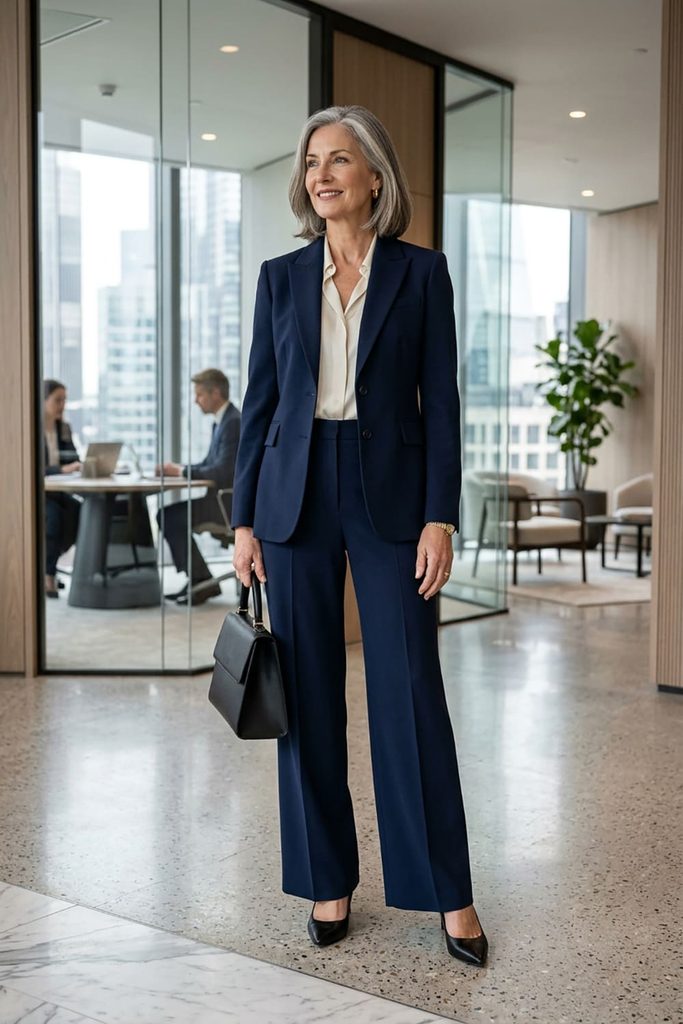
Wide-leg trousers can create a contemporary silhouette while remaining professional when the proportions are balanced. Pair them with a relatively streamlined blouse and structured blazer.
Choose trousers that fall cleanly without excessive fabric pooling around the shoes. A mid- or high-rise waist can create a neat line beneath the blazer.
Keep the rest of the outfit simple so the trousers remain the main design element. This look can work particularly well in offices that allow modern tailoring within a professional dress code.
10. Monochromatic Gray Office Outfit

A combination of different gray tones can create a sophisticated office outfit without relying on a traditional black suit. Try charcoal trousers with a medium-gray blouse and a lighter gray jacket.
Varying textures can keep the monochromatic palette from looking flat. A smooth blouse, structured blazer, and textured handbag can provide subtle differences within the same color family.
Add a small amount of contrast through black shoes or a simple metallic watch. The result is understated and easy to adapt for meetings, office work, or presentations.
11. Cream Blouse With Navy Trousers and Blazer

Navy trousers and a matching blazer create a reliable foundation for a professional wardrobe. Add a cream blouse to soften the contrast and introduce a lighter element near the face.
A blouse with a modest neckline and smooth drape can work well under the jacket. Avoid excessive decorative details if the outfit is intended for a formal client meeting.
Complete the look with dark neutral shoes and a structured bag. The three pieces can also be separated and combined with other wardrobe items throughout the week.
12. Dark Green Suit With an Ivory Top

A deep green suit can provide an alternative to navy, gray, and black while remaining relatively restrained. Pair it with an ivory shell top or blouse for a clean contrast.
Choose a dark, muted green rather than a highly saturated shade if your workplace has a conservative dress code. Keep jewelry and accessories simple so the suit remains professional.
Black, brown, or dark neutral shoes can work depending on the exact green tone. This outfit can be particularly useful when you want a small amount of color without relying on bright shades.
13. Pleated Midi Skirt With a Structured Jacket
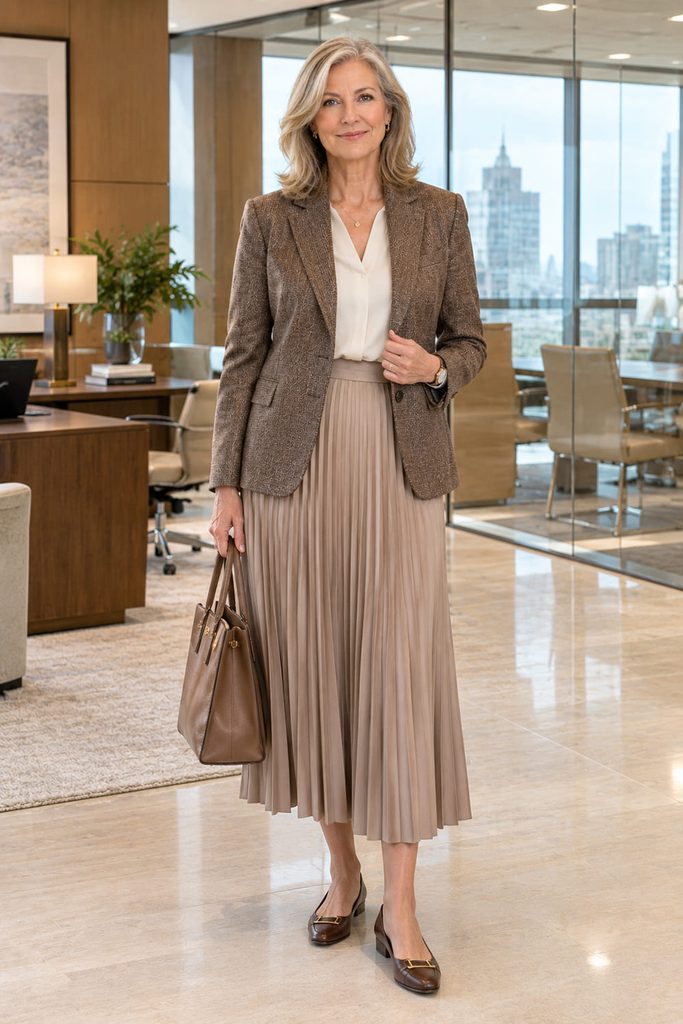
A pleated midi skirt can bring movement and softness into a professional wardrobe. Pair it with a simple blouse and a structured jacket to maintain a business-ready appearance.
Choose a skirt in a solid neutral or restrained color rather than an overly dramatic print. The jacket should provide enough structure to balance the movement of the skirt.
This combination can work well for office days that involve moving between your desk, meetings, and different departments. Comfortable flats or modest heels can keep the outfit practical.
14. Tailored Dress With a Longline Blazer
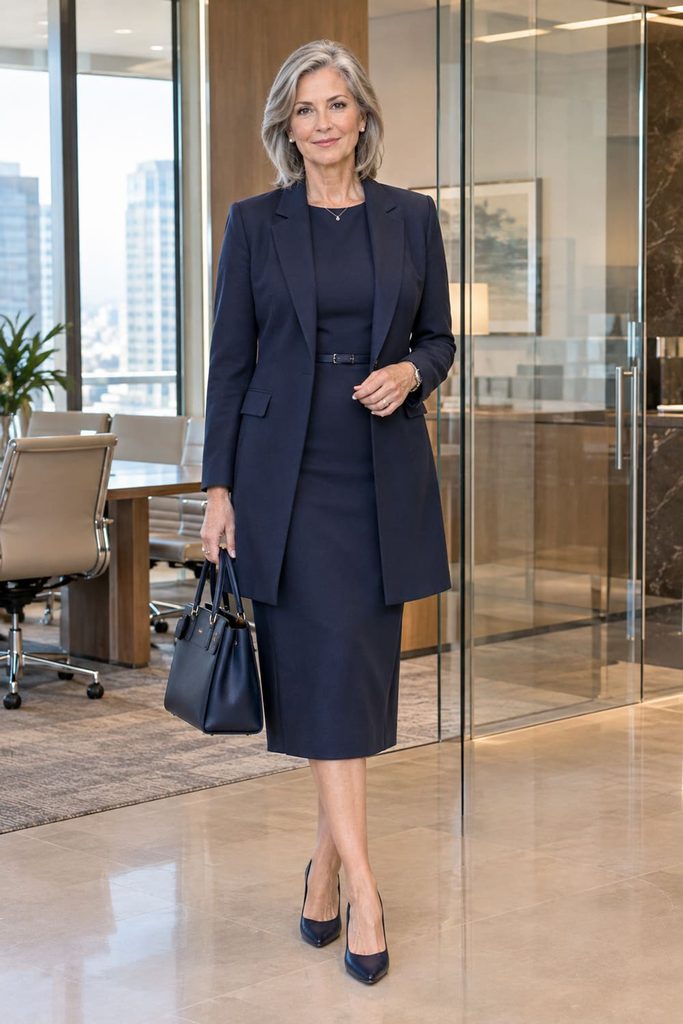
A tailored midi dress provides an easy foundation for a polished office outfit. Add a longline blazer for additional structure and coverage when required.
Choose a dress with a simple neckline and a silhouette that allows comfortable movement. Navy, charcoal, dark green, burgundy, and neutral shades can all work within a professional wardrobe.
The blazer can be removed after formal meetings if the office environment allows a slightly less structured appearance. A simple handbag and understated jewelry finish the outfit without distracting from the tailoring.
15. Neutral Trouser Suit With a Colorful Scarf

A neutral trouser suit can provide a dependable professional base while a carefully chosen scarf introduces personality. Consider a gray, taupe, navy, or beige suit with a scarf containing two or three complementary colors.
Keep the scarf neatly arranged so it does not interfere with movement or become distracting during meetings. The rest of the accessories can remain simple.
This is an easy way to vary a small work wardrobe. The same suit can look noticeably different when paired with scarves in different restrained color combinations.
How to Build a Banking and Finance Wardrobe After 50
Start with a small collection of well-fitting trousers, blazers, blouses, and professional dresses rather than buying numerous individual pieces. A few coordinated colors make it easier to create several outfits from the same wardrobe.
Navy, charcoal, black, gray, cream, camel, and muted jewel tones can provide a flexible foundation. Exact expectations vary between financial institutions, departments, and client-facing roles, so your workplace’s own dress code should take priority.
Focus on fit and comfort as much as appearance. Clothing that allows you to sit, walk, work at a desk, and attend meetings comfortably will be much more useful than an outfit that looks polished but feels restrictive.
What Shoes Work Well for Banking and Finance
Closed-toe pumps, polished flats, loafers, and modest heels are commonly used with business-professional outfits.
Choose shoes that you can comfortably wear for the amount of walking your job requires. A polished pair of low heels or refined flats can be more practical than very high heels when your day includes commuting, meetings, and movement around a large office.
Neutral shades such as black, brown, taupe, and navy can cover most of a professional wardrobe. Keeping shoes clean and in good condition also makes a noticeable difference to the finished outfit.
Dressing for Client Meetings
Client-facing days usually call for a more structured outfit than an ordinary internal office day. A matching suit, tailored dress with blazer, or coordinated trousers and jacket can provide a more formal foundation.
Keep accessories controlled and choose clothing that fits well without requiring constant adjustment. This allows you to concentrate on the conversation rather than your clothing.
If your employer has a specific dress code for client meetings, follow that standard first. Banking workplaces can differ considerably, and some institutions may expect more formal clothing than others.
Comfortable Layers for Long Office Days
Layering is useful because office temperatures can vary throughout the day. A lightweight blazer, fine-knit cardigan, or structured jacket can be added or removed without changing the entire outfit.
Choose fabrics that do not become uncomfortable after several hours of sitting. Smooth layers also work well under jackets because they reduce bulk around the shoulders and arms.
Keep one reliable blazer at the office if practical. It can quickly make a simple blouse-and-trouser combination look more formal when an unexpected meeting appears.
Final Thoughts
A professional wardrobe for women over 50 working in banking or finance can be polished without feeling repetitive. Tailored suits, refined dresses, versatile trousers, sophisticated blouses, and structured layers provide plenty of combinations.
The most useful pieces are those that can move between ordinary office days and more formal occasions. Neutral foundations make this easier, while carefully chosen colors, scarves, or textures can add personality.
Build your wardrobe around the expectations of your particular workplace and the way you actually spend your working day. With comfortable tailoring and a consistent color palette, professional dressing can become much simpler.


