

15 Bedroom Wall Art Ideas for a Spiritual or Meditation Focused Bedroom
A bedroom can be more than a place to sleep. For someone who enjoys meditation, mindfulness, prayer, quiet reflection, or other spiritual practices, it can also become a peaceful retreat from the noise of everyday life. Thoughtfully chosen wall art can help establish that atmosphere without making the room feel cluttered or overly decorated.
The most effective spiritual bedroom artwork usually creates a sense of calm rather than demanding attention. Soft landscapes, nature-inspired designs, meaningful symbols, abstract compositions, celestial artwork, and simple typography can all contribute to a relaxing environment.
The key is choosing artwork that has personal meaning while working naturally with the bedroom’s existing colors and furniture. These 15 bedroom wall art ideas for a spiritual or meditation focused bedroom offer a range of approaches, from subtle minimalist pieces to more meaningful personal displays.
1. A Serene Mountain Landscape
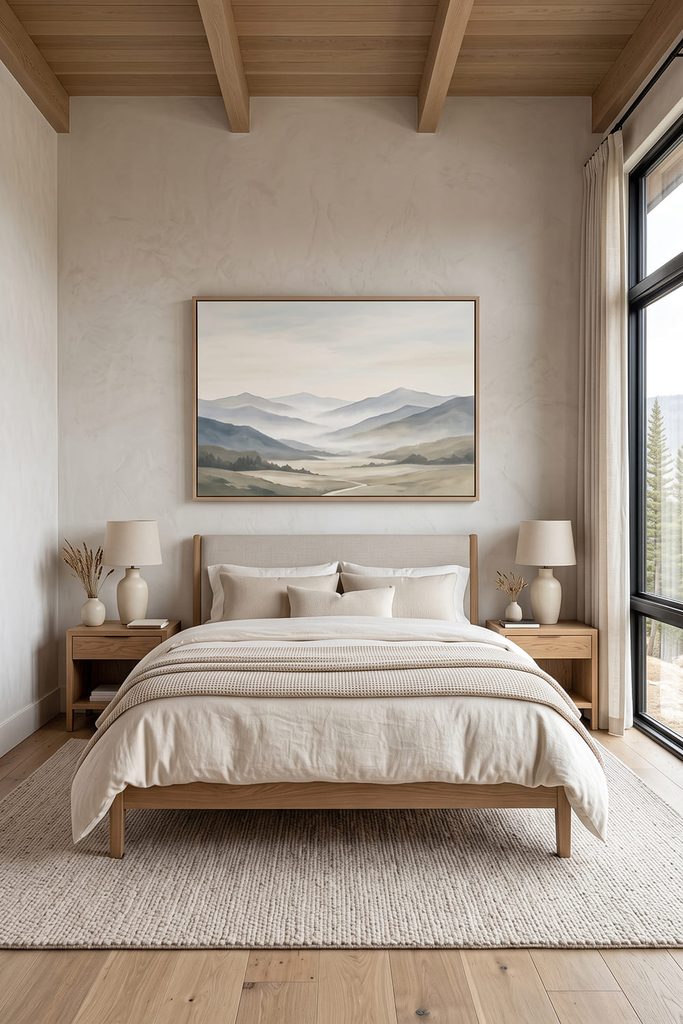
A peaceful mountain landscape can create a strong visual connection with stillness and nature. Choose a scene with distant mountains, soft mist, open sky, or a quiet valley rather than a highly dramatic landscape. Muted blue, gray, beige, green, and cream can keep the artwork soothing.
A wide landscape works particularly well above the bed because its horizontal shape complements the furniture. The mountains can also provide a subtle reminder of stability and perspective without requiring any written message.
For a minimalist bedroom, choose a simple photographic composition or understated illustration with plenty of open space.
2. A Minimalist Meditation Figure
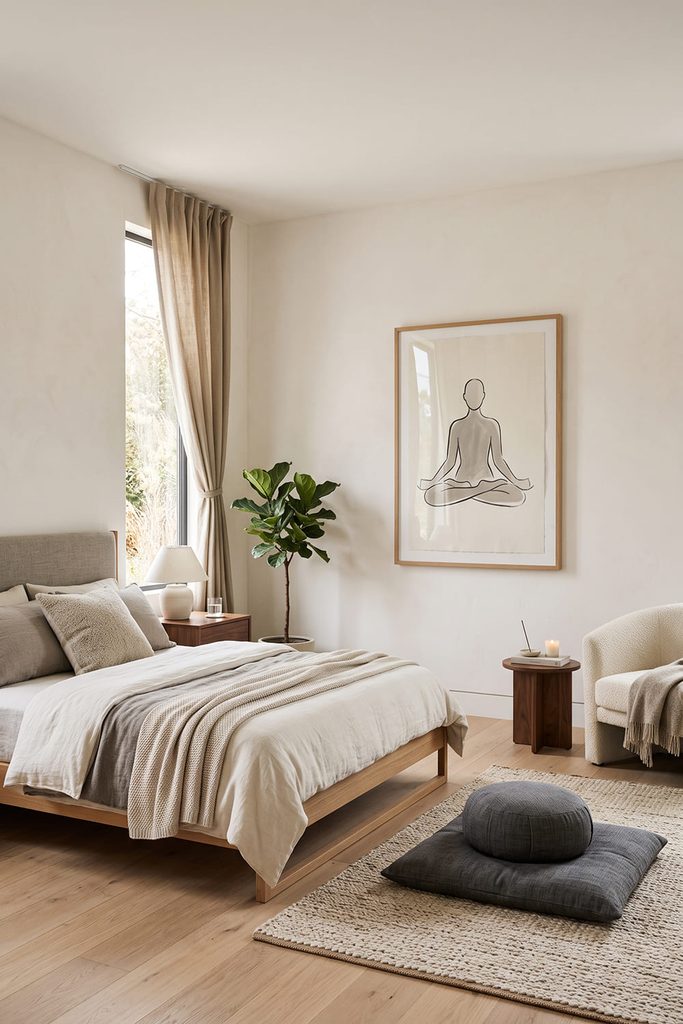
A simple artwork depicting a person sitting in meditation can immediately establish the purpose of the room. Choose a clean silhouette or softly illustrated figure rather than a highly detailed image.
Neutral colors such as charcoal, warm gray, beige, cream, or muted brown can keep the artwork sophisticated.
A small meditation figure can work above a meditation cushion or reading chair, while a larger composition can become the focal point of a side wall. Keep the surrounding wall relatively uncluttered, so the image has room to breathe.
3. Botanical Artwork for a Natural Atmosphere
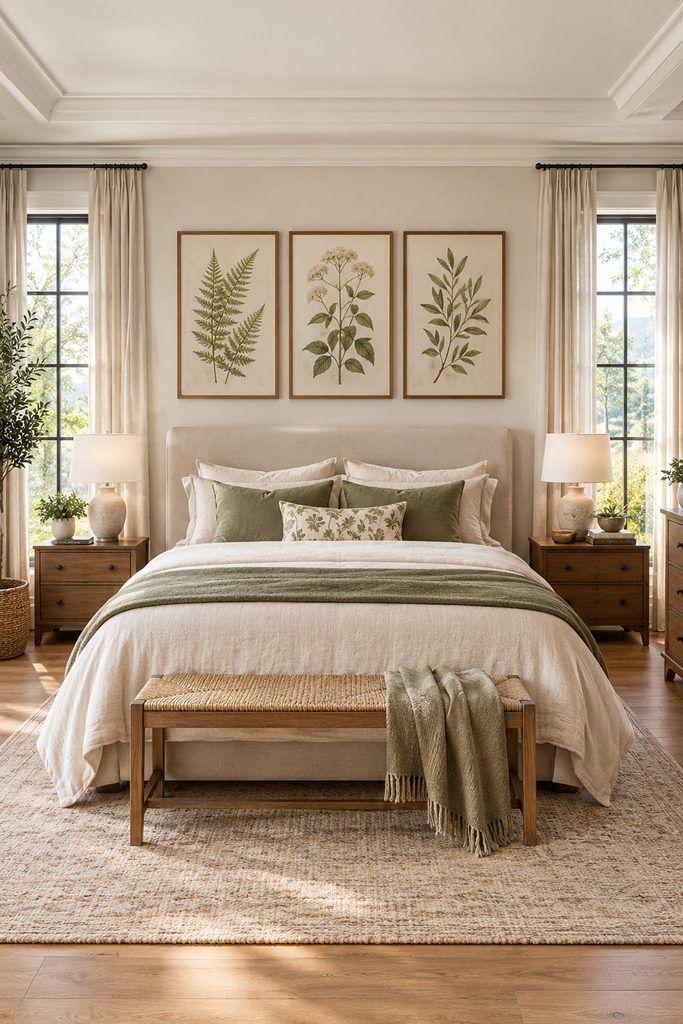
Plants and leaves can introduce a connection with nature without requiring overt spiritual symbolism. Consider botanical illustrations featuring ferns, branches, grasses, leaves, or delicate flowers.
Sage green, olive, muted brown, cream, and soft gray are particularly suitable for a calming bedroom palette. You can use one oversized botanical print or create a small arrangement of two or three complementary pieces.
Natural wood frames can reinforce the organic feeling and work especially well with wooden furniture and woven textures.
4. A Soft Sunrise or Sunset Landscape
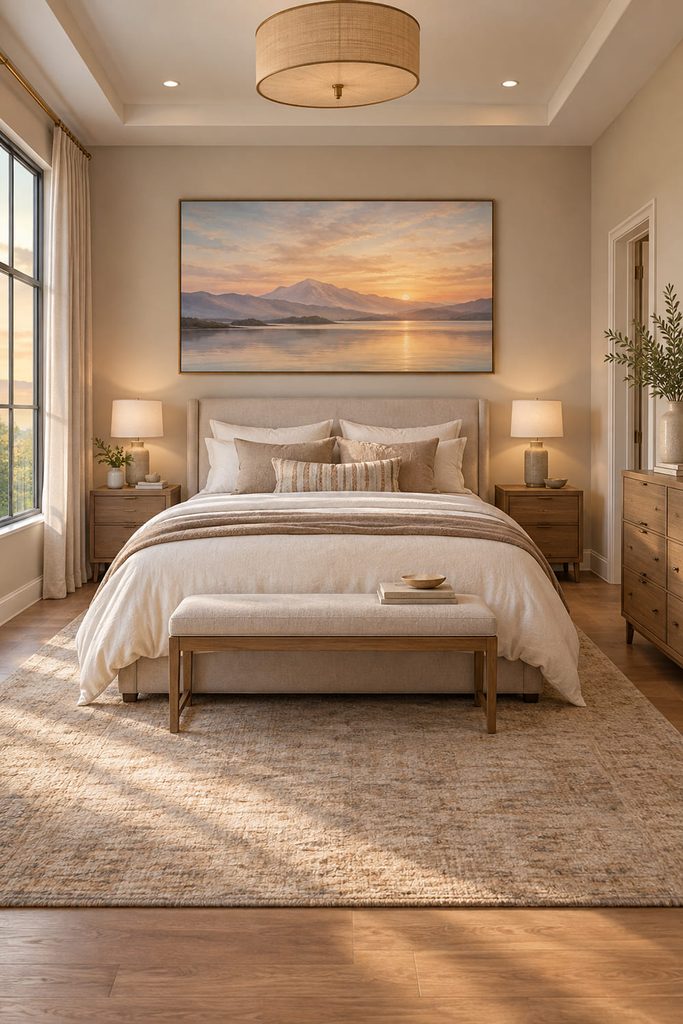
A sunrise or sunset can symbolize renewal, transition, and the beginning or ending of a day. Choose a quiet scene rather than a highly saturated image. Soft peach, dusty pink, warm beige, pale blue, and muted gold can introduce gentle color without overwhelming the bedroom.
A sunrise landscape can work beautifully above a meditation area. A sunset over water or mountains can create a relaxing focal point above a dresser or on the wall opposite the bed.
The artwork can serve as a visual reminder to slow down and appreciate quiet moments.
5. Celestial Artwork With a Subtle Design
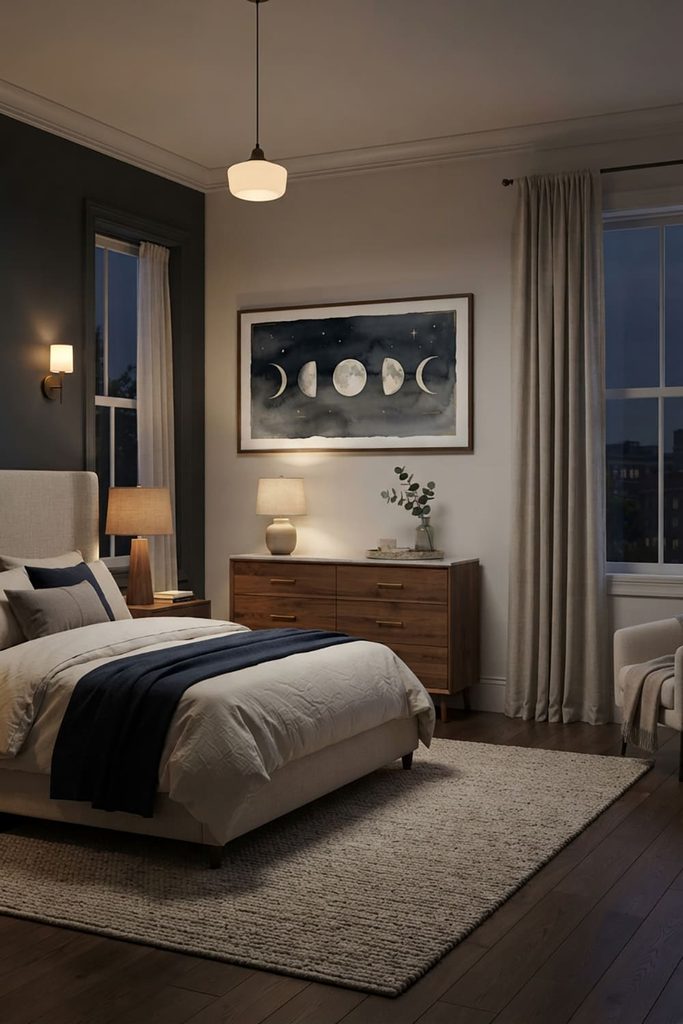
Stars, moons, planets, and night skies can create a contemplative atmosphere in a spiritual bedroom. Instead of choosing a highly decorative celestial poster, look for an understated composition with a dark background and restrained details.
Deep navy, charcoal, cream, muted gold, and soft gray can work beautifully. A moon-phase arrangement can create a particularly attractive horizontal display above a dresser.
For a softer appearance, choose artwork with plenty of negative space rather than filling the entire composition with stars and symbols.
6. A Water-Inspired Abstract Painting
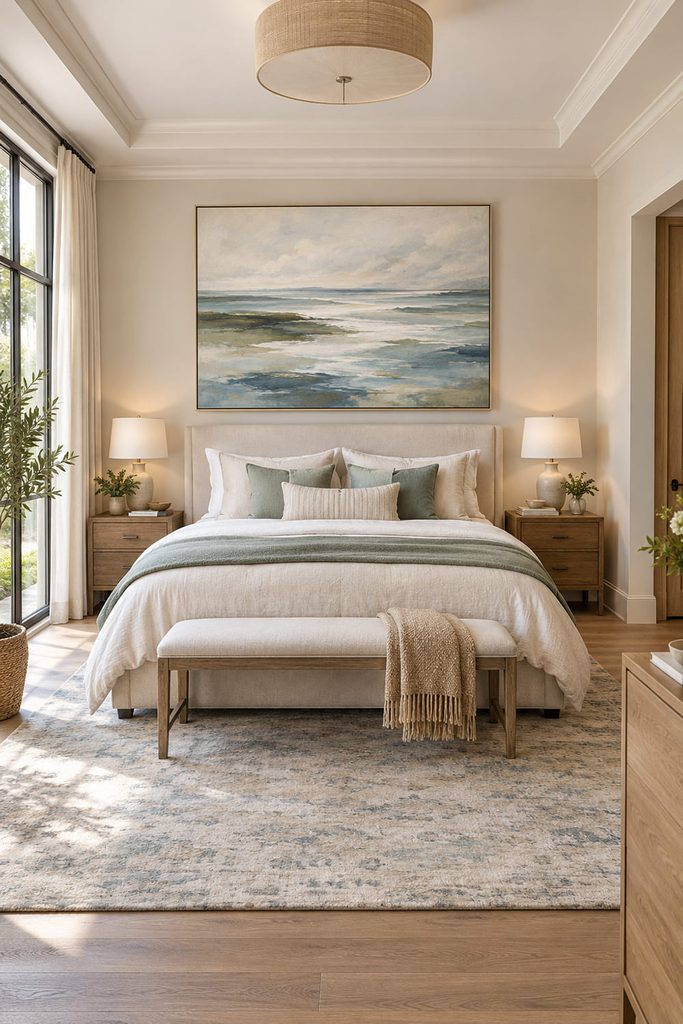
Water can be associated with calm, movement, reflection, and renewal, making it a natural subject for meditation-oriented artwork. Choose an abstract painting inspired by gentle waves, ripples, flowing water, or a quiet shoreline.
Soft blue, gray, cream, sage, and muted green can create a restful color palette. A large abstract piece above the bed can become the primary focal point without introducing a literal spiritual theme.
This is an excellent option if you want the room to feel peaceful while keeping the artwork contemporary.
7. A Simple Meaningful Quote
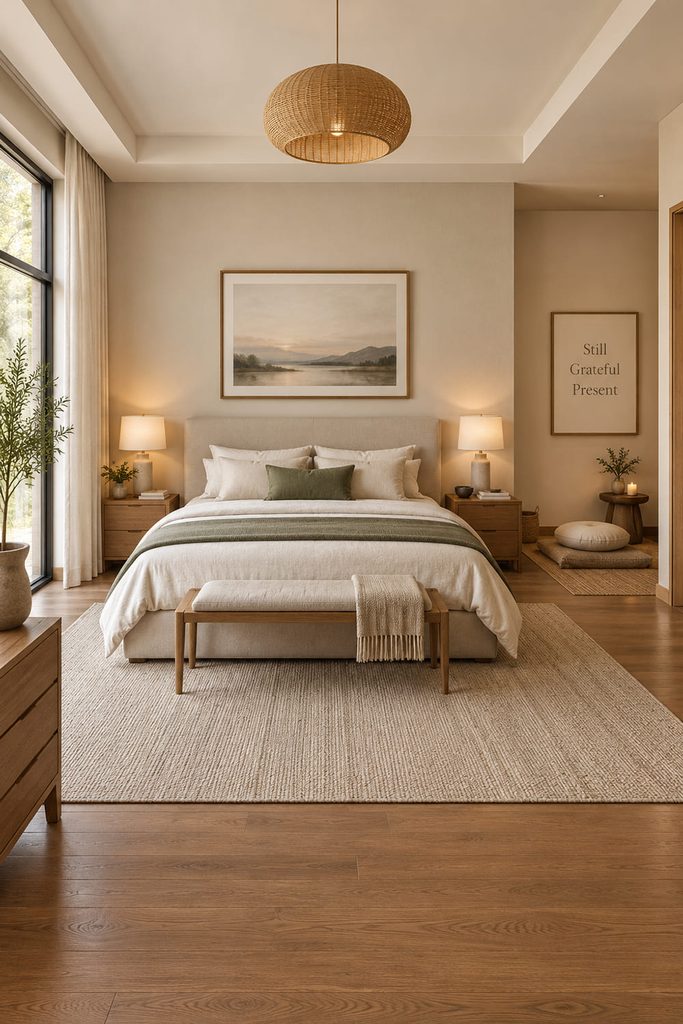
Words can be powerful in a meditation space, but the artwork does not need to contain a long passage. Choose a short phrase that genuinely has personal meaning. It could focus on stillness, gratitude, patience, compassion, presence, or peace.
Use clean typography and plenty of space around the words. Neutral lettering on a cream, white, beige, or muted background tends to feel more relaxing than a highly decorative design.
Place the piece where you can see it during meditation or reflection rather than automatically putting it above the bed.
8. A Peaceful Forest Path
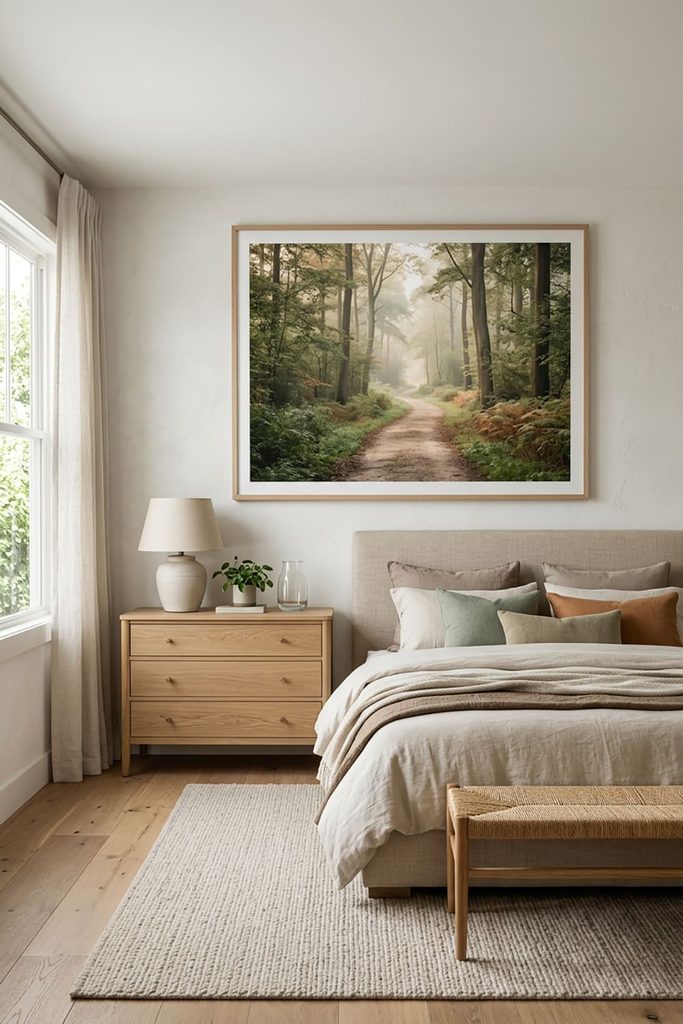
A forest path can represent quiet movement, reflection, and a journey through life. Choose an image with a clear path disappearing into trees or distant light.
Avoid overly dark or dramatic photographs if the goal is relaxation. Soft morning light, mist, gentle greenery, and muted colors can create a more peaceful feeling.
A large forest landscape can work on a feature wall, while a smaller image can be placed beside a meditation chair. Natural wood framing can complement the subject beautifully.
9. Abstract Artwork Inspired by Balance
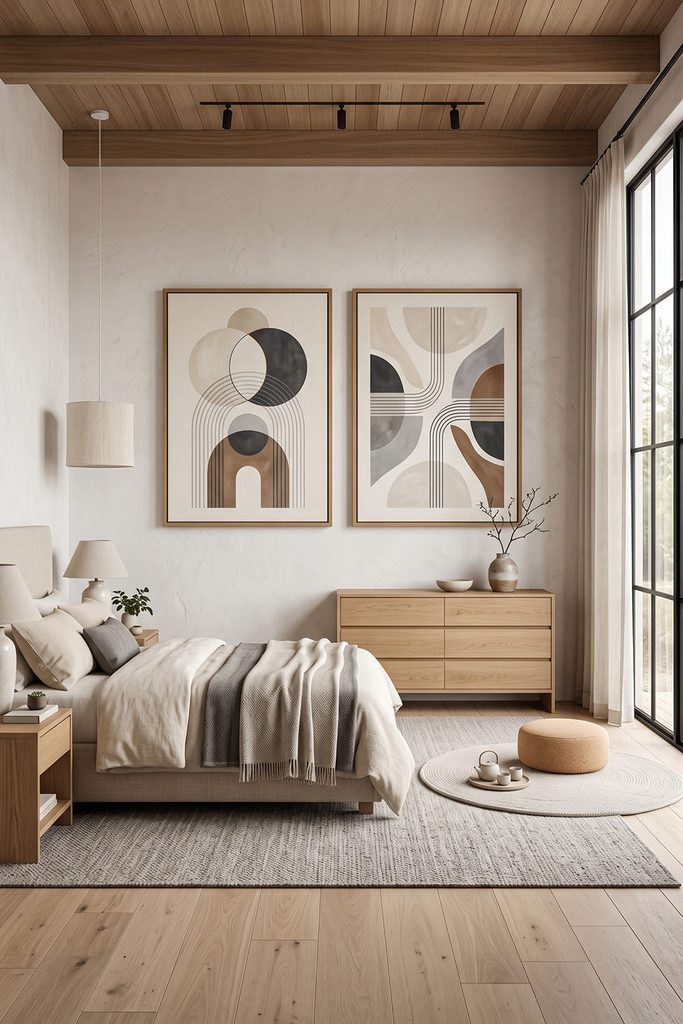
For a modern spiritual bedroom, consider abstract artwork built around balance, symmetry, circles, flowing lines, or gentle geometric forms. The artwork does not need to have an explicit spiritual symbol.
Instead, the composition itself can create a feeling of order and harmony. Choose a restrained palette such as cream and charcoal, beige and brown, sage and ivory, or dusty blue and gray.
A pair of complementary abstract pieces can work particularly well above a wide dresser or on either side of a central meditation area.
10. A Moon and Water Landscape
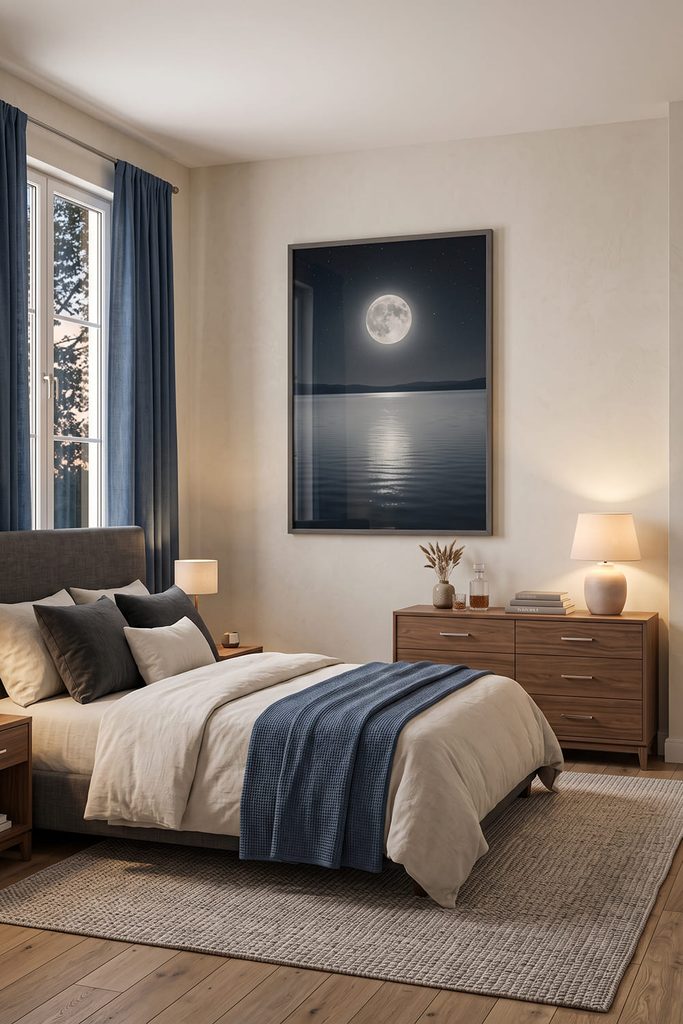
Combine two calming elements with artwork showing a moon above a quiet body of water. The reflection of moonlight across a lake or ocean can create a naturally contemplative image.
Deep blue, charcoal, silver-gray, cream, and muted beige can provide an elegant palette. This type of artwork works especially well in bedrooms with darker accents or evening-oriented lighting.
Choose a relatively simple composition so the image remains relaxing rather than visually dramatic.
11. A Personal Nature Photograph
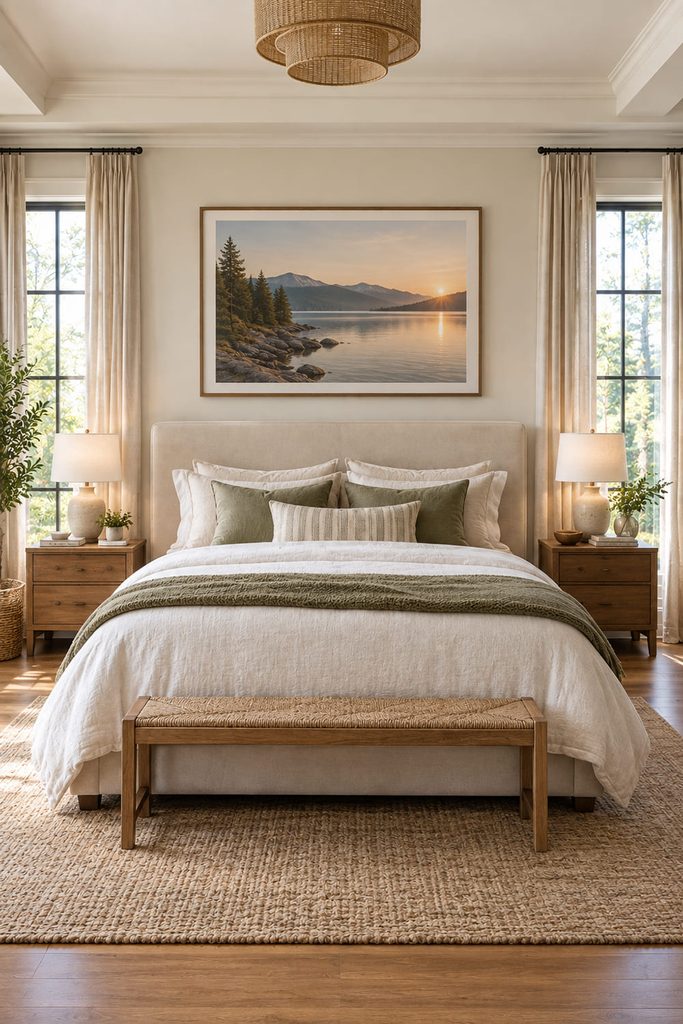
You do not need commercially produced artwork to create a meaningful meditation wall. A photograph you personally took during a peaceful experience can be much more powerful.
It could be a quiet beach, mountain trail, garden, forest, sunrise, lake, or another location where you felt particularly relaxed. Print the photograph in a size appropriate for the wall and use a simple frame.
Because the image has personal significance, it can become a visual anchor during meditation or reflection.
12. A Subtle Mandala-Inspired Design
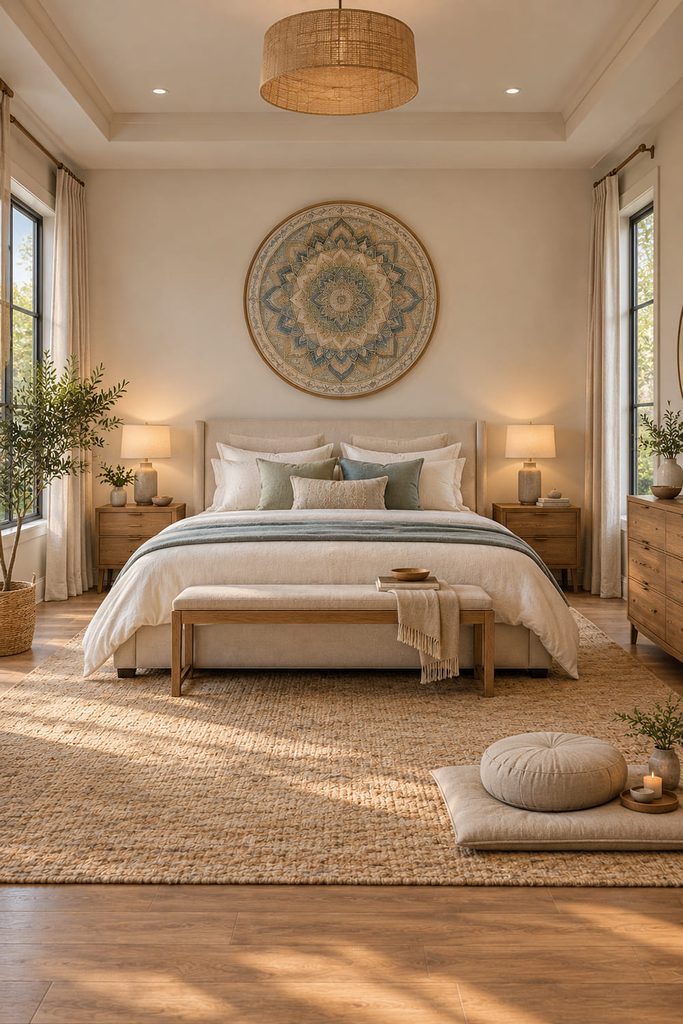
Circular, symmetrical artwork can work well in a meditation-focused bedroom. Choose a design inspired by geometric balance and repetition rather than an overly colorful decorative pattern.
Soft neutrals, muted blue, sage, terracotta, or charcoal can keep the design sophisticated. A single large circular artwork can work above a meditation cushion or on a side wall.
If the room already contains several patterns, keep the mandala-inspired artwork simple so the space remains visually calm.
13. A Minimalist Sun and Moon Pair
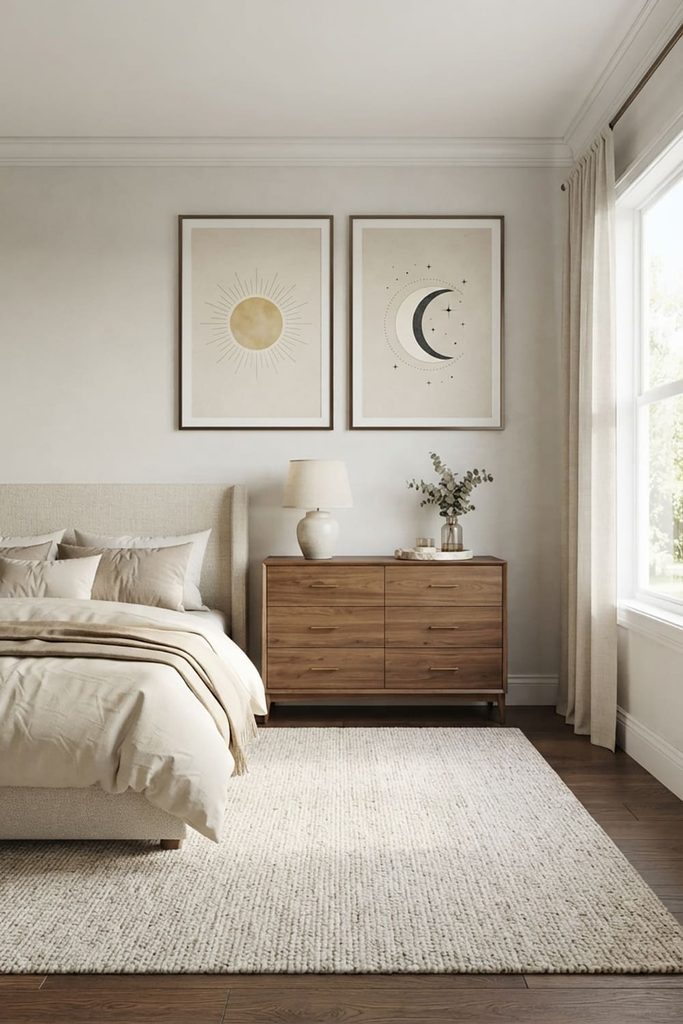
A pair of simple artworks representing the sun and moon can create a balanced wall arrangement. Use matching frames and similar artistic styles so the two pieces feel connected.
The designs can be extremely simple, using circles, lines, and subtle textures. This works particularly well in a modern bedroom because the symbolism remains understated. Place the pair above a dresser or meditation bench, or use them as a focal arrangement on a wide side wall.
14. A Peaceful Ocean Horizon
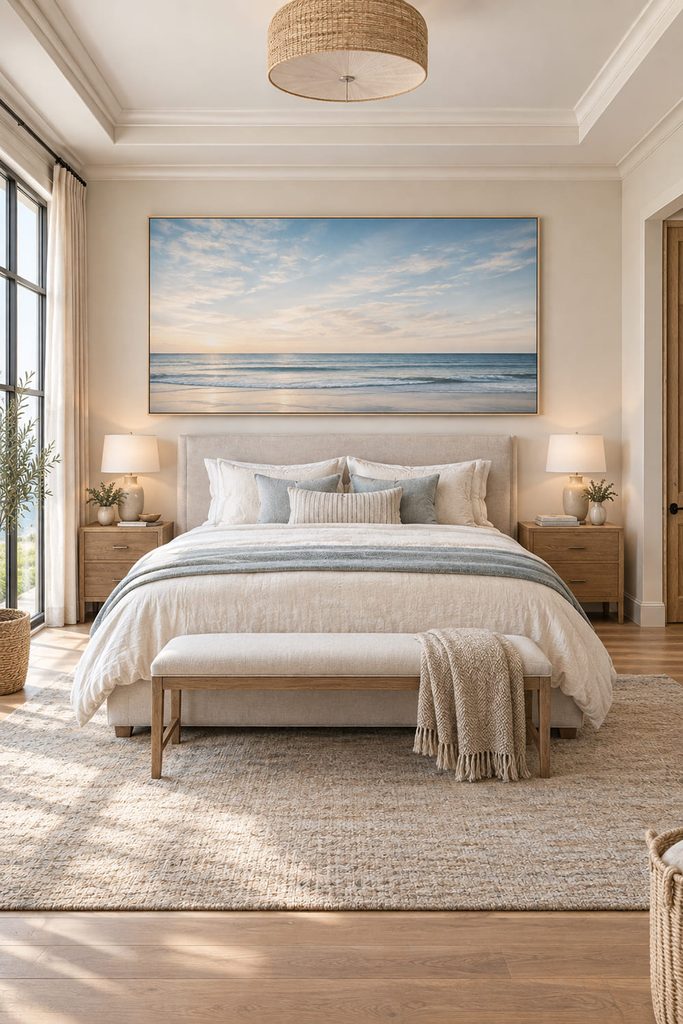
A distant ocean horizon can create one of the simplest visual environments for meditation. Choose an image where the water and sky occupy large areas of the composition.
The lack of visual clutter can be exactly what makes this artwork effective. Soft blue, gray, cream, and sandy beige can coordinate with neutral bedroom furnishings.
A large horizontal ocean photograph above the bed can make the room feel more spacious while reinforcing a sense of calm.
15. A Curated Spiritual and Nature Gallery
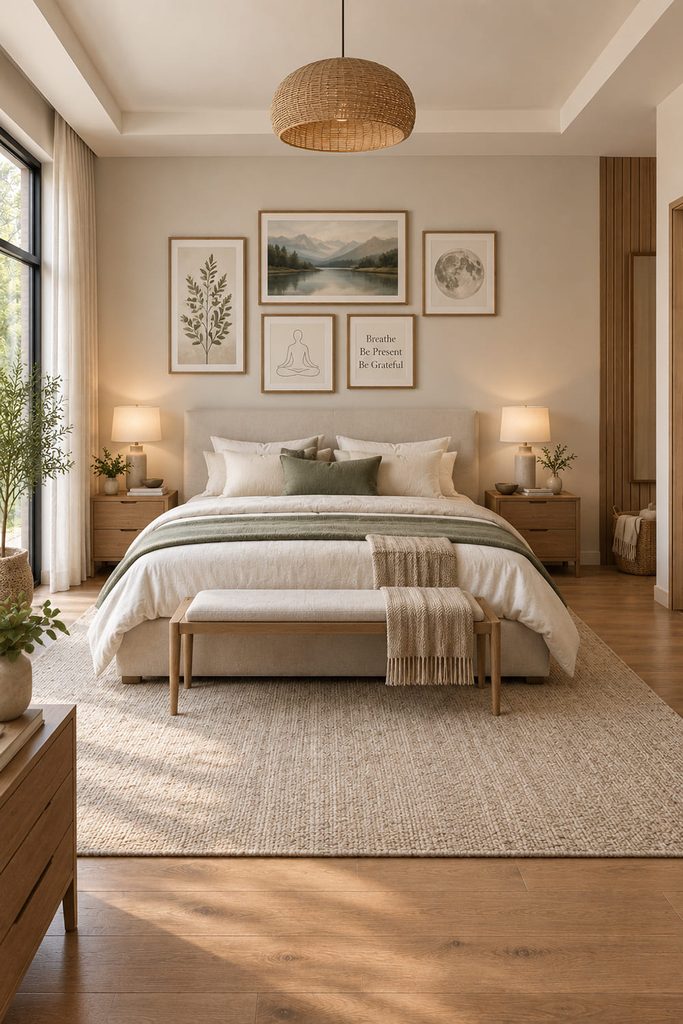
If you prefer several pieces rather than one large artwork, create a carefully edited gallery that combines spiritual and nature-inspired imagery.
You might include a minimalist meditation figure, a botanical print, a moon illustration, a quiet landscape, and a short meaningful phrase. The pieces do not need to be identical, but they should share a restrained color palette and similar framing.
Avoid adding too many symbols simply because they are associated with spirituality. Choose artwork that genuinely resonates with you. A carefully edited gallery can make the room feel personal without turning it into a visually crowded meditation studio.
How to Choose Wall Art for a Meditation Bedroom
Begin by deciding what feeling you want the room to create. If your priority is deep relaxation, choose artwork with soft colors, simple compositions, and plenty of negative space.
If the room is also used for spiritual reflection, you may prefer artwork containing meaningful symbols, words, or personal imagery.
Avoid selecting pieces solely because they look spiritual. The best artwork is something that actually makes you feel calmer, more focused, grateful, or connected. Your emotional response to the artwork matters more than whether it follows a particular decorating trend.
Choosing a Calming Color Palette
Color can significantly influence how a bedroom feels visually.
Soft neutrals such as cream, beige, warm white, taupe, and light gray can create a quiet foundation.
Nature-inspired shades such as sage, olive, muted blue, dusty green, and soft brown can reinforce a connection with the outdoors.
If you prefer darker bedrooms, deep navy, charcoal, and forest green can create a cocoon-like atmosphere when balanced with lighter artwork and bedding.
Avoid introducing too many competing accent colors if meditation and relaxation are the main purposes of the space.
Where Should Spiritual Artwork Be Placed?
The best location depends on how you use the room.
Artwork above the bed can create a strong visual focal point, but a meditation-related piece may be more meaningful when placed near the area where you actually meditate.
If you have a cushion, bench, chair, or small dedicated corner, position the artwork where it can be comfortably viewed while sitting.
A landscape or abstract artwork can also work on the wall opposite the bed, where it becomes part of your evening and morning visual environment.
Leave enough space around important artwork so it does not compete with furniture or other decorations.
How to Create a Minimalist Meditation Wall
A meditation wall does not need many decorations.
Choose one meaningful piece, such as a mountain landscape, moon artwork, botanical print, or simple meditation figure.
Place it at a comfortable viewing height and keep the surrounding area uncluttered.
A small shelf below the artwork can hold a few carefully selected objects if desired, but avoid turning the wall into a collection of unrelated decorations.
The space is part of the design. It gives your eyes somewhere to rest.
Should You Use Spiritual Symbols?
Spiritual symbols can be meaningful when they are connected to your own beliefs or practices.
If you choose symbolic artwork, select pieces that you understand and genuinely appreciate rather than using symbols simply because they are visually popular.
You can also choose abstract or nature-based artwork if you prefer a spiritual atmosphere without explicit symbolism.
There is no requirement for a meditation bedroom to contain recognizable spiritual imagery.
The purpose of the room is to support your personal sense of peace and reflection.
How to Combine Spiritual Art With Bedroom Decor
Spiritual artwork should feel like part of the bedroom rather than an unrelated collection.
Look at the colors already present in the bedding, curtains, rug, flooring, and furniture.
For example, a bedroom with warm wood furniture may work beautifully with botanical prints, beige landscapes, or earthy abstract artwork.
A blue and white bedroom could support ocean photography, moon imagery, or soft watercolor landscapes.
Repeat one or two colors from the artwork elsewhere in the room to create visual continuity.
How Much Artwork Is Enough?
There is no need to cover every wall.
One large piece above the bed may be enough for a small bedroom. A larger room might support a main focal artwork plus a small arrangement near a meditation corner.
Too many decorative pieces can work against the feeling of calm you are trying to create.
If you are unsure whether you have enough artwork, leave the room alone for a few days and see how it feels. You can always add another piece later.
Final Thoughts
A spiritual or meditation-focused bedroom should feel peaceful, personal, and intentional. Wall art can help establish that atmosphere, but it does not need to be complicated.
A quiet mountain landscape, ocean horizon, botanical illustration, moon scene, abstract composition, or meaningful phrase can become a visual reminder to slow down and reconnect with yourself.
Choose artwork based on the emotional response it creates rather than simply choosing something labeled as spiritual. Keep colors restrained, give important pieces enough space, and avoid filling the room with unnecessary decoration.
Whether your practice involves meditation, mindfulness, prayer, quiet reflection, or simply creating a peaceful environment, the right wall art can help transform an ordinary bedroom into a more restorative personal retreat.


