

15 Dorm Room Ideas for Students Sharing With a Roommate
Sharing a dorm room is a design puzzle with two designers. One of you loves early mornings and a clear desk, the other studies after midnight surrounded by mugs, and you both have to sleep, study, dress and relax inside the same few square metres. The rooms that work are never the ones where one person wins — they are the ones planned together, with clear zones, shared basics and just enough personal style on each side.
These dorm room ideas for students sharing with a roommate treat the whole room, not just the walls: beds, desks, storage, lighting and the small daily systems that stop clutter taking over. Everything here respects normal dorm rules — no paint, no nails and nothing permanent — and everything can be undone on moving-out day. Start with the planning guide, then work through the ideas in whatever order suits your room.
This post contains affiliate links. If you buy through them, we may earn a small commission at no extra cost to you. See our Affiliate Disclosure.
How to Plan a Shared Dorm Room Without the Arguments
Begin before move-in day, on a quick call or message thread. Agree the non-negotiables first: sleep times, guests, noise, cleaning and what counts as shared. Decor arguments are rarely about colour — they are about one person feeling the room was decided without them. A short conversation now prevents weeks of resentment later.
Next, measure and map. Sketch the room on paper, mark the door swing, window, sockets and fixed furniture, then divide the floor into three kinds of space: your side, their side and shared ground. Beds and desks belong to personal zones. The entry, the rug and any seating are shared, so those choices need both votes. Keep a walkway clear down the middle so neither of you has to cross the other’s territory to reach the door.
Then agree a simple palette and a shared shopping list. Two or three colours and one metal or wood tone are plenty. Buy shared basics together — rug, curtains, bins and cleaning supplies — and keep personal spending separate, so nobody feels they funded the whole room. The same shared-zone thinking behind good college apartment living room ideas works here too: neutral shared pieces, personality in the personal layers.
Finally, check your dorm’s rules before buying anything. Most halls ban paint, nails, screws and anything stuck directly to walls that could damage paintwork, and many restrict candles and certain lights. Choose removable hooks, tension rods, freestanding pieces and bed risers approved by your housing office. If you plan within the rules from the start, nothing you love has to come down mid-term.
1. Start With Two Sides That Coordinate, Not Match
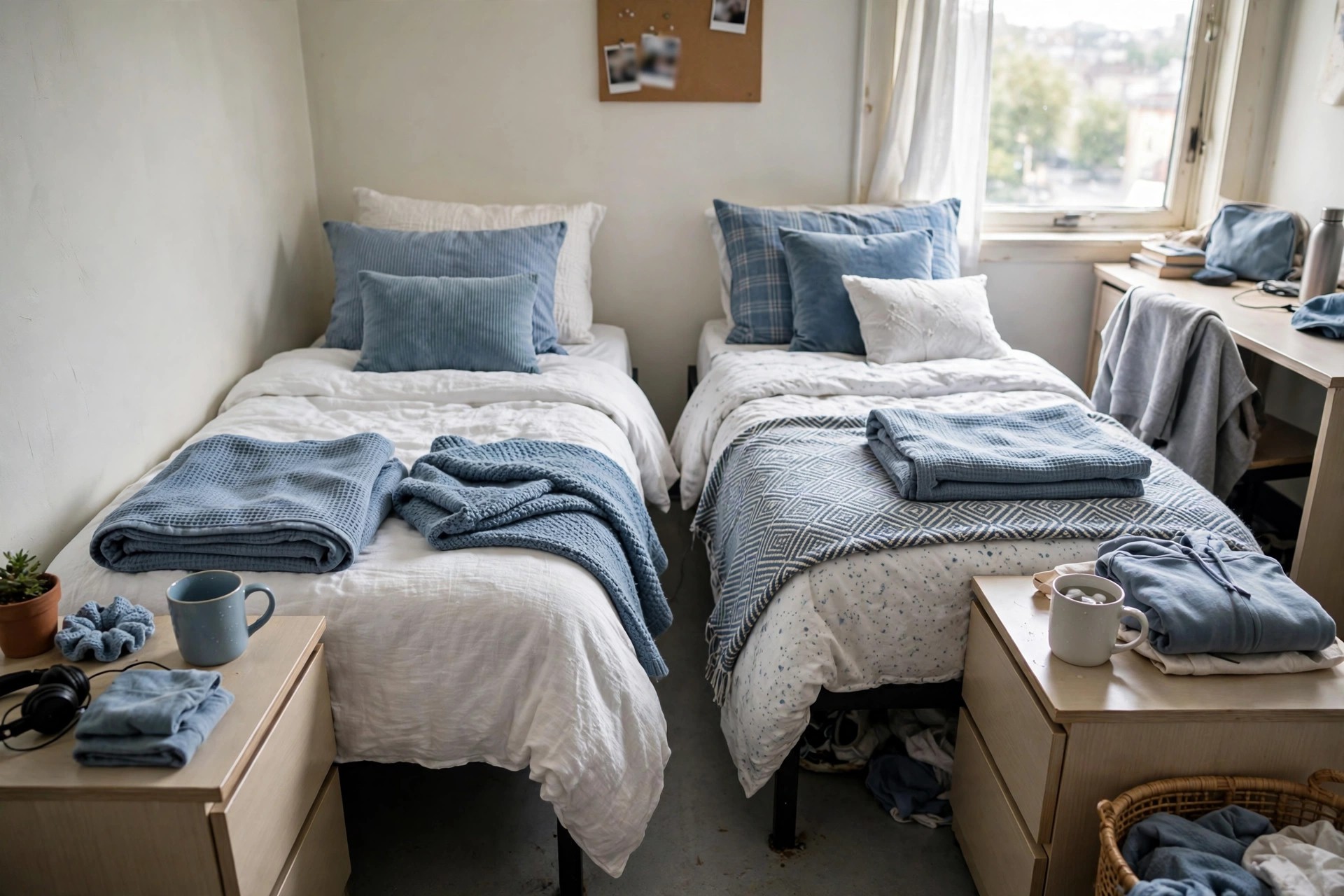
Identical bedding on both beds looks neat in a photo and faintly like a hospital ward in real life. Coordinating is softer and far easier to agree: pick a shared base colour, then let each person choose their own cushions and throw within the palette. In a room organised around dorm room ideas for students sharing with a roommate, this small distinction matters — the room reads as one space, but each bed still feels owned. Swap photos of your choices before buying so the tones sit happily together.
2. Draw an Invisible Line Down the Middle
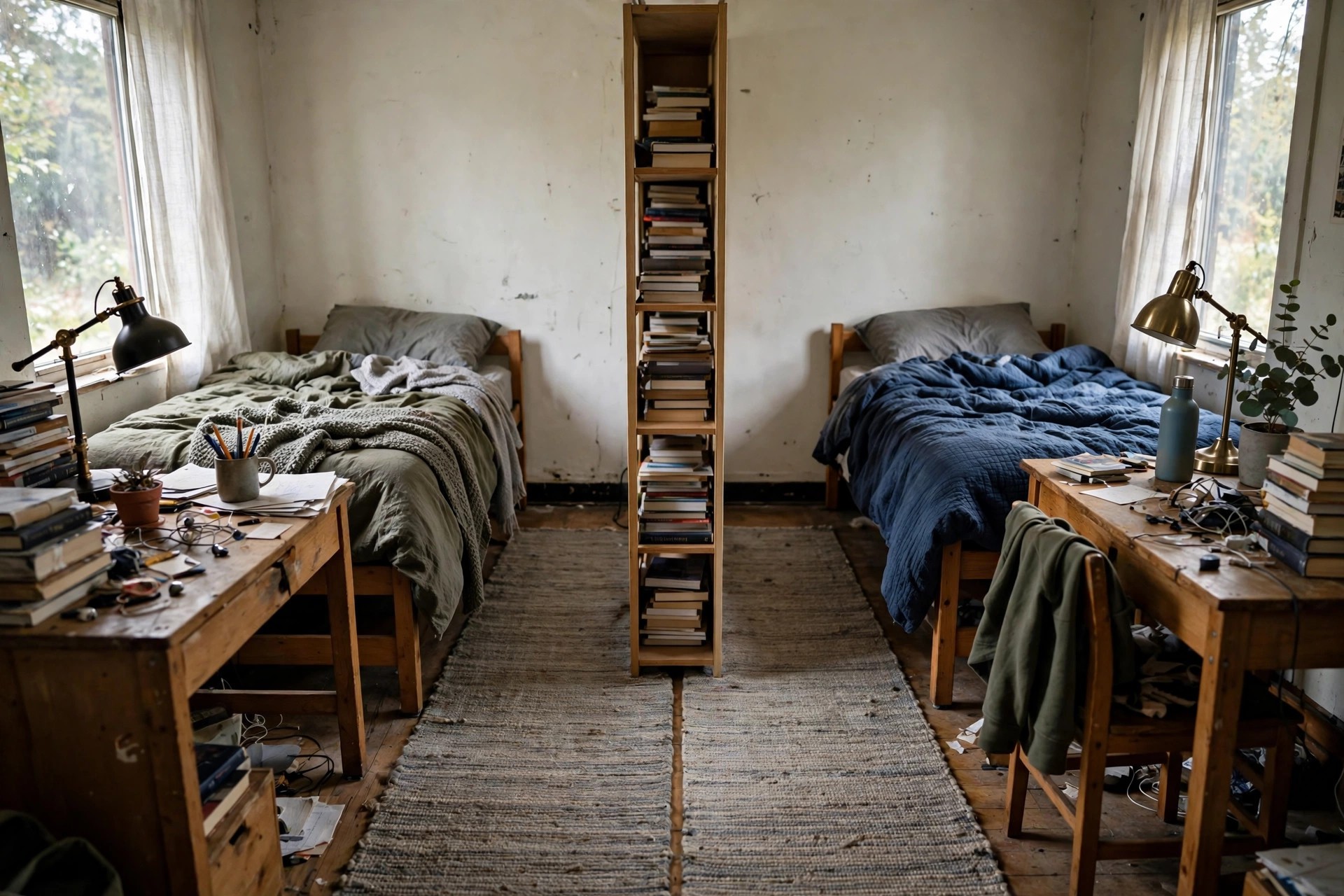
Every shared room needs a border, even if it is only implied. Run a long rug down the centre, place a slim bookcase or storage unit across the middle, or simply align both beds and desks symmetrically so the divide is obvious. Each person keeps their belongings on their own side of the line, and shared items live on the line itself. It sounds strict, but a clear boundary is what allows both of you to relax — nobody’s charger, hoodie or essay notes quietly migrate across the room.
3. Raise Both Beds and Claim the Space Underneath
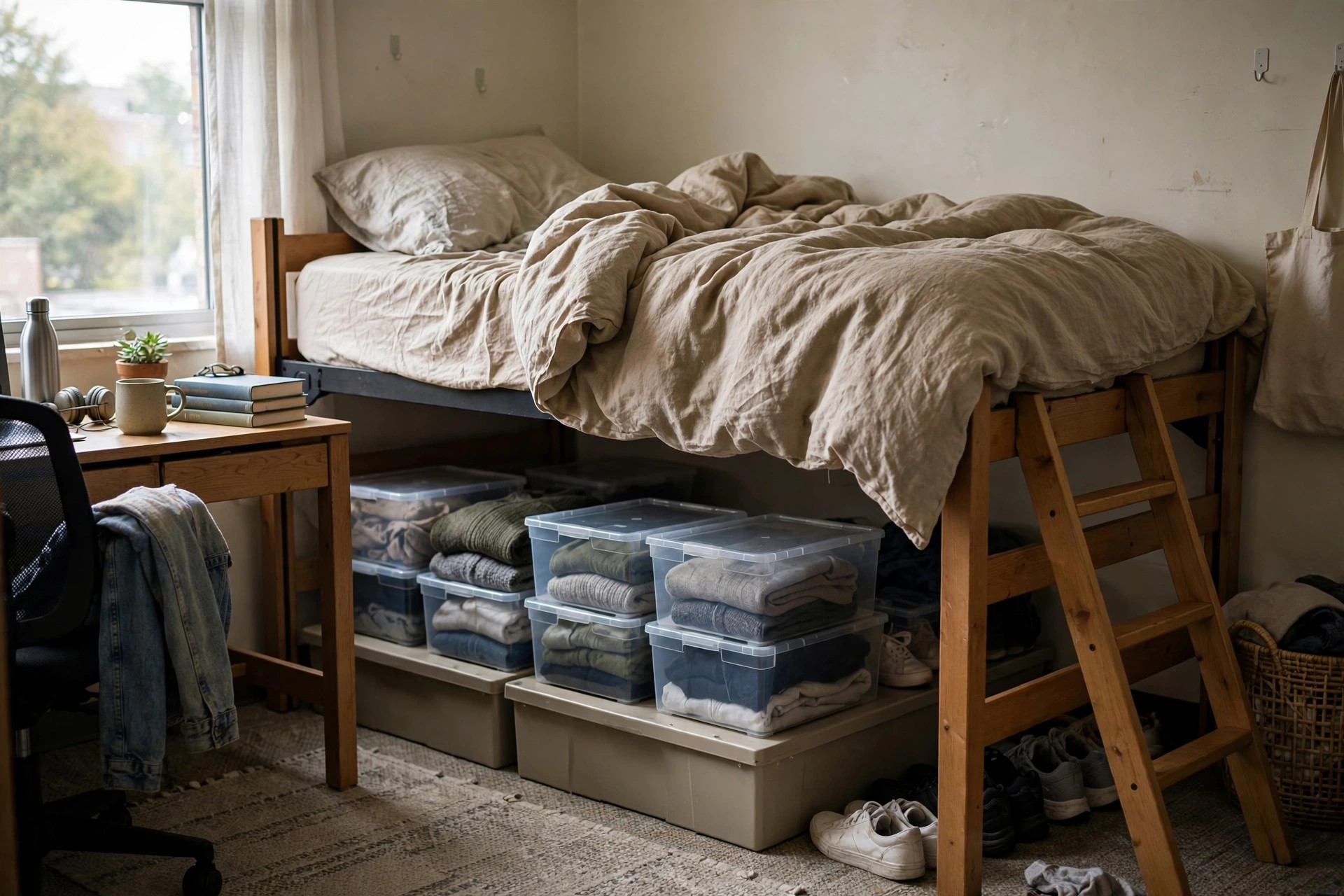
The floor space under a dorm bed is the largest storage area you own, so do not waste it on dust and lost socks. If your housing allows risers or lofting, raise both beds to a similar height and slide in lidded boxes for out-of-season clothes, spare bedding and shoes. Clear boxes save rummaging, and labels save pulling every box out. Keep one everyday box un-lidded for trainers. Raising both beds, rather than just one, also keeps the room balanced.
4. Build a Shared Base, Then Personalise the Top Layer
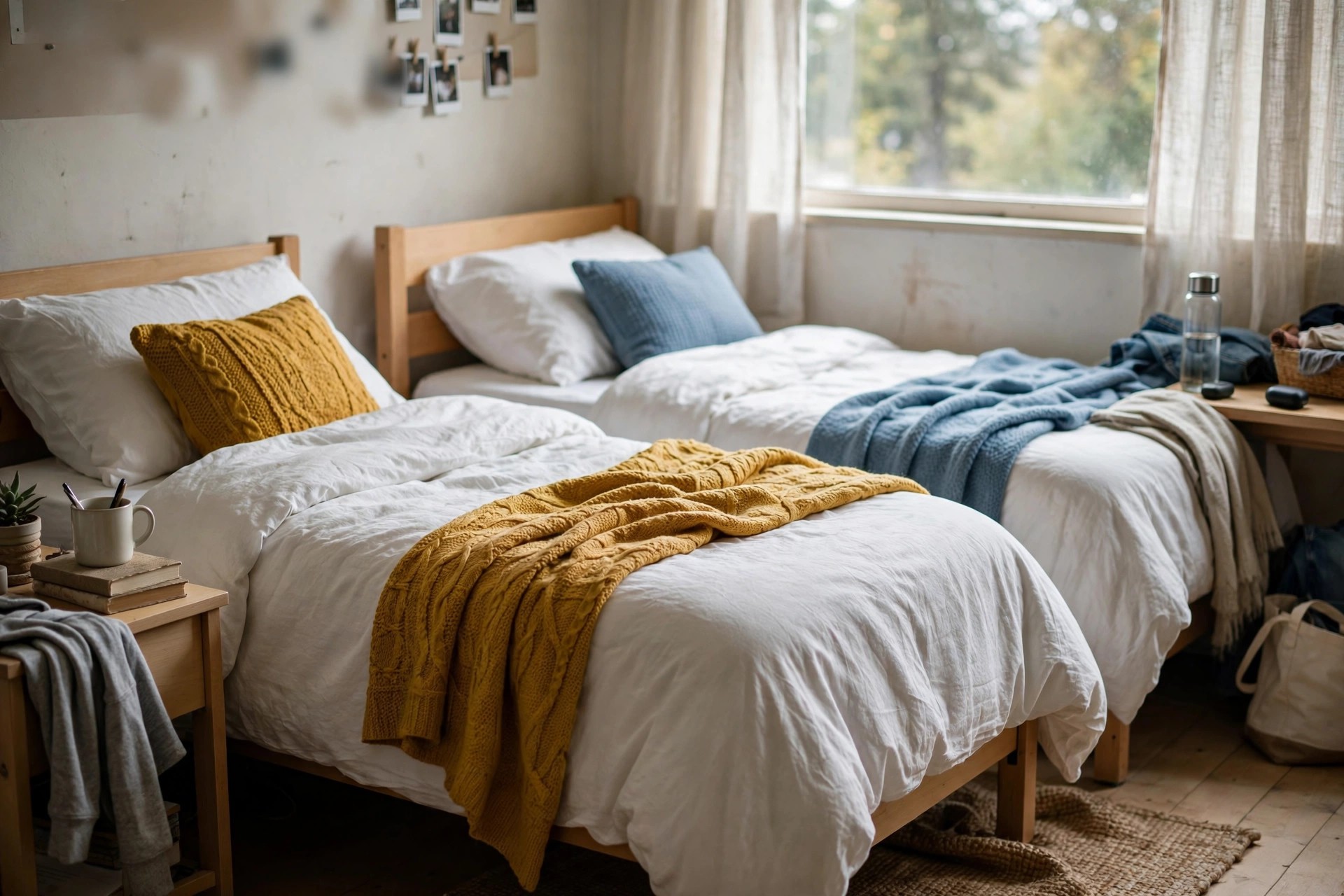
Compromise gets easier when you split each surface into two decisions. Agree the base together — plain duvet covers in the same colour, matching basic lamps, one shared rug — then personalise the top layer separately: your throw, your cushion, your bedside stack. The base gives the room its calm, pulled-together feel, while the top layer carries all the personality. If tastes clash badly, keep the shared base warm white or pale grey. Almost every colour looks intentional layered over a quiet neutral foundation.
5. Give Each Person a Real Desk Zone
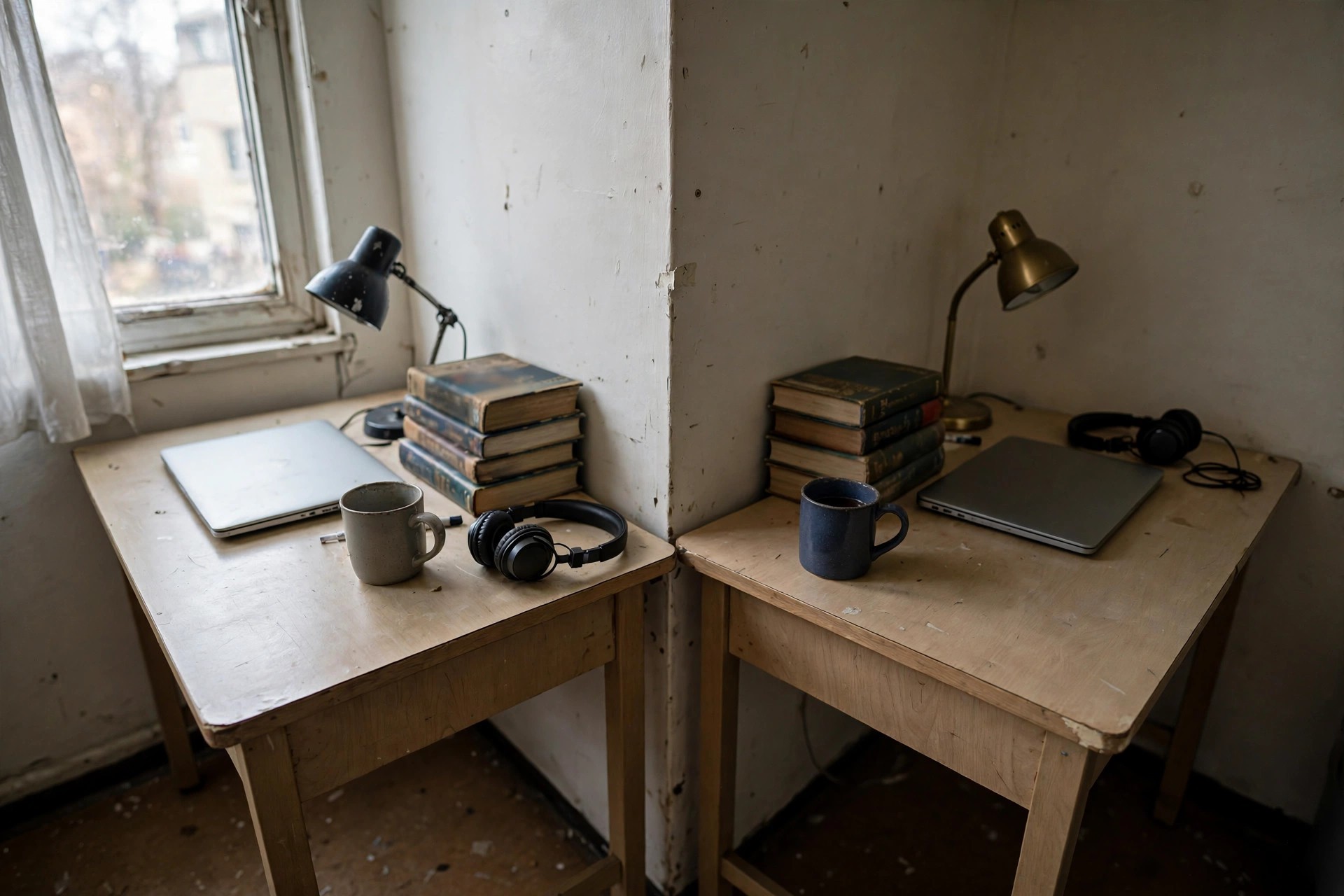
A shared desk is a conflict waiting to happen, so carve out two proper work zones, however small. Place desks back to back, side by side with a small divider, or at opposite ends of the room if sockets allow. Each zone needs a lamp, a home for chargers and a vertical spot for books so the surface can actually be cleared. Agree that desks are private territory: nobody borrows, stacks or tidies the other’s desk without asking. That one rule prevents most shared-room study arguments.
6. Light the Room in Layers for Different Schedules
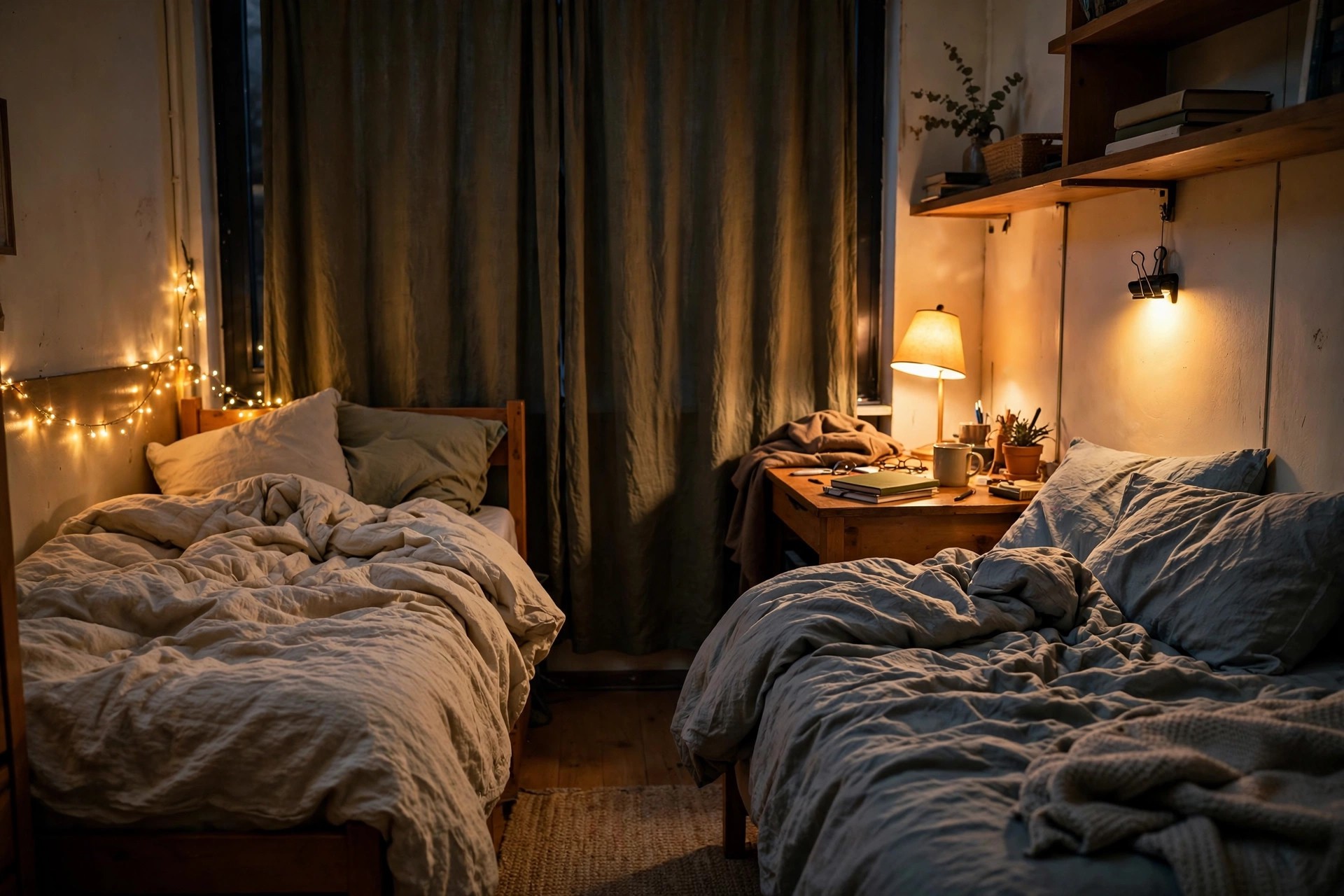
The overhead dorm light is nobody’s friend — harsh, flat and all-or-nothing. Layer instead: fairy lights or a warm lamp for shared evenings, a focused desk lamp each for studying, and a low clip-on reading light for bed. This matters most when one of you is asleep while the other is revising, a problem familiar from bedroom ideas for couples with different sleep schedules. Directional, low-level light lets the night owl work without flooding the whole room, and an eye mask kept bedside settles the rest.
7. Add Privacy Without Building Anything Permanent
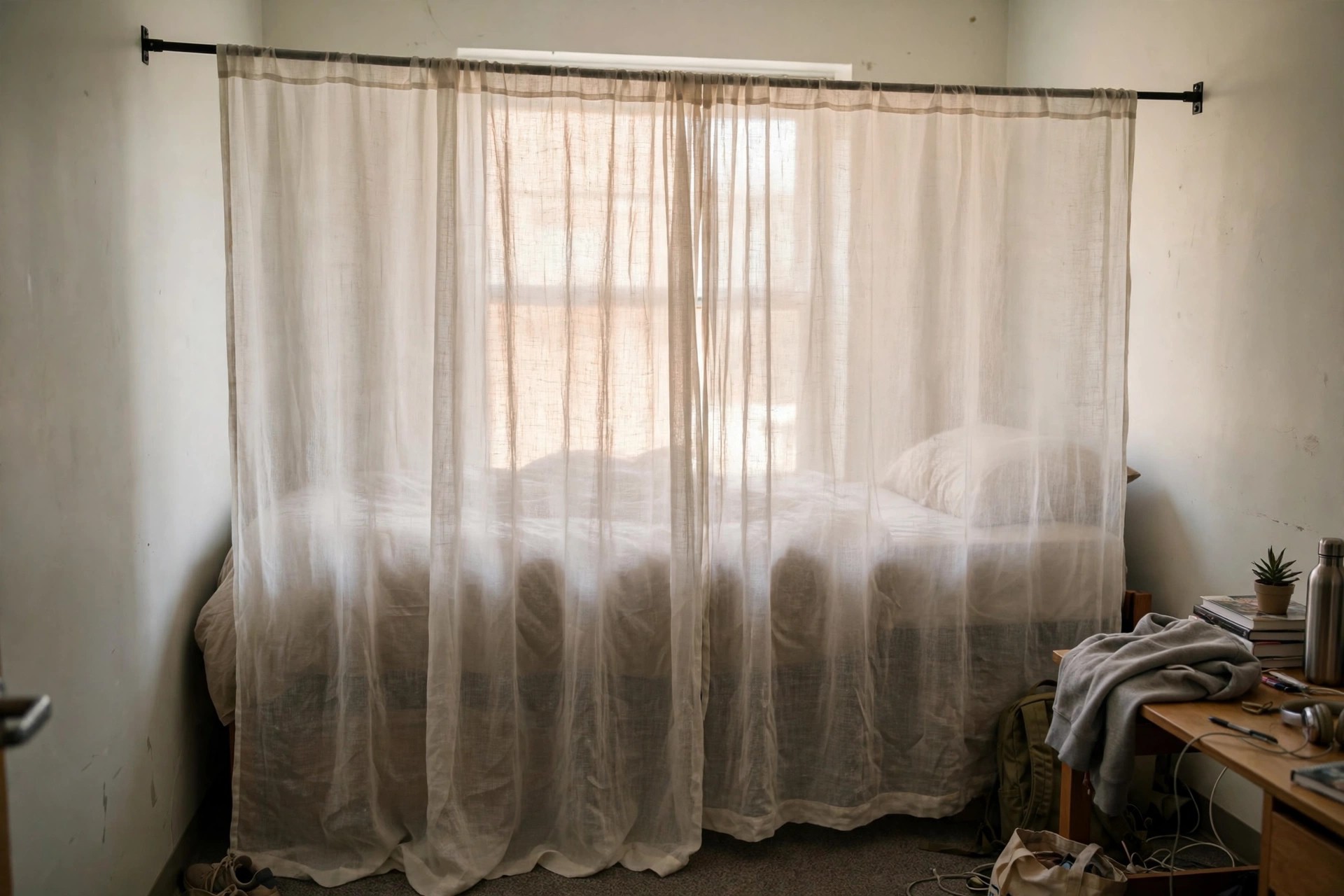
Privacy in a shared room is mostly visual. A lightweight curtain on a tension rod, a folding screen or even a tall open shelf between the beds gives each of you a corner that feels screened when you need to change, take a call or simply switch off. Choose fabric that still lets light through so the room does not feel cut in half. Agree what the closed curtain means — usually “give me a little space” — and respect it without commentary. Small courtesies like this keep goodwill topped up.
8. Use Vertical Space With Removable Storage
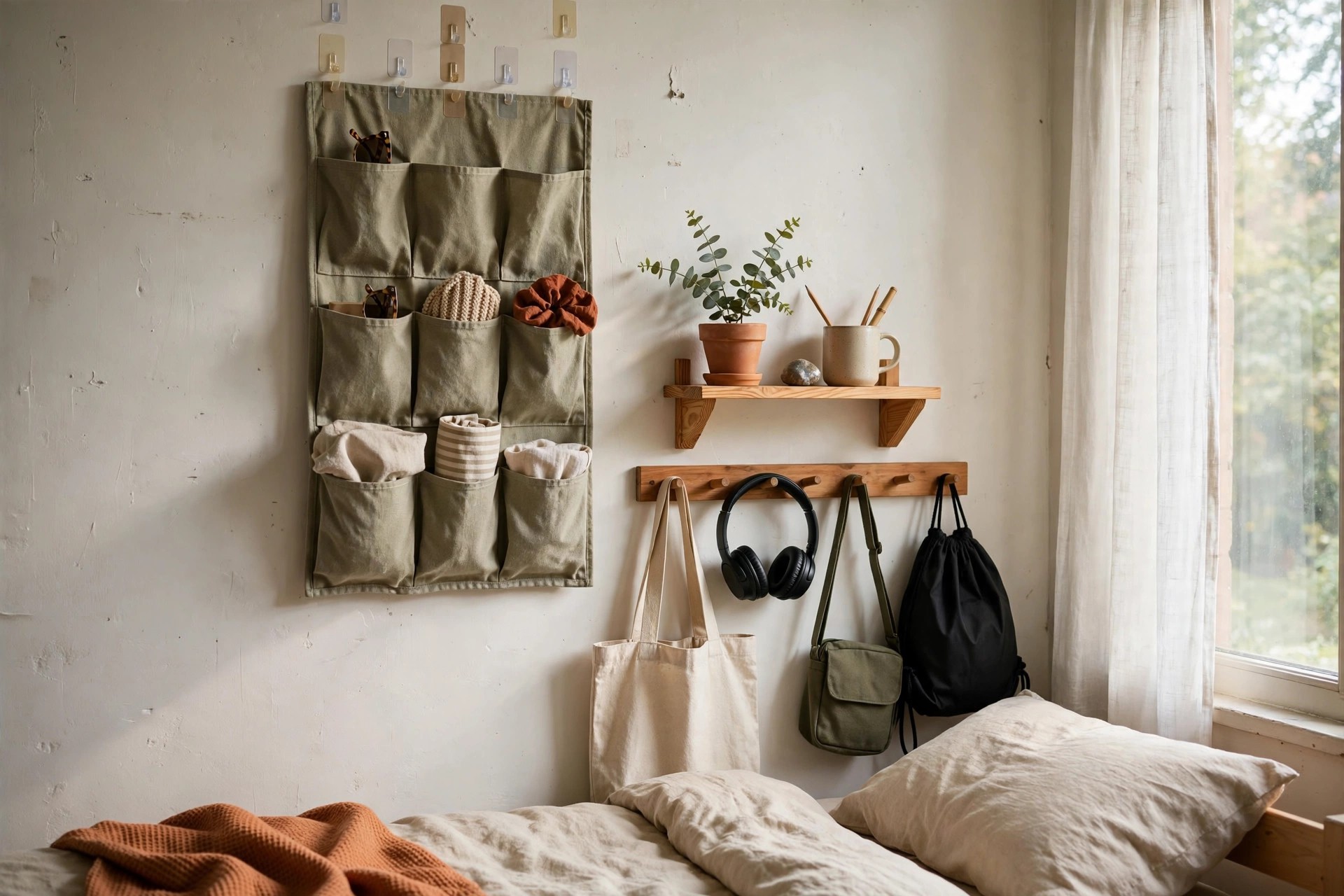
When floor space runs out, go up — carefully. Removable adhesive hooks, over-door rails, hanging pocket organisers and caddies hung from bed ends all add storage without a single nail. Keep heavy items low and light, soft things up high: bags, headphones, scarves and chargers belong on hooks, books belong on the desk. Check the weight limits on any adhesive product and remove strips slowly at the end of term, following the instructions, so walls stay undamaged and deposits stay safe.
9. Create One Small Shared Lounge Spot
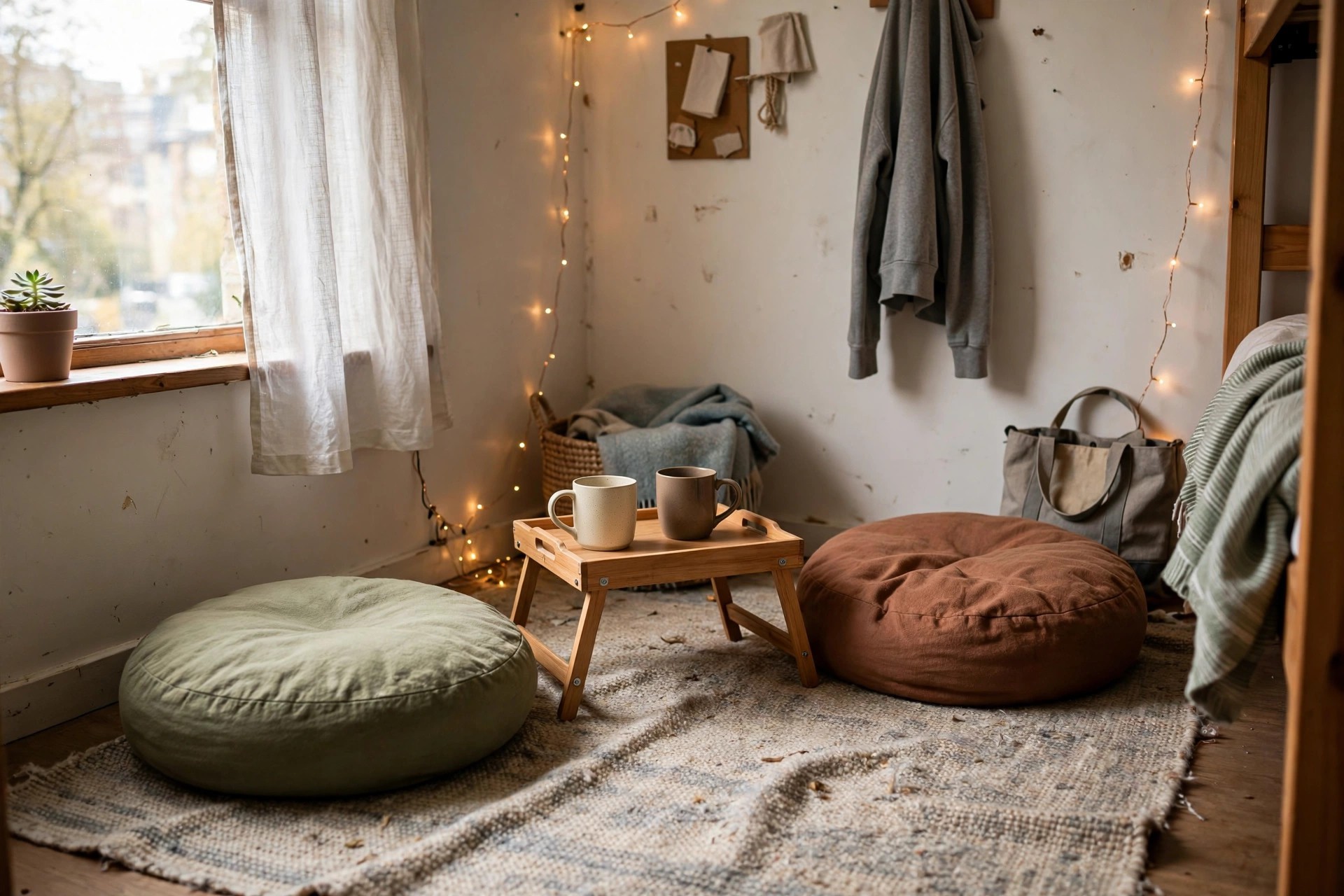
If every surface is a bed or a desk, guests end up sitting on your pillow. Protect your beds by creating one deliberate lounge spot: two floor cushions on the rug, a folding tray table for drinks, perhaps a blanket basket within reach. It gives friends a natural place to land, and you both somewhere that is not a workstation to relax. Keep it packable — cushions stack on a bed and the tray folds behind a wardrobe — so the floor clears instantly.
10. Keep Wall Decor Removable, and Keep It to Accents
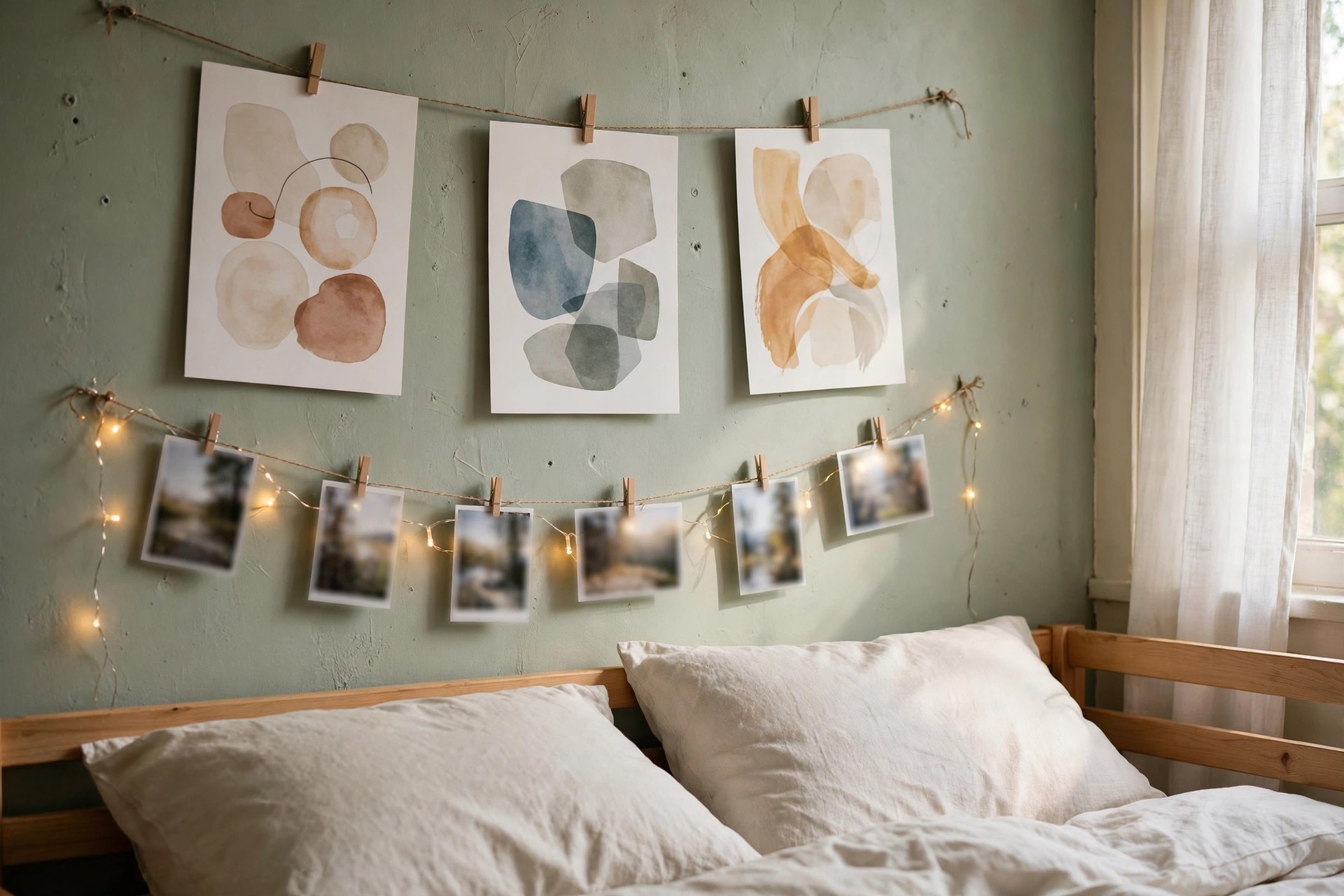
Walls are the finishing touch here, not the main event, so give each person the stretch above their own bed and keep it fully removable: prints on clips, photo strings and washi-tape frames all come down cleanly. If you want a deeper dive into that one zone, our guide to bedroom wall art ideas for a dorm room covers it in full. In a full-room scheme, one decorated wall per side is plenty — more than that and a tiny room starts to feel busy from every angle.
11. Agree a Simple Two-or-Three Colour Palette
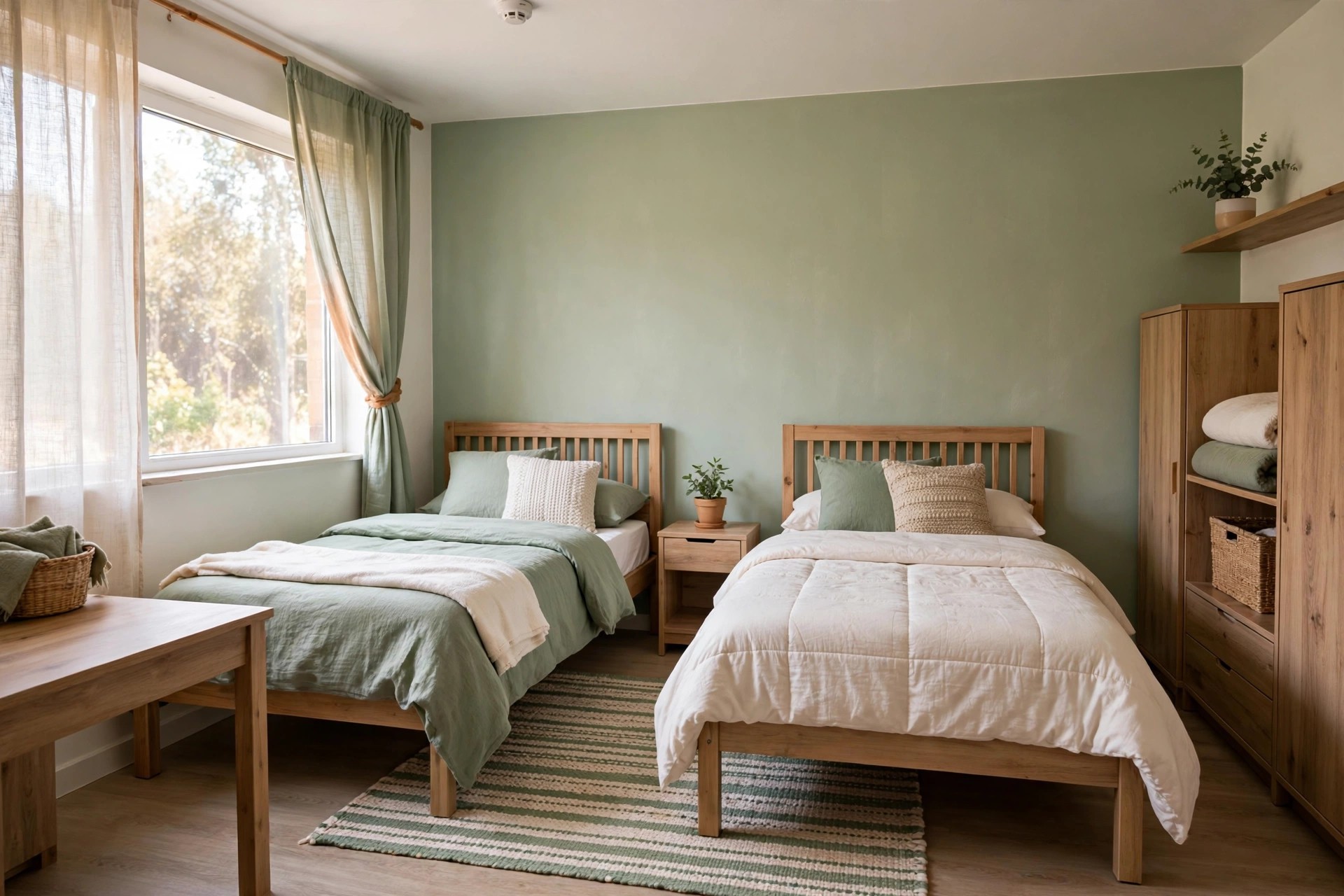
A palette is the cheapest peace treaty in a shared room. Choose two main colours plus one accent together — sage and warm white with natural wood, or dusty blue and cream with black accents — and check new purchases against it before buying. The palette does not ban personal taste; it simply stops random clashes accumulating. Textiles are the easiest place to enforce it, because bedding, cushions and towels are the largest blocks of colour in the room. When in doubt, buy the neutral version and add colour in one small, swappable piece.
12. Set Up a Get-Ready Station Away From the Desks
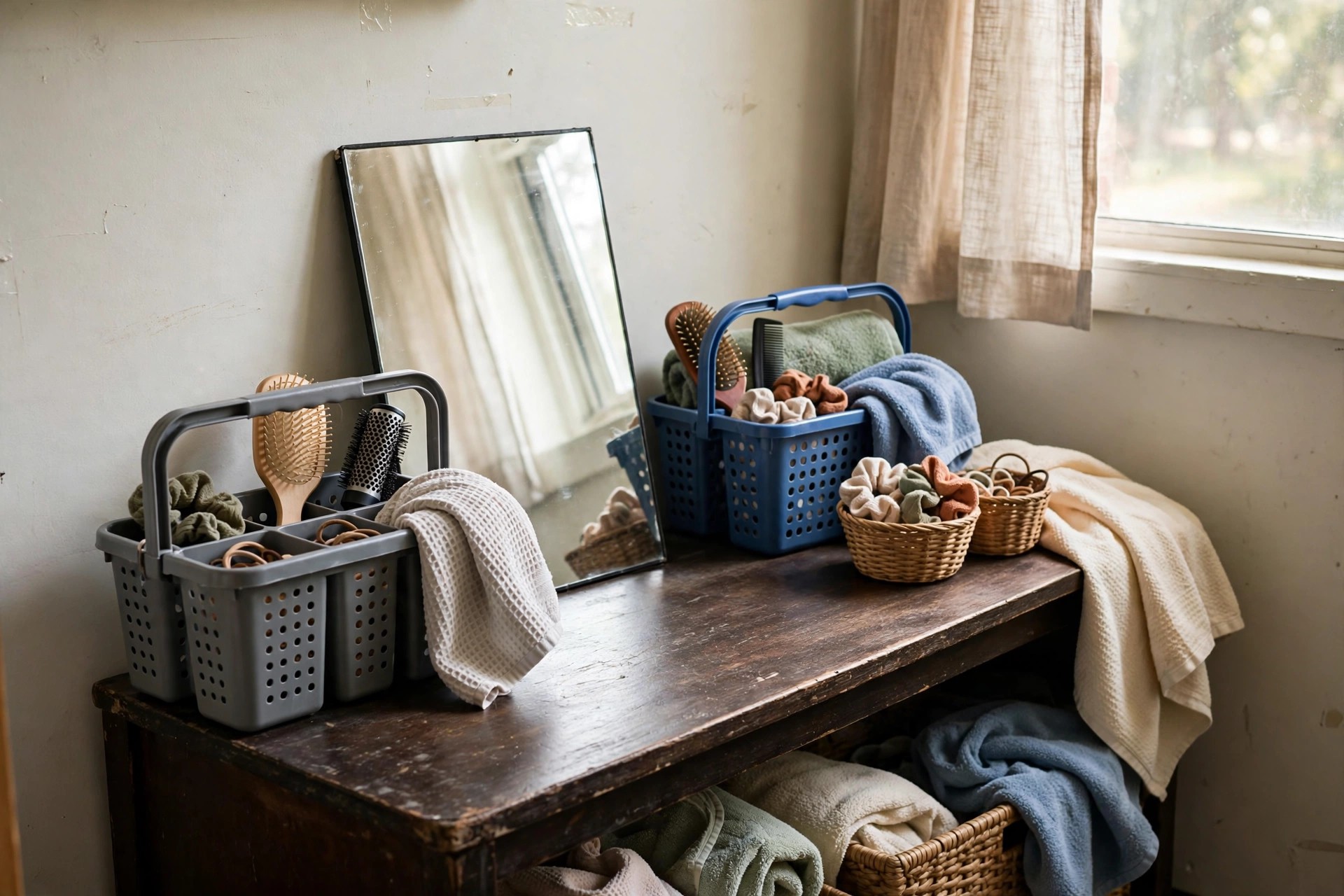
Morning bottlenecks happen when hair, makeup and mirror time all compete with study desks. Create one small get-ready station instead: a mirror propped or hung with removable strips on a dresser top, a caddy each for toiletries, and a shared basket for the hairdryer and brushes. Each person keeps their own caddy ready to carry to the bathroom, much like the caddy systems in these college apartment bathroom ideas. Desks stay clear, mornings run faster, and nobody applies mascara over an open essay.
13. Keep a Clear Floor Corner for Stretching and Workouts
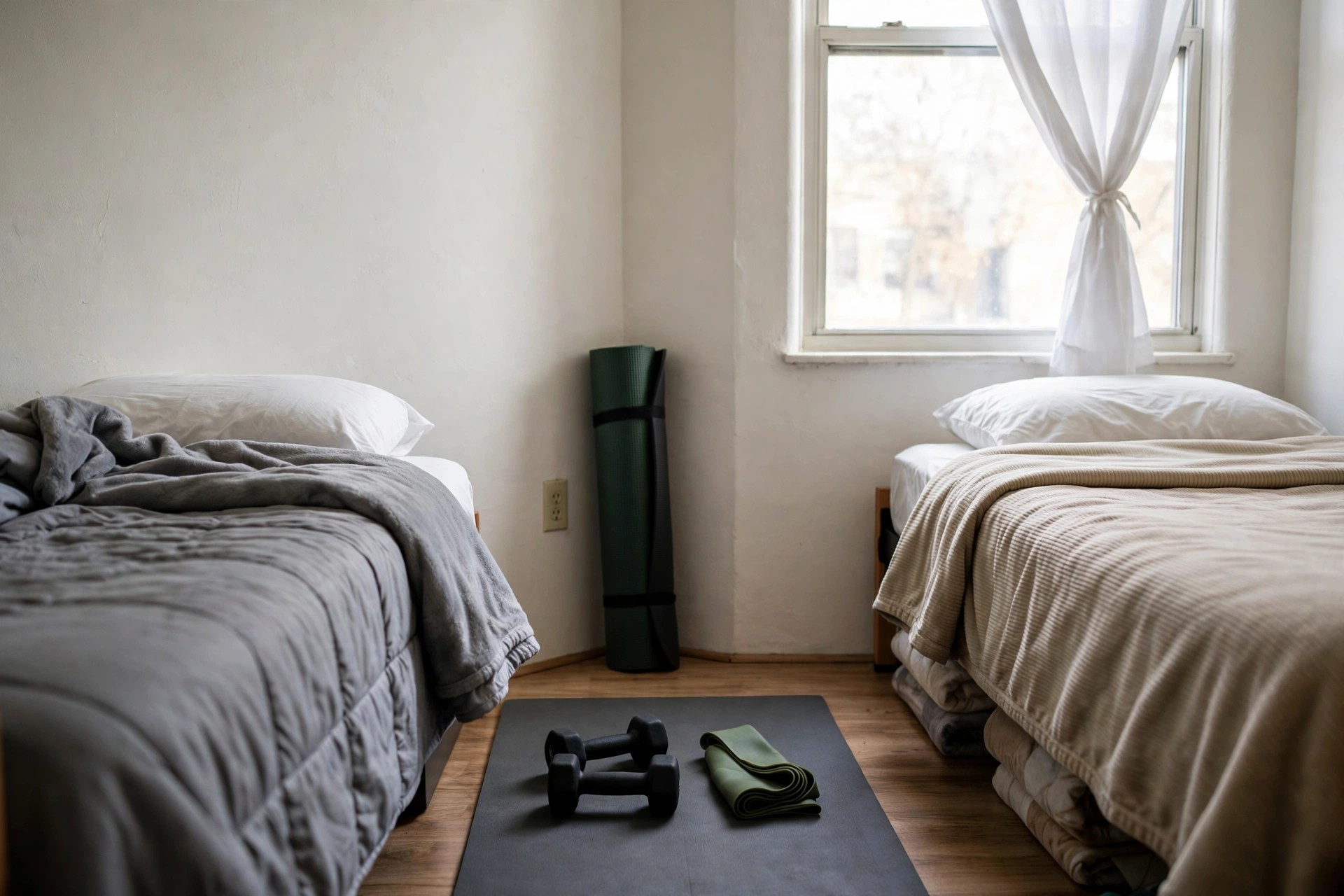
Shared rooms shrink fast, so defend one patch of floor and keep it empty on purpose. A corner wide enough for a mat covers stretching, yoga and quick bodyweight sessions, and a rolled mat plus a resistance band store vertically in seconds. The principles in these home gym corner ideas in a bedroom scale down perfectly to dorm size. Agree workout times like any other booking, wipe equipment down after use, and the corner stays a shared asset instead of one person’s territory.
14. Sort the Entry, the Laundry and the Shared Supplies
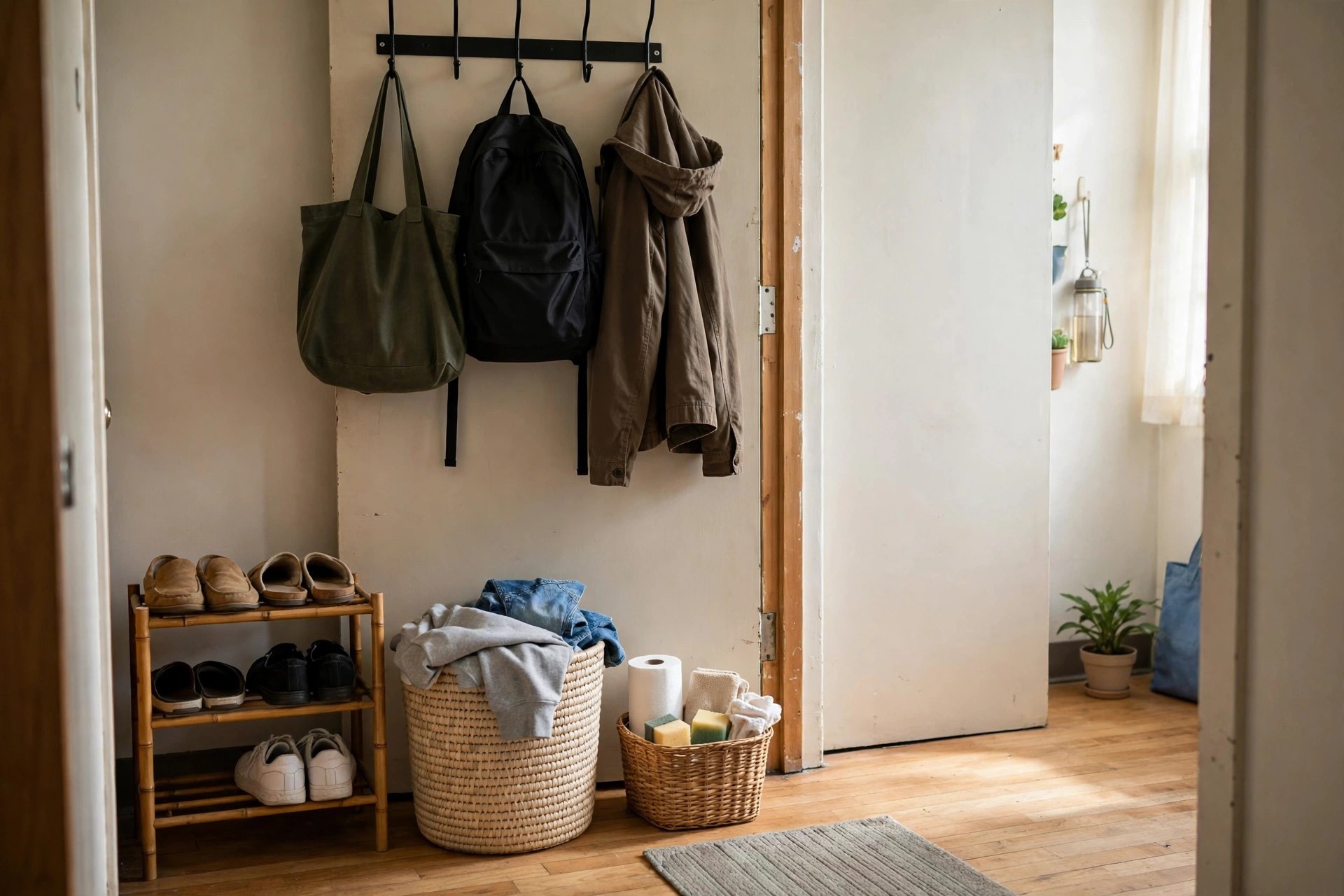
The square metre inside the door decides whether the room feels calm or chaotic. Give it a system: over-door or removable hooks for bags and jackets, a slim shoe rack, one laundry basket each, and a single shared basket for supplies like tape, batteries and cleaning spray. Shoes off the floor and coats off the beds is half of dorm tidiness achieved. Restock the shared basket together, noting purchases in a shared note so contributions stay fair.
15. Finish With a Weekly Reset You Both Stick To
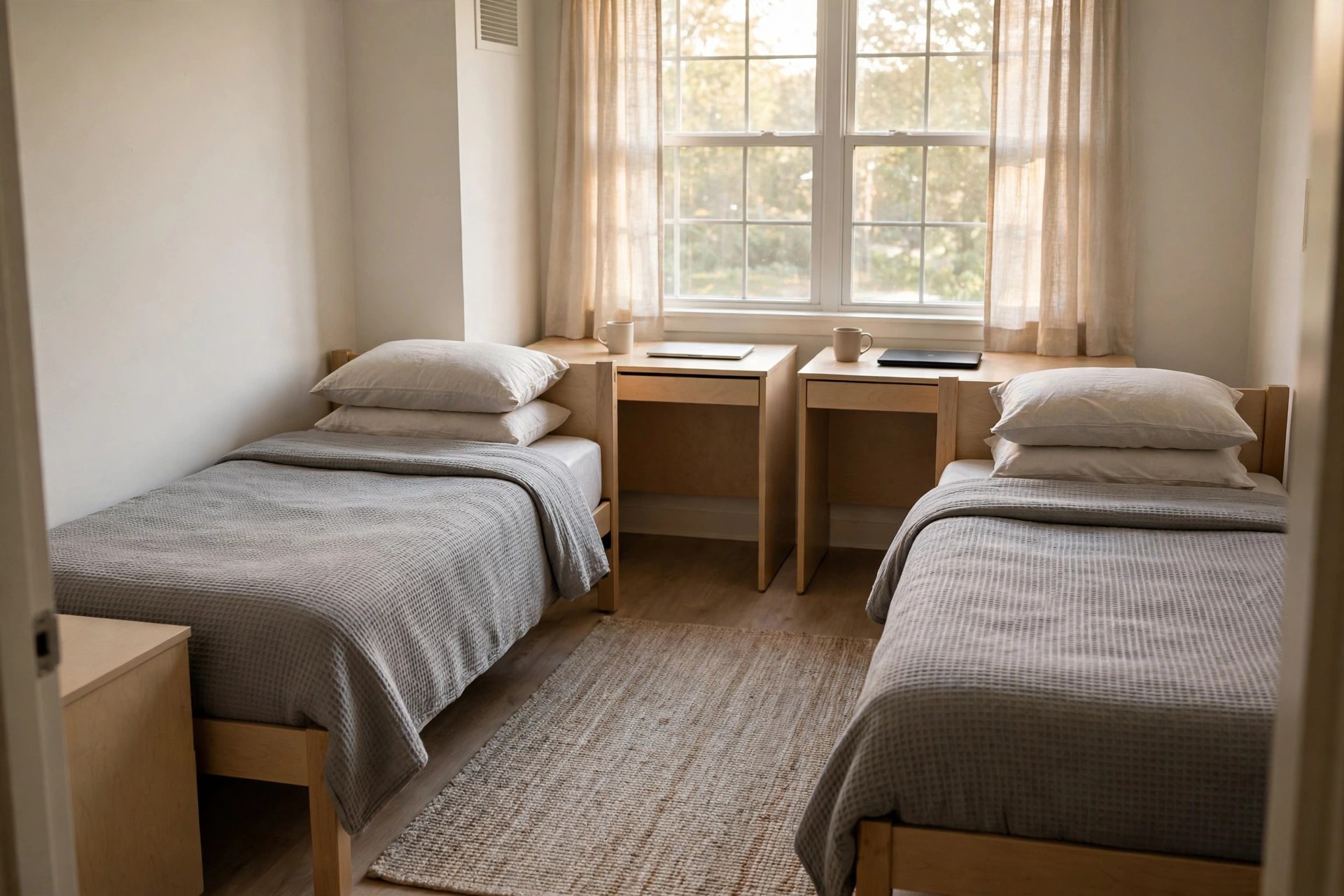
Even the best-planned room drifts. A short weekly reset — same time each week, music on, ten focused minutes each — puts it back: beds stripped or straightened, desks cleared, bins emptied, shared surfaces wiped and the floor vacuumed if your hall allows a small handheld. Split the jobs and swap weekly so neither person becomes the default cleaner. The reset is also the moment to raise small irritations calmly, before they grow. Rooms that get a regular reset rarely need a big, resentful deep clean.
Common Mistakes to Avoid
1. Letting one person decorate the whole room. It is faster, and it guarantees the other person never quite feels at home. Even if one of you cares more about decor, every shared purchase and the palette itself need two yeses. Personal zones are where individual taste runs free — shared zones are a joint project, always.
2. Ignoring dorm rules until inspection day. Paint, nails, screws and the wrong adhesive can mean charges and a rushed teardown. Check the housing rules before buying decor, choose removable and freestanding options, and test one adhesive strip in a hidden spot first. Planning within the rules is not restrictive — it is what lets your room stay finished all year.
3. Buying storage before measuring anything. Dorm furniture varies, and a box that fits one hall fits no other. Measure under-bed height, desk width and wardrobe depth first, photograph the room with measurements noted, and shop from those numbers. Guessed storage either wastes precious space or goes back — both cost time a small room cannot spare.
Frequently Asked Questions
How do we split a dorm room fairly with a roommate?
Divide the room into two personal zones and one shared zone. Beds, desks and the wall above each bed are personal; the entry, rug and any seating are shared and decided together. Run a rug or low unit down the middle as a visible border, keep a clear walkway to the door, and store shared supplies in one agreed spot so fairness is built into the layout itself.
What if my roommate and I have completely different styles?
Agree a quiet shared base — neutral bedding, rug and curtains — then express your styles only on your own side, in throws, cushions and the wall above your bed. A two-or-three colour palette keeps opposite tastes from clashing. Most style conflicts disappear once each person has territory that is fully theirs and the shared pieces belong to neither style camp.
How can we add storage without damaging dorm walls?
Use the floor and furniture first: under-bed boxes, desk organisers and wardrobe dividers. On walls, stick to removable adhesive hooks and strips within their weight limits, over-door rails and hanging organisers that hook over bed ends. Avoid nails, screws and paint entirely, test adhesives somewhere hidden, and remove strips slowly at move-out, following the packet instructions.
How do we handle different sleep and study schedules?
Layer your lighting so nobody needs the overhead light: a desk lamp each, low fairy lights for shared time and a clip-on reading light in bed. Face lamps away from the sleeping side, keep headphones at each desk, and agree quiet hours like any other house rule. A simple eye mask and a “lamp on means still working” understanding solve most schedule clashes.
Final Thoughts
A shared dorm room works when it is treated as a small partnership rather than a decorating contest. Zone the floor, agree the basics, personalise in layers and keep every fixture removable, and the room will support two different lives at once — sleeping, studying, relaxing and hosting — without daily friction. Start with the conversation, measure before you buy, and let these dorm room ideas for students sharing with a roommate grow with you both through the year.


