

How to Build a Work Capsule Wardrobe After 50: 15 Steps That Work
Your closet is full and your mornings still start with nothing to wear. The good pieces hide behind the maybes, the safe blouse needs ironing, and the same three outfits end up carrying the whole working week again and again.
This guide shows how to build a work capsule wardrobe after 50 from clothes you already own. There is no clear-out for its own sake, no long shopping list, and no rule that says you must start again from nothing at all.
You will audit first, set your colors second, and fill any gaps last, in that order. Each step follows the one before it, so nothing gets bought too early and nothing good gets thrown out in a rushed first weekend sort.
By the end, one short rail holds your work clothes, grouped and easy to see. Every top works with every bottom, your shoes match the hems, and getting dressed on a busy morning takes minutes instead of half an hour.
This post contains affiliate links. If you buy through them, we may earn a small commission at no extra cost to you. See our Affiliate Disclosure.
1. Clear One Rail and Pull Out Every Work Piece You Own

Start with sight, not shopping. Empty one rail in your closet, then hang every work piece you own on it, one by one.
Include the trousers at the back, the blouse you forgot, and the blazer behind the coats. If it could go to work, it goes on the rail.
Work on a Saturday morning with good light and a cup of tea. Two calm hours here save weeks of guessing later.
Leave weekend clothes and evening pieces where they are. This audit covers work only, and a smaller pile keeps honest choices much easier to make.
Line your work shoes along the bottom of the rail as you sort. Seeing shoes beside clothes stops you keeping outfits that never quite worked together.
2. Sort Into Keep, Repair, and Move Out Piles

Try each piece on and ask three plain questions. Does it fit today, does it feel good seated, and would you wear it this week?
Yes to all three means keep. A loose button, a drooping hem, or a tired waistband means repair, if the fabric still looks fresh.
Move out anything that pinches, pulls, or needs a body you no longer have. Bag those pieces the same day, before second thoughts creep back.
Keep the repair pile small and real. Four honest fixes you will book this month beat twelve good intentions that sit in a bag until spring.
Label three bags or boxes before you start sorting. Clear labels stop the move-out pile drifting back onto hangers when you feel unsure late in the evening.
3. Count Your Real Work Days and Your Real Dress Code

Your capsule should match your calendar, not a fantasy week. Count your office days, home days, client days, and travel days in a normal month.
Five office days need more bottoms than two. Home days still count, and our guide to work outfits for women who work from home shows how polished those days can stay.
Note your dress code in plain words too. Smart daily, business casual, or formal meetings each call for a slightly different mix.
Write the count on paper and keep it with the rail. Every later step should answer to that one honest page.
Add meeting days and presentation days as their own count. Those are the days your blazer and best blouse earn their keep, week after week.
4. Pick Two Base Colors and One Accent You Already Wear

Color is what makes a small wardrobe mix. Look at your keep pile and name the two colors that show up most often.
For most women those bases are navy and black, navy and grey, or black and warm brown. Let your own closet choose, not a chart.
Add one accent you already love near your face. Burgundy, soft teal, plum, and dusty blue all sit well with silver hair and warm skin alike.
From here on, a piece joins the capsule only if it fits this palette. That single rule stops most lonely, never-worn buys at the door.
Hold a top beside your face in daylight before you lock the accent in. The right accent lifts your whole face without any makeup changes at all.
5. Choose Three Bottoms That Fit Well Today
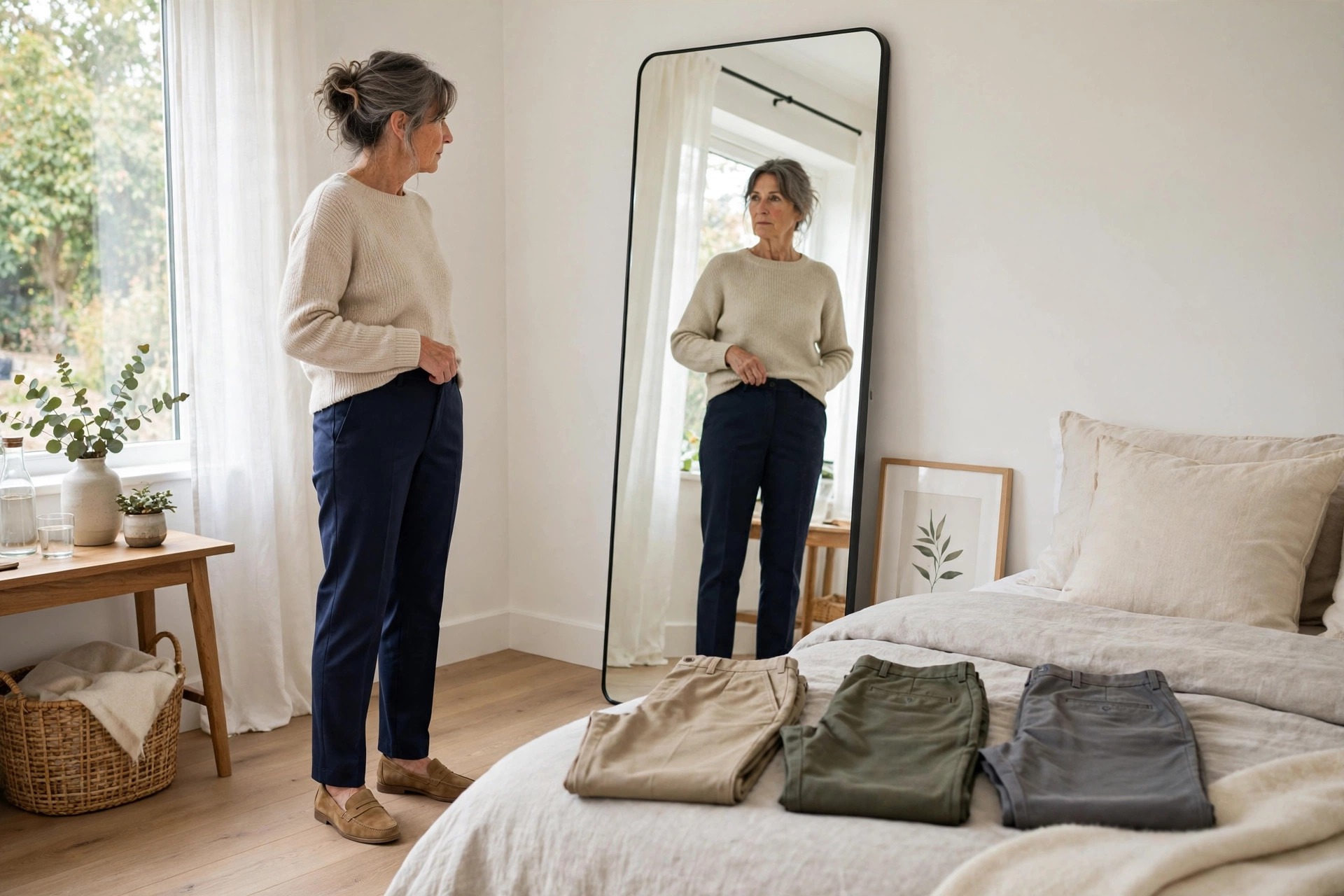
Bottoms carry the whole system, so choose them before tops. Pick three pairs in your base colors that fit at the waist today, without holding your breath.
A straight trouser, a wide-leg trouser, and one skirt or a second straight pair in the other base color cover most work weeks well.
Sit down in each pair, climb a few stairs, and bend for your bag. Ponte and wool blends with a little stretch pass this test best.
Hem lengths matter with your real work shoes. Check each pair with the loafers or low heels you wear most, not with bare feet at home.
One of the three can be a dark skirt if you wear skirts often. The same test applies here: it must pair with all five tops later.
6. Choose Five Tops That Work With All Three Bottoms

Now lay your five best tops across the bed and test each one against all three bottoms. A top that works with only one pair stays out.
Aim for a mix that covers the week: two blouses, two fine knit tops, and one neat shirt in white, cream, or your accent color.
Check necklines seated at a desk height table. A V-neck or open collar should sit clean, with no pulling when you reach for a keyboard.
Sleeve length counts on long days. Three-quarter and full sleeves in breathable cotton, modal, or fine merino keep their shape and cover the arm well.
Keep one top in your accent color for days that need a lift. It breaks up the base colors without breaking the system you have just built.
7. Add One Blazer and One Long Cardigan as Your Layers

Two layers are enough to start. One blazer in a base color gives instant polish for meetings, presentations, and days when visitors arrive unannounced.
One long cardigan in the other base color or a soft neutral handles cold offices and casual days. It should reach mid-thigh and lie flat.
Try both layers over your bulkiest knit top. If the shoulders pull or the fronts will not meet, that layer will annoy you every single wear.
Before you shop for either layer, read our notes on work outfit mistakes that age women over 50 so dated cuts stay off your list.
Store both layers on padded hangers if you have them. Good hangers keep shoulder lines smooth, so layers look pressed even after a week on the rail.
8. Add One Work Dress if Dresses Suit Your Week

A dress is the fastest outfit in the capsule. One piece, plus shoes, and you are dressed for a full day of meetings.
Choose a knee-length or midi dress in a base color, with sleeves you like and a waist that skims rather than squeezes when you sit.
A knit shirt dress or a simple wrap shape in ponte works hard here. Both layer under your blazer and stand alone on warmer days.
Skip this step without guilt if you never reach for dresses. A capsule built on trousers alone still works, and closet honesty always beats a formula.
Check the dress pockets and hem while seated in a chair. A hem that rides too high at a desk will bother you in every long meeting.
9. Pick Two Pairs of Shoes You Can Walk in All Day

Shoes end more good outfits than tops ever do. Choose two pairs you already trust for a full day of corridors, stairs, and the walk to lunch.
For most capsules that means one pair of loafers and one low block heel or neat ankle boot, both in your base colors.
Test each pair with all three bottoms. A shoe that fights your wide-leg trousers but loves your skirt still earns a place, with that note attached.
Clean and polish both pairs now, while you build. Scuffed shoes make even a strong capsule look tired before the day has started.
Keep shoe care simple: a soft brush, a cloth, and five minutes on Sunday. Small habits like this stretch the life of both pairs by months.
10. Write Your Gap List on Paper Before You Shop

Stand back and look at the rail. What is missing for two full weeks of work: a second blouse, a warmer layer, a belt?
Write each gap on paper, with color and fabric noted. Cream fine-knit top is a list item. Nice top is not.
Keep the list short on purpose. Most women find three to five true gaps, and our from-scratch guide to how to build a work wardrobe from scratch shows the same gap-first habit.
Carry the list on your phone. A capsule grows by that list alone, never by a pretty rail in a shop window.
Rank the gaps in order of need. The piece that unblocks the most outfits goes first, and the nice extras wait until the core rail works daily.
11. Fill Each Gap With the Three-Way Test

Shop slowly, one gap at a time. A new piece joins only if it makes at least three outfits with pieces already on your rail.
Try it seated, standing, and with your work bag on your shoulder. Waistbands, seams, and hems should stay calm through every move.
Fabric earns its keep here. Ponte, wool blends, cotton with a little stretch, and fine knits hold their shape through long sitting days best.
If a piece fails the test, leave it with thanks. The right version exists, and a nearly-right buy becomes next year clutter faster than any other kind.
Take your most worn bottoms shopping with you when you can. Matching color and weight in real shop light prevents the near-miss buys that clog rails.
12. Build Ten Outfit Formulas and Photograph Each One
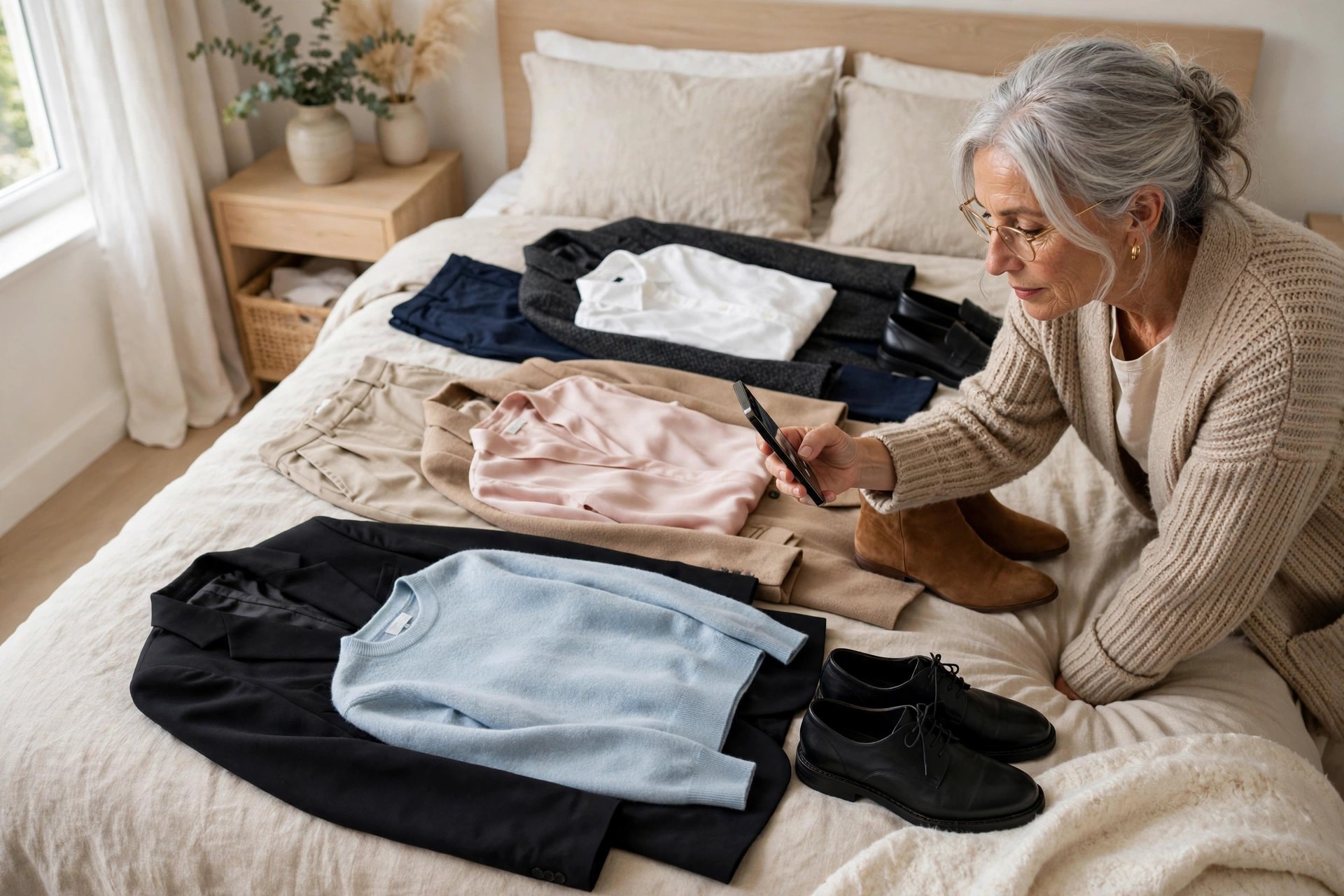
Now make the capsule prove itself. Lay out ten full outfits on the bed: bottom, top, layer, and shoes for each working day across two weeks.
Photograph every outfit on your phone and save the set in one album. On a rushed Tuesday, that album answers faster than any mirror debate.
Swap one piece at a time when a pairing feels flat. A different layer or shoe often fixes the outfit without new clothes.
Note the outfits that suit client days and the ones that suit quiet desk days. Knowing which is which removes the last bit of morning stress.
Include one outfit for the unexpected formal day. A blazer over your dress or best blouse covers it, so no panic buy ever joins the rail.
13. Hang the Capsule Together and Move the Rest Out of Sight

Give the finished capsule its own rail or closet section, grouped by type: bottoms together, tops together, layers at the end where your hand lands first.
Move off-season and spare pieces to another rail, a spare room, or clear boxes up high. Out of sight keeps mornings fast and choices calm.
Leave a little air between hangers. Clothes you can see clearly are clothes you wear, and crushed knits lose their shape long before their time.
For lighter weeks ahead, our ideas for spring work outfits for women over 50 show which capsule pieces carry into soft color well.
Use slim hangers in one color for the capsule section. A calm, even row makes gaps and repeats easy to spot at a single morning glance.
14. Run a Two-Week Rotation and Note What Earns Its Place

Wear the capsule for two full work weeks without adding anything. Follow your photo album, repeat outfits without worry, and let real days do the testing.
Keep brief notes on your phone. Which waistband stayed kind all day, which top needed fussing, which shoes handled the long walk to the parking lot?
Repeats are a good sign, not a failure. In most offices nobody tracks your outfits, and a trusted rotation reads as steady personal style.
If your office leans relaxed, compare your notes with our work outfits for a business casual office and adjust the mix, not the method.
At the end of week two, move any unworn piece to the spare rail. No blame attached: your real week has spoken, and the capsule should listen.
15. Review Monthly, Repair Fast, and Replace Only What Earns It

Set one short review each month, perhaps the first Sunday with coffee. Check seams, hems, shoe heels, and any piece that felt off.
Book repairs that week, while the fault is small. A resewn button and a cleaned loafer cost little and keep a good piece in service for years.
Replace only when a core piece truly wears out, and replace it inside your palette. One out, one in keeps the rail lean without any drama.
At each season change, swap a few pieces in and out and repeat the photo step. Ten fresh formulas carry the new season.
Keep a small sewing kit in the closet for loose threads and buttons. Two minutes with a needle saves a good piece from the repair pile.
A smaller work wardrobe is not about owning less for its own sake. It is about opening the closet and seeing outfits, not questions, on a busy morning.
Start with the rail you already own, and let the steps above show you how to build a work capsule wardrobe after 50 that fits your real week.
Save this to your work outfits board for later. Work through one step at a time, and your mornings will feel calmer within two weeks.


