

15 Bedroom Wall Art Ideas for Meditation Corners at Home
The corner by the window sits empty except for a cushion, and the blank wall behind it makes the spot feel unfinished. One calm picture at the right height fixes that fast.
A meditation corner needs very little wall art. One or two quiet pieces, hung low where your eyes rest while you sit, do more than a busy row of frames ever will.
This list of bedroom wall art ideas for meditation corners at home stays on that one small wall. Each idea suits a floor cushion or a low chair, with soft colors and lots of clear space around the art.
If you want art for the whole room instead, our guide to a meditation focused bedroom covers that wider job.
Sit in the corner before you hang anything. Note where your eyes rest, how the light falls at the hour you use the spot, and how much wall the cushion and side table leave you.
This post contains affiliate links. If you buy through them, we may earn a small commission at no extra cost to you. See our Affiliate Disclosure.
1. One Large Misty Landscape Print at Seated Eye Level
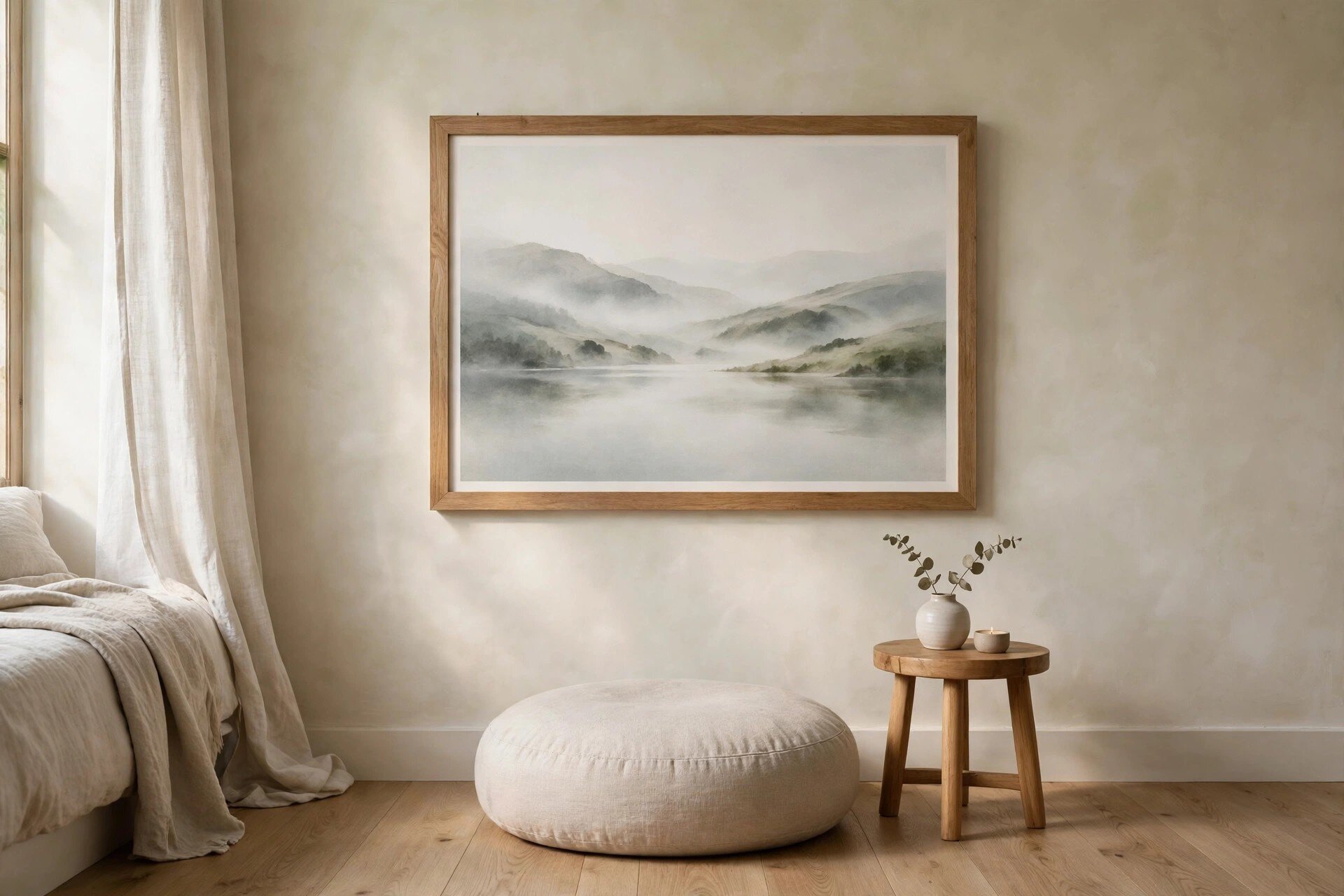
Start with the simplest fix of all. Hang one large print of a misty lake or soft hills right where your eyes land when you sit on the cushion.
Keep the center of the frame low, close to seated eye level, not at standing height. From the floor, a picture hung for standing eyes sits far too high and pulls your gaze up.
Choose pale gray, soft blue, and faded green tones with no sharp detail. A thin light wood frame keeps the piece quiet, and clear wall on all four sides lets it breathe.
Test the height from the cushion, not from standing. Sit down, look at the wall, and mark the spot your eyes meet first, then center the print on that mark. That one mark saves a row of test holes in the wall.
2. A Single Ink Wash Abstract in Pale Blue and Gray
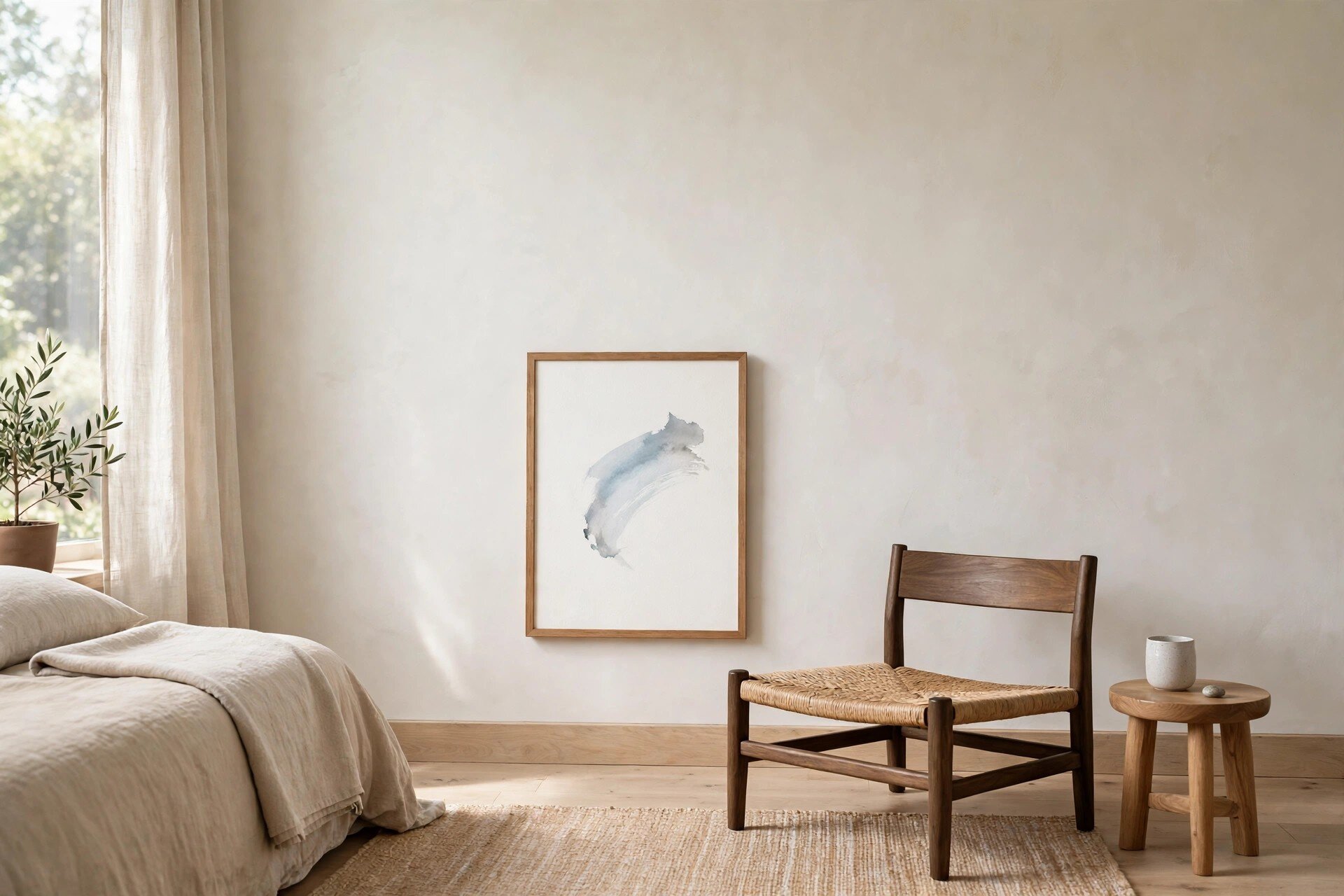
A busy corner defeats the point of the spot, so pick art with almost nothing in it. An ink wash abstract has one soft brush shape and a lot of empty paper.
The loose edges give your eyes a slow place to rest before you close them. Hang it alone, with no small frames beside it competing for attention.
Matte paper matters here. Glass can catch the window light and throw a bright patch across the ink, so pick a frame with low glare glass or leave the print unglazed.
A wood frame in a pale finish suits the soft wash best. Dark frames draw a hard box around the ink and make the gentle shape look smaller and sharper. Pale frames also sit better beside light bedding and plain walls.
3. Two Small Botanical Prints With Wide White Mats
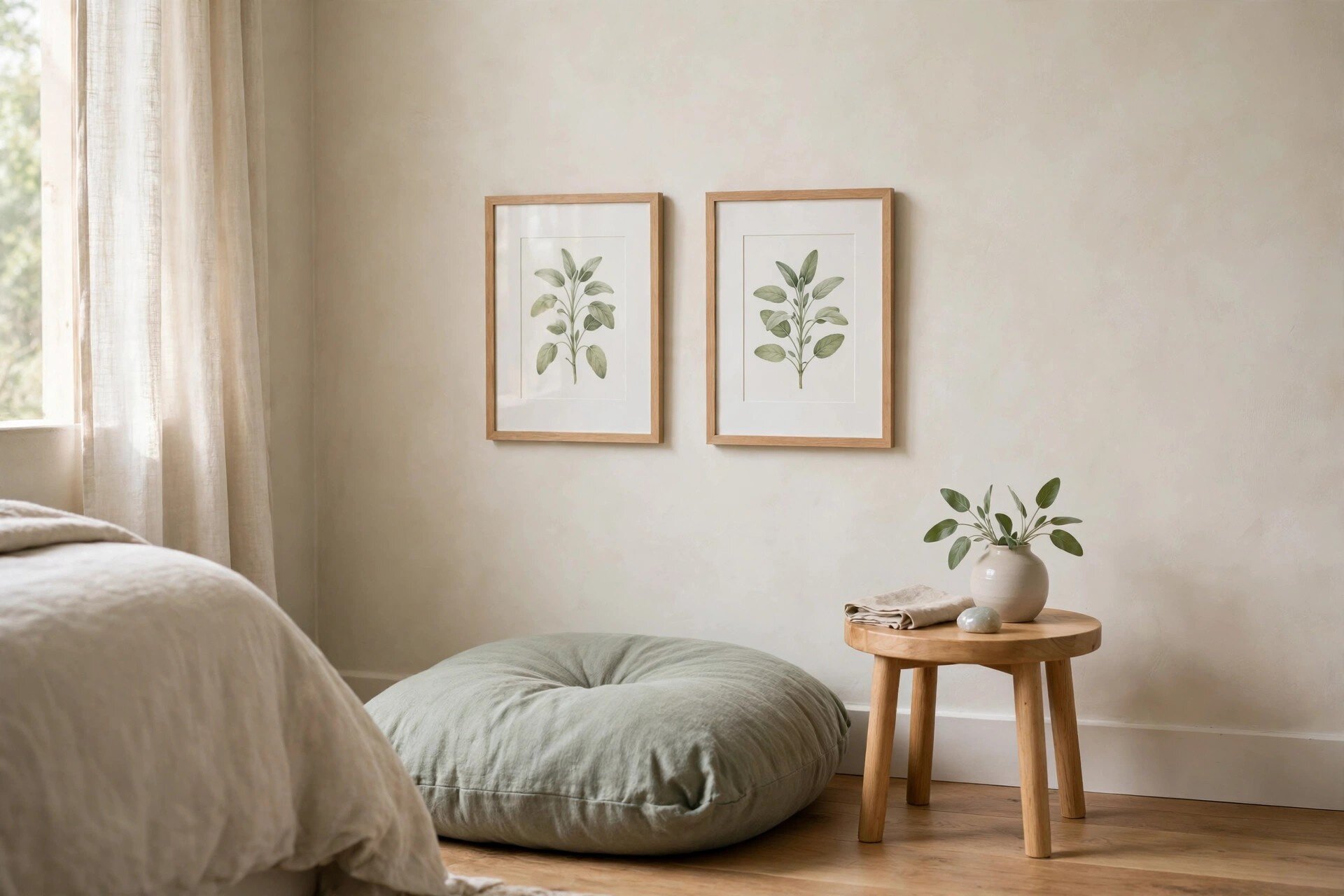
Green leaf prints suit a corner where you sit to slow down. Pick two small prints of simple leaves, one stem per page, and keep the shapes plain and open.
Wide white mats do the quiet work. The mat gives each leaf room, so the pair reads as calm white space first and art second.
Hang the two frames in a short row or one above the other, close together. Our sage green botanical print ideas show more leaf styles in the same soft range.
Keep both prints in the same color family, like sage and soft fern. Two greens that clash will pull your eye back and forth each time you sit down. Same size frames keep the pair tidy from every seat angle.
4. A Round Mandala in Muted, Faded Tones
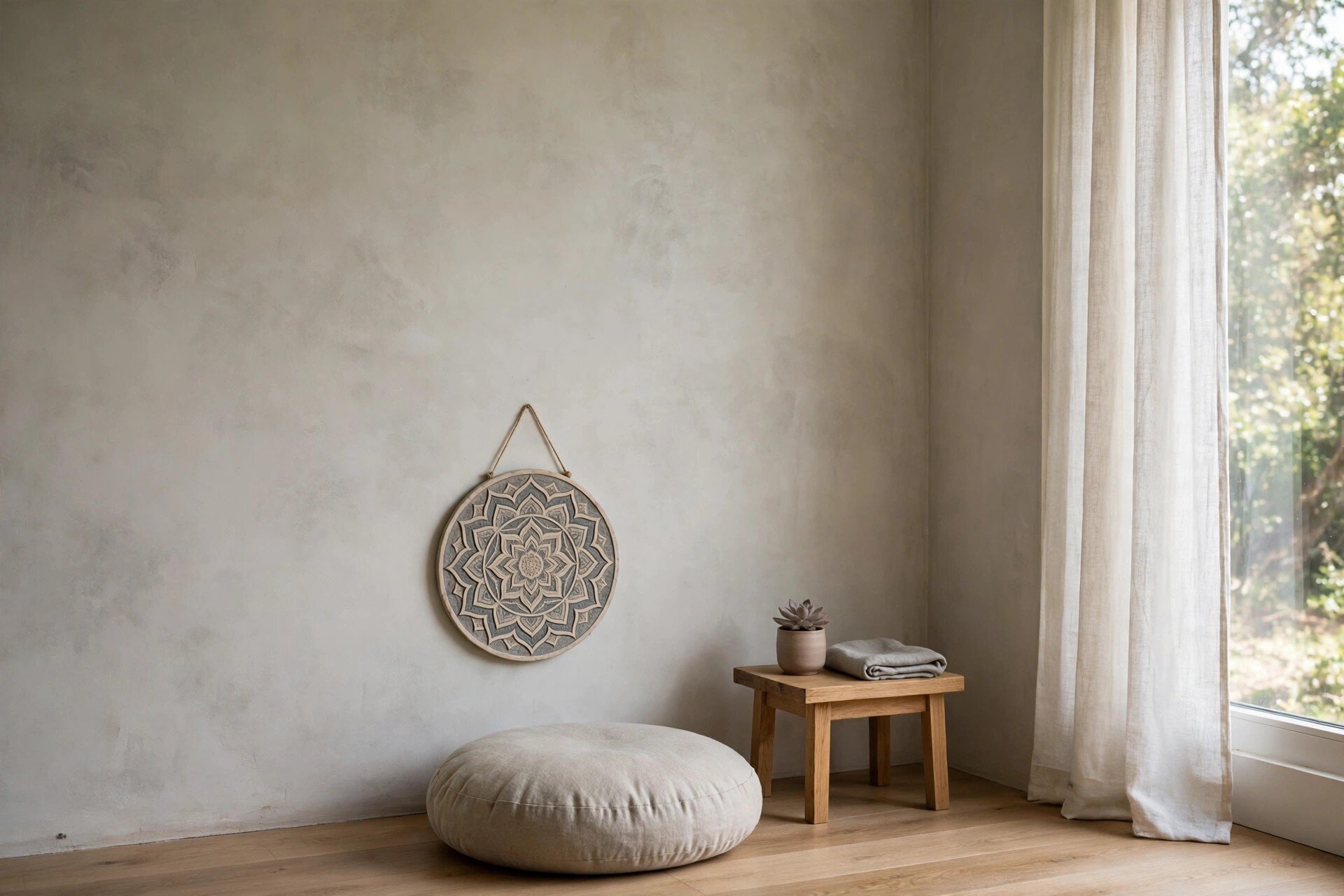
A round piece breaks up all the straight lines of a corner. A mandala in faded clay, sand, and soft gray feels warm without shouting for attention.
Skip bright rainbow versions for this spot. Strong color and tight detail keep the eye busy, and busy is the last thing you want above your cushion.
Hang it a little above seated eye level so the full circle stays in view when you sit back. One round piece is plenty, so leave the walls beside it bare.
Size the circle to the corner, not the room. A piece about as wide as your cushion works well, while a huge mandala will swamp a small nook fast. From the doorway, the circle should read soft, not bold.
5. One Simple Line Drawing With Lots of Air Around It
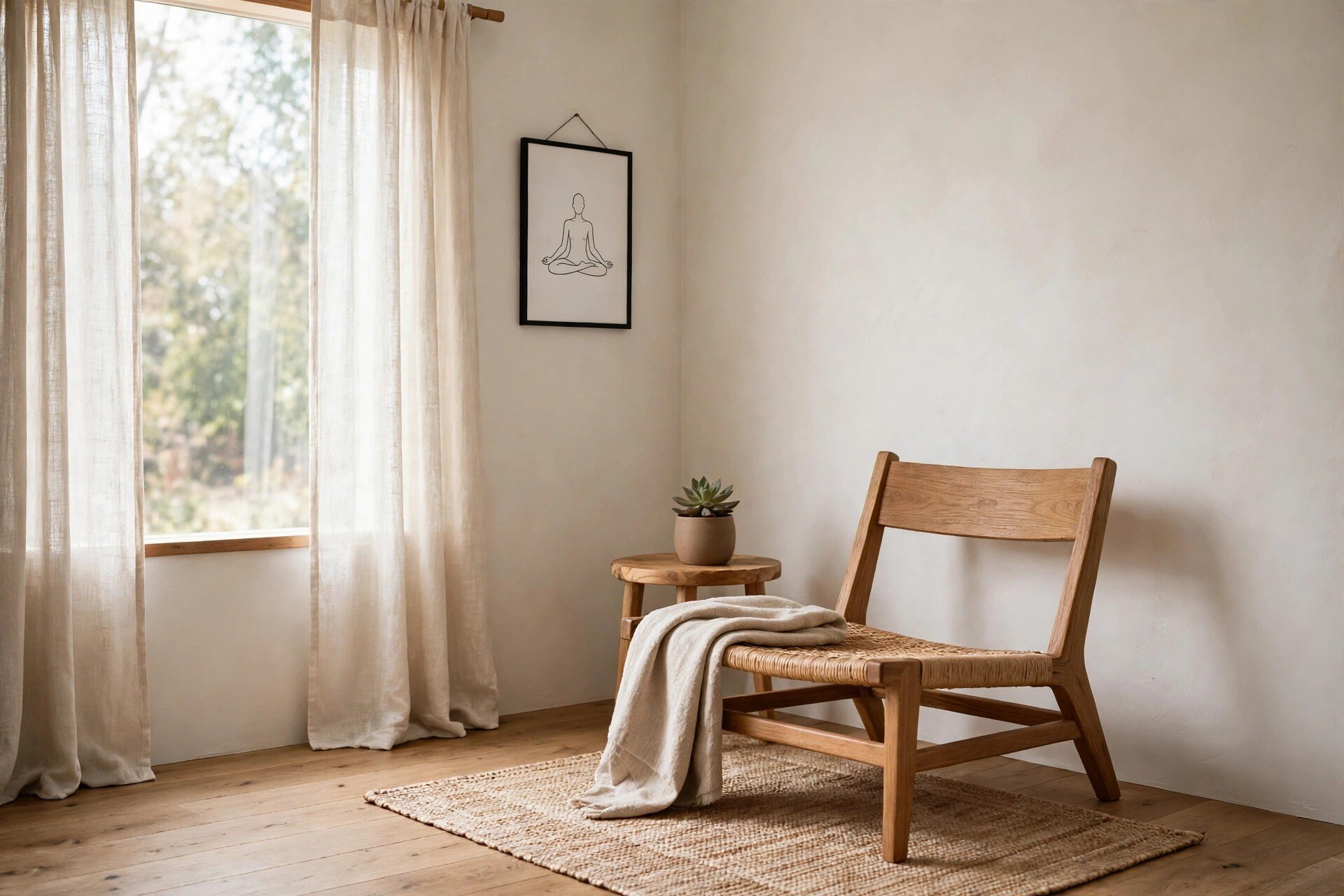
A single line drawing of a seated figure or a slow wave line says a lot with very little. The thin black line on white paper keeps the wall feeling light.
Give this piece more empty wall than you think it needs. Stand back from the door and check that no dresser edge or door frame crowds the drawing.
A slim black or pale wood frame suits the thin line best. Thick dark frames weigh the drawing down and make the small corner feel smaller than it is.
Check the drawing in the light you sit in most. Thin lines can fade out in bright sun, so a wall with soft side light shows the line best. Soft side light also keeps harsh shadows off the paper.
6. A Soft Cream Textile Panel Hung Flat on the Wall
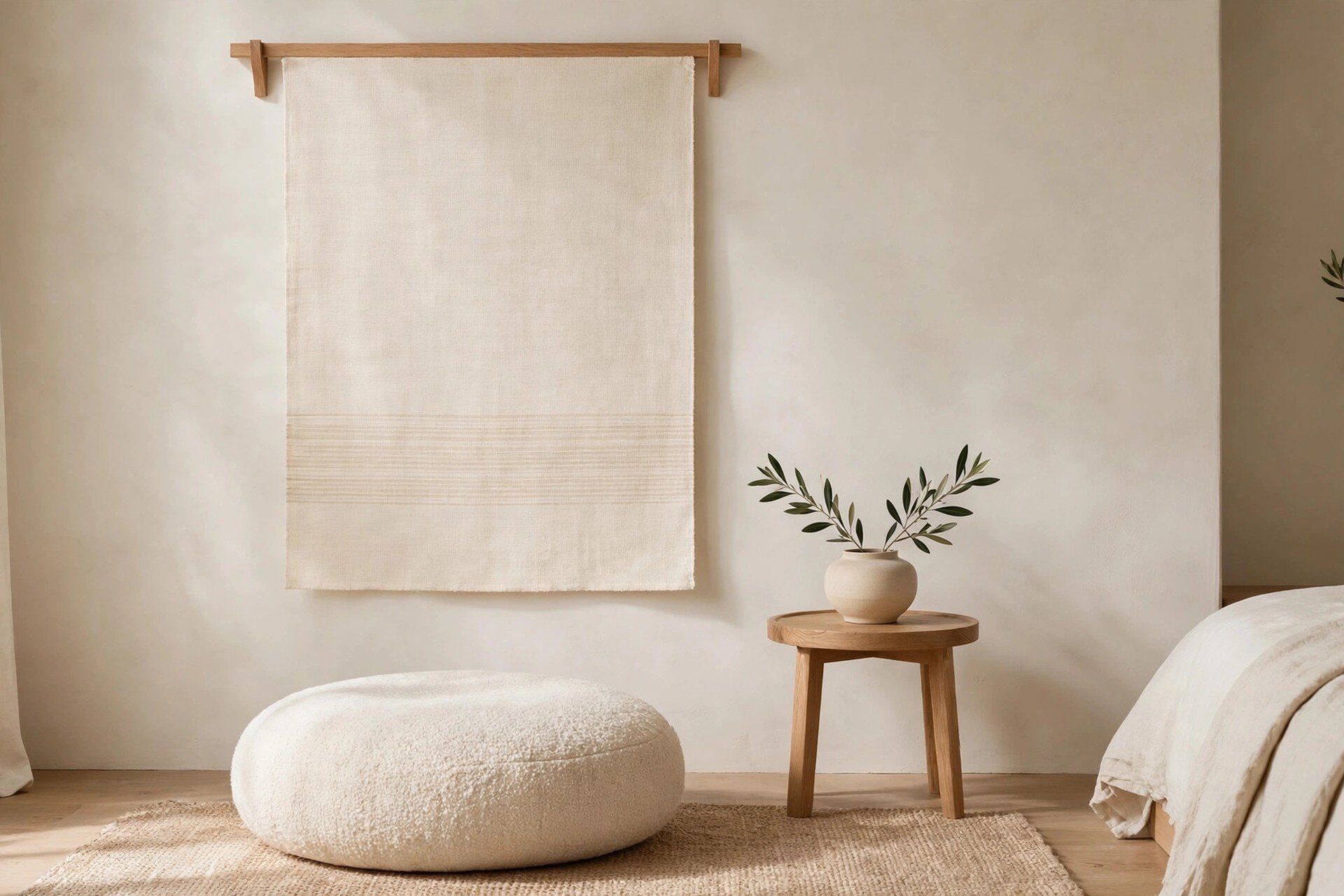
Fabric softens a corner in a way paper cannot. A plain cream or oatmeal textile panel with a faint woven stripe adds warmth and takes the echo off hard walls.
Hang it flat from a slim wood bar so it sits close to the wall. Loose, swinging fabric can catch a draft from the window and keep moving in the edge of your view.
The pale tones pair well with the neutral beige and cream wall art many bedrooms already use, so the corner blends with the rest of the room.
Pick a woven panel with no bold pattern or words on it. A faint stripe or plain weave keeps the texture calm and lets the fabric do the work. Plain weave also hides small dust marks better than print.
7. A Frameless Canvas of Still Water and Smooth Stones
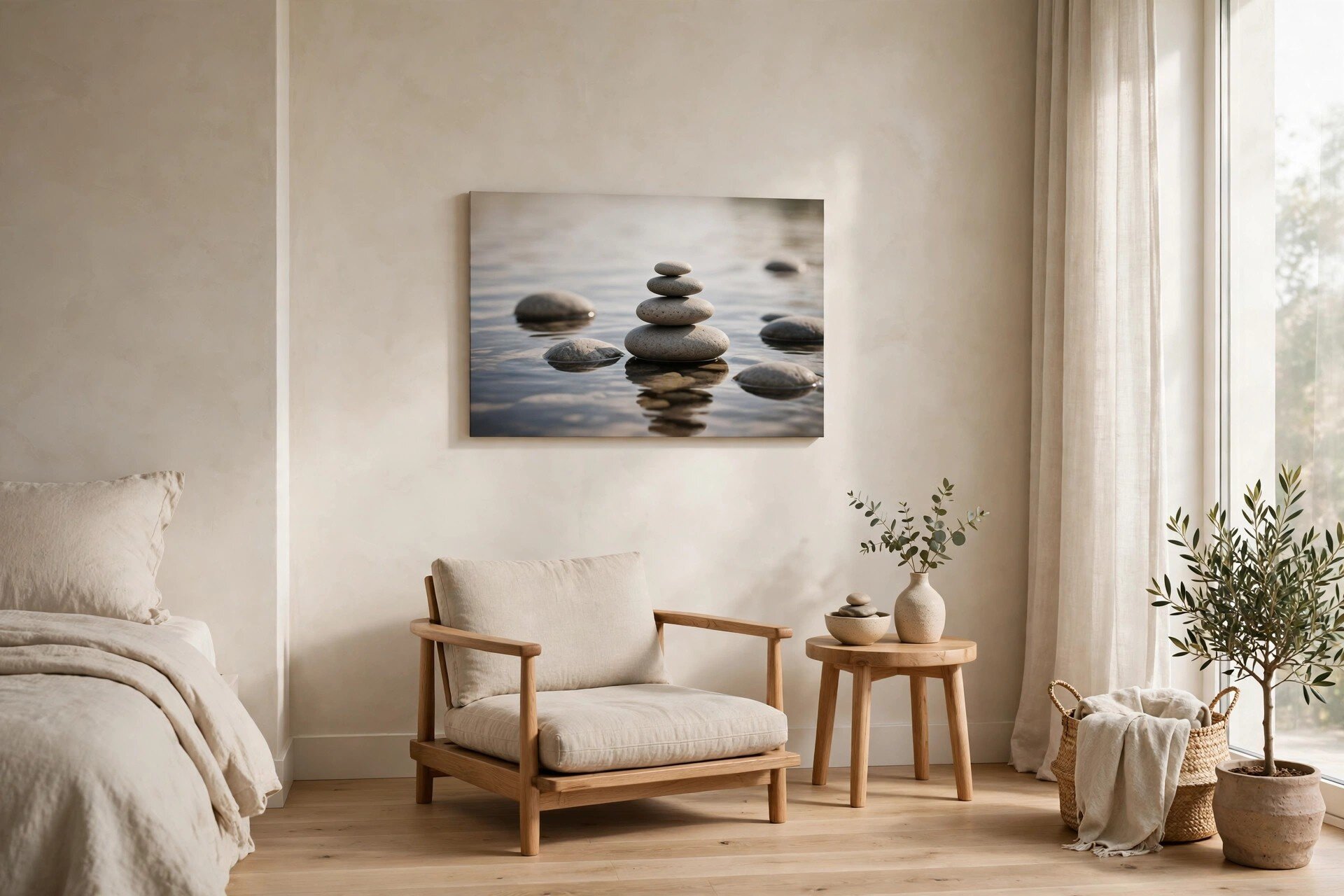
A close photo of still water or smooth stacked stones gives the corner a slow, steady image. Printed on canvas, the soft surface has no glass to catch glare.
Canvas also keeps edges clean. With no frame line, the picture feels like part of the wall, which suits a spot where you want as little visual noise as possible.
Pick a size that stays inside the width of your cushion or chair. Art wider than the seat looks top heavy and makes the tiny corner feel off balance.
Rest the bottom edge of the canvas just above the back of a low chair, if you use one. That low line keeps the image inside your seated view. That low line also hides the top wall gap well.
8. A Two Panel Abstract Pair With a Small Gap Between
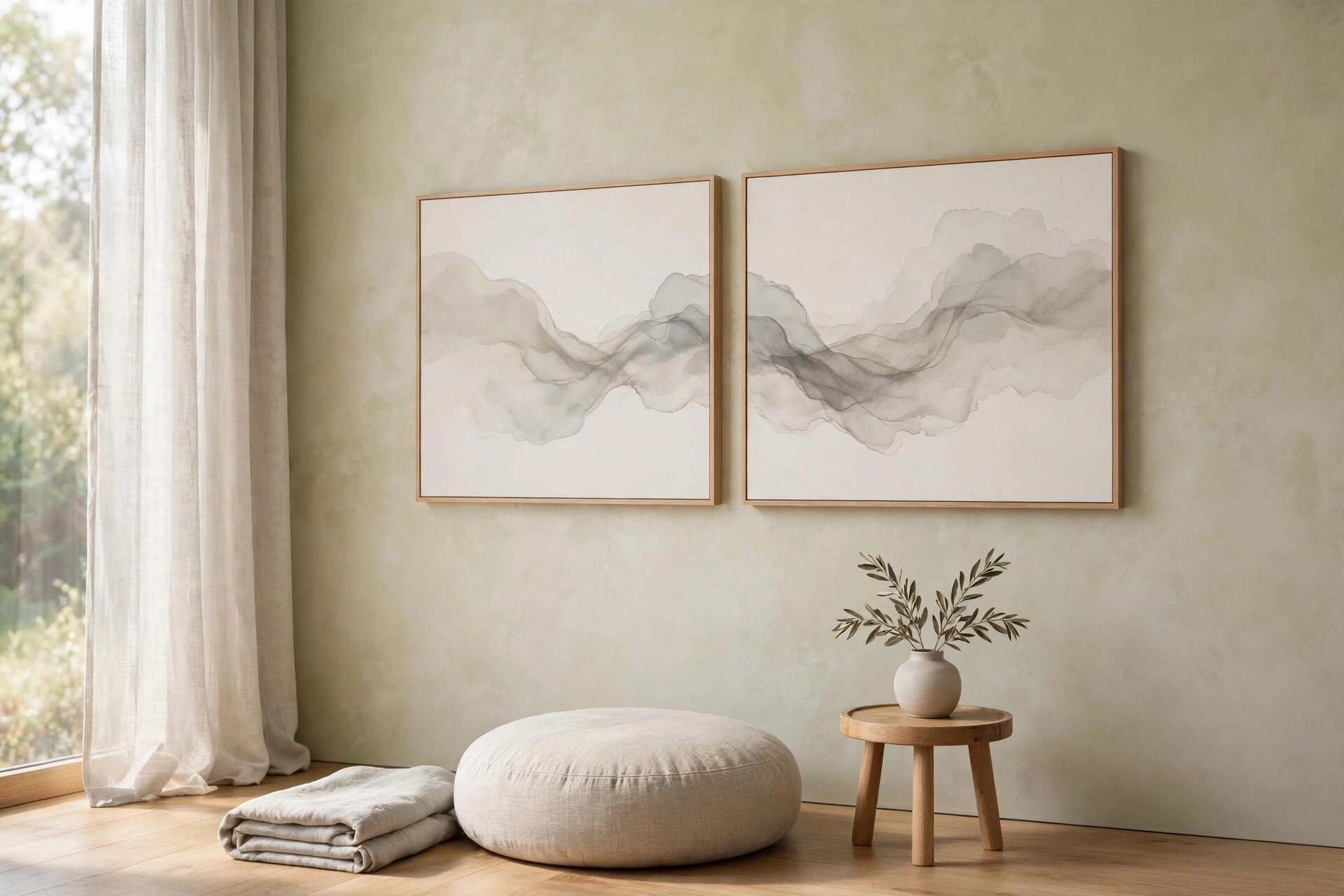
Two panels can work in a corner if the art stays soft. Choose an abstract pair in pale sand and gray, where one soft shape drifts across both panels.
The small gap between the frames is part of the look, so keep it even, about one to two inches. Crooked gaps show up fast when you sit facing them every day.
For more paired formats, see the diptych abstract wall art ideas in this series, then borrow the softest color mixes for your corner.
Hang both panels from the same level line and check them from the cushion. From low down, a panel that sits even a touch high stands out at once. Sit back once more before you call the pair done.
9. A Single Forest Path Photo in Soft Morning Light
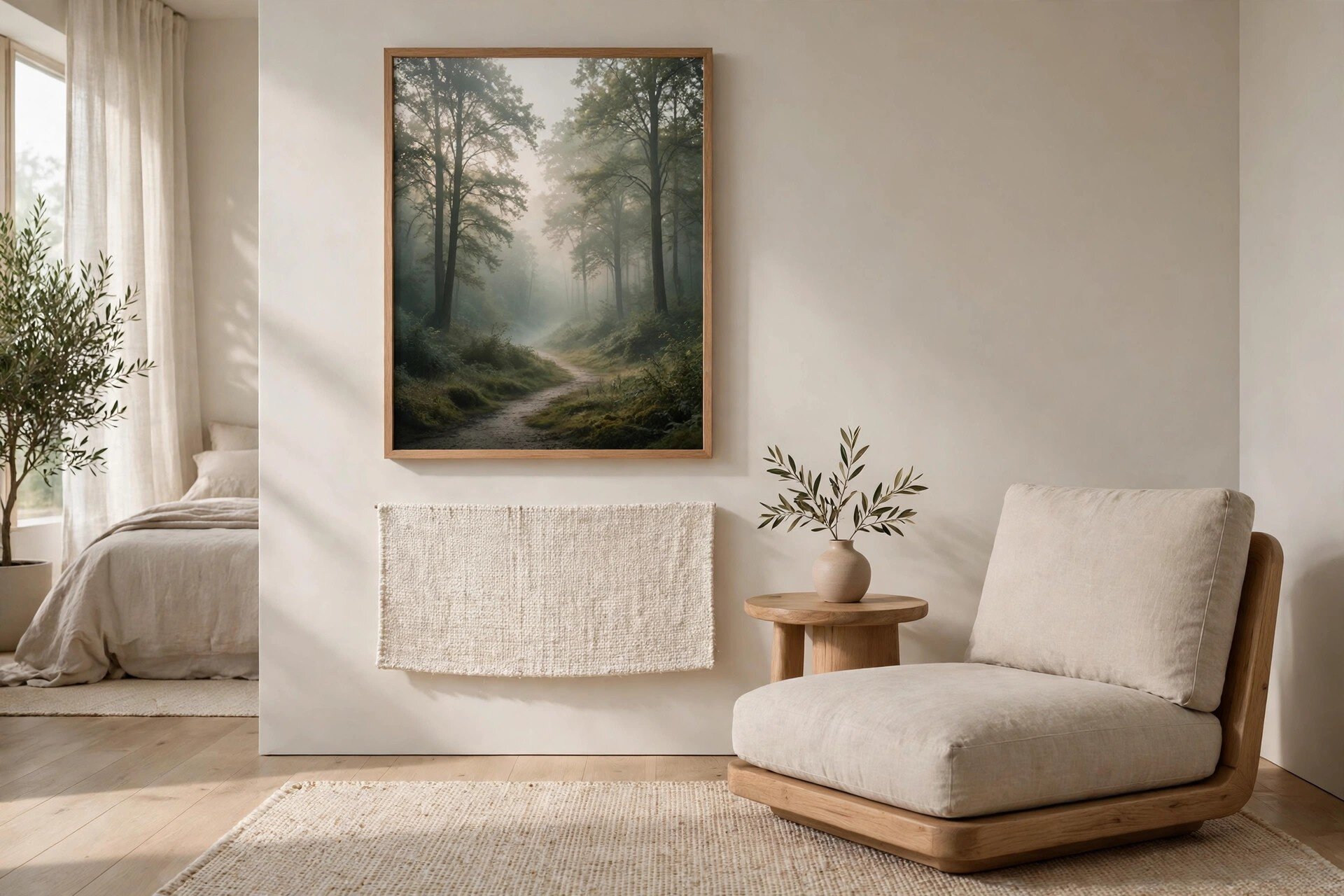
A photo of a path through pale trees gives your eyes a gentle place to walk before you settle. Pick one with soft light and no people, signs, or bright spots.
Green is an easy color to sit with, but keep it faded, not rich and dark. A misty morning shot reads lighter and leaves the corner feeling open.
Hang the photo on the wall you face, not the side wall. A side picture pulls your head and shoulders out of line each time you glance at it.
A thin white mat around the photo adds a calm border. It also keeps the green tones from running right up to the frame edge and feeling too full. The border makes the photo feel calm, not busy.
10. Three Tiny Prints in One Slim Vertical Column
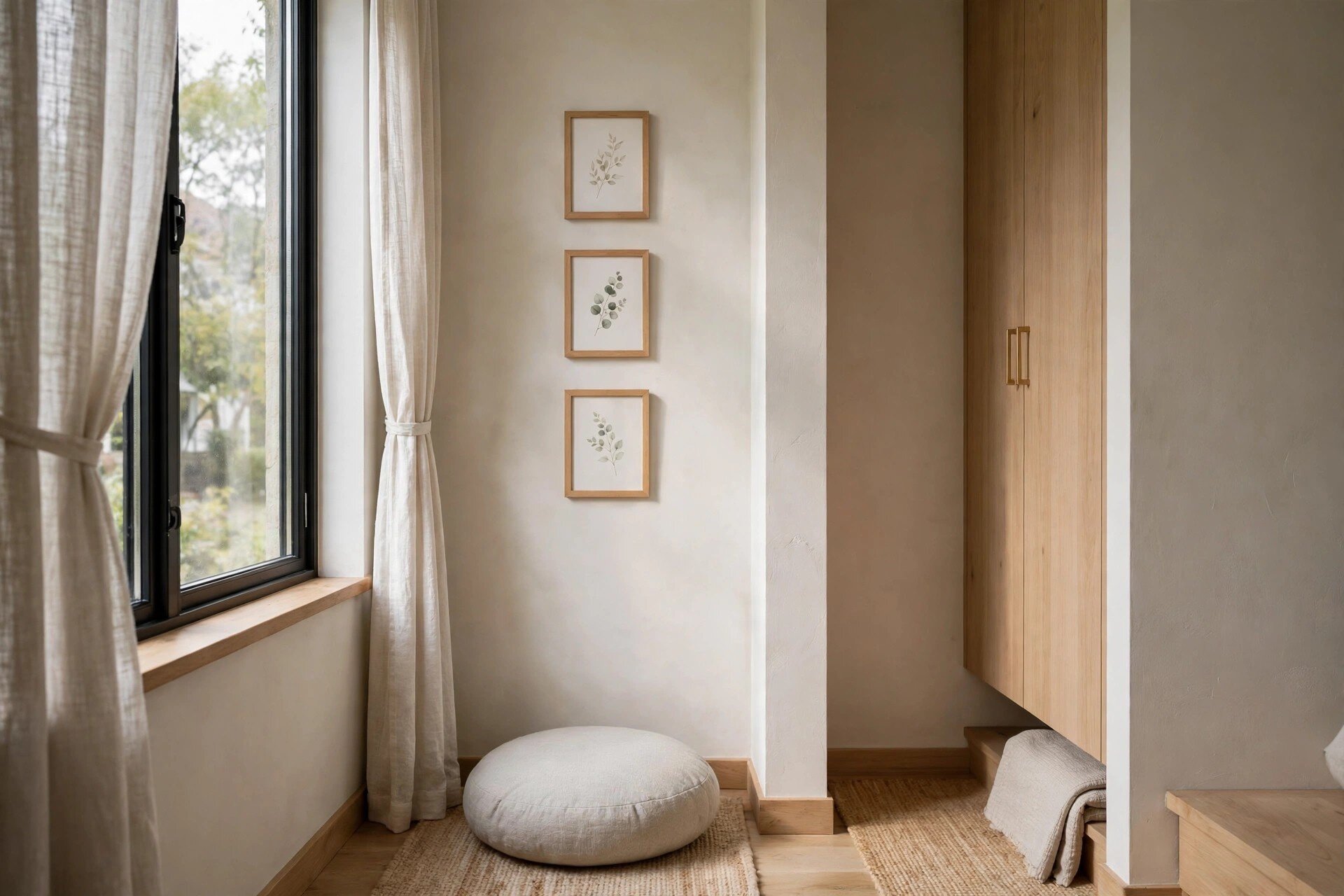
Some corners only have a narrow strip of wall between a window and a closet. Three tiny prints in one straight column fit that strip without crowding it.
Keep all three frames the same size and the same frame color. Matching frames make a column read as one calm piece instead of three small ones shouting.
Use simple images that link by color, like three pale leaf or stone prints. Even spacing matters most, so measure the gaps once and the column will sit straight.
Leave a hand width of clear wall on each side of the column. That small margin keeps the narrow strip from feeling packed, even with three frames on it. Clear margins also make dusting around the frames far easier.
11. One Small Arched Mirror Beside a Calm Print
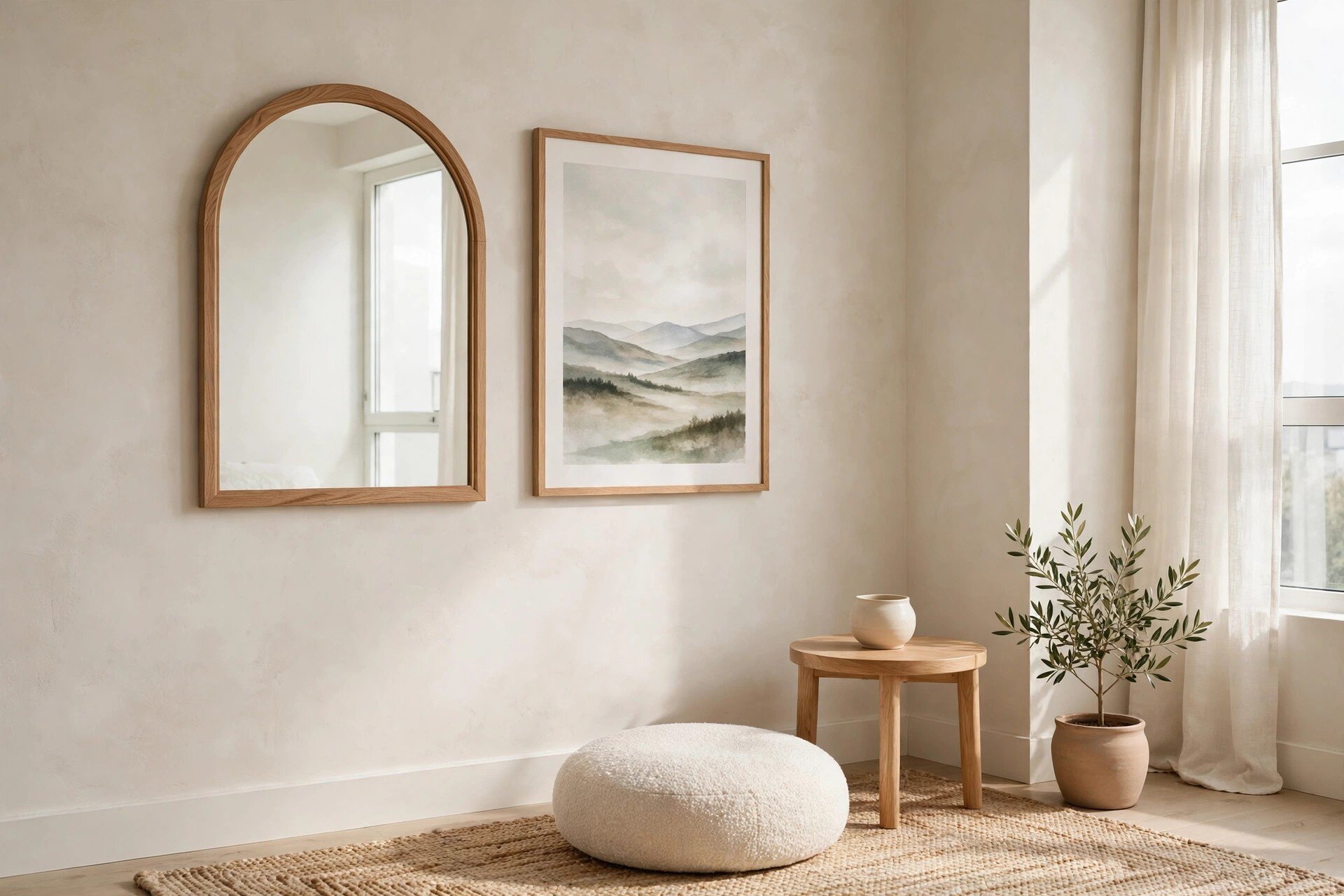
A small arched mirror beside one calm print softens a hard corner. The arch echoes the curve of a floor cushion and bounces a little soft light onto the wall.
Angle matters here. Check from your seat that the mirror reflects the window or a plain wall, not the bed, a closet pile, or a bright lamp.
Pair it with one print only, at the same height, with clear space below. More pieces around a mirror turn a quiet corner into a busy display fast. The arched mirror pairing ideas show other soft pairings.
Keep the mirror small, no wider than the print beside it. A big mirror takes over the corner and turns the spot into a place to check your hair. Small scale also keeps the corner cheap to change later.
12. A Short Row of Moon Phases in Pale Gold and Gray
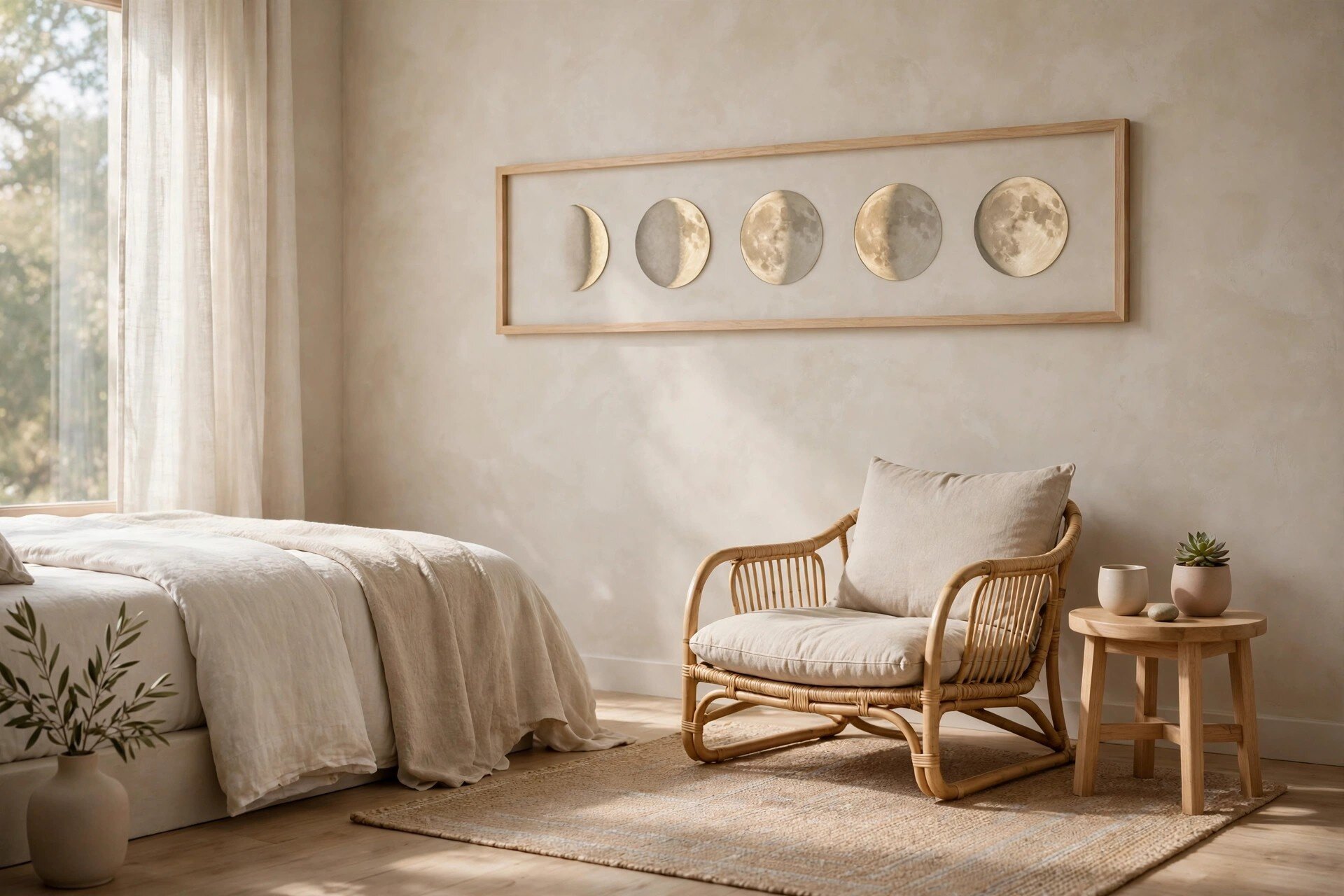
A short row of moon phases suits a corner used at night. Five small circles in pale gold and gray read as one quiet line, not five busy pictures.
Hang the row low and level, right above the top of a low chair back or just over your seated eye line. A row that tilts will nag at you every session.
Use one long frame with the phases inside it if you can. One frame means one hook, one level check, and no gaps drifting out of line over time.
Matte gold reads softer than shiny gold in low light. If the finish glints when you move your head, swap it for a flat, brushed tone instead. A flat finish calms the row in evening lamplight too.
13. A Print That Is Mostly Empty White Space
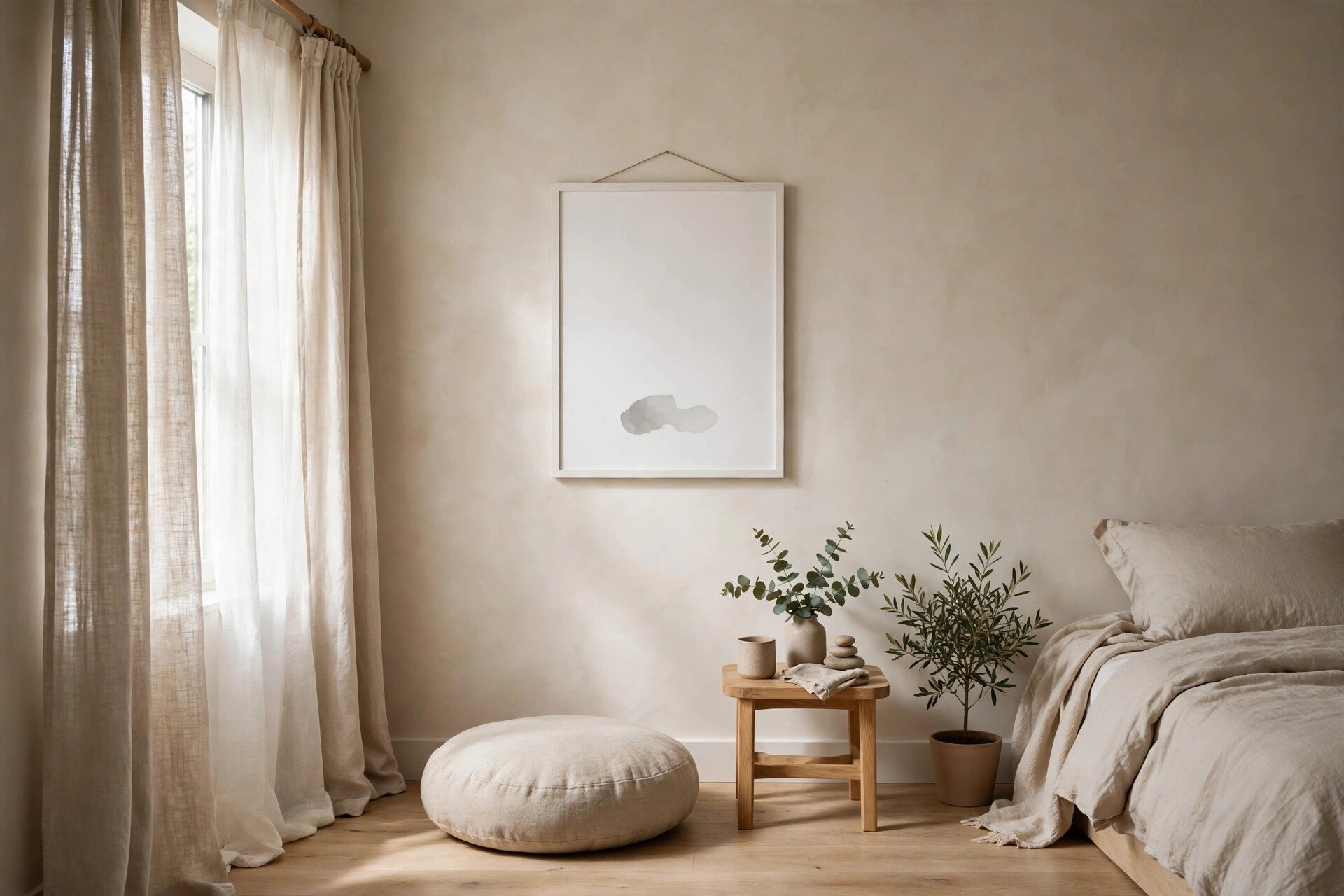
The boldest calm choice is a print with almost nothing on it. One small gray shape low on a big white page leaves most of the wall quiet.
This works well when the corner sits near a busy bed or a full dresser. The empty page gives your eyes a rest stop between the room and your cushion.
Hang it dead center on the corner wall and resist adding anything beside it. The empty space is the whole idea, and a second frame would cancel it out.
A plain white frame blends into the page and the wall at once. The shape inside the print then floats on its own, which is the calm effect you want. That float is what makes guests pause at it.
14. A Framed Print Leaning on a Low Corner Shelf
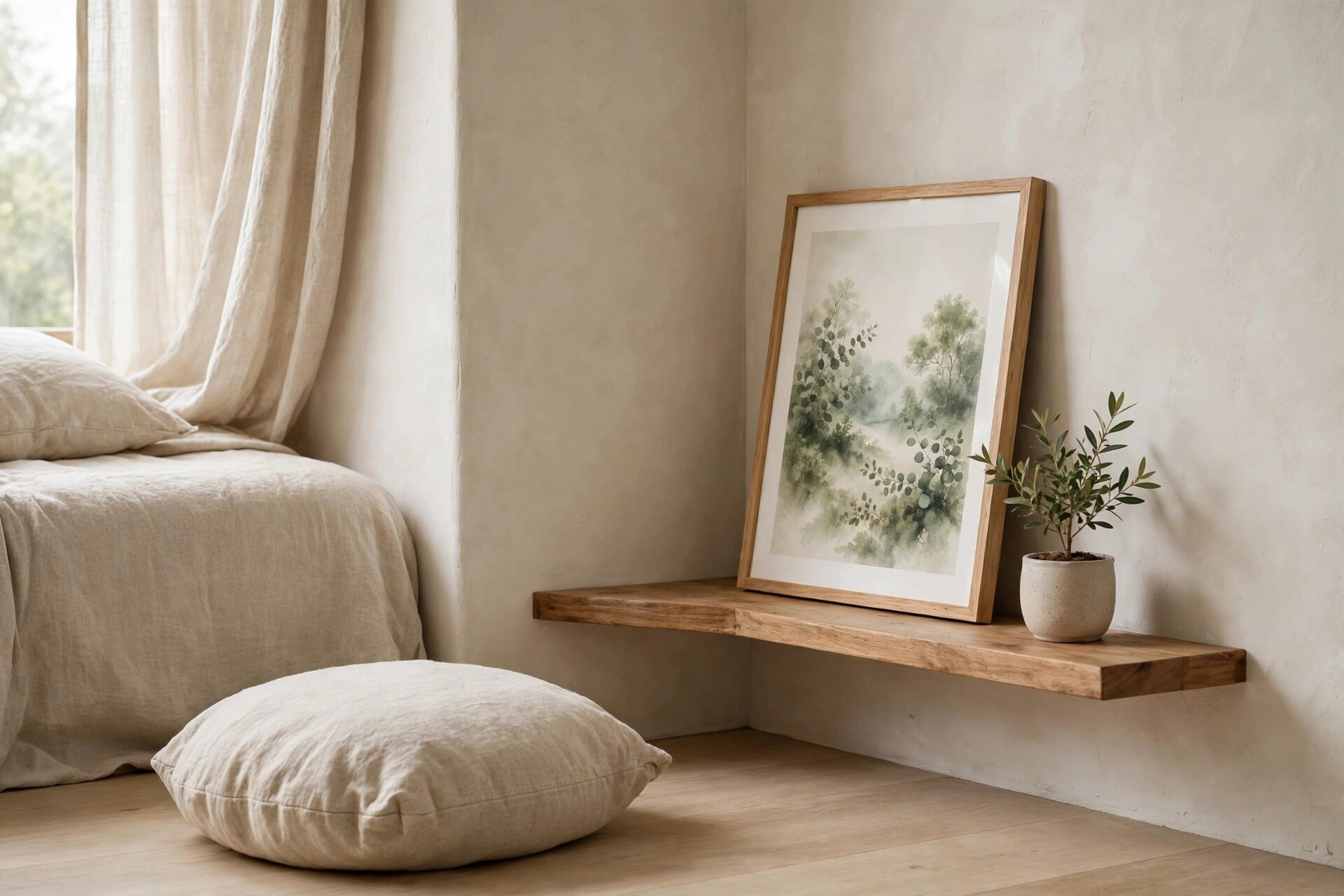
If you rent or dislike extra holes, lean the art instead of hanging it. A low corner shelf at seated height holds one framed print with a slight lean.
The lean feels relaxed and lets you swap the print in seconds. Pick a frame with a firm back so it sits steady and does not slide on the shelf.
Keep the shelf clear besides the frame and maybe one small plant. A shelf that fills with jars and books stops reading as part of the quiet corner.
Set one small felt pad under the frame base if the shelf is wood. It stops tiny slides and keeps the lean quiet when the floor moves under you. A steady lean keeps the glass from tapping the wall.
15. A Soft Sunrise Gradient Canvas That Fills the Corner Width
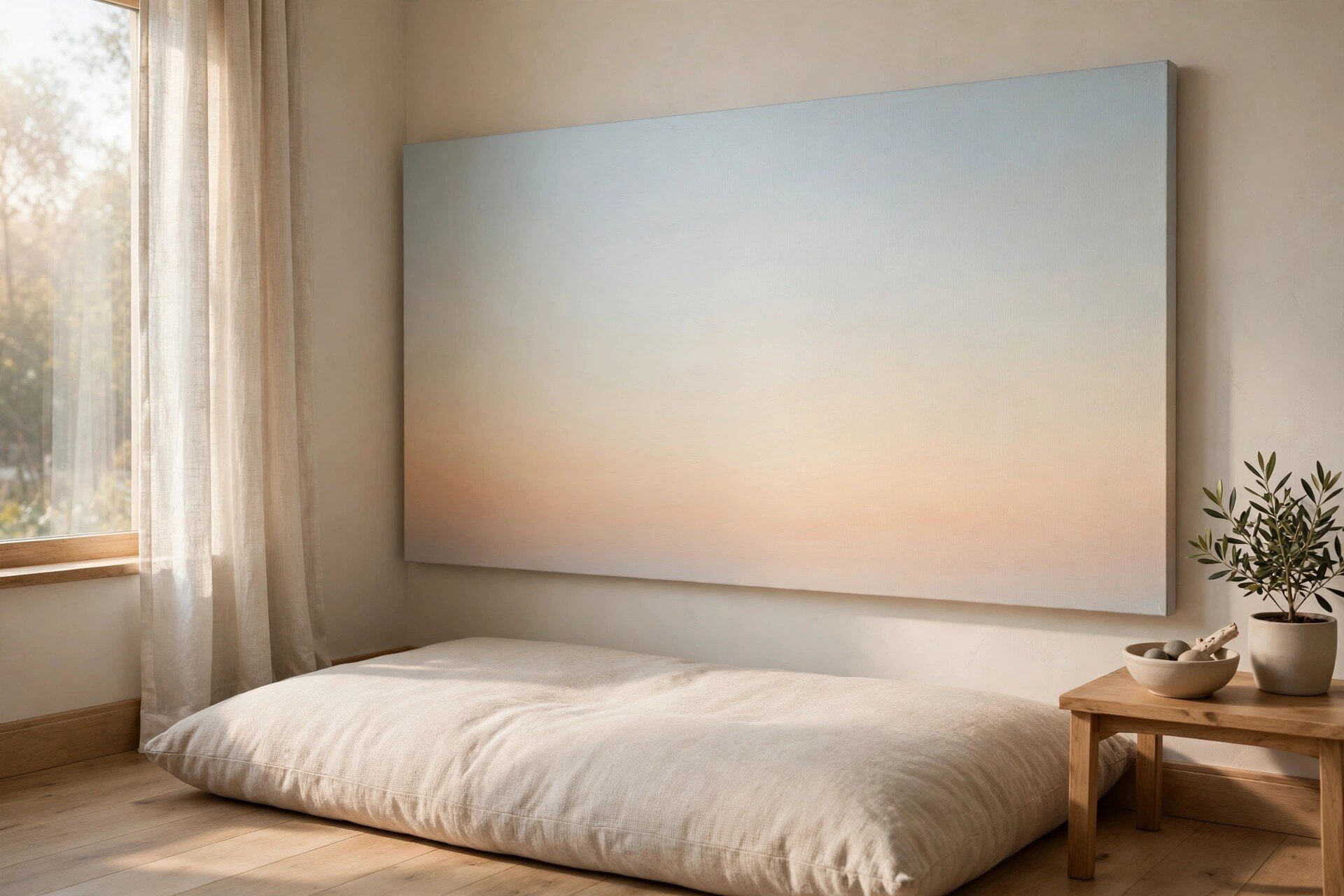
End with the piece for morning sits. A soft gradient canvas that fades from pale peach at the base to light blue at the top feels like early sky.
Size it to the corner itself, about as wide as your cushion and side table together. That snug fit makes the corner read as one planned spot, not leftover space.
Keep every other wall in the corner bare. One wide, soft piece plus clear walls gives you a clean view each time you sit down to start the day.
Test the colors at dawn if you can. A gradient that looks soft at noon can turn bright at sunrise, so pick the palest version that still reads as sky. Pale sky tones also suit white and cream bedding well.
Start with one piece, hung low, and live with it for a week. Most corners need nothing more, and a second frame can wait until the first one feels too plain.
These bedroom wall art ideas for meditation corners at home all follow the same rule: soft color, simple images, and clear wall around the art. Save this to your bedroom wall art ideas board for later.
Pick soft frames, leave wide clear margins, and keep the seat and table simple. A corner that looks calm from the doorway will feel calm when you sit in it too.


