
15 Peel and Stick Wall Art for Bedroom Ideas
A plain bedroom wall can completely change the feeling of a room, but painting or installing permanent wallpaper is not always the solution. Peel and stick wall art offers a simpler way to introduce color, pattern, texture, or a dramatic focal point while giving you more flexibility to change the room later.
The real challenge is choosing a design that looks intentional rather than simply looking like a large sticker placed on the wall. The right peel and stick wall art for bedroom spaces should relate to the bed, furniture, lighting, and existing colors while maintaining enough visual space around the design.
From botanical murals and soft arches to mountain scenes, celestial patterns, abstract compositions, and decorative headboard panels, these 15 ideas offer practical inspiration for creating a bedroom wall that feels finished, personal, and stylish.
1. Botanical Peel and Stick Mural

A peel and stick botanical mural can turn the wall behind the bed into a gentle garden-inspired backdrop without permanent wallpaper.
Choose oversized leaves, delicate branches, or foliage in sage, olive, cream, or muted green, then keep bedding simple so the pattern remains the focal point; extending the design slightly wider than the bed can visually anchor the sleeping area, while repeating one botanical shade in cushions or curtains helps the removable wall art feel connected to the rest of the bedroom space.
2. Removable Arch Accent

A removable arch decal can create the visual effect of a painted accent shape while requiring far less commitment to the existing wall.
Choose a muted terracotta, dusty blue, warm beige, or soft olive arch and position it behind the headboard, making the shape wide enough to frame the bed; simple bedding and minimal accessories allow the curved silhouette to stand out, while its clean geometry gives a blank wall more structure without requiring framed artwork, paint, or permanent renovation.
3. Peel and Stick Mountain Art

Peel and stick mountain wall art can bring depth and a peaceful natural sense of distance to a bedroom while remaining easy to change later.
Choose misty peaks, layered ridges, or soft watercolor mountains in blue-gray, sage, cream, or earthy tones, then position the mural behind the bed; a panoramic composition works particularly well because it follows the furniture’s width, while natural wood, neutral bedroom bedding, and restrained accessories help the landscape feel peaceful rather than overly decorative.
4. Large Floral Wall Mural
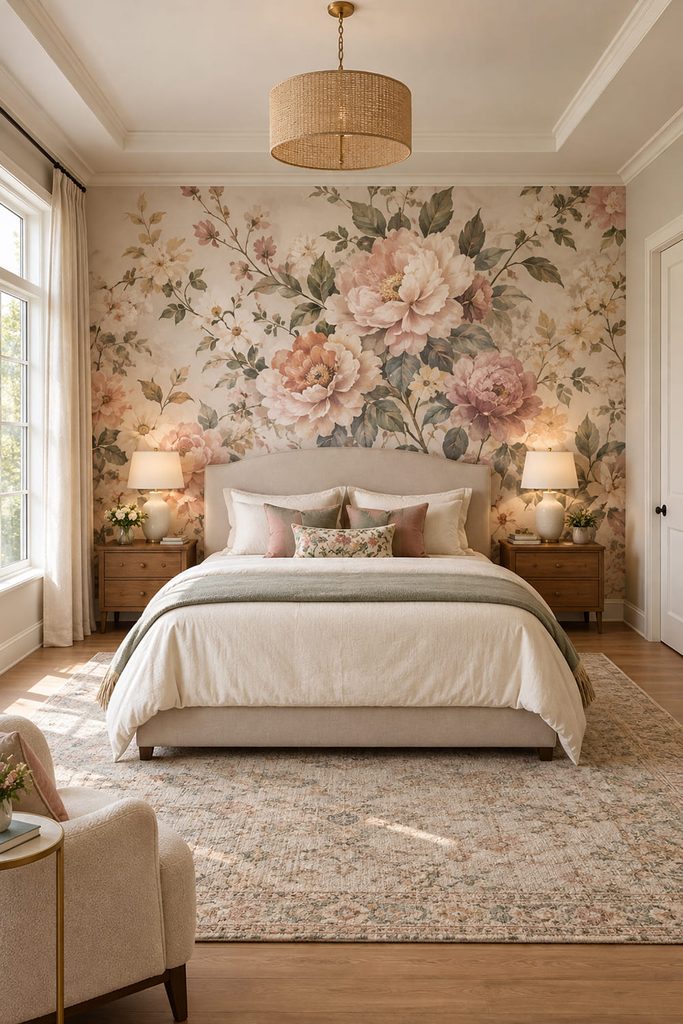
A large floral peel and stick mural can create a romantic focal wall without filling the bedroom with numerous framed pictures.
Choose oversized flowers, delicate stems, or painterly blooms in restrained shades such as blush, cream, sage, mauve, or dusty peach, then place the strongest part of the design behind the headboard; keep nearby patterns simple so the mural has room to breathe, and repeat one floral color through small textiles to create a cohesive and relaxing bedroom color palette.
5. Removable Geometric Mural

A removable geometric mural can give a modern bedroom a stronger architectural feeling without permanently changing the wall color.
Consider overlapping arches, circles, rectangles, or organic blocks in two or three coordinated shades, then center the composition around the bed or dresser area; leaving generous negative space between shapes prevents the design from becoming visually overwhelming, while repeating one accent color in bedding or accessories creates continuity and helps the peel and stick artwork feel integrated into the bedroom design.
6. Watercolor Forest Mural

A soft watercolor forest mural can make a bedroom feel surrounded by distant trees without the heaviness of a highly detailed photographic wall.
Look for misty trunks, layered foliage, pale mountains, and gentle tonal transitions in green, gray, cream, or blue, then keep the furniture simple; the atmospheric design works well behind the bed because it creates depth, while colors complement neutral bedding and natural wood without turning the entire bedroom into a heavily themed space or feeling overly busy.
7. Dreamy Celestial Design

A peel and stick celestial design can give the bedroom a dreamy focal point while keeping the rest of the room understated.
Choose a moon, stars, constellations, or an abstract night sky in navy, charcoal, cream, and muted gold, then place it where the artwork can be viewed comfortably from bed; warm bedside lighting can emphasize the darker tones after sunset, while simple furniture and plain bedding prevent the celestial theme from becoming excessive, childish, or visually distracting.
8. Faux Plaster Texture

A removable faux plaster design can add the appearance of texture without physically changing the wall surface.
Choose a matte mural with soft ivory, beige, taupe, or warm gray layers that resemble hand-finished plaster, then use it behind a simple upholstered bed; subtle tonal variation provides depth without strong imagery, while linen-like bedding, wood furniture, and warm lighting can reinforce the tactile character and create a quiet and versatile bedroom backdrop that remains adaptable as your decor preferences change over time.
9. Peel and Stick Ocean Horizon
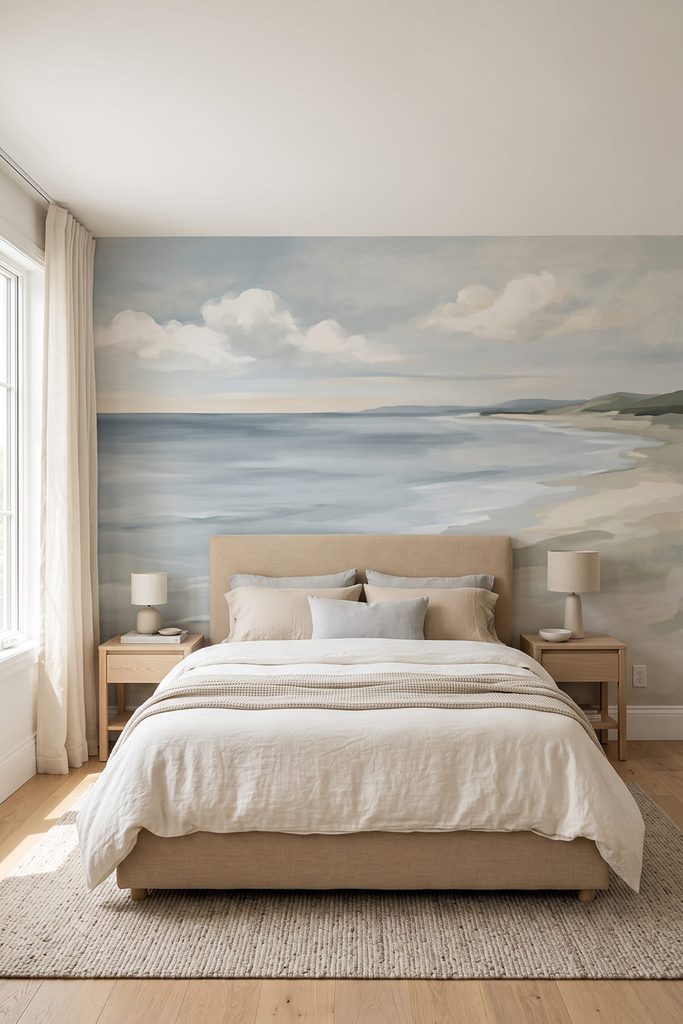
A peel and stick ocean horizon can make a bedroom wall feel wider and more open, especially when the room has limited architectural detail.
Choose calm water, distant shorelines, soft clouds, or a minimalist horizon in blue-gray, cream, sand, or muted green, then position the design behind the bed comfortably; the broad composition creates visual breathing room, while natural textures and simple bedding help the mural feel serene without turning the bedroom into an overly literal coastal retreat.
10. Boho-Inspired Removable Mural
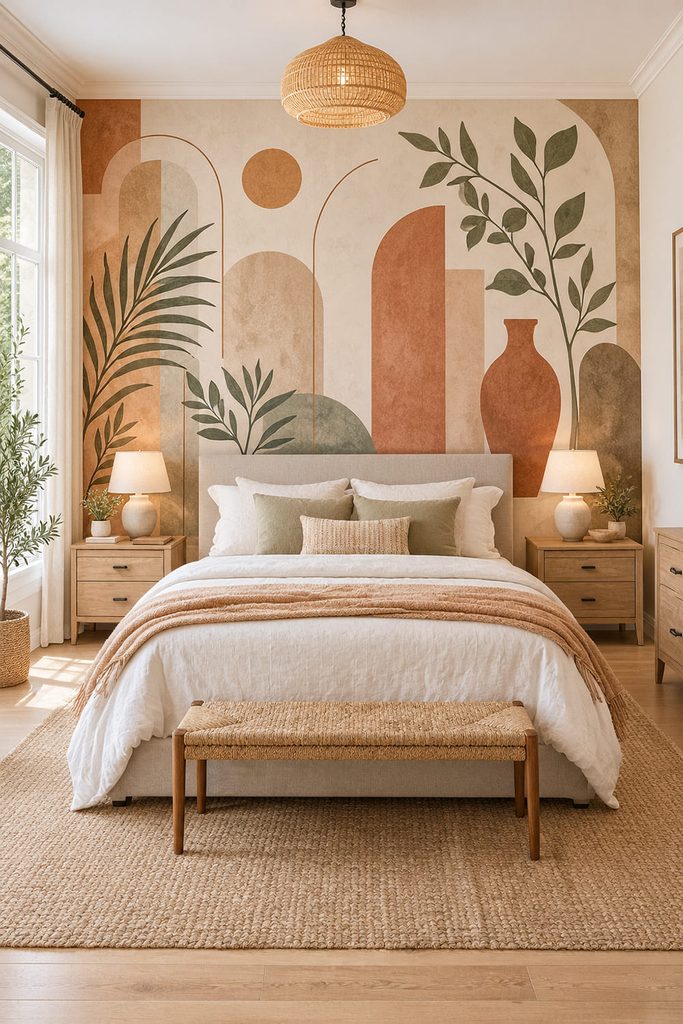
A removable boho-inspired mural can introduce pattern and warmth without requiring permanent wallpaper or complicated bedroom decorating.
Choose restrained geometric motifs, hand-drawn shapes, arches, or earthy botanical elements in cream, terracotta, tan, brown, and muted olive, then use it on one feature wall; keeping the walls quiet allows the pattern to become the main decorative statement for the room, while woven textures, natural wood, and uncomplicated bedding help maintain a relaxed and balanced bedroom atmosphere for daily rest.
11. Peel and Stick Sunrise Mural
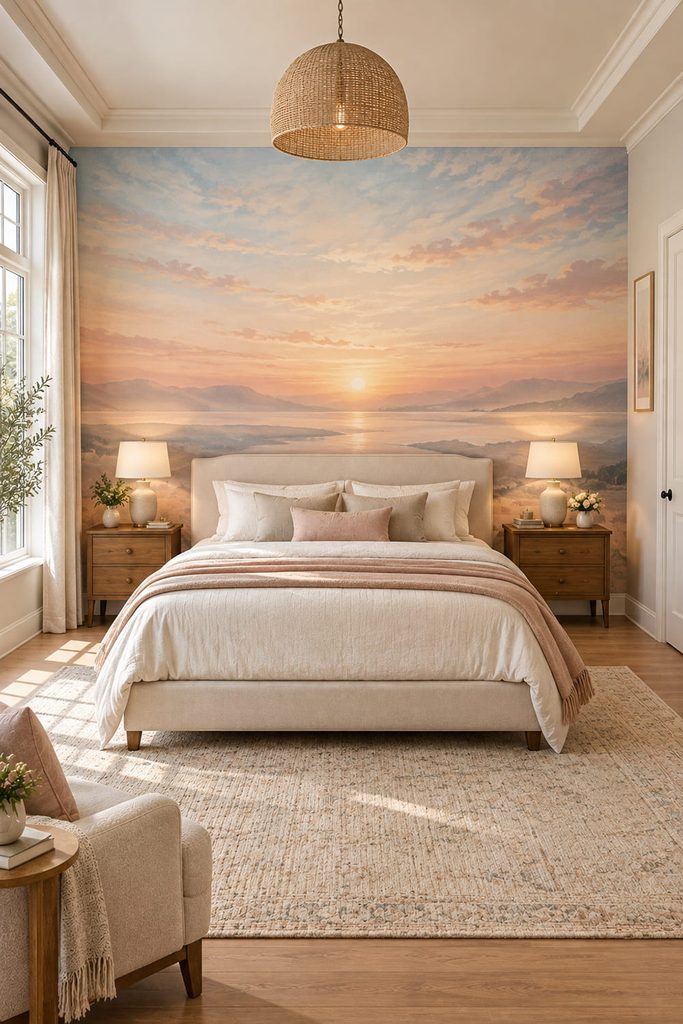
A peel and stick sunrise mural can add warm color to a bedroom while creating a welcoming focal point behind the bed.
Choose a wide sky with soft peach, dusty pink, cream, muted gold, or pale blue transitions, avoiding overly saturated tones; gradual color movement can make the wall feel expansive, while repeating one subtle shade through cushions or a throw helps connect the removable design with the rest of the bedroom without creating an overly coordinated appearance throughout the room.
12. Botanical Vine Corner

A removable botanical vine arrangement can decorate an awkward bedroom corner without covering an entire wall with pattern.
Use flowing stems, small leaves, or delicate branches that climb vertically beside a dresser, reading chair, mirror, or headboard, then keep the surrounding area uncluttered; the organic shape can soften hard furniture edges, while its design allows the original wall color to remain visible and makes the feature easier to adapt when furniture arrangements change later without leaving the corner feeling neglected.
13. Peel and Stick Headboard Panel

Peel and stick wallpaper can create the appearance of a decorative headboard when applied as a controlled decorative panel rather than across the entire wall.
Choose a calm stripe, linen-inspired texture, subtle geometric pattern, or small-scale botanical design, then make the panel slightly wider than the mattress; keeping the surrounding wall exposed creates contrast, while placing the panel behind the pillows gives the bed a stronger visual anchor without adding bulky furniture or permanently altering the room’s existing bedroom paint.
14. Removable Abstract Mural
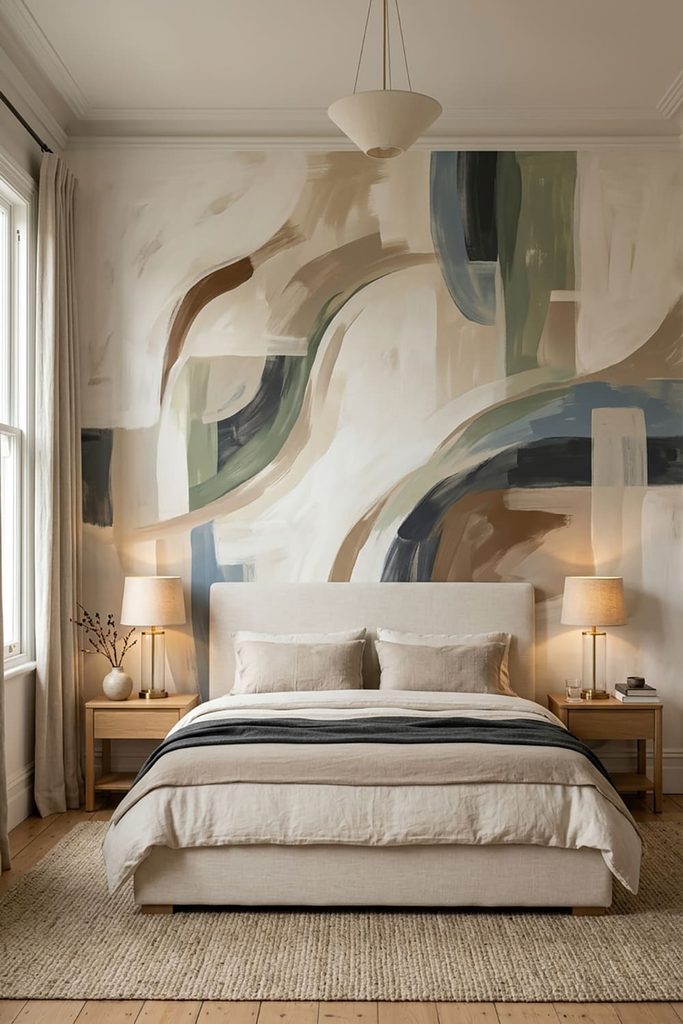
A removable abstract mural can turn a blank bedroom wall into an artistic focal point while allowing you to experiment with color, scale, and composition.
Choose broad brushstrokes, flowing forms, layered curves, or softened blocks in colors already present in the room, then center the strongest visual area behind the bed; keeping the palette controlled prevents the mural from overwhelming the space, while simple furniture and bedding give the artwork enough negative space to remain visually striking, balanced, and inviting.
15. Peel and Stick Meadow Mural
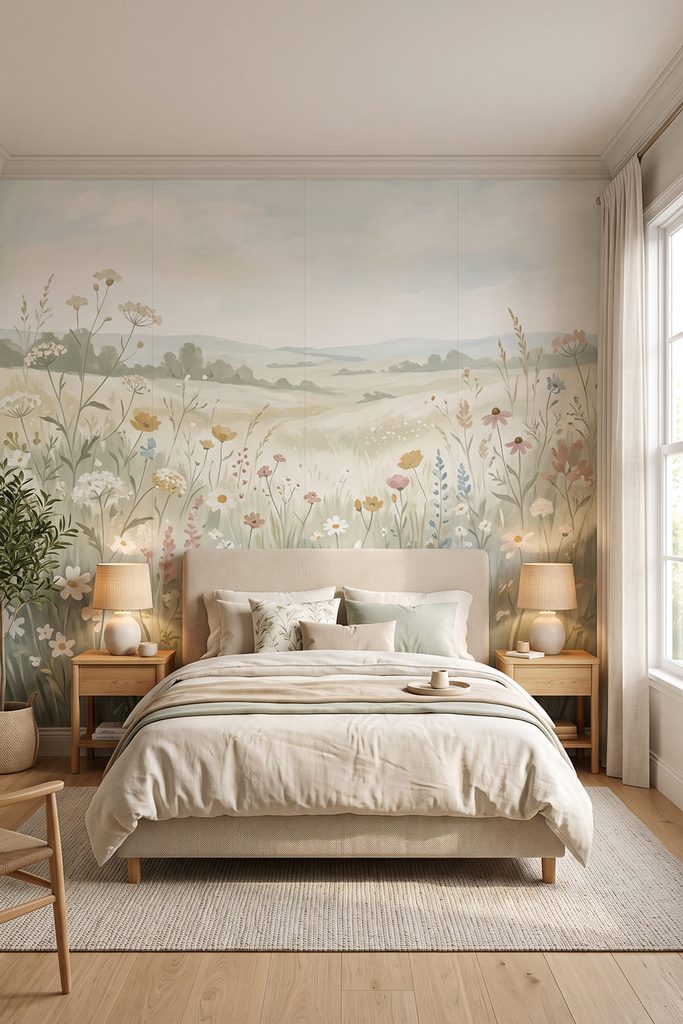
A peel and stick meadow mural can create a gentle countryside feeling without requiring framed landscapes or permanent wallpaper.
Choose distant grasses, wildflowers, rolling hills, or softly painted fields in sage, cream, dusty yellow, muted pink, and pale blue, then place the mural behind the bed; a lower-contrast design keeps the bedroom restful, while natural wood, woven accessories, and neutral bedroom bedding can reinforce the outdoor inspiration without making the room feel overly themed or overly decorative, visually and overall.
How to Choose Peel and Stick Wall Art for a Bedroom
Peel and stick wall art gives you more flexibility than traditional permanent decorating, but the wall surface still matters. Current installation guidance consistently emphasizes a clean, smooth, dry surface and recommends checking the manufacturer’s instructions because different materials can behave differently. Testing a small hidden section is also a sensible precaution, particularly when the paint finish is older or delicate.
1. Start With the Wall
Measure the wall before choosing your design.
Consider:
- Wall width
- Wall height
- Headboard width
- Windows
- Doors
- Electrical outlets
- Wall sconces
- Nearby furniture
A mural that looks beautiful in a product photograph may feel too small or too large once it reaches your actual bedroom.
2. Choose One Main Feature Wall
Peel and stick wall art generally has more impact when one wall receives the main treatment.
The wall behind the bed is often a natural choice because:
- It creates an immediate focal point.
- The bed gives the design a visual anchor.
- The surrounding furniture can remain simple.
- The artwork is easy to see from the bedroom entrance.
A single feature wall can also prevent the room from feeling visually crowded.
3. Check Your Wall Surface
Smooth, clean surfaces are generally the easiest starting point for peel and stick products.
Before applying anything, inspect the wall for:
- Dust
- Grease
- Loose paint
- Heavy texture
- Dampness
- Cracks
- Residue
Freshly painted walls may also need additional curing time, so follow the specific product instructions rather than assuming the surface is ready immediately.
4. Test a Small Area First
If you are concerned about the paint or wall finish, test a small inconspicuous section first.
This is particularly useful for:
- Older painted walls
- Delicate finishes
- Previously wallpapered walls
- Walls with minor texture
- Rental properties
Removable does not mean every product will behave identically on every surface.
5. Plan the Layout Before Peeling
Do not immediately remove the backing after opening the package.
Place the design against the wall first and step backward.
Check it from:
- The bed
- The doorway
- The foot of the bed
- The opposite side of the room
Painter’s tape can help temporarily position a design before committing it to the wall.
6. Use a Level for Straight Designs
A slightly crooked geometric pattern or horizontal mural can be surprisingly noticeable.
Use a level to establish your starting line before installation.
This is especially important for:
- Stripes
- Borders
- Architectural patterns
- Horizontal landscapes
- Headboard panels
A straight starting point makes the rest of the installation considerably easier.
7. Apply Slowly
Large peel and stick designs are easier to control when the backing is removed gradually.
Work in manageable sections and smooth the material as you go.
Applying from the center outward can help reduce trapped air and wrinkles.
Trying to expose the entire adhesive surface at once can make alignment much more difficult.
8. Think About the Bedroom Color Palette
The wall art should relate to colors already present in the room.
For example:
- Beige bedding can work with terracotta or brown.
- Sage accents can support botanical designs.
- Blue-gray bedding can complement ocean artwork.
- Cream furniture can work with warm neutral murals.
- Dark furniture can support lighter contrasting artwork.
You do not need an exact color match.
9. Keep Nearby Decor Simple
A large mural already provides substantial visual interest.
Avoid immediately surrounding it with numerous:
- Framed pictures
- Shelves
- Mirrors
- Signs
- Decorative objects
Leaving some empty wall space around the main design can make the bedroom feel more balanced.
10. Consider the Finish
The surface finish can influence how the wall art looks under bedroom lighting. Matte finishes can be useful when you want a softer appearance with less reflection.
Glossier materials may interact more strongly with lamps and daylight. Look at the material sample under your actual bedroom lighting before committing to a large installation when possible.
11. Think About Scale
A small decal can disappear on a large wall. A huge mural can overwhelm a small bedroom. Use the bed and furniture as reference points.
If the design is going behind the bed, consider its relationship to the complete width of the headboard rather than simply measuring the empty wall.
12. Use Peel and Stick Art on Furniture Backdrops
You do not always need to cover an entire wall.
A controlled panel can work behind:
- A dresser
- A vanity
- A reading chair
- A small desk
- A bookshelf
This can create a decorative zone without covering every inch of the wall.
13. Be Careful Around Fixtures
Plan around:
- Electrical outlets
- Switch plates
- Wall lights
- Shelves
- Air vents
- Door frames
Measure these features before purchasing a large mural.
Careful planning can prevent awkward cuts and interruptions in the main design.
14. Remove Carefully
When it is time for a change, do not automatically pull the material straight outward.
Many installation guides recommend removing decals slowly and carefully, with the material pulled back against the wall rather than aggressively away from it. Wall condition and adhesive type can affect the result, so follow the product’s removal instructions.
15. Consider the Long-Term Design
The biggest advantage of removable bedroom wall art is flexibility.
Choose a design that you can live with for several years, but do not feel pressured to make it permanent.
You can eventually replace:
- A floral mural with an abstract
- A colorful arch with a neutral texture
- A landscape with a geometric design
- A children’s pattern with a more mature composition
This makes peel and stick decorating especially useful when your style changes.
Final Thoughts
Peel and stick wall art can give a bedroom a completely different appearance without the commitment associated with permanent wallpaper or a major renovation. The possibilities range from large botanical murals and peaceful landscapes to arches, abstract patterns, celestial scenes, textured designs, and decorative headboard panels.
The most important part is choosing the right design for the wall and preparing the surface properly. Measure first, test the material when necessary, plan the placement, use a level for structured designs, and apply the adhesive gradually. With thoughtful scale and placement, peel and stick wall art can turn an ordinary bedroom wall into a distinctive focal point while keeping future decorating changes much easier.


