

15 Bedroom Wall Art Ideas for a Nursery or Baby’s First Bedroom
A baby’s first bedroom can be simple and still feel incredibly special. Wall art is one of the easiest ways to bring personality into a nursery without filling the room with unnecessary furniture or decorations. Soft illustrations, meaningful names, gentle colors, and nature-inspired artwork can give the walls character while keeping the overall room peaceful.
The best nursery wall art does not have to follow a strict theme. A few thoughtfully chosen pieces can create a focal point above a dresser, fill the wall beside the crib, or bring color to an otherwise neutral room. Since babies grow quickly, it can also be useful to choose artwork that will still feel appropriate when the nursery eventually becomes a toddler’s bedroom.
Safety should be part of every decorating decision. Wall decorations should be securely installed, and items that could fall or become accessible to a child should be kept away from the crib and other areas where a baby can reach them. With that in mind, these 15 ideas combine softness, personality, and practical nursery design.
1. Soft Animal Illustration Gallery

Create a gentle gallery using illustrations of woodland animals, farm animals, ocean creatures, or other friendly characters. Instead of using highly saturated colors, choose artwork with soft shades such as cream, sage, dusty blue, warm beige, muted yellow, or soft peach.
A simple arrangement of three or four framed illustrations can make a blank wall feel finished without overwhelming the room. For a more timeless look, choose artwork with simple drawings rather than cartoon characters with very specific styles. As the child grows, some of the prints can easily be replaced while the overall room design remains intact.
2. Personalized Name Artwork
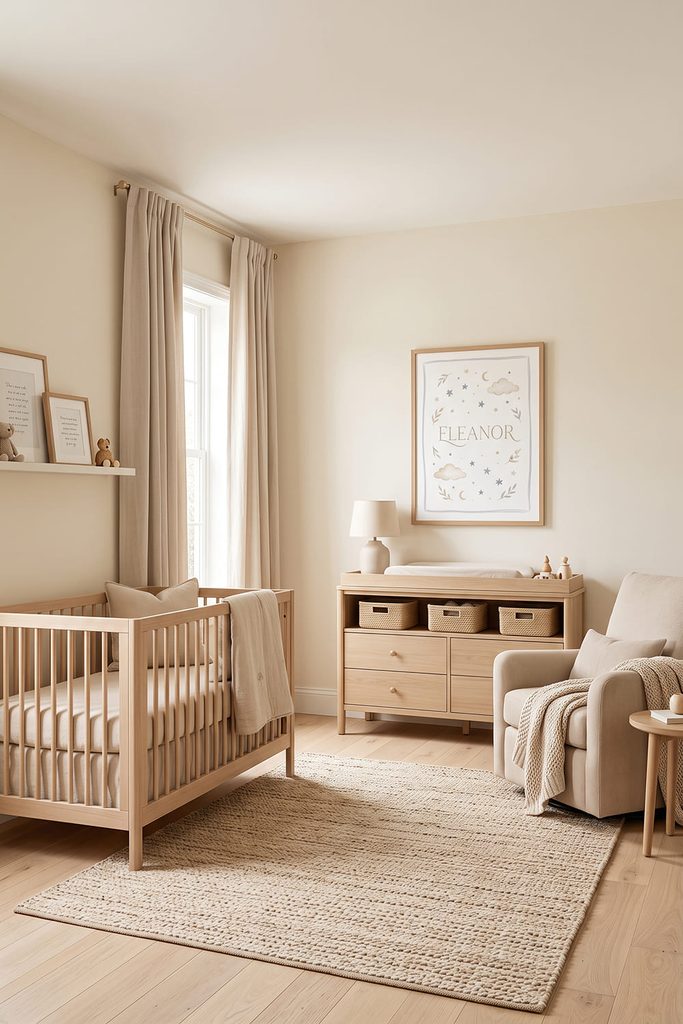
A baby’s name can become a beautiful centerpiece for the nursery wall. Use simple typography surrounded by a subtle illustration, border, or painted shape. The name does not need to dominate the entire wall. A medium-sized framed piece above a dresser can provide enough personalization.
For a softer appearance, combine the name with:
- Small stars
- Clouds
- Leaves
- Simple flowers
- Tiny animals
- A moon
- Delicate geometric shapes
Choose colors that already appear elsewhere in the room so the artwork feels connected to the bedding and furniture.
3. Watercolor Rainbow Display
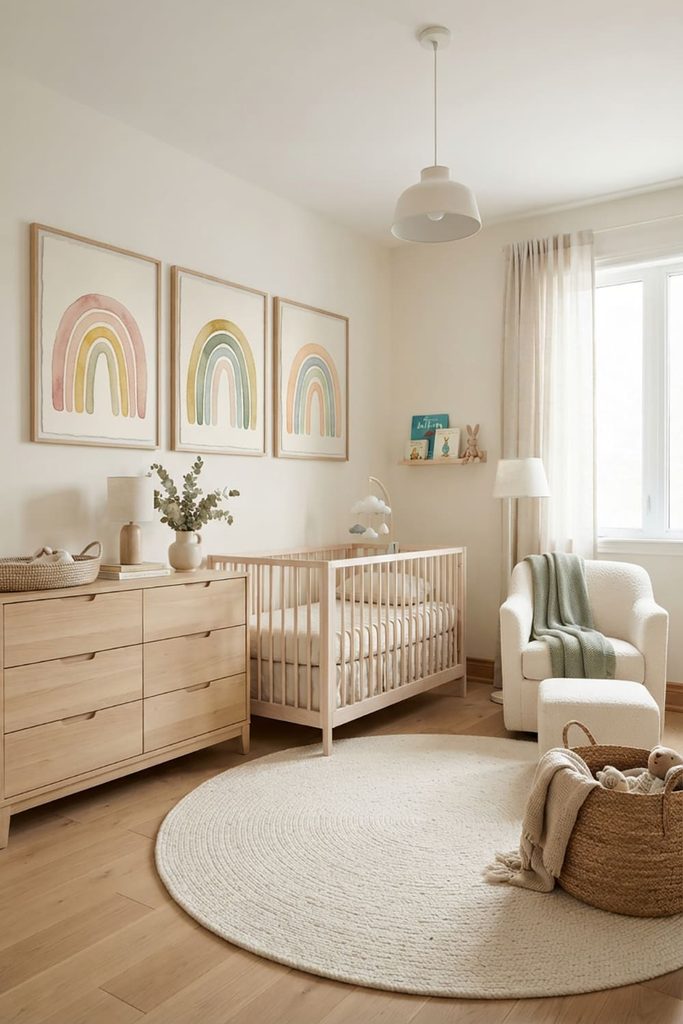
A soft watercolor rainbow can introduce color without making the nursery feel overly bright. Instead of using intense primary colors, look for muted versions of pink, yellow, green, blue, and peach. A single large rainbow can work above a dresser, while three smaller rainbow artworks can create a symmetrical arrangement.
This idea can also work particularly well in a neutral nursery because the artwork becomes a gentle source of color. As the child gets older, the rainbow prints can remain in the room while other decorative elements change around them.
4. Moon and Stars Wall Art

Create a peaceful celestial display with illustrations of moons, stars, clouds, and small constellations. A deep blue or warm beige background can provide contrast against lighter furniture and bedding. For a lighter nursery, choose cream, pale blue, or soft gray celestial artwork.
You can use one oversized moon illustration as the focal point or combine several small pieces. Keep the composition simple. A few well-spaced stars can look more elegant than filling the entire wall with dozens of shapes.
For a cohesive bedroom, repeat the celestial colors in a small rug, blanket, or cushion.
5. Botanical Prints in Soft Colors
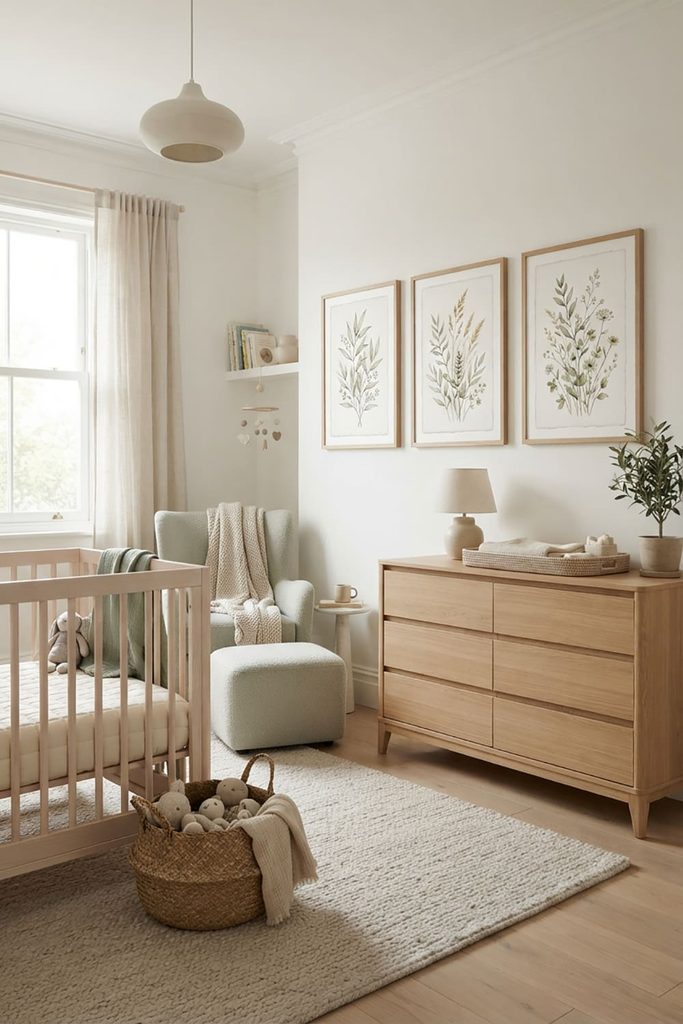
Botanical artwork provides a natural look that can grow with the child. Choose illustrations of leaves, branches, grasses, or delicate flowers in muted colors. Green and cream are particularly easy to combine with natural wood furniture.
Three vertically arranged botanical prints can work beside a dresser, while two larger prints can sit above a changing area. For a more modern nursery, use minimal line drawings. For a traditional room, watercolor-style botanical illustrations can add softness.
This idea also makes it easier to transition the room later because botanical artwork does not necessarily look specifically designed for a baby.
6. Storybook-Inspired Art Wall
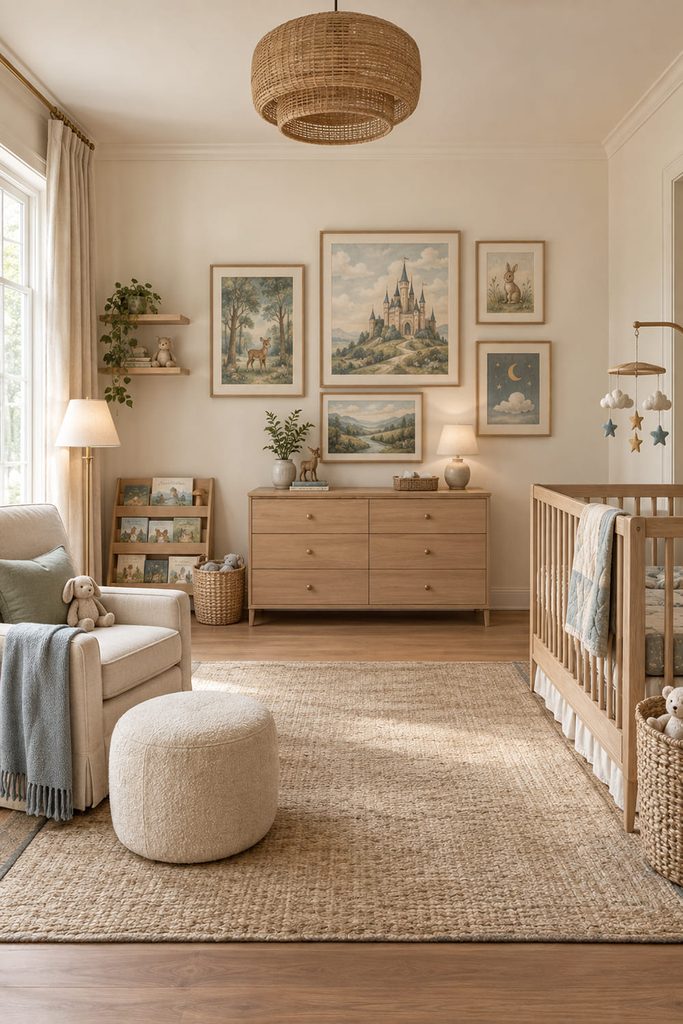
Turn one wall into a gentle visual reminder of favorite childhood stories. Instead of reproducing characters from specific books, choose general storybook-inspired illustrations such as forests, castles, clouds, animals, stars, or whimsical landscapes.
Arrange three to five pieces in different sizes while maintaining a common color palette. You could also keep a small selection of favorite books on a nearby shelf so the artwork and reading area feel connected.
As the child grows, the wall can gradually evolve from simple nursery illustrations into artwork related to books they actually enjoy.
7. Soft Cloud Artwork

Clouds can create a light and peaceful visual theme without requiring a large amount of decoration.
Try a composition featuring:
- White clouds
- Pale blue backgrounds
- Small stars
- Soft rainbows
- Tiny birds
- A warm sun
One oversized cloud illustration can work above a dresser or reading corner. Several smaller cloud prints can create a horizontal arrangement. Keep the artwork at a safe distance from the crib and make sure all frames or wall-mounted objects are securely installed.
8. Animal Alphabet Artwork
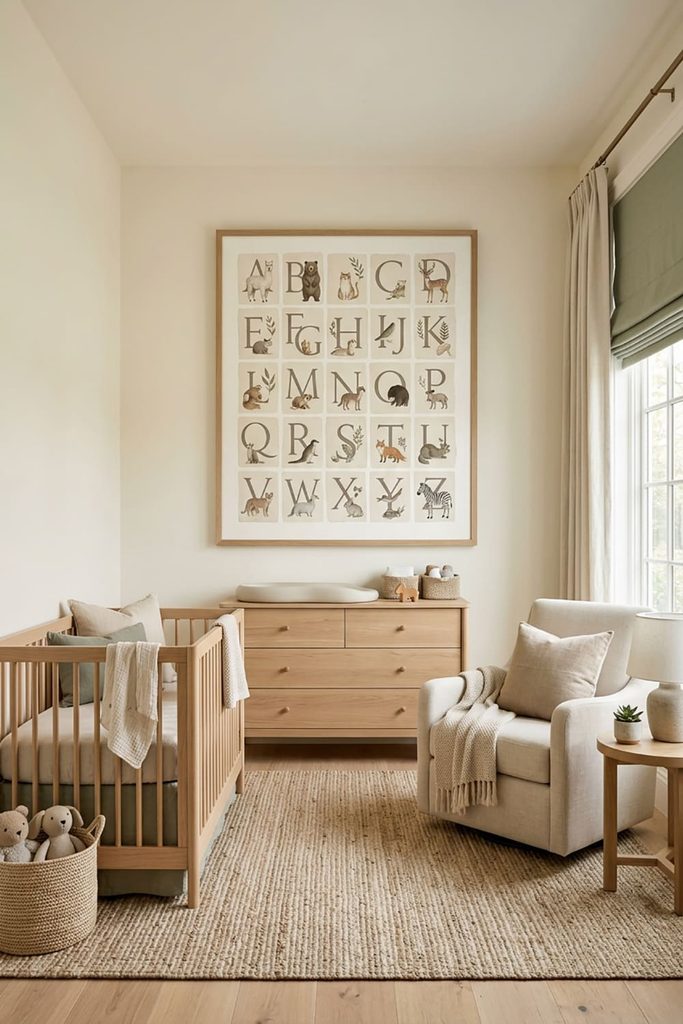
An alphabet print can serve as both decoration and a future learning aid. Choose a clean design where each letter is paired with a simple animal or object. A neutral background with muted illustrations can make the artwork feel decorative rather than classroom-like.
An oversized alphabet print can become the main artwork on one wall.
The benefit of this idea is longevity. The artwork can remain relevant well beyond the newborn stage, eventually becoming something the child can interact with as they begin recognizing letters and sounds.
9. Minimalist Line Art
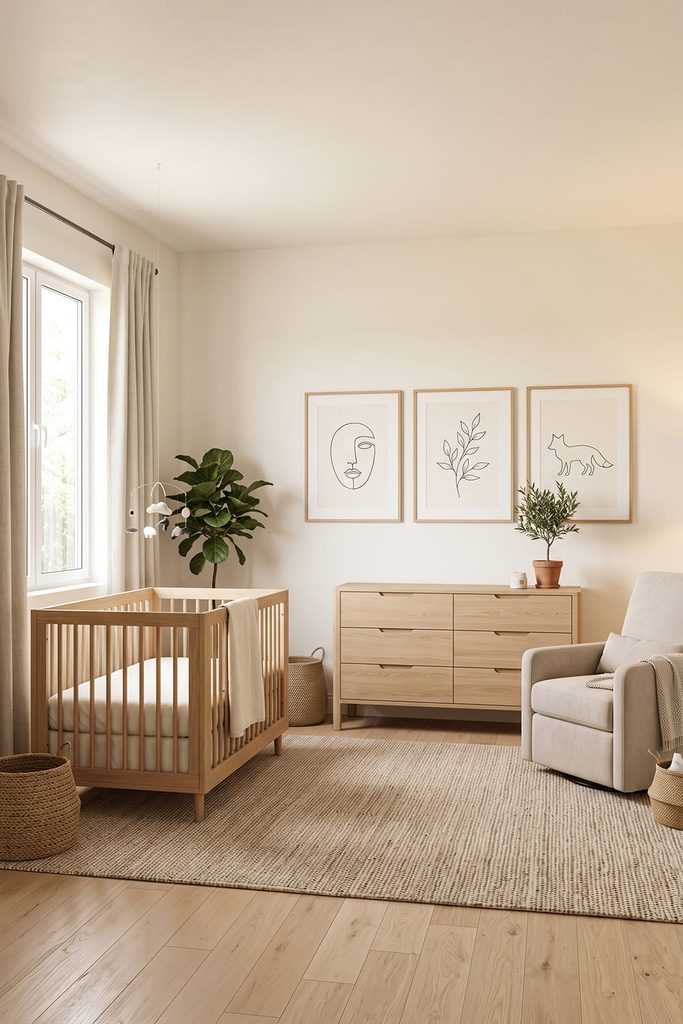
For parents who prefer a modern nursery, minimalist line drawings can provide visual interest without introducing many colors.
Consider simple drawings of:
- Animals
- Faces
- Leaves
- Hands
- Clouds
- Flowers
- Abstract shapes
Black or dark brown lines on cream or white paper can look especially elegant with light wood furniture. A set of three related drawings can be arranged above a dresser or along a narrow wall.
The restrained style also makes this artwork easy to keep when the nursery eventually becomes a toddler’s or child’s bedroom.
10. Personalized Birth Details Artwork

Create a piece of artwork containing meaningful information about the baby’s arrival. Depending on personal preference, the design could include the baby’s name, birth date, birth time, birth month, or another meaningful detail.
Keep the typography simple and use a limited color palette. A small framed design can sit above a dresser or on a dedicated gallery wall.
Because this artwork represents a specific family memory, it can eventually become a keepsake rather than something that is discarded when the nursery changes.
11. Large Nature Landscape

A peaceful landscape can create an impressive focal point while remaining appropriate as the child grows.
Choose a gentle scene such as:
- Mountains
- A quiet forest
- Rolling hills
- A meadow
- A calm ocean
- A simple countryside scene
Avoid overly dramatic imagery if you want the room to feel restful.
A large horizontal artwork works particularly well above a dresser or on the main wall opposite the crib. Use colors that complement the nursery’s existing palette rather than introducing an unrelated accent.
12. Handcrafted Textile Wall Hanging

A woven or embroidered wall hanging can bring softness and texture to a nursery. Choose natural fibers and simple patterns in colors such as cream, beige, dusty blue, sage, terracotta, or soft pink.
Textile artwork can be particularly effective against a plain painted wall because it introduces a different surface without requiring a complicated gallery arrangement.
However, anything hanging on a nursery wall must be securely installed and positioned well away from the crib and the baby’s reach.
As the child becomes mobile, regularly reassess the placement of wall decorations rather than assuming that an arrangement that was safe for a newborn will remain safe later.
13. Soft Sun and Rainbow Wall

Combine a simple sun illustration with a small rainbow and a few clouds to create a cheerful focal point. A warm cream or pale yellow sun can provide a subtle source of color, while muted rainbow shades keep the design calm.
Instead of scattering the artwork around the entire room, create one concentrated arrangement.
For example:
- Large sun in the center
- Two smaller clouds
- One rainbow underneath
- A few small stars around the edges
This arrangement can sit on a wall beside the dresser or reading area while leaving the area around the crib visually uncluttered.
14. Family Photo Wall

A nursery can become more personal with a small collection of family photographs. Choose photographs of parents, grandparents, siblings, pets, or meaningful family moments. Use matching frames to make different photographs feel like one collection.
A simple three-photo arrangement can be enough. You can also include a photograph of the baby’s first home, a favorite family location, or another meaningful place.
Keep framed photographs and other wall decorations securely mounted and away from the crib. As the child grows and becomes more mobile, check whether they could reach or pull at any nearby objects.
15. Create a Gentle Woodland Wall
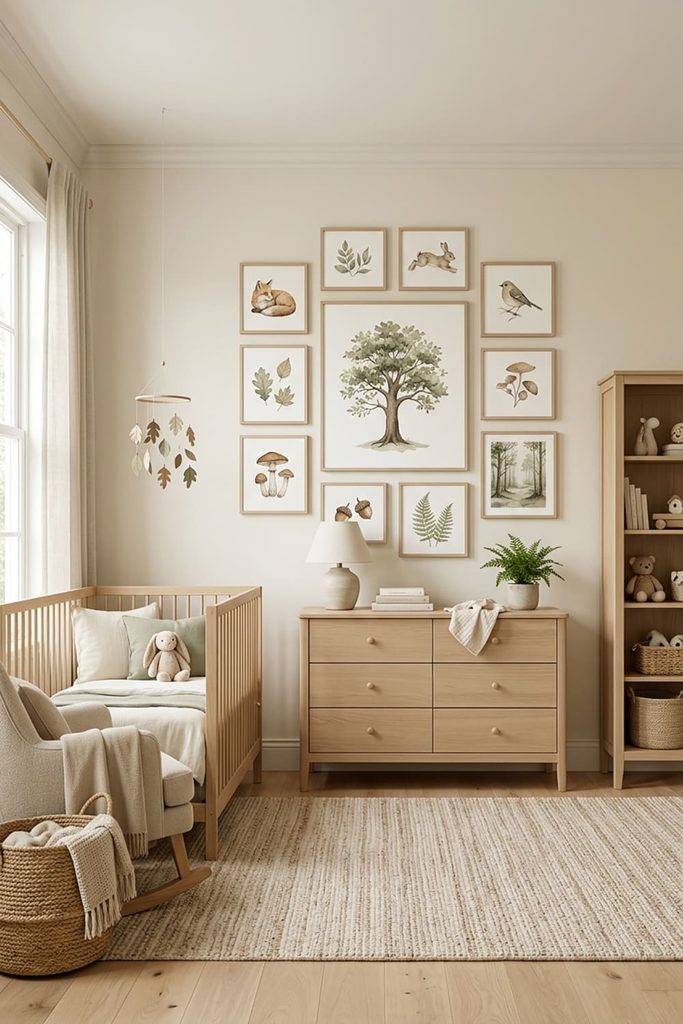
A woodland-inspired collection can combine several simple elements without turning the nursery into an overly themed room. Use artwork featuring trees, leaves, foxes, rabbits, birds, mushrooms, or small woodland landscapes.
Choose two or three dominant colors and repeat them across the artwork. Sage green, warm beige, cream, and muted brown create a particularly natural combination.
A large tree illustration can become the main focal point, with smaller animal prints arranged around it. The design can later transition naturally into a child’s room by replacing only a few of the smaller pieces.
How to Choose Wall Art for a Nursery
The artwork should complement the room rather than compete with the crib, furniture, lighting, and textiles.
Before buying anything, consider:
- The size of the wall
- Existing furniture
- Natural daylight
- Wall color
- Bedding colors
- The height of the artwork
- How securely the piece can be installed
- Whether the design can grow with the child
Large walls often benefit from one substantial artwork or a balanced gallery. Smaller walls usually look better with two or three carefully selected pieces.
A limited color palette is also useful. Three or four related colors can make different artworks feel like part of the same nursery.
Nursery Wall Art Safety Tips
Safety should take priority over appearance in a baby’s bedroom.
Keep wall decorations securely attached and away from the crib or other areas where the baby sleeps. Avoid placing anything above the crib that could fall or become accessible as the child becomes more mobile.
It is also important to think beyond the first few months. A decoration that is out of reach for a newborn may become reachable once a baby can stand.
Useful precautions include:
- Secure wall-mounted artwork properly.
- Keep heavy frames away from the crib.
- Avoid loose cords or hanging strings within reach.
- Do not place shelves where a child can climb onto them.
- Check wall hardware periodically.
- Reassess artwork placement as the baby grows.
- Follow the installation instructions for each wall product.
A beautiful nursery is never worth compromising basic safety.
How to Make Nursery Artwork Last Longer
Choose artwork that can transition through several stages of childhood. Instead of selecting pieces that are extremely baby-specific, consider designs based on nature, animals, colors, landscapes, or simple illustrations.
For example, a woodland print can work for a newborn, toddler, and young child. A botanical print can remain appropriate even when the room changes completely.
Another strategy is to create a flexible gallery wall. Keep the main artwork timeless and replace only one or two smaller pieces as the child develops new interests. This reduces the need to redecorate the entire room every few years.
How Many Pieces of Wall Art Should a Nursery Have?
There is no fixed number that works for every nursery. The size and layout of the room matter more than the exact number of artworks.
A practical starting point could be:
- One large statement piece for a small wall
- Two or three coordinated prints above a dresser
- Four to six smaller pieces for a gallery arrangement
- One large textile for a major focal wall
Avoid decorating every available wall simply because the nursery has blank space.
Leaving some walls relatively quiet can make the room feel calmer and allows the furniture and textiles to remain part of the overall design.
Conclusion
The best bedroom wall art ideas for a nursery combine softness, personality, and longevity. Animal illustrations, botanical prints, celestial artwork, personalized names, family photographs, landscapes, rainbows, and simple line drawings can all bring character to a baby’s first bedroom.
Choose artwork that complements the colors already present in the room and consider how easily it can evolve as the child grows. Most importantly, treat safety as part of the decorating process from the beginning.
A nursery does not need dozens of decorations to feel special. One meaningful artwork, a few carefully chosen prints, and a thoughtful arrangement can create a warm first bedroom that feels personal today and remains adaptable for the years ahead.


