

15 Bedroom Wall Art Ideas for a Low Platform Bed
A low platform bed leaves a tall stretch of blank wall above the pillows. Art hung at standard height floats far above the bed and looks lost. The room feels unfinished even when the bedding is right.
These bedroom wall art ideas for a low platform bed fix that gap. Every idea keeps the art wide, low, and close to the bed line. The art and the bed read as one calm block instead of two separate parts.
Start with width first, then height. Measure the bed itself, not the whole wall, and let that width lead every choice below. For more width led layouts, see these long horizontal wall art ideas for the bedroom once you have picked a shape here.
None of these ideas needs a tall frame or a high hang. Each one keeps the art in the low band above the bed, where your eye lands when you sit up, read, or walk into the room.
This post contains affiliate links. If you buy through them, we may earn a small commission at no extra cost to you. See our Affiliate Disclosure.
1. Hang One Wide Panorama Low and Close
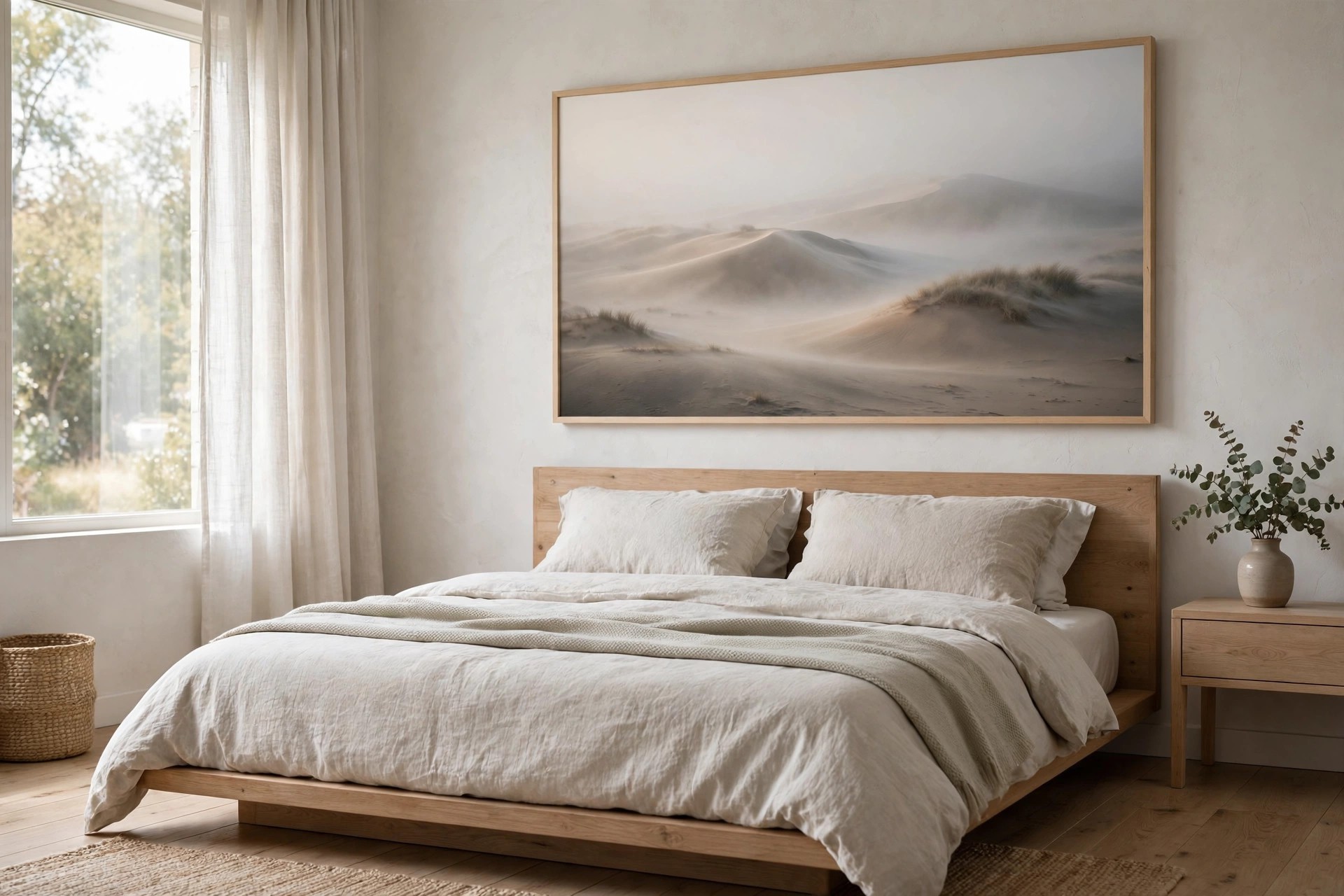
One wide panorama solves the low bed wall in a single move. Pick a soft landscape, a dune view, or a calm abstract with color that moves side to side. The sideways flow suits a sleeping room.
Hang the bottom edge just a hand span above the headboard or the top of the pillows. That small gap ties the art to the bed. From the doorway, the two lines look joined.
Keep the frame thin and light in tone so the piece feels close, not heavy. A wide print in a dark, thick frame can press down on a low bed and make the wall feel top heavy.
Test the spot with tape first. Leave the outline up for one night and check it from the bed in the morning light.
2. Build a Wide, Low Single Row Gallery

A single row of four or five small prints beats a tall gallery above a platform bed. Line the frames up in one straight row that runs most of the bed width. Keep every top edge level.
Hang the whole row lower than you would above a tall bed. The row should sit where you see it from the pillows, not near the ceiling. Leave clear wall above it on purpose.
Use the same frame finish and the same mat width in every frame. That sameness holds the row together. Mix the art inside freely, from line drawings to soft photos in one calm color family.
Tape the row outline on the wall before you drill. Living with the tape for a day shows if the row sits too high.
3. Pair Two Horizontal Prints Side by Side
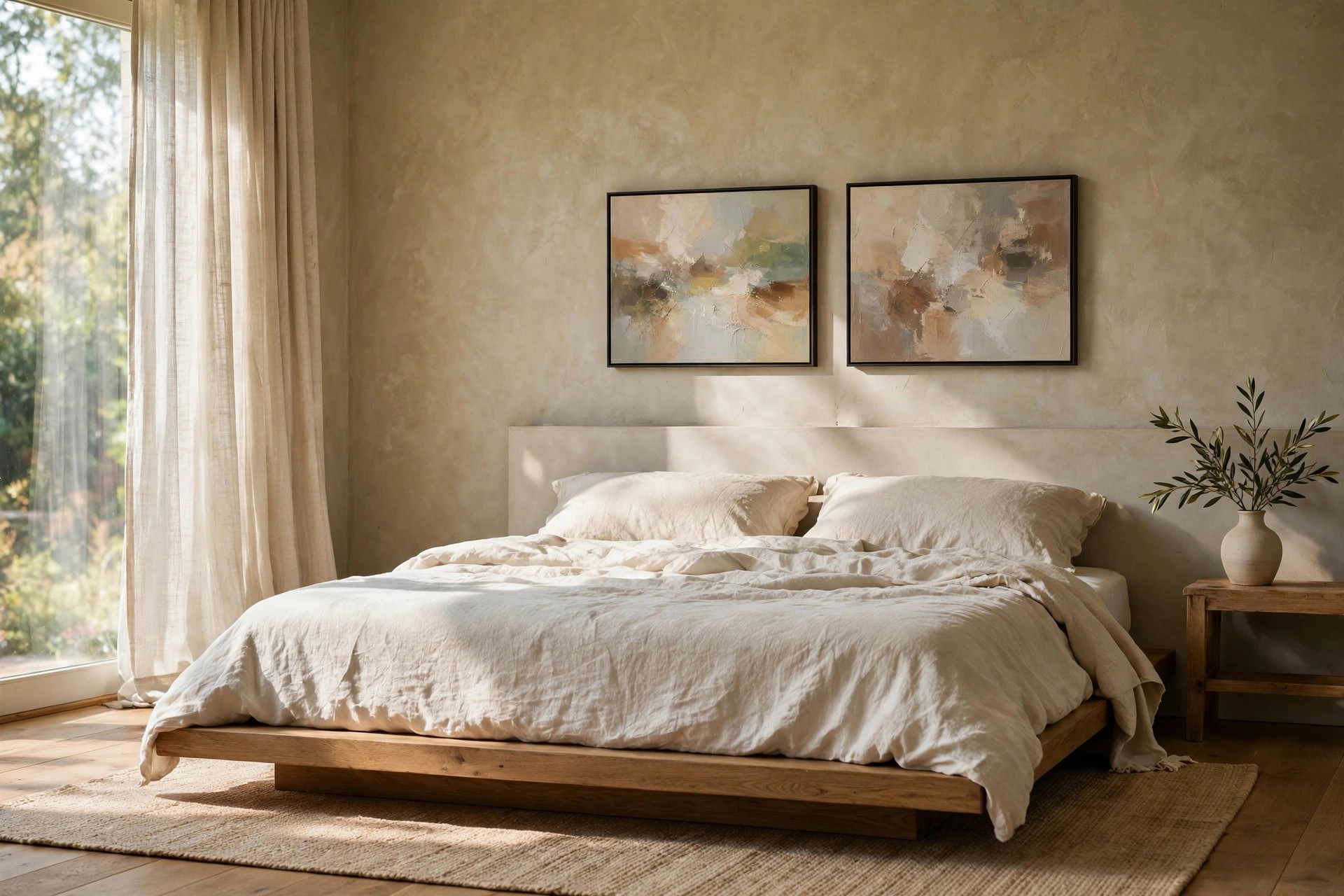
Two horizontal prints side by side give you width without one huge frame to handle. Choose a true pair, two halves of one scene, or two abstracts that share the same colors and mood.
Leave a small, even gap between the frames, about two fingers wide. Hang both bottom edges at the same low line above the bed. If one side sits higher, you will notice it from the bed every night.
This pair works well when a single wide print feels too plain. The center gap adds a quiet break. It also makes the set easier to center over pillows that are rarely placed dead center.
Check the pair from the foot of the bed, not up close. Small level errors hide up close and show clearly from the doorway.
4. Stretch a Triptych Across the Full Bed Width
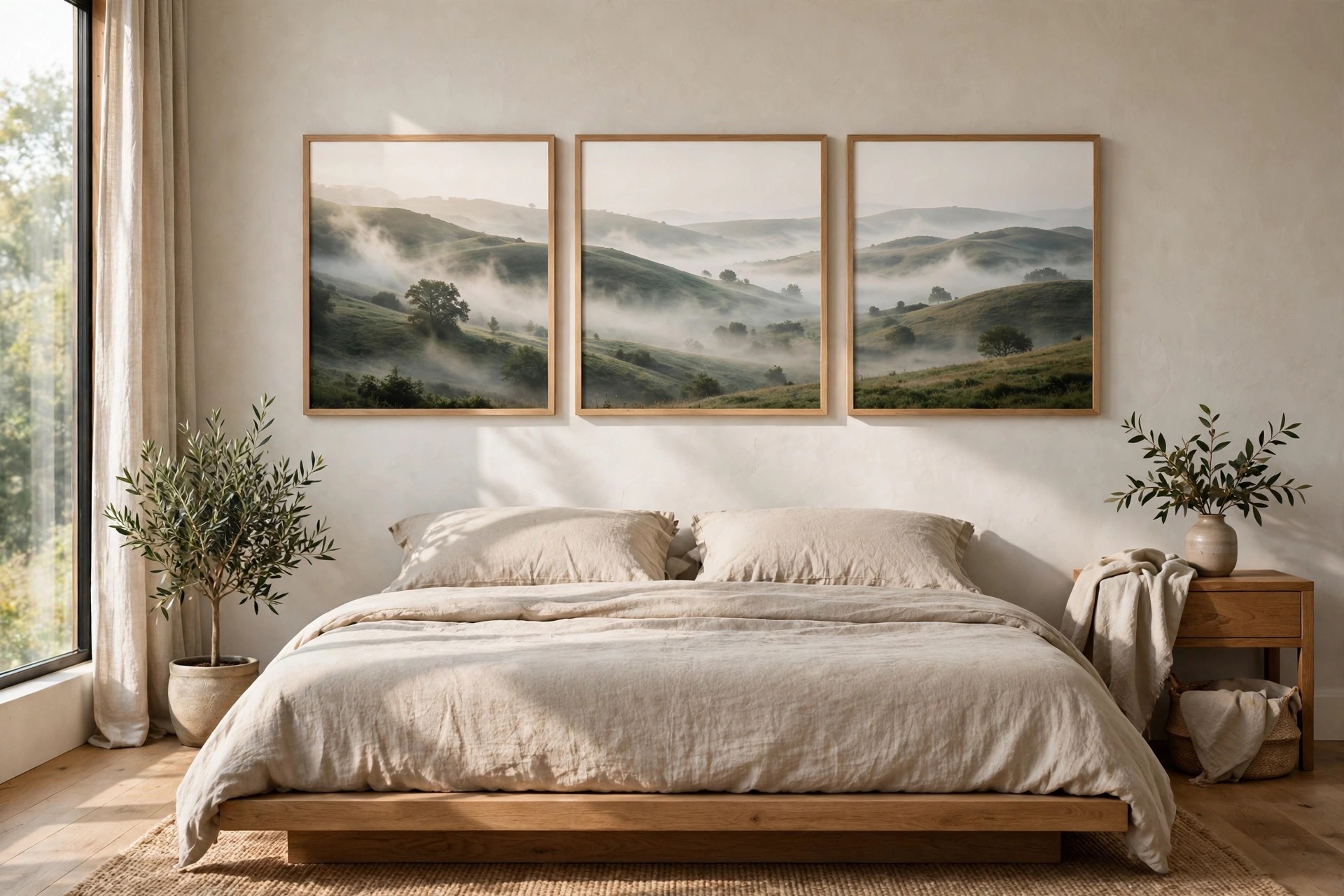
A triptych is built for a low, wide bed. Three panels carry one image across the wall, so the art matches the bed width in a way a single square print never can.
Keep all three panels the same height and hang them in one low line. The tops should stay well below the middle of the wall. That low line keeps the room feeling restful and grounded.
Soft subjects suit this format best. Think misty hills, calm water, or pale abstract washes. A busy, high contrast image split in three can feel restless right above the place where you sleep.
Keep the gaps between panels even and small. Uneven gaps break the image and pull the eye to the seams, not the scene.
5. Lean One Oversized Piece on a Low Shelf
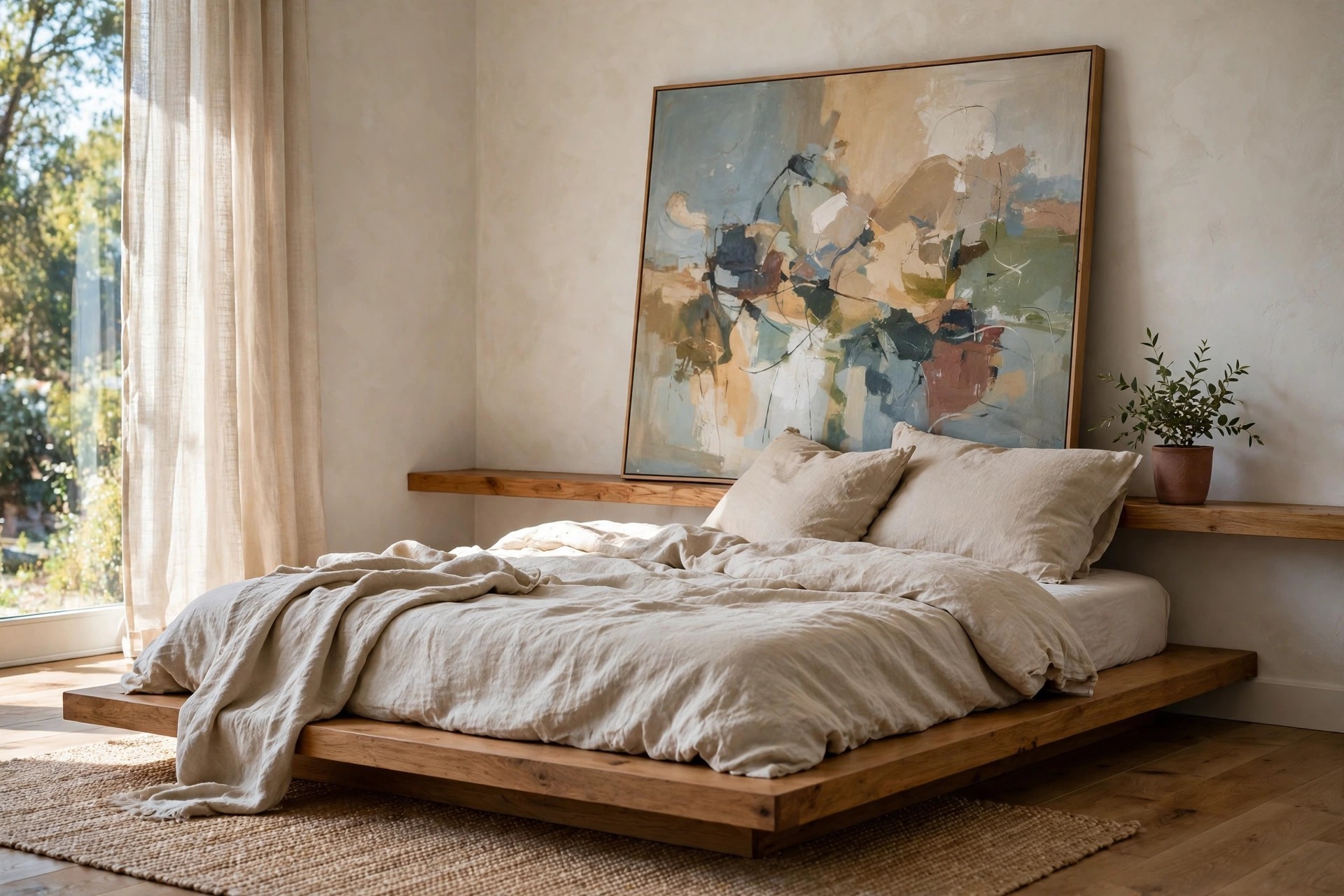
Leaning art suits a platform bed because the piece stays low by nature. Set one oversized print on a low shelf or a deep ledge behind the bed and let it rest against the wall.
The bottom of the frame hides just behind the pillows, which closes the gap that hanging can leave. From the side, the lean looks relaxed. The bed and the art feel like one layered setup.
Pick a light frame and keep the shelf clear around it. One small plant or a short stack of books is enough. Too many small objects in front will hide the art you chose.
Add a strip of grip tape under the frame base if the shelf feels smooth. The piece should stay put when you change the sheets.
6. Run a Long Picture Ledge at Mattress Height
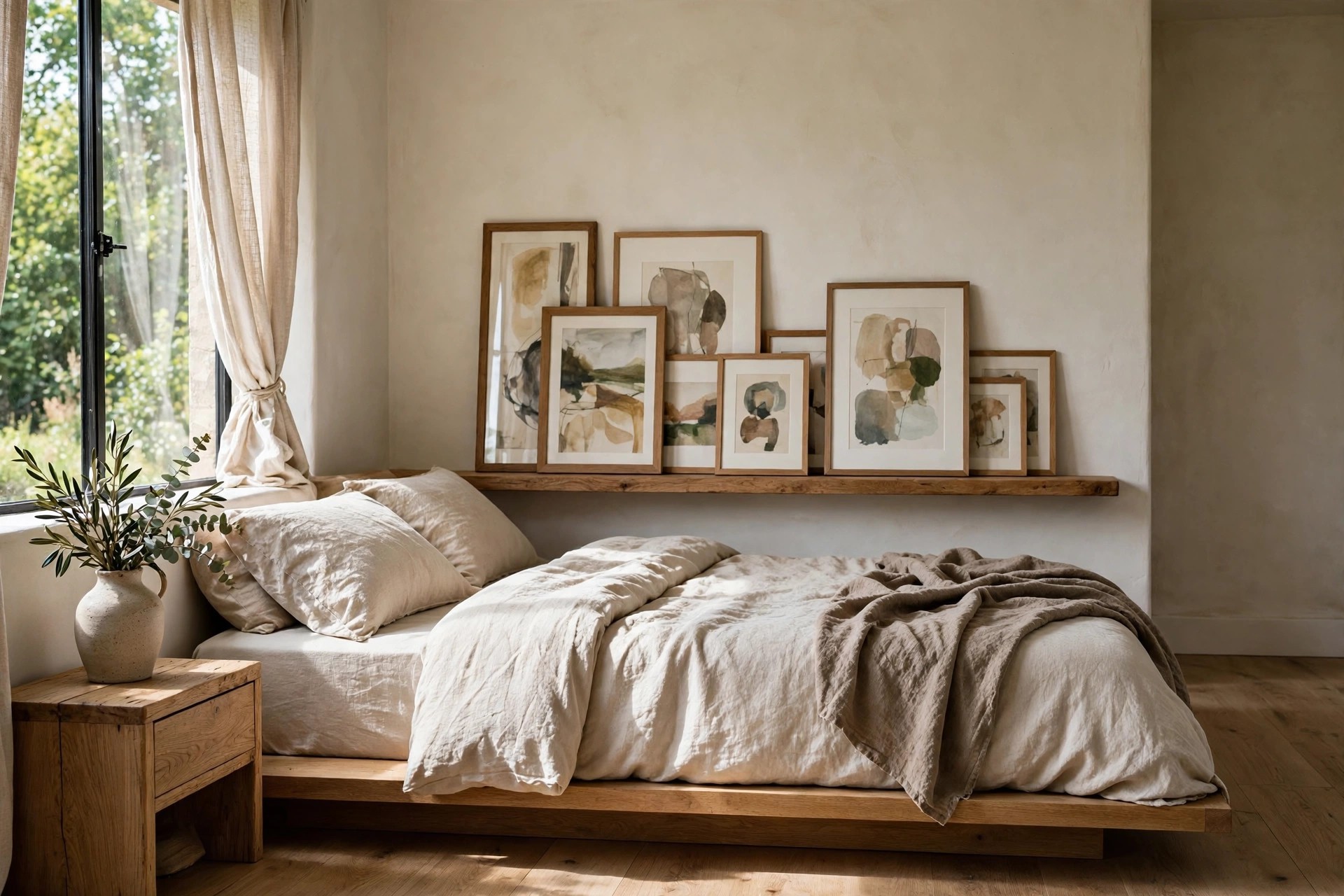
A long picture ledge fixed low on the wall follows the bed line better than any grid. Run it across most of the bed width and lean a mix of wide and small frames along it.
Overlap the frames a little and vary their heights in small steps. The ledge holds the low line even when the frames change. You can swap prints in minutes with no new holes.
For more ways to layer and swap pieces this way, see these bedroom wall art ideas using photo ledge shelves for the full ledge method. Keep the dust in mind and wipe the ledge weekly.
Leave one short empty stretch on the ledge. A small gap keeps the row from looking packed and gives new prints a place to land.
7. Drop Two Small Prints Low Over the Nightstands

Not all the art has to sit over the pillows. Hang one small print low above each nightstand and leave the center of the wall for one wide piece or for plain calm space.
Keep both prints at the same low height, close to lamp height. When the lamps come on at night, the light catches the glass softly. The prints look warm instead of stark.
Match the pair by frame and size, not by subject. One can hold a leaf print and the other a soft photo. The matching frames do the linking work, so the subjects can stay personal.
Keep the glass clean on these low prints. At lamp height, dust and glare show more than they do on art hung high.
8. Choose a Thin Letterbox Print for a Calm Line
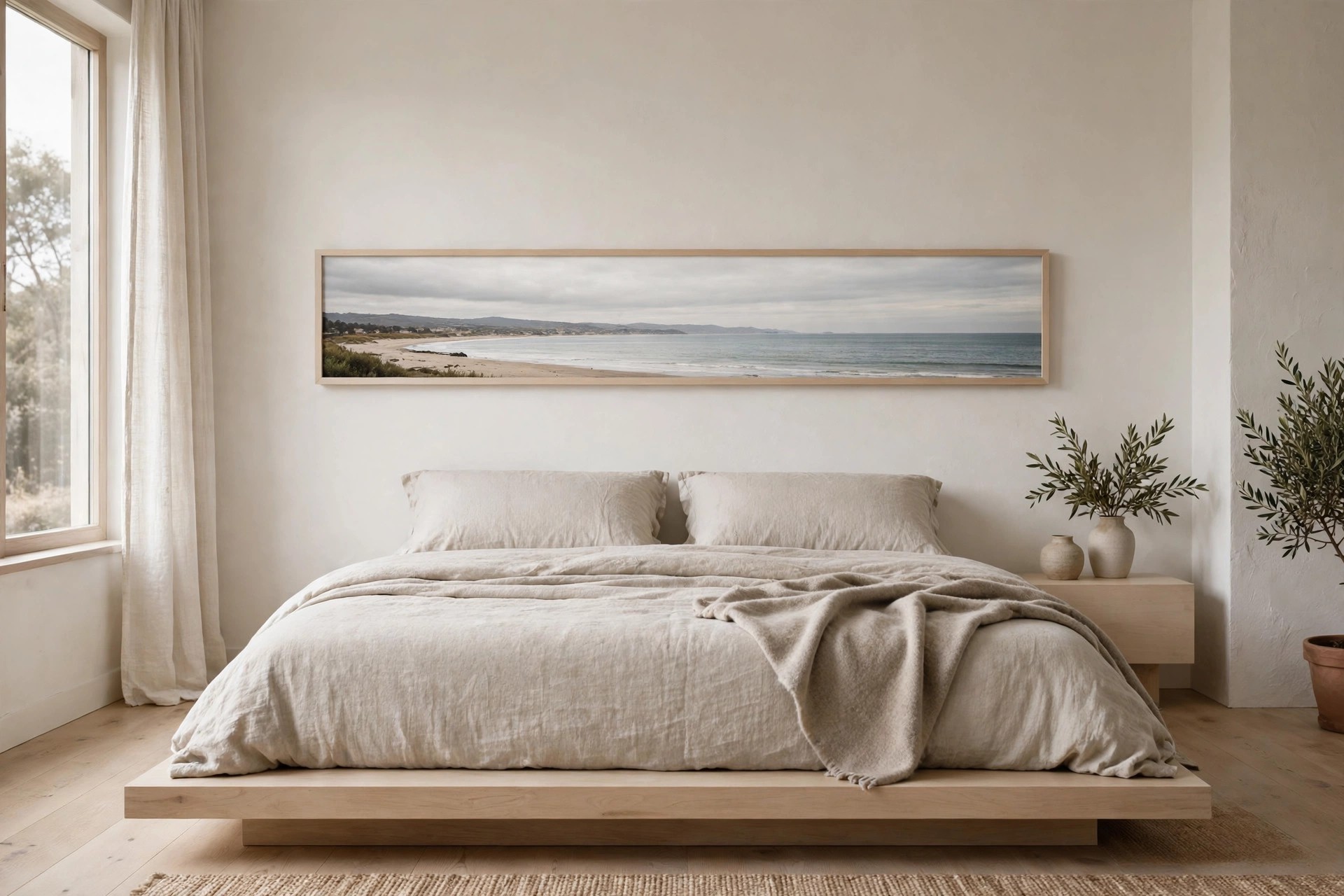
A letterbox print is long and thin, like a strip of horizon. That shape mirrors a platform bed almost exactly. It fills the width without adding height the wall does not need.
Center the strip low above the bed and leave generous blank wall above it. That empty space is part of the look. It gives the eye rest and makes the low line feel calm, not cramped.
Horizon subjects work best in this shape. A shoreline, a field line, or a low skyline keeps the mood quiet. Avoid tall subjects squeezed into the strip, since they look cut off and tense.
A pale wood frame suits this thin shape best. It adds just enough edge to hold the strip on a light wall.
9. Keep a Tight Grid Short and Wide

A gallery grid can still work above a low bed if you keep it short. Use two rows only, never three. Spread the frames wide so the group reads as a low block, not a tower.
Hang the bottom row close to the headboard line and keep gaps even on all sides. Step back to the doorway and check the block shape. It should look wider than it is tall.
Black and white photos in white mats suit this grid well. The pale mats soften the grid lines. From the bed, a crooked frame shows fast, so check each one with a small level.
Leave the top of the wall bare above the grid. That clear space is what keeps a grid from feeling tall.
10. Float a Frameless Canvas Just Above the Headboard

A frameless canvas feels lighter than a framed print, which helps above a low bed. The image wraps around the edges, so there is no dark frame line pressing down on the pillows below.
Hang it low, with the bottom edge close to the headboard top. On beds with no headboard at all, these above bed decor ideas with no headboard cover the bare wall case in full.
Pick a canvas with soft edges in the art itself, like mist, sand, or blurred leaves. Hard shapes near the bottom edge can look like they are sitting right on the sleeper at night.
Wipe the canvas edge now and then with a dry cloth. Low canvases gather pillow dust faster than art hung high on the wall.
11. Hang a Soft Textile Panel Wide and Low
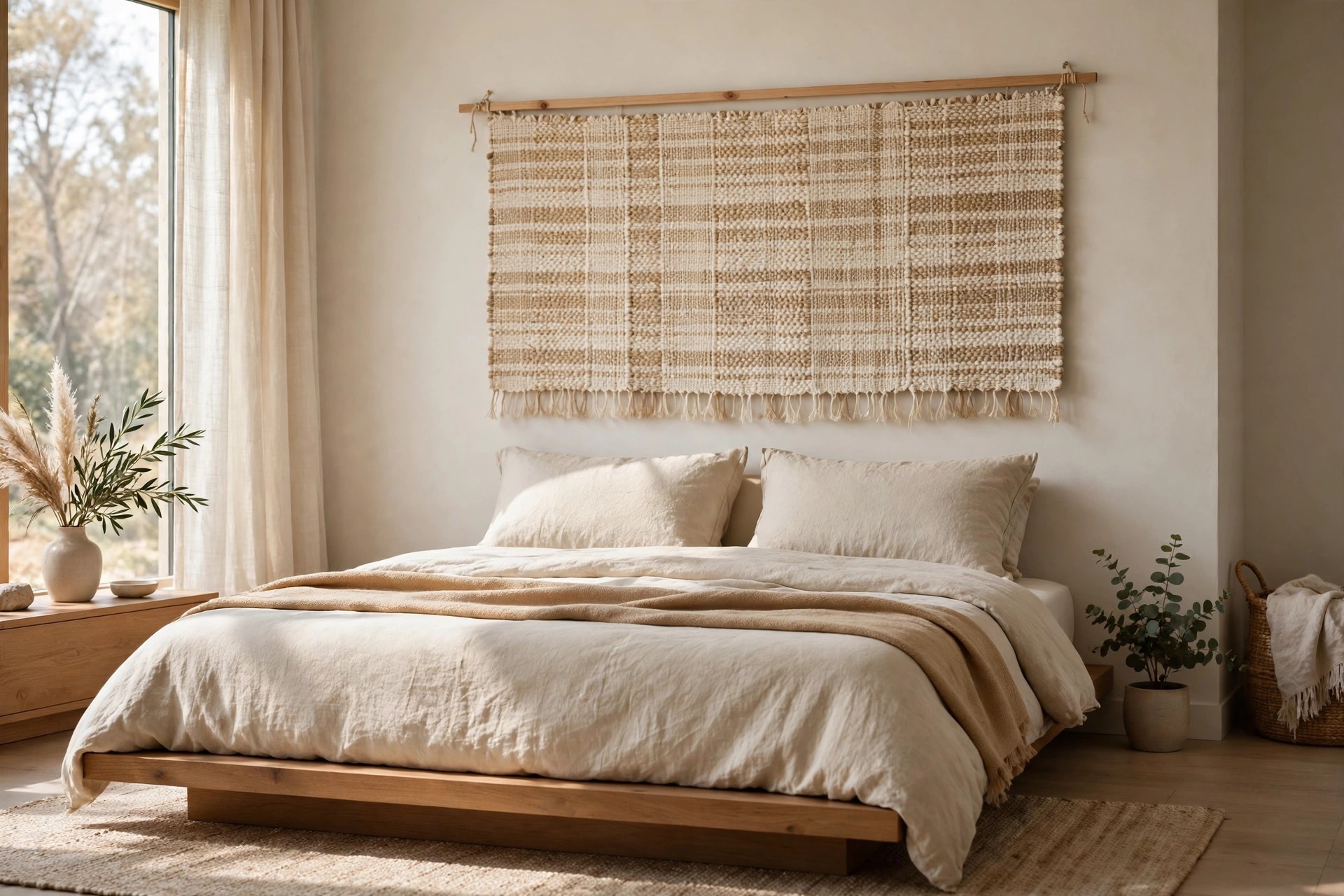
A textile panel adds softness that hard frames cannot. Choose a wide woven piece, a calm woven hanging, or a quilted panel and hang it low so its bottom edge sits near the headboard.
The fabric warms the wall and softens sound in a quiet room. It also hides small wall marks well. Hang it from a slim wood bar so the top edge stays straight and flat.
Keep the colors close to your bedding so the panel reads as part of the bed. A loud panel hung low can feel like it is falling toward you, so calm tones work best here.
Smooth the panel flat once a week with your hand. Fabric hung this low can catch a small wave near the bottom edge.
12. Line Up Photos in Slim Frames at Pillow Height
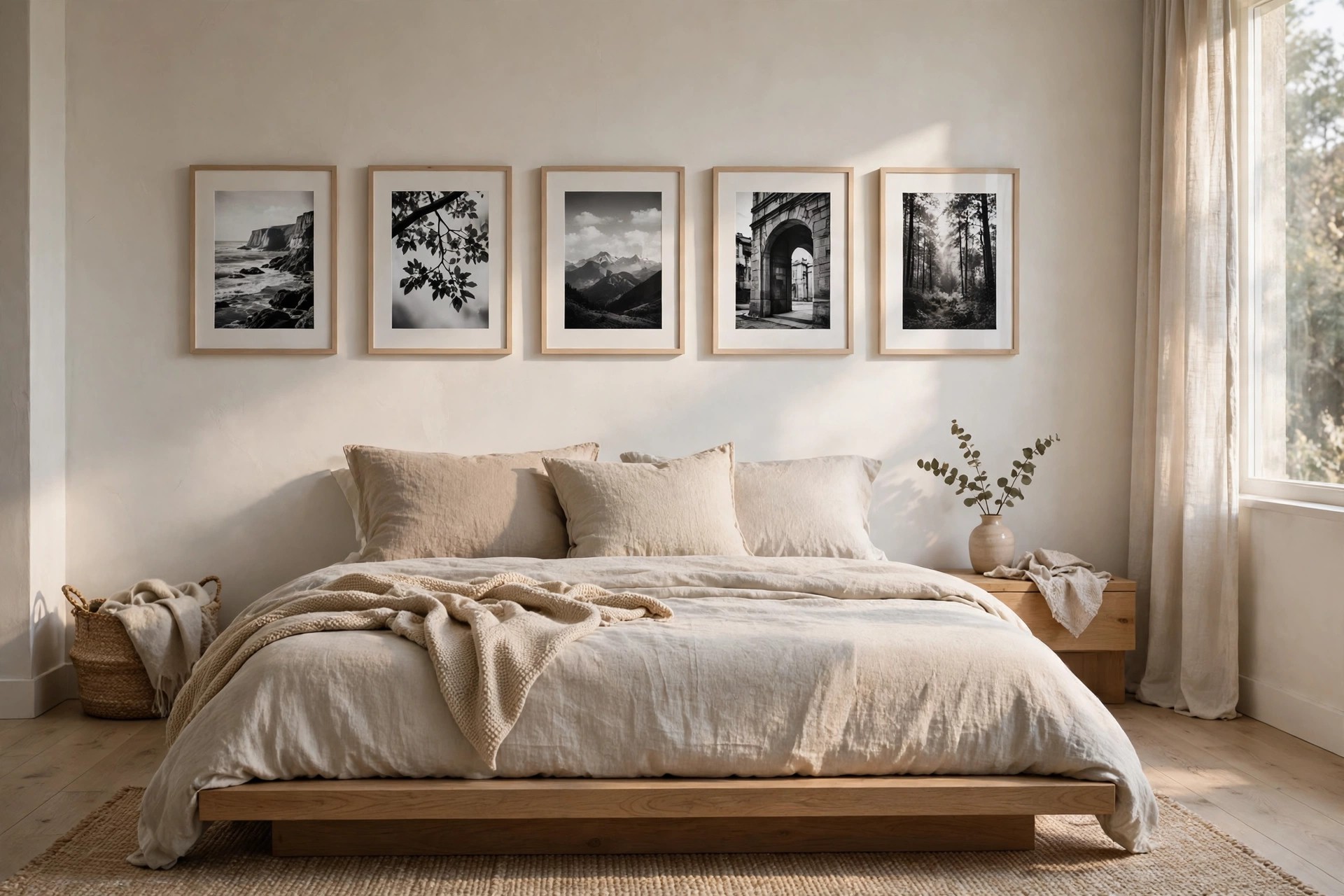
Personal photos feel right when they hang close. Line up four or five slim framed photos in one low row above the bed, at a height you can enjoy while sitting up with morning coffee.
Print the photos in one tone, all black and white or all warm color. That one choice turns snapshots into art. Mixed bright colors in a low row can look busy right above your head.
Thin metal or pale wood frames keep the row light. Thick dark frames in a row this close can feel heavy. Leave a palm width of wall between the row and each nightstand lamp.
Swap one photo each season and keep the rest in place. The row stays fresh, and the frames and low line never change.
13. Split One Landscape Photo Across Three Panels
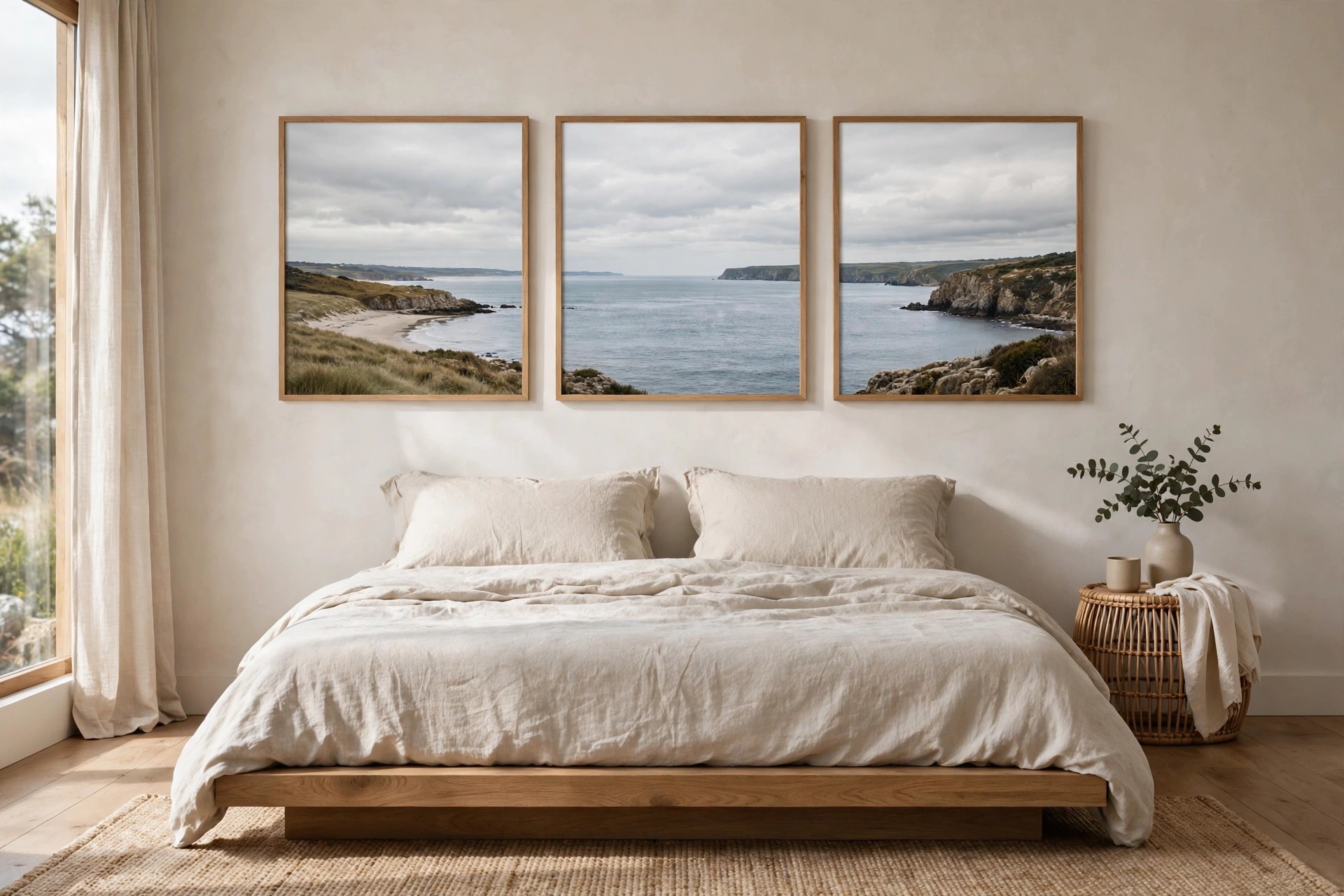
Splitting one landscape photo across three panels gives you custom width. Print the full scene wide, then cut the view into three equal parts. Hung low in a row, the scene flows across the bed.
Landscapes with a clear horizon split best. The horizon line should run level across all three panels. Check it from the foot of the bed, where a small step in the line shows most.
Leave only a narrow gap between panels so the scene stays joined. Wide gaps break the view into three small pictures. The goal is one calm view that happens to have two seams.
Use the same frame on all three panels. Matching frames keep the seams quiet and let the joined scene do the work.
14. Mix One Low Mirror Into a Wide Art Row

One mirror placed inside a low art row adds light without adding height. Set a round or oval mirror between two wide prints, all hung on the same low line above the bed.
The mirror picks up window light and lamp glow and spreads it across the wall. Keep its center at the same height as the art centers. A mirror hung higher will pull the row apart.
For more mixes like this, see these bedroom wall art ideas with mirror gallery mixes for layout options. Check what the mirror reflects from the bed before you fix it.
Pick a thin frame for the mirror in the same tone as the art frames. A heavy frame will pull focus from the prints.
15. Give a King Platform Bed Extra Width

A king platform bed is very wide and very low, so small art vanishes above it. Go wider than feels safe at first. The art group should cover most of the bed width from above.
Two wide prints, a three panel set, or one long ledge row all hold this scale. These wall art ideas above a king bed show the width rules for the largest beds in more detail.
Keep the whole group low, even at this size. Wide and low is the point. If the art climbs the wall, the bed looks sunken and the room loses the calm line you want.
Stand at the doorway for the final check. From there, the art and the bed should read as one wide, low shape.
A low platform bed asks for art that stays wide, low, and close. Pick one shape from this list and hang it on the bed line.
Leave the high wall empty on purpose. That choice is what makes bedroom wall art ideas for a low platform bed feel calm instead of crowded.
Start with the wall above your own bed this week. Tape the outline first, live with it for a day, then hang. Save this to your bedroom wall art ideas board for later so the sizes stay handy.


