

15 Long Horizontal Wall Art Ideas for Bedroom
The wall above a bed can look strangely unfinished even when everything else in the bedroom feels carefully decorated. The problem is often not the furniture or bedding, but the shape of the artwork competing with the wide, low profile of the bed.
Long horizontal wall art can solve that problem while giving the bedroom a stronger visual center. Its extended shape naturally follows the width of the headboard, making it useful for bedrooms that need a substantial focal point without filling the wall with several separate decorations.
From misty landscapes and panoramic photography to textured abstracts and elegant geometric compositions, these ideas offer different ways to make a wide bedroom wall feel intentional.
1. Wide Misty Mountain Panorama

A wide misty mountain canvas can give a spacious bedroom a focal point while following the horizontal shape of the bed. Choose layered peaks, pale fog, and restrained gray, blue, or sage tones, then repeat one shade through the bedding or throw; keeping the surrounding wall simple allows the landscape to remain prominent without overwhelming the room.
This style works especially well above a low headboard because its broad composition adds depth while preserving a calm visual rhythm across the sleeping area.
2. Panoramic Abstract Brushwork
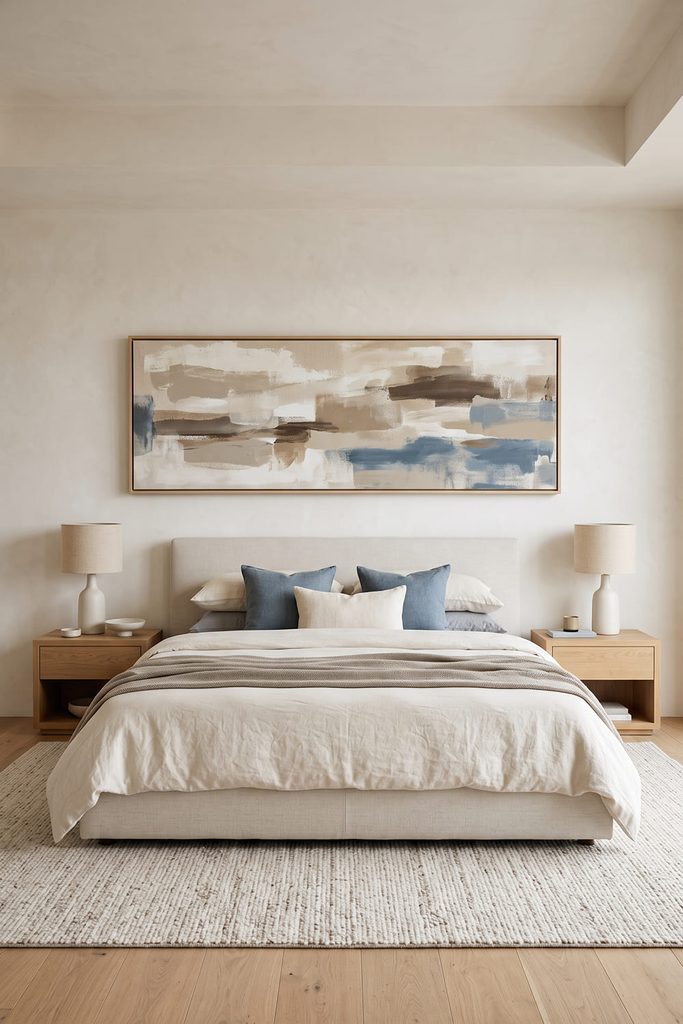
A panoramic abstract canvas can bring artistic personality to the bedroom without depending on a recognizable scene. Look for broad horizontal brushstrokes, softened edges, and related colors rather than many unrelated shades, then position the artwork centrally above the headboard; repeating one subtle color in cushions or bedding helps connect the canvas with the rest of the room.
The long format creates visual continuity across the wall and gives a minimalist bedroom an expressive focal point without making the space feel cluttered.
3. Long Botanical Canvas
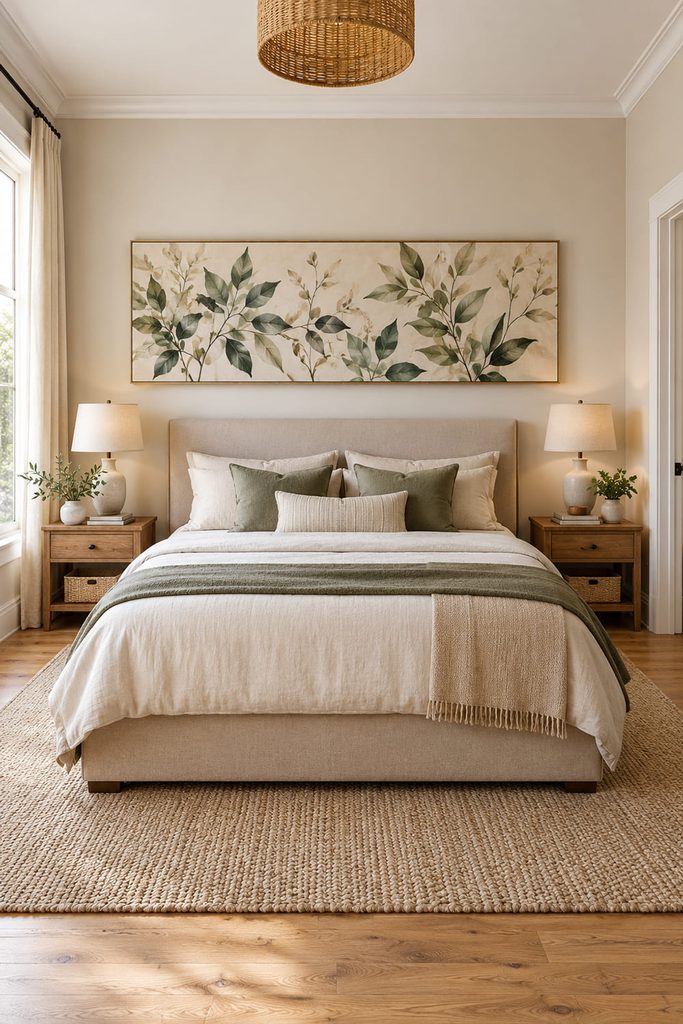
A long botanical canvas can introduce natural shapes without taking up the space required by multiple smaller prints. Choose an elongated arrangement of leaves, stems, branches, or delicate foliage in muted green, cream, beige, or charcoal, then pair it with simple bedding and natural textures; the repeated organic shapes create movement across the wall while the horizontal format keeps the composition grounded.
This idea works beautifully when the bedroom already contains wood furniture, woven details, linen bedding, or nature-inspired elements throughout.
4. Wide Coastal Horizon

A wide coastal horizon canvas can create an airy feeling by stretching a simple scene across the wall behind the bed. Choose calm water, a distant shoreline, pale clouds, and sandy or blue-gray tones, avoiding overly dramatic waves or saturated colors; the open composition gives eyes plenty of breathing room.
Pair the artwork with cream bedding, light wood, or soft blue accents so the bedroom feels connected to the scene while maintaining a relaxed, comfortable atmosphere throughout the sleeping area.
5. Horizontal Neutral Texture

A horizontal textured canvas can add interest when you prefer neutral decoration but dislike a completely flat wall. Choose layered plaster-like marks, subtle raised brushwork, woven textures, or tonal strokes in ivory, taupe, beige, and warm gray; changing texture rather than color keeps the composition quiet.
Place it above the headboard and let surrounding furniture remain simple, allowing natural daylight to reveal surface variation while creating a sophisticated focal point that feels substantial without introducing strong visual contrast.
6. Long Sunset Gradient
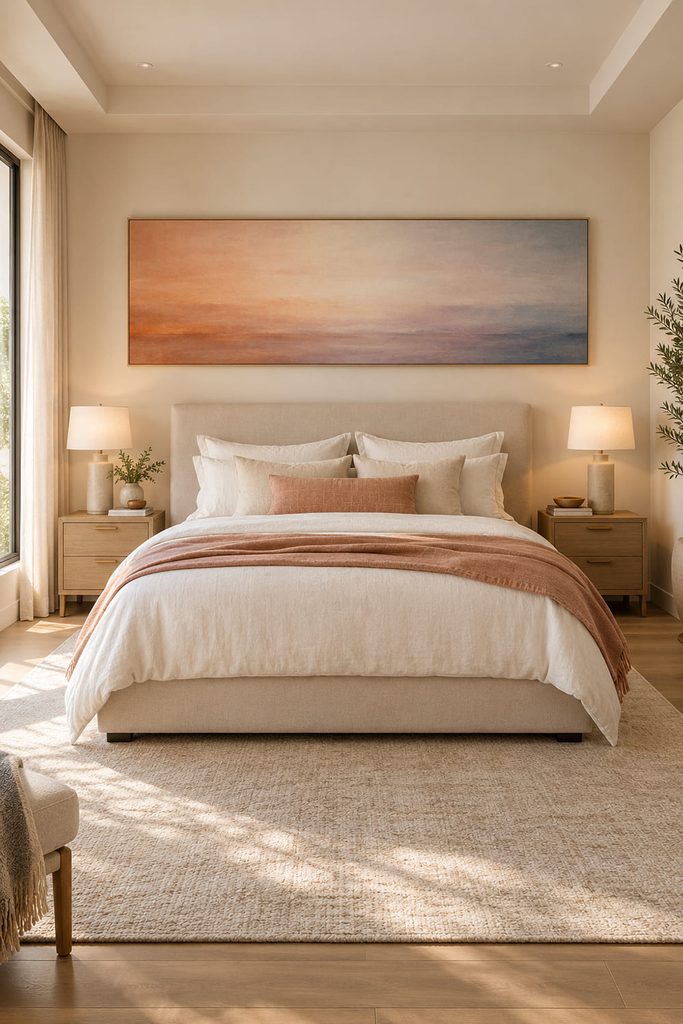
A long sunset gradient canvas can bring warmth to the bedroom without requiring a complicated image. Choose a smooth transition from dusty peach and muted terracotta into cream, mauve, or soft blue, then coordinate small accessories with one shade from the artwork; the extended horizontal format makes the color movement feel expansive.
This approach suits modern, romantic, and transitional bedrooms where you want a gentle visual statement above the bedroom bed without introducing overly detailed scenery or patterns into the room.
7. Panoramic Forest Scene

A panoramic forest scene can create the impression of looking through a wide window while adding natural depth to an otherwise plain bedroom wall. Choose distant trees, soft mist, and layered woodland tones rather than a highly detailed close-up; this keeps the artwork restful from across the room.
Pair it with warm neutrals, natural wood, or muted green textiles, and allow plenty of empty wall around the canvas so its broad composition remains clear and visually balanced above the bed.
8. Long Black And White Photography

A long black and white photograph can give a bedroom a refined appearance while keeping the color palette controlled. Consider a panoramic architectural scene, quiet shoreline, mountain ridge, or atmospheric road, then use a slim frame or clean canvas edge to maintain the contemporary feel.
The monochromatic palette works with nearly any neutral bedding, while the extended composition mirrors the bed’s width and creates a strong focal line without introducing several competing colors or decorative elements around the sleeping area.
9. Wide Terracotta Abstract

A wide terracotta abstract canvas can warm a neutral bedroom with earthy color tones while maintaining modern character. Choose broad shapes, curved forms, and layered tones of terracotta, clay, beige, cream, and muted brown rather than a highly detailed illustration; repeat only one color through a cushion, throw, or small accessory.
The long format spreads warmth across the wall, helping the artwork relate to the bed and surrounding furniture while keeping the overall bedroom palette grounded, welcoming, and visually cohesive.
10. Panoramic Watercolor Landscape

A panoramic watercolor landscape can bring softness to a bedroom through translucent layers and gentle transitions between colors. Choose distant hills, an open field, quiet water, or a simple sky painted with restrained blues, greens, creams, or dusty neutrals; the loose technique keeps the image from feeling overly formal.
Hang it above a simple headboard and allow the surrounding wall to remain uncluttered, creating a calm focal point that adds personality without competing with bedding, lighting, furniture, or decorative accessories.
11. Long Minimal Line Composition
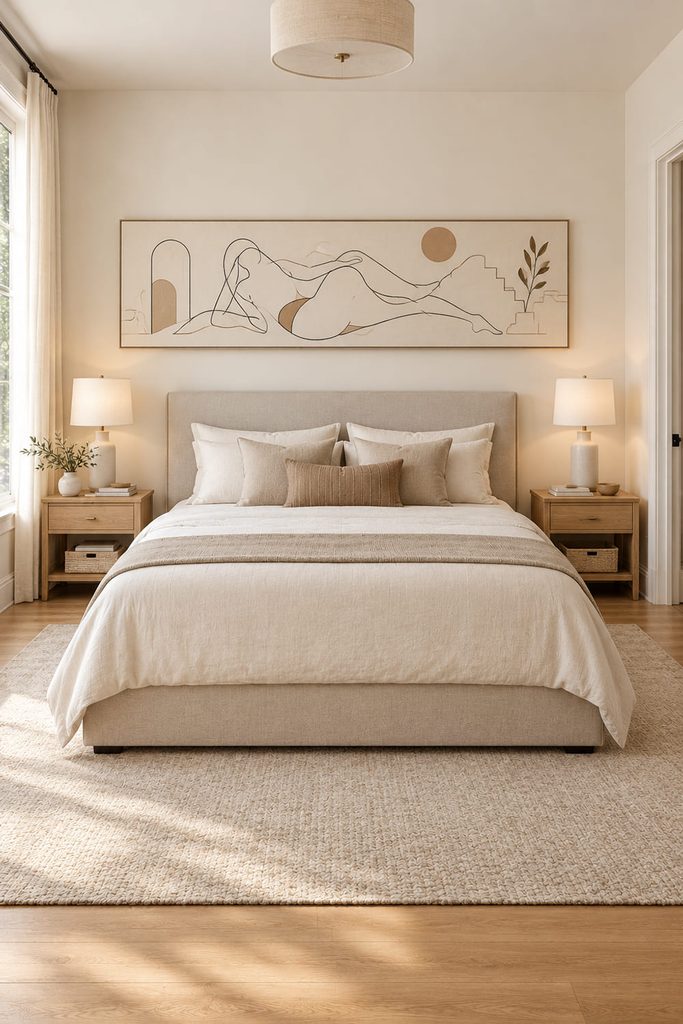
A long minimal line composition can provide interest without filling the bedroom with strong color or complex imagery. Look for continuous curves, abstract figures, architectural outlines, or flowing forms arranged across a wide canvas, preferably using charcoal, black, cream, or warm brown; the extended design naturally follows the bed’s horizontal profile.
Pair it with streamlined furniture and plain bedding so the artwork remains the main visual statement while the generous negative space keeps the bedroom feeling orderly, quiet, and comfortable.
12. Horizontal Celestial Sky
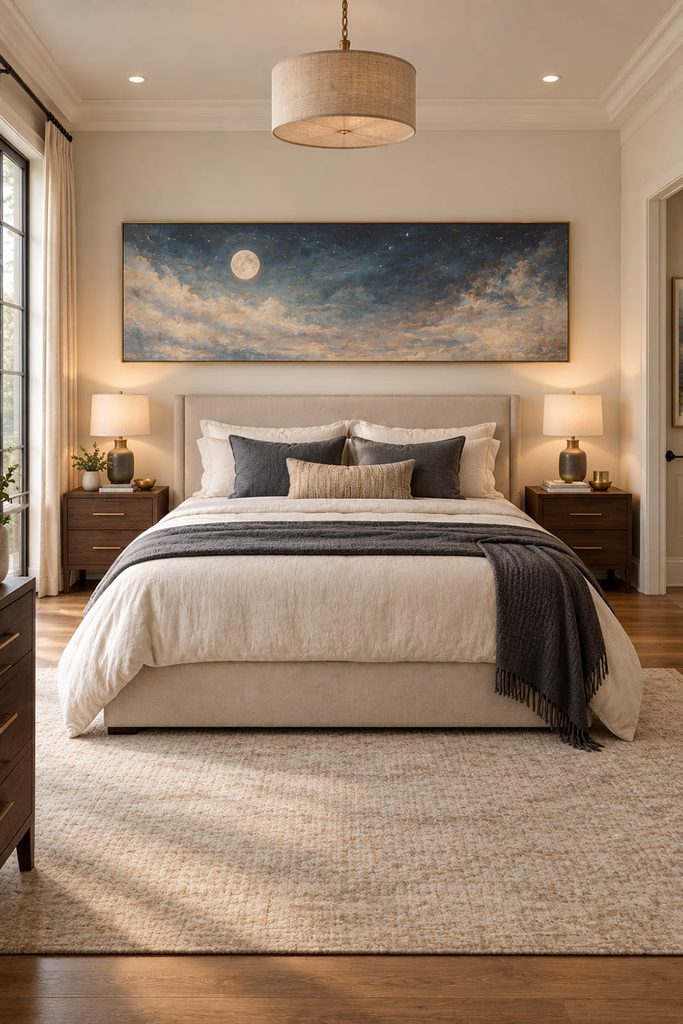
A horizontal celestial canvas can create a dreamy bedroom focal point while remaining sophisticated enough for an adult space. Choose a wide night sky with a subtle moon, scattered stars, or softly blended blue and charcoal tones, then add small warm accents through lighting or textiles; keeping the celestial imagery restrained prevents the room from becoming theme-heavy.
Its broad shape works especially well above a wide headboard, where it can visually connect the sleeping area and surrounding wall into one composition.
13. Long Floral Field Canvas
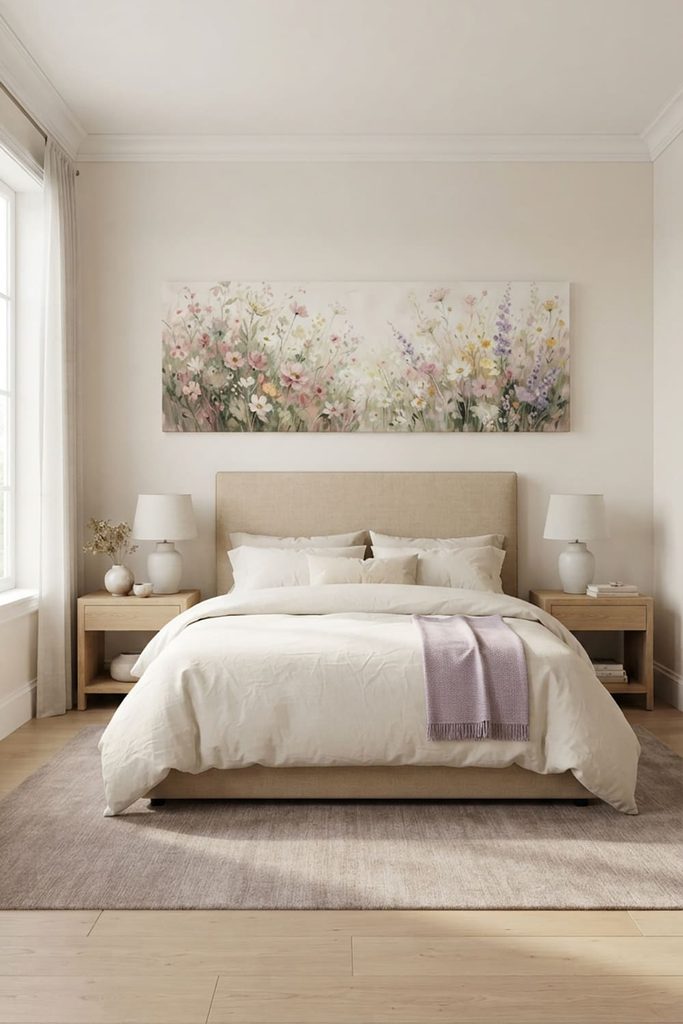
A long floral field canvas can bring softness and color to the bedroom without relying on oversized individual flowers. Choose a distant meadow, loose wildflowers, or painterly vegetation extending across the composition, using muted pink, sage, cream, yellow, or lavender; the panoramic arrangement gives the artwork a natural sense of movement.
Pair it with understated bedding and one or two repeated colors, allowing the artwork to provide personality while maintaining a peaceful bedroom atmosphere that does not feel overly decorated.
14. Wide Geometric Canvas

A wide geometric canvas can give a contemporary bedroom stronger structure while remaining visually balanced above the bed. Choose large blocks, arches, overlapping rectangles, or curved forms arranged with generous negative space, using three or four coordinated colors rather than a crowded palette; repeat one shade in nearby textiles for cohesion.
The elongated shape mirrors the headboard and helps distribute visual weight across the wall, making it very effective in modern bedrooms with clean furniture and uncomplicated decorative styling throughout.
15. Panoramic Diptych Canvas

A panoramic diptych can create the appearance of one wide artwork while giving the wall additional rhythm. Choose two panels that continue the same landscape, abstract composition, color flow, or textured design, then treat their combined width as one visual unit when positioning them above the bed; keep the gap between panels consistent and modest.
This arrangement works well on broad walls where a single canvas might feel too heavy, while preserving the clean horizontal character of the overall composition.
How to Choose Long Horizontal Wall Art for a Bedroom
The artwork should be selected according to the usable wall area, not simply the total size of the bedroom. Measure the headboard, ceiling height, nearby lamps, windows, molding, and available space before choosing a canvas.
A useful starting point is to make the artwork visually substantial compared with the bed or headboard. Many current interior-design guides suggest roughly two-thirds to three-quarters of the headboard width as a practical starting range, although the exact proportion should be adjusted for the room.
Measure the Headboard First
The headboard should act as your main reference point.
Check:
- Headboard width
- Headboard height
- Distance to the ceiling
- Wall-mounted lights
- Bedside tables
- Windows and architectural features
The artwork should feel connected to the bed rather than floating independently.
Leave Enough Space Above the Headboard
A long canvas usually looks better when it has a visible gap between its bottom edge and the headboard.
A practical starting point is around 6 to 10 inches, but the exact distance depends on the headboard height, ceiling height, and artwork proportions.
If the canvas is placed too high, the artwork can appear disconnected from the bed.
Choose Calm Compositions
The bedroom generally benefits from artwork that feels visually settled.
Consider:
- Soft landscapes
- Muted abstracts
- Gentle botanical scenes
- Atmospheric photography
- Tonal artwork
- Simple geometric compositions
You can still use strong artwork, but limiting excessive visual complexity can help maintain a calmer overall room design.
One Long Canvas or Two Panels?
One long canvas creates a simple focal point with very little visual interruption.
A diptych can work particularly well when the wall is exceptionally wide or when you want a slightly more structured arrangement.
If using two panels, consider the combined width rather than judging each canvas individually.
The pair should read as one artwork.
Match the Artwork to Existing Colors
The artwork does not need to match the bedding exactly.
Instead, choose colors that already appear somewhere in the bedroom.
For example:
- Beige bedding with brown and cream artwork
- Gray furniture with blue-gray landscape art
- White walls with sage botanical artwork
- Terracotta accessories with earthy abstract art
- Cream bedding with muted coastal artwork
This creates repetition without making the bedroom look overly coordinated.
Consider the Wall Color
Dark artwork can create a dramatic contrast against a pale wall. Light artwork can provide subtle variation against deeper paint colors.
For a neutral bedroom, textured artwork can sometimes provide more interest than adding another strong color. The goal is to create enough contrast for the artwork to remain visible without making it compete with the bed.
Think About the Headboard
The relationship between the canvas and headboard matters considerably. A large upholstered headboard already has visual weight, so artwork with a simpler composition may work better.
A low or minimal headboard can handle artwork with more texture, color, or detail. Think of the headboard and artwork as a single visual arrangement.
Use Painter’s Tape Before Hanging
One of the easiest ways to test artwork size is to mark its approximate dimensions on the wall using removable painter’s tape.
Stand:
- At the bedroom entrance
- At the foot of the bed
- Beside the bed
This gives you a better idea of the artwork’s real visual weight before making installation holes.
Do Not Overdecorate Around It
A long horizontal artwork already occupies a significant visual area. You do not need to surround it with numerous additional decorations.
Keep nearby walls relatively simple, especially when the canvas contains detailed scenery, strong texture, or multiple colors. This allows the main artwork to remain the bedroom’s focal point.
Think About Viewing Position
Bedroom artwork is often viewed from a lower position than living-room artwork because people see it while sitting or lying on the bed.
That means placement should be judged from the actual positions where you use the room. A canvas that looks correctly positioned while standing may feel too high once you are lying in bed.
Consider Lighting
Natural daylight can make artwork look different throughout the day.
Check the canvas under:
- Morning daylight
- Afternoon sunlight
- Evening lamps
- Low ambient lighting
Avoid placing strong direct lighting where glare or reflections could make the artwork difficult to appreciate.
Choose the Right Frame Style
A long horizontal canvas can work with several presentation styles. A slim frame creates a refined appearance.
A deeper frame can make the artwork feel more substantial. A frameless canvas can suit minimalist bedrooms.
Choose the option that relates naturally to the existing furniture rather than selecting the frame independently.
Final Thoughts
Long horizontal wall art can be one of the most effective ways to decorate the bedroom wall behind a wide bed. Its proportions naturally relate to the headboard, allowing the artwork to occupy enough visual space without requiring a collection of small pieces.
The best choice depends on your bedroom’s existing colors, furniture, lighting, wall dimensions, and personal style. Start by measuring the available space, test the proportions with removable tape, and choose artwork that creates the mood you want to experience each day. With the right scale and placement, one long horizontal piece can make an unfinished bedroom wall feel balanced, intentional, and complete.


