

15 Wall Art Ideas for a Bedroom With Sloped Ceilings
The low side of an attic bedroom is the spot most people give up on. The ceiling drops, the wall shrinks, and a normal tall print has nowhere to go.
This guide is only about wall art ideas for a bedroom with sloped ceilings where the slope cuts into the wall. Every idea below works low, wide, or at an angle.
Short pieces belong on the short knee wall. Small frames can step down with the slope. One wide print can sit at pillow height and still feel calm.
Measure the knee wall height first, and note where the slope starts. Those two numbers decide every frame size in this guide and save a lot of guesswork.
If your room feels small under the slope, start with the same logic behind small bedroom wall art that keeps a room open. Keep the art low and let the upper slope stay clear.
This post contains affiliate links. If you buy through them, we may earn a small commission at no extra cost to you. See our Affiliate Disclosure.
1. Hang One Long Low Print on the Knee Wall Above the Bed
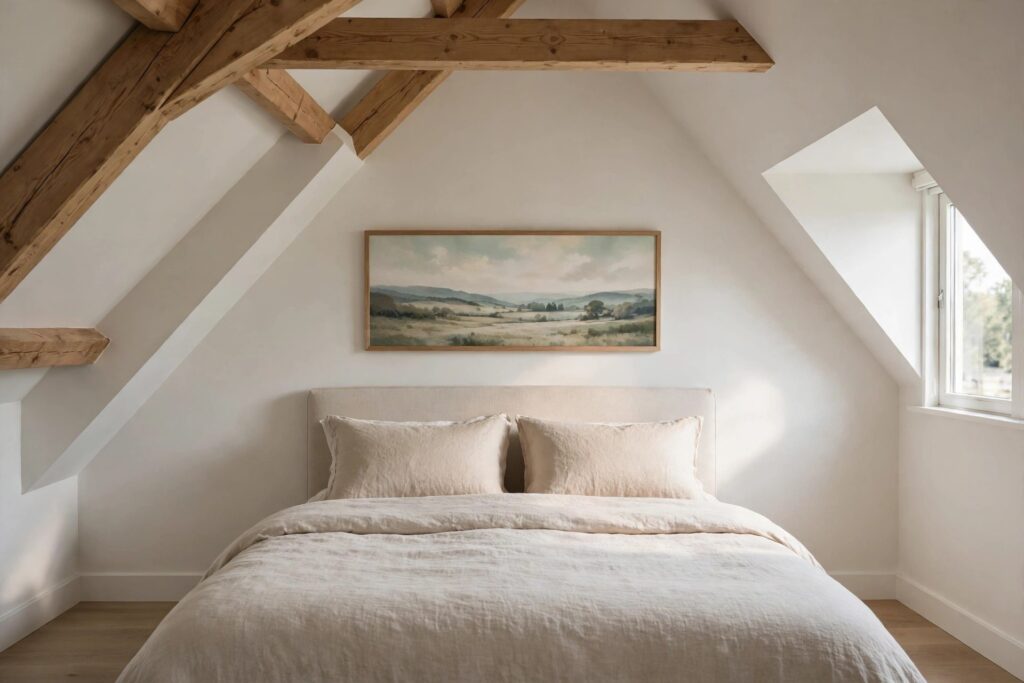
A bed tucked under the slope leaves a short, wide strip of wall above the pillows. That strip suits one long horizontal print, not a tall one.
Pick a soft landscape or a calm abstract in a thin wood frame. Keep the bottom edge close to the headboard so the print reads as part of the bed.
Leave clear space between the top of the frame and the slope. Crowding that gap makes the ceiling feel even lower from the pillow side.
This is the same wide shape that works in long horizontal wall art for a bedroom, just hung lower. From the doorway, the eye reads width first, and the low ceiling matters less.
Measure the knee wall first, then choose the frame width to suit it.
2. Stair-Step Small Frames Down With the Slope

A row of small frames can follow the ceiling line down, one step at a time. Use five or six matching frames in the same size for a clean rhythm.
Start the highest frame on the taller wall, then drop each next frame a few inches. Keep the gaps even so the steps look planned, not crooked.
Soft prints work best here: simple leaves, quiet shapes, or pale photos. Busy art in a stepped row can feel noisy at close range.
Stand at the bed and check the line from there. A stepped gallery often looks straight from the door and slightly off from the pillows, where you see it most.
Thin frames suit this low strip and keep the bed area feeling light.
3. Lean Art on a Low Ledge Along the Knee Wall
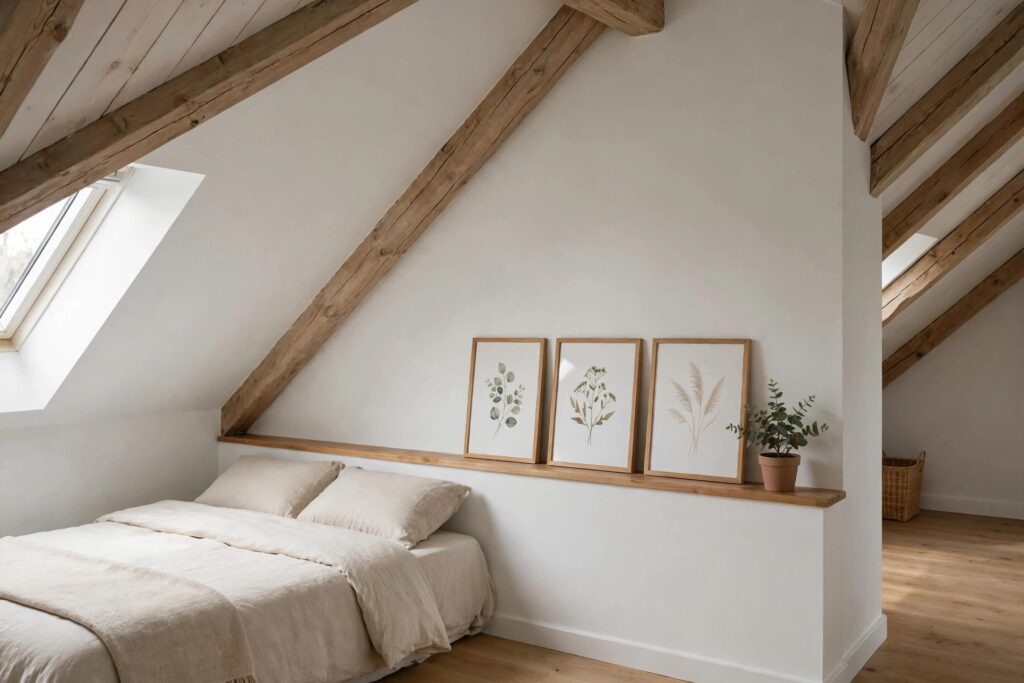
A shallow ledge fixed along the knee wall lets you lean art instead of hanging it. That helps when the wall above is too short for nails and frames.
Mix two or three leaned pieces with one small plant or a stack of books. Keep the tallest piece below the point where the slope begins.
Leaned art is easy to swap, so this spot suits prints you like to rotate. Push the frames flat so they do not catch light at an odd angle.
Dust the ledge often. In attic rooms the low ledge catches sun first, and a dusty edge shows fast against pale walls and white bedding.
A second small print can join later if the wall still feels bare.
4. Stack Two Small Prints in the Narrow Strip Beside a Dormer
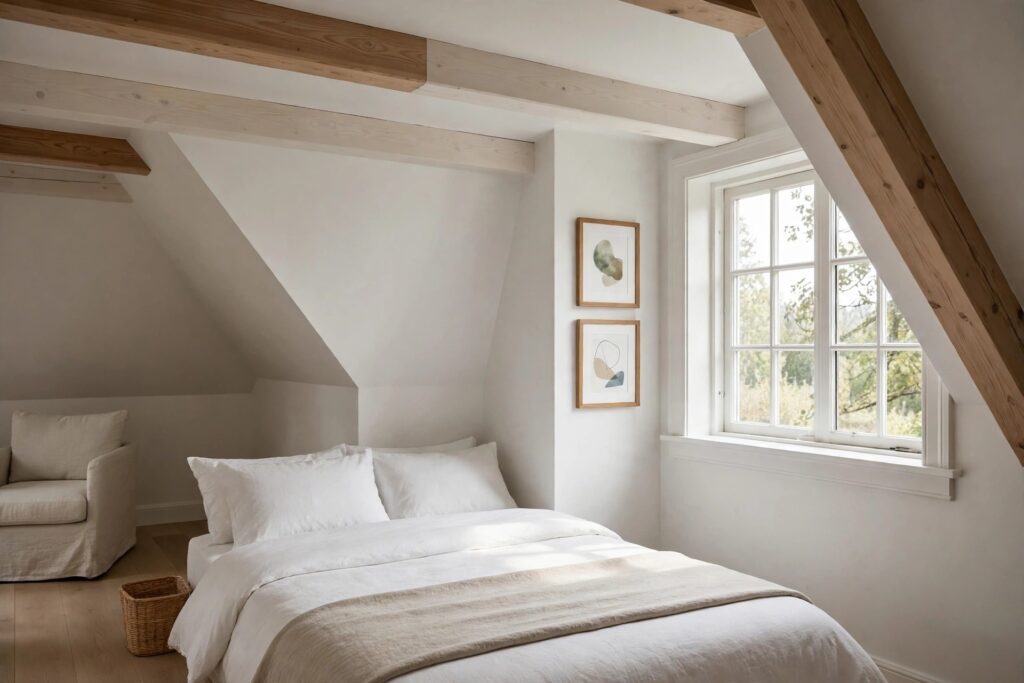
The thin strip of wall beside a dormer window is easy to waste. Two small prints stacked one above the other fill it without crowding the window.
Choose narrow frames and keep both prints in the same color family. A leaf print above a soft stripe or a pale shape keeps the pair calm.
Leave a hand width of clear wall between the frames and the window trim. Art that touches the trim looks squeezed, even in a small room.
Check the pair in morning light. Dormer glass throws strong side light, and a glass front on the lower print can glare while you dress. Matte fronts help.
Keep frame colors close to the bedding for a calm, joined up look.
5. Use One Wide Panorama Over a Low Dresser Under the Slope

A low dresser often sits under the slope because tall furniture cannot. The wall above it is short and wide, so a single panorama print fits the shape well.
Keep the print a bit narrower than the dresser top. That small margin on each side makes the pairing look balanced from the foot of the bed.
Set nothing tall in front of it. A short tray, a folded throw, or a low bowl keeps the print clear and the dresser easy to use.
Pick a calm scene with a low horizon line. A horizon near the middle of the print sits well here and does not fight the slope above it.
Leave the dresser corners clear so drawers and doors still open with ease.
6. Mount One Light Print Flat on the Slope Itself
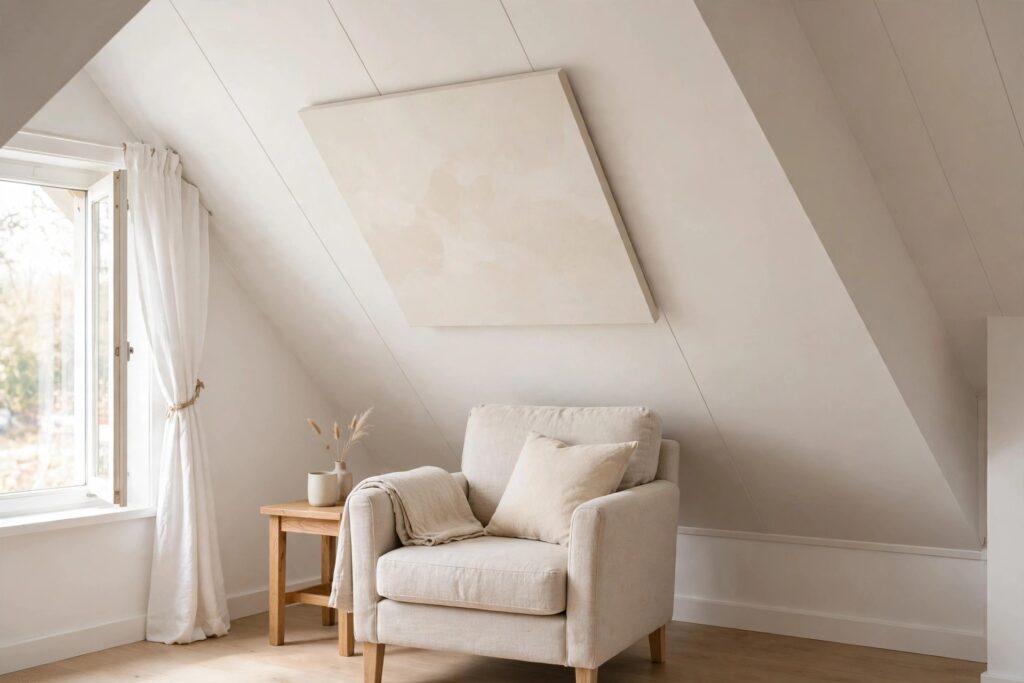
In some attic rooms the slope is the only large surface left. One light print mounted flat on that slope, above a reading chair or a low bed, can work well.
Choose a canvas or a light frame with no glass. Glass on a slope catches window light and can throw glare across the bed at midday.
Keep the print centered on the slope panel, not on the whole wall. Centering on the panel makes the angle look planned rather than accidental.
Keep the art soft and pale. A dark, heavy print on a low slope can feel like it leans over the room, while a light one lifts the corner.
Test the spot with taped paper first before you fix anything in place.
7. Wrap a Matching Pair Around the Corner Where Two Slopes Meet

Rooms under a roof often have a corner where two low slopes meet. One print on each wall, at the same low height, ties that awkward corner together.
Use a true pair: two halves of one scene, or two prints with the same frame and palette. Matching height matters more than matching size here.
Leave the corner itself empty. A small gap between the frames lets the angle show and stops the pair from looking bent around the wall.
This corner is often near the bed, so keep both prints calm. Strong color on two sides at pillow height can feel close and busy at night.
Soft white mats help both prints read as one pair from a distance.
8. Line Up Three Mini Prints at Pillow Height in a Reading Nook

The lowest corner under a slope often becomes a reading spot with a chair or floor cushions. Three mini prints in a low row suit that close, seated view.
Hang the row so the centers sit near seated eye level. Art hung for standing height looks lost above a low chair tucked under a slope.
Small botanical prints or soft line drawings suit close viewing. Fine detail rewards the short distance, while a big bold print would crowd the nook.
Add nothing above the row. The clear slope above the prints is part of the calm here, and it keeps the nook from feeling boxed in.
Keep a small lamp nearby so the row still reads well after dark.
9. Choose a Soft Textile Piece Where Glass Would Glare
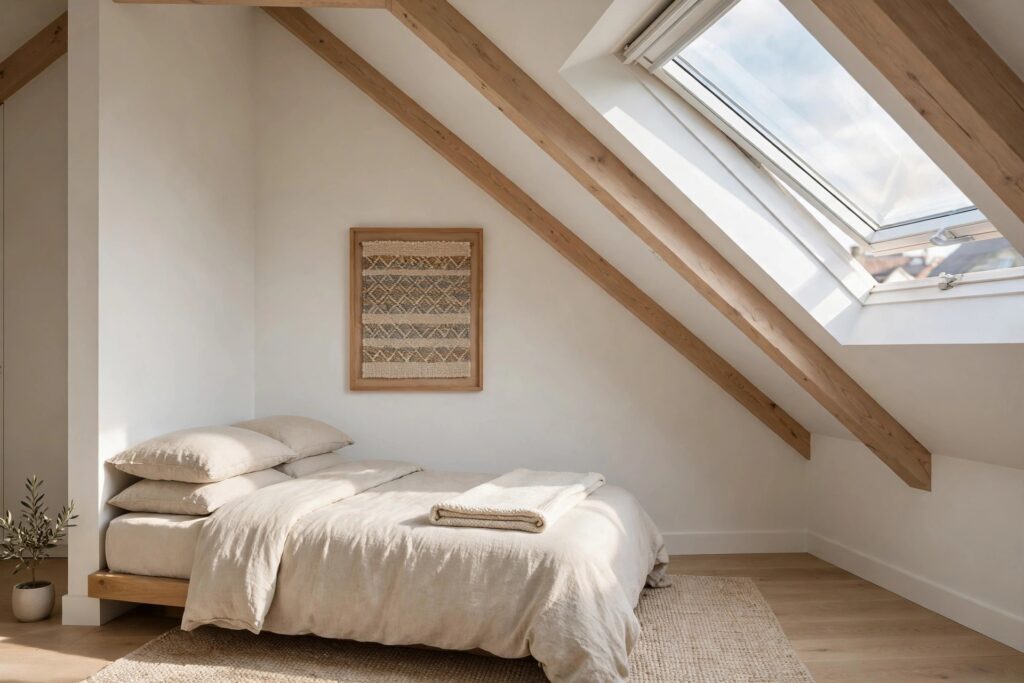
A slope facing a roof window gets harsh light for part of the day. A framed textile or a canvas piece on the knee wall below it avoids glass glare.
Look for woven cotton, linen, or a printed canvas with a matte finish. The soft surface takes light evenly and keeps the low wall calm.
Keep the frame simple and light in tone. A heavy dark frame under a bright slope draws the eye down and makes the wall feel shorter.
From the bed, this piece will often be the first thing you see. A quiet weave or a pale print sets a softer start than a shiny poster.
Hang it slightly lower than usual so it links with the furniture below.
10. Save the One Full Height Wall for a Mirror and Art Mix

Most sloped rooms still have one full height wall, often at the gable end or behind the door. That wall can carry a round mirror mixed with two small prints.
Hang the mirror where it catches window light and bounces it toward the low side. Keep the prints beside it, lower than you would in a flat ceiling room.
A wall treatment below the art can ground this taller wall, much like the ideas in wall art ideas for a bedroom with board and batten. Keep the mix light so the tall wall does not pull all the focus.
Leave the top third of this wall clear. That breathing room keeps the room balanced and stops the low side from feeling even lower by contrast.
One mirror is enough here.
11. Split a Diptych Across the Slope Break
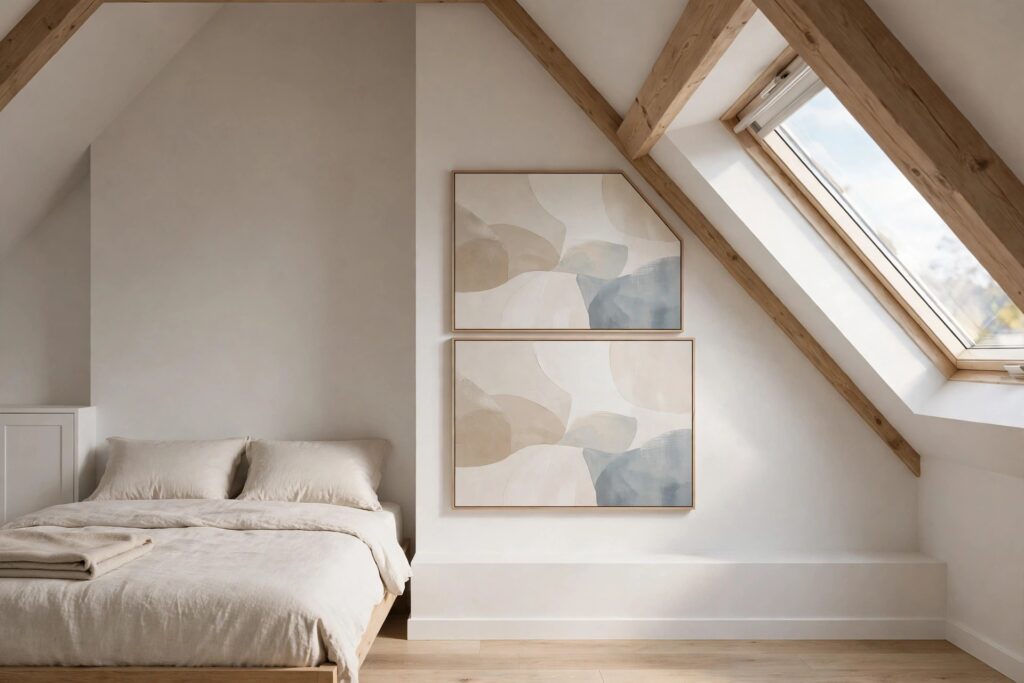
A diptych can follow the break where the knee wall meets the slope. Place one panel low on the wall and the second just above it on the slope line.
Align the inner edges so the image still reads as one pair. A small offset is fine, but a wide gap breaks the link between the panels.
Abstract prints suit this split best. A clear scene with faces or buildings can look odd when the roof line cuts between the two halves.
Step back to the doorway for the final check. The pair should read as one idea from the door and as two calm panels from the bed.
Use tape outlines for both panels first and live with them for a day.
12. Frame the Dormer Cheeks With One Print on Each Side

A dormer has two short side walls, often called cheeks, that get good side light. One small print on each cheek gives the window a framed, finished feel.
Keep both prints the same size and frame. Symmetry suits a dormer, and the window in the middle does the rest of the work.
This is also a smart spot to borrow from bedroom wall decor ideas for the window side wall. Pale prints keep the dormer bright and do not darken the glass.
Avoid tall pieces here. The cheeks are short, and a tall frame will hit the slope and make the dormer feel pinched on both sides.
Keep curtains or blinds clear of the frames so the light stays even.
13. Keep Above Bed Art Below the Slope Line on the End Wall
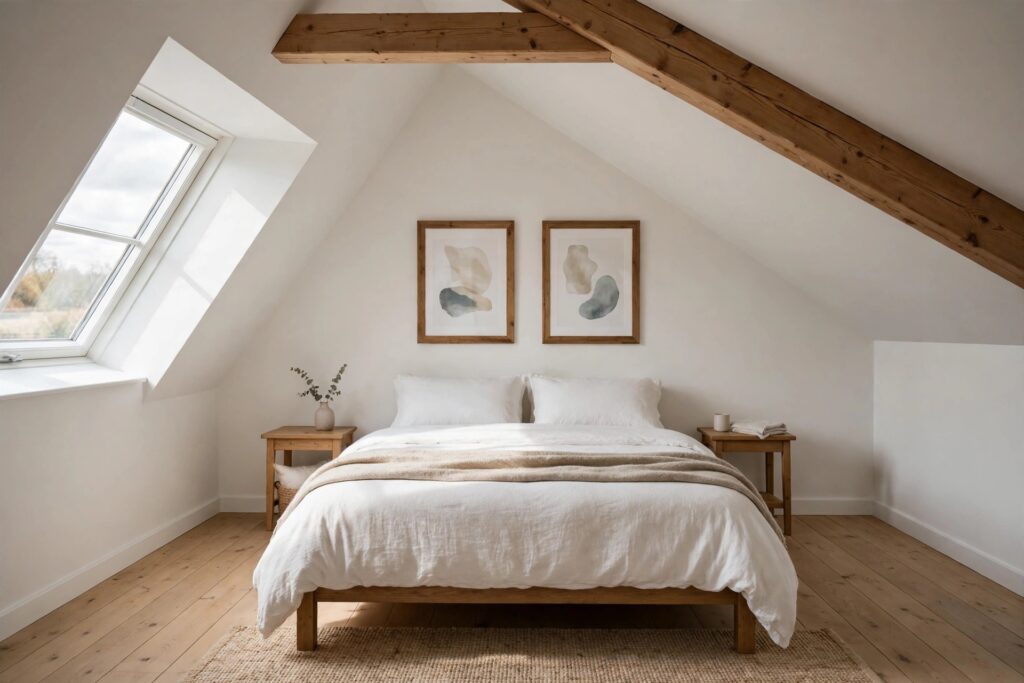
When the bed sits on the end wall, the slope may still cut across the top corner. Keep the art pair fully below that line, with clear wall above it.
Two medium prints side by side suit a wide bed. Center the pair on the bed, not on the wall, if the slope makes the wall look off center.
General height guides help, but this wall needs its own check, as covered in how to hang bedroom wall art at the right height. Here, the slope line is the real limit.
Lie down and look up before you fix the frames. A pair that looks fine while standing can sit too high in your view from the pillows.
Drop both frames together if needed.
14. Run a Slim Picture Rail Along the Base of the Slope

A slim rail fixed where the wall meets the slope gives art a steady line to sit on. Frames lean or hang from the rail and can slide as your taste changes.
Keep the rail in the same color as the wall. A contrasting rail adds another strong diagonal and can make the ceiling line feel busy.
Mix two framed prints with one small unframed canvas for a relaxed row. Vary heights a little, but keep every top edge below the slope.
This setup suits renters and keen swappers alike. You can refresh the low wall for a new season without filling the short wall with holes.
Slide the frames apart in summer for a lighter, more open row.
15. Hang One Calm Large Print for the View From the Pillows

In a low room, the view from the pillows matters most. One calm, large print on the wall facing the bed gives that view a clear focal point.
Choose a soft landscape, a pale abstract, or a quiet coastal scene. Fine detail is less useful here than a simple shape you can read while half awake.
Hang it a little lower than you would in a tall room. From a low bed under a slope, a standard height print can drift out of your natural sight line.
Keep the wall around it plain. One strong, calm piece facing the bed does more for a small sloped room than a busy mix on every wall.
Test the height from the pillows, not from a standing spot in the doorway.
Low slopes do not block good art. They just change the shapes that work: wide over tall, small over grand, and low over high, every time.
Live with that first wall for a week before you add more. Low rooms show glare and sight lines slowly, and one calm change is easier to judge than five at once.
Pick one wall to start with, the knee wall or the wall facing the bed, and try one idea from this list of wall art ideas for a bedroom with sloped ceilings. Save this to your bedroom wall art ideas board for later.


