

15 Bedroom Wall Art Ideas for Renters
A rental bedroom can feel personal without permanent renovations. Blank walls are often one of the biggest reasons a rented space feels temporary, but you do not need to repaint, drill dozens of holes, or install expensive built-ins to change that. The right wall art can add color, personality, texture, and warmth while remaining easy to rearrange or take with you.
Renters have a few extra things to consider before decorating. Your lease may restrict nails, adhesive products, wallpaper, or other alterations. The condition and finish of the wall also matter, especially when using removable products. Even something advertised as removable can cause problems on weak, peeling, textured, damp, or poorly cured paint.
The most practical approach is to think of bedroom wall art as portable decoration. Choose pieces you genuinely like, use the least invasive hanging method that suits the item’s weight, and create arrangements that can move to your next home.
Here are 15 original bedroom wall art ideas designed specifically for renters.
1. Create a Personal Photo Gallery

A collection of personal photographs can make a rental bedroom feel much more connected to the person living there. Instead of purchasing generic prints, use photographs that represent people, places, pets, trips, or memories that matter to you.
Create a simple arrangement above the bed, desk, or dresser. The photographs can all have different subjects while sharing similar borders or frame colors.
Try arranging them as:
- A neat rectangular grid
- A vertical column
- Two rows of different-sized photographs
- A loose asymmetrical gallery
- A chronological collection of memories
If you want the display to evolve, leave a few empty spaces for photographs you may add later. Lightweight prints also give you more flexibility than large, heavy frames.
2. Hang One Oversized Fabric Artwork

A large fabric artwork can completely change a plain bedroom wall while adding softness at the same time. Look for a woven textile, decorative fabric panel, embroidered piece, or large cloth artwork with a pattern you genuinely enjoy.
This works particularly well behind a bed because the fabric can act as a visual backdrop without competing with the furniture.
Choose a design based on the existing bedroom colors. For example:
- Beige and cream for a calm neutral room
- Blue and ivory for a cooler palette
- Rust and brown for a warm bedroom
- Green and natural tones for an earthy look
- Black and cream for a simple modern scheme
Because fabric is lightweight compared with many framed artworks, it can be easier to transport when you eventually move.
3. Build a Small Gallery Around the Desk
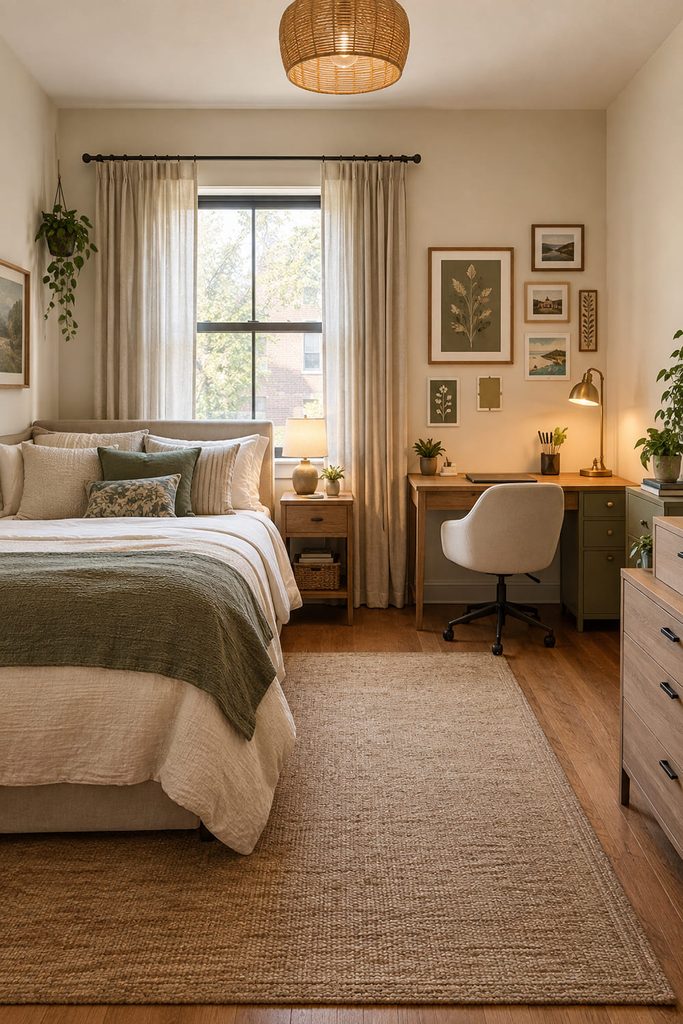
The wall above a desk does not need to remain completely functional and boring. A few small artworks can make the workspace feel much more intentional.
Keep the arrangement compact so it does not interfere with shelves, lighting, or computer equipment.
A simple combination could include:
- One medium art print
- Two small photographs
- One postcard or illustration
- A small handwritten note
- One narrow decorative piece
Use a consistent visual element to connect everything. Similar frame colors are the easiest solution, but you can also repeat one accent color throughout the artwork.
This approach works especially well in a rental because a small display can be changed without redecorating the entire bedroom.
4. Try a Removable Geometric Composition

Instead of hanging traditional artwork, create a graphic composition directly on the wall using suitable removable decals or another temporary wall treatment.
Keep the shapes simple. Arches, circles, diagonal blocks, thin lines, and overlapping rectangles can create an artistic backdrop behind the bed.
For example, a soft beige wall could receive a few muted terracotta shapes, while a white bedroom could use pale blue or sage green forms.
Before applying anything, inspect the wall carefully. Removable does not mean universally damage-free. Adhesive products perform differently on smooth paint, textured surfaces, wallpaper, damp walls, and older paint. Testing a small hidden section first is a sensible precaution.
5. Use a Large Leaning Artwork
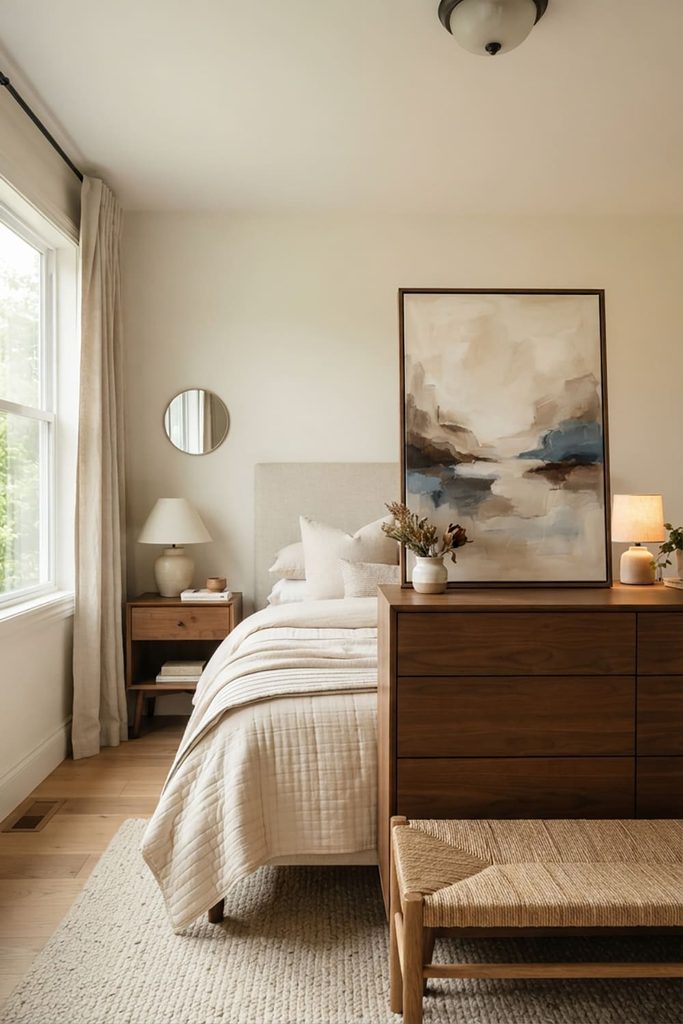
Not every artwork needs to be attached to the wall.
A large framed canvas or lightweight artwork can lean against the wall on top of a sturdy dresser, console, or other suitable furniture. This creates an oversized focal point without creating additional mounting points.
The artwork should be large enough to look intentional. A tiny frame leaning alone against a large empty wall can look accidental, while one substantial piece can give the room a finished appearance.
For safety, make sure the artwork is stable and cannot easily fall. Particularly heavy or glass-fronted pieces should not simply be leaned where they could injure someone. The biggest advantage for renters is simple: when you move, you pick it up and take it with you.
6. Make a Travel Memory Wall
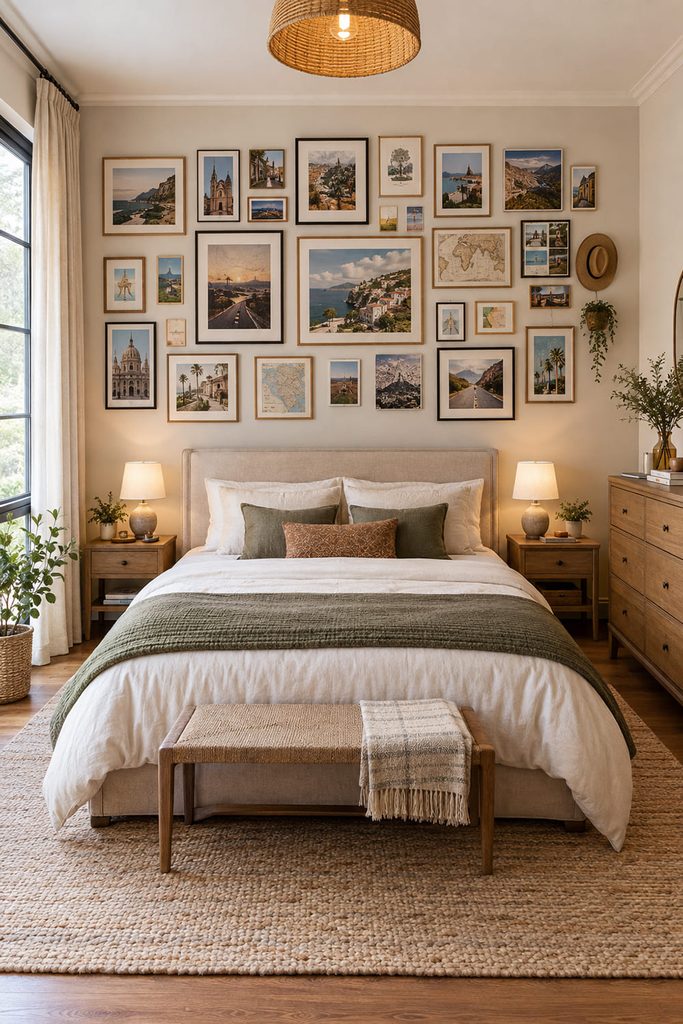
Turn your travel memories into a piece of bedroom artwork. Use photographs, small maps, postcards, destination illustrations, ticket stubs, or other flat souvenirs. You do not need to display every travel memory. Choose the ones that have the strongest visual or emotional connection.
A narrow vertical wall can hold a column of destinations, while a wider wall can support a grid.
You can organize the display around:
- Favorite cities
- Family vacations
- Road trips
- Places you have lived
- Places you want to visit
- A particular memorable journey
The collection can grow naturally over time, making the wall feel personal rather than purchased as a complete decoration set.
7. Create a Calm Botanical Wall

Botanical artwork can introduce color and natural shapes without making a bedroom feel overly busy. Choose several botanical prints with a related palette. They could feature leaves, branches, flowers, grasses, or simple botanical drawings.
For a rental bedroom, a restrained arrangement often works better than covering an entire wall. Try three large prints above a dresser or six smaller pieces arranged in a grid.
Colors such as:
- Sage
- Olive
- Forest green
- Cream
- Beige
- Muted brown
can work particularly well with natural wood and neutral bedding.
If you prefer real plants, keep them separate from the wall artwork unless the wall and surrounding area can safely handle moisture.
8. Create a Black-and-White Photography Grid

A black-and-white photo grid provides a clean appearance while allowing the content of each photograph to vary. You could use photographs of architecture, landscapes, streets, people, nature, or your own photography.
Choose the same frame style for every image and keep the spacing consistent. This makes inexpensive prints look more like a deliberate collection. A grid of four or six pieces works well above a smaller bed or desk, while a nine-piece arrangement can anchor a larger wall.
The biggest advantage of black-and-white artwork is its flexibility. If you later change your bedding or add a different accent color, the photographs can usually remain in place.
9. Use a Large Decorative Mirror

A mirror can act as both practical bedroom equipment and wall art. Instead of choosing a basic rectangular mirror, consider a large round, arched, oval, or organically shaped design. The shape itself becomes part of the decoration.
Position the mirror where it can reflect daylight or a visually attractive part of the bedroom. Avoid placing it where it reflects clutter or a poorly lit corner.
For renters, the installation method matters because mirrors can be considerably heavier than framed prints. A large mirror should not be attached using a lightweight hanging method simply because it is advertised as removable. The weight, wall condition, hardware rating, and installation instructions all need to match.
A stable leaning mirror can be an alternative when the room layout allows it.
10. Make a Picture-Ledge Display
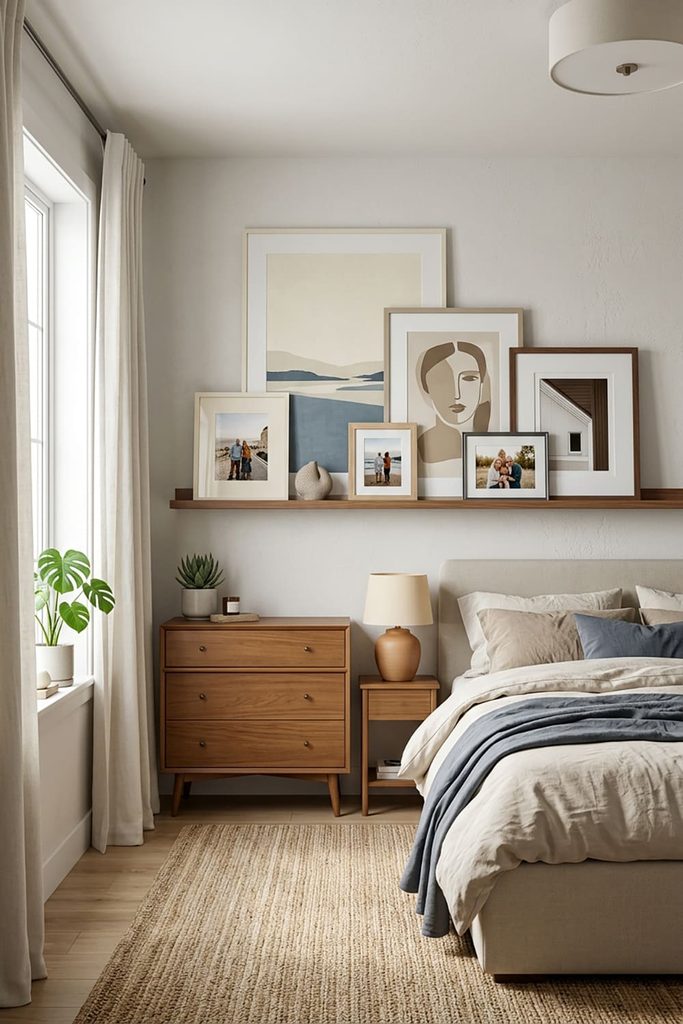
A picture ledge gives you a flexible place to display several pieces without committing to a permanent gallery arrangement. Layer a few framed prints against the wall and overlap them slightly. Add one or two photographs or small decorative objects in front.
The arrangement can be changed whenever you want.
For example, you could use:
- One large print at the back
- Two medium prints beside it
- Three small photographs in front
- One small object for texture
If drilling is not permitted, look for a freestanding version or use existing furniture as the base for a similar layered arrangement. This idea is especially useful for renters who like changing their decor frequently.
11. Display a Collection of Lightweight Baskets
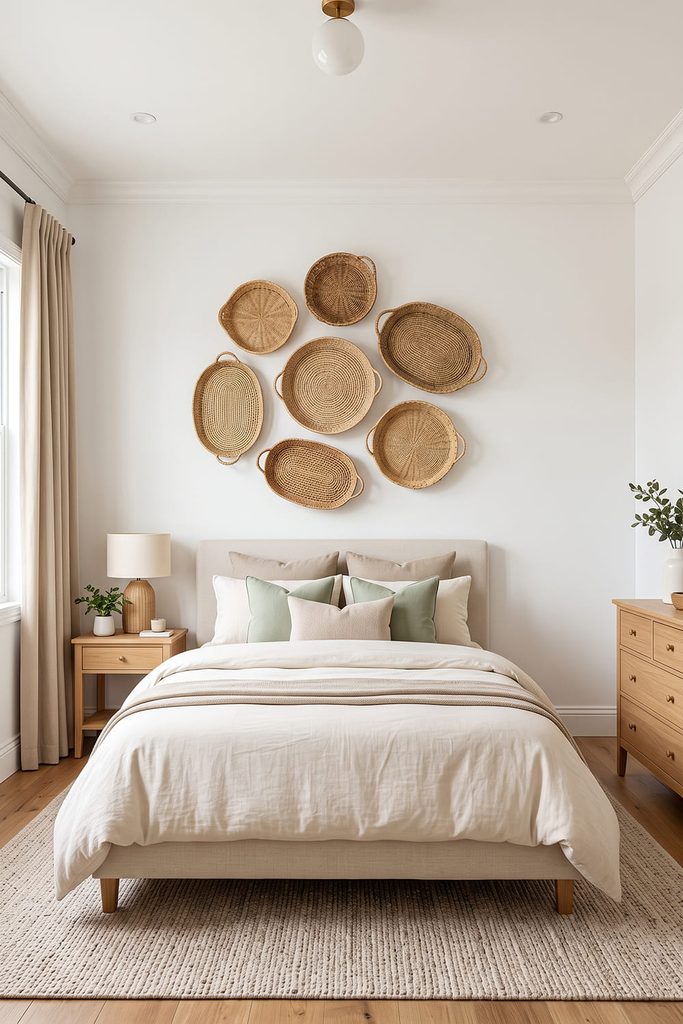
A collection of shallow woven baskets can function as three-dimensional wall art. Rather than arranging identical baskets in a rigid pattern, combine a few different sizes while keeping their materials and colors related.
Natural fibers work well with:
- White walls
- Cream bedding
- Beige curtains
- Wooden furniture
- Earthy colors
- Soft green accents
The baskets can add texture to a bedroom that otherwise contains mostly smooth surfaces.
Keep the pieces lightweight and make sure the hanging method is appropriate for both the wall and the weight. Heavier woven objects should not be treated like paper artwork.
12. Use a Removable Accent Panel Behind the Bed

If you want the impact of an accent wall without covering the entire bedroom, create a temporary panel behind the bed.
A removable wall covering can introduce:
- Botanical patterns
- Soft geometric designs
- Abstract shapes
- Subtle stripes
- Textured-looking patterns
- Muted landscape imagery
The bed naturally provides a visual boundary, so the treatment does not have to extend across the entire wall.
Before installation, check the wall condition and product instructions. Smooth, sound, fully cured paint is generally a more predictable surface than damaged or heavily textured walls. For renters, keeping the treatment smaller can also make future removal easier.
13. Create a Memory Collage
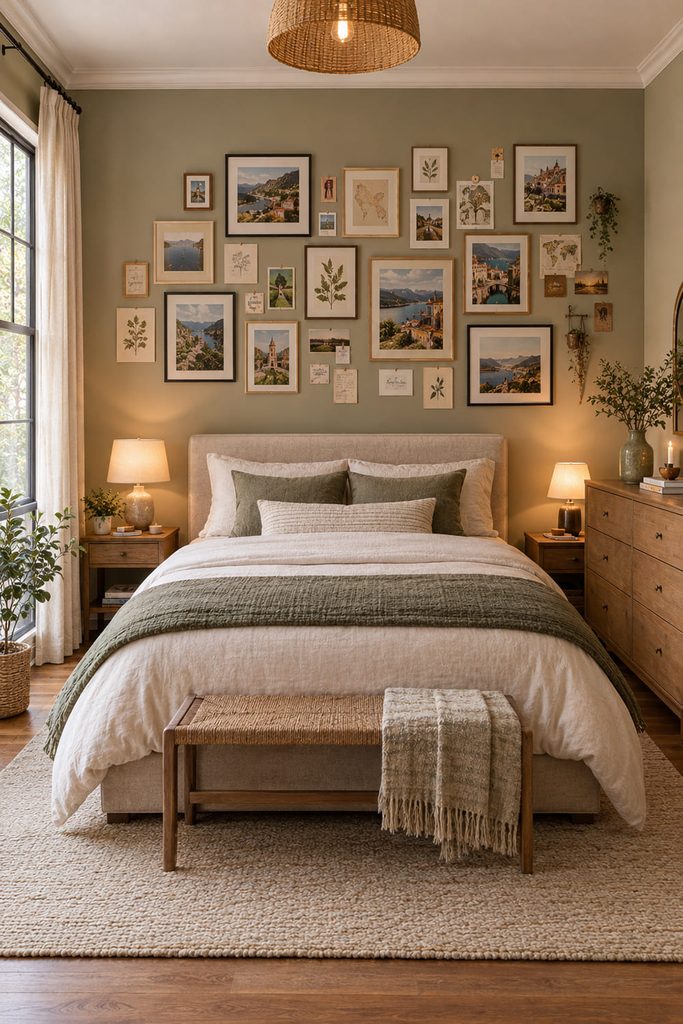
A memory collage can combine photographs with small pieces of paper and artwork. Instead of making every piece perfectly symmetrical, allow some variation. A handwritten note can sit beside a photograph, while a small illustration can fill an otherwise empty section.
Keep the overall composition controlled by using one or two dominant colors.
A simple formula is:
- 50% photographs
- 25% illustrations or artwork
- 15% meaningful paper keepsakes
- 10% space
These proportions are a design suggestion rather than a strict rule. The empty space is important because it prevents the collection from looking like a wall covered with unrelated scraps.
This is also one of the easiest displays to update when you collect new memories.
14. Create a Minimalist Art Pair
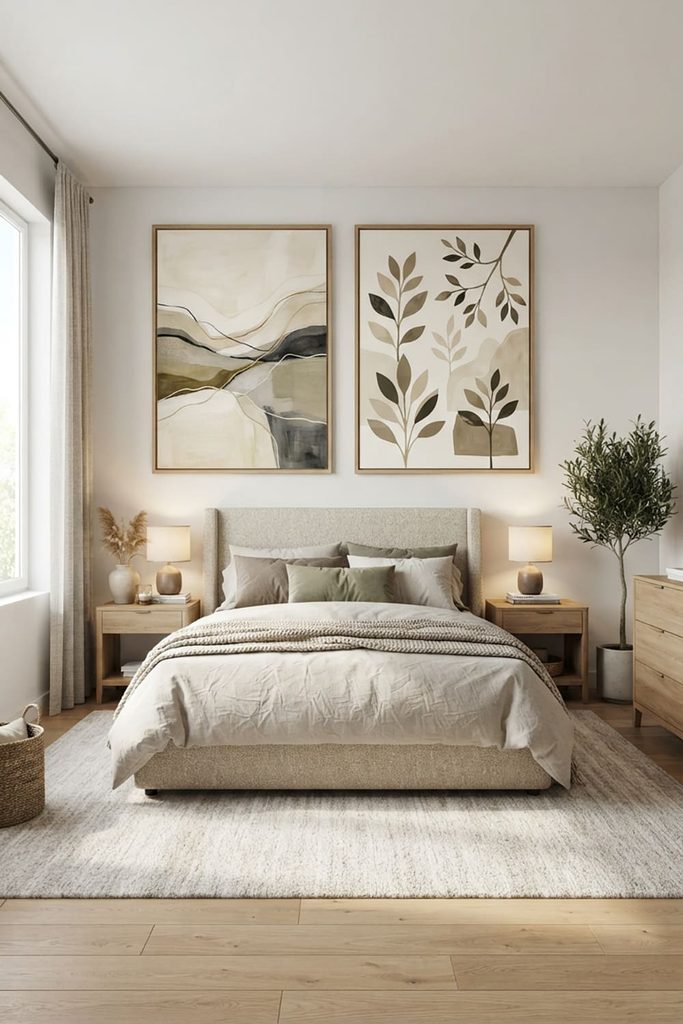
If a full gallery wall feels too busy, use two large artworks instead. Choose pieces that have a relationship without being identical. They might share colors, artistic style, subject matter, or framing.
For example, one could show an abstract landscape while the other uses botanical shapes. Another pairing could combine a black-and-white photograph with a simple abstract print. Place them side by side above the bed or dresser.
This works especially well for renters who want their bedroom to look sophisticated but do not want to fill the walls with decoration.
15. Build a Portable Statement Wall
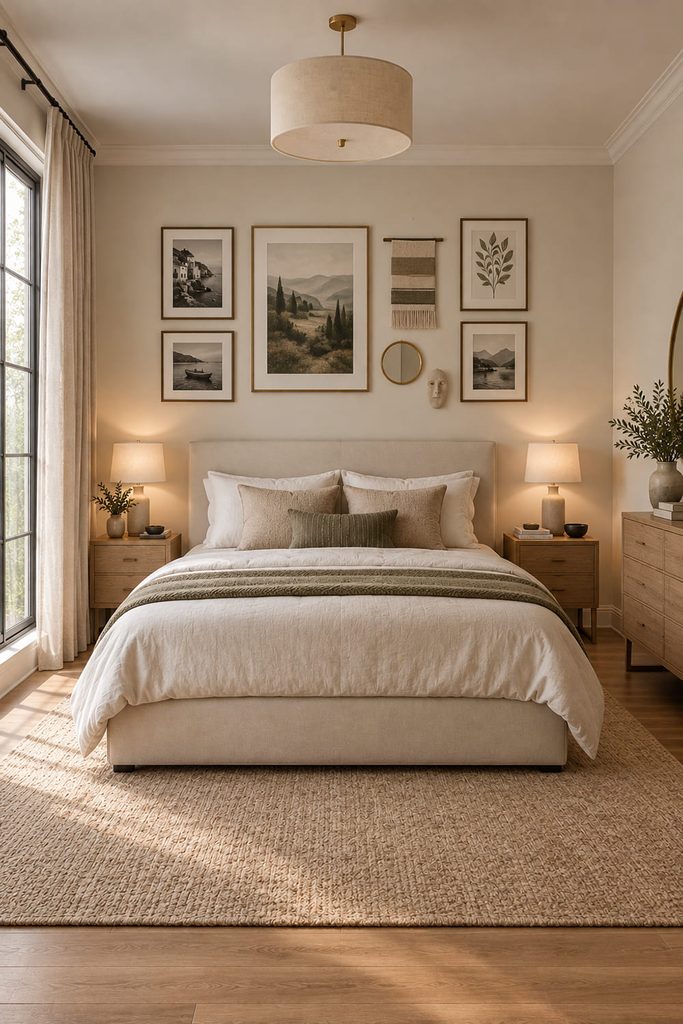
Create a collection that can be completely removed and transported as one decorating concept when your lease ends.
Choose several pieces that share a visual language:
- Three framed prints
- Two personal photographs
- One textile
- One small mirror
- One decorative object
The individual pieces do not have to match exactly. The connection can come from color, frame finish, subject, or texture.
Before installing anything, lay all the pieces on the floor and experiment with different arrangements. Photograph the final layout so you can recreate it later. This makes the wall feel designed without making the design dependent on the particular rental.
Renter-Friendly Wall Art Rules to Follow
The biggest mistake renters make is choosing the artwork first and thinking about installation afterward. Reverse the process.
Before putting anything on the wall:
- Read the lease and building rules.
- Check whether nails, hooks, adhesives, or temporary wallpaper are allowed.
- Determine the actual weight of the complete artwork.
- Inspect the wall for peeling, cracks, moisture, or loose paint.
- Check the hanging product’s weight and surface requirements.
- Test questionable adhesive products in an inconspicuous location.
- Keep valuable or heavy pieces away from questionable mounting systems.
There is no universal “damage-free” method. A product that works on one painted wall can behave differently on another surface because paint type, wall condition, humidity, age, and installation technique all affect the result.
How to Make Rental Wall Art Look Expensive
You do not need expensive artwork to make a bedroom look polished.
Focus on presentation rather than price.
A $15 print can look considerably better when it is:
- Properly sized for the wall
- Given enough space
- Placed in a suitable frame
- Combined with complementary pieces
- Aligned carefully
- Repeated in a balanced arrangement
Avoid filling every empty section of the wall simply because you have artwork available.
One large piece with generous surrounding space can often look more sophisticated than twenty tiny decorations competing for attention.
Best Wall Art for Small Rental Bedrooms
If the bedroom is small, choose artwork that creates visual interest without consuming physical space.
Good choices include:
- A large horizontal artwork above the bed
- A narrow vertical gallery beside the wardrobe
- A large mirror
- A compact photo grid above the desk
- A fabric wall hanging
- A small botanical arrangement
- A removable accent panel behind the bed
- A two-piece artwork arrangement
Avoid placing too many different focal points around the room. Choose one main wall and let the remaining walls stay relatively quiet.
How to Decorate a Rental Bedroom Without Making It Feel Temporary
The secret is to create layers.
Start with one strong wall element. Then connect it to the rest of the room through bedding, curtains, rugs, lighting, and smaller decorative pieces.
For example, if your artwork contains muted green, repeat that green once or twice in the bedding or a small accessory. If the artwork has warm brown tones, connect them with wooden furniture or a warm-colored throw.
This makes the artwork feel like part of the bedroom rather than something placed on an empty wall simply because there was space available.
Most importantly, choose pieces you would happily take to your next home. That mindset naturally leads to more personal and useful purchases.
Conclusion
Renting does not mean accepting a bedroom that feels generic. Wall art can completely change the atmosphere of a rental while remaining flexible enough to move with you.
Personal photographs, textiles, botanical prints, mirrors, memory displays, minimalist artwork, woven pieces, and temporary accent treatments all provide ways to add character without committing to permanent renovation.
The smartest approach is to consider the lease, wall condition, artwork weight, and installation method before decorating. Then concentrate on a few meaningful pieces rather than trying to fill every empty wall.
A rental may only be your home for a limited period, but the things that make it feel like your own can come with you wherever you live next.


