

15 Long Narrow Bathroom Color Scheme Ideas
Choosing colors for a long narrow bathroom requires more thought than simply picking a favorite shade. The room’s limited width, natural light, tile surfaces, fixtures, and long visual lines all affect how a color scheme looks once everything is installed.
The right palette can make the bathroom feel brighter, calmer, warmer, or more dramatic without changing its physical dimensions.
These long narrow bathroom color schemes include soft neutrals, soothing greens, pale blues, earthy combinations, sophisticated dark accents, and gentle pastel palettes, giving you plenty of directions for creating a bathroom that feels balanced rather than cramped.
1. Warm White And Beige

A soft white and warm beige palette can make a long narrow bathroom feel brighter while keeping the atmosphere comfortable. Use warm white on the main walls, beige floor tiles, and slightly deeper beige around the vanity or shower zone for subtle definition.
Light wood furniture can reinforce the warmth without adding visual heaviness. Keep the ceiling close to the wall color so the room feels continuous from end to end, helping the narrow proportions appear calmer and more spacious.
2. Pale Blue And Crisp White

Pale blue paired with crisp white creates a fresh bathroom palette that works especially well where natural light is limited. Use pale blue on the longer walls and white for the ceiling, trim, vanity, and major tile surfaces to maintain brightness.
A slightly darker blue can define the shower wall without overwhelming the narrow layout. Brushed metal fixtures and simple white textiles can complete the scheme while keeping the bathroom relaxed, clean, and visually connected throughout the entire room.
3. Sage Green And Warm White
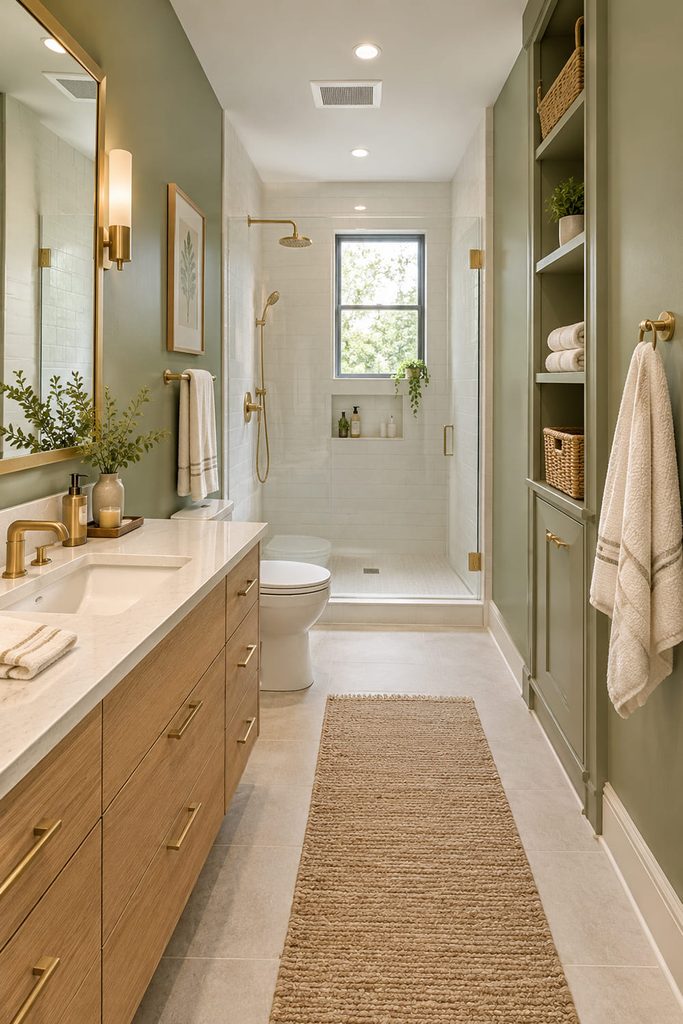
Sage green and warm white can bring a gentle natural feeling to a long narrow bathroom without making it look overly colorful. Paint the main walls a soft sage, then use warm white tile around the shower and vanity to balance the green.
Introduce natural wood through a vanity or small accessories, keeping the grain subtle and consistent. This combination works particularly well with daylight because the green can shift softly throughout the day while maintaining a restful appearance overall.
4. Warm Greige And Cream

Warm greige offers a useful middle ground between beige and gray, making it an adaptable choice for a narrow bathroom. Use greige on the walls, lighter cream tiles in the shower, and medium gray-beige flooring to create gentle tonal layers without strong visual breaks.
Add white sanitaryware and warm metallic fixtures for contrast. Keeping the colors within a similar value range can help the room feel cohesive, while small differences in texture provide enough interest without crowding the long space.
5. Soft Gray And White

Soft gray and white can give a long narrow bathroom a clean contemporary appearance without relying on stark contrasts. Choose a pale gray for the walls, white shower tile, and slightly darker gray floor tile to create a subtle foundation.
Add black only through small details such as hardware or a mirror frame rather than large surfaces. This restrained palette works well with clear glass because the shower remains visually connected to the rest of the bathroom without another boundary.
6. Cream, Olive, And Natural Wood

Cream, muted olive, and natural wood create a warm, earthy palette that can make a narrow bathroom feel inviting rather than clinical. Use cream as the dominant wall color, introduce muted olive through a feature wall or painted vanity, and repeat wood tones in cabinetry or accessories.
Keep the floor relatively light so the lower part of the room does not become visually heavy. Simple white fixtures can provide enough contrast while preserving the relaxed natural character.
7. Dusty Blue And Warm Beige
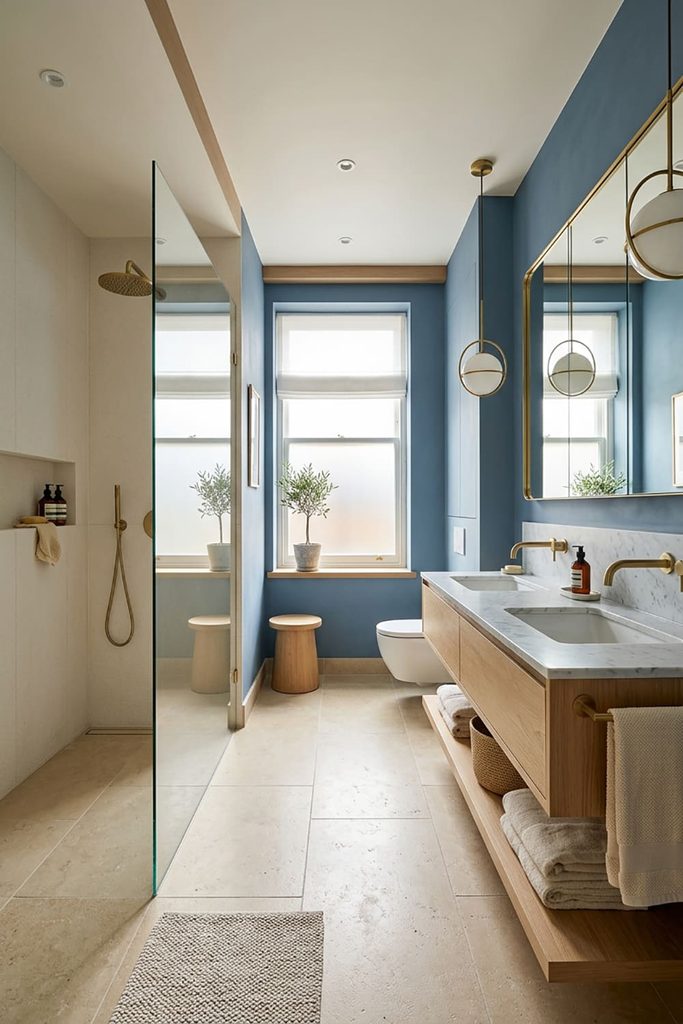
A dusty blue and warm beige combination can soften a long narrow bathroom while giving it more personality than an all-neutral scheme. Use dusty blue on one long wall or around the vanity, then balance it with beige floor tiles and warm white shower surfaces.
Natural wood accessories can bridge the two colors, while brushed nickel or muted brass hardware adds a restrained finishing detail. Keep patterns minimal so the elongated room retains a calm visual rhythm throughout.
8. Charcoal, Warm White, And Wood
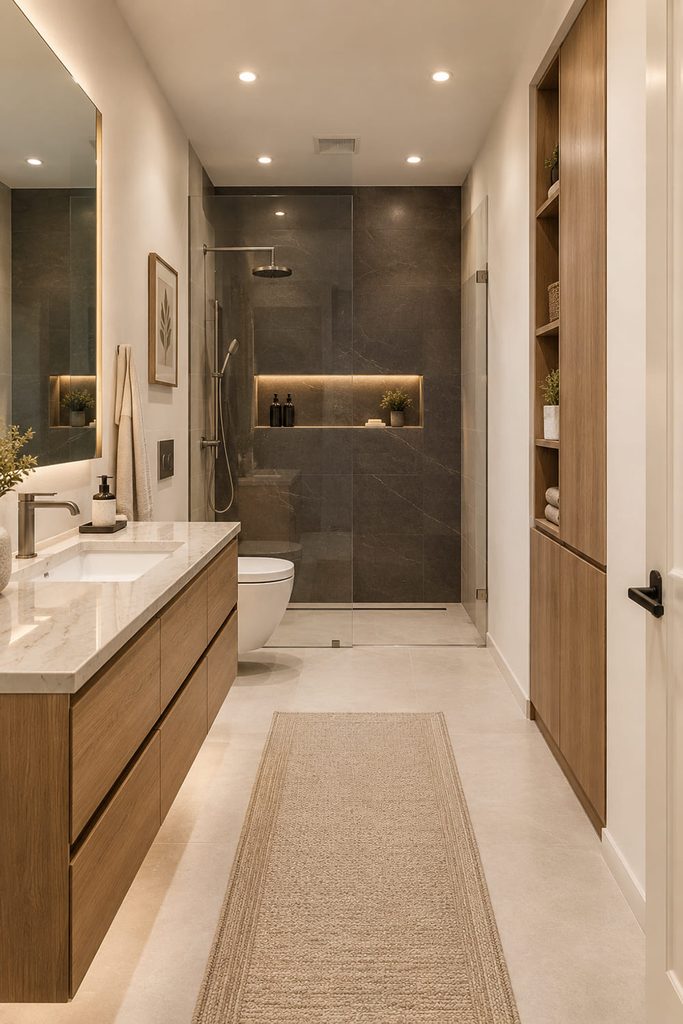
For a dramatic long narrow bathroom, combine deep charcoal with warm white and natural wood. Instead of covering every wall in charcoal, use the deeper shade on the shower wall or vanity wall while keeping the remaining surfaces warm white.
A wood vanity introduces warmth and prevents the dark accent from feeling severe. Good layered lighting is important because deeper colors can absorb more light, particularly in bathrooms with small windows or limited natural illumination.
9. Monochromatic Cream Palette

A monochromatic cream palette can make a narrow bathroom feel sophisticated while avoiding the starkness sometimes associated with pure white. Combine ivory walls, cream stone-look tiles, slightly darker beige flooring, and warm white fixtures for subtle variation.
Use texture rather than strong color contrast to distinguish the shower, vanity, and floor areas. A wood-framed mirror or woven accessory can add warmth without interrupting the continuous neutral palette, creating a serene bathroom that feels cohesive from entrance to shower.
10. Blush Pink And Creamy White
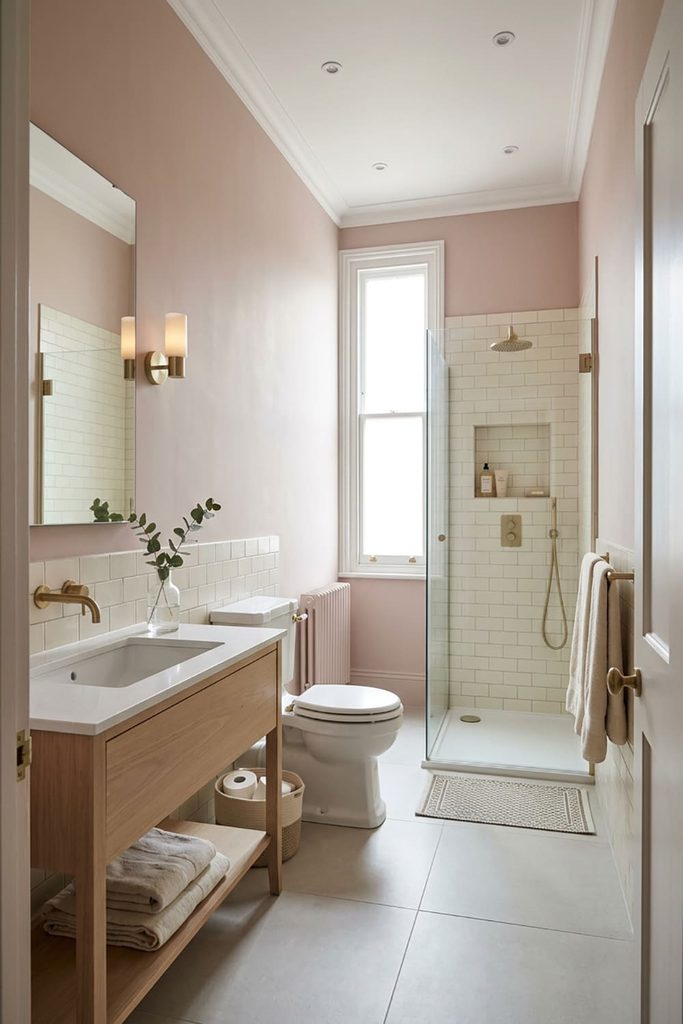
Blush pink with creamy white can create a gentle, welcoming bathroom palette that feels modern without becoming overly sweet. Choose a muted dusty blush for the vanity wall or upper walls, then use creamy white tiles and fixtures to keep the room bright.
Warm brass or brushed metal details can complement the pink, while natural wood introduces another neutral element. Keep the floor light and relatively simple so the long narrow proportions remain visually open and balanced.
11. Navy Blue And Soft White
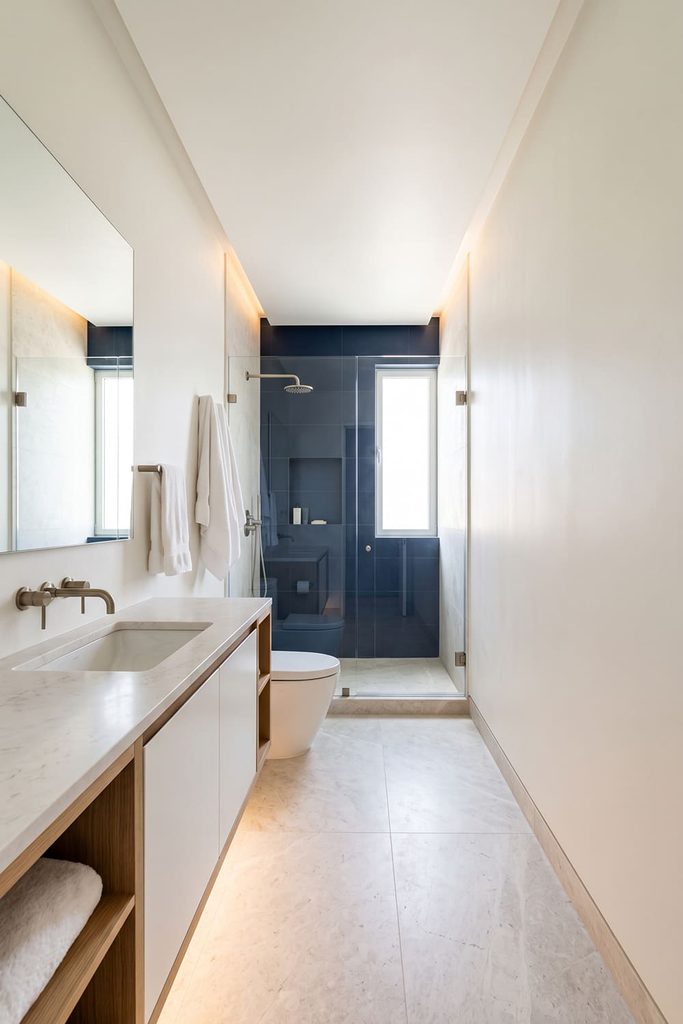
Navy blue and soft white can create a strong coastal-inspired palette while maintaining a polished appearance in a narrow bathroom. Use navy selectively on the far shower wall or vanity area, then keep the longer surfaces and ceiling soft white.
Light flooring helps reflect available illumination, while simple wood details can prevent the scheme from feeling too cool. This approach works particularly well when you want the far end of the bathroom to become a deliberate visual destination.
12. Terracotta, Cream, And Beige

Terracotta, cream, and beige can give a long narrow bathroom a warm Mediterranean-inspired character without requiring elaborate decoration. Use terracotta as a controlled accent on the vanity wall, shower niche, or selected tile area, then surround it with creamy walls and light beige flooring.
Natural wood and simple ceramic accessories can reinforce the earthy palette. Keep the strongest color concentrated in one area so the narrow room retains visual balance and does not feel divided into too many sections.
13. Pale Green, Warm White, And Gray
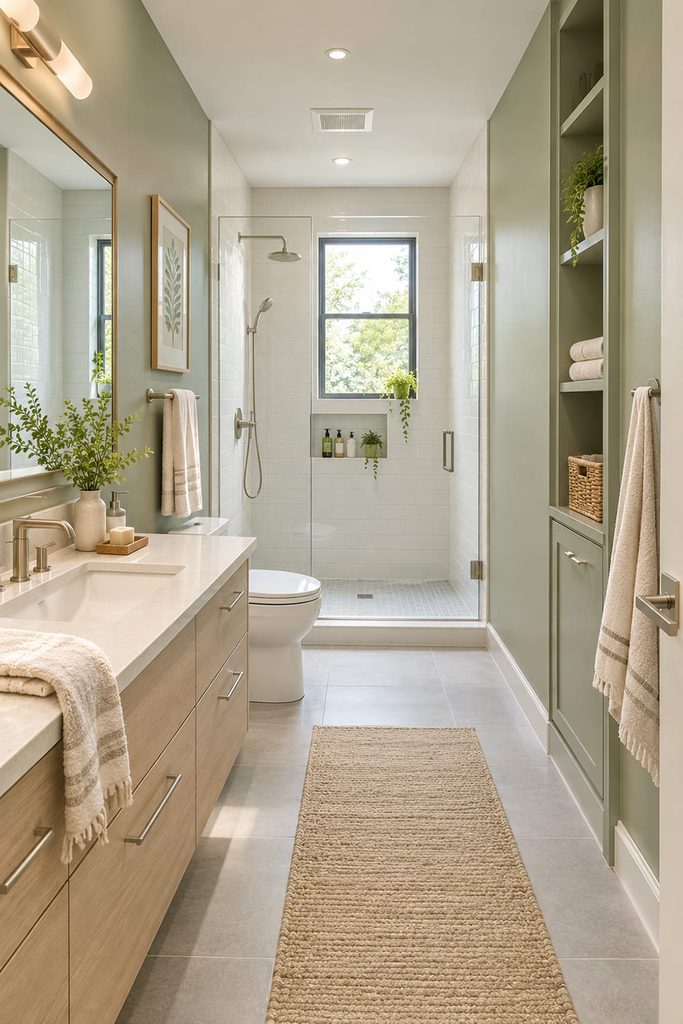
Pale green, warm white, and light gray create a fresh palette that works well for contemporary narrow bathrooms. Use pale green on the main wall or vanity, warm white for the shower and ceiling, and a soft gray floor to ground the room.
Choose fixtures with simple finishes so the colors remain the focus. The combination can feel especially refreshing in daylight, while warm artificial lighting can prevent the green and gray from appearing too cold after sunset.
14. Taupe, Ivory, And Muted Bronze
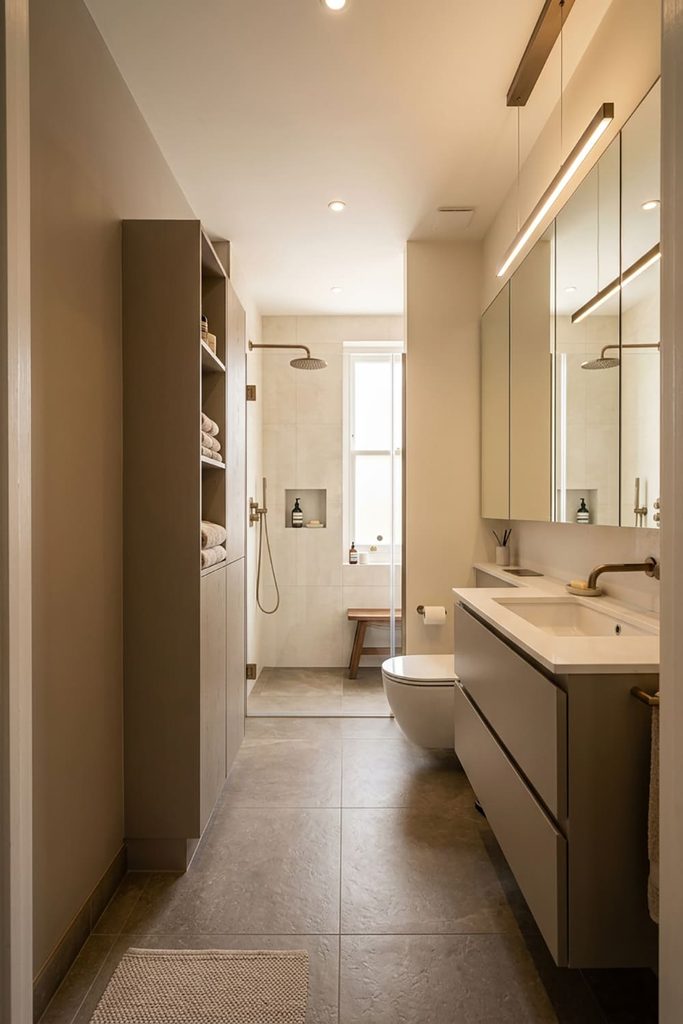
Taupe, ivory, and muted bronze create a refined neutral palette for a long narrow bathroom where you want warmth without obvious color. Use ivory on larger surfaces, taupe on the vanity or selected wall, and bronze through small hardware or lighting details.
A slightly darker taupe floor can visually anchor the room while remaining connected to the walls. Keep decorative patterns limited so the varied neutral tones create depth without competing with the bathroom’s narrow proportions.
15. Soft Lavender, Warm White, And Pale Gray
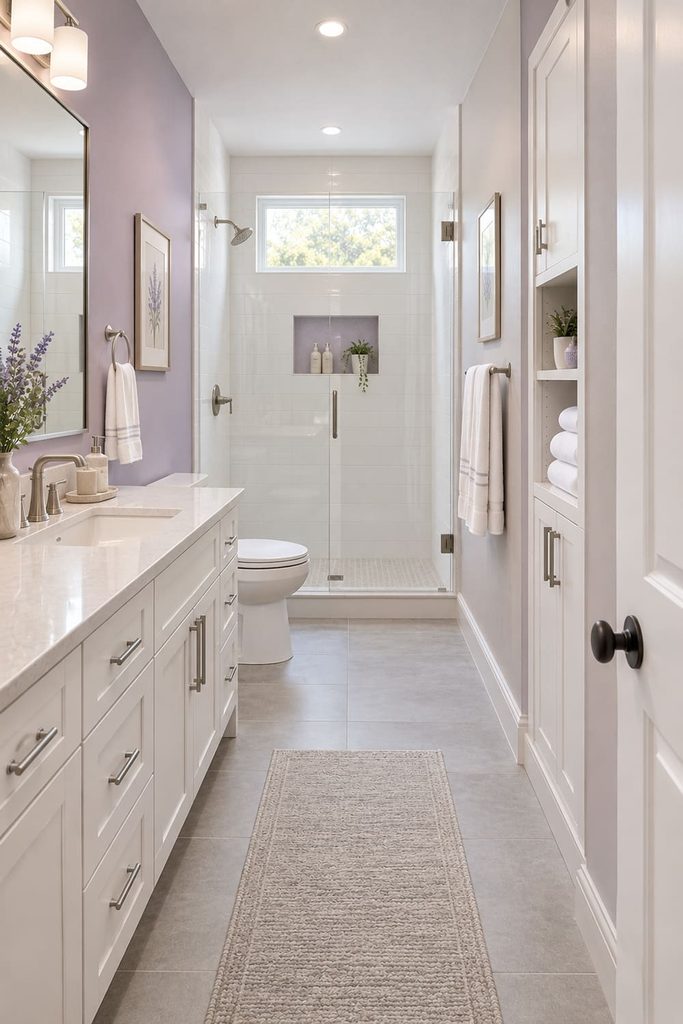
Soft lavender, warm white, and pale gray can introduce gentle color while maintaining a bright and relaxing bathroom atmosphere. Use lavender as a restrained accent on the vanity wall, shower niche, or upper wall section, then keep larger surfaces warm white.
Pale gray flooring adds structure without creating heavy contrast. Choose simple fixtures and minimal accessories so the unusual color remains sophisticated, while daylight and warm lighting can change the lavender subtly throughout the day.
How To Choose Colors For A Long Narrow Bathroom
Begin by considering how much natural light enters the bathroom. Light-reflective whites, pale neutrals, soft blues, and gentle greens are useful starting points when the room is small or lacks windows because they can help create a brighter, more open impression.
However, a narrow bathroom does not automatically require an all-white palette. Deeper colors can create drama and visual depth when they are used intentionally and supported by sufficient lighting. A dark shower wall, vanity wall, or ceiling can become an effective focal point without requiring the entire room to be dark.
Before committing to a color, test samples under the bathroom’s actual lighting conditions. Natural daylight and artificial lighting can change how undertones appear, so a color that looks beige in a showroom may appear noticeably different inside your bathroom.
Best Color Combinations For Narrow Bathrooms
- Warm white and beige for a timeless appearance
- Pale blue and white for a fresh atmosphere
- Sage green and cream for a natural feeling
- Greige and ivory for understated sophistication
- Soft gray and white for contemporary interiors
- Olive and cream for earthy warmth
- Dusty blue and beige for gentle contrast
- Charcoal and warm white for dramatic depth
- Navy and white for a classic contrast
- Terracotta and cream for warmth
- Taupe and ivory for a refined neutral palette
- Soft lavender and gray for subtle color
Should A Narrow Bathroom Have Dark Colors?
Dark colors can work in narrow bathrooms, but placement matters. Rather than using a deep shade across every surface, consider concentrating it on one wall or architectural feature while keeping the remaining areas lighter.
This approach can create a strong focal point without making every surface compete for attention. Darker colors can also look particularly effective when combined with adequate artificial lighting and reflective surfaces.
How To Keep A Long Bathroom From Looking Visually Divided
Using too many unrelated colors can emphasize the segmented nature of a long narrow room. A better approach is to choose a main color, a secondary shade, and one restrained accent.
For example, warm white can cover the main walls, beige can appear on the floor, and muted olive can be limited to the vanity. Repeating the same colors in towels, cabinetry, accessories, or small decorative details can help the bathroom feel like one connected space.
Conclusion
The best long narrow bathroom color schemes balance brightness, warmth, contrast, and the existing architecture of the room. Light neutrals can create an airy foundation, while pale blues and greens bring a soothing quality and deeper shades can provide drama when used selectively.
Before choosing your final palette, consider natural light, artificial lighting, tile undertones, flooring, vanity materials, and fixture finishes. A carefully controlled color scheme can make a long narrow bathroom feel more cohesive and comfortable without requiring major structural changes.


