

15 Long Narrow Bathroom Flooring Design Ideas
Flooring can have a surprisingly strong effect on how a long narrow bathroom looks and feels. Because the floor extends through the entire room, its color, tile size, pattern, texture, and direction can either emphasize the narrow shape or create a more balanced visual impression.
The best long narrow bathroom flooring designs combine practical performance with a thoughtful layout. These ideas explore large-format tiles, wood-look porcelain, herringbone patterns, small mosaics, checkerboard designs, stone textures, warm neutrals, and other flooring approaches that can make a narrow bathroom feel more comfortable, stylish, and cohesive.
1. Large Format Beige Floor Tiles
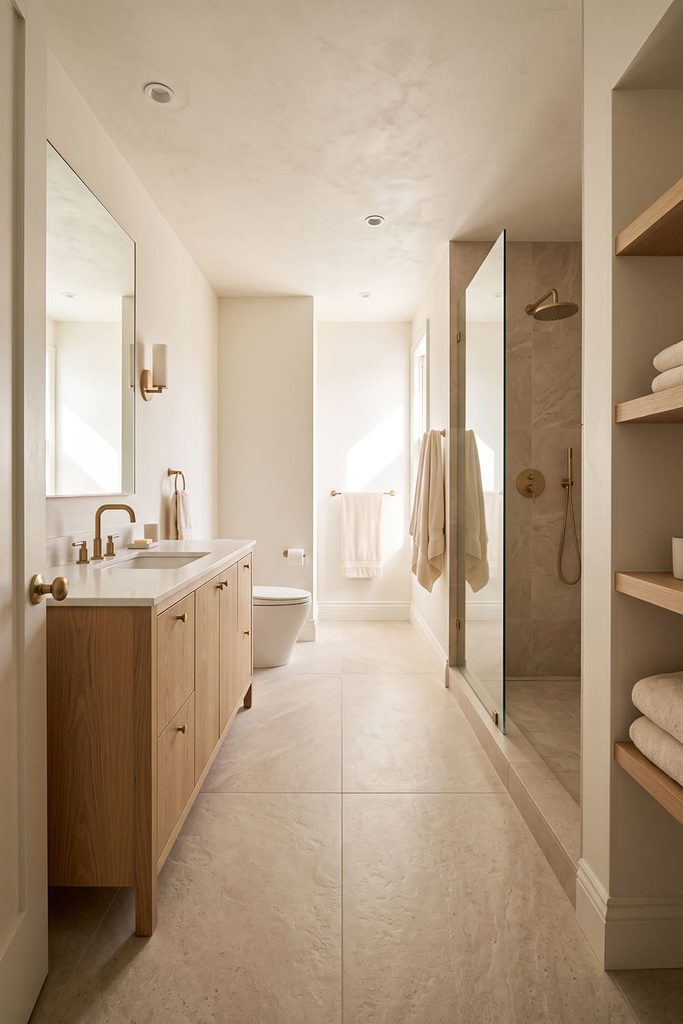
Large-format beige tiles can give a long narrow bathroom a calm, continuous appearance by reducing the number of visible grout lines. Choose a warm beige that complements the walls and vanity, then use a matte or appropriately textured bathroom-rated finish for better practicality in wet conditions.
Keep the grout close to the tile color so the floor reads as one connected surface rather than a strong grid. This approach works especially well with cream walls, natural wood, and simple fixtures.
2. Light Gray Porcelain Flooring
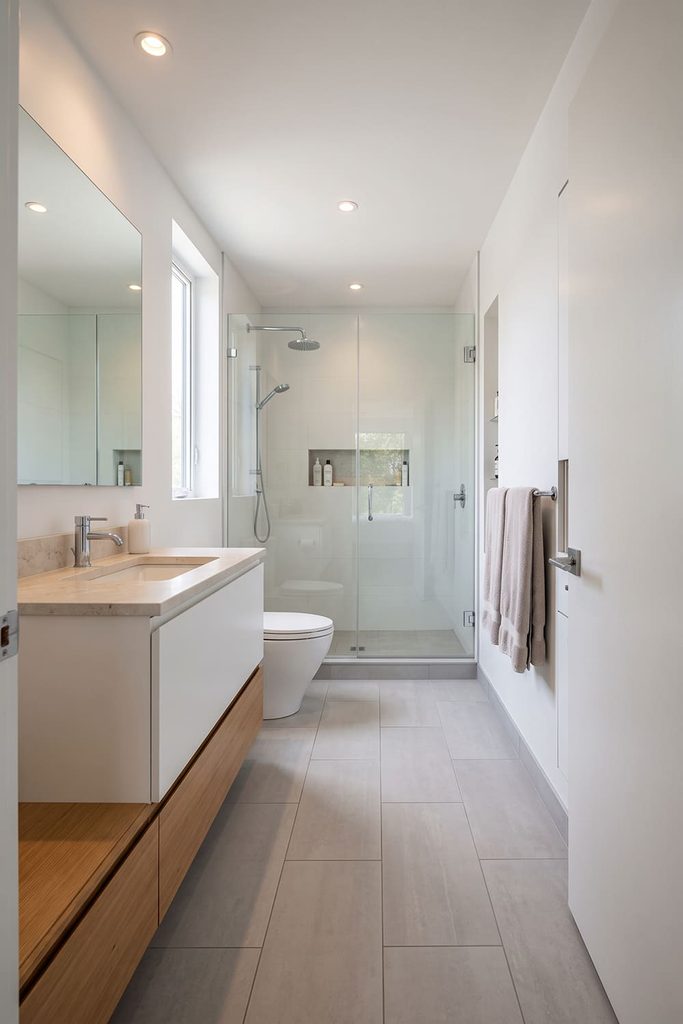
Light gray porcelain flooring provides a contemporary foundation that works with almost any bathroom color palette. Choose a large rectangular format and lay it consistently through the main floor area to create visual continuity from the entrance toward the shower.
A matte finish can provide a more practical surface than highly polished flooring in a wet environment. Pair the gray with white walls, soft blue accents, or warm wood cabinetry to prevent the room from feeling overly cool or clinical.
3. Wood Look Porcelain Planks

Wood-look porcelain planks can introduce warmth without using natural wood in an area exposed to moisture. Choose a light or medium oak-inspired tone and run the planks along the length of the bathroom for a deliberate linear appearance, or discuss alternate directions with your installer if reducing the tunnel effect is the priority.
Keep the walls lighter so the floor remains grounded rather than visually heavy. Simple white fixtures and warm neutral walls complement the wood effect beautifully.
4. Herringbone Floor Pattern

A herringbone pattern can add movement to an otherwise simple long narrow bathroom floor without requiring multiple colors. Use rectangular tiles in one restrained shade, then arrange them in a consistent zigzag pattern across the floor for texture and visual interest.
Neutral gray, beige, ivory, or muted brown can keep the pattern sophisticated rather than overwhelming. Because intricate layouts involve more cuts and installation work, carefully plan the pattern around doors, fixtures, drains, and visible edges before installation begins.
5. Small Hexagon Floor Tiles

Small hexagon tiles can give a long narrow bathroom floor a distinctive geometric texture while increasing the number of grout lines. Choose a restrained color such as white, soft gray, beige, or charcoal, then use a grout shade that supports the intended appearance.
Smaller tiles can also be useful where the floor requires more intricate shaping around drains or fixtures. Keep the walls relatively simple so the geometric flooring remains the primary decorative feature without making the room feel excessively busy.
6. Warm Stone Look Flooring

Stone-look porcelain flooring can bring natural visual character to a long narrow bathroom while offering a practical alternative to some natural stone installations. Choose a warm limestone, travertine-inspired, or softly veined appearance in beige or taupe, then pair it with cream walls and natural wood.
A matte surface can help maintain a grounded appearance without excessive reflection. Keep the pattern variation moderate because highly varied markings across a narrow floor may create visual noise and emphasize individual sections.
7. Soft White And Gray Checkerboard
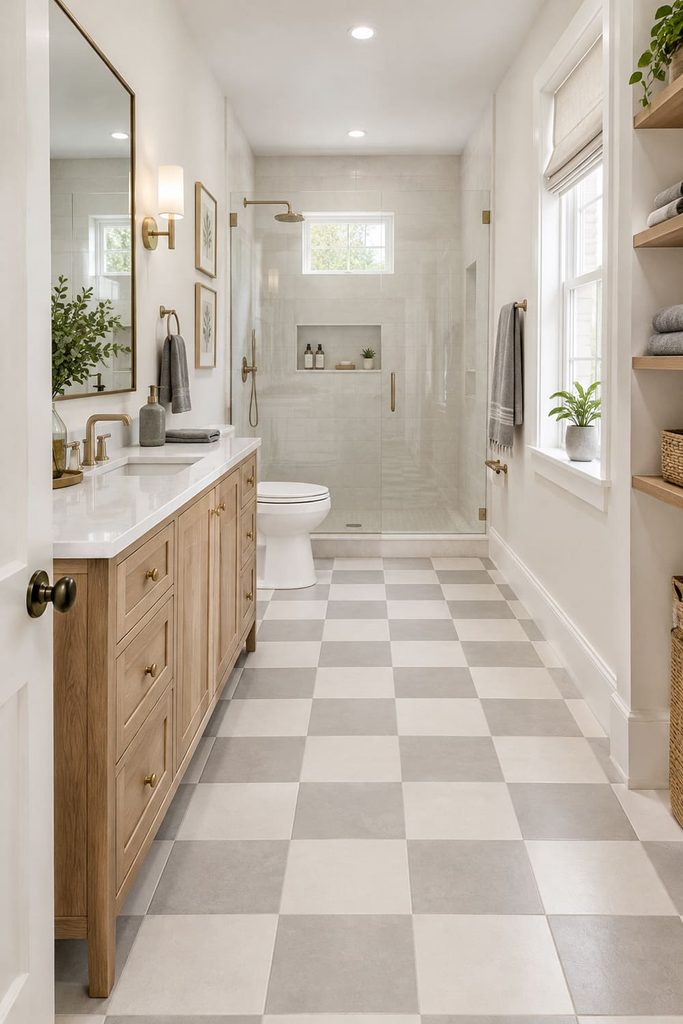
A soft checkerboard floor can introduce classic character without relying on extremely strong black-and-white contrast. Choose warm white and pale gray tiles instead, allowing the pattern to remain visible while keeping the bathroom relatively light.
Medium-sized square tiles can create a balanced rhythm across the floor, especially when the surrounding walls remain simple. Use a grout color that complements both shades, then repeat one of the floor colors subtly through towels, accessories, or the vanity finish.
8. Long Plank Tiles Across The Width

Instead of emphasizing the bathroom’s length, consider arranging elongated plank-style tiles across the width to create stronger horizontal visual lines. Choose a subtle stone or concrete appearance in a light neutral shade, then maintain consistent spacing throughout the floor.
The horizontal direction can visually interrupt the long corridor effect, although the actual perception will depend on the room’s dimensions, tile proportions, lighting, and surrounding surfaces. Keep the walls and fixtures relatively quiet so the flooring direction remains effective.
9. Dark Floor With Light Walls

A dark bathroom floor can create an attractive foundation when the walls and ceiling remain substantially lighter. Choose charcoal, deep taupe, dark brown, or another muted shade, then use warm white walls to prevent the room from becoming visually enclosed.
A medium or large tile can keep the floor from appearing overly fragmented, while wood cabinetry can add warmth. Good lighting becomes especially important because darker surfaces can absorb light and may require thoughtful illumination throughout the bathroom.
10. Terrazzo Inspired Flooring

Terrazzo-inspired flooring can bring subtle pattern and personality to a narrow bathroom without requiring additional decorative surfaces. Choose a pale base with small, restrained flecks in gray, beige, brown, or muted colors, then keep the walls relatively plain so the floor remains visually organized.
Large terrazzo-style tiles can reduce the number of grout lines compared with smaller formats. Pair the flooring with simple cabinetry and understated fixtures to create a contemporary bathroom that feels interesting without becoming cluttered.
11. Natural Stone Inspired Neutral Floor
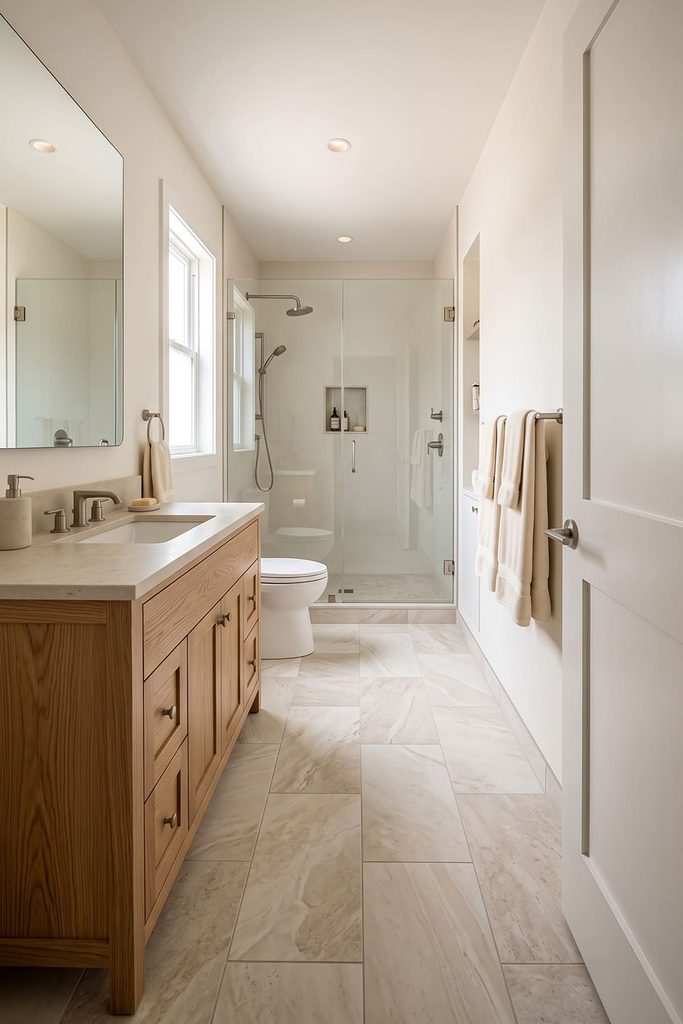
A neutral floor inspired by natural stone can create an elegant foundation while allowing the walls and fixtures to remain visually simple. Look for subtle variations in ivory, beige, gray, or taupe rather than dramatic veining that could dominate the narrow room.
Continue the same flooring beneath the vanity area where appropriate to create visual continuity. Coordinate the stone-inspired surface with warm wood, brushed metal, or soft white finishes for a sophisticated bathroom that feels cohesive from entrance to shower.
12. Bold Patterned Floor Tile
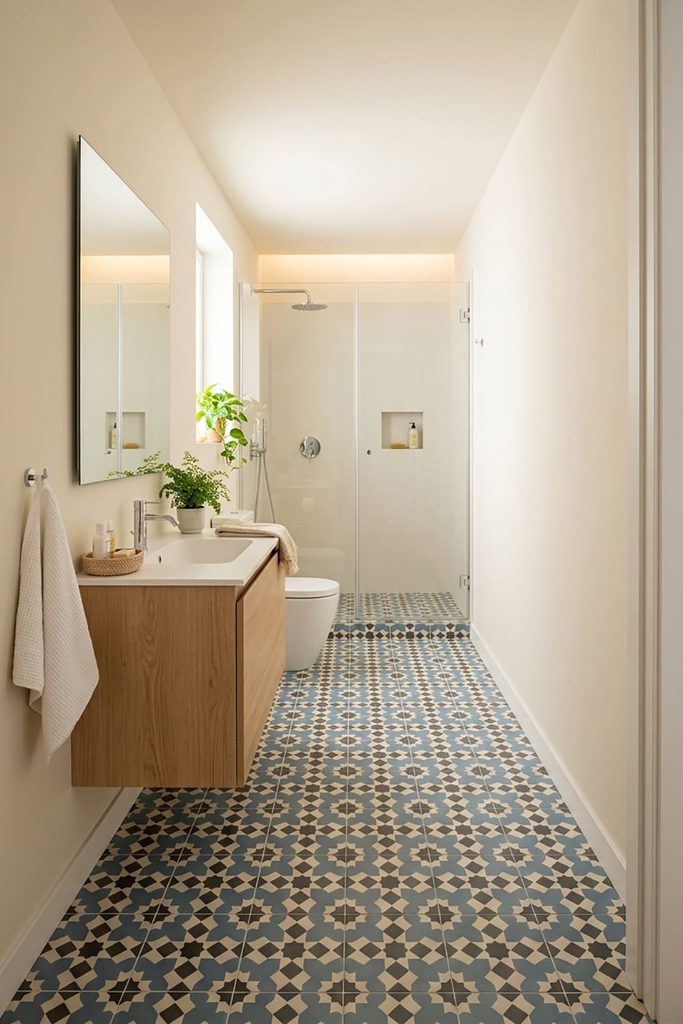
A bold patterned floor can become the main decorative feature in an otherwise restrained long narrow bathroom. Choose a pattern with a limited color palette, such as cream and muted blue, beige and charcoal, or white and terracotta, then keep the walls, vanity, and shower surfaces relatively quiet.
This prevents competing patterns from making the room feel fragmented. A patterned floor can also draw attention downward, creating a distinctive design statement without covering the walls in additional decorative material.
13. Monochromatic Gray Flooring

A monochromatic gray floor can create a sophisticated contemporary foundation when several related shades are used carefully. Combine a medium-gray floor tile with slightly lighter walls and a darker gray accent in the shower or vanity area.
Keeping the palette within one color family helps the bathroom feel visually connected despite its elongated proportions. Choose a textured or matte floor finish appropriate for bathroom use, then introduce warmth through wood cabinetry, cream textiles, or warm-toned lighting.
14. Terracotta Look Floor Tiles

Terracotta-inspired flooring can bring warmth and personality to a long narrow bathroom while working beautifully with cream, beige, and warm white walls. Choose porcelain or another bathroom-suitable material with a terracotta appearance, then keep the surrounding finishes simple so the floor becomes the main source of color.
Natural wood, woven accessories, and muted metal finishes can reinforce the earthy palette. Use the strongest terracotta tones selectively if the room receives limited natural light or has very little floor area.
15. Minimalist Continuous Floor Design
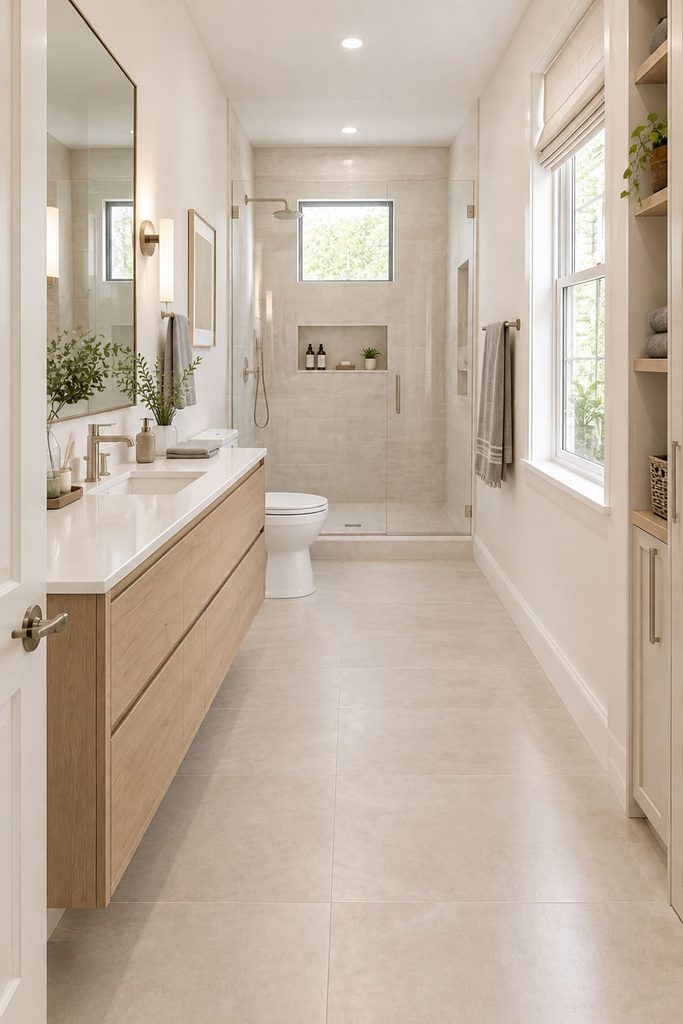
For a clean modern bathroom, use one simple floor material throughout the entire room with minimal visual interruptions. Large-format porcelain in warm white, pale gray, beige, or soft greige can create a continuous surface, especially when the grout color closely relates to the tile.
Carrying the same flooring from the entrance toward the shower can strengthen visual continuity, while clear glass helps preserve that effect. Keep decorative patterns limited to walls or accessories so the floor remains calm and spacious.
How To Choose Flooring For A Long Narrow Bathroom
Start with the dimensions of the room, the position of the door, the shower, vanity, toilet, and any floor drain. Accurate measurements are important because clearances and circulation affect how much usable floor remains and how the flooring pattern should be planned.
For wet bathrooms, prioritize flooring designed and rated for the intended application. Bathroom floors can become slippery when wet, so a suitable textured or slip-resistant surface is generally more appropriate than a highly polished surface. Smaller tiles can also provide more grout joints, which may contribute to traction.
Before installation, lay out the proposed pattern and consider where cuts will appear. Installation guidance recommends planning visible areas carefully and positioning full tiles strategically rather than leaving awkward narrow cuts in prominent locations.
Best Flooring Colors For Long Narrow Bathrooms
- Warm beige for a comfortable neutral foundation
- Soft gray for contemporary bathrooms
- Cream for a brighter appearance
- Taupe for understated warmth
- Pale stone tones for a natural look
- Light wood tones for additional warmth
- Charcoal for dramatic contrast
- Muted terracotta for earthy character
- Soft white for a minimalist bathroom
- Gray-beige for a versatile modern palette
Should Floor Tiles Run Lengthwise Or Across A Narrow Bathroom?
Tile direction can influence the visual character of the room, but there is no universal direction that makes every narrow bathroom appear wider. Lengthwise installation can emphasize the room’s long lines, while crosswise layouts can introduce stronger horizontal divisions.
The choice should also consider tile dimensions, the position of fixtures, the doorway, the shower, and how the pattern will look after cuts are made. A professional installer can create a layout drawing before installation so the final direction is evaluated alongside the complete room.
Large Or Small Tiles For A Narrow Bathroom?
Large-format tiles can reduce visible grout lines and create a more continuous appearance, which is often useful in smaller bathrooms. However, tile size should still suit the room’s dimensions and drainage requirements.
Smaller tiles can provide more flexibility around drains and irregular areas, while mosaic formats can add texture and pattern. The best choice depends on the specific floor shape, installation requirements, desired appearance, and the tile’s suitability for bathroom use.
Flooring Patterns That Work Well
Herringbone, checkerboard, straight-set rectangular tiles, subtle geometric patterns, and wood-look plank layouts can all work in long narrow bathrooms. The important factor is controlling visual complexity.
If the flooring already contains a strong pattern, keep the walls and shower surfaces relatively quiet. Conversely, a simple floor can provide an excellent foundation for more decorative wall tile or a colorful vanity.
Conclusion
The right flooring can change the entire character of a long narrow bathroom without changing its footprint. Large-format neutrals can create continuity, wood-look planks can introduce warmth, patterned tiles can provide personality, and carefully chosen directional layouts can influence how the elongated proportions are perceived.
Always consider wet-area performance, surface texture, drainage, maintenance, tile size, grout, and installation requirements before choosing purely on appearance. Once those practical factors are addressed, the flooring can become one of the strongest design features in the bathroom while keeping the space comfortable and cohesive.


