

15 Open Balcony Decor Ideas for Breezy, Beautiful Outdoor Living
An open balcony — one without an overhang, screen, or enclosure — offers something a covered space simply can’t: uninterrupted sky, full sun, and an open-air feeling that makes even a modest apartment feel connected to the outdoors. But that same openness brings real design challenges.
Wind, direct sun, rain, and a total lack of privacy all have to be accounted for, which means decor choices matter more here than almost anywhere else in the home. The good news is that open balconies also tend to be some of the most rewarding spaces to style, since nothing is blocking the view, the light, or the sense of scale.
With the right furniture, plants, and layering, an open balcony can become a genuine outdoor room — a place for sunset drinks, weekend lounging, or a quiet spot to watch the weather roll in. Below are fifteen decor ideas built specifically for open-air balconies, each one balancing beauty with the practical realities of sun, wind, and rain.
This post contains affiliate links. If you buy through them, we may earn a small commission at no extra cost to you. See our Affiliate Disclosure.
1. Anchor the Space With a Weatherproof Sectional
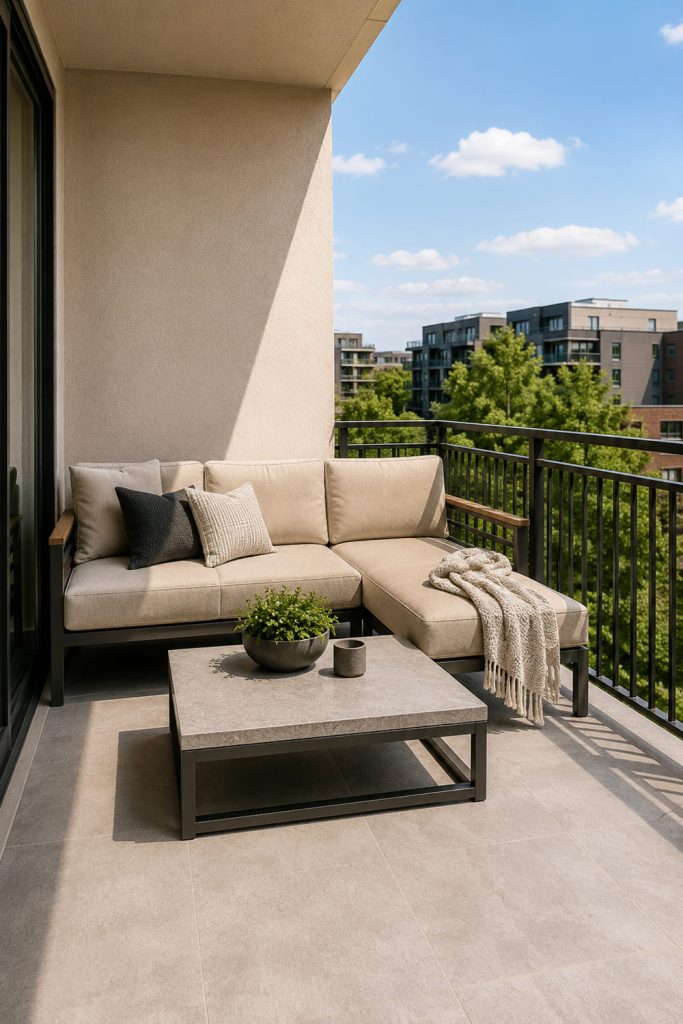
An open balcony with generous square footage can support real lounge seating, and a compact weatherproof sectional makes the most of that space without feeling like an afterthought. Look for frames in powder-coated aluminum or teak, paired with quick-dry foam cushions in fade-resistant fabric, since direct sun and occasional rain will test every material choice. Positioning the sectional against the sturdiest wall helps shield it slightly from wind gusts. Add a low coffee table in front for drinks or a book, and the balcony instantly reads as an extension of the living room rather than a separate, underused appendage.
2. Use Wind-Resistant Planters for Bold Greenery
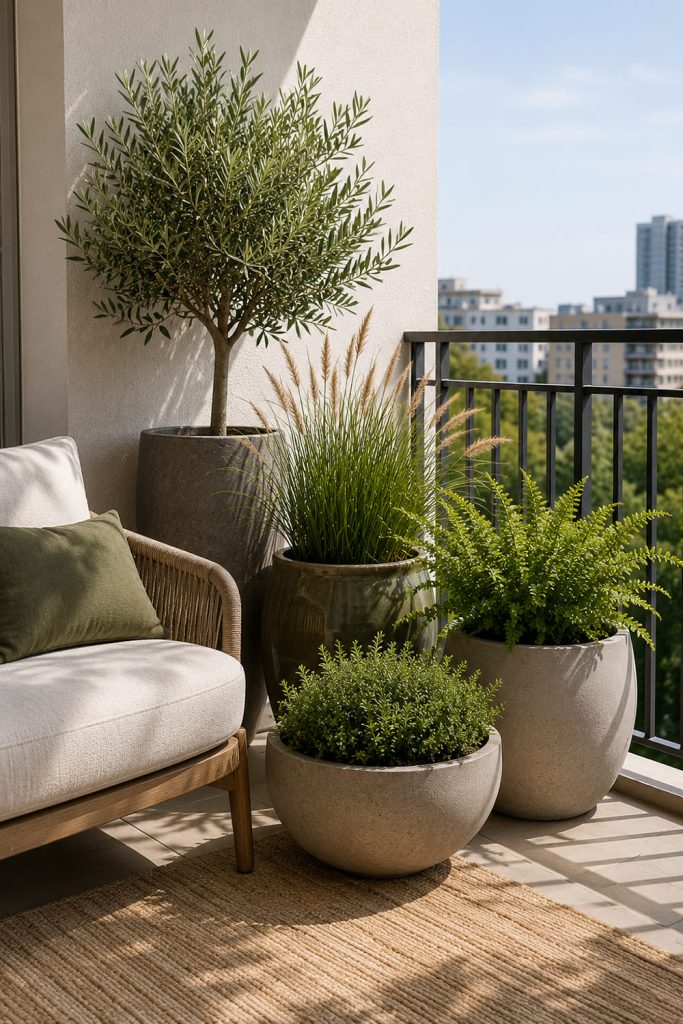
Open balconies are exposed to wind in a way covered ones rarely are, so top-heavy or lightweight pots tend to tip over quickly. Choose wide-based, weighted planters in concrete, fiberglass, or glazed ceramic, which stay grounded even in gusty conditions. Ornamental grasses, olive trees, and ferns tend to handle wind and sun exposure better than delicate flowering plants, making them reliable choices for a decor-forward look. Grouping three or five planters of varying heights creates a lush, layered garden feel while keeping the arrangement stable. This approach turns an otherwise harsh, exposed space into a genuinely green retreat.
3. Install a Retractable Shade Sail for Sun Control

Without any built-in overhang, an open balcony can become unbearably hot during peak sun hours, so a retractable shade sail is one of the most functional decor additions available. Mounted to the exterior wall and a secondary anchor point, a sail can be pulled taut for shade or rolled back to let in full sun, depending on the time of day. Choose a UV-resistant fabric in a color that complements your existing palette, since the sail itself becomes a major visual element when deployed. This single addition often makes the difference between a balcony that’s usable all day and one that isn’t.
4. Layer Multiple Outdoor Rugs for Zoning

On a larger open balcony, a single rug can feel lost in the expanse, but layering two or three rugs of different sizes and patterns helps define separate zones — a lounging area, a dining nook, a reading corner. Choose flat-weave, weather-resistant designs that dry quickly after rain, and anchor each rug with furniture so wind doesn’t lift the edges. Mixing a solid neutral base rug with a smaller patterned accent rug on top adds visual depth without overwhelming an already sun-drenched space. This layering technique is especially effective on balconies large enough to serve multiple functions at once.
5. Add a Freestanding Umbrella With a Weighted Base

Unlike covered balconies, open ones rely entirely on freestanding shade solutions, and a market-style umbrella with a heavily weighted base remains one of the most reliable options. Choose a tilting mechanism so the shade angle can follow the sun throughout the day, and confirm the base is rated for outdoor wind conditions common to your floor height — higher balconies see significantly stronger gusts. A neutral canvas umbrella blends into most palettes, while a striped or colored canopy can serve as a bold focal point. Either way, this addition makes an open balcony usable well past midday.
6. Create a Dedicated Dining Corner

Open balconies with enough depth can support a proper outdoor dining setup, turning the space into a spot for meals rather than just casual lounging. A small square or round table with two to four chairs works well, ideally in a lightweight but sturdy material like aluminum or resin wicker that won’t blow around in open wind. Position the table near the wall rather than the railing edge, both for wind protection and a greater sense of security. A simple runner, some outdoor-safe candles, and a small centerpiece planter complete the look and make the space feel genuinely dinner-party ready.
7. Incorporate a Vertical Trellis for Climbing Plants
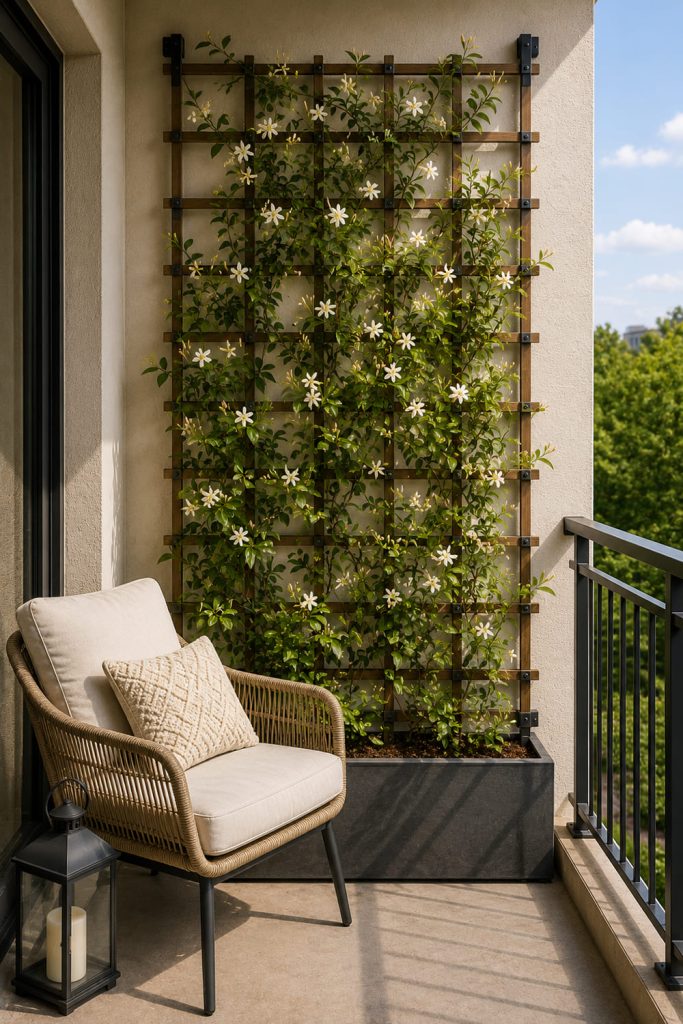
A trellis mounted against the exterior wall gives climbing plants like jasmine, clematis, or bougainvillea a structure to grow on, gradually softening the hard lines of an open balcony while adding privacy and shade over time. Because open balconies get more direct sun than covered ones, flowering climbers tend to perform especially well here, rewarding the space with color for much of the year. A wooden or metal trellis also serves as a decor element on its own, even before plants fill in, adding vertical texture against an otherwise flat wall. Choose a mounting system rated for wind load.
8. Choose Furniture With Low, Grounded Silhouettes
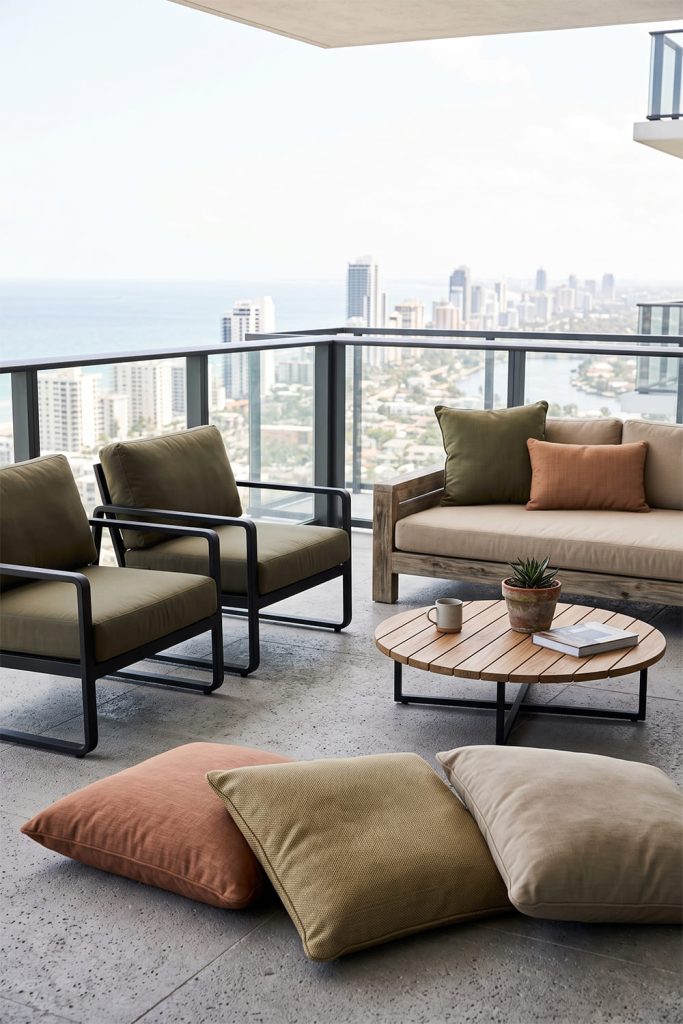
Because open balconies are more exposed to wind than enclosed ones, furniture with a low center of gravity tends to perform better both practically and visually. Low-profile loungers, floor-level day beds, or wide armchairs with a solid base all read as more stable and more relaxed than tall, narrow pieces. This grounded silhouette also plays well with the openness of the space, echoing the horizontal line of the horizon rather than competing with it. Pair low furniture with a scattering of floor cushions for flexible extra seating, especially useful when the balcony hosts more people than usual.
9. Use Outdoor Curtains for Softness and Partial Shade

Sheer or lightweight outdoor curtains, hung from a tension rod or ceiling-mounted track, add a soft, resort-like feel to an open balcony while offering a partial buffer from wind and afternoon sun. Choose fade-resistant, quick-dry fabrics like solution-dyed acrylic, and opt for a length that clears the floor by an inch or two to prevent snagging in gusts. Curtains can be tied back during calm weather and released for a more enclosed, private feel when needed. This flexible approach to softness works particularly well on higher-floor balconies where more permanent screening options aren’t always practical.
10. Introduce a Fire Pit or Tabletop Fire Bowl

For open balconies rated to handle it, a small tabletop fire bowl or portable fire pit adds warmth and ambiance once the sun goes down, extending usability well into cooler evenings. Bio-ethanol or gel-fuel models are popular for balconies since they don’t require venting and produce minimal smoke, though local fire codes and building rules should always be checked first. Positioned as a centerpiece on a low table, a fire bowl becomes a natural gathering point and a striking visual feature even when unlit. Surround it with a few low chairs for an intimate, café-like evening setup.
11. Add String Lights or a Solar Lantern Cluster

Open balconies benefit enormously from layered lighting, since there’s no overhang to bounce or diffuse light the way a covered space naturally does. String lights run along the railing or wall to create a warm perimeter glow, while a cluster of solar lanterns placed at varying heights adds texture and depth after dark. Choose fixtures explicitly rated for full sun and rain exposure, since open balconies see more direct weather than covered ones. Solar options are especially practical here, since they charge naturally throughout the day and require no wiring, making them ideal for rented or high-rise units.
12. Build a Privacy Corner With Freestanding Screens

Because open balconies lack the natural privacy that a wall or overhang provides, a freestanding privacy screen — in bamboo, woven rattan, or slatted wood — can carve out a more intimate corner without requiring permanent installation. Position the screen at an angle to block the most direct sightline from neighboring units or the street below, while still preserving the open, airy character of the rest of the space. These screens also double as a subtle windbreak for a nearby seating area. Choose a freestanding base weighted enough to stay put in open, unshielded wind conditions.
13. Style With a Weather-Ready Color Palette

Direct, unfiltered sun exposure fades fabrics and finishes faster on an open balcony than almost anywhere else, so choosing a weather-ready palette from the start pays off over time. Solution-dyed fabrics, powder-coated metals, and UV-stabilized resin all resist fading far better than untreated materials. Leaning into warm terracottas, deep greens, and sun-bleached neutrals not only photographs beautifully but also camouflages gradual fading better than stark whites or saturated brights. Committing to this kind of palette early means the space continues to look intentional even after a full season of sun, rather than looking tired or mismatched.
14. Add a Hammock or Hanging Daybed
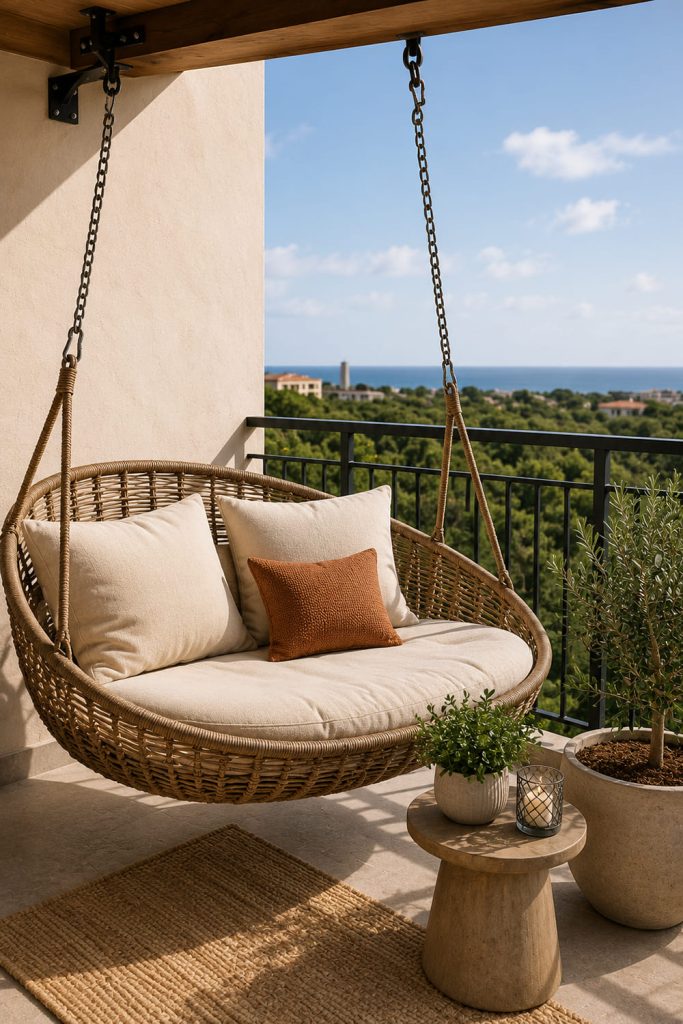
An open balcony with a sturdy overhead beam or wall-mounted bracket can support a hanging daybed or oversized hammock chair, creating a relaxed, resort-style focal point that takes full advantage of open sky views. Choose weather-resistant rope or rattan construction, and add a couple of quick-dry cushions for comfort. Because these pieces sway gently in open air, they pair particularly well with unobstructed balconies where nothing blocks the breeze. Positioned toward the center or a corner with the best view, a hanging daybed often becomes the single most-used spot on the entire balcony.
15. Frame the View With Minimal, Low Railleing Decor

One of the greatest advantages of an open balcony is an unobstructed view, so decor choices should generally frame that view rather than compete with it. Keep railing-mounted decor minimal — a few simple planters or a single string of lights — rather than layering on heavy screening or tall plants that block sightlines. Low furniture, as mentioned earlier, also helps preserve the sense of openness. This restrained approach lets the balcony feel like a viewing platform as much as a living space, making the most of what makes an open balcony different from an enclosed one in the first place.
Open Balcony Planning & Buying Guide
Start by assessing wind exposure realistically, since it’s the single biggest factor differentiating open balconies from covered ones. Higher floors and corner units typically see stronger, more unpredictable gusts, which should inform every furniture and decor choice — favor weighted bases, low silhouettes, and secured or heavy planters over anything lightweight or freestanding and tall.
Sun exposure is the second major consideration. Track how many hours of direct sun the balcony receives and at what time of day, since this determines both plant selection and the necessity of shade structures like umbrellas or sails. Materials matter just as much here as style: solution-dyed fabrics, powder-coated metal, teak, and UV-stabilized resin all hold up significantly better than untreated wood or standard cotton textiles under constant sun and rain.
Finally, check local building codes and HOA or landlord restrictions before installing anything permanent, such as trellises, fire features, or wall-mounted brackets. Many open balconies, particularly in rented or high-rise buildings, have specific weight limits and installation rules worth confirming before you commit to a design.
Conclusion
An open balcony rewards decor choices that work with its exposure rather than against it — grounded furniture, weather-ready materials, and layered shade and lighting that adapt across the day. Because there’s no overhang to soften the elements, every decision carries a little more weight, but that same openness is exactly what makes these balconies feel so expansive and alive. Choose a handful of ideas that suit your climate and your view, and let the space grow from there into one of the most memorable corners of your home.


