

15 Balcony Decor Ideas With Floor Cushions and Serving Trays
Chairs can swallow a small balcony whole, leaving no floor for stretching out and no surface that sits at the right height for a relaxed meal.
Sitting low solves both problems at once. These balcony decor ideas with floor cushions and serving trays turn the floor itself into the seating plan, with trays doing the work a table normally does.
You eat, read, and lounge at one level, then stack everything flat when you need the space back.
Nothing here needs screws, heavy furniture, or a theme to pull it together. The pieces are light, washable, and easy to carry in and out with the weather.
What matters is the order you lay them in, and giving each tray a clear job.
The fifteen setups below stay palette neutral and theme free. Each one changes the layout, the tray job, or the storage trick, so you can build a floor lounge that fits your door swing, your railing, and the way you actually use the space.
1. Anchor the Layout With One Low Central Tray
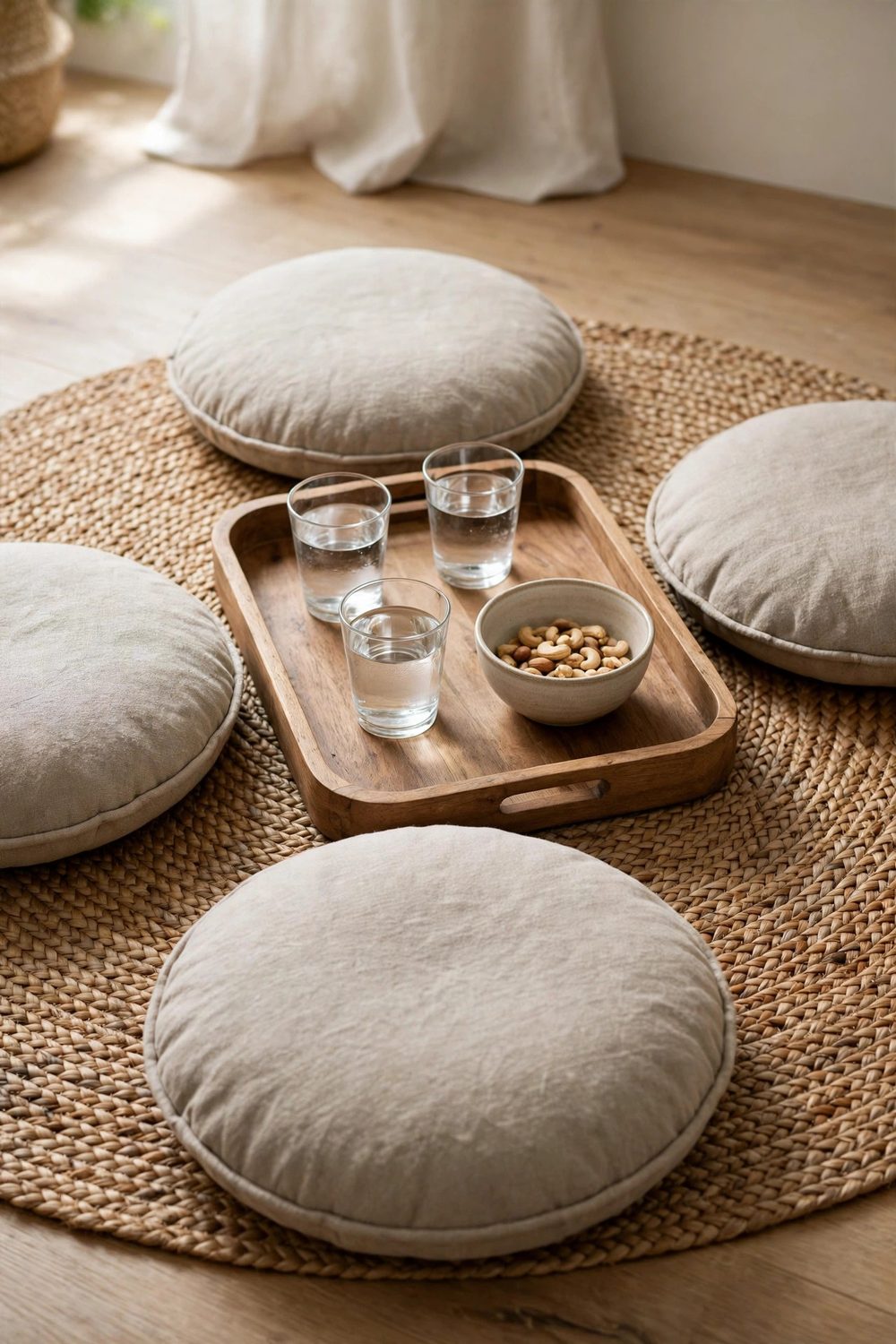
Start with a single wide tray placed in the middle of the floor, then build every cushion around it.
The tray becomes the shared surface for drinks, a small bowl, and a book, so nobody balances a mug on the floorboards.
Choose a tray with short raised edges and sturdy handles. It lifts in one trip when the meal ends, and it keeps glasses from sliding when someone shifts on a cushion.
Leave a hand width of clear floor on all four sides. That small gap stops knees from knocking the tray and gives you room to set it down without leaning across someone.
On a narrow balcony, center the tray on the rug line rather than the room line. It reads as deliberate, even when the cushions sit slightly off center.
2. Give Each Person a Tray as a Place Setting
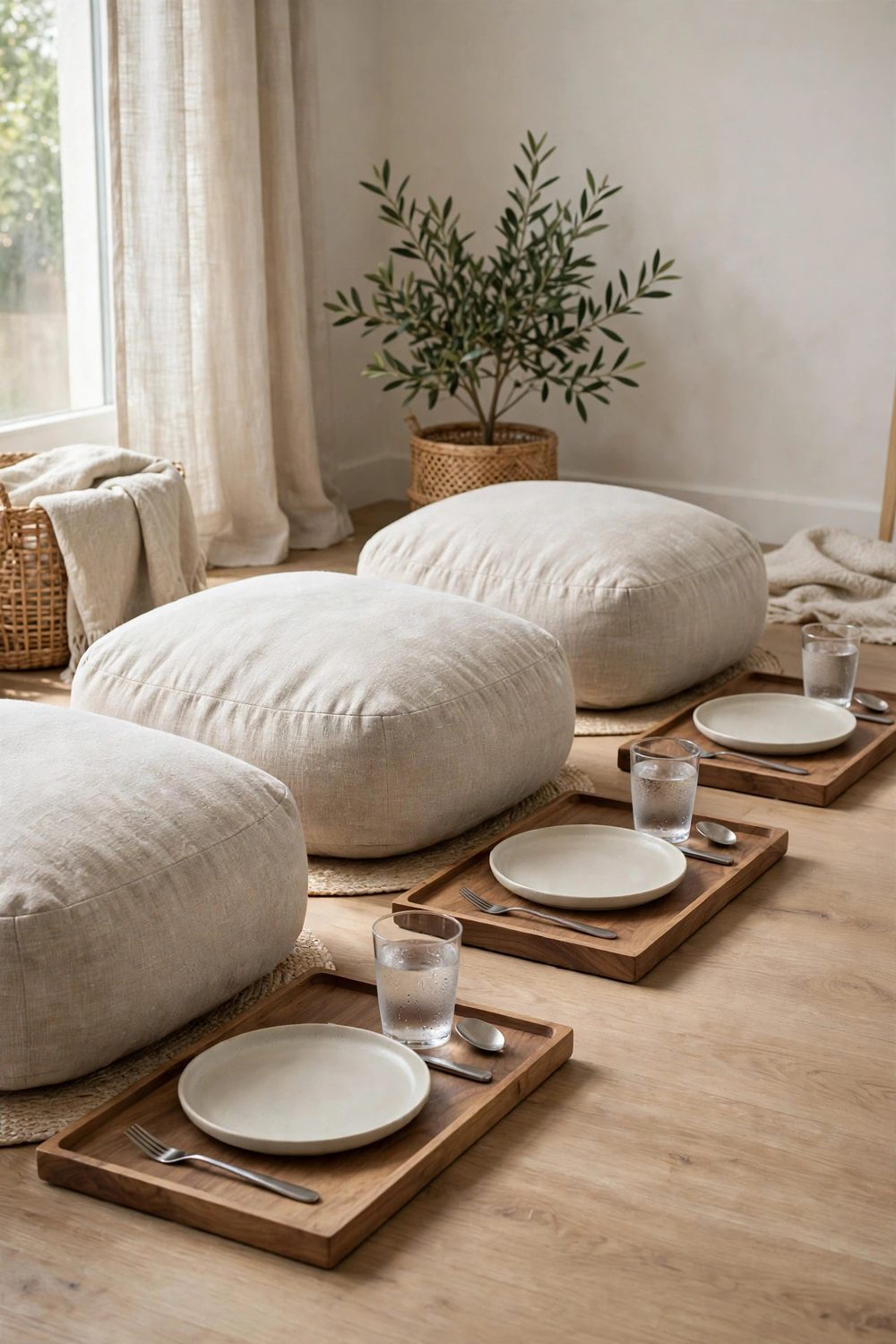
A tray per person works better than one shared plate passed back and forth.
Each guest gets a flat, stable spot for a plate, a glass, and cutlery, all within easy reach from a seated position.
Rest the front edge of the tray on your cushion and the back edge on the floor. That slight tilt keeps it level enough for a full glass and close enough to eat from comfortably.
Matching trays keep the setup looking tidy. Mixed trays work too, as long as the sizes stay close, so nobody ends up with the wobbly one.
When the meal ends, each person carries their own tray inside. Clearing up takes one trip each, and nothing gets left out in the weather.
3. Run Cushions in an L Shape Along Two Walls
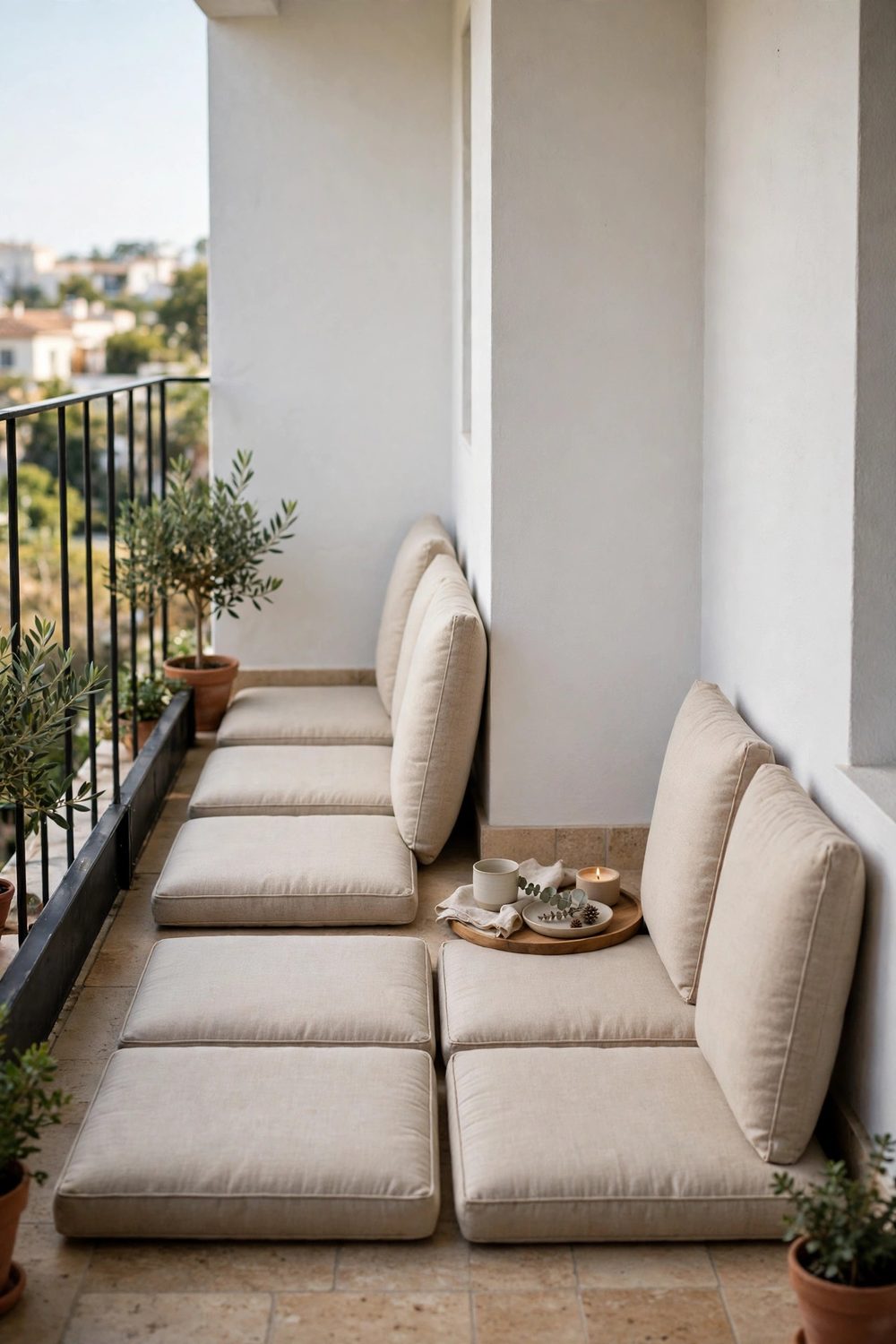
An L shape is the layout that suits most small balconies, because it uses the two walls that already hold you up.
Line square cushions along the long wall, then turn the corner with two or three more along the short wall. The corner seat becomes the best spot, with back support on both sides.
Keep the open side of the L facing the view or the door, whichever you use more. A central tray sits in the crook of the L, reachable from every seat without anyone standing up.
This shape also leaves one clear strip of floor for stepping in and out. Nobody has to climb over a cushion to reach their seat.
4. Build Real Back Support Against the Wall
Floor sitting fails fast when your back has nothing to lean on. A meal that starts relaxed ends with everyone shifting and stretching.
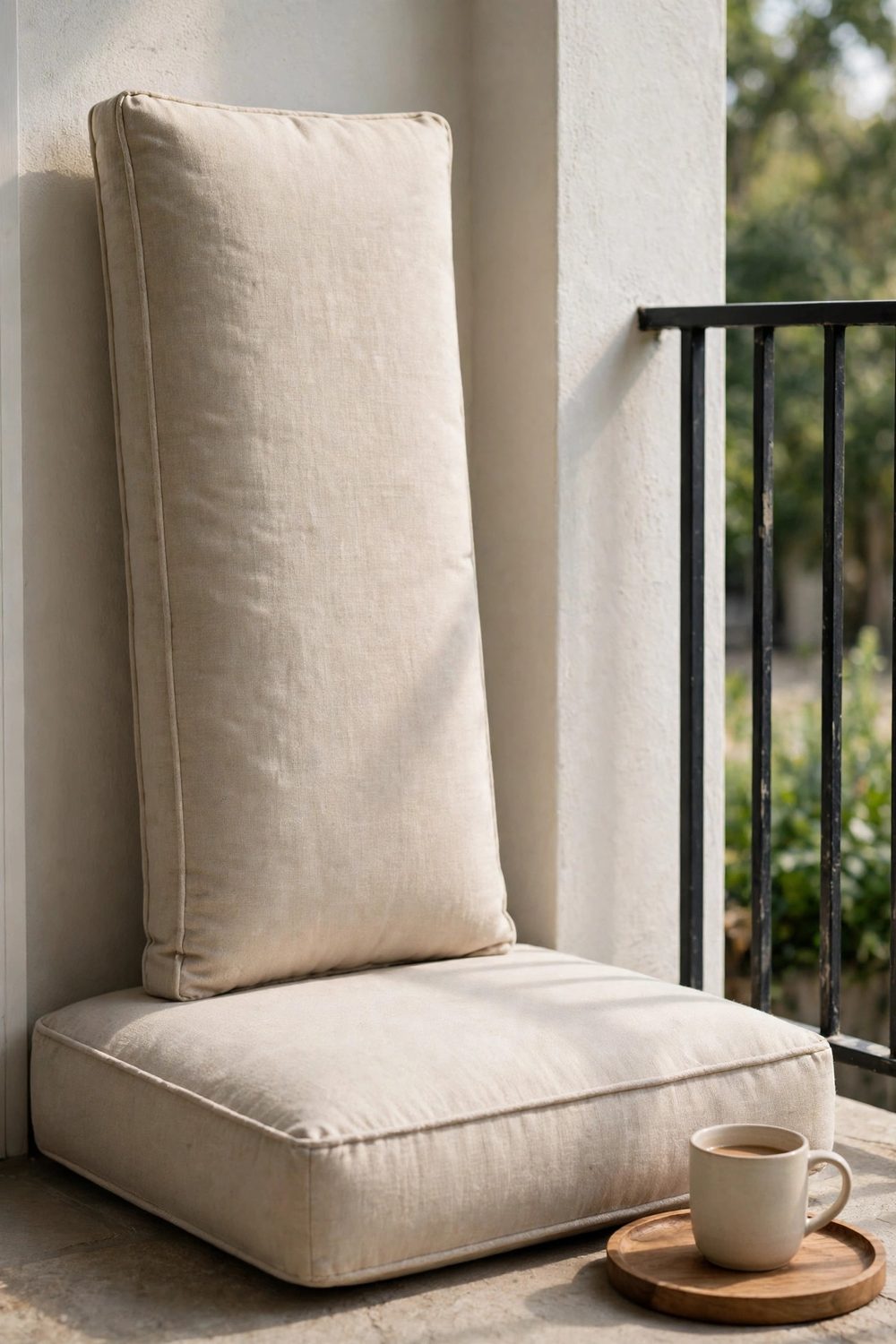
Fix it with a back row. Stand firmer cushions upright against the wall, then place your seat cushion in front so the two meet at a clean right angle.
A long rectangular cushion works well as the back piece. It supports two people at once and stops the gap that opens up between separate pillows.
Test the setup before guests arrive. Sit down, lean back, and eat a few bites. If you slide forward, add a thinner cushion behind your lower back and try again.
5. Use the Railing Side for a Lean Back Row
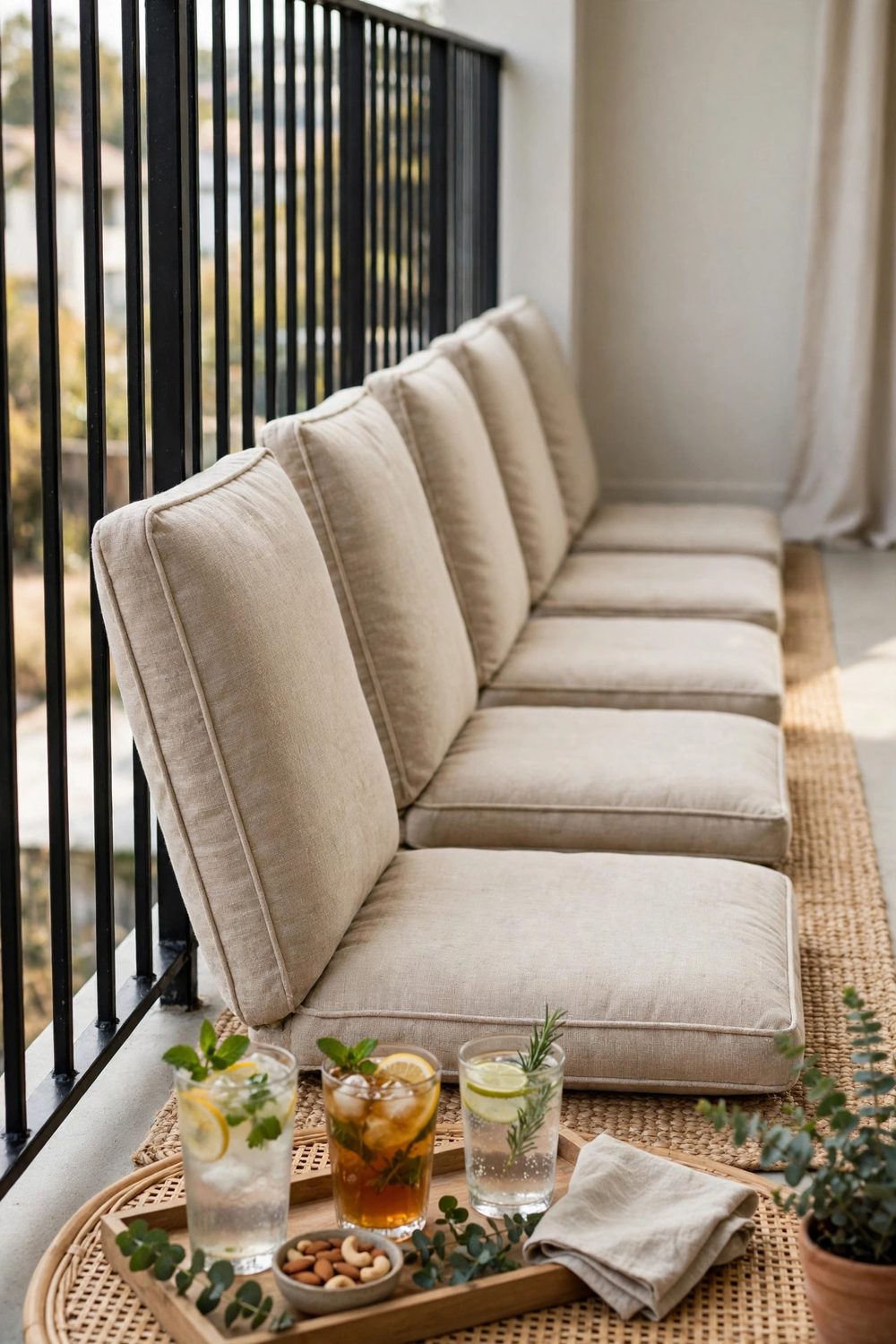
Some balconies have one solid wall and one open railing. The railing side can still hold a seat row, with a few plain checks first.
Use only a railing that feels solid when you lean on it, and keep cushions on the floor, not tied or stacked against the bars.
Face this row inward, toward a central tray, so backs rest lightly and faces turn to the group. You get the breeze and the view when you turn around between courses.
For a different kind of low seat on the same balcony, small balcony ideas with a hanging hammock chair pair well with a floor row on the opposite side.
Keep this row one cushion deep. A second row eats the knee space that makes floor dining comfortable.
6. Keep a Clear Knee Lane Down the Middle
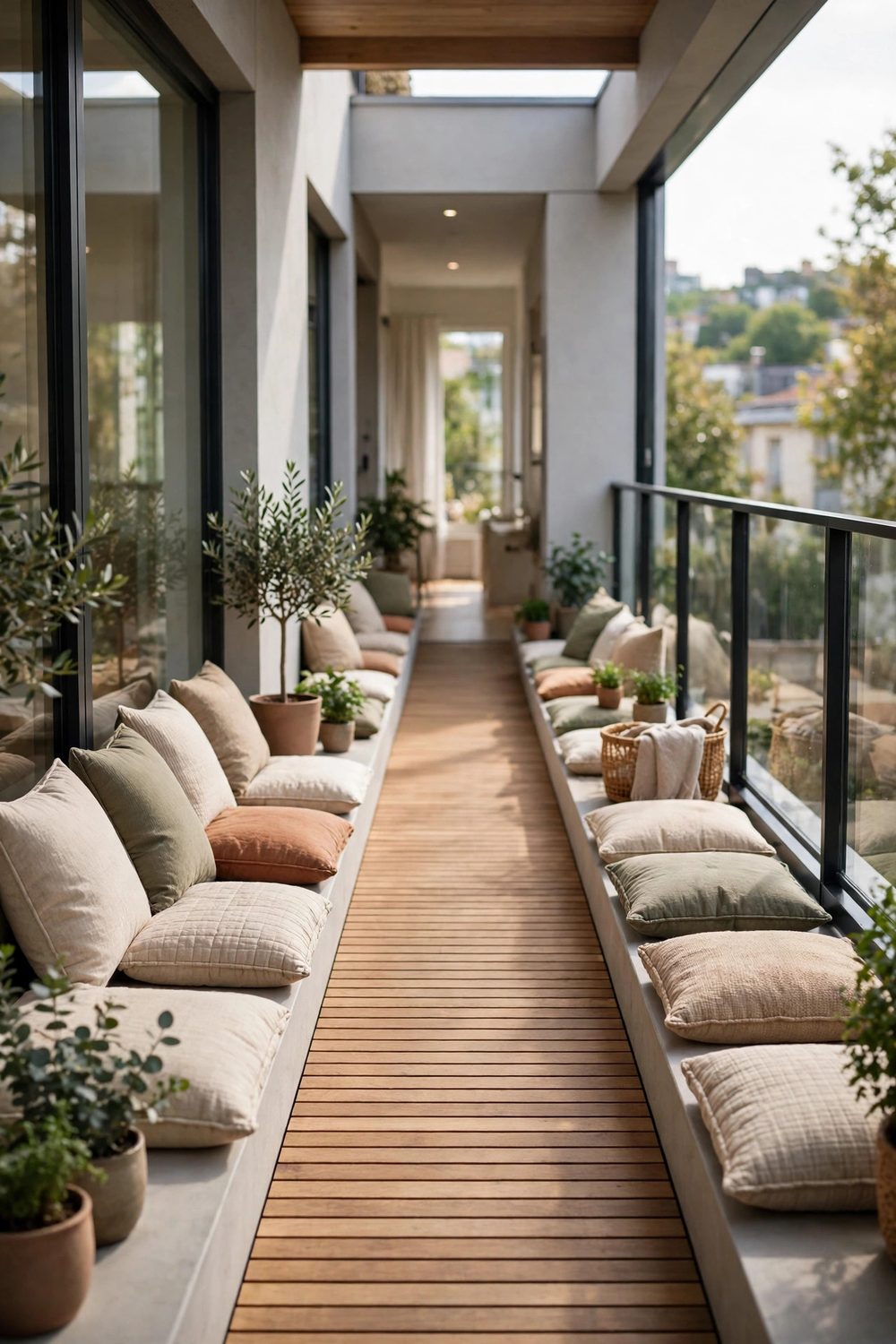
Here is a tiny rule that saves every floor setup: leave a clear lane down the middle, wide enough for stretched legs and a carried tray.
Cushions go along the edges. Trays, feet, and movement go in the lane. When the lane stays open, people can get up for seconds without the whole row shuffling sideways.
On very narrow balconies, the lane can run along one side instead. Seats line the wall, legs angle into the open strip, and the door still opens fully.
Check the door swing before you settle the layout. A door that clips a cushion corner will annoy you every single day, and the fix is just moving one cushion.
7. Stack Spare Cushions Into a Corner Side Surface
Extra cushions need a home that is not the middle of the floor.
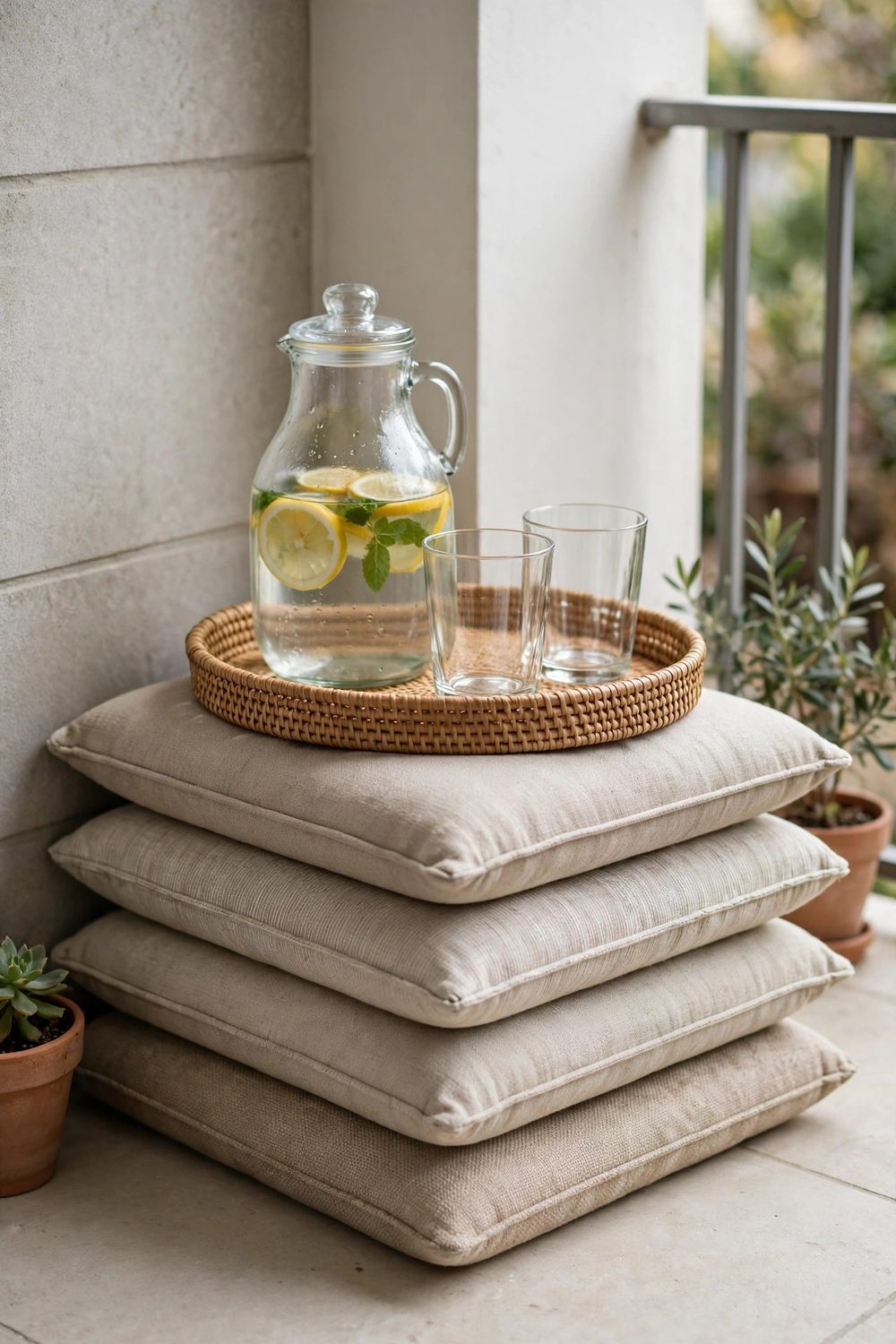
Stack three or four spares flat in the least used corner, largest at the bottom. The stack reads as part of the setup, and the top cushion becomes a handy side surface.
Set a small tray on top of the stack and it holds a jug, spare glasses, or a phone while people eat. The weight of the cushions keeps it steady at floor lounge height.
Rotate the stack weekly if the balcony gets strong sun on one side. Covers fade evenly, and the bottom cushion gets its turn on top.
When guests arrive, the stack disappears into the layout seat by seat. When they leave, it rebuilds in a minute.
8. Pick Washable Zip Covers for Every Cushion
Outdoor floor cushions live close to spilled drinks, dusty floors, and the odd rain shower that blows in sideways.
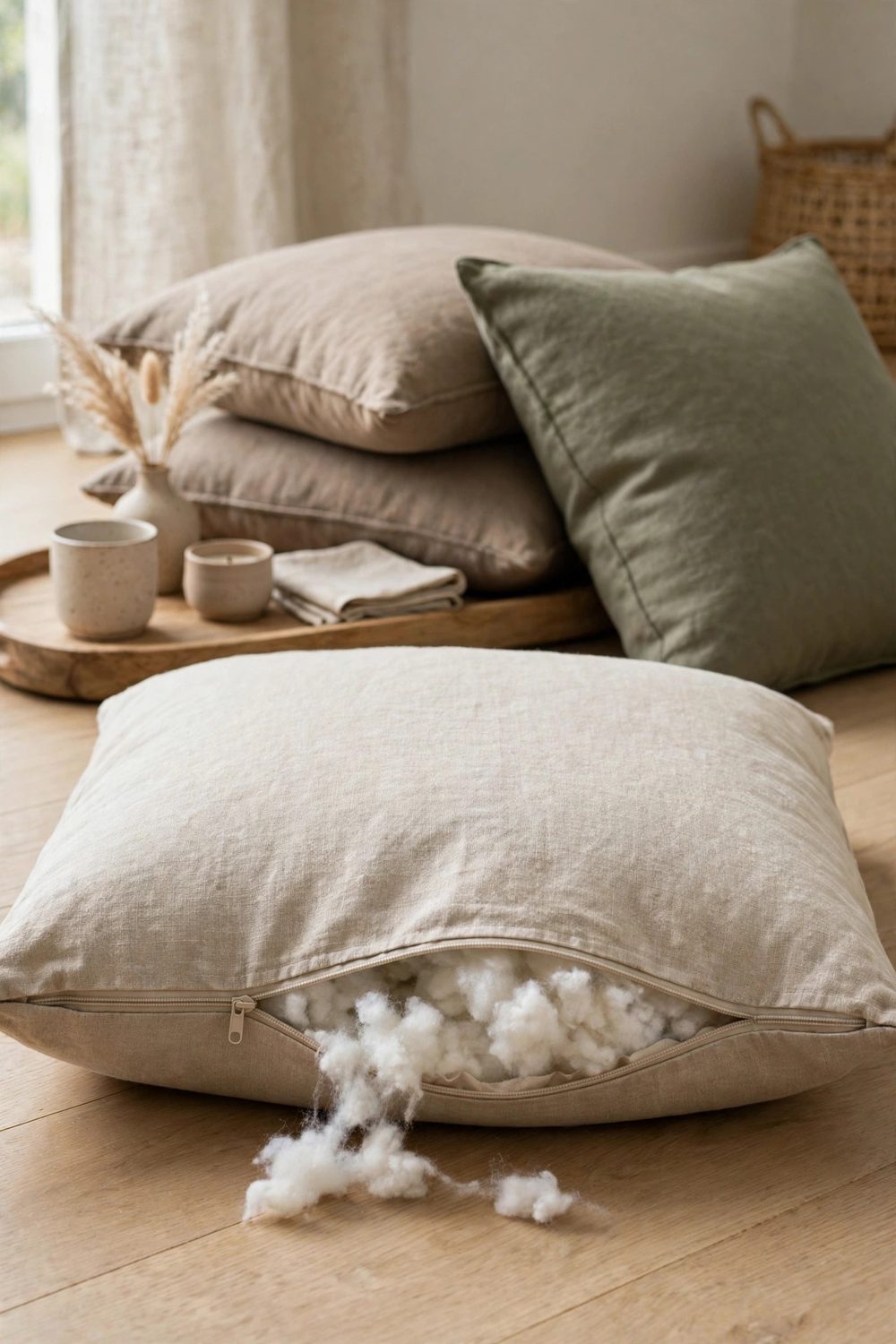
Covers with zips come off in seconds and go through a normal wash. That one feature decides whether your lounge still looks fresh by the end of the season.
Buy cushions with the zip on a long edge, not a corner. Long zips make the cover easier to pull off and put back on without fighting the filling.
Keep one spare cover if you can. A spill during a meal means a quick swap, and the evening carries on instead of ending with a stained seat.
Let covers dry fully before zipping them back on. Damp filling stored in a stack is where musty smells start.
9. Lay a Flat Outdoor Mat Under the Whole Setup
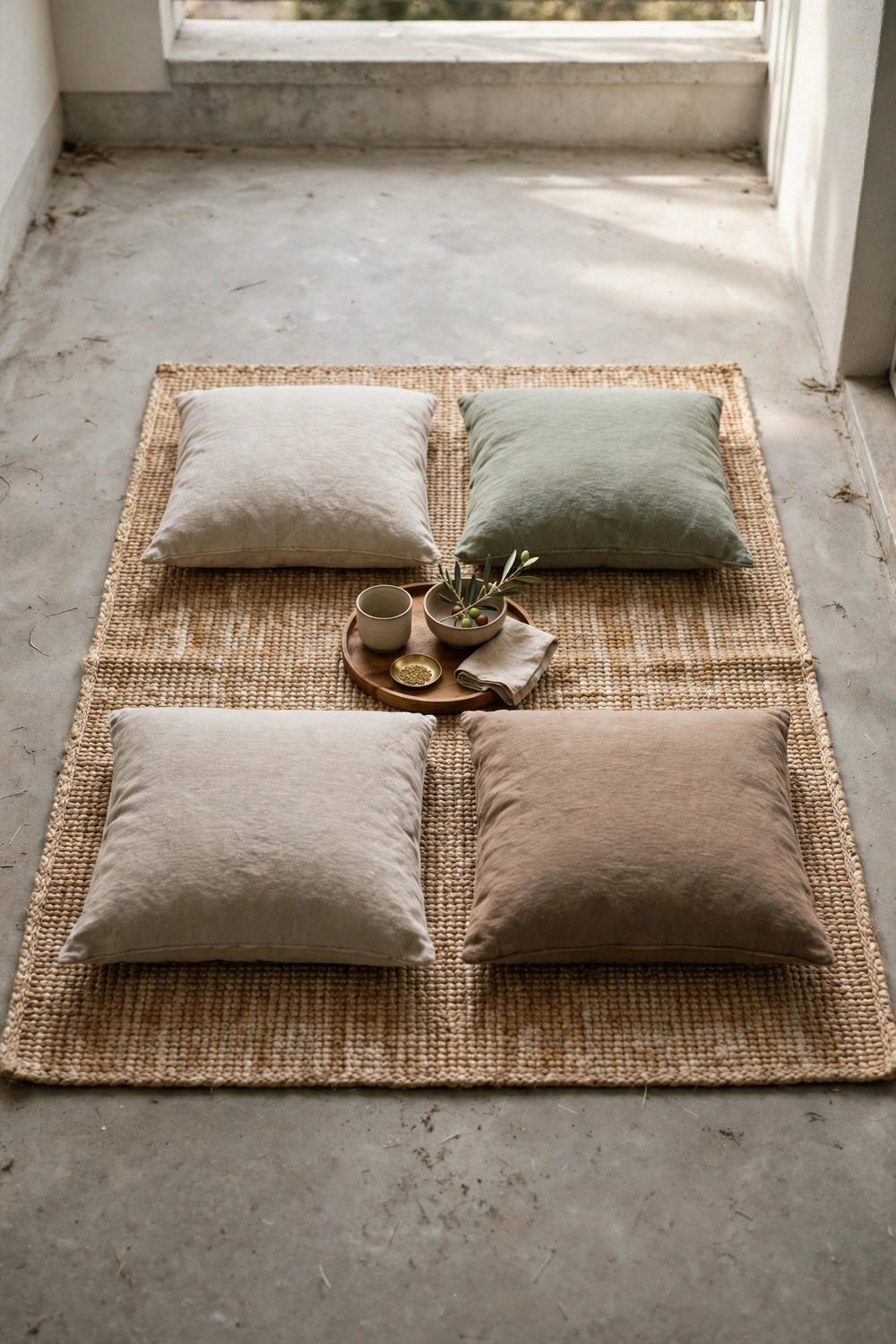
Cushions straight on concrete or decking pick up grit, feel cold, and slide a little every time someone sits down.
A flat woven outdoor mat fixes all three. It gives the lounge a defined edge, keeps cushion bases clean, and stops the slow drift that breaks a neat layout apart.
Size the mat to the seating zone only, not the whole balcony. A border of bare floor around it keeps the walking lane clear and makes the lounge read as its own spot.
For more base layer options, these small balcony rug ideas cover flat weaves that sit well under low seating.
Shake the mat out weekly. Crumbs and grit collect under floor cushions faster than anywhere else outdoors.
10. Set a Morning Tray for Slow Starts
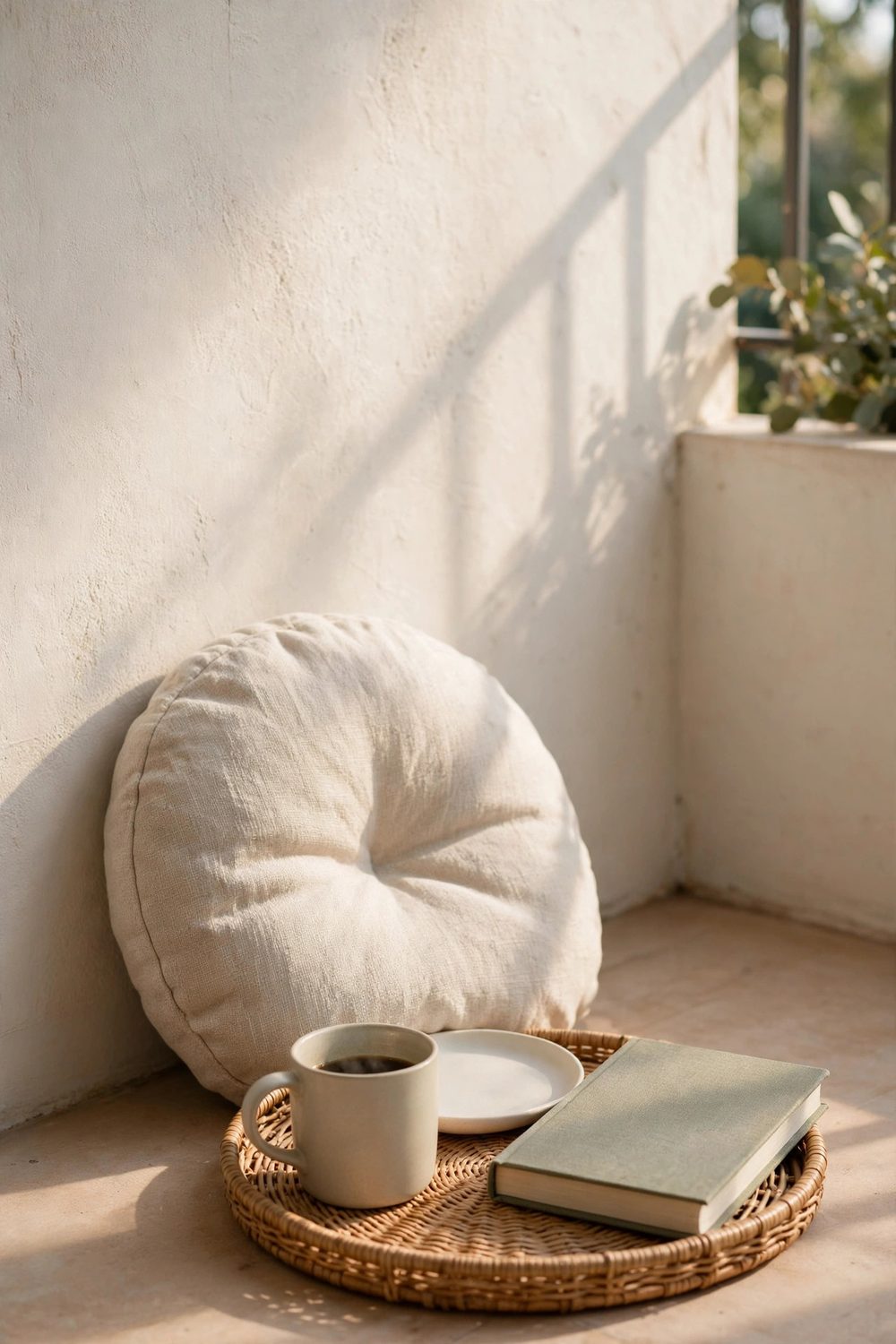
The same floor lounge that hosts dinner works for breakfast, with a smaller tray and a simpler load.
One cushion by the sunny wall, one tray with a mug, a plate, and a book. That is the whole setup, and it takes two minutes to carry out.
Morning light on many balconies lands on one side only, and it moves fast. Put the cushion where the sun lands first, and keep the tray in the shade line so drinks stay cool.
Readers who like a longer morning outside may also enjoy a reading daybed setup for stretched out weekends, while the tray corner handles everyday starts.
Stack the cushion by the door when you finish. The small habit keeps the ritual easy enough to repeat daily.
11. Plan an Evening Floor Picnic With Low Light
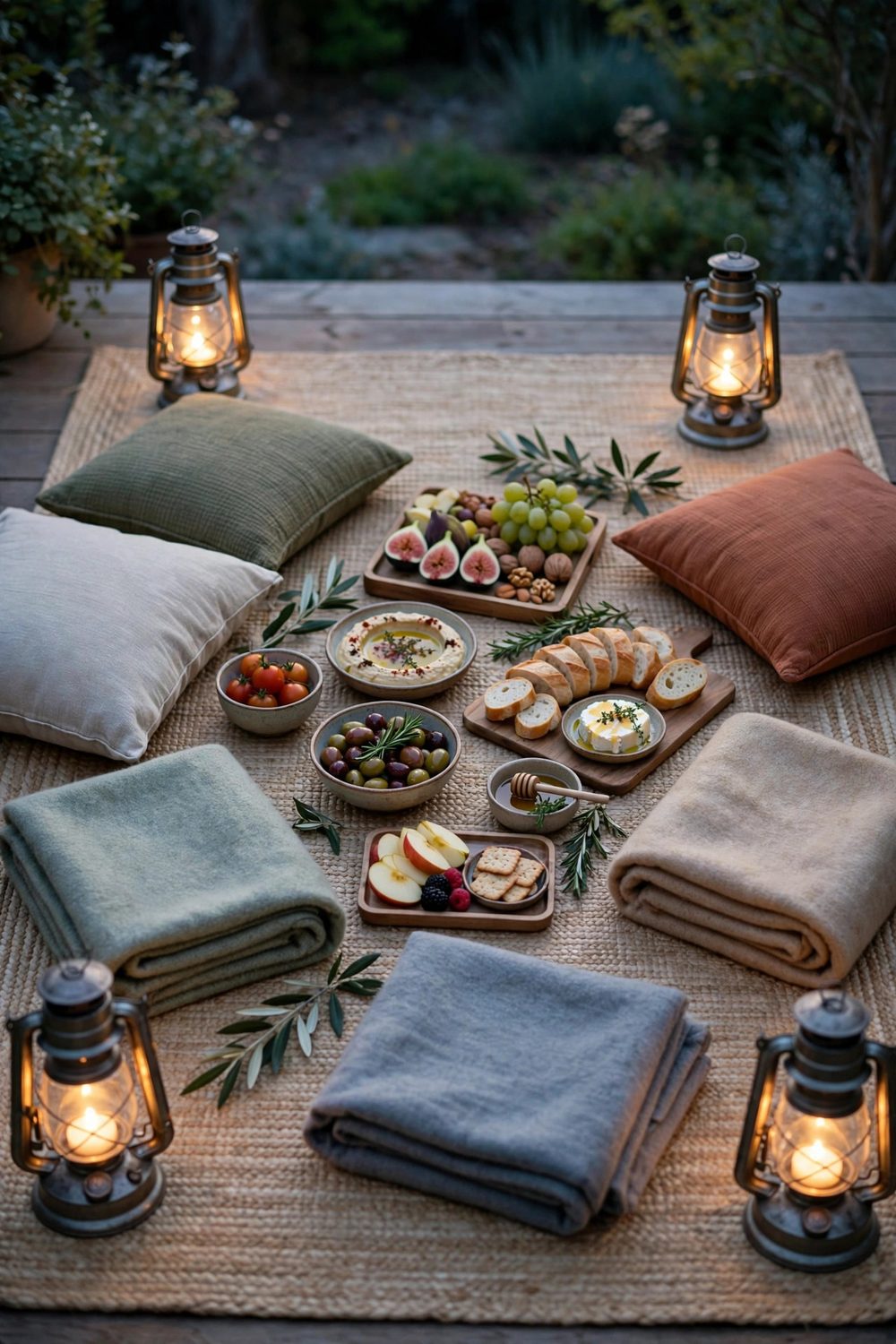
Evening is where floor level eating earns its keep. Sitting low puts everyone in the warm band of light and out of the glare of a bright overhead bulb.
Set battery lanterns or flameless candles at the corners of the mat, never on the trays themselves. Light stays low, faces stay lit, and nothing hot sits near a glass.
Serve food that holds up at room temperature and eats well from a tray on your lap or the floor. Flatbreads, cheese, fruit, and dips suit the setup better than anything that needs carving.
Bring one light layer per person. Balconies cool quickly after sunset, and a throw over the knees keeps people seated long after the food is done.
12. Add a Landing Tray Station by the Door
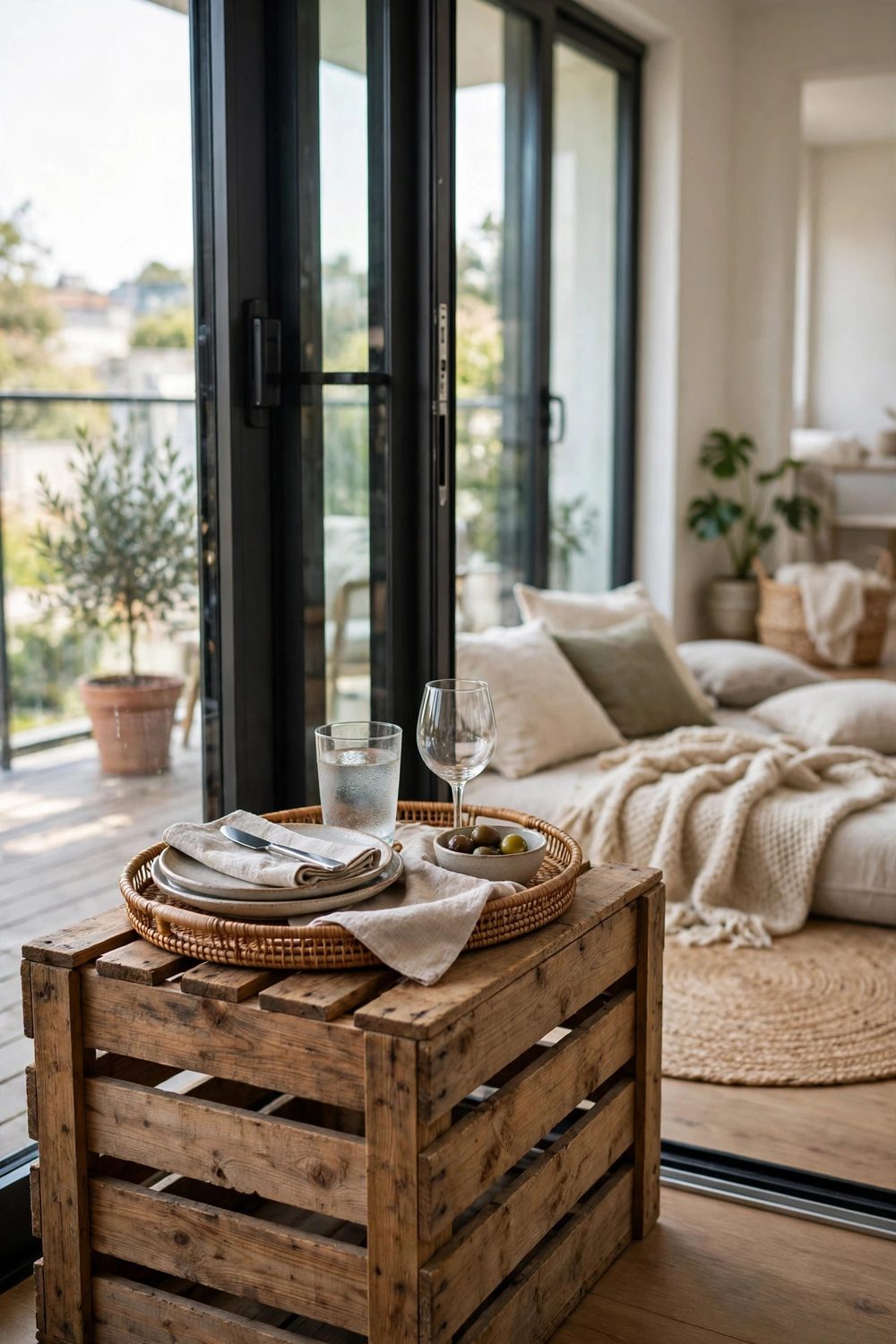
Every floor meal involves trips back inside, and trips are where glasses get knocked and plates get set down in odd spots.
A landing station solves it. Place one sturdy tray on a low stool, a crate, or the cushion stack right beside the door, and use it only for things in transit.
Full trays land there before being passed down to the floor. Empty plates land there before going back to the kitchen. Hands stay free for the door handle in between.
It sounds minor until you try a meal without it. The station keeps the knee lane clear and stops the slow spread of dishes across the whole balcony.
13. Mix Square Seat Cushions With Round Foot Cushions
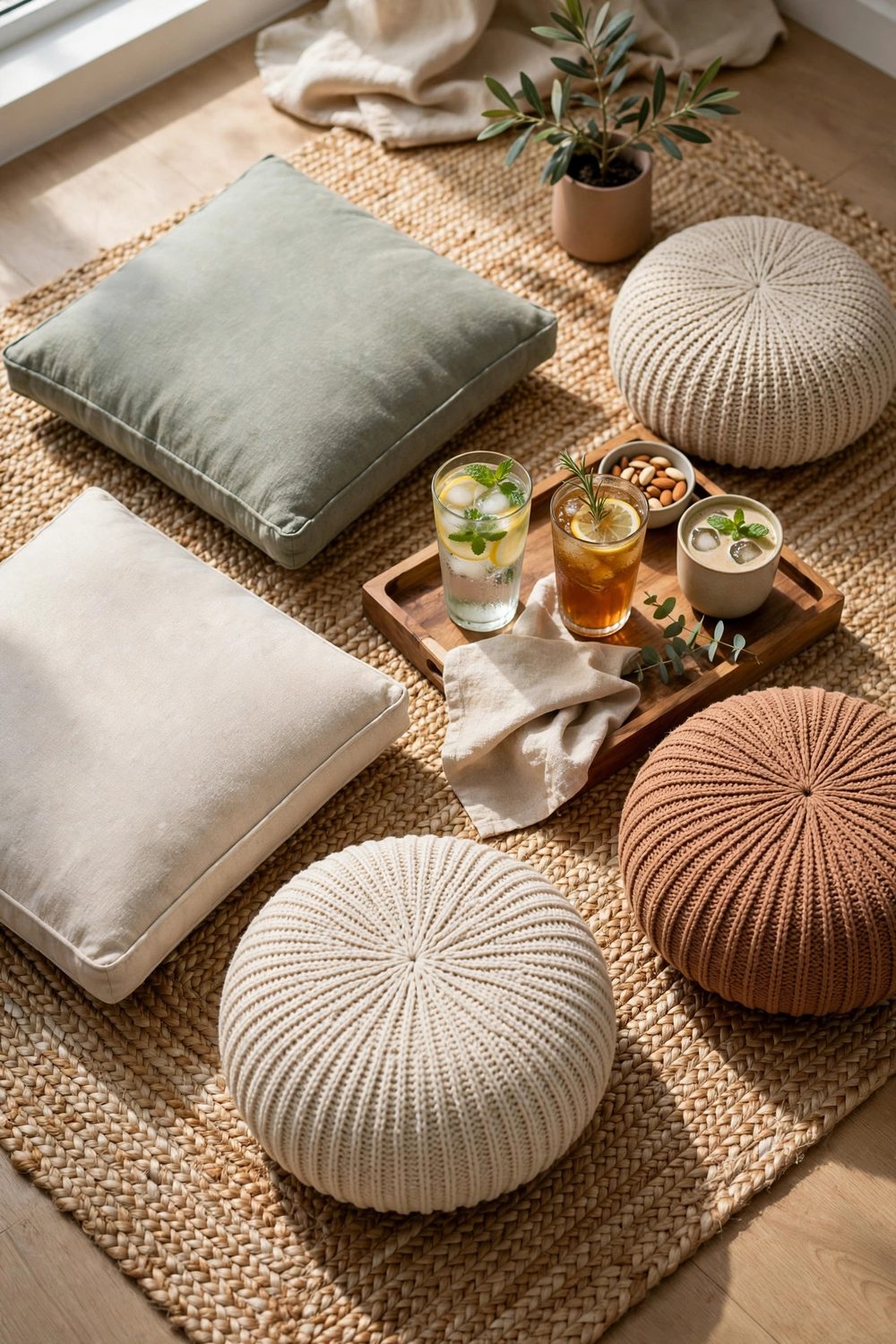
All square cushions in a row can look stiff and feel the same after an hour.
Add round cushions as footrests and spare seats. A round cushion under your heels takes pressure off your legs during a long meal, and it rolls out of the way when you stand.
Rounds also soften the corner where two seat rows meet. One round cushion in the crook of an L shape fills the awkward gap that squares leave behind.
Keep the mix simple: squares for sitting, rounds for feet and gaps. Two shapes are enough. Three shapes start to look like a storage pile instead of a layout.
For more ways to mix low seating, these small balcony seating ideas cover benches, chairs, and floor options side by side.
14. Store Cushions Flat in a Slim Deck Box
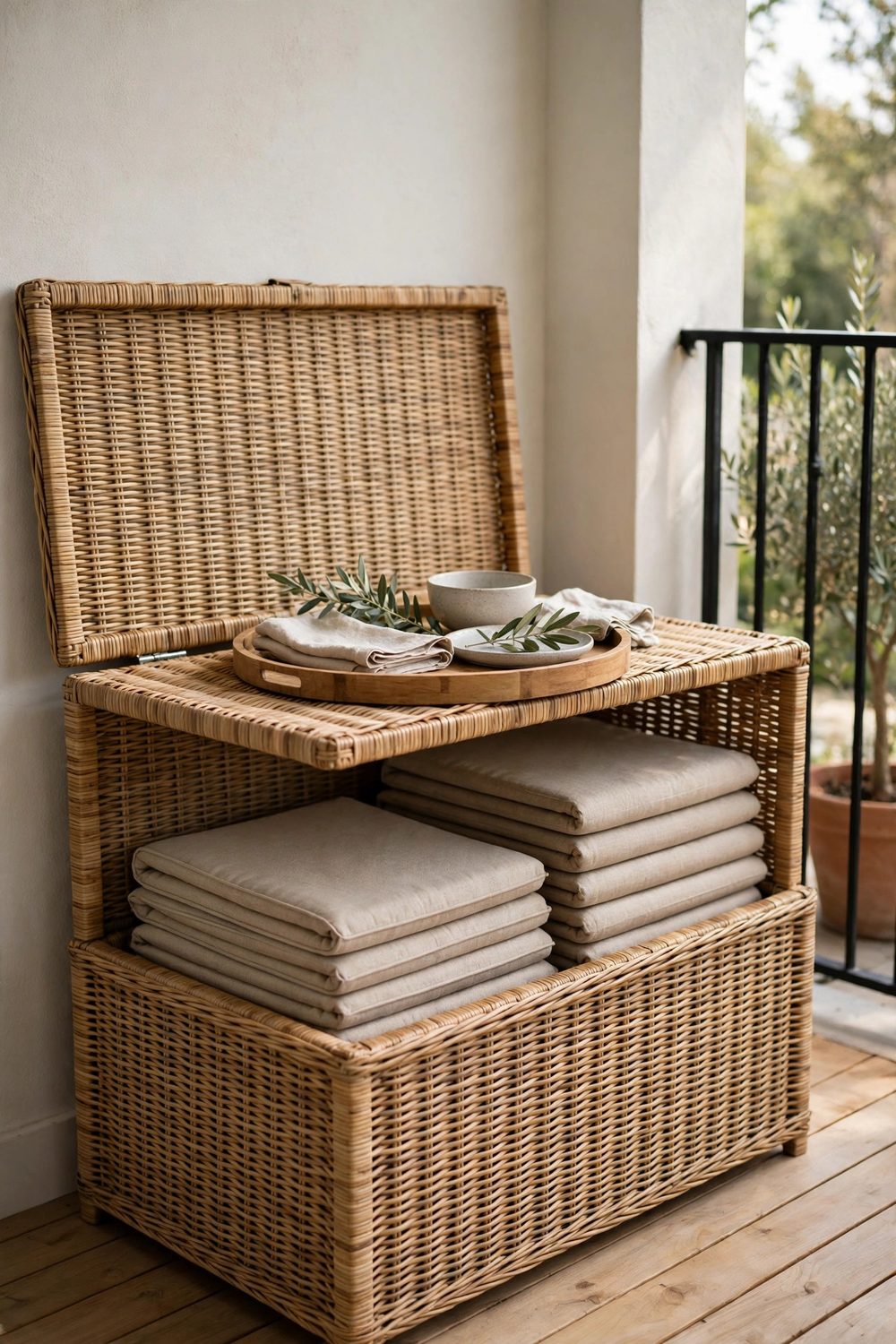
Rain is the one guest who never checks the forecast with you. Cushions need a dry home that sits within arm reach of the lounge.
A slim deck box along the wall holds a full set of flat cushions without blocking the door or the view. Measure your largest cushion first, then choose the box, not the other way around.
Store cushions flat and dry, with the covers zipped. Standing them on edge in a damp box bends the filling and leaves one side musty.
On dry weeks, leave the box lid cracked open on a sunny morning now and then. Fresh air keeps stored cushions smelling like fabric, not like a shed.
The box lid doubles as one more flat surface. A tray lands there happily during setup.
15. Nest the Trays and Store Them Standing Up
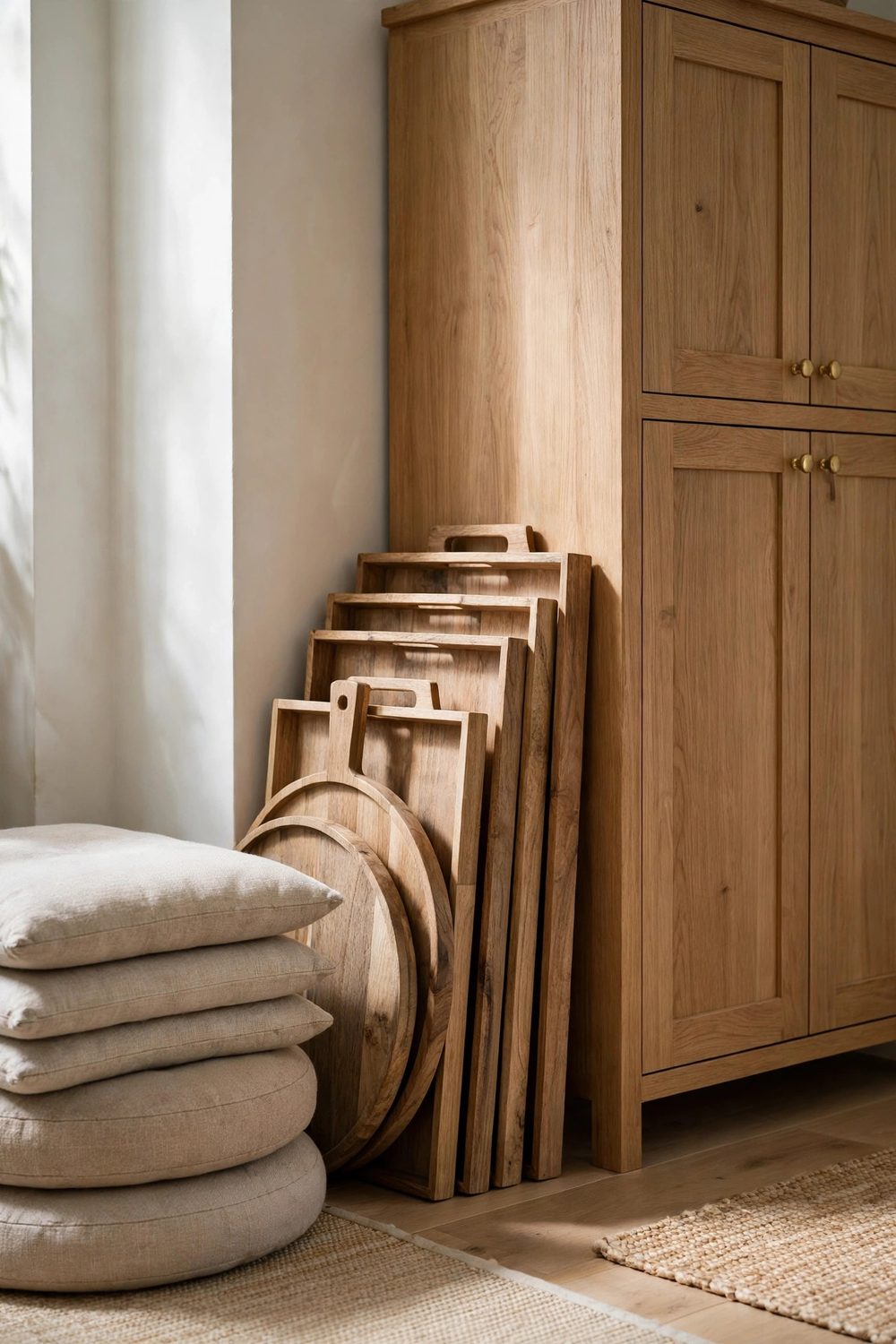
Trays take up silly amounts of room when they lie flat in a pile. They slide, they stick together, and the one you want is always at the bottom.
Store them standing on edge instead, nested by size in a narrow slot: between the deck box and the wall, inside a tall basket, or on a small rack by the door.
Standing storage keeps handles easy to grab and edges easy to count. You can see at a glance whether all the trays came back inside after a meal.
For wider balcony layouts that mix floor seating with furniture, these apartment balcony ideas show how low zones sit alongside chairs and planters.
Wipe trays before they go back in the slot. A clean stack stored dry is ready the moment the next sunny evening shows up.
A floor lounge works when three things line up: cushions with real back support, trays that give every person a steady surface, and storage that makes setup take minutes.
Start with the L shape and one central tray, then add the pieces your habits call for, whether that is a morning tray corner or a full evening picnic spread.
Save the layouts you want to try to our Balcony Decor Ideas board, and build your own version of balcony decor ideas with floor cushions and serving trays one tray at a time.


