

15 Beige Couch Living Room Ideas That Feel Warm, Timeless, and Effortlessly Stylish
There’s a reason beige couches have never really gone out of style. Long before “greige” and “warm neutrals” became buzzwords on design blogs, beige sofas were quietly doing the hard work in living rooms everywhere — anchoring a space without shouting for attention, flexing with every season’s trends, and making a room feel instantly calmer the moment you sit down. A beige couch is the design equivalent of a good pair of jeans: versatile, forgiving, and somehow always in style.
But “neutral” doesn’t have to mean “boring.” The right styling choices — the rug you lay beneath it, the pillows you throw on top, the wood tones and metals you build around it — can turn a beige sofa into the soul of a room rather than just its background. Whether you’re working with a classic camelback beige couch, a plush boucle sectional, or a linen-upholstered mid-century piece, there’s a design direction here for every taste, from moody and dramatic to bright and breezy.
1. Pair It with Warm Wood Tones
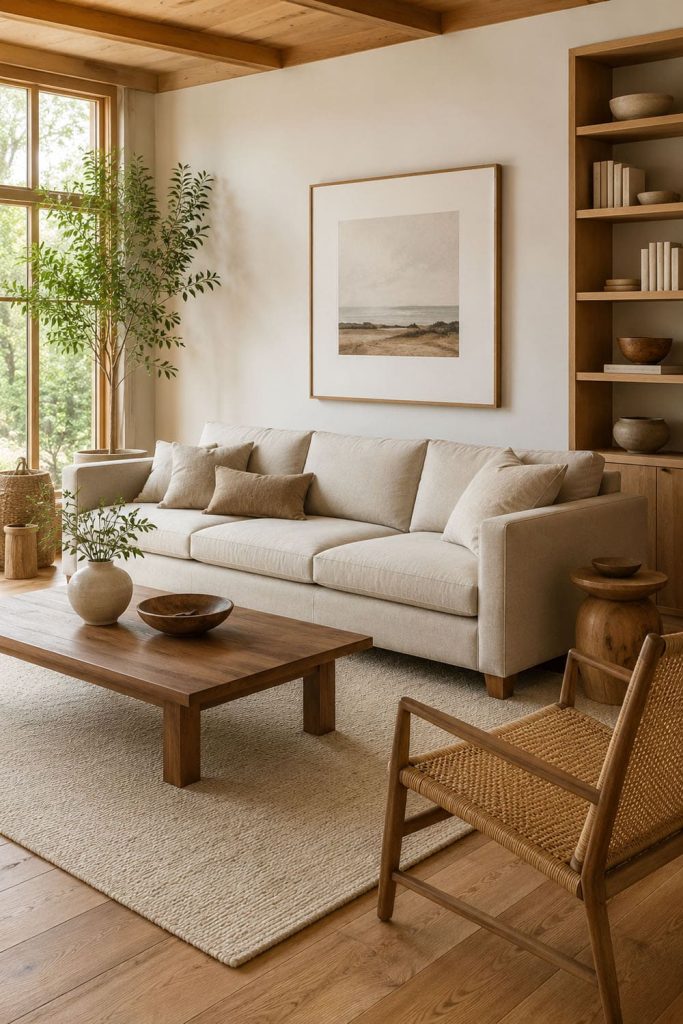
Beige and wood are a natural match because they share the same undertones — soft, earthy, and sun-warmed. Choose a walnut or oak coffee table, a rattan-framed accent chair, or wide-plank wood flooring to bring depth to the space without introducing competing colors. The wood grain adds visual texture that a solid beige couch can lack on its own, while the warmth keeps the room from feeling flat or clinical. For an even cozier effect, layer in wooden bowls, a carved side table, or open wood shelving. This pairing works especially well in living rooms that get plenty of natural light, since the wood tones will glow rather than darken the space.
2. Go Monochromatic with Layered Beige Tones

A fully tonal living room — beige couch, cream walls, oatmeal rug, camel throw — sounds risky on paper but reads as sophisticated and serene in person. The trick is variation: mix at least three or four distinct shades of beige and texture, from a nubby bouclé cushion to a smooth linen curtain, so the eye has something to travel across. Add a matte ceramic vase or a slightly darker wood frame to keep the palette from blurring together. This look is ideal for small living rooms, since an unbroken tonal palette visually expands the space, making walls feel like they recede rather than close in.
3. Add a Bold Statement Rug
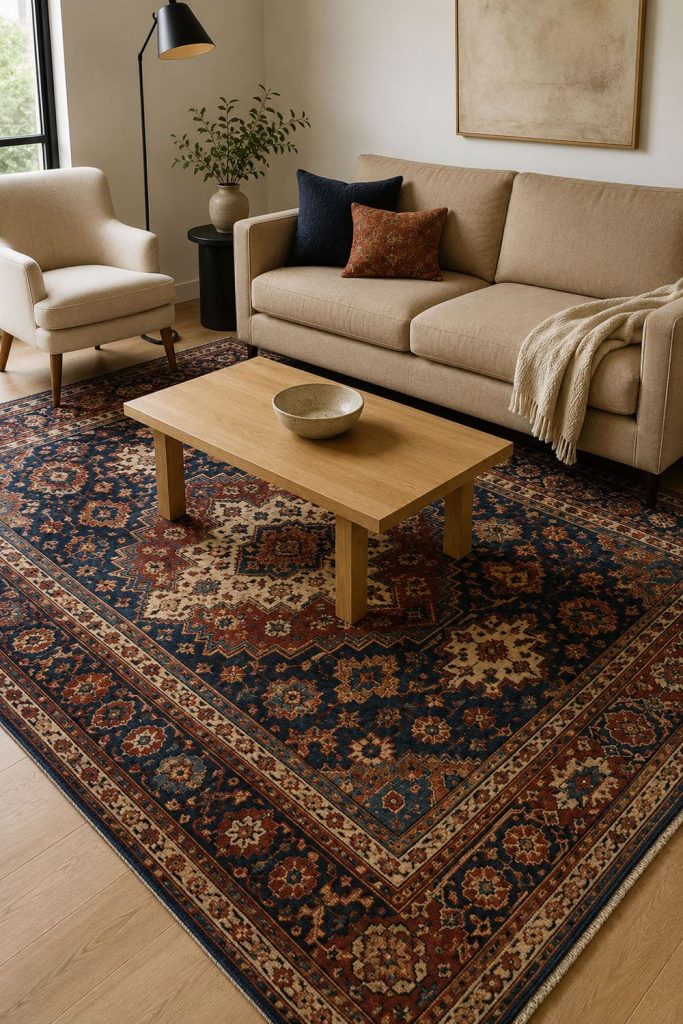
If your beige couch feels a little too quiet, let the floor do the talking. A rug in a saturated color or graphic pattern — think deep terracotta, indigo geometric, or a vintage-inspired Persian design — gives the room an anchor point and a jolt of personality. Because beige is so neutral, it won’t compete with even the busiest rug pattern; instead, it acts as a visual buffer that lets the rug shine. Keep remaining accessories simple so the rug stays the star. This approach works particularly well in open-concept spaces, where a patterned rug can also help visually define the living area.
4. Introduce Black Accents for Contrast
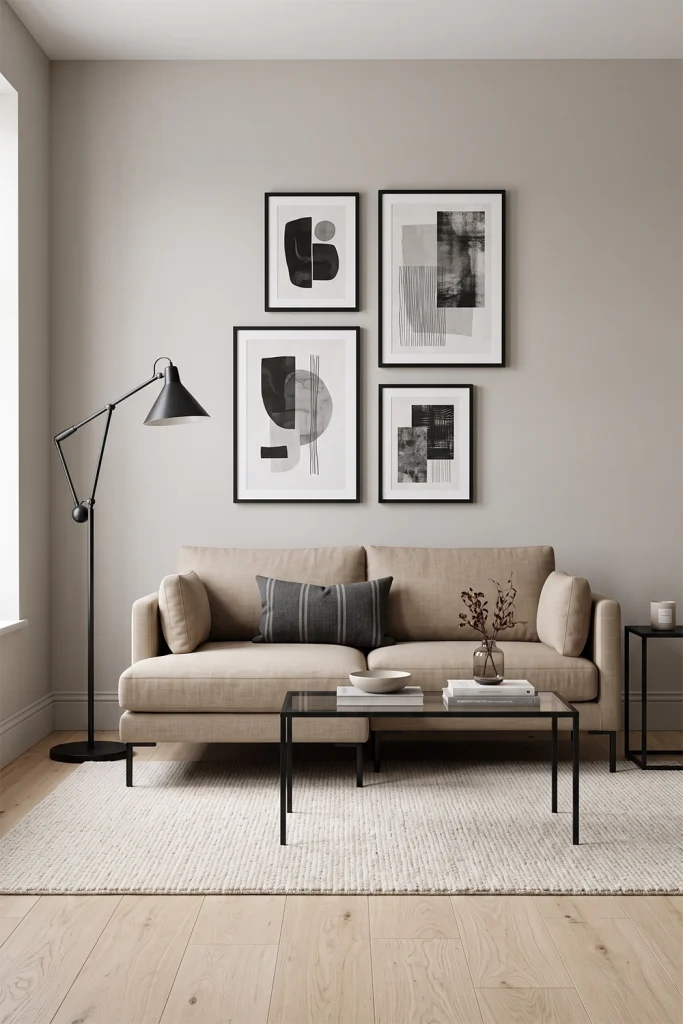
Beige and black might seem like an unlikely duo, but the contrast is what makes this combination so striking. A black metal coffee table, matte black floor lamp, or dark-framed artwork adds definition and keeps a soft beige couch from disappearing into a sea of neutrals. This pairing leans slightly modern and editorial, so it works well alongside clean-lined furniture and minimal styling. Use black sparingly — a few well-placed pieces rather than an even split — so it reads as an accent rather than a second dominant color. The result is a living room that feels grounded, current, and quietly confident.
5. Bring in Botanical Greens
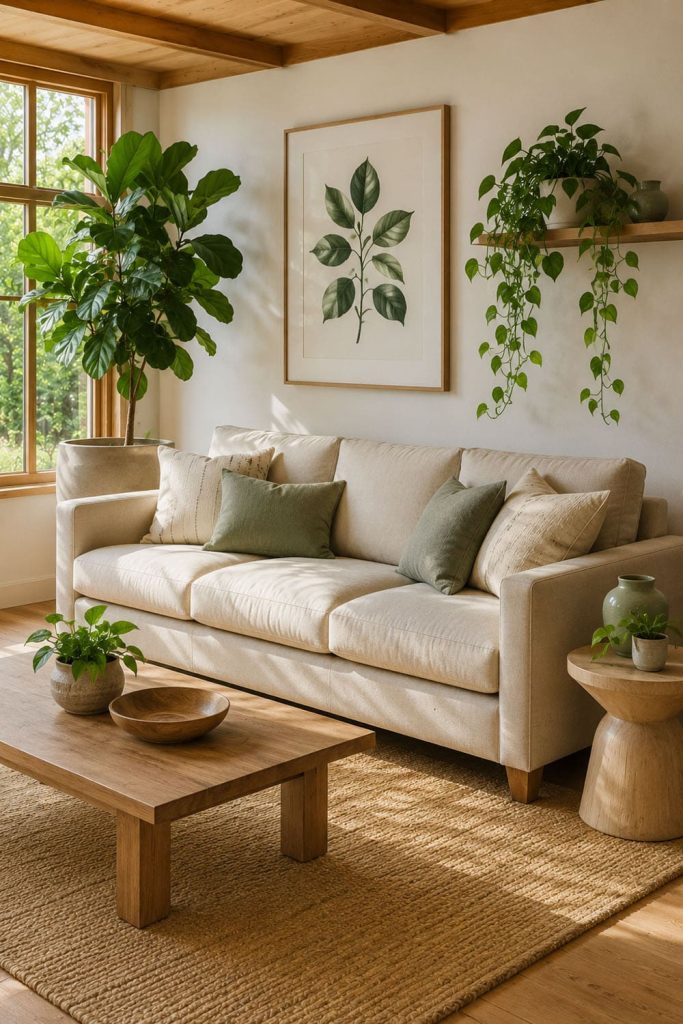
Few things complement a beige couch as effortlessly as greenery. Large leafy plants like a fiddle leaf fig or monstera introduce organic shape and living color, while smaller potted herbs or trailing pothos soften shelves and side tables. Green also has a way of making beige feel fresher and more outdoor-inspired rather than purely neutral. For a cohesive look, echo the green in a few smaller accents — a sage throw pillow, botanical print, or ceramic planter in a similar hue. This idea suits living rooms with good natural light, since healthy plants will do double duty as both décor and air-purifying additions.
6. Layer in Metallic Gold Details
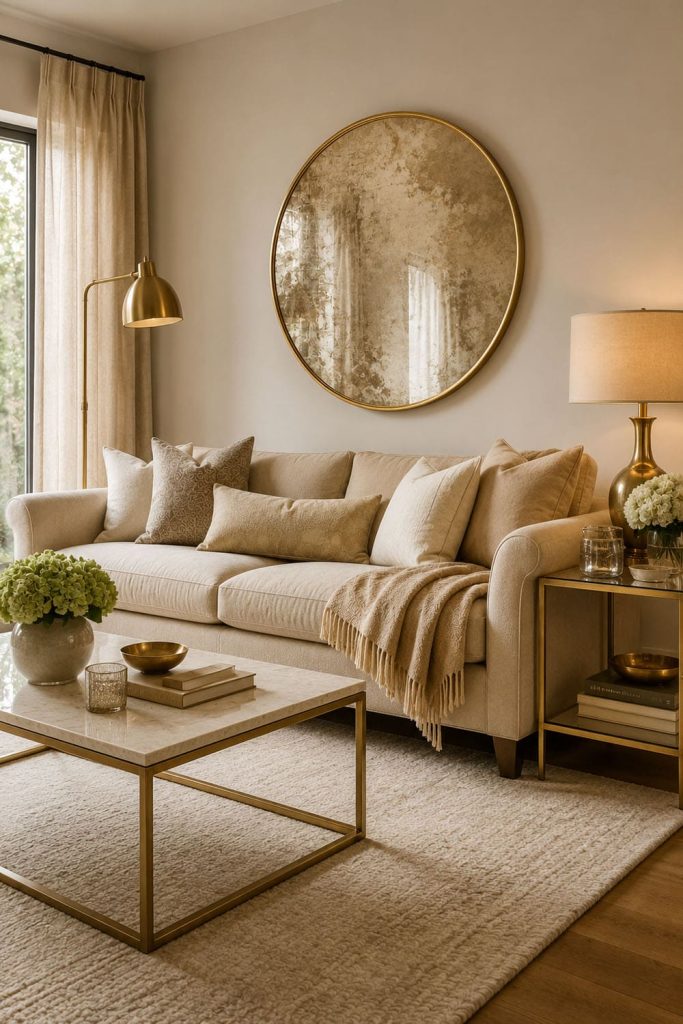
Gold and brass accents give a beige living room an elevated, slightly glamorous edge without overwhelming the calm base palette. A brushed-gold floor lamp, mirrored side table with metallic legs, or framed art with a gold border can transform a simple beige couch setup into something that feels curated and intentional. Because beige is so warm-toned, gold reads as a natural extension of the palette rather than a jarring addition. Keep the rest of the room’s finishes soft — velvet, linen, wood — so the metallics stand out as highlights rather than competing for attention with harder, cooler materials.
7. Create a Coastal-Inspired Look
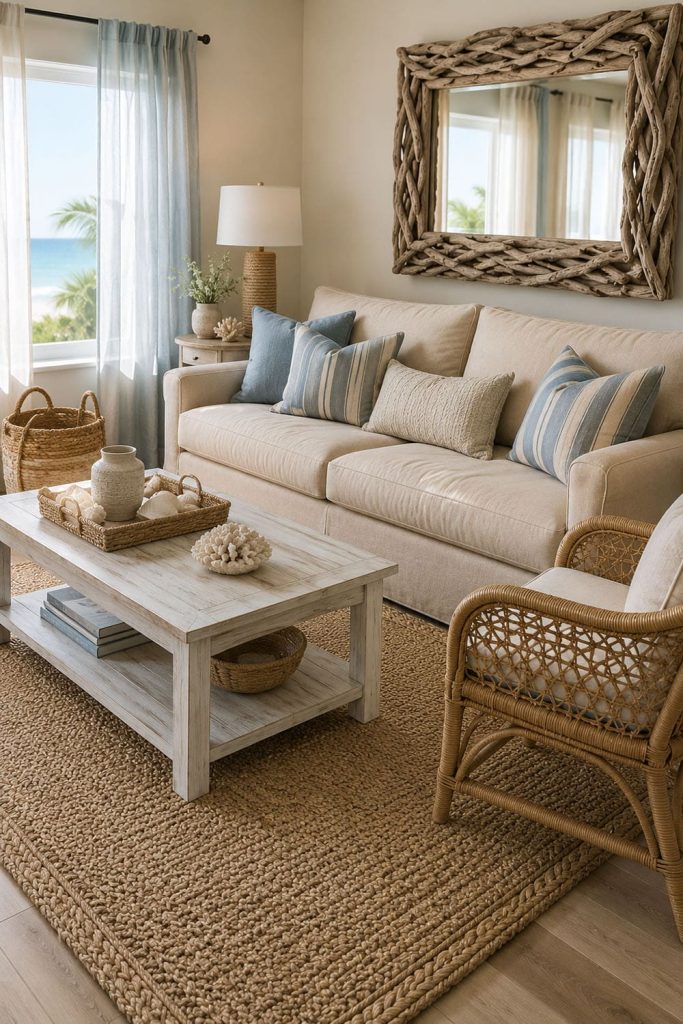
Beige couches are practically made for coastal design, since their sandy tone echoes the beach itself. Pair yours with whitewashed wood furniture, woven jute rugs, and linen curtains in soft white or pale blue. Add texture through rope details, seagrass baskets, or a driftwood mirror to keep the look grounded rather than themed. A few pops of ocean blue in pillows or artwork complete the palette without tipping into novelty décor. This idea works beautifully in living rooms with lots of windows or natural light, reinforcing the airy, relaxed, breezy feeling that coastal interiors are known for.
8. Layer Multiple Textures on One Sofa
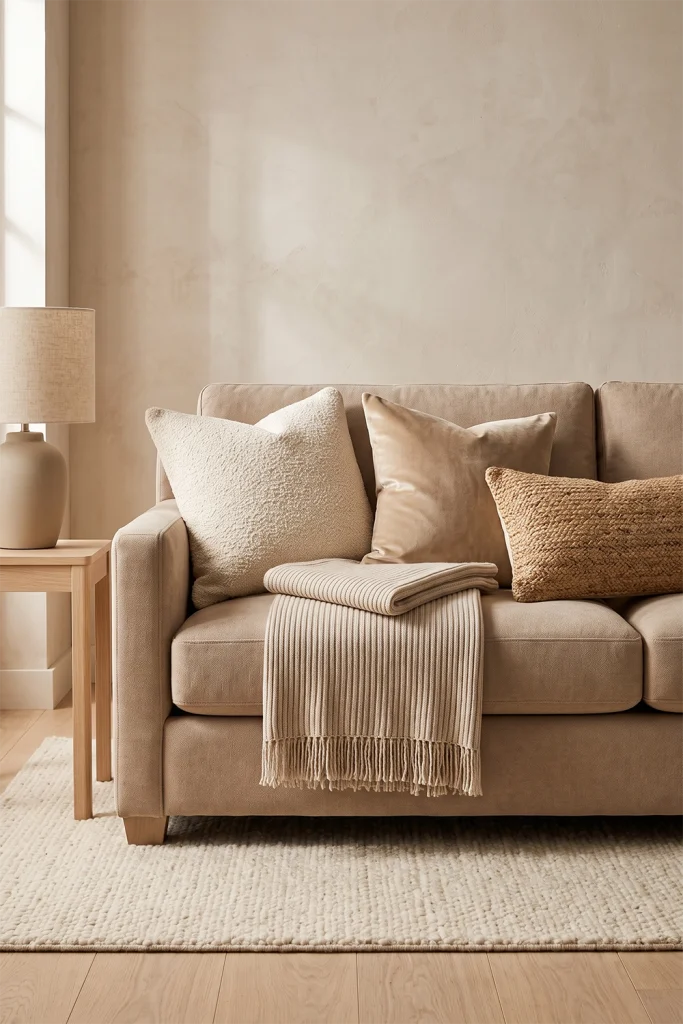
A single beige couch can carry an enormous amount of visual interest if you focus on texture instead of color. Combine a bouclé throw pillow, a ribbed knit blanket, a smooth velvet cushion, and a woven jute lumbar pillow, all in slightly different shades of beige and cream. The variation in texture catches light differently across the sofa, giving it dimension that a flat, matching pillow set never could. This approach is especially useful if you’re not ready to commit to a bold color scheme but still want your living room to feel layered, tactile, and considered rather than sparse.
9. Add Navy Blue for Timeless Contrast
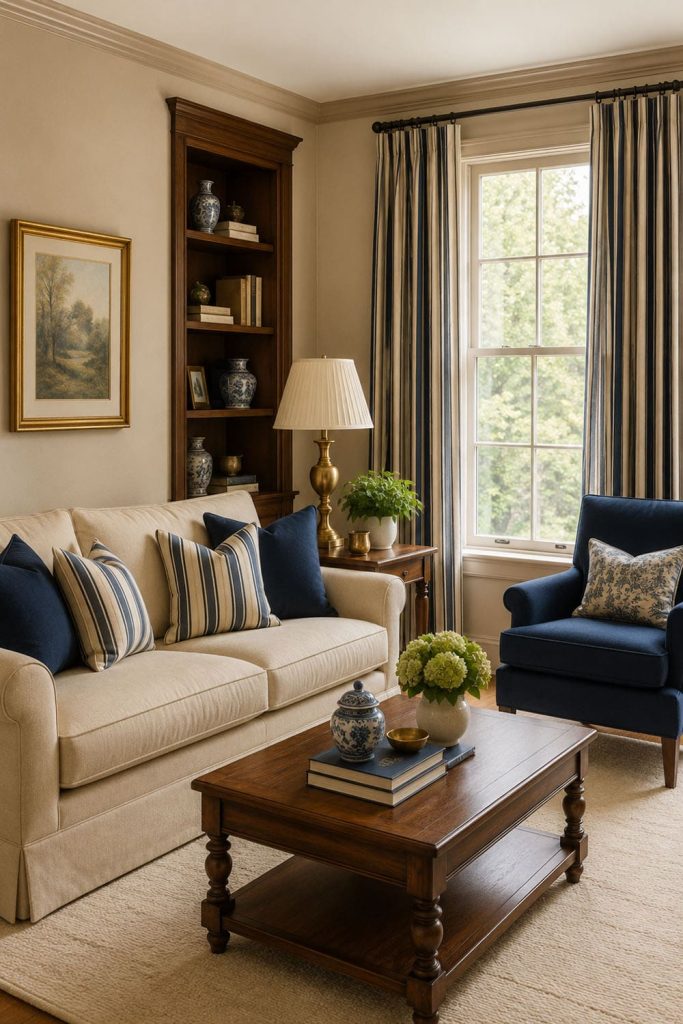
Navy and beige is a classic pairing for a reason — the deep, cool blue grounds the warmth of the couch and adds a sense of formality and structure. A navy accent chair, patterned throw pillows, or striped drapery can introduce the color without requiring a full repaint. This combination works well in traditional or transitional living rooms, especially those with wood trim or built-in shelving, since navy pairs as naturally with wood tones as beige does. For balance, keep navy to about a third of the room’s color presence, letting beige remain the dominant, calming base.
10. Incorporate Rattan and Natural Fiber Furniture
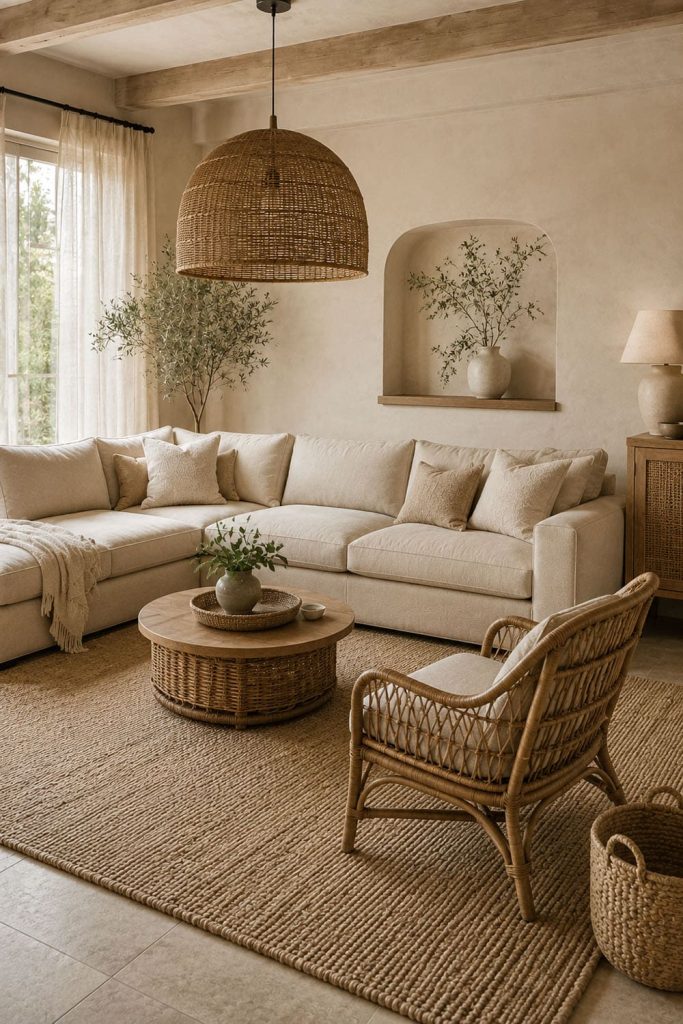
Rattan chairs, woven pendant lights, and seagrass baskets bring an organic, handcrafted quality to a beige living room that feels relaxed rather than staged. The open weave of rattan adds visual lightness, which is especially useful if your beige couch is a larger sectional that could otherwise feel heavy in the room. Pair with linen cushions and a jute or sisal rug to keep the natural-fiber theme consistent throughout. This look suits sunrooms, plant-filled living rooms, or homes with a bohemian or Mediterranean influence, where the woven textures feel like a natural extension of the architecture.
11. Build a Gallery Wall Behind the Sofa
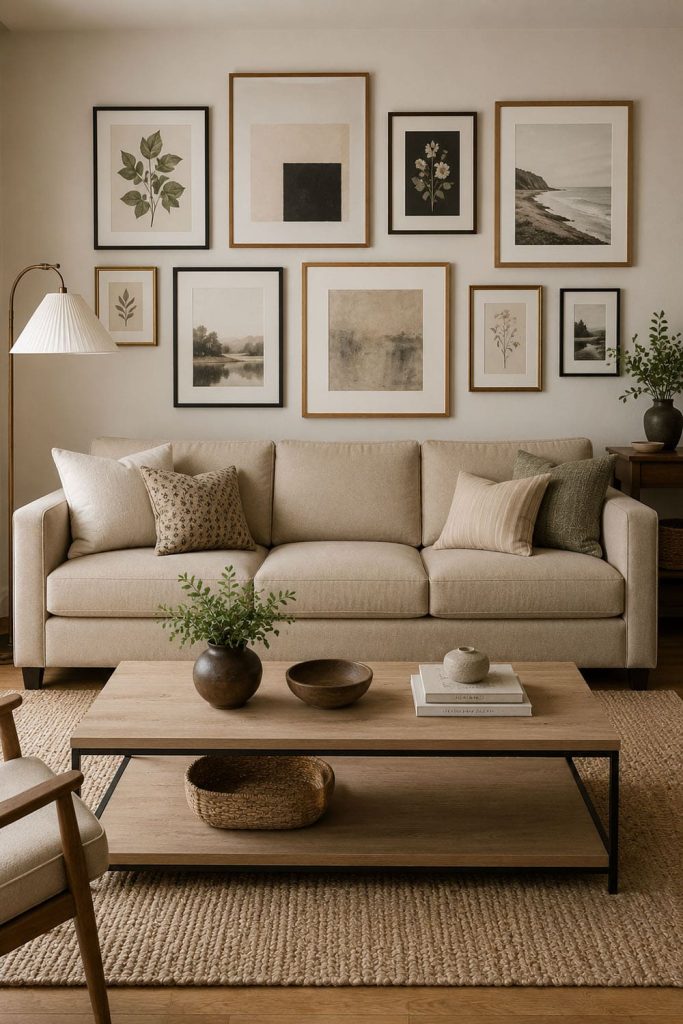
Because a beige couch reads as background rather than a focal point, it’s the perfect stage for a gallery wall above it. Mix frame sizes, finishes, and art styles — botanical prints, abstract pieces, family photos — for a collected-over-time feel, or keep everything in matching frames for a more curated, gallery-like effect. The neutral sofa won’t compete with the art’s colors, so you have more creative freedom than you would with a bolder couch. This idea is ideal for living rooms that need a strong visual anchor, especially those with high ceilings or an otherwise sparse accent wall.
12. Try a Scandinavian Minimalist Approach
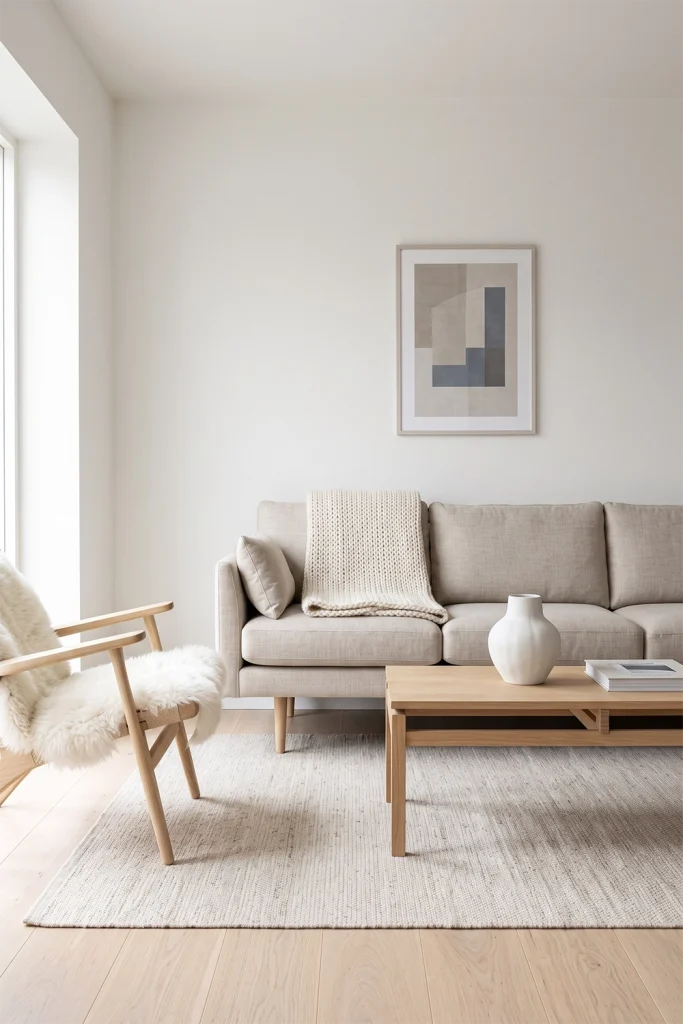
Scandinavian design and beige couches share the same philosophy: warmth through simplicity rather than ornamentation. Keep furniture low-profile and functional, choose a light wood coffee table, and limit accessories to just a few meaningful pieces, like a single sculptural vase or one piece of art. A chunky knit throw and a sheepskin accent add coziness, or “hygge,” without cluttering the space. Walls in soft white or pale gray let the beige couch feel like the warmest element in the room. This approach works particularly well in smaller apartments, where restraint makes the whole space feel calmer and larger.
13. Add Terracotta and Rust Accents
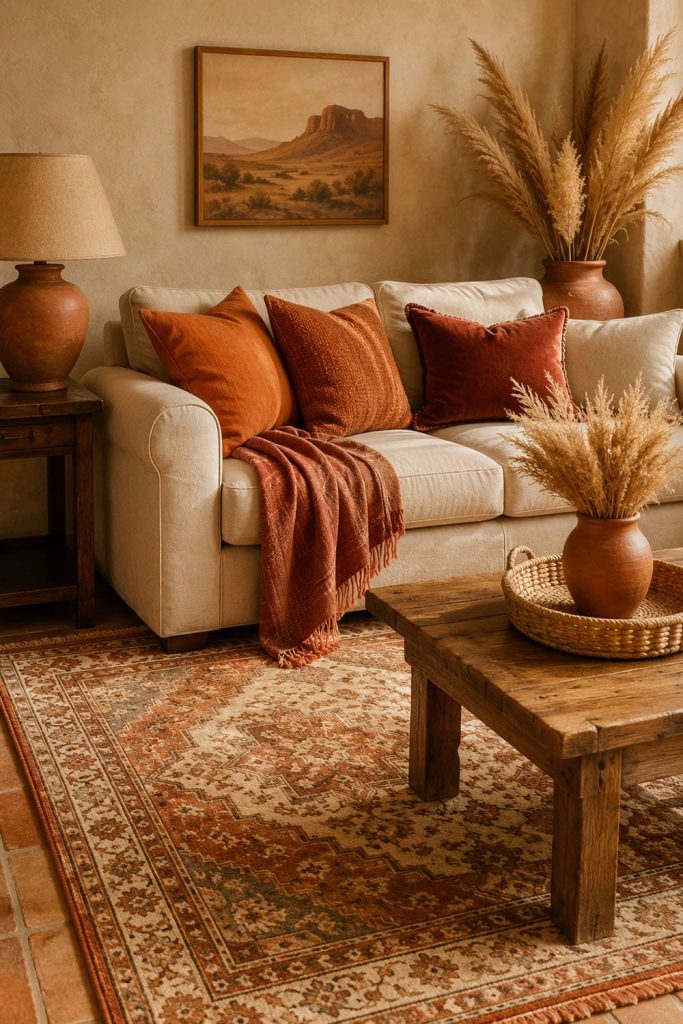
Terracotta and rust bring an earthy, sun-baked warmth that pairs beautifully with beige’s own sandy undertones, creating a palette that feels grounded and inviting rather than washed out. Introduce the color through a burnt-orange throw pillow, a rust-toned ceramic lamp base, or a patterned rug with warm red-brown accents. This combination leans slightly bohemian or Southwestern and pairs well with wood furniture, woven textures, and dried botanicals like pampas grass. Because terracotta is still a warm, muted tone, it never fights with the beige couch — it simply deepens the room’s overall warmth by a shade or two.
14. Make a Statement with Lighting
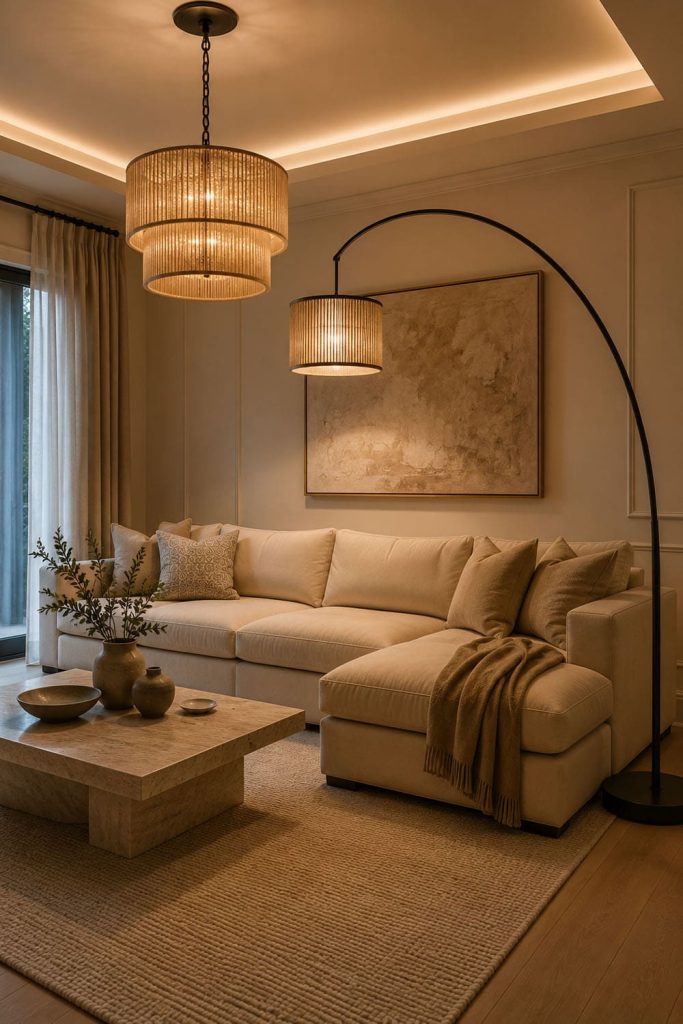
When your couch and color palette are intentionally understated, lighting becomes one of the easiest ways to add drama. An oversized arched floor lamp, a sculptural table lamp, or a striking pendant above the seating area draws the eye upward and gives the room a focal point beyond the furniture itself. Choose fixtures with an interesting silhouette or unexpected material, like fluted glass, woven rattan, or matte black metal, to contrast with the softness of the beige couch. Warm-toned bulbs will also flatter the sofa’s undertones in the evening, keeping the whole room feeling cozy after the sun goes down.
15. Mix Beige with Soft Pastels
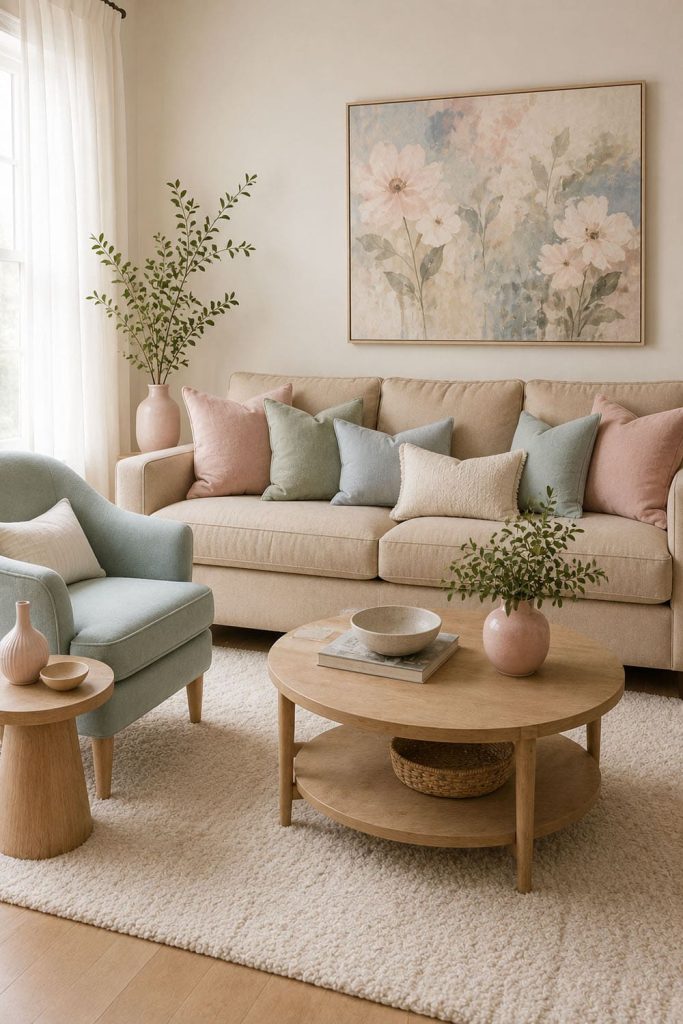
For a living room that feels gentle rather than stark, pair a beige couch with dusty pastels like blush pink, sage, or powder blue. These soft hues share beige’s low saturation, so the combination feels harmonious rather than competing, while still introducing color and personality. Use pastels in smaller doses — a pair of throw pillows, a painted accent chair, or floral artwork — so beige remains the grounding neutral. This palette suits living rooms that double as reading nooks or nurseries-adjacent spaces, where a soft, calming atmosphere matters as much as the room’s visual style.
How to Choose the Right Beige Couch Style for Your Living Room
Before you settle on a styling direction, it helps to think through a few practical factors:
Consider your room’s natural light. Beige can look warm and golden in a sun-filled room but slightly dull in a north-facing space with limited light. If your living room doesn’t get much natural light, look for a beige with warmer undertones (more tan or camel) rather than a cool, gray-leaning beige, and balance it with warm lighting.
Think about fabric as much as color. A bouclé or linen beige couch will read as more textured and casual, while a smooth performance-velvet beige couch feels more polished and formal. The fabric will influence which of the 15 directions above feels most natural for your space.
Decide how much contrast you want. If you love a bold, editorial look, lean into black accents or a statement rug. If you prefer serenity, stick with the monochromatic or Scandinavian-inspired approaches. There’s no wrong answer — just a matter of how much visual energy you want the room to carry.
Don’t skip the rug. Because beige couches are so light, an ill-fitting or overly pale rug can make a living room feel washed out. A rug with a bit more depth, pattern, or contrast will do a lot of heavy lifting in grounding the space.
Test fabric swatches at home. Beige shifts dramatically under different lighting conditions. Before committing to a couch or reupholstering an existing one, look at fabric samples in your living room at different times of day to make sure the undertone works with your walls, flooring, and existing furniture.
Final Thoughts
A beige couch is one of the most flexible investments you can make in a living room, precisely because it never dictates a single style. It can feel coastal and breezy, moody and modern, or soft and Scandinavian, all depending on what you build around it.
The 15 ideas above are meant as starting points rather than rules — mix and match elements from a few of them, like pairing warm wood tones with a bold rug, or layering textures alongside a gallery wall, until the room feels like yours. The beauty of a neutral base is that it gives you the freedom to change your mind as often as you like, without ever having to change the couch.


