

Best Christmas Cake Stands for a Holiday Dessert Table Display
A cake stand does more than hold a cake. It lifts the best dessert on the table to the height it deserves, clears space below for smaller treats, and gives the whole display its shape.
This guide covers the stand types that suit a holiday dessert table, from porcelain pedestals to stackable systems. Each idea names the material, the plate sizes to look for, and the handling that keeps each finish sound.
Dessert tables work as part of the wider meal, and our christmas dining table ideas show how the sweet course fits the full holiday setting.
Think about serving as well as display, since a stand that looks fine empty must still let a server slide under a slice. Sturdy feet, a level plate, and room to work matter at a full table.
Measure your cakes and your table before you shop, since plate size and stand height decide most of the result. The closing ideas cover height choice, storage, and a simple three stand formula.
This post contains affiliate links. If you buy through them, we may earn a small commission at no extra cost to you. See our Affiliate Disclosure.
1. Classic White Porcelain Pedestal Stands
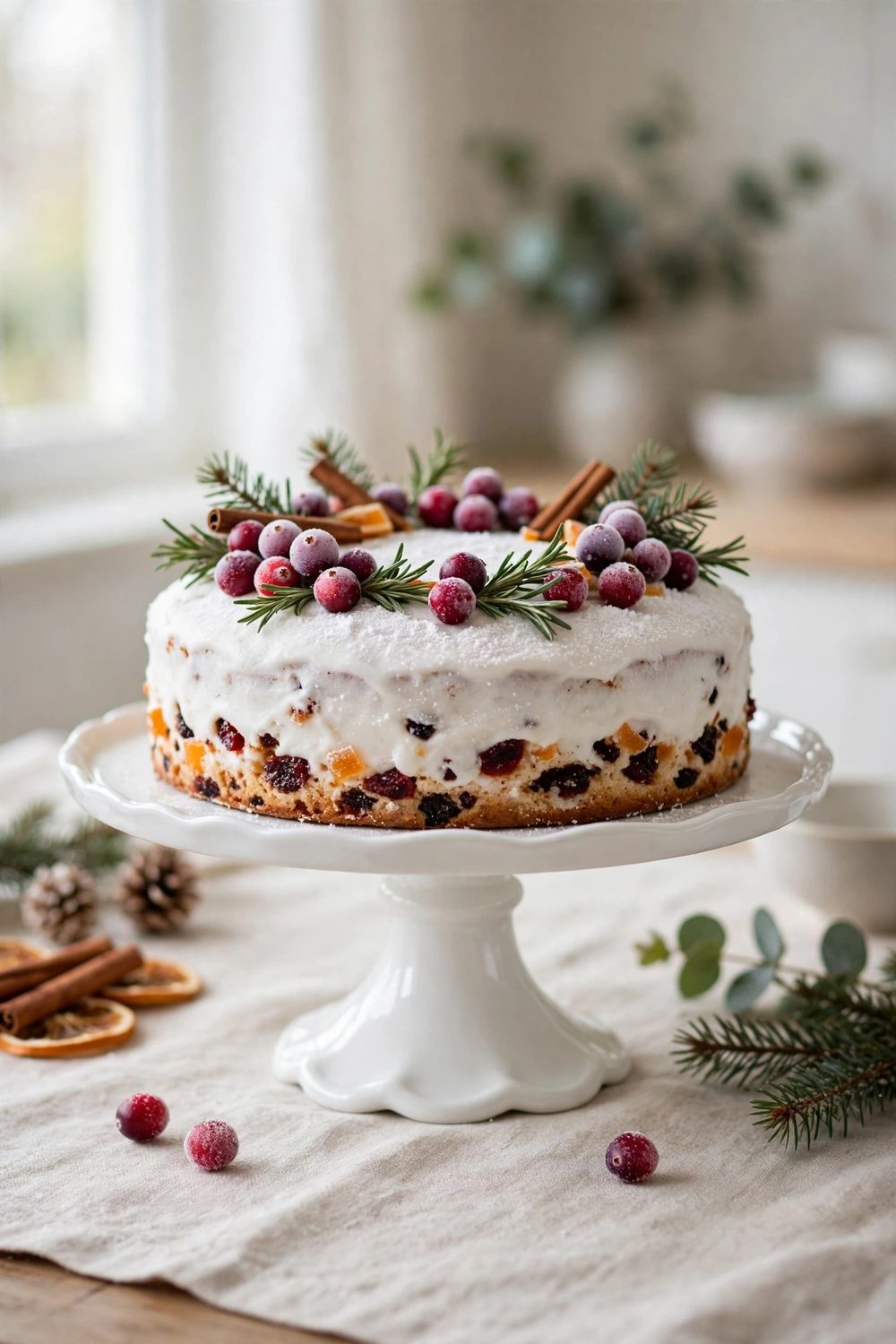
A white porcelain pedestal lifts the main cake above this dessert table, giving it the clear center spot. The plain white finish suits any icing color and every other piece on the table.
Porcelain pedestal stands pair a round plate, usually ten to twelve inches across, with a short stem and a wide foot. The plate size should exceed the cake by about an inch on each side.
Check the foot width before you buy, since a narrow foot under a tall, heavy cake can feel unsteady. A foot near half the plate width is a calm, stable proportion.
Porcelain wipes clean and resists staining from berry juices and chocolate. It is also the easiest finish to match when you add a second stand later.
2. Glass Cake Stands for a Light Bright Table
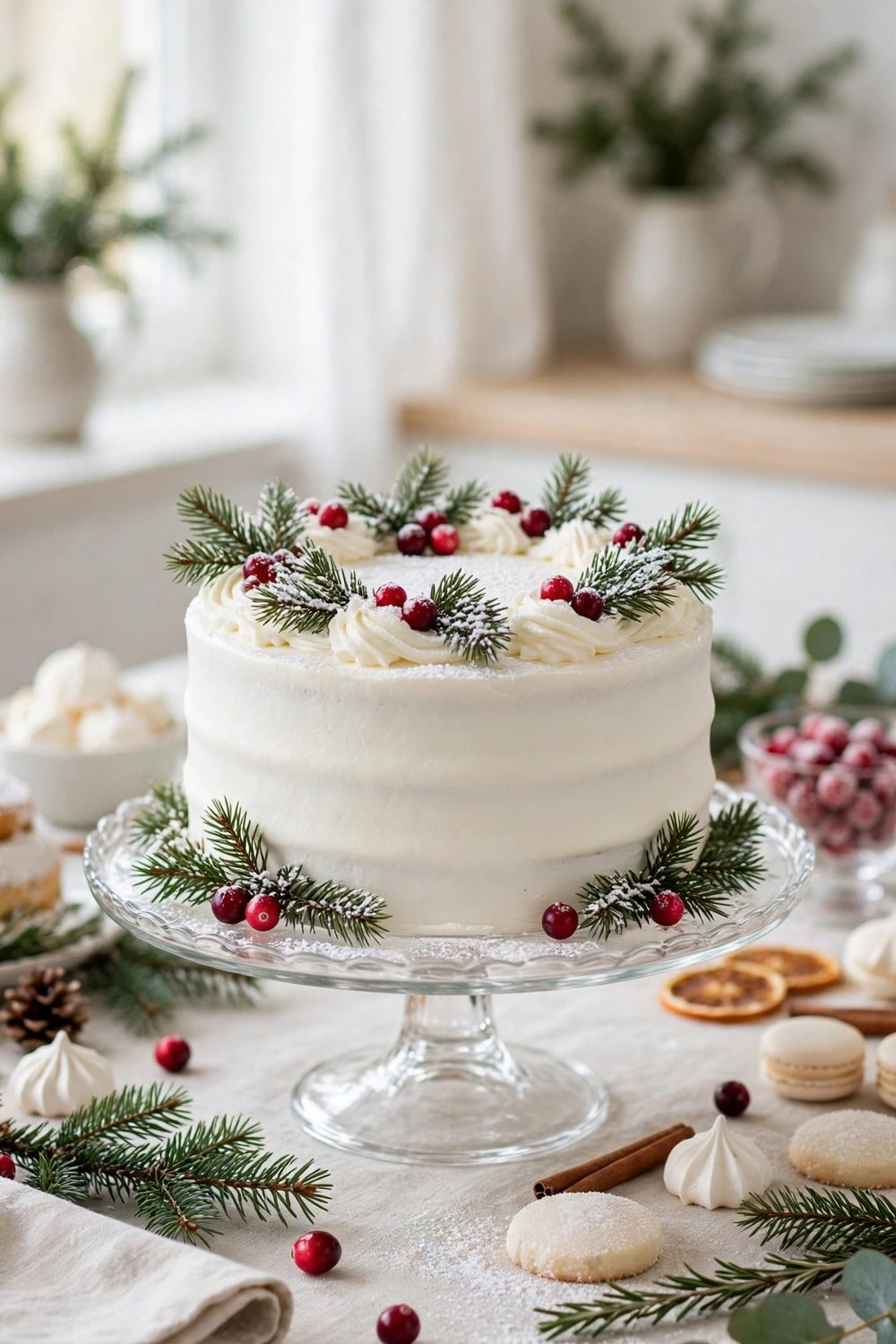
A clear glass stand carries the white frosted cake on this bright table, letting light pass through the stem. Glass keeps a crowded dessert table from feeling heavy.
Glass stands are pressed or blown glass, with smooth or cut style patterns. Pressed glass is thicker and sturdier for family use, while thin blown stems suit careful, occasional serving.
Glass shows every crumb and smear, so wipe the plate just before the cake goes on. A dry microfiber cloth clears the shine in seconds.
Store glass stands upright rather than stacked, since the stem of one can chip the plate of another. A soft cloth between stored pieces is cheap insurance.
3. Tiered Serving Stands for Small Treats
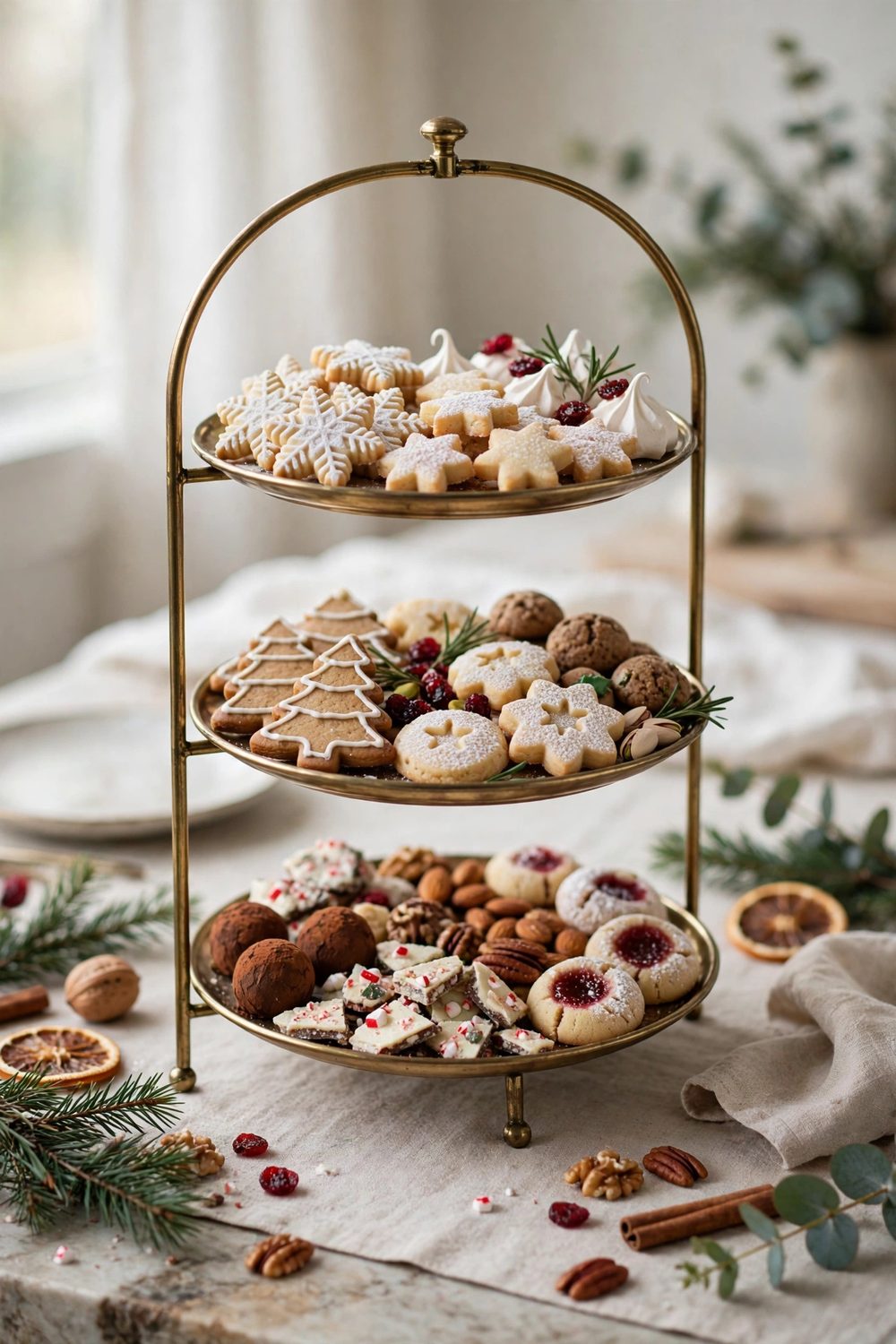
A three tier stand stacks cookies and small treats into the space of one plate on this table. Height is the easiest way to fit a full dessert spread on a small surface.
Tiered stands use two or three plates on a central metal or glass rod, with plates stepping down in size. They suit the spread planning in our thanksgiving dessert table ideas guide, where small items need order.
Load the largest and heaviest items on the bottom tier and the lightest at the top. A top heavy stand wobbles when guests serve from the lower plates.
Build the stand and load it in place rather than carrying it full. A loaded tiered stand is awkward and top heavy in the hands, even over a short distance.
4. Glass Domes to Cover and Present Cakes
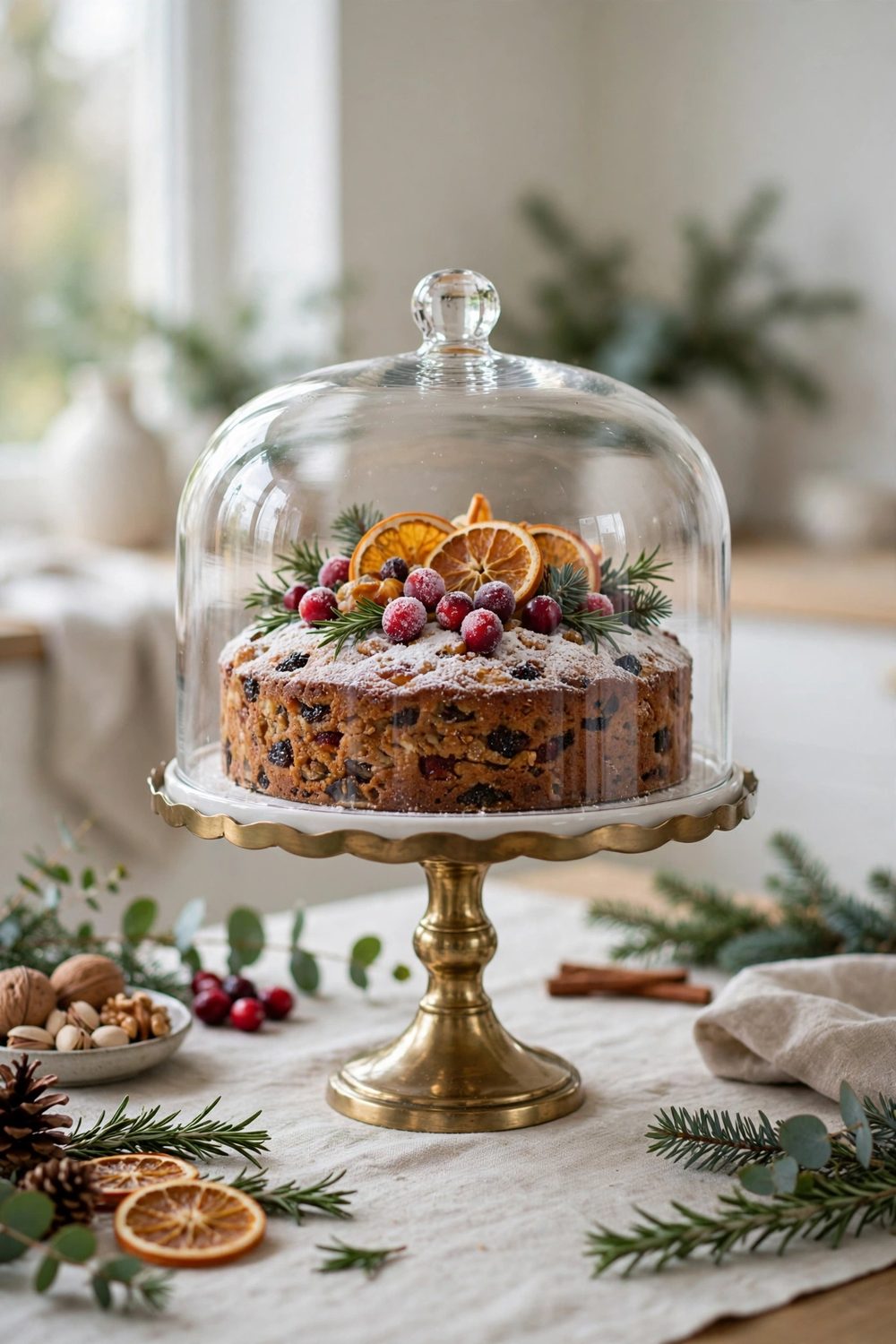
A glass dome covers the cake on this stand, keeping the icing fresh while the cake stays on show. The dome also guards the cake from passing sleeves and curious small fingers.
Domes are glass or clear acrylic, sold alone or paired with a stand, with a knob or handle on top. Match the dome diameter to the stand plate, leaving room for the cake and its decorations.
Acrylic domes weigh far less than glass and survive a knock to the floor. Glass gives the clearer view and the finer feel, and suits tables without small children.
Lift the dome straight up and set it on a folded cloth, never on its rim on a hard table. Rim chips are the most common dome damage and start exactly that way.
5. Gold Metal Stands for a Festive Glow
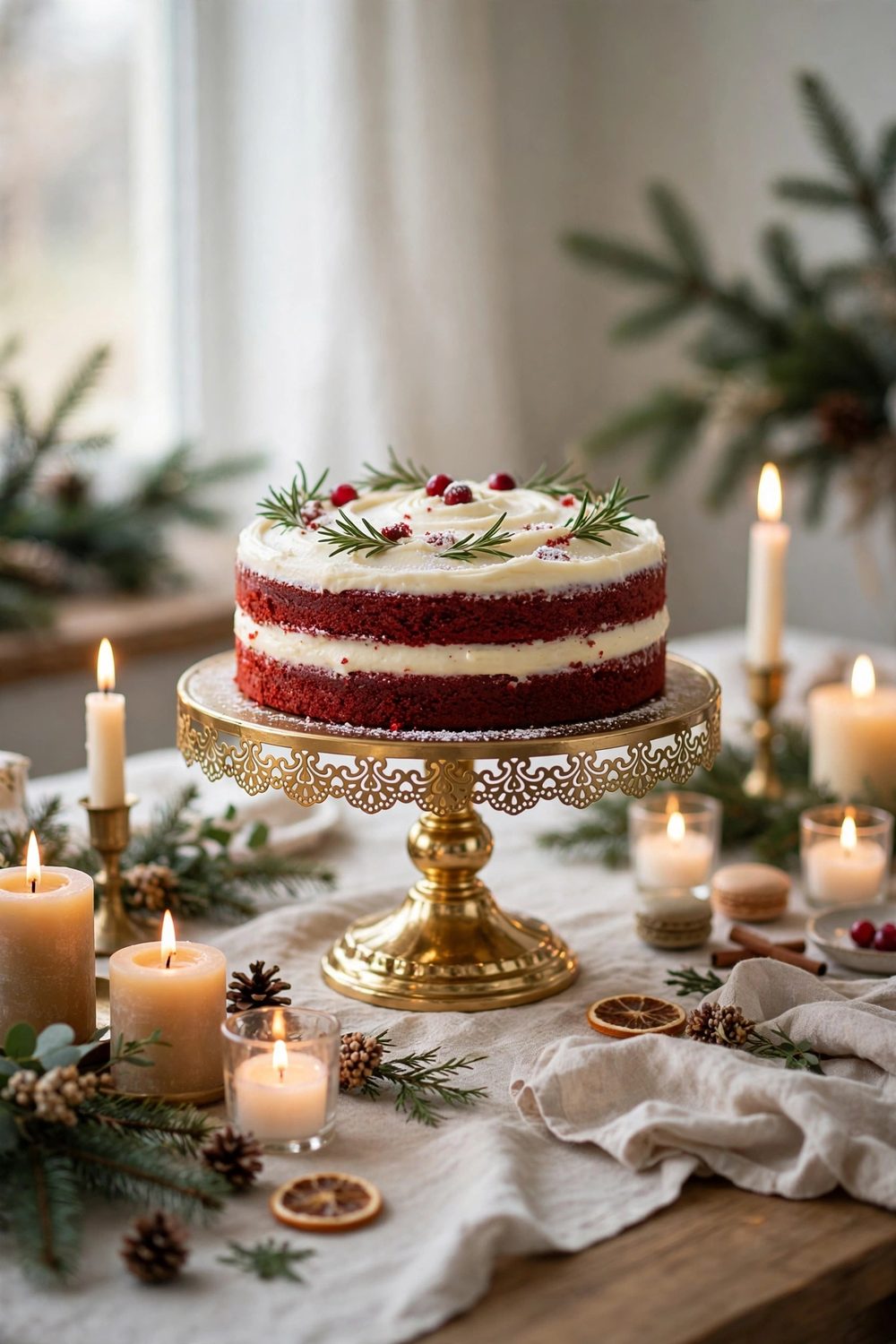
A gold metal stand warms this table, echoing the candlelight around the red velvet cake. Metallic stands carry the festive note when the cake itself is plainly iced.
Metal stands are steel, iron, or aluminum with plated or painted finishes. They pair well with the candlelit settings in our christmas dining room ideas, where warm metal already runs through the room.
Check whether the finish is food safe on the plate surface, or plan to use a parchment round under the cake. A paper round also makes sliding the cake off far easier.
Wipe plated finishes dry after washing, since standing water can spot them. Most metal stands are hand wash pieces rather than dishwasher safe.
6. Wooden Pedestal Stands for Rustic Tables
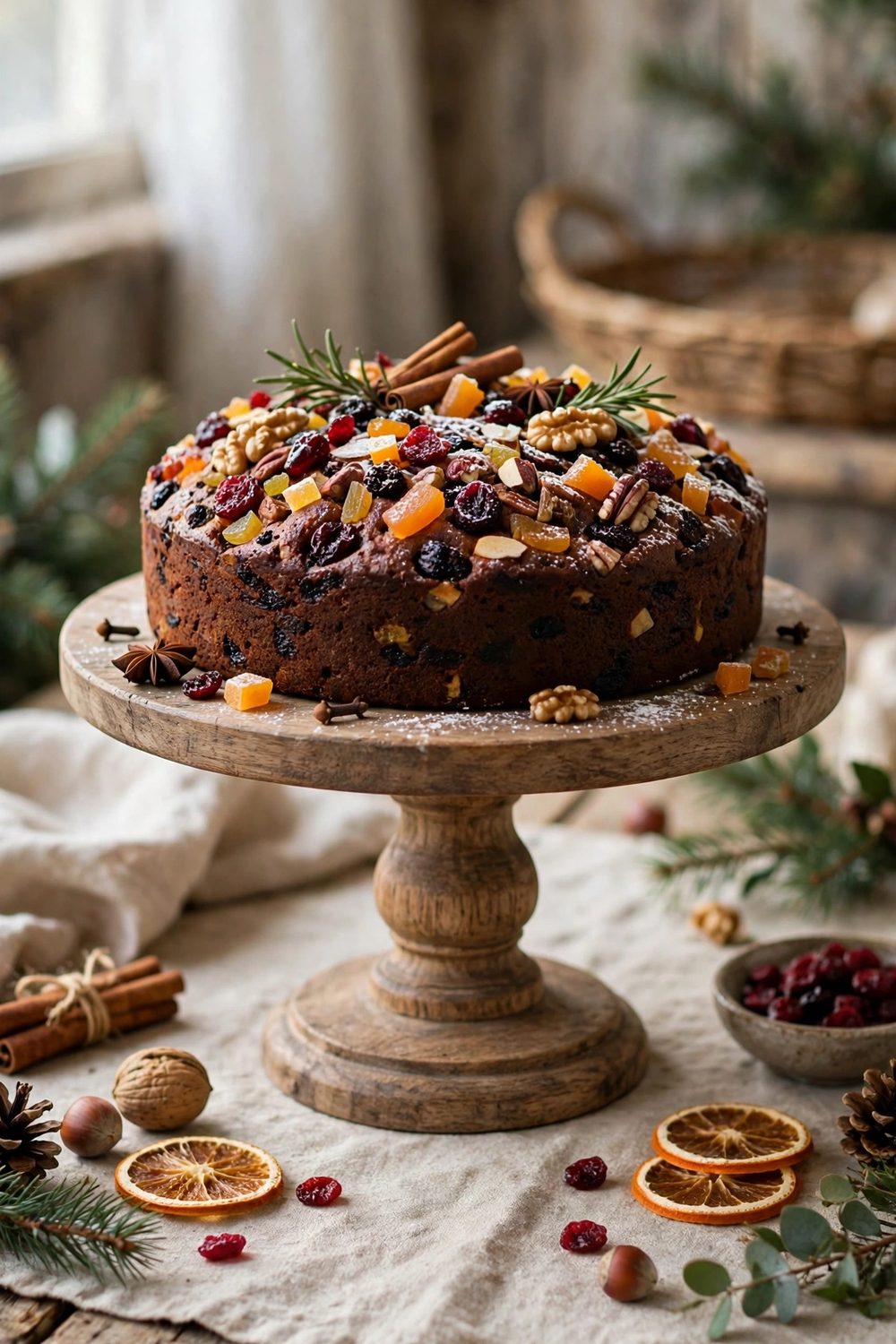
A turned wooden pedestal suits this rustic table, its grain warming the fruit cake it carries. Wood pairs kindly with burlap runners, pinecones, and plain stoneware plates.
Wooden stands are turned or built from acacia, mango wood, or similar hardwoods, often with a food safe oil finish. Diameters near ten to twelve inches cover most home cakes.
Wood and water are poor partners, so wipe the stand with a damp cloth rather than soaking it. Refresh the oil finish when the surface starts to look dry or pale.
Set a parchment round or a thin doily under the cake to catch grease marks. Fat from icing can stain pale wood in a way that never fully lifts.
7. Marble Cake Stands for a Cool Firm Surface
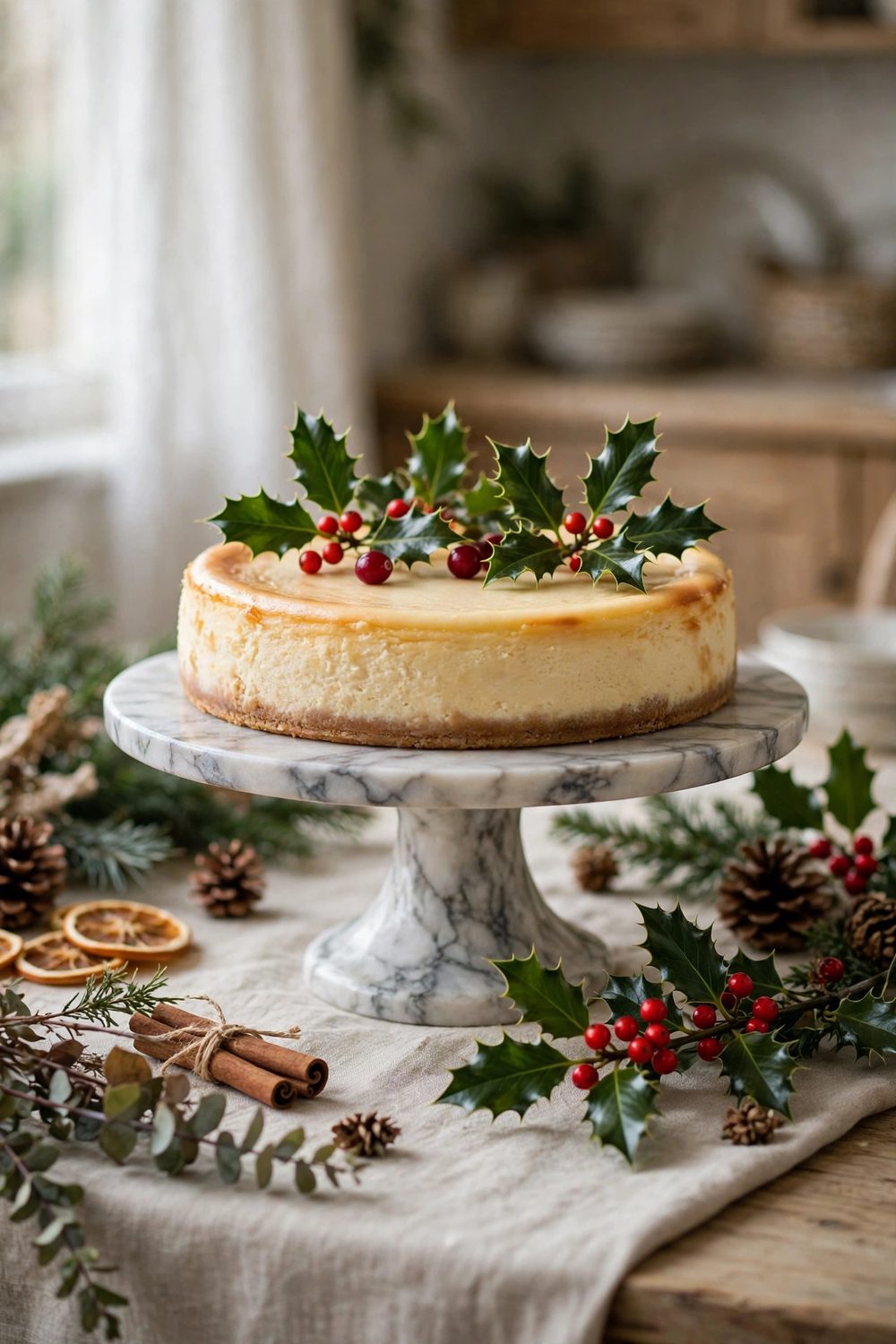
A marble stand keeps this cheesecake on a cool, firm surface through a long evening. The stone weight also makes the stand the steadiest piece on the whole table.
Marble stands are cut stone, sometimes with a metal stem, and they are heavy by nature. A twelve inch marble plate can weigh more than the cake it carries, which is the point and the drawback.
Marble stains from berry and turmeric colors if spills sit, so wipe marks at once. The cool surface is kind to buttercream, which holds its edges longer on stone.
Carry a marble stand with two hands from below, and store it where it will never need to be lifted down from a high shelf. Weight plus height is where accidents start.
8. Slate and Stone Stands for Modern Tables
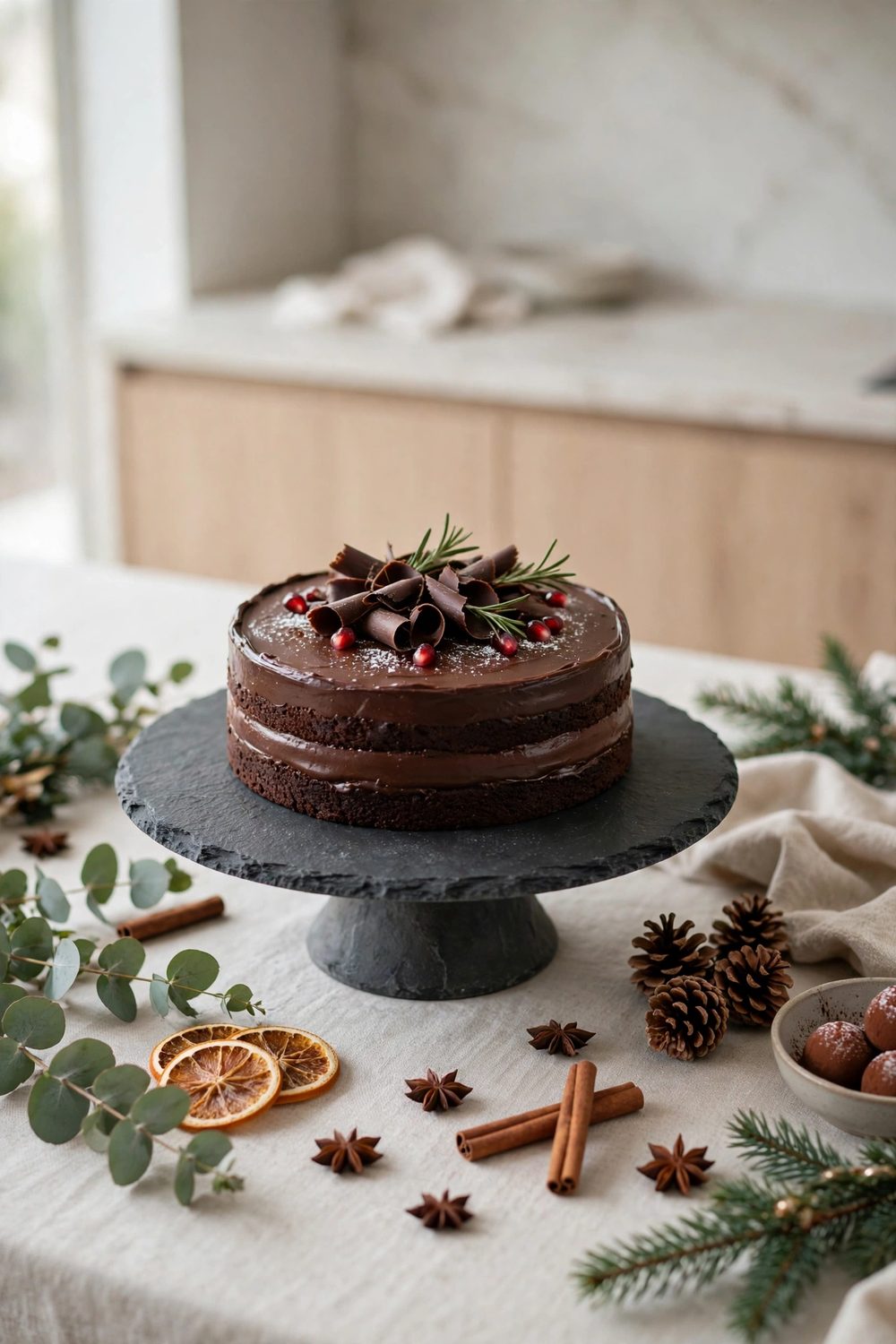
A flat slate stand gives this chocolate cake a dark, modern base. The matte stone makes pale icing and gold decorations read clearly against it.
Slate stands are cut natural slate, flat or on small feet, with rough or smoothed edges. Food safe sealing varies, so a parchment round is a sound habit on unsealed stone.
Slate edges can be sharp on some cuts, so run a hand along the rim before the first use. A few passes with fine stone paper calm any rough spot.
Chalk can write the cake name directly on a slate rim, which doubles as a label. The writing wipes off with a damp cloth after the meal.
9. Footed Glass Compotes for Trifles and Fruit
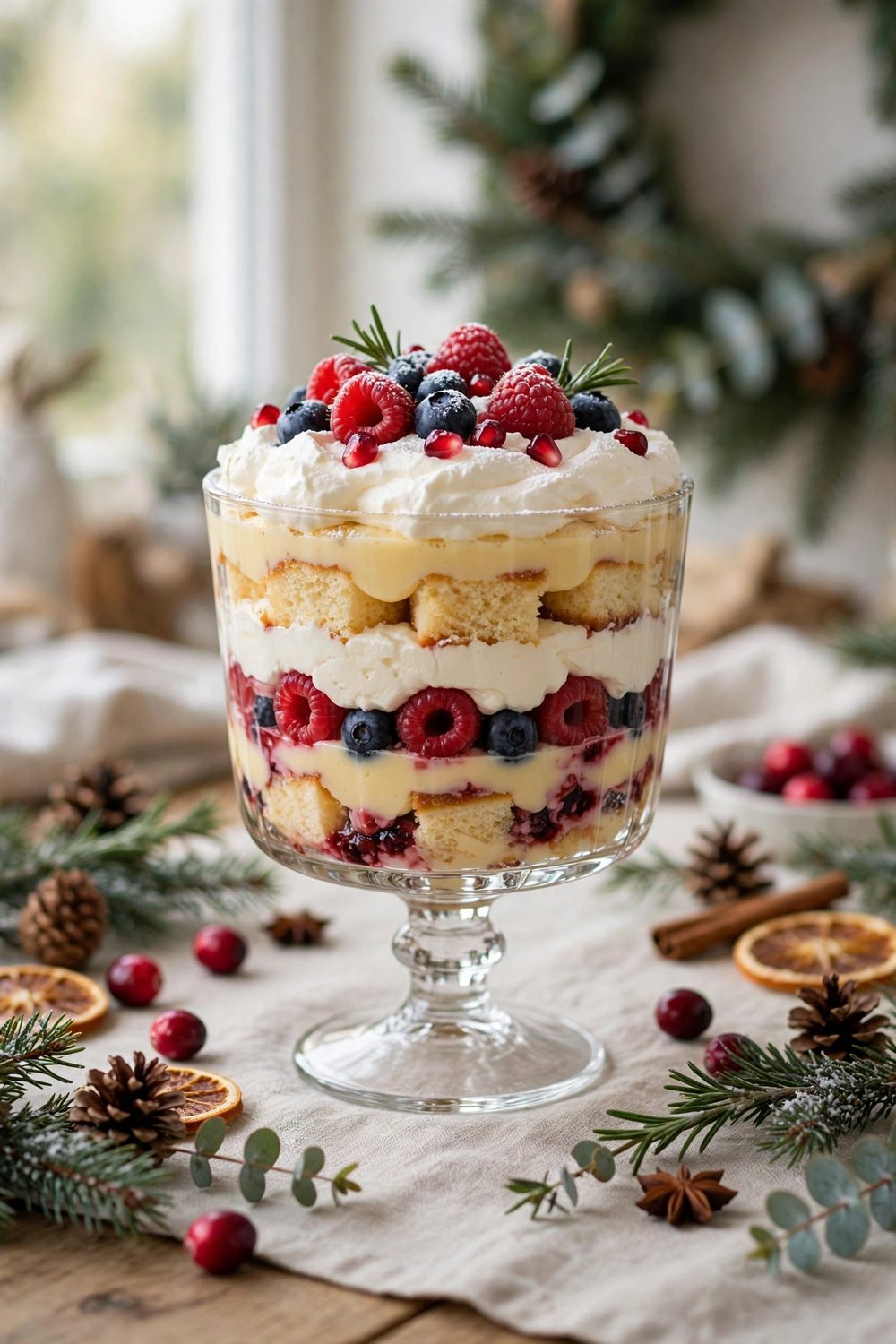
A footed glass compote shows the layers of this trifle from the side, which is the whole point of the dish. Compotes serve any dessert that looks better than it slices.
Compotes are bowls on a stem, in glass or crystal style acrylic, with diameters around eight to ten inches. A wide bowl shows layers better than a deep narrow one.
Chill the compote before a cream based dessert goes in, since cold glass helps the layers hold. Warm glass and soft cream are a poor pairing at a long party.
Compotes also serve sugared fruit, nuts, and wrapped sweets between courses. Our best christmas coffee table books and trays guide shows similar footed pieces used as table styling.
10. Small Stands for Individual Desserts
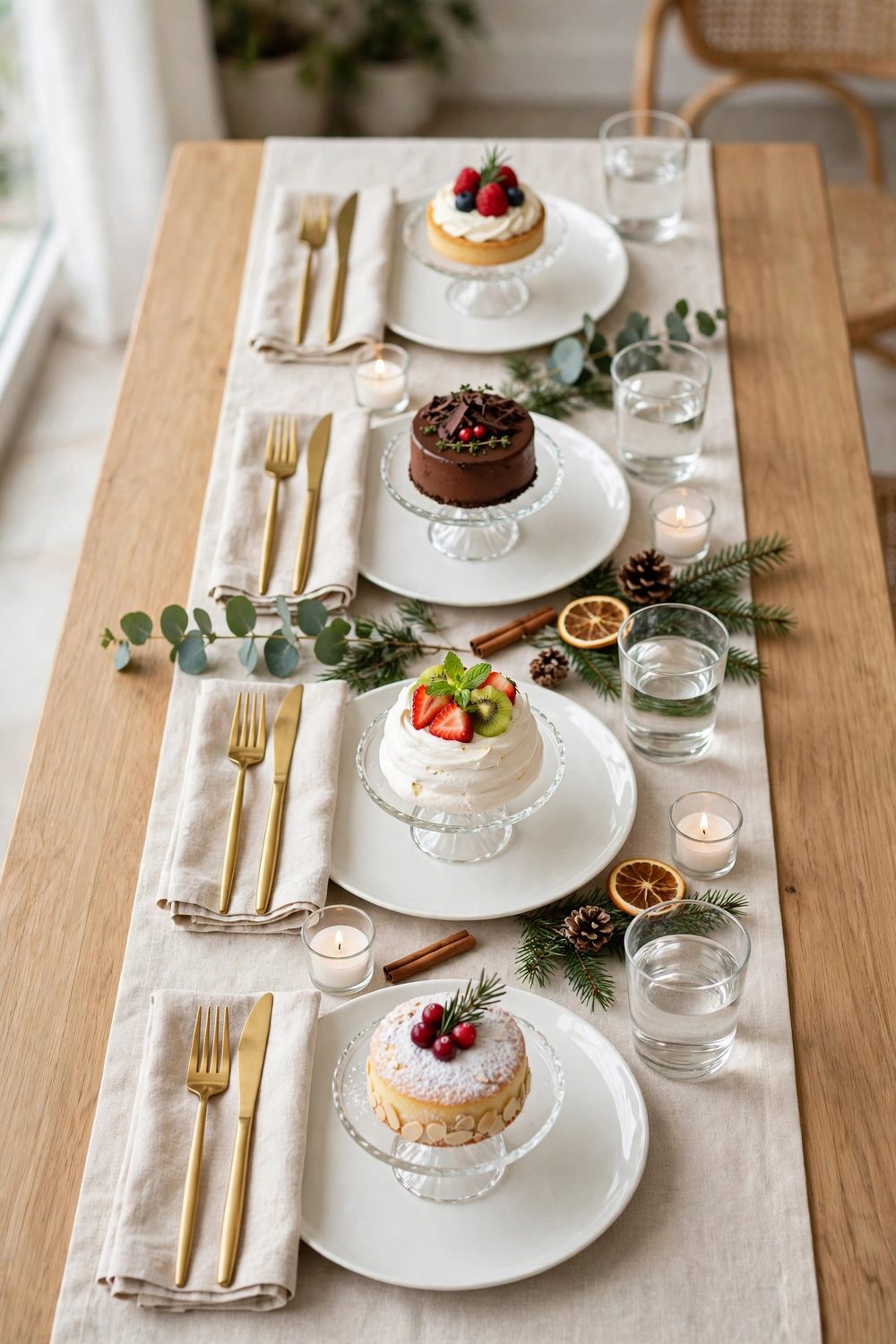
Small stands at each place setting give every guest a dessert on its own pedestal. The serve feels generous and saves the passing of one large cake around a full table.
Individual stands run about four to five inches across, in glass, ceramic, or metal. They hold a mini cake, a tart, or a stacked cookie serve for one.
Count the full table before you buy, including two spares for drops and late guests. A short count shows at once when every other seat has its stand.
Small stands store in a fraction of the space of a large one, nested in a box. For small kitchens, that storage point can decide the whole dessert plan.
11. Adjustable and Stackable Stand Systems
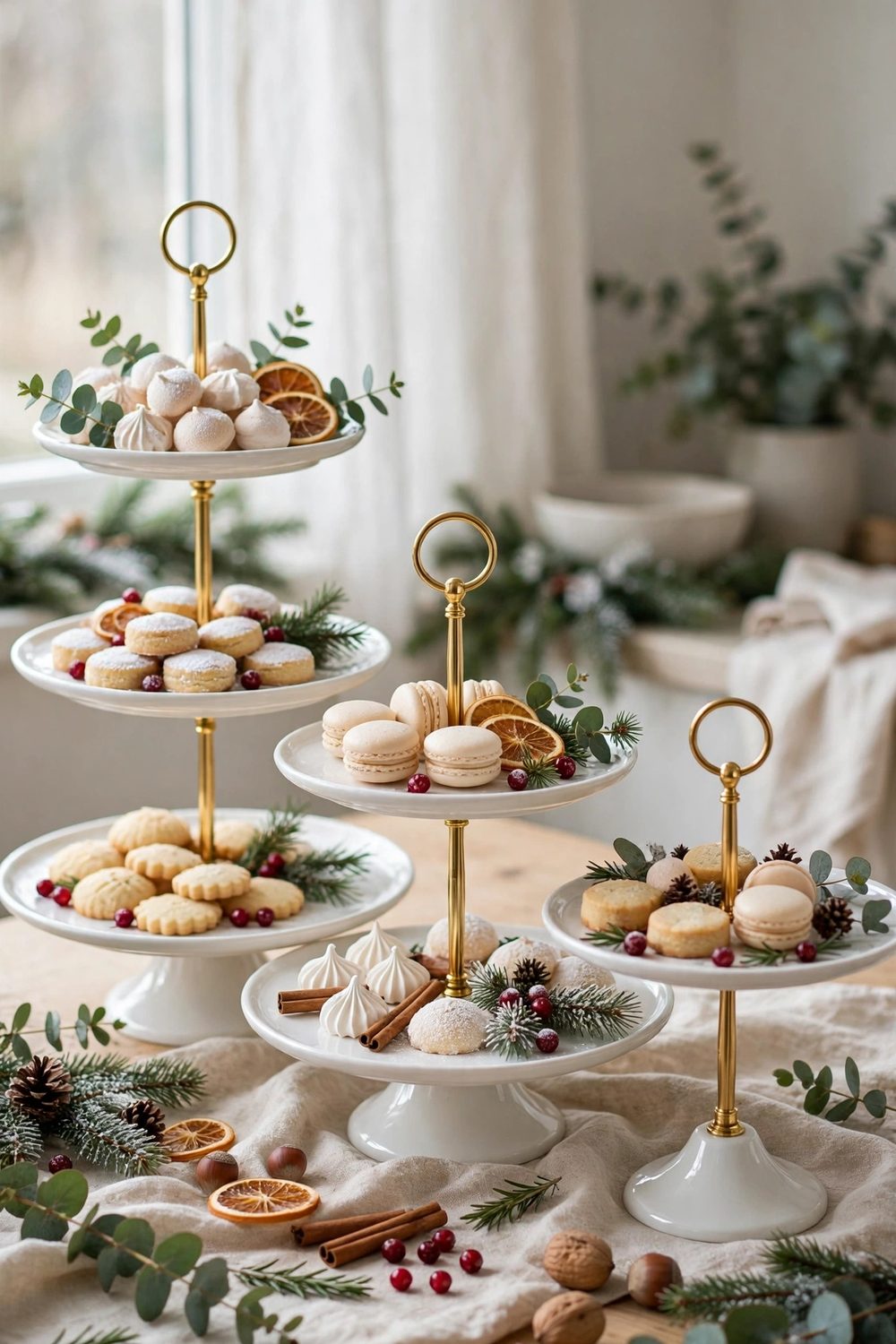
Stackable plates build stands at mixed heights across this table, tall at the back and low at the front. A stepped skyline lets guests see every dessert at once.
Stackable systems use plates with a center hole and rods or stacking feet, in glass, acrylic, or melamine. Acrylic systems are the lightest and the kindest to store in small spaces.
Plan the heights before the food goes on, tall pieces behind and low pieces in front. The same stepped logic runs through our thanksgiving dessert table ideas for a long farmhouse table.
Test the tallest stack empty, with a gentle nudge, before it is loaded. A stack that wobbles empty will not settle down under the weight of a cake.
12. Cake Stand and Server Sets
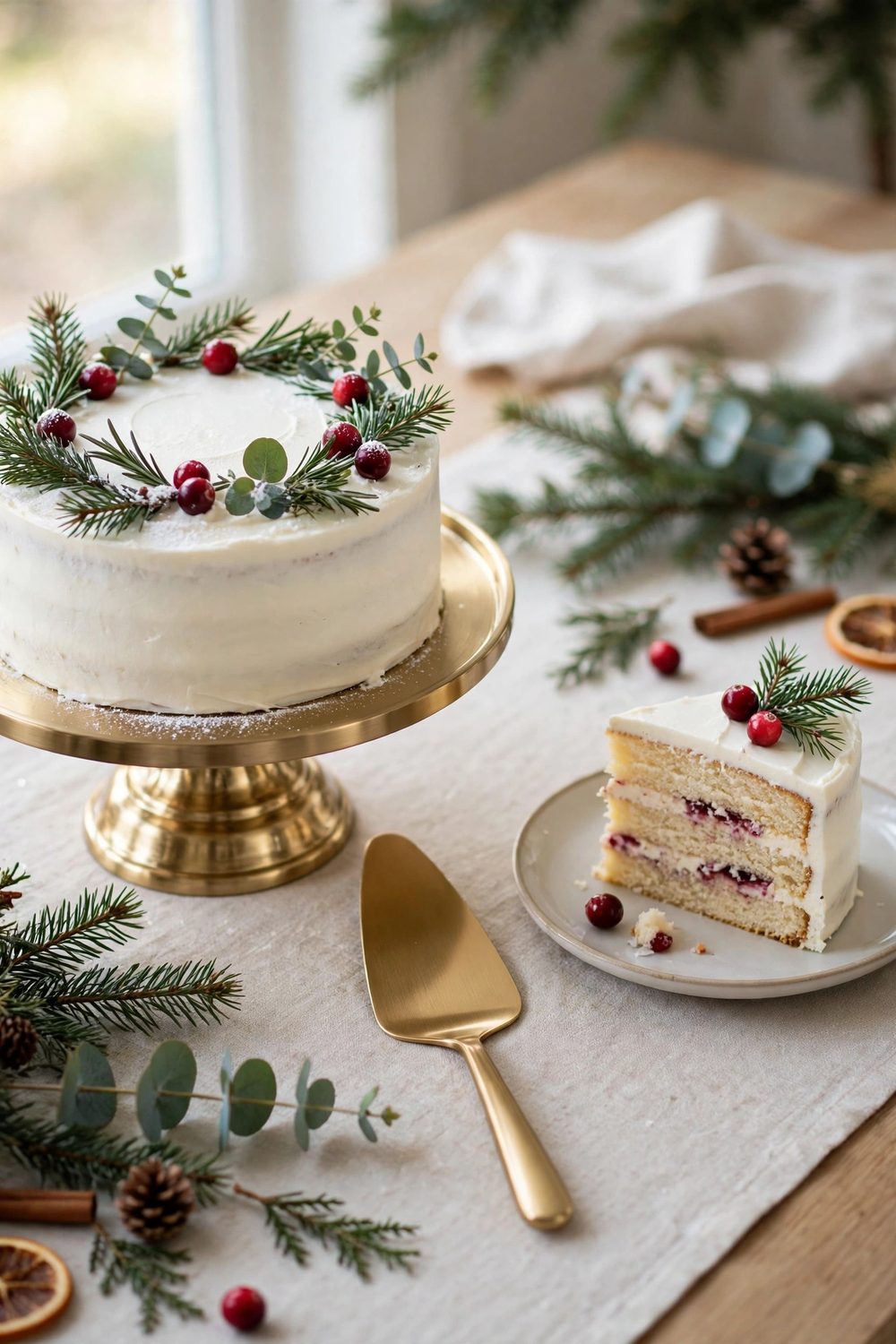
A matched server rests beside the sliced cake on this stand, its handle echoing the stand finish. A set removes the small mismatch that shows in photos of the table.
Sets pair a stand with a flat server or a server and knife, in metal, glass handled, or ceramic forms. The flat server matters more than the knife, since it does the lifting.
Slide the server fully under each slice before lifting, supporting the tip. Most dropped slices fail at the tip, where a short lift leaves it hanging.
Wash servers by hand when the handle is glass or wood, even if the stand itself is dishwasher safe. Mixed material sets rarely share one care rule.
13. Choosing the Right Height for Your Table
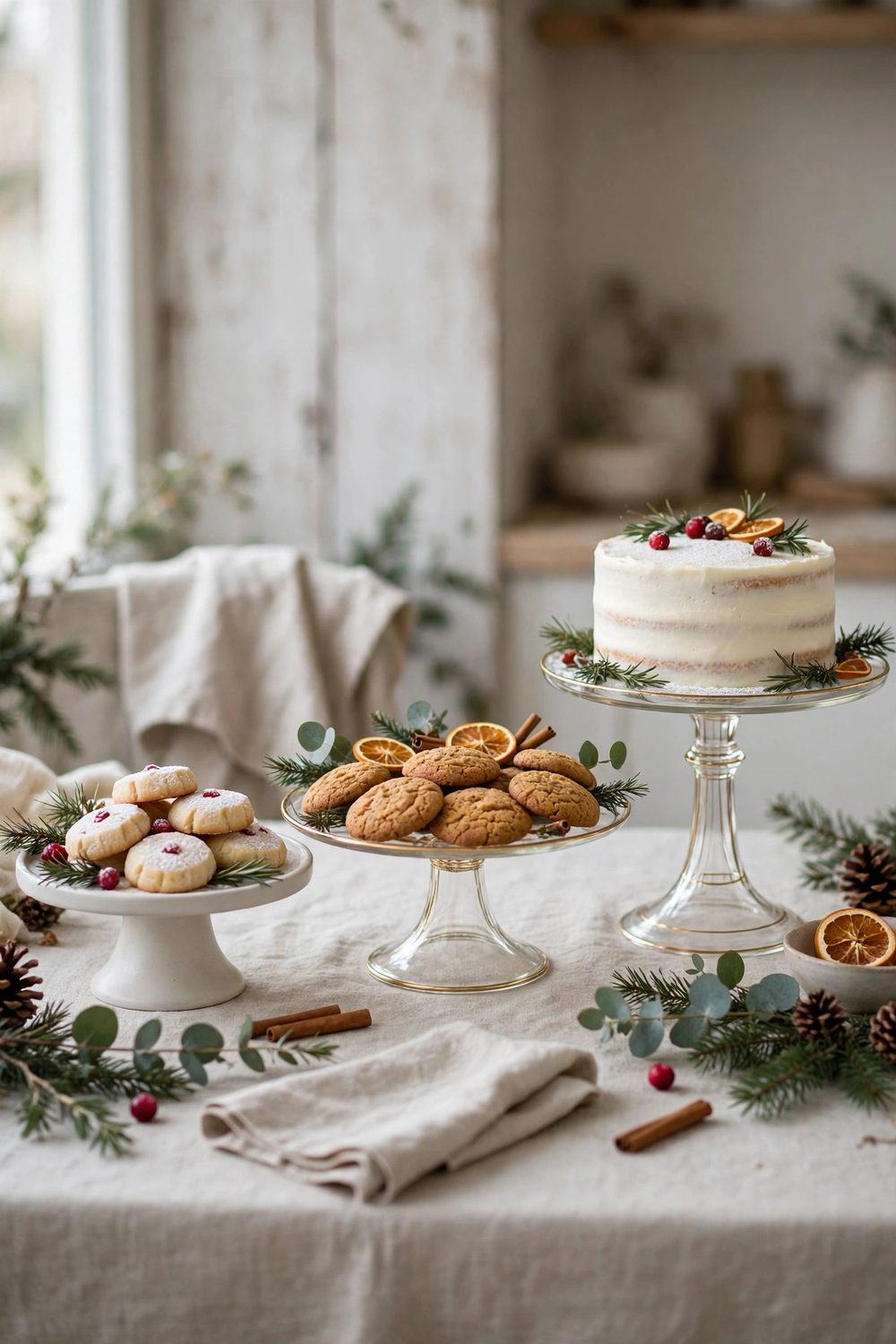
Low, medium, and tall stands sit side by side here, and the right height depends on what shares the table. Tall stands shine on clear tables and crowd a table already full of candles and greens.
Stand heights run from about four inches for low pedestals to ten inches or more for tall stems. Measure from the table to the plate, then add the cake height before you judge the fit.
Keep the tallest piece below the eye line of seated guests where you can. A cake that blocks the view across the table will be moved, and moving a loaded stand is risky.
Mix one tall feature stand with low plates for the rest. A single height change gives the display its shape without turning serving into a reach.
14. Care Storage and Plate Size Checks
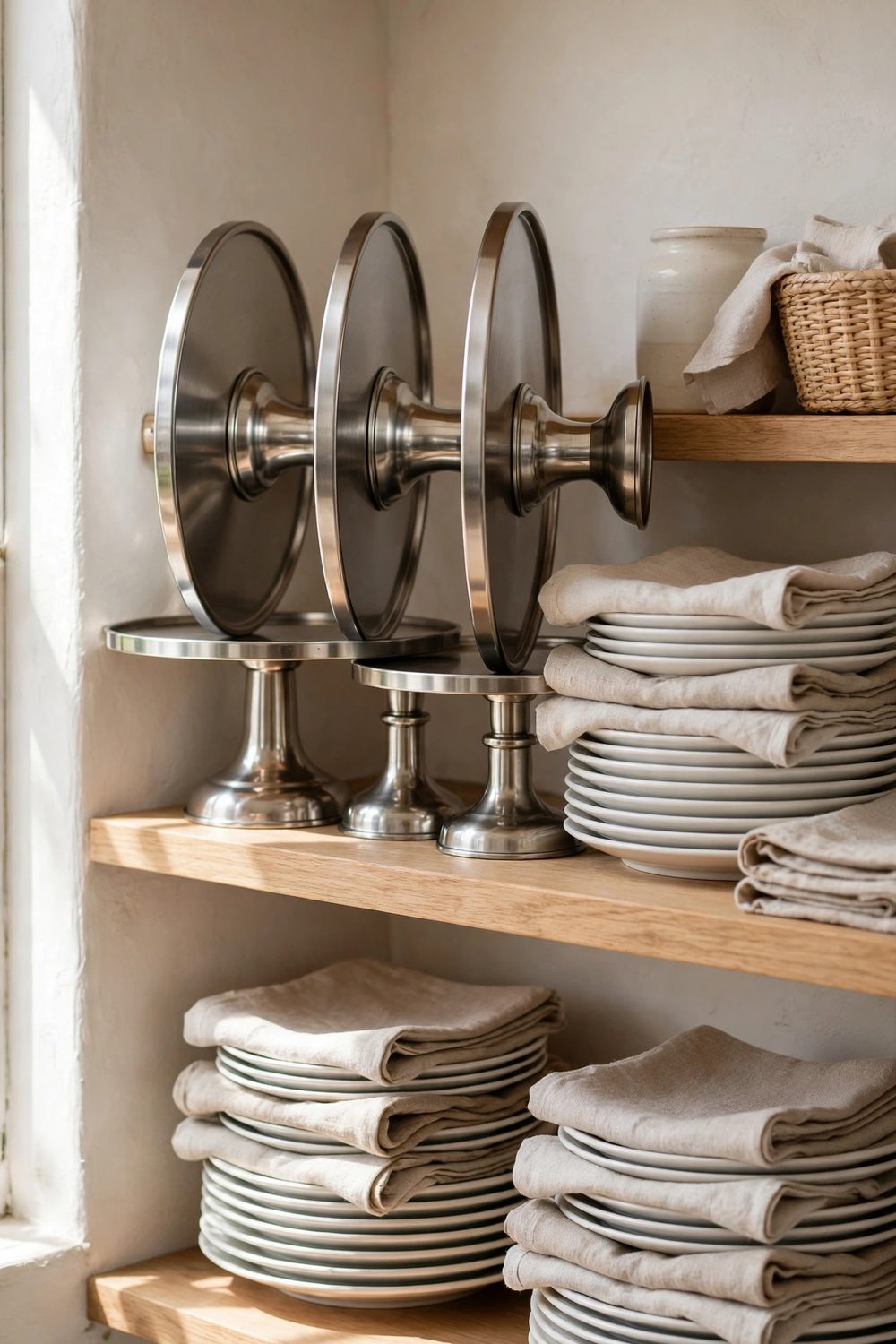
Stands store upright on this shelf with cloths between the plates, ready for the next gathering. Most stand damage happens in storage, where stems chip plates and rims knock together.
Measure your cakes before you shop, not after. A stand plate should clear the cake by about an inch all round, and a dome needs another inch above the tallest decoration.
Keep domes with their stands rather than storing them apart across two cupboards. A dome without its stand at party time is just one more thing to hunt for.
Note the stand sizes on a card kept with them. Next year planning then starts from facts, and a new cake size can be matched in seconds.
15. A Dessert Table Formula That Always Works
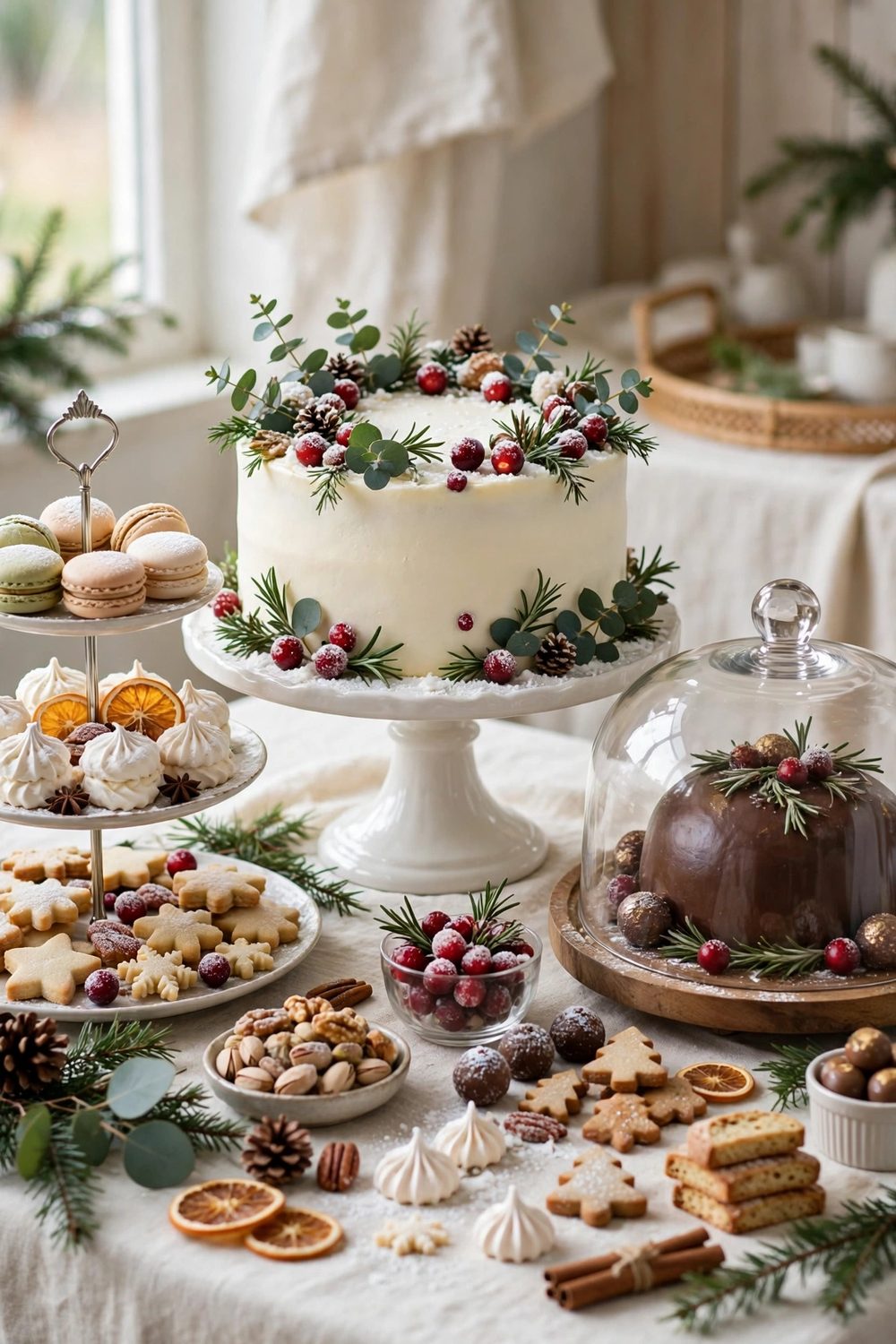
This finished table uses one tall pedestal for the main cake, one tiered stand for small treats, and one domed cake for later. Three heights, three jobs, and nothing crowded.
A steady formula is one feature stand, one tiered stand, and low plates or a compote for the rest. The mix scales down to a sideboard or up to a full separate dessert table.
Set the stands out empty first and walk around the table before any food goes on. Gaps and clashes are easy to fix while the plates are still clean and light.
Photograph the finished table for next year. The picture records the heights, the order, and the pieces you own, which makes the next holiday setup far faster.
A good dessert table needs height, and height is what stands are for. One feature pedestal, one tiered stand, and a dome or compote will cover nearly every holiday spread with room to spare.
Buy by plate size and material care, store the pieces upright and together, and add new stands only when a real gap shows at a real table. One stand bought for a known job beats three bought on hope.
The same stands will carry your table for many seasons of gatherings, and the display will look planned rather than gathered by chance.


