

15 Thanksgiving Dessert Table Ideas for a Long Farmhouse Table
A long farmhouse table can hold dinner for twelve and still have room at the far end going spare. Most hosts fill that end with the turkey and sit dessert on a side counter, split off from the meal. The split is the problem.
Keep dessert on the table instead. Clear the dinner end, keep the seats, and let the pies travel the length of the wood while everyone stays where they are. Coffee reaches the far seats, and nobody queues in the kitchen doorway.
These thanksgiving dessert table ideas for a long farmhouse table use the full stretch of the table, its benches, its grain, and its room for two serving sides at once. The wood itself does half the decorating.
The plan below works in stations, so a long table never becomes a long wait. Set the stands and runner before dinner, and dessert is a clear and a carry away. Guests serve themselves while you sit down at last.
This post contains affiliate links. If you buy through them, we may earn a small commission at no extra cost to you. See our Affiliate Disclosure.
1. Run a Long Linen Runner Down the Center Spine
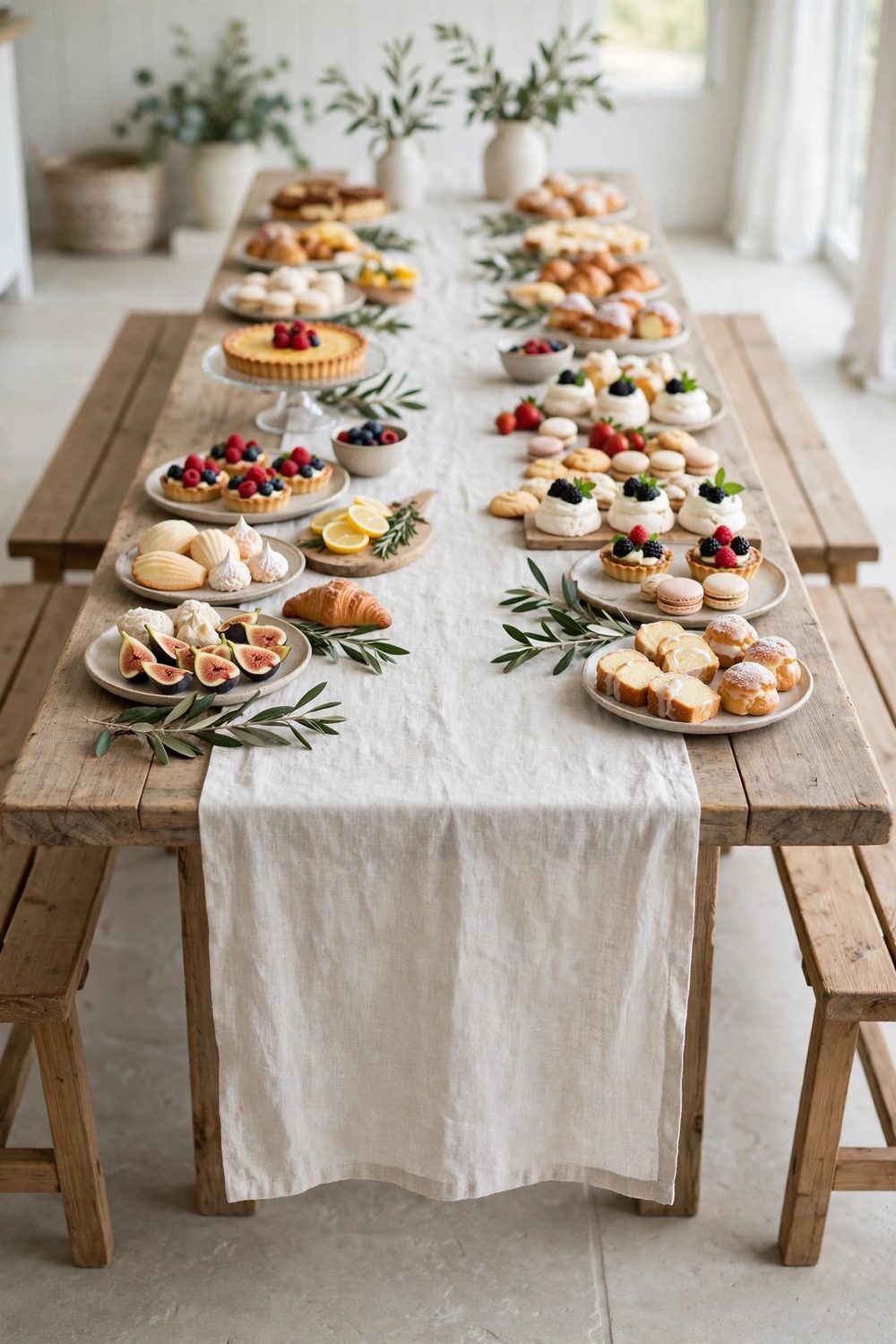
A farmhouse table is built around its center line. A long linen runner down the spine gives desserts a track to sit on and keeps the wide boards of the table in view.
Choose a natural cream or oat linen and let it drop a few inches over both ends. The drop softens the long edges and tells guests the table is dressed, end to end.
Keep the runner a third of the table width or less. Dessert plates, serving boards, and elbows all need the bare wood on both sides of it.
Iron the runner flat and lay it before dinner service. It can wait under the dinner centerpiece all meal, then step forward as the base for dessert.
2. Repeat the Desserts in Two Matching Stations
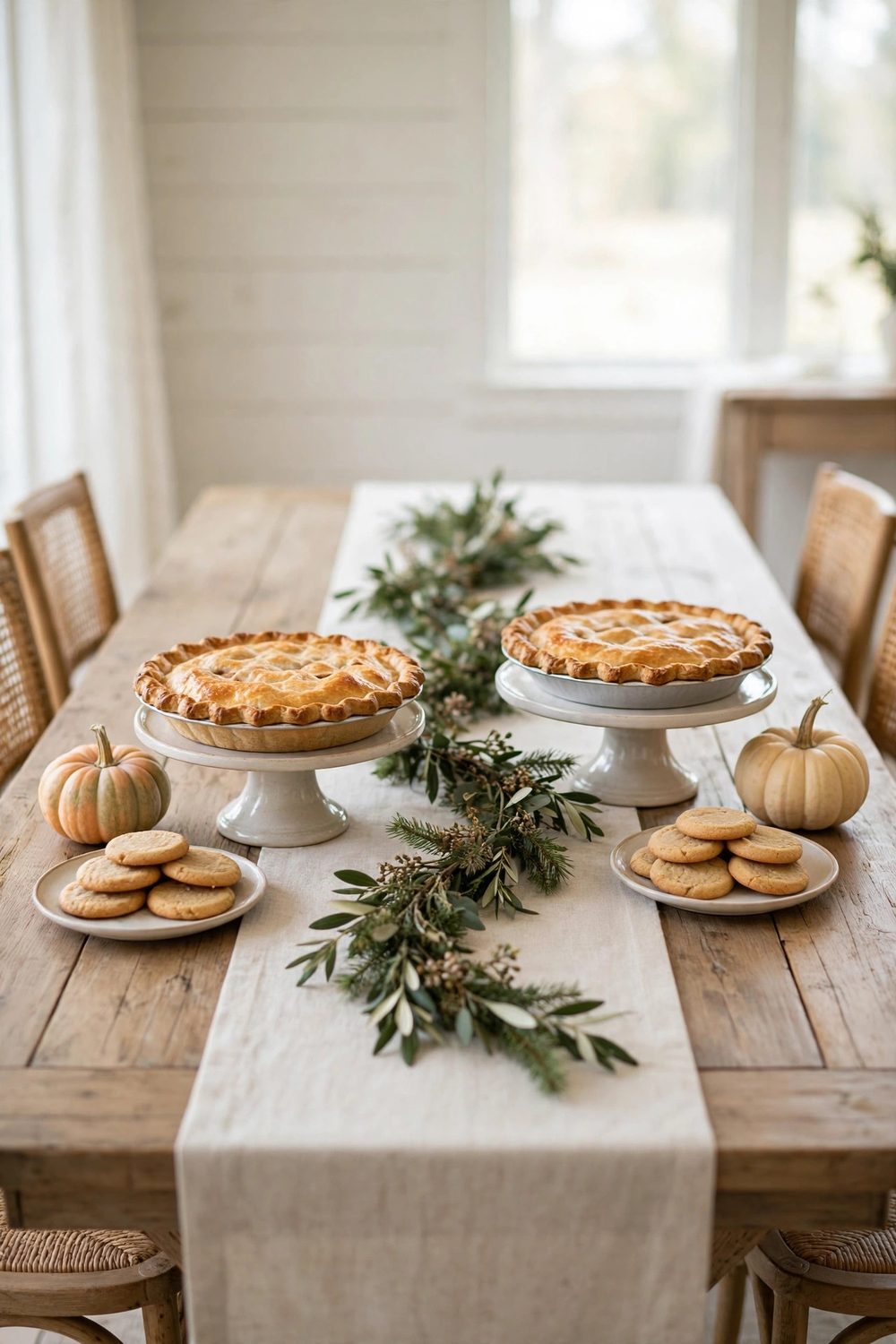
One dessert cluster at the end of a long table makes twelve people queue the length of the room. Two matching stations, one at each half of the table, cut the wait in half.
Split each dessert across both stations, half a pie here and half a pie there. Guests serve from the station nearest their seat and never cross the room with a full plate.
Match the stations loosely, same stands, same colors, same order. Matching halves read as one generous table rather than two small ones.
Put plates at both stations too. A station without plates is a display, and displays make guests hover instead of serve.
3. Mix Wooden Stand Heights Along the Length
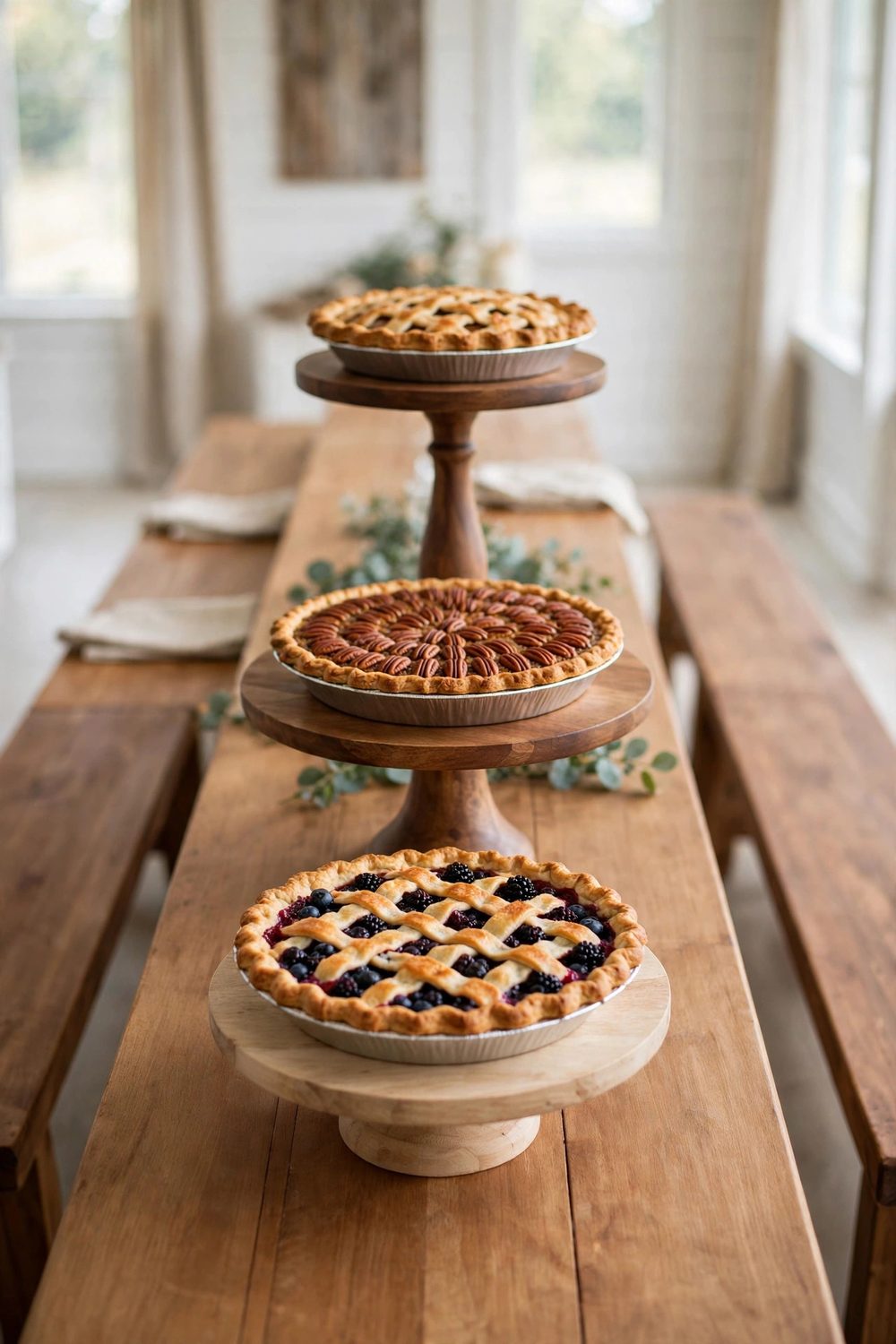
Farmhouse wood pairs best with more wood. Stands and boards in mixed heights and warm tones step the desserts down the length of the table like a low skyline.
Place the tallest stand near the center, medium boards beside it, and flat trays toward the ends. The eye travels the table and finds a new height at every seat.
Mix the wood tones on purpose, light pine beside darker walnut. Matched sets look bought for the day, while mixed tones look gathered over years.
Keep every stand steady under a full pie before guests sit down. Long tables get leaned on, and a stand that rocks on day one will rock at dessert.
4. Weave a Garland and Votives Between the Stands
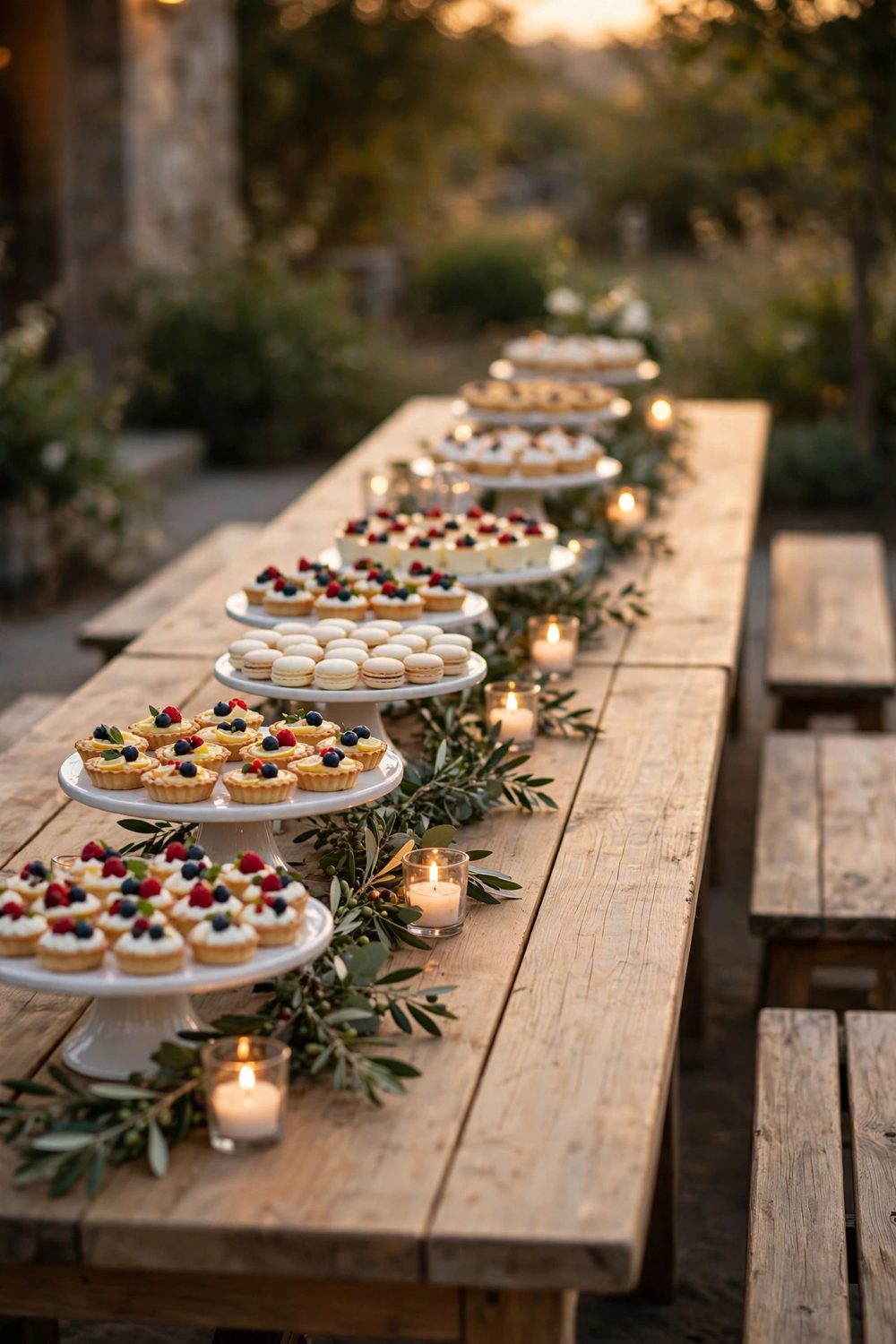
The gaps between stands on a long table can look empty. A slim garland woven along the runner fills them, and short votives in glass settle into its curves.
Keep the garland narrow and low so seated guests still see down the table. On a farmhouse table, the long view from end to end is part of the pleasure.
Use eucalyptus or dried leaves with a few cranberries worked in. The green cools the warm wood, and the red dots carry the eye to the far end.
Set the votives in the garland gaps rather than in a straight row. Tucked light looks gathered, and gathered suits this table more than lined up ever will.
5. Space the Pies Evenly, Never in One Cluster
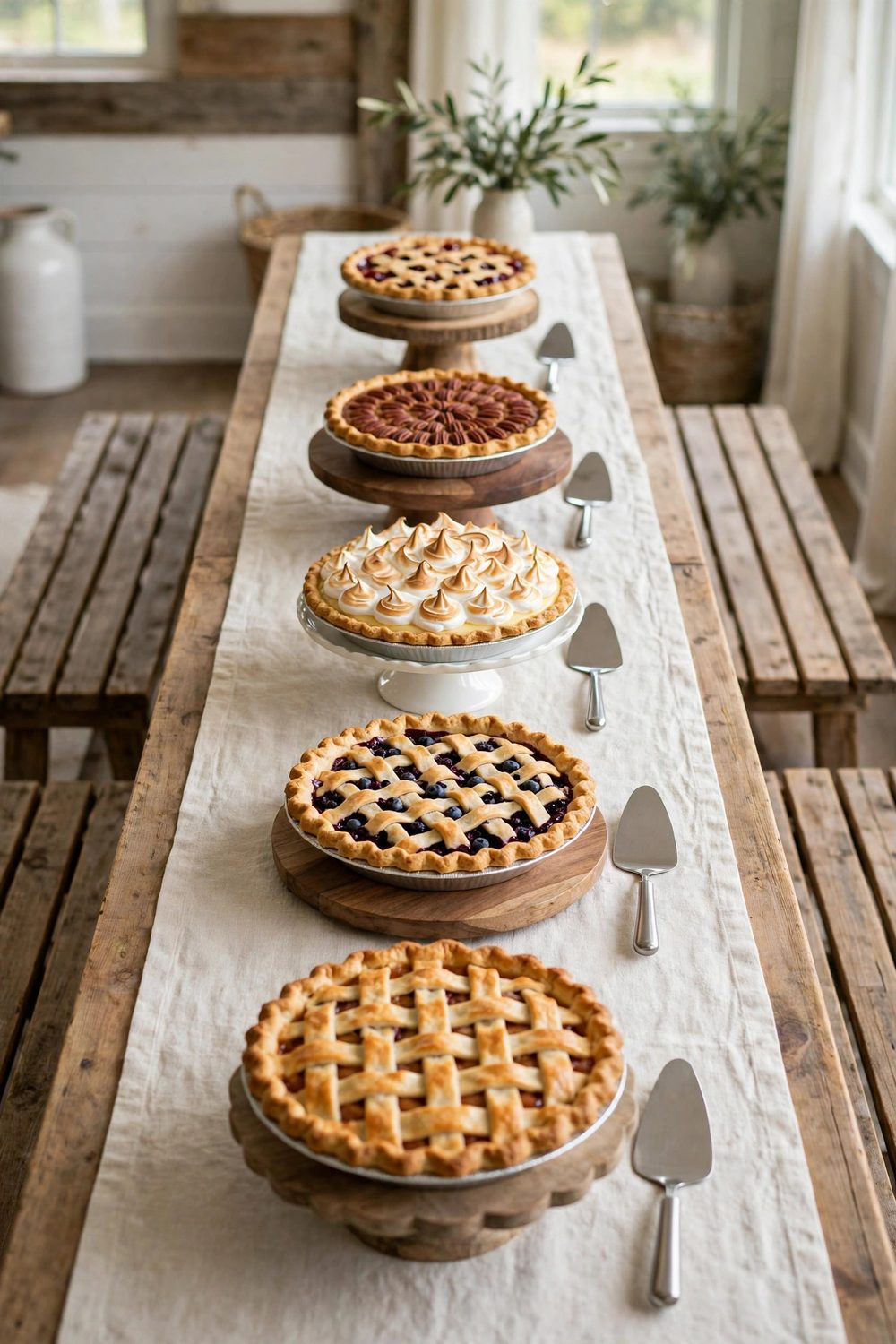
Clustered pies make one busy end and one empty end. Spread the pies evenly down the table, one at each station and one near the center, and the whole length works.
Pre-slice each pie partway and set its server beside it. A pie that is ready to serve invites the nearest guest to start, and starting spreads down the table fast.
Give every pie a small clear space around it. Slices need a landing spot beside the tin while the next piece is cut, and hands need room to work.
Alternate pie colors as you place them, deep orange, then pale gold, then dark pecan. The rhythm of color down the wood is the table’s main decor, free of charge.
6. Serve From the Bench Side, Sit on the Chair Side
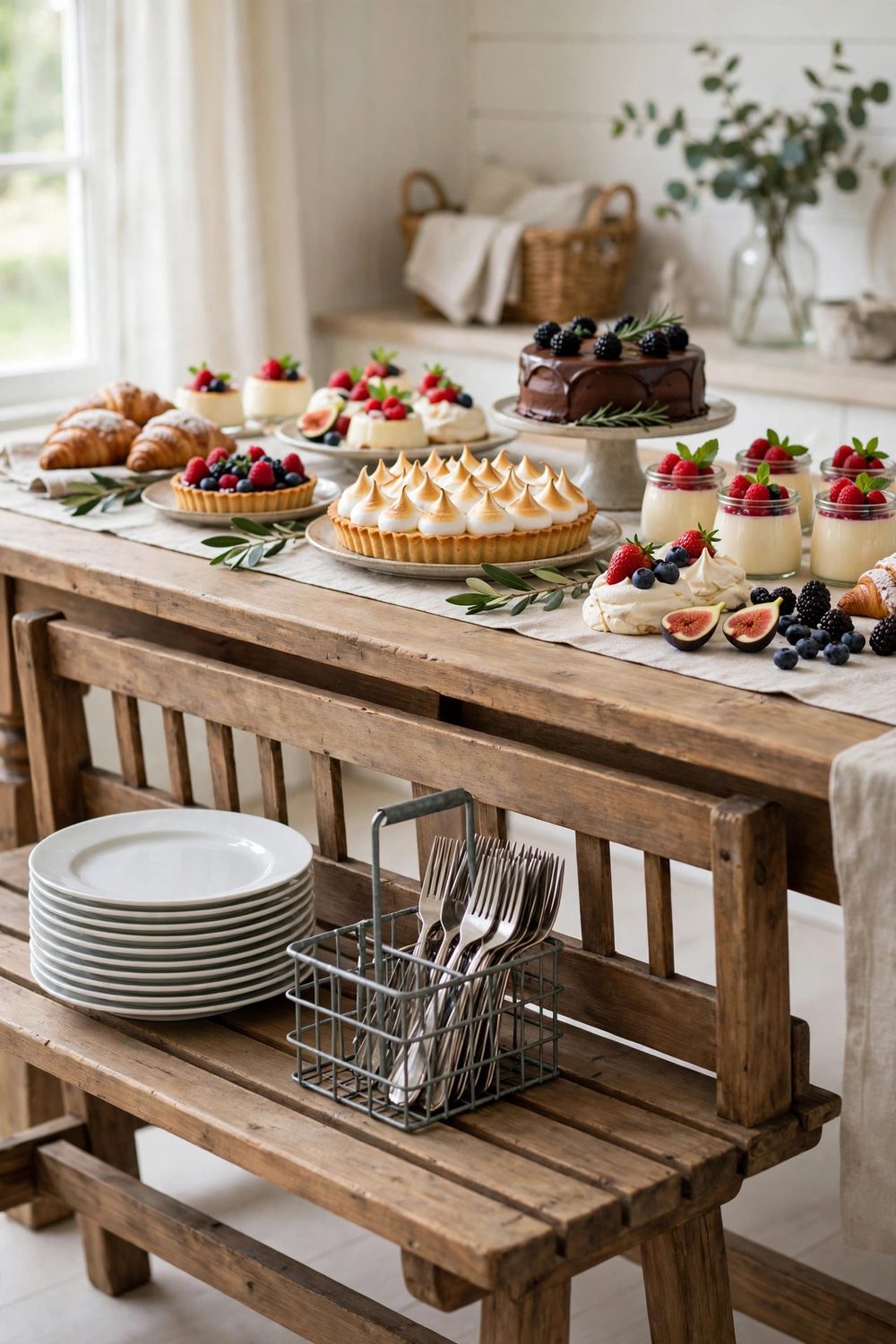
Farmhouse tables often seat one side on a bench. Benches slide out as one piece, which makes the bench side the natural serving side once dinner plates clear.
Slide the bench back a step after the meal and set the dessert line facing it. Guests stand at the bench side, serve, and sit again on the chair side with full plates.
Keep the path behind the bench clear of coats and bags. A serving line is only as good as the walkway behind the people standing in it.
For younger guests, the bench can stay in place as their dessert seat. Kids seated on the bench with pie in reach need less passing and less help.
7. Set the Showpiece Cake at the True Center
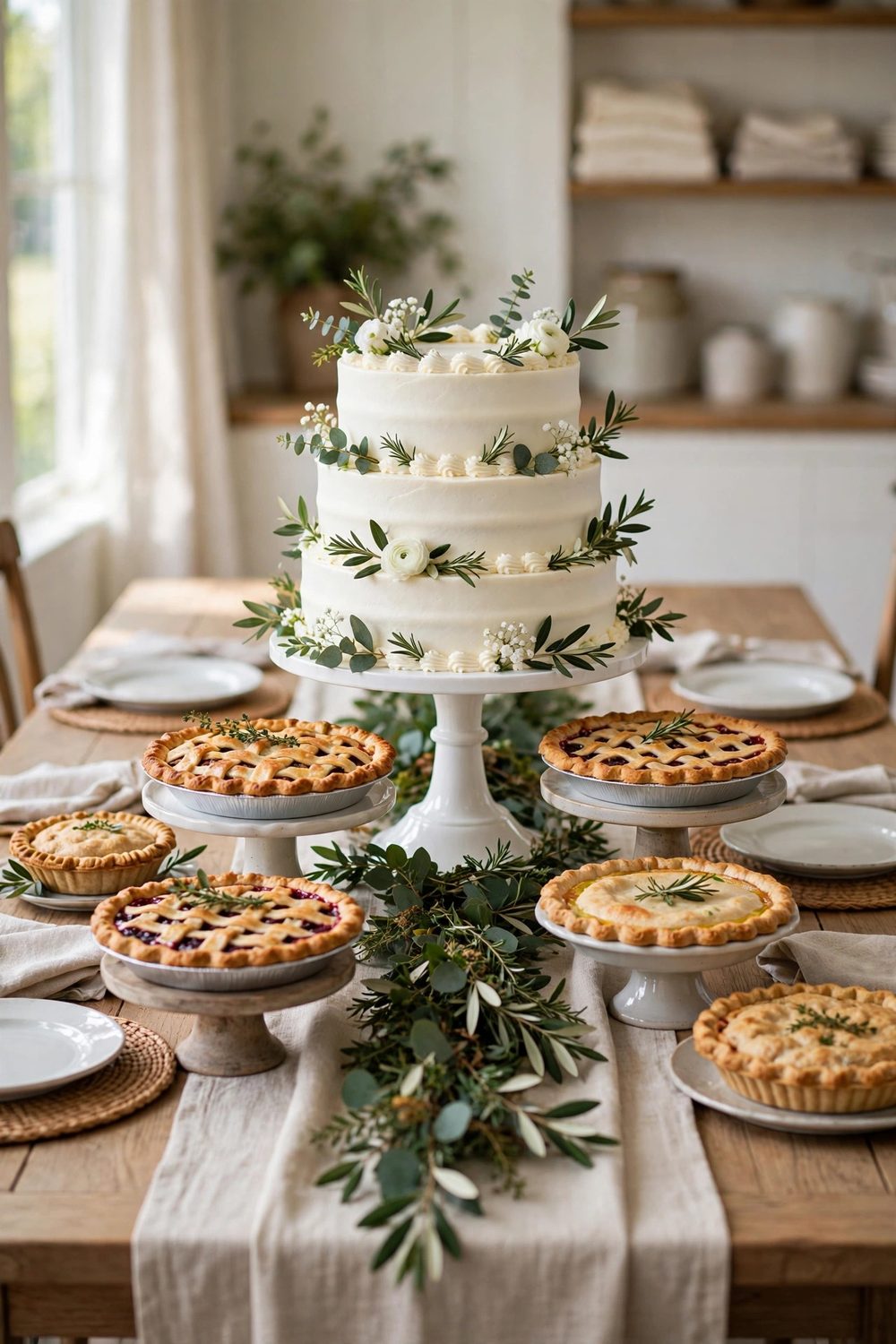
A long table needs one anchor, and it belongs at the true center. Your tallest cake, on a wooden stand at the middle of the runner, holds both halves of the table together.
Cut the first slices at the table once dessert begins. The center cut draws eyes from both ends, and the two stations start moving at the same time.
Ring the stand base with a few leaves or small pumpkins. A plain ring hides the stand foot and gives the center a finished edge from every seat.
Keep the center cake the only tall piece. One high point at the middle reads as an anchor, while high pieces at the ends read as two tables arguing.
8. Lay Mini Desserts Down a Long Serving Board
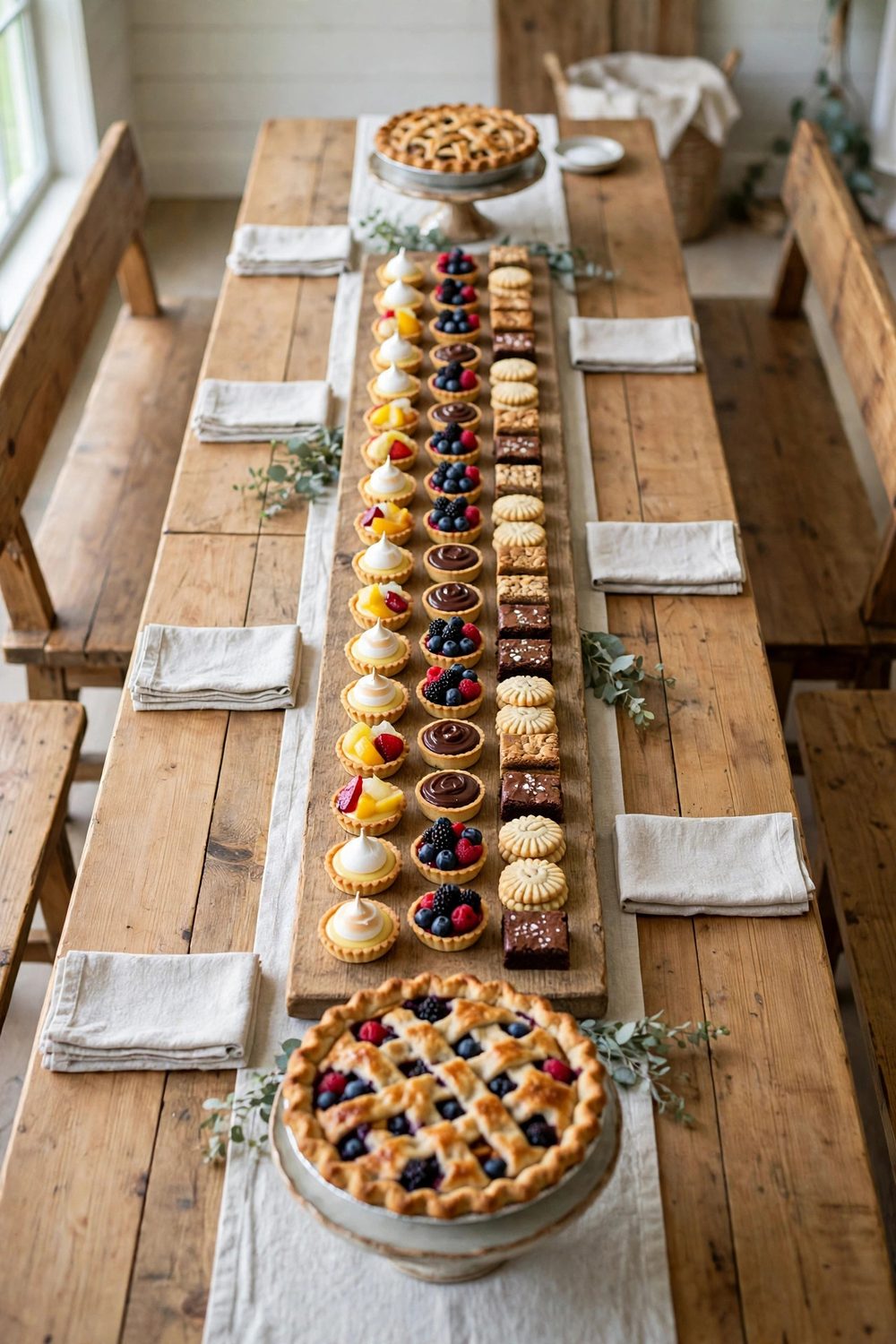
A long board suits a long table. Line mini tarts, cookies, and small bars down one board at each station, and guests can take two kinds without a second stop.
Set the board across the runner at a slight angle. The angle breaks the table’s long straight lines just enough to look relaxed, and it shortens the reach from both sides.
Leave parchment under the rows. Slices and bars lift clean, crumbs stay on the paper, and the board wipes down in seconds at the end of the night.
The board format also anchors the dessert table ideas for an autumn sweets display, where one board carries the small sweets for the whole room.
9. Put Coffee and Cider at the Far End on a Tray
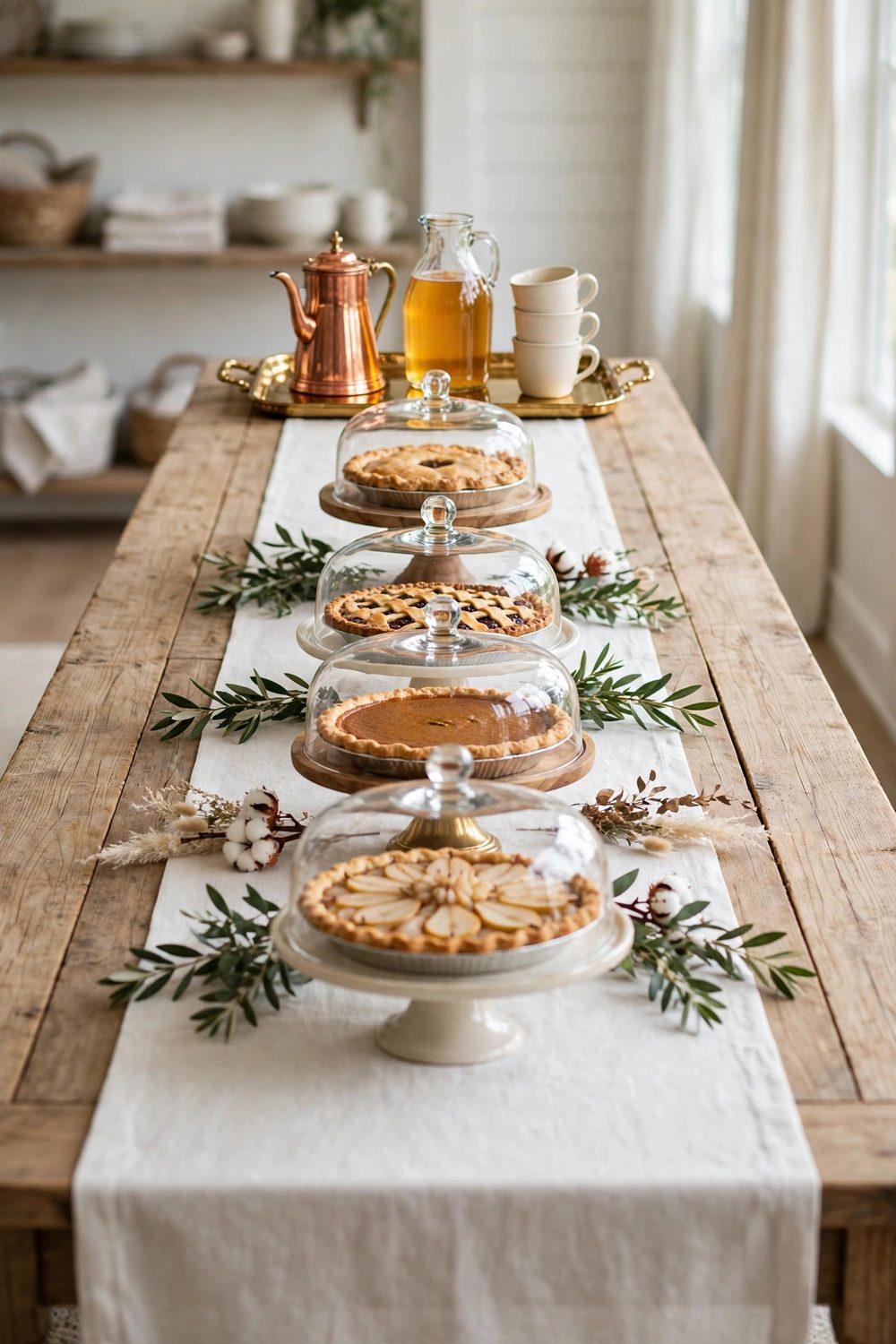
Drinks at the far end give the table a finish line. A tray with a coffee pot, a cider pitcher, and stacked mugs waits past the last pie, where pouring harms nothing.
Set the tray across the end so guests pour facing the table, not the wall. Pouring toward the room keeps spills on the tray and faces in the conversation.
Add one small plate of spoons and sugar on the same tray. Everything for a hot drink in one footprint means no mid-line stops and no sugar hunt.
Refill the pot once, halfway through dessert. A warm pot at the end keeps guests at the table, and the long table does what it was built for: holding people late.
10. Rest Label Cards Against Small Pumpkins
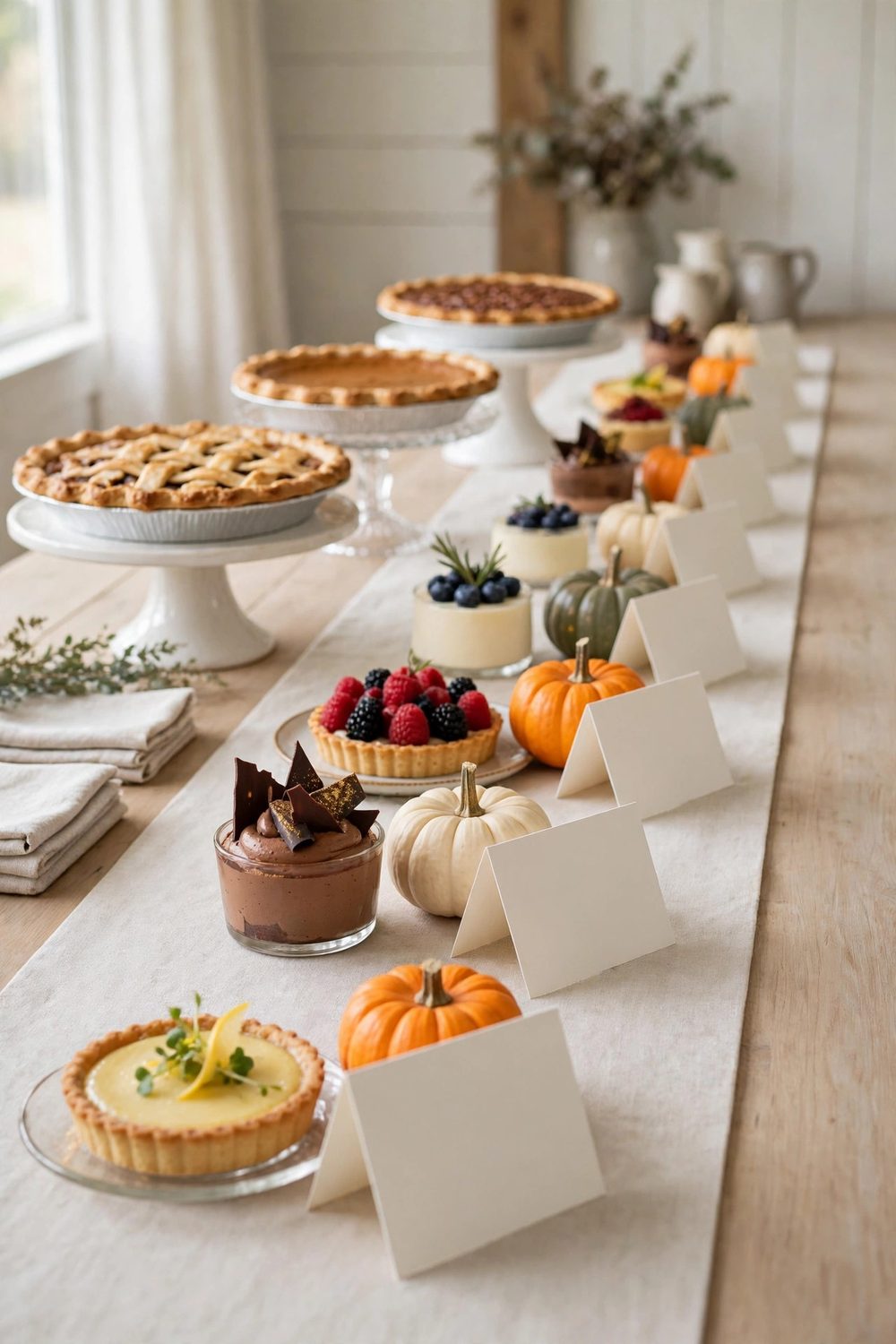
Cards need a prop on a table this size, and a mini pumpkin is the right weight. Rest each folded card against a small pumpkin in front of its dessert, all down the table.
The pumpkins keep the cards from sliding on the wood and add a repeat of color at every stop. A row of small orange props reads as part of the styling.
Write the cards large. Guests read them from a seated reach away, and small print on a long table gets skipped, guessed at, and asked about.
Match the card stock to the runner, cream on cream with dark print. Quiet cards let the desserts carry the color, which is the order a farmhouse table likes.
11. Fill the Gaps With Fruit and Loose Leaves
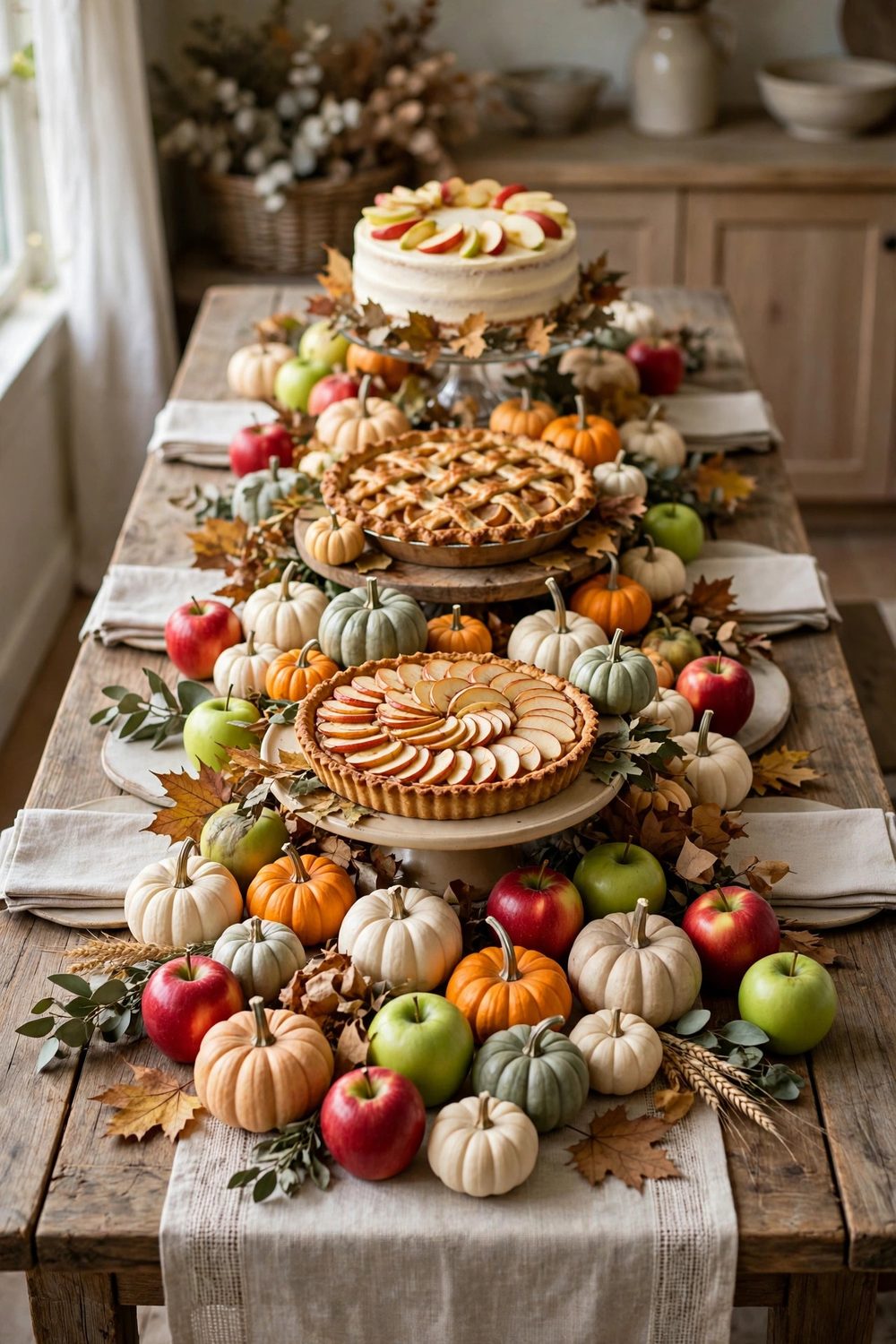
Even a full long table has bare patches between stations. A pear here, a small cluster of cranberries there, and a few loose leaves close the gaps without new dishes.
Scatter with a light hand and step back often. Gaps filled one piece at a time stay gaps with color in them, while a poured scatter becomes litter on wood.
Keep loose pieces off the serving boards and away from pie tins. Fruit beside food reads as decor, while fruit touching food reads as a mix-up.
Use real fruit that guests can eat at the end. A pear taken from the table as the night closes is a better finish than decor swept into a bin.
12. Stack Dessert Plates at Both Ends of the Table
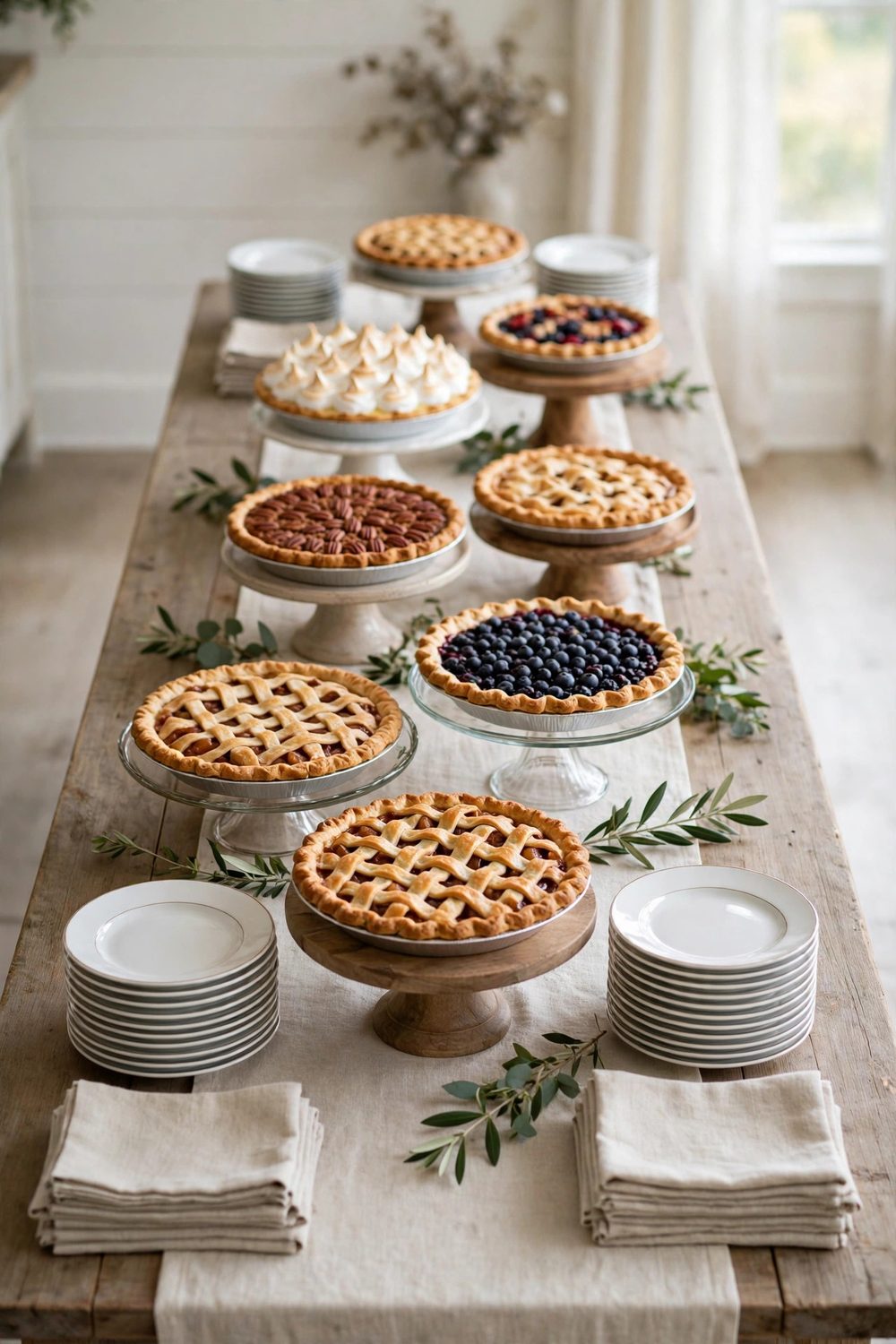
Two stations need two starts. A stack of small plates at each end of the table lets both halves of the room begin at once, in opposite directions.
Set forks in jars beside each stack, handles up. A guest takes plate and fork in one stop and walks the short line of their own station.
Count plates per end, not per table. The end nearer the kitchen always runs out first, and a balanced split saves the host a mid-dessert carry.
Top each stack with one napkin held by a small pumpkin. The weight keeps napkins in place when the door opens, and it matches the card props down the table.
13. Keep to Cream Linen and Warm Wood Tones
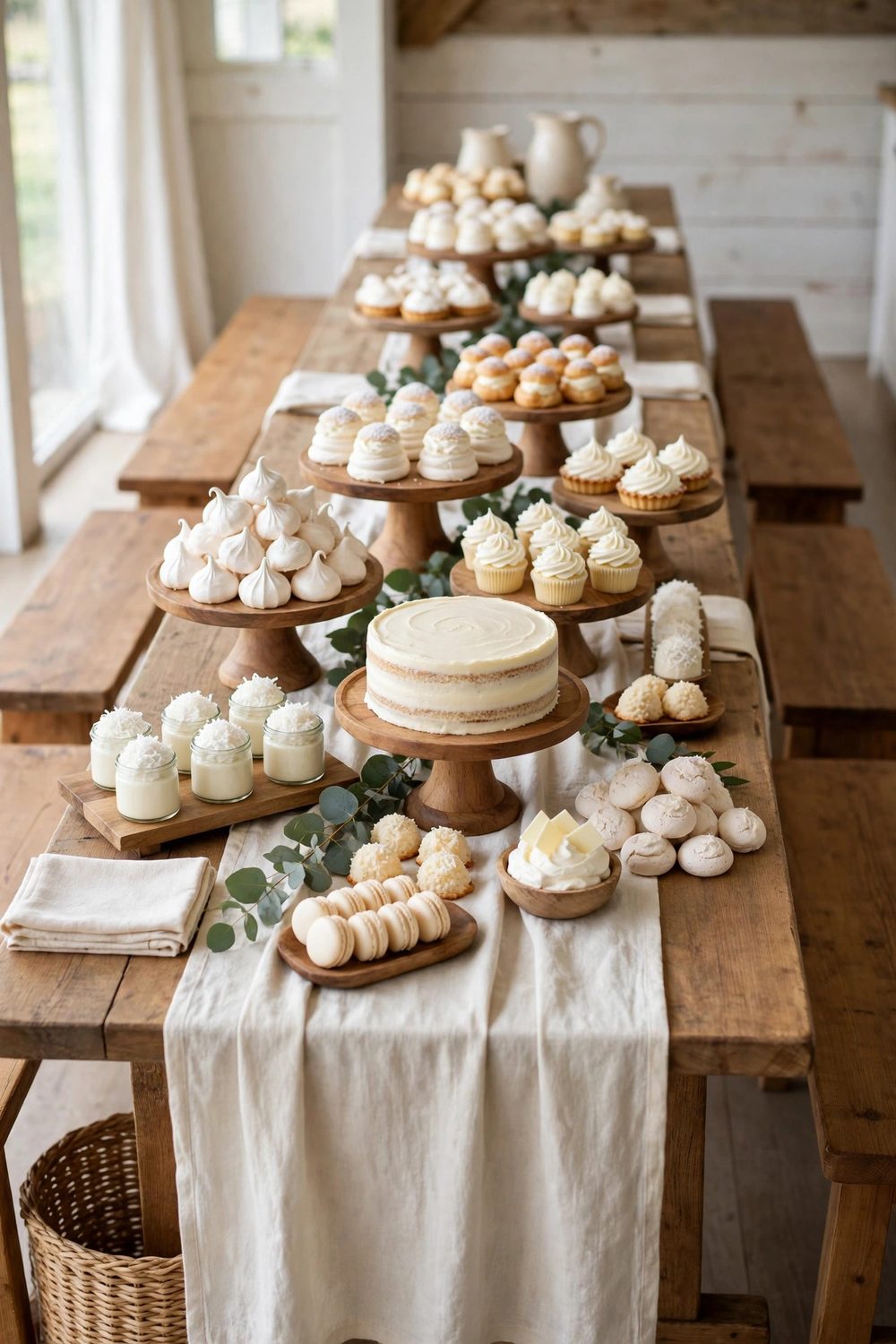
A farmhouse table brings its own color. Cream linen, warm wood, and the colors of the food are enough, and a tight palette keeps a long table from looking busy.
Let the desserts supply the orange, red, and gold. Pies and fruit against cream and wood photograph well and, more to the point, look calm to sit at.
Skip shiny pieces on this table. Matte ceramic, plain glass, and worn wood share one soft finish, and the table reads as settled rather than staged.
The same warm neutral palette carries the table setting ideas in warm neutral autumn, so dinner and dessert match without trying.
14. Keep Every Piece Below Seated Eye Level
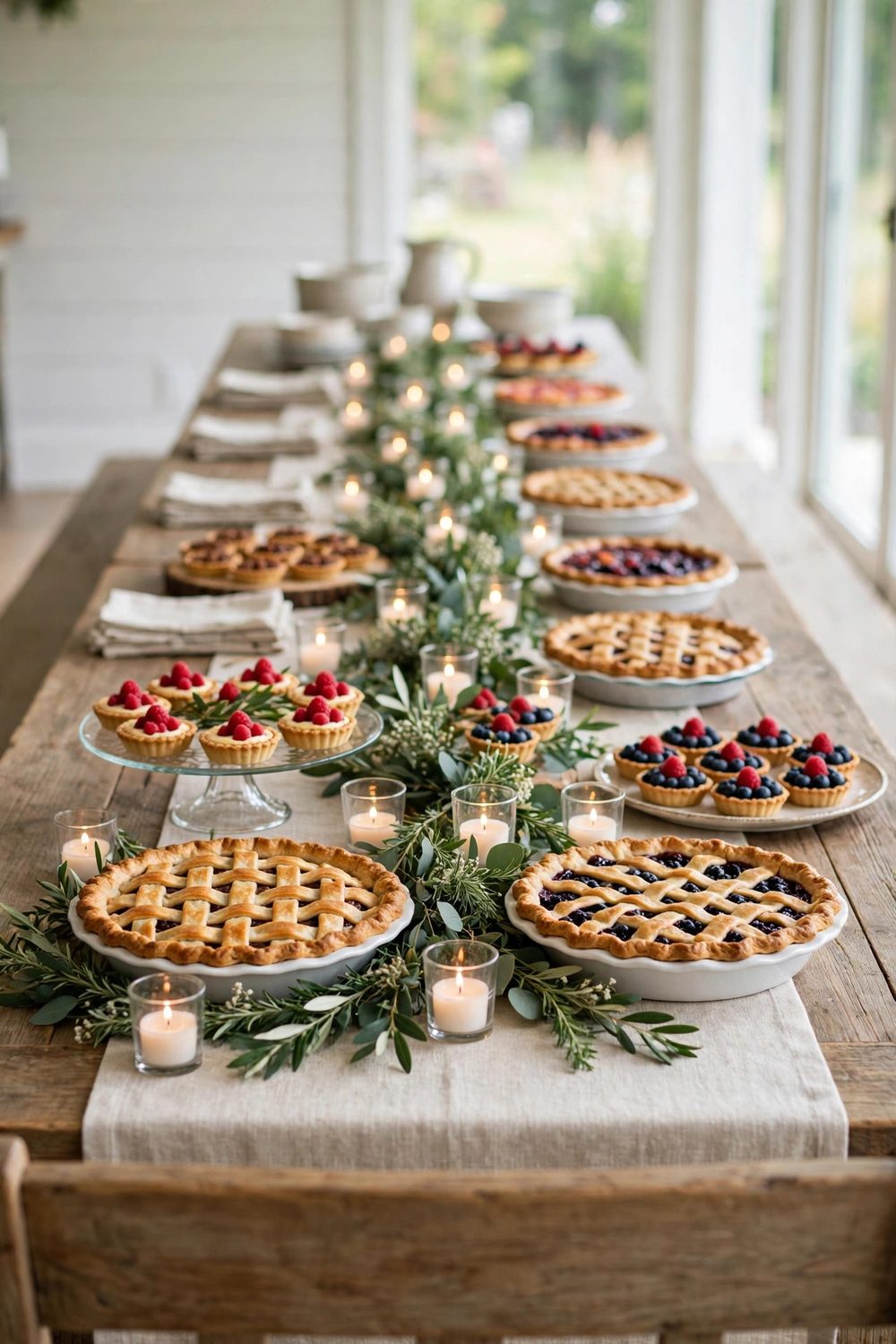
Guests stay seated for dessert on a farmhouse table, so the sightline runs the full length of the wood. Keep stands, garland, and the center cake below seated eye level.
Check from the end seats, where the view is longest. Small heights add up down a long table, and the end seat is where a blocked view shows first.
Thin tapers are the one thing that can rise. A slim candle in a low holder can be seen past, and its flame lights faces down the whole table.
If a piece fails the test, move it behind the serving line or off the table. The room has shelves and a mantel, and the table has one job at dessert: people.
15. Clear the Table by Trays, One Station at a Time
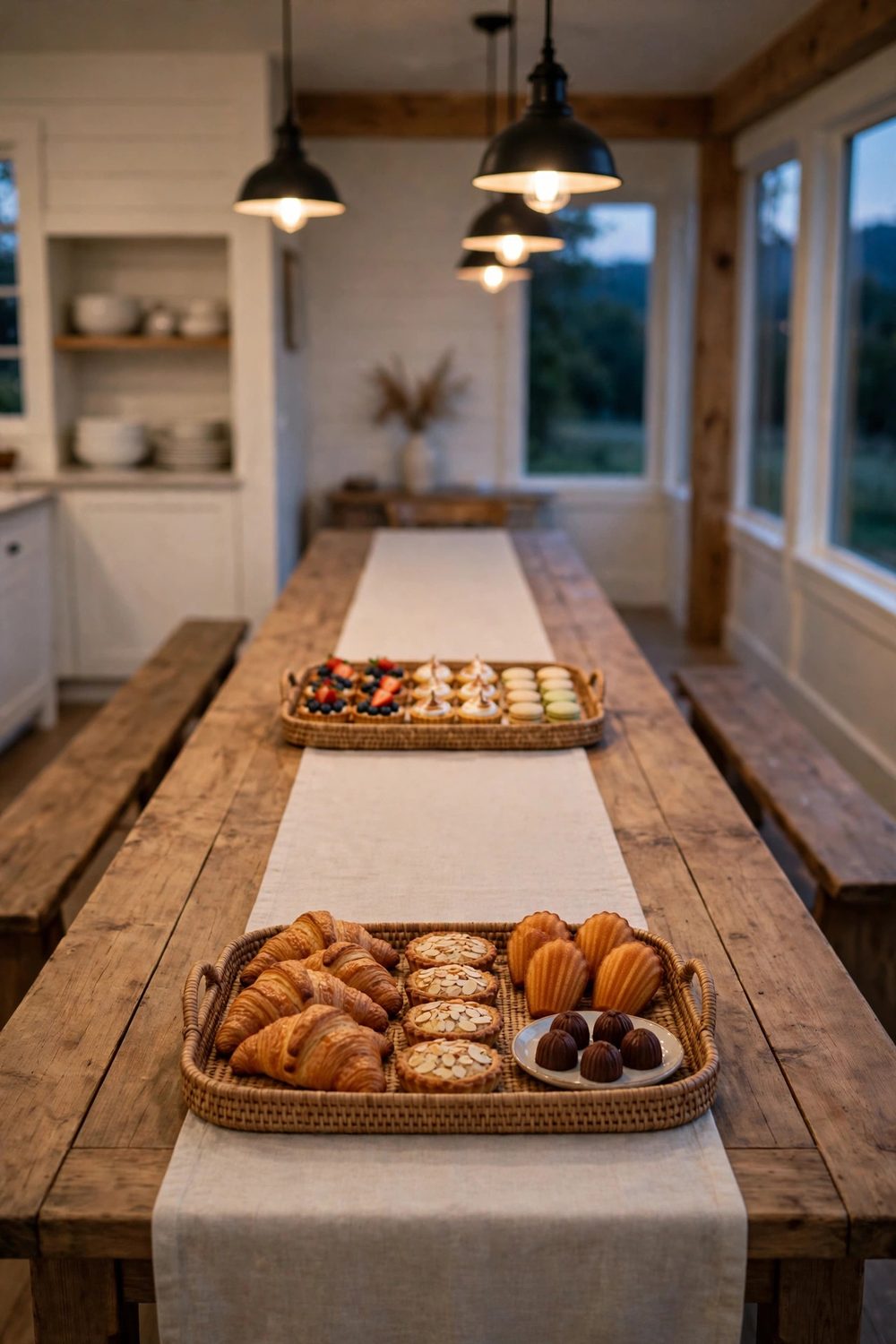
A long table clears fastest by trays. Keep two large trays under the bench during dessert, then load one station at a time and carry it straight to the kitchen.
Boards, jars, and small plates ride the tray, while pies travel one per trip on their stands. Nothing gets stacked on food, and nothing drips down the table length.
Leave the runner, garland, and candles until the food is gone. A table that still looks dressed while it empties never looks picked over, even at the end.
Fold the runner last and shake it outside. The table returns to bare wood in minutes, ready for breakfast, much like the folding table dessert setup and the round dining table dessert table, and warmed by the candlelight family dinner glow.
A long farmhouse table was built for meals that stretch, and dessert is the stretch it does best. Two stations, low heights, and coffee at the far end keep it that way.
Set the runner and stands before dinner, split the desserts in half, and check the view from the end seat before anyone sits down.
Handled this way, thanksgiving dessert table ideas for a long farmhouse table keep every guest in their seat, in the talk, and in reach of a second slice.
Save this list to your Thanksgiving Decor Ideas board on Pinterest so the farmhouse table plan is ready for the next full house.


