

Best Oversized Christmas Tree Bows for a Farmhouse Style Tree
Oversized bows give a farmhouse tree its shape before a single bauble goes on. Wide loops and long tails fill the branches, soften the outline, and carry one strong fabric across the whole tree.
This guide covers the bow types that suit farmhouse schemes, from pre tied velvet to grain sack stripe. Each idea names the fabric, the size range to look for, and how the bows behave on real branches.
Farmhouse trees lean on natural texture, plain colors, and honest materials. Bows fit that spirit well, since fabric reads softer than glitter and ties in with the textiles in our christmas mantel ideas and the skirt at the base.
Wired edges matter more than brand or finish, since they decide whether a wide loop still looks wide in week three. Every fabric below behaves a little differently once it is on the tree.
Measure your tree and count its branch layers before you shop, because bow count matters more than bow price. The list runs from ready made sets to bows you tie yourself, in the order most homes use them.
This post contains affiliate links. If you buy through them, we may earn a small commission at no extra cost to you. See our Affiliate Disclosure.
1. Pre Tied Red Velvet Bows for Instant Shape
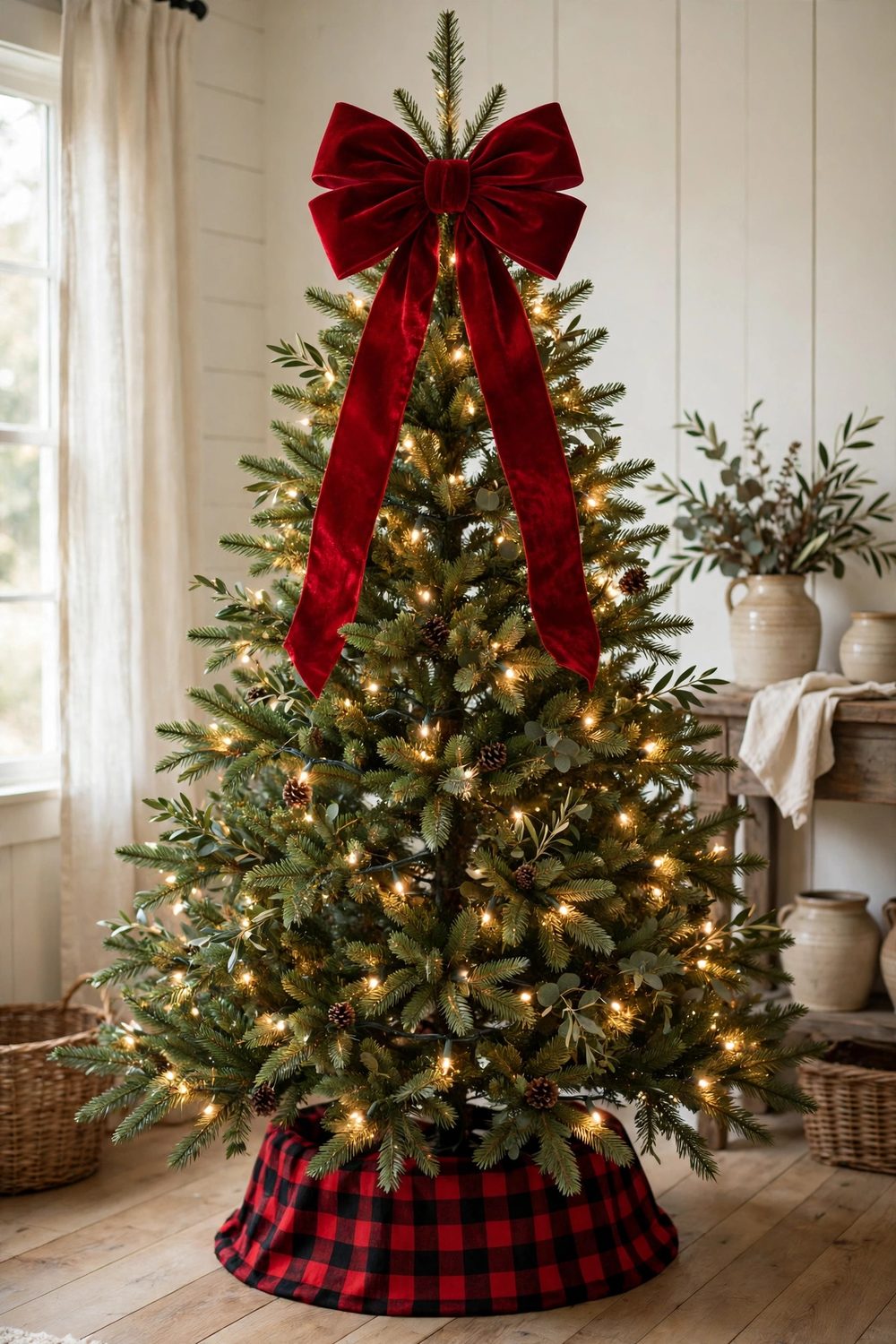
Large red velvet bows sit at even intervals down this tree, each one full and even. Pre tied bows arrive shaped, so the loops and tails look styled straight from the box.
Velvet bows use a fabric face over a wired or foam core that holds the loops open. Common oversized widths run from about eight to twelve inches, with tails that drop another eight to fourteen inches.
Count your branch layers before you order. Most six to seven foot trees take eight to twelve oversized bows when spaced one per layer, with a larger one saved for the top.
Velvet piles can crush where tails rest against branches, so turn each bow a little as you hang it. A slight angle also catches more light across the fabric face.
2. Burlap Bow Sets With Natural Frayed Edges
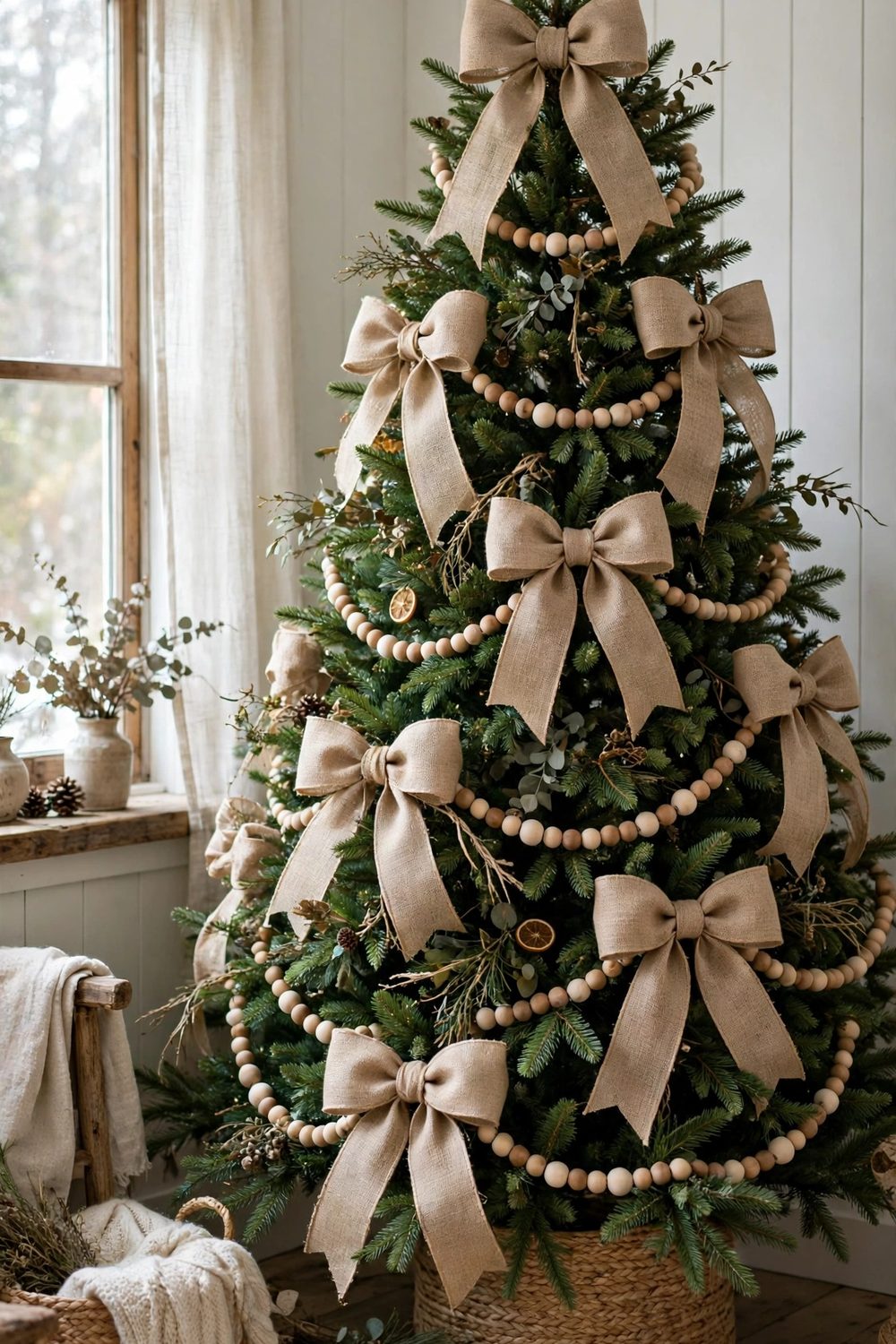
Natural burlap bows give this tree its farmhouse heart. The coarse weave and soft frayed edges sit well beside wooden beads, pinecones, and plain cotton ribbon.
Burlap bows are cut from jute fabric, often with wired edges so the loops can be opened wide. Sets usually group six to twelve bows in one size, which keeps the look even down the tree.
Fluff burlap loops by hand rather than with steam, since jute can darken under heat. Store the bows nested in one box so the coarse fibers do not snag finer fabrics.
3. Plaid Flannel Bows in Red and Cream Checks
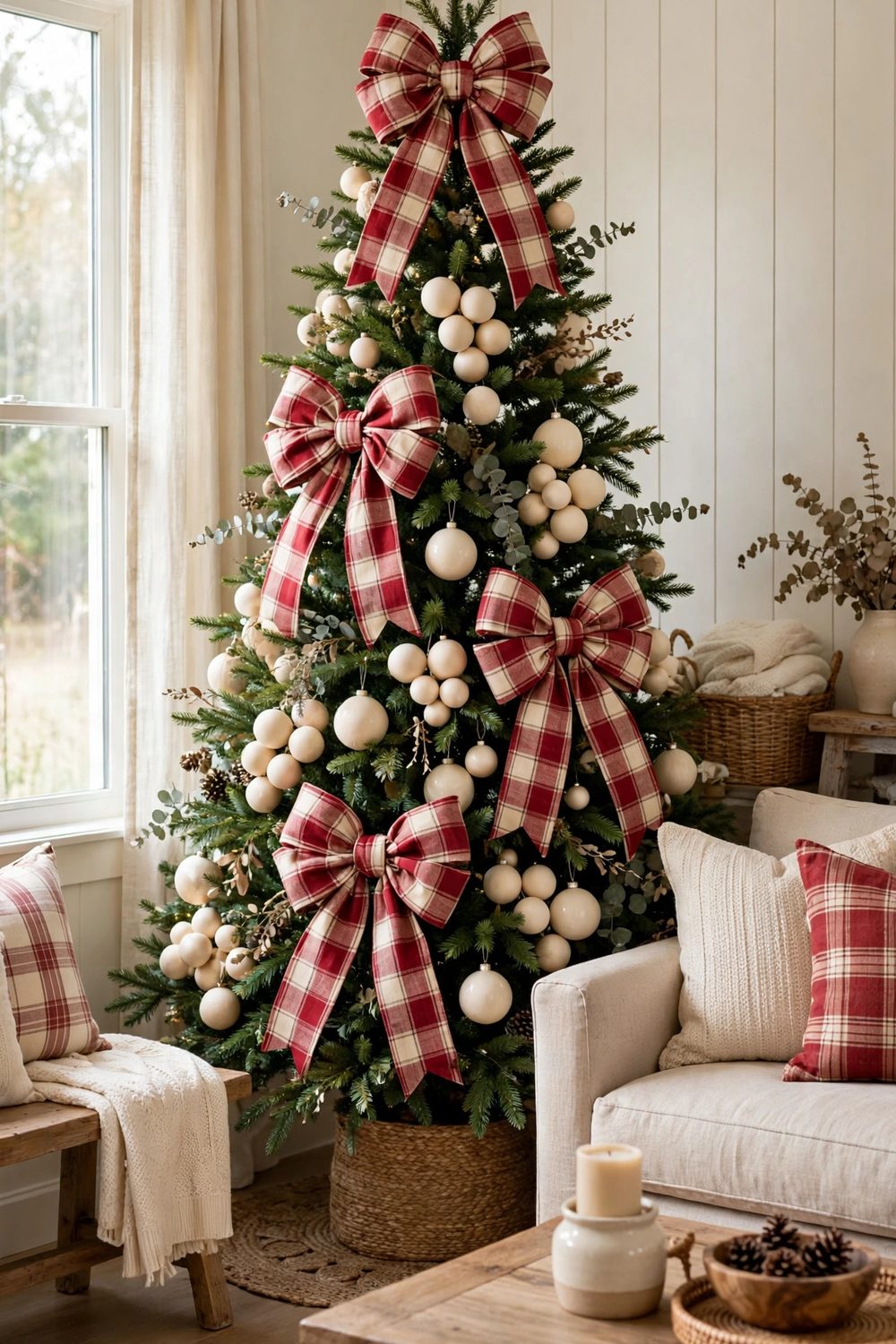
Red and cream plaid bows carry the pattern on this tree, matched with plain cream baubles so the checks stay in charge. The flannel face reads warm and homey under evening light.
Flannel bows are cotton or cotton blend fabric, sometimes backed with a light interfacing to hold wide loops. Plaid patterns vary in scale, and a medium check reads clearly from across the room.
Match the plaid tones to your tree skirt or stockings rather than matching the pattern exactly. Shared colors tie the room together while mixed checks keep the look relaxed.
Flannel holds dust more than smooth ribbon, so shake the bows outdoors before they go on the tree. A soft brush brings the nap back up after storage.
4. Buffalo Check Bows for a Bold Cabin Look
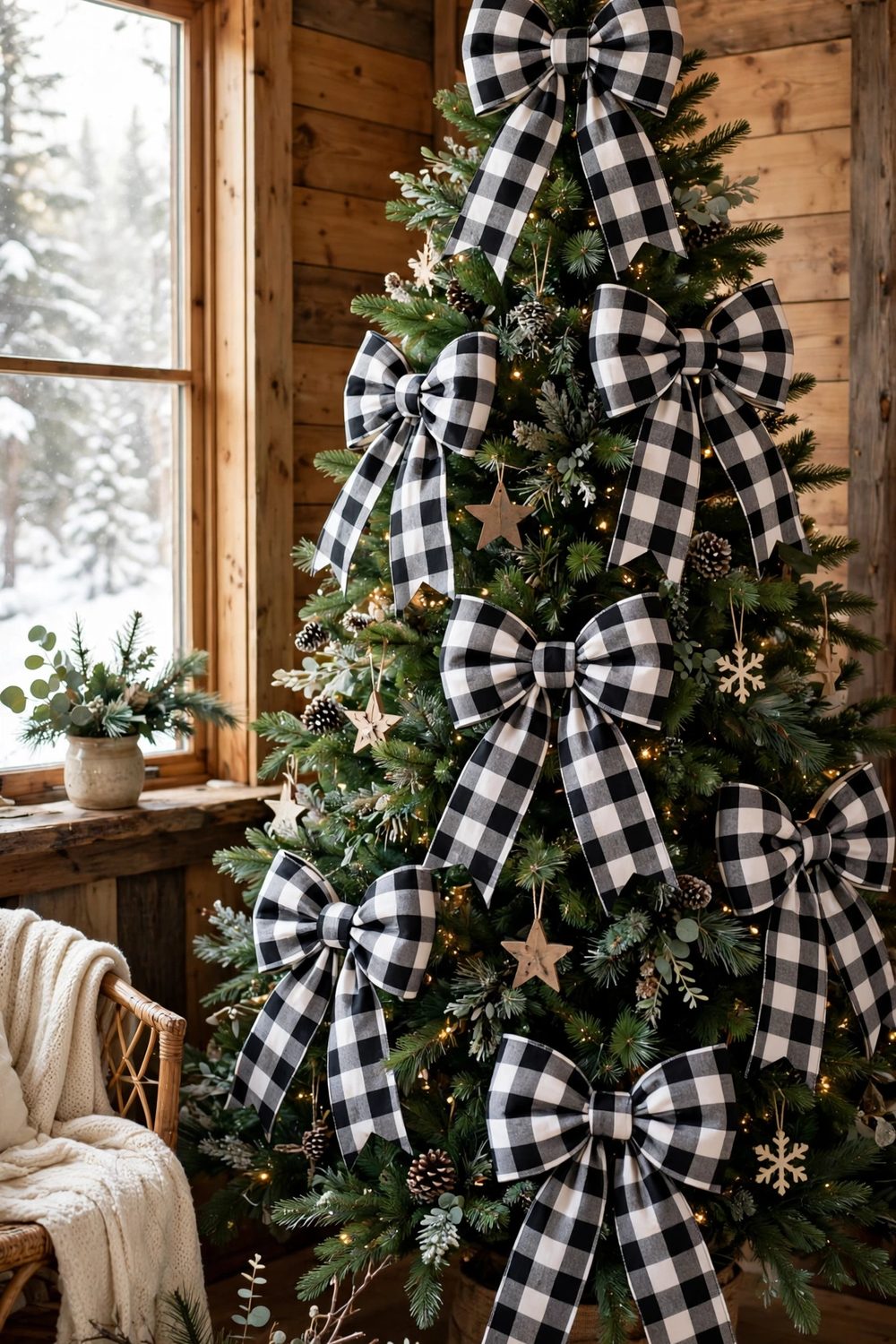
Bold black and white buffalo check bows anchor this cabin tree. The large scale check holds its own against dark wood walls and a full, wide tree.
Buffalo check bows are usually woven cotton or polyester with wired edges. The pattern needs width to read well, so bows under eight inches can lose the check and look like plain stripes.
Pair bold checks with solid ornaments in black, white, or natural wood. Busy patterned baubles fight the bows, while plain pieces let the checks carry the whole scheme.
5. Cream Linen Bows for a Soft Neutral Tree
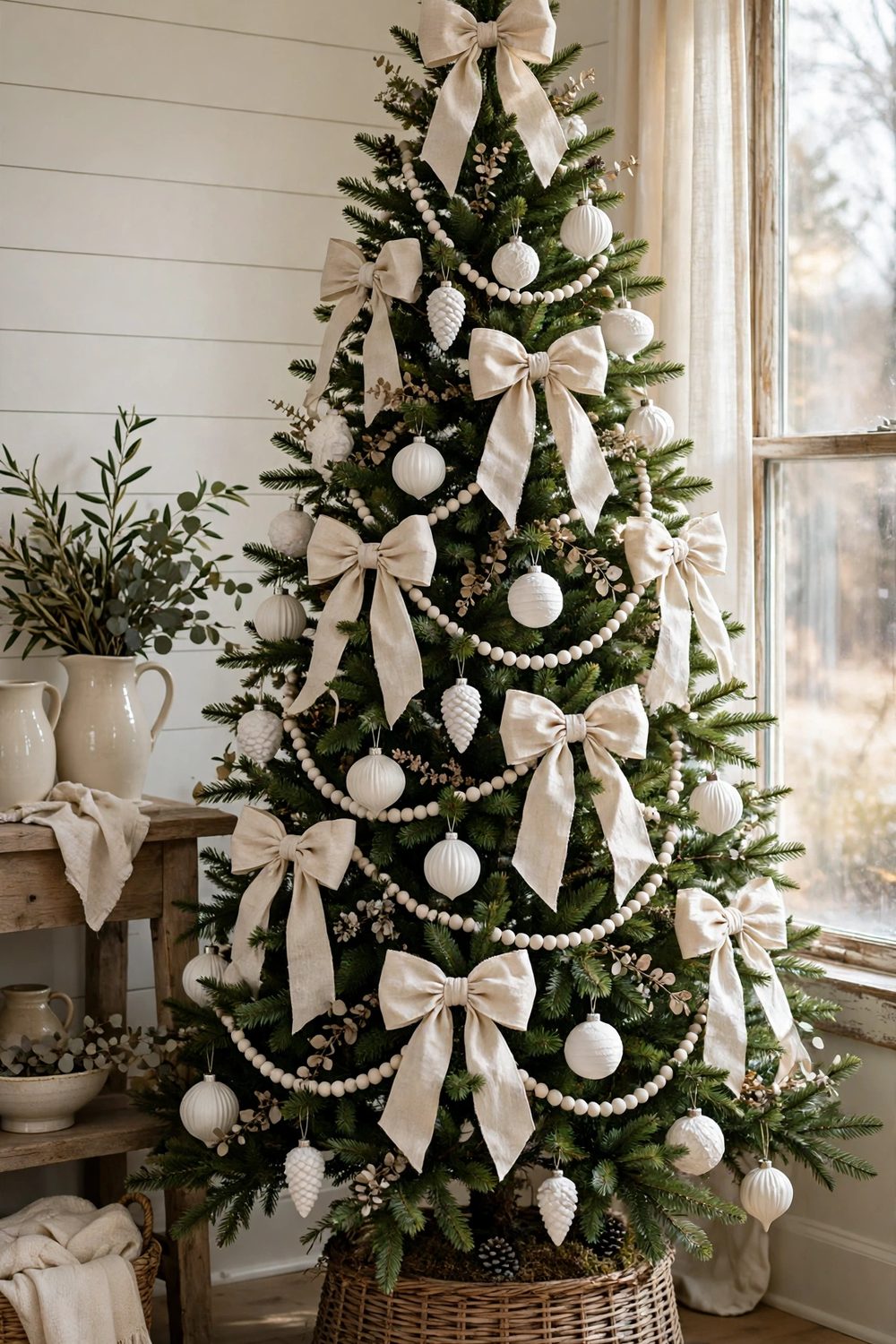
Cream linen bows soften this neutral tree from top to base. Their pale tone blends with white baubles and bare wood accents for a calm farmhouse feel.
Linen bows use flax fabric or a linen look blend, often with raw or stitched edges. Our christmas tree skirt ideas in burlap or cream cotton complete the base to match.
Cream linen wrinkles in storage, so hang the bows for a day before decorating to let the folds fall out. Keep them away from glitter picks, which shed onto pale fabric.
6. Bow Tree Toppers That Replace a Star
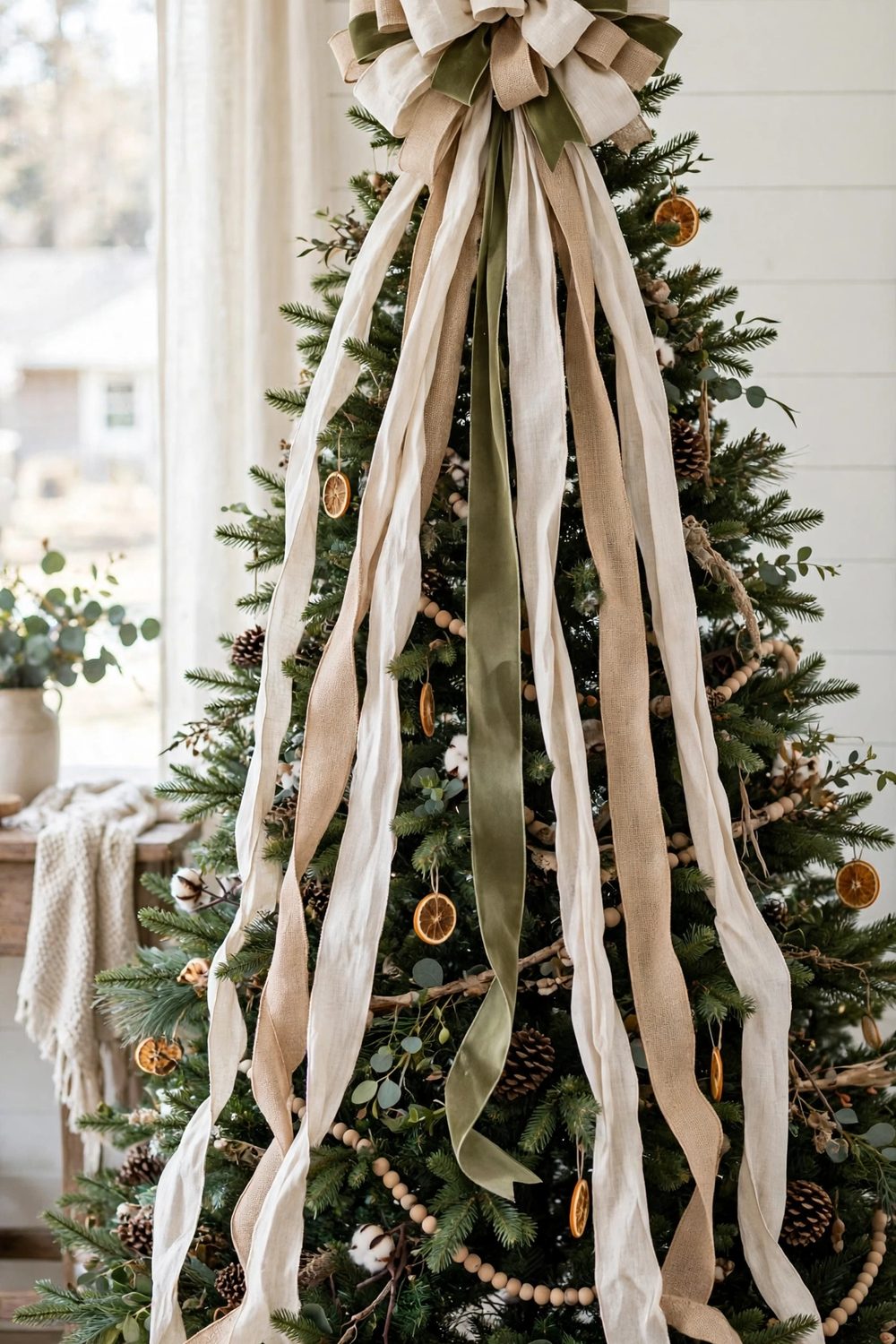
A layered bow crowns this tree in place of a star, with long tails flowing down the top branches. The soft topper suits a farmhouse scheme where hard metal finishes feel out of place.
Topper bows are the largest in the range, often twelve to eighteen inches wide, with tails of two feet or more. Many come with pipe cleaner ties or a clip at the back for fixing to the top spike.
Wire the topper bow firmly and let the tails fall on two sides of the tree. Trim tail ends at an angle so they finish cleanly against the branches.
Check the topper from the doorway rather than from the ladder. A bow that looks level up close can lean hard when seen from the seat where guests actually sit.
7. Wired Edge Ribbon Bows You Tie Yourself
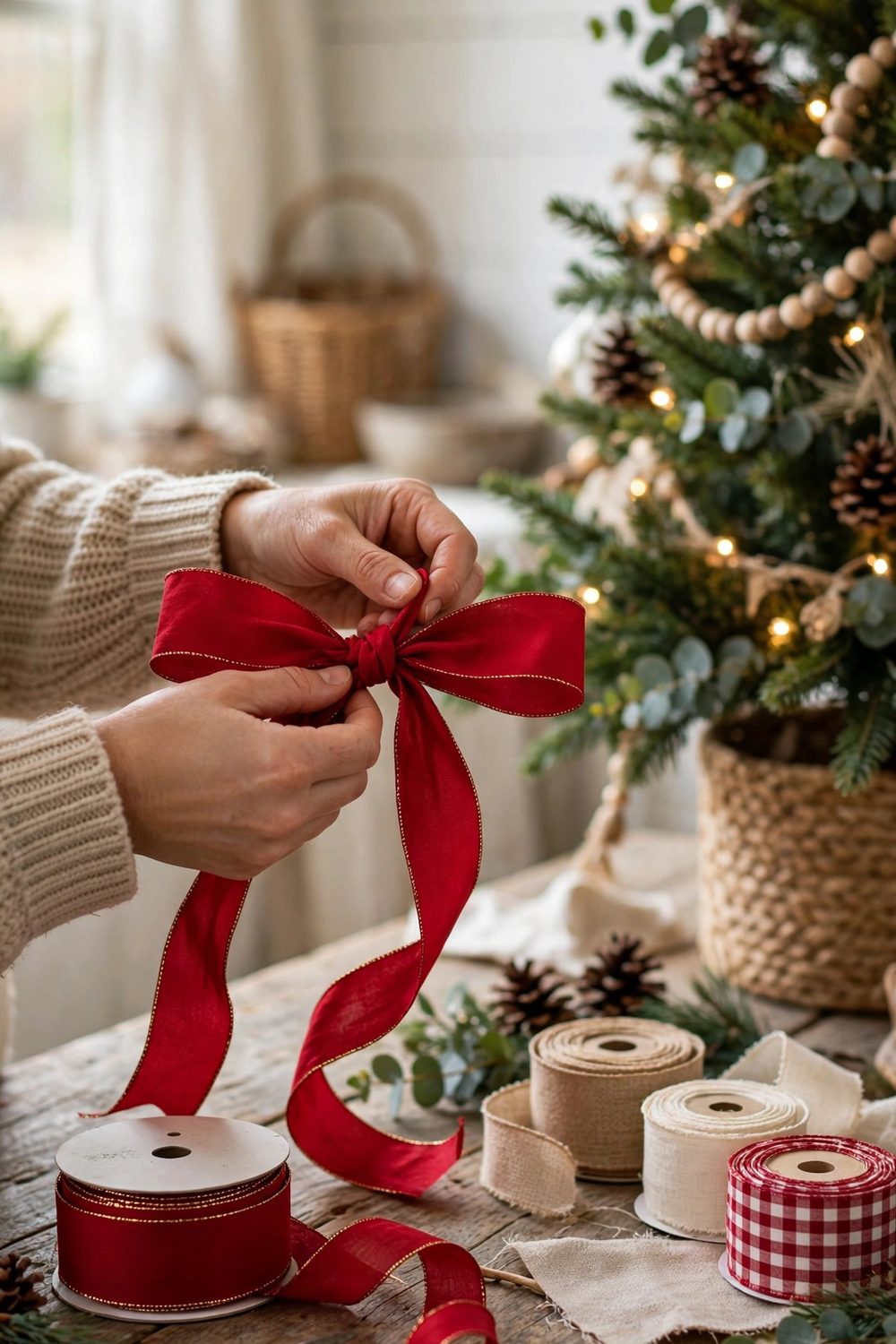
This scene shows a bow being tied by hand from wide wired ribbon. Making your own bows lets you match an exact ribbon to your stockings, garland, and gift wrap.
Wired edge ribbon in widths of two and a half to four inches holds wide loops without sagging. A ten yard roll usually makes five to seven oversized bows, depending on loop count and tail length.
Cut ribbon with sharp scissors and seal synthetic edges with a quick pass of low heat if they fray. Practice the first bow with the roll end, since early attempts often run small.
8. Layered Double Bows With Two Fabrics
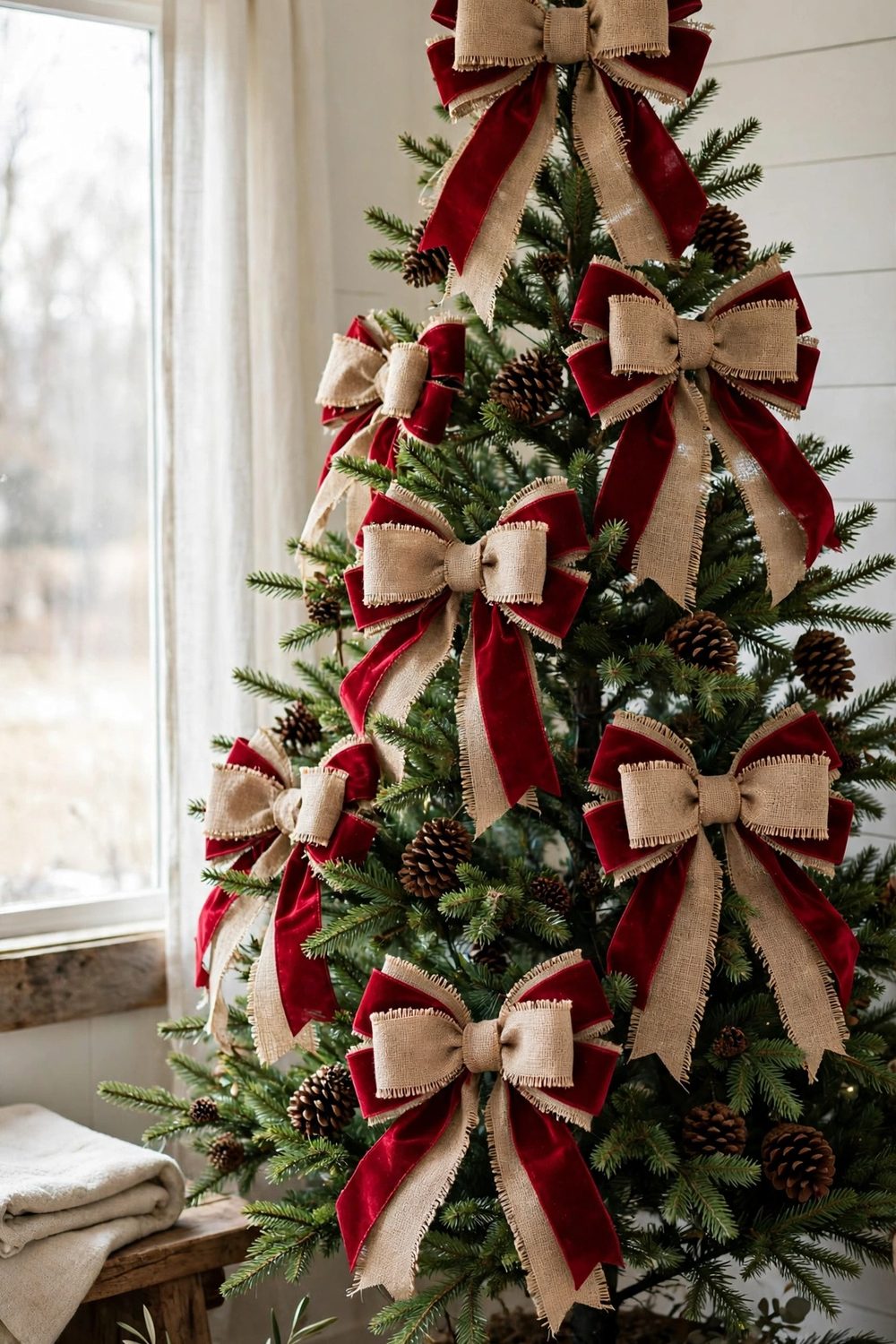
These bows layer burlap over red velvet, so each one carries two farmhouse textures at once. The rough jute frames the rich velvet and stops either fabric from looking flat.
Layered bows are built from two ribbons of slightly different widths, with the wider fabric at the back. Ready made layered sets save time, and the pairing repeats well across a full tree.
Keep the fabric order the same on every bow, with the same color on top each time. A mixed order makes the tree look patched rather than layered.
9. Mini Oversized Bows for Tabletop Trees
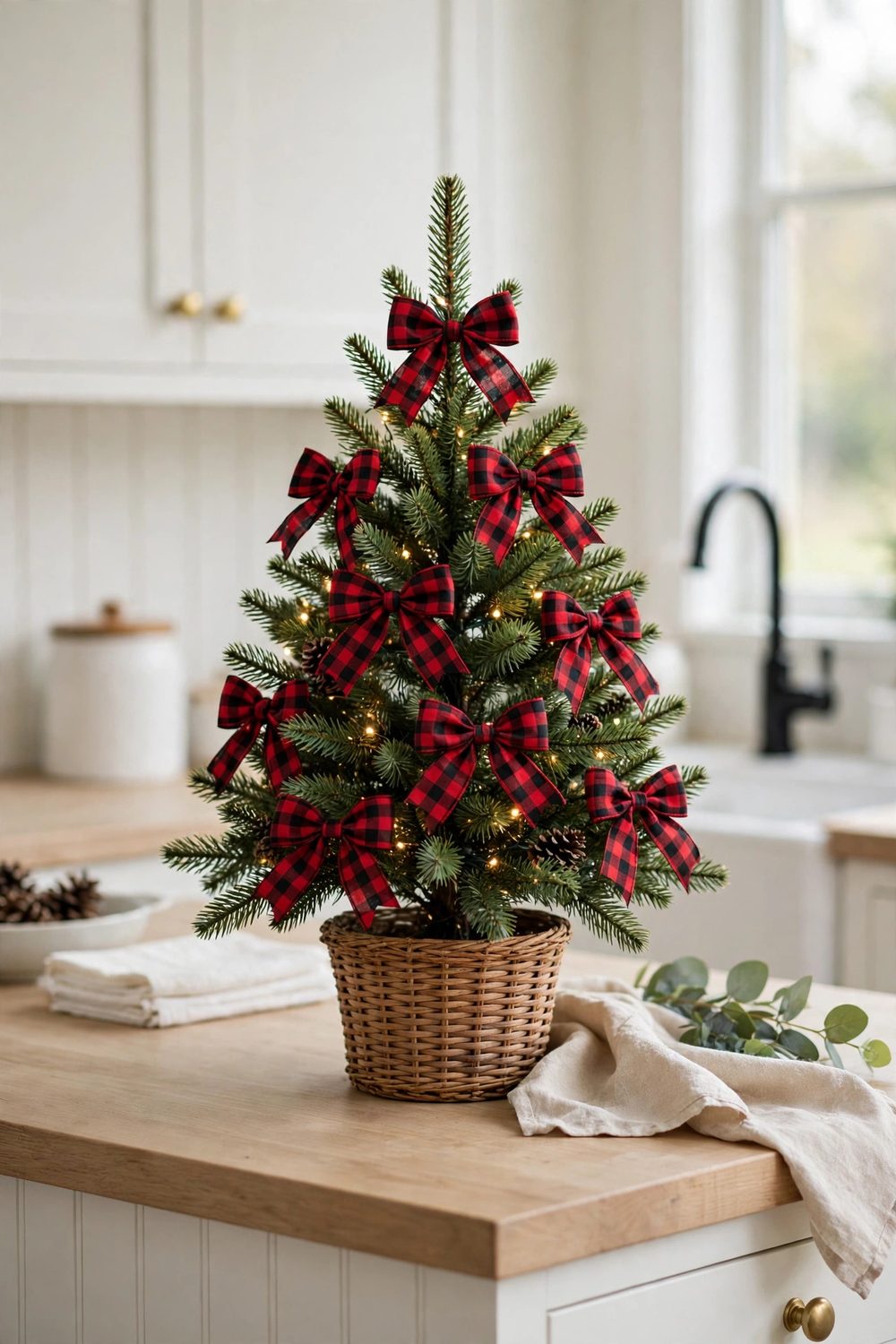
A tabletop tree carries medium bows that are oversized for its scale, giving a small tree the same full farmhouse look. The bows sit on a kitchen counter beside plain crockery.
For small trees, bows of five to seven inches read as oversized without swallowing the branches. Scale is relative, and our best pre lit tabletop christmas trees guide covers sizes that suit counters and desks.
Use three to five bows on a tabletop tree and place them where the branches are thickest. Thin tips bend under wide bows, so keep the weight toward the trunk.
A tabletop tree sits at eye level, so knot quality shows. Keep the backs of the bows neat and trim loose threads before the tree goes on display.
10. Bow and Pinecone Pairings Down the Tree
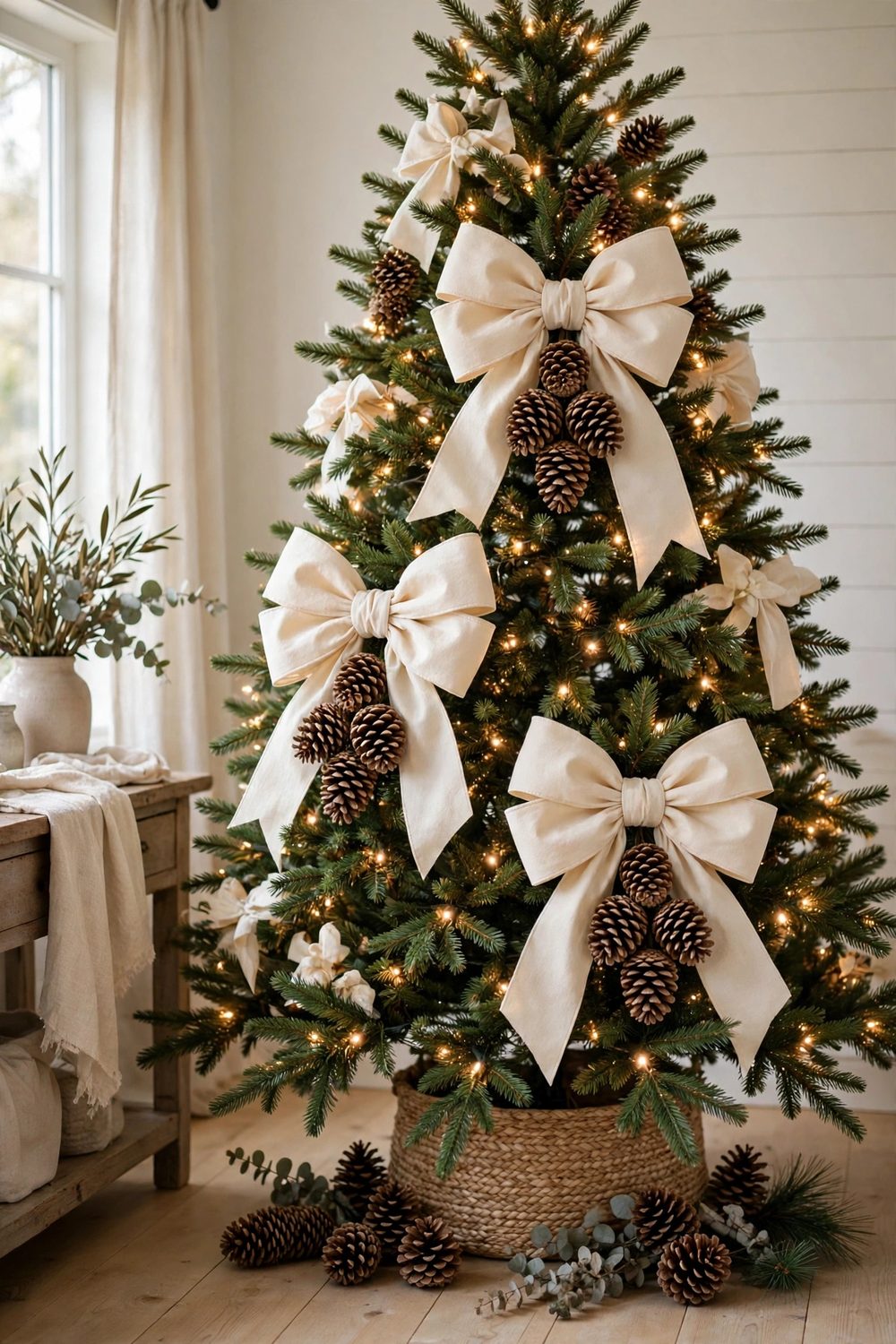
Cream bows pair with small pinecone clusters all down this tree. The pairing spreads natural texture evenly and fills gaps that baubles alone leave open.
Pinecone picks and clusters come on wired stems, in natural brown or lightly frosted finishes. Real gathered cones work too, once they are cleaned and fully dried indoors for a few days.
Wire each cone cluster just above a bow so the two read as one piece. Repeat the pairing at even heights rather than scattering both items at random.
11. Long Tail Bows That Cascade Like Ribbon
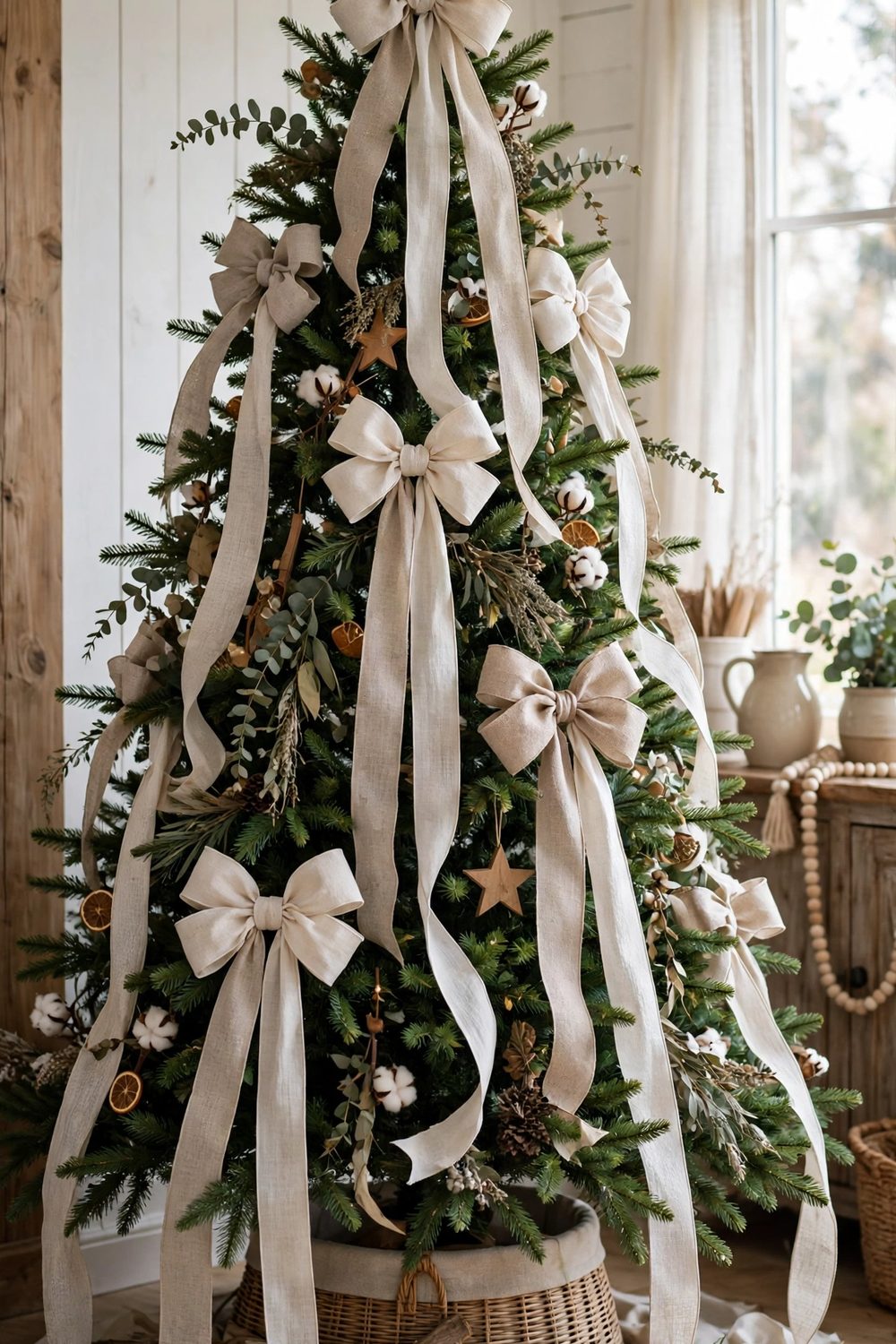
These bows trail very long tails that cascade through the branches like poured ribbon. The flowing lines soften a wide tree and link each bow to the one below it.
Long tail bows need tails of eighteen inches or more to cascade well. Wired tails hold a gentle wave, while soft fabric tails fall straight and can tangle in lower branches.
Arrange the tails before adding ornaments, since baubles placed over a tail pin it flat. Let each tail rest on the branch below rather than hanging in open air.
12. Neutral Stripe Grain Sack Bows
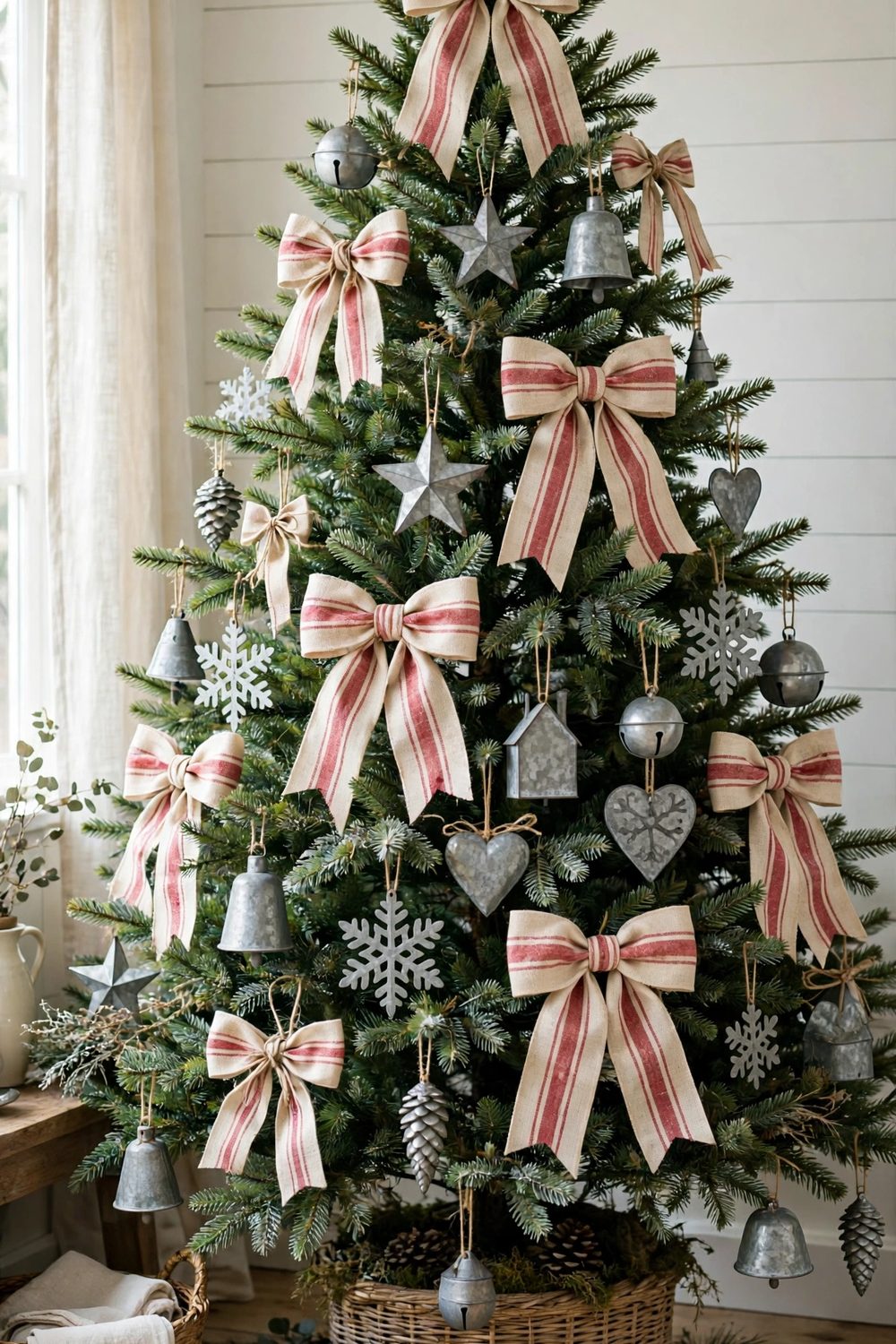
Grain sack stripe bows bring a vintage farm feel to this tree. The cream fabric and faded red stripe sit well with galvanized metal ornaments and plain glass balls.
Grain sack fabric is a cotton or linen look cloth with woven stripes, sold as ribbon or as yardage to cut. It pairs naturally with the textiles in our best christmas kitchen towels and oven mitts guide for a matched room scheme.
Cut grain sack ribbon on the stripe line so each bow sits straight. A crooked stripe shows at once on a wide bow and draws the eye for the wrong reason.
The open weave frays at cut ends, so leave a little extra length when you cut. Fold the last half inch under and stitch or glue it for a clean finish.
13. Bows on the Tree Skirt and Garland to Match
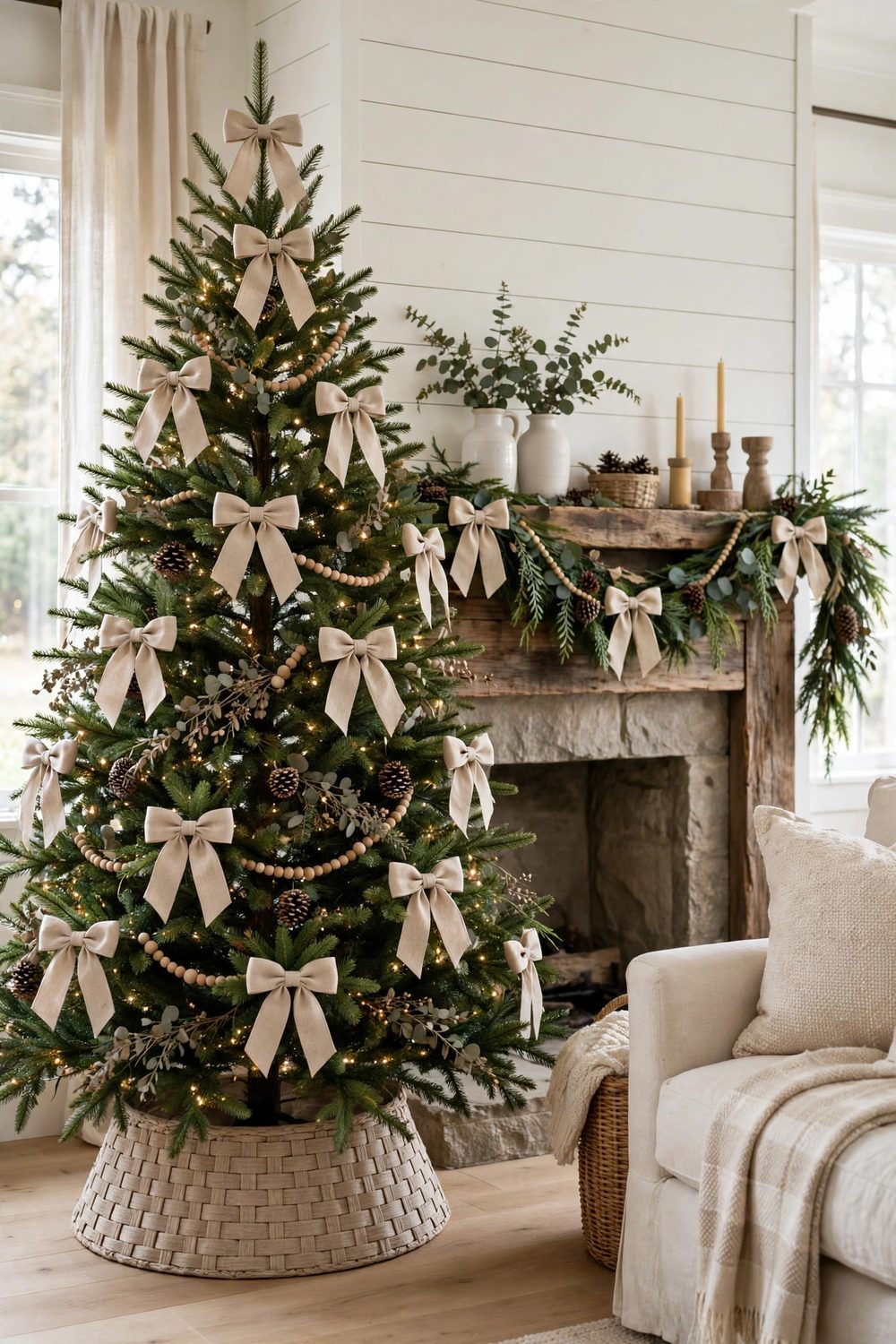
Matching bows repeat on the garland and tree skirt in this room, tying the whole farmhouse scheme together. The repetition makes a simple tree feel planned rather than plain.
Buy bows in two sizes from the same fabric family, large for the tree and small for garland and gifts. The same fabric can carry across the hearth, the wreath, and the stair rail for one matched scheme.
Count every spot before you order, including the wreath and stair garland. Running short mid decorating leaves one area bare and breaks the matched effect.
14. Storing Oversized Bows Without Crushing Them
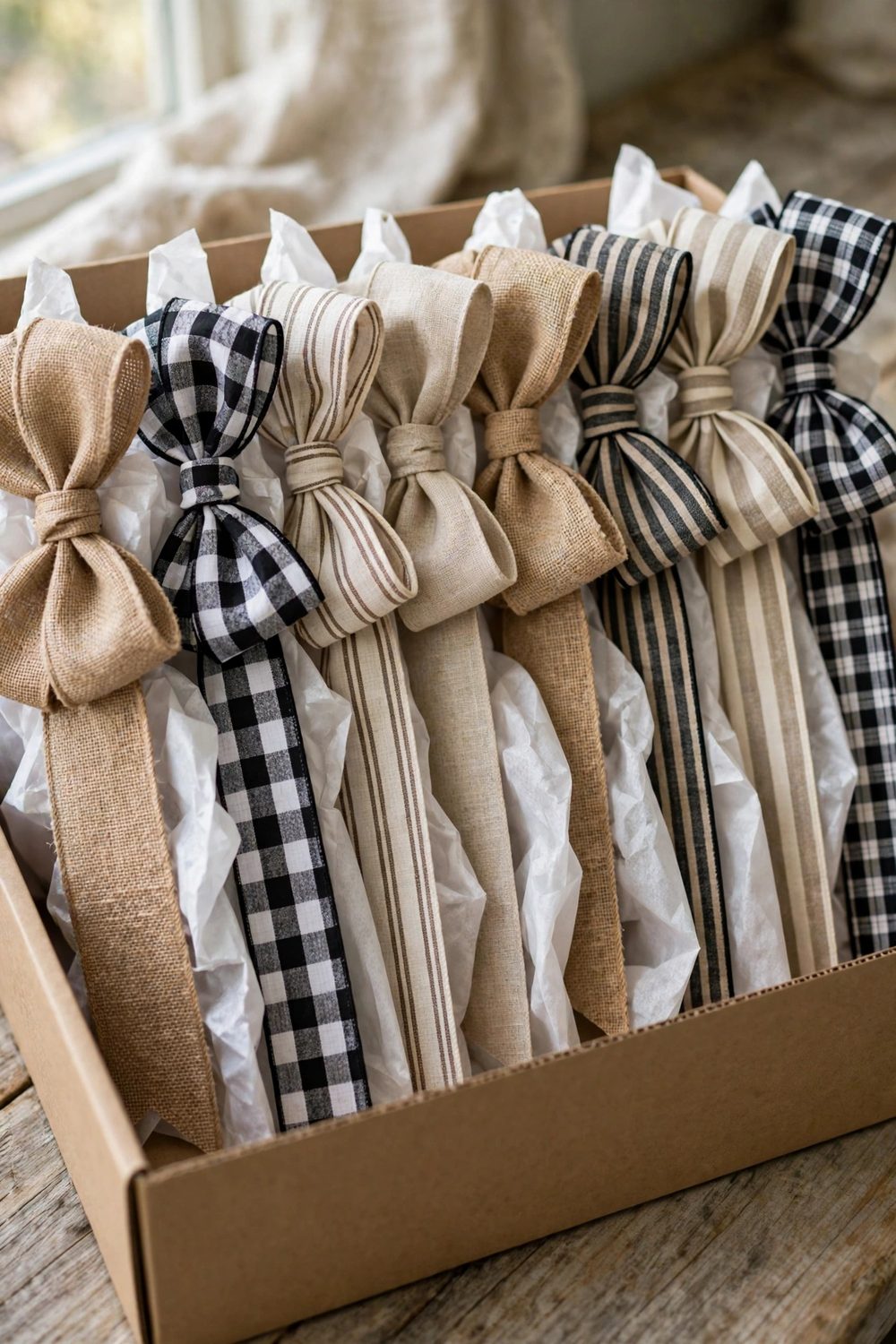
Oversized bows store best upright in a wide, shallow box like this one. Tissue between each bow keeps velvet from marking and burlap from snagging its neighbor.
Crushed loops are the main storage risk, since wired edges bend and soft cores flatten under weight. A single layer per box is safest, even though it uses more shelf space.
Reshape each bow when it comes out by opening the loops from the center knot outward. A few minutes of fluffing restores the full shape without any heat or tools.
15. How Many Bows a Farmhouse Tree Really Needs
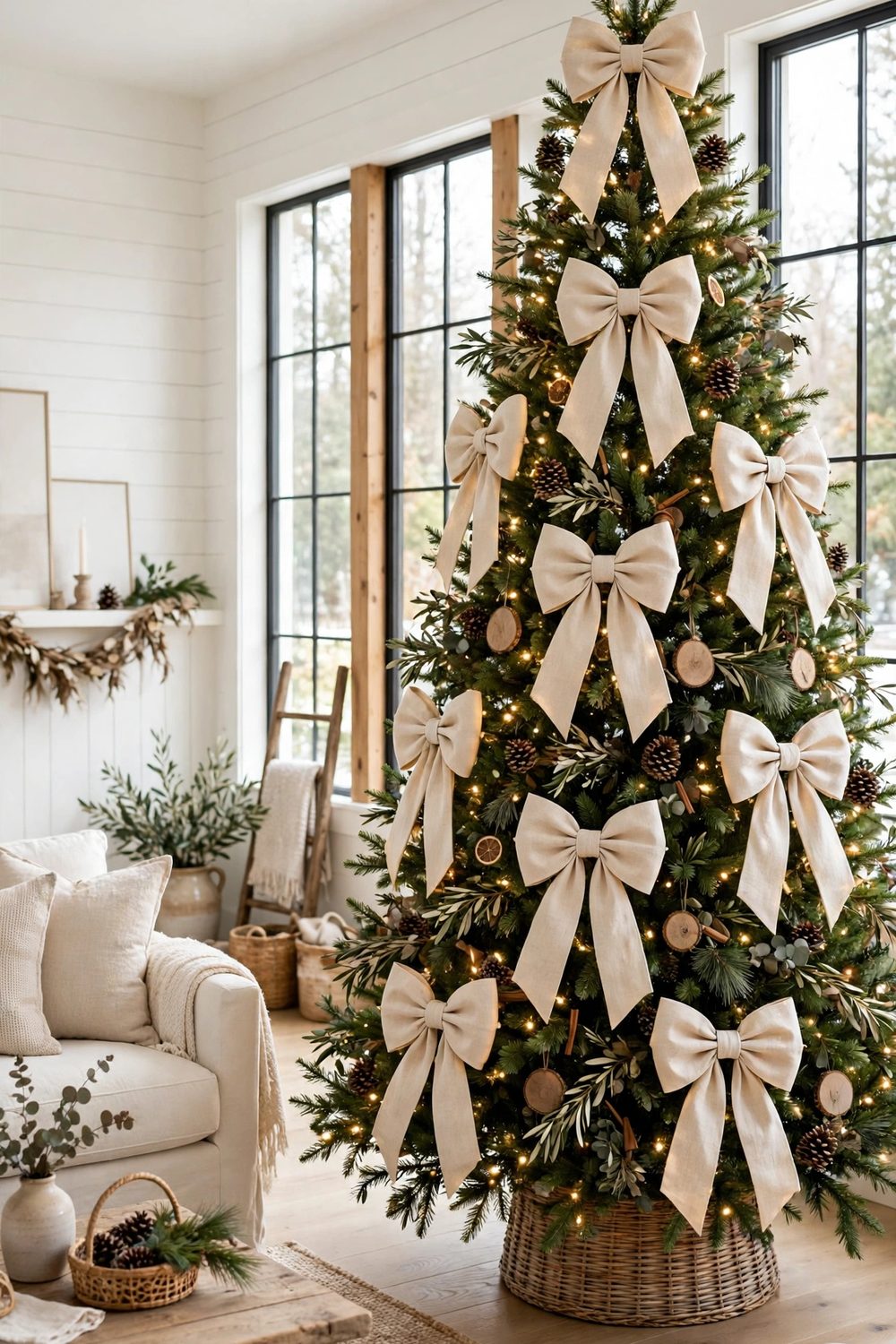
This full tree shows the finished count, with bows spaced one per branch layer from top to base. The even rhythm is what makes the farmhouse look feel generous rather than sparse.
As a plain guide, allow one oversized bow for each foot of tree height, plus one for the top. Slim trees need fewer, and our cozy rustic living room ideas show the room settings these trees suit best.
Hang the bows before the baubles so their wide loops claim space first. Fill around them with smaller pieces, and step back often to check the spacing from the doorway.
If the count feels short, add bows to the front and sides first. The back of the tree faces a wall in most rooms and needs no more than a token few.
Oversized bows work because they do two jobs at once. They fill space like an ornament and soften the tree like fabric, which is exactly the balance a farmhouse scheme needs.
Pick one fabric family, buy the count your tree height calls for, and store the bows flat and uncrushed. Add the topper bow last, once you can see the full shape from across the room.
The same set will shape your tree for many seasons to come, and it will still match your stockings, skirt, and garland when it comes out of the box next year.


