

Best Rustic Christmas Tree Decorations with Wood and Burlap Ornaments
A rustic tree is built from honest materials. Wood brings warmth and weight, burlap brings coarse texture, and small touches of metal, fruit, and twine fill the spaces between them.
This guide covers the decoration types that build the look in a steady order, from wood slice ornaments to the topper. Each idea names one product type, what it is made from, and how it behaves on real branches.
The scheme suits cabins and farmhouses, and it also softens a plain city living room. Our cozy rustic living room ideas show how the same materials carry across a whole room.
Start with the tree itself, since a rustic scheme suits a full, slightly uneven shape. Trees with visible trunk sections and varied branch lengths give wood and burlap room to settle in.
Natural materials need a little more care than plastic, mostly around drying and storage. The final ideas cover that side, so the set you buy this year is still sound next year.
This post contains affiliate links. If you buy through them, we may earn a small commission at no extra cost to you. See our Affiliate Disclosure.
1. Wood Slice Ornaments With Burned Designs
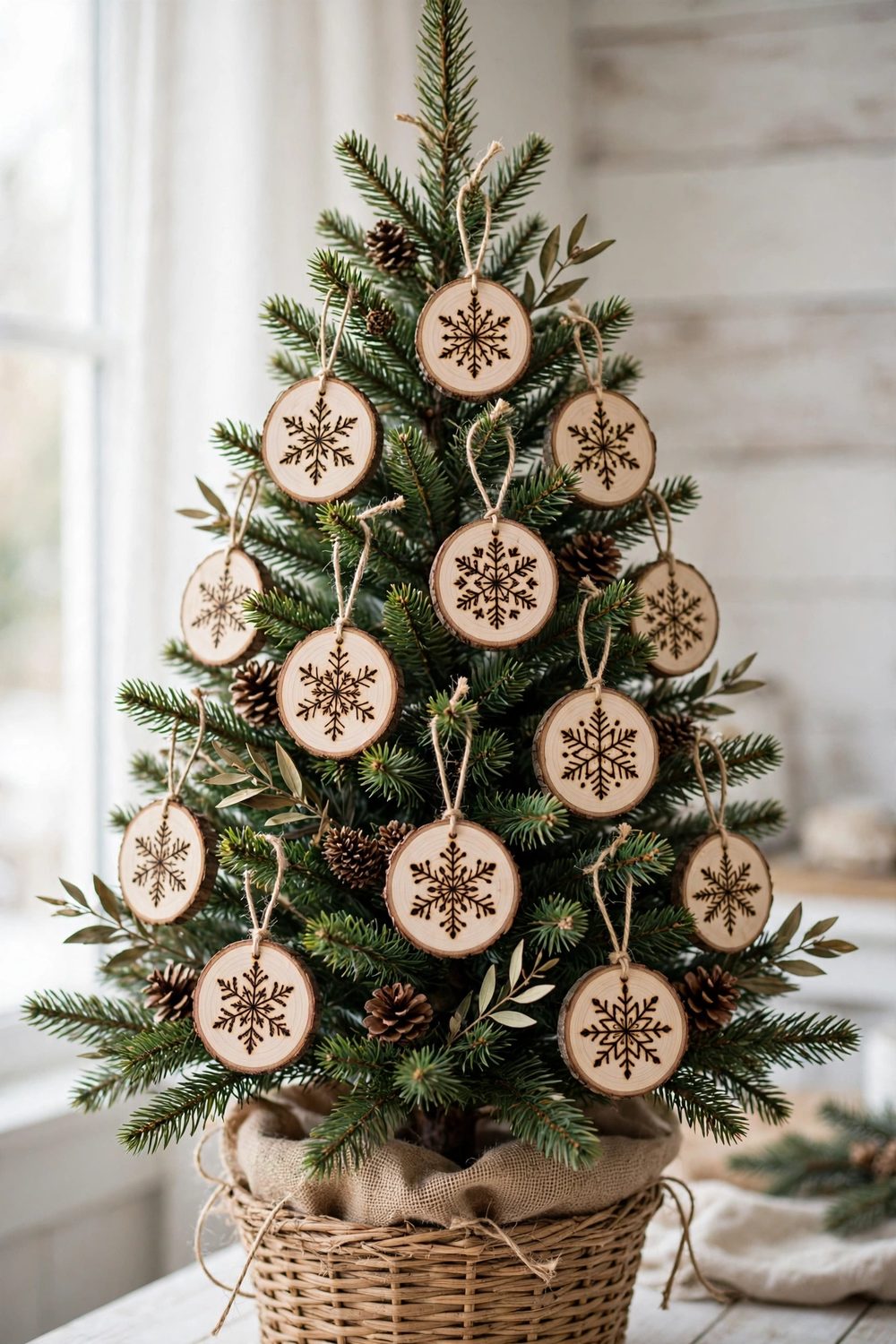
Round wood slices hang all over this tree, each one carrying a burned snowflake or tree design. The pale cut faces stand out against the dark green branches and read clearly from across the room.
Wood slice ornaments are cut from small branches or craft rounds, usually two to three inches across, with a drilled hole and a twine loop. Burned designs are made with a heated tool and never rub off in storage.
Check that each slice is fully dry and sanded before it goes on the tree. Damp or rough slices can mark softer ornaments stored beside them later.
Group slices in loose threes at different depths rather than spacing them like baubles. The natural material looks best in casual clusters that follow the branch shapes.
2. Burlap Garland Swags Between the Branches
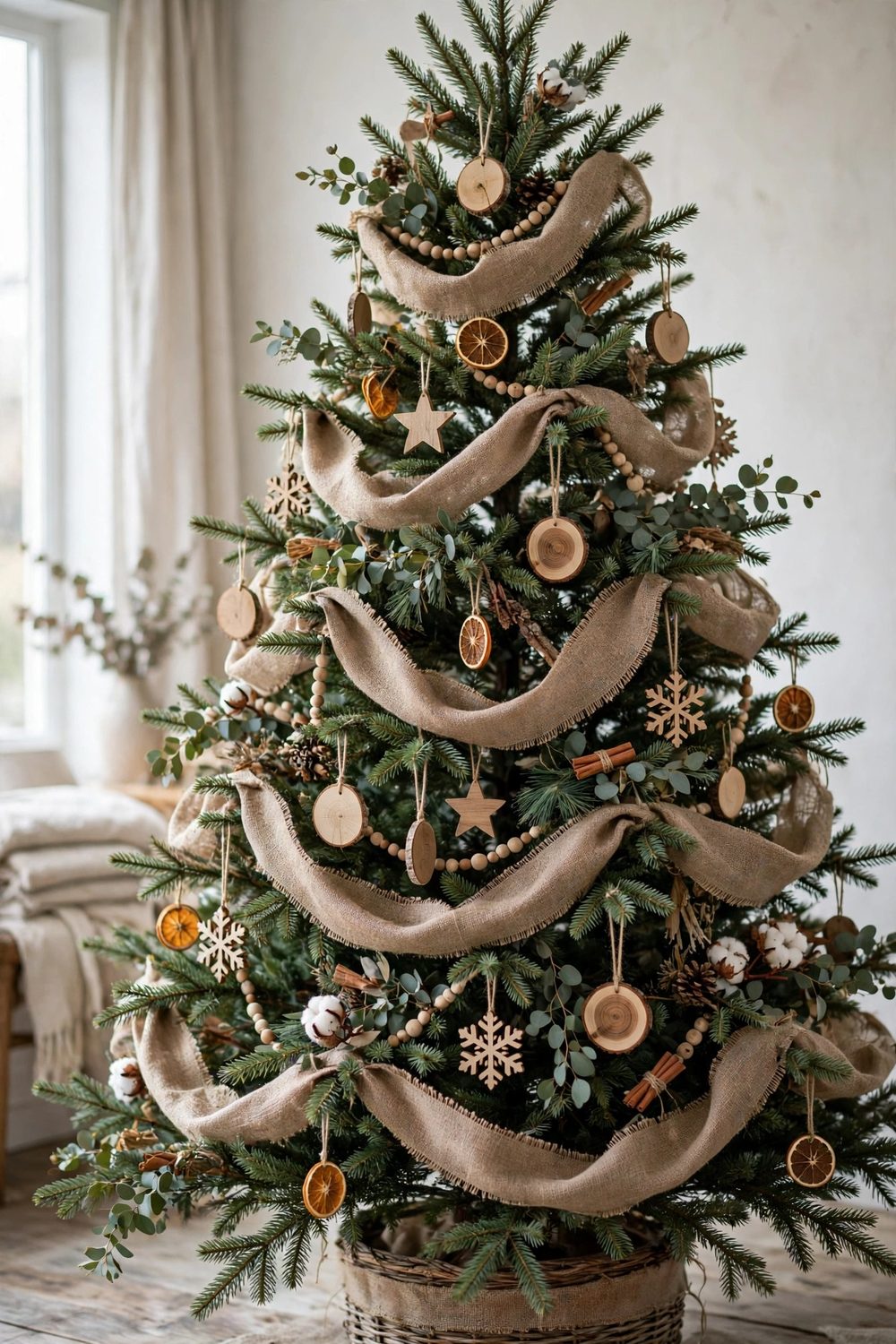
Wide burlap garland drapes in soft swags around this tree, settling between the wooden pieces. The coarse jute weave gives the whole tree its rustic base note.
Burlap garland is sold in rolls of wired or plain jute, commonly four to six inches wide. Our christmas tree skirt ideas in burlap or woven cotton finish the base in the same material family.
Drape the garland early, before the ornaments, and let each swag sit lower at the front. Tuck the ends deep near the trunk so the cut edges stay out of sight.
Shake burlap outdoors before it goes on the tree, since new jute sheds fine fibers. A quick shake keeps the fibers off the sofa and the gift wrap below.
3. Pinecone Ornaments in Natural and Frosted Finishes
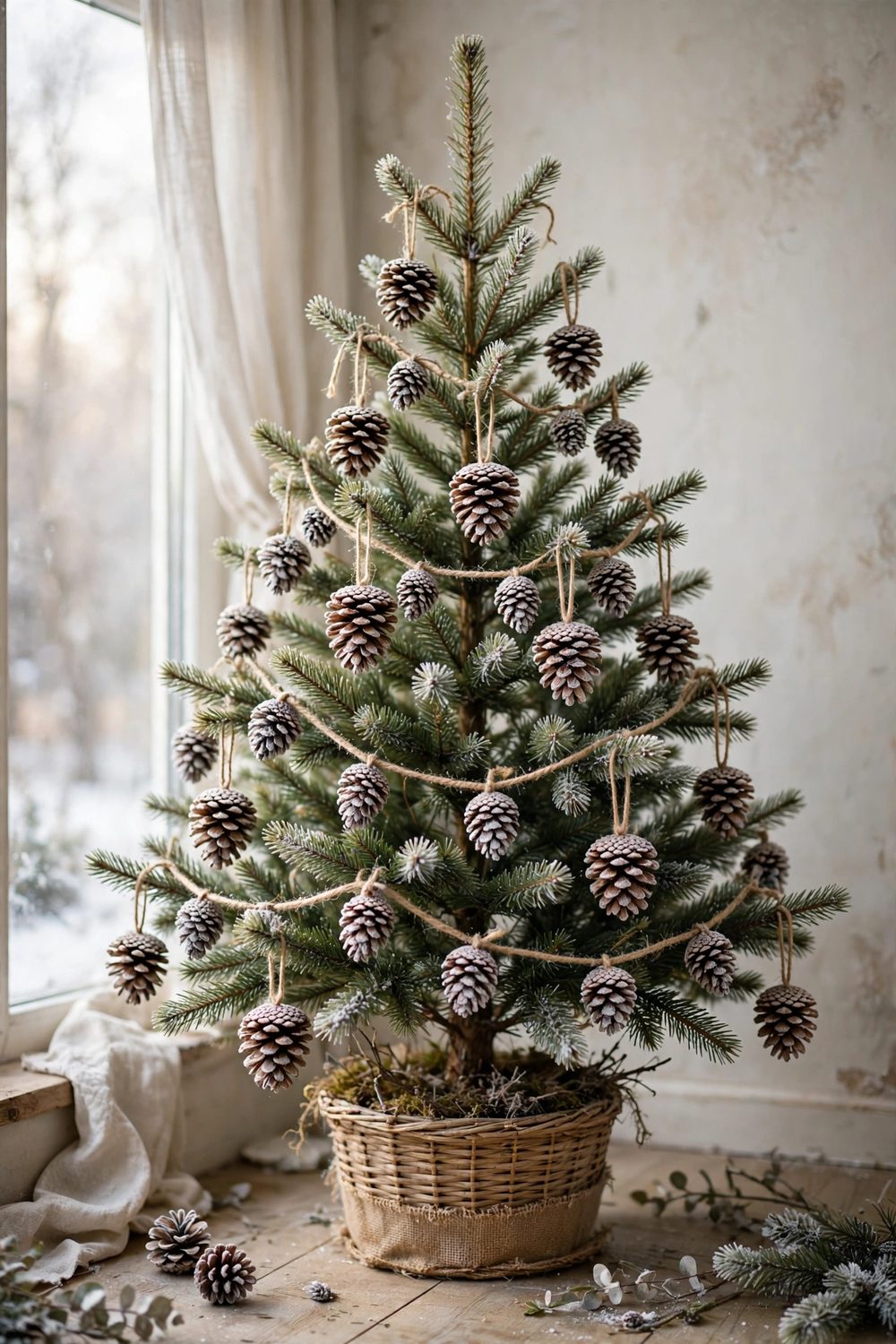
Pinecones hang at every level of this tree, in natural brown and lightly frosted finishes. Their scales add the most texture per piece of any rustic ornament type.
Pinecone ornaments come as real cones on twine loops or as resin copies molded from real cones. Real cones vary in size from about two to four inches and weigh very little, which suits thin branches.
If you gather your own cones, bake them on a low heat to dry the sap and close the scales before hanging. Store bought cones arrive cleaned and ready to use.
Mix frosted and natural cones in an even spread rather than zoning them by height. The blend reads as one gathered collection instead of two separate sets.
4. Carved Wooden Animal and Star Ornaments
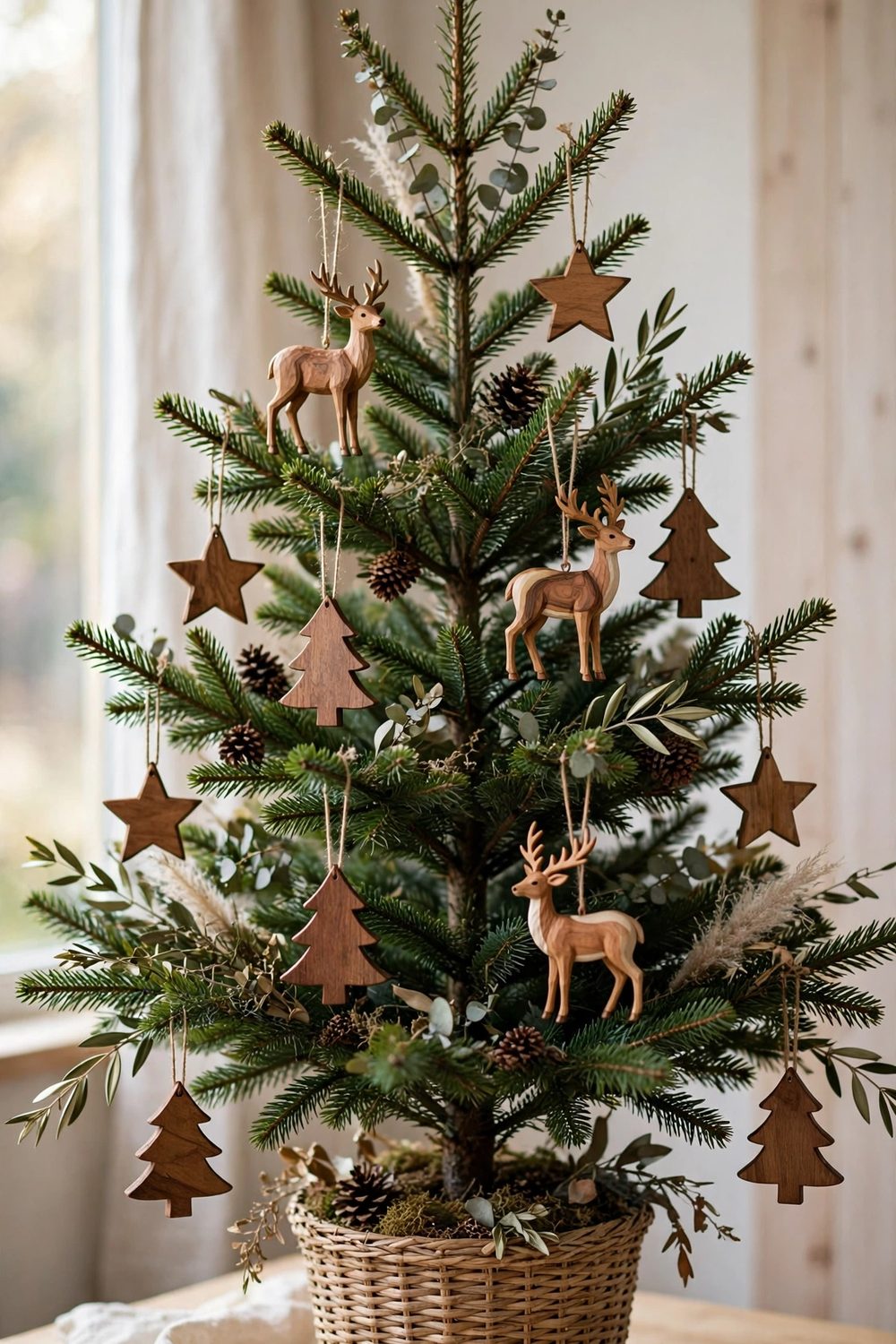
Carved wooden deer, stars, and small trees fill this tree in warm wood tones. The flat shapes hang neatly against the branches and suit a lodge or cabin room.
Carved ornaments are cut from pine, basswood, or plywood, then sanded and sometimes stained. Thickness matters, since very thin pieces can snap at narrow points like antlers or star tips.
Hang carved pieces on mid weight branches where they sit flat. A shape that twists sideways loses its outline, so use short loops that keep it facing the room.
Stained and natural pieces mix well in one tree, as long as the tones stay warm. A single pale piece among dark ones looks lost, so spread the finishes evenly.
5. Burlap Bow and Pouch Ornaments
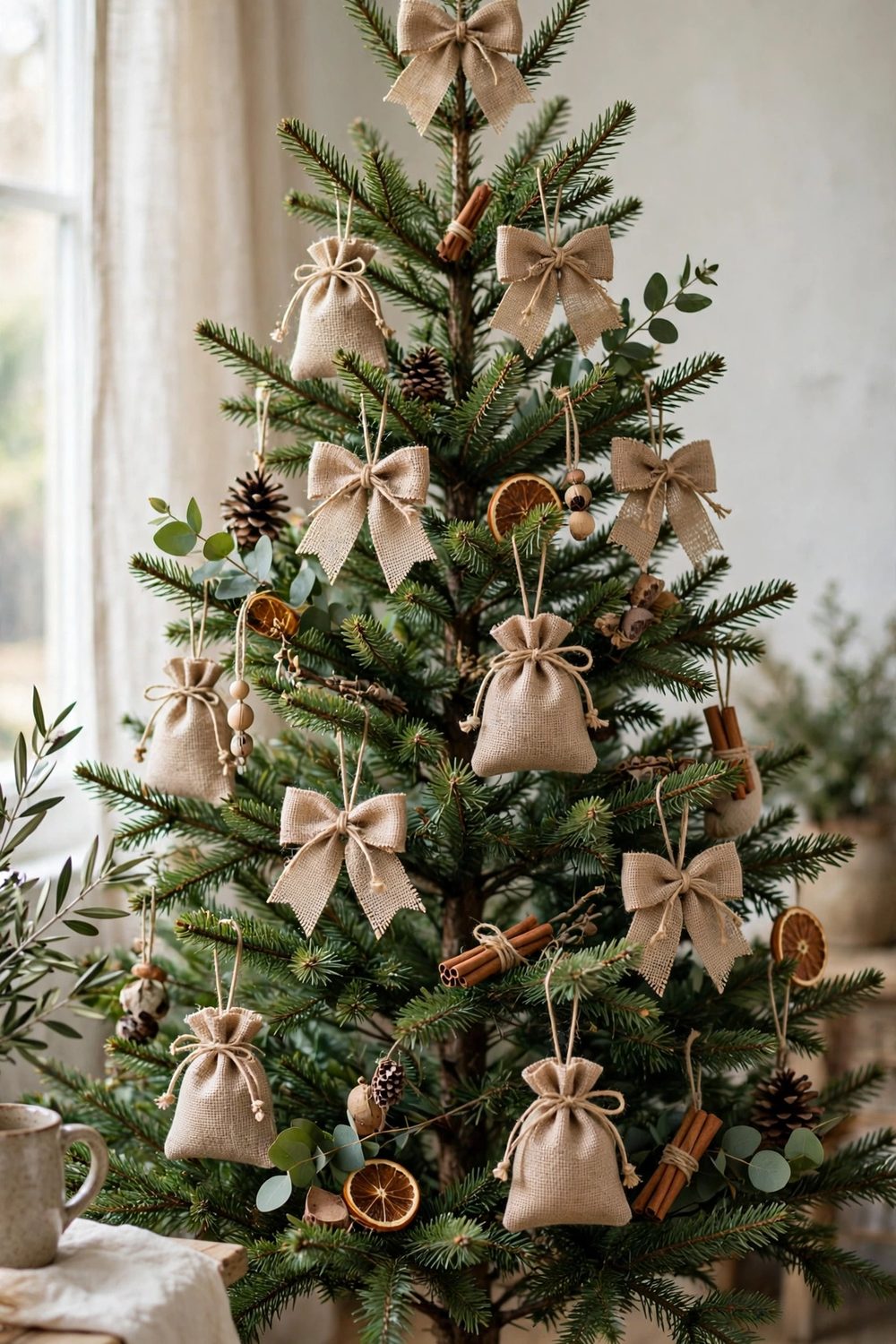
Small burlap bows and tiny pouch ornaments soften this tree between the wooden pieces. The pouches can hold a sprig of dried greenery or a single small cone.
Burlap ornaments use jute fabric over wire or stitched into shape, often with lace or cotton trim. They are light and unbreakable, which makes them kind to low branches in busy rooms.
Keep burlap away from glitter picks, since loose glitter sticks in the open weave and is hard to brush out. Store the pouches flat so their shape survives the off season.
Burlap softens with use, and older bows often look better than new ones. If a set arrives stiff, hang it near the tree for a day and the loops will relax.
6. Wooden Bead Garland in Natural Tones
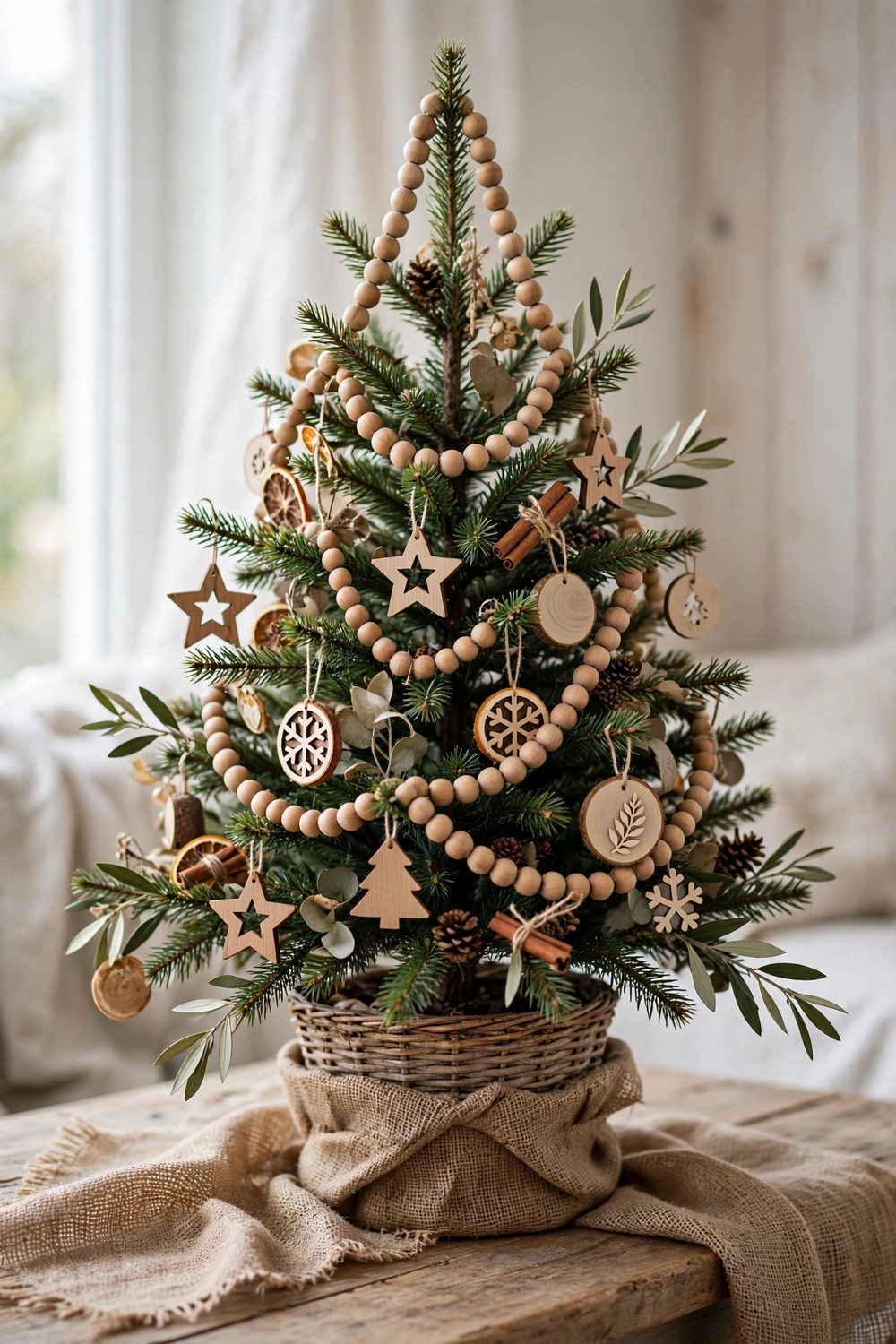
A natural wood bead garland loops around this tree in even rounds. The round beads echo the bauble shape while staying inside the rustic material palette.
Bead garlands are strung on jute or cotton cord, with beads from about half an inch to one inch across. The same natural palette runs through our best christmas kitchen towels and oven mitts guide for the kitchen.
Drape bead garland after the burlap, in shallower swags, so the two lines do not fight. Step back after each round and adjust the dips before adding ornaments.
7. Dried Orange and Cinnamon Ornaments
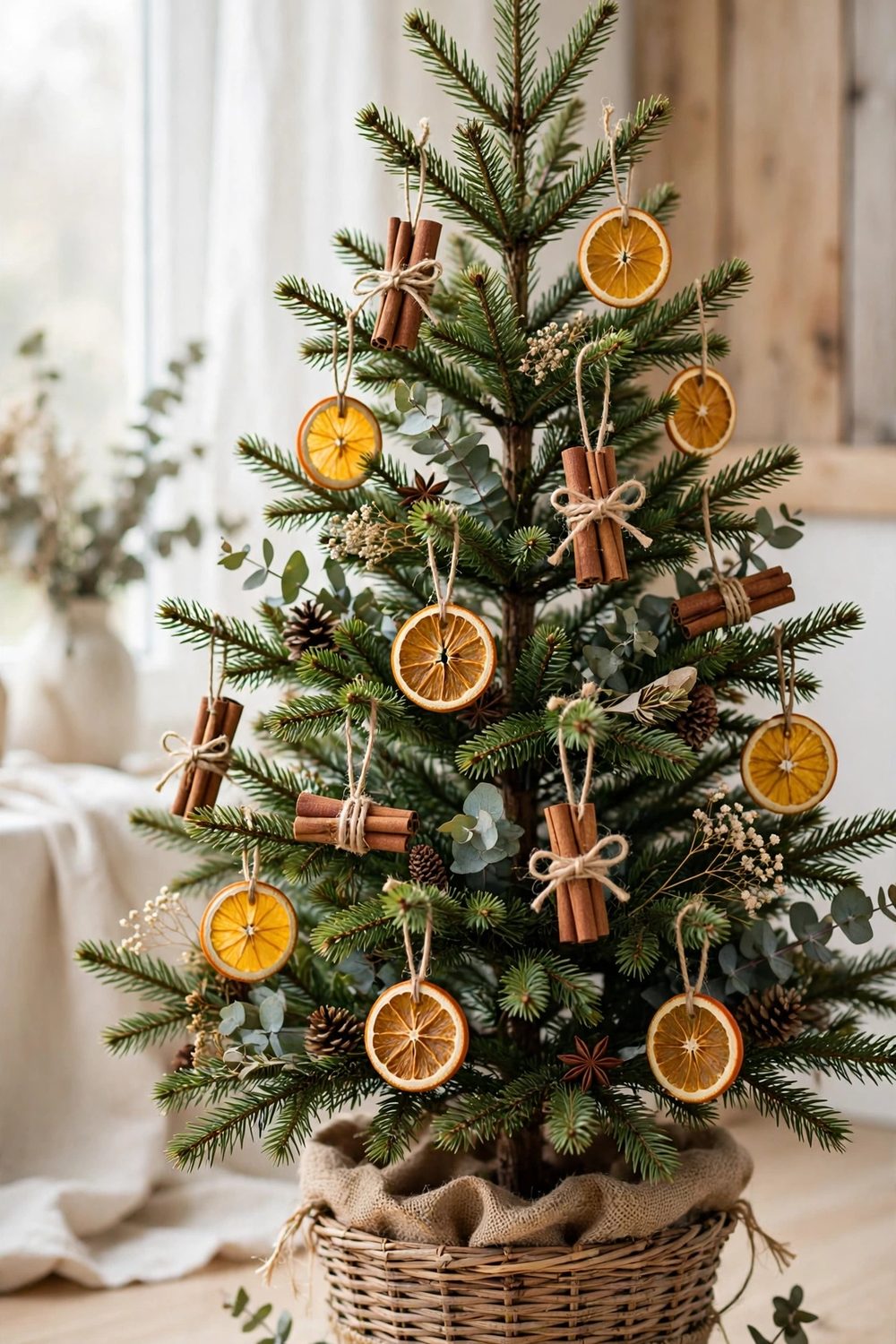
Dried orange slices and cinnamon stick bundles bring warm color to this tree. The amber fruit glows when a tree light sits behind it, and the spice adds a gentle scent nearby.
Dried fruit ornaments are real slices dried until firm, strung on twine or ribbon. They keep well for one season in most homes and are often replaced the next year for freshness.
Hang orange slices where light can pass through them, near branch tips. Keep them away from damp rooms, since stored moisture softens the fruit over time.
8. Galvanized Metal Stars and Bells
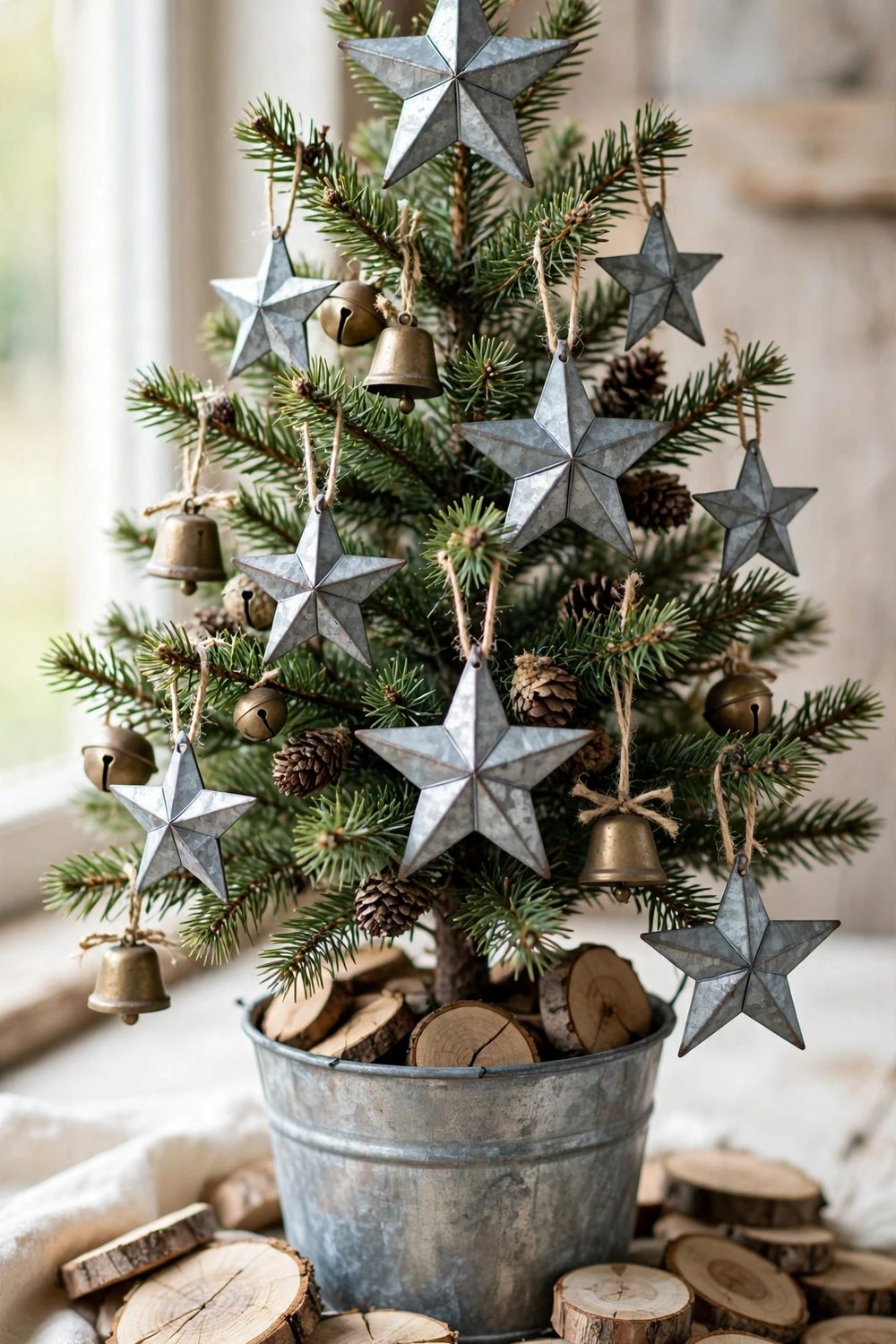
Galvanized stars and small bells add a cool metal note to this warm tree. The dull grey finish suits rustic schemes far better than bright chrome or polished gold.
Metal ornaments in this style are stamped or folded tin with a zinc style coating. Bells often carry a small clapper, and our christmas mantel ideas show the same metal used across a hearth display.
Space metal pieces evenly, since their weight can pull thin tips down. Hang bells where a passing sleeve might brush them, and the soft ring becomes part of the room.
9. Burlap and Lace Ribbon Layered Together
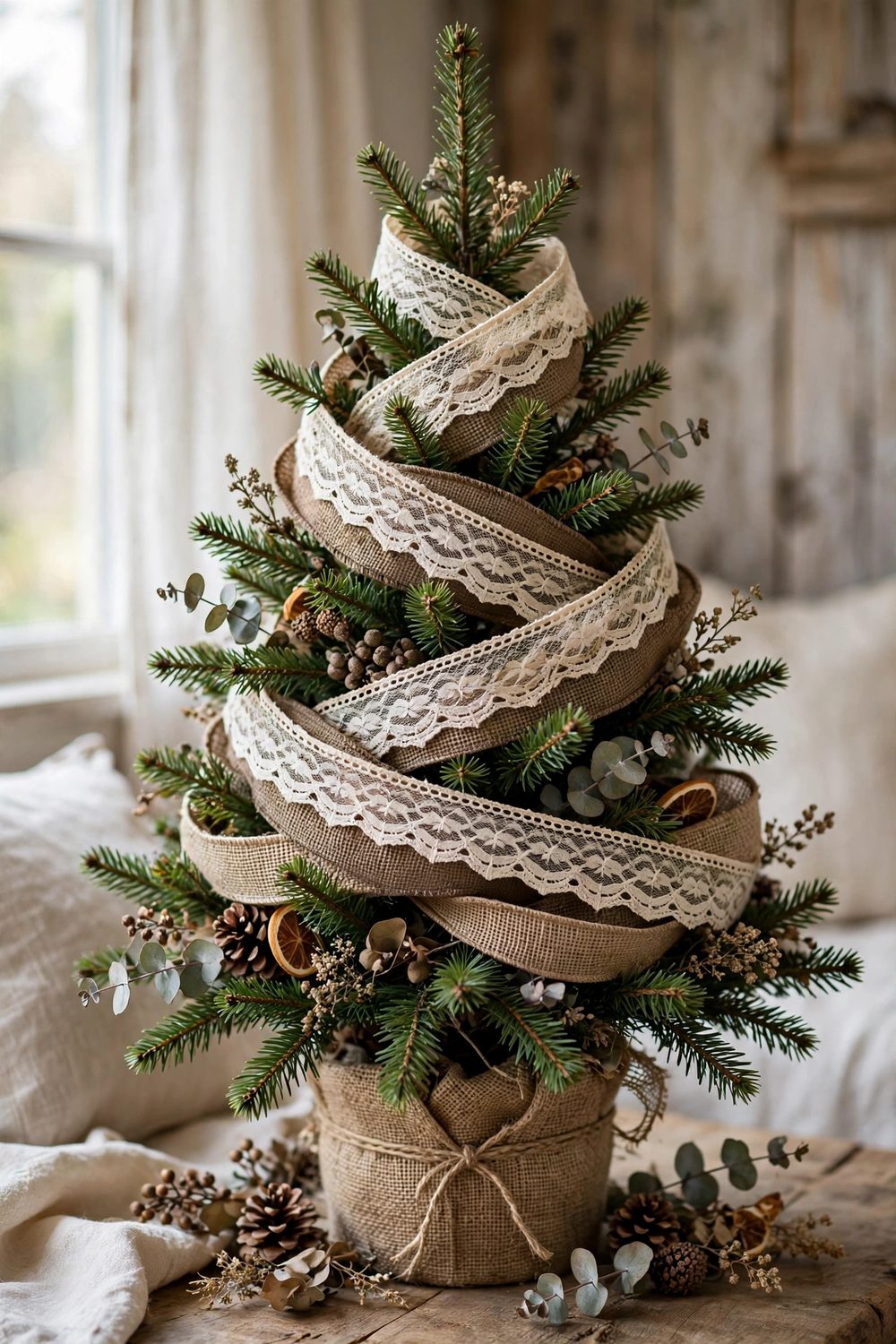
Burlap ribbon runs through this tree with a narrower cream lace ribbon laid over it. The pairing softens the jute and gives the rustic scheme a gentle, finished edge.
Layered ribbon works when the top layer is about half the width of the base. Wired edges on the burlap layer hold the shape, while the soft lace can fall naturally over it.
Weave both ribbons in one pass so they travel together around the tree. Trying to add the lace later, over finished ornaments, rarely sits as neatly.
Cut the lace a little longer than the burlap for each run, since soft ribbon travels further around the branches. Trim the spare at the trunk where it will not show.
10. Wooden Snowflake Ornaments in Pale Finishes
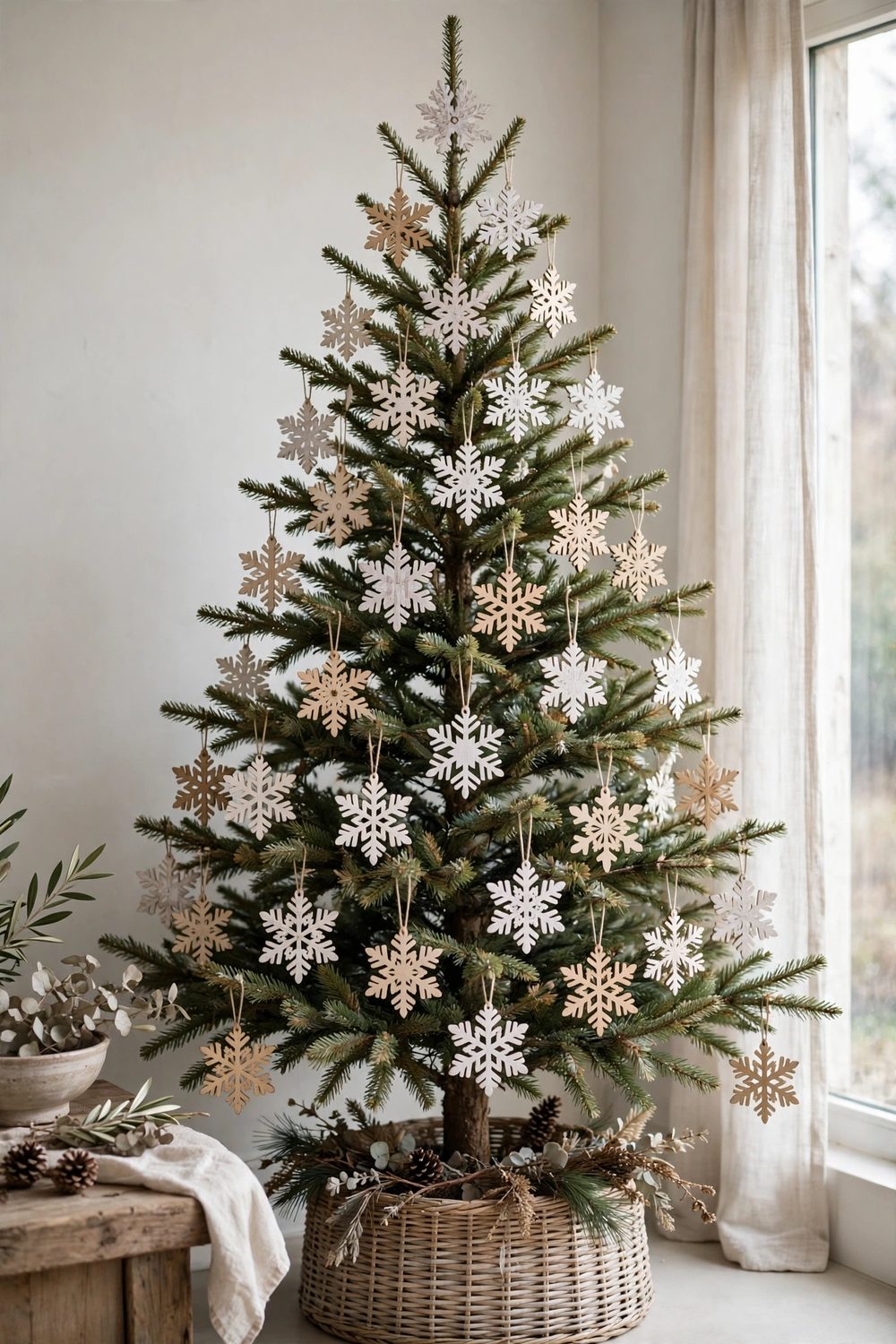
Pale wooden snowflakes open across this tree like frost on the branches. Whitewashed and natural finishes mix in one spread, which keeps the pale pieces from looking like a separate set.
Wooden snowflakes are laser cut or fret cut from thin plywood, in sizes from about three to five inches. Thin points are the weak spot, so check each one before it goes into storage.
Hang snowflakes at branch tips where their full outline shows against the dark green. A snowflake buried deep in the tree loses its shape and reads as clutter.
11. Twine Wrapped Baubles for Texture
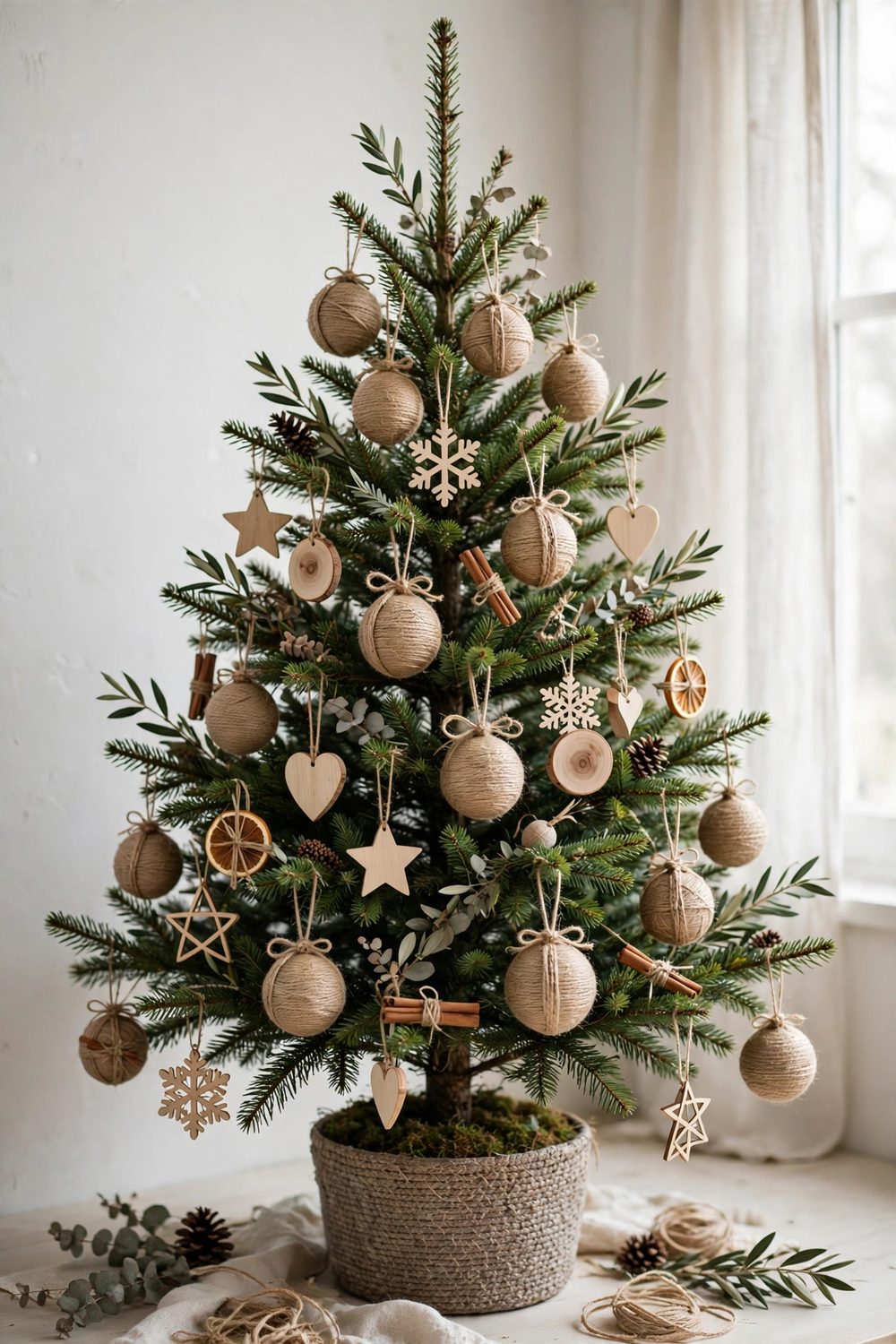
Twine wrapped baubles fill the gaps on this tree with a rough, natural texture. They give the round bauble form that rustic schemes still need, without any shine or plastic look.
These baubles are foam or plastic balls wound with jute twine and finished with a small loop. They are light, cheap to replace, and safe on the lowest branches.
Use twine baubles as the filler layer, the way other schemes use plain glass. Choose hooks with a firm bend, since smooth caps on twine balls can slide on thin wire.
12. Rustic Tree Topper Choices in Wood and Straw
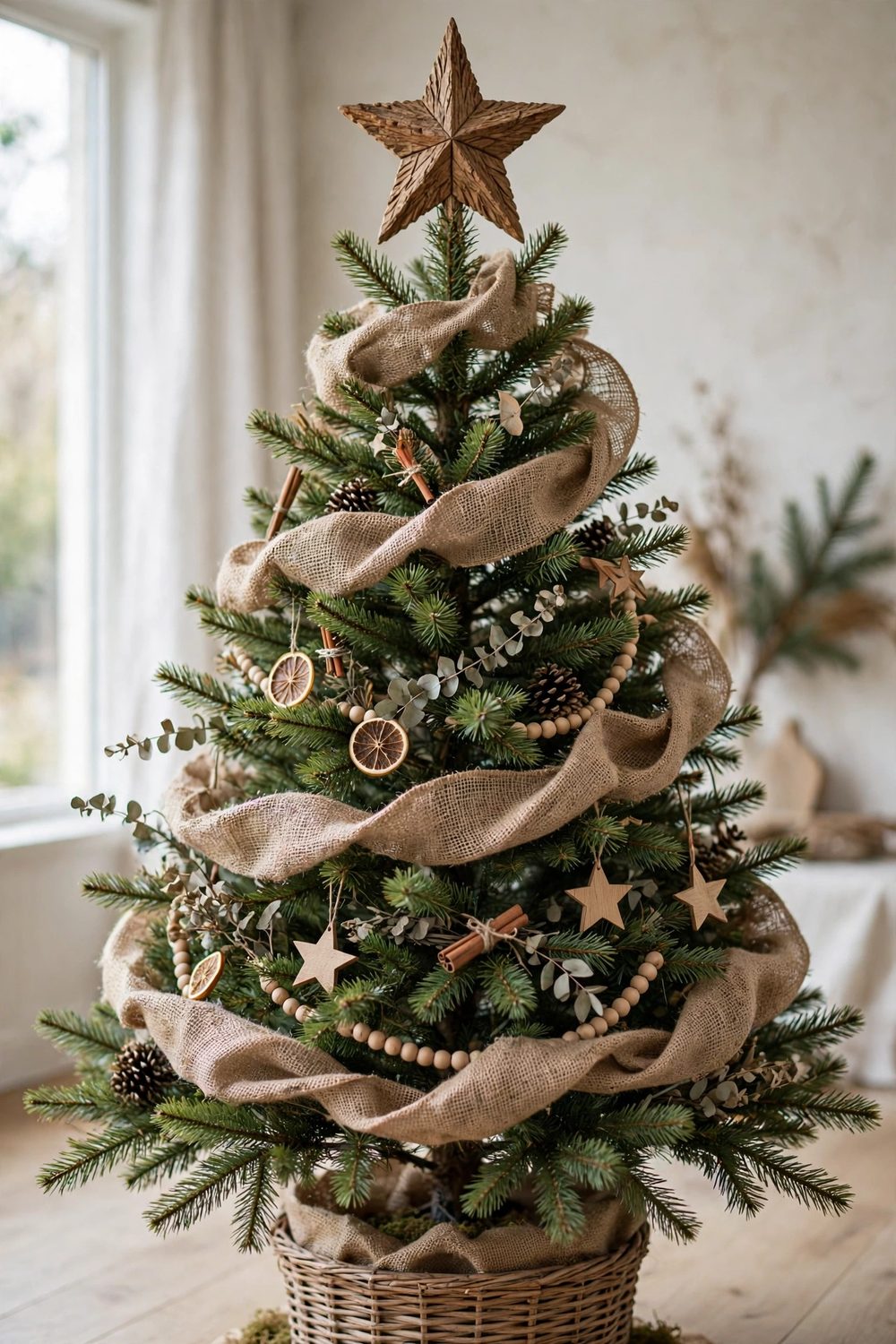
A carved wooden star tops this tree, its warm grain matching the slices below. Straw and woven toppers offer a lighter option in the same natural family.
Wooden toppers are carved or layered plywood, fixed with a cone or clip base. Weight matters at the top, so check that the spike of your tree is firm before choosing a heavy carved piece.
Straighten the topper from across the room once the tree is dressed. A wooden star shows a lean clearly, and small shifts are easy while the lower branches are still clear.
If the top spike is short, lash the topper base to the trunk with twine in a cross pattern. The rustic material hides the join and holds through the season.
13. Handmade Look Ornaments for a Collected Feel
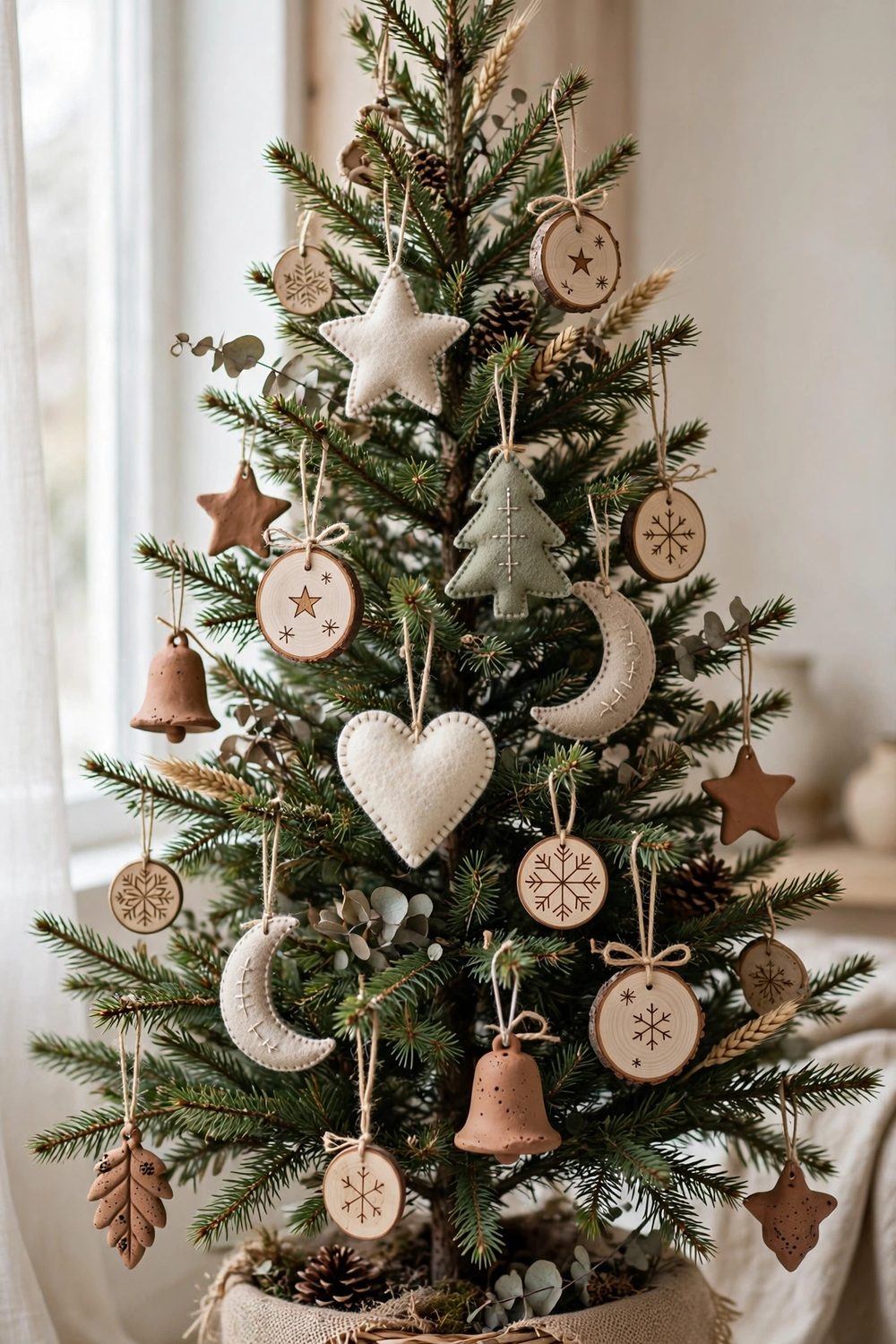
Stitched felt, small clay shapes, and painted wood pieces give this tree a collected, handmade feel. Slight variation between pieces is the point, since it reads as gathered over years.
Handmade look sets are sold as mixed packs of natural materials, or you can build the group slowly from craft fairs and your own projects. Keep the palette to wood, cream, and one warm accent.
Mix handmade pieces evenly with the plain wood and burlap layers. A single cluster of them looks like a craft display rather than part of the tree.
Date any pieces you make yourself, on the back in pencil. Years later the small note turns a plain ornament into the one the family looks for first.
14. Storage That Keeps Natural Materials Fresh
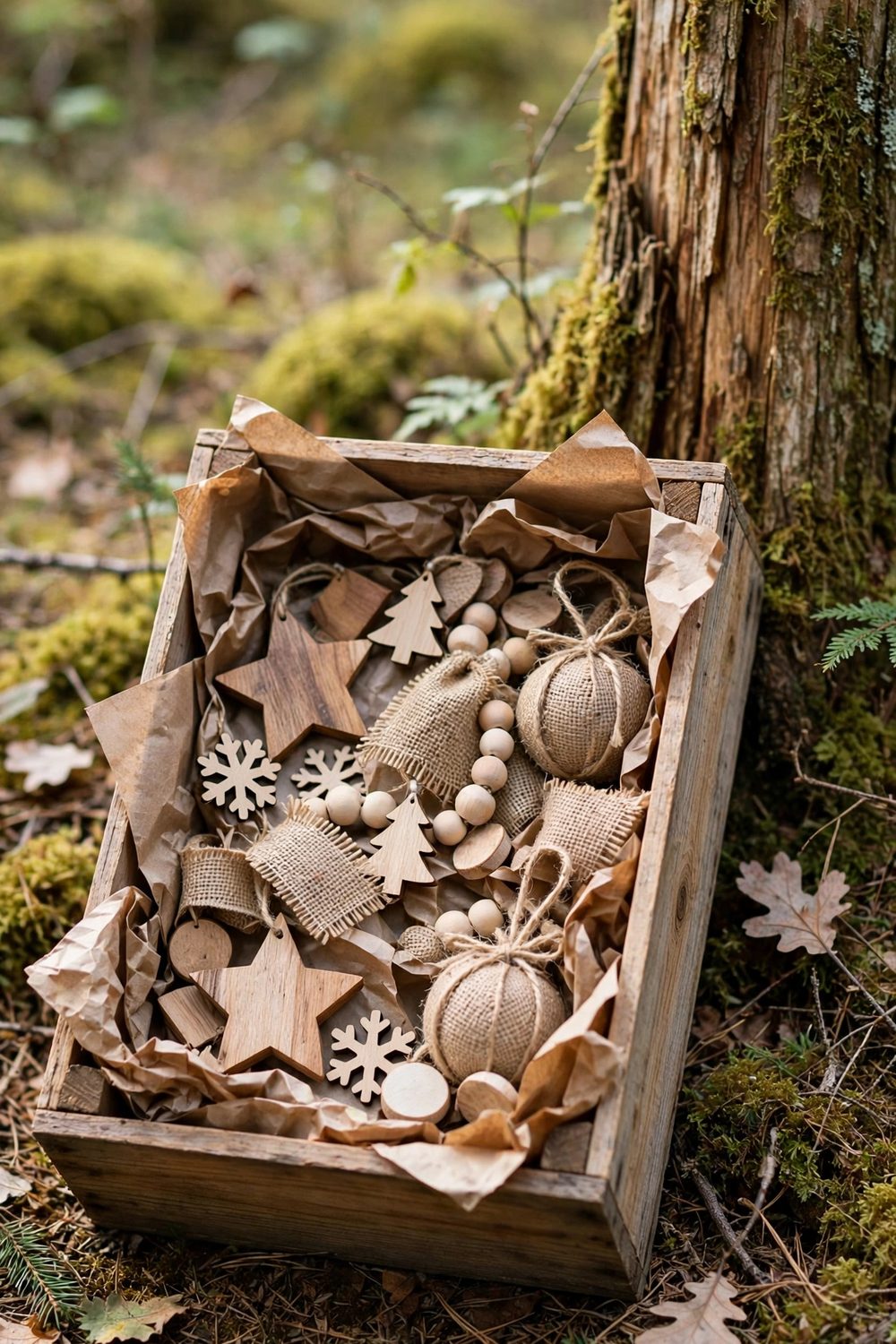
Natural ornaments store best in a crate like this one, with paper between the layers. Wood, jute, and dried pieces all suffer in sealed plastic, where trapped damp can mark or soften them.
Let every piece dry fully before packing, and keep dried fruit in its own small box. Our best ornament storage boxes guide covers divided options for the fragile pieces in a mixed set.
Store the crate in a dry indoor space rather than a damp garage. A quick check mid year catches any musty smell before it reaches the rest of the set.
15. A Rustic Formula With Red Used Sparingly
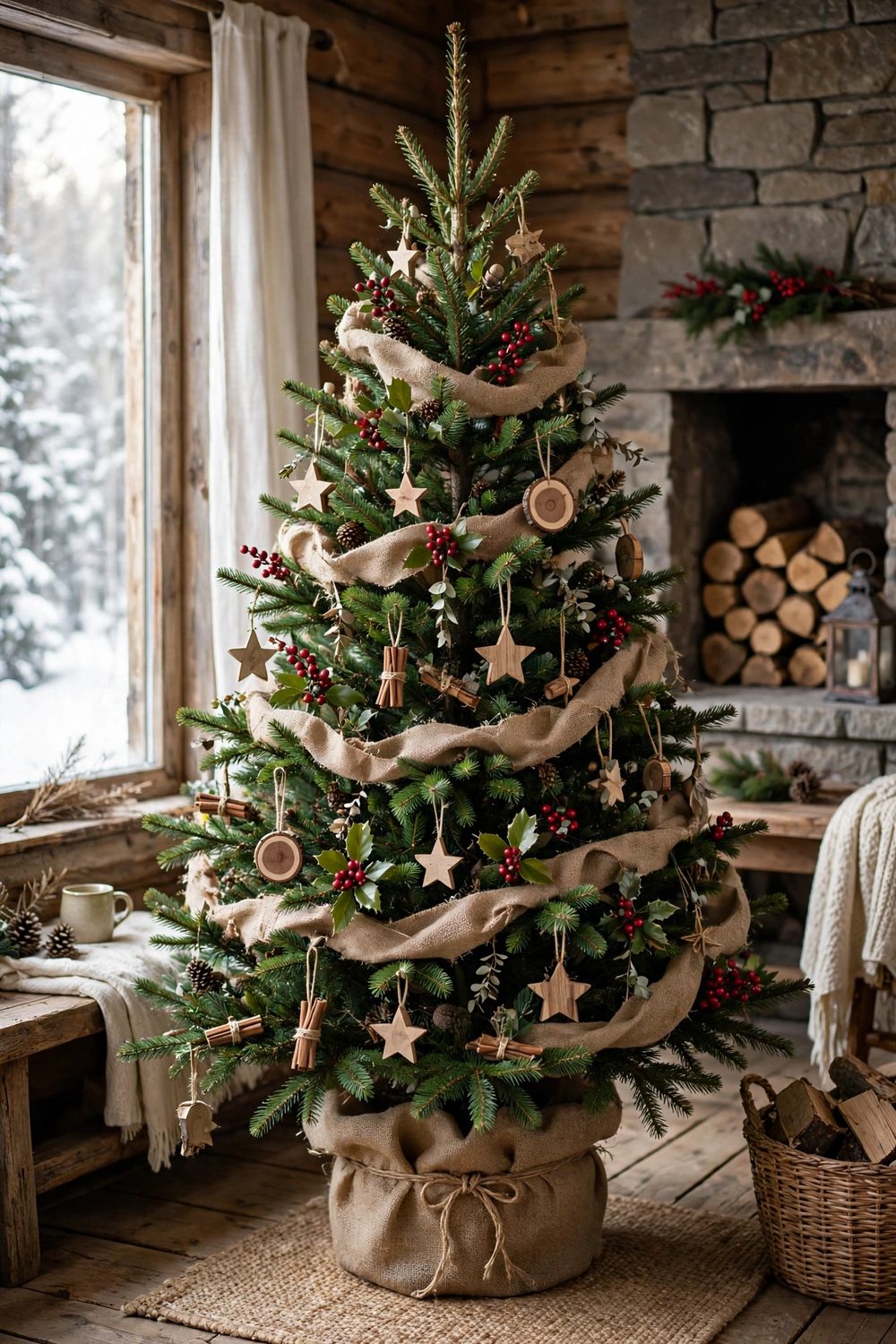
This finished tree holds the rustic line with a few deep red berry sprigs used sparingly. The single warm accent lifts the browns and creams without turning the tree into a red scheme.
A steady rustic ratio is about fifty percent wood, thirty percent burlap and twine, and twenty percent metal, fruit, and accent pieces mixed. The balance scales from tabletop trees to tall cabin trees.
Photograph the finished tree before packing away, and note which pieces came from nature. Fruit and gathered cones may need replacing, while the wood and metal core lasts for years.
Rustic decorating rewards a short material list used with confidence. Wood, burlap, twine, and one or two accents will carry a whole tree when each type is given its own layer.
Dry everything before it is stored, keep natural pieces out of sealed plastic, and replace only the fruit and gathered pieces each year. Add one new wooden type at a time and the set grows in a planned way.
The wooden core of the set should last for many seasons, and it will still suit the room if your furniture or colors change around it.


