

15 Small Living Room Ideas With a Daybed for Overnight Guests
Your living room is also your guest room, whether you planned it that way or not. When family visits a small home, the sofa cushions and an air bed on the floor usually end up doing the job.
A daybed does that job far better. It seats three people all day, sleeps one guest well at night and asks for no folding, pumping or clearing of a spare room you do not have. It also looks like real furniture, not a camp bed.
These small living room ideas with a daybed for overnight guests cover placement, daytime styling and the small comforts that help a guest sleep well in a shared room.
None of it needs a big room or a big spend. Most ideas use what a daybed already offers and arrange the rest of the room around one calm, clear sleep setup. A little planning before the visit does most of the work.
This post contains affiliate links. If you buy through them, we may earn a small commission at no extra cost to you. See our Affiliate Disclosure.
1. Place the Daybed Flat Against the Longest Wall
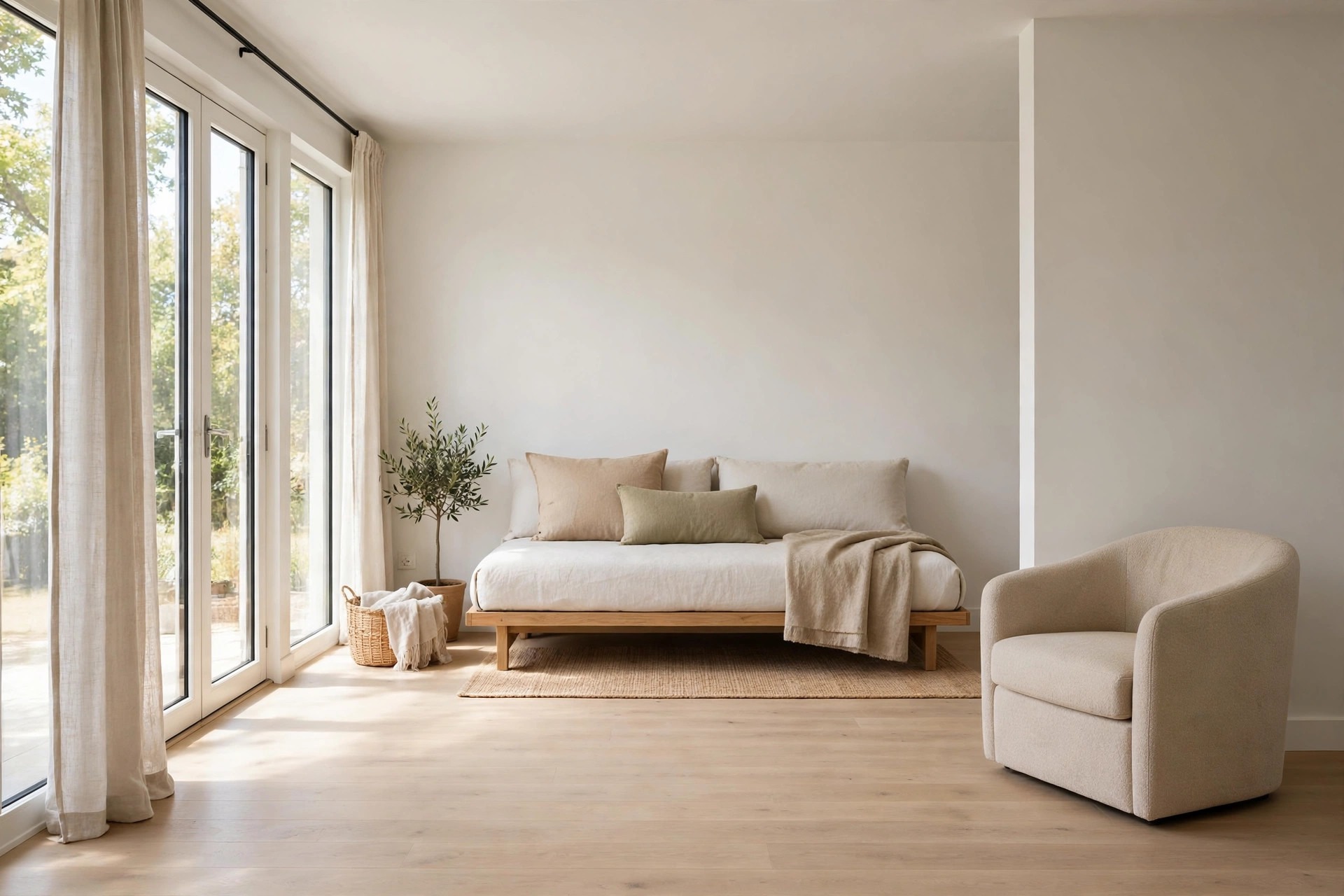
Placement decides whether a daybed feels like a sofa or a bed that wandered into the wrong room. Flat against the longest wall, it reads as seating first and leaves the middle of the room open.
Leave the short walls for chairs and storage instead. A daybed squeezed onto a short wall pushes its length into the walkway, and every trip across the room becomes a shuffle past the frame.
Homes that split one room into sleep and lounge zones will find the same logic in these studio apartment ideas with a bed and a sofa. One long wall anchor keeps both zones calm.
Check the wall for radiators or vents first, since heat behind the head end makes for poor sleep.
2. Dress It Like a Sofa With Bolsters Along the Back

A bare daybed mattress looks like a bed waiting for night. Two long bolsters along the back wall change the read at once, giving sitters a firm backrest and the room a sofa shape.
Add two or three smaller cushions in front of the bolsters, no more. A deep pile looks plush in photos but leaves guests nowhere to sit without moving an armful of pillows first.
Choose a tailored cover in a solid color for the base. Prints on the mattress cover fight with every cushion you add, while a plain base lets you swap cushion colors by season.
At night the bolsters move to the foot end or a chair, so bed making stays quick and calm.
3. Keep Guest Bedding Inside the Drawers or Under the Frame
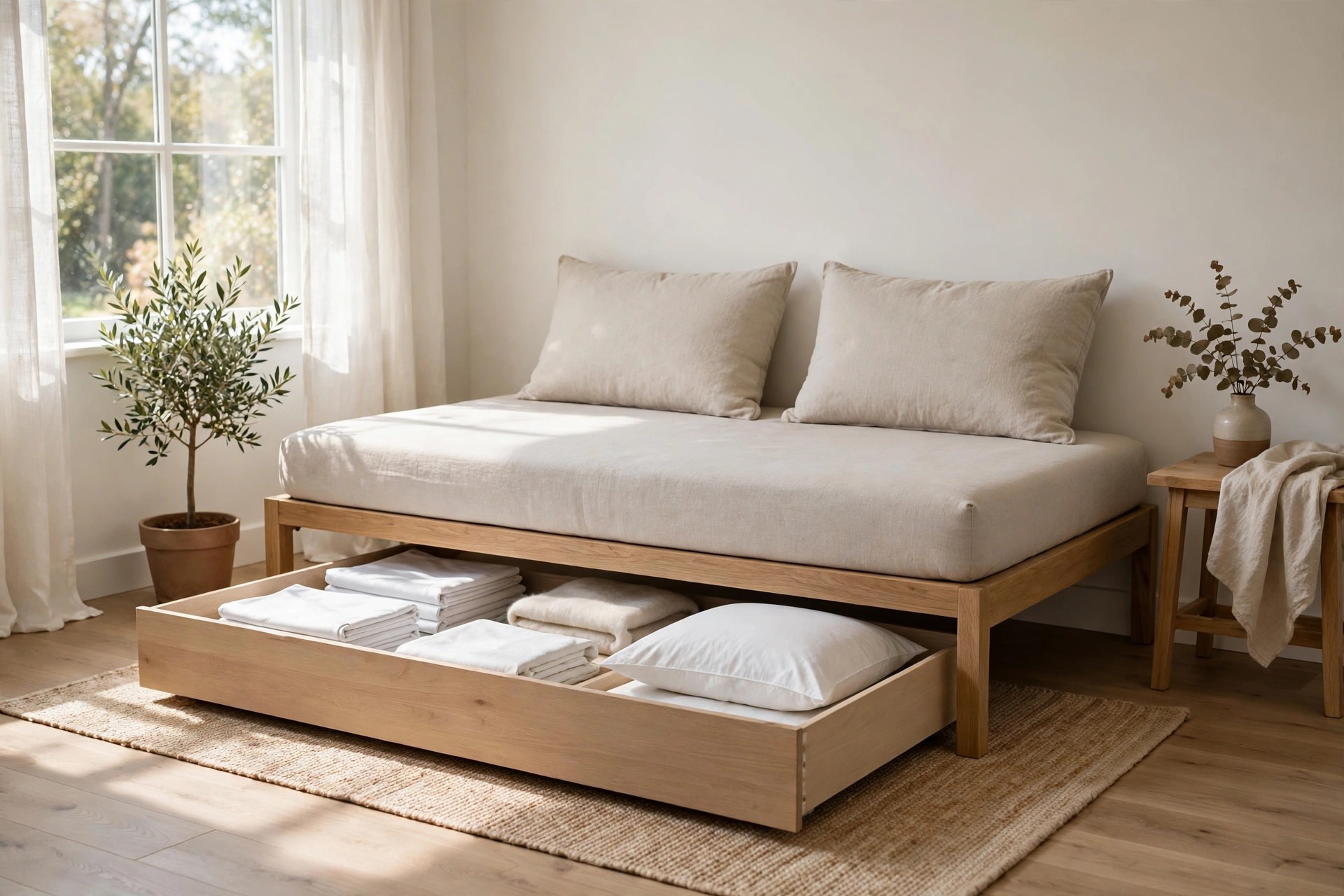
Guest bedding that lives in another room turns bedtime into a treasure hunt. Sheets, a spare pillow and a light blanket should live in the daybed drawers or in a flat box beneath the frame.
Wash and fold the set after each visit, then put it straight back. Future you, standing in socks at midnight before a guest arrives, will be glad the set is clean and complete.
If your frame has no drawers, use two low lidded boxes that slide fully under it. Keep them dust free and matched, so the storage reads as part of the furniture, not clutter.
Add one spare pillowcase to the set, since it is the piece most often needed mid visit.
4. Add a Trundle Only If the Floor Clears at Night

A trundle sounds like free extra sleep space, and it can be, for couples or two kids visiting together. But it only works if the floor in front of the daybed clears completely at night.
Measure the pull out space honestly, coffee table moved and rug edge included. If the table has to leave the room each night, most hosts stop offering the trundle within a year.
Test the full pull out before you buy, wheels, bedding and all. A trundle that fits on paper but scrapes the rug or blocks the door is worse than no trundle at all.
For single guests, a plain daybed with good bedding beats a cramped trundle pulled out every night.
5. Use Nesting Tables That Split When Guests Stay

One side table cannot serve a sofa, a chair and a guest in bed at once. Nesting tables solve this quietly. They stack into one small footprint by day and split into two or three surfaces at night.
Our guide to nesting side tables for small living rooms shows shapes that tuck neatly beside a frame. Send the smallest table to the far side of the daybed as a guest nightstand.
That small move matters more than it sounds. A guest with water, glasses and a phone charger within reach sleeps better than one balancing everything on the floor beside the mattress.
Wipe the nested set weekly, since stacked tables gather dust rings that show the moment they split.
6. Leave a Clear Walkway on the Room Side of the Bed
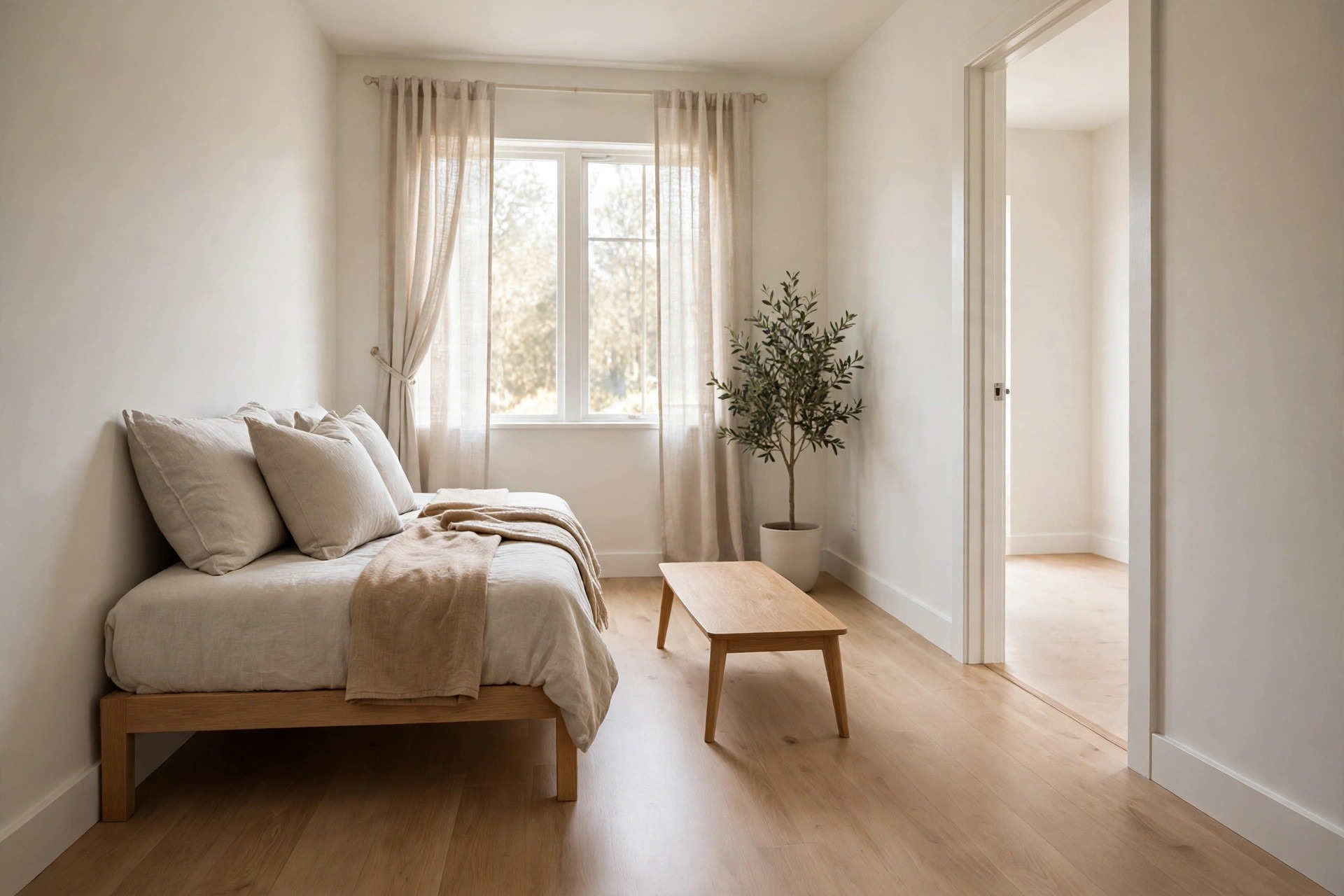
Guests get up in the dark in a room they do not know. A clear path from the daybed to the door is a safety basic, not a styling extra, in a small living room.
Keep that lane free of baskets, shoes and charging cords every night, and not just when guests stay. Habits built on ordinary evenings are the ones still in place when your sister visits at short notice.
Angle the coffee table so its corners stay out of the lane. Low, soft edged pieces forgive a sleepy misstep, while a sharp corner at shin height will be remembered for the wrong reasons.
A small plug in night light at floor level helps too, without lighting the whole room at night.
7. Layer a Washable Day Cover Over the Sleep Bedding

Daily life is hard on a bed that doubles as a sofa. Coffee, crumbs and pet paws land where your guest will sleep, so the sleep layer needs a washable shield during the day.
Lay a sturdy day cover or a large washable throw over the made bed each morning. At night it folds away and the clean sheets underneath are ready, with no late laundry session required.
Pick a cover with enough weight to stay smooth under sitters. Thin covers bunch and slide by lunch, and the constant tugging makes the daybed look untidy even in a clean room.
Choose a cover color close to the sheets, so the swap looks calm rather than patched together.
8. Give Guests a Small Lamp Within Easy Reach
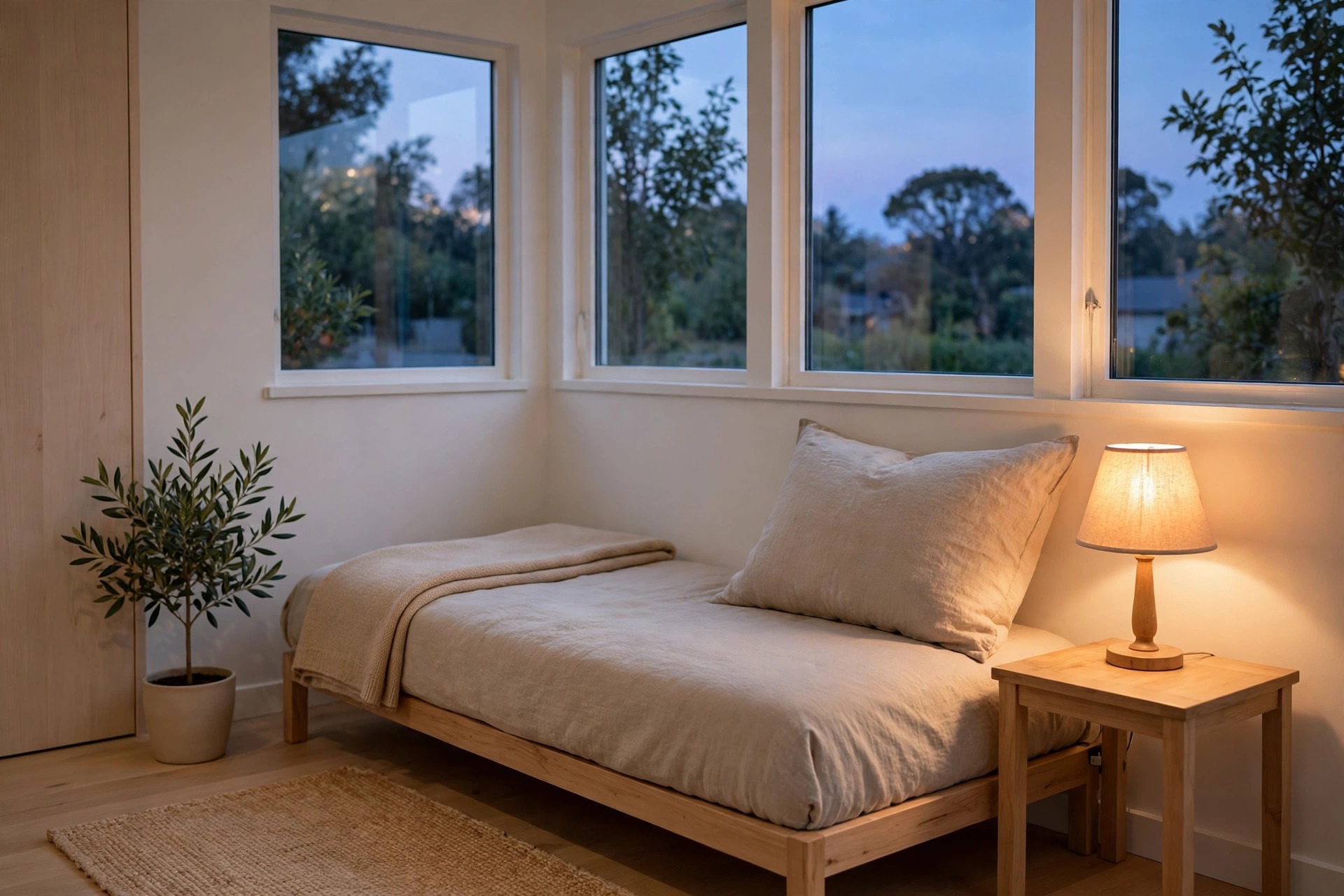
The ceiling light switch is never where a guest needs it at midnight. A small lamp within reach of the pillow lets them read, settle and find their way without waking the whole home.
Place it on the nesting table or a wall side stool at pillow height. A shaded bulb is kinder than a bare one when someone switches it on half asleep in an unfamiliar room.
Run the cord behind the frame and tape down any loose length. A lamp that tips when the cord is tugged helps nobody, and the fix takes less than a minute to do properly.
Tell your guest where the switch is on arrival, not after they have fumbled for it in darkness.
9. Keep Floor Cushions Nearby for Extra Daytime Seats
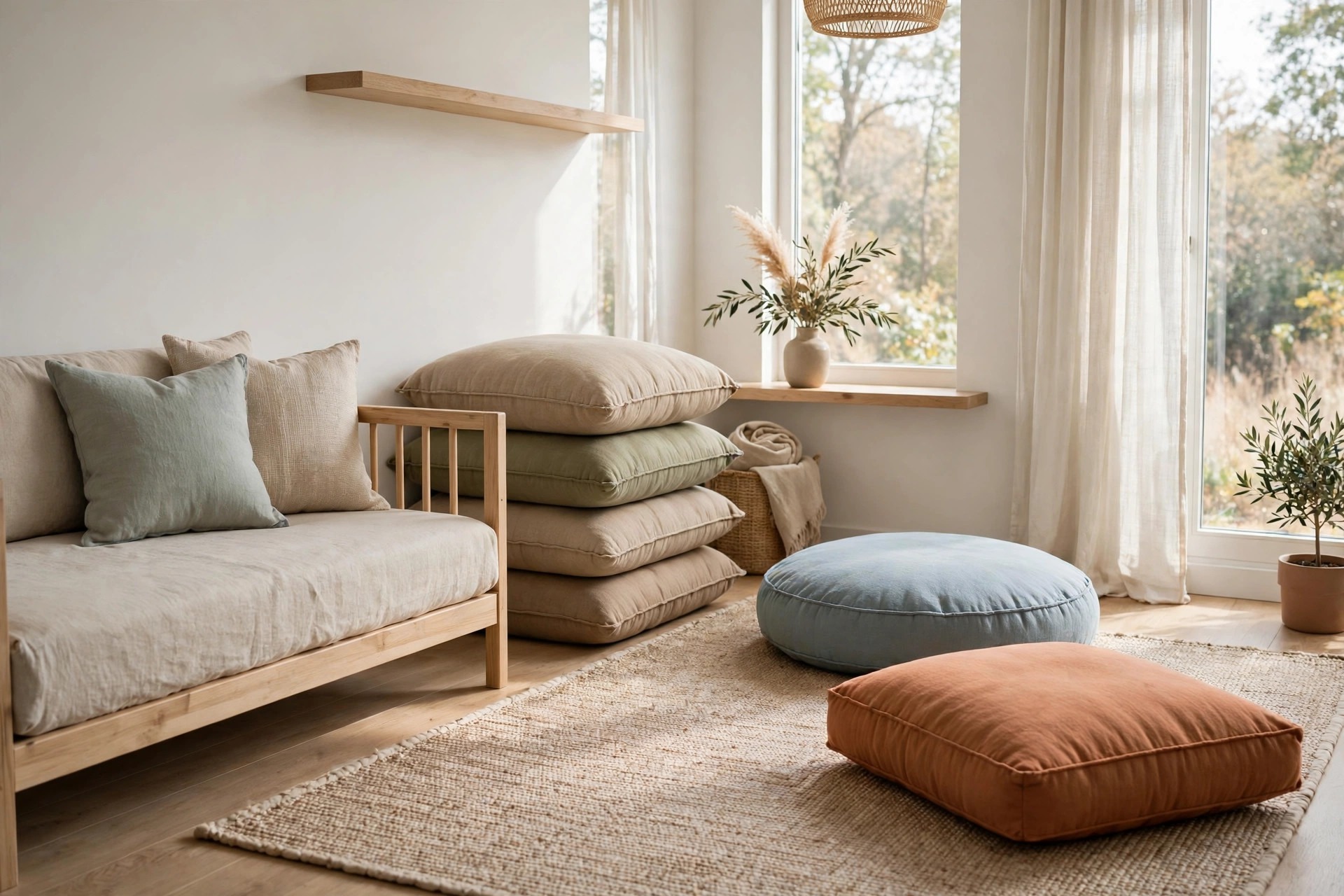
A daybed seats three at most, and visiting families rarely travel in threes. Floor cushions add seats without adding furniture, then stack in a corner or slide under a console when the visit ends.
Our roundup of floor cushions for extra living room seating covers sizes that store well in small rooms. Choose firm fills, since soft cushions flatten fast and leave sitters nearly on the floorboards.
At night the same stack becomes a soft landing beside the bed for younger guests. One set of cushions, two jobs, and no spare chairs eating floor space all year round.
Keep the stack beside the daybed, within reach of the people most likely to use the seats.
10. Add a Light Screen or Curtain for a Sense of Privacy

Sleeping in someone living room feels exposed, even among family. A light folding screen beside the daybed gives a guest a corner of their own without closing off the whole room.
A curtain on a tension rod across an alcove works the same way where the layout allows it. Either option folds or draws back by morning, so the room returns to full living space fast.
Hosts who skip a TV can go further, as in these small living room ideas with a projector instead of a TV. A calm, screen free corner helps a guest wind down sooner.
Fold the screen away before breakfast, so your guest does not feel the room is still a bedroom.
11. Keep One Empty Basket Ready for Guest Belongings
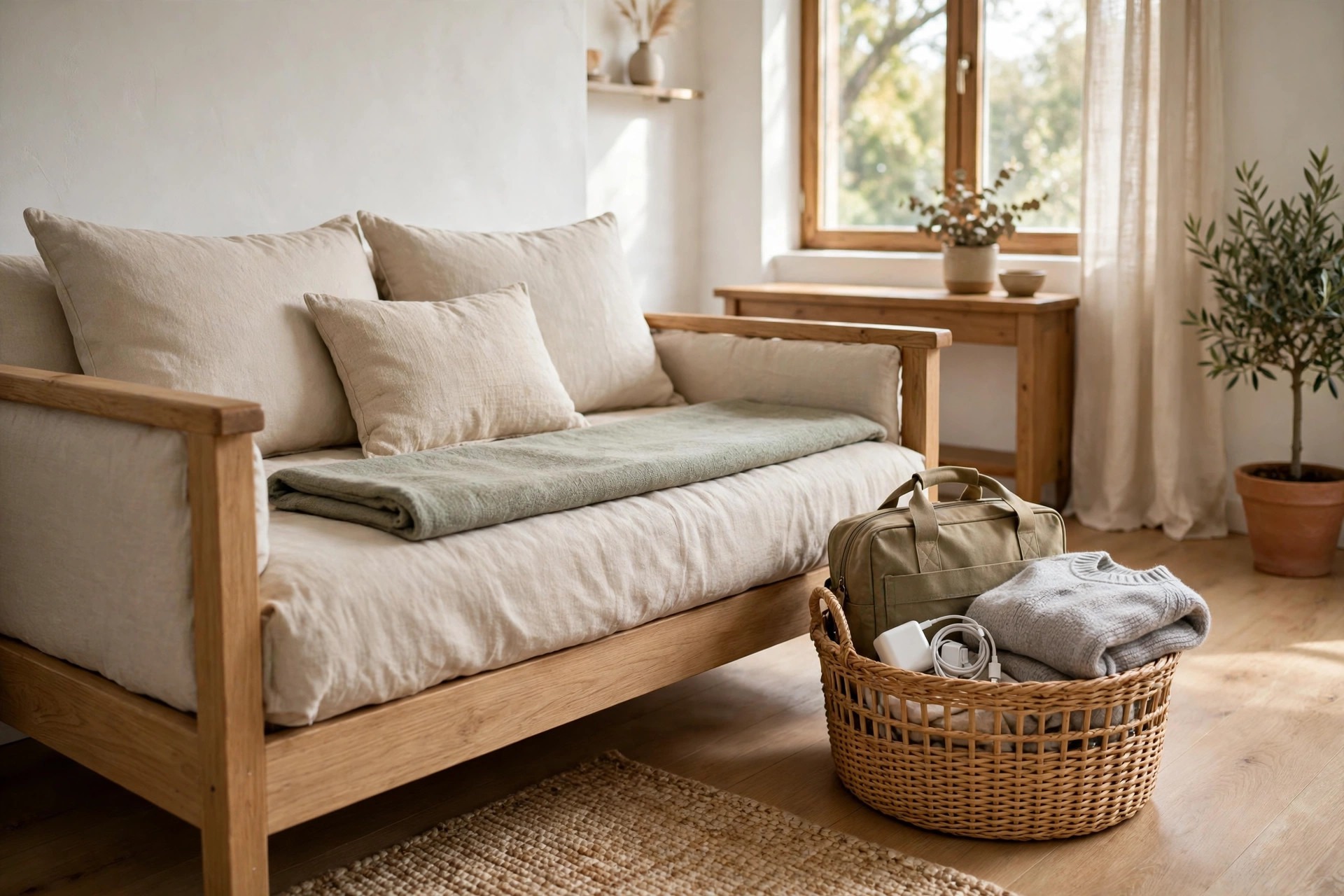
Guests arrive with a bag and nowhere kind to put it. Without a spot, it lives on the floor by the door, gets stepped around all weekend and makes the small room feel smaller.
Keep one empty basket or a low open box beside the daybed for their things. It holds the bag, a folded sweater and the book they are reading, all off the floor and easy to find.
Empty it back to nothing after each visit. A guest basket that slowly fills with your own clutter between visits is just another storage box, and the welcome it offered is gone.
Leave a phone charger in the basket as well, since it is the item guests ask for most.
12. Choose a Rug That Stays Flat Once the Bed Is Made
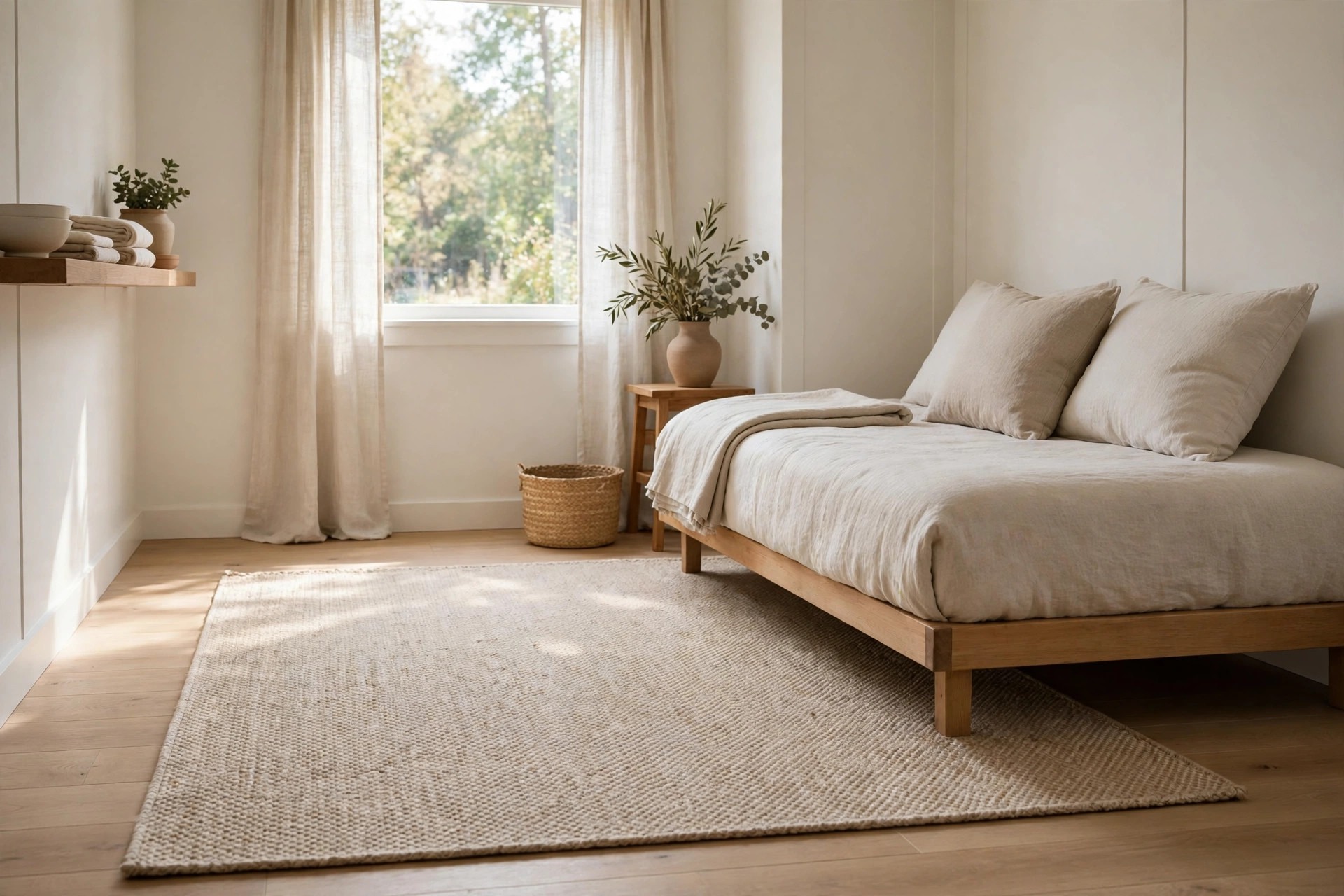
A thick, plush rug feels lovely under daytime feet and fights you at night. Trundle wheels catch on it, bedding drapes onto it and the whole sleep setup looks makeshift by morning.
Choose a low, flat weave rug for the daybed zone, with a pad that grips the floor. The edge should sit where bare feet land, soft enough for comfort and flat enough for wheels.
Watch the door swing too. A rug edge that curls where the door opens will curl every single night, and a guest tripping on it in the dark is a poor review of your hosting.
Test the rug with the trundle or bedding in place, not on a bare floor on delivery day.
13. Set a Night Surface With a Tray on an Ottoman
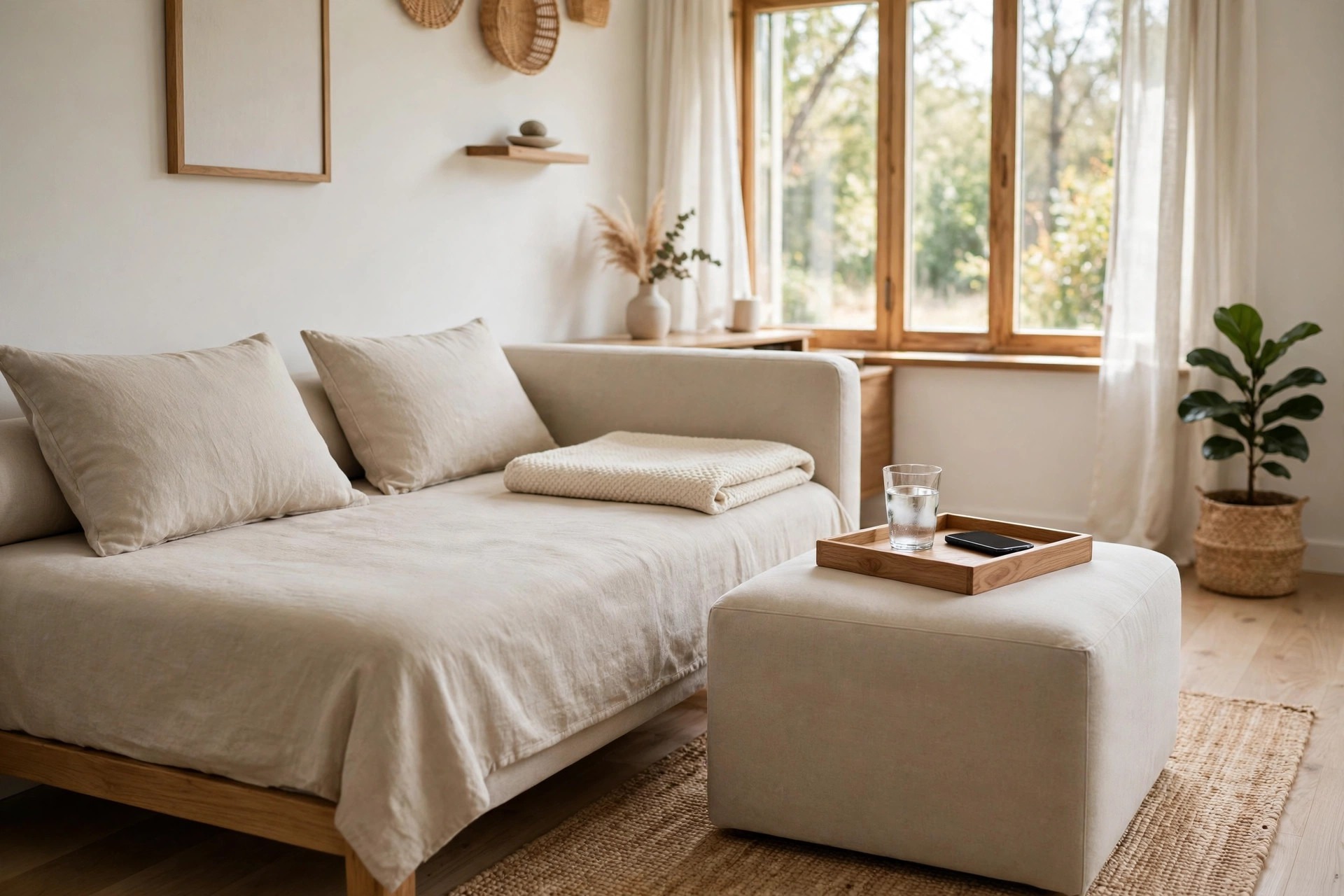
Not every small room fits a nightstand beside the daybed. A firm ottoman with a flat tray on top does the same job and returns to footrest duty the moment your guest leaves.
Keep the tray small and lipped, holding water, a phone and glasses only. A crowded tray tips, and a guest clearing your decor to make space feels like a guest in the way.
By day the tray lifts off and the ottoman slides back to the sofa. Flexible pieces like this are the backbone of a room that hosts well without owning guest room furniture.
Clear the tray back to basics after each visit, ready for the next guest without a reset hunt.
14. Test the Full Sleep Setup Before Guests Arrive
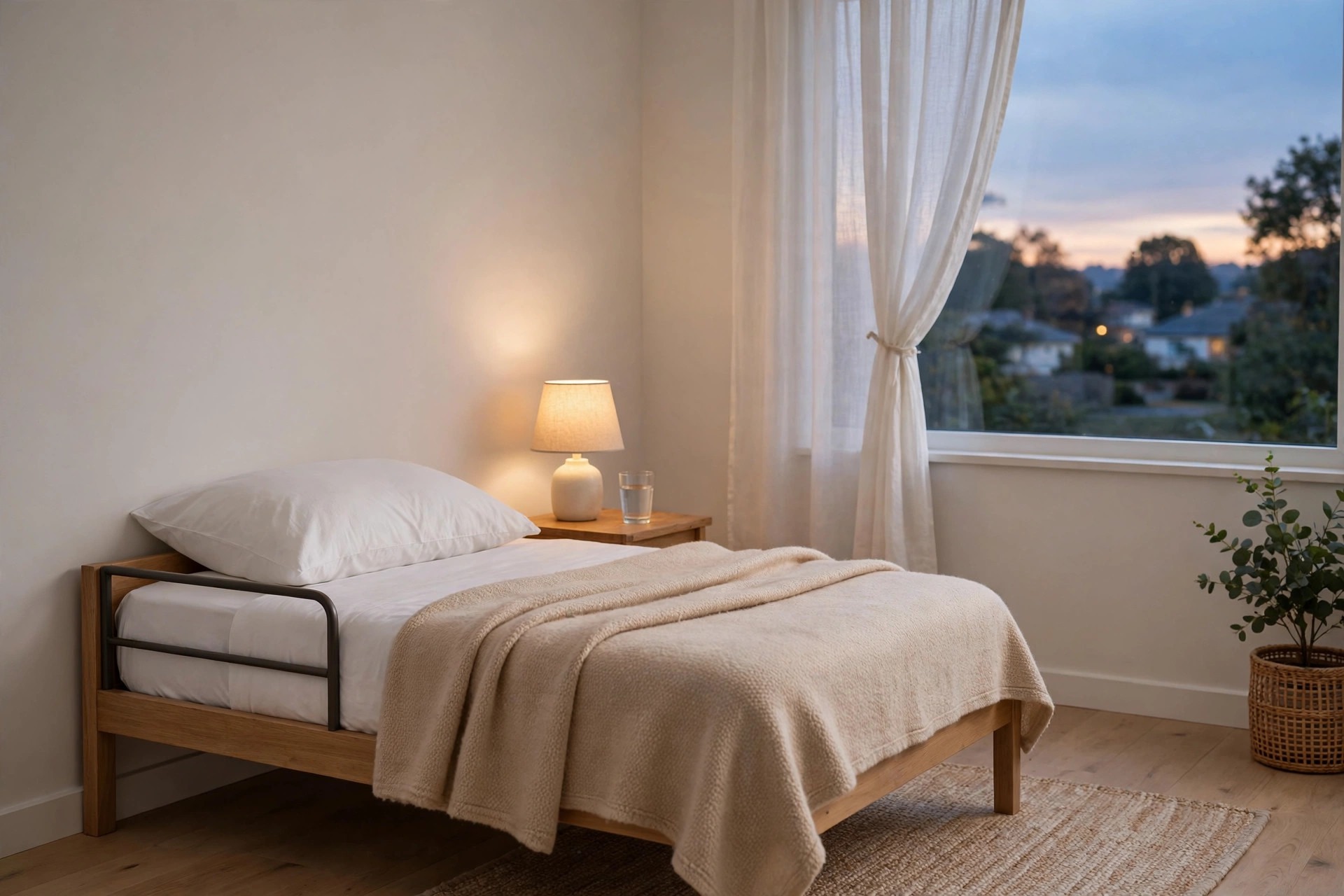
The worst time to learn the daybed sags in the middle is bedtime with a tired guest watching. Make the bed fully one evening before any visit and lie on it yourself for ten minutes.
Check the pillow height, the blanket warmth and the reach to the lamp and water. Studios that sleep guests nightly refine this well, like the layouts behind living room ideas for a studio with a murphy bed wall.
Fix small faults while you still have daylight and shops open. A spare blanket found calmly in the afternoon beats a cold guest and a host hunting cupboards at midnight.
Sleep one full night on it yourself once a year, since frames and mattresses change with use.
15. Reset the Room in Ten Minutes the Next Morning
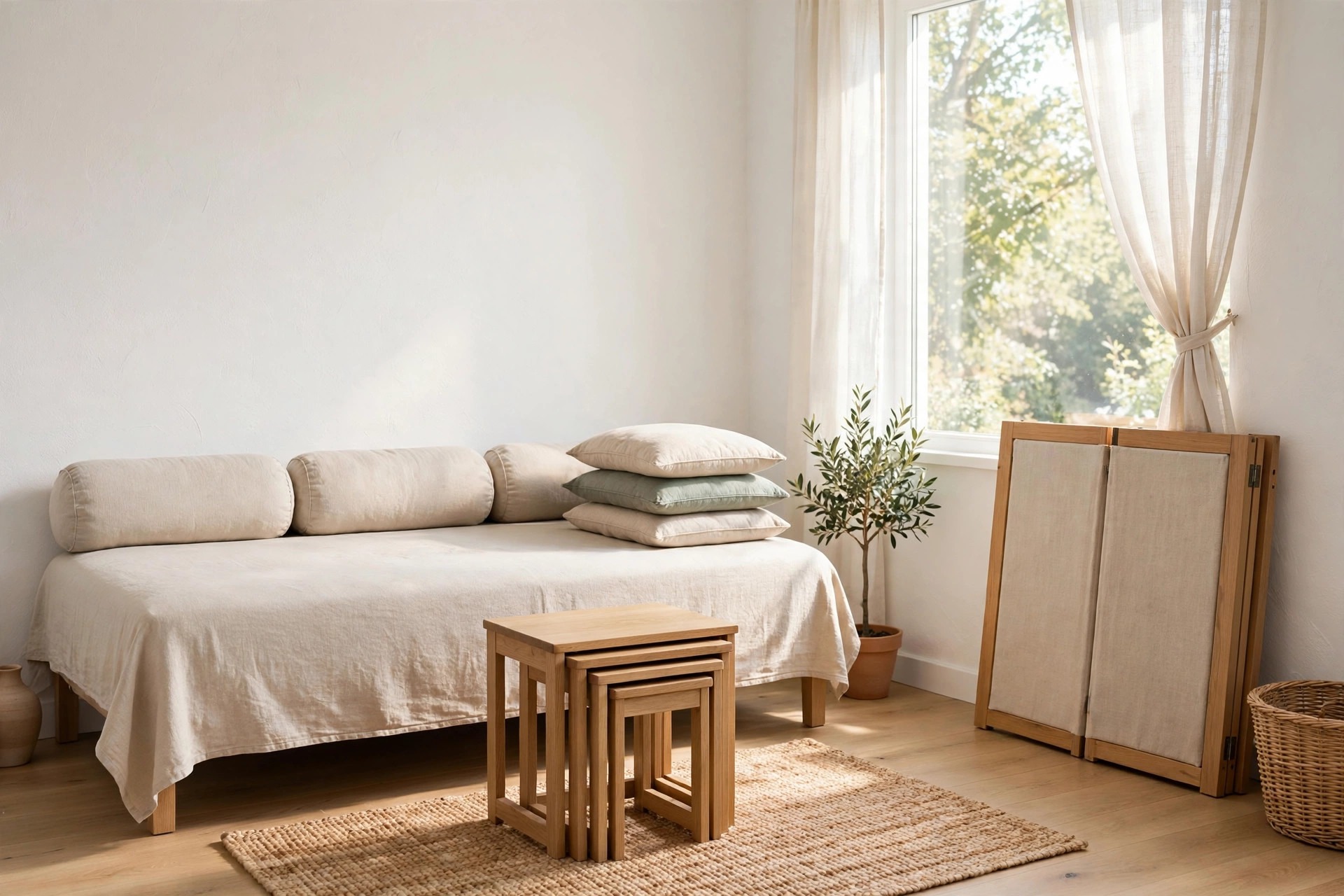
A guest room that takes an hour to undo will make you dread hosting. The daybed setup should fold back to a living room fast, while your guest has coffee and nobody feels displaced.
Strip the sleep bedding into the drawers, fold the day cover back on and return the bolsters to the back. Tables nest together, cushions stack and the screen folds flat against the wall.
Run the same reset after every visit until it is muscle memory. When hosting feels easy, you offer the bed more often, and that is the real point of owning a daybed at all.
Note what slowed the reset and fix that one thing before the next guest books a visit.
A small living room with a daybed can host with real kindness. The guest gets a proper bed, a lamp and a corner of their own, and you get your room back by breakfast.
Set up the drawers, the light and the walkway once, then each visit is simple. That is the heart of small living room ideas with a daybed for overnight guests: one room, ready for both days and nights.
Save these ideas to our Apartment Living Room Decor Ideas board before your next guest books a train home.


