

15 Living Room Ideas for a Studio With a Murphy Bed Wall
A studio can feel stuck in bedroom mode all day when the bed stays out, taking up the best light and the only good wall in the room. Most studios give you one room and ask it to do everything.
These living room ideas for a studio with a murphy bed wall treat the closed cabinet as the heart of a real sitting room, not a problem to hide. By day it should invite you to sit down, read, and have coffee.
Each idea keeps the daily changeover short, so the room can shift from sofa time to sleep time without a full furniture move every night. Five calm minutes is a fair target for the switch.
If your studio mixes a bed and a sofa in one space, our guide to studio apartment ideas with a bed and sofa pairs well with the layouts below. Read both before you move a single piece.
This post contains affiliate links. If you buy through them, we may earn a small commission at no extra cost to you. See our Affiliate Disclosure.
1. Treat the Closed Cabinet as the Main Living Wall
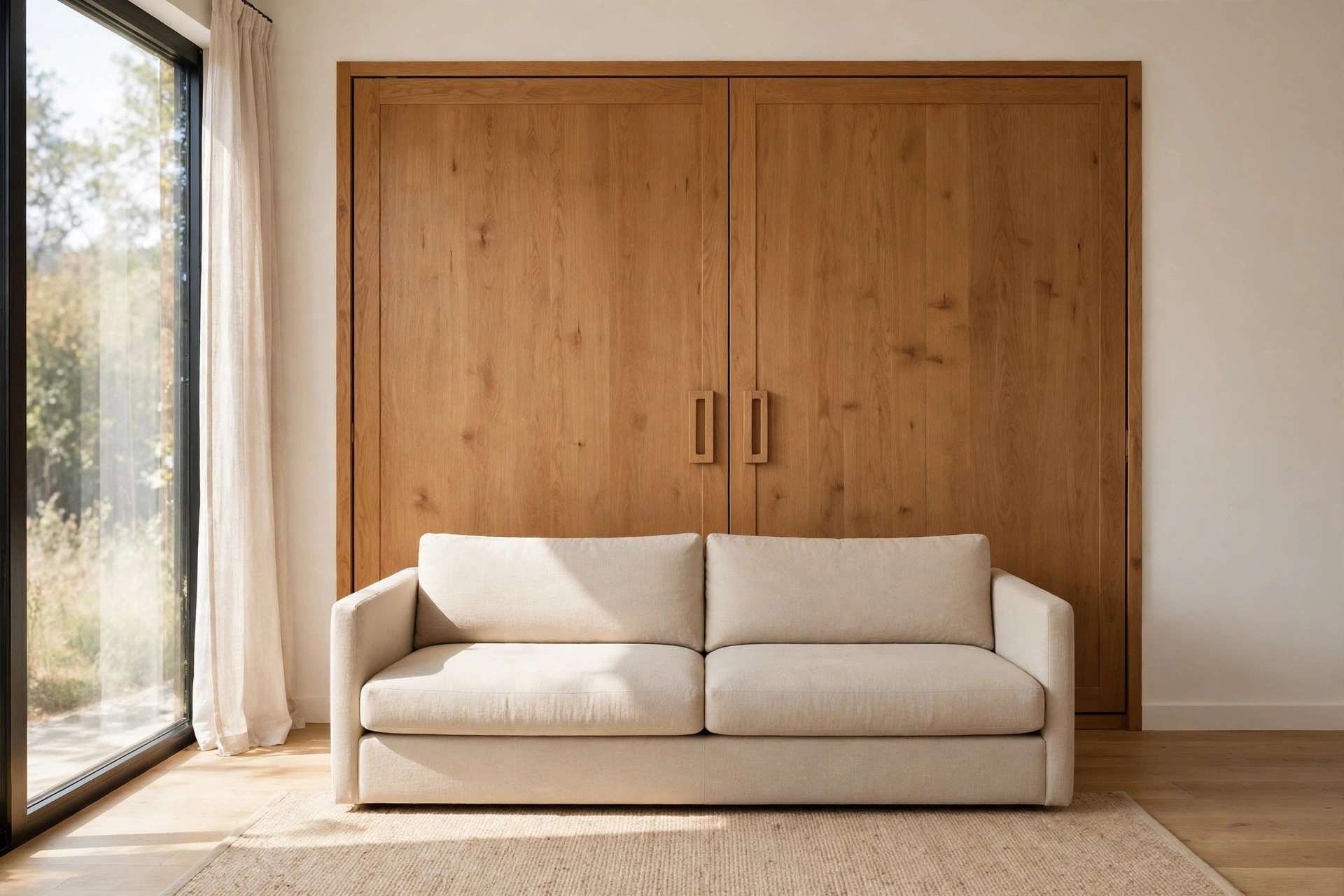
Start by letting the closed bed cabinet set the tone for the whole room. A calm painted finish or warm wood tone on the doors makes the wall read as built-in storage by day.
Keep handles simple and in line with each other, because a row of mismatched knobs draws the eye and makes the unit look like an afterthought.
Hang nothing on the doors that has to come down at night. Art, clocks, and shelves belong on the side walls, where they can stay put for good.
Test the look with the doors open a crack before you settle on a finish. If the bedding color fights the room, a plain cover in a soft tone calms the whole wall. Small care here pays off daily.
2. Mark the Bed Footprint and Keep It Easy to Clear
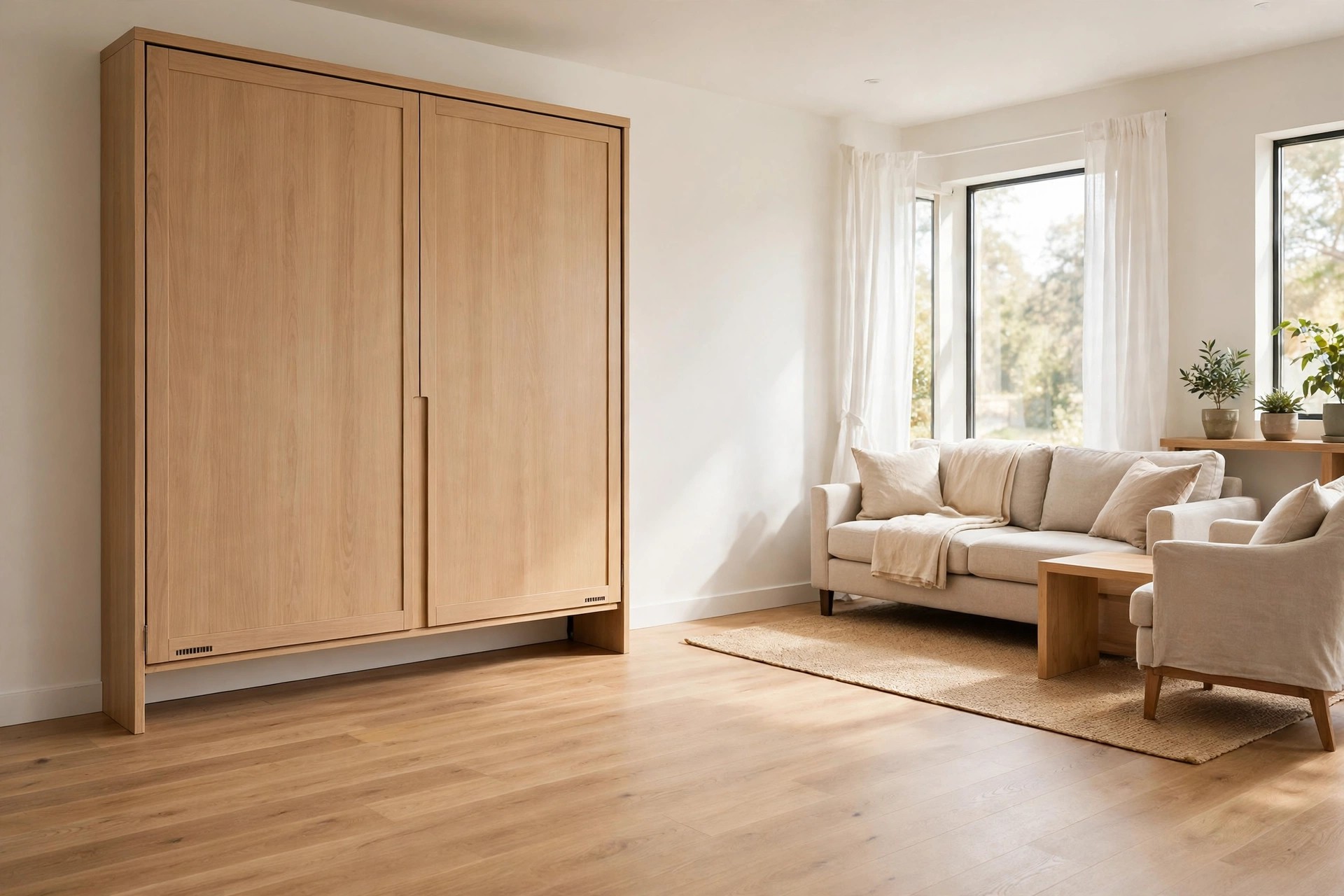
Lower the bed once and note exactly where its feet land and how far the frame reaches into the room. That patch of floor is your drop zone, and it has one job.
Anything that lives inside that patch must be light enough to move in under a minute. Heavy bookcases, plant stands, and low cabinets belong outside the line.
Some people mark the corners with two small rug tassels or the edge of a floorboard pattern. A quiet marker stops guests from parking a suitcase in the swing path.
Walk the path from the door to the window with the bed down, just once. If you have to turn sideways anywhere, a piece is sitting too deep inside the zone. Move it out before the first real night.
3. Choose a Coffee Table That Rolls or Nests Away
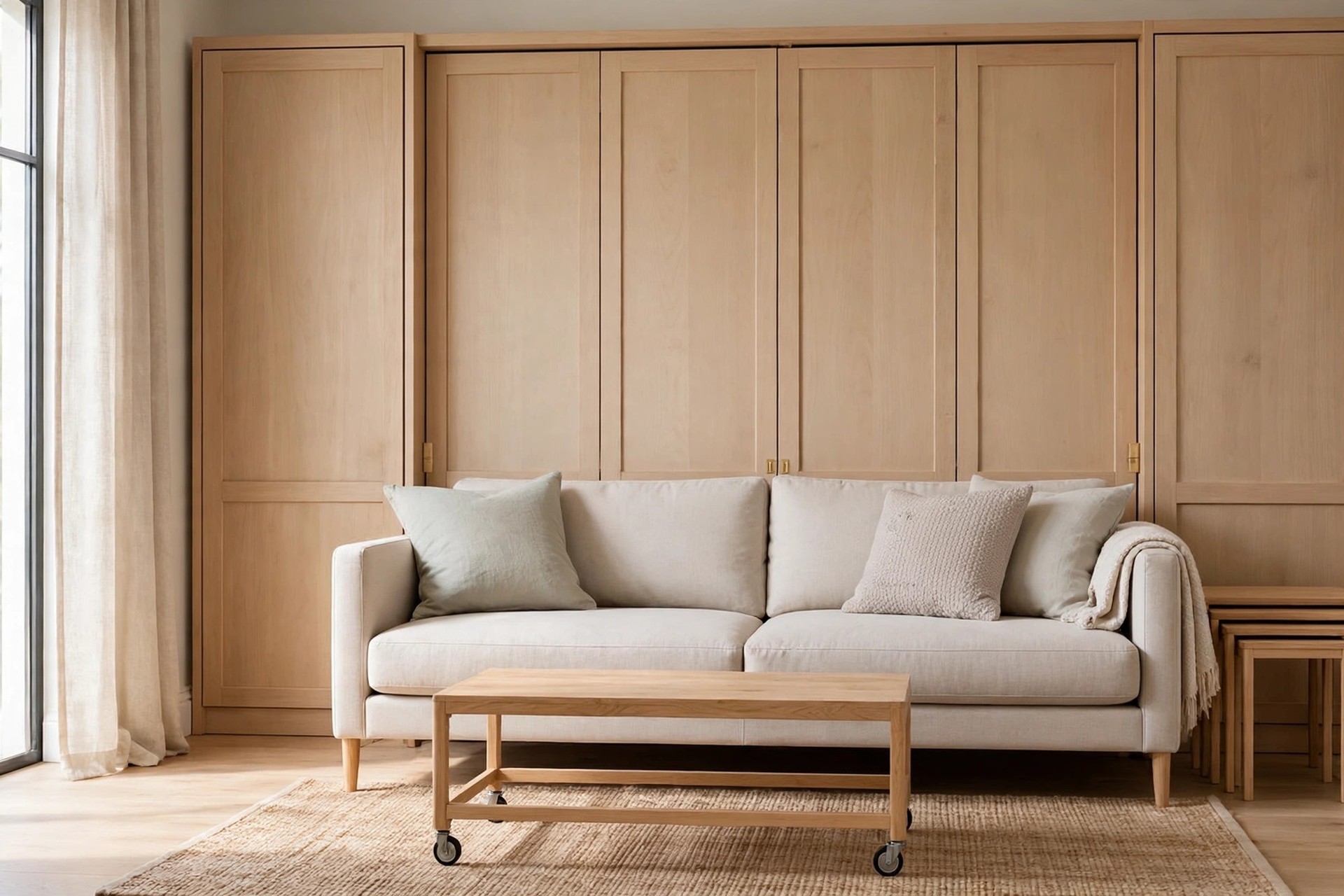
The coffee table is the piece most likely to block bedtime, so pick one that moves without a struggle. A light table on casters rolls to the kitchen wall in seconds.
Nesting tables work just as well in a tight studio. The smaller tables tuck under the largest one, and the whole set parks beside the sofa before the bed comes down.
Avoid a solid, heavy trunk table in the middle of the room. It may hold blankets, but you will resent lifting it every single night of the week.
Keep coasters and a small tray on top, so the table still feels finished when it parks by the wall. A table that looks lost in its parking spot quickly turns into a dumping ground for post and keys.
4. Set a Slim Sofa Back From the Drop Zone
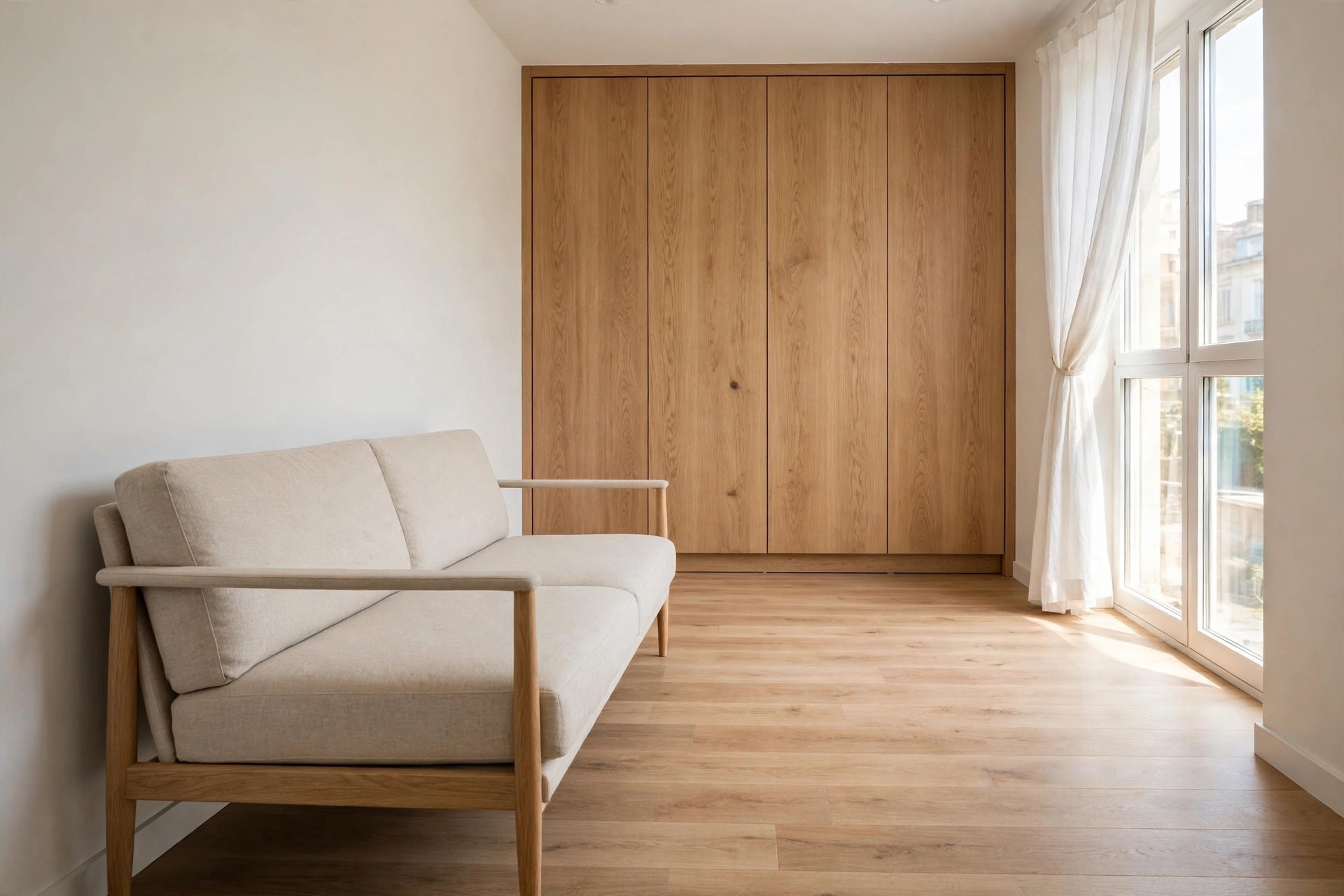
A slim sofa with a low back and narrow arms leaves the room feeling open while the bed is up. Place it facing the cabinet wall, just outside the marked footprint.
That gap matters at night. You can walk around the lowered bed, reach the shelves, and open a window without climbing over the sofa arm to get there.
Choose short legs or a skirted base that hides the floor shadow. Either way, keep the sofa light enough that one person can shift it a few inches alone.
Rest a washable throw over one arm to add color that can change with the season. It also gives the sofa a finished look without loose cushions crowding the seat or sliding onto the floor at night.
5. Store Bedding in a Storage Ottoman by Day
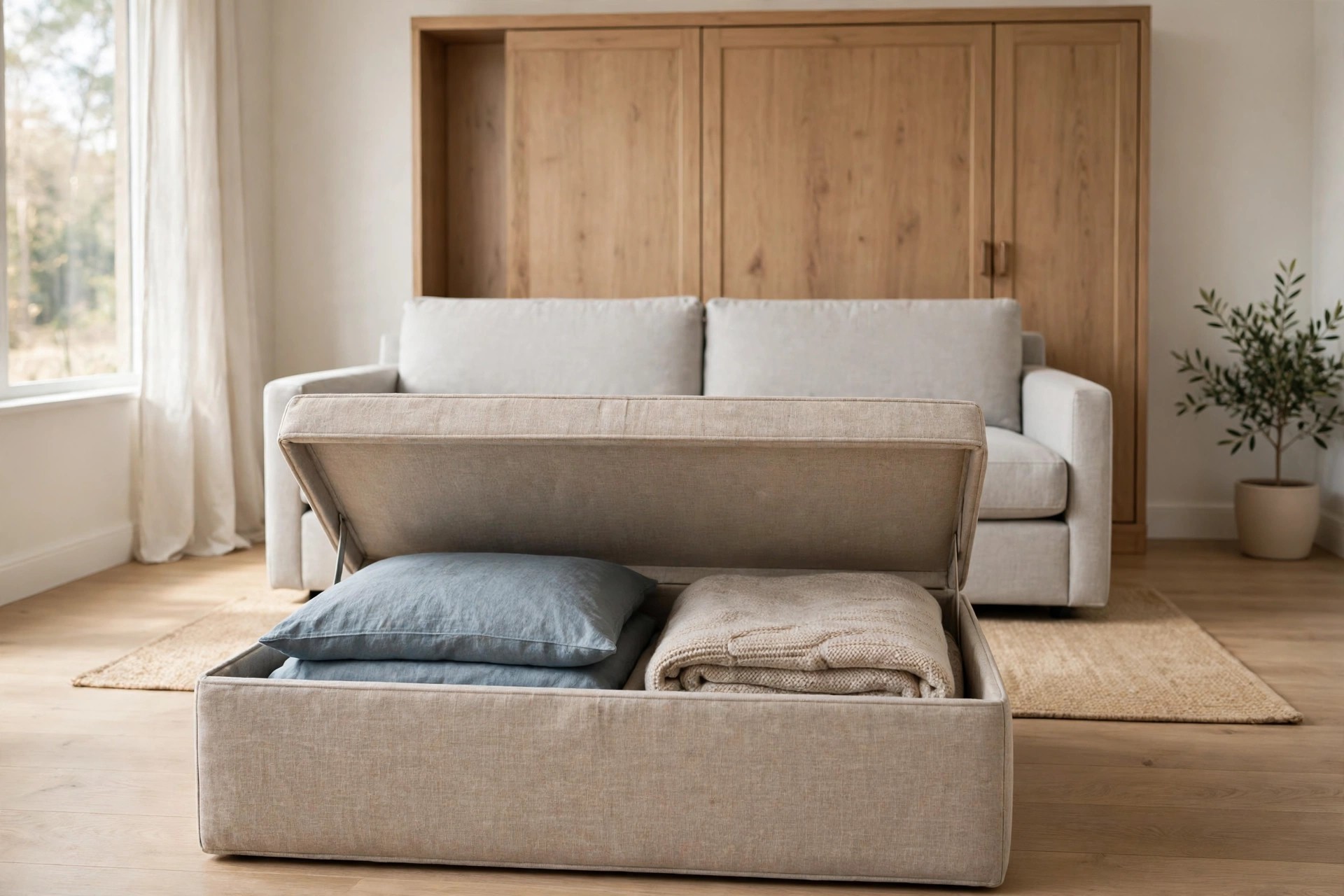
Pillows and a folded throw need a daytime home, or they end up in a heap on the sofa. A storage ottoman at the foot of the seating area swallows both neatly.
Our roundup of the best storage ottomans for small living rooms shows the sizes that suit a studio scale, from single cubes to longer benches.
At night the ottoman slides beside the bed and holds a phone, a glass of water, and a book. One piece does the work of a trunk and a nightstand.
Fix a simple order inside: pillows first, then the throw, then spare pillowcases at the back. Keeping the same order each morning stops the ottoman from turning into a general junk box within a few weeks.
6. Flank the Cabinet With Shelves for Daily Basics
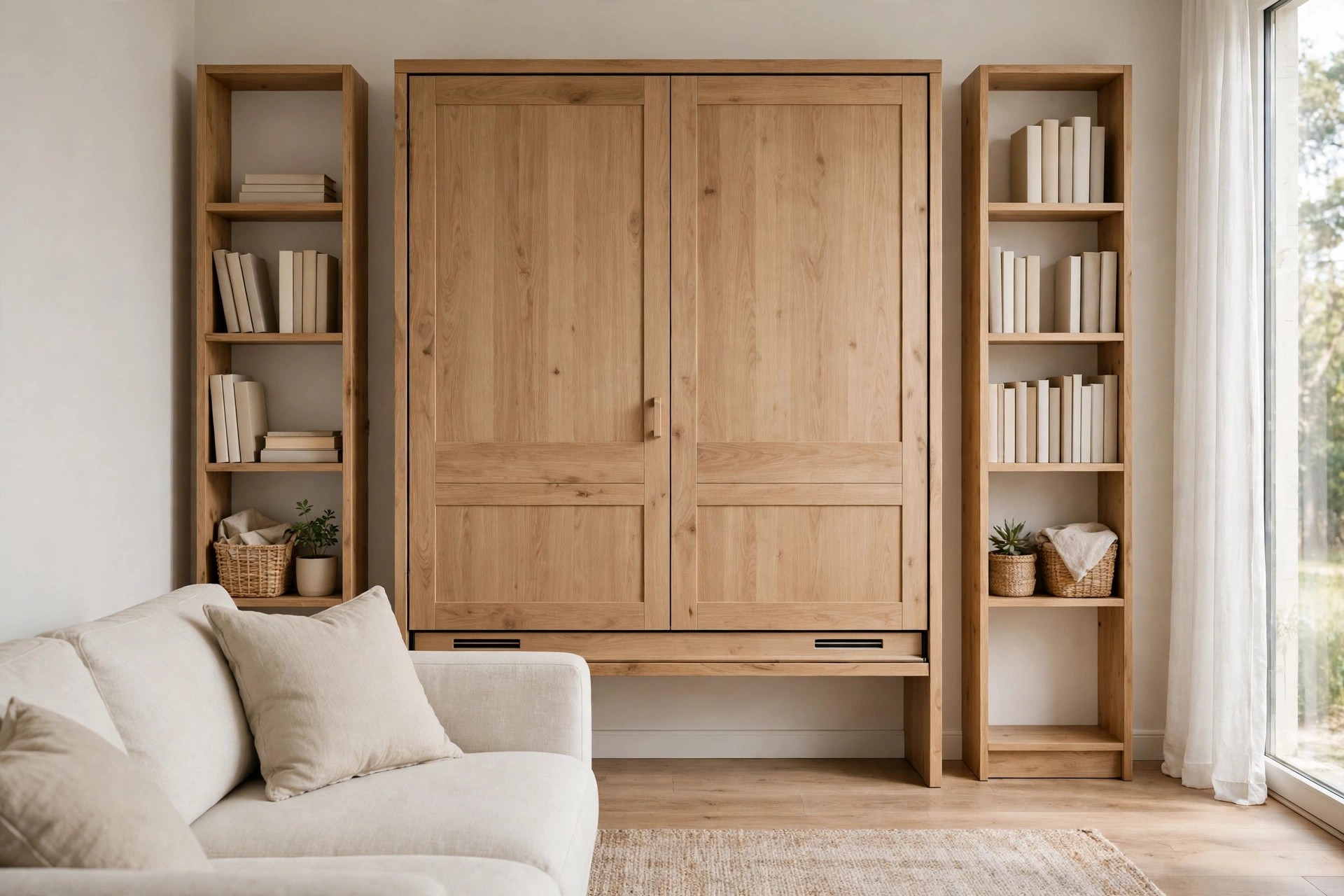
Narrow shelves on both sides of the bed cabinet give the wall balance and give you storage that never moves. Books, a small plant, and a basket for chargers sit within reach.
Keep the lowest shelf on each side partly empty. That space becomes the night shelf once the bed is down, holding glasses, a water bottle, and an alarm clock.
For styling help that keeps shelves calm rather than crowded, borrow the layering approach in these small living room ideas with built-in bookcase styling and apply it at studio scale.
Leave one shelf at eye level mostly open, holding a single framed print or a small clock. A breathing space on the wall stops the whole unit from feeling like storage only and gives the eye a rest.
7. Keep the Rug Under Seating, Clear of the Bed Path
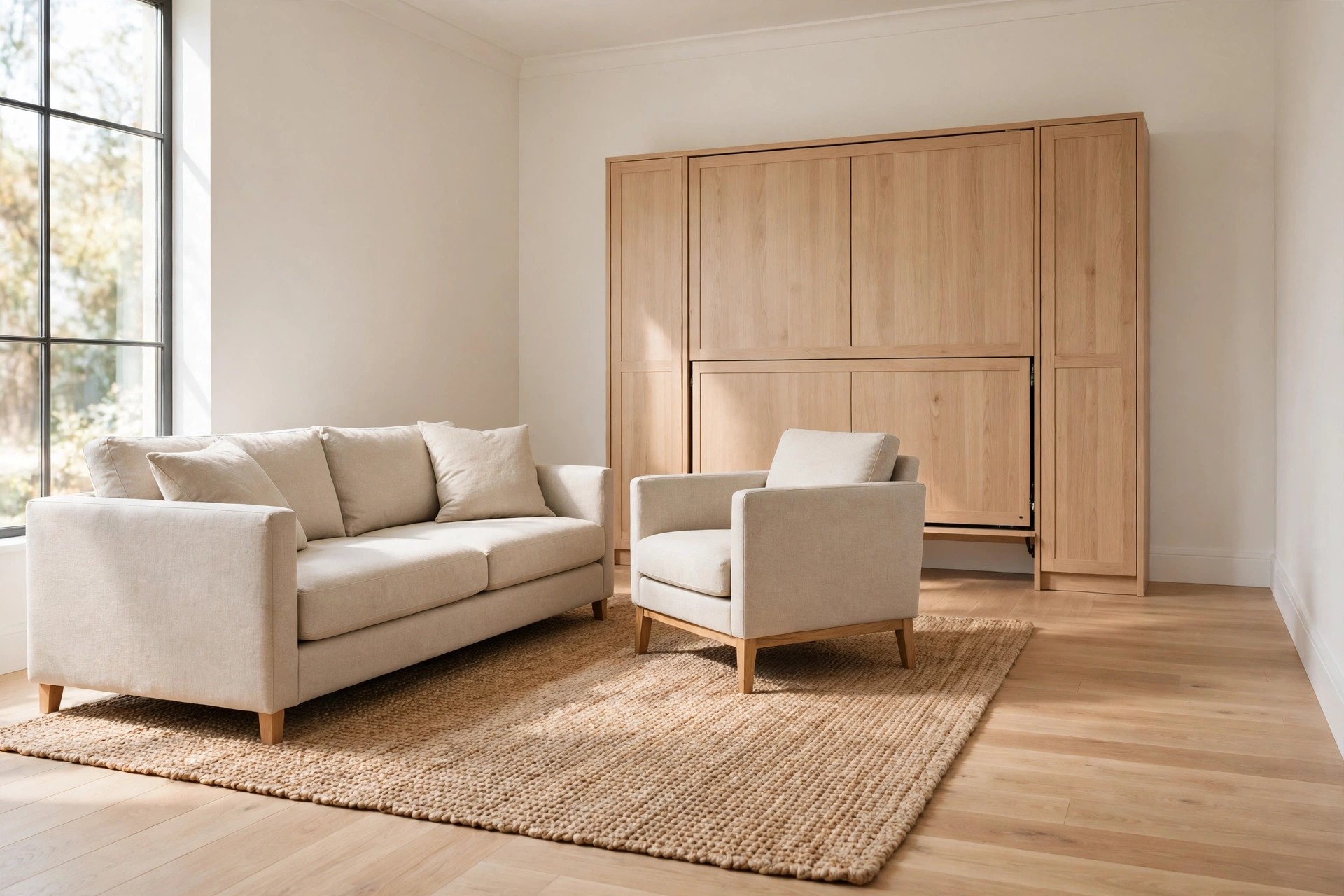
A rug that runs under the bed frame causes two problems: the legs catch its edge, and the pile gets crushed flat in the same band every night.
Size the rug to the seating group instead, ending it just short of the drop zone. The sofa and chairs sit on it, and the bed lowers onto bare floor beside it.
That clear border also helps the room read as two areas in one. More layout help sits in our tiny living room ideas for studio apartments for one-room living.
Choose a low pile that a vacuum can cross in one easy pass. Thick shag at the edge of the bed path traps dust, catches the frame, and shows a worn line within a few months of use.
8. Add Small Reading Lights Beside the Cabinet
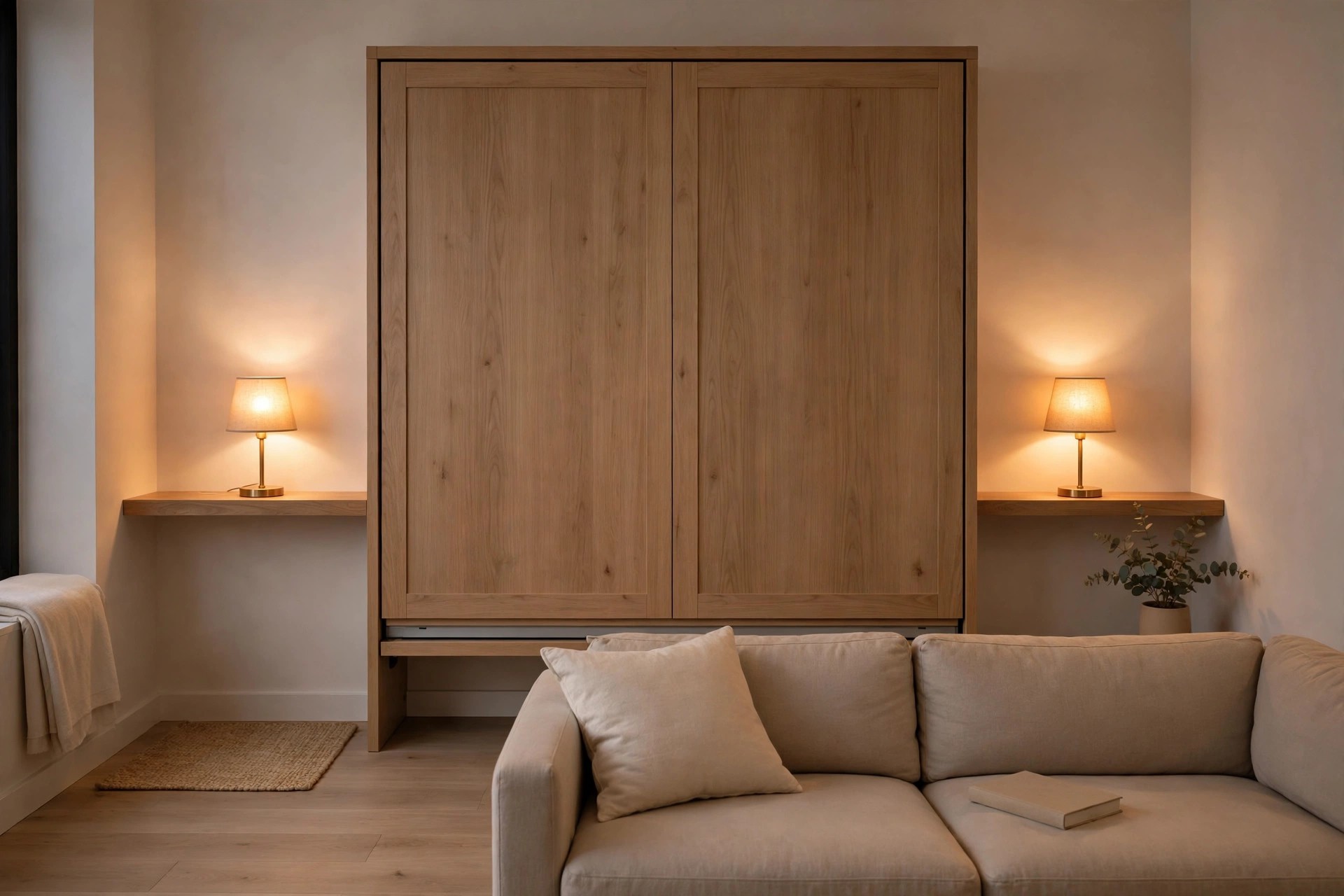
One ceiling light has to serve a sitting room at seven and a bedroom at eleven, and it does neither job well. Small lamps at seated height fix the evening half.
Place a lamp on each flanking shelf or on slim stands beside the cabinet. From the sofa they light a book, and from the bed they work as reading lights.
Keep cords tucked along the shelf edges with removable clips if you rent. Loose cords across the drop zone are a trip risk in a dark room.
Point one lamp head toward the wall rather than the room after ten at night. Bounced light is softer for sleep and still bright enough to find the bathroom door without waking the whole studio up.
9. Use a Slim Desk Away From the Swing
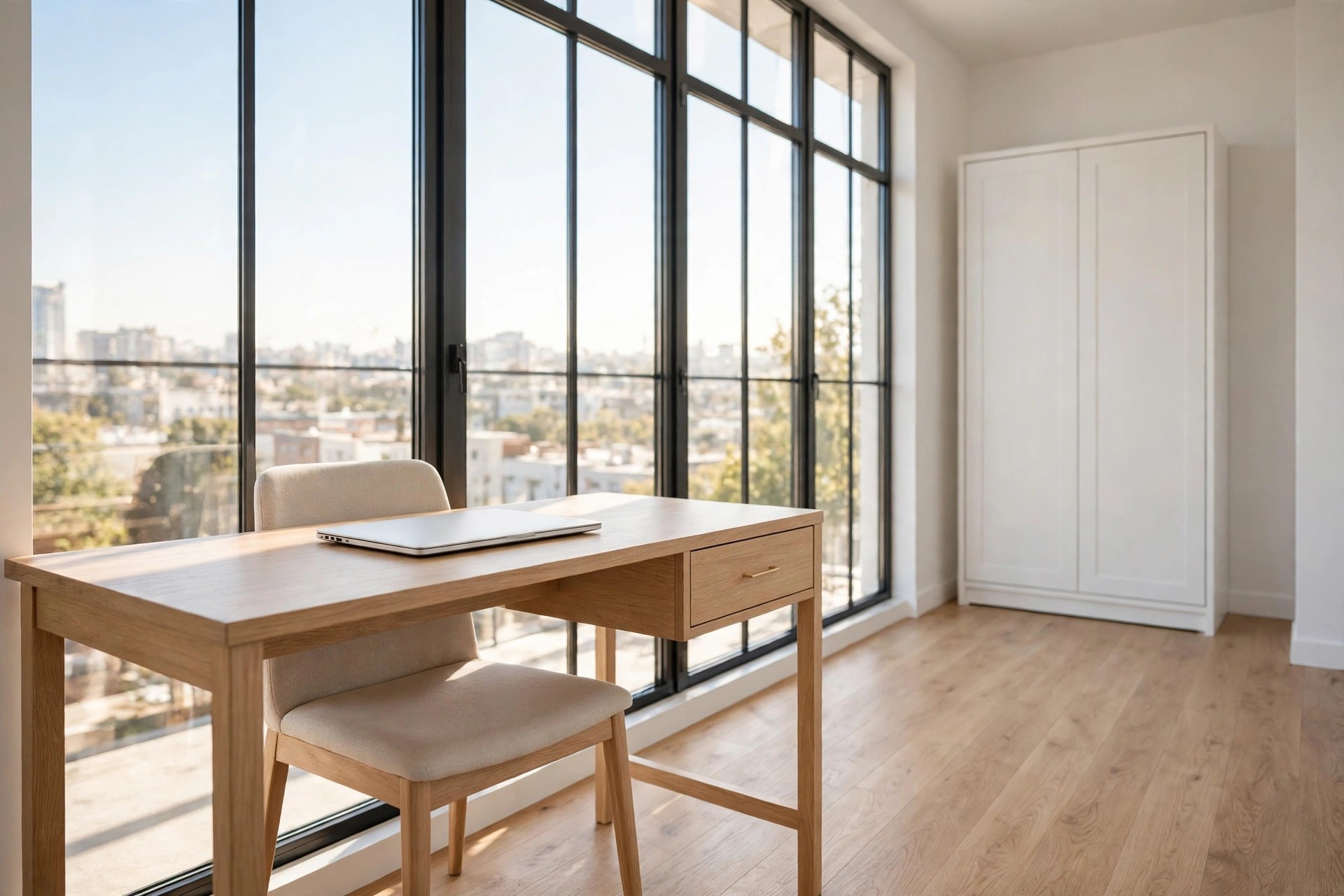
Work needs a home that does not compete with sleep. A slim desk against the window wall or beside the kitchen opening keeps a laptop out of the bed area entirely.
Choose a desk with one drawer and open legs, so the space under it can hold a chair pushed fully in. A bulky desk eats floor you cannot spare here.
End the workday with a small ritual: laptop closed, chair in, papers in the drawer. The room then reads as a living room again for the evening.
Rest a small rolling cart beside the desk to hold a printer or files off the floor. At night it stays put, because the desk wall never joins the bed changeover and never needs clearing.
10. Swap Fixed Nightstands for Stools and Trays
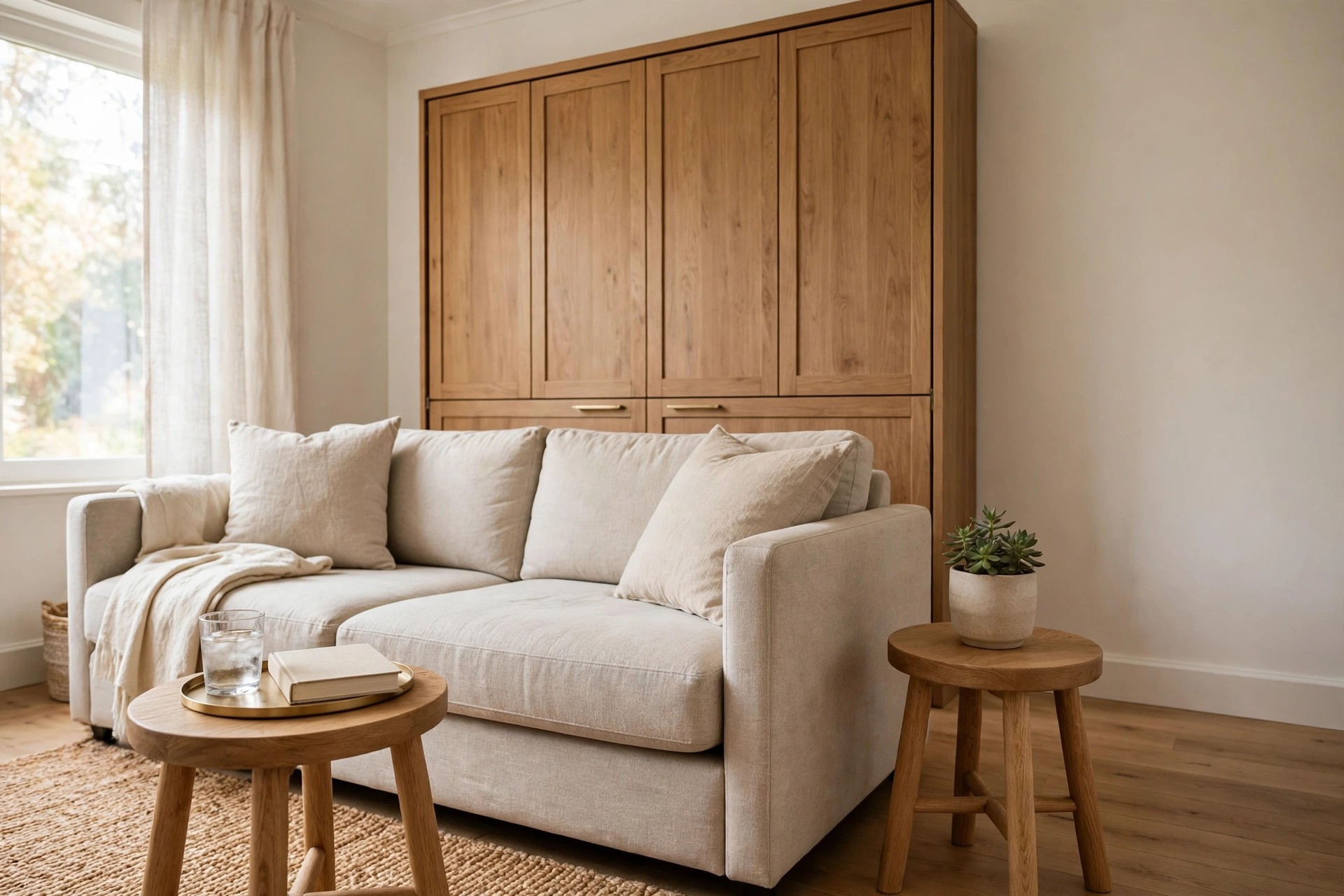
A fixed nightstand on each side of the bed sounds sensible until you fold the bed up and the stands sit alone in the middle of your living room wall.
Small stools solve this cleanly. By day a stool holds a plant or a stack of books beside the sofa, and by night it moves next to the bed.
A simple tray on top keeps small items from sliding off. The tray also makes the morning clear-up faster, since everything lifts away in one go.
Pick stools with flat tops, no arms, and a height close to the bedside. Wobbly garden stools and tall bar stools both fail at holding a book and a glass safely through the night. It earns its keep twice daily.
11. Hang Curtains to Soften the Sleep Corner at Night
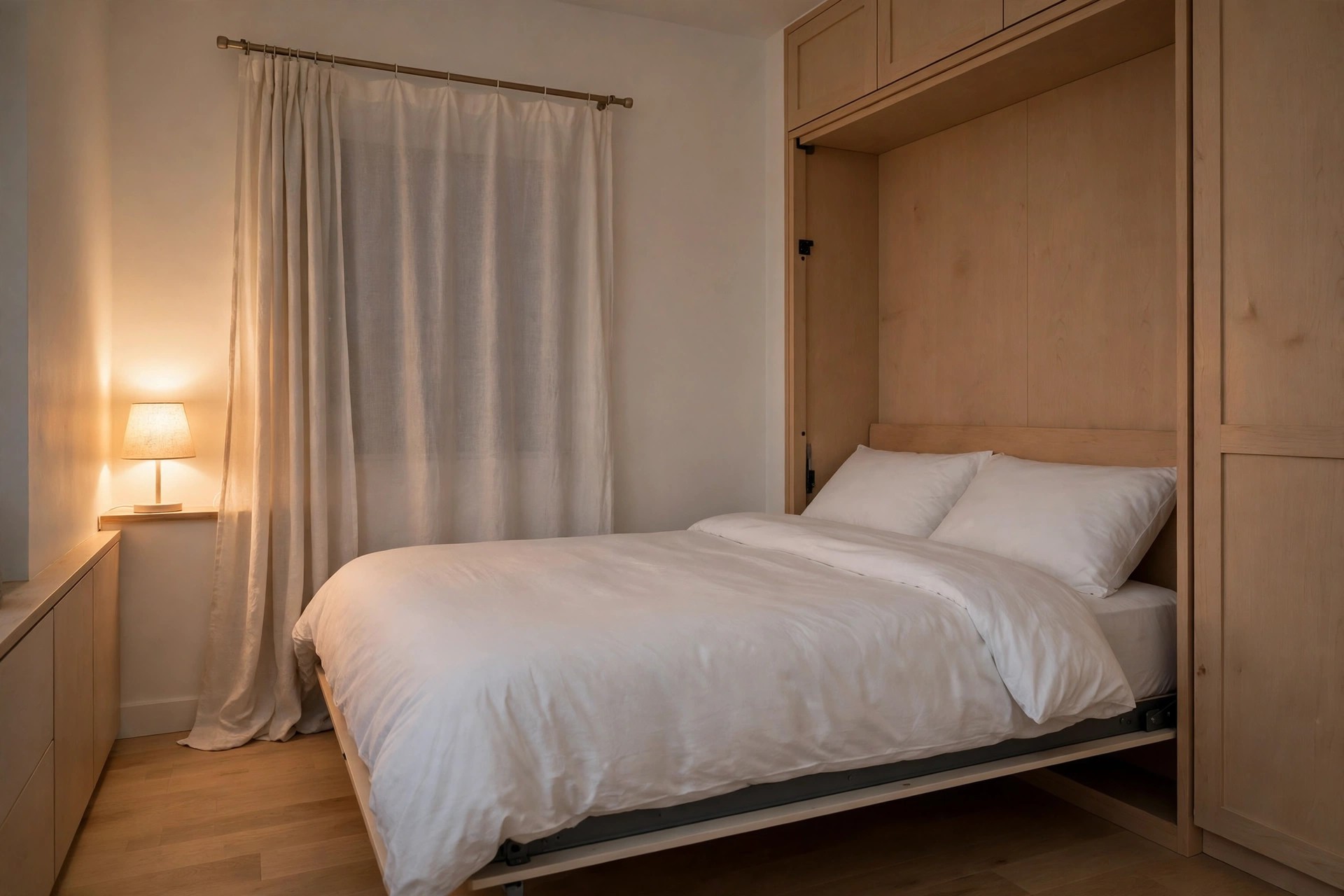
A studio has no bedroom door to close, so a curtain on a tension rod can mark the sleep corner once the bed is down. It softens light from the kitchen side.
Choose a plain, washable fabric in a color close to the wall paint. Loud patterns shout during the day, when the curtain hangs open beside the cabinet.
Tension rods leave no marks, which keeps this idea safe for renters. Push the rod into the alcove or across a ceiling beam line if your layout has one.
Open the curtain fully each morning and tie it back with a simple band. A curtain left half closed all day makes the studio feel smaller, darker, and less like a living room worth sitting in.
12. Keep One Reset Basket for the Evening Changeover
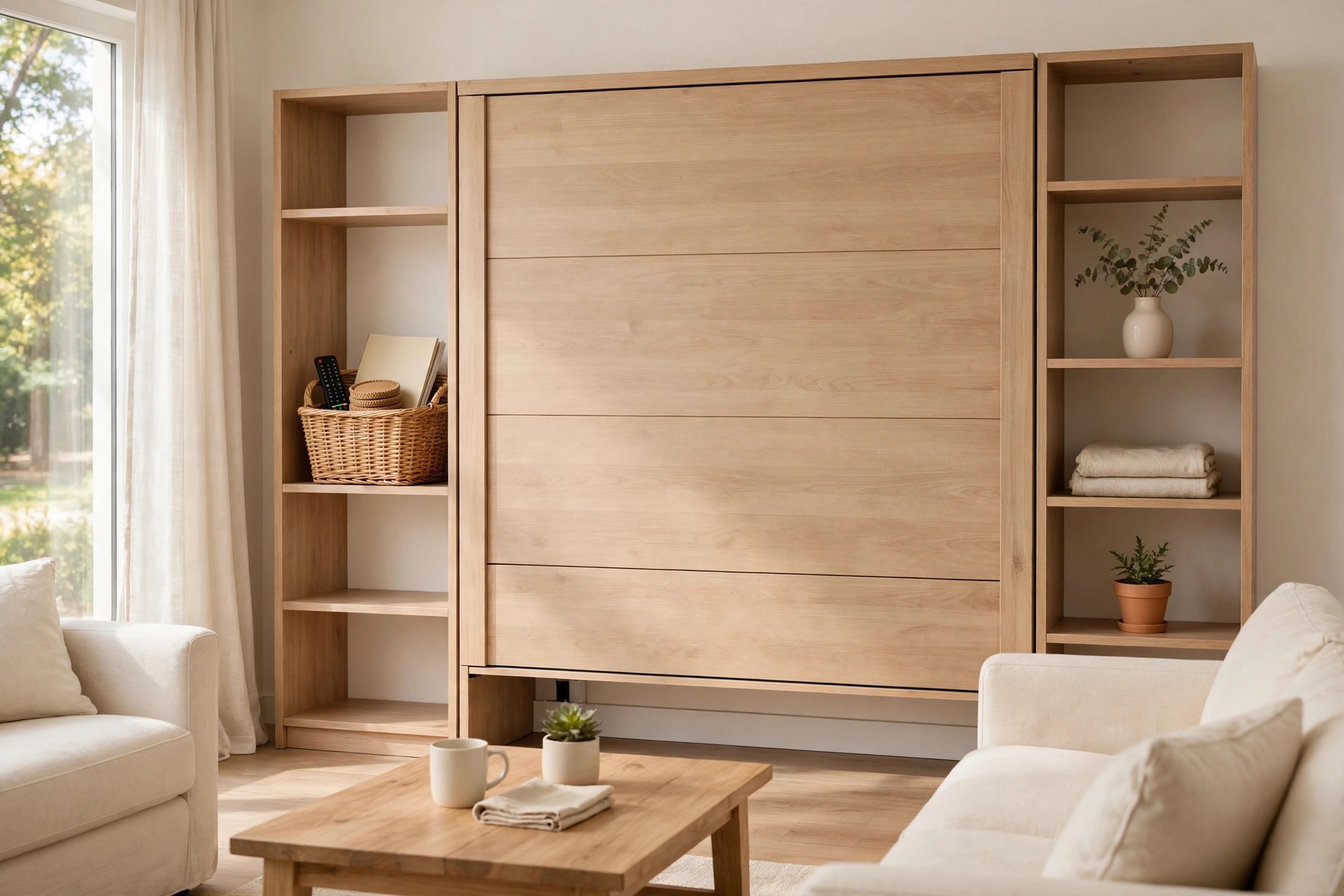
The changeover goes wrong when small things have nowhere to go. Remotes, coasters, a game controller, and a half-read magazine all end up on the bed or the floor.
Give one medium basket a fixed home on a flanking shelf. Everything from the coffee table goes into it before the bed comes down, every night, no sorting.
In the morning the basket comes back out and the items return in a minute. A set routine beats a big weekly tidy in a one-room home.
Once a month, empty the basket fully and question each item it holds. Things that no longer earn a daily place can move to a closet shelf or leave the studio for good. Five minutes is all it takes.
13. Skip a Fixed Screen on the Bed Wall
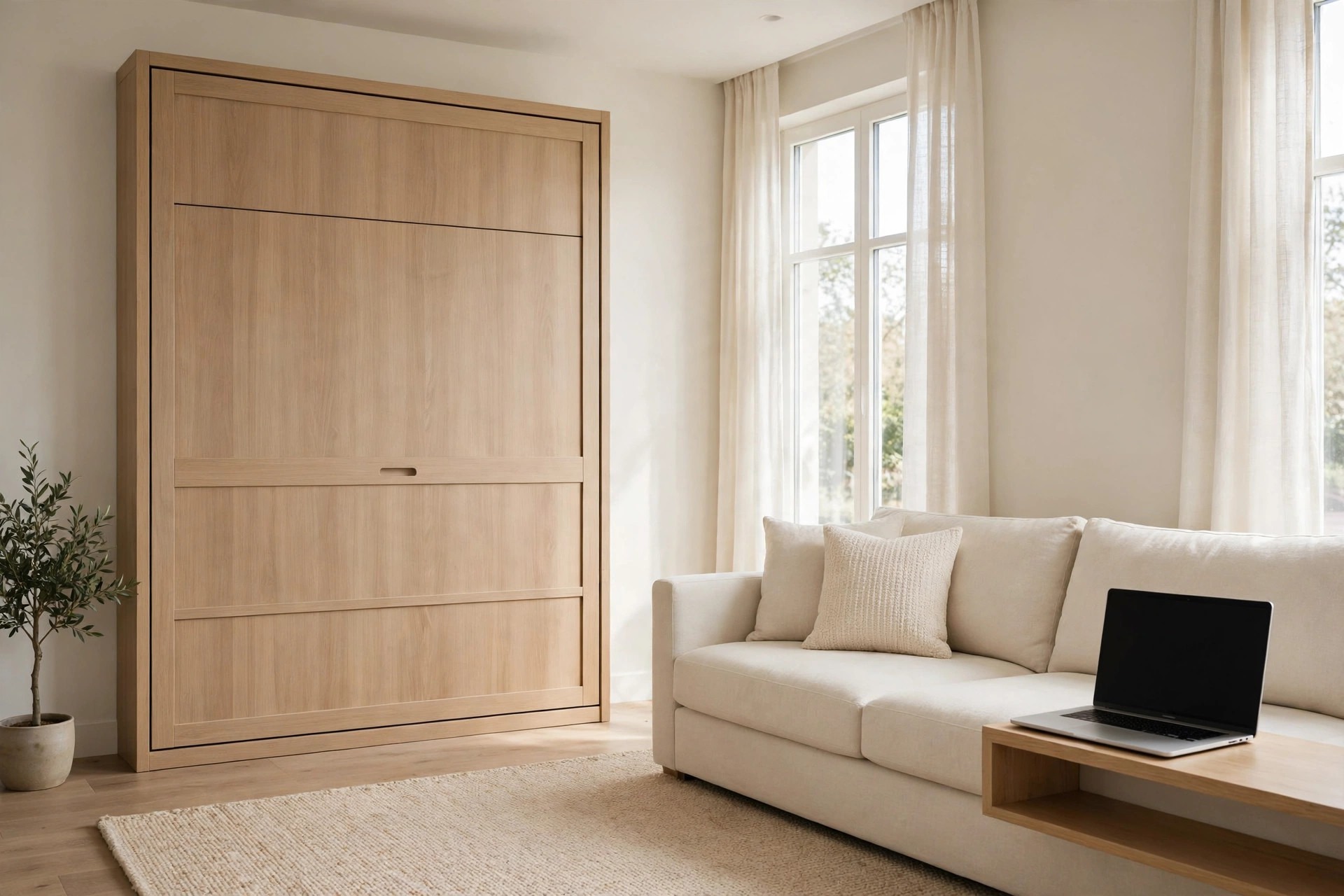
A television fixed to the bed cabinet wall is a daily conflict. The screen blocks the doors, the mount crowds the swing, and cables cross the drop zone.
Put the screen on the opposite wall or on a low stand that the bed clears, so movie night and bedtime stop fighting over the same few feet.
If a fixed screen never sits well in your layout, these small living room ideas with a projector instead of a TV show a lighter way to watch in a small room.
Rest a laptop on the coffee table for films for two on the sofa. Keep a small stand nearby so the screen sits at eye level without a wobbly stack of books under it.
14. Leave a Clear, Soft Landing Beside the Bed
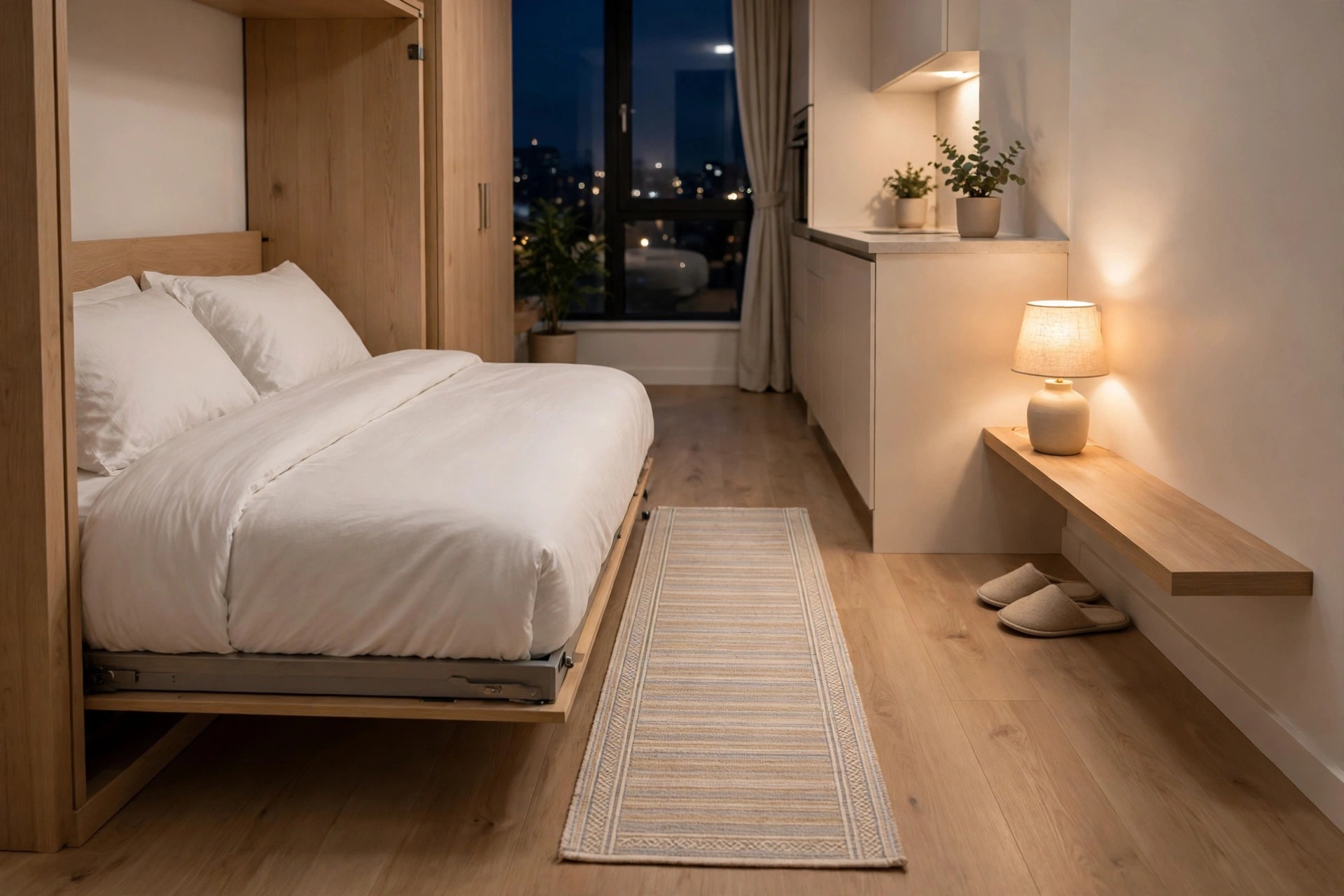
Think about the first step out of bed in the morning. Bare feet landing on cold floor beside a cluttered walkway starts the day badly in a small home.
Keep a narrow washable runner folded on a shelf, and lay it beside the bed at night. It takes seconds, and it keeps the main rug clear of the bed path.
Leave the route from bed to bathroom free of stools, baskets, and charging cords. In a studio, that short path carries more traffic than any other line of floor.
Keep slippers in the same place each night, tucked under the flanking shelf. One small habit like this makes a dark room feel known and safe rather than risky to cross half asleep.
15. Style the Side Walls and Corners, Not the Swing Path
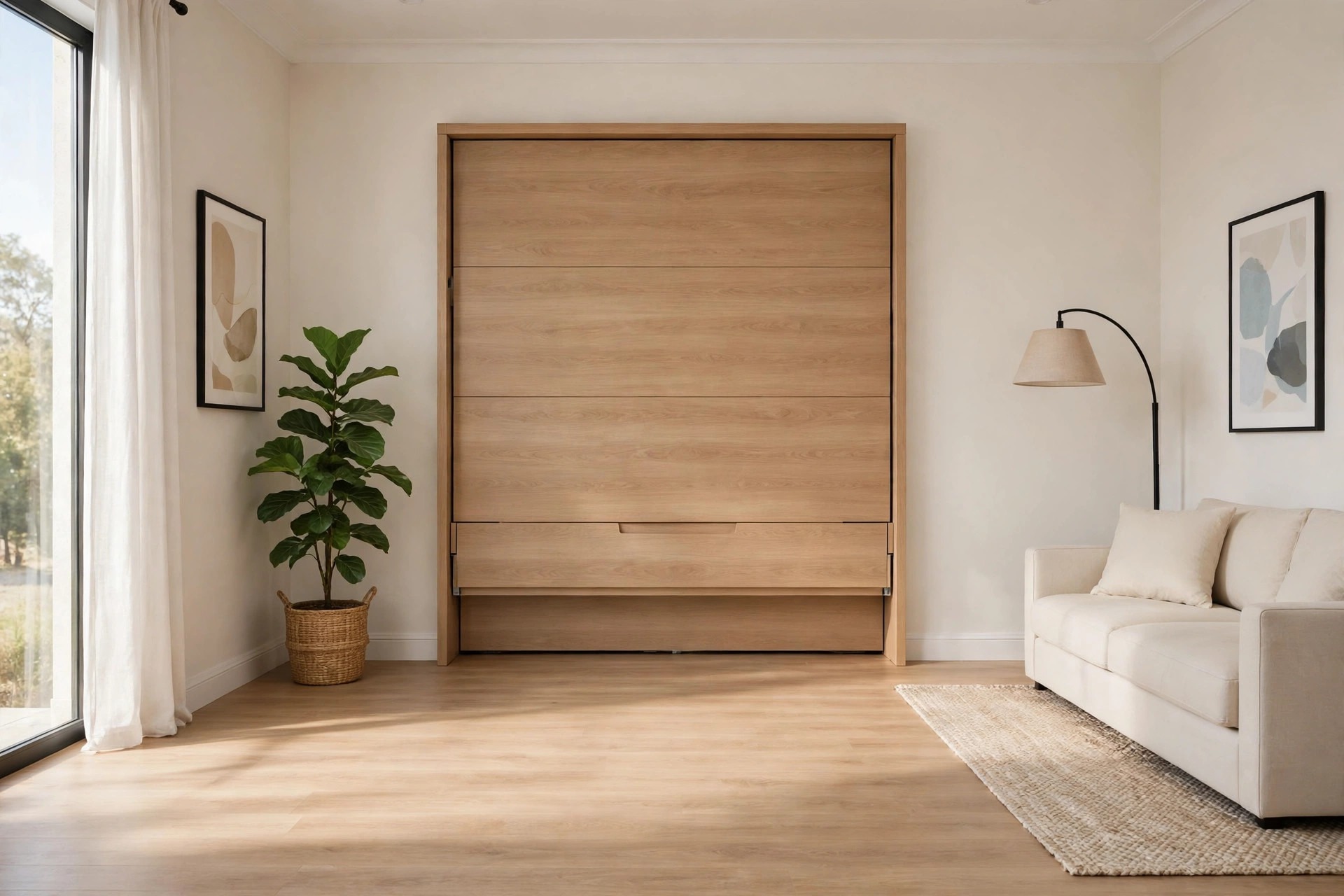
The swing path has to stay plain, but the rest of the room does not. Side walls can hold the art, the mirror, and the color that make the studio feel personal.
A tall plant in the corner farthest from the cabinet adds height without blocking anything. A floor lamp in the other corner balances it and lights the sofa.
Step back with the bed up and the bed down before you call the room finished. Both versions should look deliberate, calm, and easy to live in.
Finish with one item you love in plain sight, like a framed print from a favorite trip. A studio should still show who lives there, not just how neatly it folds away at night.
Start with the drop zone and the coffee table, because those two choices decide how easy every night feels in a studio like this.
The rest can follow one shelf, one lamp, and one basket at a time, until the room works in both of its forms without a daily struggle.
Save the living room ideas for a studio with a murphy bed wall that fit your layout to the Apartment Living Room Decor Ideas board, and build your own changeover routine from there.


