

15 Small Living Room Ideas With Built in Bookcase Styling
A built-in bookcase can eat a small room if the shelves stay dark, deep, and packed tight. Most people fill every bay edge to edge, then wonder why the sofa feels squeezed against a wall of clutter.
This guide fixes that problem with small living room ideas with built in bookcase styling that keep storage high and the floor clear. Each idea changes one clear thing: height, color, depth, or what earns a place on display.
You will see paint tricks, low shelves under windows, closed cabinets for the messy bits, and simple grouping rules. If your shelves are not built in yet, our guide to narrow bookcases for small living rooms shows slimmer options that give a similar look.
Start with the wall you see from the doorway. That first view sets the tone for the whole room, so give it the calmest, clearest styling you have and let the busier bays sit farther from the door.
This post contains affiliate links. If you buy through them, we may earn a small commission at no extra cost to you. See our Affiliate Disclosure.
1. Paint Floor to Ceiling Built-Ins the Same Color as the Walls
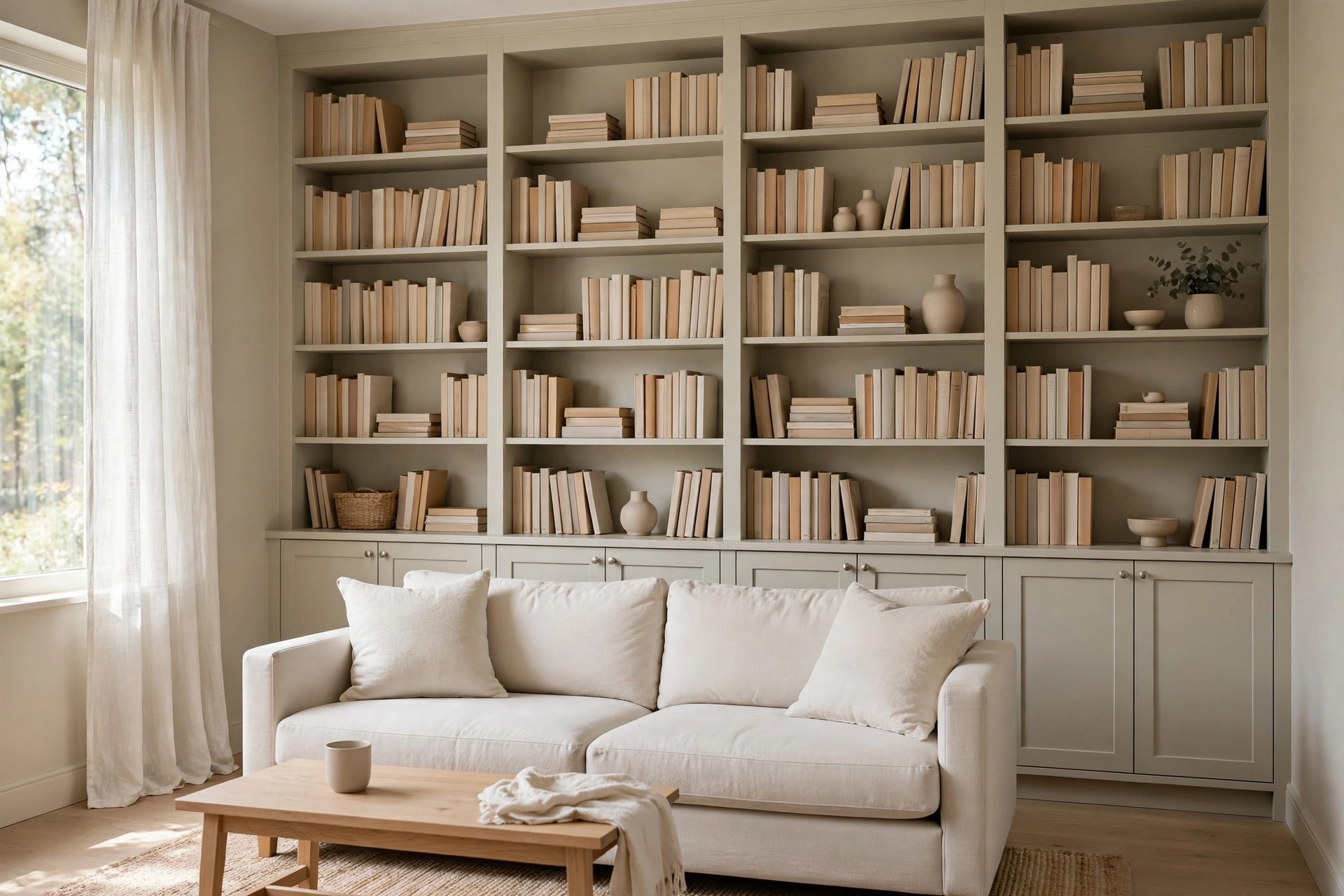
Paint the whole bookcase wall one color, shelves, trim, and wall included. The unit stops reading as a big box and starts reading as part of the room, which helps a lot when floor space is tight.
Keep the sofa and rug lighter than the shelves, or one step paler in the same family. The contrast stays soft, so your eye rests instead of jumping from dark shelves to a pale couch all evening.
Test the color on one inside panel first. Shelf interiors get less light than the wall, and a shade that looks gentle at noon can look heavy in the corner that goes dark by late afternoon.
Work top to bottom when you paint, and keep one shelf empty until the paint cures fully.
2. Build Low Shelves Under the Window and Top Them With a Cushion
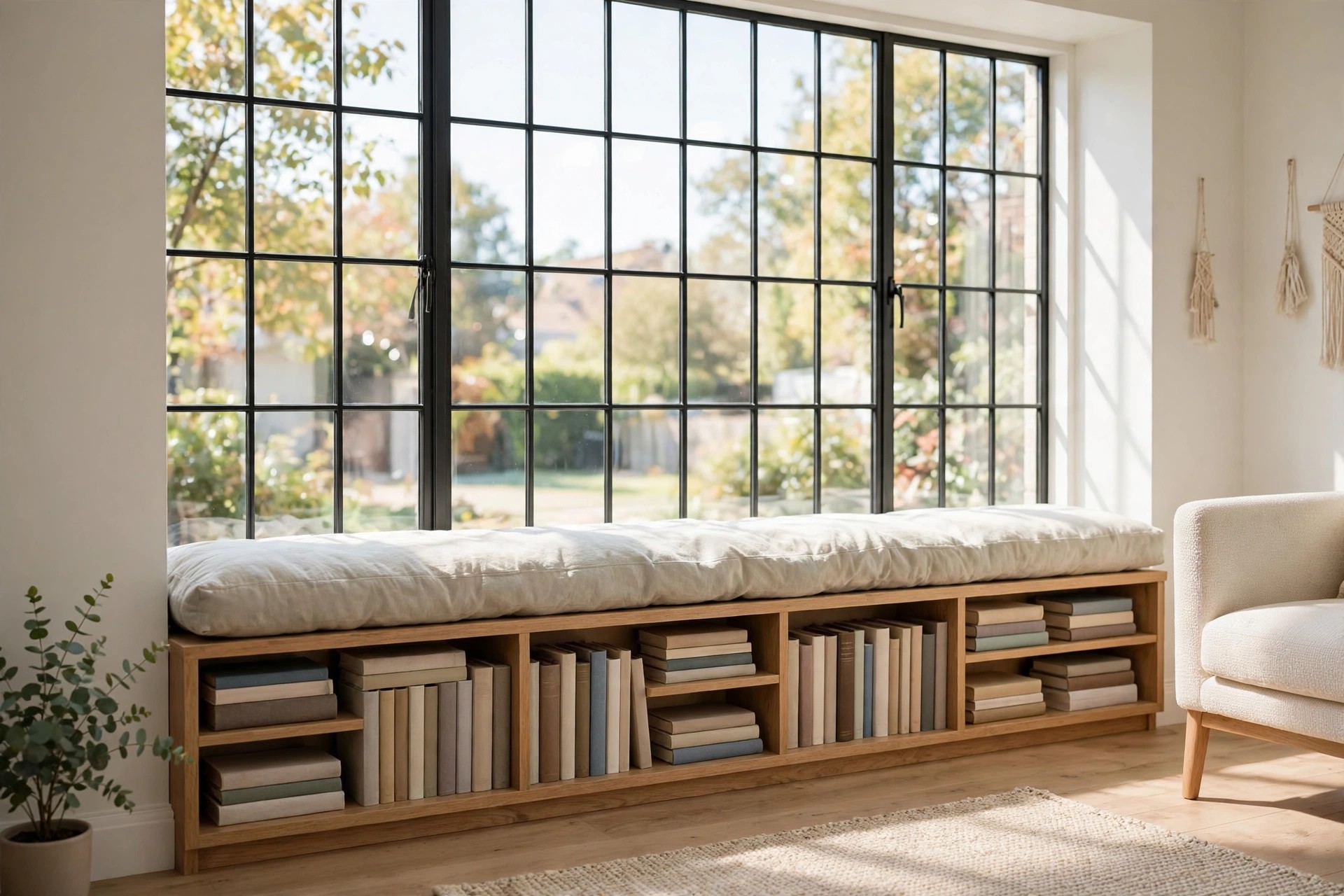
A low run under the window keeps storage off the main walls. Books sit below sill height, daylight stays open, and the top surface works as extra seating when a friend drops by with coffee.
Use a firm cushion in a washable cover, not a loose pile of pillows. One long cushion looks tidy, stays put when someone sits down, and lifts off in seconds when you need the books underneath.
Keep the tallest books in the middle bays and shorter paperbacks near the ends. That gentle slope follows the window light and stops the run from looking like a solid block across the room.
Measure the cushion after the shelves are built, since a tight fit looks far better than a loose, sliding pad.
3. Style One Bay Light and Leave the Next Bay Full

Full shelves on every bay can feel loud in a small room. Try one bay with books packed upright, then the next bay with fewer books, a bowl, and open space around each group.
The empty space is doing real work here. It gives the full bay room to breathe and makes the whole wall feel planned instead of stuffed during a rushed weekend tidy.
Repeat the pattern across the wall so it reads as a rhythm. Odd bays full, even bays light is an easy rule to hold when new books arrive and space starts to creep.
4. Hide the Mess in Closed Cabinets Below Open Shelves
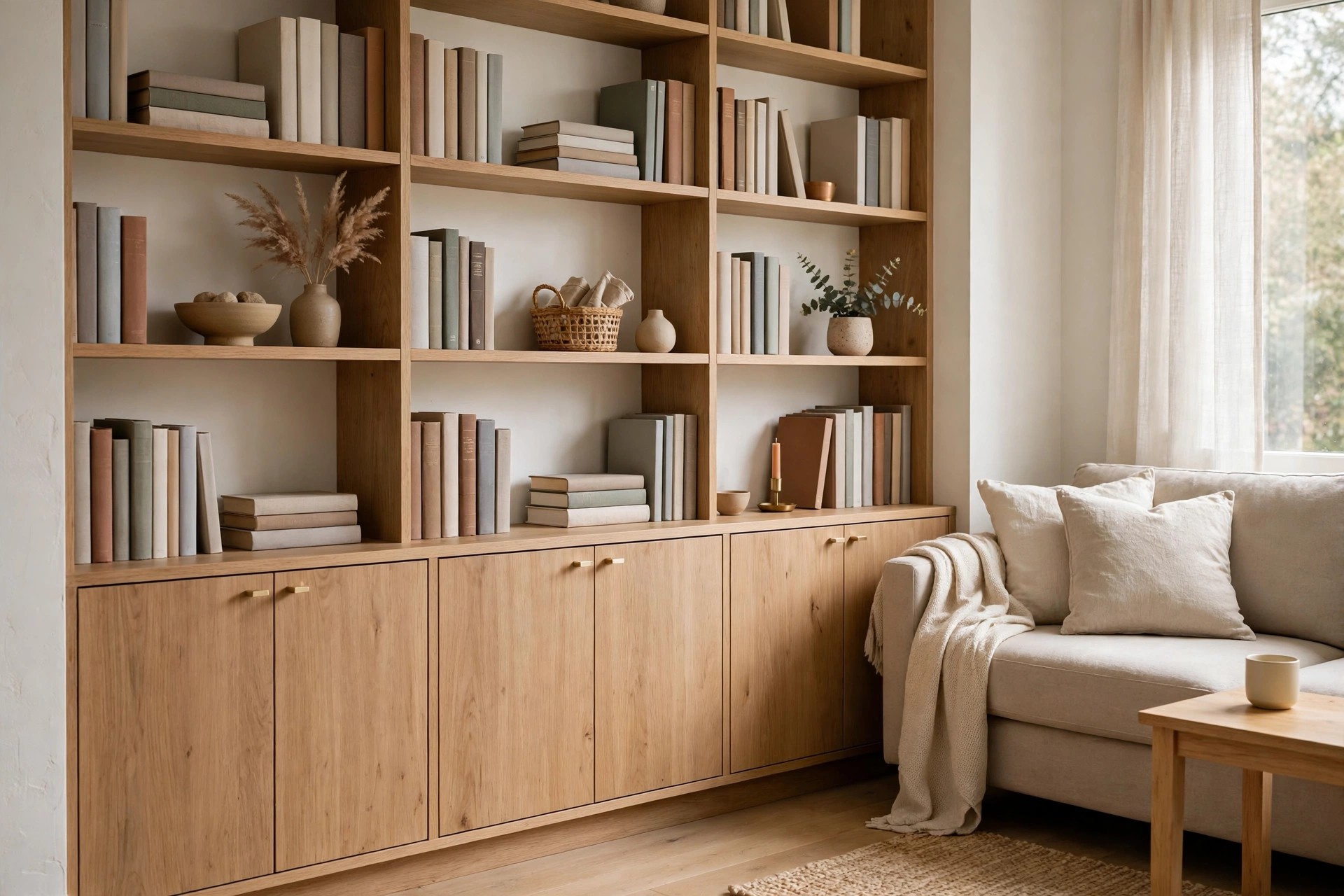
Open shelves show everything, including chargers, remotes, and board games with torn boxes. Closed cabinets along the bottom hide that daily clutter while the open shelves above carry books and objects you like seeing.
Put the things you grab daily in the cabinet closest to the sofa arm. In many small rooms that arm doubles as the only side table, so the nearest door becomes prime storage.
Keep cabinet doors plain and handle free if you can. A flat front keeps the base calm, and the eye travels up to the styled shelves instead of stopping at a row of knobs.
Label the inside of each cabinet door with tape while you settle in. The system sticks once everyone knows the spots.
5. Keep Books Low and Place Taller Objects Higher Up

Heavy rows of books on top shelves make a tall unit feel top heavy. Move most books to the lower and middle shelves, then place taller vases, framed prints, and baskets higher where weight reads lighter.
This swap also helps daily life. The books you reach for sit at hand height, and the high shelves hold things you dust once in a while rather than move every day.
Leave one high shelf mostly empty except for a single tall piece. That pause near the ceiling pulls the eye up and makes the ceiling feel a little farther away than it is.
Step back to the doorway and check the top line. If it looks heavy, swap one tall object for a low stack.
6. Pull a Reading Chair Close and Give It Its Own Light

A bookcase wall earns its keep when someone actually sits by it. Pull a compact reading chair close to the shelves, angle it toward the room, and add a slim floor lamp behind one shoulder.
For tight corners, consider swivel chairs that turn toward conversation and then swing back to the shelves. The turn saves you from dragging chair legs across the rug every evening.
Keep a small stack of current reads on the lowest shelf by the chair. The rest can live higher up. A short, honest pile looks lived in without turning into a leaning tower.
7. Frame the Sofa With Shelves on Both Sides
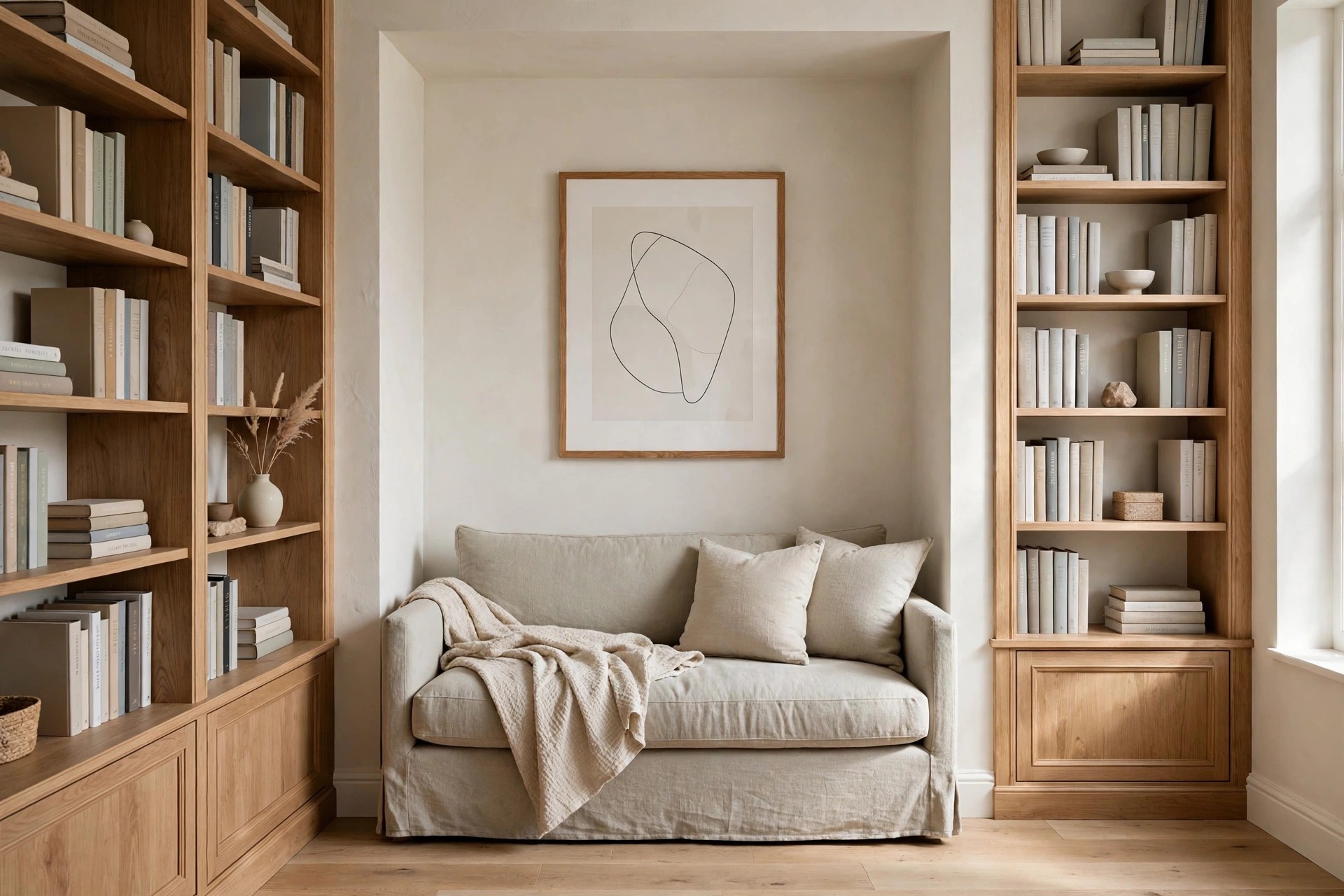
Shelves on both sides of the sofa give a small room a clear center. The couch sits in a shallow alcove of storage, and the wall behind it can stay simple with one large print or a mirror.
Match the depth of the two sides so the sofa does not look wedged in by accident. Even shallow shelves work here, since paperbacks and small objects need less room than most people expect.
Style the two sides as a pair, but not as twins. Books on the left and ceramics on the right still balance if the heights and colors stay close across both sides.
Leave a hand width of air on each side of the sofa. Tight fits collect dust and make the alcove feel pinched.
8. Use Baskets on the Lowest Shelves for Daily Clutter
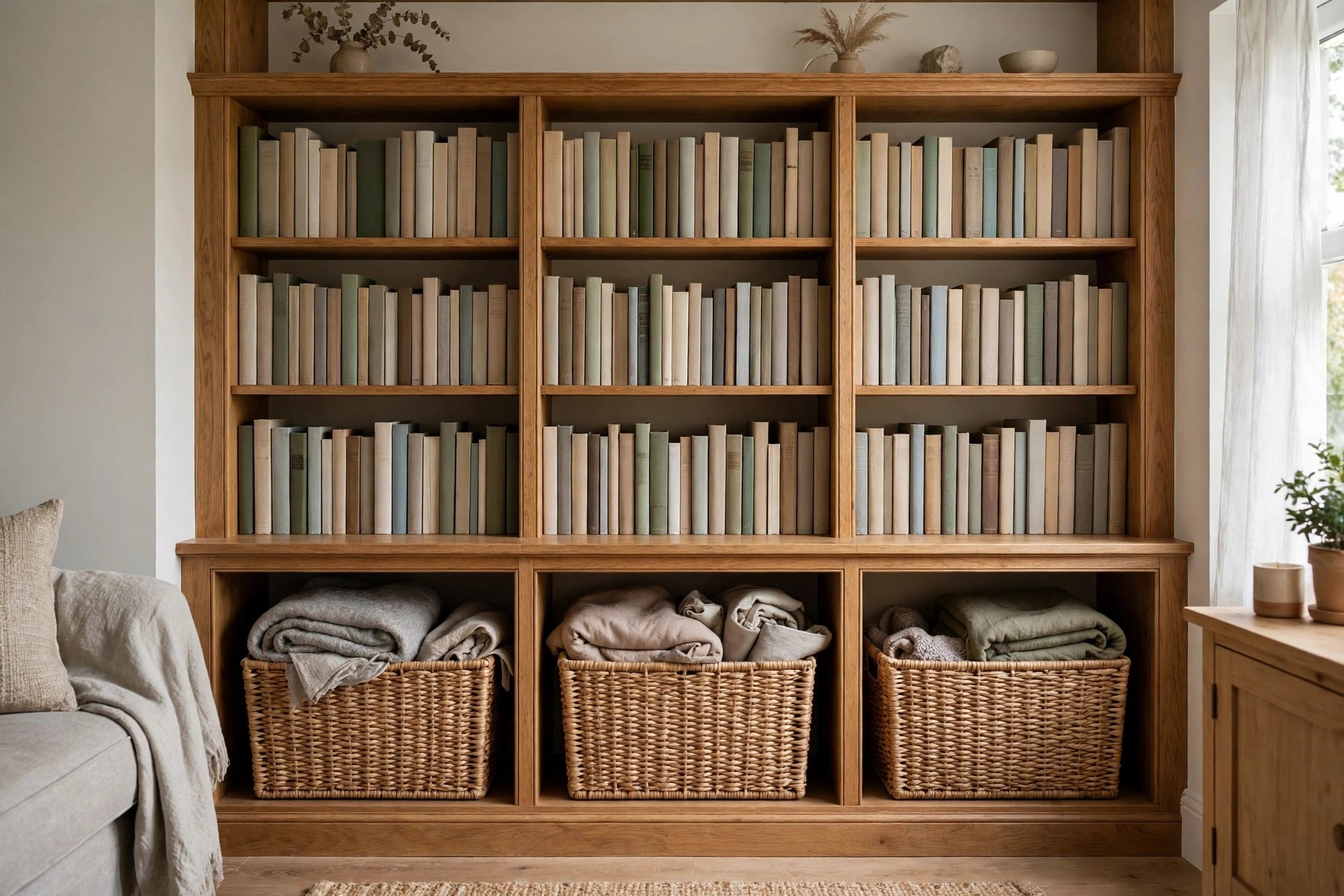
The lowest shelves collect the most clutter because they are easy to reach. Give that row to baskets instead of books, one for blankets, one for toys, and one for chargers and loose cords.
Choose baskets with straight sides that fill the bay width. Round baskets waste corners and tip forward when full, while straight sides slide in and out like drawers on a busy morning.
A lidded option helps even more. Our roundup of storage ottomans for small living rooms follows the same rule: hidden storage near the sofa keeps the styled shelves looking calm.
9. Add a Slim Picture Ledge Look Inside One Open Bay
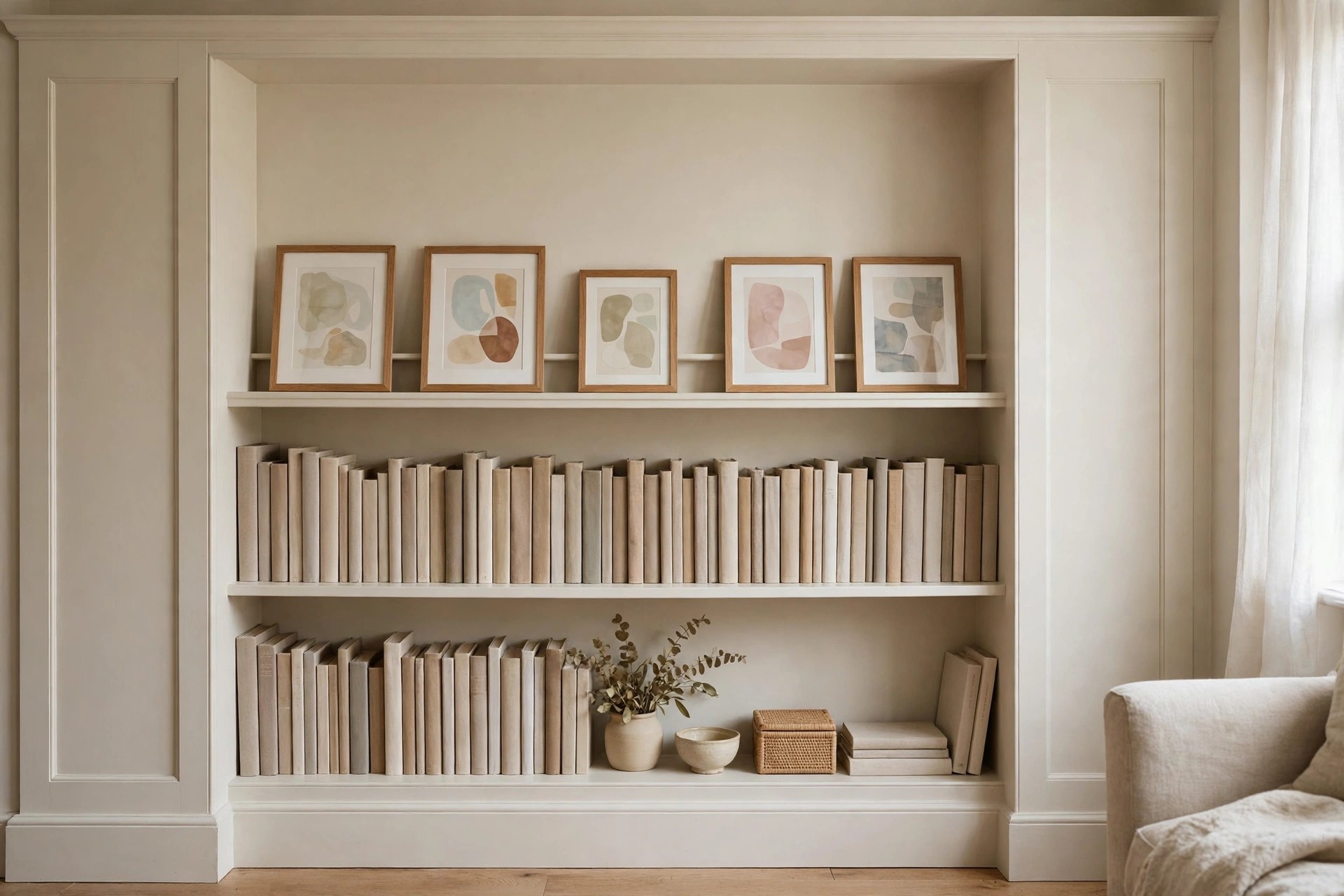
Inside one wide bay, add a shallow ledge near the top for leaned prints and photos. The ledge breaks up rows of spines and gives art a home without a single new hole in the wall.
Keep the ledge shallow so books below still slide out with ease. If a frame blocks the books you read most, the bay will annoy you within a week, however good it looks.
Swap the prints with the seasons if you like change. Small art moves fast, costs little effort, and lets the whole bookcase feel fresh while the books and furniture stay exactly where they are.
Keep the ledge art small and light. Oversized frames crowd the bay and push the books behind them out of easy reach.
10. Surround the TV With Shelves and Hide Cords Behind Doors

A TV floating alone on a wall can dominate a small room. Shelves around the screen share the focus, and a closed section below hides the router, cords, and game gear that usually spill out.
Paint the shelves around the screen the same color as the wall. The TV then sits inside the unit instead of sitting on top of it, and the black rectangle feels less stark at night.
Keep the shelves beside the screen quiet. Books with pale spines and a few plain objects calm that zone, while bright covers and busy patterns fight the picture whenever the TV is on.
Test the screen glare at night before you style the side shelves. A small shift in angle can save the whole setup.
11. Line the Shelf Backs With Warm Wood for Depth
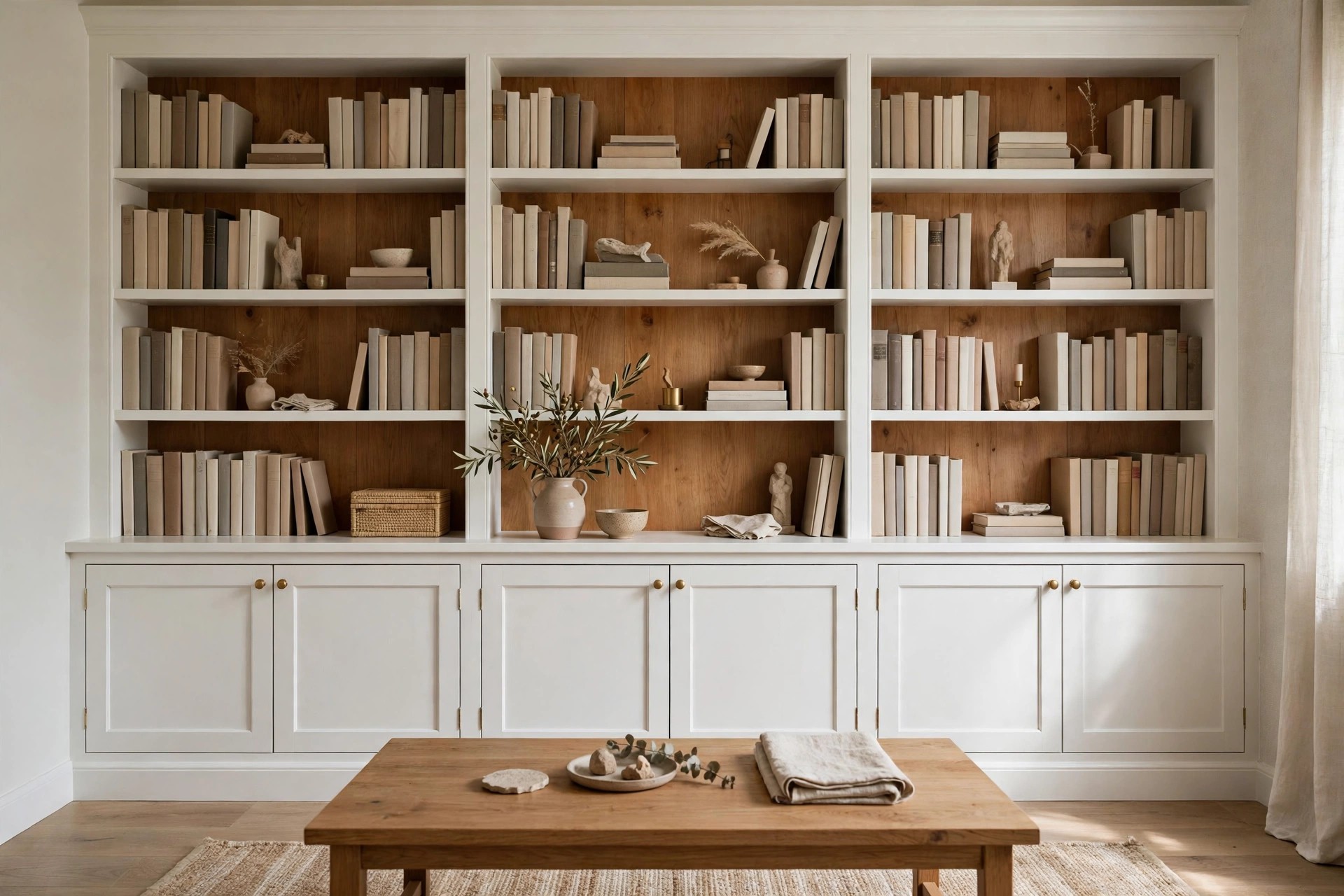
Painted shelves with wood lined backs add warmth without new furniture. The wood tone shows in thin strips between books and objects, so even a white unit gains depth and a softer feel.
Pick a wood tone close to your floor or coffee table. When the tones match, the bookcase ties into the room instead of starting a new color story that nothing else supports.
Leave a few bays with more wood showing than others. A stack laid flat here and a gap there lets the backing work as decor, not just as a hidden surface behind clutter.
Sand and seal test scraps first if you line the backs yourself. Raw edges show fast under shelf light in the evening.
12. Put Plants on the Top Shelves Where the Light Reaches
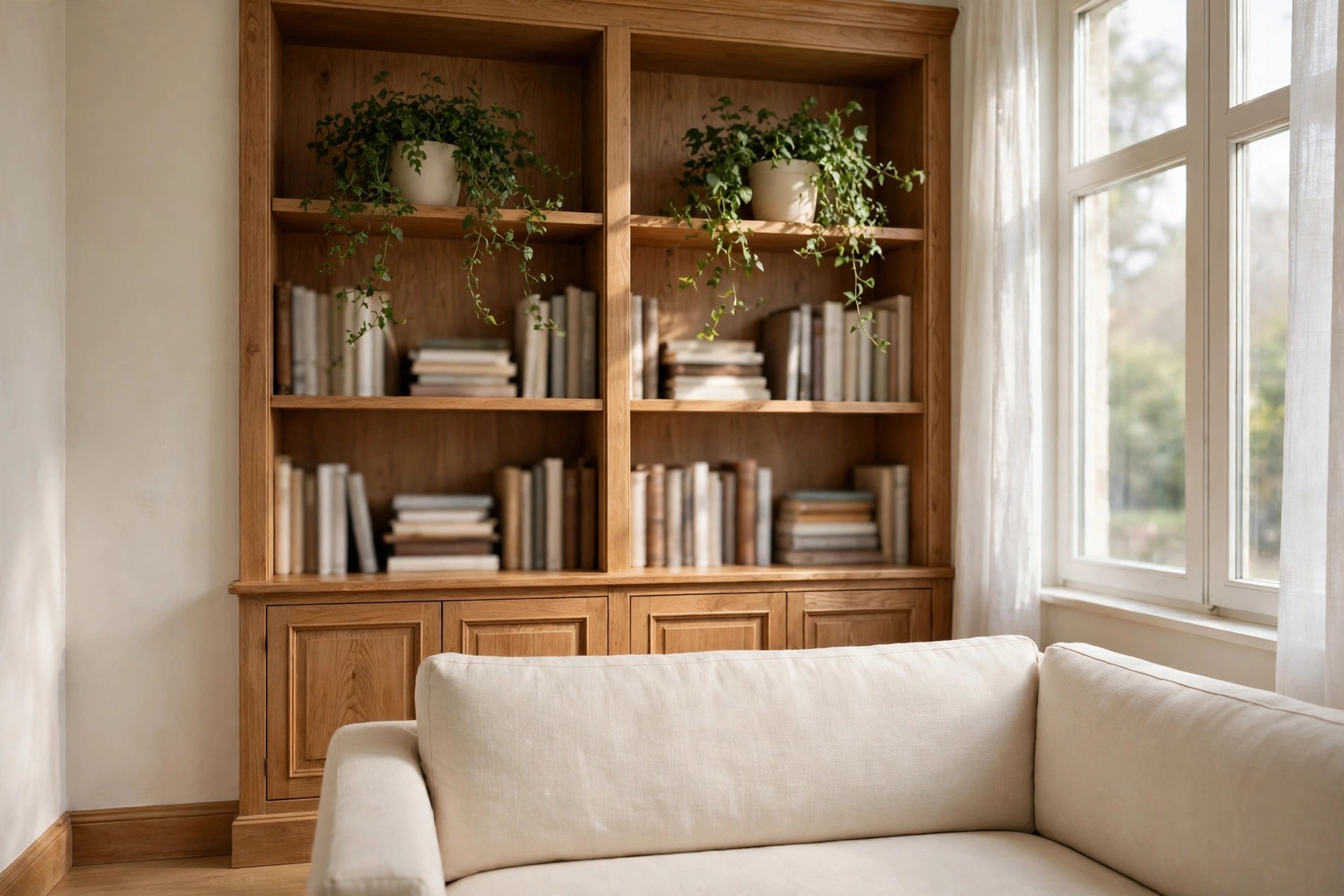
Top shelves near a window get the best light in the room, and trailing plants use that height well. Leaves soften the hard top edge of the unit and draw the eye up without adding floor clutter.
Choose one or two plants, not a jungle row. In a small room a line of pots on every bay reads busy fast, while a single trailing plant can soften a whole wall.
Water from a small can with a long spout, and set each pot on a plain tray. Drips on books below are the quickest way to ruin both the styling and your favorite paperback.
13. Lean Art and a Mirror Inside Bays to Break Up Book Rows

Rows of spines need a break every so often. Lean a framed print inside one bay and a small mirror inside another, each in front of a short row of books for support.
The mirror catches window light and sends it back into the room, which helps the corner that stays dim all winter. Keep the glass plain so unreadable spines stay soft behind it.
For more wall led ideas, see how a gallery wall focus groups frames in an apartment room. The same spacing rules work inside a bay.
Angle the mirror toward the window, not the sofa. You want the light bounce, not a reflection of the TV screen.
14. Serve the Whole Wall With One Rolling Side Table

A fixed side table serves one seat only. A small rolling table moves along the bookcase wall, holding tea by the reading chair in the morning and the remote by the sofa at night.
Our guide to nesting side tables for small living rooms covers the same idea in pairs. The lesson holds: light tables you can move beat one heavy table you cannot.
Park the table inside the widest bay when guests arrive. It clears the walk path in seconds and looks like part of the unit, not like furniture shoved aside in a hurry.
15. Finish the Shelves for Night With Soft Light and Clear Space

Shelves that look good at noon can look harsh at night under one ceiling light. Add soft light inside two or three bays, low and warm, and keep the surfaces near the sofa clear for drinks.
Battery lights with simple switches suit renters well, since they need no wiring and leave no marks. Stick to a few bays only, so the wall glows in spots instead of shining like a shop display.
End with a five minute reset each evening: books upright, one object per group, cabinet doors shut. The wall you wake up to sets the mood for the whole small room the next day.
Keep one bay near the door styled the same all year. A steady corner makes seasonal swaps elsewhere feel easy.
Start with just one bay and one rule from this list. Paint, grouping, or a single basket row can settle a whole wall faster than a full restyle done in one tiring weekend. Small rooms reward small, finished steps.
Keep the books you love within reach and the clutter behind doors, and the shelves will stay calm for weeks at a time.
Save your favorite small living room ideas with built in bookcase styling to the Apartment Living Room Decor Ideas board, then style the next bay when the light is good.


