

15 Small Living Room Ideas for a Fireplace Centered Layout
A centered fireplace should make a small room easier to arrange, yet the sofa often ends up too far back and the chairs drift into corners.
These small living room ideas for a fireplace centered layout start with the firebox as the true middle of the room.
Every seat, rug, and table is placed from that center line outward, so walkways stay open and nothing feels pushed aside.
You will find layouts for conversation, reading, and TV nights, plus simple styling for the mantel and hearth.
Pick one layout first, live with it for a weekend, then add the storage and light layers that fit your routine.
Measure nothing fancy to begin: pace the walkways, sit in every seat, and note where cups, books, and remotes actually land during one normal evening at home.
The fifteen ideas that follow keep safety, comfort, and daily use ahead of looks, so the room works on a quiet Tuesday as well as on guest night.
This post contains affiliate links. If you buy through them, we may earn a small commission at no extra cost to you. See our Affiliate Disclosure.
1. Face a Compact Loveseat Straight On to the Firebox
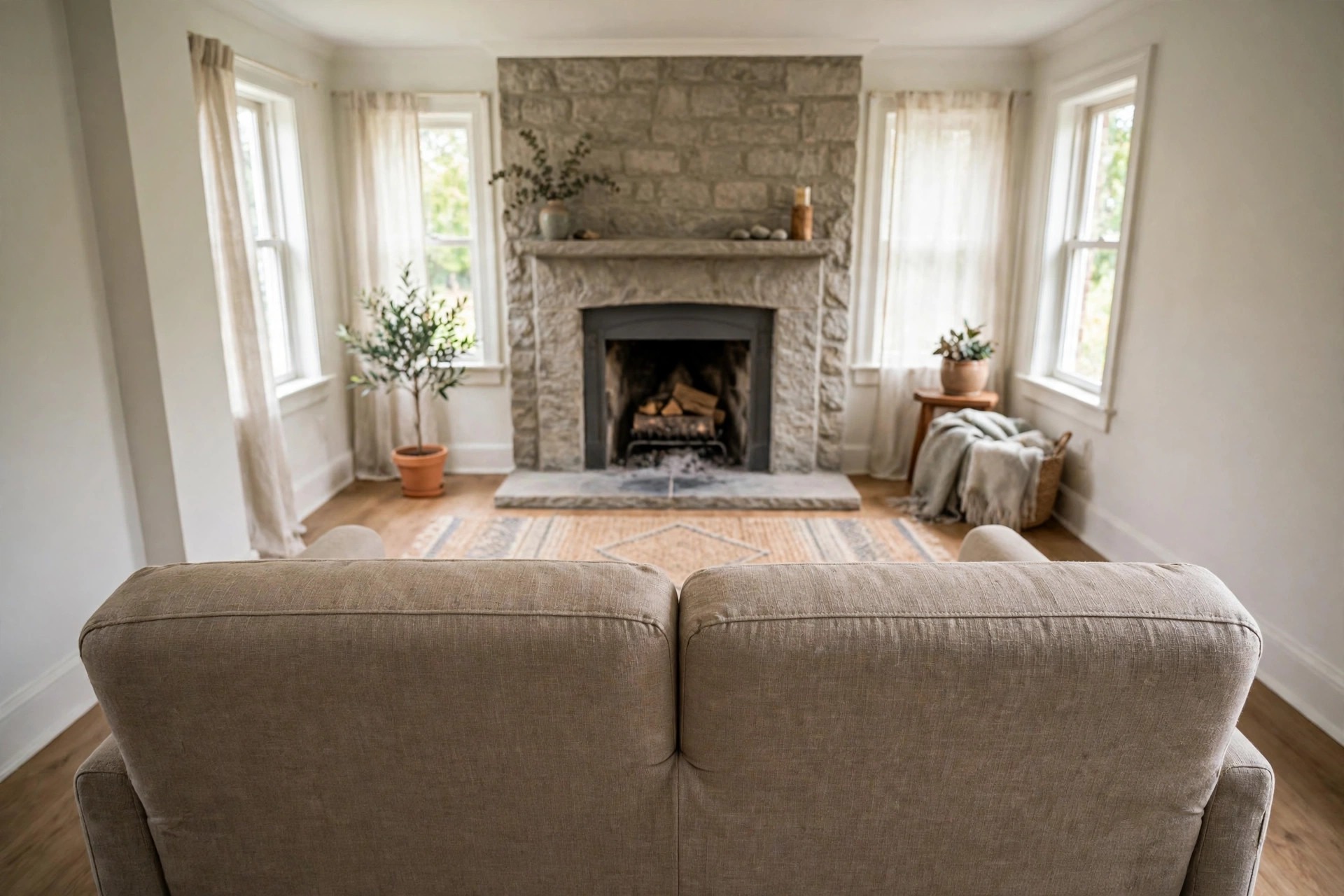
Start with the simplest anchor: a compact loveseat placed squarely opposite the fireplace, centered on the firebox rather than on the wall.
That small distinction matters in older rooms where the fireplace sits slightly off the room center.
Pull the loveseat a few inches off any rear wall so the seating group reads as one place, not a row.
Leave a clear, comfortable path on at least one side so people can enter the group without squeezing past an arm.
In my notes, this layout works best when the loveseat arms stay low and slim.
High, wide arms eat visual space and block the view of the fire from side seats.
Take a phone photo from the doorway after each change to judge balance honestly.
2. Angle Two Slim Chairs Inward at the Corners
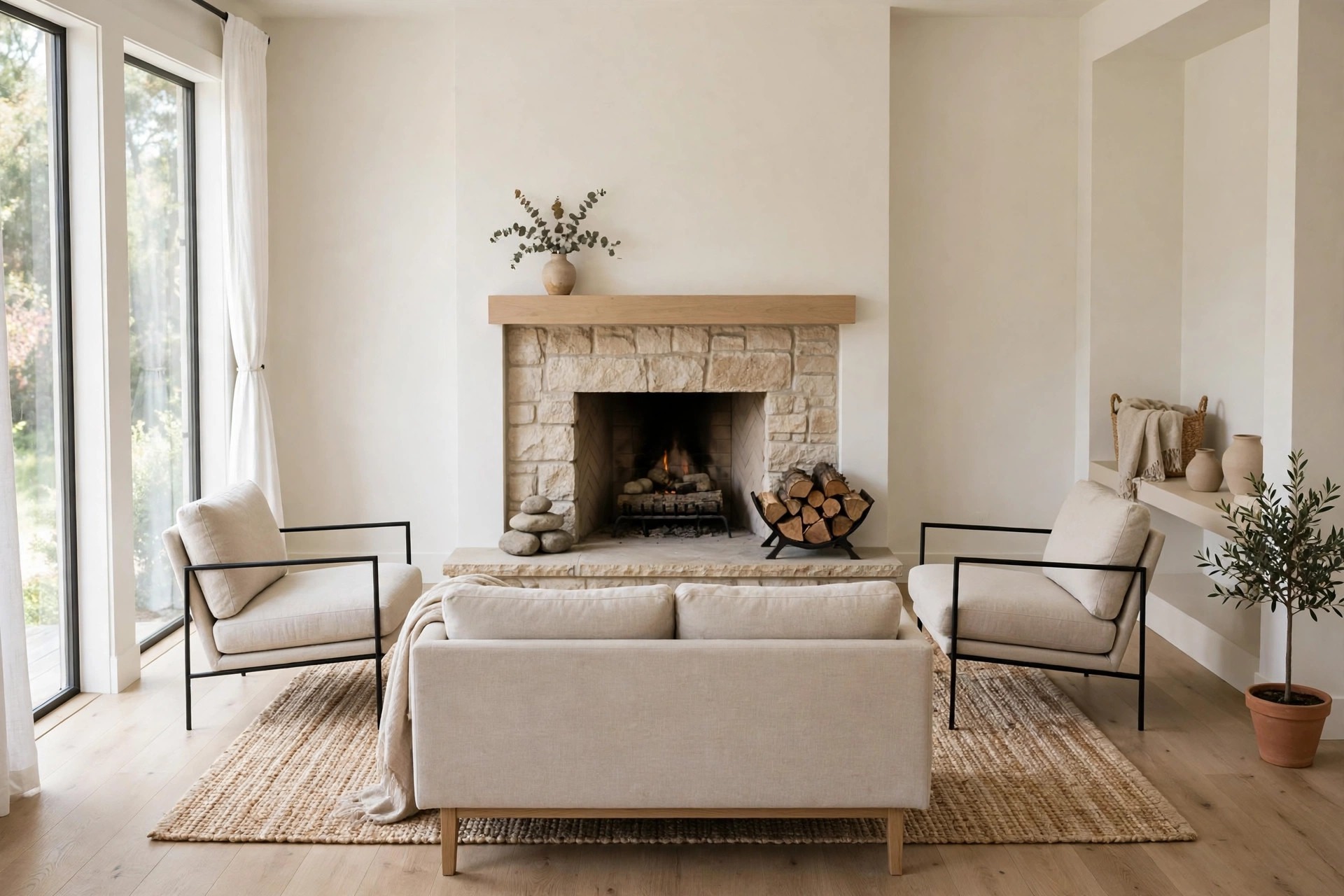
Place two slim chairs at the front corners of the rug and turn each one slightly toward the loveseat.
The angle closes the circle for talk while keeping the sides of the fireplace fully visible.
Armless or low arm chairs keep sightlines open, which helps a tight room feel calm.
If one chair is only used for guests, keep it light enough to move in under a minute.
A common slip is pushing both chairs flat against side walls.
Flat chairs face across the room and leave the person in them out of the conversation.
If the room still feels off, remove one piece before you add anything else.
3. Center a Round Coffee Table on the Firebox Line

A round table centered on the firebox line gives every seat a fair reach and removes sharp corners from the tightest walking zone.
Set the table so its middle lines up with the middle of the fireplace, then adjust the rug to match.
Keep the top mostly clear: one tray, one book stack, and room for cups is enough.
If the table feels lost, choose a lower, wider shape rather than a taller one.
Low height keeps the fire visible over the table from the loveseat.
That clear view is the whole point of a centered layout, so protect it first.
Keep spare coasters in the tray so guests never hunt for a safe spot.
4. Anchor the Group With a Rug Centered on the Fireplace

Lay the rug so its center matches the fireplace center, even if that leaves uneven floor showing at the room edges.
Front legs of the loveseat and chairs should rest on the rug so the group holds together.
A quiet pattern or a plain weave with a border helps the eye find the middle without loud color.
Watch the door swing before you settle the size.
A rug edge that curls where the door opens will annoy you daily and wear out fast.
Leave that swing zone clear and let the rug sit fully inside the seating area.
A border line on the rug also helps align chairs without measuring tools.
5. Balance the Hearth Sides Without Matching Them Exactly

A centered fireplace invites symmetry, but exact pairs can make a small room feel stiff and showroom neat.
Try a basket for throws on one side and a low stack of books or a plant stand on the other.
Keep both sides at a similar height and weight so the firebox still reads as the middle.
This is a good spot for blanket ladders for living rooms placed flat against a side wall.
A ladder holds color and texture upright without taking floor space from seating.
Step back from the doorway and check that neither side pulls harder than the other.
Uneven balance suits family rooms where one side holds the main reading chair.
6. Choose a Low Profile Sofa So the Mantel Stays in View
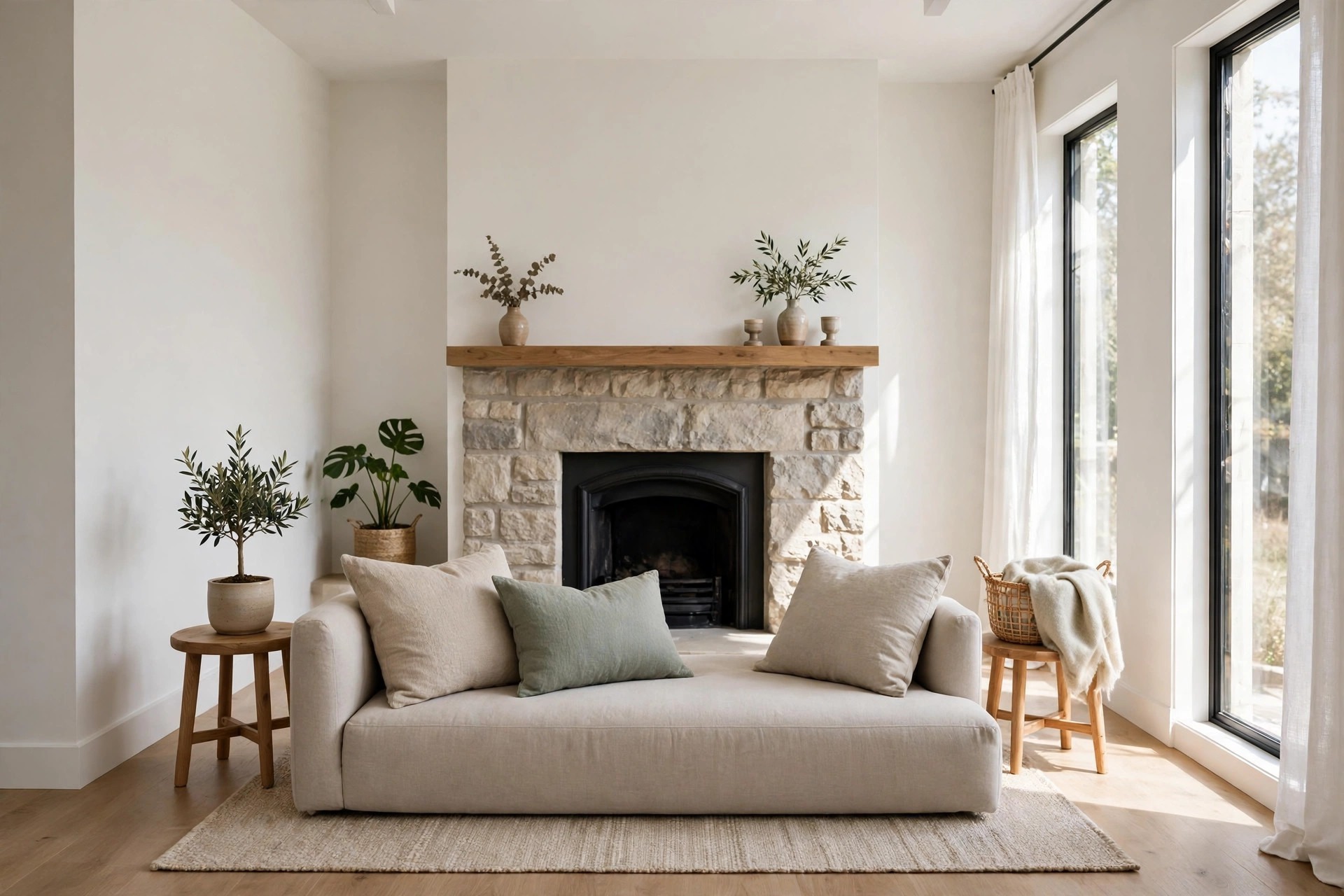
When the main seat sits too high, it cuts the room in half and hides the lower half of the fireplace.
A low back sofa or loveseat keeps the mantel, surround, and art above it all in one view.
Pair the low seat with cushions that have real support, since low does not have to mean slouchy.
Test the pairing with your usual habits: feet up, laptop on lap, or a tray on the cushion beside you.
One grounded detail helps here: the sofa arm often doubles as the only side table.
Pick a firm, flat arm if that is how your household actually lives.
Test seat height with your usual shoes off, feet flat, book in hand.
7. Put the TV on a Side Wall, Not in a Fight With the Fire

Two focal points facing the same seat rarely work in a small room, so give the TV the side wall instead.
Turn the loveseat slightly or use a swivel chair so viewers can shift between fire and screen without moving furniture.
Keep the screen at seated eye height on its own wall and hide cords along the baseboard for a clean look.
On fire nights, the seating still faces the hearth. On movie nights, chairs turn and the coffee table stays put.
If your room has no free side wall, a small screen on a low stand in a corner beats a large screen over the mantel.
Heat rises, viewing angles suffer, and the mantel loses its calm role.
Mark the screen spot with painter tape for a day before you commit.
8. Style the Mantel in Three Heights and Then Stop

Give the mantel a simple recipe: one tall piece, one medium piece, and one low, wide piece.
A leaning mirror or tall vase, a medium framed print, and a low stack of books cover most mantels well.
Leave empty space between the groups so each item can be seen from the loveseat.
Keep anything flammable well away from the fire opening and never drape fabric over a working mantel edge.
That rule stays general on purpose: follow your fireplace manual and local guidance for your own unit.
Swap one item with the seasons instead of restyling the whole shelf each month.
Photograph the mantel in daylight and lamplight, since both change the effect.
9. Keep a Clear, Open Zone Right in Front of the Hearth
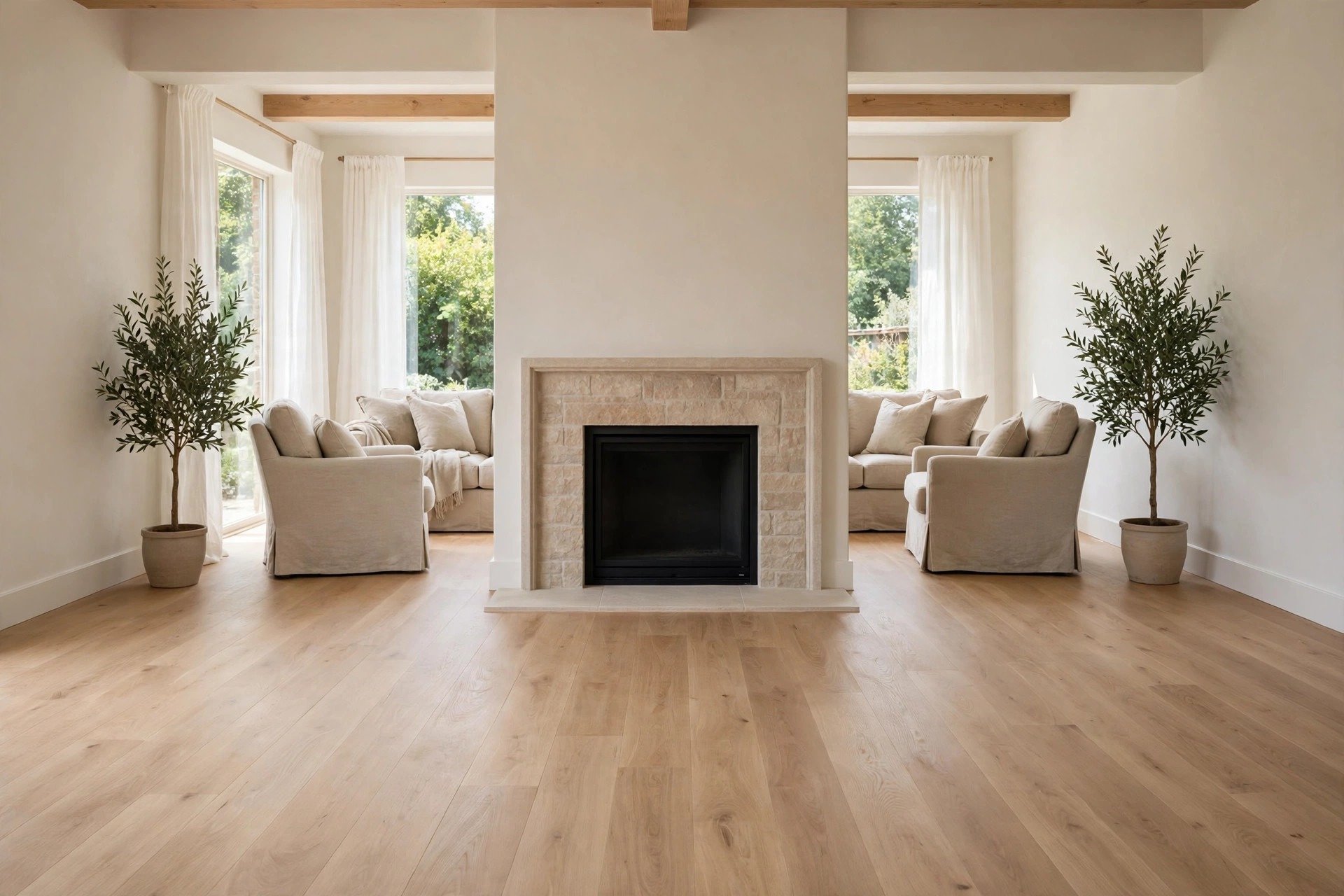
The floor directly in front of the fireplace should stay open, calm, and easy to cross.
No baskets, stacks, or spare stools belong in that zone, however tidy they look in a photo.
Keep furniture, rugs with loose edges, throws, and decor at a sensible distance from heat, and follow the guidance for your own fireplace.
This is qualitative advice, not a measurement: every fireplace and fuel type differs, so the manual for your unit leads.
An open hearth zone also helps the layout read clearly.
Guests can see where to walk, and the fire remains the center without clutter competing at its base.
Tell every household member the hearth rule once, plainly, before the first fire.
10. Use Nesting Side Tables That Tuck Away After Guests Leave

Fixed side tables on both sides of a loveseat can crowd a centered layout fast.
Nesting tables solve the reach problem only when you need them, then slide back into one small footprint.
Pull the smaller table out for a guest drink, a book, or a lamp during a reading night.
For source checked options, see storage ottomans for small living rooms as a second flexible piece.
An ottoman can hold a tray, offer a footrest, and hide throws inside between visits.
Choose finishes that echo the mantel or floor tone so the extra pieces feel planned, not borrowed.
Label which table goes where on a sticky note until the habit sticks.
11. Add Floor Cushions in Front of the Rug Edge for Extra Seats

When friends visit, the loveseat and two chairs may not be enough, and spare dining chairs rarely fit the circle.
Firm floor cushions placed just inside the rug edge add seats without blocking the fire view for people behind them.
Our companion guide to small living room ideas with floor cushions for hosting friends covers hosting layouts in depth.
Store cushions upright in a corner basket or flat under a console when the visit ends.
Pick washable covers in a color pulled from the rug border.
That link makes the extra seats look like part of the room, not an afterthought.
Keep one cushion plain so patterned covers can rotate with the seasons.
12. Build a Quiet Reading Corner at One Fireside Edge
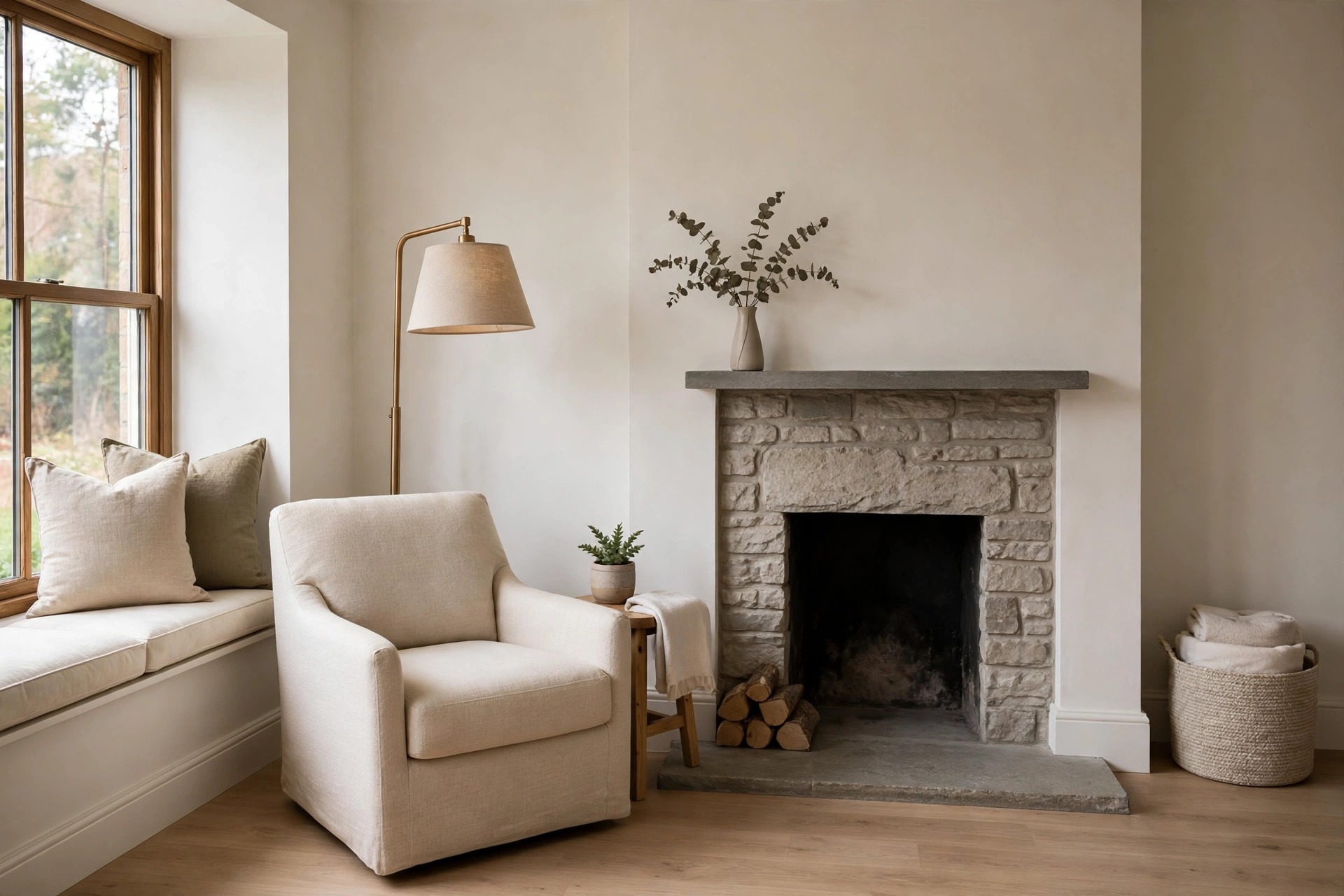
One edge of the fireplace can hold a real reading spot if you keep it narrow and self contained.
Set a single chair at a slight angle, a small table for a cup, and a floor lamp behind the shoulder.
This corner works because it borrows warmth and light from the fire without joining the main conversation group.
It pairs well with small living room ideas with a window bench seat when a window sits nearby.
A bench can hold the book pile and a folded throw between reading sessions.
Keep the walkway behind the chair clear so the corner feels tucked in, not trapped.
Leave the lamp switch easy to reach from the chair, not behind it.
13. Flank the Fireplace With Slim, Shallow Storage

Shallow bookcases or narrow cabinets on both sides of the chimney breast give a small room storage without deep bulk.
Keep them lower than the mantel or clearly taller as a pair, so the proportions look deliberate.
Use the shelves for books, closed boxes, and one or two open display spots only.
Closed storage near a fireplace should hold ordinary household items, never fuel, matches, or anything heat sensitive.
Store fire tools and supplies as your fireplace manual directs, away from everyday clutter.
Matching the shelf color to the wall helps the storage recede and lets the surround stand out.
Use the top shelf for light items only, and keep lower shelves for weight.
14. Layer Light at Seated Height on Both Sides

Ceiling light alone flattens a fireside room and leaves faces in shadow during evening talk.
Add a lamp on each side of the seating group at about seated eye height: one table lamp, one floor lamp works fine.
Warm, shaded light echoes firelight and keeps the far corners from going dark early on winter afternoons.
If you are comparing small electric fireplaces for apartments, note how their glow sits within a layout like this.
Plug lamps where cords can run along walls, never across the hearth zone or under a loose rug edge.
Dim or switch each lamp on its own so movie nights and reading nights get different light.
Run both lamps for one full evening before deciding the room needs more.
15. Pull Pillow and Throw Colors From the Surround Material

Brick, stone, tile, and painted wood surrounds each carry colors you can repeat in soft goods.
Pull one warm tone and one cool tone from the surround into pillows and a throw, then stop adding new colors.
That restraint lets patterned cushions mix without noise: vary scale, keep the palette shared.
A rust pillow near red brick, or a slate throw near gray stone, looks settled straight away.
Keep throws folded clear of the fire opening and store them on a chair arm or basket, not on the hearth.
When the soft goods echo the surround, even a plain rental sofa feels chosen for this room.
Retire one pillow each season instead of letting the color mix keep growing.
A centered fireplace gives a small room its plan for free: center the rug, face the main seat, and build outward in calm layers.
Start with the layout ideas, add storage and light next, and keep the hearth zone open and clear at all times.
Save the layouts you want to try to our Apartment Living Room Decor Ideas board, then test one arrangement for a full weekend before judging it.
Small rooms reward patience here. One moved chair or one wider rug often settles a layout that felt wrong on paper but works beautifully in daily life.


