

15 Cat-Friendly Living Room Ideas That Still Look Stylish
Living with a cat does not have to mean shredded sofa arms, fur on every cushion and a room that looks like a pet shop exploded in it. The most stylish cat-friendly living room ideas work because they plan for the cat from the start — a proper place to scratch, climb, sleep and watch the world — instead of fighting those instincts after the furniture is already ruined.
The trick is to give every cat behaviour a better address than your best chair. A scratching spot beside the sofa, a high perch in the sun and a bed in a quiet corner will redirect almost everything you currently lose cushions to. If your room also has to work for the whole family, our living room and playroom combo ideas show how to zone one room so everyone gets a corner that works.
Work through the ideas below in order: fabrics first, then climbing and scratching, then the finishing details.
This post contains affiliate links. If you buy through them, we may earn a small commission at no extra cost to you. See our Affiliate Disclosure.
How to Cat-Proof a Living Room Without Ruining the Look
Start with a walk-through at cat height. Sit on the floor and look at what a cat sees: loose threads to pull, dangling cables to bat, breakable objects at tail height on open shelves, and sunny spots with nowhere comfortable to land. Most damage comes from boredom and opportunity, not spite, so removing the opportunity and offering a better alternative solves most of it in one pass.
Then think in materials rather than rules. Tight weaves, washable covers, wipe-clean surfaces and low-pile textures survive daily cat life without looking like compromise furniture. Keep one palette across the cat tree, beds and scratchers — the same neutrals or wood tones as your sofa — and cat furniture starts reading as part of the scheme. Anchor anything fragile, and put truly precious pieces in another room.
1. Pick Tight-Weave Fabrics That Claws Cannot Snag
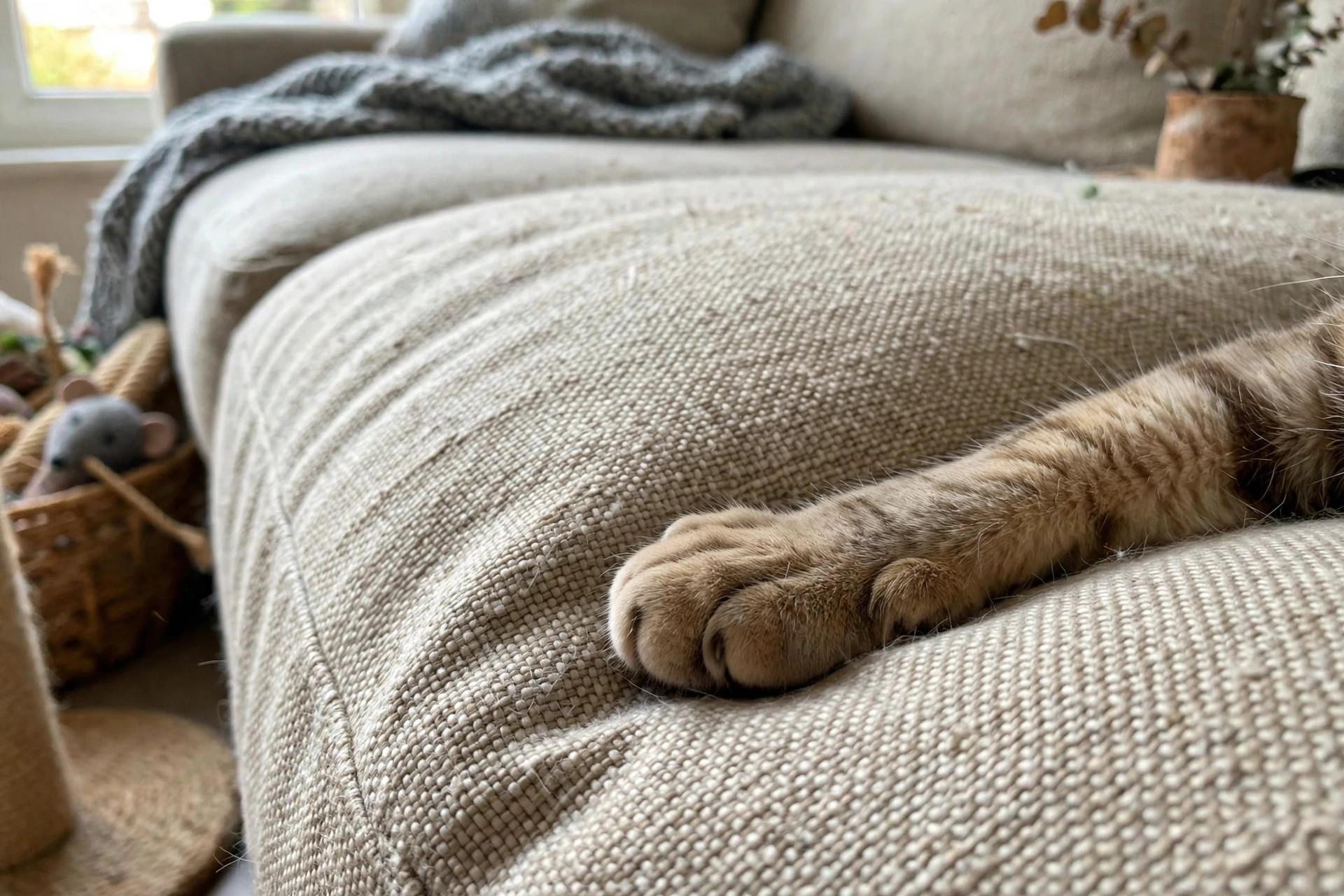
Loose, open weaves are an invitation: a claw catches a loop, the loop pulls, and the cat returns to work the same spot. Tightly woven fabrics — closely woven linen blends, canvas, microfibre and tightly woven cotton — give claws nothing to hook into, so a kneading session leaves no trace. Run a fingernail across a sample before you buy; if you can catch threads, so can a cat. A subtle pattern helps too, hiding loose hair far better than a flat, pale solid.
2. Give the Cat a Tall Tree That Matches Your Palette
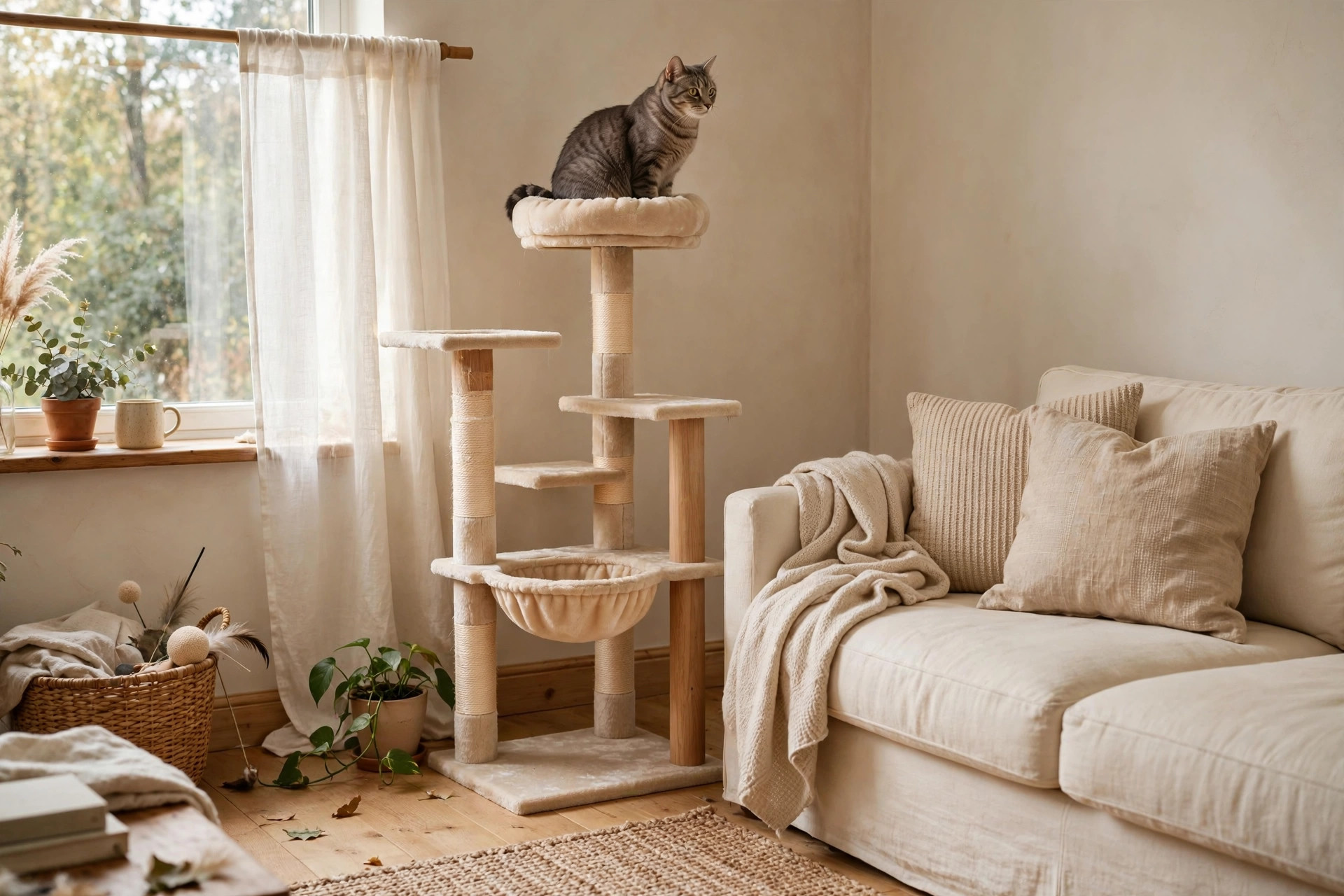
Cats read a room vertically, and a cat with no high territory of its own will claim the bookcase, wardrobe or curtain rail instead. A tall cat tree — tall enough for a full stretch, with a top perch above seated eye level — gives that instinct a proper home. Place it near the social centre of the room, not banished to a hallway, because most cats want height and company at once. Choose carpet, sisal and wood finishes that echo your furniture: warm beige beside a cream sofa, grey beside cool upholstery, natural wood beside oak shelving.
3. Claim the Sun Spot With a Window Perch Bed
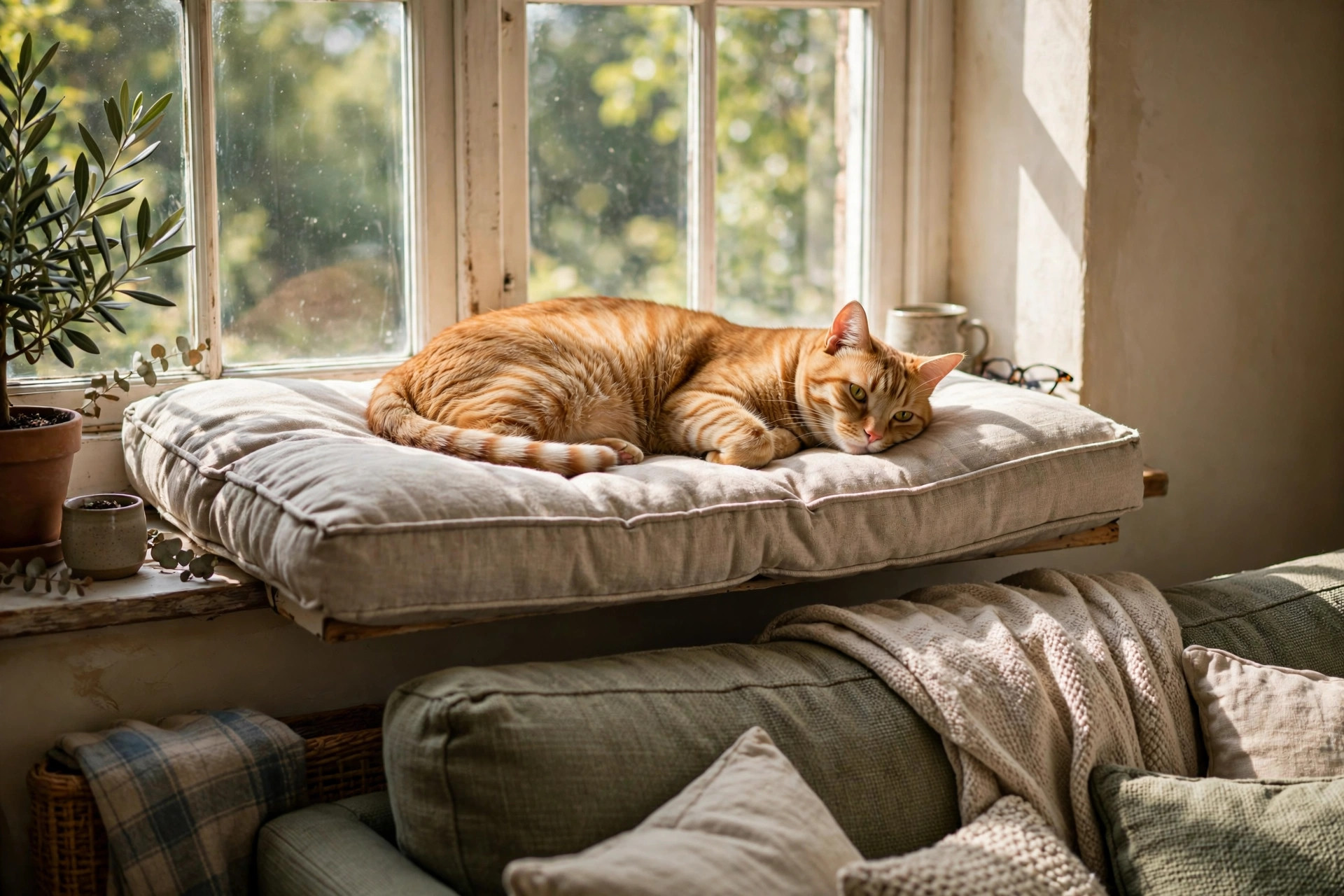
Every cat-friendly room has one patch where the sun lands and the cat always ends up, usually on top of whatever you put there. Claim that spot deliberately with a window perch bed: a cushioned platform at sill height, or a deep windowsill cushion if your sill allows it. The cat gets warmth and a street view, and you choose what the sun spot looks like. Check the fixing first — a perch must take the cat’s full weight landing at speed without flexing. If fixings are not possible, a sturdy side table of sill height in front of the glass does the same job.
4. Choose a Sofa With Removable, Washable Covers
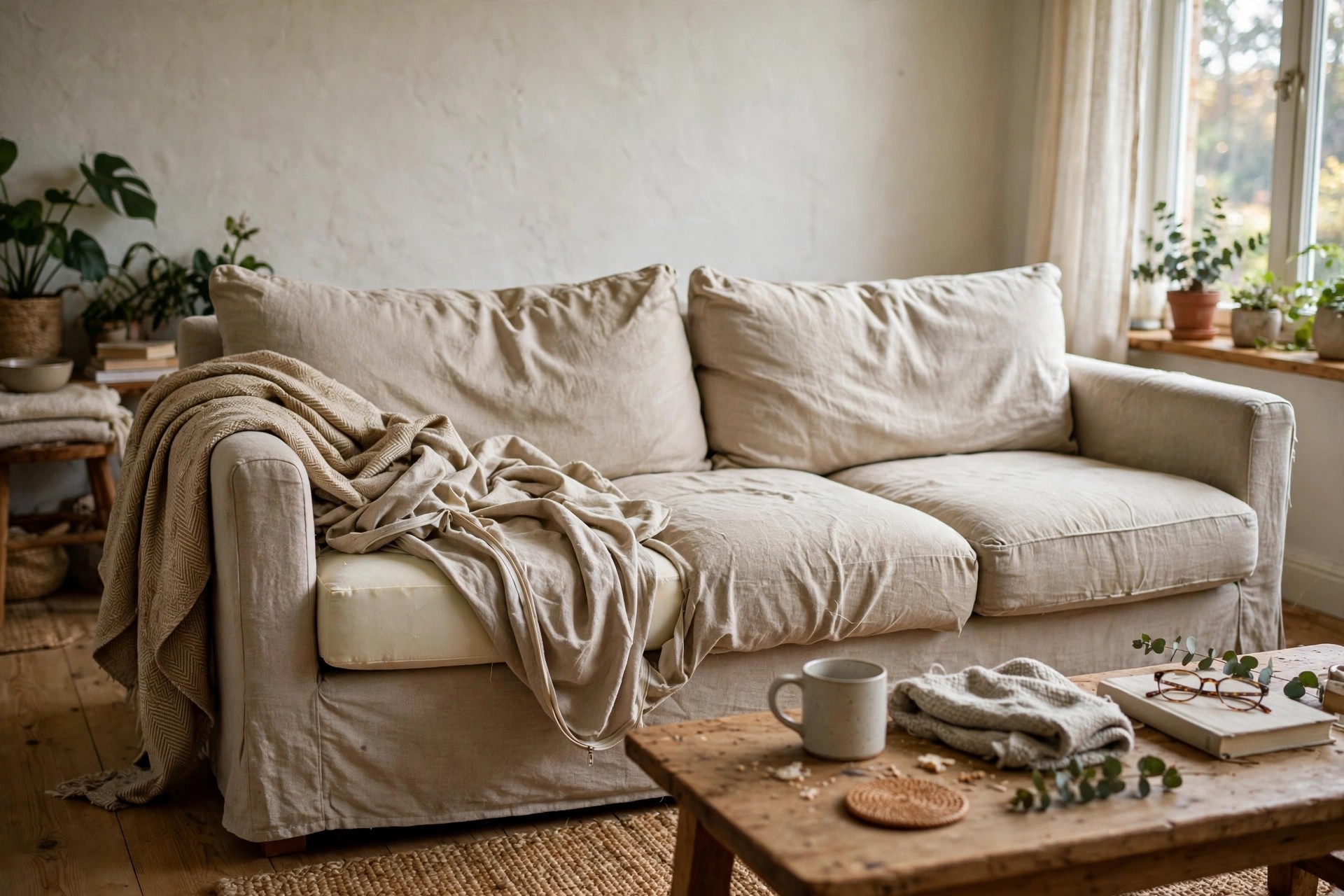
Fur, paw prints and the occasional hairball are not a question of if, but when. A sofa with fully removable, washable covers turns each incident into a laundry cycle instead of a permanent stain. Look for covers that zip off every cushion and the frame, and check the fabric itself is machine washable — some removable covers are dry-clean only, which defeats the purpose. The blue schemes in these blue living room ideas for pet owners show how forgiving, washable fabrics can still look polished, and a well-fitted washable cover gives an existing sofa most of the same protection.
5. Run Wall Shelves as a Cat Highway Above the Seating

A run of sturdy wall shelves stepped above the sofa gives a cat a route across the room that never touches the floor, the coffee table or your lap unless invited. Space the shelves so each step is a gentle rise rather than a leap, and run the route to a destination — a high perch, a window or a bed. Use the same finish as your other shelving, add a non-slip mat on each landing, and leave a couple of shelves for books so the route blends into a normal display wall.
6. Disguise Scratch Posts as Side Tables
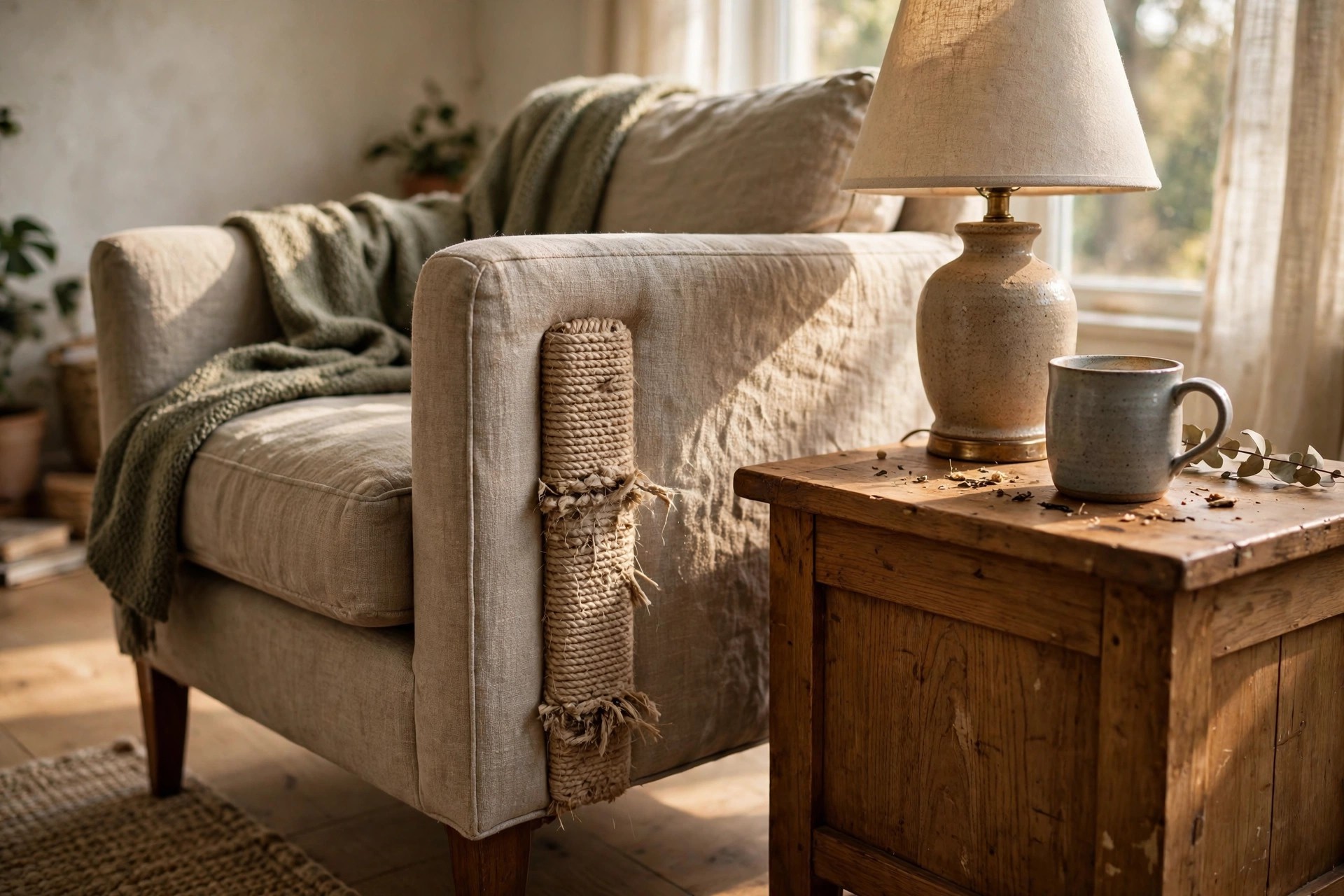
Cats scratch beside where they sleep and where you sit, which is why the sofa arm always suffers first. Put the legal version exactly there: a side table with a sisal-wrapped leg or side panel, or a compact scratch post in wood and rope tones that sits tight against the sofa end like furniture. Proximity is everything — a scratcher two metres away loses to the armrest every time. Stability matters too: a scratcher that wobbles when used is abandoned within days, so choose a heavy base or a table format the cat cannot move.
7. Lay a Low-Pile Rug That Hides Fur and Won’t Catch Claws
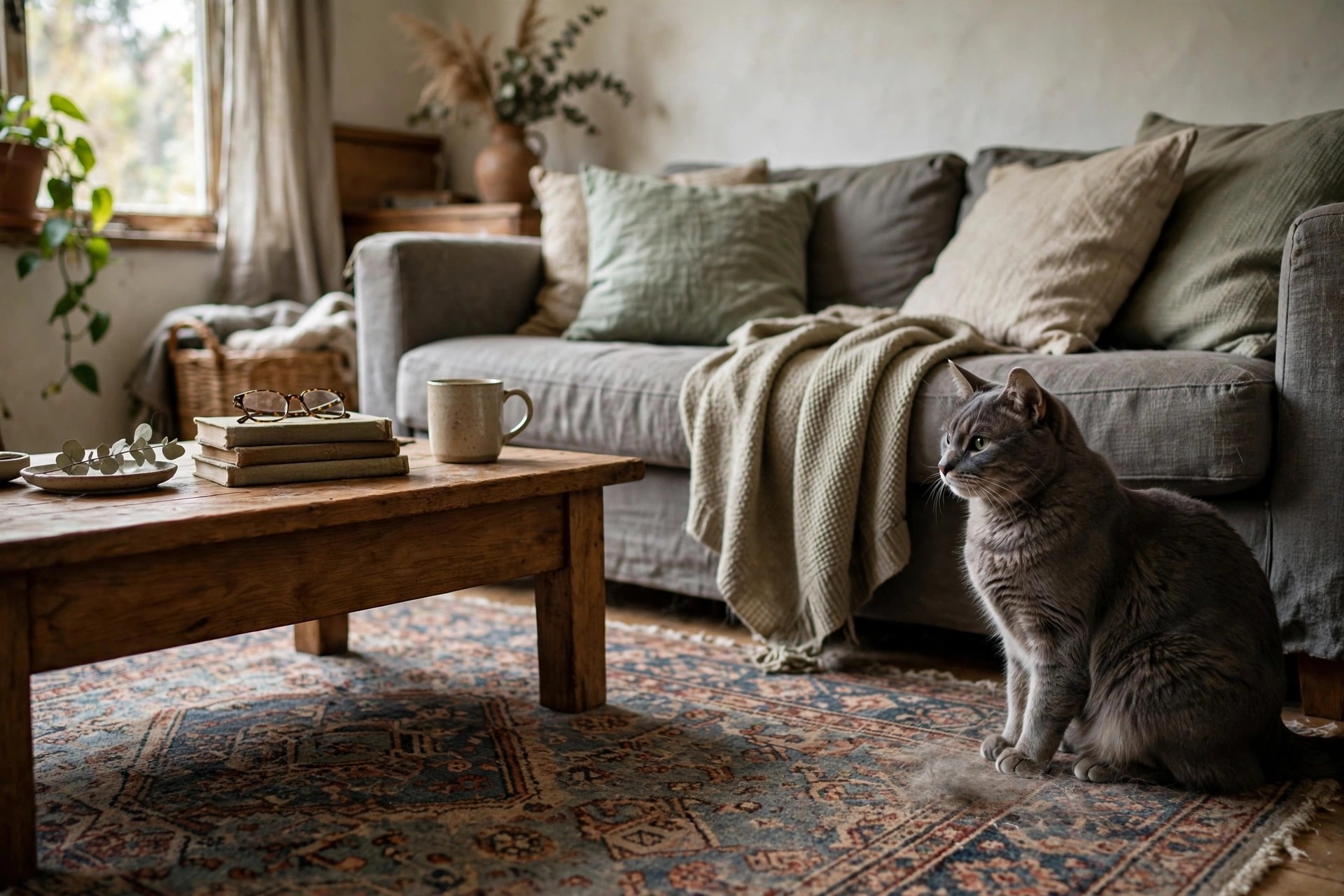
Deep-pile and looped rugs trap fur where the vacuum cannot reach it and offer loops that claws snag just as they do on loose upholstery. A low-pile or flatweave rug solves both: claws slide over it, fur sits on the surface where a vacuum lifts it in seconds, and the rug survives daily zoomies without shedding. Pattern helps — a mottled rug in tones close to your cat’s coat goes far longer between cleans. Choose a non-slip backing, because a rug that rucks up under a running cat becomes a toy.
8. Tuck a Cat Cave Into a Bookshelf Cube

Most cats want one enclosed, den-like sleeping spot as well as their high perches — somewhere dark, draught-free and defensible for deep daytime sleep. A cube shelving unit gives you that for free: clear the lower cube nearest the quiet end of the room, line it with a washable cushion or a felt cat cave, and you have a den that takes up no extra floor space. Keep the cubes above for books as normal, and shake out the cushion weekly.
9. Keep Plants Cat-Safe and Up on High Shelves
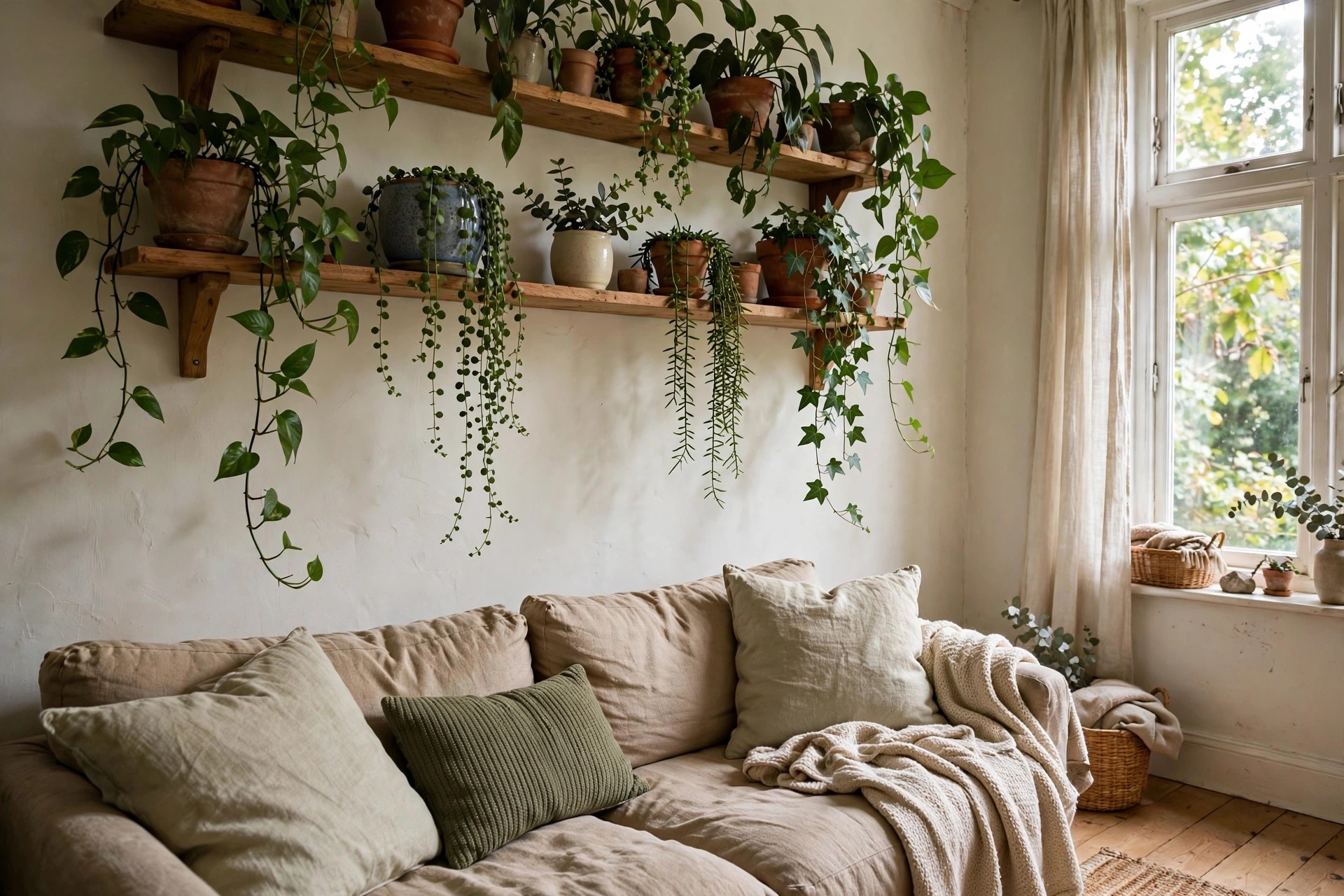
Houseplants and cats collide in two ways: the cat eats the plant, or digs the pot and redecorates the floor with soil. Solve both by choosing only plants known to be safe for cats, and by moving every plant onto high shelves, wall planters or tall stands that the cat’s highway does not pass. Check every plant before it comes home, and move anything doubtful to a room the cat does not enter — some common houseplants are genuinely harmful if chewed. Heavy pots resist tipping, and pebbles over the soil stop digging.
10. Anchor Breakables With Museum Putty and Closed Storage
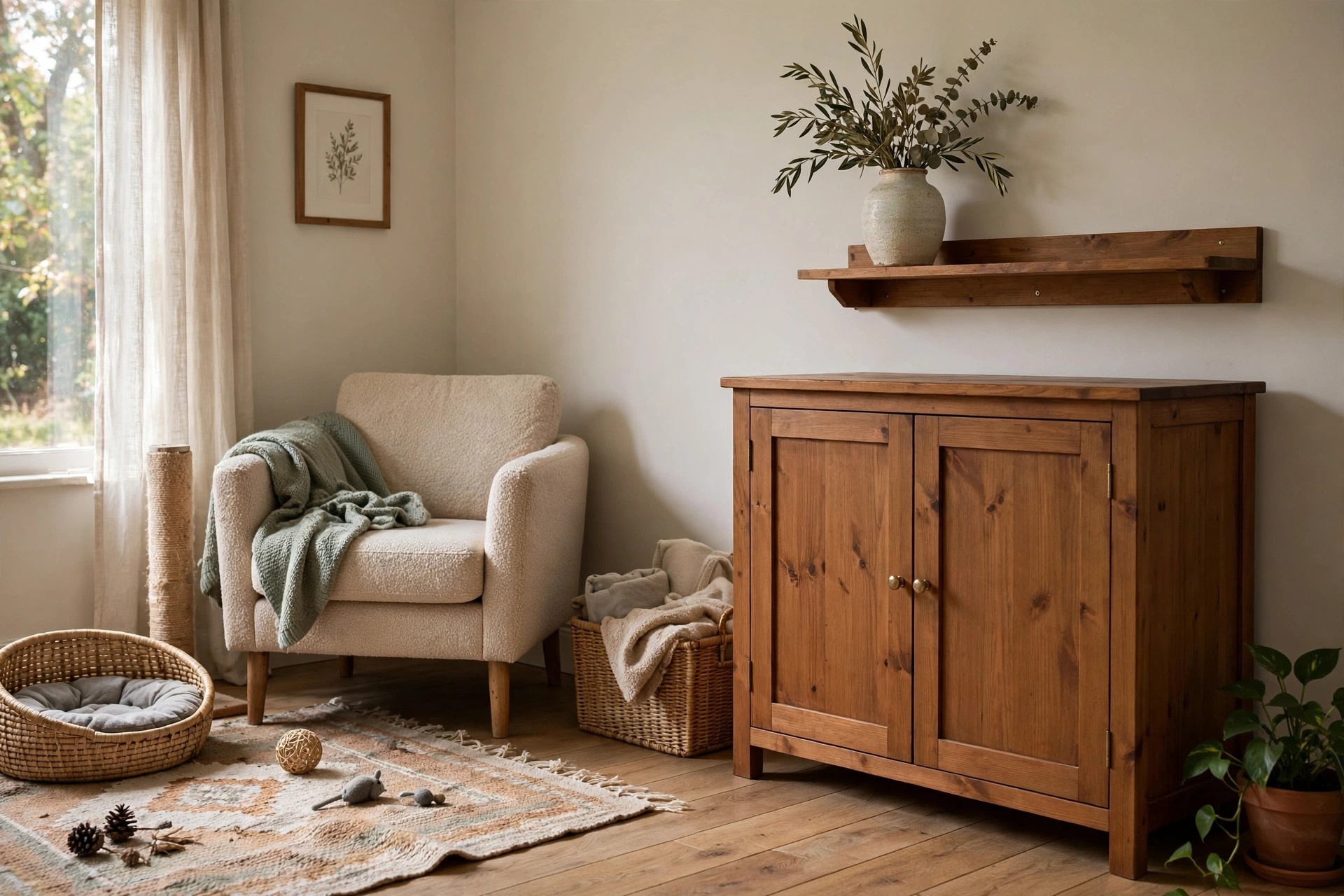
Tails, startled jumps and nighttime circuits are hard on ornaments. A small ball of museum putty or reusable adhesive putty under vases, photo frames and ceramics anchors them against all but a direct launch, and it comes away cleanly when you rearrange. Anything fragile belongs behind a door, not on an open shelf. Closed storage helps generally — cabinets and lidded baskets hide cables and everything else that invites chewing. The warm schemes in these brown living room ideas for families with kids and pets rely on the same closed storage to stay calm.
11. Set Out a Cardboard Scratching Lounger That Reads as Decor

Cardboard is the scratching material many cats prefer above all others, and the curved lounger format — part scratcher, part chaise — earns its place because cats genuinely sleep on it after scratching it. Choose a simple, sculptural curve in plain kraft or a muted finish, and it reads as a low, modern lounger rather than pet clutter, especially on a low-pile rug. Place it near the main seating, where the cat wants to be, and expect it to be a consumable: cardboard wears by design, which is the point. The lounger takes the damage so the sofa does not.
12. Make a Cosy Cat Corner With a Bed Under the Side Table
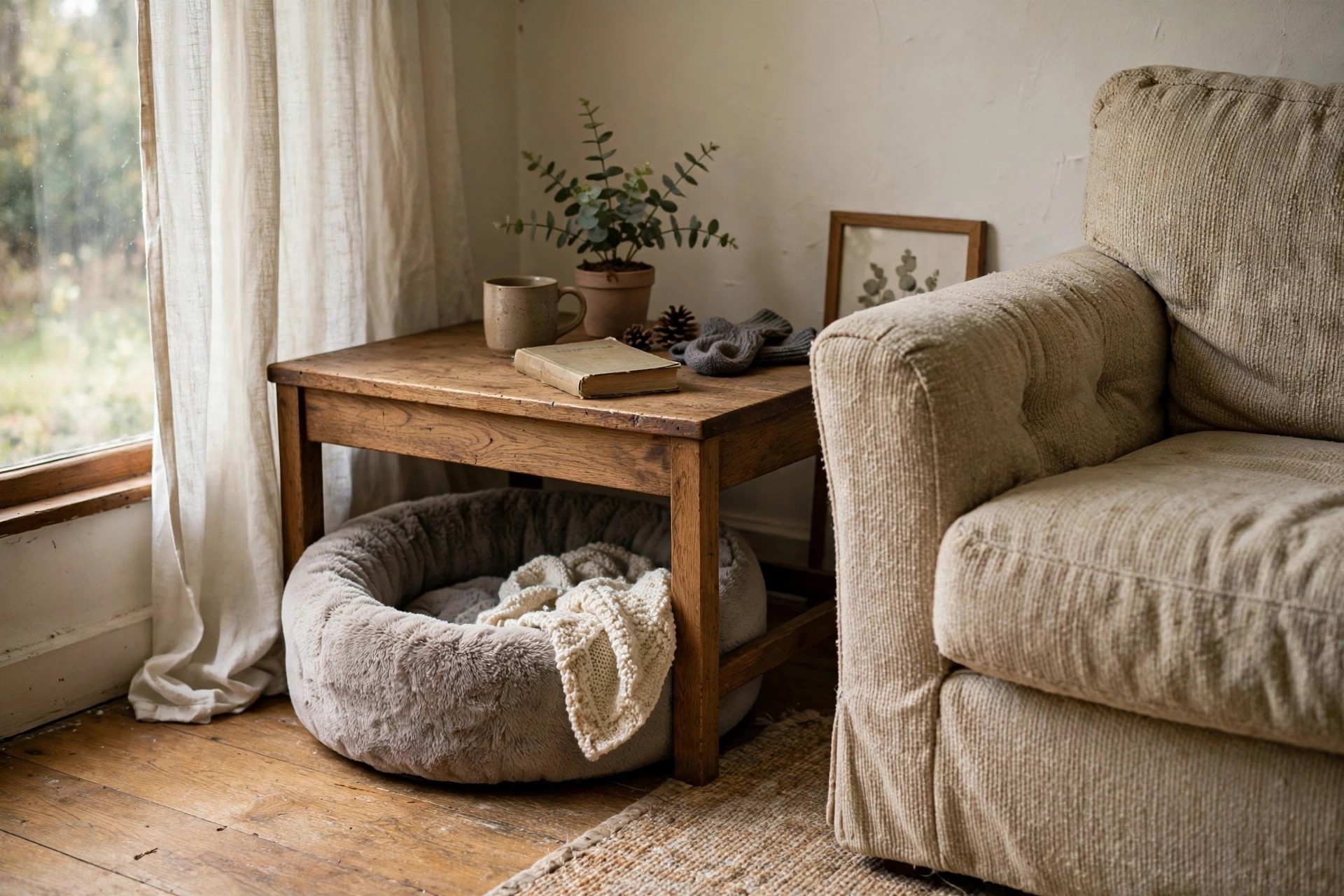
The dead space under a side table is exactly the size and shelter of a good cat bed. Tuck a round or oval bed underneath, in a fabric that matches the chair beside it, and you have a cosy cat corner that uses no visible floor space and puts the cat right beside you — where most cats were trying to be all along. Add a small washable mat under the bed and use the room’s accent colour to make it feel finished. If hiding the litter side is your struggle, our hidden litter box ideas for small apartments apply the same thinking to the least stylish object in the house.
13. Use Leather-Look Accents That Wipe Clean of Fur

Fur clings to fabric but slides off smooth surfaces, which makes a leather or good-quality leather-look accent chair, ottoman or footstool a practical anchor in a cat room. A quick wipe lifts hair that would take ten minutes to roll off upholstery, so place these pieces where the cat sleeps most. Use them as accents rather than covering the whole room, and balance the smooth finish with textured throws elsewhere so the room still feels soft. Be honest about claws, though: smooth finishes show puncture marks if a cat kneads hard, so keep a throw over the seat of the cat’s favourite leather piece.
14. Throw Washable Blankets Over the Cat’s Favourite Seats
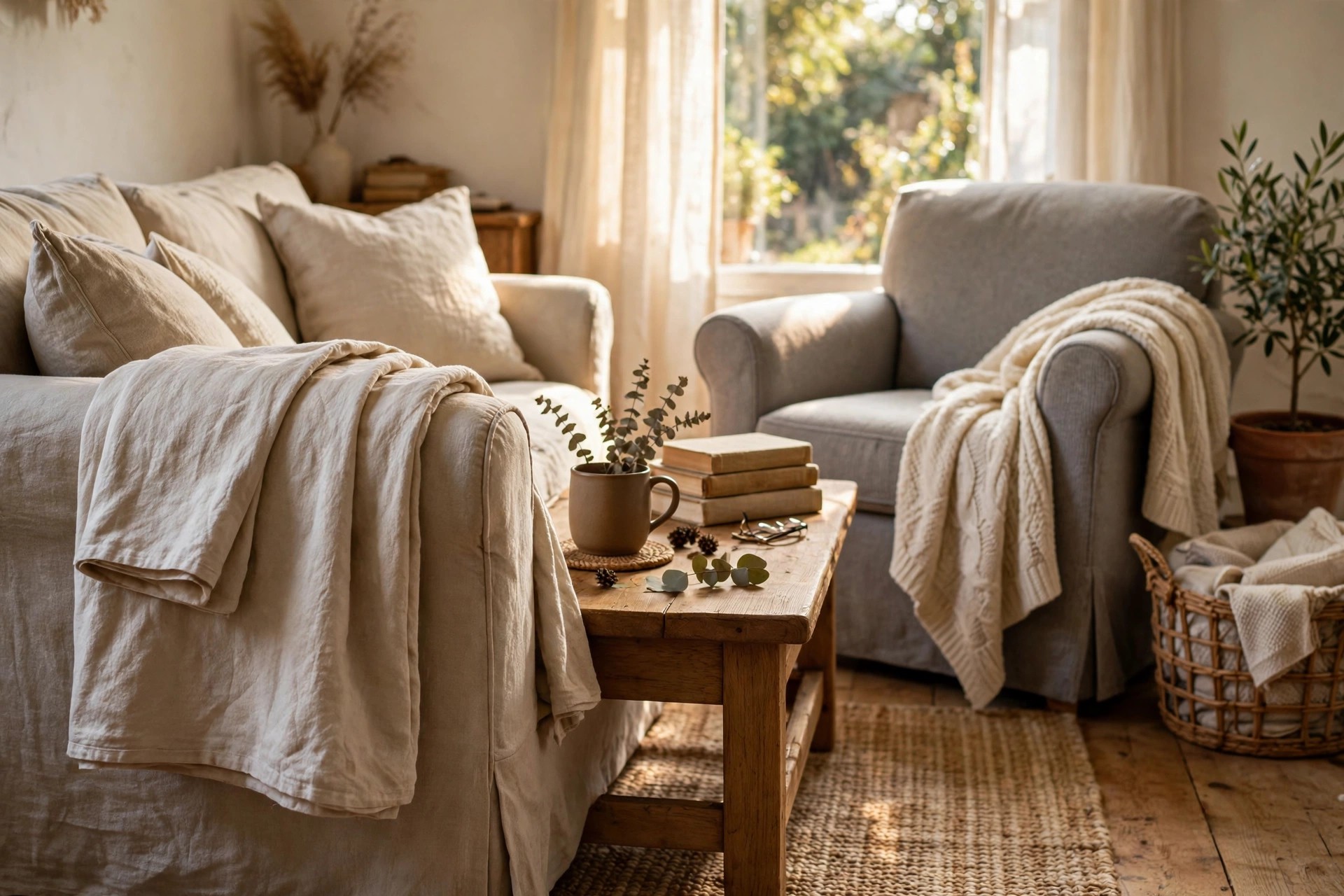
Every cat household has a map of favourite seats, and it rarely matches the furniture plan. Instead of policing it, dress it: drape a washable throw over each favourite spot, arranged as you would style any throw, and the cat’s hair and muddy paws land on something that goes straight in the wash. Keep two throws per favourite seat in the same colour family, so one is always in use while the other washes and the room never looks half-undone. Choose a tight weave with a little weight, so the throw stays where you drape it instead of sliding into a heap.
15. Fit a Secure Window Screen So the Cat Can Watch the Street

An open window is the best television a cat will ever have — and a real risk if the screen is flimsy or the window opens wide. Fit a secure, properly mounted window screen or restrictor that lets air and the view in while keeping the cat safely inside, and check it cannot be pushed out by a cat leaning its full weight against it, because they will. Pair the safe window with the perch from Idea 3 and the room’s most-used seat is sorted. The same secure thinking extends outside in these balcony decor ideas for pet owners. Never rely on an insect screen alone to hold a cat.
Common Mistakes to Avoid
1. Buying the cat furniture in clashing colours. A bright novelty cat tree in the middle of a calm, neutral scheme will always look like clutter, however good it is. Match cat furniture to your palette and it reads as part of the room.
2. Putting the scratcher where you want it, not where the cat scratches. Cats scratch beside sofas and sleeping spots. A post in a distant corner gets ignored while the armrest suffers — place the legal scratching spot within reach of the illegal one.
3. Forgetting to check plants and fragile items. Bringing home a plant that is harmful to cats, or leaving breakables unanchored on open shelves in the flight path, undoes an otherwise careful room. Check plants before buying, and anchor or store anything precious.
Frequently Asked Questions
What is the best sofa fabric for a living room with cats?
A tight, close weave with no loops for claws to catch — tightly woven linen blends, canvas and microfibre all hold up well. Add removable, washable covers if you can, and choose a mid-tone or subtly patterned fabric, which hides loose fur between cleans far better than a pale solid.
How do I stop my cat scratching the sofa without making the room look messy?
Put a better scratching option immediately beside the sofa — a sisal side table or a sturdy post in tones that match your furniture — and make sure it does not wobble. Cats scratch where they sit and sleep, so proximity and stability do more than any deterrent, and a matched finish keeps it looking like furniture.
Can a cat-friendly living room still look stylish?
Yes, if the cat’s things follow the same palette and materials as the rest of the room. A cat tree in your neutrals, beds tucked into existing furniture, washable throws styled like normal throws and scratchers that double as side tables all blend in. The room looks unstylish when cat items arrive as an afterthought in clashing colours.
Where should I put a cat bed in the living room?
Offer two types of spot: one enclosed and quiet, such as a bed inside a low bookshelf cube or under a side table, for deep sleep, and one high or sunny spot, such as a window perch, for watching the room. Most cats rotate between both across the day, so providing the pair stops them claiming your laundry basket instead.
Final Thoughts
A stylish, cat-friendly living room is not a compromise between the cat and the decor — it is what happens when both are planned together. Give scratching, climbing, sleeping and sunbathing a designed place of their own, choose fabrics that forgive daily life, and the room stays calm for everyone in it. Start with the fabric, the scratcher beside the sofa and one good perch, and build from there.


