

15 Hidden Litter Box Ideas for Small Apartments
Living with a cat in a small apartment means sharing every square metre, including the least glamorous one. The litter box has to go somewhere, and in a studio or one-bedroom flat there is rarely a spare room or laundry to give it. Left out in the open, it dominates visually, tracks litter across the floor and makes the whole space feel like it belongs to the box rather than to you.
The good news is that a litter box does not need to look like a litter box. With the right furniture, screen or spare cupboard, you can hide it in plain sight so guests see a sideboard, a bench or a plant stand instead. If you are planning the room around your cat more broadly, our cat-friendly living room ideas show how scratching, lounging and playing can all be designed in without giving up on style.
The fifteen ideas below run from simple conversions to built-in-style fixes. Each one balances three things: your cat can get in and out easily, you can clean the box without a struggle, and the room still looks like a home you chose.
Where to Put a Litter Box in a Small Apartment: A Quick Guide
Before you choose a hiding spot, check it against how cats actually use a box. Pick somewhere quiet and low-traffic, away from washing machines and slamming doors, so your cat is not startled mid-visit. The spot also needs air movement, so odours do not build up inside enclosed furniture. If you close a box inside a cabinet, leave a generous entry and a small vent gap at the back. For help spotting corners in a tight floor plan, our small living room ideas for apartments are a useful starting point.
Keep the box well away from food and water bowls and from sleeping areas — cats prefer those zones kept separate, and most will avoid a box too close to their dinner. You also need easy access: you will scoop daily, so a hiding place you dread opening will not stay clean. As a practical rule of thumb, aim for one box per cat plus one extra where space allows. Finally, test the spot with the plain box for a few days before you cut or buy anything — a hide in a spot your cat dislikes will fail.
1. Convert a Sideboard With a Cat-Door Cut-Out

A low sideboard is the classic conversion because it already looks at home in a living room. Choose one with two cabinet sections: cut a neat round opening in one end panel for entry, line the base with a washable tray, and set the box in that section. Keep the other section for its normal job. Sand the cut edge smooth, make the opening comfortably wider than your cat, and keep the doors easy to open fully for deep cleans.
2. Tuck the Box Inside a Storage Bench

A hinged storage bench hides a box and gives you seating or a place to put on shoes in an entryway. Look for a bench with a roomy, undivided interior and cut an entry hole in the less visible end. Add a litter mat inside so tracked granules stay near the box instead of migrating across the base. Cushions on top sell the disguise completely — nobody sitting on a bench suspects what is inside. Check that the lid holds safely open while you scoop, or prop it so it cannot drop mid-clean.
3. Use an Enclosure That Looks Like a Side Table

If DIY is not for you, a ready-made enclosure styled as an end table is the fastest route. It sits beside the sofa holding a lamp and a book, while the box lives behind a door below. Style the top exactly as you would a real side table so the eye stops there. In a blue-toned scheme, the pairings in these blue living room ideas for pet owners show how a pet piece can still match the room. Measure your existing box first, and confirm the interior wipes clean.
4. Hide It Behind a Curtain Under a Console

The space under a console table or open vanity is often wasted, and a simple curtain turns it into a private litter nook. Hang a washable fabric panel from a tension rod under the top, cut to fall just above the floor so your cat can slip underneath but litter stays contained. Choose a fabric that matches your soft furnishings, so it reads as intentional, not improvised. This is one of the most renter-friendly options here: no cutting into furniture, nothing permanent, and the curtain goes in the wash whenever it needs freshening.
5. Turn a Cube Storage Unit Into a Litter Cabinet

A cube storage unit gives you a litter cabinet with built-in storage around it. Remove the back panel from one or two cubes to create a connected compartment tall enough for the box and your cat standing inside, with entry through the side of the unit. Fill the surrounding cubes with baskets, books and folded throws, so the litter compartment is just one square among many. Face the entry toward a wall with a small gap and visitors will not even see it. Add a mat inside to catch litter before it reaches the room.
6. Screen Off a Bathroom Alcove

Bathrooms are a natural home for a litter box — hard floors and an extractor fan — but the box is still the first thing you see. If your bathroom has an alcove beside the vanity, under a counter overhang or next to the tub, claim it for the box and screen it with a short folding panel, a half curtain or a leaning slatted board. The screen only needs to block the sightline from the doorway; your cat walks around it in seconds. Keep towels and toiletries well away from that corner, and run the fan after cleaning.
7. Choose a Planter-Style Enclosure With Greenery on Top
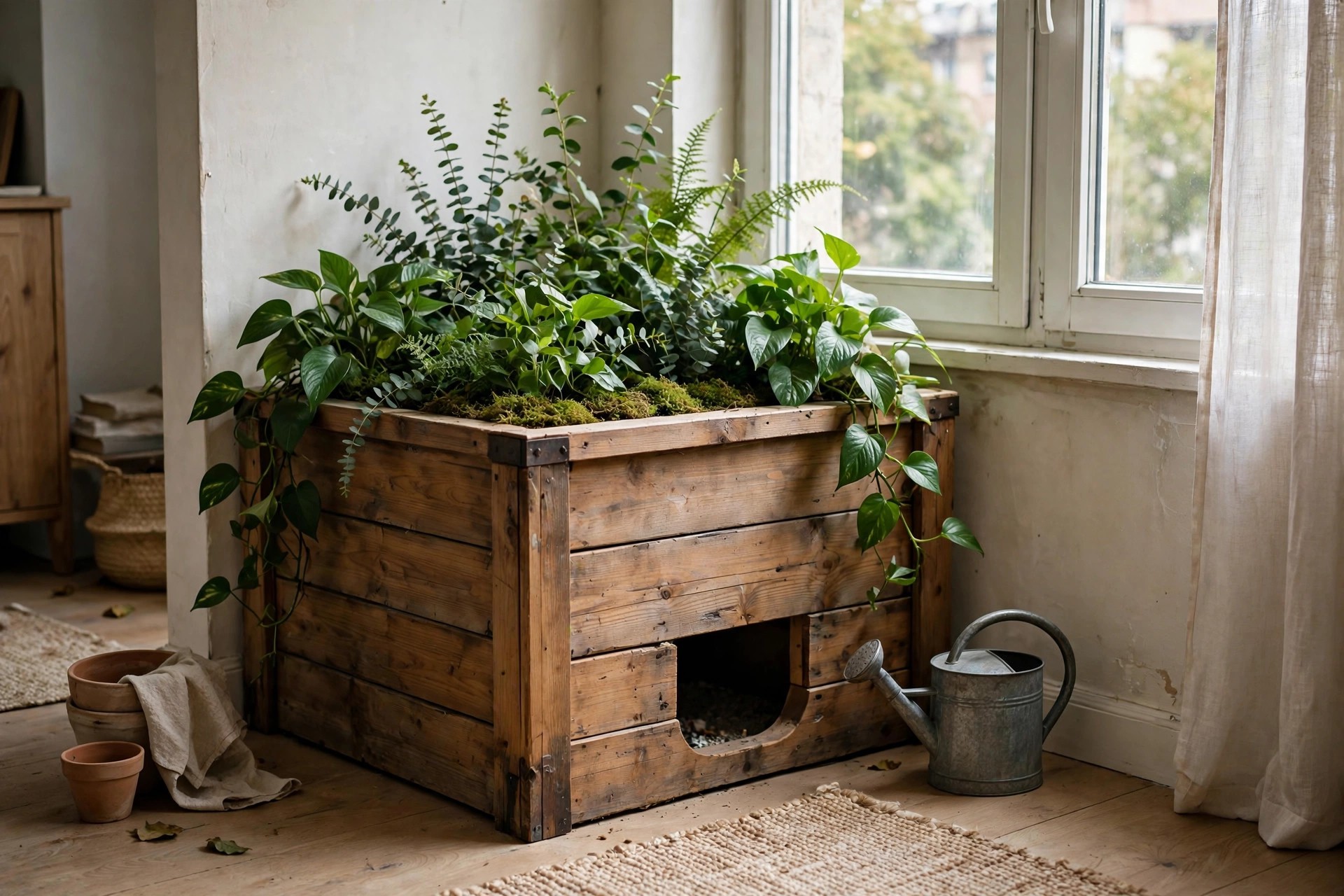
A planter-style enclosure hides the box inside a deep, pot-shaped container, with greenery sitting on top. The plants draw every eye upward — the container below reads as a statement planter in a sunny corner. Use faux greenery, or real plants you are confident are safe around cats and placed where leaves cannot be chewed, and keep the arrangement stable. This style suits bright corners where a large planter already makes sense.
8. Build a Litter Station Inside a Utility Closet

A utility or hallway closet can become a complete litter station: box on the floor, litter and bags on a shelf above, and a scoop on a hook inside the door. Fit a cat flap in the door, or hold it ajar with a strap that leaves a cat-sized gap. The same make-every-corner-work thinking behind these basement apartment living room ideas applies here — a small, awkward space becomes useful once it has one clear job. Line the floor with a large washable mat, and add a battery light if the closet is dark.
9. Stand a Folding Screen Around a Corner Setup
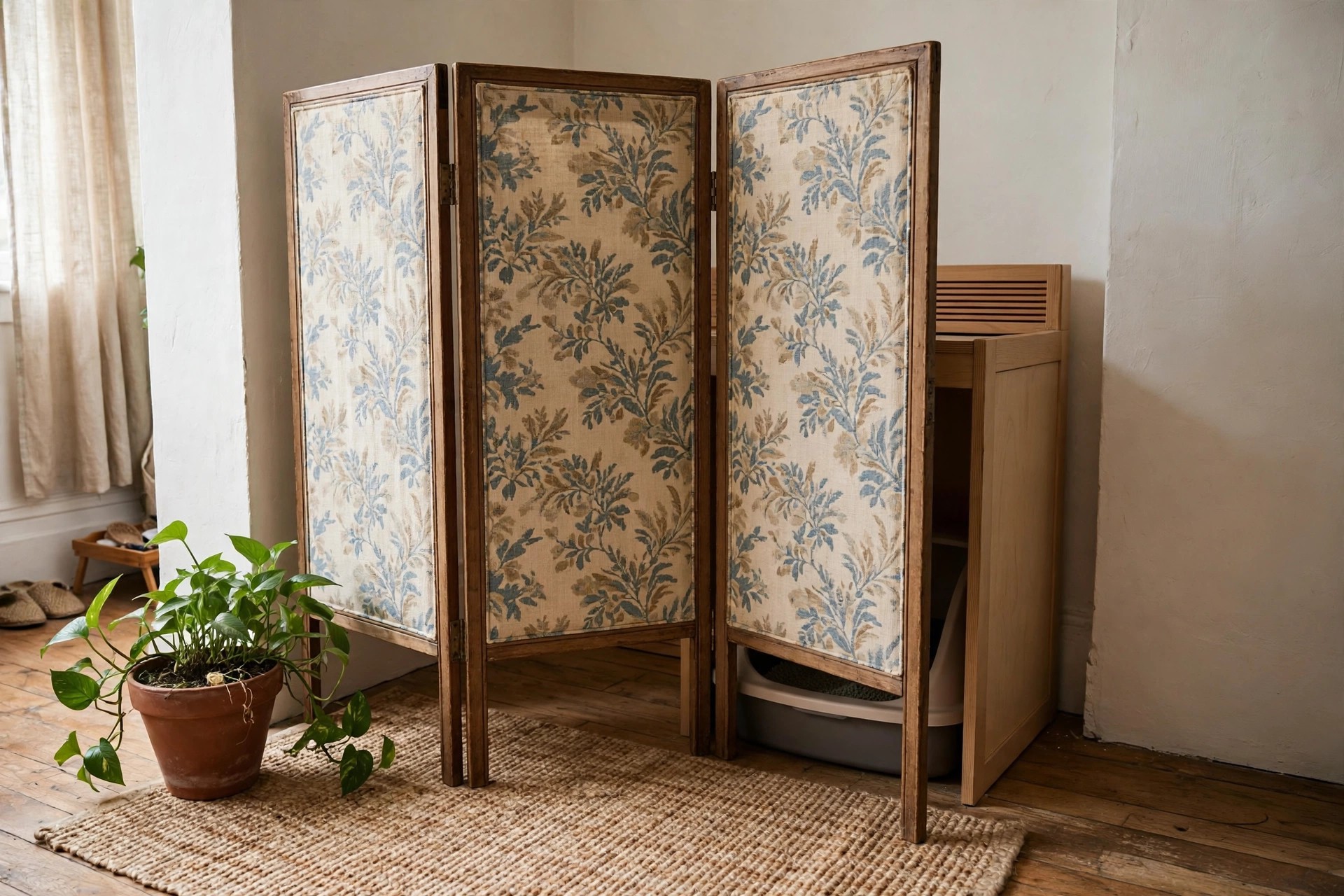
Sometimes the simplest hide is not furniture at all. Place the box in an unused living room or bedroom corner and stand a folding screen in front of it, angled so there is a comfortable gap at one end for your cat. Choose a screen that suits your decor — woven, slatted wood or fabric panels all work — and anchor the arrangement with a plant or floor lamp beside it. Secure lightweight screens so they cannot topple if your cat rubs against them, and leave enough space behind to lift the box out easily.
10. Slip a Top-Entry Box Inside a Woven Cover

A top-entry box already contains scatter well, because litter falls from your cat’s paws as they climb out onto the lid. Slip that box inside a woven basket-style cover and it reads as a laundry basket or storage hamper beside an armchair. The cover needs to lift off in seconds — if disguising the box makes daily scooping fiddly, the routine will slip. Keep the lid opening completely unobstructed, and shake the cover out over a bin as part of your weekly clean.
11. Use the Dead Space Under a Desk or Loft Bed

Every small apartment has dead space: the floor under a desk, or the shadowed zone beneath a loft bed. A litter box fits there without taking any living space at all. Push the box to the back, lay a mat in front to catch litter, and keep a clear cat-width path in. Avoid this spot if you work at the desk for long hours and know you will be bothered — a box you resent will not be cleaned often enough.
12. Give a Spare Wardrobe a Cat Flap and a New Job
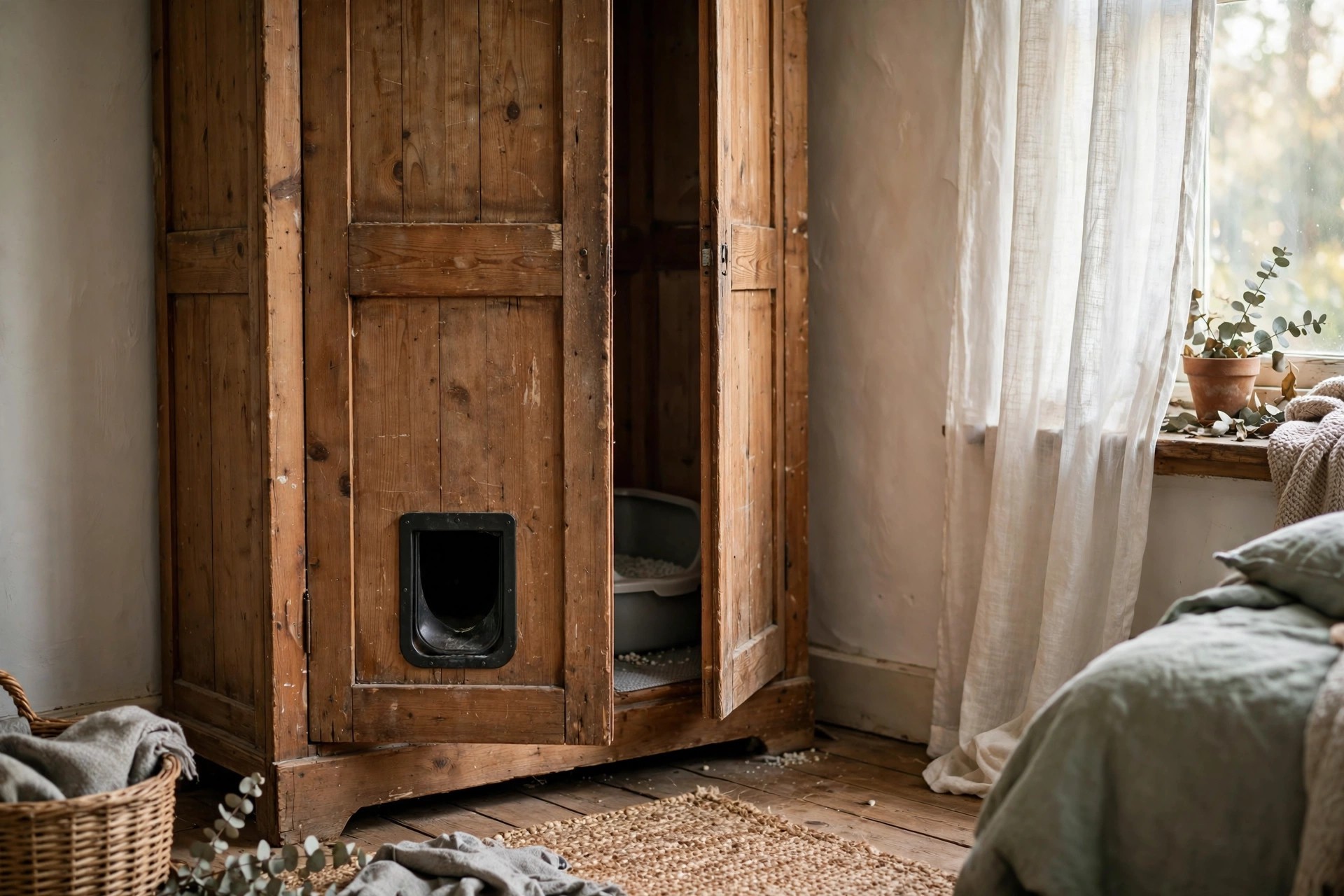
If you have a wardrobe or tall cupboard you never fill, its bottom section can become the most private litter spot on this list. Fit a cat flap in the door, place the box on a protective tray on the wardrobe floor, and keep litter supplies in sealed containers on a shelf above. Keep clothes out of the litter section entirely. The closed door contains sightlines completely, and because the wardrobe is tall, air has room to circulate above the box.
13. Pick a Rattan Dome Cover That Reads as Decor
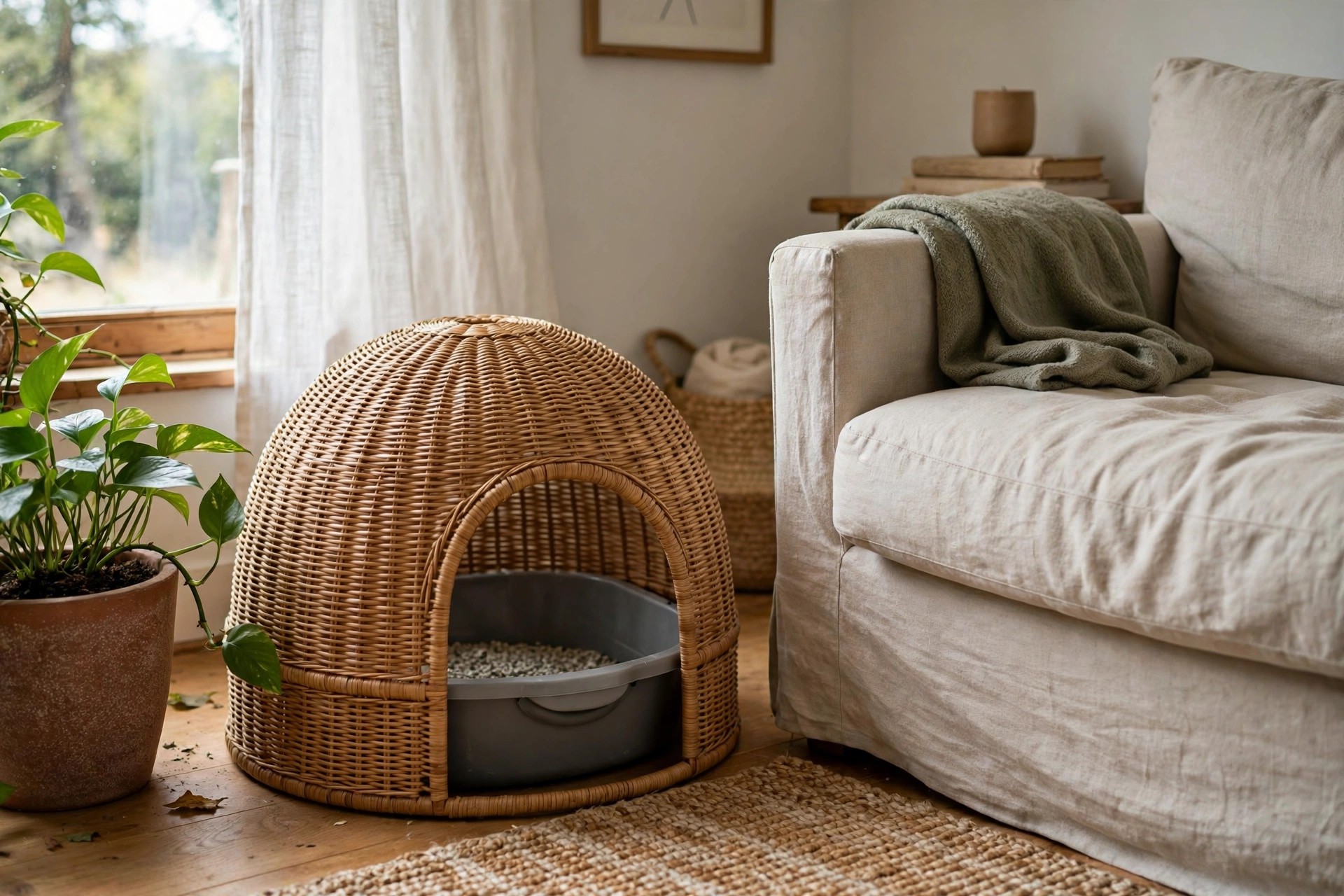
A rattan or wicker dome cover drops over a standard box and turns it into something that looks like a pet bed, a basket or a piece of relaxed decor. The woven texture lets air through, the arched opening is generous for most cats, and the whole cover lifts off in one movement for cleaning. Place it where a basket would naturally sit — beside the sofa, next to a plant or at the end of a hallway — and style a cushion or throw nearby to complete the illusion. Brush the weave down regularly, as it collects dust and stray litter.
14. Convert the Cabinet Under a Bathroom Vanity

The cabinet beneath a bathroom vanity is often half empty and awkwardly shaped around pipework — and rarely missed. If a compact box fits beside the pipes, move cleaning products to a caddy elsewhere and give the cabinet to your cat. Remove one door, cut a cat-sized opening in it, or hold it ajar with a latch, whichever suits your tenancy. Line the base thoroughly, because drips under a sink will ruin unprotected board, and check the pipework regularly. This hide also makes washing the box easy, since you are already in the bathroom.
15. Add a Washable Mat and Covered Storage to Keep It Fresh
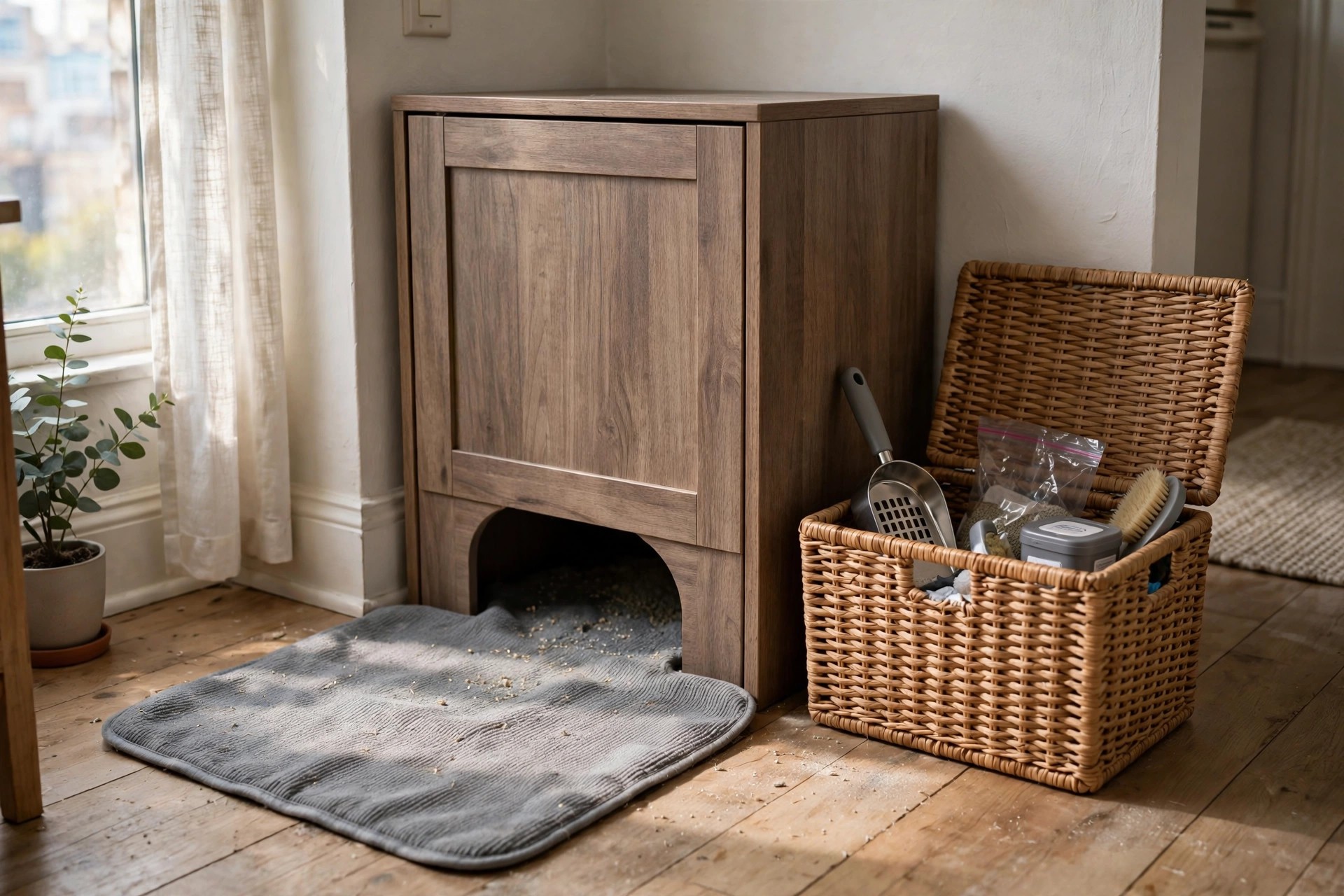
Whichever hide you choose, the finishing layer decides whether it stays fresh. Lay a large washable mat under and in front of the box to trap tracked litter, and shake or wash it as part of your routine. Keep litter, bags and the scoop in a covered basket or lidded container right beside the station, so everything is in reach but nothing looks utilitarian. The airy styling in these balcony decor ideas for pet owners is a good reminder that pet corners stay pleasant when they are treated as part of the decor. A small, regular routine beats an occasional deep clean every time.
Common Mistakes to Avoid
1. Hiding the box so well that cleaning becomes a chore. If you have to move heavy furniture or unclip panels to scoop, you will do it less often — and odour is the result. Test the full cleaning routine before you settle on a hide, and favour doors, lids and lift-off covers you can open in seconds.
2. Making the entry too small, too high or too awkward. A stylish cut-out means nothing if your cat has to squeeze, jump or turn sharply to use it. Size the opening generously, keep step-overs low, and remember that kittens, older cats and larger cats all need easier access than a young, agile cat.
3. Sealing the box in with no airflow. A fully closed cabinet traps humidity and smell, which cats dislike as much as people do. Leave an entry that stays open, add a vent gap where you can, and never rely on scented products to mask a box that simply needs more air and more frequent cleaning.
Frequently Asked Questions
Will my cat actually use a hidden litter box?
Most cats accept an enclosed or screened box happily, provided the entry is generous, the inside is not cramped and the spot is quiet. Introduce it gradually — set it beside the old box at first, let your cat explore it, and only remove the old box once the new one is being used confidently.
How do I stop a hidden litter box from smelling?
Scoop daily, wash the box regularly, keep a washable mat underneath and make sure the hiding place has airflow rather than a sealed door. Odour usually means the box needs cleaning more often or the enclosure needs a vent gap, not stronger fragrance.
Where should a litter box go in a studio apartment?
Choose the quietest corner furthest from your bed and kitchen area — inside a sideboard, behind a screen or in a bathroom alcove are all strong options. Keep it away from food bowls, keep the route to it always clear, and test the spot for a few days before converting any furniture.
Can I hide a litter box if I rent my apartment?
Yes — several options here need no permanent changes, including curtain hides, folding screens, lift-off dome covers and ready-made enclosures. If you want a cat door in furniture, cut your own furniture rather than your landlord’s, and keep any fixings truly reversible.
Final Thoughts
A hidden litter box is not about pretending you do not have a cat — it is about giving the least attractive essential a thoughtful place, so your apartment feels calm and yours again. Start with the spot your cat will like, choose the hide that fits your tenancy, and keep cleaning effortless. When the box disappears into the furniture, guests notice the room itself — and that is exactly the point.


