

15 Living Room Ideas for Roommates With Separate Seating Zones
One sofa facing one screen works until two people want the same room for different evenings: one reading in quiet, the other on a call with friends. That clash is about space, not goodwill, and it repeats most nights.
These living room ideas for roommates with separate seating zones give each person a real seat, a lamp, and a corner that feels like their own. A zone also gives guests a clear place to land.
The shared middle of the room still matters, so every idea below protects a common area for guests, games, and nights when you do want to sit together. That balance is the whole point of the plan.
Start with the seats you already own, move them on a quiet afternoon, and live with the new layout for a week before buying anything new. Small moves teach you more than a shopping list. Start there tonight.
This post contains affiliate links. If you buy through them, we may earn a small commission at no extra cost to you. See our Affiliate Disclosure.
1. Give Each Person a Named Corner Seat
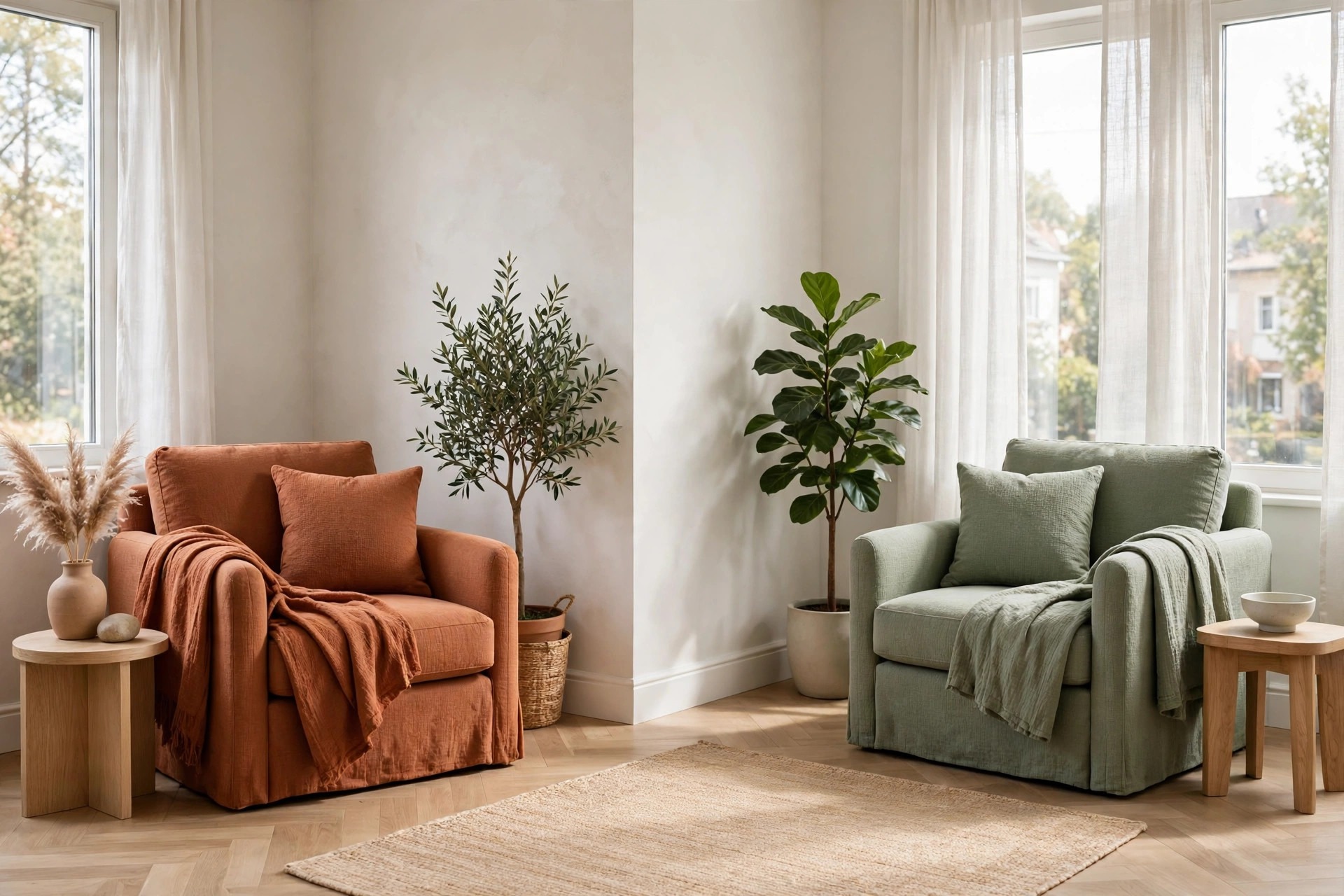
Start with the simplest rule in a shared home: one proper seat belongs to each roommate. An armchair in one corner and a second chair in the opposite corner ends the nightly sofa race.
Name the corners out loud when you set them up. It sounds small, but a named seat stops the slow drift of bags, laundry, and guests into someone’s only quiet spot.
Keep each corner complete with a cushion and a throw in that person’s colors. The room still matches, because the chairs share a shape even when the fabrics differ.
Test each corner at the hour its owner uses it most during the week. A chair that faces glare at six in the evening will sit empty, however good it looks at noon on a bright day.
2. Set Two Chairs Back to Back With a Shared Table Between Zones
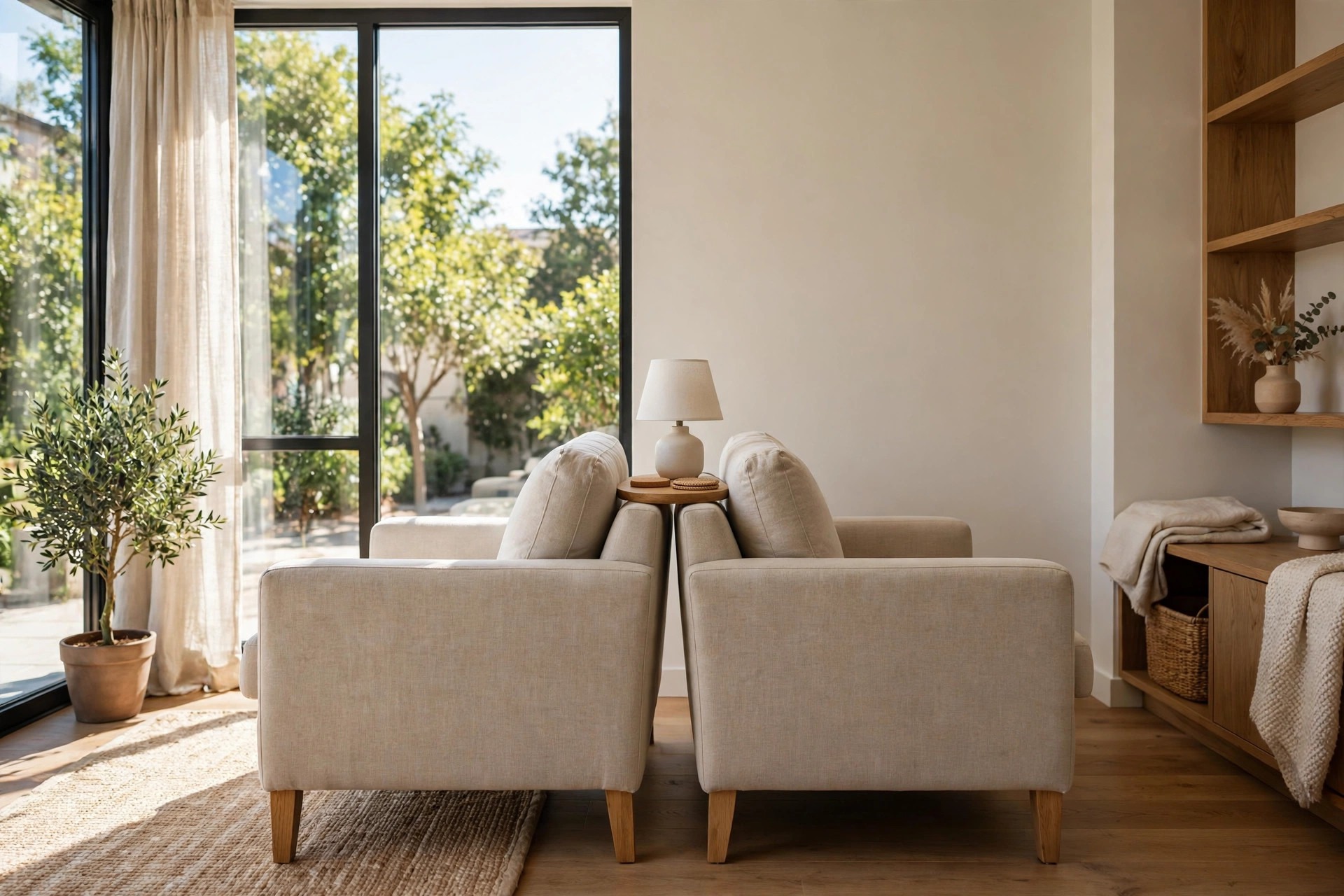
Back-to-back seating is the fastest way to split one open room into two calm zones. Two chairs share one small table placed between their backs, and each faces its own direction.
One side can face the window for reading while the other faces the screen. Neither person sits in the other’s eyeline, which makes the room feel twice its size.
Keep the shared table small and stable, holding two coasters and a lamp. Anything bigger invites clutter from both sides and blurs the line you just made.
Rest a small rug under one side only if that patch of floor feels cold. Asymmetry is fine here, because the two zones serve two different people with different habits, hours, and ways of relaxing.
3. Use a Low Open Bookcase as a Soft Divider
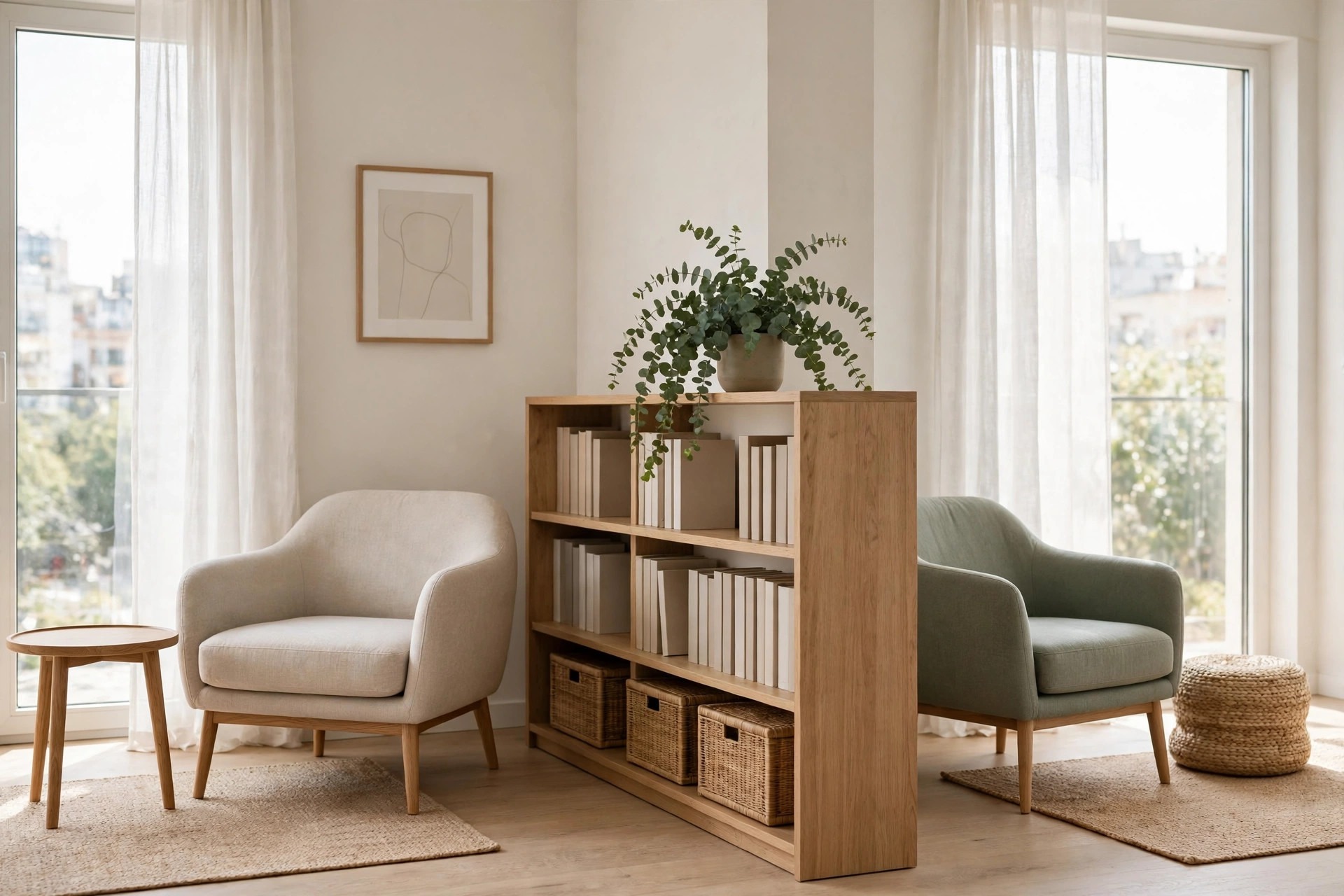
A low open bookcase between two seating zones divides the room without blocking light or air. Each side gets shelf space, and the top holds a plant that both sides can enjoy.
Our guide to the best narrow bookcases for small living rooms covers the slim frames that work as dividers in a shared rental.
Fill the shelves from both sides rather than pushing everything to one face. A divider that stores books, games, and headphones for both roommates earns its floor space twice over.
Stand the bookcase a few inches away from the wall if cables need to pass behind it. A clean cable run keeps both sides free of trip hazards and stops chargers from vanishing behind the shelves.
4. Lay Two Small Rugs Instead of One Large Rug
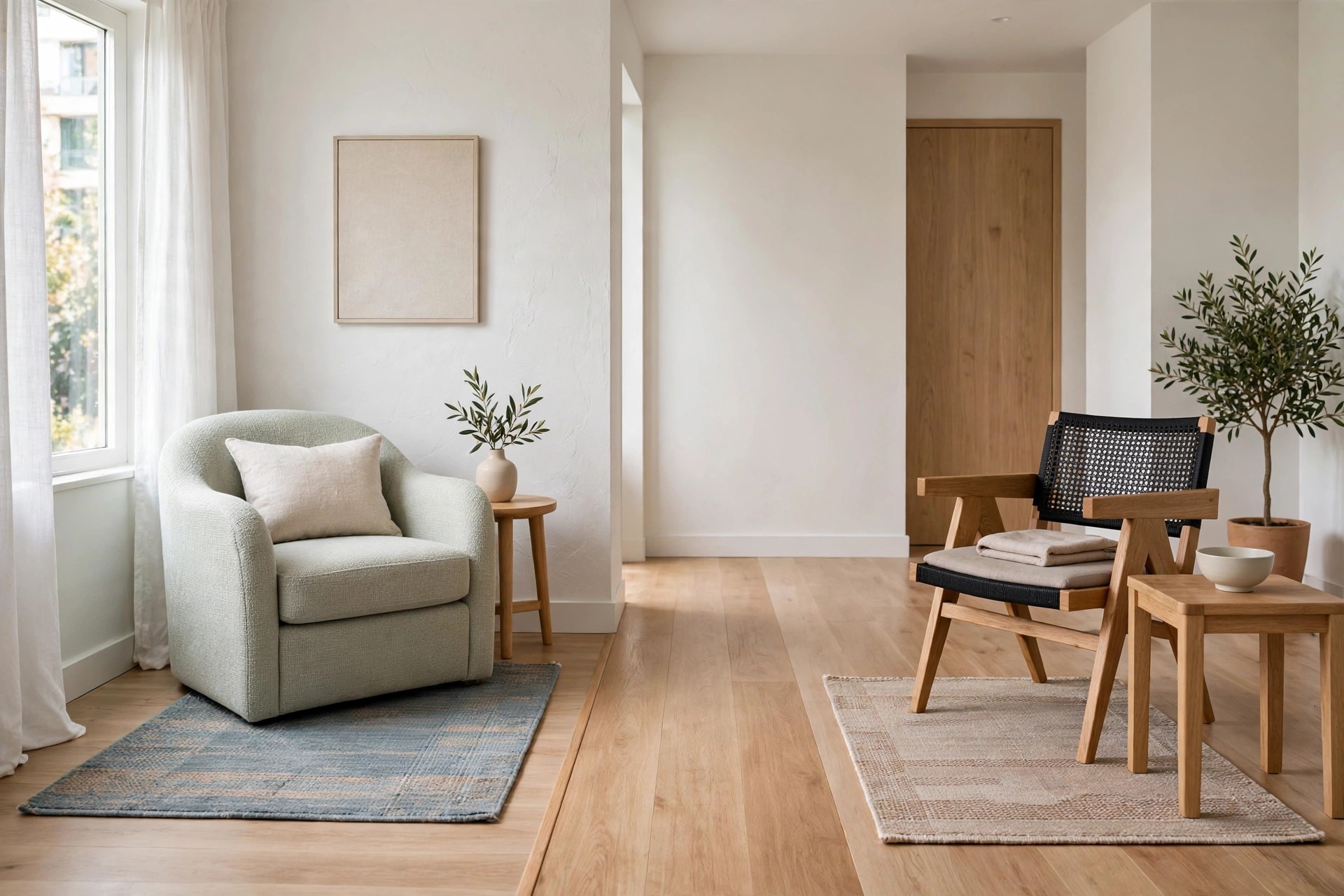
One large rug tells the eye that the room is a single space with a single purpose. Two smaller rugs say something better: two people live here, and both have a spot.
Put one rug under each zone, leaving a strip of bare floor between them as the walkway. Related colors keep the room calm while the gap keeps the zones clear.
Let each person choose the texture under their own feet. A flat weave suits a desk chair on wheels, while a softer pile suits a reading chair used barefoot.
Vacuum the bare strip between the rugs as part of the weekly clean. A walkway that stays clear is what makes two rugs read as a clear plan, rather than clutter that nobody owns up to.
5. Pair Each Seat With Its Own Lamp
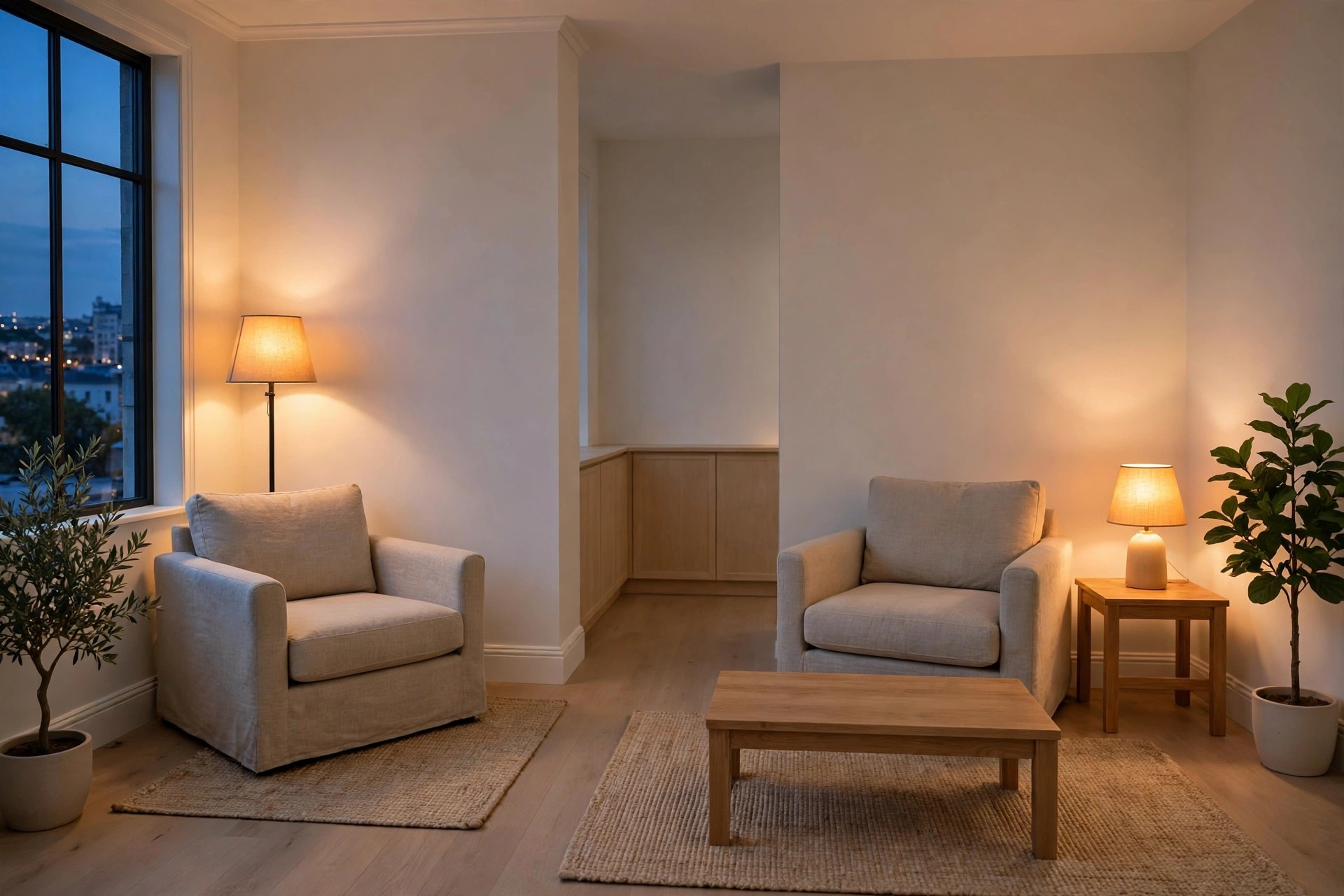
Shared overhead light forces shared hours: one person wants bright light for a puzzle, the other wants a dim room for a film. Separate lamps end that argument for good.
Give each zone a lamp with its own switch within reach of the seat. A floor lamp behind a chair works where table space is short.
Keep bulb tones similar across the room so the two zones do not clash at night. Warm light in both corners reads as one home, even with two lamps on.
Test the lamp from the seat before you settle its final place in the corner. Light should fall on the page or the hands, not into the eyes of the person sitting opposite you.
6. Keep One Shared Sofa Zone for Guests and Movie Nights
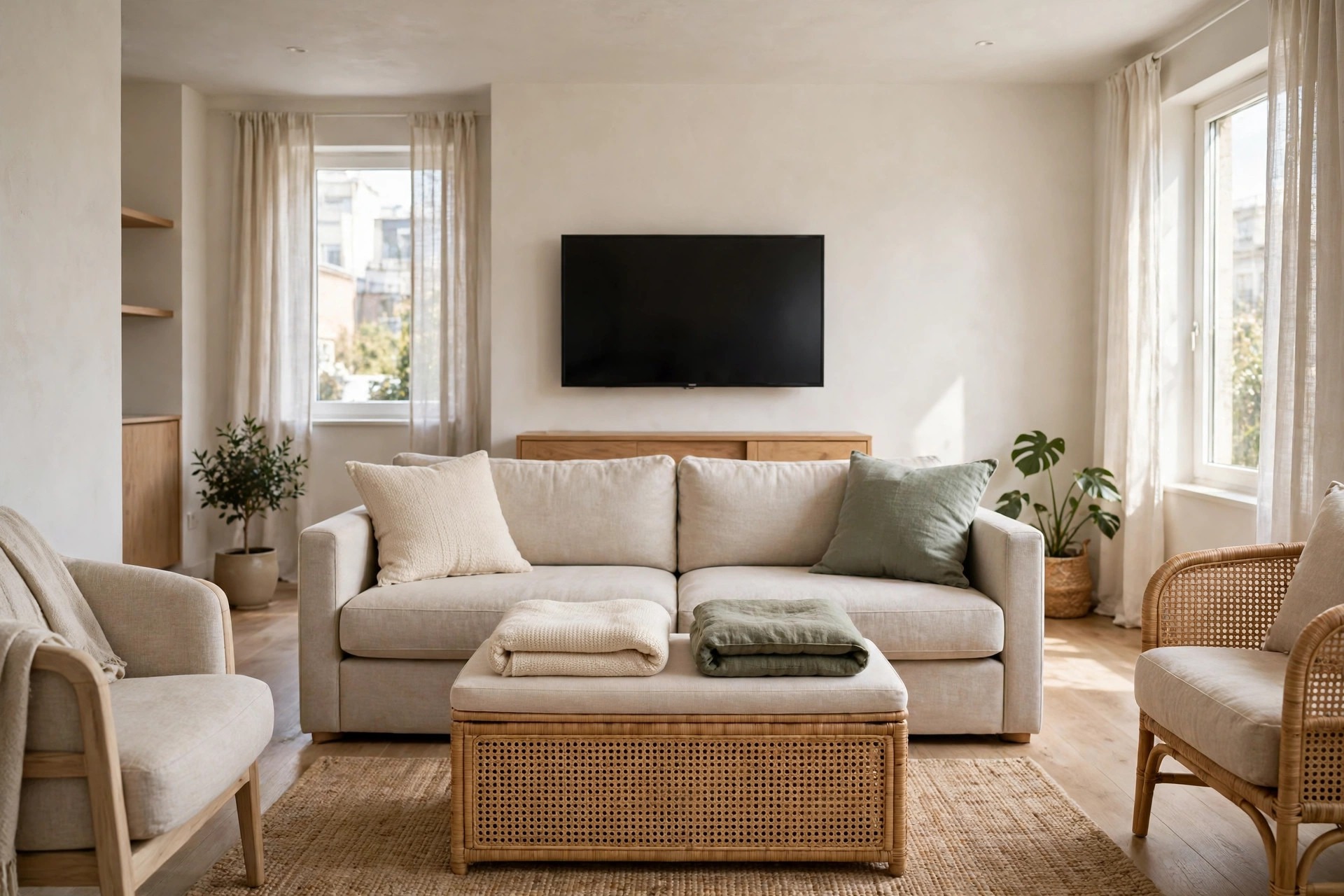
Separate zones should not swallow the whole room. Keep the sofa as shared ground, facing the screen, where guests sit and roommates land together on easy nights.
The rule is simple: personal corners stay personal, and the sofa stays common. Nobody stores clothes, work bags, or a personal blanket pile on the shared seats.
A storage ottoman in front of the sofa helps the shared zone reset fast. Blankets and game controllers go inside it when guests arrive, as covered in idea twelve below. It keeps peace on busy nights.
Keep two spare cushions for the sofa inside the ottoman as well, beside the blankets. Guests should not have to borrow cushions from a personal corner to sit down in comfort during a visit.
7. Add Armless Chairs That Move Between Zones
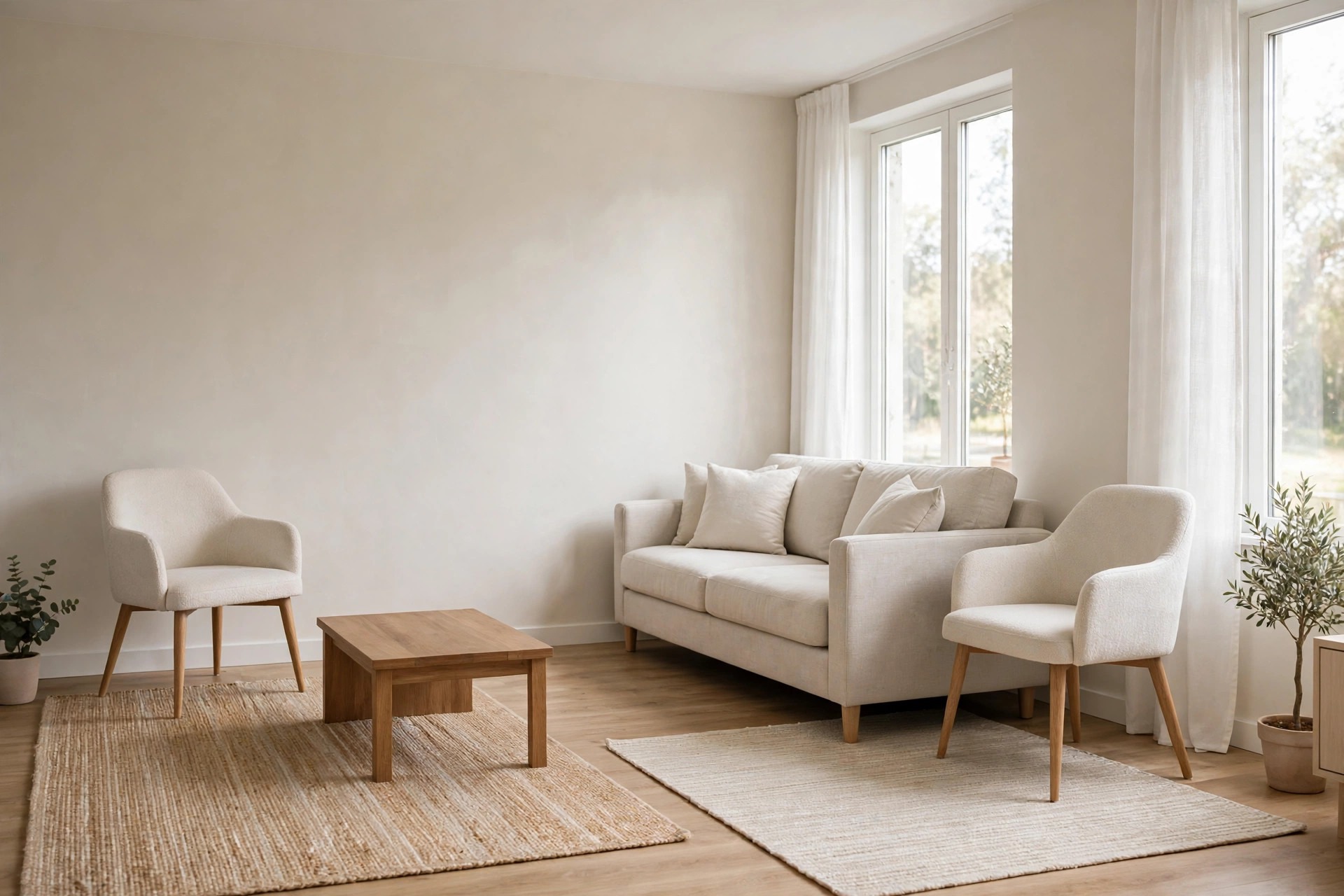
Fixed heavy chairs lock a shared room into one layout. Light armless chairs move in seconds, so a zone can gain a guest seat or give one up without a fuss.
The best armless accent chairs for small living rooms are narrow enough to pass through the walkway between rugs without catching on anything.
Agree where spare chairs park when nobody needs them, usually against the wall near the shared sofa. A parking spot stops extra seats from creeping into personal corners. Flexibility keeps small rooms feeling fair.
Choose chairs with simple legs that slide on hard floors without a screech. Felt pads under each leg cost very little and protect a rental floor from the marks that daily moving can leave.
8. Make Each Zone Headphone Friendly for Different Sounds
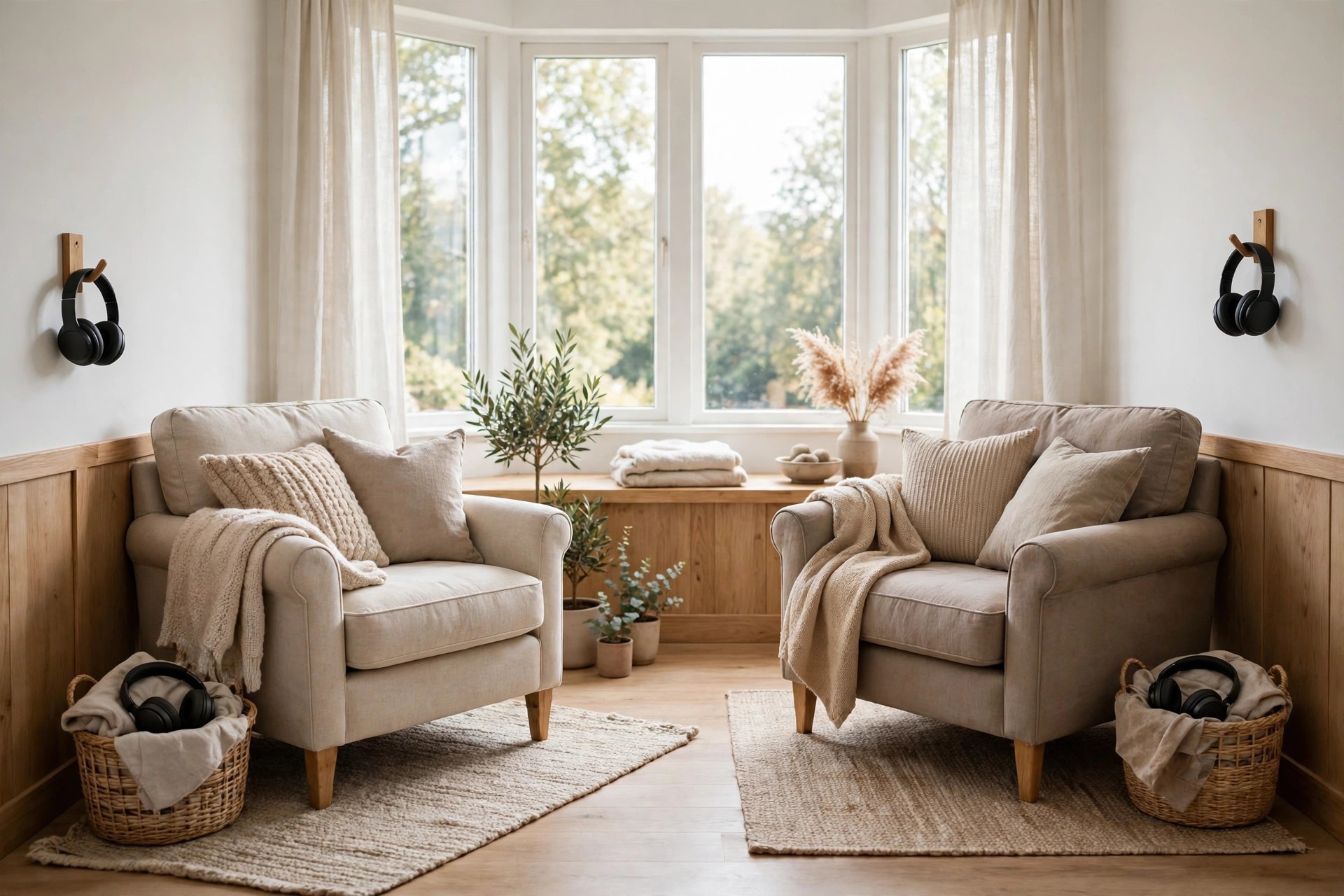
Two zones fail fast when both fill with sound. A simple house rule fixes it: screens and calls stay on headphones in the personal zones after an agreed hour.
Keep a small hook or basket for headphones in each corner, right beside the seat. Gear that lives at the chair gets used, while gear in a bedroom gets forgotten.
Soft furnishings help too. A cushion, a throw, and a rug in each zone soak up small sounds, so a quiet laugh or keyboard tap carries less across the room.
Set a shared signal for calls, like headphones on or a cushion turned upright. Clear signals beat guessing, and guessing is where most small rows about sound and timing begin in shared homes.
9. Give Each Zone a Small Side Table, Not One Big Coffee Table
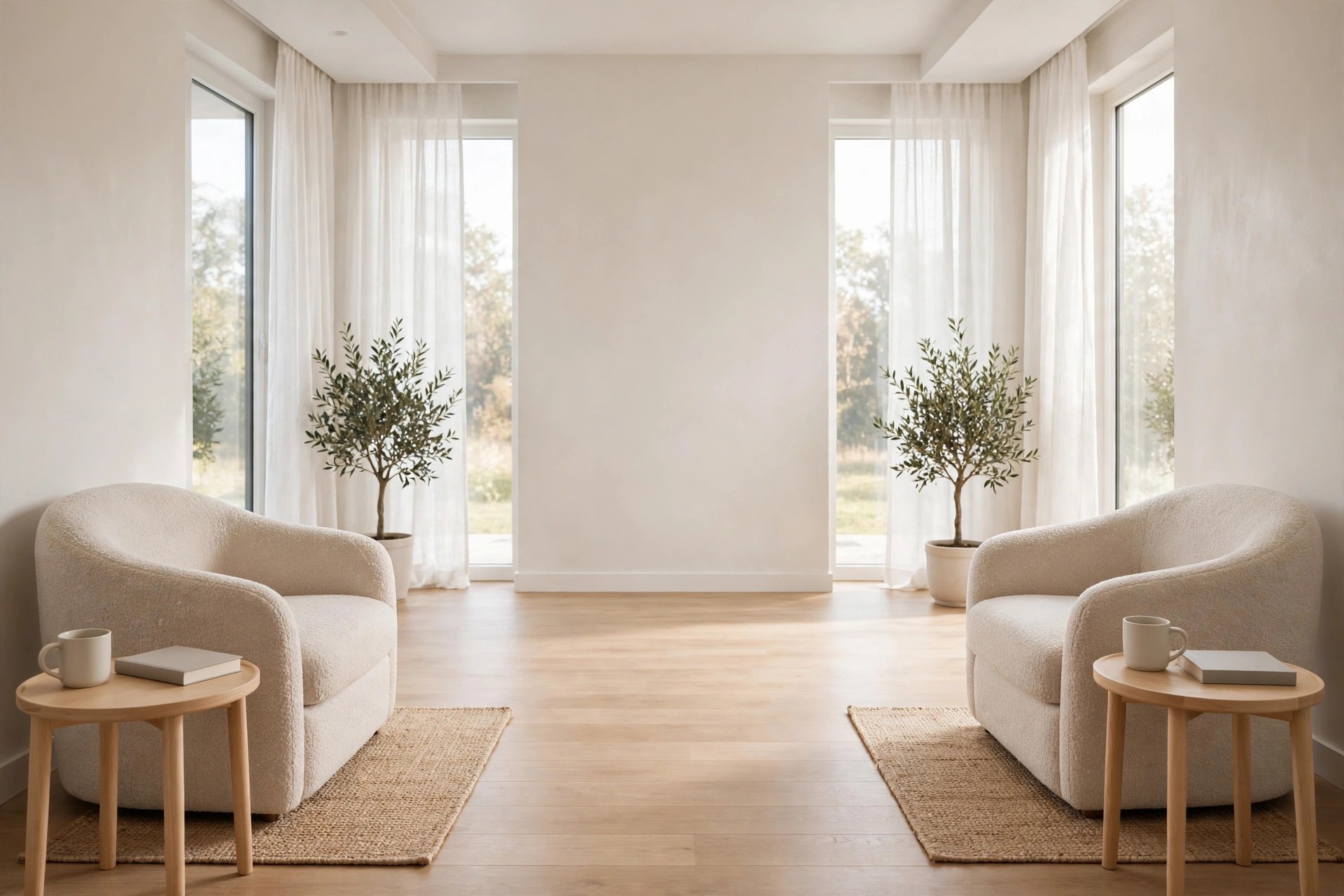
One big coffee table in the middle serves the sofa and nobody else. The person in the far corner ends up balancing a mug on the chair arm or the floor.
A small side table in each zone holds a drink, a book, and a phone at the right height. Nesting tables or simple round stands both do the job well.
Keep the middle of the room lighter as a result. The walkway stays clear, and the shared sofa zone can use a tray on the ottoman when it needs a surface.
Match side table heights across both zones, so drinks rest at the same level everywhere. Small sameness like this keeps the room feeling fair, even when the two chairs and lamps differ.
10. Split a Window Wall Into Two Reading Spots
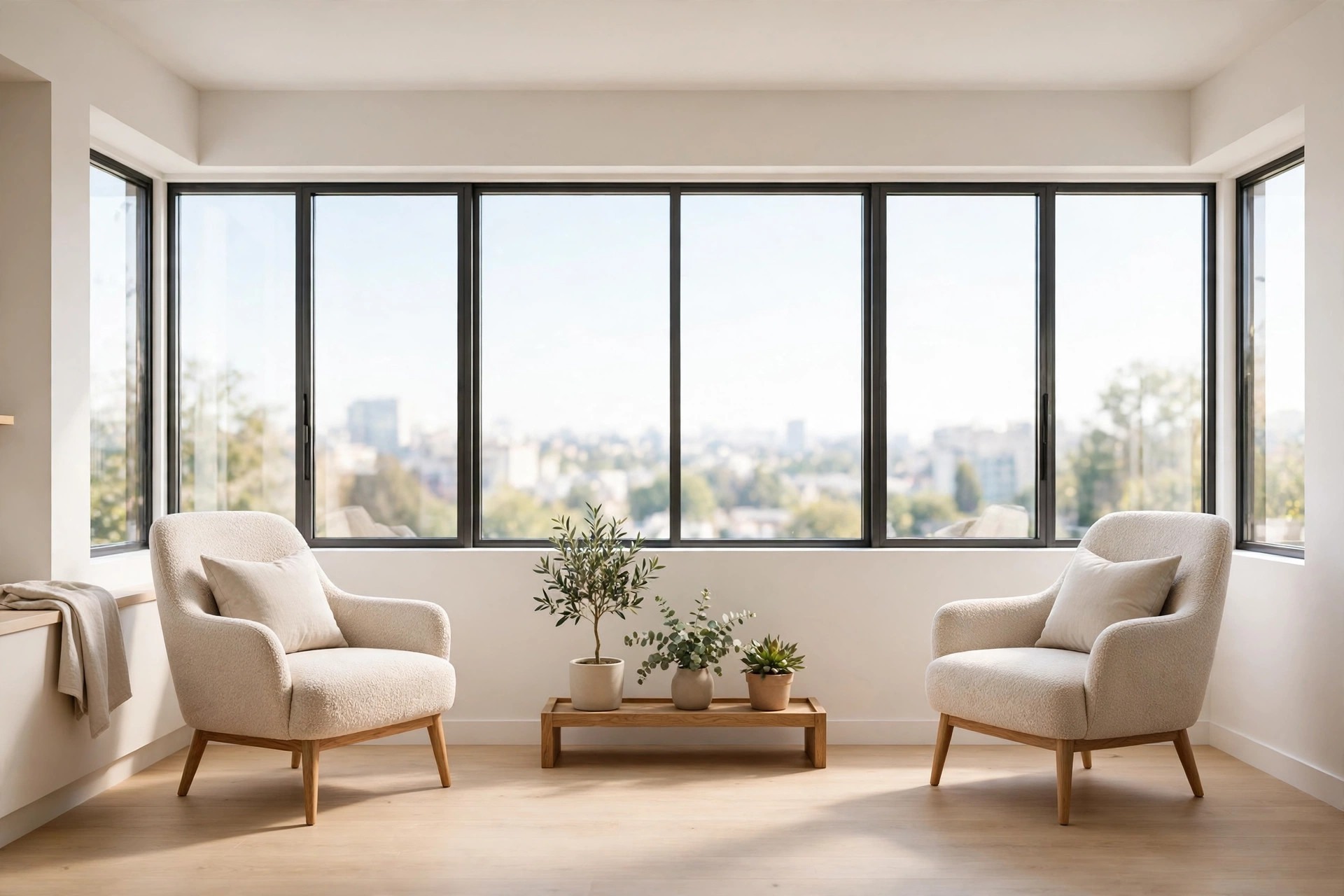
The window wall is prime land in most apartments, and one roommate often claims all of it by accident. Split it fairly: one chair at each end, angled toward the light.
A shared low shelf or plant stand in the middle marks the border without a quarrel. Both readers get daylight, and neither chair blocks the other’s view out.
If your home has a bright corner to work with, these apartment living room ideas for a bright corner unit show how to share strong light without glare on screens.
Swap ends each season if one side of the window gets stronger winter light. Fair turns at the bright end stop quiet envy before it grows into a real row about the room.
11. Use Floor Cushions as the Flexible Third Zone

Some nights need a third spot that is neither person’s corner: a friend visiting, a board game on the floor, or a stretch after a long shift at work.
Large floor cushions stack in a corner by day and spread out when needed. Our picks for the best floor cushions for extra living room seating include firm styles that suit longer sits.
Store them in the shared zone, not a personal corner. Shared cushions that live on shared ground keep the third zone open to everyone in the home.
Retire cushions that have gone flat to a bedroom, or pass them on to someone else. A third zone only works if the seat is still comfortable after half an hour on the floor.
12. Mark Personal Storage With One Basket or Cube Each
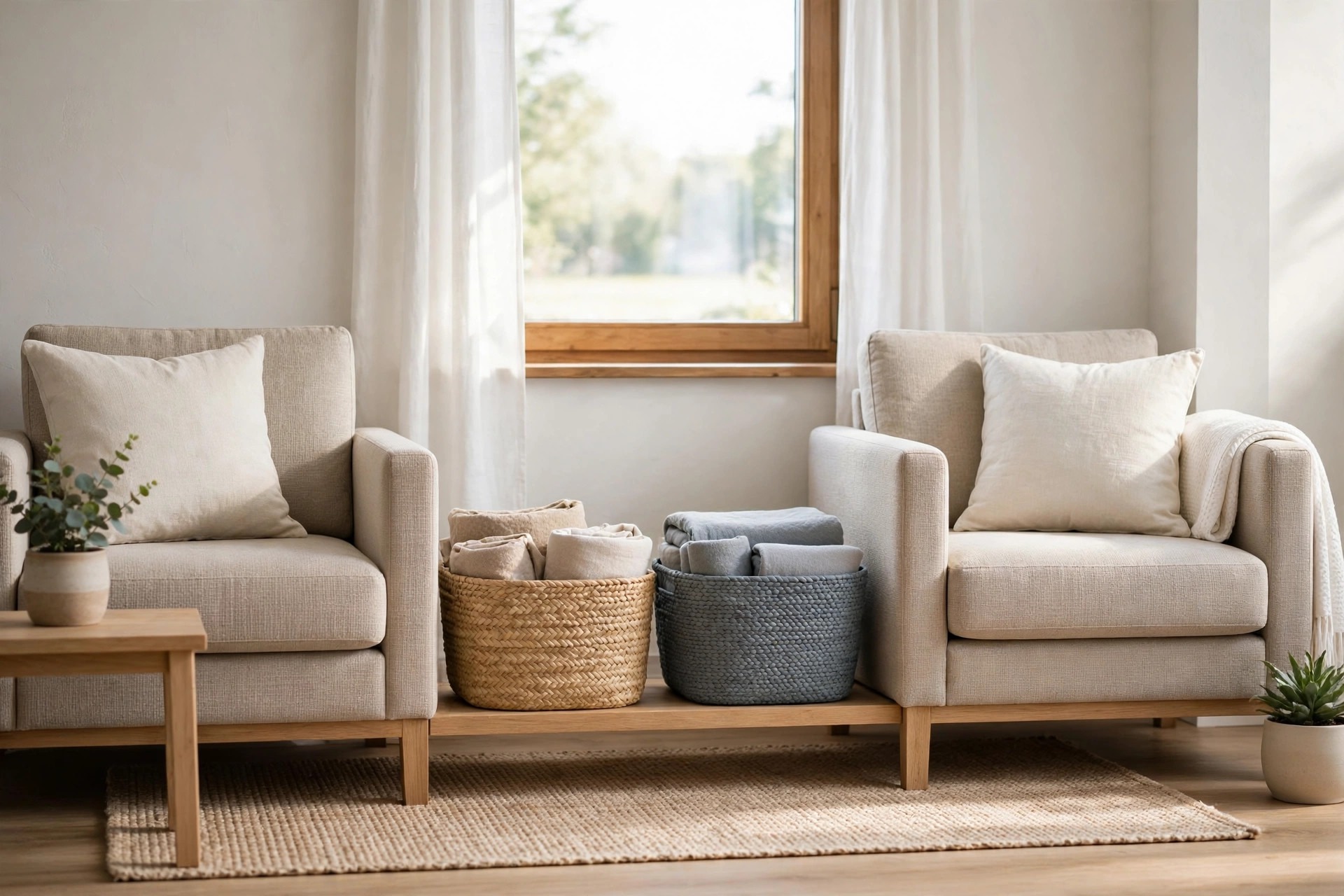
Zones blur when personal things spread. Books, chargers, knitting, and work papers from two lives can cover every shared surface in a week if they have no home.
Give each zone one basket or storage cube in a matching style, in the color that person picks. Everything personal goes in it at the end of the night.
A shared ottoman or shelf can hold both baskets side by side. The room looks tidy, and each person can find their own things without searching the whole space.
Check both baskets during the monthly review described in idea fifteen below. If one basket overflows every week, that zone needs a small shelf, not a bigger pile building up on the floor.
13. Angle Chairs Away for Privacy, In for Company

Chair angle is a quiet signal that costs nothing. A chair turned slightly away from the room says its sitter is resting, reading, or on a call and not open for chat.
The same chair angled in toward the shared sofa joins the group again. Roommates learn the signal fast, and it prevents a lot of small, tired misunderstandings.
Swivel bases make this easiest, but a light chair on a rug turns by hand in seconds. What matters is the habit, not the hardware you buy for it.
Agree the signal as a house rule, not as a mood either person must read. A rule both people chose in advance feels fair on tired nights, when patience runs thin for everyone. It costs nothing to agree today.
14. Add a Plant or Screen Edge Without Blocking Light

A tall plant at the edge of a zone gives privacy that still feels friendly. Leaves break the eyeline between chairs while light and air pass through freely.
A folding screen works in a larger room, set at the end of a rug rather than across the middle. Half-open is usually enough to mark a corner as separate.
Renters should lean, stand, or tension-fit anything used as an edge. Nothing in this layout needs screws or marks on the walls to hold a zone in place.
Rest the plant pot on a tray, so watering never marks the floor beneath it. One shared plant, watered on one set day each week, avoids both neglect and well-meant overwatering.
15. Agree a Short Reset So Zones Stay Separate
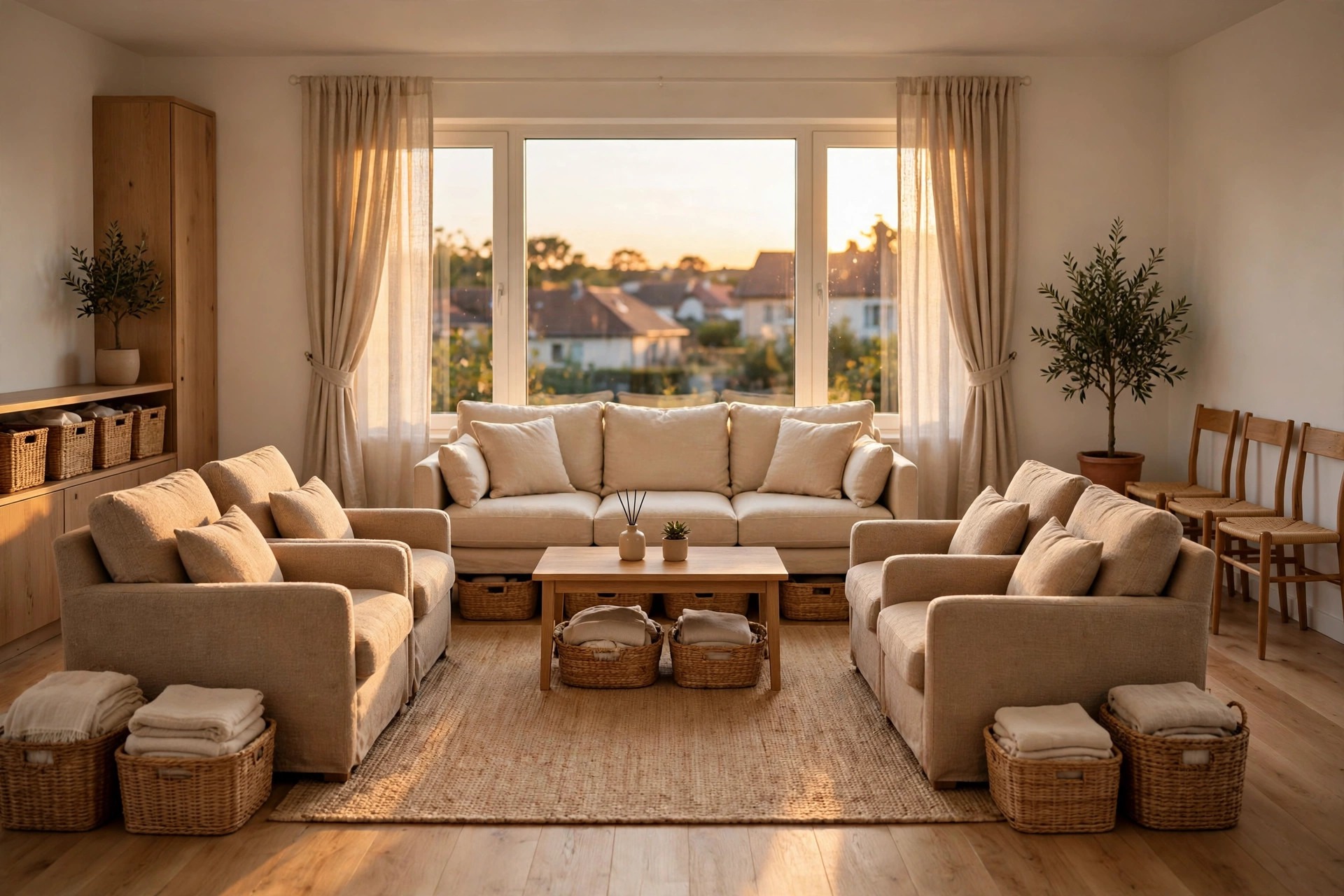
The best layout fails without a reset habit. End the day with five shared minutes: cushions back, baskets filled, mugs to the kitchen, spare chairs parked at the wall.
Keep the reset small enough that nobody dreads it. If a zone takes longer than a few minutes to restore, it holds too much stuff and needs a clear-out.
Review the layout once a month over a normal evening at home. Small moves, like swapping corners for better light in winter, keep both roommates happy with the plan.
Note the reset steps on a card inside a kitchen cupboard if habits start to slip. A two-line reminder ends most debates about what counts as done at the end of the night.
Begin with two chairs, two lamps, and two rugs, because that simple set turns one shared room into living room ideas for roommates with separate seating zones in practice.
Households change over time, and couples setting up a first shared home face the same balance, as these apartment living room ideas for newly married couples show from another angle.
Save the zones that suit your home to the Apartment Living Room Decor Ideas board, then test the layout for a full week before you change it again.


