

15 Guest Bedroom Ideas in Soft Blue and White Calm
Blue can go cold in a bedroom very fast. Add a strong navy wall, white bedding, and a pale floor, and a guest room starts to feel like a hotel corridor in winter, clean but not kind.
The soft version of the pairing works in the other order. These blue and white guest bedroom ideas start with white and warm light, then lay soft blue over them in layers a guest can adjust.
Keep blue pale at the walls and deeper only in small places. That order lets the room stay calm for a nervous sleeper, a visiting parent, or a friend who simply likes a quiet room.
Every idea here stays inside those two colors plus light wood and woven texture. Nothing else enters the room, and that limit is what keeps a small guest room feeling clear and quiet instead of busy and cold on a long winter night.
This post contains affiliate links. If you buy through them, we may earn a small commission at no extra cost to you. See our Affiliate Disclosure.
1. Paint the Walls the Palest Blue You Can Still See
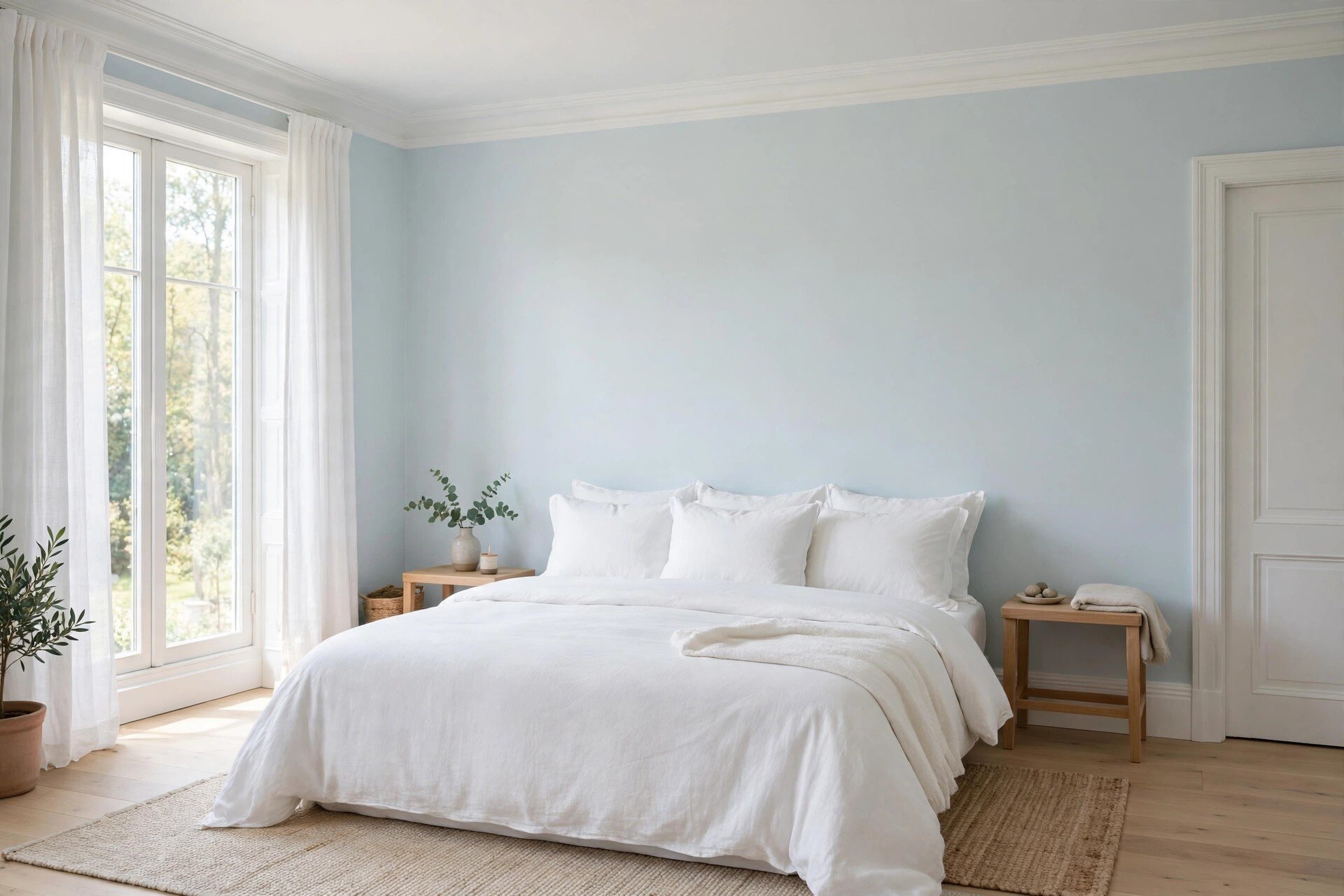
Soft blue belongs on the walls in its palest form. At that strength it reads as calm color in daylight and as a gentle gray white at night, which suits guests who sleep lightly in new places.
Test the paint on the wall behind the bed and the wall facing the window. The same blue can look twice as strong on the bright wall, and guests see both from the bed each morning.
Keep the ceiling and trim plain white. That contrast is what makes a pale blue wall read as a choice, while blue trim on blue walls can make a small room feel dipped in color.
Live with two test patches for a full day. The evening patch, not the noon one, is the color guests will know.
2. Build the Bed in White, Then Add Blue at the Foot
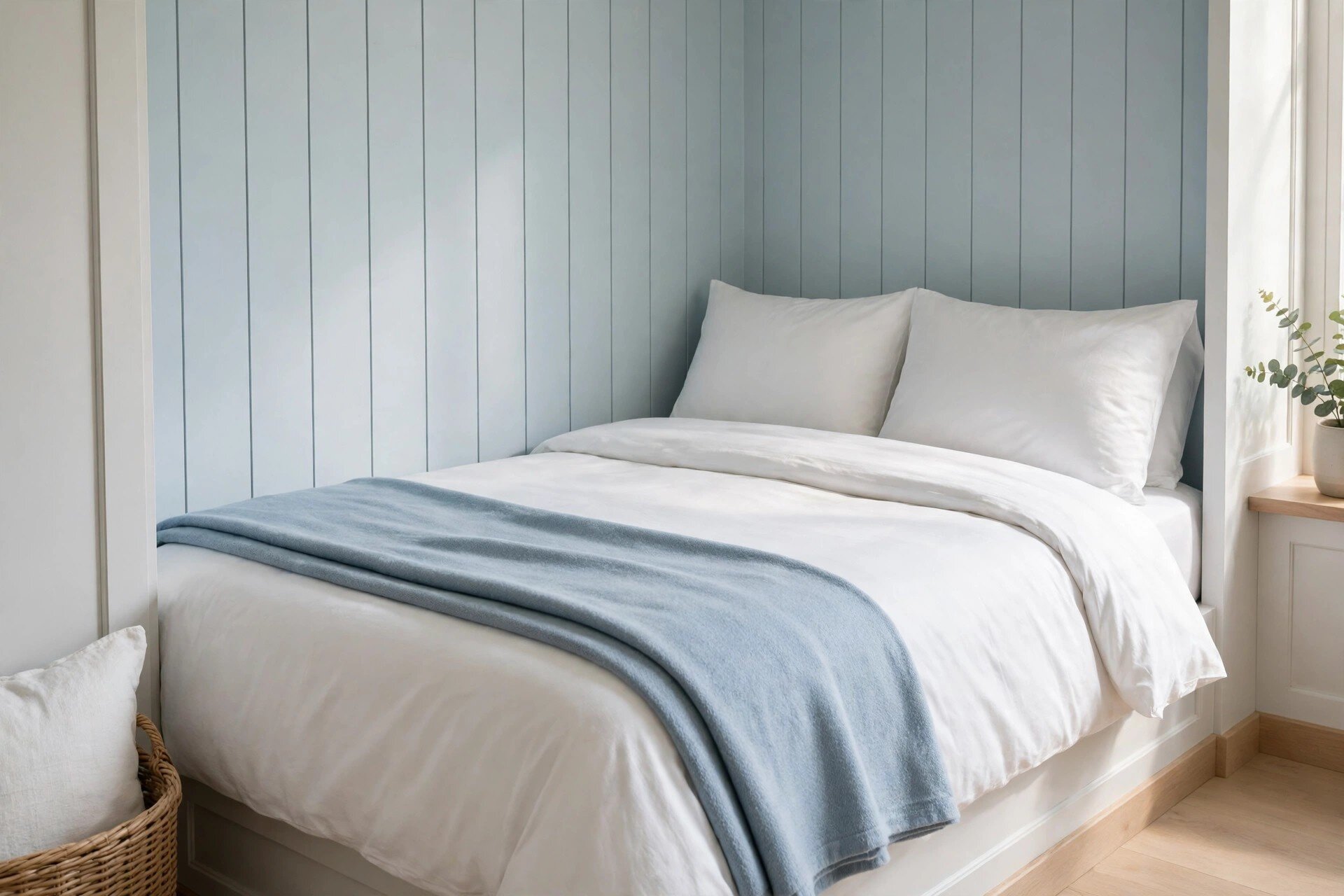
White bedding is the calm base of this room. It reads fresh to every guest, it washes well between visits, and it gives soft blue a clean surface to sit against without any arguing.
Lay the blue at the foot: a folded throw, a light quilt, or the end third of a reversible cover. Color at the foot warms the view from the door while the pillows stay quiet and white.
A guest who finds blue strong can fold that layer back in seconds. Giving visitors a small say in the room is a quiet kind of welcome, and it costs nothing to arrange.
Photograph the bed from the door. The white should own most of the frame, with blue as the closing note.
3. Let One Stripe Appear, and Only Once
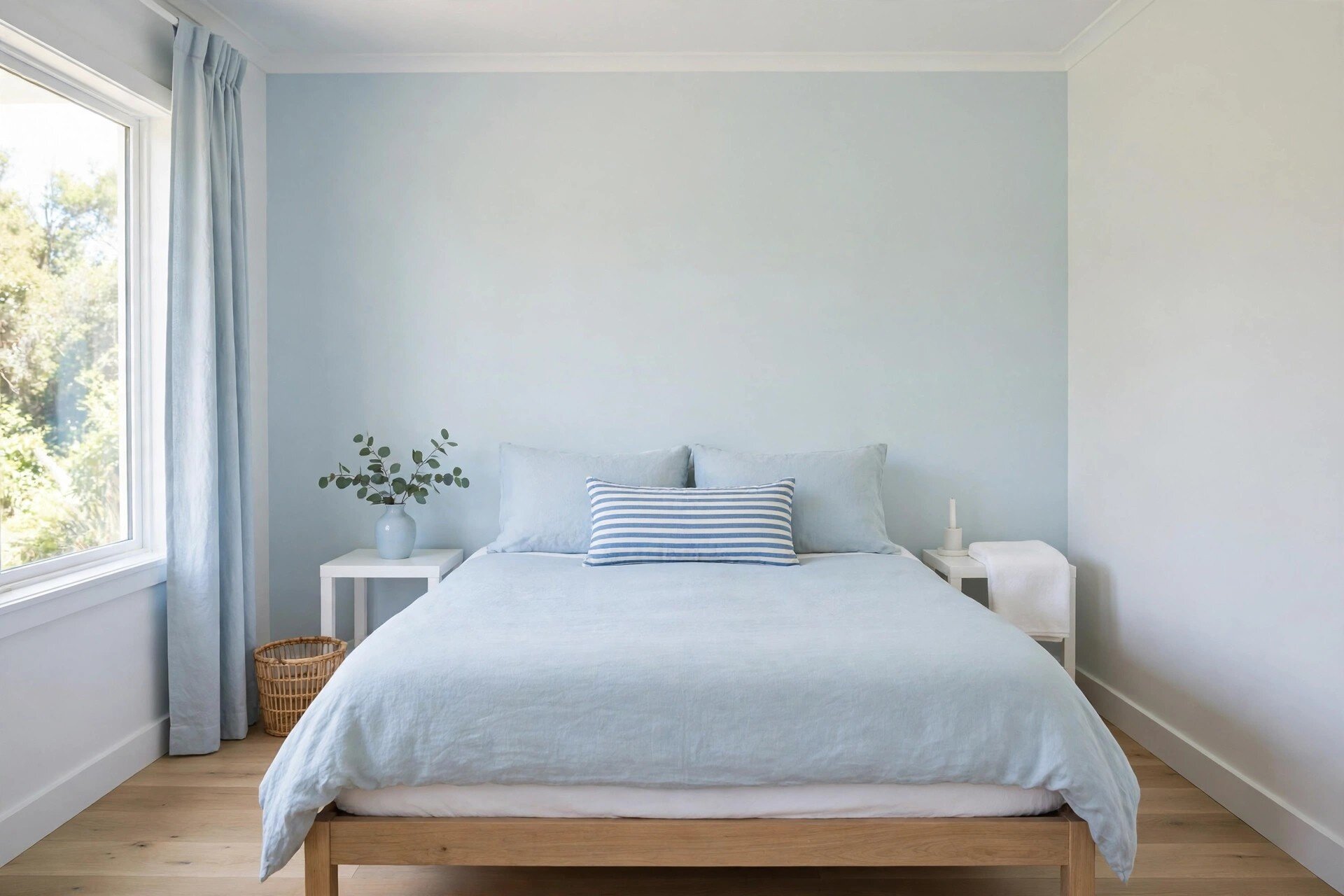
A blue and white stripe is the classic pattern for this pairing, and one appearance is enough. Use it on two cushion covers, a folded runner, or one bolster, then let every other fabric stay plain.
The living room version of this rule shows up across the blue and white living room ideas, where stripe and pattern get rationed the same way in a bigger space. Guest rooms need the ration even more.
Stripes everywhere pull a small room tight. A single stripe gives the eye one clear event, and the rest of the room can stay soft, which is the whole point of this color story.
Count patterns from the bed, not the door. Guests spend their room time lying down, so judge the view from there.
4. Use Three Blues at Most, Pale to Mid Tone
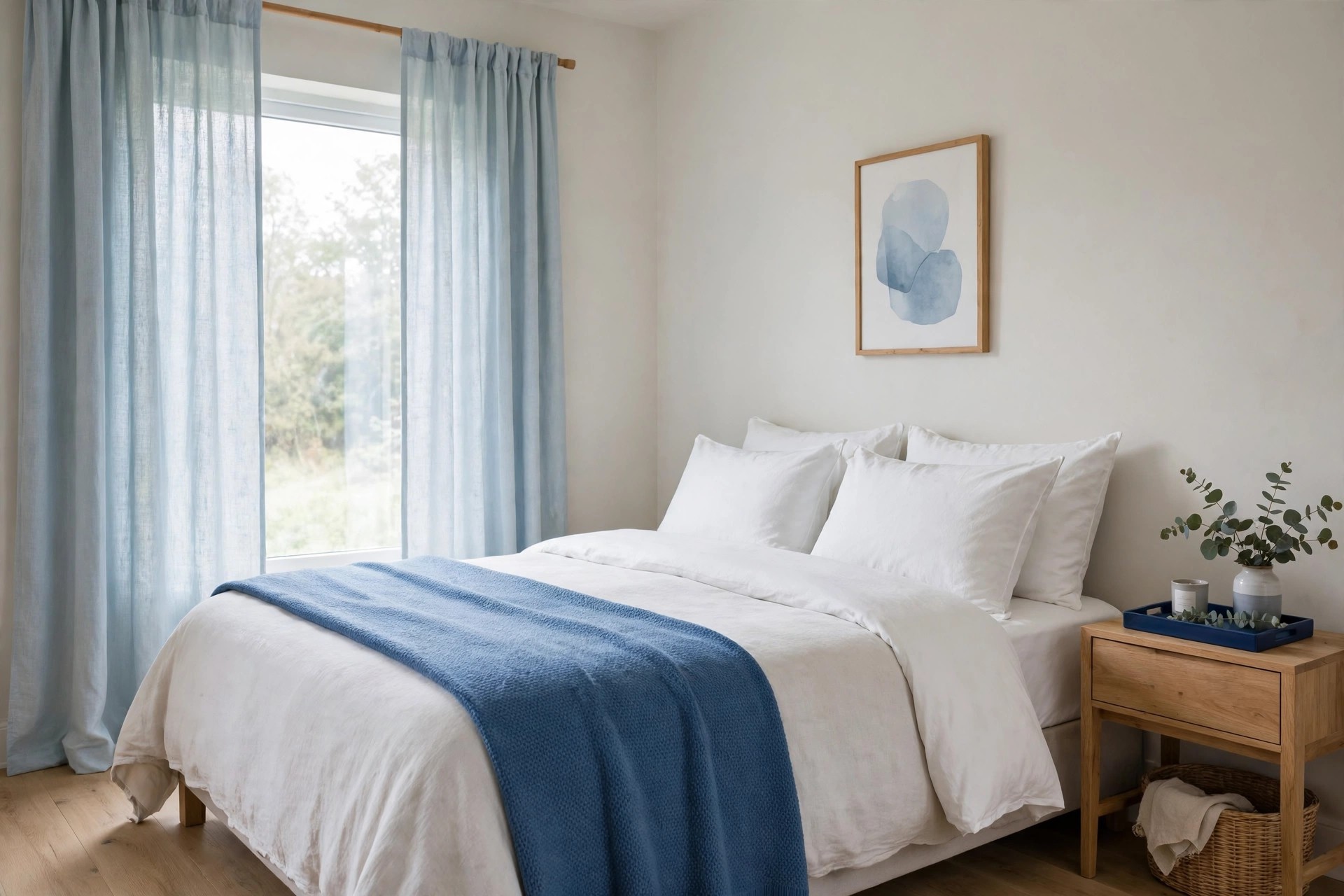
Calm comes from a short color list. Pick three blues: a pale one for walls or curtains, a mid tone for the throw and cushions, and one deeper note no bigger than a tray or a book cloth.
Hold fabric samples together before anything enters the room. Blues that fight, one green leaning, one purple leaning, will make the room feel off in a way guests sense but cannot name for you.
Write the three tones on a note in the drawer. Future buys, a replacement cushion or a new throw, can then match the room instead of slowly drifting it toward a fourth blue.
Take the samples to the window and to the lamp. A blue that behaves in both lights earns its place.
5. Warm the Blue With Light Wood Furniture
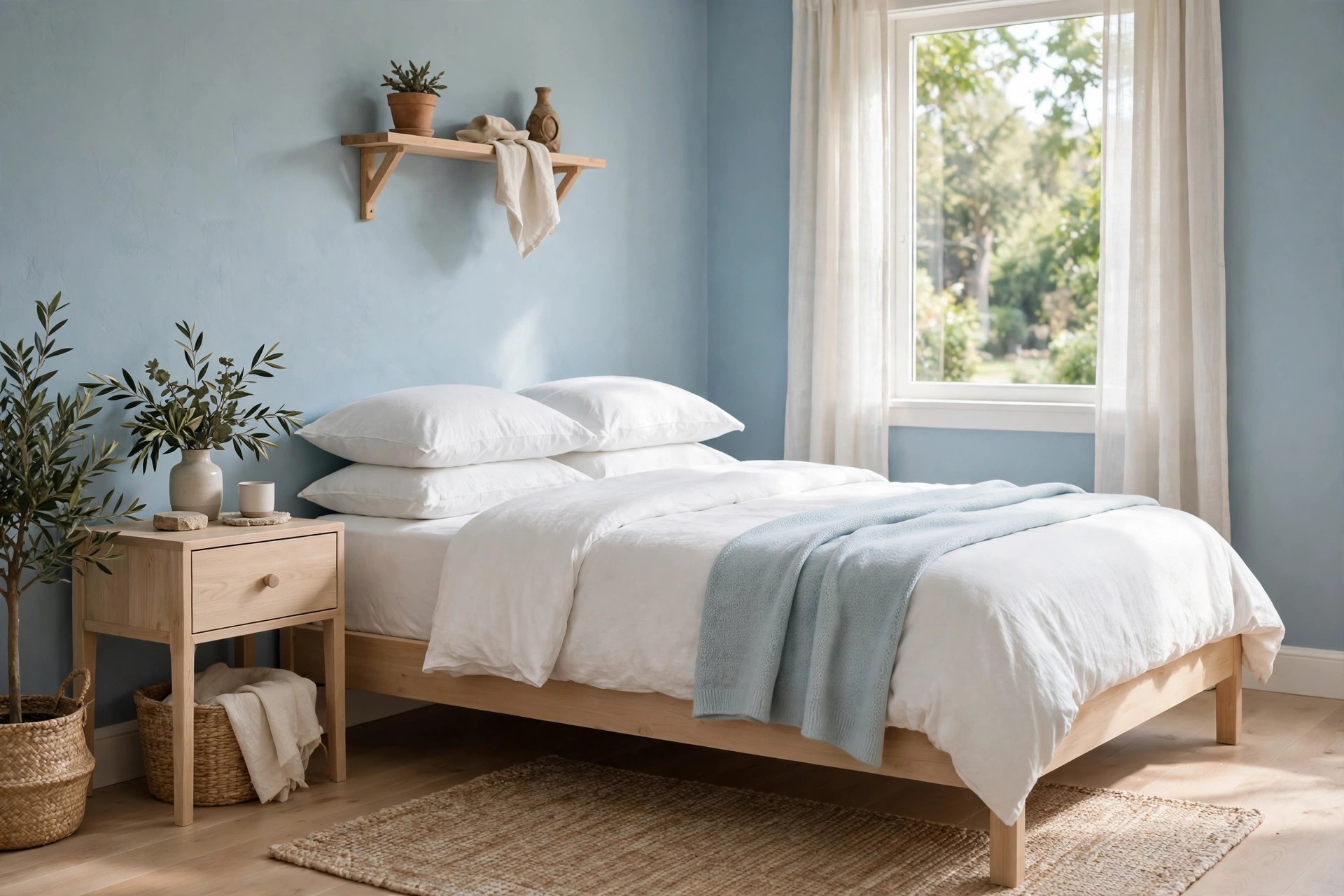
Soft blue needs warmth beside it, and light wood is the easiest source. A pale oak nightstand, a simple wood bed frame, or a woven headboard keeps the pairing from sliding toward chilly.
Keep the wood pale and matte. Dark heavy wood against pale blue can read formal and cold at guest room scale, while light wood keeps the room closer to a cottage morning than a boardroom.
The cream bedroom ideas for a cottage style guest room use the same trick with cream and wood. In this room the wood does the warming, so the blue never has to carry the room’s comfort on its own.
Add wood one piece at a time and sleep on the change. Warmth should arrive quietly, not as a new theme.
6. Hang White Sheers Over Pale Blue Curtains
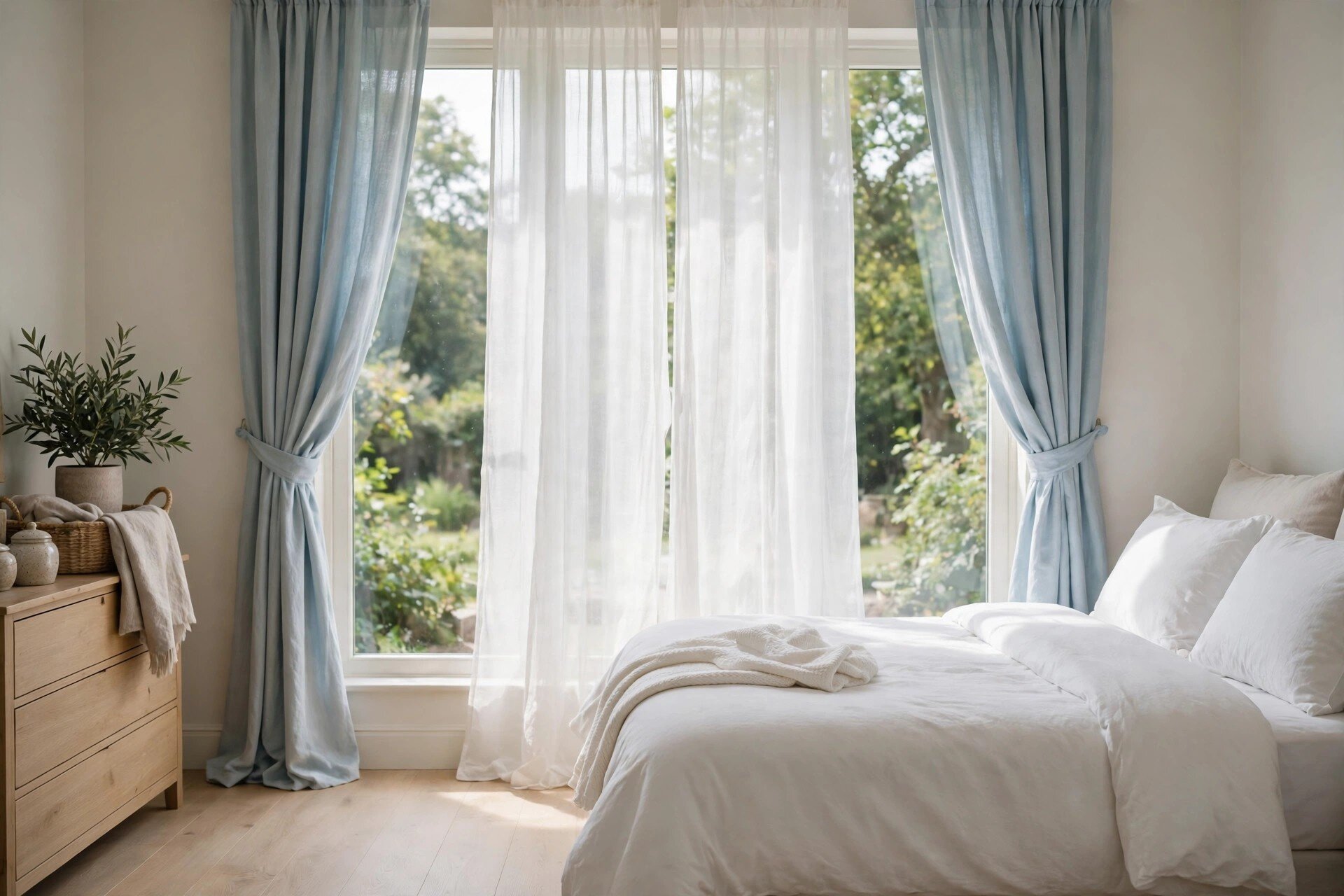
Two light layers at the window give guests control. White sheers soften daylight for an afternoon rest, and pale blue curtains close at night for privacy and a deeper sense of enclosure.
Hang both layers on one wide rod or two slim ones, with the blue pair opening past the glass. A window half covered all day makes a small guest room feel narrower than it is.
Keep the blue curtains plain and a tone deeper than the walls. That small step in depth frames the window, and the sheers keep the whole arrangement light when the curtains stand open.
Close both layers once at midday and lie on the bed. The room should dim gently, never drop into gloom.
7. Choose a Low Contrast Rug in Blue and Cream
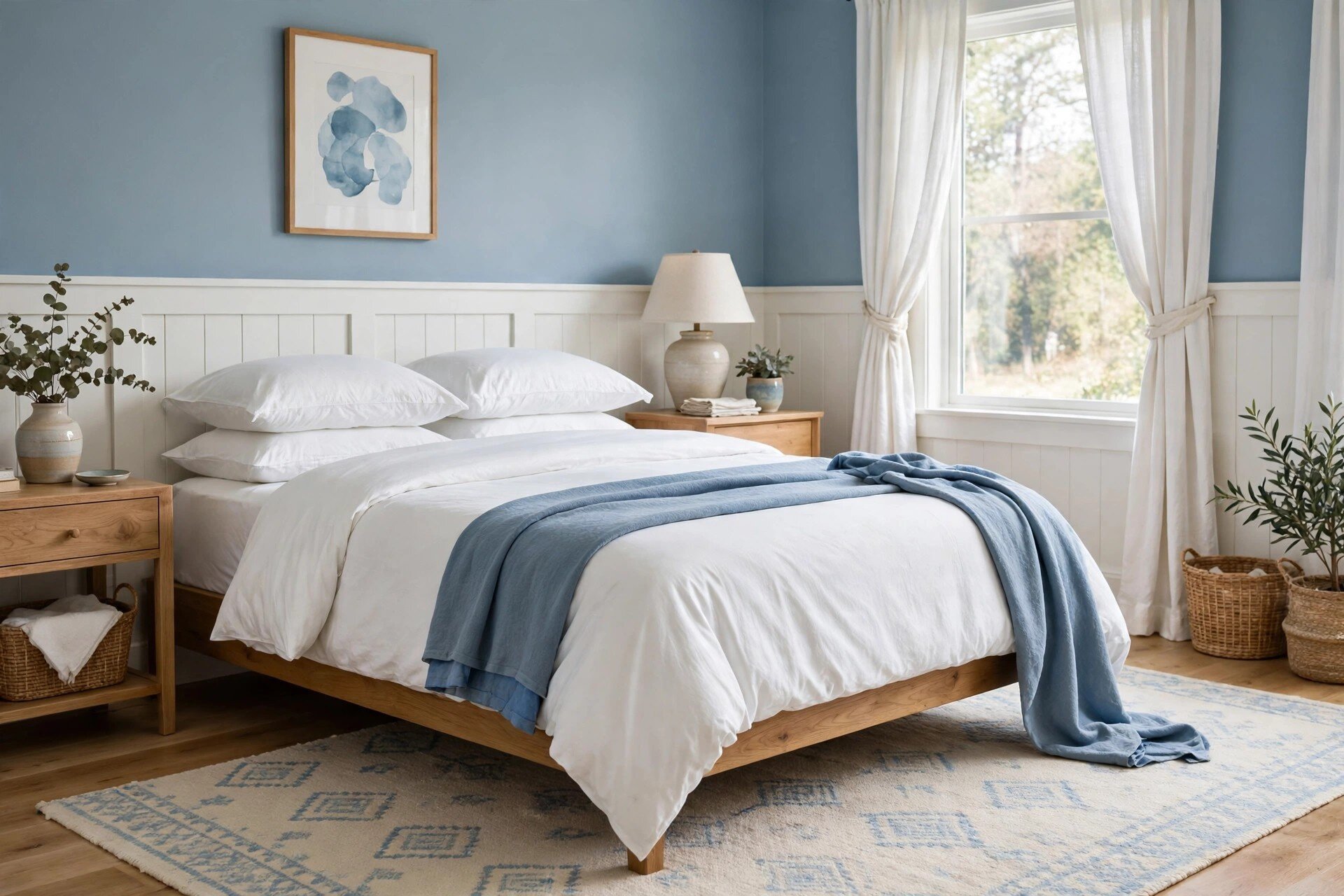
A rug with a soft blue pattern on a cream ground ties this room together at floor level. Low contrast is the key: the pattern should show at a glance, then settle into the background.
Run the rug under the lower two thirds of the bed, out on the side guests use most. Bare feet landing on a rug instead of a cool floor set the tone for the whole morning.
Skip a pure white rug in a guest room. It shows every mark, worries visitors about their shoes and bags, and asks for more upkeep than a spare room can honestly keep up with.
Walk the rug in socks at night. A rug that slips needs a pad now, not after a guest catches a toe.
8. Keep Lamps White With Warm, Soft Light
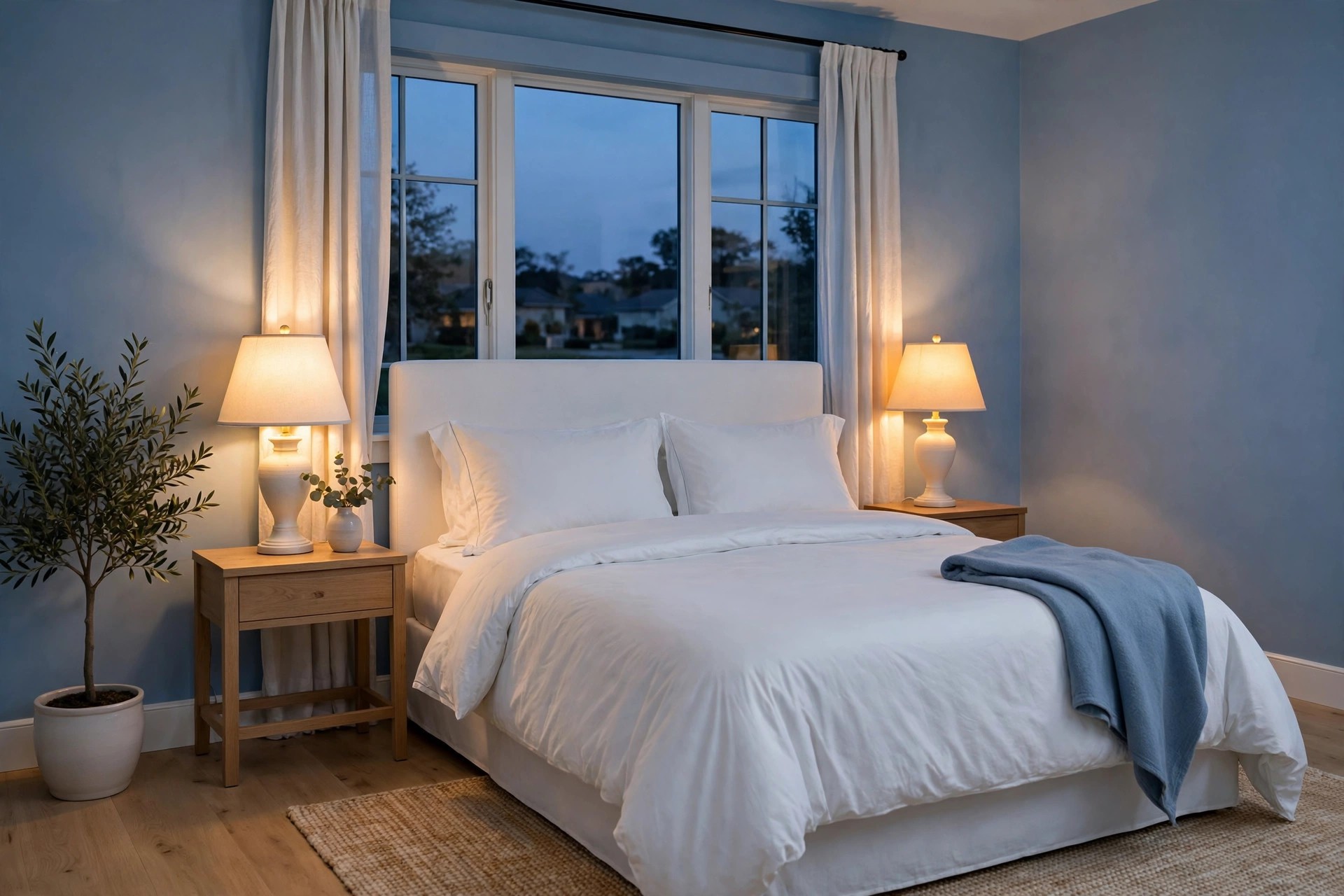
Cold bulbs are the fastest way to ruin a blue room. A hard white light turns soft blue paint icy after dark, and the calm room you built at noon feels sharp by bedtime.
Choose white or cream lamp bases with fabric shades, and warm bulbs inside them. The shade color keeps the pairing tidy, while the warm glow takes the chill out of the blue around it.
Set one lamp on each side of the bed when two guests stay. Shared light means shared bedtimes, and two small lamps free each visitor to read, rest, or sleep on their own clock.
Turn the lamps on at dusk and check the wall color. Pale blue should stay gentle, never glow like a screen.
9. Hang Calm Art in Blue Tones, Without Beach Signs
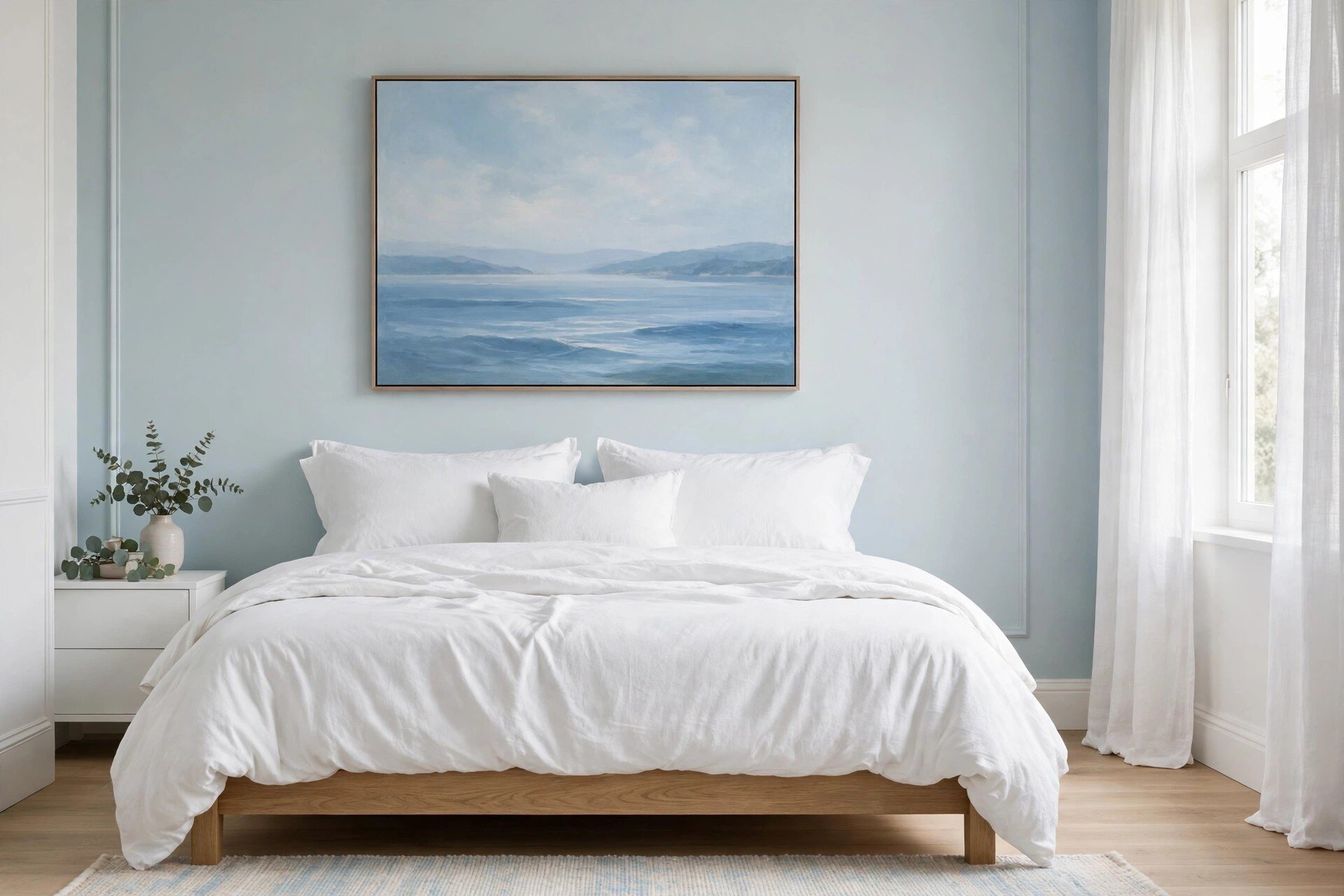
Art in this room should lower the heart rate, not tell a joke. Soft seascapes, plain botanical prints in blue ink, or simple line drawings in thin frames suit the color story and the guest.
Hang one larger piece over the bed or two smaller ones over the dresser. Small scattered frames in blue and white can look like a shop wall, which works against the quiet you are building.
Leave anchors, shells glued to frames, and word signs out. A guest room near no coast at all still earns its calm from color and light, not from props claiming a beach nearby.
Sit on the bed and look at the art for a minute. Restful pictures hold up; cute ones wear out fast.
10. Soften the Bed Head With a Pale Blue Panel
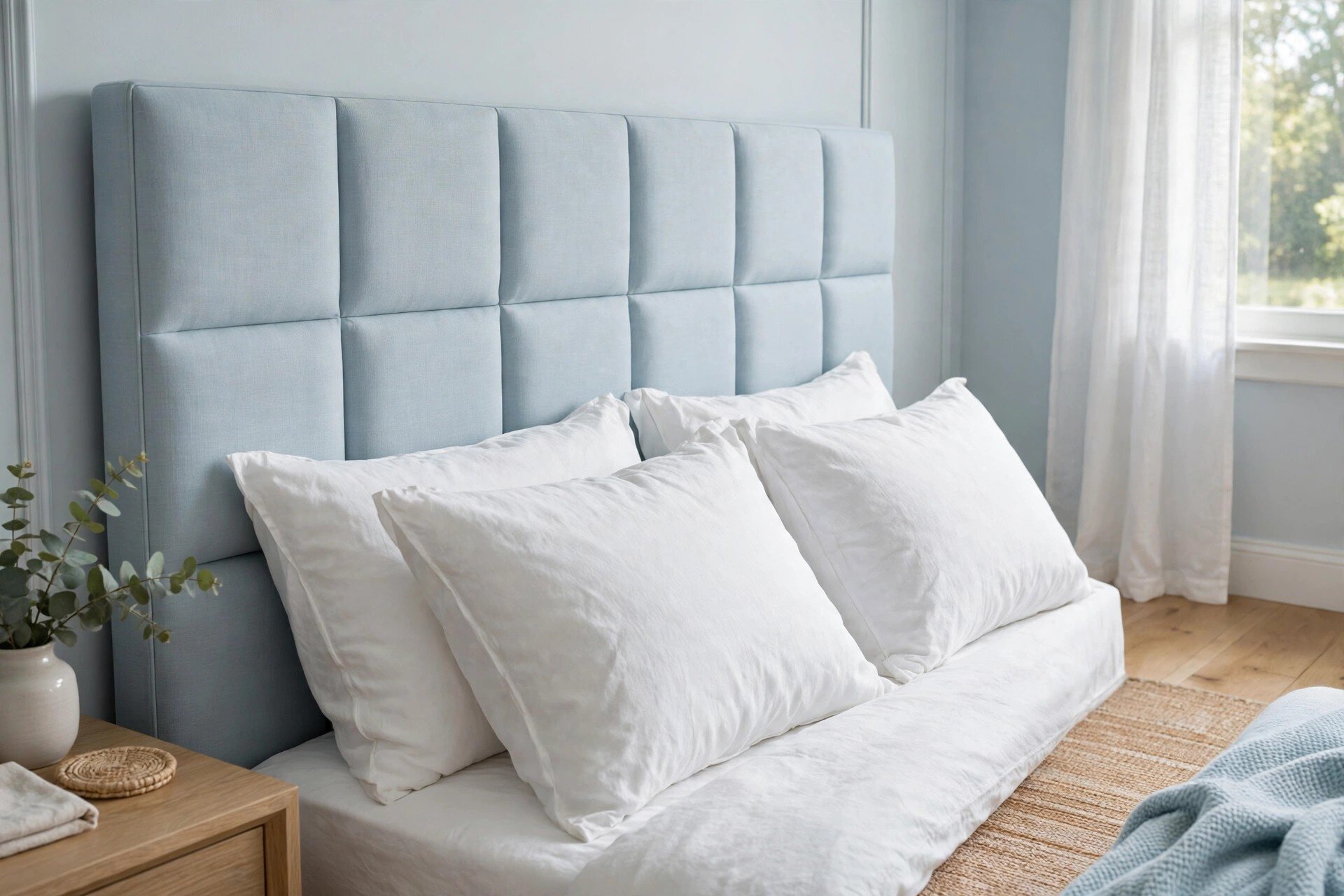
A soft headboard in pale blue linen or cotton gives this room its one plush note. Guests read in bed, lean back, and judge a guest bed by that lean more than by any decoration.
A simple rectangular panel, wall hung or fixed to the frame, in the palest of your three blues works well. Keep buttons and deep tufting out, since plain cloth reads calmer and cleans easier.
If a new headboard is out of reach, fake the panel with two large pale blue cushions standing upright behind the pillows. The lean improves at once, and the color lands exactly where you want it.
Lean back with a book for ten minutes as a test. Comfort there decides more stays than any wall color.
11. Add Woven Texture in Natural and White
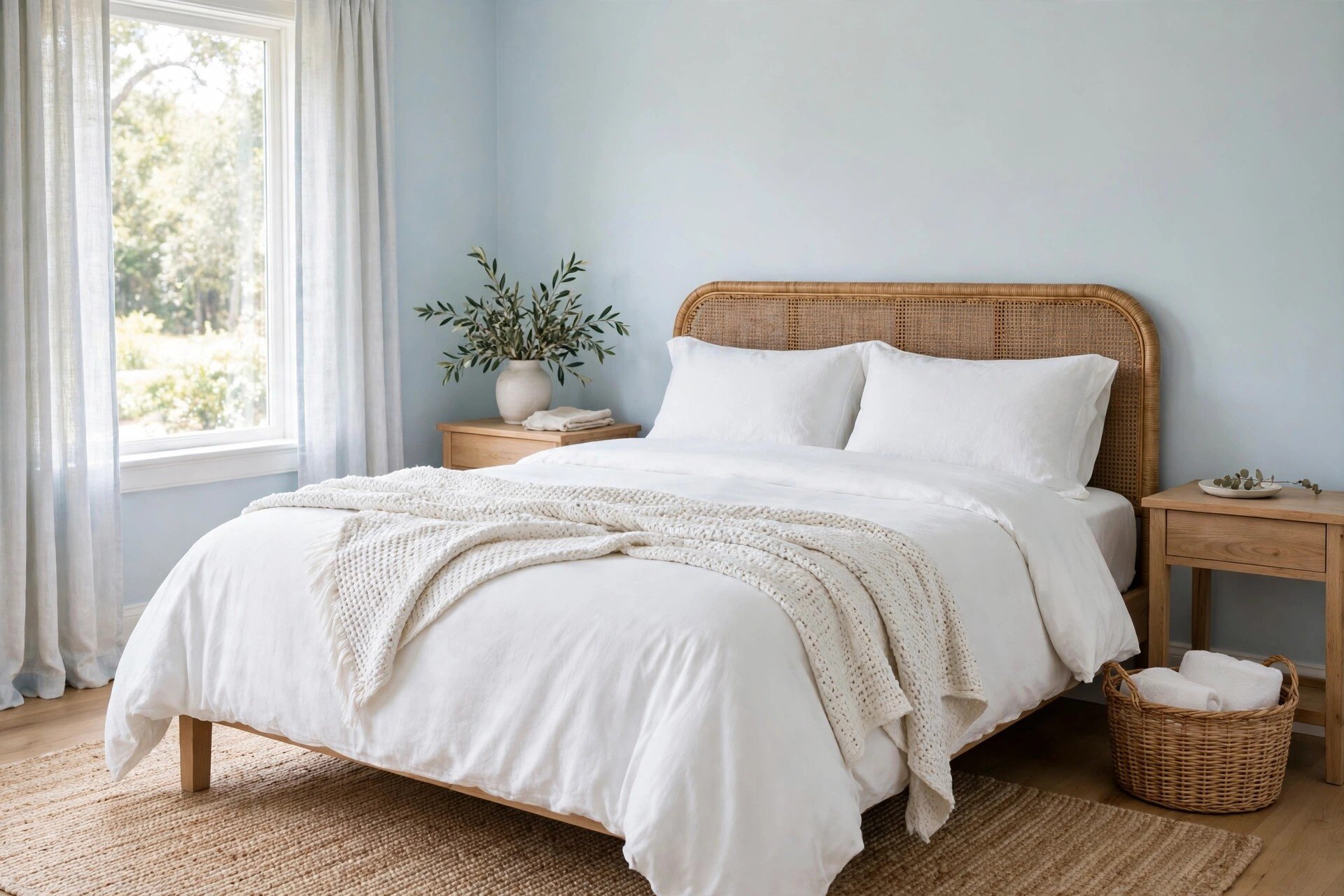
Blue and white alone can feel flat and printed. Woven texture breaks that up: a natural fiber basket, a white cotton throw with a visible weave, a cane front or a rattan tray on the dresser.
Texture counts as the room’s third material, after cloth and wood. It gives the eye small shadows to rest on, which is why a plain blue room with one basket feels richer than expected.
The softer neutral rooms among the beige bedroom ideas for a guest room lean on the same weave trick. Here it matters double, because blue needs texture nearby to feel like fabric and fiber, not paint on every surface.
Touch is the test here. If every surface feels smooth and cool, the room needs one more woven piece.
12. Keep Nightstand Styling to Blue, White, and Clear Glass
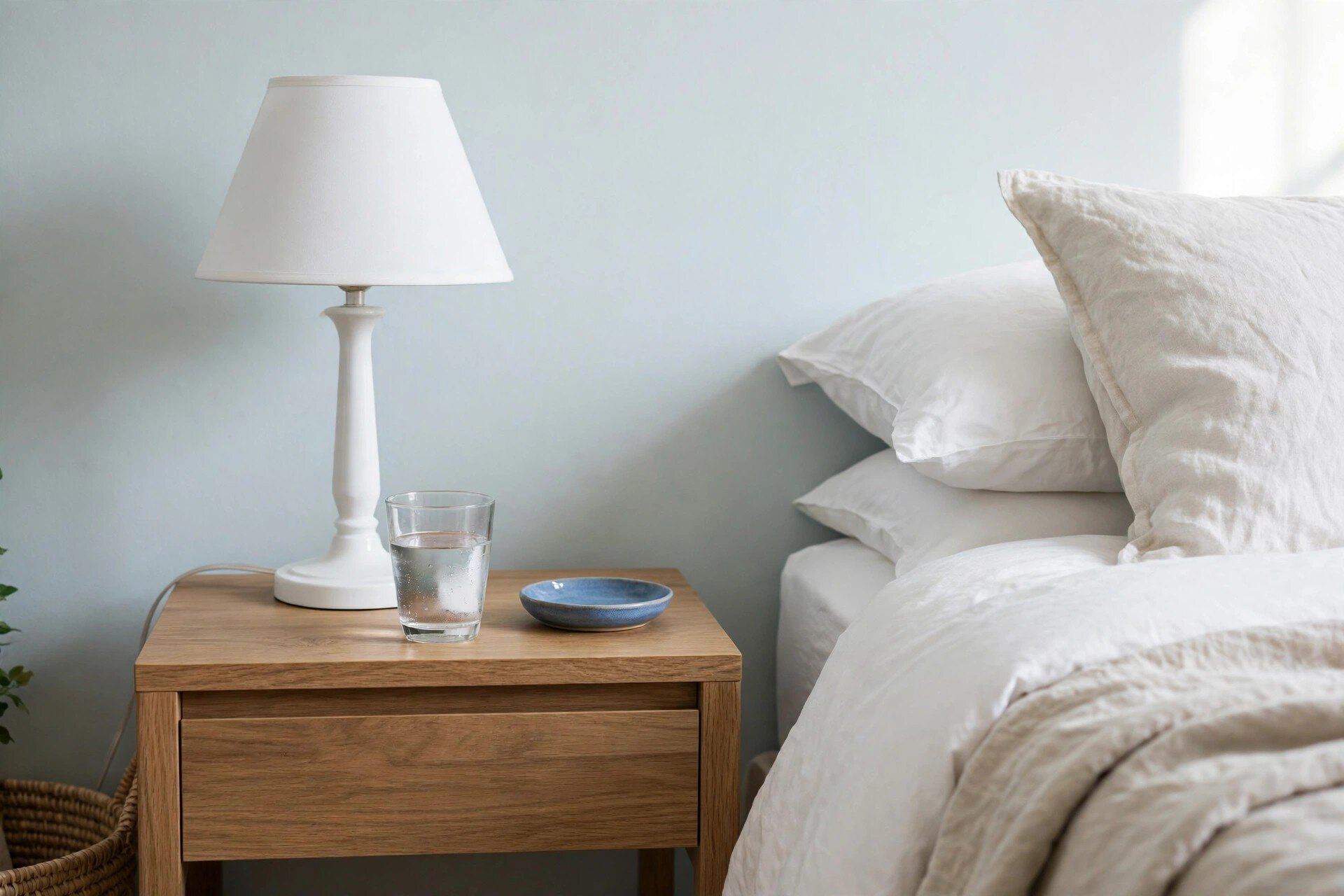
A guest nightstand in this room holds a white lamp, a clear glass of water, and one small blue dish for a watch or rings. That is the whole still life, and it photographs calm because it is calm.
Clear glass suits the pairing well. It adds shine without a fourth color, and guests read it as clean at a glance, which matters for water beside a bed in a strange house.
Leave the second nightstand, if there is one, almost bare. Two styled tables feel staged, while one styled and one open tells a guest the open space is theirs to use as needed.
Wipe the glass and dish on guest day. Shine reads as freshness faster than any scented extra could.
13. Give Guests a White Blanket Layer of Their Own
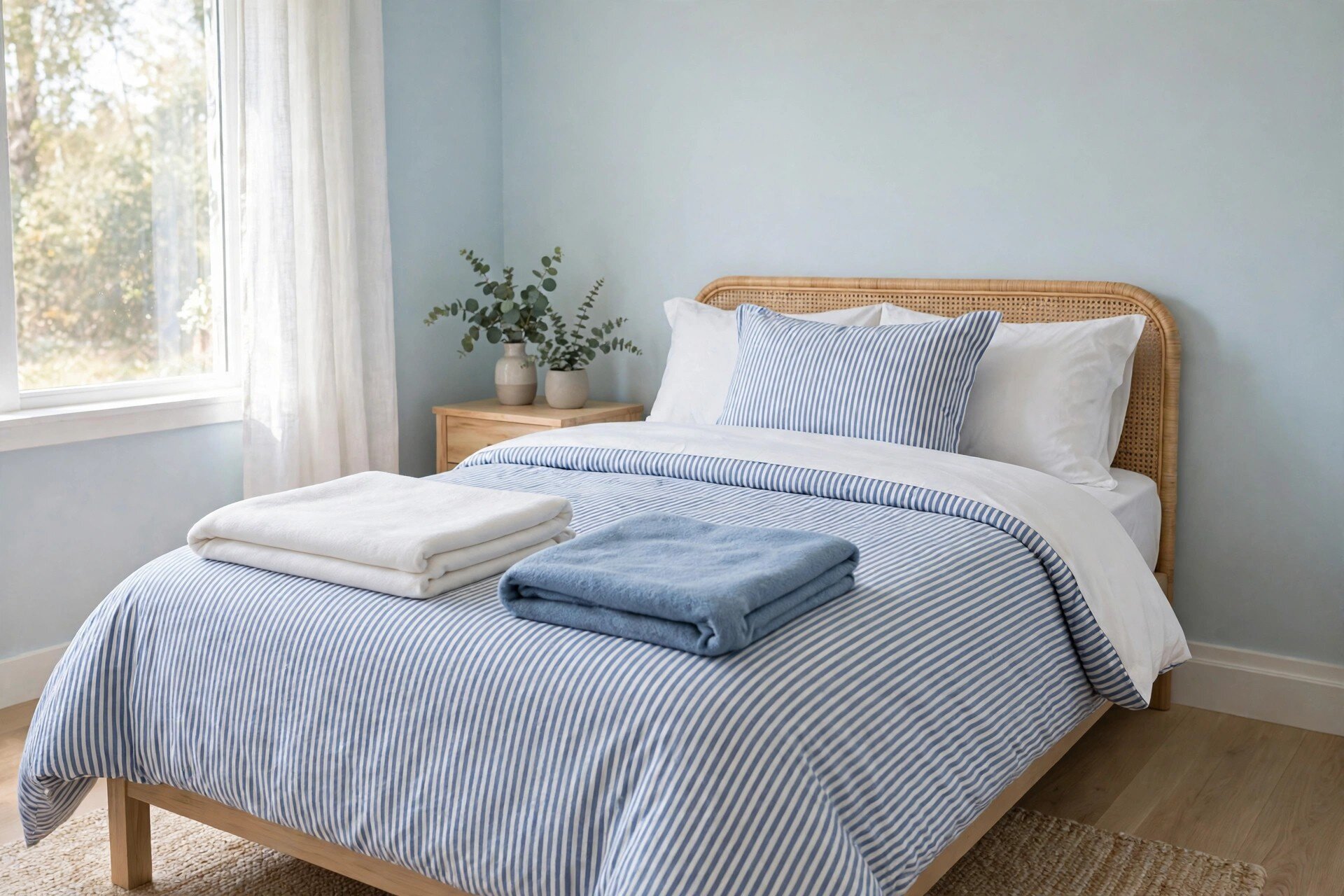
Blue reads cool even when a room is warm, so hand guests control of the temperature. A folded white blanket at the foot of the bed, separate from the blue throw, lets them add warmth without asking.
Keeping the spare layer white matters. A guest pulling up a white blanket keeps the room’s calm intact, while a random colored blanket from a cupboard breaks the story and looks like an afterthought.
Wash that blanket on the same cycle as the sheets. Layers that live on the bed should all share the same freshness, or the one stale piece is the one a guest will remember.
Fold the blanket in thirds with the edge facing the door. Small order like that reads as care at a glance.
14. Finish the Room Fast When Time Is Short
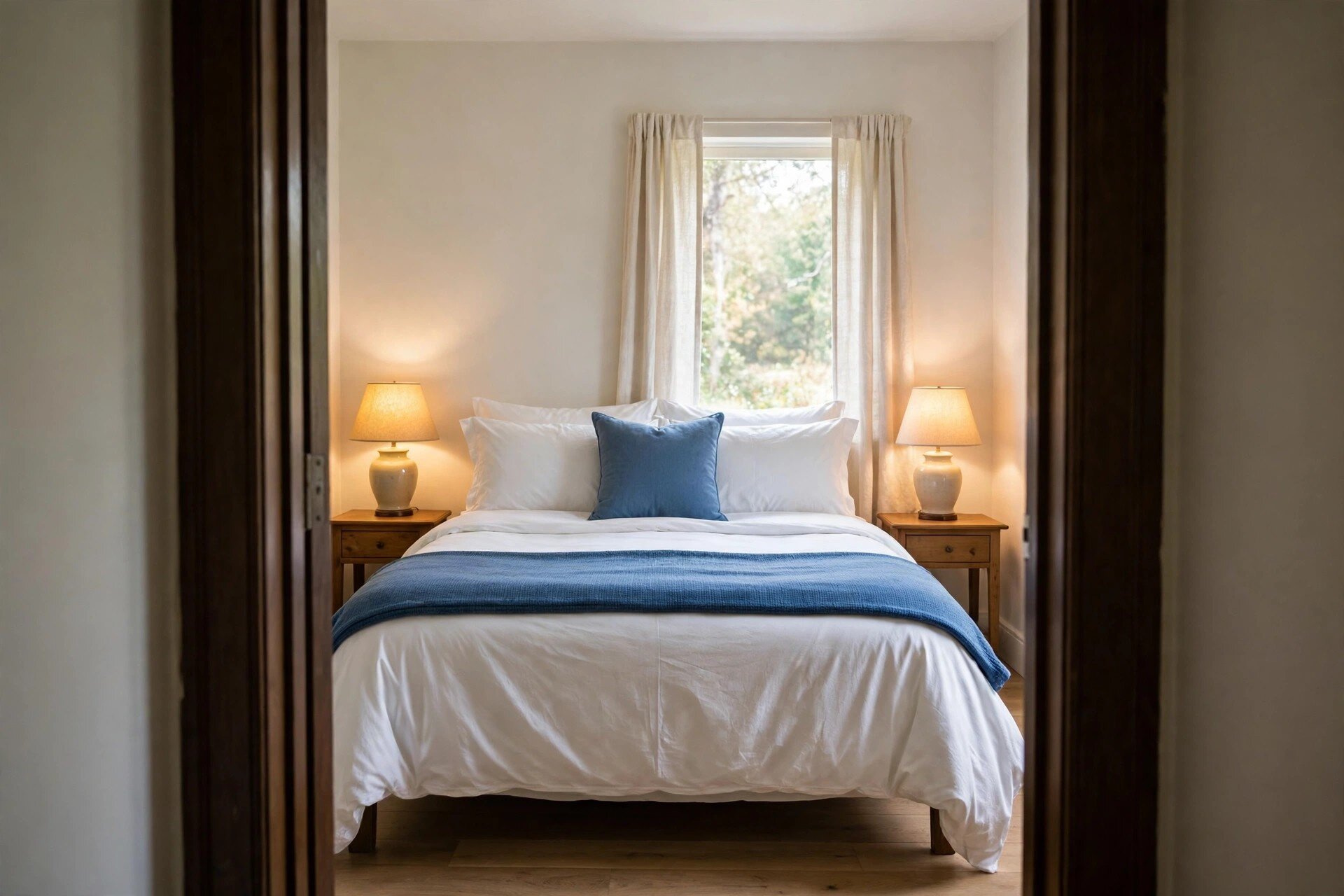
Some visits get announced at lunch. When that happens, work this room in color order: white bedding on, blue throw folded at the foot, lamps on, and one blue cushion set straight at the pillows.
The full sequence in how to make a spare room a guest room in one day covers the whole spare room rescue. For this room, the color order is the shortcut, since the pairing shows its calm only when each layer lands in place.
Skip new buys on a rush day entirely. A blue and white room made from washed, folded, and straightened pieces already in the house will always beat a rushed purchase that adds a fourth blue.
End the rush with the doorway check. If the room reads calm in two colors from there, stop and make tea.
15. Run the Guest Checks Before You Trust the Calm
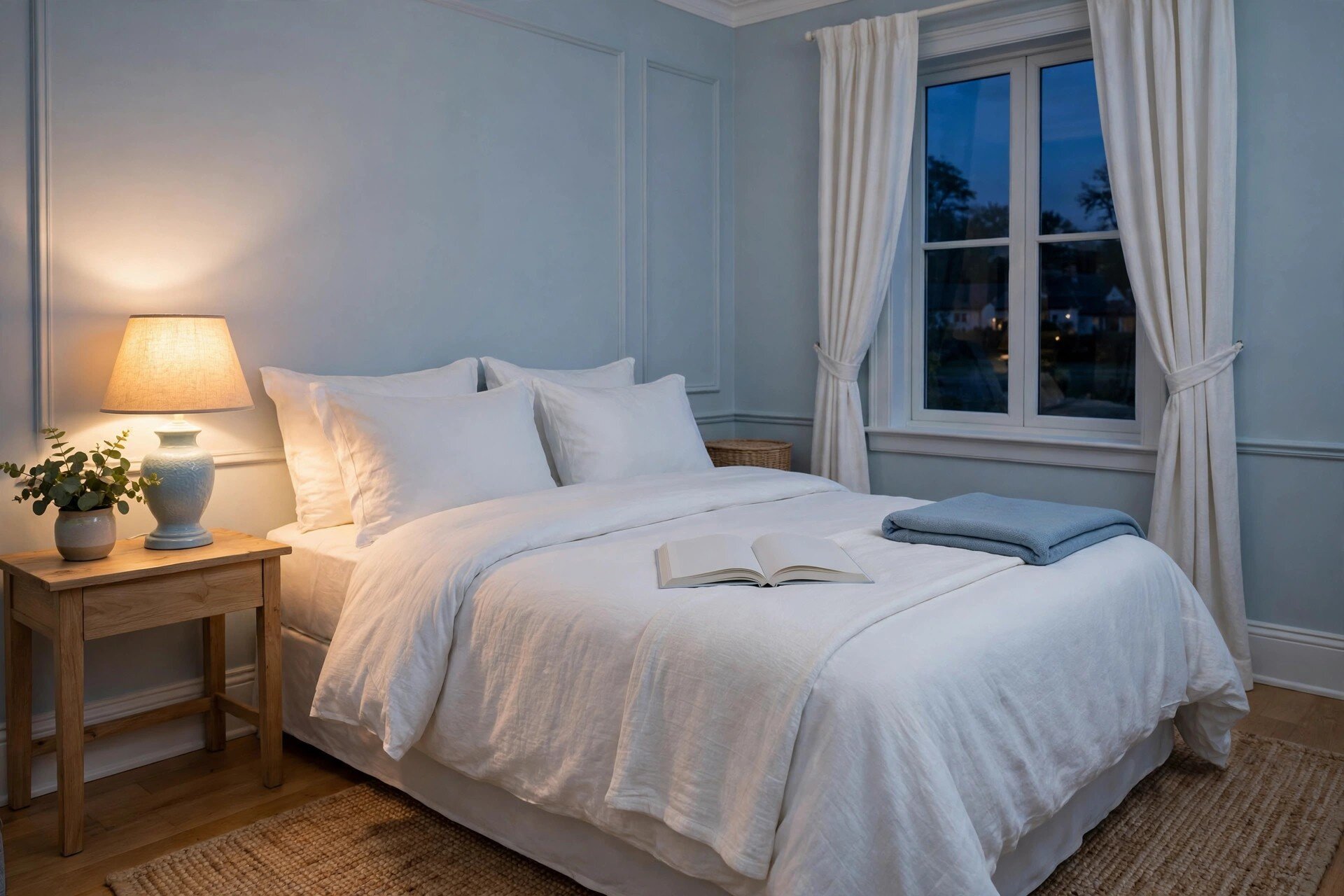
A calm look is a promise the room still has to keep. Run the plain checks in how to set up a guest bedroom here too: reach the lamp switch from bed, set a bag down, and read a page at night.
Blue rooms hide small faults well in photos. A cold bulb, a slippery rug, or a curtain that lets in a street light will only show up when someone actually sleeps in the room overnight.
Fix what the checks find before adding any more blue. In this pairing, comfort repairs always outrank decor, because a guest forgives a plain room far faster than a pretty room that sleeps badly.
Sleep one night in the room yourself each season. The list you make at breakfast is the honest one.
White first, soft blue second, warm light and light wood holding the two together: that order builds the calm. Keep the blue count at three tones, the pattern at one, and the spare blanket white and folded at the foot.
Save the finished room to the Guest Bedroom Ideas board, with a note of your three blues. The note makes every later refresh in this room a matching job instead of a guessing game.
Pin the bed view first, white with blue at the foot, since that single frame holds the whole idea.


