

15 Luxury Feeling Guest Bedroom Ideas Under 300 Dollars
A spare room can feel rich without a rich budget, and it can also feel cheap after a careless splurge. The difference rarely sits in one grand piece. It sits in order, in layers, and in what you leave out.
This list works to one fixed total. These luxury guest bedroom ideas under 300 dollars treat the $300 as a whole room budget, with the bed taking the largest share and every later idea earning a smaller slice of what remains.
Nothing here is priced piece by piece, because shops and seasons change. The shares are the plan: roughly a third for the bed, then light, cloth, and a few calm finishing touches in that order.
Keep a running note of what you spend against the $300 as you go. A luxury feel built on a kept total feels twice as good, and the room stays honest instead of drifting into quiet debt.
This post contains affiliate links. If you buy through them, we may earn a small commission at no extra cost to you. See our Affiliate Disclosure.
1. Give the Bed the First Share, About a Third of the $300
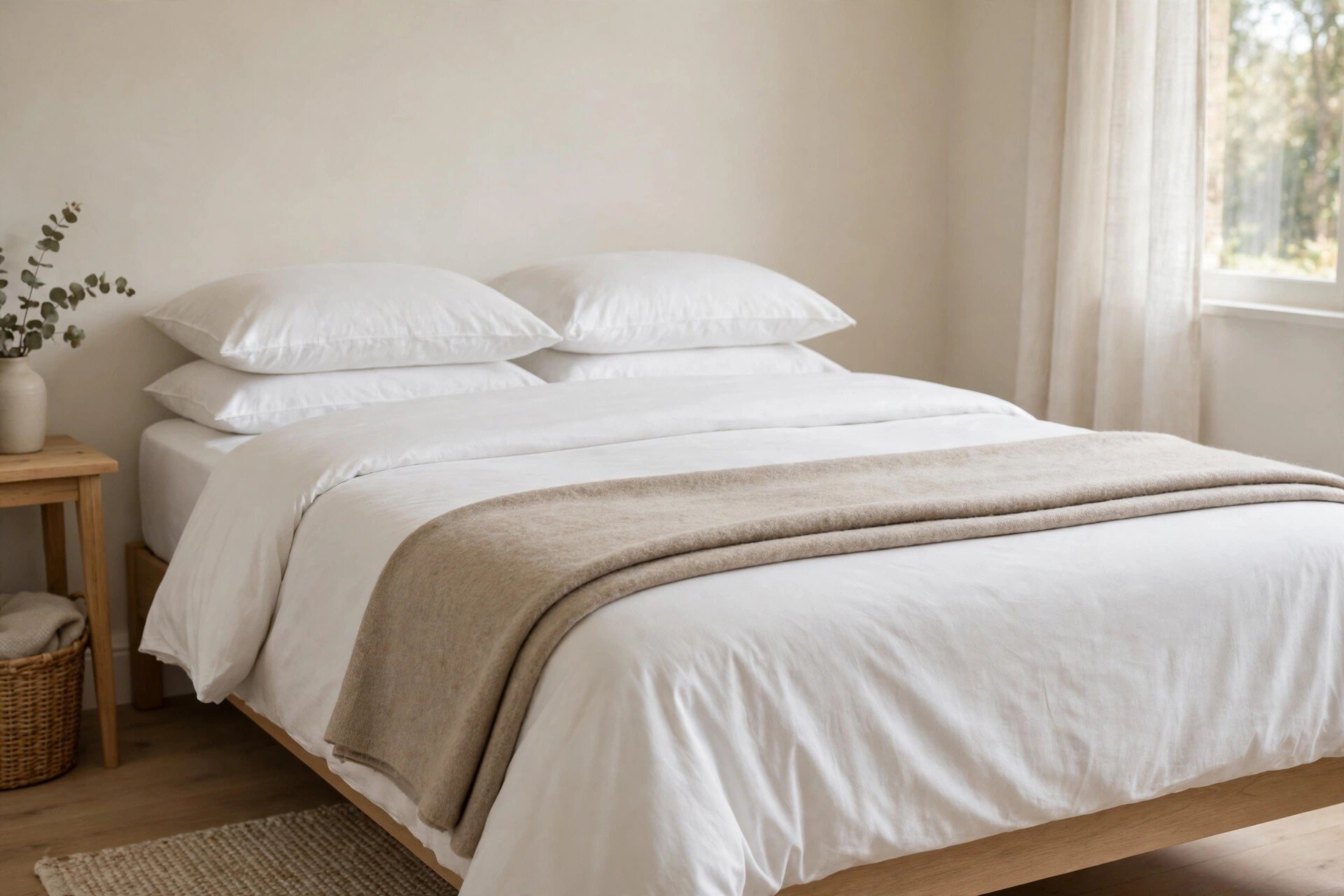
Hotels spend on the bed first, and a home guest room should copy that order. Set aside roughly $100 of the $300 for the bed layers: clean white sheets, a decent duvet or cover, and a folded throw.
White is the luxury signal guests read first. A plain white bed, washed and smooth, looks cared for in a way that colored, patterned bedding in a spare room almost never quite manages to do.
Buy the best hand feel the share allows, and skip decorative extras until the base is right. One soft, plain, well made bed outranks a bed dressed in six fussy pieces that feel thin to the touch.
Lie on the finished bed for five minutes. The first share is spent well only if the bed passes a guest’s back.
2. Stack Pillows in Hotel Order, Two Plus Two
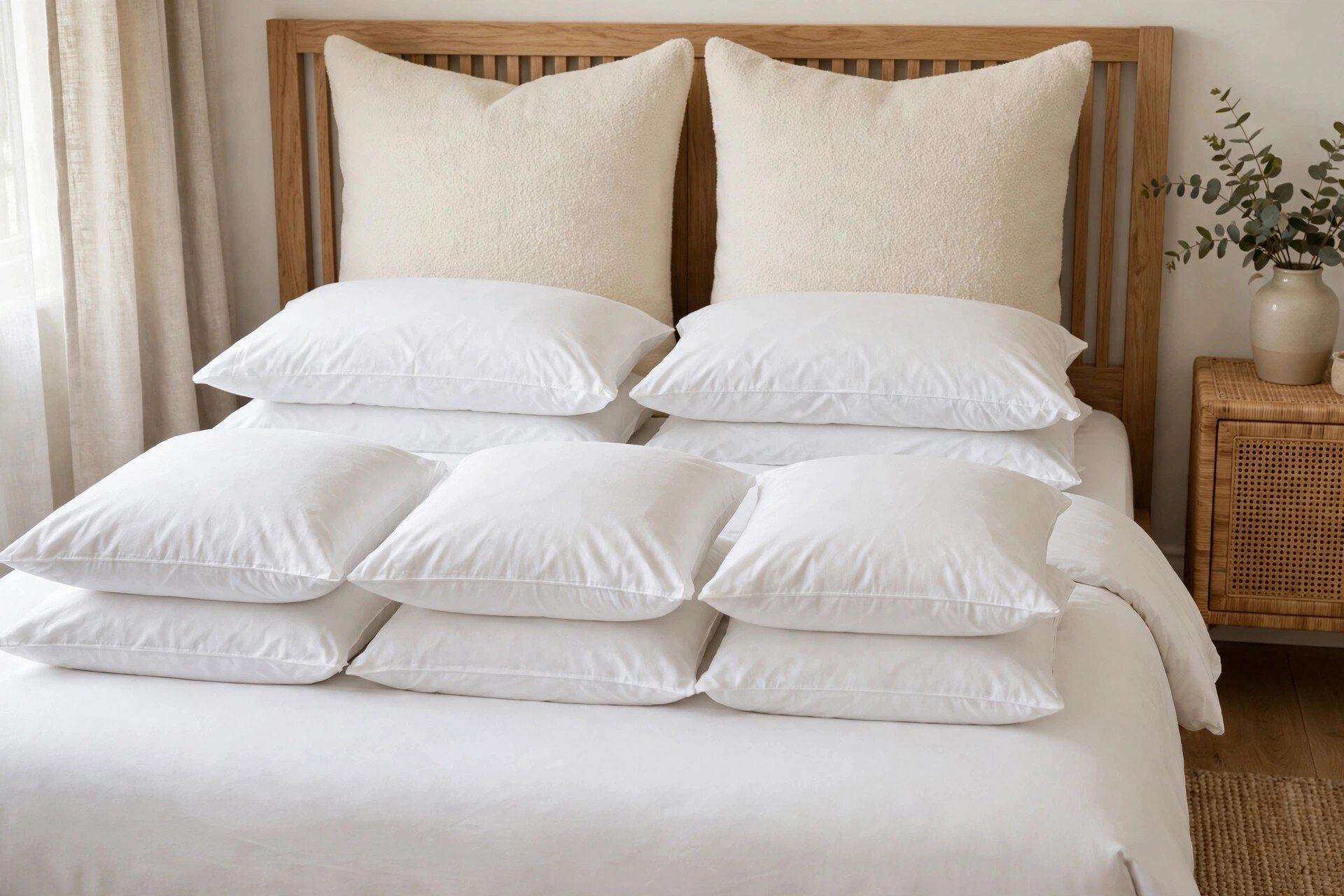
A hotel bed stands its pillows up in ranks, and the trick costs little. Two sleeping pillows in front, two larger cushions behind them, standing tall against the headboard, give a spare bed instant height and order.
Keep every pillow cover white or cream within this room’s plan. Mixed colors and prints on pillows are where a small luxury budget leaks away, because each new print asks for another piece to match it.
If the pillow share must stay tiny, borrow the standing pair from your own bed for guest nights. Guests get the tall, dressed look, and the $300 stays pointed at things that stay in the room.
Smooth each case and set the pairs square. Crooked pillows undo the whole hotel signal in one glance.
3. Hang One Large Calm Picture Over the Bed
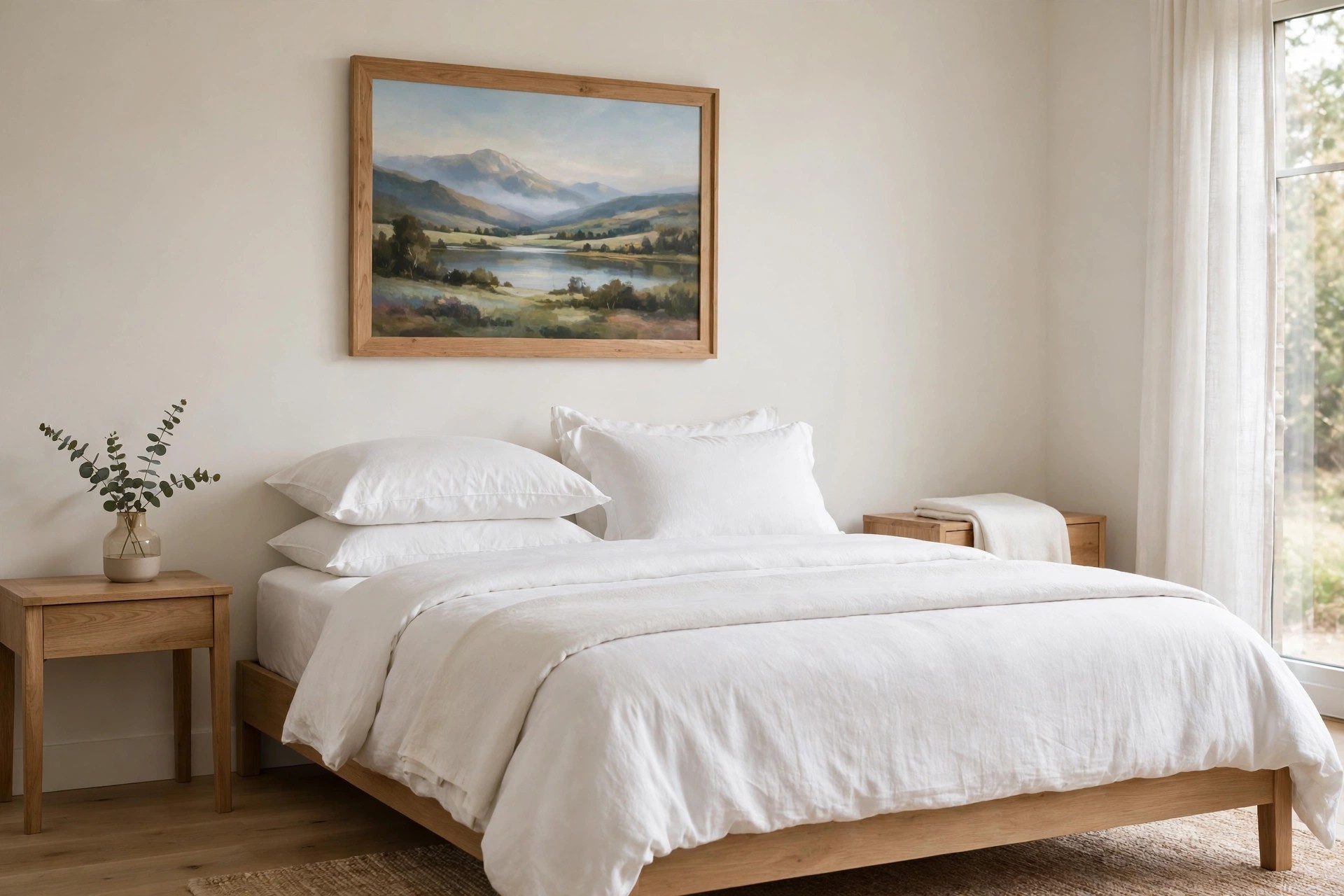
One large picture reads richer than six small ones. A single framed landscape, abstract wash, or botanical print over the bed, wider than the pillows, gives the room a composed center that guests feel on entry.
Give wall art a modest share, around $30 of the $300, and spend it on size and frame rather than on a famous name. A plain frame in wood or black keeps the picture calm and the room grounded.
The fuller run of wall art ideas for a guest bedroom that feels like a hotel shows how hotels use scale on guest room walls. This room needs only the one strong piece, hung a hand’s width above the headboard.
Step to the door and squint. One clear picture should hold the wall alone, with no urge to add more.
4. Match the Two Bedside Lamps as a Pair
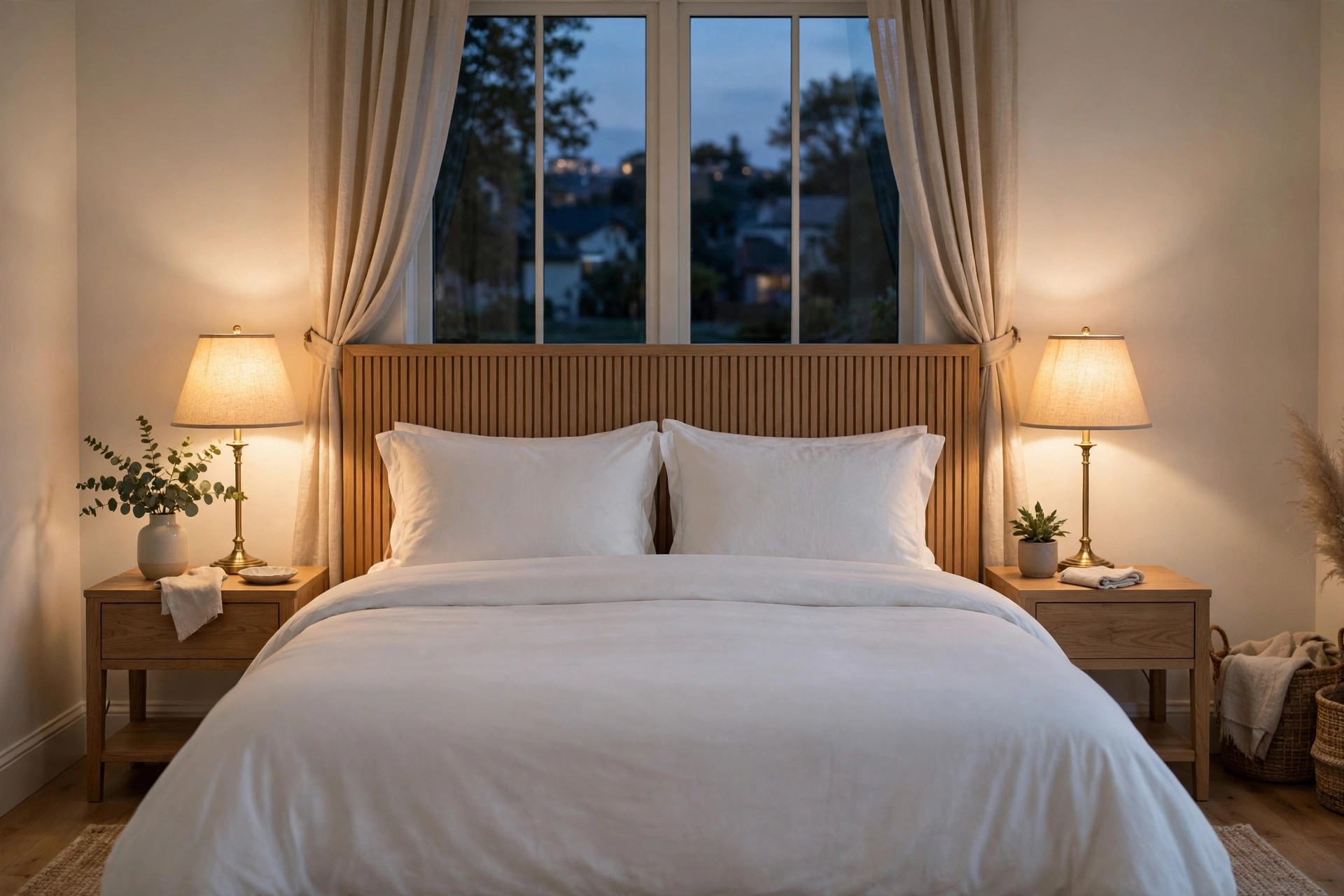
A matched pair of lamps is a quiet luxury signal. Two of the same base, the same shade, and the same warm light tell a guest the room was planned, while odd lamps tell them it was assembled.
Set the lamp share near $50 of the $300 for the pair, and look secondhand first. Guest room lamps live gentle lives, and a sound used pair in a plain shape often looks richer than a flimsy new one.
Place each lamp at the same height and the same distance from the bed. Small symmetry at the bedside is one of the cheapest forms of order a spare room can buy.
Switch both lamps on at dusk and compare them from the bed. Matched light matters as much as matched looks.
5. Hang Curtains High, Wide, and Down to the Floor
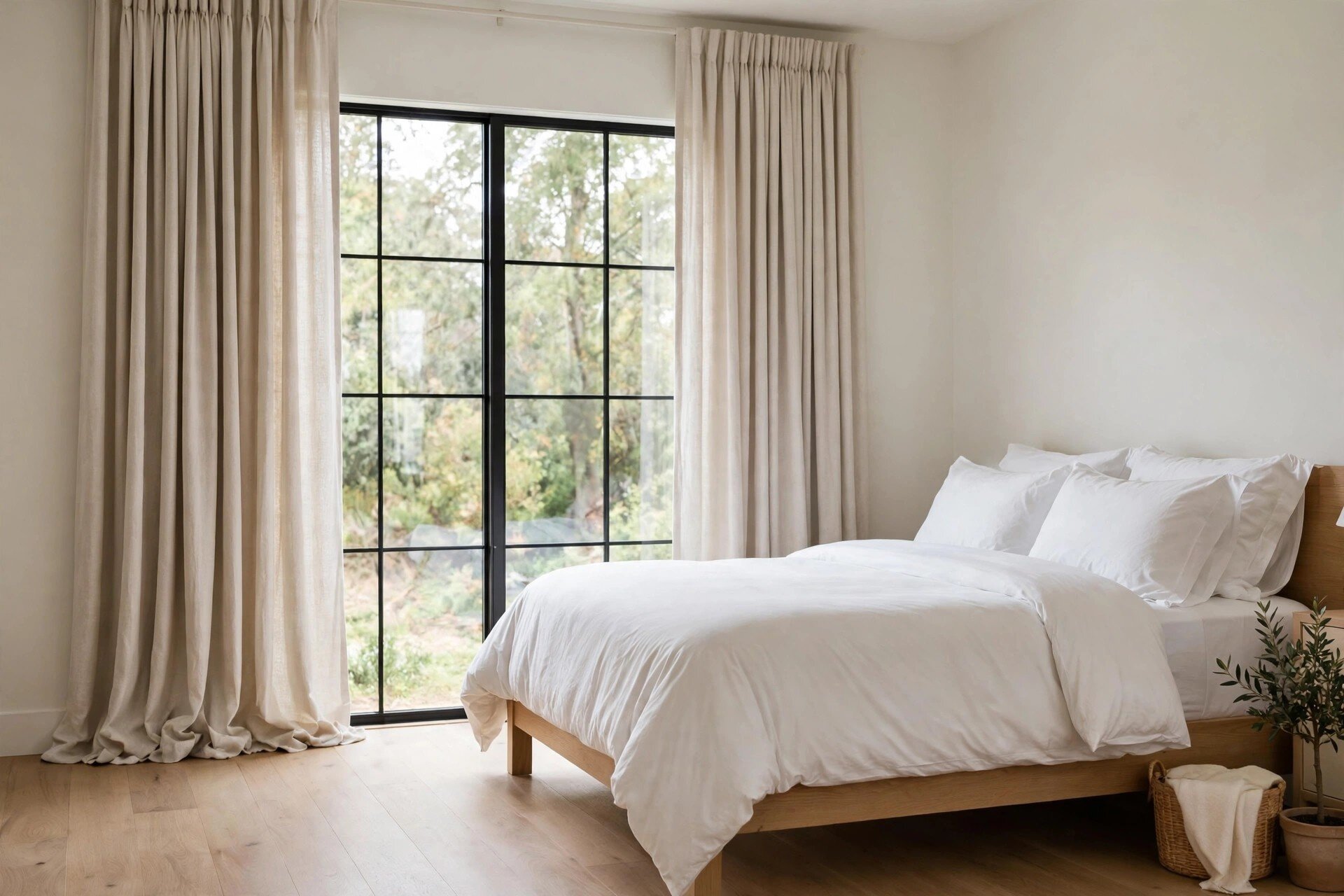
Curtains hung just above the frame make a guest room look apologetic. The same cloth hung high near the ceiling, wide past the glass, and long to the floor makes the window read grand and the room taller.
This is a placement upgrade before it is a purchase. If the room already owns plain curtains, rehanging them well costs a share of almost nothing from the $300 and pays back every single day.
When new cloth is needed, keep it plain, heavy enough to fall straight, and in the room’s quiet color. Lined or thick fabric hangs in the smooth folds that guests read as richness.
Open and close the curtains twice. They should glide, clear the glass fully, and land in even folds each time.
6. Set a Tray With Water on the Dresser or Bed
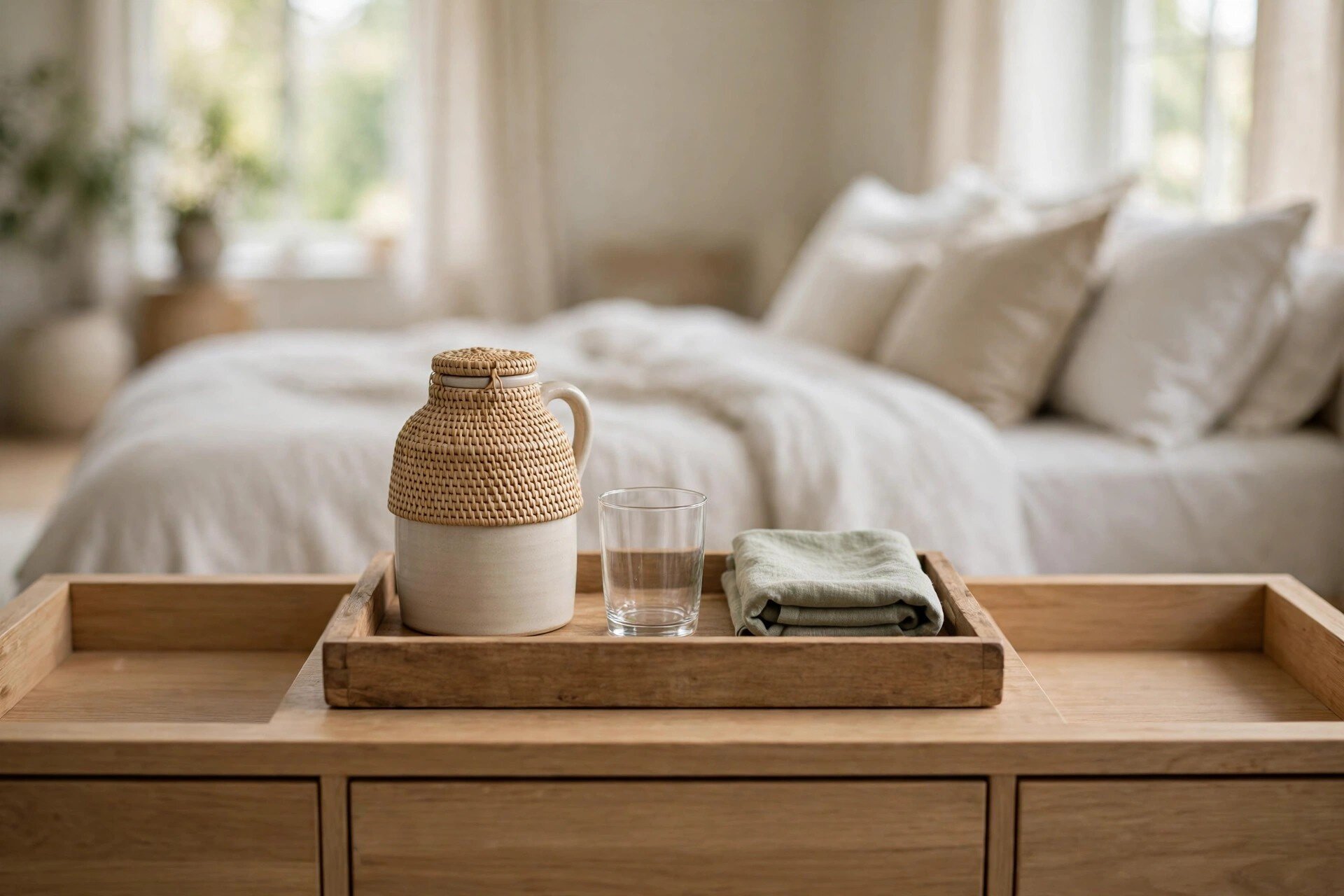
A tray gathers small kindnesses into one rich looking moment. A covered jug or bottle of water, a clean glass, and a folded cloth on a plain tray tell a guest they were expected, not fitted in.
Keep the tray share small, around $15 of the $300 if the tray itself is new to the room. Most homes already own a tray doing lesser work in a kitchen cupboard, and borrowing it costs nothing.
Place the tray where a guest sees it on entry, then leave the rest of that surface bare. The tray reads as luxury only when clear space around it proves it was placed on purpose.
Refill the water on guest day itself. Fresh water is the part of this idea guests actually remember.
7. Fold Towels and a Throw Like a Hotel Shelf
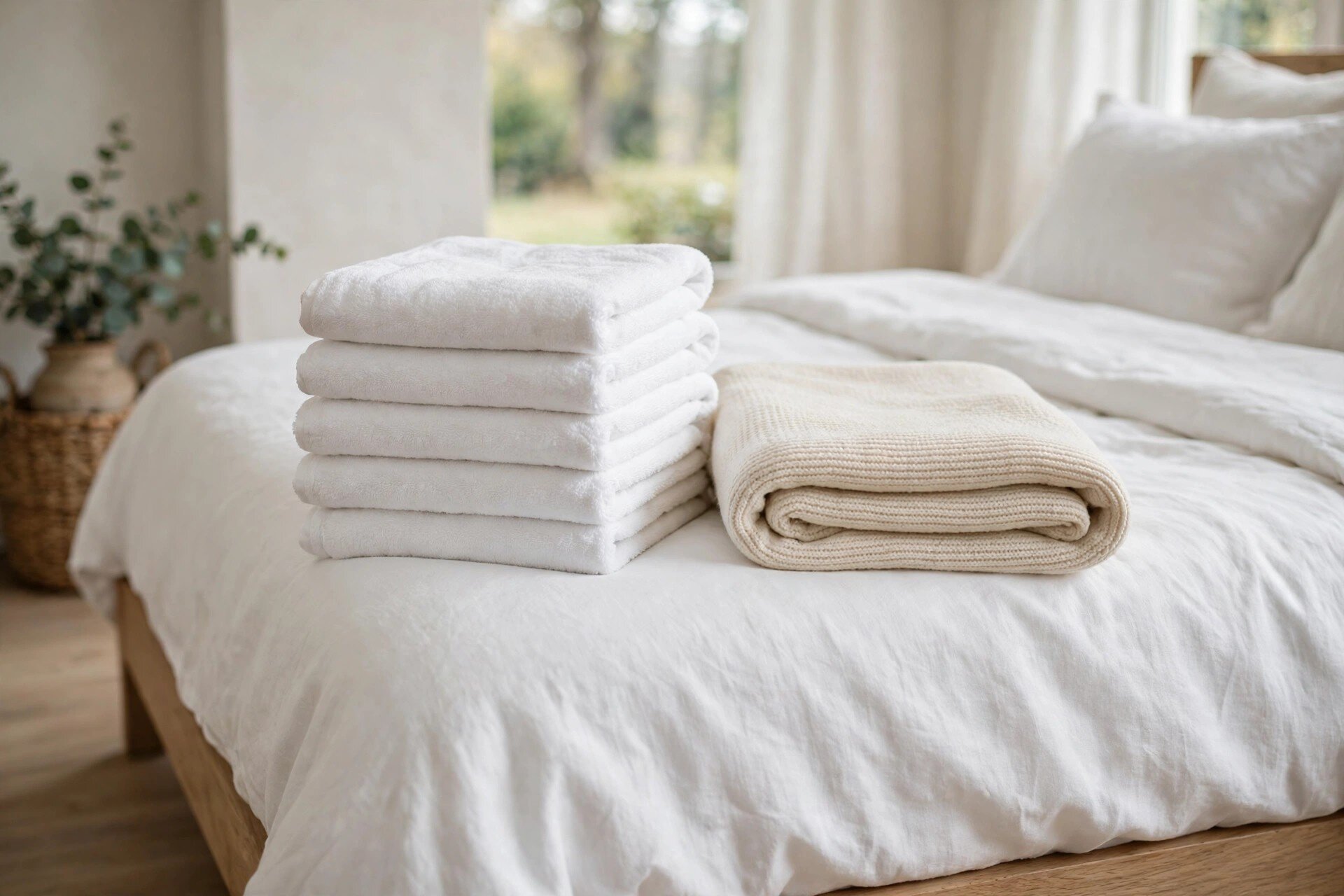
Presentation is free luxury. A stack of white towels folded in thirds, edges aligned, beside a throw folded to the same width, gives a guest the calm of a good hotel shelf without any new furniture.
If towels join the shopping list, keep them plain white and give them a share near $25 of the $300. White towels wash hot, match every guest, and never argue with the bed or the curtains.
Set the stack on the bed or the bench, not hidden in a cupboard. A guest who can see the towels owns them for the stay, and small ownership is a large part of comfort.
Align the folded edges with one finger as you set them down. That small straight edge is the whole effect.
8. Clear Every Surface Down to One or Two Things
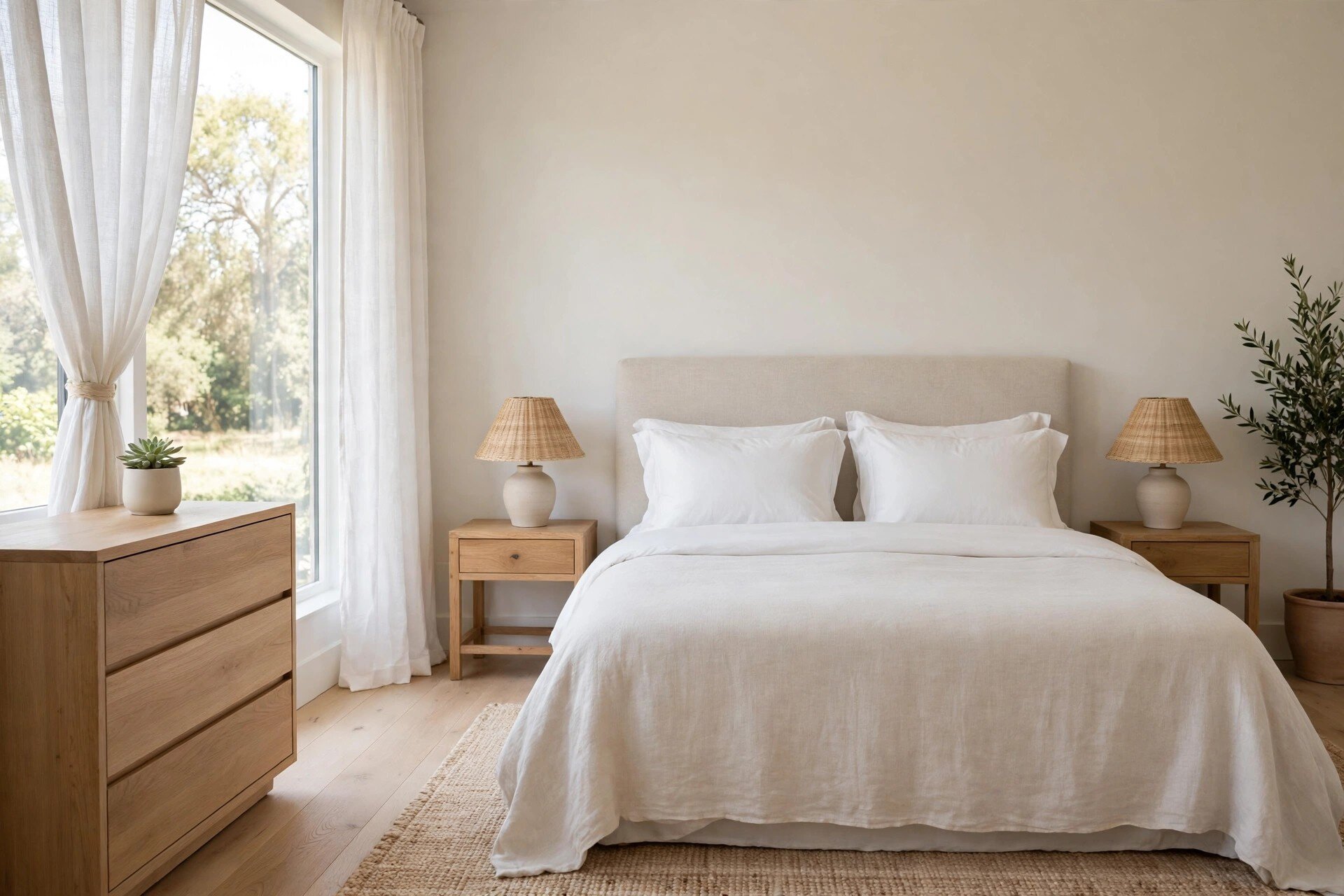
The richest rooms hold the least. Clear the dresser, the nightstands, and the chair down to one or two things each, and a modest guest room gains the calm that money usually claims the credit for.
This idea spends nothing from the $300, and it may be the strongest one here. Guests read clear surfaces as respect for their stay, and as space being held ready for their own things.
Move what you clear out of the room entirely, not into its wardrobe. The list of guest bedroom mistakes is blunt on this point: a guest who opens a stuffed wardrobe learns the room is storage wearing a costume.
Photograph each surface. If your eye lands on a third object, carry it out before guests arrive.
9. Limit the Room to Three Quiet Colors
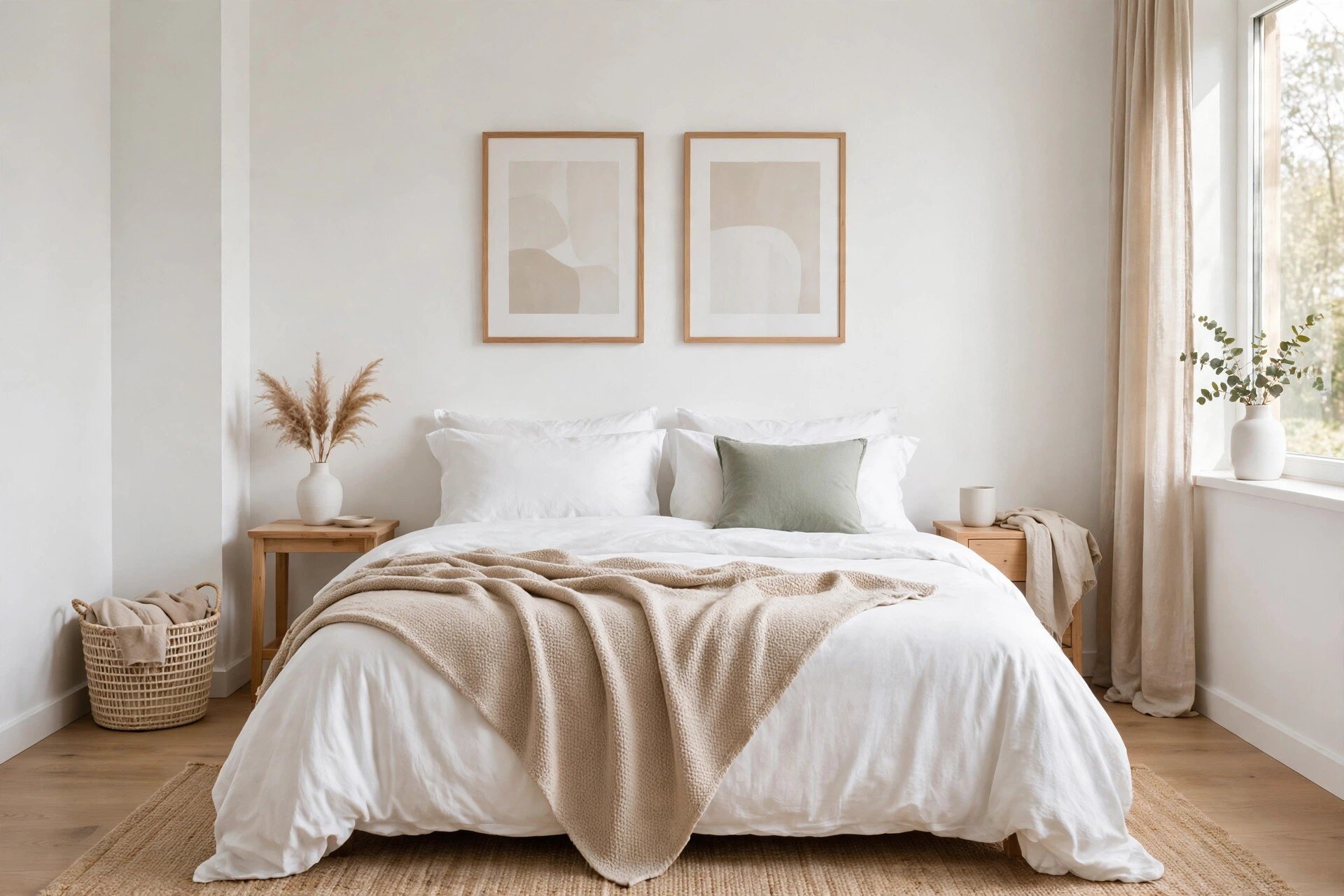
Luxury rooms repeat a short color list until it feels calm. Choose three: white, one warm neutral, and one soft accent. Then let every textile and picture in the room answer to that list only.
The calm neutral rooms among the beige bedroom ideas for a guest room show how a tight palette holds a guest room together. This room adds the discipline of a budget, since a short list stops impulse buys cold.
When a tempting piece breaks the palette, the answer is no, however good the bargain looks. A kept palette protects both the room’s calm and the $300 total at the same time.
Name your three colors out loud in the doorway. Any piece you cannot file under them leaves the room.
10. Add a Rug That Reaches Past the Bed Sides
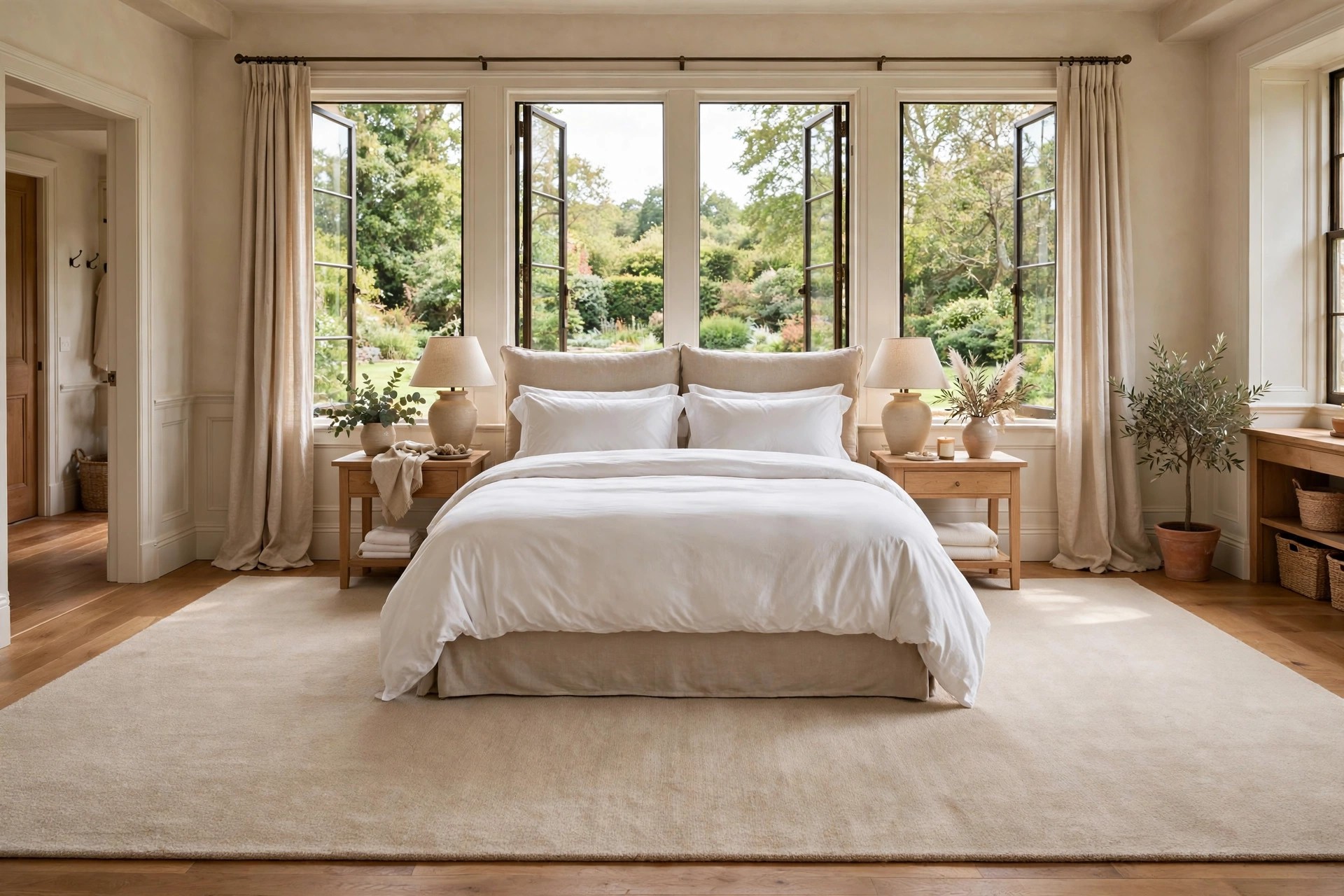
A rug that is too small makes a room look rationed. A rug running under the bed and out on both sides, wide enough for bare feet at the edge, gives the bed a grounded, generous base.
Give the rug a share near $50 of the $300, and shop flat woven or low pile in one of the room’s three colors. Under a bed, texture and reach matter far more than pattern or pile.
If the total is already spoken for, move a sound rug in from a quieter room for guest season. The guest bed deserves the best floor in the house while it is hosting.
Step out of the bed on both sides in the dark. Both feet should land on rug, not on cold floor.
11. Make the Headboard Moment Taller
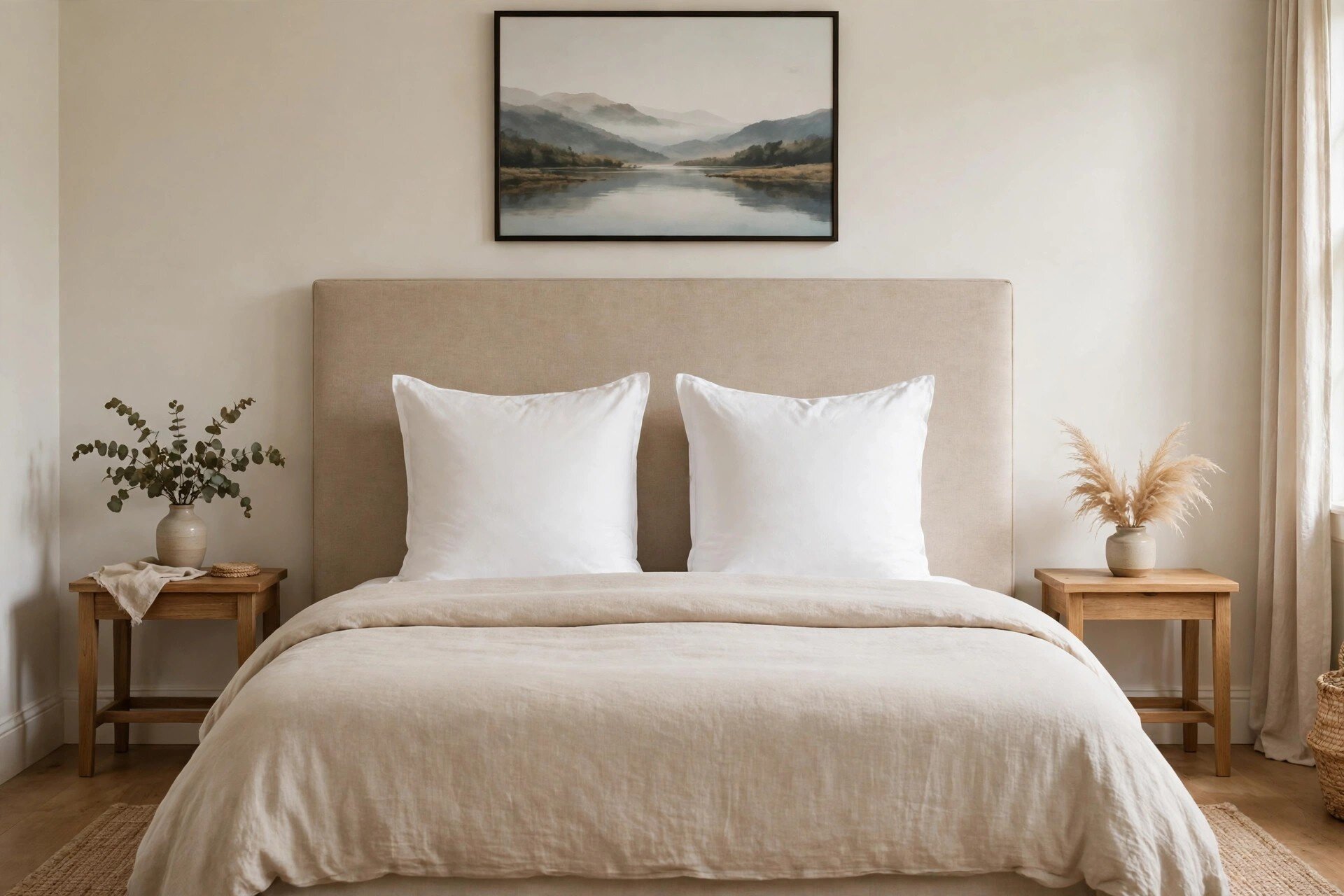
A low, plain headboard makes even good bedding look flat. Height behind the pillows is a hotel cue: a taller panel, a wall hung padded piece, or tall standing cushions give the bed a backed, settled feel.
Keep this share lean, around $30 of the $300, by working with cloth and foam over board rather than a new furniture piece. Covered plainly in the room’s neutral, it reads as design, not as a repair.
Stand the sleeping pillows against the new height and check the picture above it. The bed wall should climb in calm steps: pillows, headboard height, then the picture, each a little higher.
View the bed wall from the doorway at night. A tall, lit bed wall is the room’s best first impression.
12. Use One Clock or Mirror as the Room’s Shine
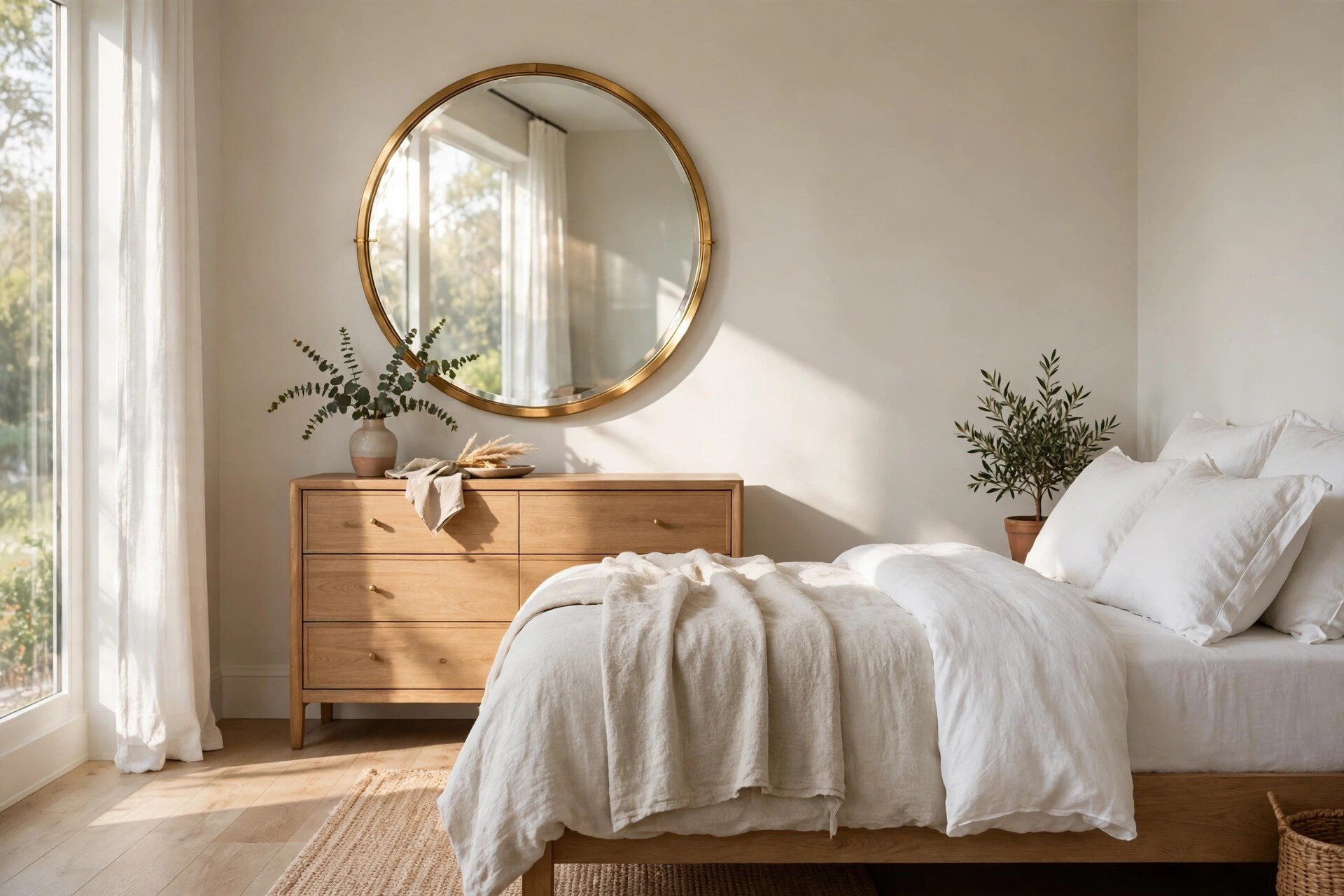
A single piece with a clean frame gives a calm room its shine. One framed mirror over the dresser, or one large plain clock, catches light and gives guests a practical piece they will use daily.
The oversized clock wall decor ideas for guest bedrooms show how much presence one big round face can carry on a guest room wall. Keep this room to one such piece, whichever of the two the room lacks more.
Give it a share near $20 of the $300, secondhand where you can. A sound frame and a clean face matter; age and origin stories add nothing a guest can use.
Hang the piece where it catches morning light, not lamp glare. Shine should greet a guest, not dazzle them.
13. Layer Light in Three Low Places
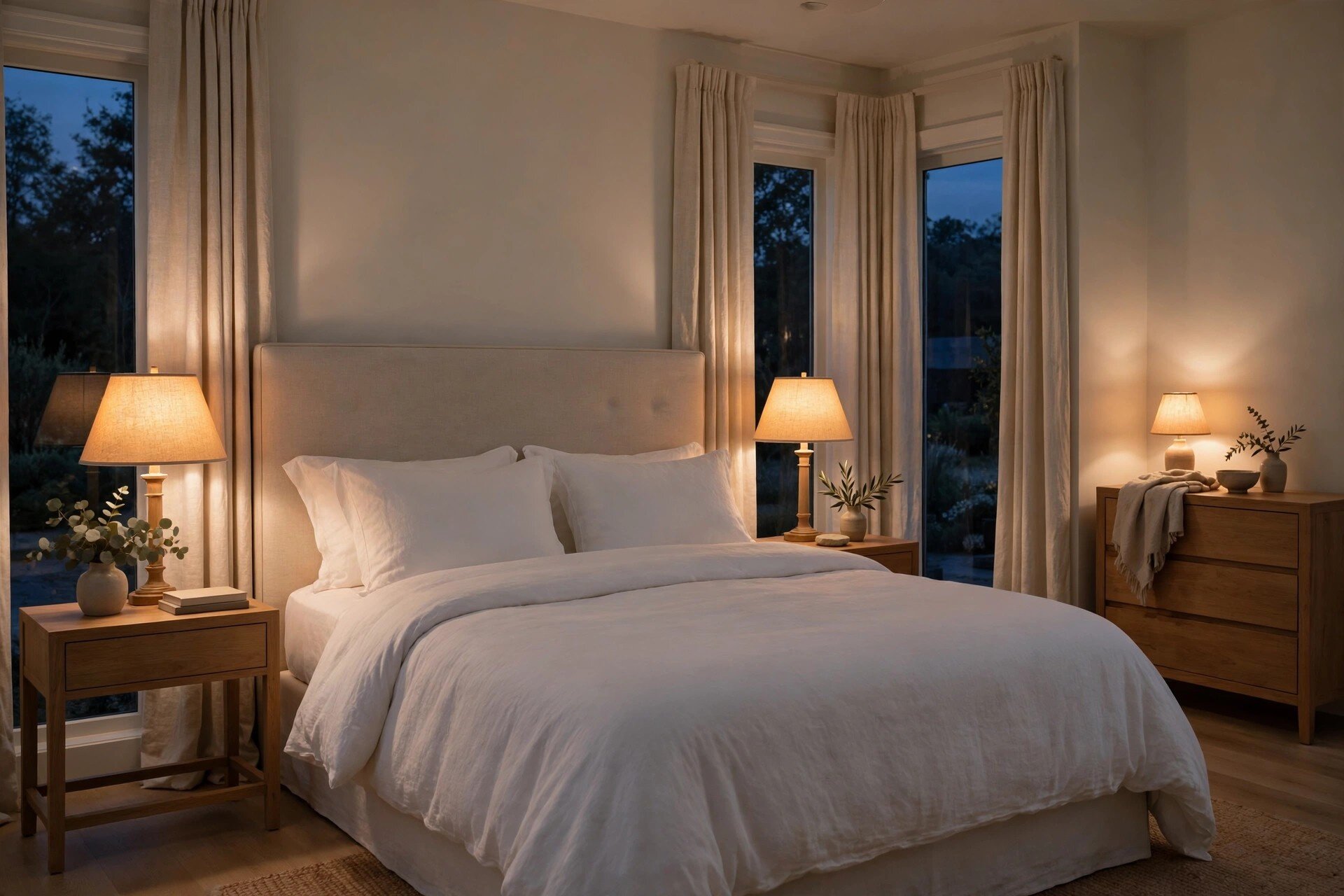
One ceiling light flattens a room and kills the hotel feel. Low light in three places, the two bedside lamps and one more at the dresser or chair, wraps the room in the glow guests relax into.
This layer often costs nothing beyond a lamp moved from another room. Borrow the third light before buying one, since the $300 keeps its power only when each share is questioned once.
Warm bulbs in all three places, matched in tone. A single cold bulb in one corner will argue with the others all evening, and guests feel the argument without knowing its cause.
Turn off the ceiling light for the final check. The room should hold its welcome on low light alone.
14. Finish the Door View First
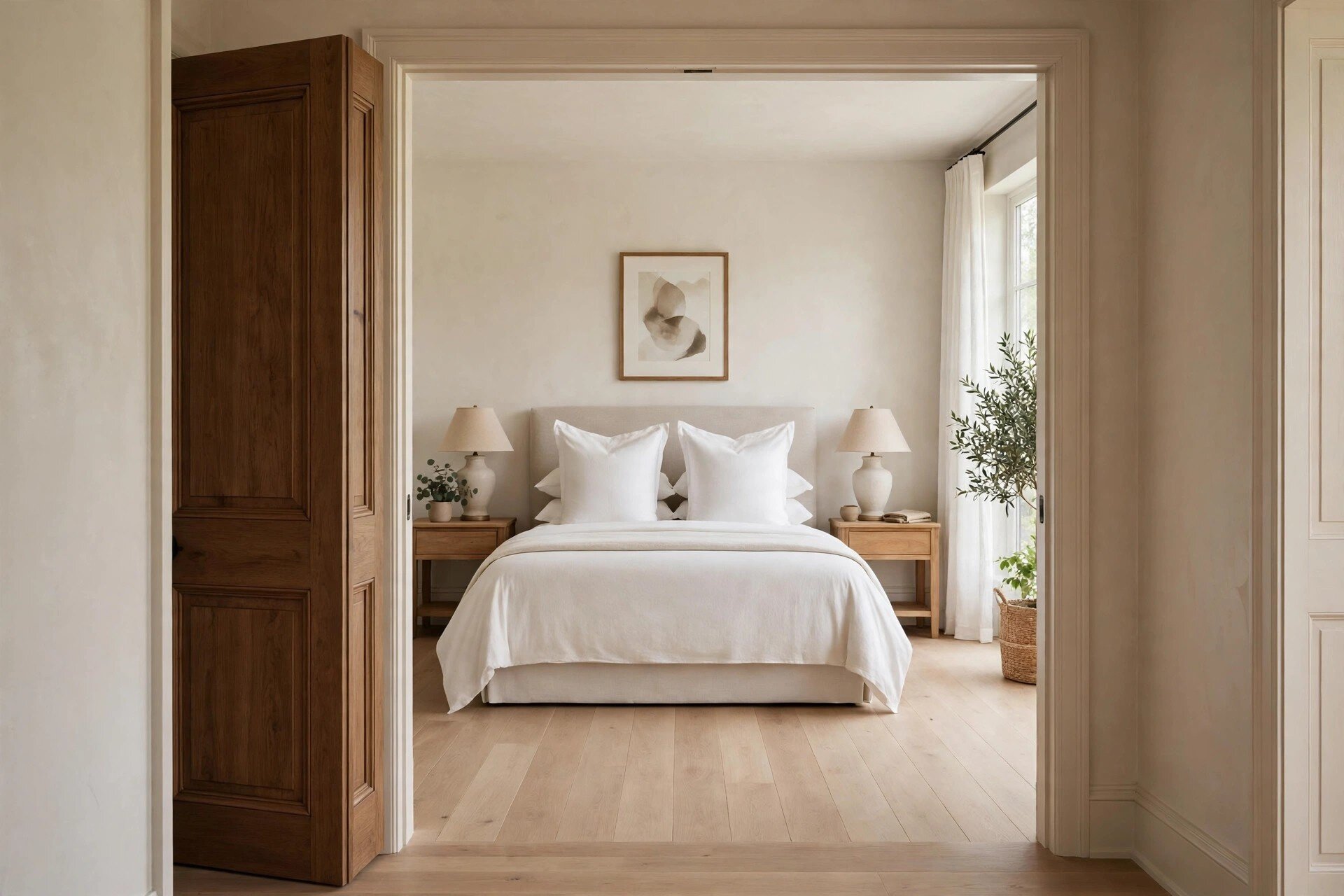
Guests judge the room in the first three seconds, from the door. Spend your last effort there: straight bed lines, tall pillows, picture centered, lamps matched, one tray placed, and clear floor from door to bed.
That order follows the same logic as how to set up a guest bedroom, where the room is checked as a guest meets it, not as the host tidied it. The door view is the honest test of the whole plan.
If a last small share remains, near $15 of the $300, spend it on the door view only: a plain hook inside the door, or a small dish for keys where a guest lands first.
Open the door halfway and look once, as a stranger. Fix the first thing your eye trips on, then stop.
15. Close the Budget With One Guest Only Extra
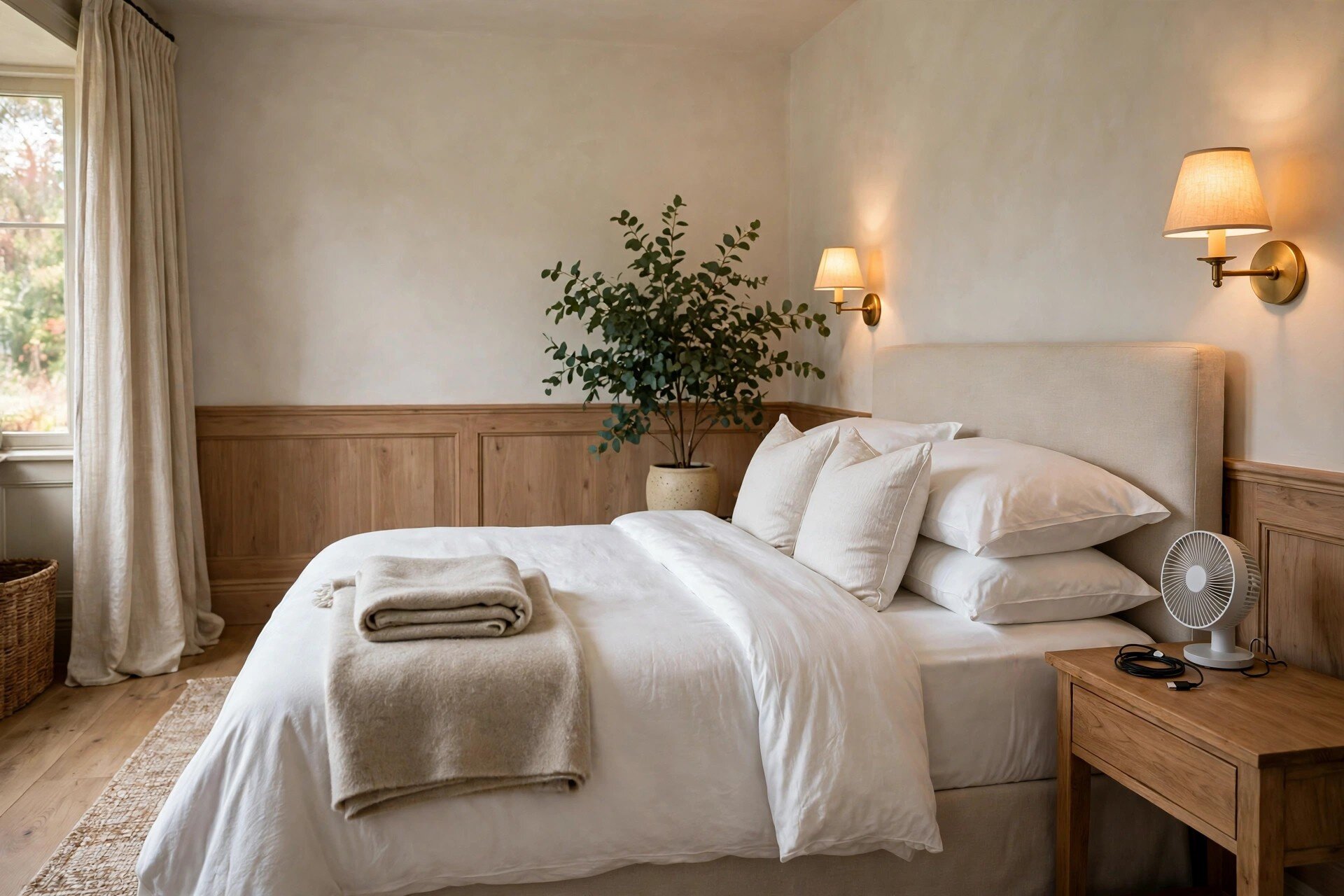
Keep the final slice of the $300 unspent until the room is built. Then buy exactly one guest only extra with it: spare phone charging by the bed, a small fan, or an extra blanket in reserve.
One chosen extra beats five scattered ones. It answers the fault your own test stay found in the room, which is the most honest shopping list a host can work from at any budget.
Write the final total on the note with your three colors and keep it in the drawer. A room that came in under $300, written down, stays the standard for every refresh after it.
Sleep in the finished room once before guests do. The extra you choose at breakfast is the right one.
The order is the whole method: bed first, then light, cloth, and presentation, with clear surfaces and a short color list costing nothing at all. Hold every share against the $300 total as you go, and stop when the room reads calm.
Save the finished room to the Guest Bedroom Ideas board, with your three colors and your final total in the note. That record turns one good budget into a standard the room can meet again.
Pin the door view, since that first sight of the room is what the whole budget was buying.


