

15 Christmas Window Ideas With Snow Glow and Fairy Lights
A window at Christmas works twice. From inside, it frames the room in warm light, and from the street, it glows like a welcome sign.
The mistake is to fill every pane at once. A crowded window blocks daylight, hides the view, and turns a pretty glow into clutter by the second week.
That is why this guide to christmas window ideas snow glow fairy lights keeps each idea to one pane, one light source, and one snowy note. The glass stays part of the room, not a wall of decor.
Pick three or four ideas, and leave at least one window in each room mostly clear. A clear pane lets the decorated ones shine, and it keeps the room bright by day.
If you like a full curtain of light, start with the frame first, as shown in these curtain fairy lights for windows. A neat curtain reads as one glow, not a tangle of cords.
This post contains affiliate links. If you buy through them, we may earn a small commission at no extra cost to you. See our Affiliate Disclosure.
1. A Fairy Light Frame Inside the Edge
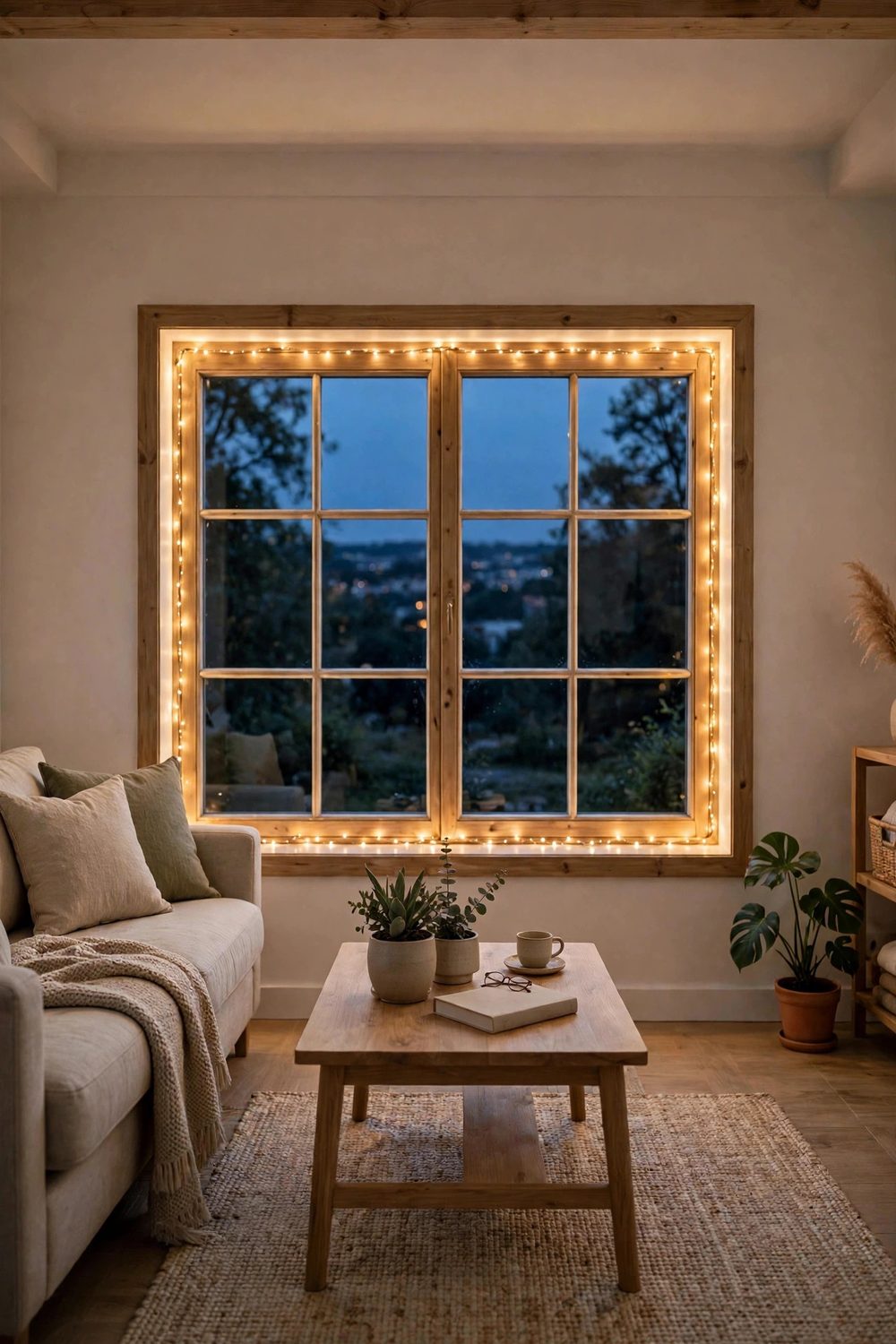
Run warm fairy lights around the inside edge of the window frame. The frame of light outlines the pane at night and makes the whole window read as one glowing picture.
Use a fine wire strand so it sits flat against the frame. Thick cords cast shadows on the glass and can snag when you open the window for air.
Fix the strand with small clear clips at the corners and the middle of each side. Clips keep the line straight, while tape can peel and let the strand droop.
Check the frame from the street after dark. The lights should form one even rectangle, with no dark gap at a corner where a clip slipped.
2. A Curtain of Lights Behind the Glass
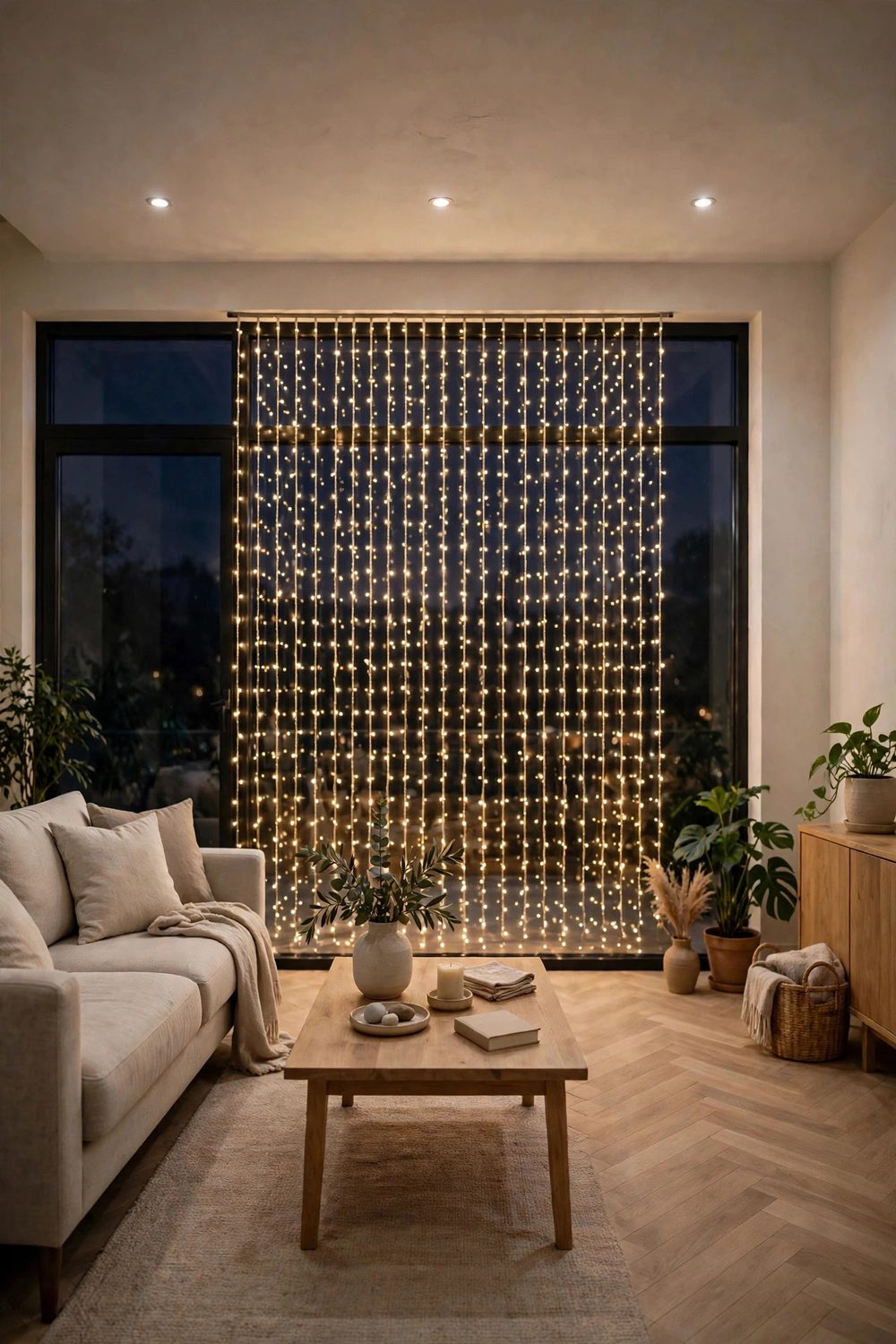
Hang a curtain of fairy lights just behind the glass, with strands falling straight down. From outside, the window shimmers, and from inside, the room gains a soft backdrop.
Hang the curtain from the curtain rod or a tension rod inside the frame. That keeps the strands clear of the glass, so they do not stick or buzz in wind.
Choose warm white for a snowy glow, and keep the strands evenly spaced. Bunched strands make bright patches, while even strands make a calm sheet of light.
Leave the bottom of the strands above the sill. Strands that pool on the sill tangle with plants and candles, and they look messy by day.
3. One Wreath in the Middle of the Window
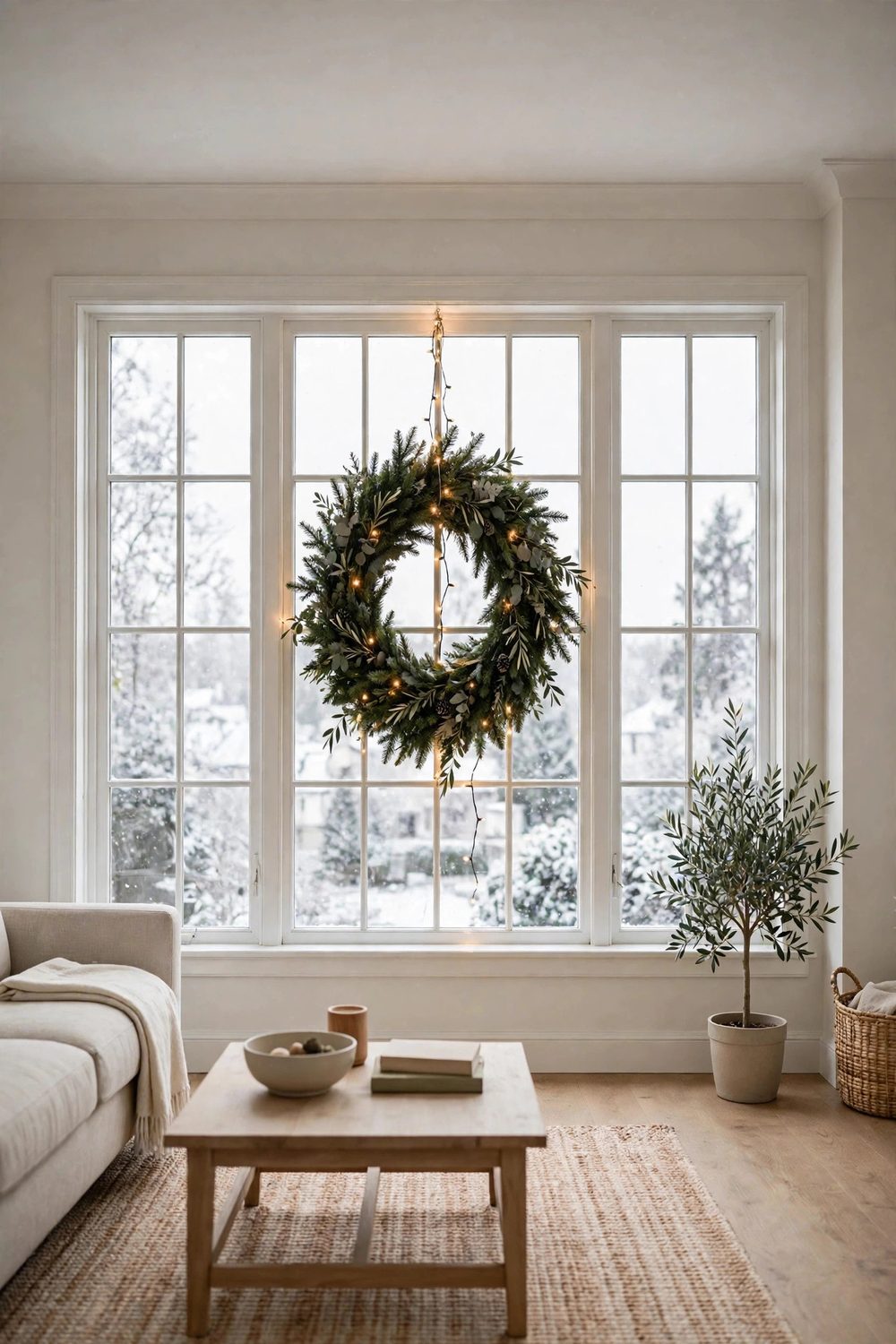
Hang one wreath in the center of a large window. The wreath gives the pane a focal point, and the glass behind it lets daylight show the greenery by day.
Use a suction hook rated for the wreath weight, and test it on clean glass first. A wreath that falls at night leaves a bare window and a dented sill.
Add a short strand of lights to the wreath itself, with the battery pack tucked behind the frame. The lit wreath glows after dark, when a plain wreath would vanish.
Keep the wreath smaller than half the pane width. A wreath that fills the whole window blocks the view and turns the glass into a wall.
4. Battery Candles Along the Sill
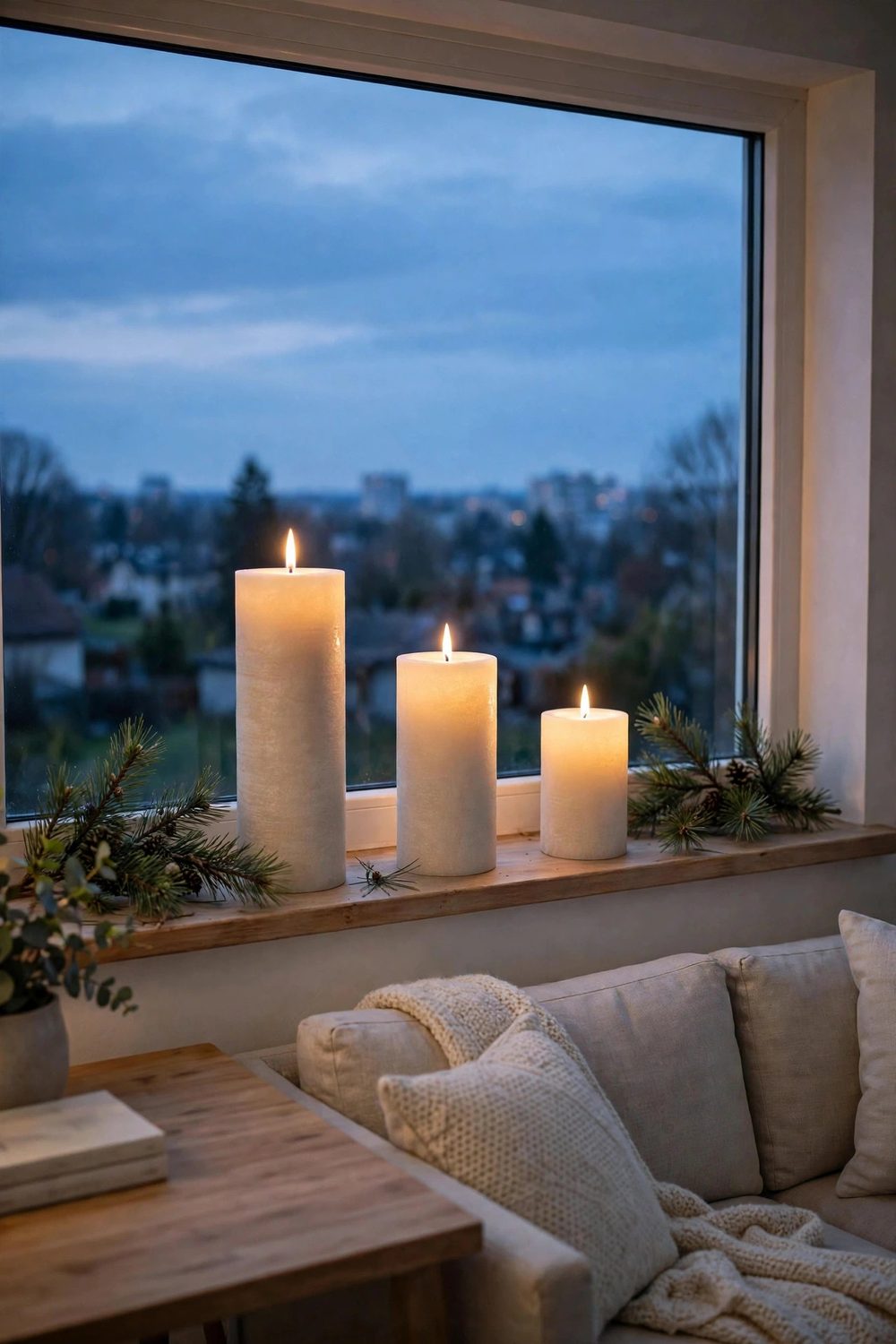
Line the sill with battery candles in three heights. The row of flames, real in look but cool to touch, gives the window a calm, old-style glow.
Group the candles in odd numbers, with the tallest at the back near the glass. Odd groups look natural, while a straight row of equal candles can look like a shop shelf.
Use candles with a timer so they switch on at dusk together. A timer saves a daily round of the house, and it keeps the glow steady each evening.
For sill-safe choices, see these battery window candles for the holidays. Battery candles sit well near curtains and greenery, where a real flame would need constant watch.
5. Snowflake Clings Over a Light Curtain
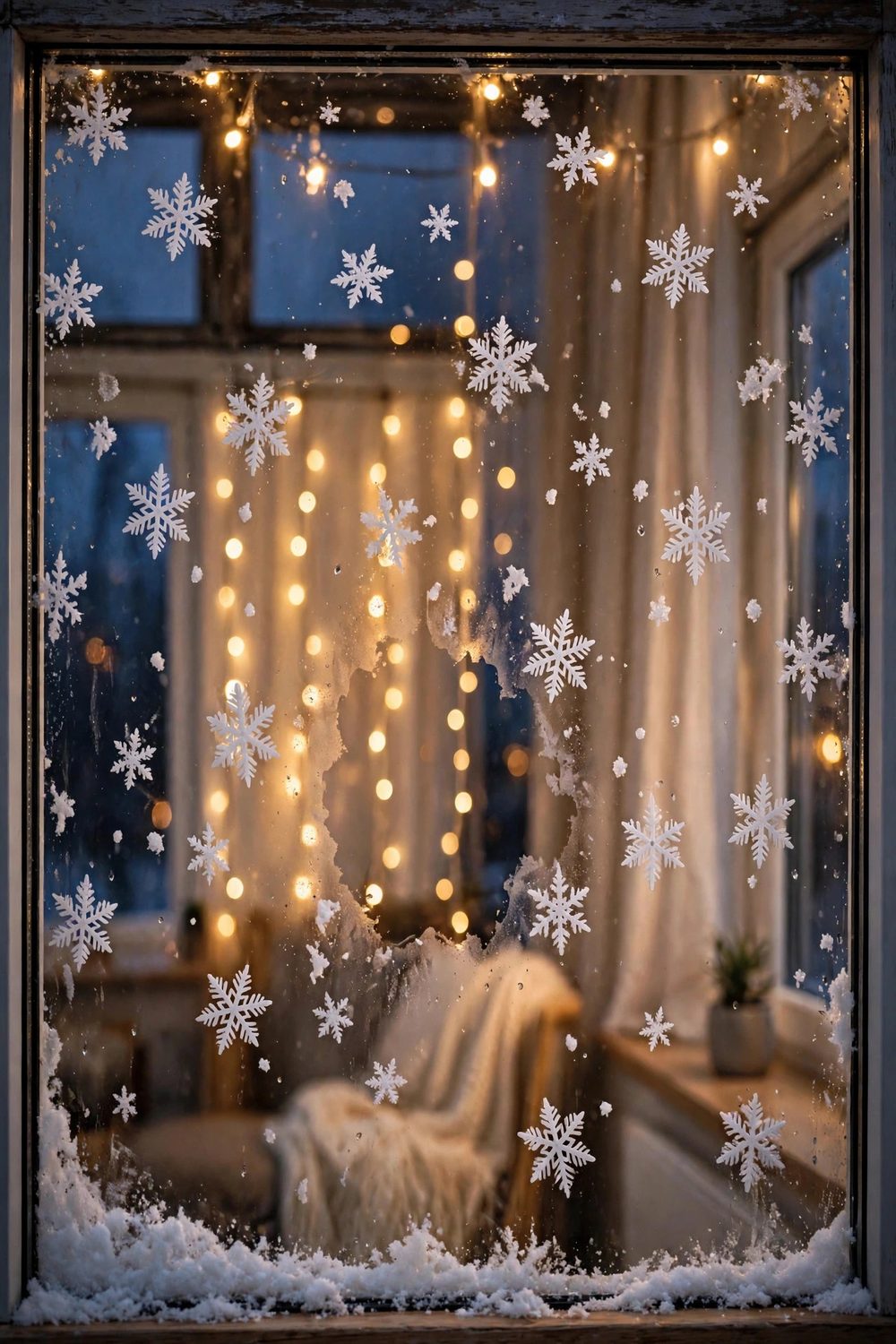
Press snowflake clings onto the glass, then hang fairy lights behind them. The clings catch the light, and the window reads as frosted glass with a glow behind it.
Scatter the clings in a loose pattern, with more near the corners where frost would gather. Even rows look printed, while a loose scatter looks like real snowfall.
Mix large and small snowflakes, and leave one clear patch in the middle. That clear patch keeps a view out, and it gives the eye a rest from the pattern.
Peel the clings off slowly in January and wash the glass. Clings left too long can stick hard, and a clean pane in January feels like a fresh start.
6. Frosted Corners With Snow Spray
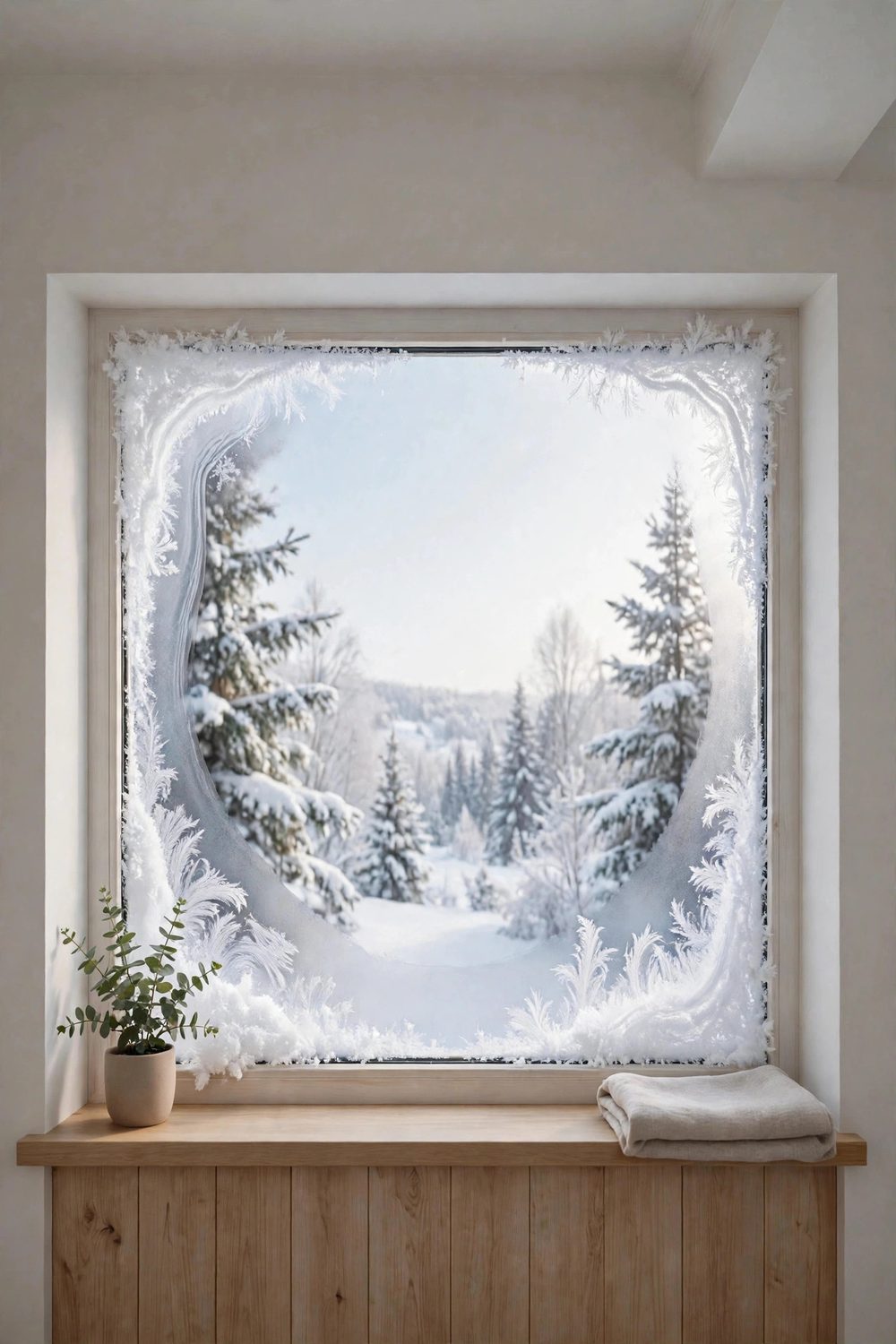
Frost the corners of the pane with snow spray, leaving the center clear. The frosted edge frames the view like a winter picture, without blocking daylight.
Spray in short bursts from a hand span away, and build the frost in thin layers. One heavy spray can drip, while thin layers give a soft, snowy edge.
Use a stencil or a torn paper edge for a wavy frost line. A straight sprayed edge looks harsh, while a soft wavy line looks like frost that grew there.
Test the spray on one small pane first, and check how it wipes off. Some sprays clean fast, while others need warm soapy water and a second wipe.
7. A Mini Village on the Sill
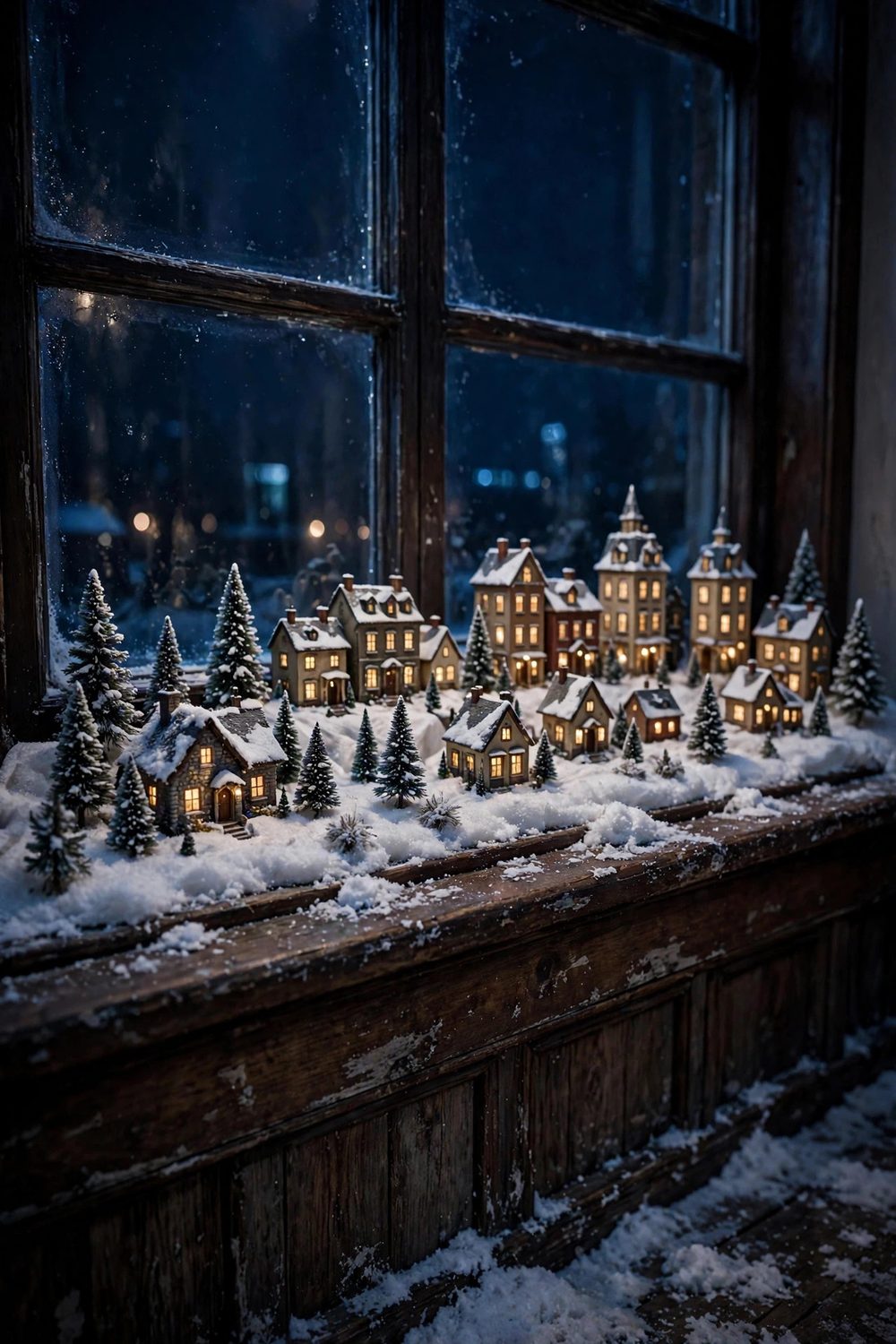
Build a small village on a deep sill with lit houses and tiny trees. The scene glows at night, and by day it reads as a quiet winter display, not a toy pile.
Start with a white runner or batting as snow, then place tall houses at the back and small ones at the front. That depth makes a short sill feel like a street.
Use battery tea lights inside the houses, and hide the packs behind the tallest house. Hidden packs keep the scene clean, while visible packs break the spell.
The same tray-and-scene care works on a table too, as in these Christmas coffee table ideas with a festive tray and candles. One contained scene beats a spread of small pieces every time.
8. Hanging Stars at Different Heights
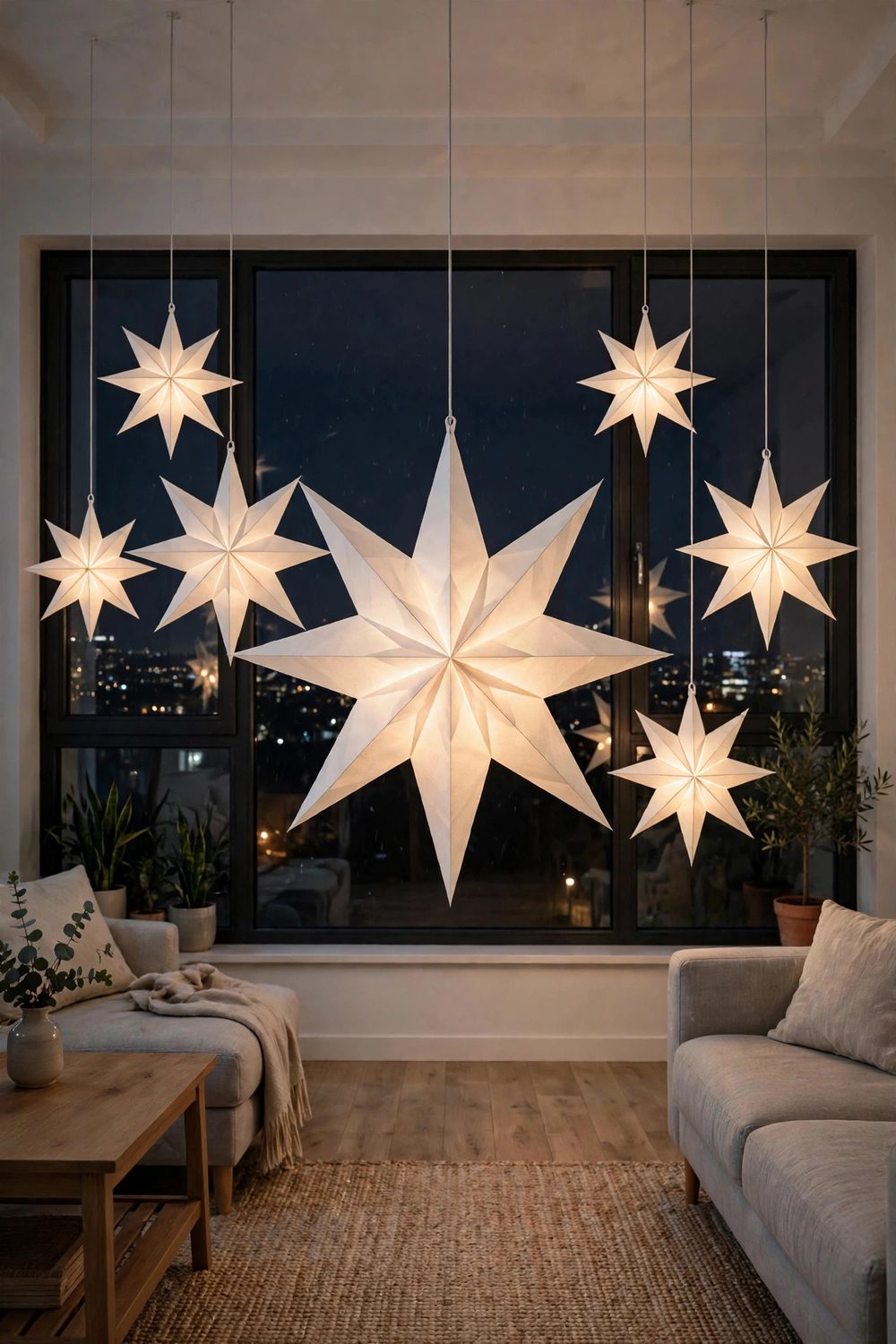
Hang paper stars from the top of the frame at different heights. The stars float in front of the glass, and each one glows softly when lit from within.
Use clear thread so the stars seem to hang in air. Dark cord draws lines across the glass, while clear thread all but vanishes in daylight.
Place the largest star in the middle and smaller ones to each side. That shape keeps the window balanced, even when the stars sway slightly in a draft.
Light each star with a small battery light, and set them on the same timer. Stars that switch on together look like a sky, while staggered starts look like a fault.
9. Icicle Lights Along the Top Edge
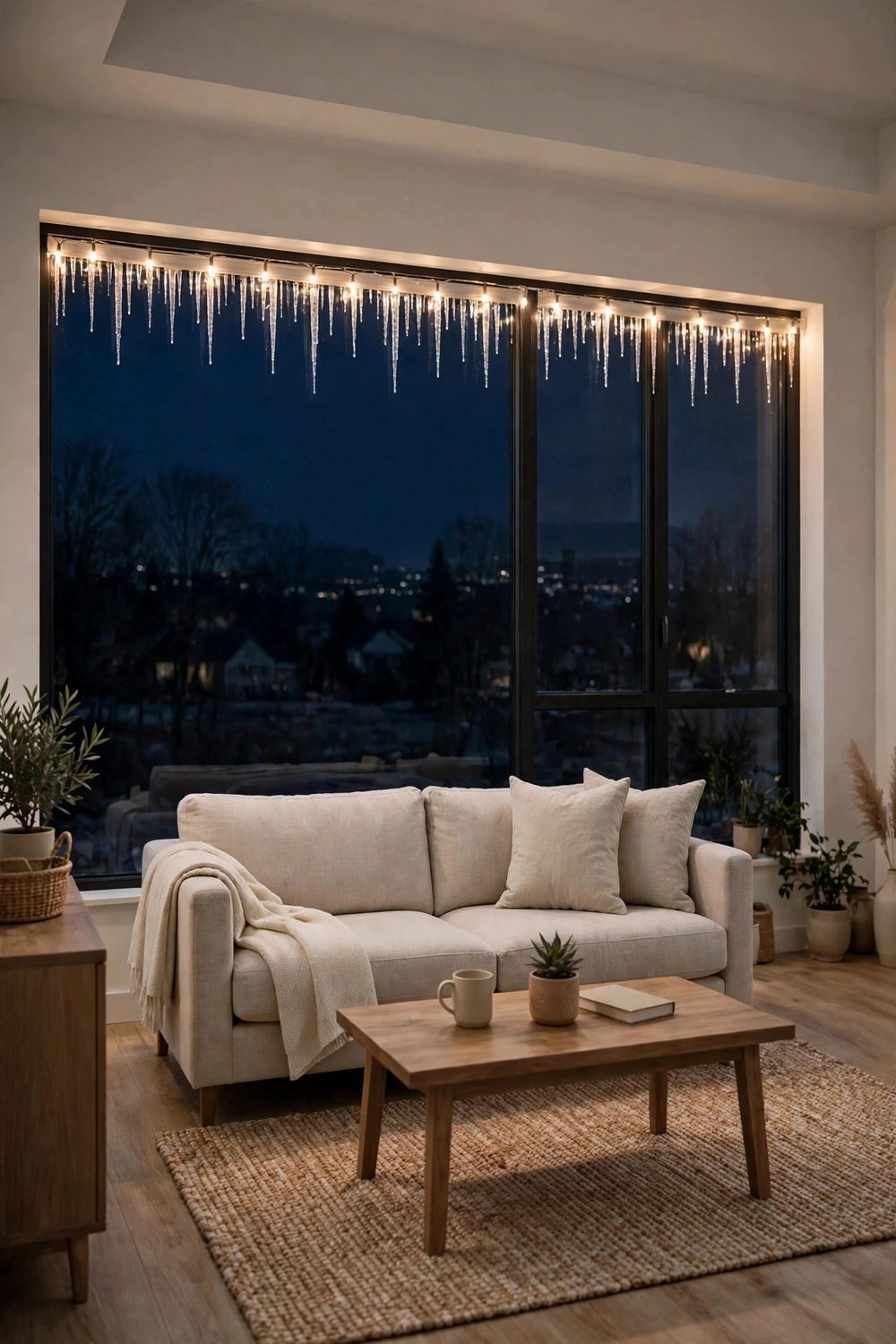
Hang icicle lights along the inside top edge of the window. The short drops read as frozen light, and they give a plain window a winter outline at once.
Keep the drops above the middle of the pane. Long drops that reach the sill block the view and can tangle with plants or candles below.
Choose warm white drops for a snow glow, and keep the cord hidden behind the frame top. A visible cord across the glass breaks the clean icicle line.
Check the drops from outside at night. They should fall in an even line, with no long gap where a strand slipped from its clip.
10. A Cascade of Paper Snowflakes
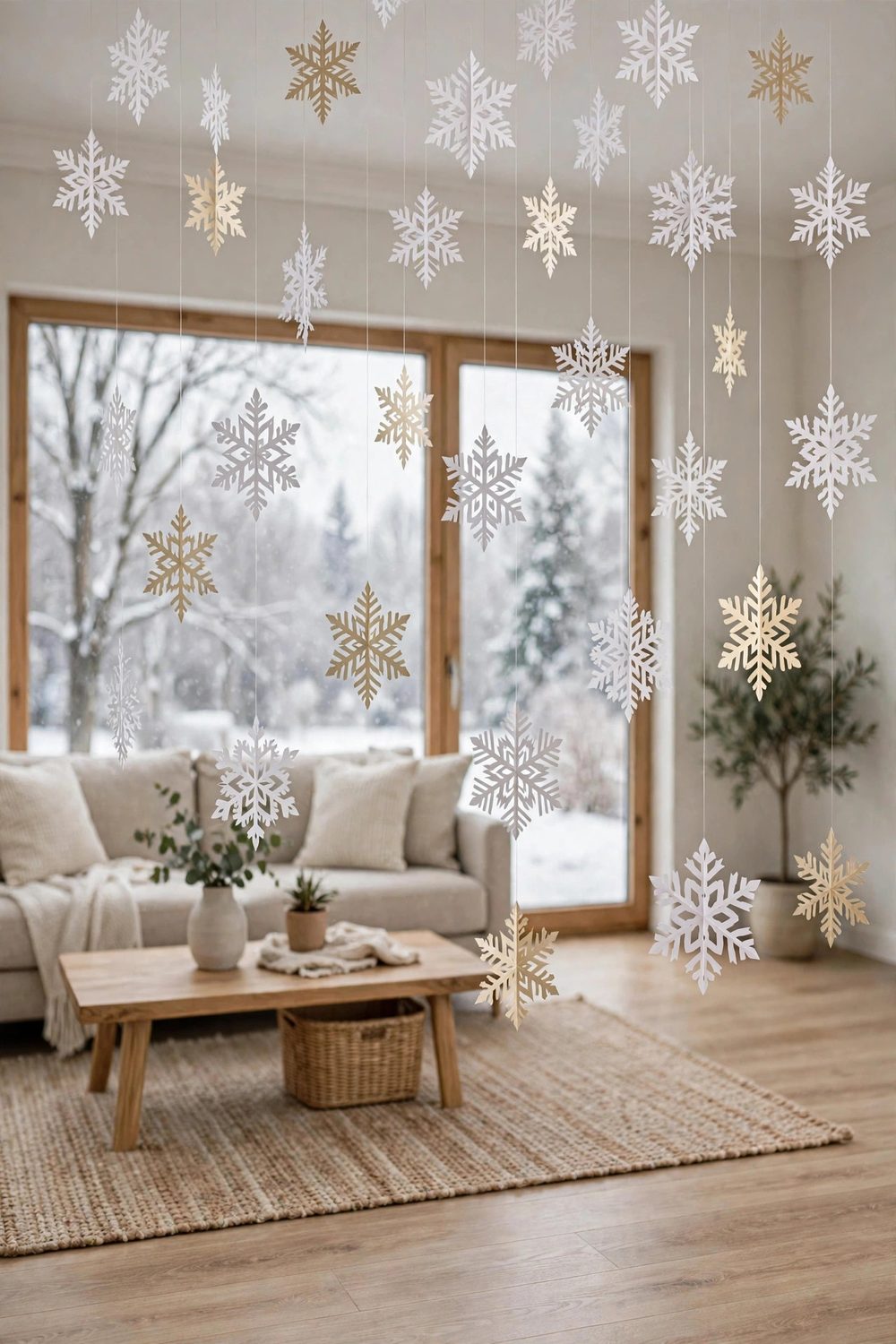
Hang paper snowflakes on threads from the curtain rod, at staggered lengths. The cascade looks like snow caught mid-fall, and it moves gently when the room air shifts.
Cut snowflakes in two or three sizes, and mix plain white with a few pale gold ones. One gold flake in five gives sparkle without turning the window gaudy.
Space the threads so no two flakes touch. Flakes that clump together read as a curtain, while spaced flakes read as falling snow.
Take the cascade down by gathering threads in bundles, not by pulling. Bundled threads store flat, and next year the flakes hang straight again.
11. A Greenery Window Box Outside
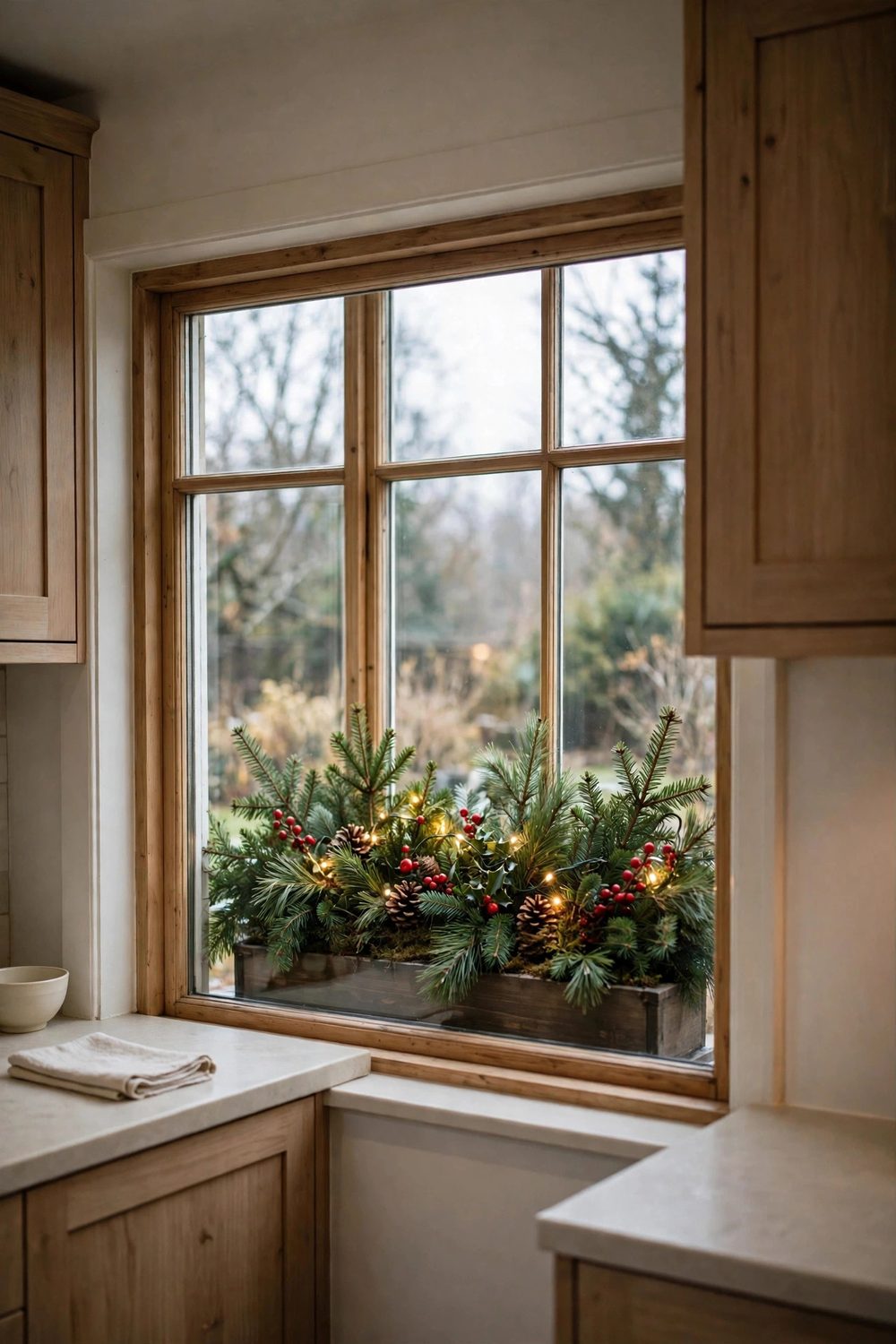
Fill the outside window box with evergreen sprigs, pinecones, and a few red berries. The box dresses the window from the street, and the greenery shows through the glass by day.
Pack the sprigs tight at the back and let a few trail over the front edge. A full box reads lush, while a thin box with gaps reads unfinished.
Add one short strand of outdoor lights woven through the sprigs. The lights make the box glow after dark, and they tie the window to the porch lights.
Kitchen windows suit this idea well, since the box is easy to reach for watering, as shown in these kitchen window decor ideas. A box you can tend stays green, while a high box dries out fast.
12. A Gift-Wrapped Pane With Ribbon
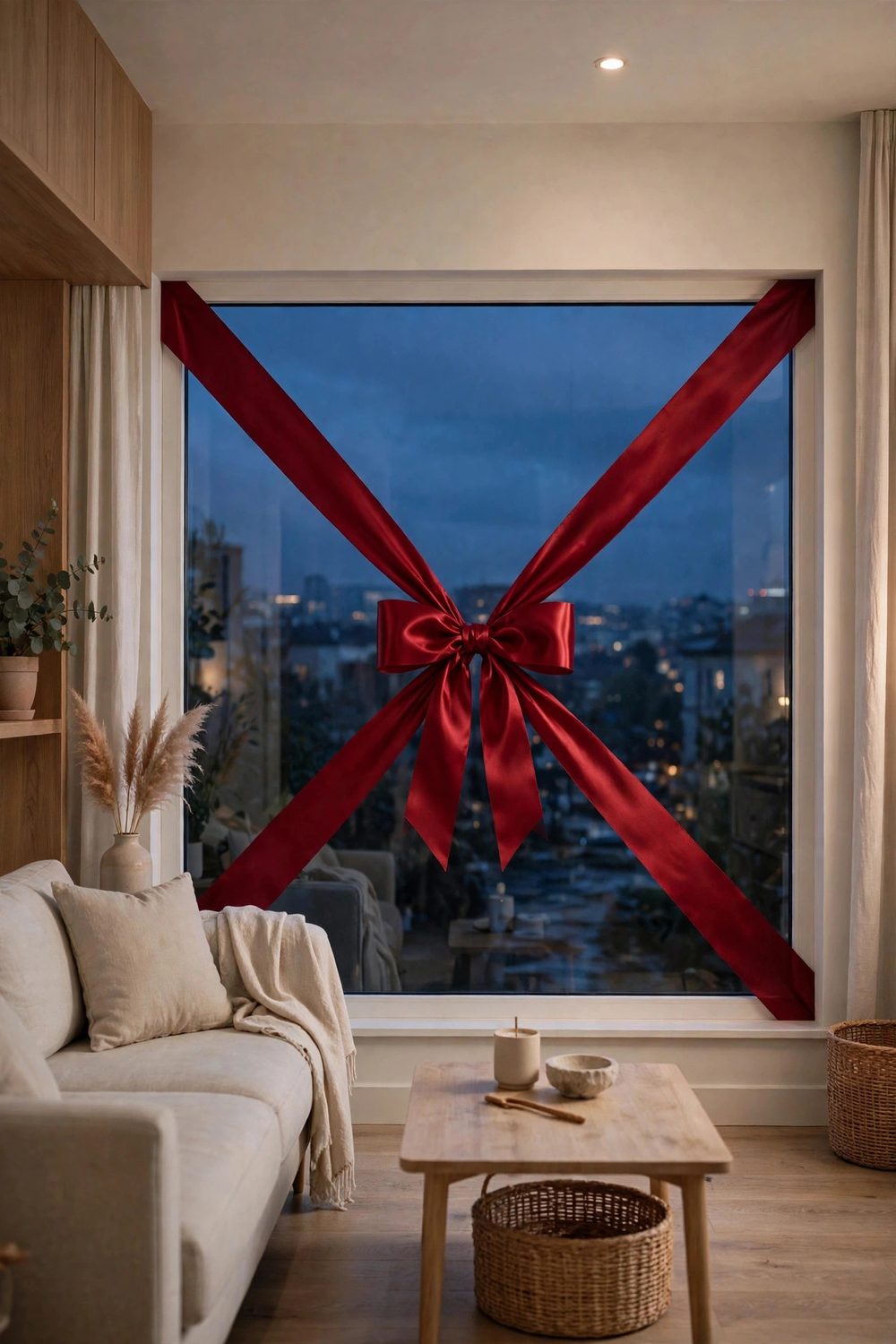
Cross wide ribbon over one pane like gift wrapping, with a bow at the center where the ribbons meet. The pane reads as a present, and it needs no other decor to work.
Use ribbon at least a hand span wide, so the cross reads from the street. Narrow ribbon can vanish against a large pane, while wide ribbon holds its shape.
Fix the ribbon at the frame edges, not on the glass middle. Frame fixings hold in damp air, while tape on glass can peel and let the bow sag.
Pick one ribbon color that matches the room, such as deep red or forest green. A single color keeps the gift look clean, while mixed ribbons turn it busy.
13. A Garland Swag Across the Top
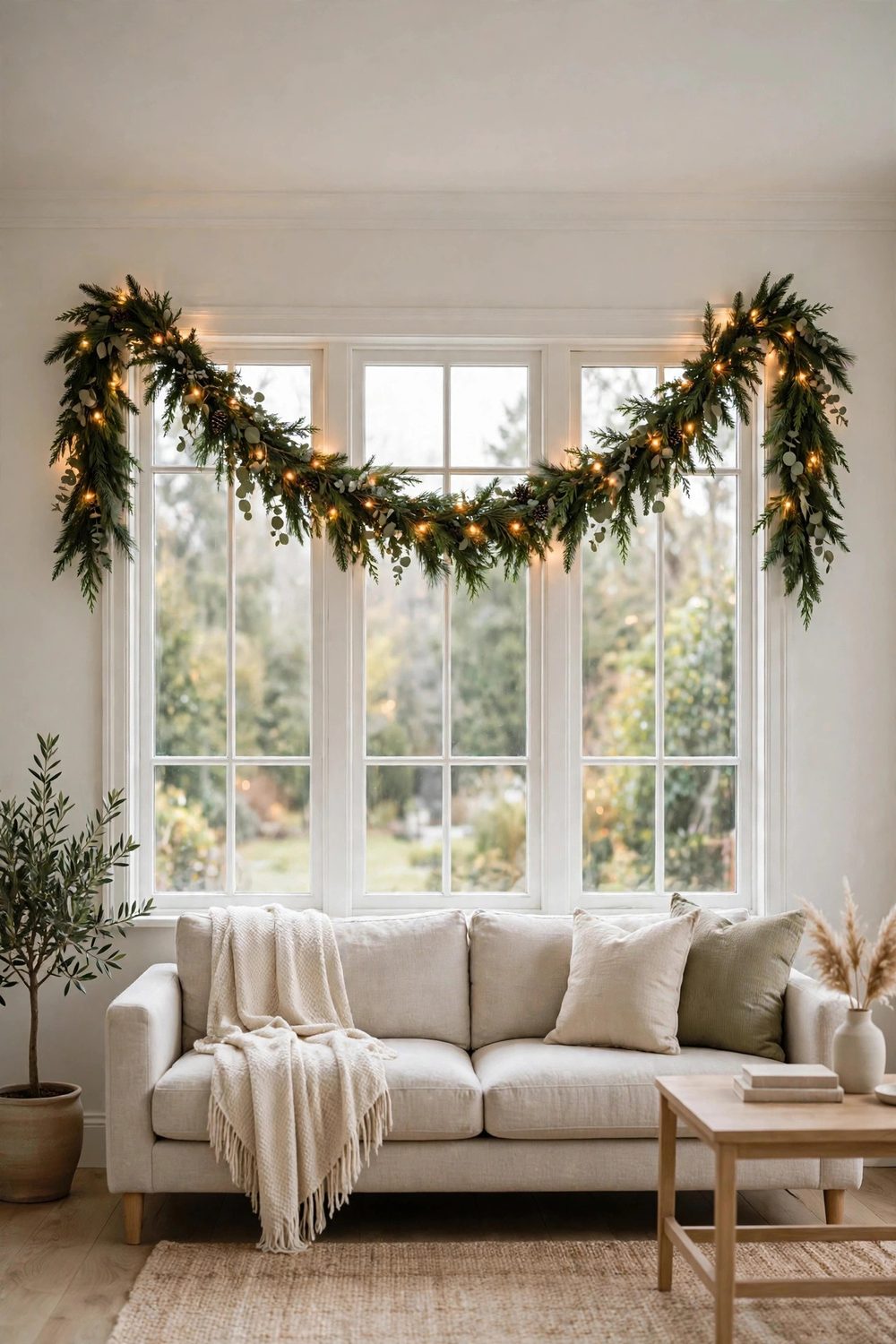
Drape a short garland swag across the top of the window frame, with one soft dip in the middle. The swag softens a hard frame and adds scent to the room.
Keep the swag short enough to clear the top of the pane by a hand span. A swag that hangs too low blocks light and cuts the window in half.
Weave a few fairy lights through the swag, with the battery pack hidden behind the frame end. The lit swag glows at night, while the greenery shows by day.
The same garland-and-glow pairing carries through the house, as in these Christmas hallway ideas with festive garland glow. One repeated green thread ties rooms together without matching them exactly.
14. Paper Lanterns With Snowflake Cutouts
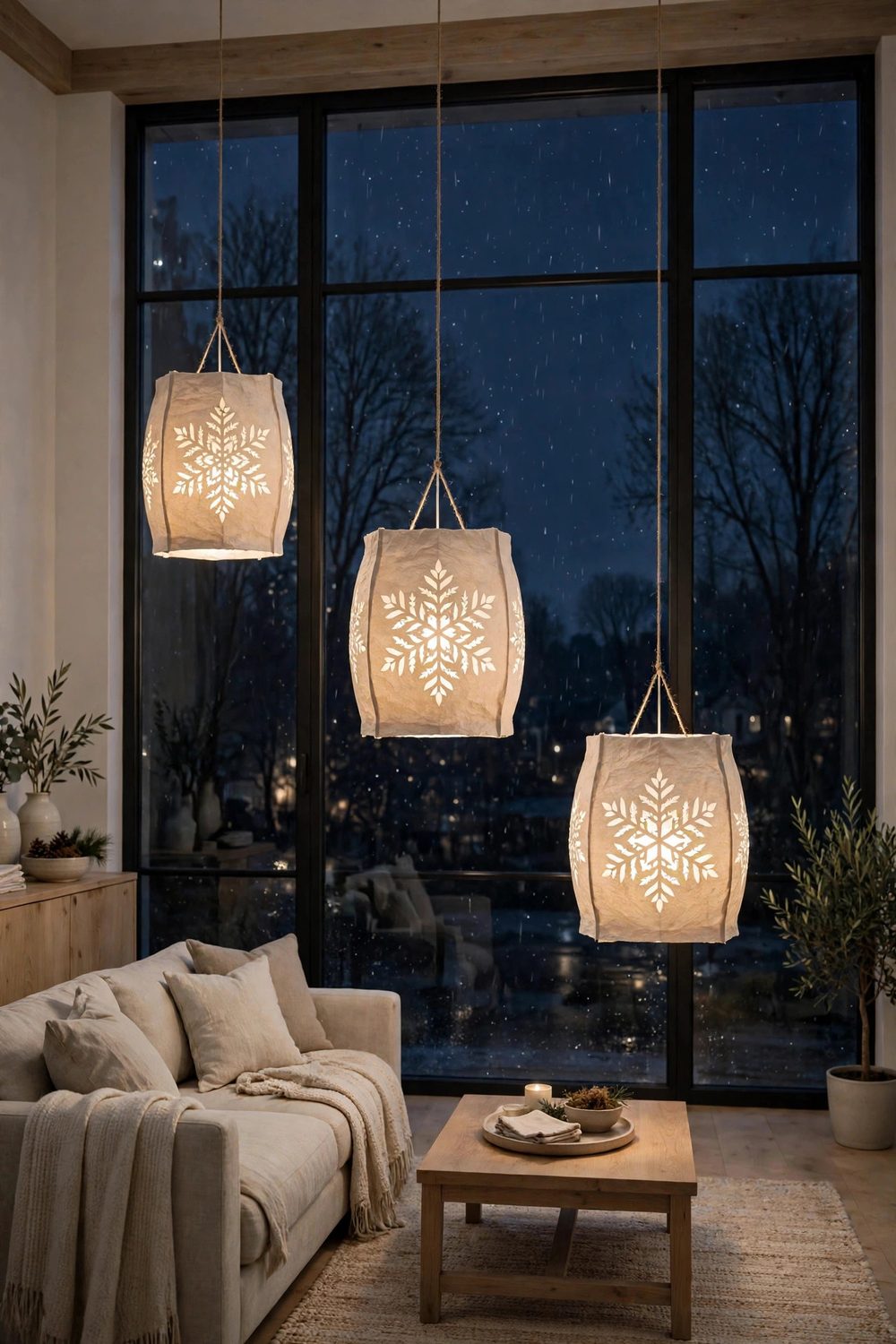
Hang paper lanterns with snowflake cutouts in front of the window. When lit, each lantern throws a soft snowflake pattern onto the wall and the glass.
Use battery lights inside the lanterns, and keep the light low and warm. A bright bulb inside paper can glare, while a soft light makes the cutouts glow.
Hang two or three lanterns at different heights, not a full row. A small group reads as a feature, while a long row can crowd the pane and block daylight.
Check the lanterns from inside at night before guests arrive. The pattern should fall on the wall beside the window, not straight into the eyes of someone seated nearby.
15. One Plain Window Left for the View
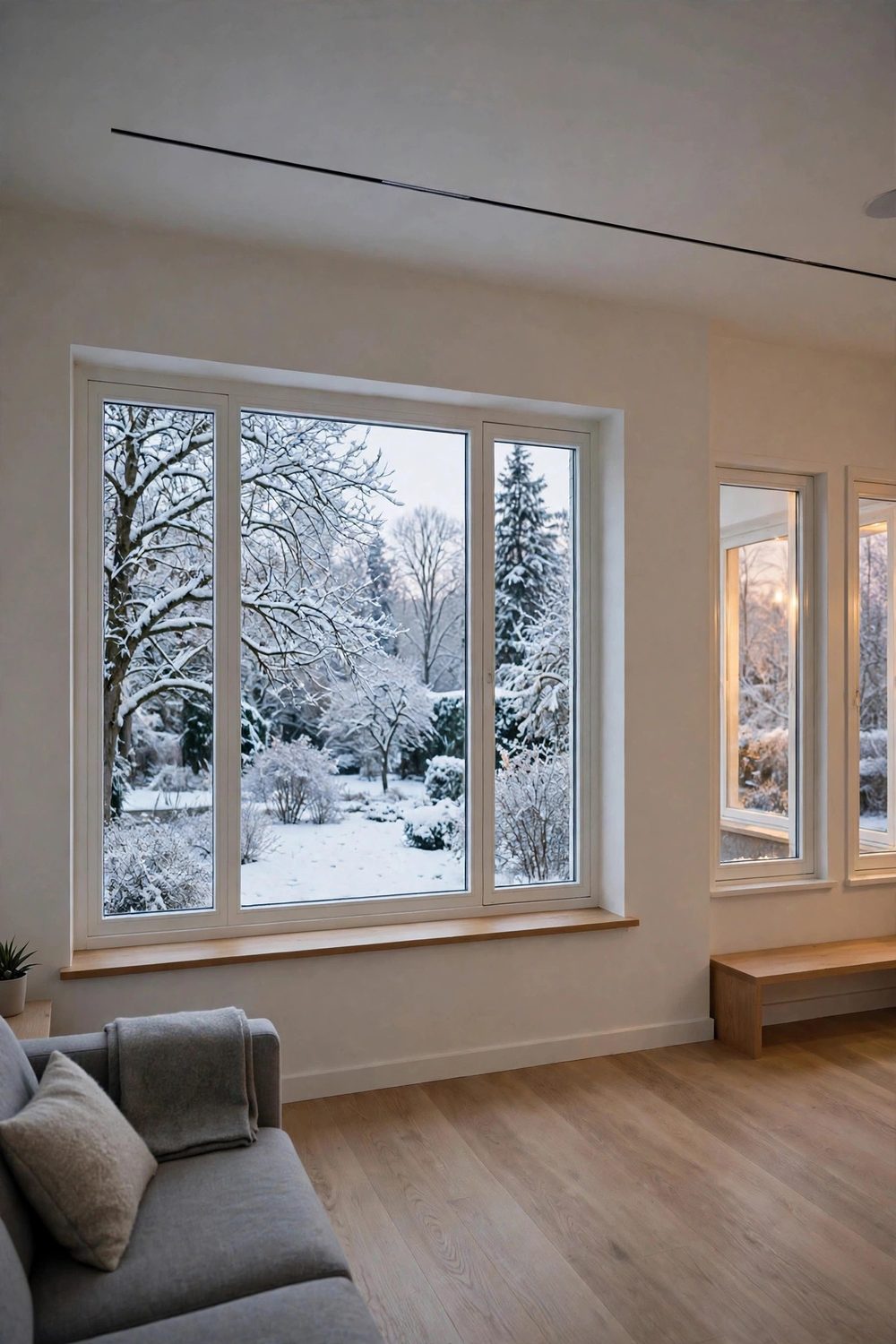
Leave one window in each room plain, with no lights and no clings. That plain pane gives the eye a rest, and it keeps the real winter view part of the season.
Pick the window with the best view, such as one facing a tree or a garden. A plain pane there frames nature, which no light strand can match.
Keep the sill of that window clear too, with at most one candle. A clear sill lets you open the window for air without moving a display.
End with a timer check for the rest of the house. When every lit window switches on together at dusk, the house glows as one, and the plain window shines by contrast.
A Christmas window does not need to be full to feel festive. One frame of light, one snowy note, and one clear view will glow better than a pane crowded with every idea at once.
Start with the window you see most at night, add the light that suits its size, and leave the rest plain. The glow will feel planned, not piled on.
Save this guide to your Christmas Decor Ideas board, and note the three windows you will dress first. A short plan now saves a tangled strand on the first dark evening.


