

15 Dream Bedroom Ideas for Kids with a Homework Study Corner
Homework goes better when a child has one small place that stays ready. Books, pencils, and paper all sit in the same spot each day. A bedroom corner can do that job well with a desk, a chair, and good light.
These dream bedroom ideas for kids with a homework study corner keep school work in one calm zone. The bed stays for rest and reading. The floor stays clear for play. Each part of the room has its own clear job.
Start with the corner that gets the best daylight. Then add storage close to the desk so books stay off the floor. Small steps like these help a child settle fast and pack away fast when work is done.
For a wider set of room plans first, these dream bedroom ideas for kids show fun and cozy layouts for many ages. This list then narrows the focus to one hard working study corner.
This post contains affiliate links. If you buy through them, we may earn a small commission at no extra cost to you. See our Affiliate Disclosure.
1. Place the Desk Beside the Window for Daylight
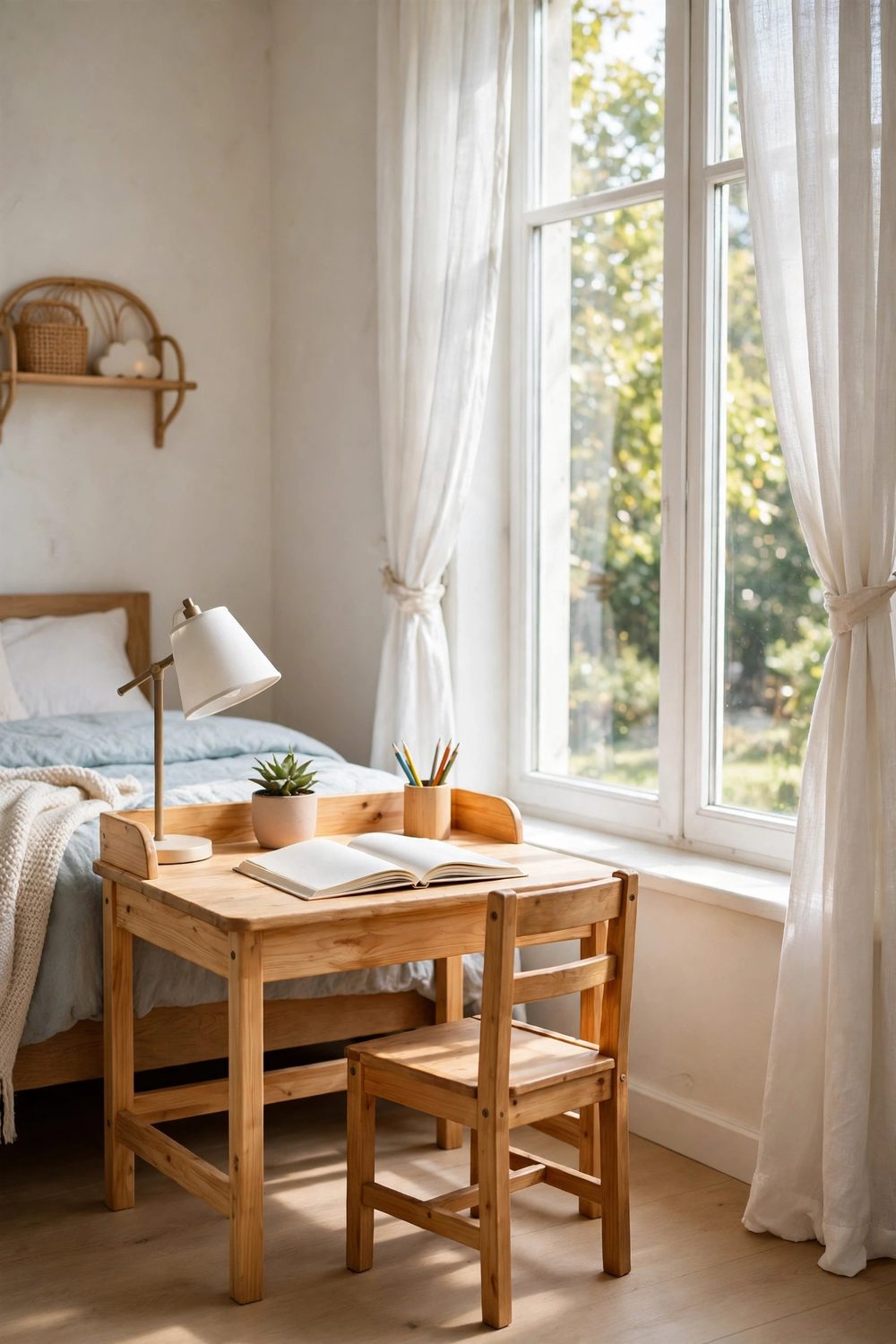
Daylight helps a child read print with less strain. Set the desk so the window sits to the side of the chair. Light falls across the page and the child does not sit in shadow.
Keep curtains light and easy to pull back. Thick drapes block the light you want. A simple blind gives shade on bright days and full light on grey days.
Leave a small gap between desk and wall. Air can move and dropped pencils stay easy to reach. The desk also feels less squeezed into the room.
Test the spot at homework time for a week. If glare hits the page each day, turn the desk a small angle. One small move often fixes the light.
2. Add a Low Bookshelf Right Next to the Desk
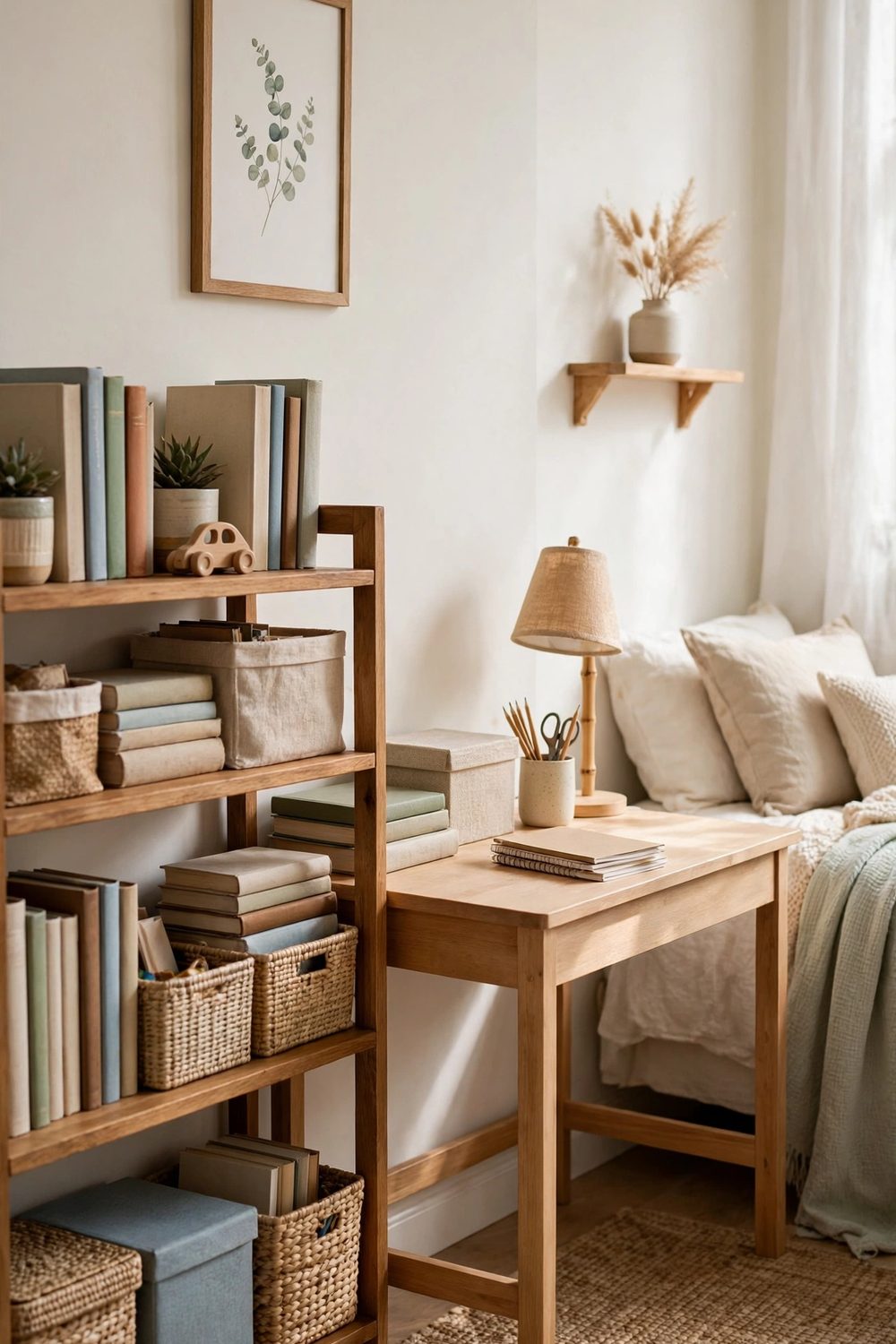
Books that live far from the desk end up on the floor. A low shelf beside the chair keeps readers and workbooks within reach. The child stays seated and work keeps moving.
Fill the top shelf with books in use this term. Lower shelves can hold boxes for paper and craft bits. Keep heavy books low so the shelf stays steady.
Two children can share one shelf with a side each. Families planning a room for two may like these shared kids bedroom ideas for a brother and sister for more paired layouts.
Leave one small space empty on the shelf. A clear gap stops the shelf from looking stuffed. It also gives new books a home when term starts.
3. Keep the Bed and Desk on Opposite Walls
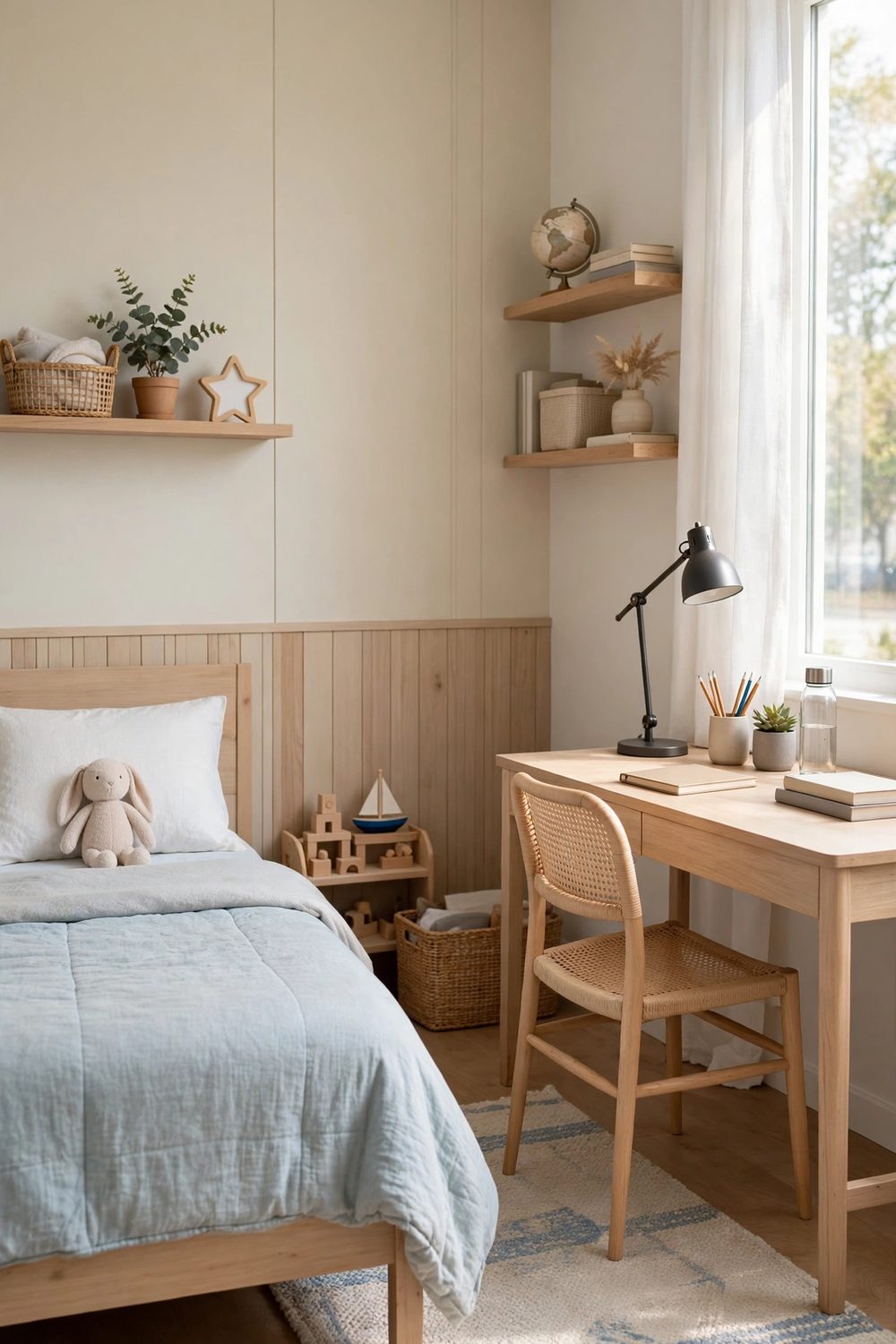
A bed right beside a desk can pull a child toward rest too soon. Opposite walls give each zone a clear feel. Work happens at the desk and rest happens on the bed.
This split helps at bedtime too. School books stay out of sight from the pillow. The child sees bedding and soft light, and the day feels done.
In a small room, use a rug to mark the study side. The rug edge acts like a line on the floor. Shoes and bags stay on their own side.
Keep the path between bed and desk clear. A clear path makes the room feel calm at night. It also keeps early morning trips safe in low light.
4. Use a Small Desk Lamp With Warm Light
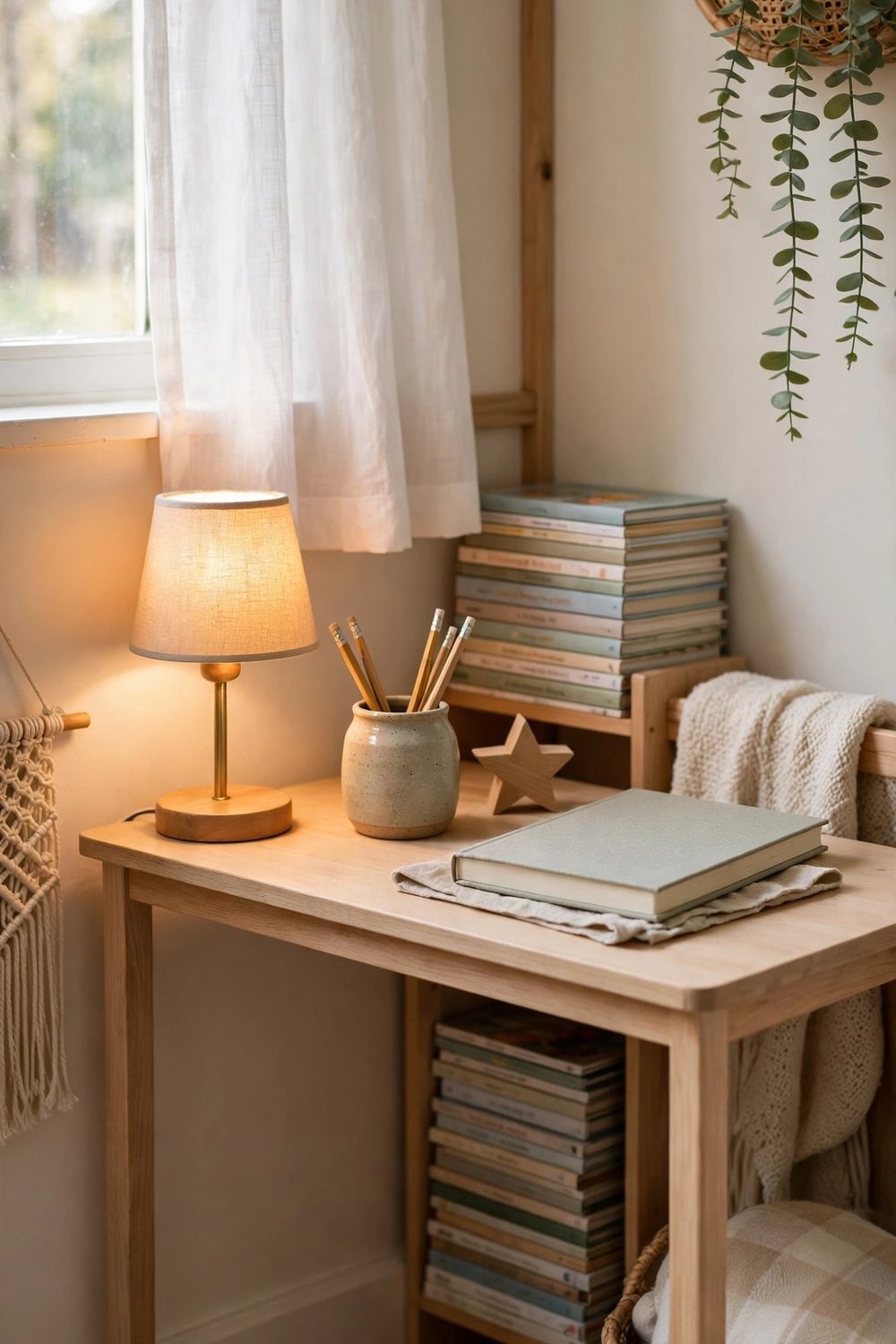
A desk lamp covers dull days and dark winter afternoons. Warm light feels gentle on eyes and pages. Place the lamp on the side away from the writing hand.
A lamp with a firm base stays put when the desk gets bumped. A moving shade helps aim light at the page. Keep the cord tucked behind the desk leg.
Turn the lamp on as a start signal each day. Small routines help young minds settle. Lamp on means work time, and lamp off means free time.
Keep a spare bulb in a drawer nearby. A dead bulb should not end homework for the night. One quick swap keeps the routine on track.
5. Hang a Pegboard Above the Desk for Supplies
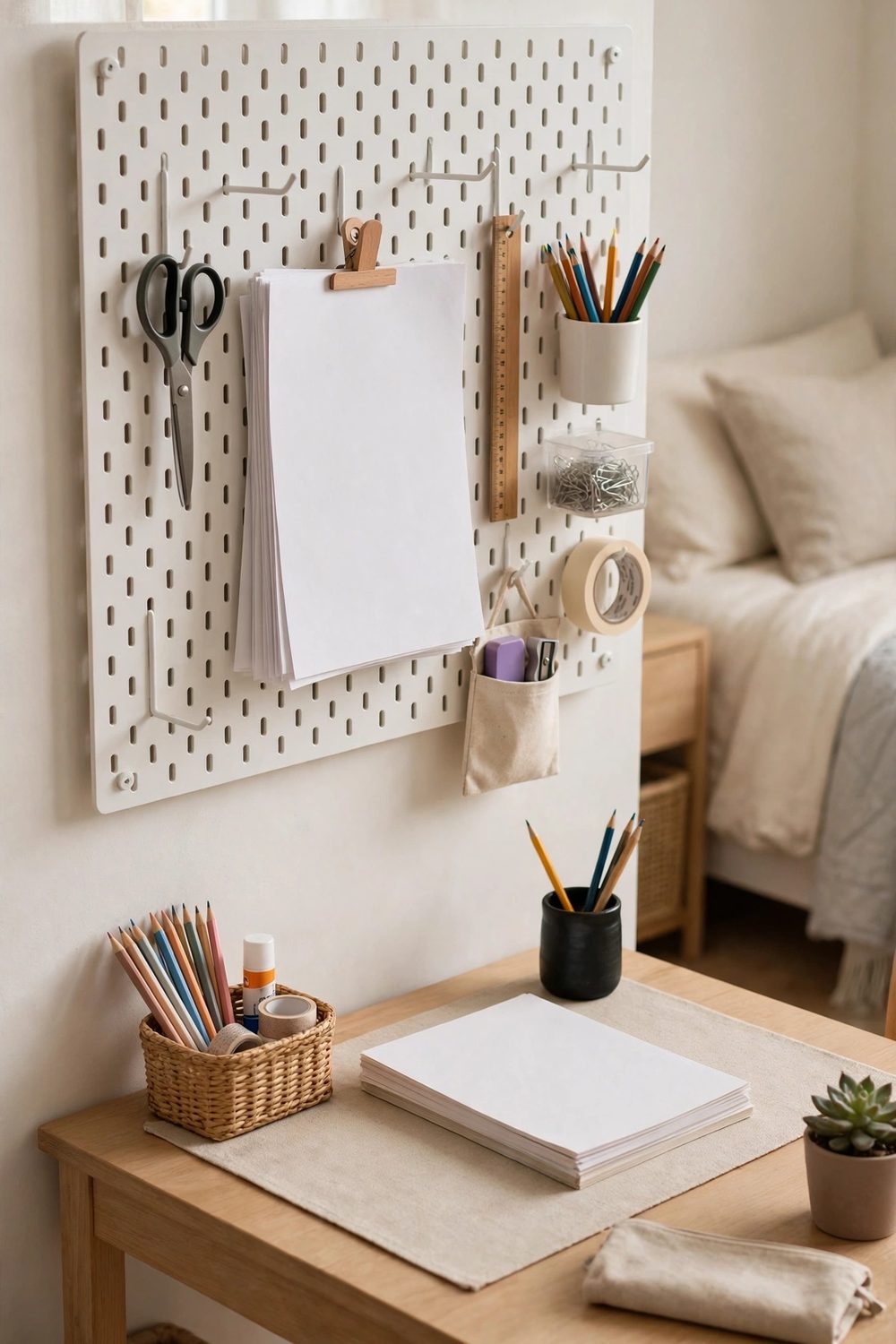
A pegboard lifts small tools off the desk top. Scissors, tape, rulers, and pencils hang in plain sight. The desk stays clear for books and open pages.
Use small hooks and cups that a child can move. The layout can grow as school needs change. Keep sharp tools on the top row, away from small hands.
Paint the board the same color as the wall for a calm look. Or pick one soft color that matches the bedding. One color keeps the corner tidy to the eye.
Set a rule that each tool goes back after use. A board with gaps looks messy fast. A full board with each item home looks neat and ready.
6. Add Open Cubbies for Books and Folders
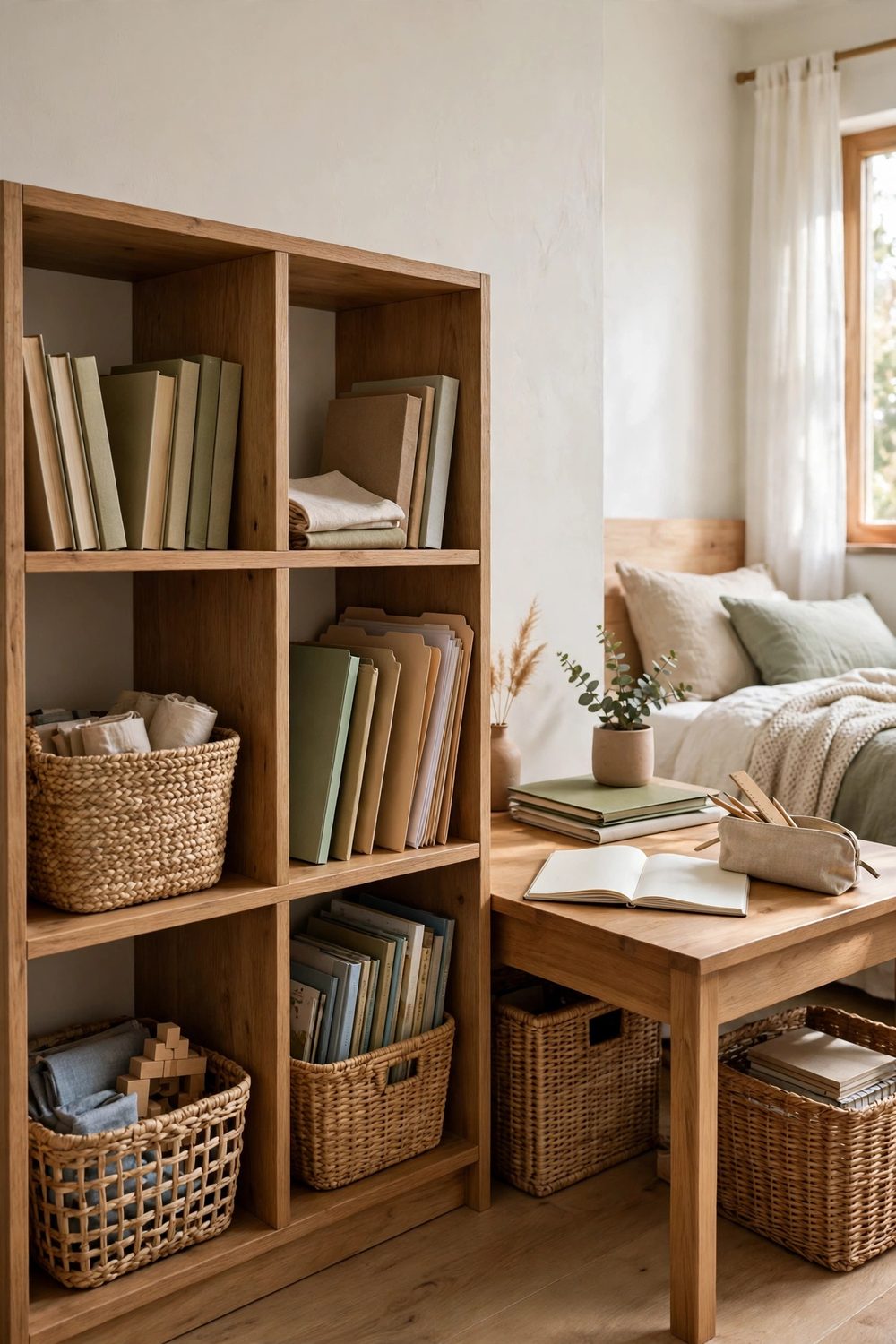
Open cubbies help a child put things away without a fight. Each box or cube takes one kind of item. Books stand in one, folders lie flat in the next.
Label each cubby with a word or a small picture. Young children match pictures fast. Older children read short words with ease and keep the habit.
Stack cubbies low beside the desk, not high above it. Low storage stays safe and easy to reach. The desk top then holds just the work in progress.
Sort the cubbies once a month with your child. Old worksheets can go, and fresh paper can come in. A short sort keeps the corner from filling up.
7. Choose a Chair That Fits Under the Desk
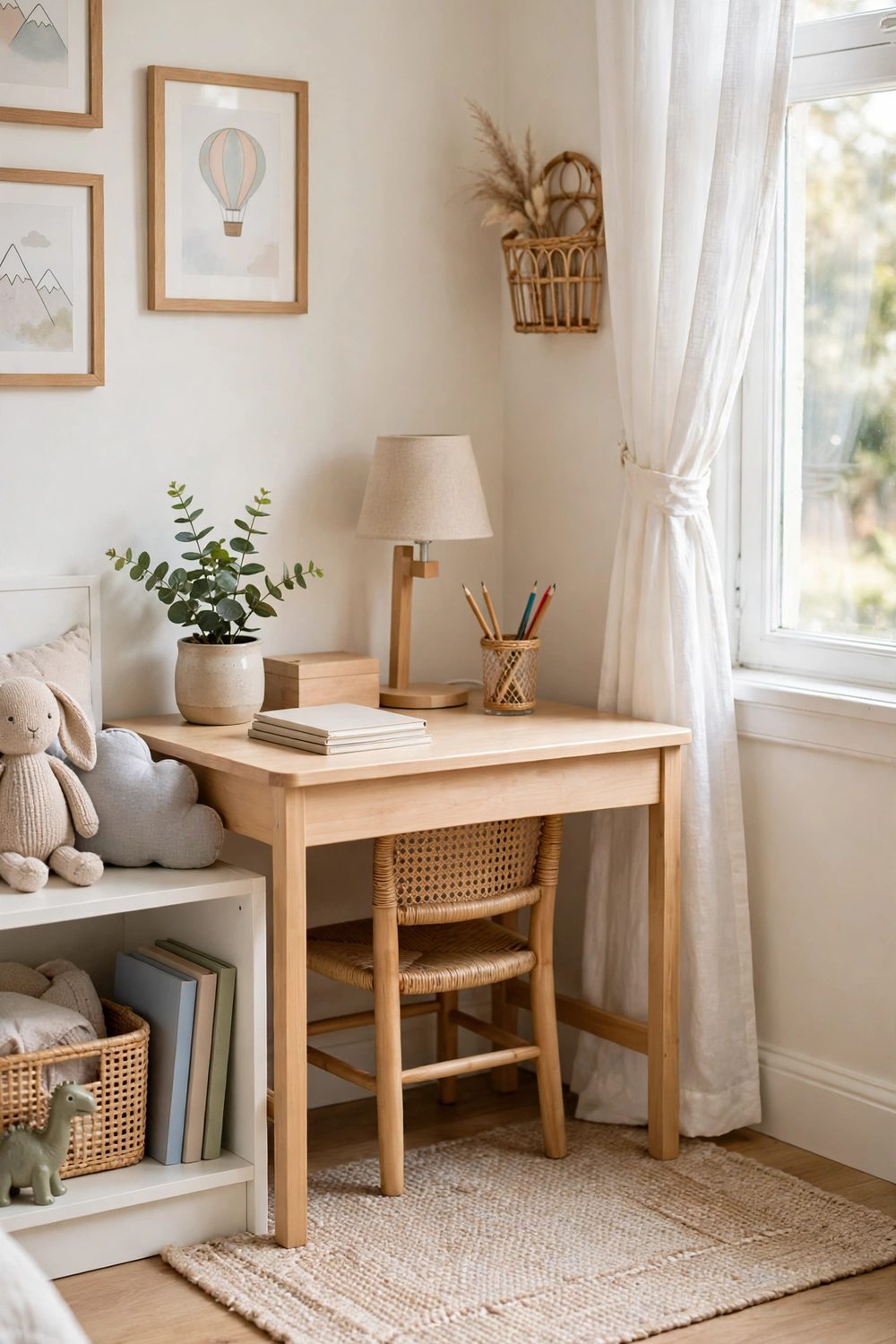
A chair that slides fully under the desk frees floor space at once. The room looks tidy in seconds. The path past the desk stays open for play and dressing.
Check that feet rest flat on the floor or on a small box. Dangling feet make a child fidget. A firm seat and a straight back help posture during longer tasks.
As children grow, desk needs change fast. Older kids may later want teen bedroom ideas for gamers with a desk setup when screens and longer study hours arrive.
Add one thin cushion if the seat feels hard. Keep it plain and washable. A soft seat helps a child stay put for the last page of work.
8. Lay a Soft Rug Under the Study Corner
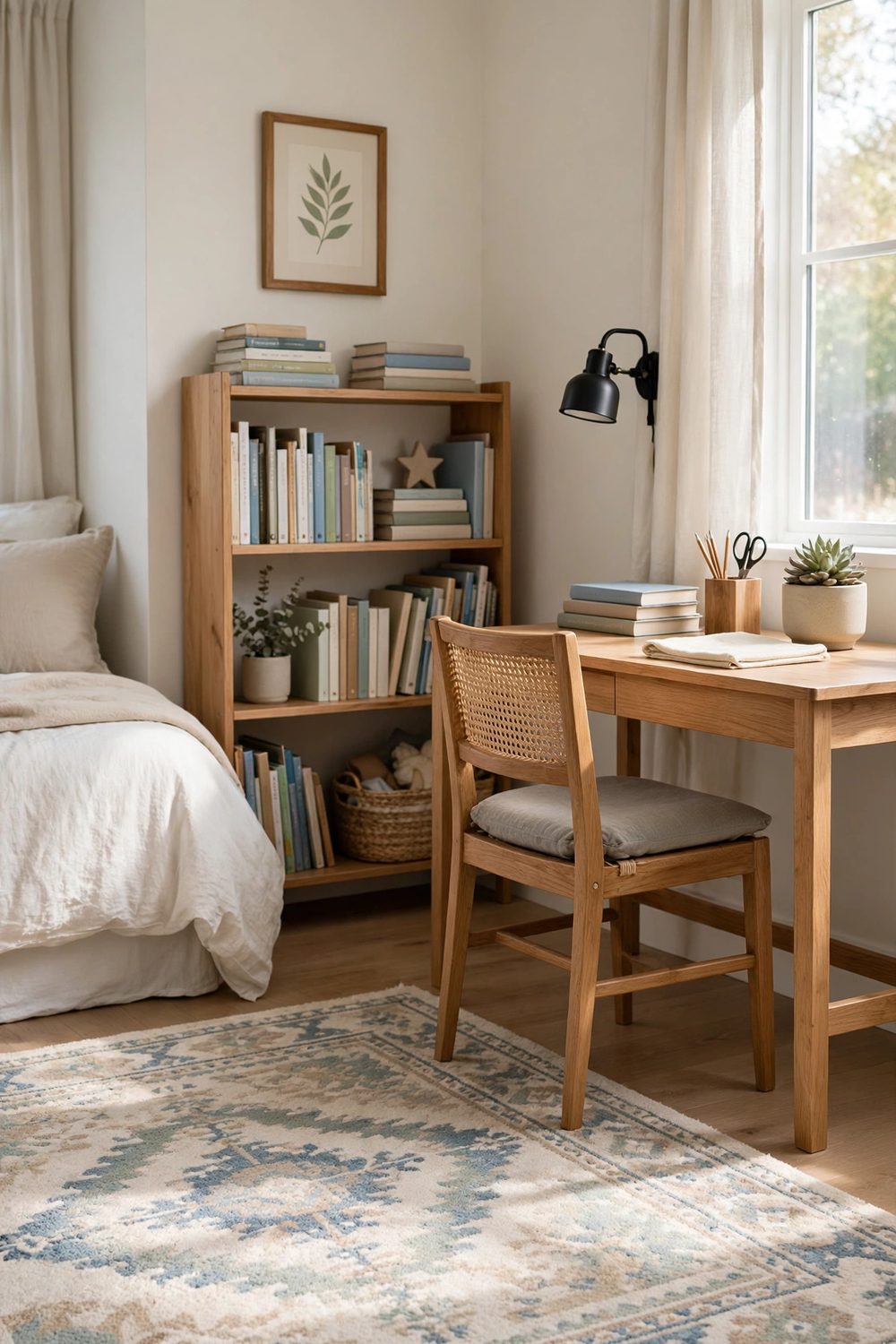
A rug marks the study corner as its own small room zone. It softens floor noise when chairs move. It also warms bare feet on cold mornings before school.
Pick a rug with a low, flat weave. Chair legs roll and rest with ease on flat weave. Thick pile traps pencils and crumbs and is hard to clean.
Size the rug so desk and chair both sit on it. A rug that is too small looks lost. Edges that curl up can trip small feet, so tape or weight them down.
Wash or shake the rug each school break. Dust builds fast under desks. A clean rug keeps the whole corner feeling fresh for the new term.
9. Keep School Bags in a Basket by the Desk
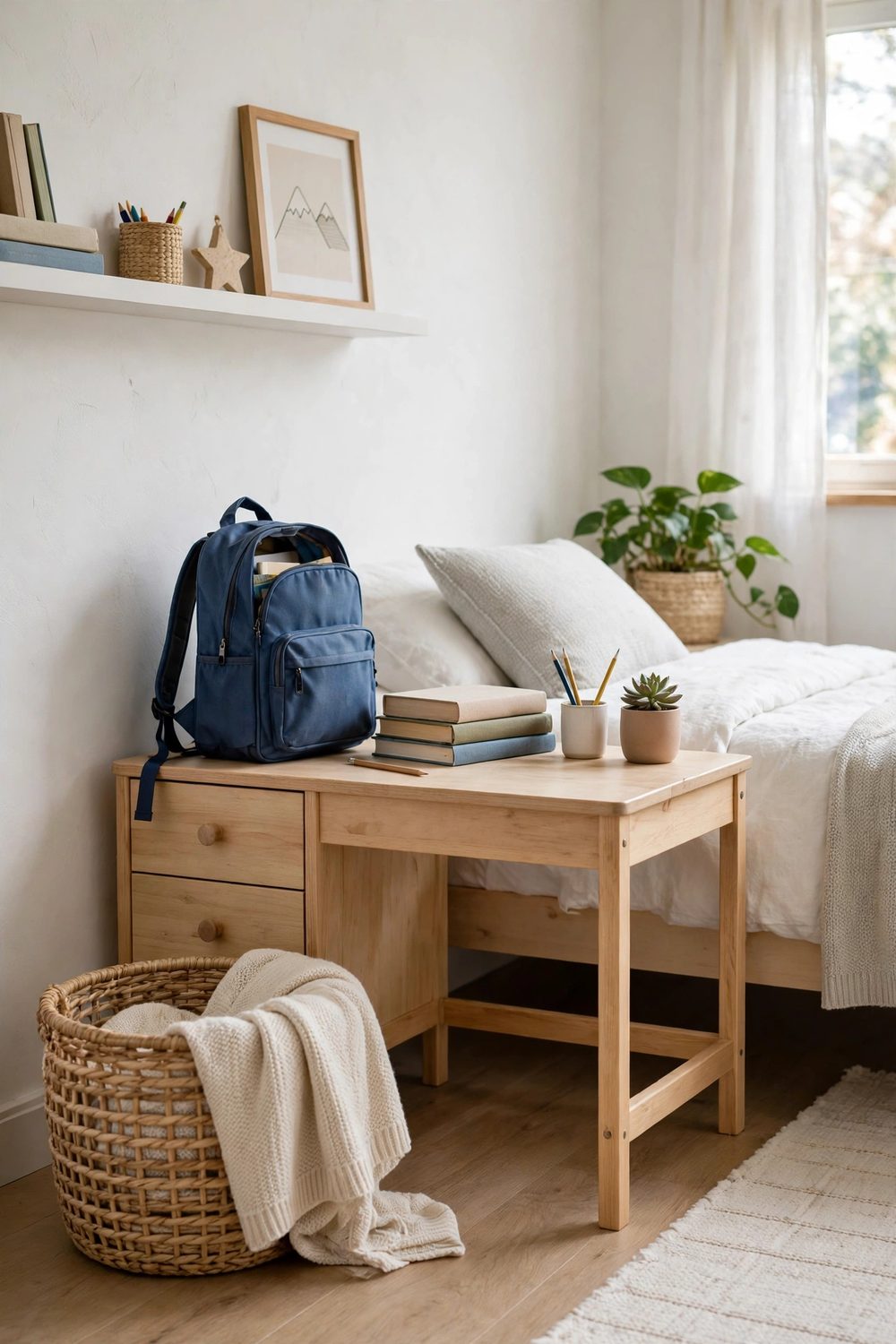
A school bag on the floor blocks doors and paths. A wide basket beside the desk gives the bag a home. Books for the morning stay packed and ready.
Pick a basket with firm sides and an open top. The child can drop the bag in with one hand. Soft sides slump and spill the contents onto the floor.
Set the basket on the side of the desk away from the chair. The chair can still slide in and out. The bag stays close but out of the work zone.
Empty the basket fully each Friday. Old snacks and lost notes hide at the bottom. A quick clear out keeps smells and mess away from the desk.
10. Use Wall Shelves to Free the Desk Top
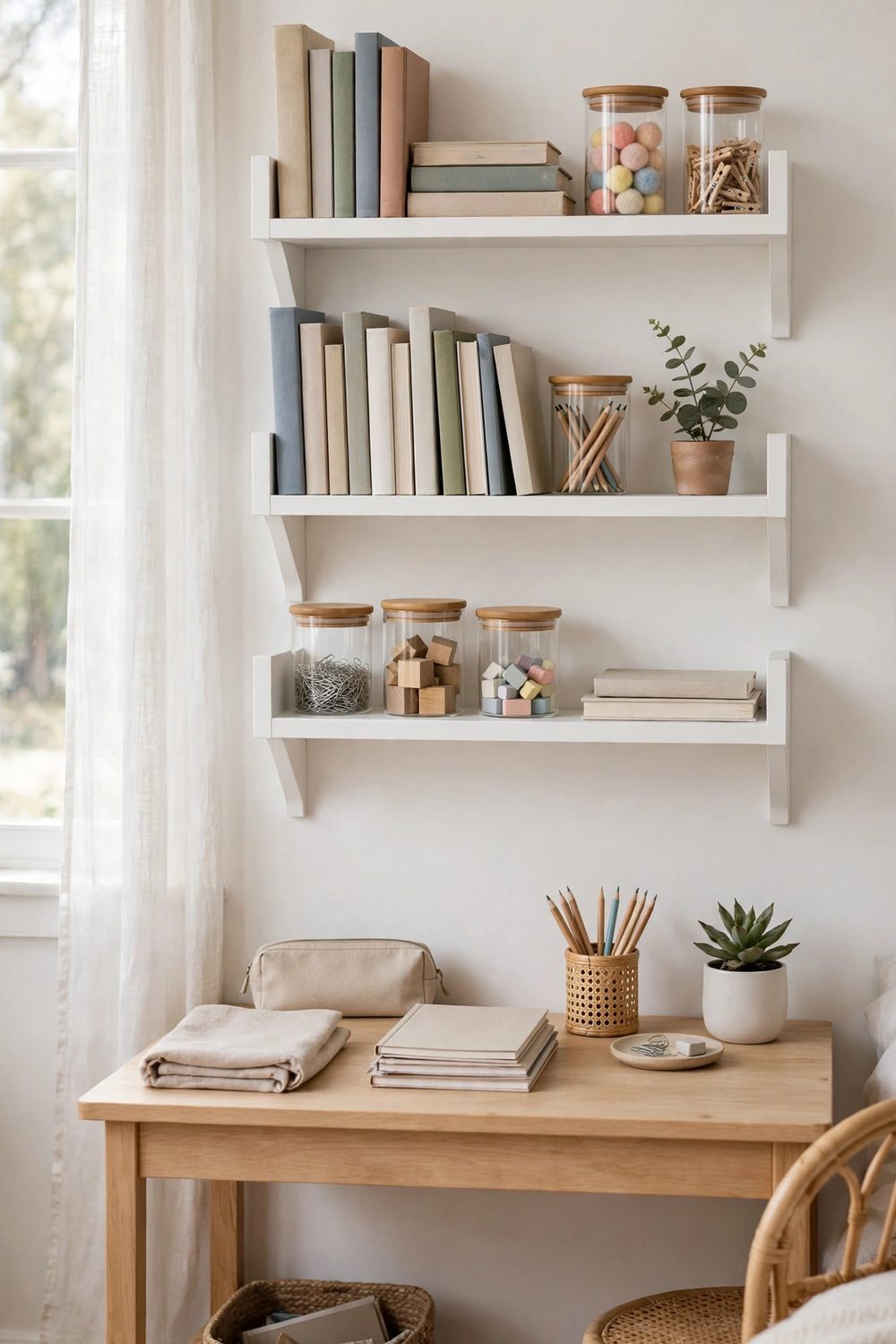
Wall shelves take books and boxes up and off the desk. The work surface stays open for a book, a sheet, and a pencil case. Open space helps a child think clearly.
Fit shelves where a seated child can reach the lowest one. Higher shelves can hold spare paper and boxes. Keep daily books low and extras up high.
Use bookends to keep rows neat on open shelves. A fallen row looks messy and can knock items down. Small wood or metal ends do the job well.
Do not fill every inch of shelf space. Gaps of air make shelves look calm. A calm corner helps a child start work without a sigh.
11. Add a Pin Board for Notes and Drawings
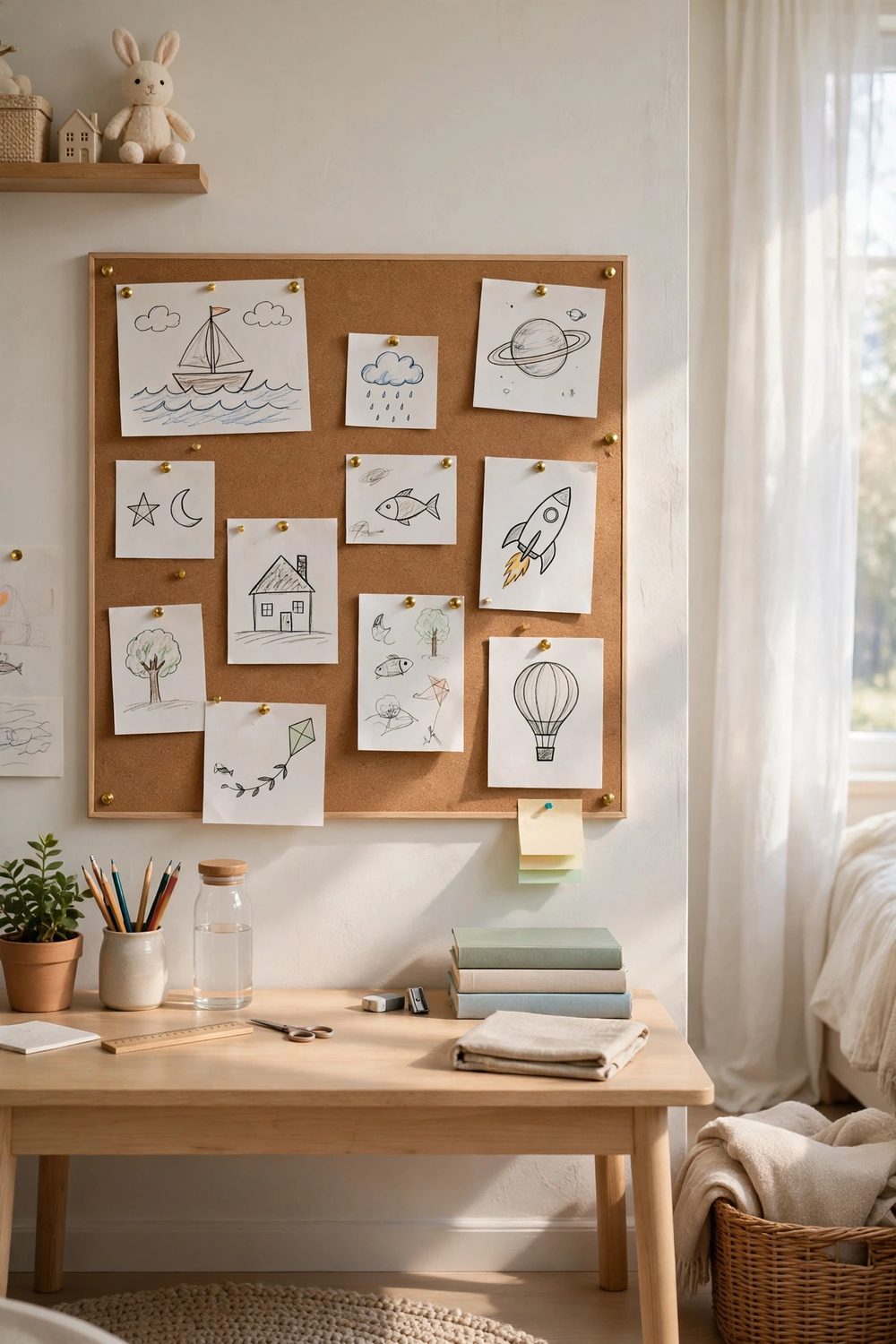
A pin board gives school notes a place to live. Spellings, times tables, and kind notes stay in view. The child can check the board before asking for help.
Cork boards take pins well and hide marks. Felt boards feel soft and suit fabric covered rooms. Pick the size that fits the wall space above the desk.
Leave room on the board for art as well as work. One drawing beside the maths sheet keeps the corner fun. The board should feel like the child owns it.
Clear old notes at the end of each term. Fresh space makes new goals easy to pin. A board that is too full stops being useful at a glance.
12. Set Up a Quiet Reading Chair Nearby
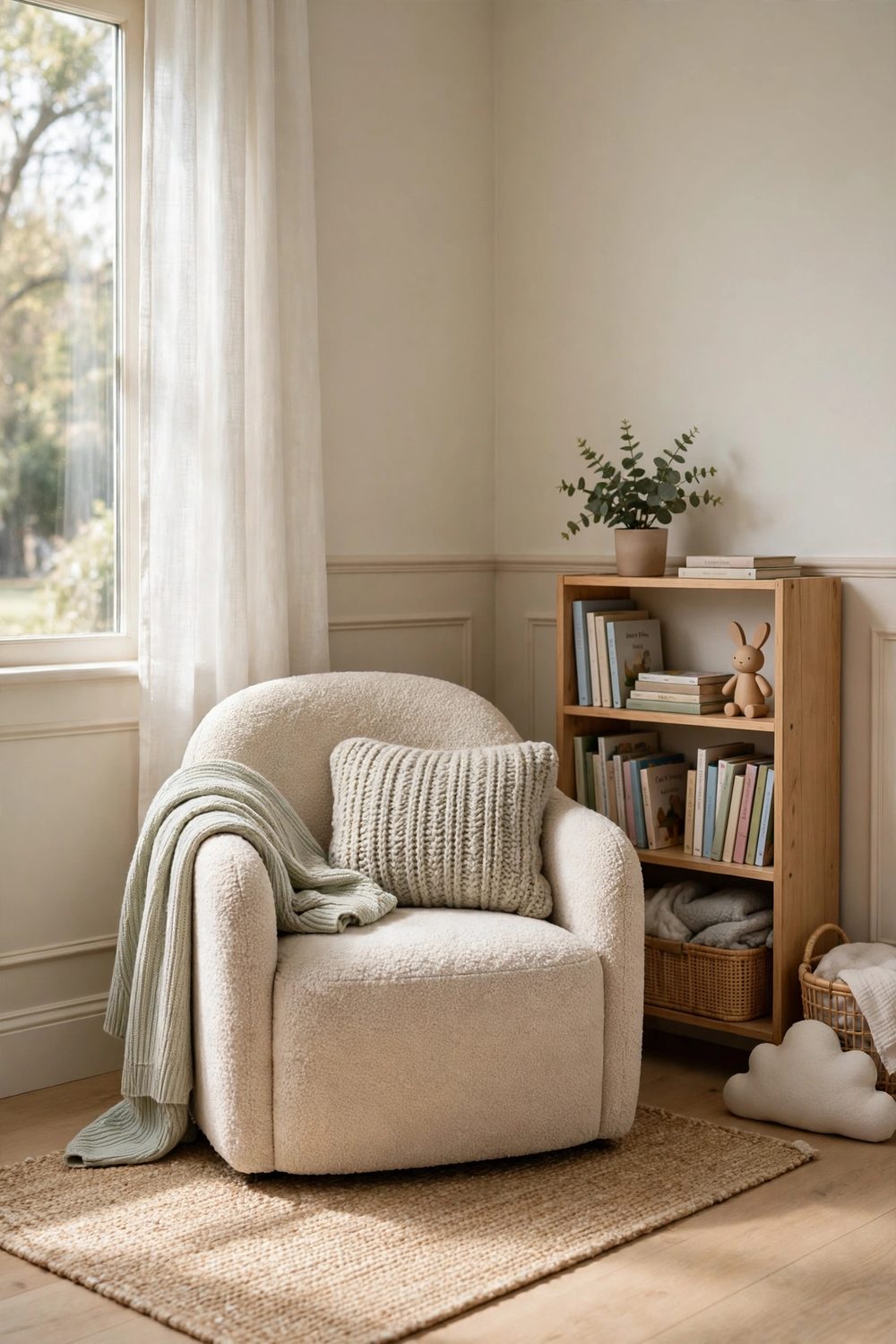
Reading homework needs a softer seat than a desk chair. A small armchair or a pile of floor cushions works well. Keep it near the desk but out of the work zone.
Warm light suits this spot best. These warm neutral bedroom ideas with a reading lamp corner show how a lamp and soft shades make reading time feel calm.
Keep two or three books in a small basket by the chair. Too many books turn the spot into storage. A short stack invites a child to pick one up.
This chair can also be a calm down spot. After a hard day, ten quiet minutes with a book helps. The desk stays linked with work, and the chair with rest.
13. Keep the Desk Clear With a Tray for Papers
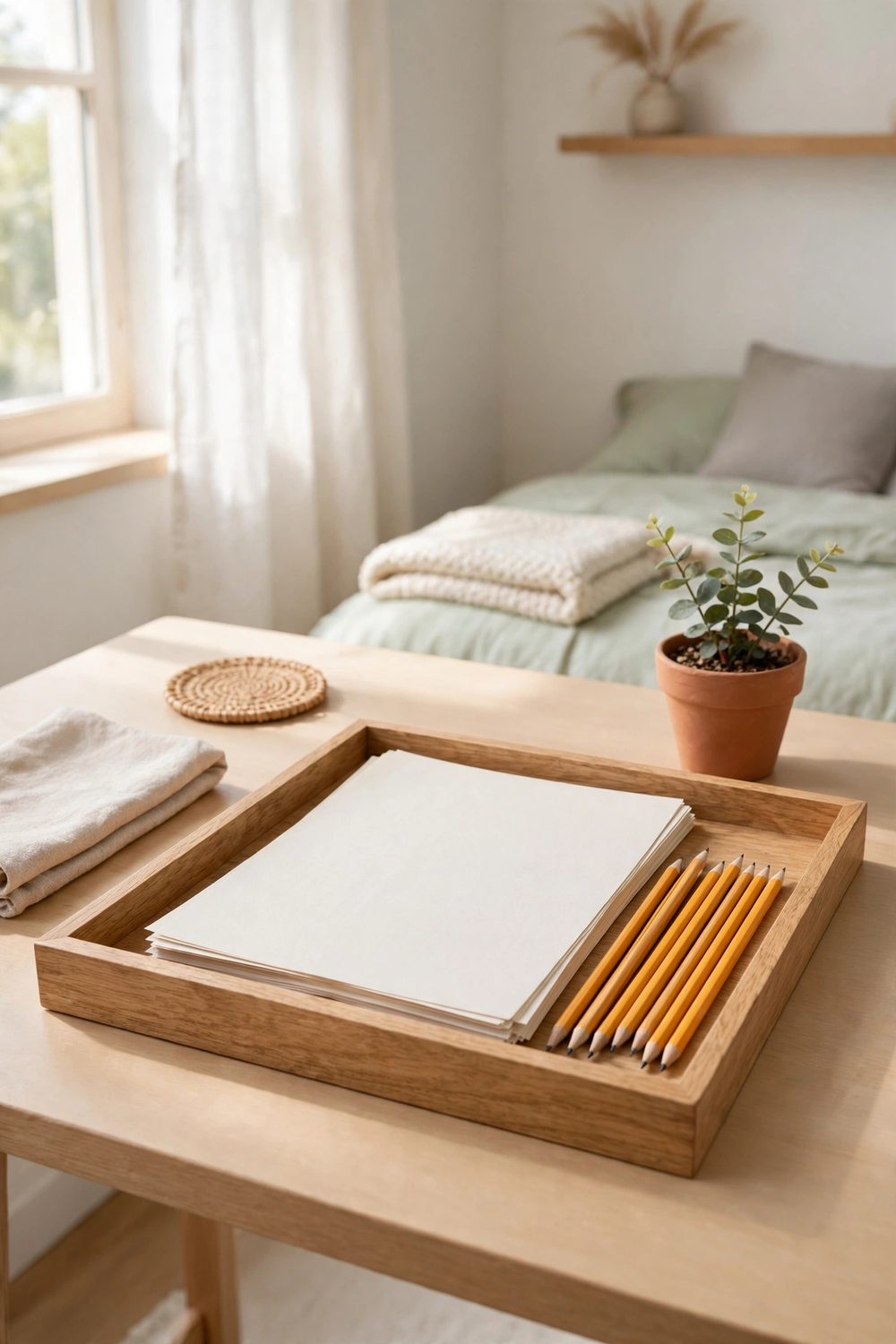
Loose papers spread fast across a small desk. A flat tray gives sheets one neat home. Work to finish sits in the tray, and done work moves out each night.
Pick a tray wide enough for school paper sheets. A tray that is too small bends pages at the edges. Wood or woven trays look warm beside books and lamps.
Set the tray at the back corner of the desk. The front stays open for the book in use. A child can see at a glance what still needs work.
Sort the tray with your child each Sunday night. Monday starts feel calm when the desk is clear. Old sheets go to recycling or into a folder in a cubby.
14. Add a Small Clock to Help With Routines
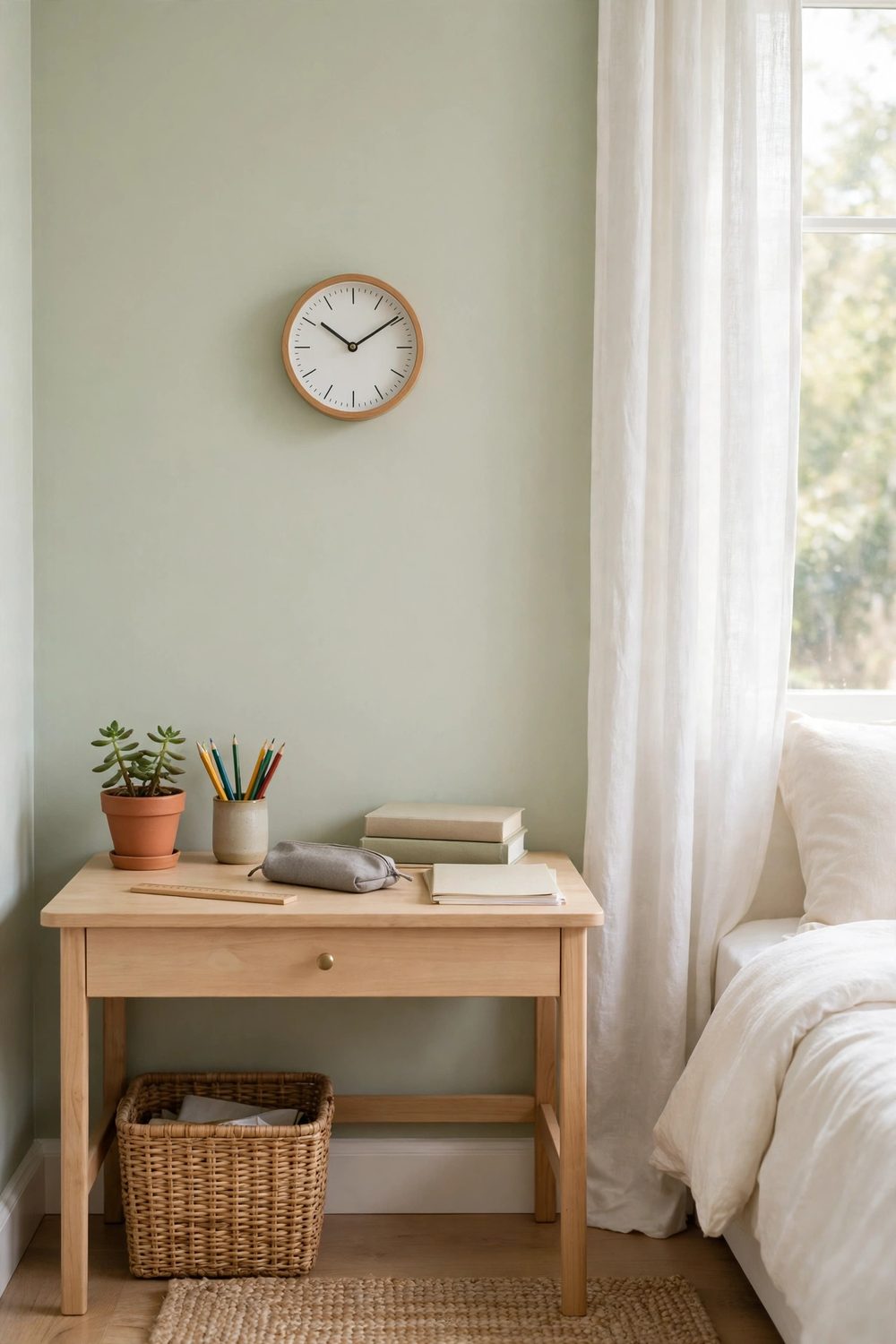
A clock helps a child learn how long tasks take. Twenty minutes of reading feels clear when the hands move. Timers on the wall beat timers that beep from a phone.
Hang the clock where the child can see it from the chair. Keep it off the desk so it does not take work space. A plain face with big numbers reads best.
Young children in a room shared with a baby sibling need calm cues too. Gentle rooms like these neutral bedroom ideas for a nursery corner keep colors soft for sleep.
Use the clock for breaks as well as work. Work for a set time, then rest for five minutes. Short breaks keep energy up for the last task of the day.
15. Close the Corner With a Calm Bedside Setup
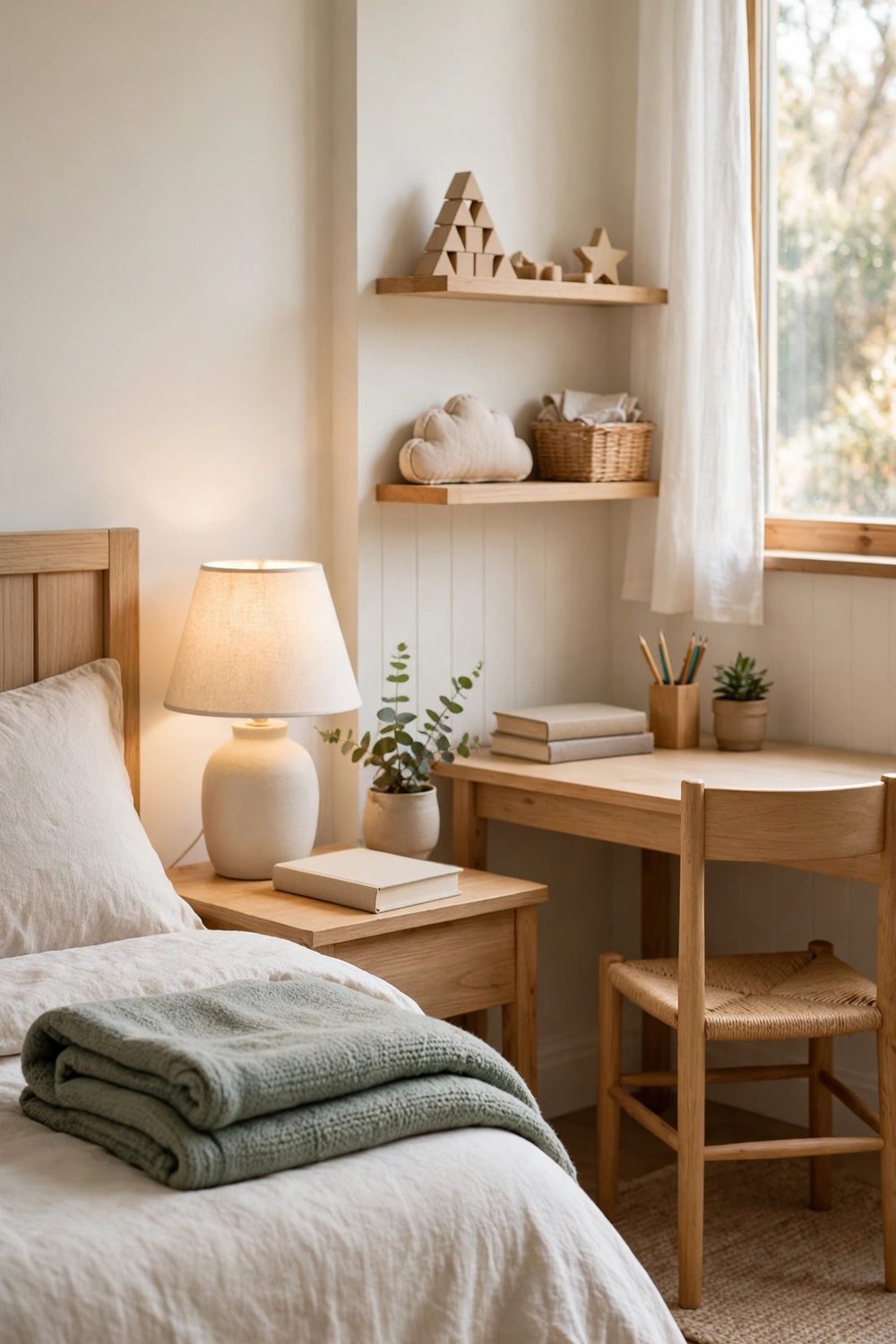
A study corner works best when the rest of the room stays calm. A tidy bedside with a lamp and one book signals rest. The room ends the day in the right mood.
Make the bed each morning if you can. A made bed makes the whole room look ready. The desk corner then matches the neat tone set by the bed.
Keep toys in one box or basket away from the desk. Play things in sight can pull focus from homework. A lid or a cloth cover keeps them out of view.
End homework time by closing books and turning off the lamp. That small ritual marks the shift to rest. The corner waits, tidy and ready, for the next school day.
A good study corner does not need a big room. A desk in daylight, storage within reach, and a clear desk top carry most of the weight. These dream bedroom ideas for kids with a homework study corner build good habits in a small space.
Pick two or three ideas to start this week. Add the lamp, set the basket by the desk, and hang the board. Then watch how much faster your child settles to work at the desk each day.


