

15 Dream Bedroom Ideas for Kids in a Shared Sibling Room
Two children in one room can work well when each child has a clear place to sleep, store, and play. Trouble starts when beds, toys, and clothes all mix with no plan. A few steady layout rules fix that fast.
These dream bedroom ideas for kids in a shared sibling room give each child a zone to call their own. Shared pieces sit in the middle ground. Personal pieces stay close to each bed, where they feel safe and easy to find.
Start by placing the beds, since sleep shapes the whole room. Then split storage fairly between the two sides. Small daily habits, like bins and hooks by each bed, keep the peace through the week.
For more single room plans, these dream bedroom ideas for kids cover fun themes for many ages. This list stays with one task, making a shared room feel fair, calm, and roomy for two.
This post contains affiliate links. If you buy through them, we may earn a small commission at no extra cost to you. See our Affiliate Disclosure.
1. Give Each Child a Bed on Opposite Walls
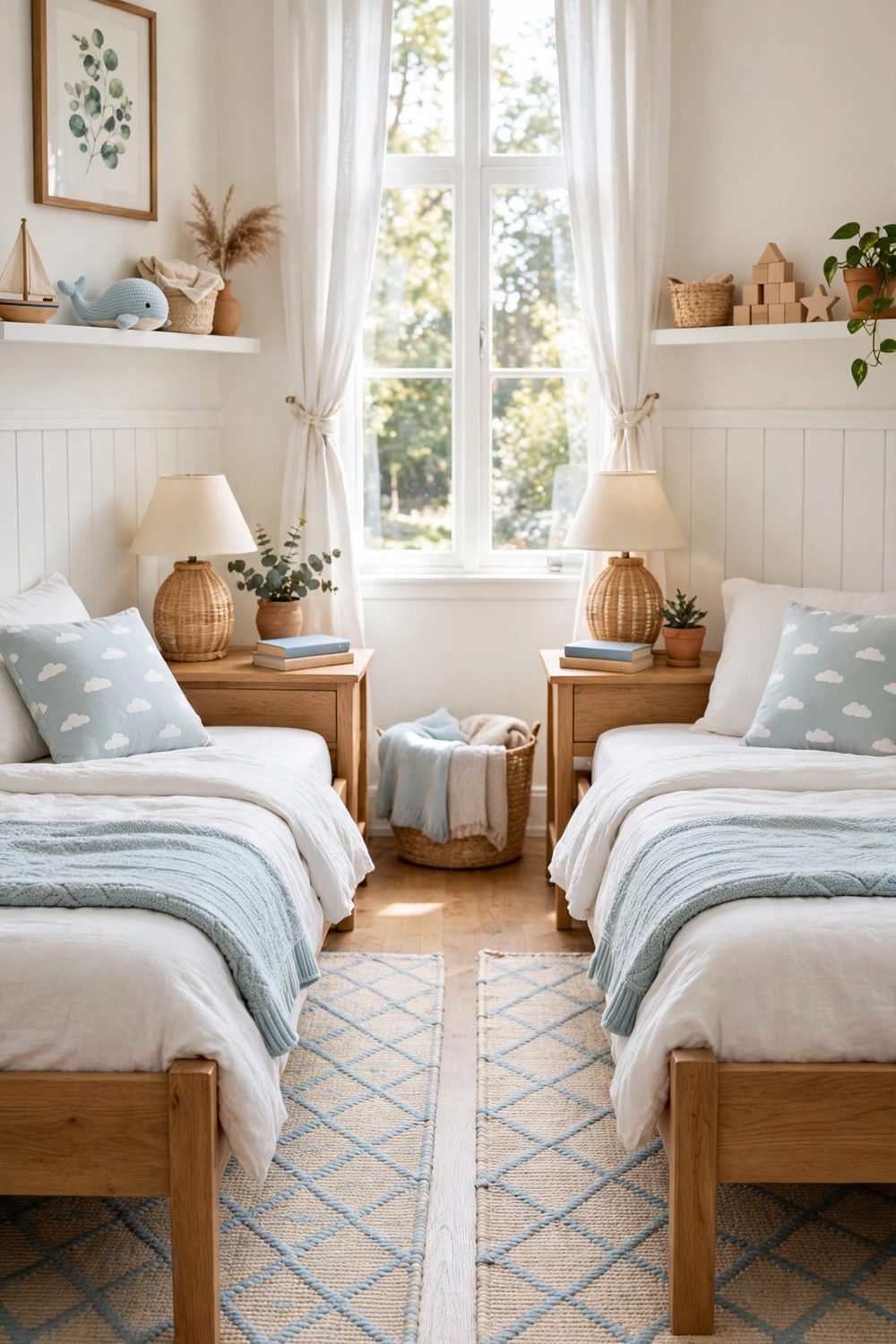
Opposite walls give each child a sleep zone with a bit of air around it. Each bed gets its own wall for art and a shelf. Mornings feel less rushed when dressing areas stay apart.
Face the beds toward each other for chat at lights out, or turn them the same way for calm. Young children often like to see each other. Older children may like more space and less eye contact.
Brother and sister pairs need this balance most. These shared kids bedroom ideas for a brother and sister show more ways to split one room fairly.
Keep a clear path down the middle of the room. Both children need to reach the door at night. A clear path also makes bed making far less of a squeeze.
2. Share One Long Dresser Between Two Beds
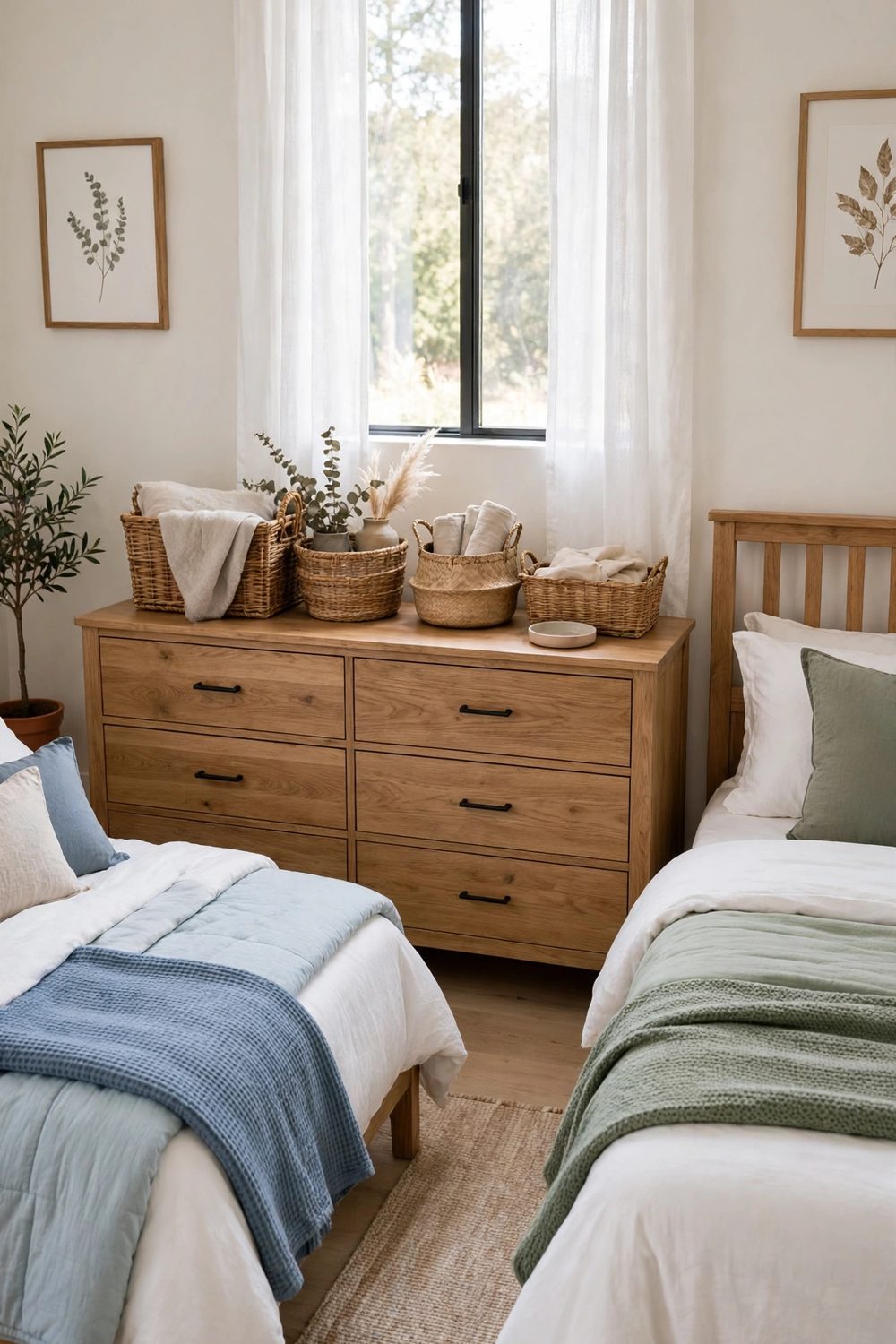
One long dresser uses less floor than two small ones. Each child takes half the drawers, marked by color or label. The top holds a shared lamp and a basket for odds and ends.
Place the dresser on the wall both children pass each day. Socks and school clothes stay in easy reach. A mirror above the dresser helps two children get ready in turns.
Agree on the drawer split before you fill them. Fair splits stop most morning rows. Swap sides each year if one side gets better light or more space.
Keep the dresser top mostly clear. A stuffed top makes the whole room look busy. One lamp, one basket, and one small plant or frame is plenty.
3. Use Matching Bedding With Different Colors
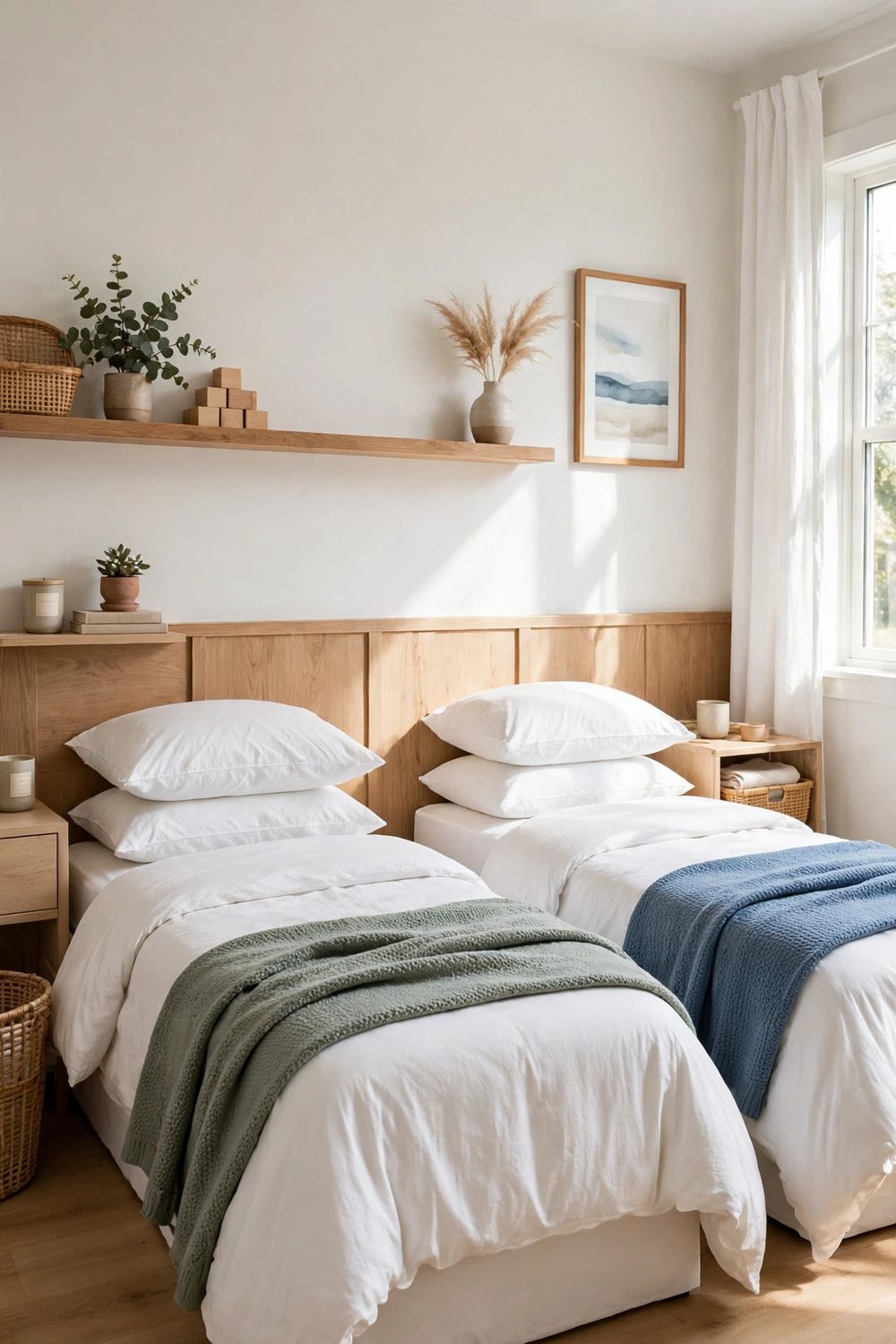
Matching bedding in two colors gives the room one calm base with clear ownership. Each child picks a throw or cushion in their own color. The beds look paired, and each child still feels seen.
White or pale base sheets keep the look light. Color sits in the throw, which is easy to wash and swap. When tastes change, one throw costs far less than a full new set.
Let each child choose their color at the shop or from home stock. Choice builds pride in keeping the bed neat. Rows about whose bed is whose fade away.
Wash both sets on the same day each week. Fresh bedding for both beds at once feels fair. The room smells clean and the routine stays simple.
4. Add a Low Divider Shelf in the Middle
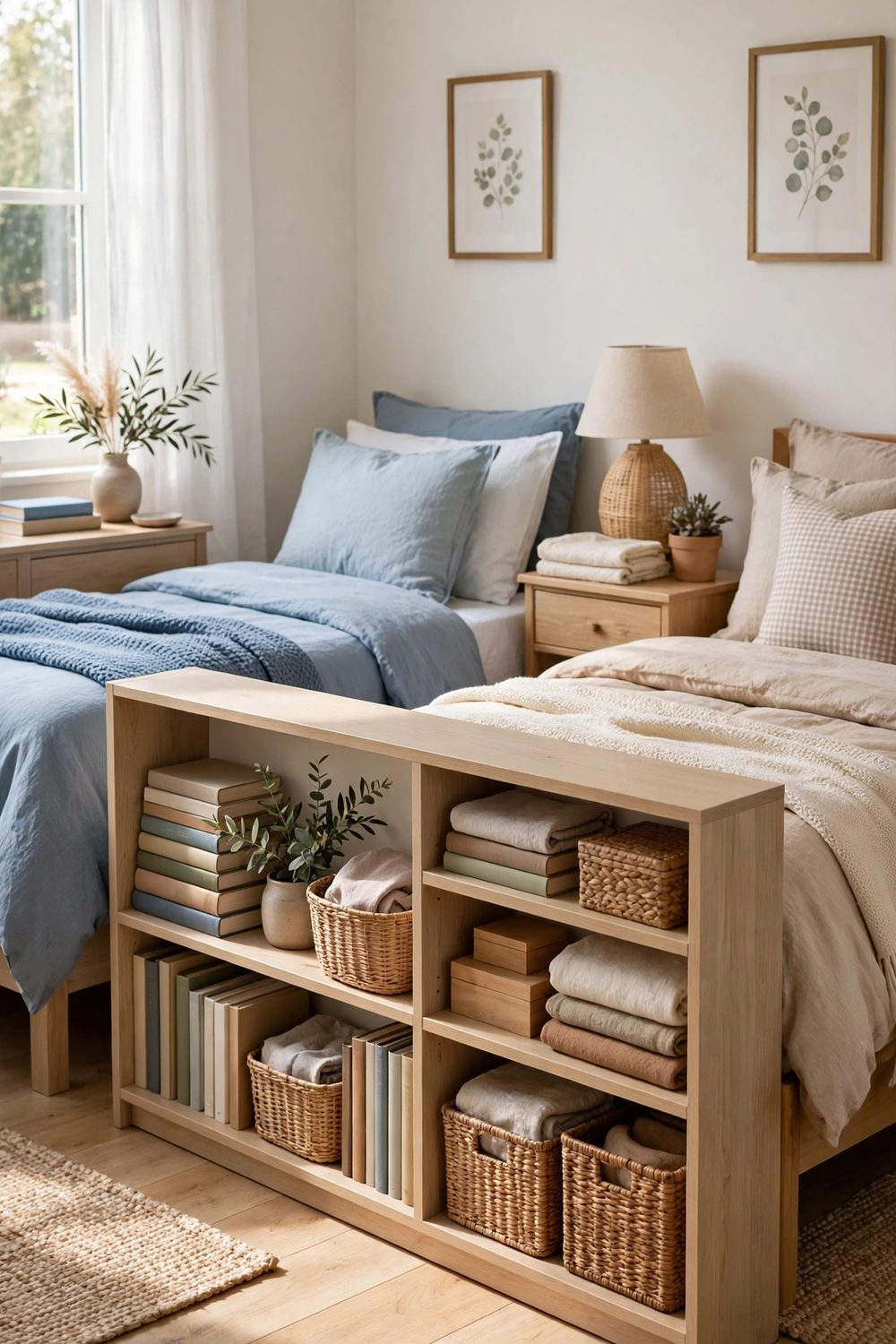
A low open shelf can split a shared room into two soft zones. Each side holds books and boxes for one child. The shelf stays low, so light and air still cross the room.
Shared rooms in many forms use this trick. These dream bedroom ideas for a shared bedroom show how dividers and paired furniture help two sleepers share well.
Face the shelf so each child sees their own side from bed. Open backs let both sides share the same shelf frame. Closed backs give more privacy but block more light.
Keep the top of the divider clear or use it for shared items. A shared clock or a basket of tissues serves both sides. Personal items stay on bedside shelves instead.
5. Keep Two Small Desks Side by Side
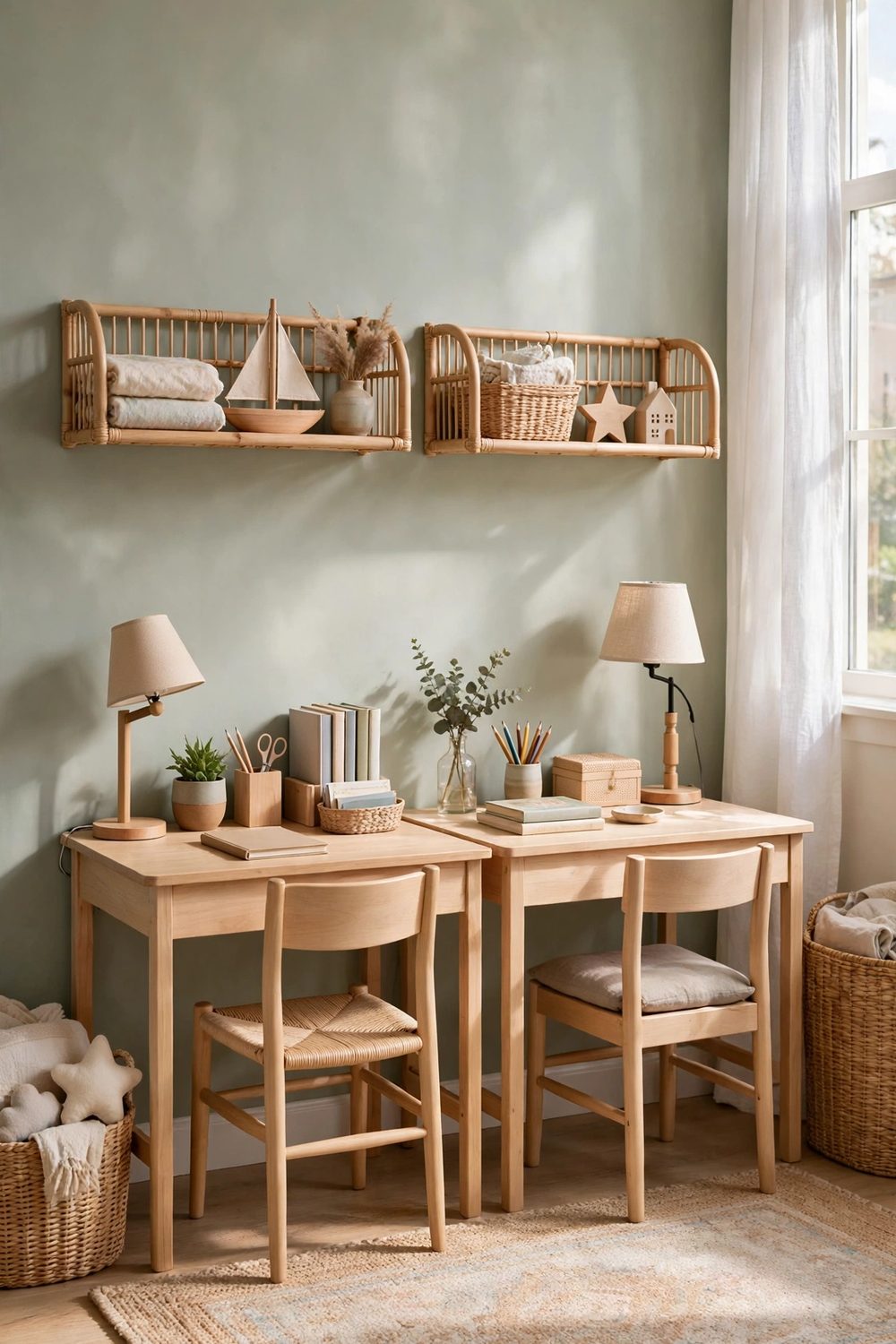
Two small desks on one wall give each child a work spot of their own. Homework and drawing can happen at the same time. Each desk holds just that child’s books and tools.
Use desks of the same height so chairs match and the line looks calm. A shared shelf above both desks holds spare paper. Each child keeps a lamp on their own desk.
A thin mat or rug under each chair marks desk zones on the floor. Spilled pencils stay on the right side. Tidying up takes minutes when zones are clear to see.
If space is tight, one long desk with a small shelf divider works too. Each half stays personal. The shared frame saves floor space for play in the middle of the room.
6. Hang Curtains Around Bunk Beds for Privacy
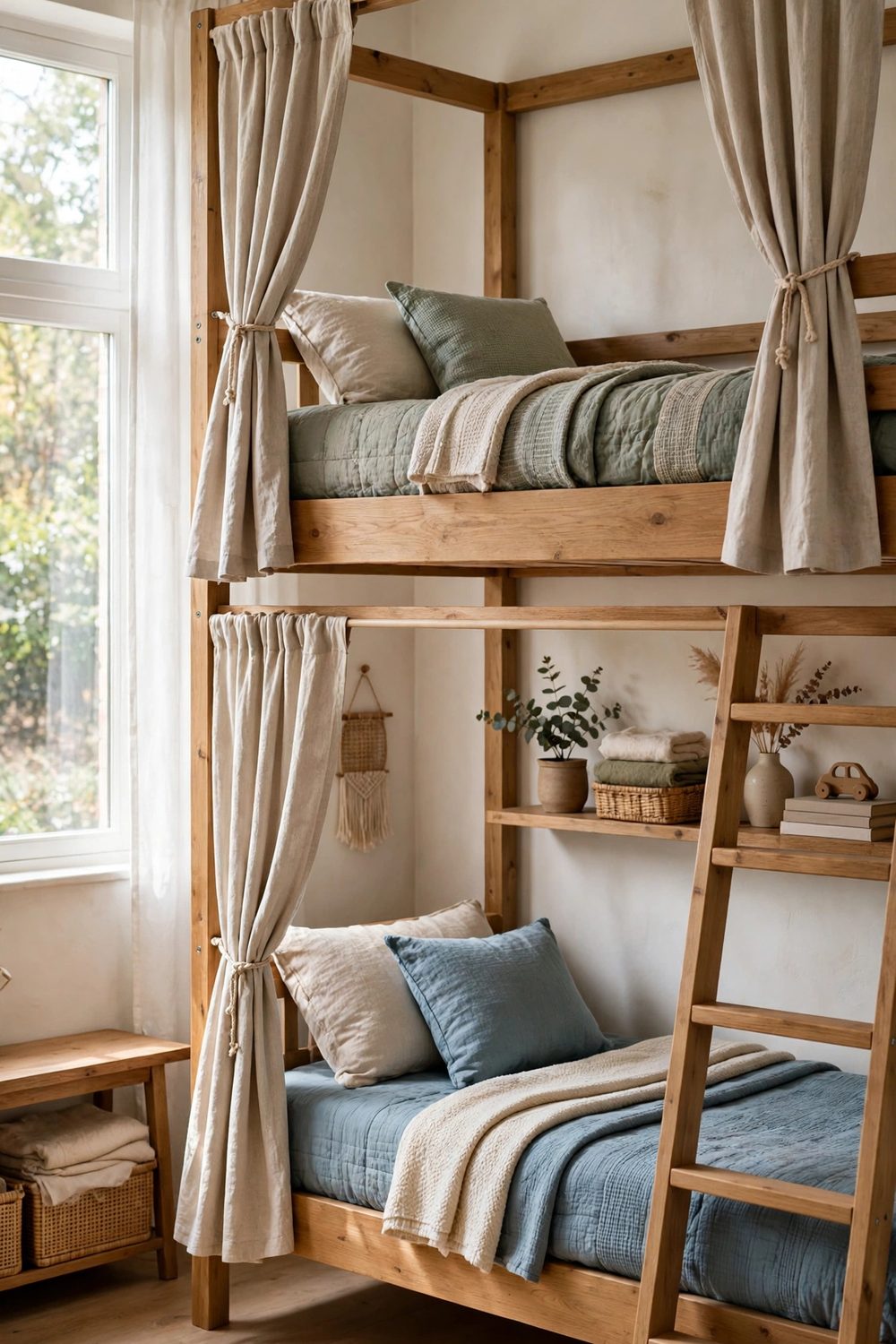
Bunk beds save floor space in a shared room, and curtains give each bunk a private feel. A child can read or rest behind a soft screen. Bedtime chats can fade out one bunk at a time.
Hang curtains on a simple rod or wire inside the bunk frame. Pick fabric that slides with ease and washes well. Pale colors keep the bunks from feeling dark inside.
Leave the top of each curtain a bit open for air. Closed bunks can feel warm at night. A gap at the top keeps air moving while the screen still blocks light.
Check ladders and rails stay clear of fabric. Curtains should hang inside the frame, away from climbing paths. Safe sleep comes before looks in any bunk setup.
7. Use Under Bed Boxes for Each Child
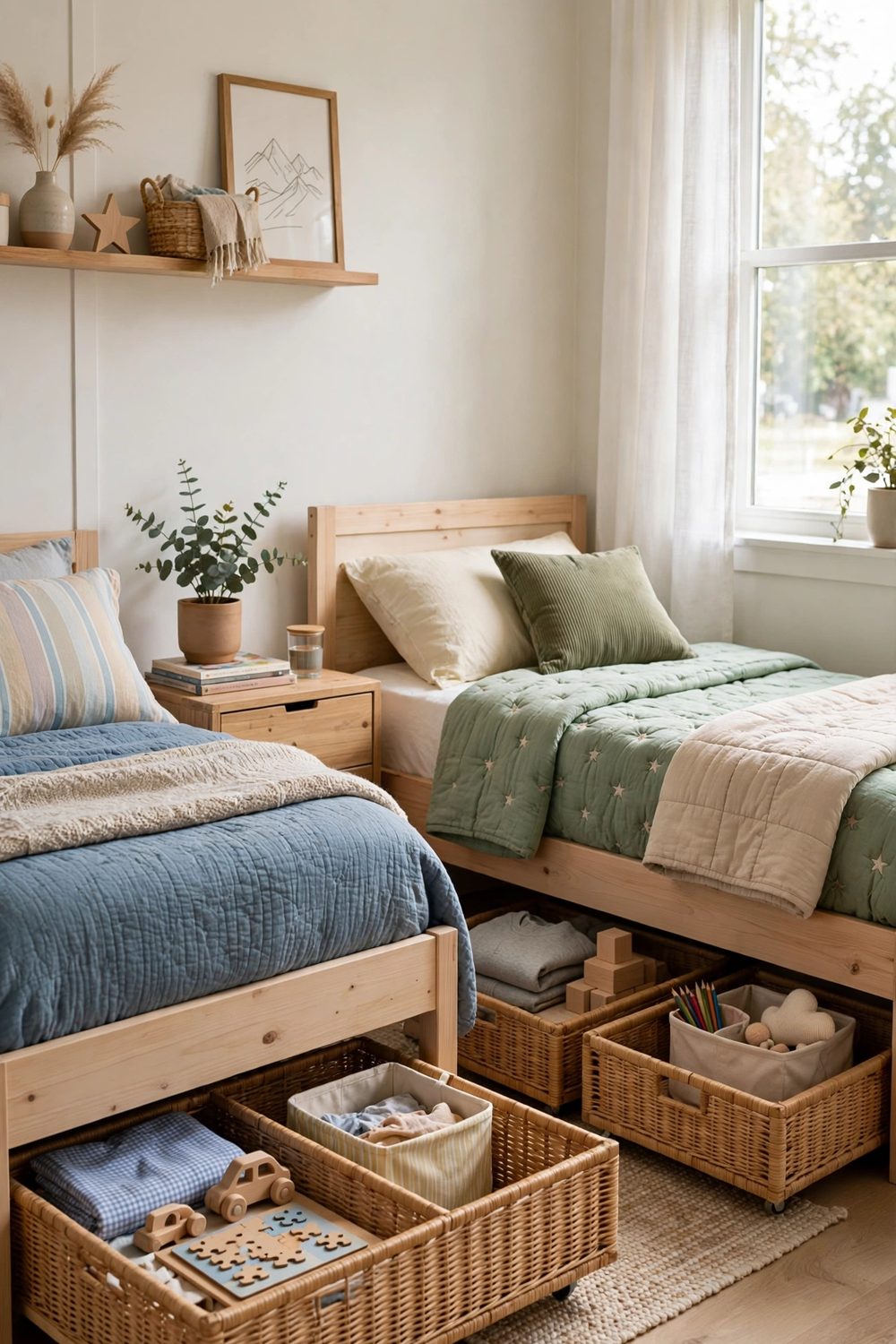
The space under each bed is free storage, so use it well. One or two flat boxes per bed hold shoes, seasonal clothes, or craft kits. Each child keeps their boxes under their own bed.
Pick boxes with lids to keep dust off stored items. Clear boxes help young children find things fast. Labels help older children keep sets in order.
Slide boxes in from the long side of the bed. The child can reach them without moving the bed. Boxes pushed to the far side get lost and stay unused for months.
Sort under bed boxes at each season change. Outgrown clothes move out, and fresh space opens up. A short sort stops clutter from building in hidden spots.
8. Add Two Nightstands With Separate Lamps
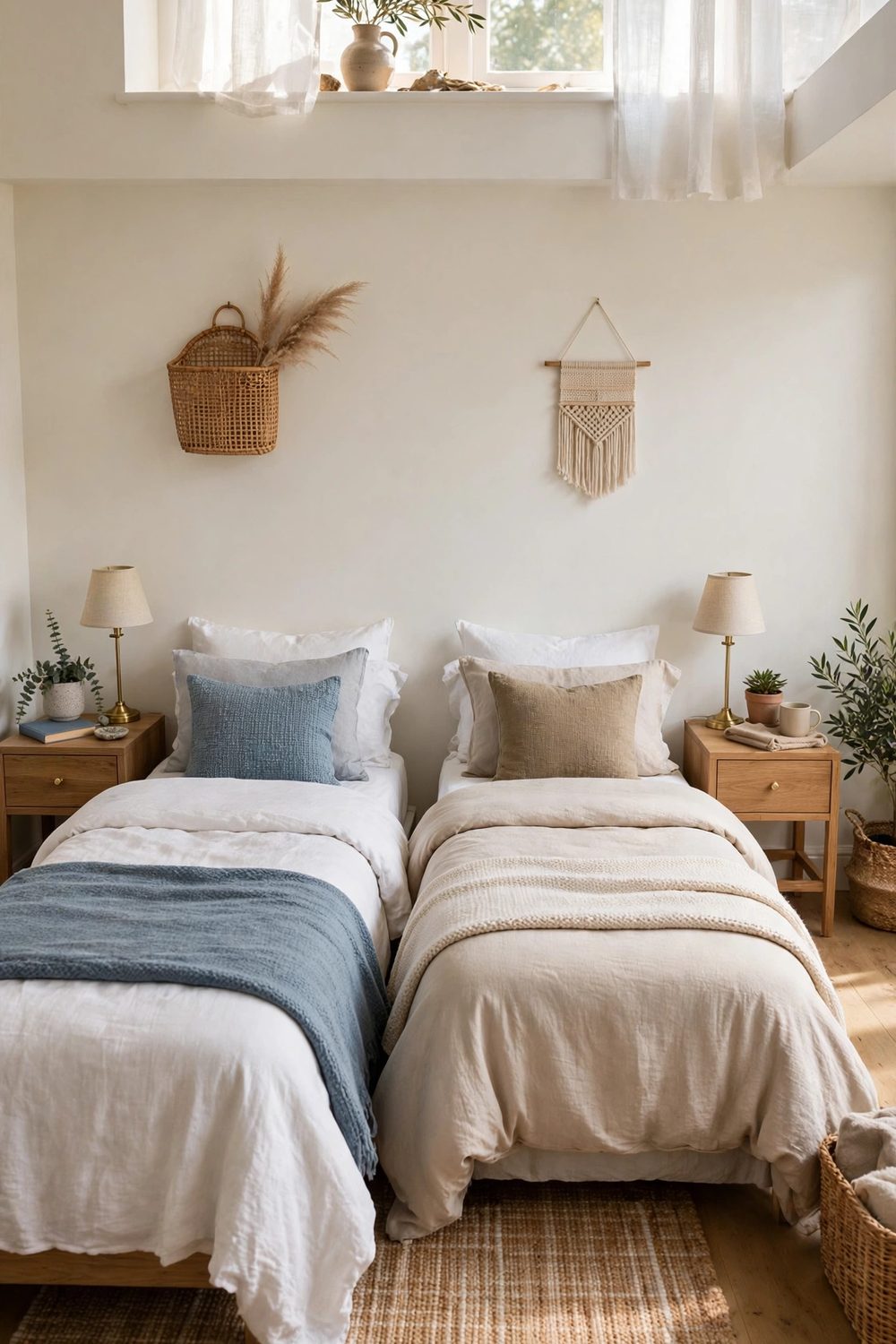
A nightstand each stops bedside clutter from mixing. Each child keeps a book, a water cup, and a small lamp on their own stand. Night time needs stay within reach of each pillow.
Separate lamps let one child read while the other sleeps. Low warm bulbs keep light soft and local. A shared bright ceiling light would wake both children at once.
Small stands or wall shelves both work for this job. Wall shelves free the floor for cleaning. Stands with a drawer hide small items like hair ties and notes.
Keep cords tucked behind each stand and out of walk paths. Loose cords trip sleepy feet at night. A clip or cover keeps them neat and safe.
9. Share a Big Rug in the Center
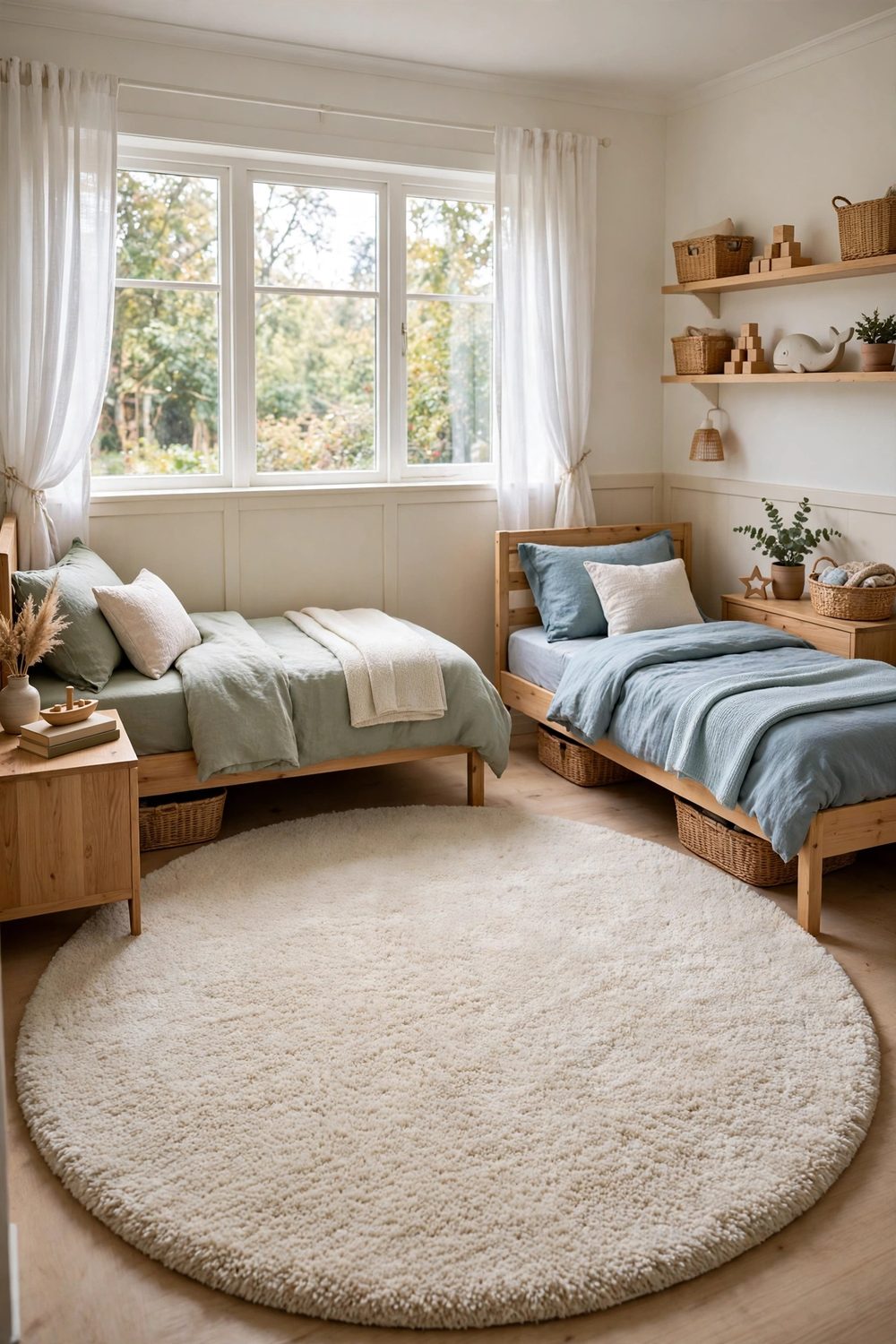
A big rug in the middle gives shared play a clear home. Toys land on the rug, and beds stay as rest zones. The rug also softens noise for rooms below.
Thick rugs warm cold floors in lower rooms too. That is one reason basement guest bedroom ideas often start with a large soft rug under the bed area.
Pick a rug large enough for both children to sit and play on. Low pile cleans with ease and lets toy cars roll. Pale patterns hide small marks between washes.
Set the rug so bed legs stay off its edges. A flat rug is safer for night walks. Tape corners down if they lift when the door opens and closes.
10. Keep Toys in Labeled Bins on One Wall
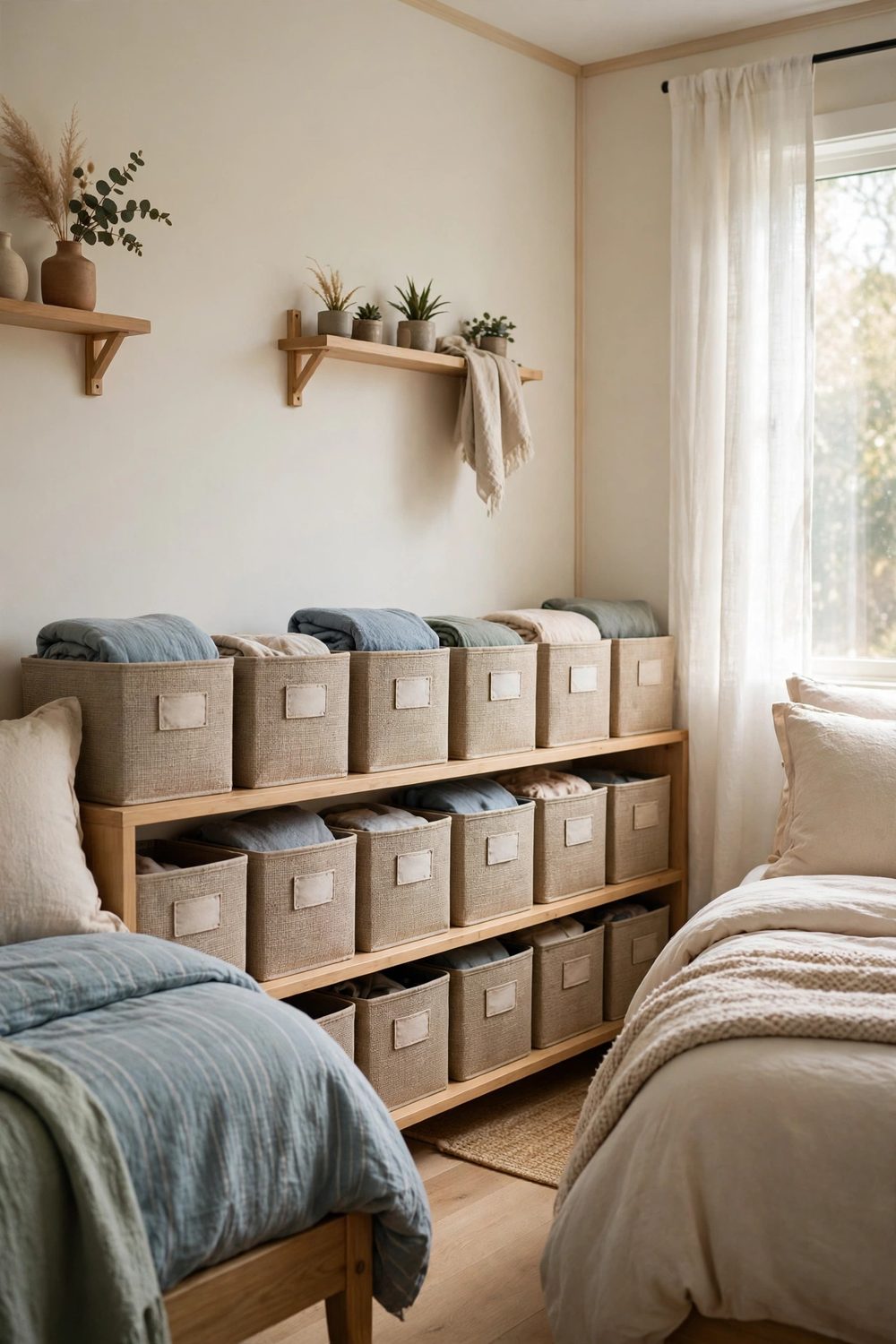
One toy wall keeps play gear out of sleep zones. Low shelves with bins let both children reach and tidy toys. Labels with words or pictures show where each set belongs.
Give shared toys a shared bin and personal toys a bin each. The split respects ownership while the shelf stays shared. Rows drop when rules are clear to both children.
Keep the bins light enough for a child to carry. Heavy bins get dragged and dumped. Small bins for each toy type make tidy up a quick sorting game.
Rotate a few toys out every month or so. Fresh sets feel new again when they return. The shelf stays calm, and play stays focused on fewer things at once.
11. Add a Shared Reading Corner With Cushions
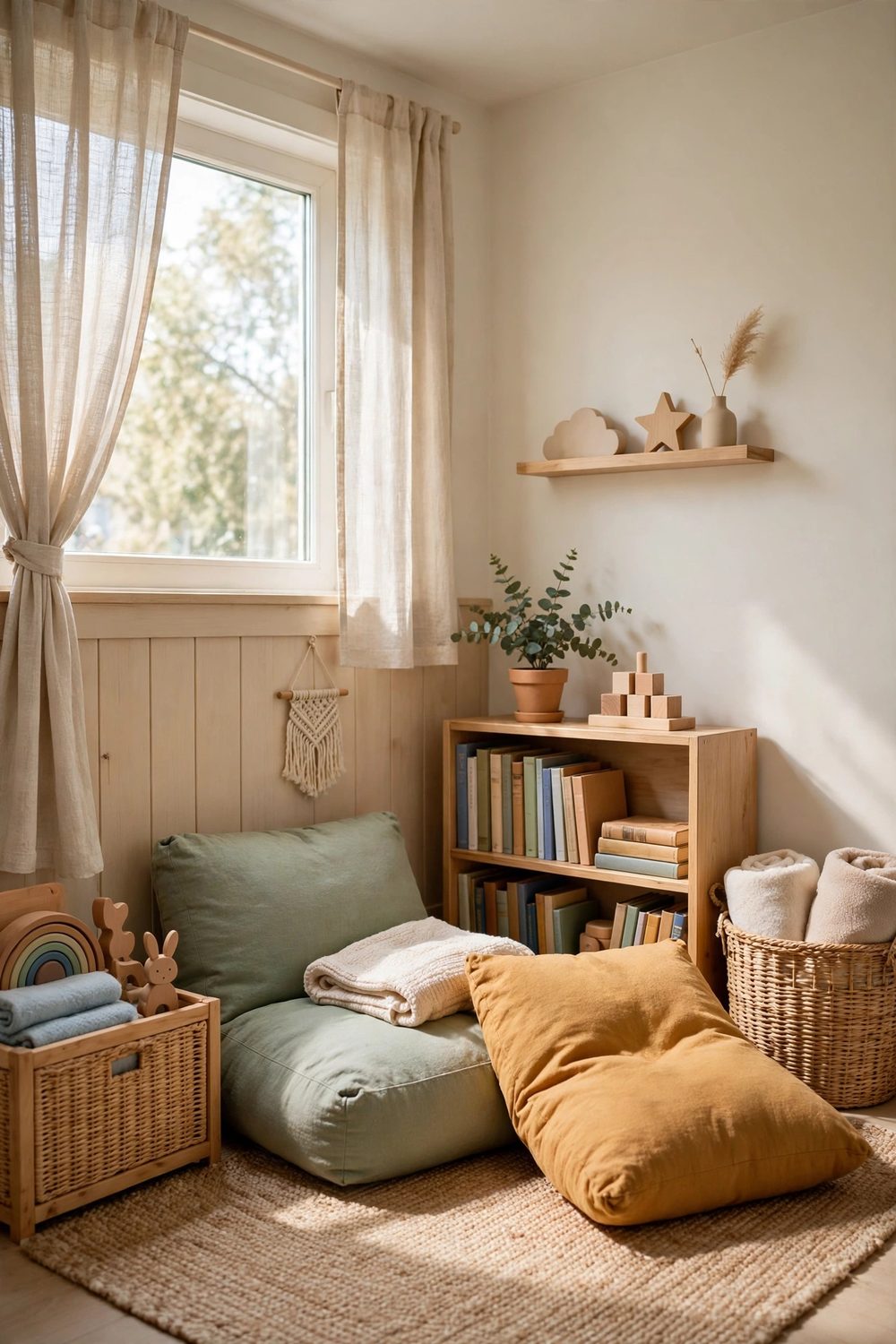
A reading corner gives siblings a calm shared spot that is not a bed. Two big cushions and a low shelf of books fit in most corners. Story time can happen side by side.
Place the corner near the best light in the room. A small lamp covers dark afternoons. Keep the book shelf low so both children can pick and return books alone.
Set a simple rule for the corner, voices low and books shared. Calm rules help the corner stay a rest spot. Rough play belongs on the center rug instead.
Swap the books on the shelf each week. A fresh row invites new reading habits. Books that no one picks can move to the main shelf for a rest.
12. Use Two Wardrobes or Split One Large Closet
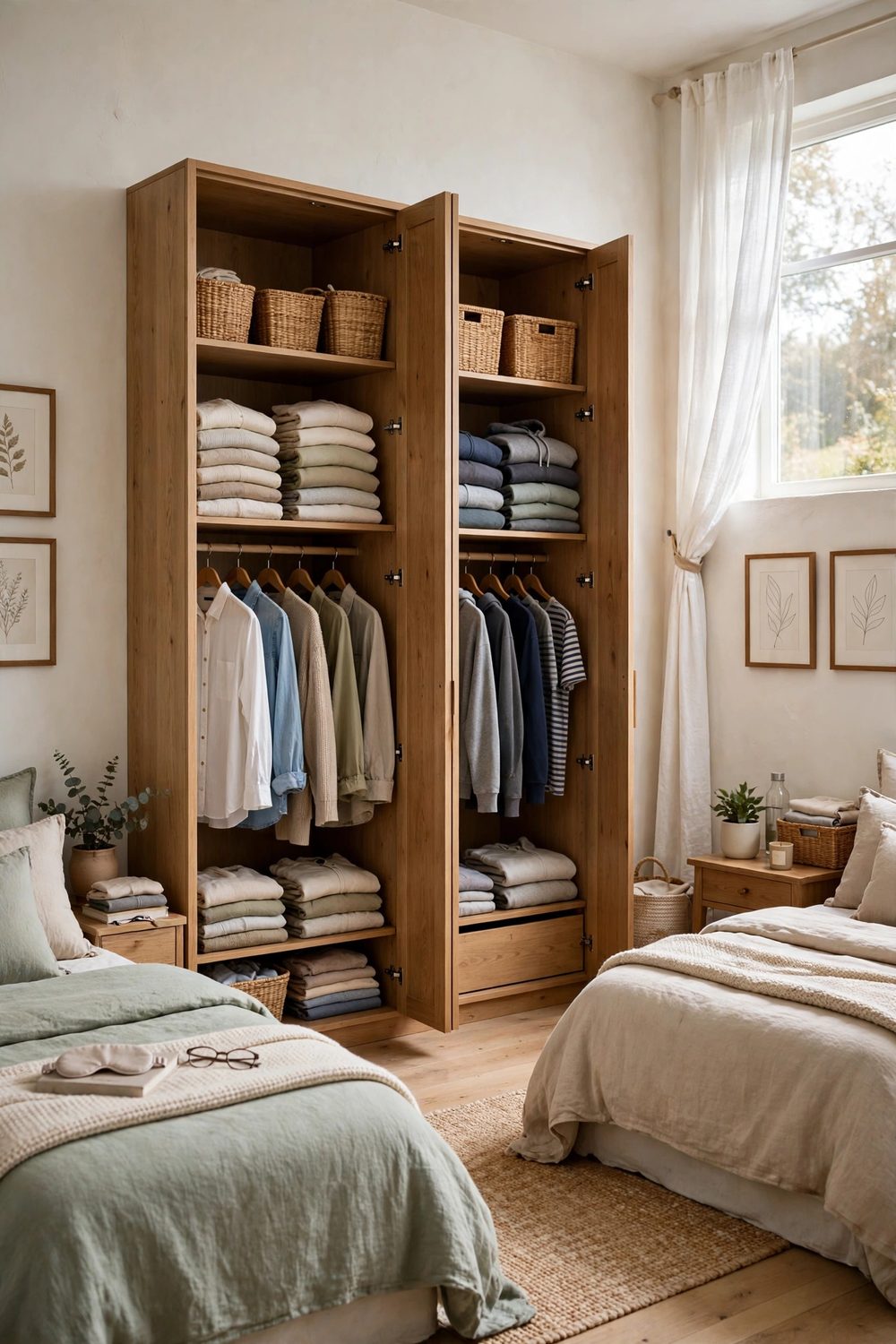
Clothes cause many shared room rows, so split hanging space with care. Two slim wardrobes give the clearest split. One large closet works if each child takes one side and one shelf level.
Use hangers in two colors to mark each side at a glance. Dressing in a rush stays calm when rails are clear. School uniforms can hang at the front of each side.
Keep a shared shelf for items both children use, like hats or swim gear. Label that shelf as shared so it stays fair. Personal shelves sit above or below the shared one.
Add hooks on the back of the door for bags and robes. Door hooks use dead space well. Keep hooks at heights both children can reach with ease.
13. Hang Art From Both Children Above the Beds
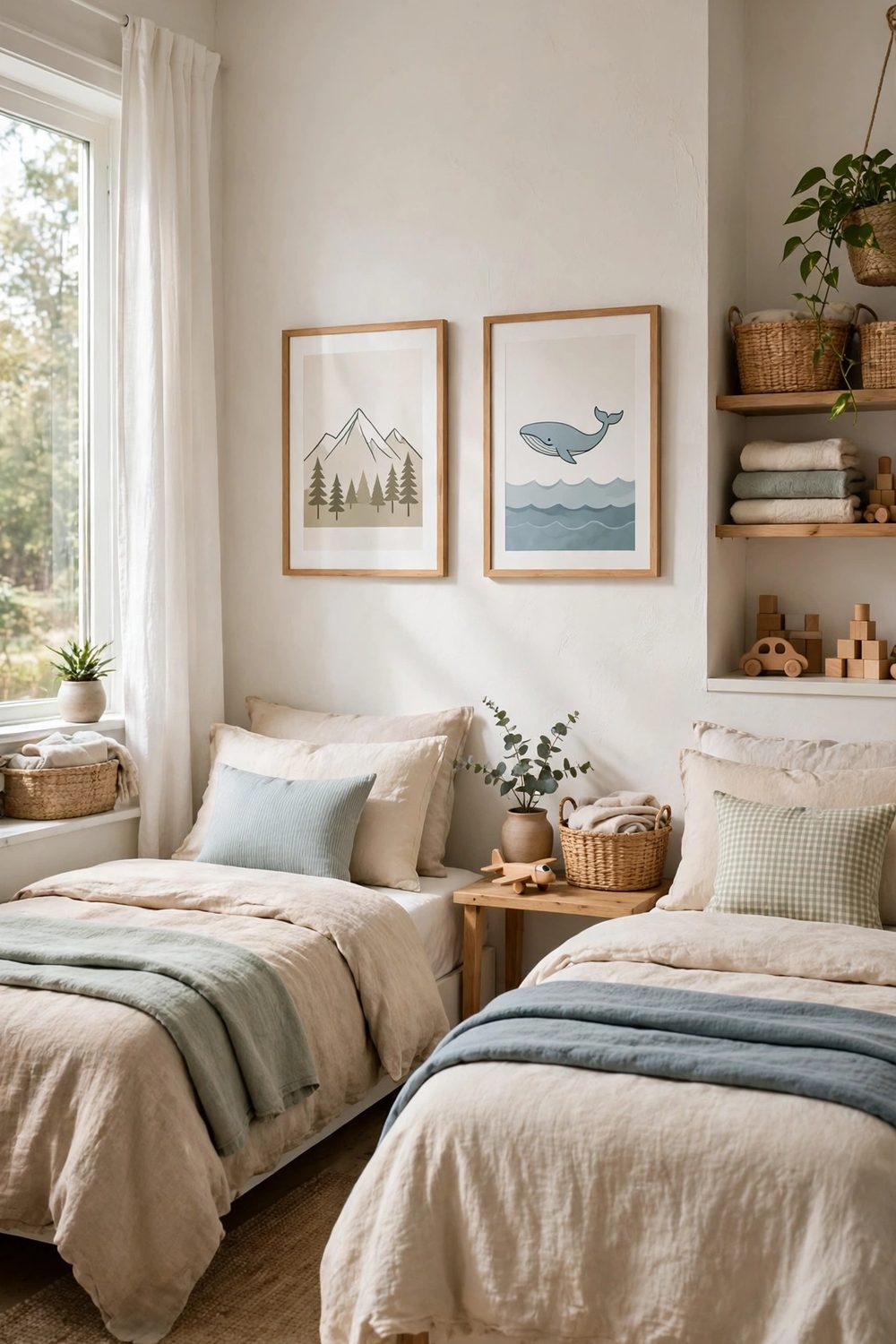
Art above each bed marks that side as personal space. Frame one or two pieces from each child in the same style of frame. Equal space on the wall keeps things fair.
Swap art each school term to keep walls fresh. Old pieces can go into a folder in a drawer. New work gets its moment, and walls stay free of clutter.
Use safe fixings that hold frames firm above pillows. Light frames with no glass suit beds below. A fallen frame should never be a night time risk.
Let each child pick the piece that goes up. Pride in the choice helps children care for their side. The room gains color that means something to them both.
14. Keep a Calm Shared Color Base
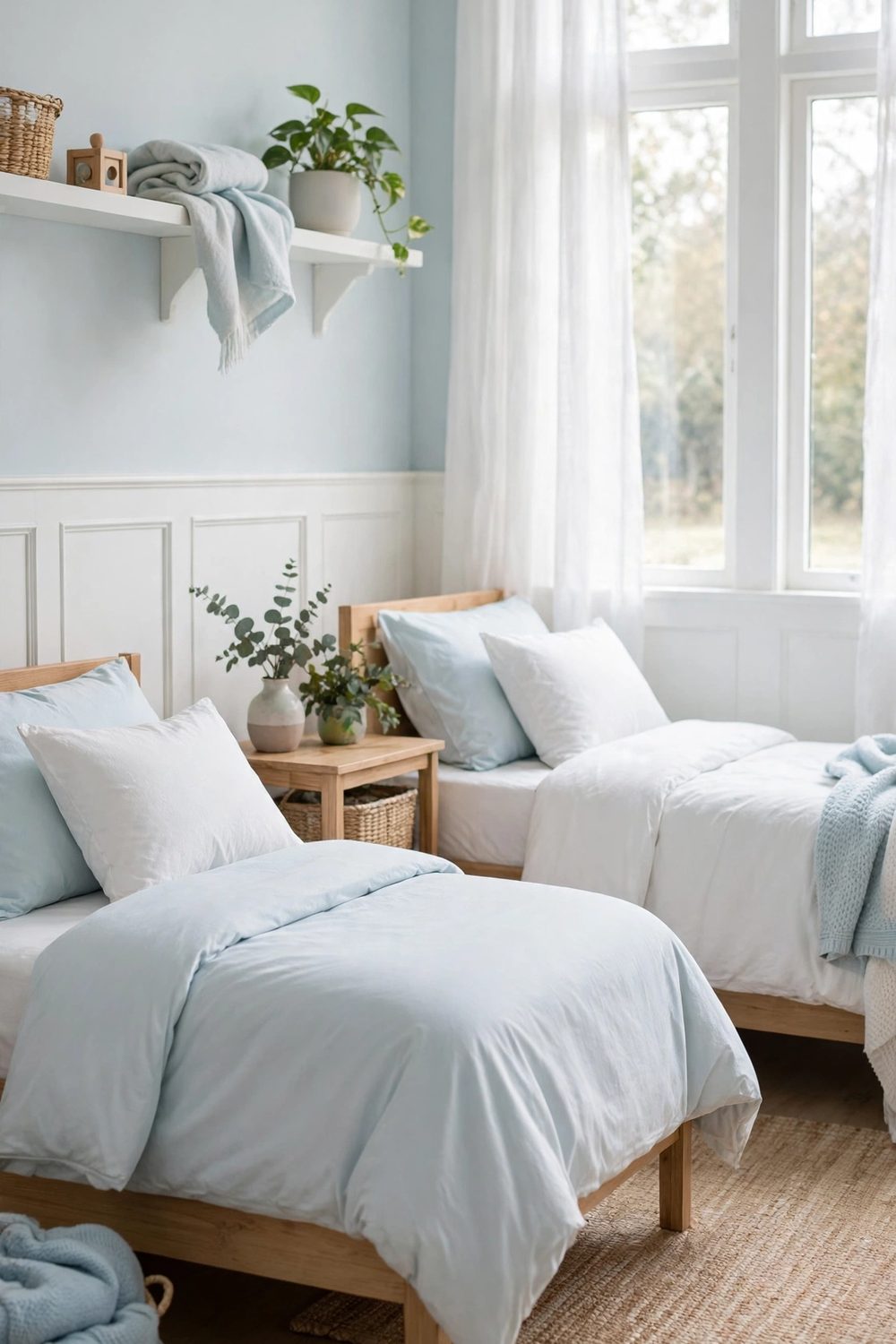
A calm base color helps two sets of tastes live in one room. Pale walls and plain bedding let personal colors show in small items. The room feels restful even when toys are bright.
Pick the base as a pair, with both children in the chat. A color both children accept causes fewer rows later. Soft white, pale grey, and light sand all pair well with most accent colors.
Add color through cushions, throws, and art that can change. Paint is slow to redo, but a throw swaps in minutes. This keeps updates cheap as tastes grow and shift.
Keep large furniture in the same finish for both sides. Matched wood or white frames calm the eye. The room reads as one space with two loved corners inside it.
15. Add Blackout Curtains for Better Sleep
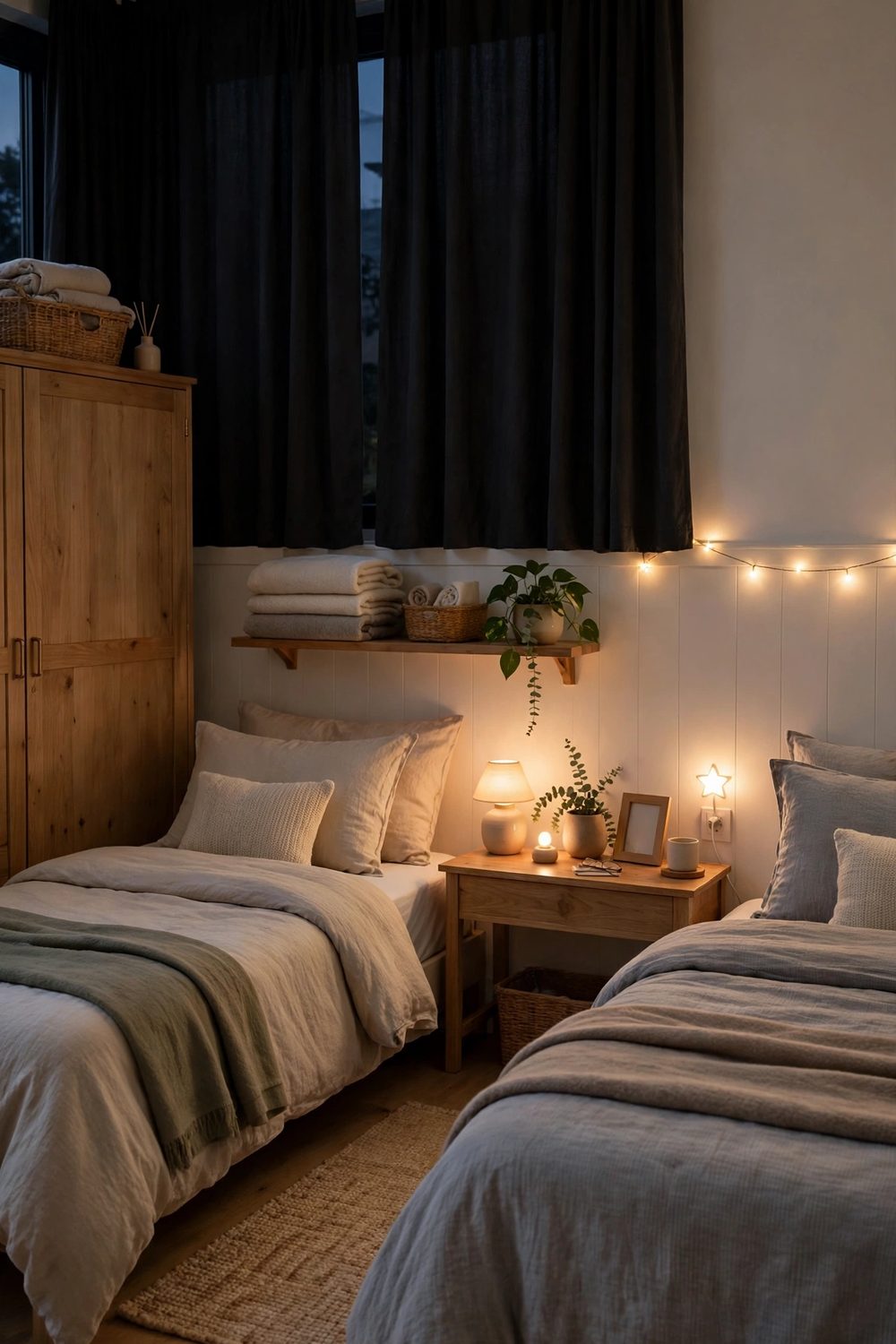
Blackout curtains help two children sleep through early summer light. Both beds gain the same dark room at bedtime. Good sleep makes shared mornings far more cheerful for everyone.
Small spare rooms use the same sleep trick for young guests. These small guest bedroom ideas show how dark curtains and tidy beds help any small room rest well.
Fit curtains wide enough to cover light leaks at the edges. A pelmet or a close rail helps block top light. Check the fit at bedtime on a bright evening.
Pair curtains with small night lights by each bed. A child who wakes can find the door with ease. Low warm lights keep the room calm for the child still asleep.
A shared room works when sleep, storage, and play each have a clear place. Two beds with zones of their own keep siblings close without crowding. These dream bedroom ideas for kids in a shared sibling room start with fairness and build calm from there.
Begin with the beds and the storage split this week. Add labels, bins, and one shared rug. Small fair steps now save many rows later, and the room will feel bigger for both children each day.


