

15 Dream Bedroom Ideas Under $500 for a Stylish, Cozy Makeover
A beautiful bedroom does not have to come with a designer-sized price tag. With a $500 budget, you can make meaningful changes by focusing on the parts of the room that create the biggest visual and practical difference. Fresh bedding, paint, curtains, lighting, rugs, and carefully chosen accessories can completely change how an existing bedroom feels without replacing every piece of furniture.
The smartest approach is to keep the expensive basics you already own, especially a good mattress and usable furniture, then spend your budget on visible upgrades. Current budget bedroom makeovers commonly focus on textiles, lighting, wall treatments, storage, and small furniture rather than attempting a complete renovation.
These 15 dream bedroom ideas under $500 are designed to help you create a room that feels comfortable, polished, and personal while keeping your spending under control.
This post contains affiliate links. If you buy through them, we may earn a small commission at no extra cost to you. See our Affiliate Disclosure.
1. Warm Neutral Bedroom Makeover
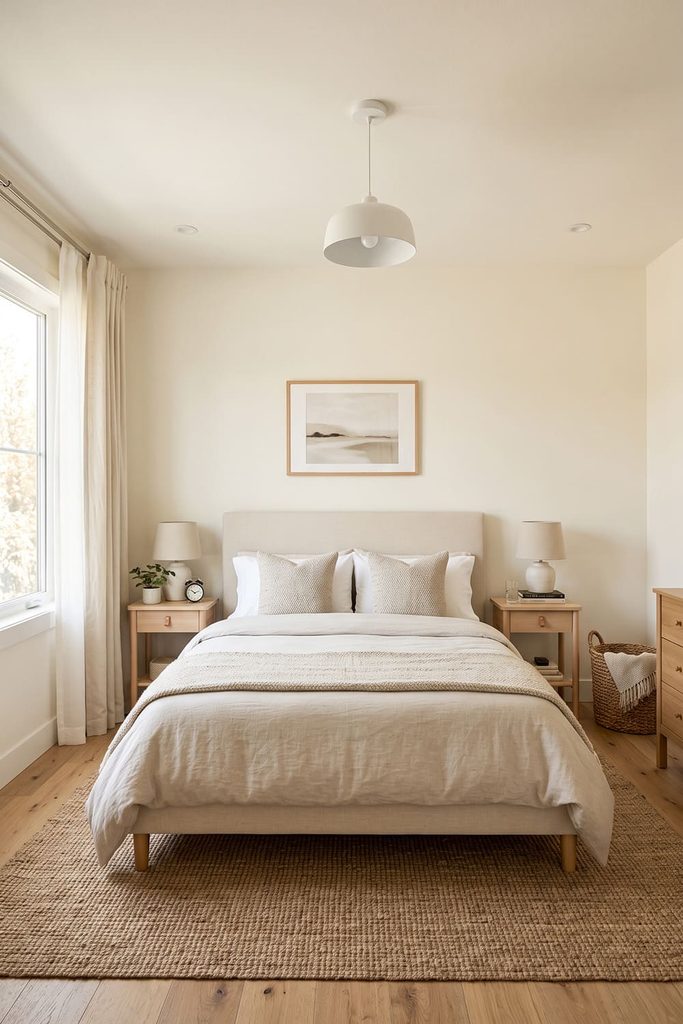
Create an expensive-looking bedroom with a simple palette of cream, beige, oatmeal, tan, and warm brown. Instead of replacing your furniture, let the color scheme do most of the work.
Start with a neutral duvet cover or comforter, then add two decorative pillows and a textured throw. If the walls are already a suitable color, keep them and spend the money on bedding and window treatments.
Add a small woven basket, inexpensive ceramic lamp, or secondhand wooden accessory for texture. Natural-looking materials can make an inexpensive room feel more considered. A budget of around $150 to $300 can cover many of the visible changes, leaving money for artwork or a small rug.
2. Paint the Bedroom for a Dramatic Change
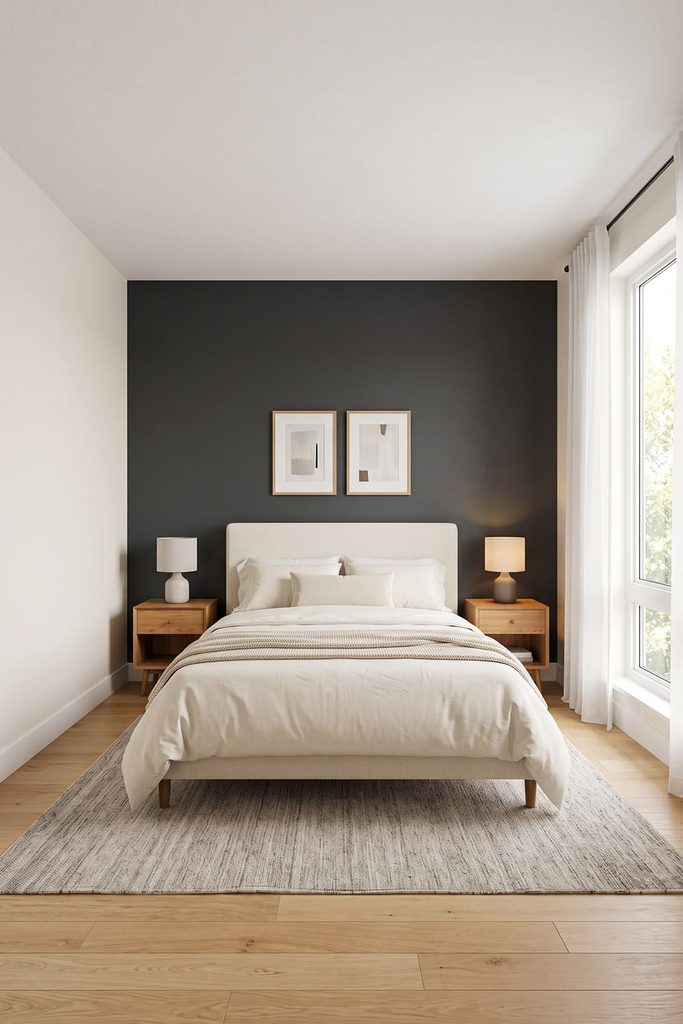
Paint is one of the most effective ways to change a bedroom without spending heavily on furniture. You can paint all four walls or concentrate on the wall behind the bed.
Soft greige, muted sage, dusty blue, warm white, and earthy beige are versatile choices. If you prefer drama, try a deeper navy or charcoal shade behind the bed while keeping the other walls lighter.
A typical budget can include paint, rollers, brushes, painter’s tape, and drop cloths while still leaving room for another small upgrade. Take your time preparing the walls before painting. Filling small holes and cleaning dusty surfaces can make an inexpensive paint job look much more polished.
3. Build a Luxe Bed With Affordable Layers
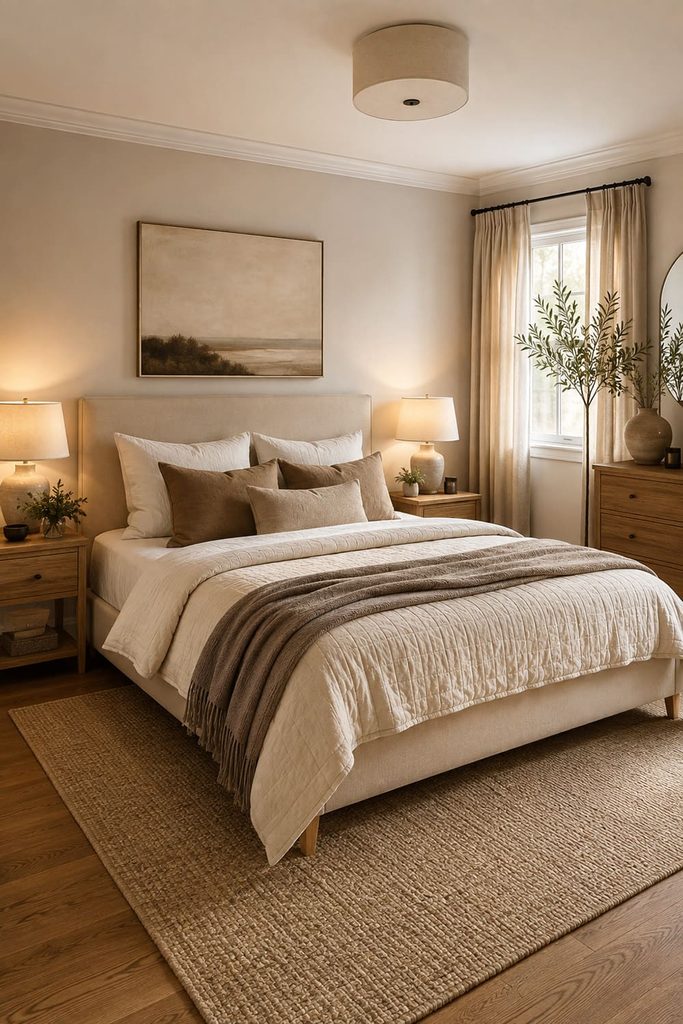
Make the bed the focal point instead of buying an entirely new bedroom set. Start with clean, simple bedding in one dominant color and add layers through texture.
A duvet cover, quilt, two standard pillows, a couple of accent cushions, and a folded throw can create the appearance of a fuller, more luxurious bed. You do not need every layer to be expensive. Spend more on the item you touch most and save on decorative accessories.
Choose related shades instead of trying to match everything exactly. Cream bedding with beige, taupe, or muted brown accents can look sophisticated while remaining easy to update later. This is one of the easiest ways to make an existing bed feel completely different.
4. Add Floor-to-Ceiling-Looking Curtains
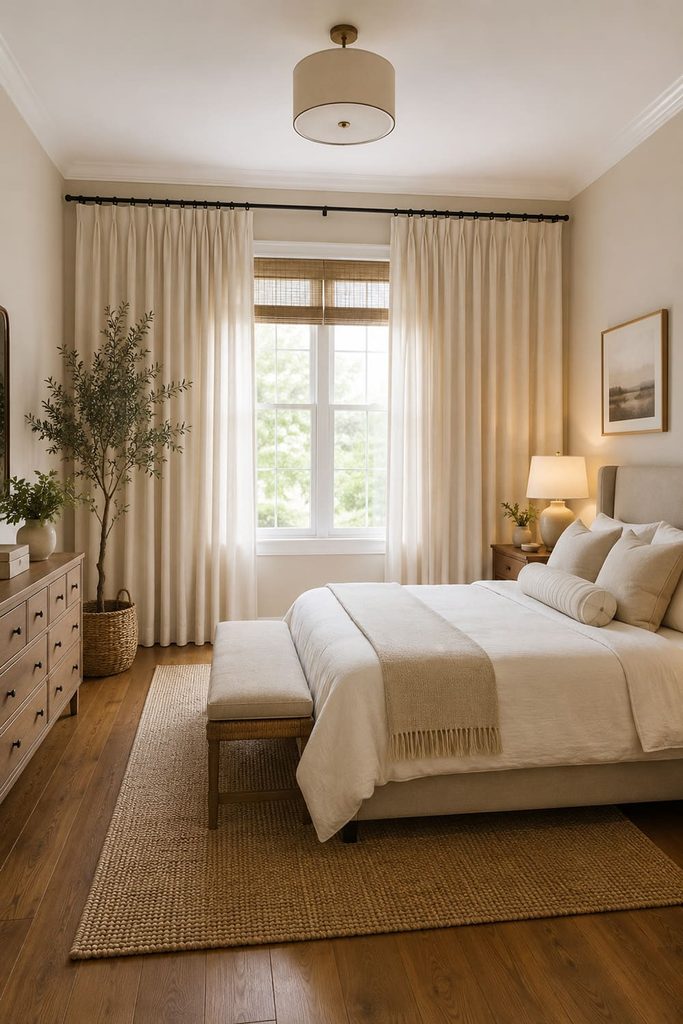
Window treatments can change the proportions of a bedroom. Instead of mounting curtains directly around the window frame, install the rod higher and extend it wider when the room allows.
Choose long panels that reach close to the floor. Cream, ivory, oatmeal, soft gray, or muted colors can work with many bedroom palettes.
If outside light makes sleeping difficult, consider room-darkening or blackout curtains. A dark, quiet bedroom is generally recommended as part of a sleep-friendly environment.
You do not need custom curtains to create this look. Ready-made panels can work beautifully when they are hung thoughtfully. Use part of the budget for the curtain rod and panels, then save the remaining money for lighting or bedding.
5. Create a DIY Upholstered Headboard
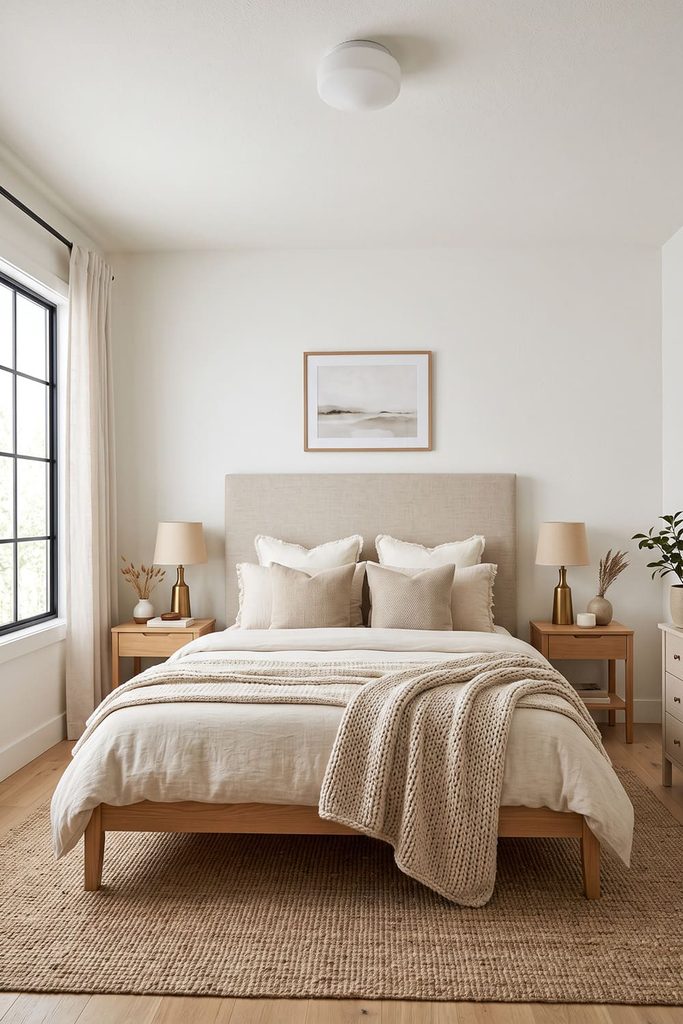
If the bed frame looks plain, make the wall behind it more substantial with an inexpensive DIY headboard.
A large plywood panel, foam padding, batting, and attractive fabric can be turned into a simple upholstered design. If you want an easier project, mount a large quilt, textile, or woven wall hanging behind the bed.
Choose a fabric that works with your existing bedding. A neutral linen-look material creates a relaxed appearance, while a darker fabric can add drama.
The headboard does not need elaborate details. A clean rectangular shape can look surprisingly sophisticated when it is large enough to visually anchor the bed. This project can also cost considerably less than purchasing a ready-made upholstered headboard.
6. Give the Bedroom a Boutique-Hotel Feel
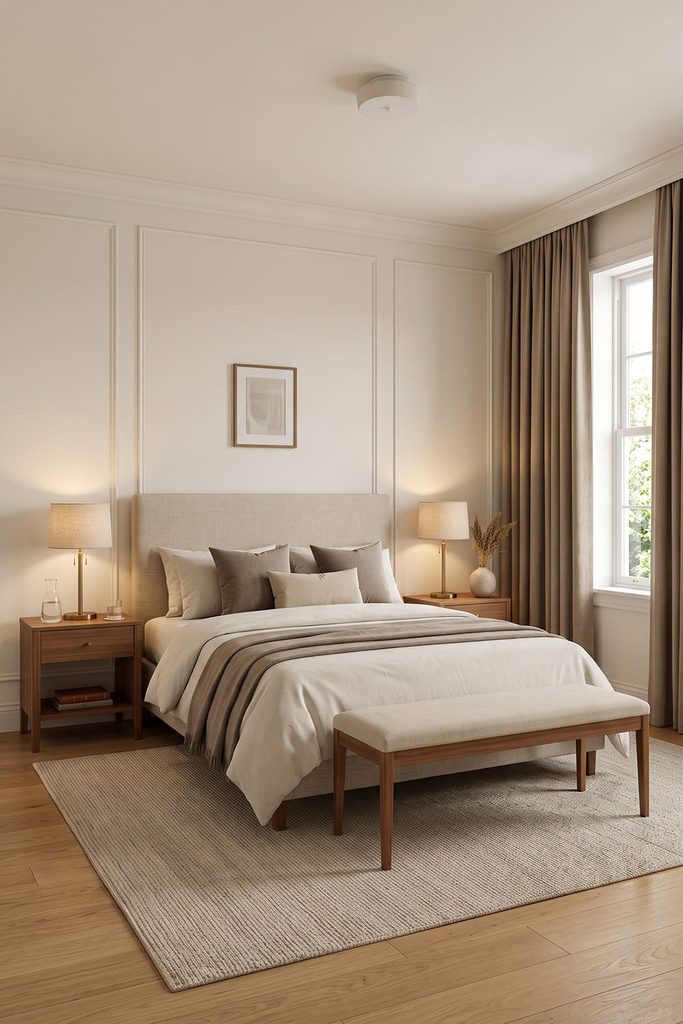
A hotel-inspired bedroom is less about expensive furniture and more about consistency. Choose one restrained color palette and repeat it across the bedding, curtains, lamps, and accessories.
Start with crisp neutral bedding. Add matching bedside lamps and keep both nightstands relatively uncluttered. A small bench at the foot of the bed can provide another layer of visual interest if you find an affordable secondhand option. Otherwise, skip it and invest in better bedding.
Use warm, dimmable bedside lighting rather than relying entirely on a bright overhead fixture. Lower evening light can help create a more relaxing transition toward bedtime. The finished room should feel orderly without becoming overly formal.
7. Make a Small Bedroom Feel Larger
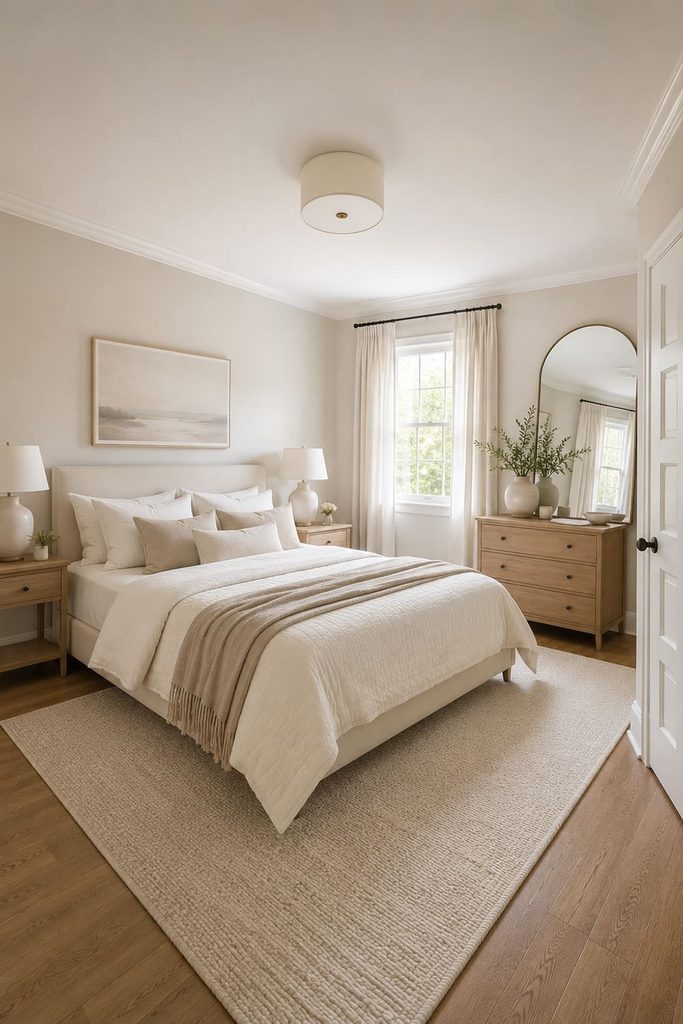
You can create the feeling of more space without knocking down a wall. Start by removing furniture and accessories that are rarely used.
Position the bed so walking paths remain clear, and avoid placing bulky furniture where it blocks windows or doorways. A large mirror can reflect light and make the room feel more open.
Choose bedding and curtains in similar light tones to create visual continuity. Keep patterns relatively small and use one or two larger decorative elements instead of many little objects.
This makeover can cost almost nothing if you already have the furniture and mirror. Spend the budget only on the pieces that solve an actual problem. A room that feels spacious often looks more expensive simply because it is not overcrowded.
8. Create a Cozy Reading Corner
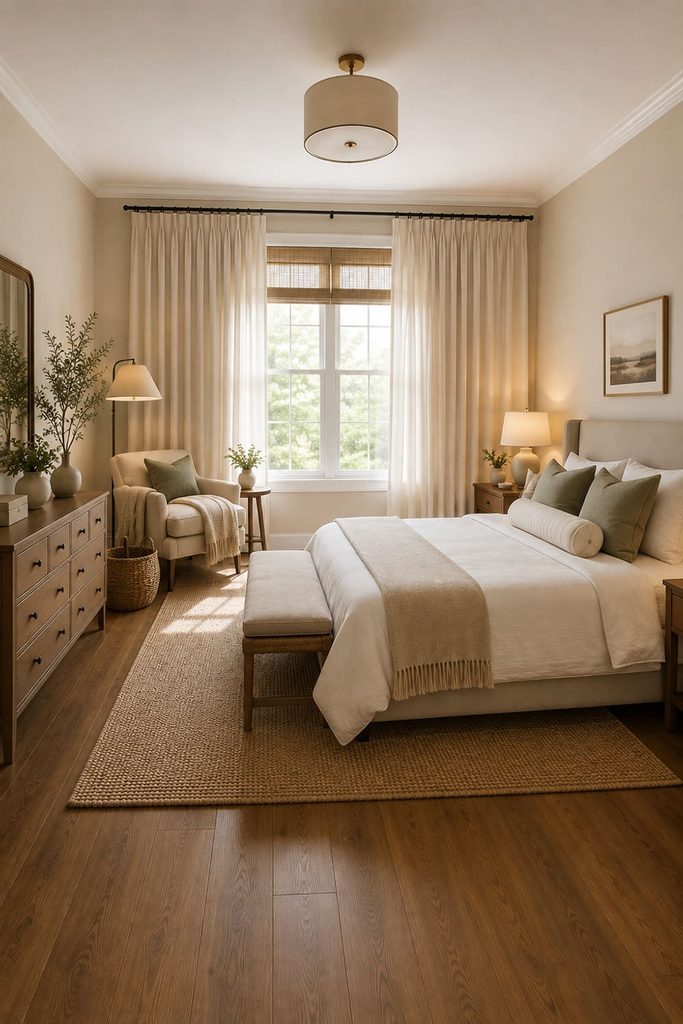
If your bedroom has an unused corner, turn it into a small retreat rather than filling the area with decorative objects.
Look for an affordable secondhand armchair, compact lounge chair, or wooden chair with a comfortable cushion. Add a small side table and a floor lamp. A soft throw over the chair makes the corner feel inviting while providing practical comfort.
Keep the palette connected to the rest of the bedroom. If the bed is cream and beige, choose a chair in brown, oatmeal, or muted green rather than introducing several unrelated colors.
You can create this entire corner for a relatively small portion of the $500 budget, especially if you find the chair secondhand.
9. Create an Accent Wall With Removable Wallpaper
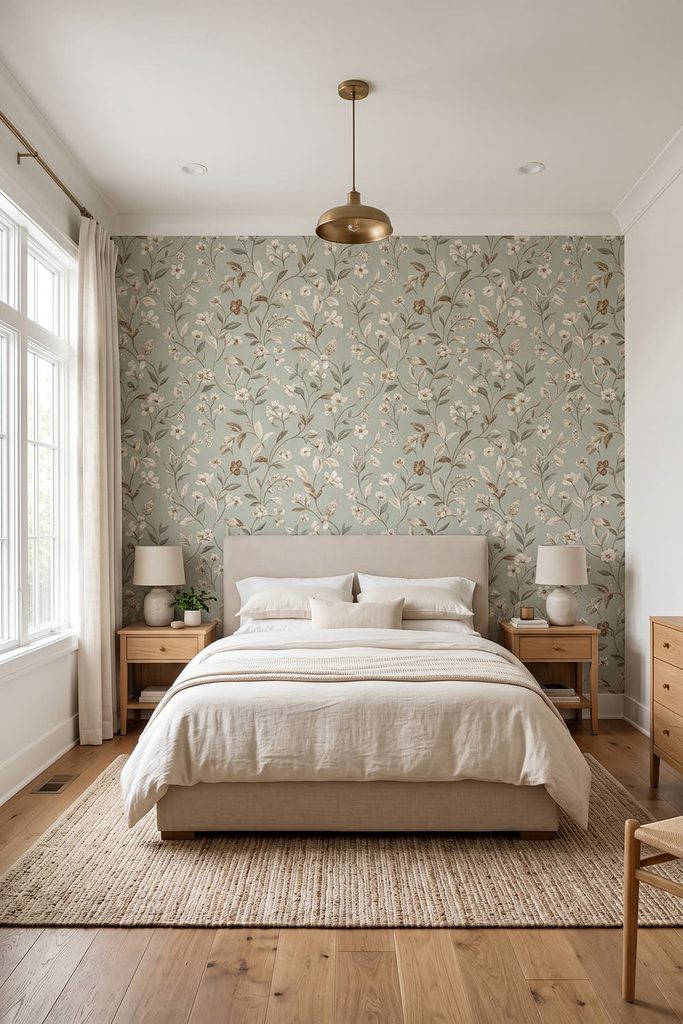
For a bedroom with plain walls, peel-and-stick wallpaper can provide a dramatic change without a permanent renovation. Use it behind the bed to create a focal point. Choose a subtle botanical print, small geometric pattern, textured neutral design, or understated mural.
Do not cover every wall unless the pattern is extremely subtle. One feature wall generally creates enough visual interest while keeping material costs lower. If wallpaper is still too expensive, consider painting a simple arch, rectangular panel, or color-blocked section behind the bed.
Budget decorating experts frequently recommend concentrated wall treatments because they can create significant visual impact without requiring an entire room renovation.
10. Build a Bedroom Around One Beautiful Rug
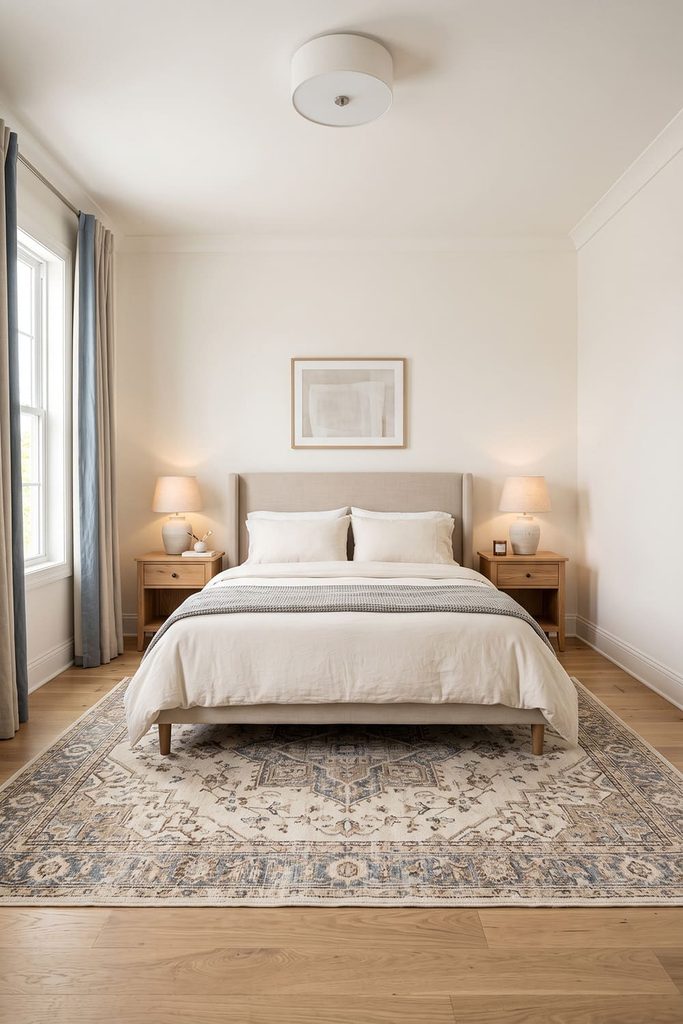
A rug can bring furniture and colors together while making the bedroom feel warmer. If a large area rug is outside your budget, look for a medium-sized option and position it strategically.
Place the rug underneath the lower two-thirds of the bed so it extends beyond the sides. Alternatively, use two smaller matching rugs beside the bed.
Choose a design that contains colors already present in the room. A muted vintage pattern can add character, while a simple textured rug works well in a minimalist bedroom.
If the existing floor is attractive, you may not need a rug at all. Put that portion of the budget toward curtains, bedding, or lighting instead.
11. Refresh Old Furniture With Paint and New Hardware
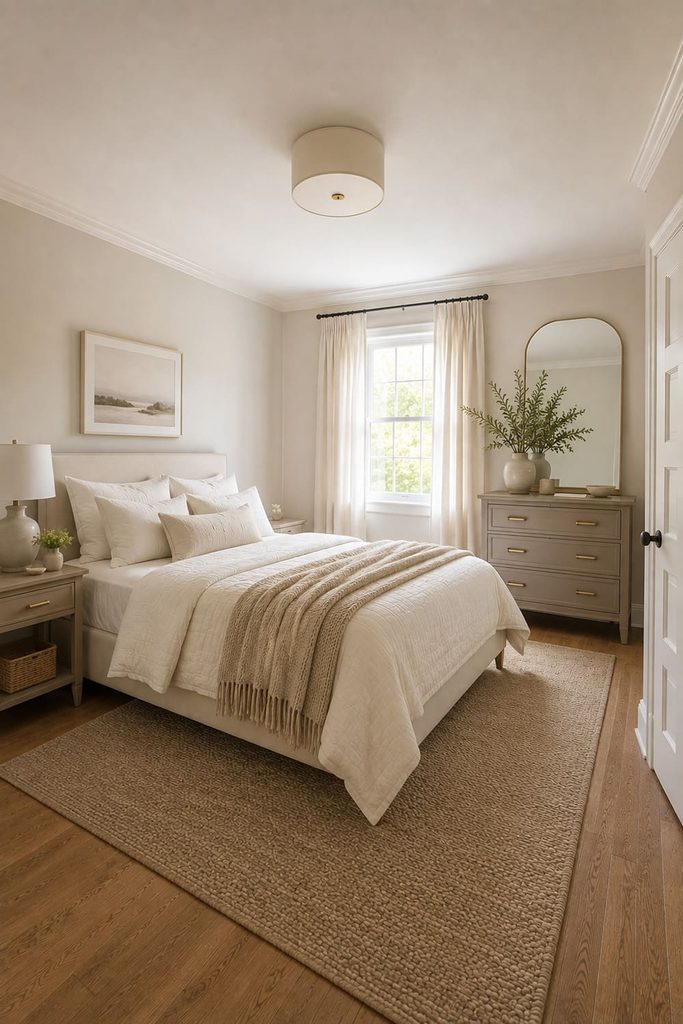
Instead of replacing a dresser or nightstand, give it a second life. Clean the surface, repair obvious damage, lightly sand where necessary, and apply a suitable furniture paint.
New drawer pulls can make an especially noticeable difference. Black, brushed brass, antique bronze, or simple wooden hardware can change the character of a basic piece. For a coordinated bedroom, use the same hardware finish on multiple pieces.
Budget furniture upgrades are a long-standing DIY decorating strategy because inexpensive or existing pieces can be customized rather than replaced. Current furniture-hack trends continue to use paint, new handles, and surface treatments to give basic furniture a more distinctive appearance.
This approach saves money while giving the bedroom a more personal look.
12. Create a Soft Bedroom With Layered Lighting
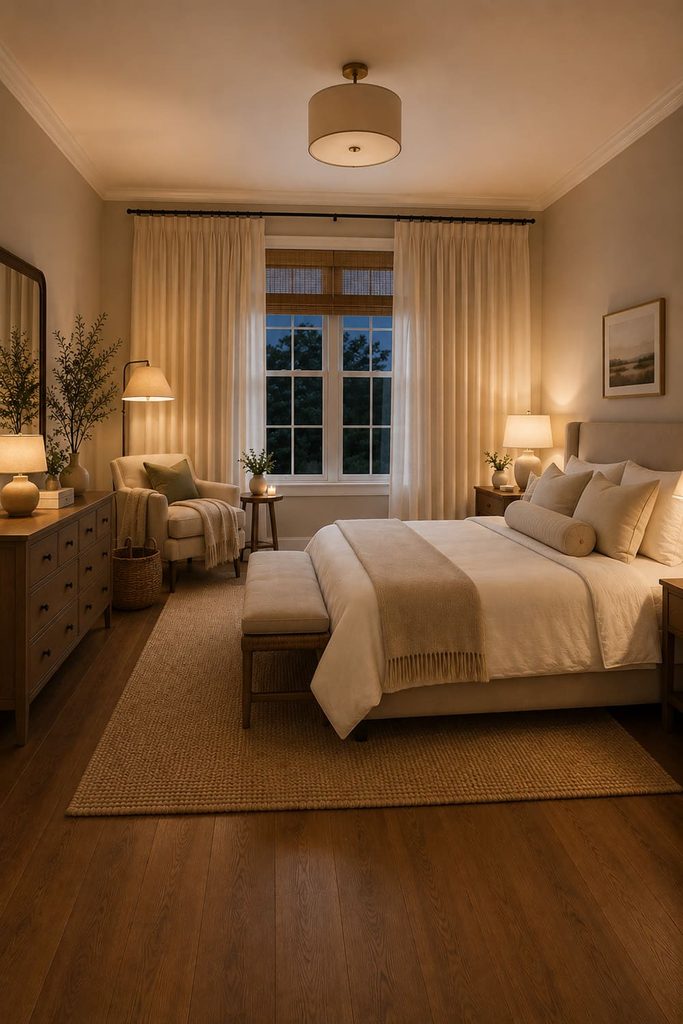
You can completely change the atmosphere of a bedroom by improving the lighting. Instead of depending on one ceiling fixture, use several smaller sources. Place a lamp on each bedside table if space allows. Add a floor lamp near a chair or use a small decorative lamp on a dresser.
Choose warm-toned bulbs and use dimmable options where possible. The goal is to have bright enough light for practical tasks while being able to lower the intensity in the evening.
Sleep guidance recommends keeping bedroom lighting dim before bedtime and making the sleeping environment as dark as possible. You can often create this layered effect for under $200, especially when combining affordable lamps with lighting you already own.
13. Turn an Empty Wall Into a Personal Gallery
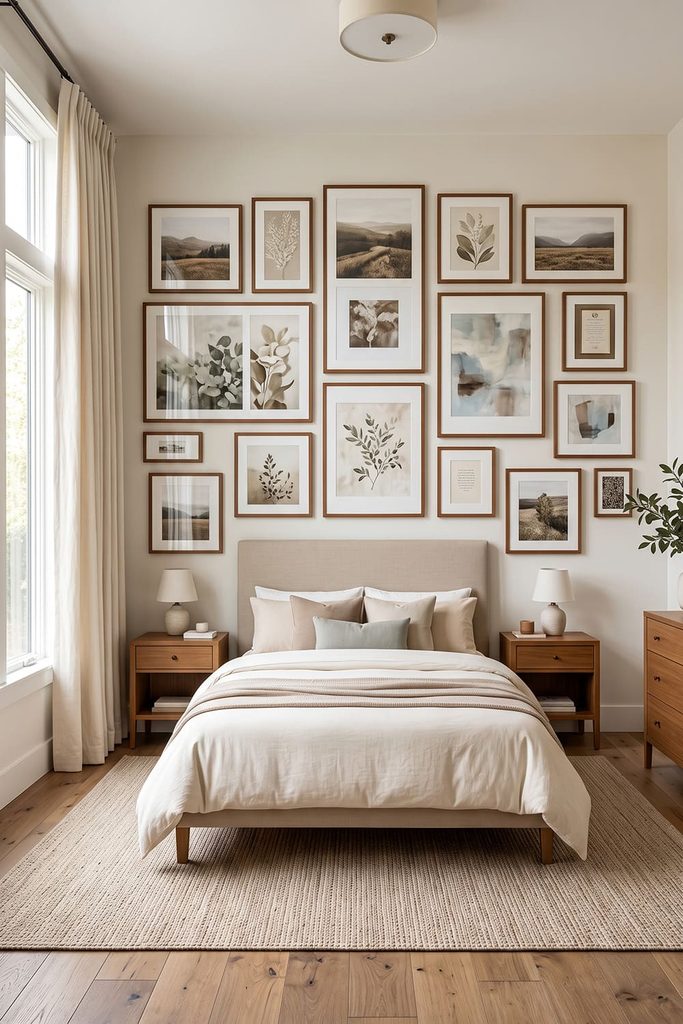
Skip expensive designer artwork and create a gallery wall using photographs, inexpensive prints, family memories, thrifted artwork, or your own creations.
Use matching frames if you want a clean appearance. For a more collected look, mix several frame styles while keeping the colors coordinated.
Lay everything on the floor before attaching anything to the wall. Start with the largest frame and arrange smaller pieces around it. Another inexpensive option is to print one large photograph or artwork piece and place it above the bed.
Personal images can make a bedroom feel much more meaningful than generic decorative pieces, and inexpensive frames allow you to change the collection over time.
14. Create an Earthy Bedroom With Thrifted Decor
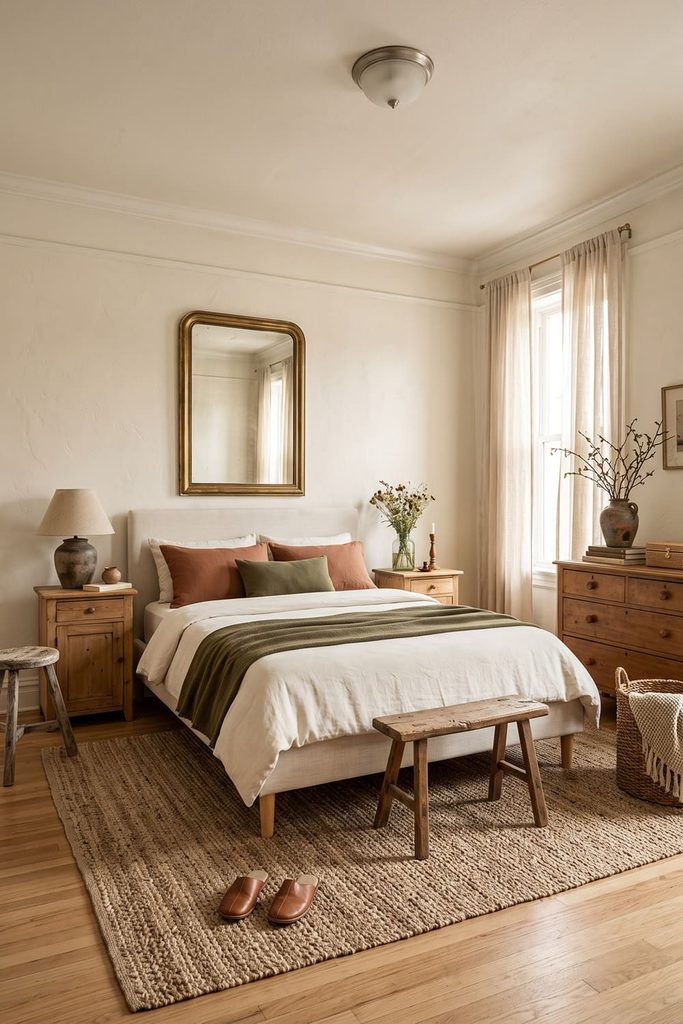
Build the room around natural colors and secondhand finds. Search thrift stores, flea markets, garage sales, and local resale platforms for wooden stools, baskets, mirrors, lamps, ceramic pieces, and small benches.
Choose a palette of cream, brown, olive, terracotta, and natural wood. Do not buy everything at once. Find one interesting piece and let it influence the next purchase. An older wooden nightstand may look beautiful beside modern bedding.
A vintage mirror can become the main decorative feature above a dresser. This approach makes the room feel collected instead of overly coordinated, while the money saved on accessories can be redirected toward things that matter more, such as comfortable bedding or quality lighting.
15. Create a Complete $500 Bedroom Refresh
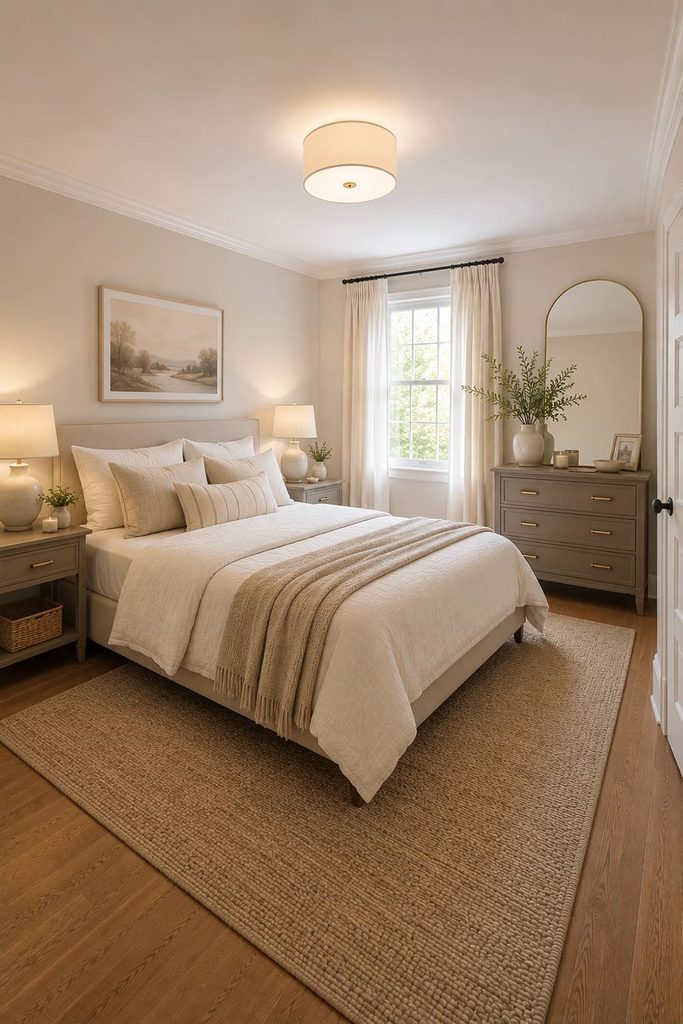
If you want several small improvements rather than one major change, divide the $500 into categories before shopping.
For example, you could allocate approximately $150 toward bedding, $100 toward curtains, $75 toward lighting, $75 toward a rug or floor treatment, $50 toward artwork, and $50 toward small accessories.
You can adjust those amounts depending on what you already own. If your curtains are excellent, spend that money on bedding. If the bed is already attractive, focus on the walls and lighting.
The important part is deciding what the room actually needs before buying anything. Recent budget bedroom guidance emphasizes planning the room first and prioritizing high-impact changes instead of purchasing random accessories.
A few coordinated upgrades can make the entire bedroom feel new without exceeding your $500 limit.
Conclusion
You do not need a complete furniture replacement or expensive renovation to create a dream bedroom. A $500 budget can go surprisingly far when you focus on the elements that have the greatest visual and practical impact.
Start with the existing room and decide what feels most dated, uncomfortable, or unfinished. Then prioritize the changes that address those problems. Fresh bedding, paint, curtains, layered lighting, a rug, DIY furniture updates, and personal artwork can work together to create a bedroom that feels thoughtfully designed.
Keep the room uncluttered, make nighttime lighting softer, and pay attention to temperature, noise, and darkness because a beautiful bedroom should also be comfortable for sleep.
Most importantly, do not feel pressured to spend the entire $500 at once. Start with one great change, live with it for a while, and build the rest of the room around it. A dream bedroom can come together gradually without going over budget.


