
15 Green and Orange Kitchen Designs That Bring Warmth and Life Into Your Home
There’s something about walking into a kitchen that feels alive. Not sterile, not cookie-cutter, but rich with color and personality — the kind of space that makes you want to linger a little longer over morning coffee. Green and orange might seem like an unlikely pairing at first glance, but together they capture exactly that feeling. Green brings the calm, grounded presence of nature — think moss, sage, and olive groves. Orange brings warmth, energy, and a touch of playfulness, evoking sunsets, citrus, and terracotta pottery.
This combination has been gaining serious traction in 2026, as homeowners move away from all-white, all-neutral kitchens in favor of spaces with genuine character. Designers are leaning into deep, nature-inspired greens paired with burnt orange accents, and the results are anything but boring. Whether you want a bold, fully committed color statement or just a few tasteful pops of hue, there’s a green-and-orange combination here for you.
This post contains affiliate links. If you buy through them, we may earn a small commission at no extra cost to you. See our Affiliate Disclosure.
1. Olive Green Cabinets with Burnt Orange Backsplash
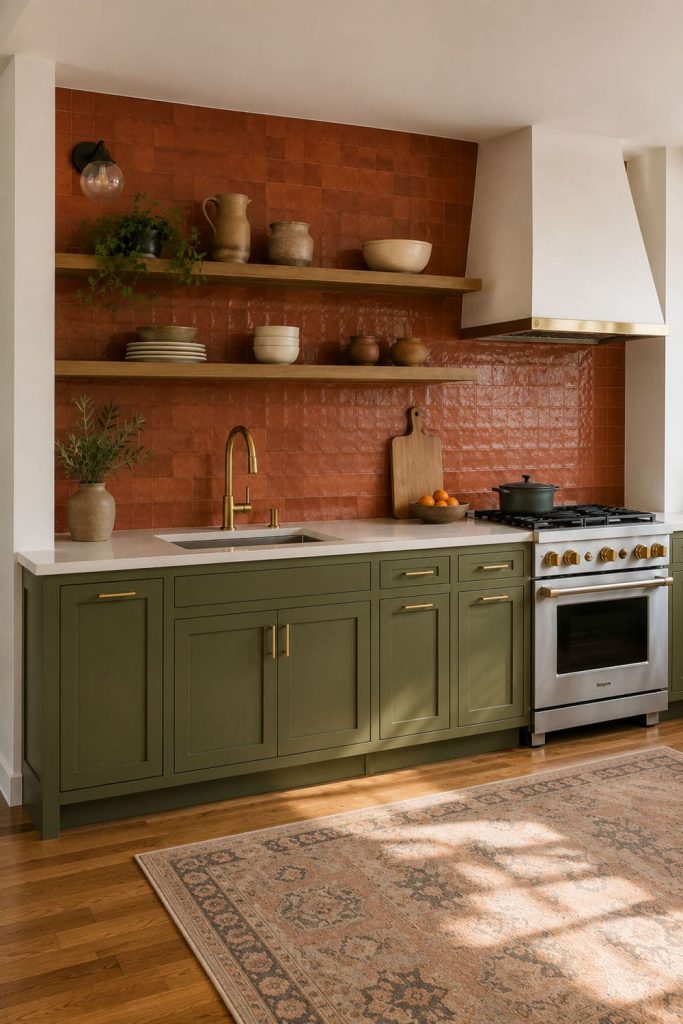
Olive green lower cabinets create a grounded, earthy base, while a burnt orange tile backsplash adds a burst of warmth right where it counts — behind the stove and sink. This pairing feels organic rather than loud, since both shades pull from nature’s palette. Add brushed brass hardware and open wood shelving to soften the contrast further. This look works especially well in kitchens with plenty of natural light, which brings out the richness of the olive tone without letting it feel heavy. It’s a confident but livable combination, perfect for anyone easing into bold color for the first time.
2. Sage Green Island with Terracotta Countertops
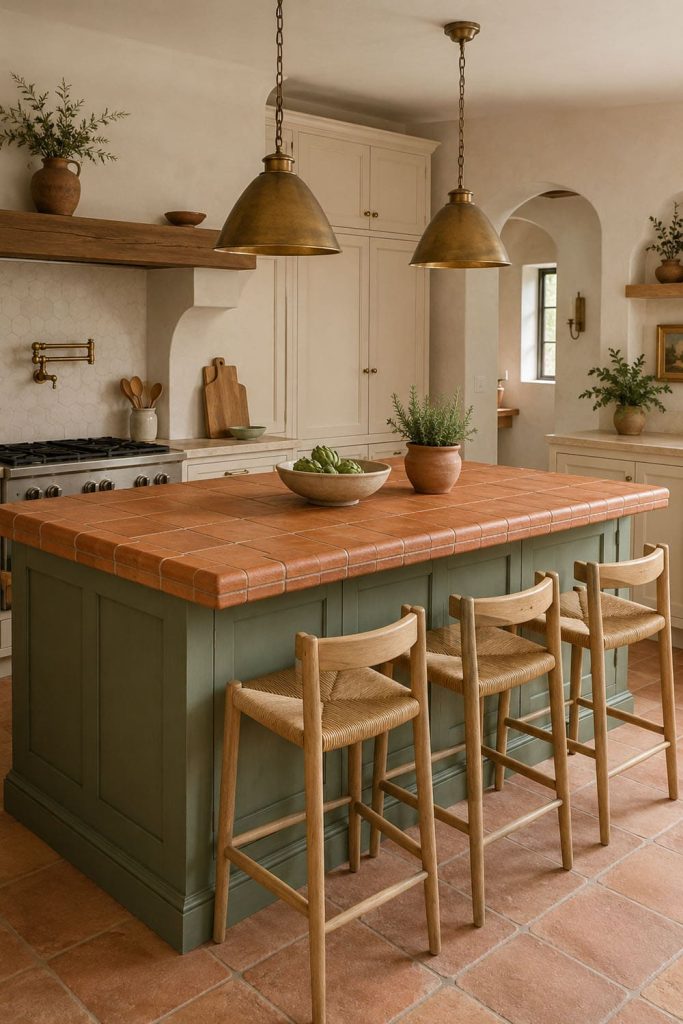
A sage green island becomes the heart of the kitchen when paired with warm terracotta countertops. The muted green keeps things soft and calming, while the clay-toned counters introduce texture and warmth underfoot — well, under-hand, technically. Surround the island with white oak barstools to keep the palette breathing. This design suits farmhouse and Mediterranean-inspired kitchens particularly well, since terracotta already carries those rustic, sun-baked associations. It’s an ideal choice for anyone who wants their island to double as a genuine style statement rather than just extra counter space.
3. Forest Green Walls with Copper and Orange Accents

Deep forest green walls set a moody, sophisticated tone, and copper pots or orange ceramic accents keep the space from feeling too dark or serious. The trick here is restraint — let the green dominate as the backdrop, and use orange sparingly through small items like a fruit bowl, dish towels, or a single accent chair. Copper pendant lighting ties the whole look together, as its warm metallic tone beautifully bridges green and orange. This design leans traditional and cozy, ideal for kitchens that double as gathering spaces for family and friends.
4. Two-Tone Cabinets: Green Uppers, Orange Lowers
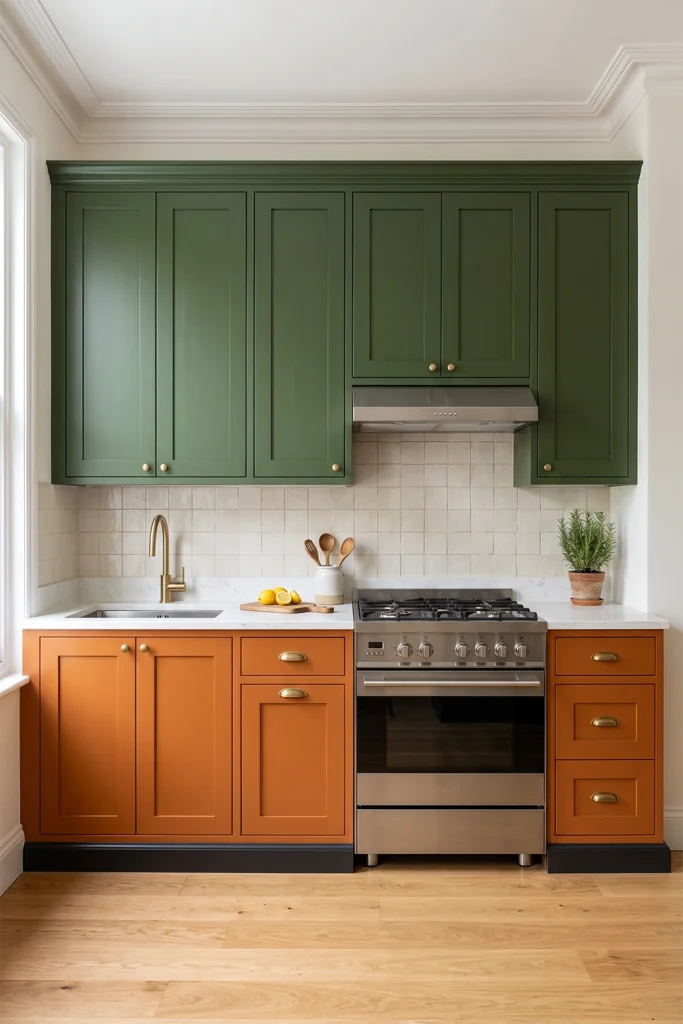
Two-tone cabinetry is having a real moment, and green-on-top, orange-on-bottom is one of the most striking combinations available. Deep green upper cabinets keep the eye moving upward, while warm orange lower cabinets ground the room and add visual weight where it belongs. White countertops and a light tile backsplash act as a buffer between the two bold tones, keeping the overall look balanced rather than overwhelming. This design is a great option for kitchens that want maximum personality without needing to commit to one dominant color throughout.
5. Mint Green Kitchen with Orange Bar Stools
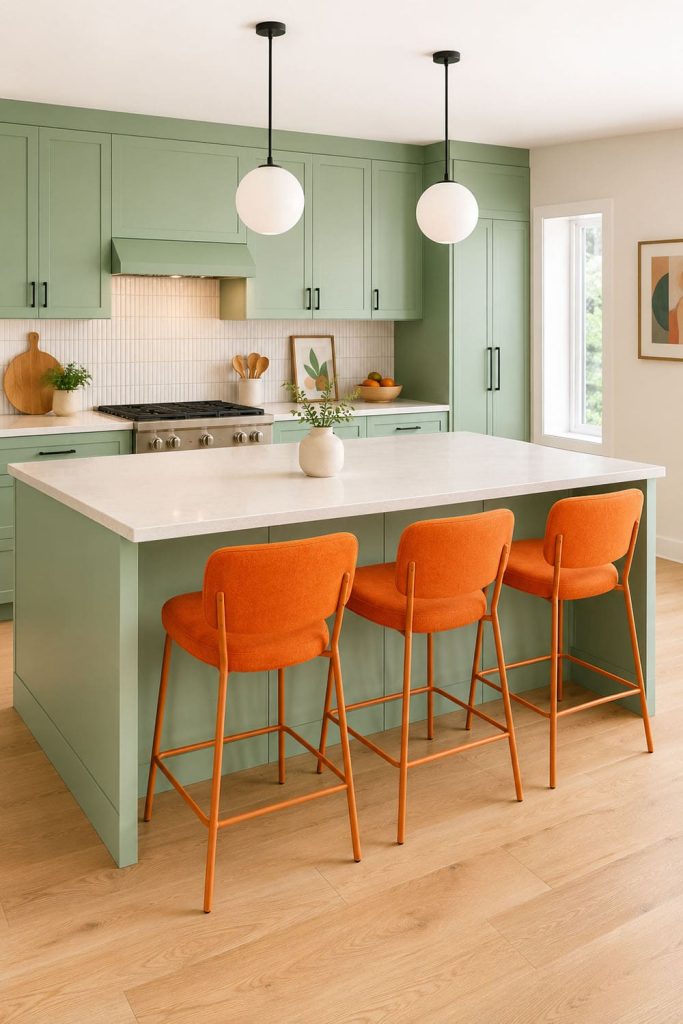
For a lighter, more playful take, pair soft mint green cabinetry with a handful of orange bar stools at the island. This combination feels fresh and slightly retro, evoking mid-century diner energy without tipping into costume territory. Keep walls and countertops neutral — white or pale wood — so the mint and orange can do the talking. This is a wonderful choice for kitchens that get a lot of natural light, since pastel green tends to shine brightest in bright, airy spaces. It’s youthful, cheerful, and endlessly photogenic.
6. Emerald Green Cabinetry with Brass and Orange Details
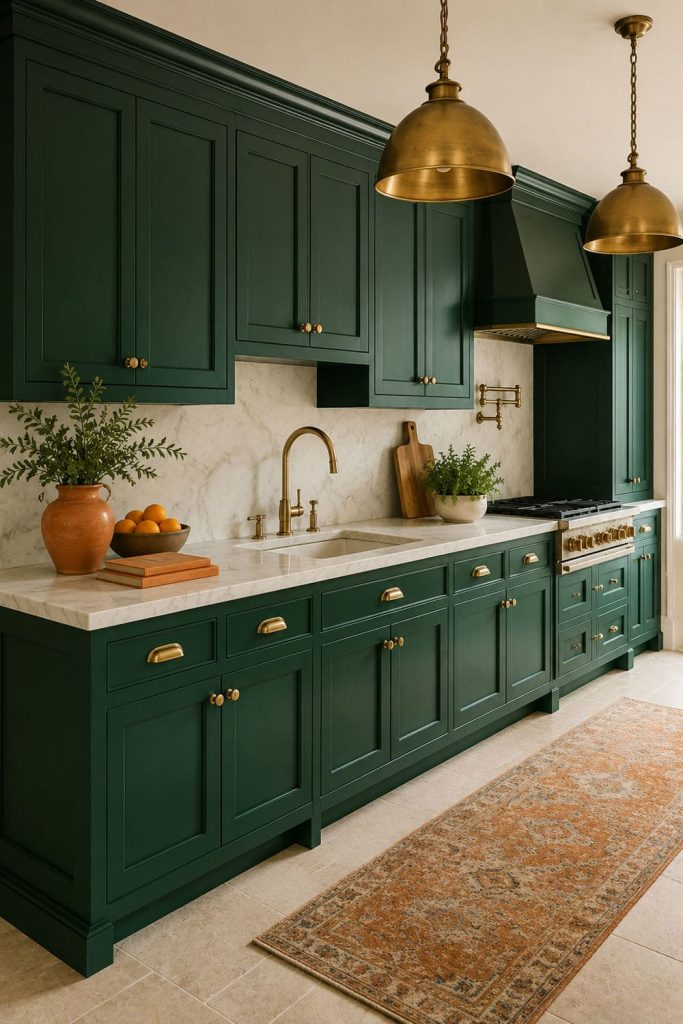
Emerald green is a jewel tone that instantly elevates a kitchen, and it pairs beautifully with burnished brass fixtures and small orange accessories like vases, cookbooks, or a statement rug. This combination reads as luxurious rather than casual, so it suits kitchens aiming for a more polished, design-forward feel. Keep countertops in a light marble or quartz to let the emerald cabinetry stand out as the star. A few citrus-orange accents scattered throughout prevent the space from feeling too formal or cold, adding just enough warmth to keep it inviting.
7. Green Kitchen Island with Orange Pendant Lights
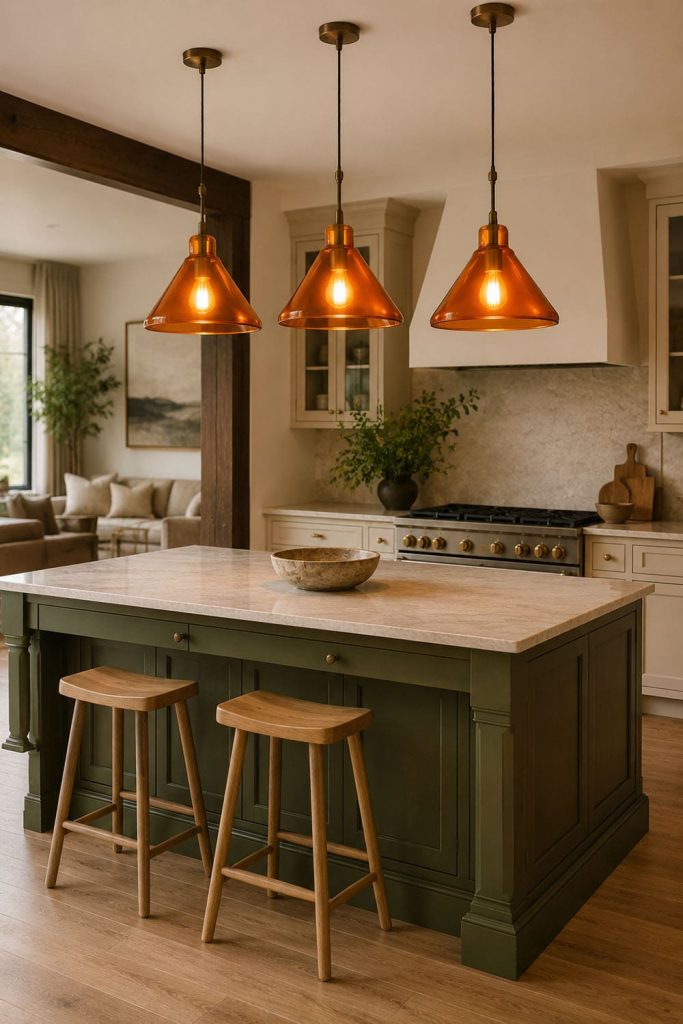
Sometimes the boldest move is overhead. A calming green island paired with a cluster of orange glass pendant lights creates instant visual interest without overwhelming the rest of the room. The lighting becomes a functional art piece, casting a warm amber glow in the evening that plays beautifully off the green cabinetry below. Keep the surrounding walls and upper cabinets neutral to let this combination shine. This is an especially good option for open-concept kitchens, where the island is visible from the living or dining area and deserves to make a statement.
8. Moss Green Walls with Rust-Orange Cabinetry
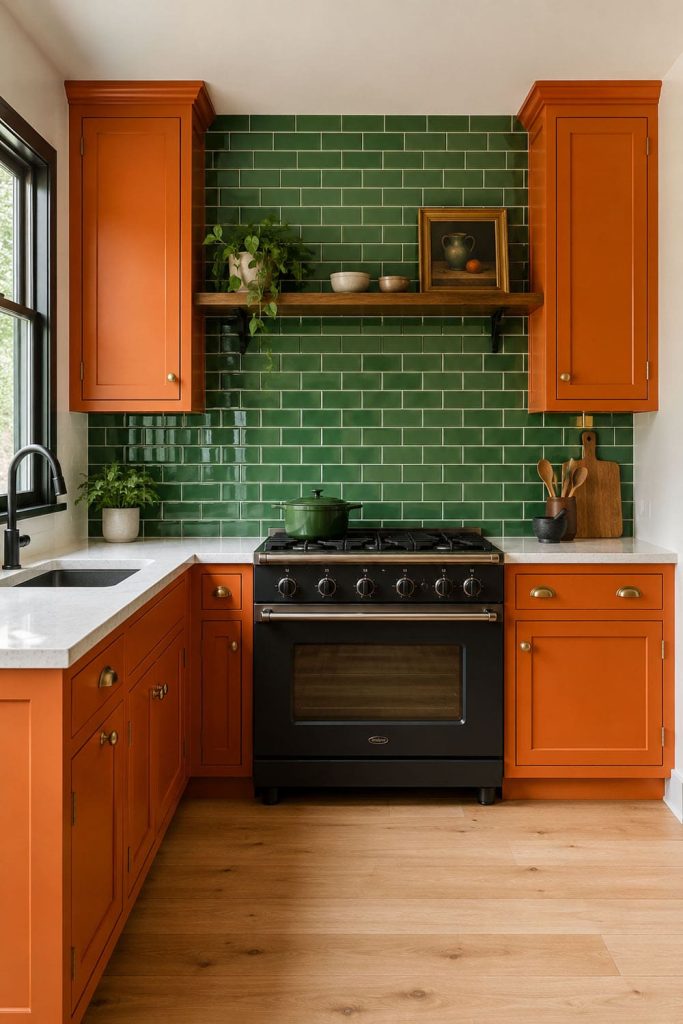
Flip the usual formula and let orange take the lead on your cabinets while moss green covers the walls. Rust-orange cabinetry feels warm and inviting, especially in matte or textured finishes, while moss green walls add depth and a sense of enclosure that makes the kitchen feel cozy rather than cavernous. Natural wood open shelving and woven baskets complete the earthy, lived-in aesthetic. This pairing works particularly well in kitchens with lower ceilings, since the darker tones create intimacy instead of feeling cramped.
9. Green Subway Tile with Orange Cabinets
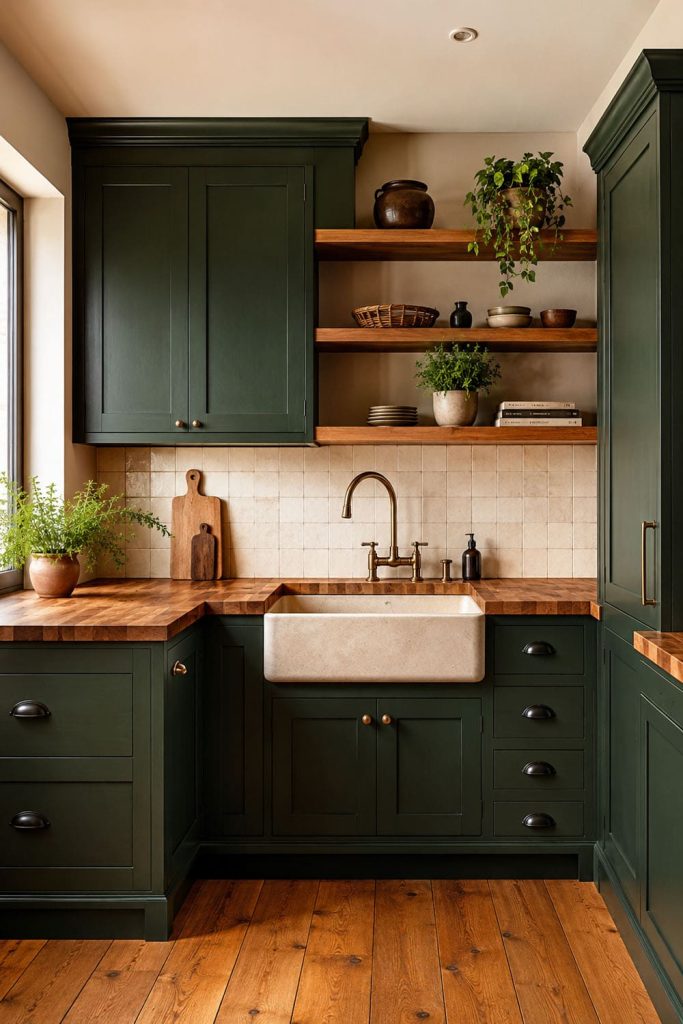
Classic green subway tile brings a timeless, slightly vintage texture to the kitchen, and it pairs surprisingly well with saturated orange cabinetry. The tile’s small-scale pattern keeps the green from feeling too heavy, while the orange cabinets bring bold color to eye level. White grout keeps the backsplash crisp and legible against the busier cabinet color. This combination suits kitchens that want a nod to retro design without going full vintage pastiche — it feels current, playful, and distinctly personal.
10. Dark Green Cabinets with Warm Orange Wood Tones
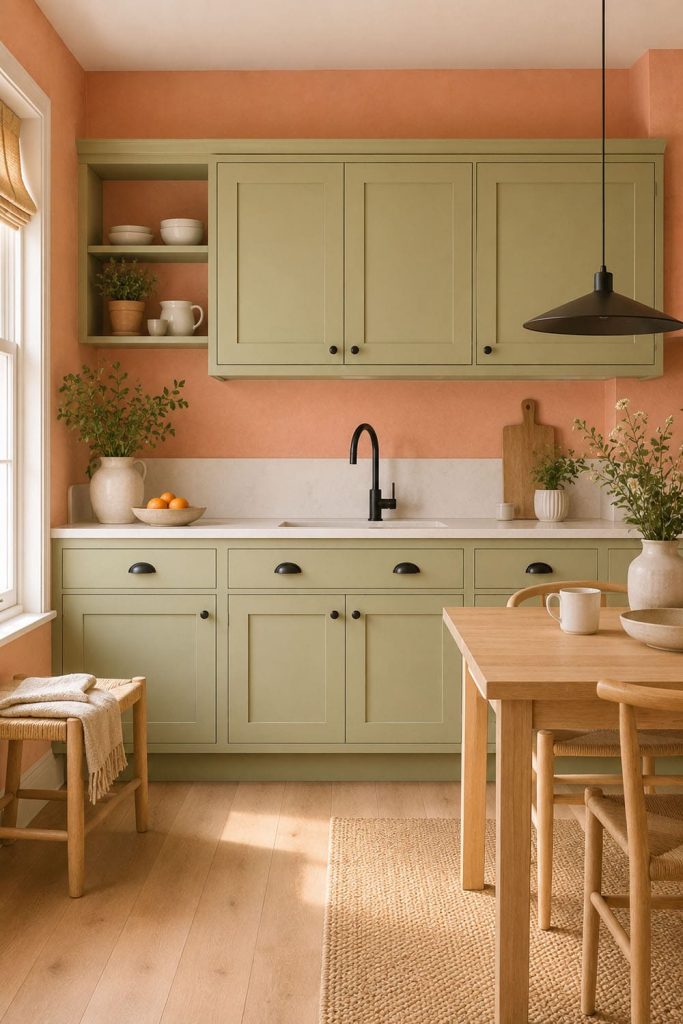
Pairing dark green cabinetry with warm, orange-toned wood — think honey oak or cherry — creates a rich, layered look that feels both modern and traditional at once. The wood does double duty as flooring, open shelving, or a butcher block countertop, letting its natural orange undertones play off the cool depth of the green. This combination is especially forgiving in smaller kitchens, since the wood keeps things feeling warm rather than closed-in. It’s a design that ages well and rarely feels trend-driven, making it a smart long-term investment.
11. Pistachio Green with Peachy-Orange Walls

For a softer, more whimsical palette, pair pistachio green cabinetry with peachy-orange walls. This combination trades boldness for gentle warmth, resulting in a kitchen that feels sunny and welcoming without shouting for attention. White countertops and simple black hardware keep the look grounded and prevent it from feeling overly sweet. This pairing is particularly well suited to cottage-style or Scandinavian-inspired kitchens, where softness and comfort take priority over drama. It photographs beautifully in natural light, making it a favorite among design-conscious homeowners on social media.
12. Green Kitchen with Orange Vintage Stove
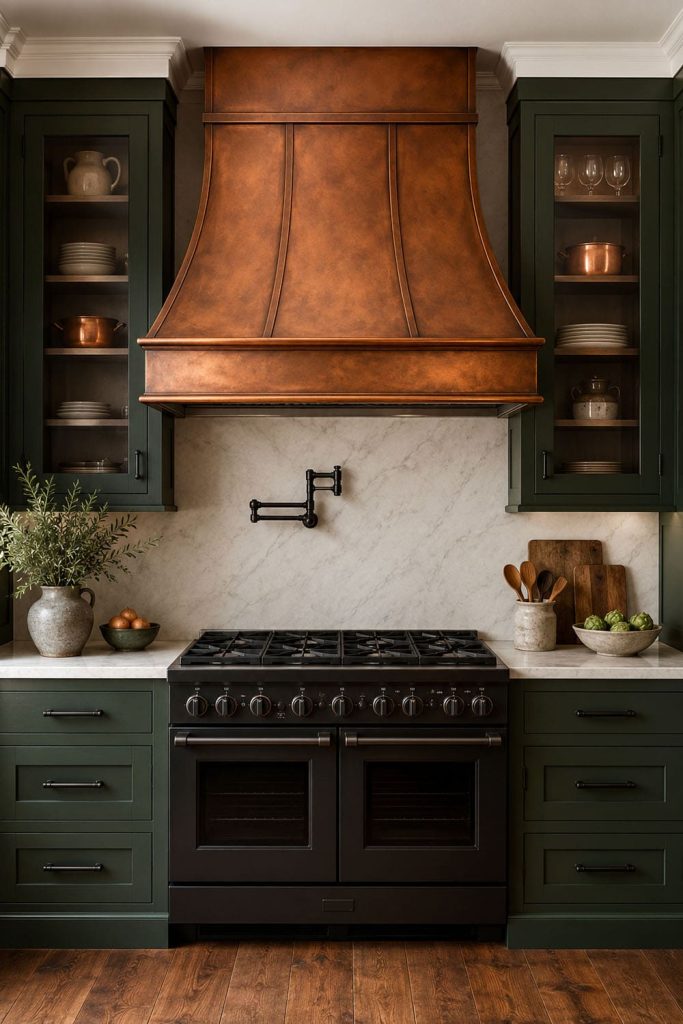
Let a statement appliance do the heavy lifting. A retro-style orange range becomes the focal point against classic green cabinetry, instantly giving the kitchen a nostalgic, artisanal feel. Because the stove itself carries so much color and personality, keep the rest of the palette relatively simple — white subway tile, butcher block counters, and brass fixtures work well. This design is ideal for anyone who loves the idea of bold color but doesn’t want to commit to painting an entire kitchen’s worth of cabinetry.
13. Botanical Green with Burnt Orange Textiles
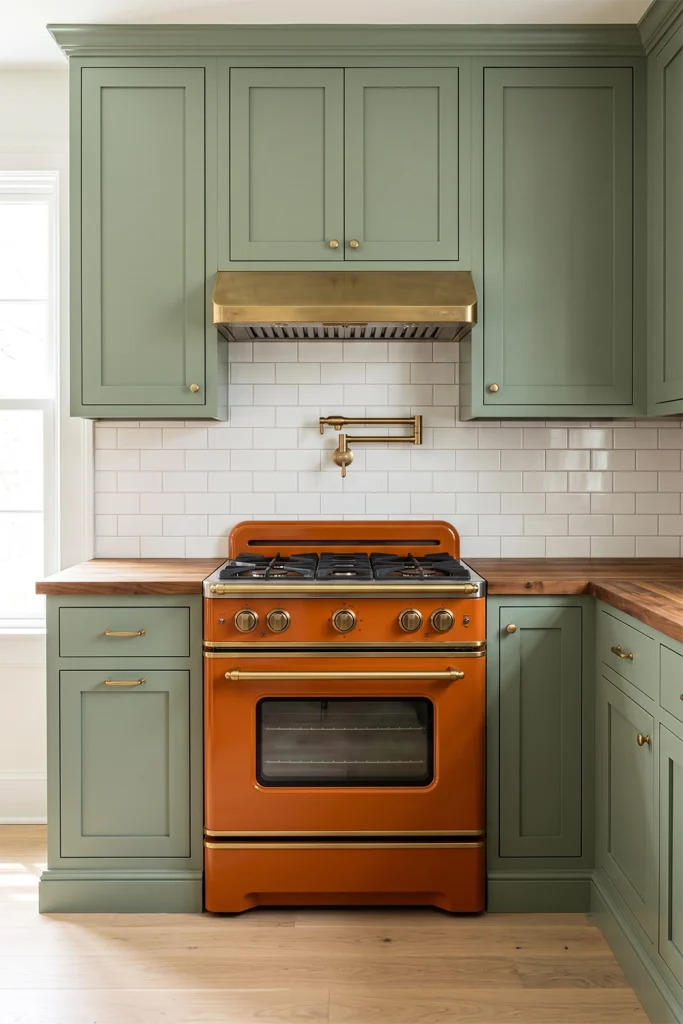
Not every green-and-orange kitchen needs to rely on cabinetry or tile. A neutral white or wood kitchen can achieve the same effect through botanical green touches — potted herbs, leafy plants, green ceramics — paired with burnt orange textiles like curtains, table runners, or dish towels. This is the most flexible and budget-friendly approach on this list, since it can be swapped out or updated seasonally. It’s a great starting point for renters or anyone testing the color combination before committing to a full renovation.
14. Hunter Green Cabinets with Copper-Orange Range Hood
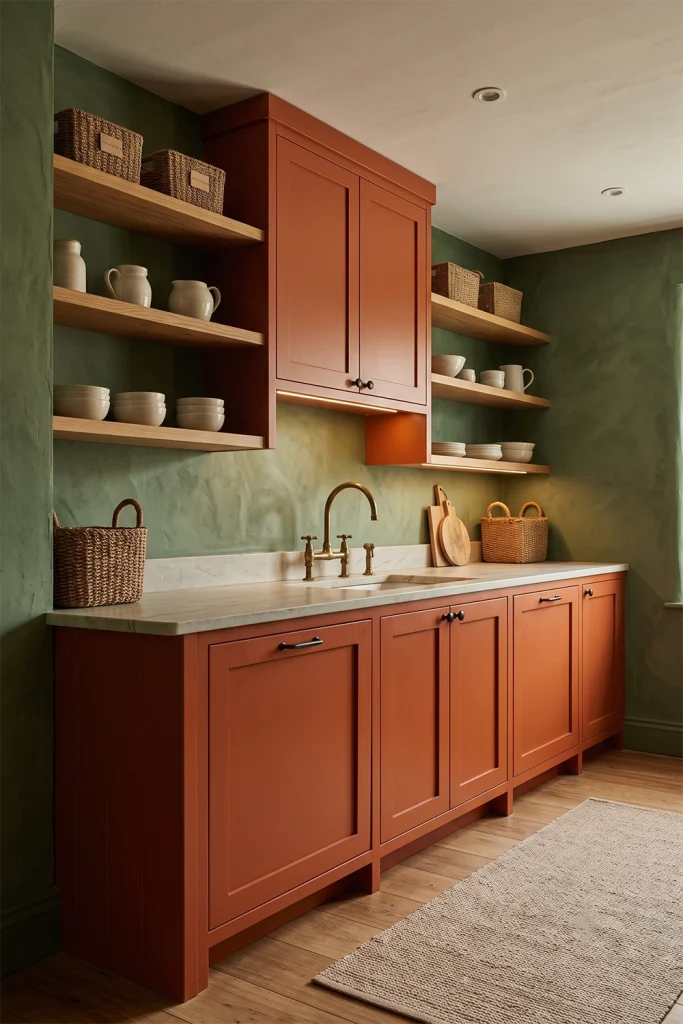
A statement range hood finished in warm copper-orange instantly becomes a kitchen’s centerpiece, especially set against deep hunter green cabinetry. The hood’s metallic sheen catches light throughout the day, adding warmth and dimension to what could otherwise be a very cool, moody palette. Pair with black hardware and stone countertops in a soft gray or white to keep the focus on the two star colors. This design suits kitchens aiming for a dramatic, high-end look, since custom range hoods typically signal a more considered, design-forward renovation.
15. Avocado Green Retro Kitchen with Orange Accents
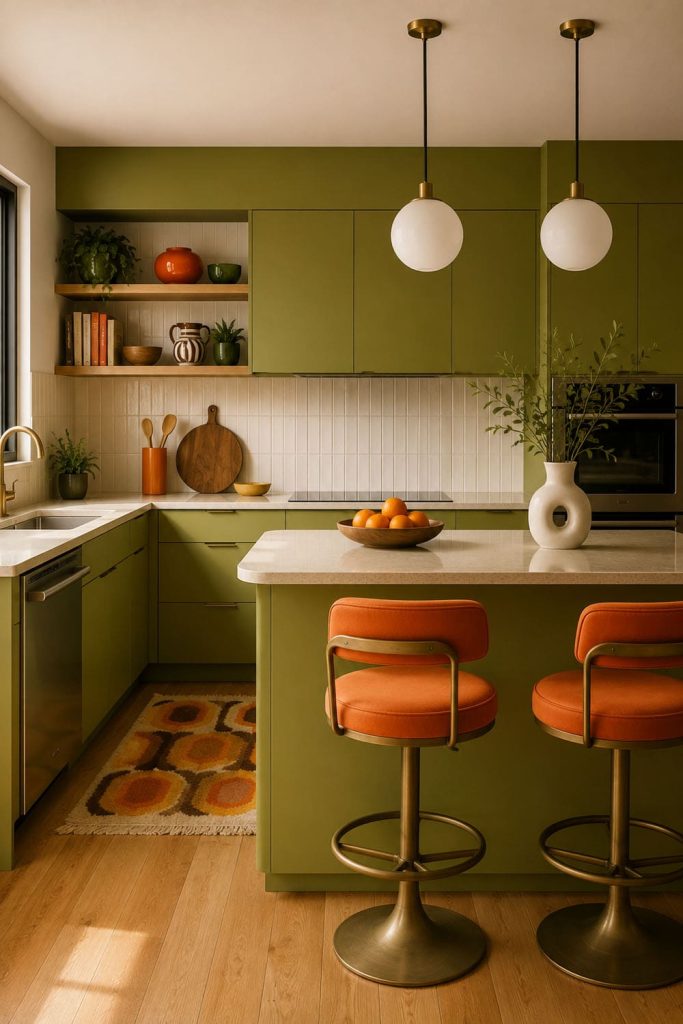
For homeowners who love a full nostalgic commitment, avocado green cabinetry paired with orange accessories recreates a beloved 1970s aesthetic with a fresh, updated execution. Choose matte rather than glossy cabinet finishes to keep the look feeling current rather than costume-like, and balance the retro colors with clean-lined modern hardware and lighting. Orange accents — a rug, bar stools, or open shelving displays — round out the palette without overwhelming it. This design is a favorite among homeowners who want their kitchen to feel distinctly personal and conversation-starting.
How to Plan Your Green and Orange Kitchen
Committing to a bold two-color palette can feel intimidating, so it helps to have a plan before you pick up a paintbrush or order cabinetry.
Choose your dominant color first. Decide whether green or orange will lead the design and let the other act as an accent. Most successful green-and-orange kitchens use roughly an 80/20 split rather than a true 50/50 balance, which keeps the space feeling intentional rather than chaotic.
Consider your undertones. Both green and orange come in warm and cool variations. Olive, moss, and forest green lean warm and pair naturally with burnt orange and terracotta, while mint and emerald lean cooler and pair better with brighter, citrus-toned oranges.
Use neutrals as a buffer. White, cream, wood tones, and stone countertops give the eye a place to rest between two saturated colors. Without a neutral buffer, even well-chosen greens and oranges can start to compete rather than complement each other.
Start small if you’re unsure. Textiles, dishware, open shelving displays, and light fixtures are all low-commitment ways to test the palette before investing in cabinetry or tile, which are far more expensive and time-consuming to change.
Think about lighting. Both colors shift dramatically under different lighting conditions. Warm LED bulbs will intensify orange tones and deepen greens, while cooler daylight bulbs keep the palette feeling fresh and true to its original shade. Test paint and cabinet samples under your kitchen’s actual lighting before finalizing your choice.
Balance with metal finishes. Brass and copper hardware tend to harmonize beautifully with both green and orange, while black or matte finishes create more contrast and a slightly more modern edge.
Final Thoughts
Green and orange kitchens prove that bold color choices don’t have to feel chaotic or fleeting. Rooted in nature’s own palette — think forests, citrus groves, and clay earth — this combination offers warmth, energy, and personality in equal measure. Whether you go all-in with saturated cabinetry or ease into the trend through accessories and textiles, there’s a version of this pairing suited to nearly any kitchen style, from cozy cottage to sleek modern. The result is a space that feels genuinely welcoming — the kind of kitchen people gravitate toward, not just to cook, but to stay a while.


