

15 Best Compact Bread Boxes for Small Kitchen Counters
Bread bags take over a small counter one loaf at a time. The sandwich loaf leans on the toaster, the rolls slide behind the kettle, and a heel goes stale before anyone finds it.
A compact bread box gives all of it one home. The right box holds the loaf, the rolls and the morning pastries in a footprint no wider than the toaster it replaces.
These best compact bread boxes for small kitchen counters are sorted by door style, material and placement, so you can match the box to your counter depth and your bread habit at the same time.
Door style decides more than looks. A roll top needs no swing room, a fall front wants a clear stretch in front, and a lift off lid needs air above it.
The fifteen picks below sort those door styles by material, size and placement, with notes on vents, crumb trays and the cool spot every bread box deserves.
This post contains affiliate links. If you buy through them, we may earn a small commission at no extra cost to you. See our Affiliate Disclosure.
1. A Roll Top Box That Needs No Swing Room
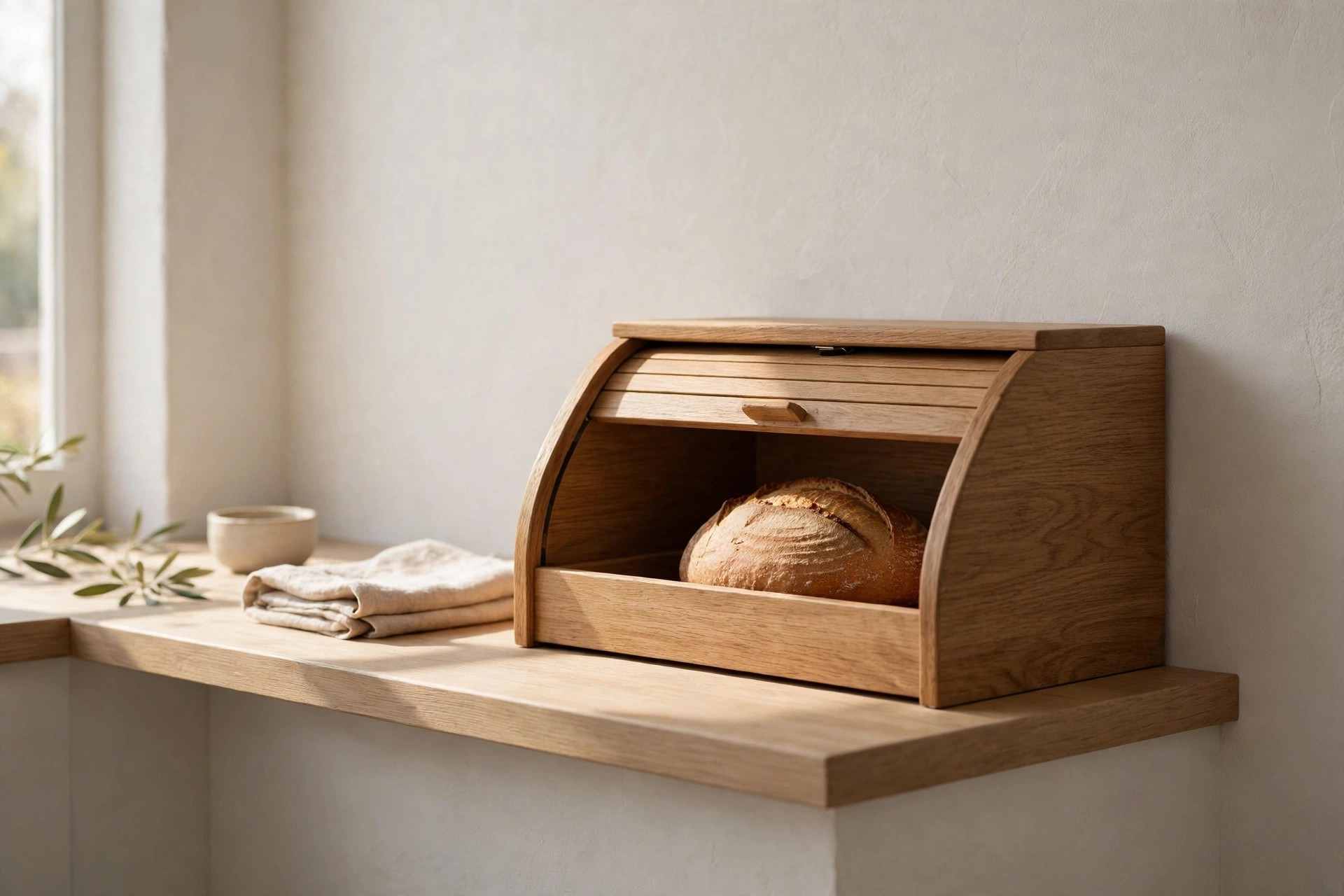
A roll top lid slides up and back inside the box, so opening it asks for zero extra counter or air space. That makes it the safest first pick for a shallow counter.
Galaxus describes the Brabantia roll top bread box as having a flat top and a base with a ribbed surface for air flow under the bread. Details like that keep a loaf fresher for longer.
Set the box with its back to the wall and nothing in front of it. The lid path is internal, so the box can sit in a tight row with the kettle and still open fully.
Run a finger along the roll track monthly. Crumbs in the track make the lid grind, and a quick brush keeps the slide smooth.
2. A Fall Front Box You Can Open With One Hand
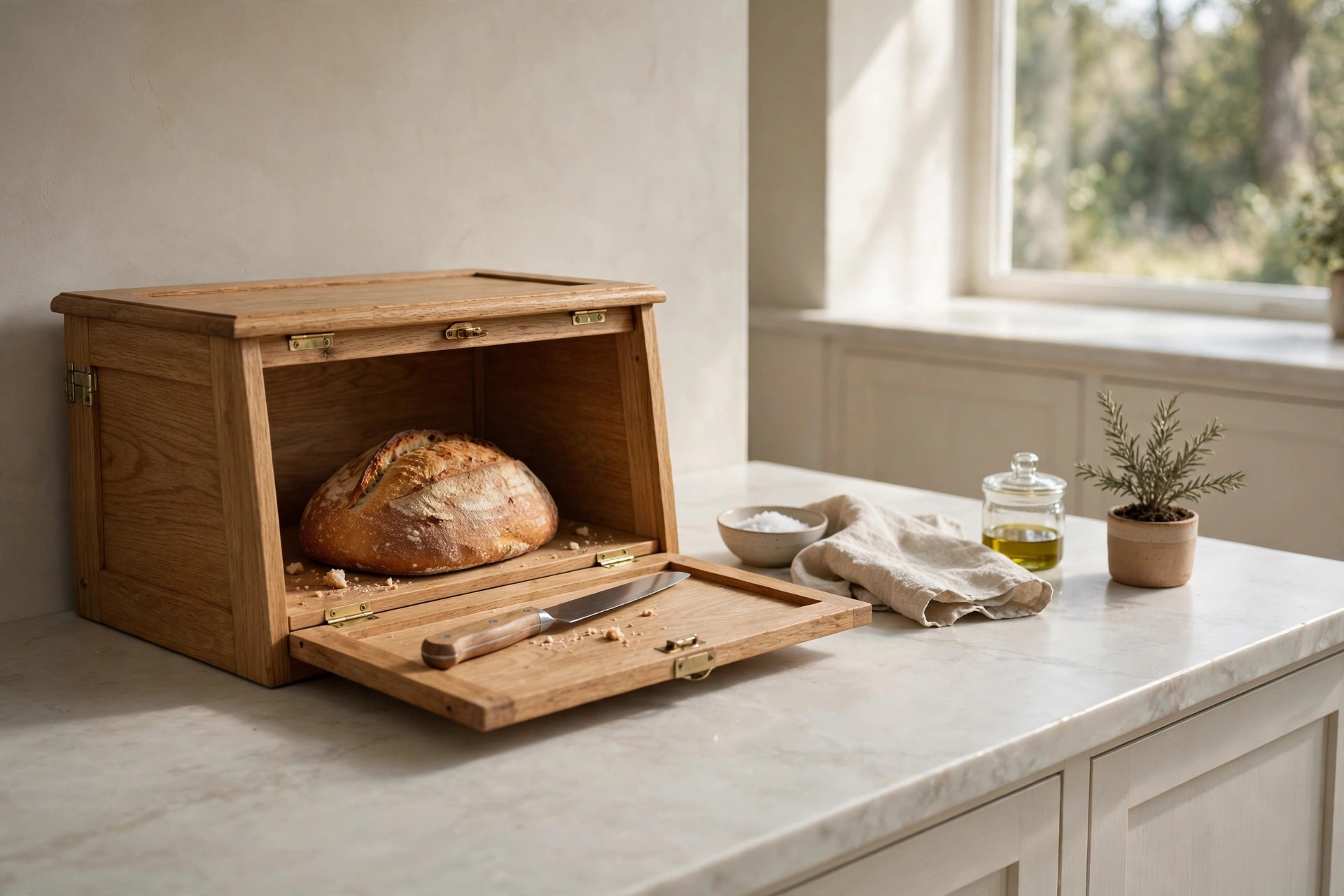
A fall front door drops down toward you and rests like a small shelf. One hand opens it while the other holds the loaf, which is how bread boxes actually get used at breakfast.
Magnetic catches keep a fall front shut with a soft click. Test the catch feel if you shop in person, because a weak catch lets the door drift open and dry the bread.
The dropped door doubles as a landing spot for the knife and board. Slice on the board, sweep crumbs onto the door, and tip them back into the box when you close it.
Close the fall front gently with a full load inside. A door dropped shut daily will loosen its catch years before its time.
3. A Flat Top Box That Holds Canisters Above
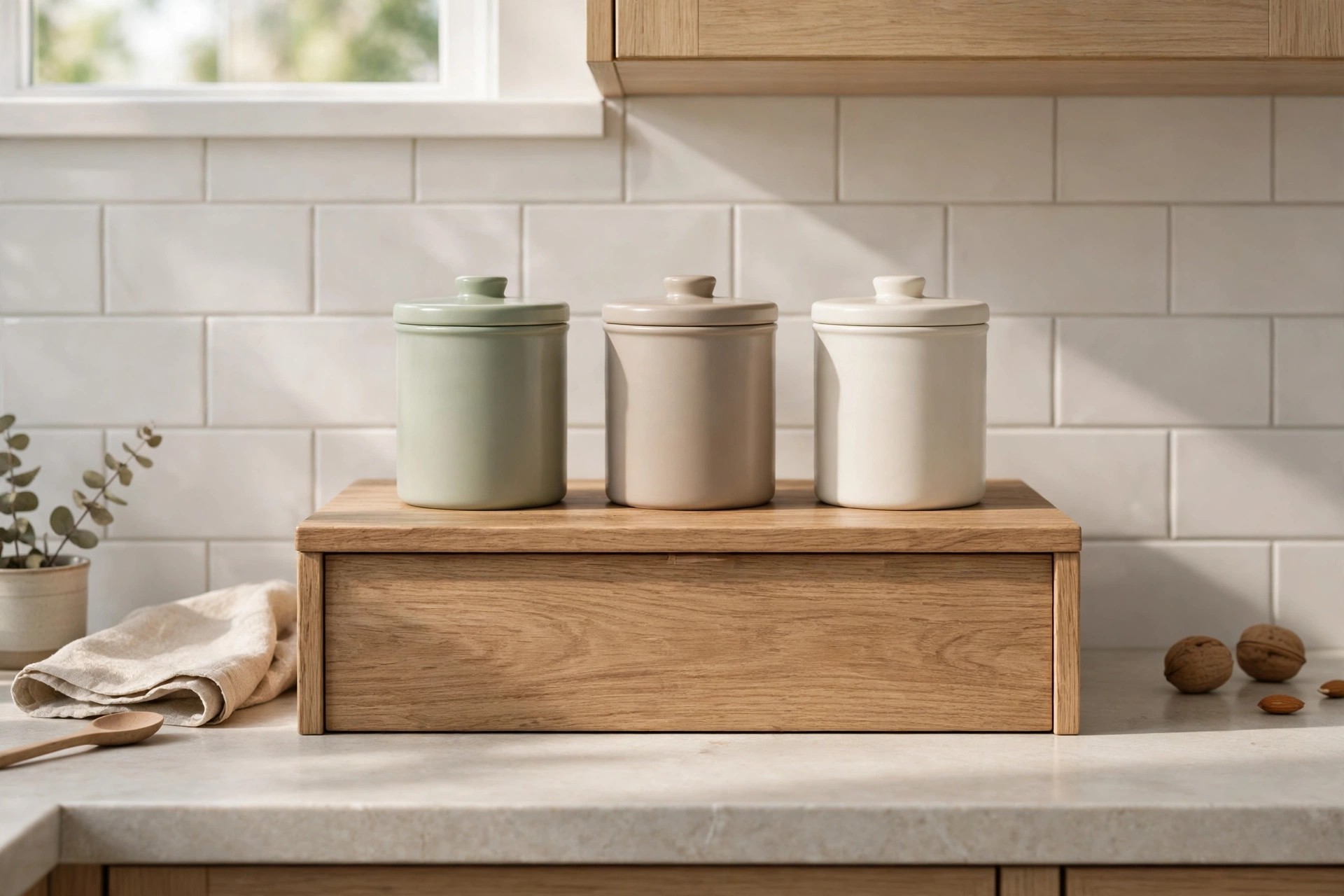
A flat, sturdy top turns the box into a shelf. Tea, coffee and sugar canisters line up on top, and the bread station becomes one tidy block instead of three scattered spots.
Keep the top load light and daily. Heavy jars belong in a cabinet, while the canisters you open every morning earn the spot where your hand already is.
Measure the height with canisters on top before you settle the placement. A stack that clears the upper cabinets on paper can still crowd the space where you lift the kettle.
Put the heaviest canister at the back of the flat top. Weight near the wall steadies the box and keeps the front edge lift free.
4. A Bamboo Lid Box That Doubles as a Cutting Board
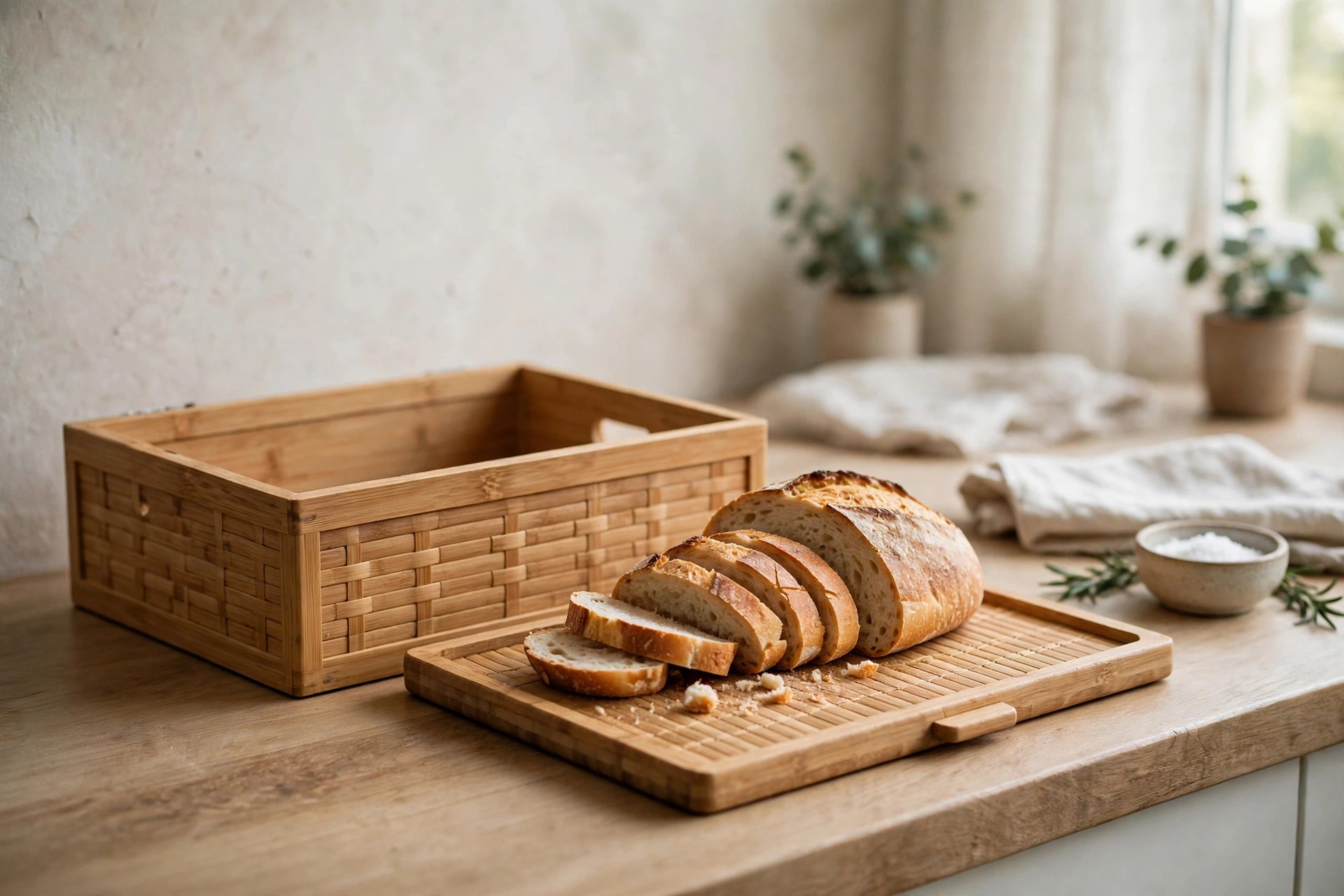
A lift off bamboo lid that flips into a cutting board removes a whole object from a small kitchen. The board lives on the box, grooves down, and comes off only for slicing.
Cut on the grooved side and the crumbs stay in the channels instead of spreading across the counter. Shake the board over the sink, and the box area stays clean through breakfast.
This two job thinking runs through our no pantry kitchen storage ideas. In small kitchens, the tools that stay are the ones doing two jobs well.
Oil a bamboo lid lightly when it starts to look dry. A fed board resists knife marks and washes clean without soaking water in.
5. A Two Tier Box for Loaves and Rolls Together
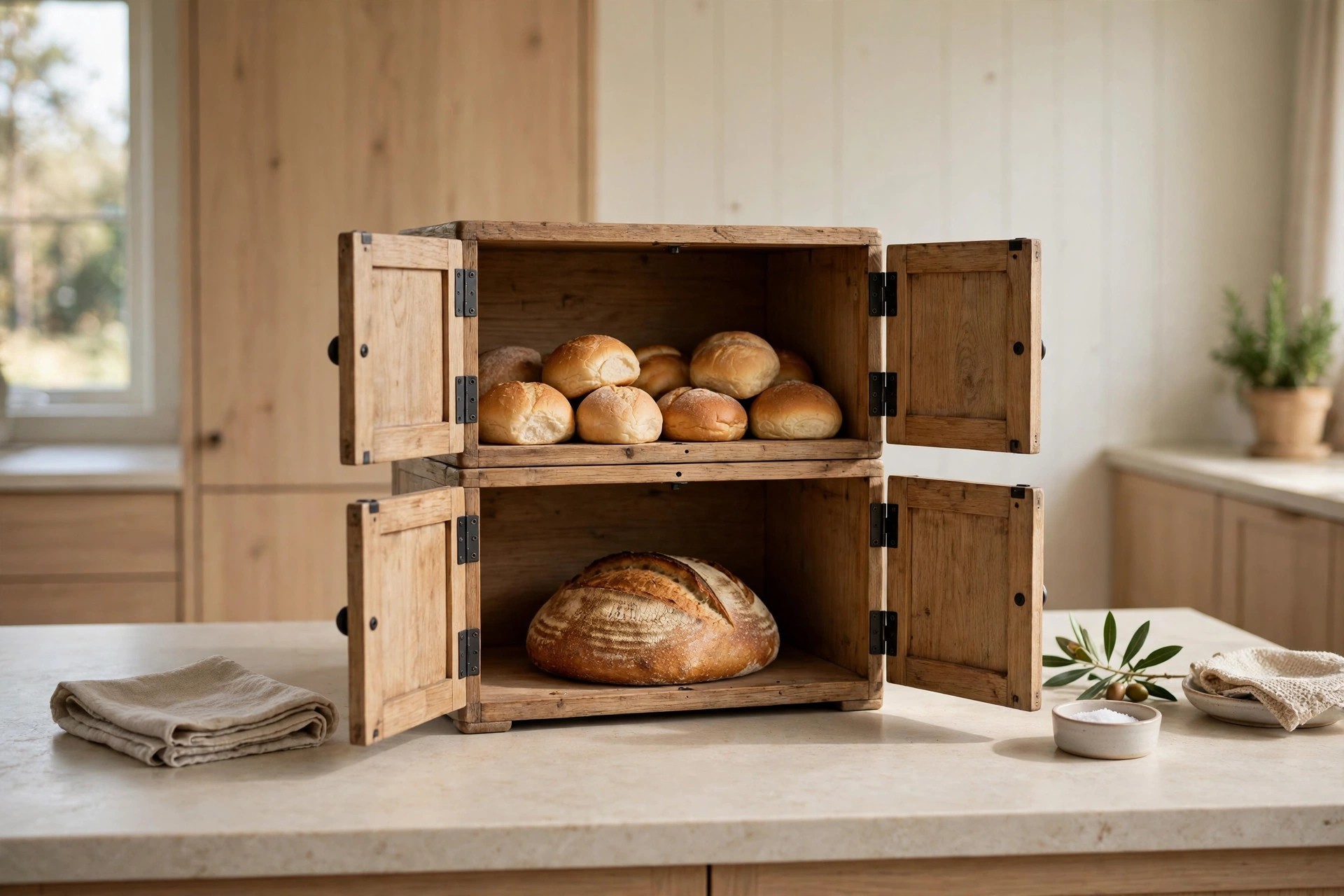
Two shallow tiers stack storage upward instead of outward. The loaf takes the deep lower tier, rolls and buns take the top, and the footprint stays that of a single small box.
Tiers also separate bread by speed. This week’s sandwich loaf lives low and handy, while the good bakery loaf rests above, away from the daily grab and squeeze.
Keep the tiers honest, like the zones in under shelf baskets for extra cabinet storage. When rolls start living in both tiers, the system quietly stops being a system.
Keep crackers and crispbreads out of the tiers. They need sealed tubs, and a bread box tier full of packets blocks air for the bread.
6. A Corner Box That Uses the Dead Angle
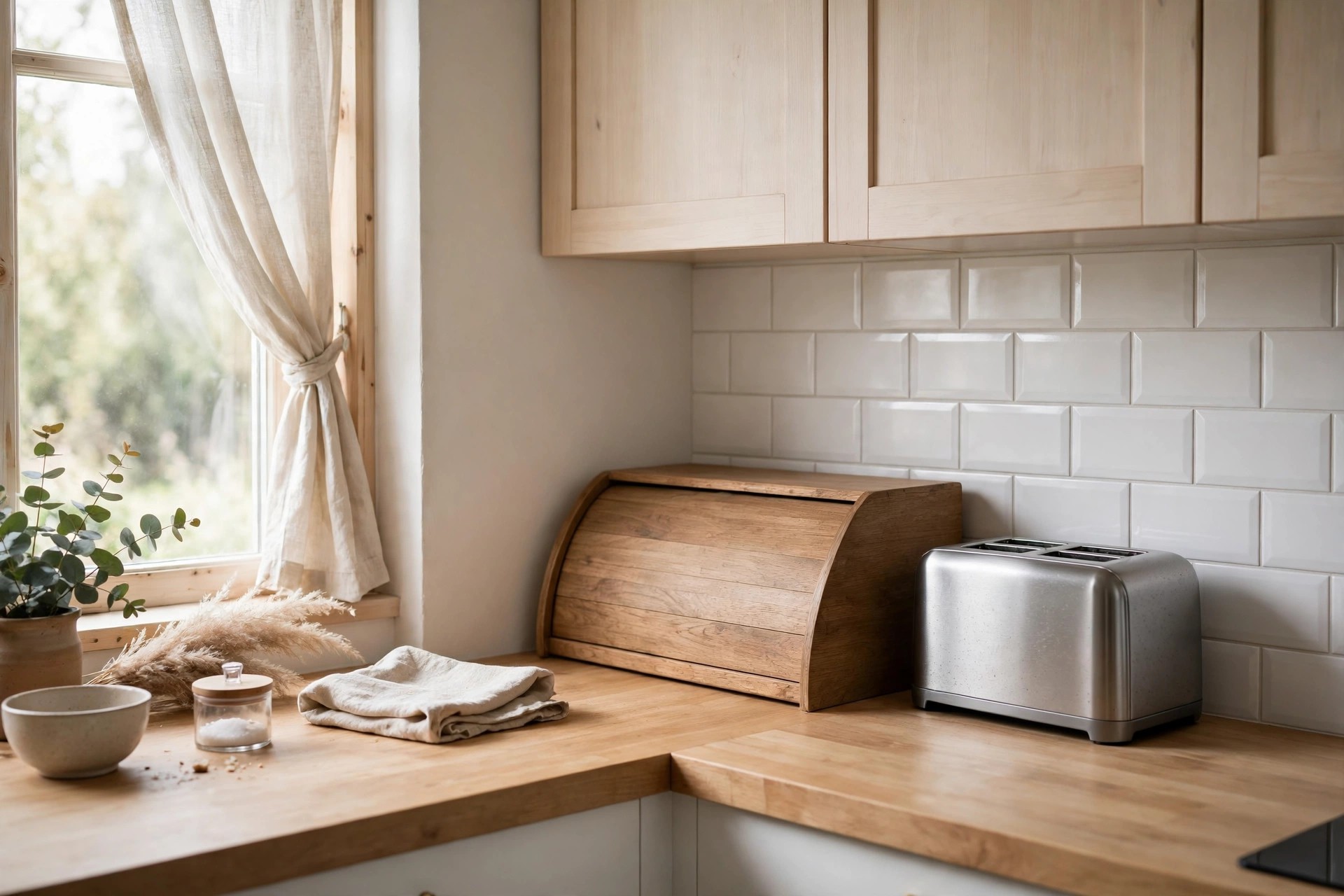
Corners eat counter space and give little back. A box shaped or sized to sit deep in the corner turns that dead angle into the bread station, and frees the straight runs for prep.
Angle the door toward the room so one hand can reach in without leaning across the counter. A corner box you have to stretch for will be bypassed by everyone by week two.
Put the toaster beside it and breakfast has one home corner. Bread out of the box, straight into the toaster, crumbs contained in one zone that takes thirty seconds to wipe.
Line the corner box base with a thin cloth. A cloth catches crumbs in the deep corner where a brush barely reaches.
7. A Small Single Loaf Box for One or Two People
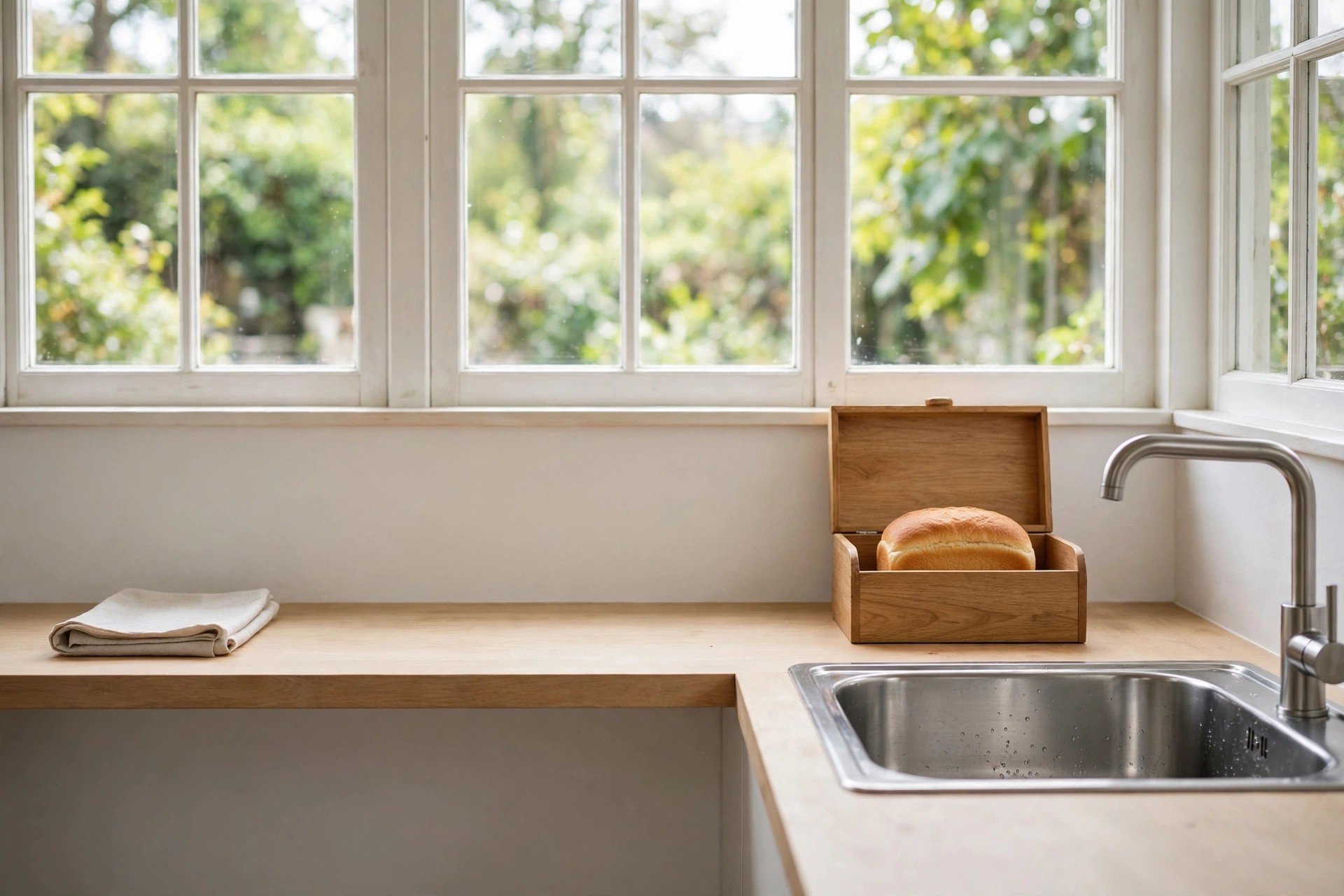
A single loaf household does not need a family sized box. A small box sized for one loaf and a few rolls keeps air volume low around the bread, which helps it stay fresh.
Small boxes also fit the gaps big ones cannot: beside the sink, at the end of a short counter, or on a shelf above the prep area in a truly tiny kitchen.
Buy for the loaf you actually buy. Bakery loaves run wider and taller than sandwich loaves, so take the loaf’s rough size to the shop, in your head or on your phone.
Freeze the second half of a big loaf, sliced. A small box plus a freezer habit beats a big box of bread going stale.
8. A Vented Wood Box for Homemade Bread
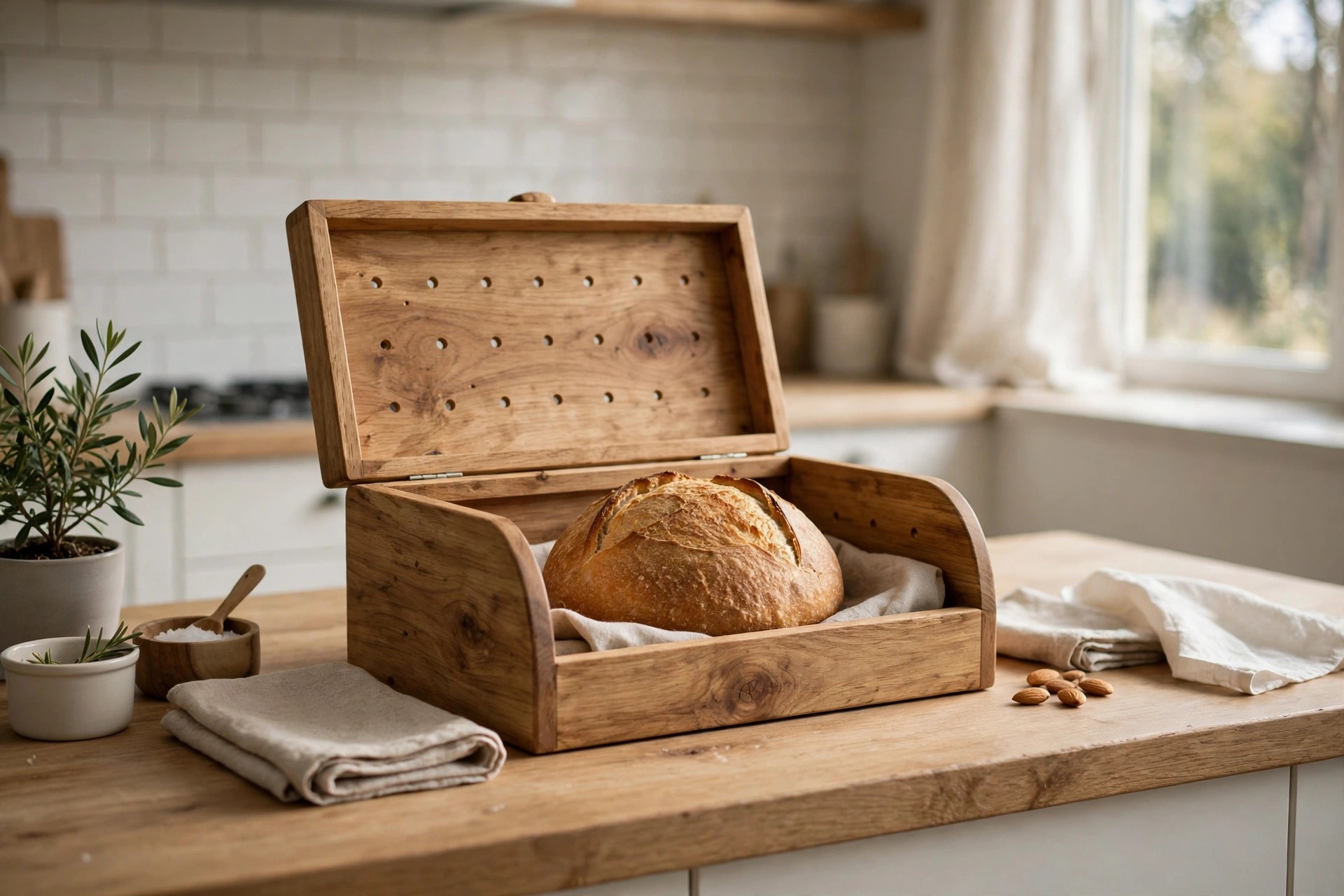
Homemade bread needs air movement, not a sealed tub. A wood box with small vents or a breathable build lets steam escape slowly, so crusts stay firm instead of going soft and damp.
Cool home loaves fully before boxing them. Warm bread in any box steams itself, and no vent design can rescue a loaf that went in hot from the oven.
Wood boxes ask for a dry wipe, never a soak. Our guide for towel storage, over cabinet door towel bars for renters, makes the same care point: simple materials last when the routine stays simple.
Smell the wood box weekly when you wipe it. Wood tells you early if damp is building, long before mold shows on a crust.
9. A Steel Box That Wipes Clean in Seconds
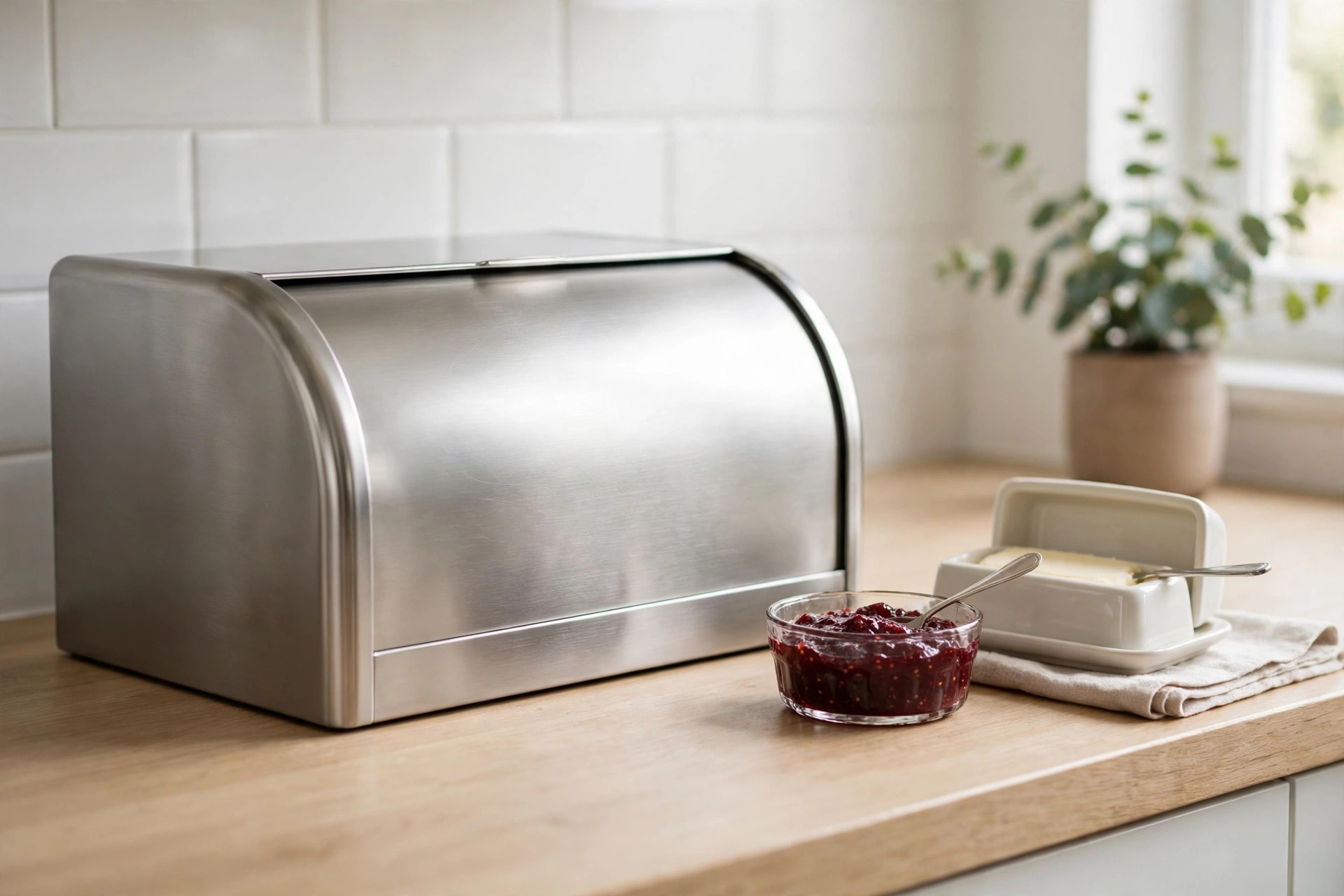
Steel boxes suit busy counters where jam, butter and coffee all land daily. The smooth walls wipe clean in one pass, and crumbs have no grain or seams to hide in.
Choose a brushed finish for a box that sits in bright light. Polished steel shows fingerprints fast, while a soft finish keeps the breakfast corner looking tidy with less wiping.
Steel also shrugs off the heat neighborhood near a toaster. Keep a small gap anyway, since a box wall warmed daily will warm the bread inside it over time.
Keep steel away from the kettle’s steam path. Daily steam on one wall of the box dulls the finish on that side first.
10. A Clear Front Box So You See What Is Left
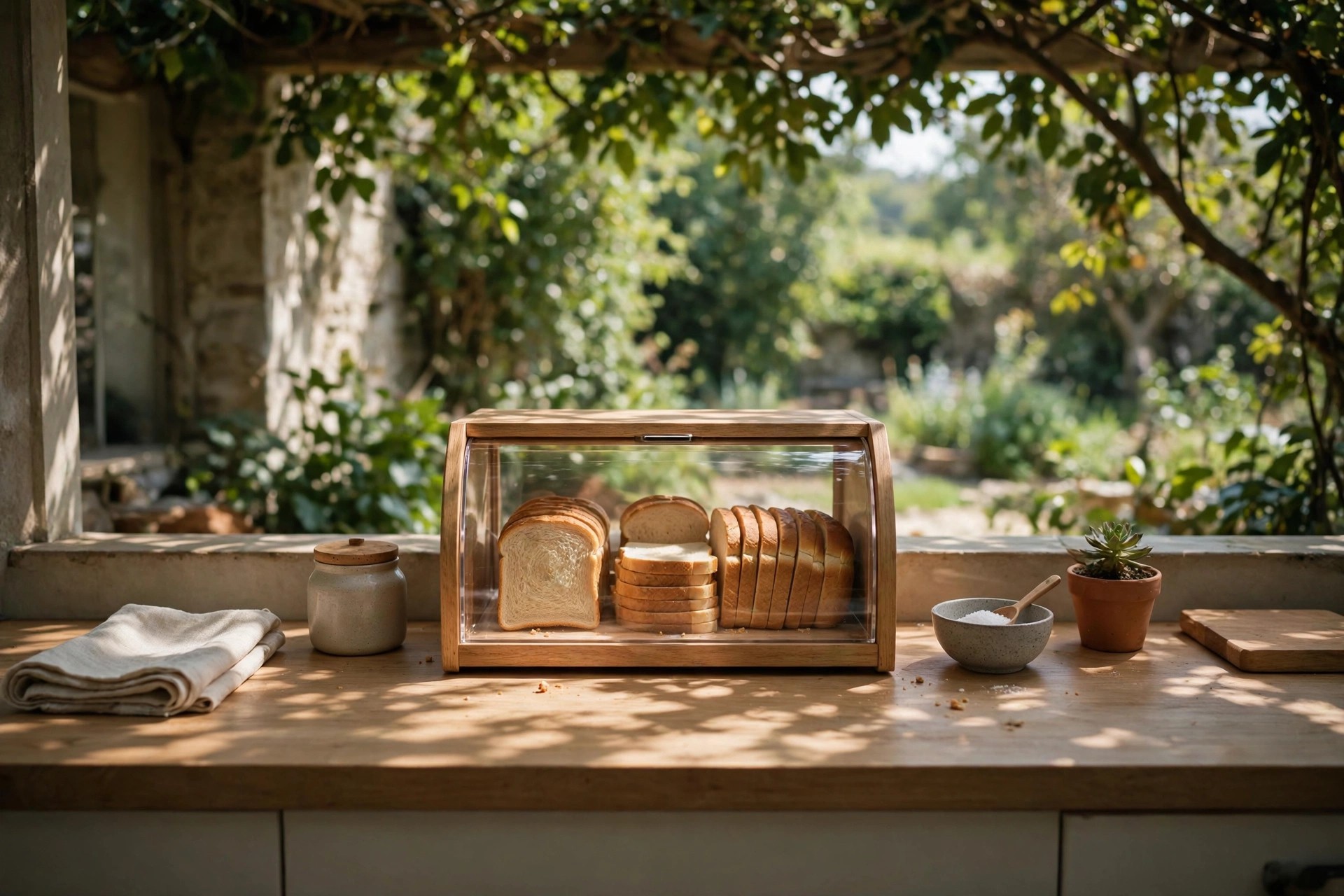
A clear front panel ends the guessing. You can see the last two slices before you shop, instead of finding them behind a fresh loaf three days too late.
Clear fronts suit households that shop on sight. The box becomes the shopping list: low bread shows at breakfast, and the loaf lands on the list before the shop, not after.
Keep a clear box out of direct sun. Light through the panel warms the bread and fades the crust, so the shady end of the counter is the right home for this style.
Turn the clear front away from night lighting too. A lit box at night draws moths in summer toward the bread inside.
11. A Wall Mounted Box That Frees the Counter
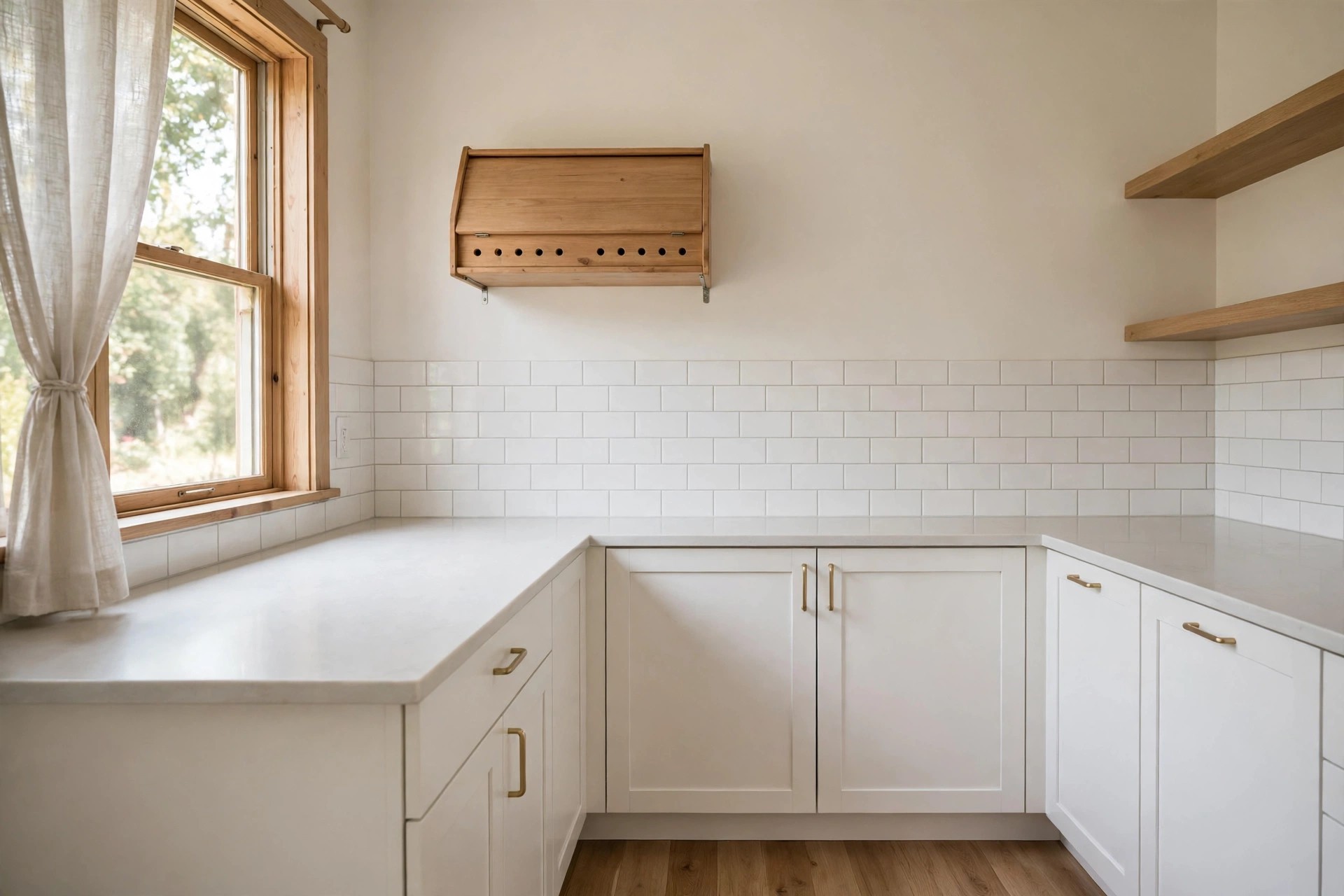
A box that mounts on the wall or hangs under a cabinet takes bread off the counter completely. The counter below returns to prep, and the bread hangs at easy reach above it.
Mount into studs or solid cabinet framing, never bare plaster alone. A full bread box is heavier than it looks, and a falling box of bread is a mess nobody needs.
Renters should look for cabinet clamp or over door mounts instead. The same free counter result, with no holes to fill when the lease ends and the kitchen goes back.
Check wall fixings every season with a firm pull. Houses shift, screws settle, and a checked mount never becomes a surprise.
12. A Deep Box for Tall Bakery Loaves
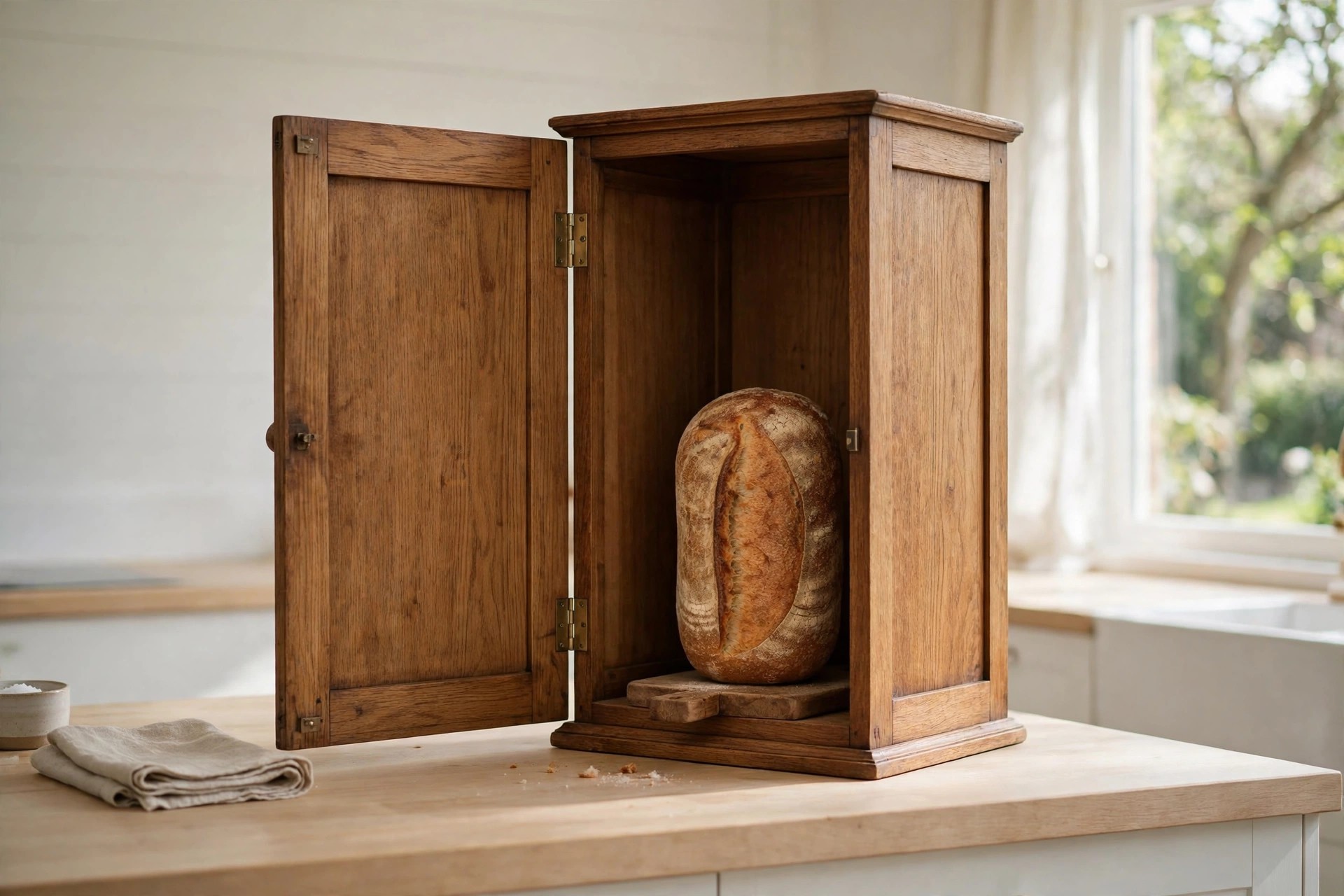
Round bakery loaves need height and depth, not width. A deep compact box with a tall door opening swallows a boule whole, where a wide shallow box would squash it.
Store tall loaves cut side down on a small board inside the box. The board protects the crumb, the crust faces up to the air, and slices come off cleanly at breakfast.
Measure your usual loaf before choosing. Bakeries vary more than supermarkets, and the box that fits your Saturday loaf is the box that will actually get used all week.
Measure height with the door fully raised, not closed. Some deep boxes open upward, and the opening arc decides the shelf above.
13. A Box With a Crumb Tray That Keeps the Counter Clean
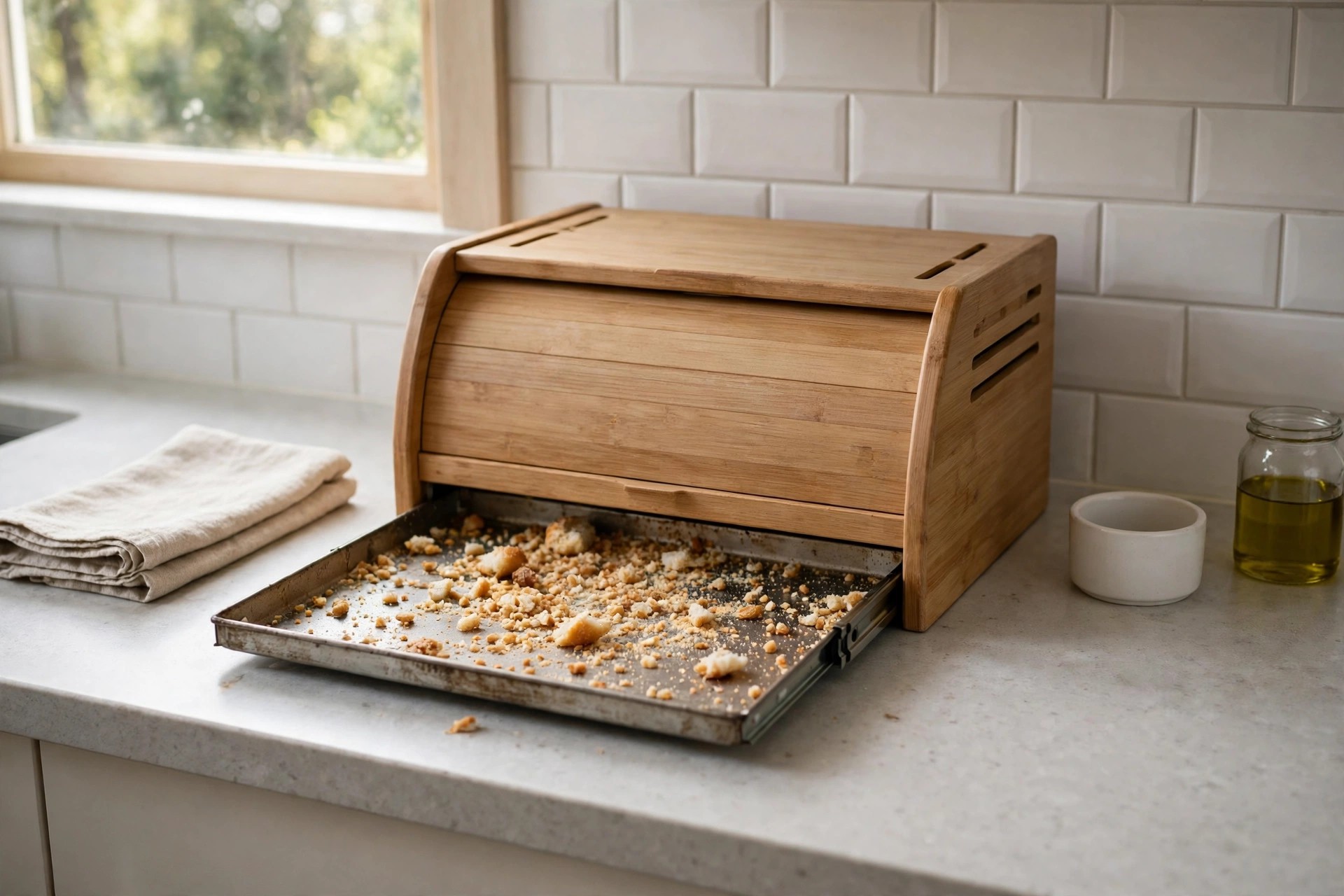
Crumbs are the hidden cost of bread storage. A box with a pull out crumb tray catches the fallout inside, so a weekly shake into the bin resets the whole station.
The tray also makes the deep clean rare. Instead of lifting and scrubbing the whole box monthly, you wash one flat tray and wipe the walls while it dries.
Line the tray with nothing. Paper and cloth liners trap moisture under the loaf, and bare, dry and shaken weekly is the state a crumb tray works best in.
Shake the crumb tray over the bin, never the sink. Crumbs in a sink turn to paste, while the bin takes them dry and clean.
14. A Matching Box and Canister Set in One Row
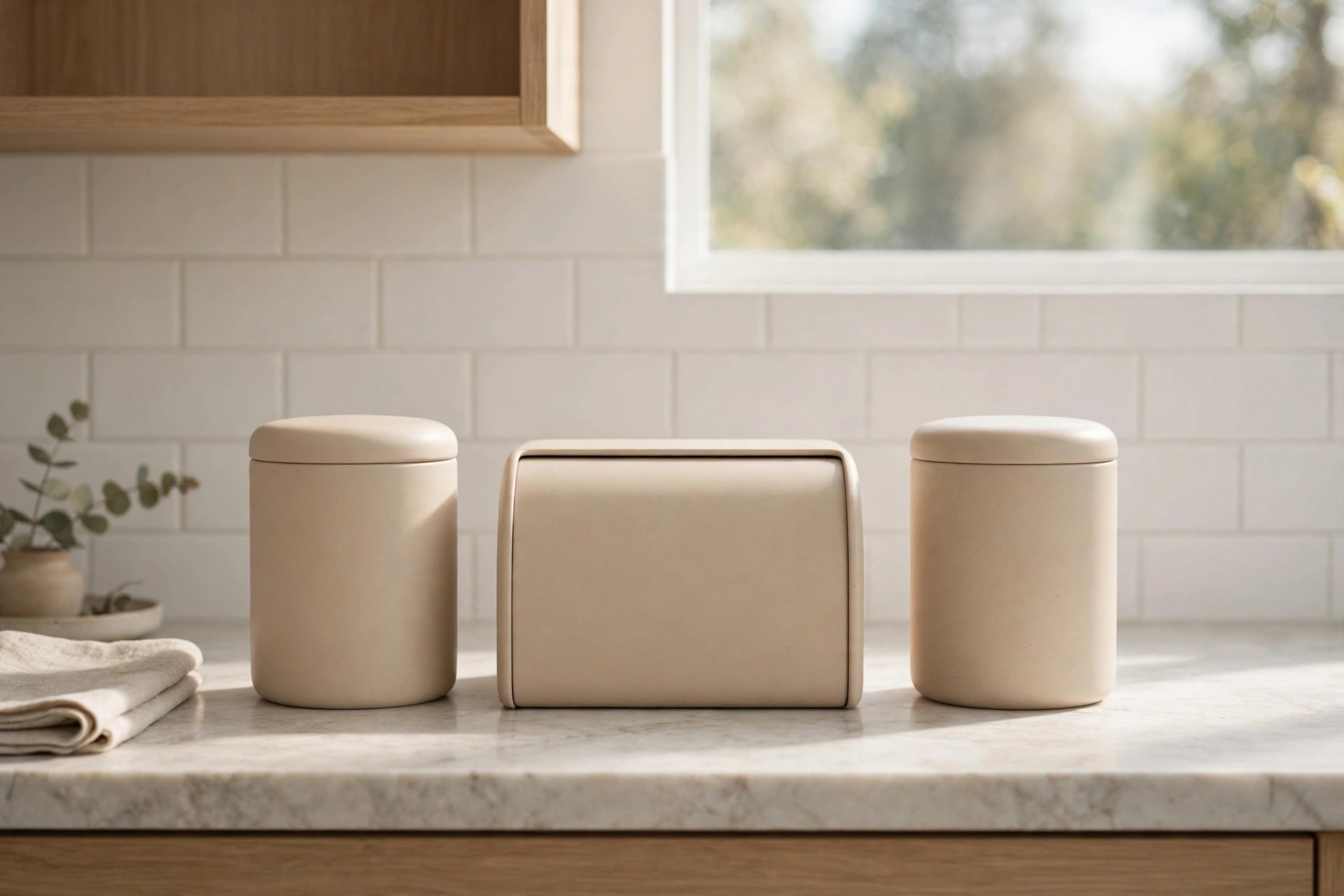
A bread box that matches your canisters turns storage into a calm row. Same finish, same height line, and the counter reads as one planned station instead of gathered clutter.
Keep the row to three pieces at most: box, tea or coffee, and one more. A row that grows past three stops reading as a set and starts reading as a shelf shortage.
Our small kitchen ideas for a first apartment use the same matched row rule for open shelves. A short, matched line looks planned at any budget.
Photograph your row before you add anything new. A quick photo shows the line honestly, and the row stays a set, not a drift.
15. A Cool Dark Spot Rule That Keeps Bread Fresh Longer
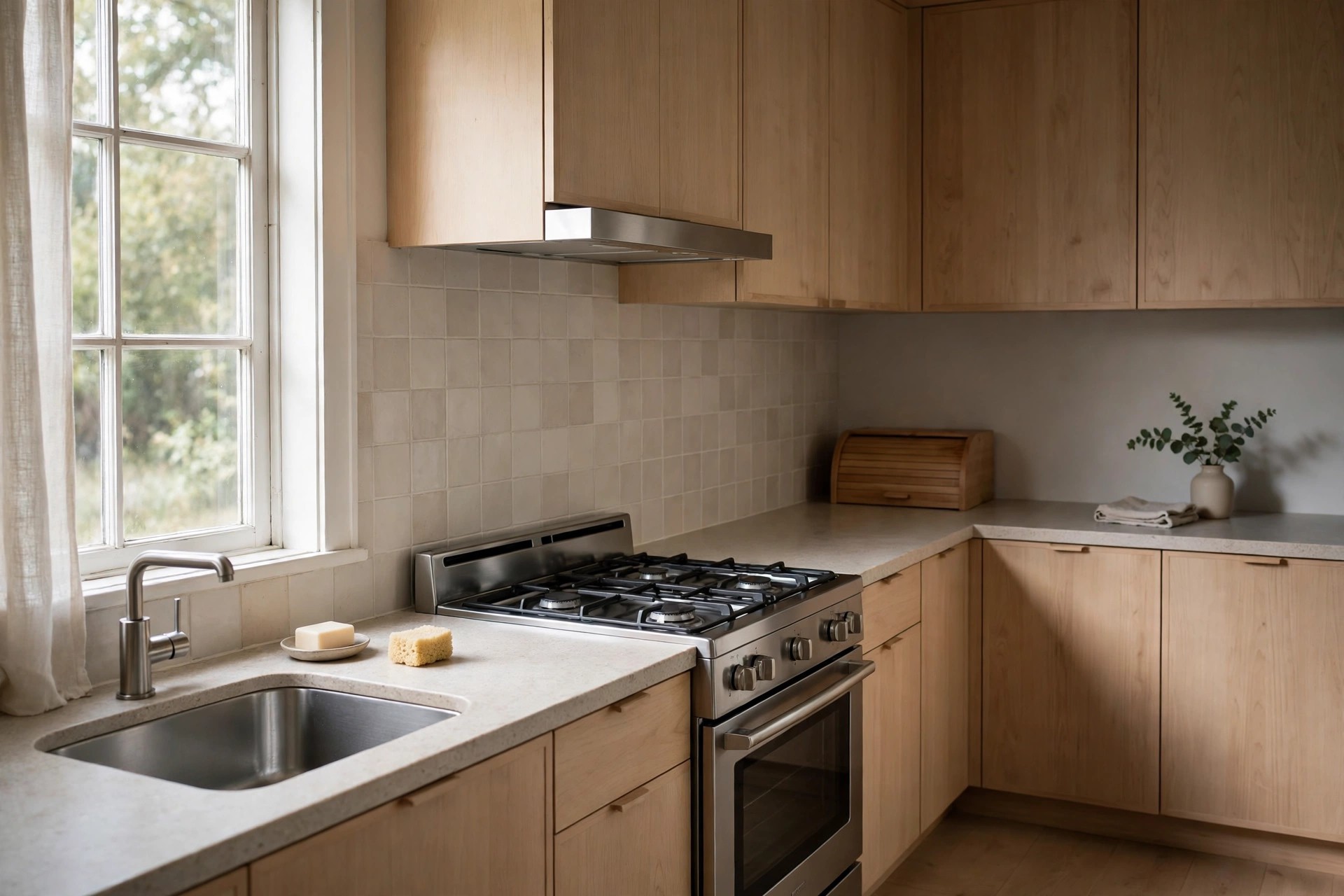
The best box still loses to a bad spot. Bread keeps best in a cool, dry place away from the stove, the dishwasher steam and the sunny window end of the counter.
Pick the box’s home before the box itself, then measure that spot. Our first apartment kitchen starter kit starts every storage choice the same way, with the spot first and the product second.
Once placed, leave the box there. A bread box that migrates around the counter ends up wherever it lands, usually in the way, and bread ends up back in bags beside it.
Move the box once in summer to check behind it. Cool dark spots can hide damp, and a dry wall keeps both bread and box healthy.
Measure the spot first for the best compact bread boxes for small kitchen counters: counter depth, the height to the cabinets above, and the swing or slide room the door style needs. Those numbers pick the door, and your loaf count picks the size.
Choose the box that fits the spot and the habit, keep it in one cool home, and wipe the crumb tray weekly. Save this list to the Kitchen Storage Ideas board so the shortlist stays with your measurements.


