

15 First Apartment Kitchen Ideas: A Starter Kit That Lasts
The first grocery run in a new place is the easy part. The first real dinner is where a bare kitchen shows itself: no knife worth using, no pan big enough for pasta, and one lonely fork in the drawer.
Most people fix the gaps with one giant boxed set, then quietly replace half of it within a year. A better way is to buy a short list of strong basics, one solid piece at a time.
This first apartment kitchen ideas starter kit that lasts puts the cookware, tools, and table basics in the order you will reach for them, with honest notes on what deserves real money and what can stay cheap.
A small kitchen rewards a short list. Every item here passed one test: it gets used at least three times a week, it stores in a drawer or one cabinet, and it is built to still work in your next home.
If the keys are brand new, pair this list with our week-one plan for settling a new rental kitchen and shop once, in order.
This post contains affiliate links. If you buy through them, we may earn a small commission at no extra cost to you. See our Affiliate Disclosure.
1. Start With One Good Chef’s Knife
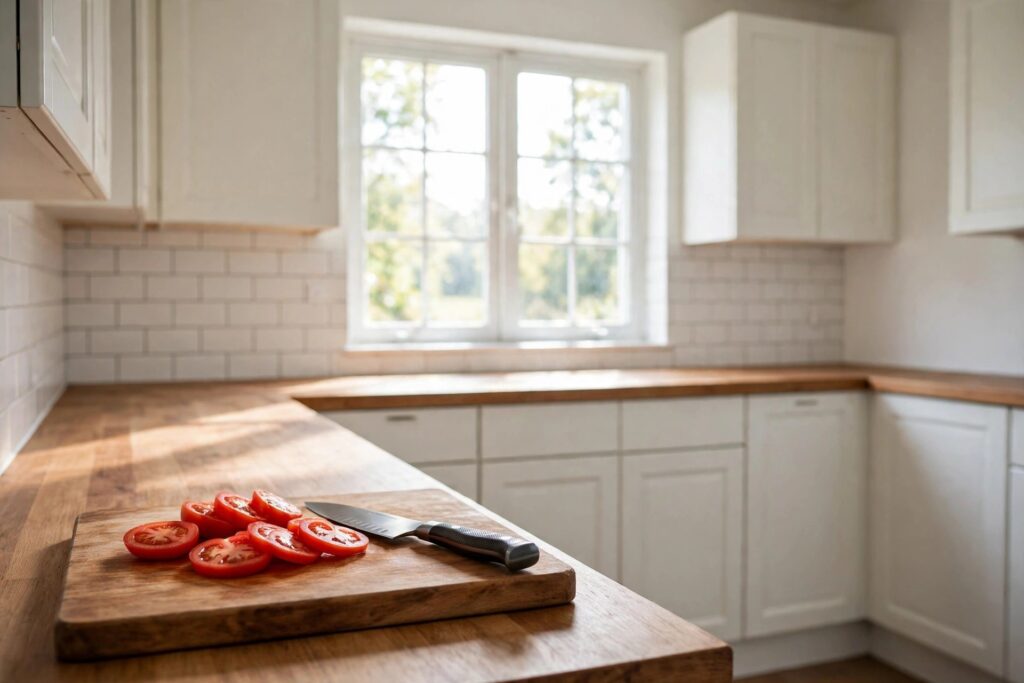
Dinner stalls fast when the only knife in the drawer is a dull steak knife. Tomatoes crush instead of slicing, onions slip under the blade, and every recipe takes twice as long. One good 8-inch chef’s knife ends that fight for good.
Look for a blade that feels balanced in your hand, with a handle that fills your grip without squeezing. Forged steel and well-made stamped steel both work; the fit in your hand matters more than the brand on the side.
Buy it once, store it on a magnetic strip or in a blade sheath, and never toss it loose into a drawer. It will outlast three cheap knife sets bought in a hurry.
2. Add a Big, Steady Cutting Board
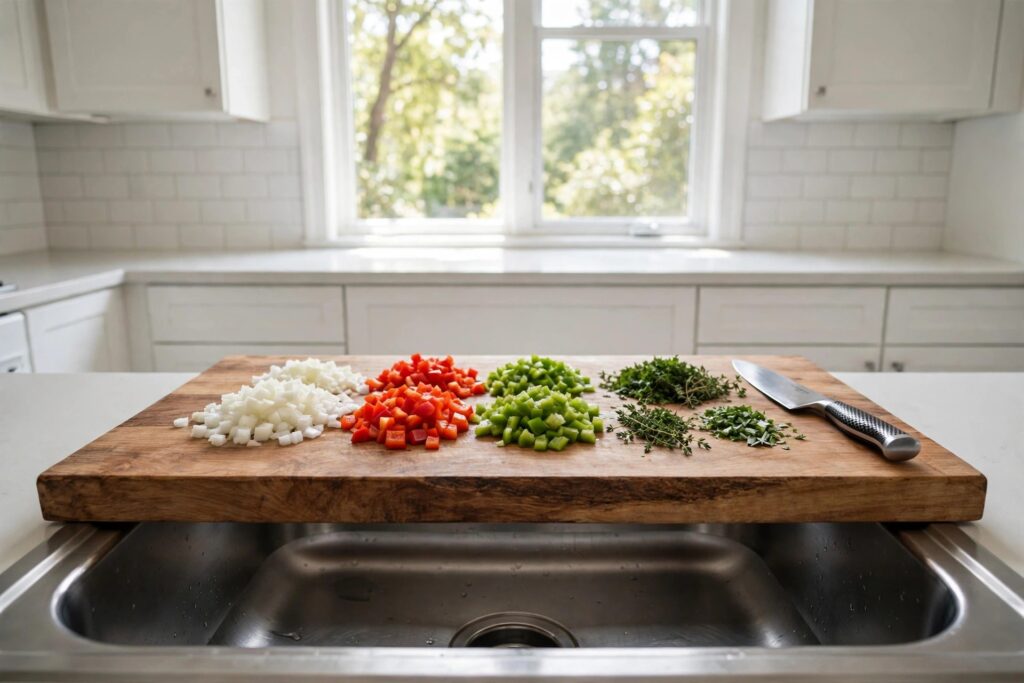
A big cutting board gives you room to work, and room is the one thing a small kitchen never has. With a board that spans the sink or covers half the counter, prep stops feeling like a juggling act.
Choose wood or thick plastic in the largest size your sink and storage allow. A board around 15 by 20 inches handles a whole chicken, a watermelon, and a pile of onions without food rolling off the edges.
Set it on a damp towel so it stays put while you chop. Wash it right after raw meat, dry it standing up, and one solid board will serve you for years without warping, splitting, or sliding around.
3. Buy One Skillet You Will Keep for Years
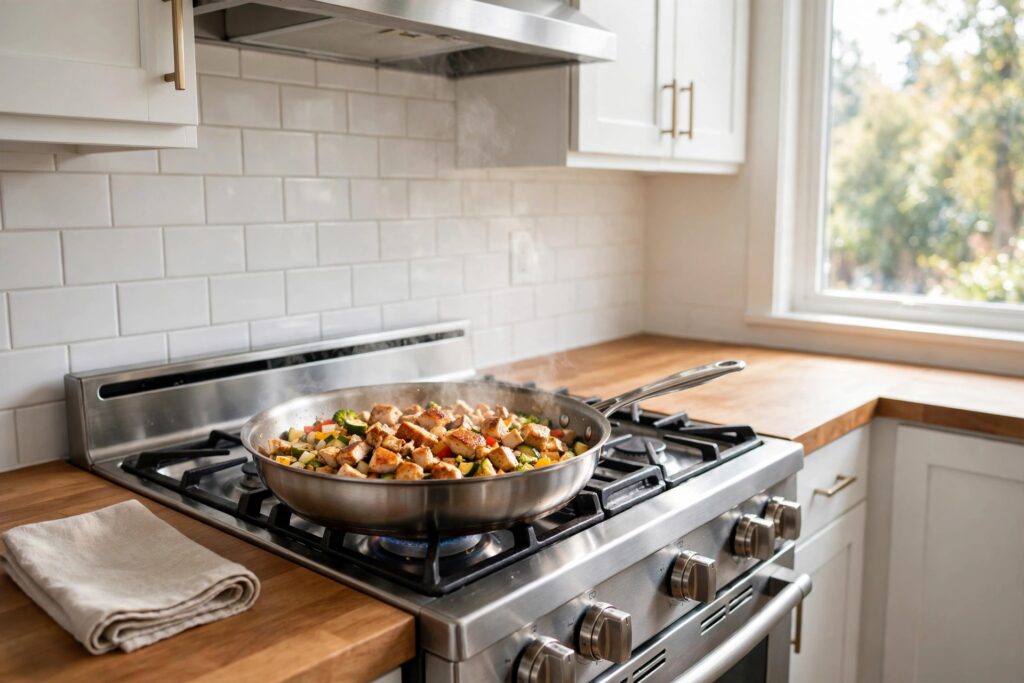
Pick one 12-inch skillet and make it a good one. Stainless steel or cast iron both brown food well, move from stove to oven, and shrug off metal utensils. This single pan will cook most of your weeknight dinners.
Hold it before you buy, if you can. It should feel heavy for its size, sit flat on the burner, and have a handle you can grip with a towel when it comes out of a hot oven.
Skip nonstick as your main pan, since the coating wears out in a few years. Add a small cheap nonstick later just for eggs, and replace that one when it starts to stick.
Cost: mid. This is a buy-once piece.
4. A Medium Saucepan With a Lid That Fits
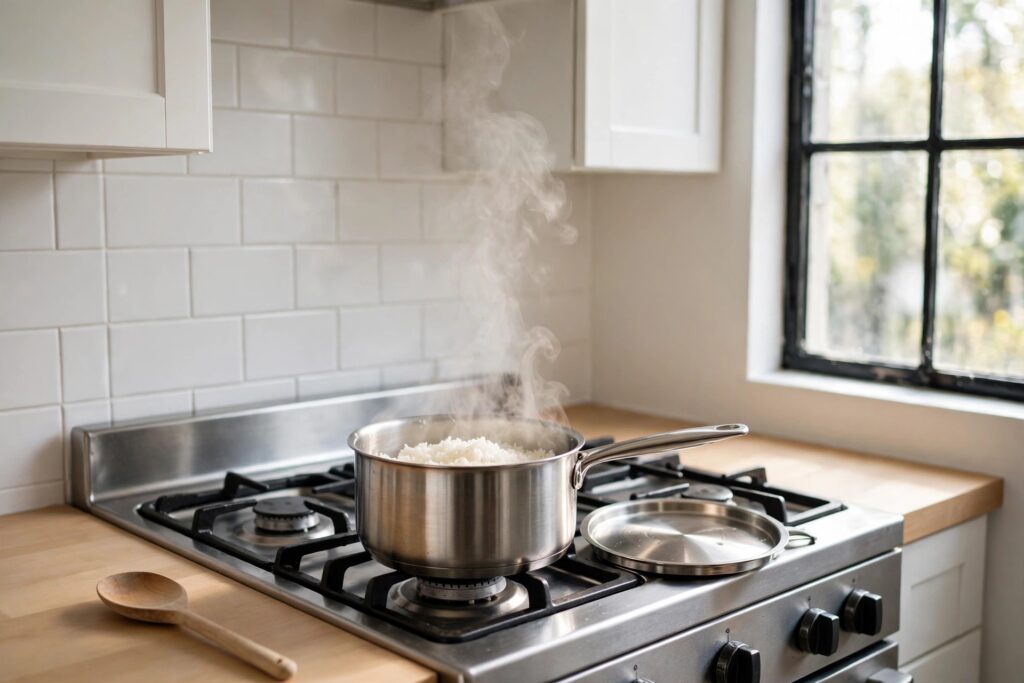
It is a Tuesday night: pasta boiling, sauce warming, and eggs to cook for tomorrow’s lunch, all at once. A 2 to 3 quart saucepan with a tight lid is the pot that quietly handles two of those jobs.
It is the right size for rice, oatmeal, soup for two, and reheating leftovers without scorching. A heavy base spreads heat evenly, so sauces warm gently instead of catching on the bottom and burning in spots.
Choose handles that feel steady and a lid that sits snug. Stack the saucepan inside the stockpot from the next step, and it takes up almost no cabinet space at all.
Best for: small households cooking most nights.
5. Skip the Pot Set, Add One Big Stockpot
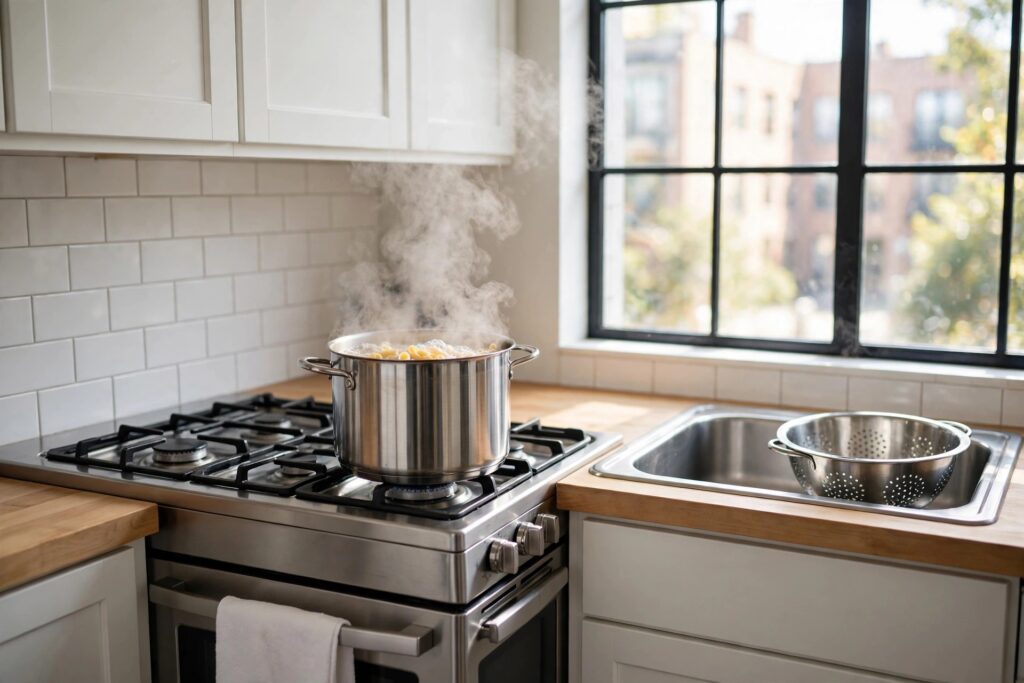
Boxed cookware sets look like a deal, but most include pots in sizes you will never touch. One tall stockpot, around 8 quarts, covers the real jobs: pasta, soup batches, corn on the cob, and big weekend chili.
The myth is that more pieces means more cooking power. In a small kitchen, more pieces mostly means a cabinet you cannot close, full of thin metal that warps and scorches. Two good pots beat eight thin ones every time.
Buy a sturdy base and straight sides, and check that your largest burner heats it evenly. The stockpot also works as a soak tub for crusty pans on cleanup night, and it earns its keep every single week.
Cost: low to mid.
6. One Rimmed Baking Sheet Does More Than Bake
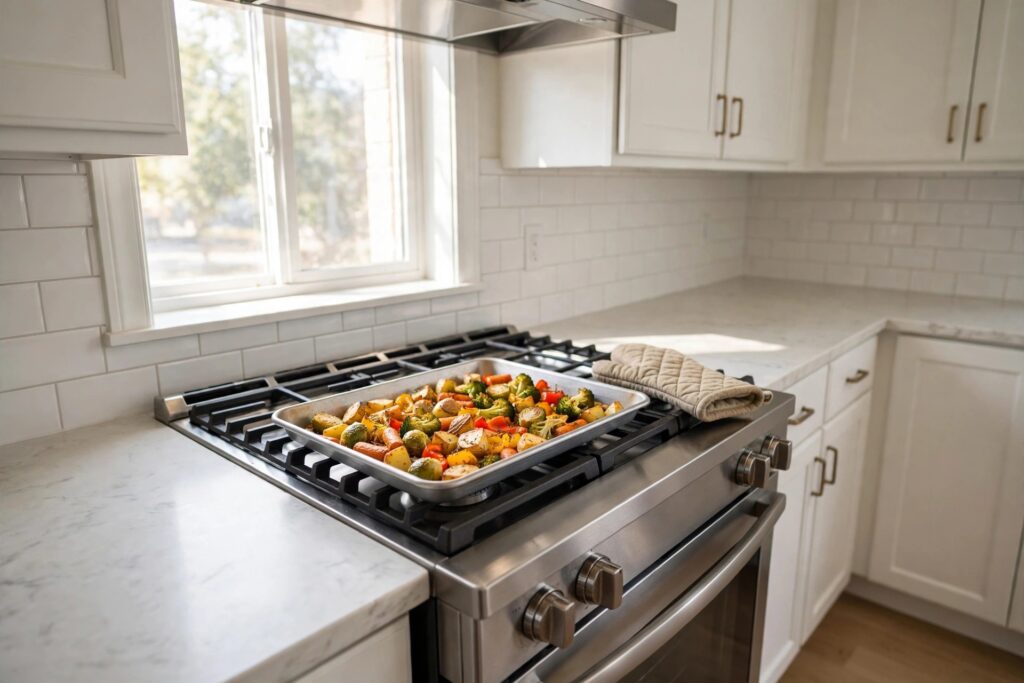
Think of a rimmed half sheet pan, about 18 by 13 inches, with a lip just high enough to hold olive oil and vegetable juices. That low rim turns it into the hardest working tray in the whole kitchen.
It roasts vegetables, bakes cookies, catches drips under a casserole, and carries a whole dinner’s worth of chopped ingredients to the stove. One pan, five jobs a week, and it still looks new after years of use.
Warped thin pans twist and pop in a hot oven, so pick one that feels rigid in your hands. Aluminum heats evenly and cleans up fast; line it with parchment on messy nights and store it upright beside the oven.
Cost: low.
7. Nesting Mixing Bowls That Earn Their Shelf Space
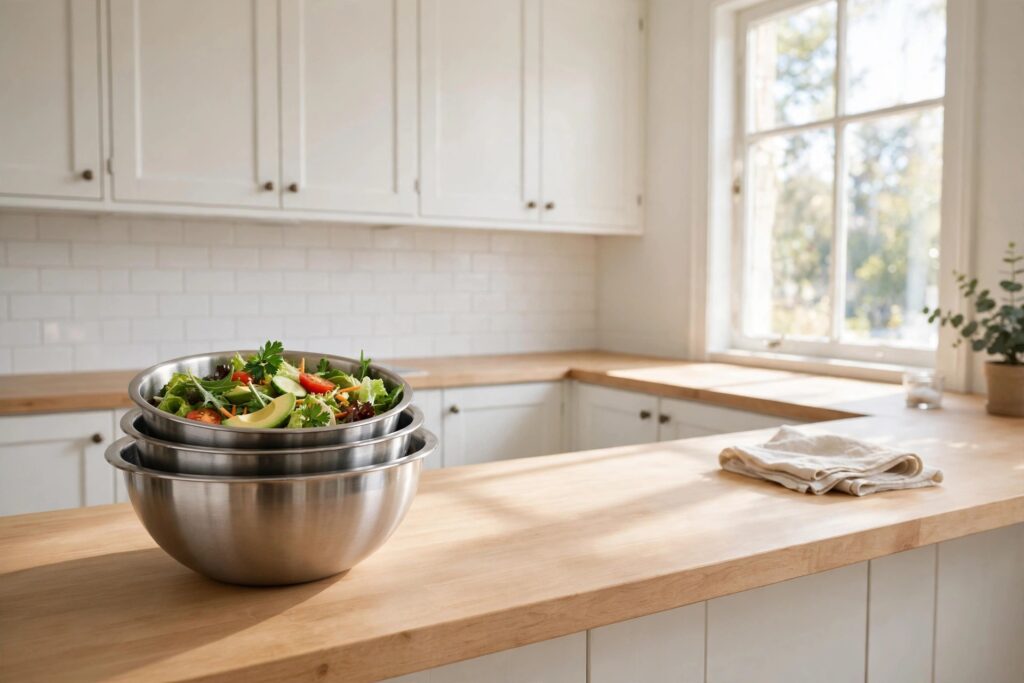
Follow one simple rule with bowls: they must nest. A set of three or four bowls that stack inside each other takes one shelf slot and still gives you a size for every job, from whisking eggs to tossing salad.
Stainless steel bowls are light, nearly unbreakable, and fine for hot or cold food. Glass looks nice but chips, and it weighs more, which matters when the shelf is high and your hands are wet.
The biggest bowl doubles as a serving bowl on the table, and the smallest holds chopped garlic and spices while you cook. That kind of double duty is exactly what earns a place in a starter kit.
Cost: low. Buy the nesting set once.
8. Metal Measuring Cups, Spoons, and a Simple Scale
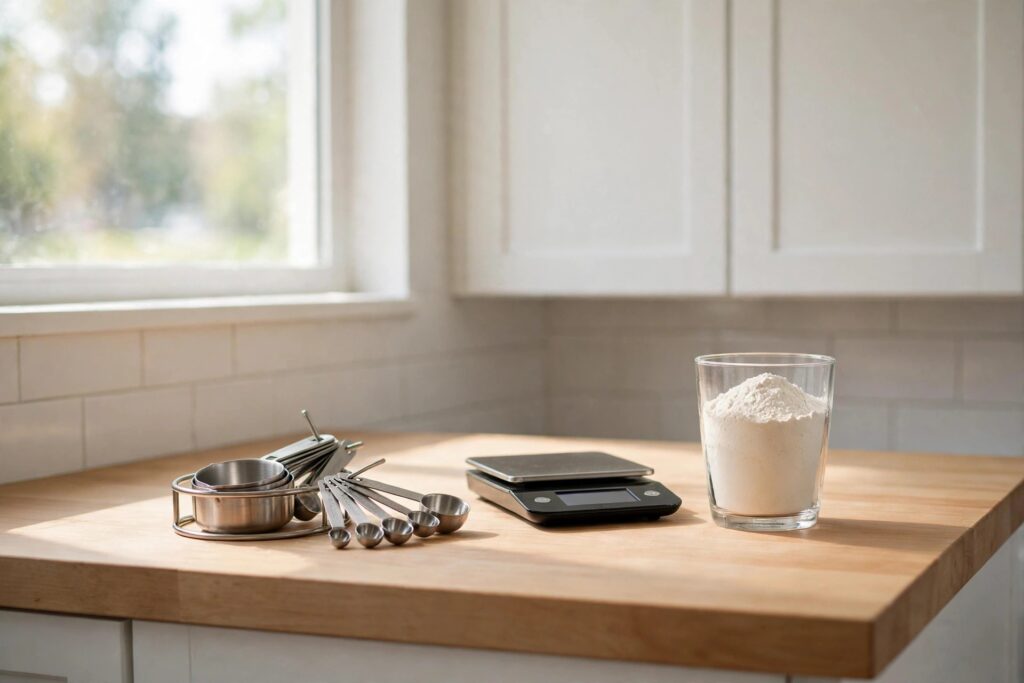
A common early mistake is the cheap plastic measuring set that warps in the dishwasher and fades within a year. After that, a cup is never quite a cup, and baking results wander for reasons you cannot see. The fix costs very little.
Metal cups and spoons stay true, hang on a ring, and cost little more than plastic. Add a simple kitchen scale when you can; weighing flour is faster than scooping, and batters come out the same every time.
Keep the set in the drawer nearest your prep board, not across the room. Tools you can grab without thinking are the ones that turn cooking from a chore into a habit you keep.
Best for: anyone who bakes even now and then.
9. Three Utensils That Cover Almost Every Job
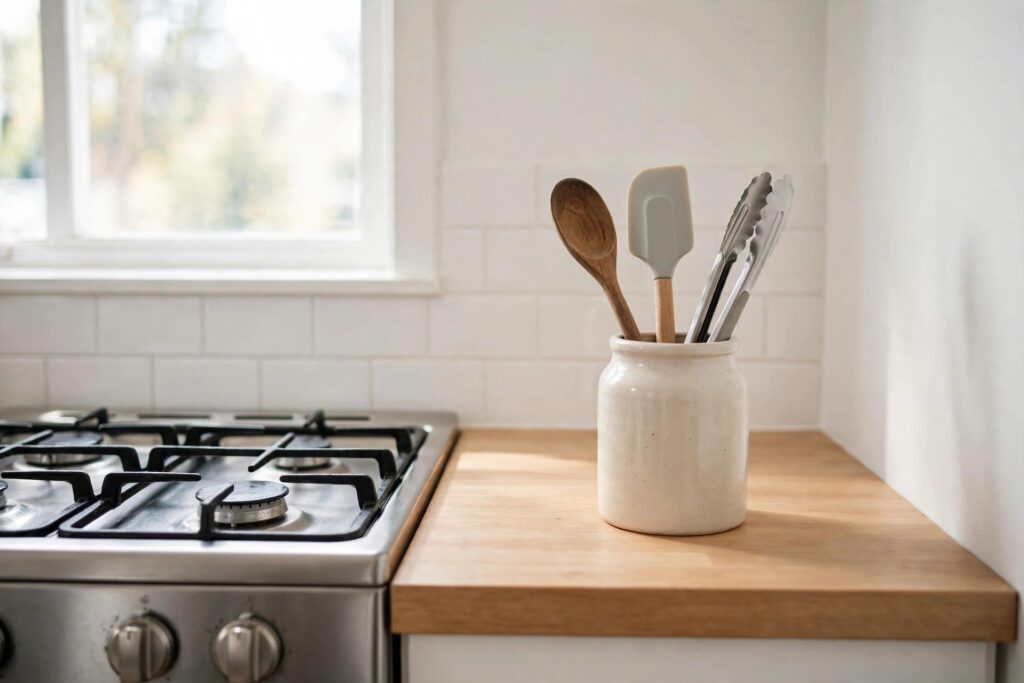
Three tools cover nearly every move at the stove: a wooden spoon, a flexible spatula, and a pair of spring-loaded tongs. Stirring, flipping, scraping, serving, and grabbing hot pasta all fall to one of these three, every single day.
Wood feels gentle on pan surfaces and stays cool in a hot pot. A silicone spatula bends into corners and scrapes bowls clean, while metal tongs give the firmest grip for turning chops and corn. Each one earns its place.
Buy handles long enough to keep your hand clear of steam. Hang the trio on hooks by the stove or stand them in a wide jar, and skip the 15-piece utensil sets full of tools you cannot name.
Cost: low.
10. A Colander That Fits Your Sink
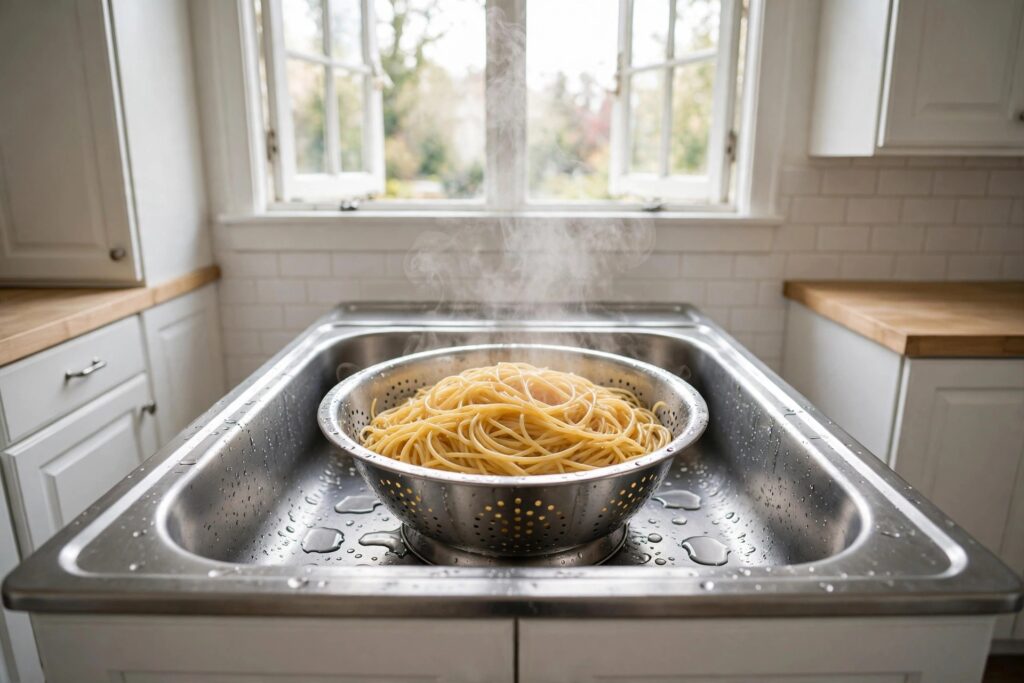
In my first kitchen, pasta night meant balancing a pot lid and hoping for the best. A sturdy colander ended the spills, the steam burns, and the noodles lost down the drain. It is a small thing that changes every weeknight.
Choose metal mesh or solid stainless with feet that lift it off the sink floor. It should fit inside your sink or sit steady on the rim, with handles that give a firm two-hand grip when it is full and heavy.
Beyond pasta, it rinses beans, berries, and salad greens, and it drains fried food without a pile of paper towels. Hang it on a hook inside a cabinet door if drawer space runs short.
11. The Small Tools Drawer: Peeler, Can Opener, Grater
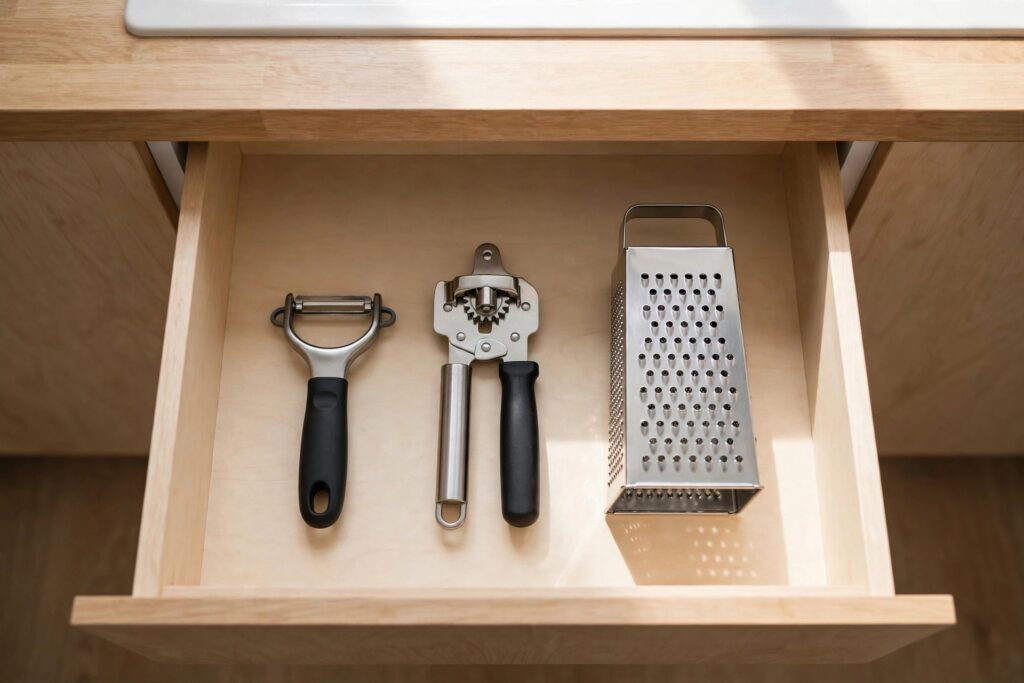
The first can of tomatoes with no can opener is a rite of passage nobody needs. A small drawer kit prevents it: a sharp vegetable peeler, a solid can opener, and a box grater cover more jobs than most gadgets.
The peeler handles potatoes, carrots, cheese shavings, and citrus zest. The grater works for cheese, garlic, ginger, and nutmeg, and the can opener meets beans, tuna, and coconut milk every week. Add a bottle opener if yours lacks one.
Buy simple, sturdy versions with grips that feel safe when wet. These three tools cost little, fit in one small drawer, and save you from single-use tools crowding out the ones you need. Replace a dull peeler yearly.
12. Towels and Oven Mitts, the Forgotten Basics
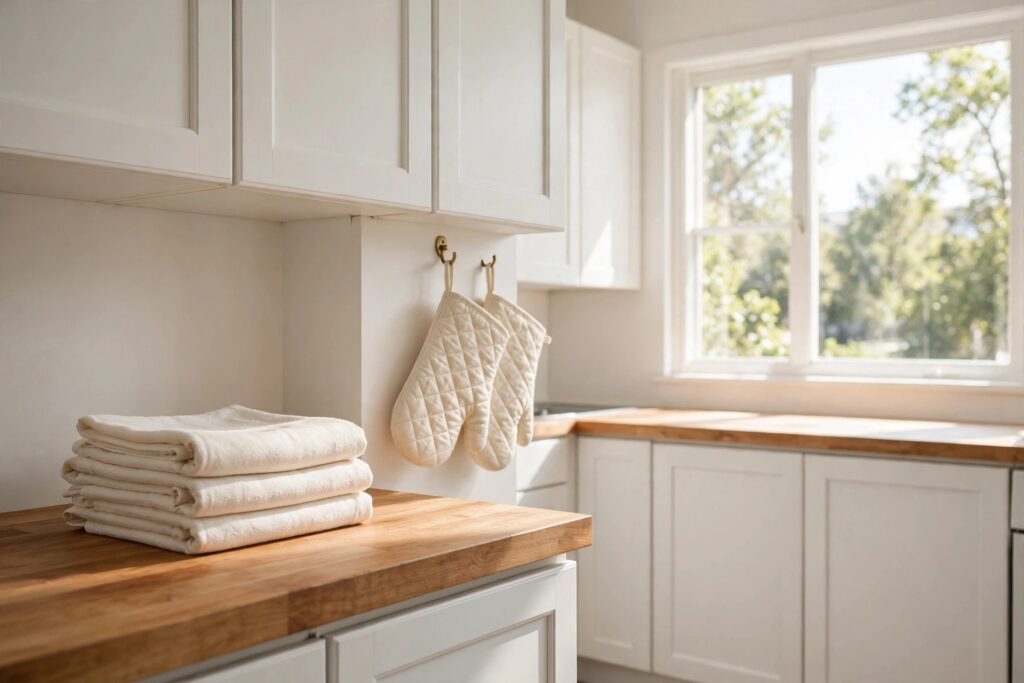
Fresh cooks remember the knives and pans, then grab a bath towel the first time a hot tray leaves the oven. A stack of plain cotton dish towels and one real pair of oven mitts close that gap before it hurts.
Towels dry dishes, line a tray of washed greens, grip a stubborn jar lid, and mop the small spills a busy counter collects. Cotton works better than slick synthetics, and it gets softer and thirstier with every wash.
Mitts should cover your wrists and stay flexible enough to grip a handle firmly. Buy towels in a plain color that hides stains, keep six in rotation, and wash them with the weekly laundry round.
Cost: low, and the set lasts for years.
13. Storage Containers With Lids That All Match
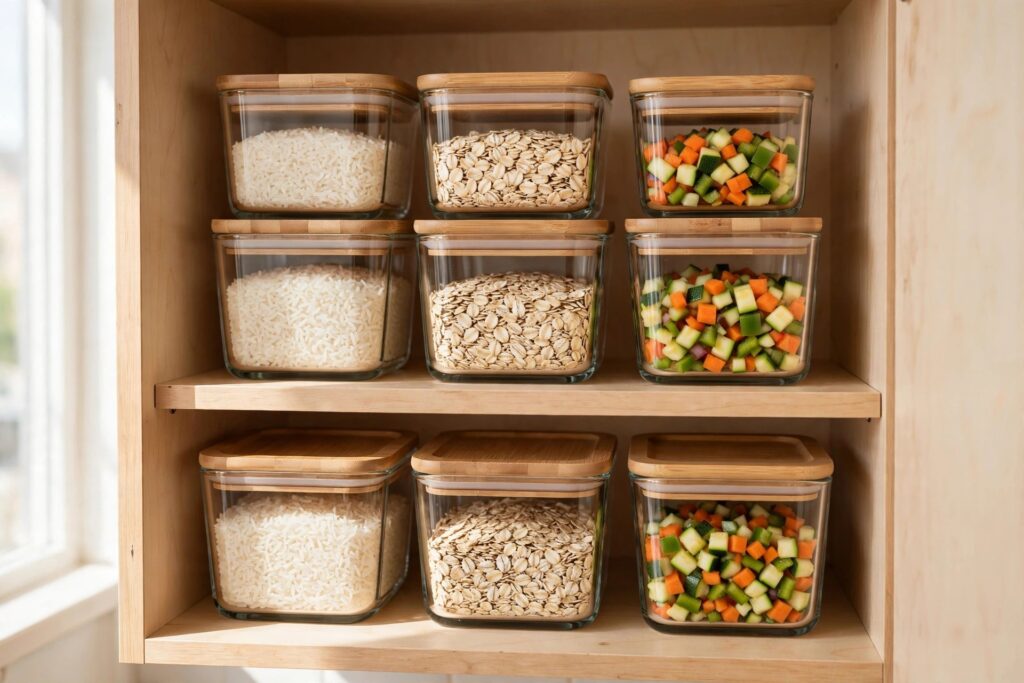
Buy storage containers as one matching family, not a mix of takeout tubs. Pick a single brand and shape so every lid fits every base, then start with six to eight pieces in two or three sizes. It saves daily frustration.
Glass holds up to tomato sauce and reheats without stains, while light plastic stacks better in a shallow cabinet. Either way, square shapes waste less shelf space than round ones, a real gain when every inch counts.
Leftovers, chopped onions, and dry goods like rice and oats all land in these daily. For the rest of the cabinet plan, our guide to kitchen storage for apartments with no pantry shows how far containers and smart shelves can go.
14. Four Place Settings of Plates, Bowls, and Cutlery
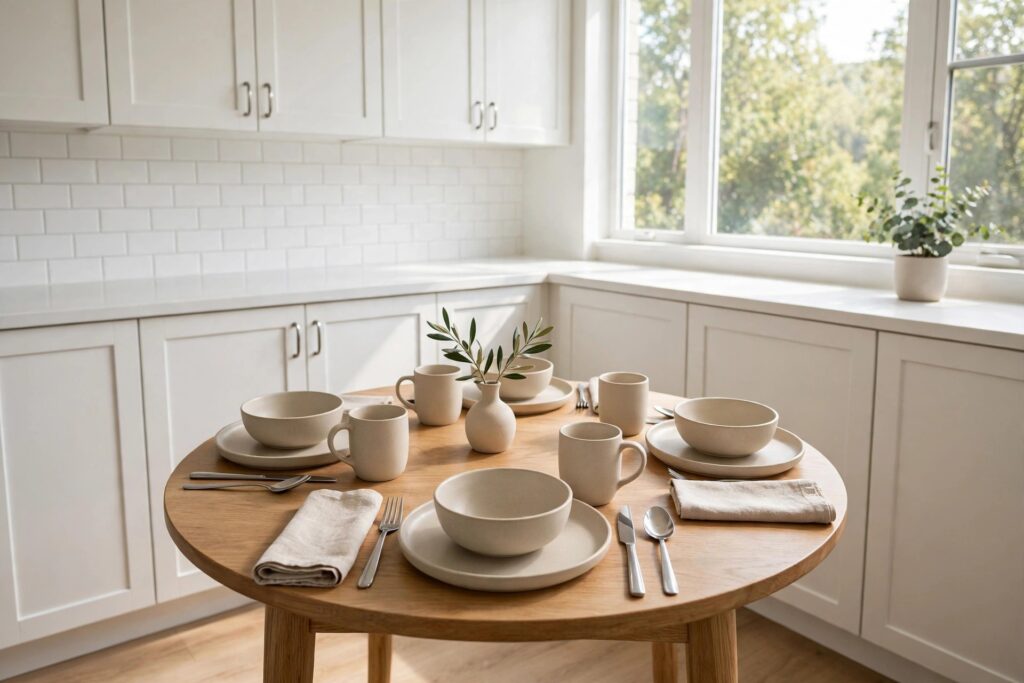
The night three friends squeeze into your first place for dinner, you find out that two plates and a mug collection is not a table setting. Four full place settings make that night easy instead of awkward.
Each setting needs a dinner plate, a smaller plate, a bowl, a mug or glass, and a fork, knife, and spoon. Plain stoneware or sturdy porcelain in one calm color mixes well and looks good on open shelves too.
Buy open stock when you can, so a chipped plate gets replaced alone instead of forcing a whole new set. Four settings seat guests, cover a week of solo meals between washes, and stack neatly in one cabinet.
15. Save Your Money: Gadgets to Skip for Now
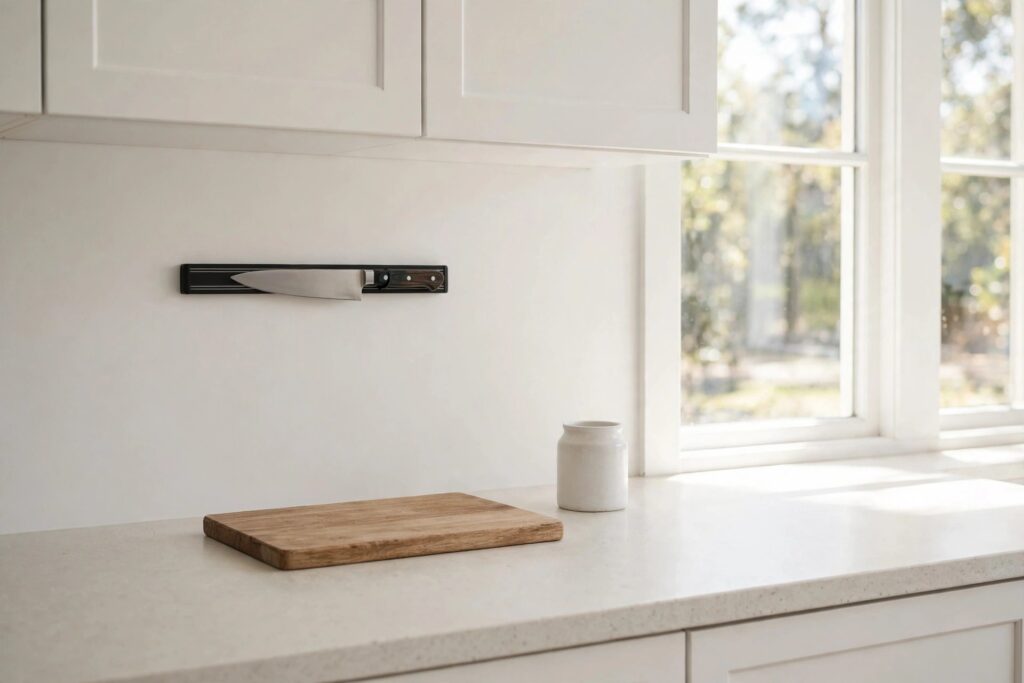
The last skill in a starter kit is knowing what to leave on the store shelf. Garlic presses, avocado slicers, egg separators, and banana hangers each do one job a knife or spoon already does, and they eat drawer space.
Knife block sets are the biggest trap: five dull blades cost more than the one good knife from step one. The money you skip here can fund the quality pieces above, or the no-damage upgrades in our renter-friendly kitchen makeover ideas.
Treat extras as second-month rewards, bought one at a time when a recipe truly calls for them. A small kitchen coffee station is a fine reward once the basics earn their keep every day.
That is the whole kit: one knife, one board, two pots, one pan, and a short bench of tools that pull daily duty. Bought in this order, a first apartment kitchen ideas starter kit that lasts will carry years of real cooking.
Add pieces slowly, only when your cooking asks for them, and each new tool feels earned instead of cluttered. Once the kit is in place, our small kitchen ideas for a first apartment guide helps the room itself work harder.
Save this list to your small kitchen board before the first shopping trip, and check pieces off as they land in your drawers.


