

15 Hidden Storage Ideas for Long Narrow Bathroom
A long narrow bathroom can be surprisingly difficult to organize. The limited width leaves little room for bulky cabinets, deep shelves, or freestanding storage furniture. When storage is added without considering the shape of the room, the bathroom can quickly feel crowded and uncomfortable. The good news is that a narrow layout can work beautifully when storage is built into spaces that would otherwise remain unused.
Hidden storage is especially useful in a long bathroom because it keeps everyday items accessible without filling the walking path with furniture. Recessed niches, mirrored cabinets, concealed drawers, false walls, built-in shelves, and clever spaces beneath fixtures can provide plenty of room while keeping the room visually calm. Instead of adding more objects to the bathroom, the goal is to make the existing walls, vanity, and fixtures work harder.
These hidden storage ideas are suitable for both small bathrooms and longer layouts. Some require planning during a renovation, while others can be adapted to an existing bathroom. The best solution depends on your wall depth, plumbing, available floor space, and storage needs.
1. Recessed Shower Wall Niche

A recessed shower niche is one of the most useful hidden storage solutions for a long narrow bathroom. Rather than installing a shelf that projects into the shower area, a niche is built directly into the wall. This keeps shampoo, conditioner, soap, razors, and other shower products organized without reducing the already limited floor space.
For a narrow bathroom, consider a horizontal niche positioned along the longest available wall. Several compartments can separate different products and make the space easier to maintain. Matching the niche interior to the surrounding tile can create a subtle built-in appearance, while a contrasting tile can turn it into a small decorative feature.
The niche should be placed at a comfortable height so frequently used products are easy to reach. If the shower wall has limited depth, consult a professional before cutting into it because plumbing and structural elements may restrict where a recessed niche can be installed.
2. Mirrored Medicine Cabinet
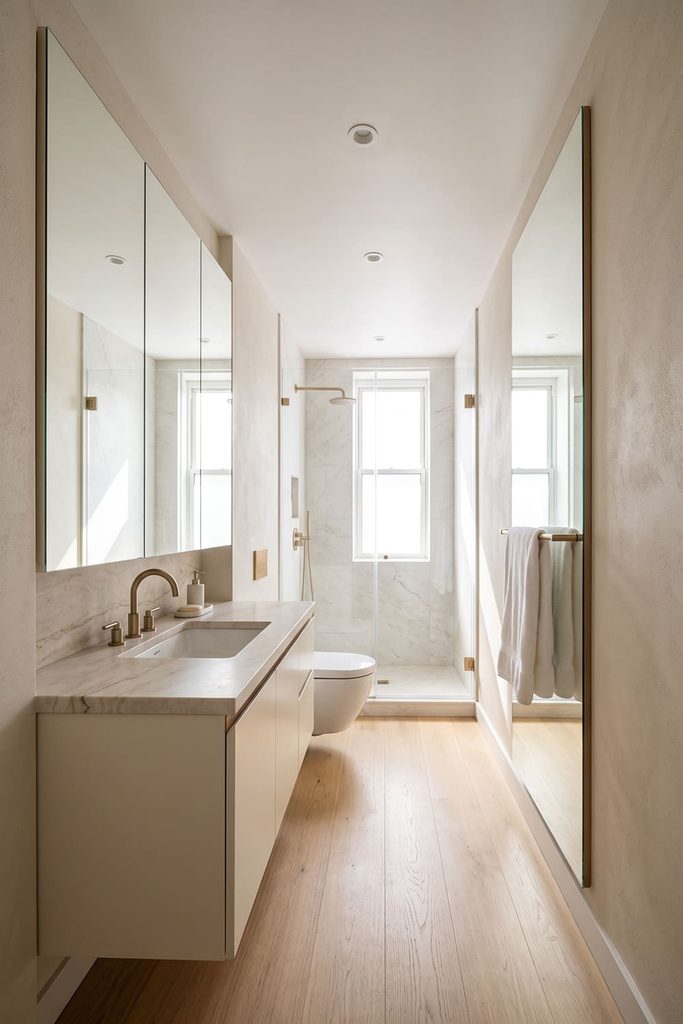
A wall mirror can do more than provide a place to check your appearance. A mirrored medicine cabinet combines the function of a mirror with concealed storage behind it. This is particularly helpful in a long narrow bathroom because it uses vertical wall space instead of consuming valuable floor area.
Choose a cabinet that is wide enough to provide useful storage but shallow enough to maintain comfortable clearance around the vanity. Inside, adjustable shelves can hold skincare products, medicines, grooming supplies, dental items, and smaller bathroom accessories.
A frameless or minimally framed mirrored cabinet can also help maintain a clean appearance. Because the storage is hidden behind the mirror, the room avoids the visual clutter associated with open shelves filled with bottles and containers.
For a narrow vanity wall, a recessed medicine cabinet can be especially effective because the cabinet sits within the wall rather than projecting outward.
3. Hidden Vanity Drawers

The area beneath a bathroom sink is often one of the largest storage opportunities in a narrow bathroom. Instead of using traditional cabinet doors with one large open compartment, consider a vanity with multiple drawers designed around the plumbing.
Shallow upper drawers can store toothbrushes, cosmetics, combs, and other small items, while deeper lower drawers can accommodate towels, toilet paper, cleaning supplies, or larger containers. Drawer organizers can divide the interior into sections so that small products do not become mixed together.
A floating vanity can make the bathroom feel more open while still providing concealed storage. Because the cabinet is raised above the floor, you can see more of the flooring underneath, which helps preserve the sense of width in a narrow room.
The key is to choose a vanity that provides useful storage without becoming too deep for the available walkway.
4. Recessed Wall Cabinet
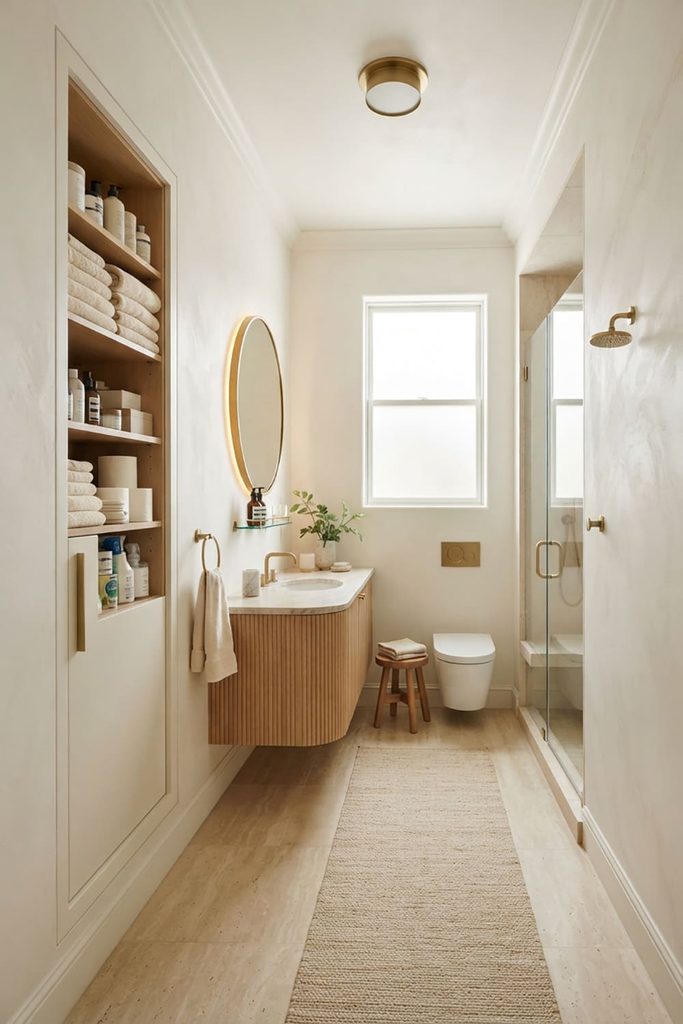
A recessed wall cabinet can turn an otherwise ordinary section of wall into valuable concealed storage. The cabinet is installed inside the wall cavity, leaving the front relatively flush with the surrounding surface.
This type of cabinet works particularly well on a long bathroom wall where there is plenty of vertical space but very little floor space. You can use it for towels, toilet paper, extra toiletries, hair accessories, or cleaning products.
A cabinet with a simple door painted the same color as the wall can almost disappear into the background. If you prefer a decorative appearance, a mirrored, paneled, or softly textured door can make the cabinet look intentional rather than purely functional.
Before installation, the wall needs to be checked for pipes, electrical wiring, and structural framing. When planned correctly, however, a recessed cabinet can provide substantial storage without making the room feel smaller.
5. Hidden Storage Behind the Toilet

The wall behind the toilet is another area that can be used for concealed storage. Instead of installing a large freestanding shelving unit, consider creating a shallow built-in cabinet around or above the toilet.
A narrow cabinet can hold spare toilet paper, cleaning products, toiletries, and extra bathroom supplies. Doors keep everything hidden, which is useful if you want a calm, uncluttered bathroom.
For a long narrow layout, keep the cabinet relatively shallow. Deep storage above the toilet can visually push into the room and make the bathroom feel tighter.
A wall-mounted cabinet can also be designed to match the vanity or wall color. When the materials coordinate, the storage becomes part of the architecture rather than looking like an additional piece of furniture.
This solution is particularly useful when floor space is too limited for a separate linen cabinet.
6. Built-In Storage Inside a False Wall

A false wall can solve two problems at once: it can conceal plumbing while creating hidden storage. In some bathroom renovations, a shallow service wall is needed to accommodate pipes, drainage, or other mechanical elements. Instead of leaving the wall completely unused, incorporate recessed compartments into it.
The compartments can be fitted with discreet doors or concealed panels. They can store toiletries, towels, toilet paper, and other items that you want nearby but out of sight.
This approach works particularly well in long bathrooms because a shallow wall extension has less impact than a large freestanding cabinet.
The design should be carefully planned around plumbing and ventilation requirements. The storage does not need to be very deep to be useful. Even a relatively shallow cavity can accommodate many bathroom essentials when shelves are arranged efficiently.
7. Concealed Storage Under a Floating Vanity
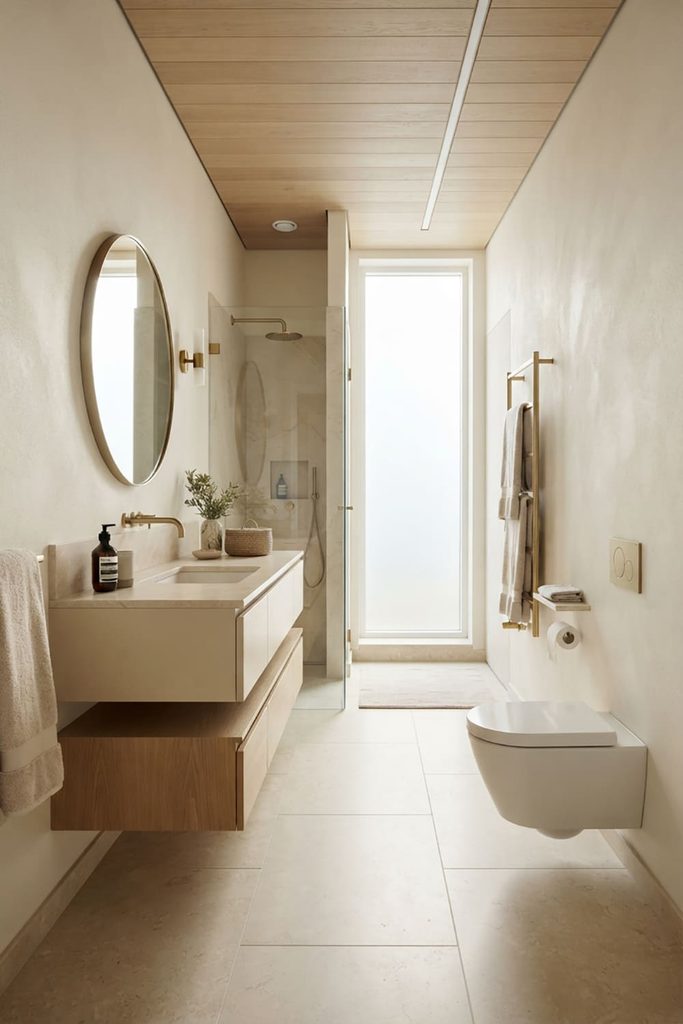
The space beneath a floating vanity does not have to remain completely empty. While leaving some open floor underneath can make a narrow bathroom appear more spacious, part of this area can be used for discreet storage.
One option is a slim drawer or pull-out cabinet integrated into the lower section of the vanity. Another is a shallow concealed compartment designed to store items that are used less frequently.
Keep the storage visually simple and avoid extending it too far toward the center of the bathroom. The walking path should remain clear, especially in a long narrow room where the circulation area is already limited.
A floating vanity with carefully planned concealed storage can give you the appearance of an airy bathroom while still providing practical organization.
8. Hidden Pull-Out Cabinet Beside the Vanity
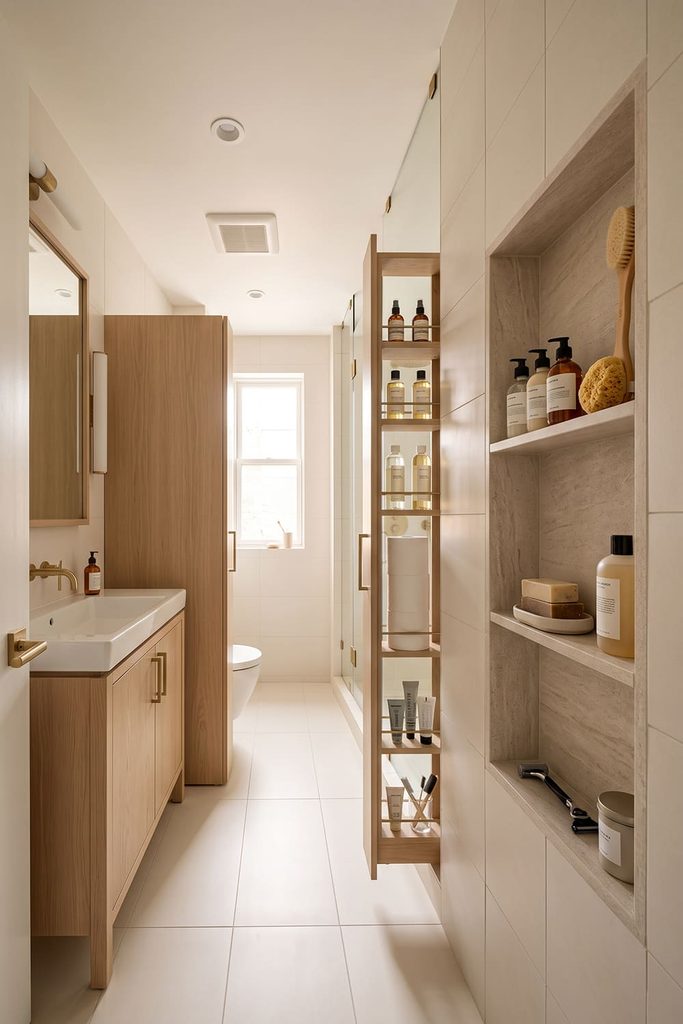
A narrow gap beside a vanity may seem too small for useful storage, but a slim pull-out cabinet can turn that unused space into a practical organizing zone.
The cabinet can be designed vertically and fitted with several narrow shelves. It can hold bottles, hair products, toilet paper, cleaning supplies, or other items that are difficult to organize in conventional drawers.
Because the cabinet pulls outward rather than requiring a large door swing, it can work well in a narrow bathroom. The front can match the vanity so the storage looks like part of the same unit.
This idea is especially useful when the bathroom has a few inches of unused space between the vanity and wall. Rather than trying to fill every gap with decorative objects, use the available width for purposeful storage.
9. Concealed Shelves Behind a Full-Length Mirror

A full-length mirror can become a surprisingly effective hidden storage feature when it is installed over a shallow built-in cabinet.
Instead of mounting the mirror directly onto a plain wall, create a shallow storage cavity behind part or all of the mirror. Doors can be hinged or designed with discreet openings, allowing the mirror to conceal toiletries and personal items.
In a long narrow bathroom, a tall mirror can emphasize the room’s vertical dimensions while hiding storage at the same time. This combination is especially useful when wall space is available but there is no room for a traditional cabinet.
Use shallow shelves inside rather than making the cavity excessively deep. The goal is to create organized storage without making the wall structure unnecessarily bulky.
10. Toe-Kick Storage Beneath the Vanity
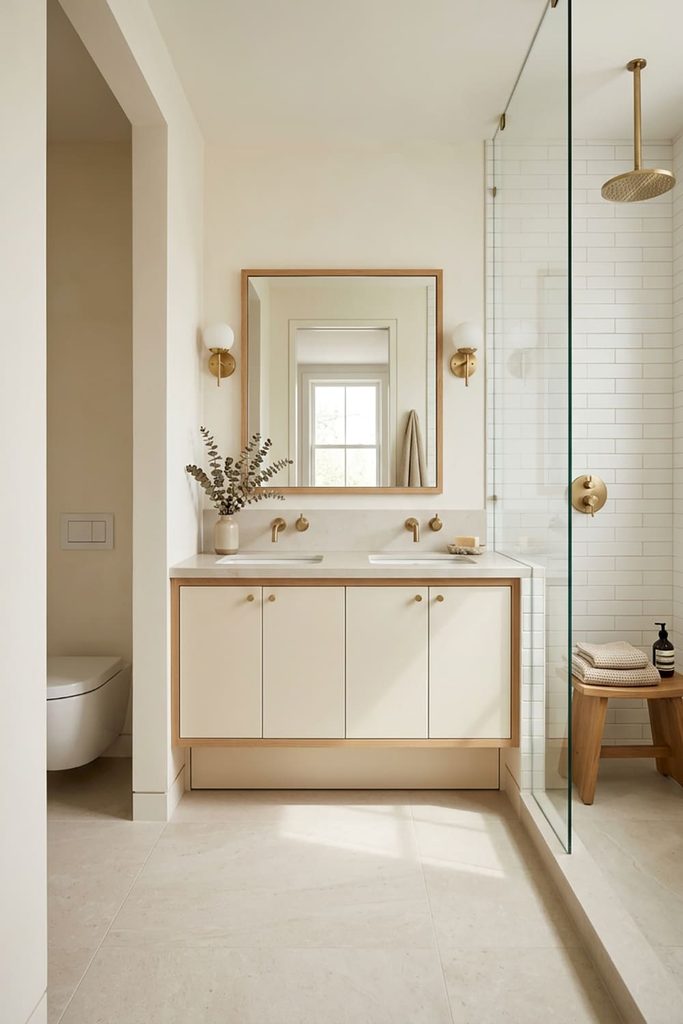
The small space at the bottom of a bathroom vanity is usually overlooked. With the right design, it can become a hidden drawer for items that are not used every day.
A toe-kick drawer can store spare toiletries, extra cleaning cloths, replacement products, or other compact supplies. Because the drawer sits close to the floor and remains visually subtle, it does not interfere with the main storage areas.
This is a particularly useful solution for narrow bathrooms because it adds capacity without requiring additional wall or floor space.
The drawer should be designed carefully so it does not interfere with feet or normal movement around the vanity. Waterproof and durable materials are also important because the area is close to the floor and may occasionally be exposed to moisture.
11. Hidden Cabinet Above the Bathroom Door
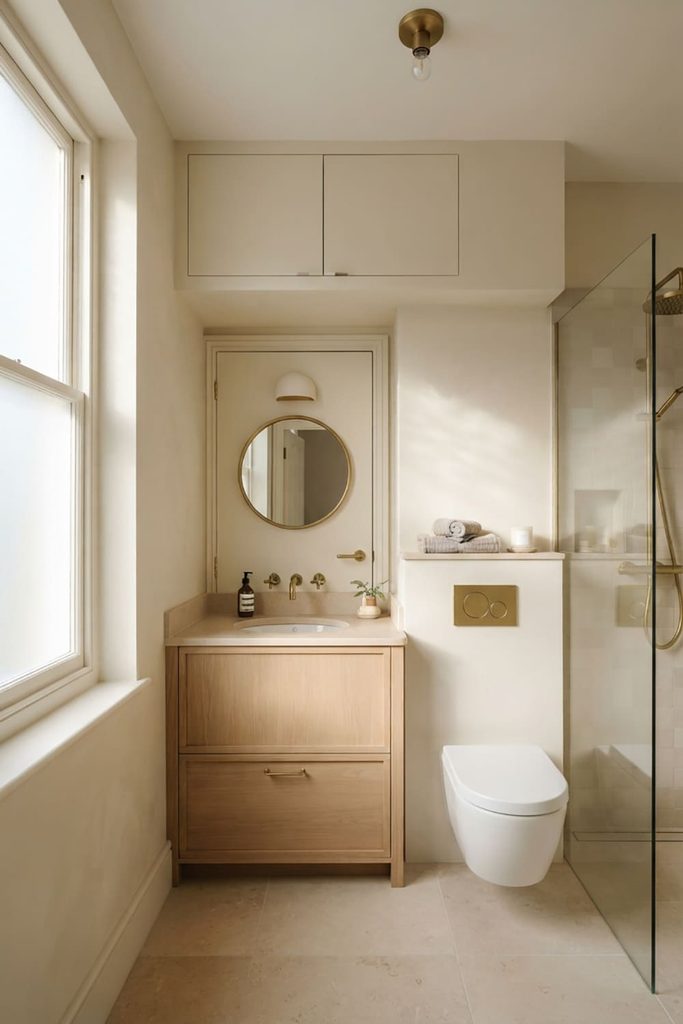
The wall area above a bathroom door is often left completely unused. In a narrow bathroom with limited cabinet space, this vertical area can provide additional concealed storage.
A shallow cabinet installed above the door can hold spare towels, toilet paper, seasonal items, extra toiletries, or cleaning supplies. Because it is positioned high on the wall, it does not interfere with the walking path.
This storage is best reserved for items that are not needed several times a day. You can use labeled internal containers to keep the cabinet organized and easy to access.
For a cleaner appearance, paint the cabinet doors the same color as the wall or trim. A simple flat-front design can make the storage almost disappear. Always make sure the cabinet is securely installed and positioned so the door can open and close comfortably without obstruction.
12. Hidden Linen Storage in a Tall Cabinet

A tall, narrow cabinet can provide substantial storage without taking up the footprint of a wide cabinet. The trick is to choose a shallow design that follows the proportions of the bathroom.
A built-in linen cabinet can have closed doors that conceal folded towels, toilet paper, spare toiletries, and cleaning supplies. Adjustable shelves allow the interior to change as your storage needs change.
Instead of placing the cabinet in the center of the room, position it at the end of the bathroom or along a wall where it does not interrupt the main walkway.
A tall cabinet also uses vertical space efficiently. In a long narrow bathroom, this is often more practical than adding several small storage pieces throughout the room. To keep the design cohesive, match the cabinet finish with the vanity or use the same wall color for a more integrated appearance.
13. Storage Inside a Pocket Door Wall
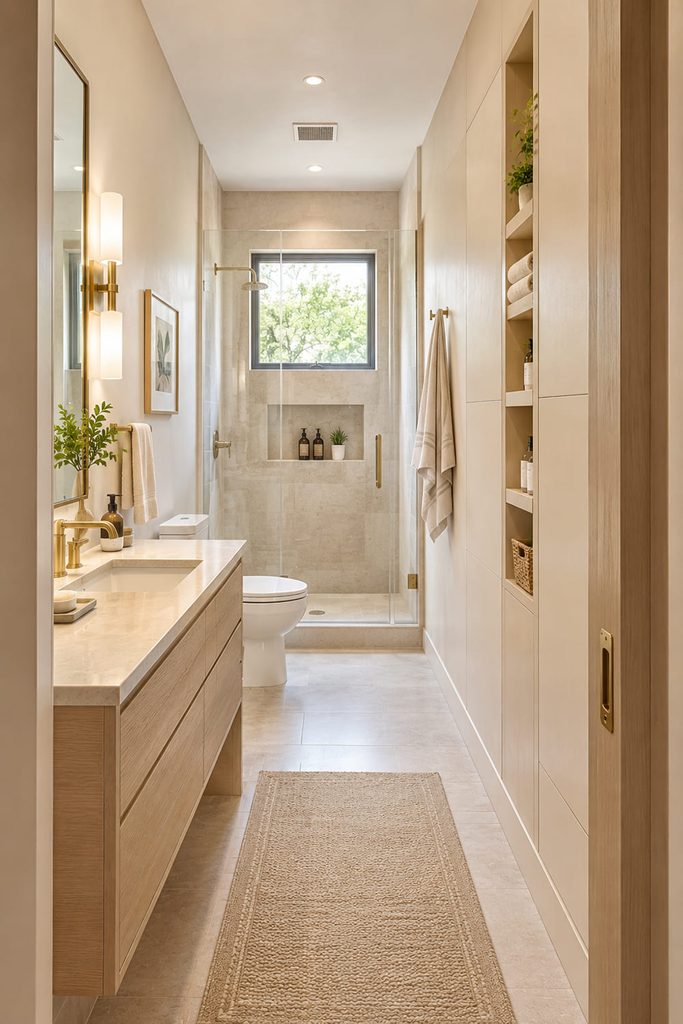
If you are renovating the bathroom and considering a pocket door, the wall surrounding the pocket door can sometimes provide additional opportunities for shallow storage, depending on the construction and door mechanism.
A carefully planned wall section can incorporate slim recessed compartments for small bathroom supplies. These compartments can be positioned where they do not interfere with the pocket door’s operation.
This idea requires more planning than simply installing a cabinet because the wall must accommodate the sliding door mechanism. Plumbing, electrical wiring, framing, and the pocket door system all need to be considered before creating any recessed storage.
When possible, this approach can make excellent use of a wall that might otherwise serve only as a door enclosure. It is particularly suitable for bathrooms where every inch of wall space matters.
14. Concealed Storage in a Window Seat or Low Ledge

If your long narrow bathroom has a suitable window area, a low built-in ledge or compact window seat can provide hidden storage underneath.
Instead of leaving the space below the ledge empty, use lift-up panels or discreet drawers to create storage compartments. These can hold towels, toilet paper, spare toiletries, or other items.
This works best when the window is positioned away from wet shower areas and when the construction materials are suitable for a humid bathroom environment.
A low storage ledge can also provide a visual transition between the window and the rest of the room. Keep the design simple so it does not make the narrow bathroom feel divided into too many sections.
The storage should remain easy to access, particularly if the compartment is intended for items used regularly.
15. Concealed Storage Behind a Decorative Wall Panel
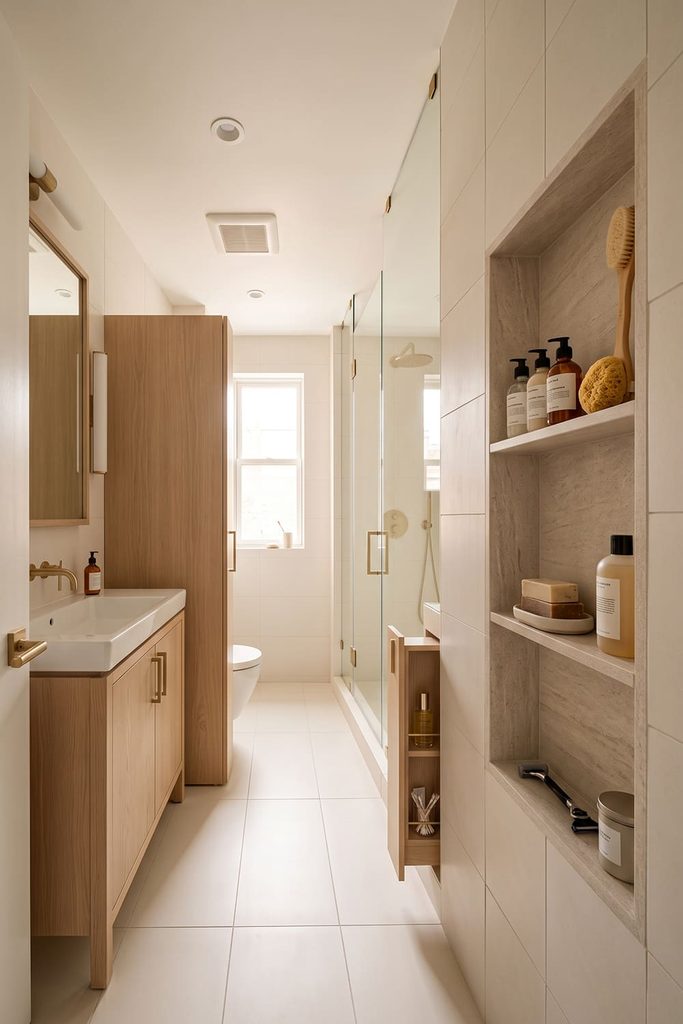
A decorative wall panel can hide a surprisingly useful storage compartment. The panel may look like part of the wall treatment while opening to reveal shelves or a shallow cabinet.
This approach works particularly well when you want hidden storage without introducing obvious cabinet doors into the room. The panel can match surrounding woodwork, tile, paint, or another architectural detail.
Use the hidden compartment for smaller items that you want nearby but do not necessarily want on display. Hair tools, extra toiletries, medicines, and personal-care products can all be organized behind the panel.
In a long narrow bathroom, placing the concealed panel on an otherwise unused wall can make the room feel more intentional. The storage becomes part of the architecture rather than another object competing for attention.
Guide to Creating Hidden Storage in a Long Narrow Bathroom
Hidden storage works best when it is planned around the shape and daily use of the bathroom. Simply adding cabinets wherever there is an empty wall can make a narrow space feel even tighter. The following guidelines can help you create storage that is useful while preserving an open layout.
Start With the Bathroom’s Walking Path
The main walkway should be one of the first things you consider. In a long narrow bathroom, people usually move along a relatively straight path between the entrance, vanity, toilet, shower, bathtub, or window.
Keep bulky storage away from this circulation area. Wall-mounted, recessed, and shallow storage solutions are usually more appropriate than deep freestanding furniture.
Before choosing a cabinet, measure the available clearance with doors and drawers fully open. A storage unit may fit physically while still making the room uncomfortable to use.
Use Vertical Space Before Adding Floor Furniture
When floor space is limited, look upward. Tall cabinets, recessed wall storage, medicine cabinets, and overhead cupboards can provide considerable capacity without taking up additional floor area.
Vertical storage can also draw the eye upward, helping a narrow bathroom feel more spacious.
However, avoid filling every wall from floor to ceiling with cabinets. A combination of concealed storage and open visual space usually creates a more comfortable balance.
Keep Storage Shallow
Deep cabinets can be problematic in a long narrow bathroom because they extend into the walking area. When designing built-in storage, consider how much depth you actually need.
Small toiletries can often fit into relatively shallow compartments. Towels may require more depth, while toilet paper and cleaning products can be stored in different sections. Instead of making every cabinet deep, use several storage zones with different depths based on what each area needs to hold.
Hide Everyday Clutter
Not everything needs to be hidden. Towels, a soap dispenser, and a small decorative item can add warmth to a bathroom. The goal of concealed storage is mainly to control visual clutter.
Keep frequently used but unattractive items inside drawers and cabinets. Bottles, cleaning products, spare toilet paper, grooming tools, and miscellaneous supplies can quickly make a bathroom look messy when left on counters.
A simple rule is to keep the vanity countertop relatively clear and give every frequently used item a designated place.
Plan Storage Around the Sink
The vanity is one of the most important storage areas in the bathroom. Before choosing the cabinet, make a list of the things you actually need to store there.
Separate items by size and frequency of use. Small daily products can go in shallow top drawers, while larger or less frequently used items can go in deeper compartments.
If plumbing occupies the center of the cabinet, consider U-shaped drawers or specially designed compartments that work around the pipes.
Take Advantage of Wall Cavities Carefully
Recessed storage can be excellent in a narrow bathroom, but walls should never be cut open without checking what is inside them. Plumbing pipes, electrical wiring, structural framing, waterproofing systems, and ventilation components can all affect where recessed storage can be installed.
During a renovation, discuss recessed cabinets and niches with the contractor before walls are closed. Planning these details early can prevent expensive changes later.
Use Mirrors to Increase Function
Mirrors are particularly useful in narrow bathrooms because they reflect light and visually expand the room. When the mirror also conceals a medicine cabinet, it performs two functions without requiring additional wall space.
A wide mirrored cabinet above the vanity can therefore be more useful than a standard decorative mirror combined with a separate storage unit elsewhere. Choose a design that remains proportionate to the vanity and does not overwhelm the room.
Choose Closed Storage for a Calm Appearance
Open shelves can be attractive, but they require more organization because everything remains visible. In a narrow bathroom, several rows of bottles and containers can create visual noise.
Closed storage keeps the room looking cleaner with less effort. You can still include one or two open shelves for towels, plants, artwork, or decorative accessories while keeping most practical supplies behind doors and drawers.
Think About Moisture
Bathrooms are humid environments, so hidden storage should be constructed from materials that can tolerate moisture.
Cabinet finishes, hinges, drawer hardware, shelf materials, and wall cavities should all be appropriate for bathroom conditions. Areas directly exposed to shower water require particularly careful waterproofing.
Storage near a bathtub or shower should be designed with moisture exposure in mind rather than treated like ordinary bedroom cabinetry.
Create Zones Instead of One Giant Cabinet
A single large cabinet may seem like the easiest storage solution, but multiple smaller storage zones can work better in a long bathroom.
For example, the vanity can hold daily grooming products, a shower niche can hold bathing products, a tall cabinet can store towels, and a concealed cabinet near the toilet can store toilet paper and cleaning supplies.
This arrangement keeps items close to where they are used and reduces unnecessary movement around the bathroom.
Use Consistent Finishes
Hidden storage should blend naturally with the bathroom. Matching cabinet fronts, wall colors, wood tones, or tile can help storage disappear visually.
If every storage area uses a different material, the bathroom can feel fragmented. For a calm modern look, choose one primary cabinet finish and repeat it across the vanity, linen cabinet, and other built-in storage where practical.
Leave Some Walls Visually Quiet
More storage does not automatically mean better storage. A narrow bathroom needs some empty visual space to feel comfortable.
Instead of installing cabinets on every available wall, identify the storage capacity you actually need and concentrate it in the most useful areas. A long uninterrupted wall can sometimes make the room feel wider and calmer than one covered with shelves and cabinets.
Make Frequently Used Items Easy to Reach
Hidden storage should not become inconvenient storage. If something is used every morning, it should not be placed on the highest shelf above the door.
Use the easiest-to-reach drawers and cabinets for daily essentials. Reserve high or less accessible compartments for spare towels, backup toiletries, seasonal items, or cleaning supplies. Good organization means you can quickly find what you need without opening several cabinets.
Final Thoughts
A long narrow bathroom does not need to rely on bulky furniture to provide enough storage. The most effective solutions often come from using space that is already available but normally overlooked. Recessed niches, mirrored medicine cabinets, hidden vanity drawers, tall cabinets, toe-kick compartments, concealed wall panels, and storage above the door can all increase capacity while keeping the floor and walkway open.
The best approach is to combine several small storage solutions rather than depending on one oversized cabinet. Think about what you use every day, where you use it, and how easily you need to reach it. Then assign each category to a suitable storage zone.
With careful planning, even a very narrow bathroom can feel organized, spacious, and comfortable. The goal is not simply to hide everything, but to create a room where storage works quietly in the background while the bathroom itself remains clean, open, and visually relaxing.


