
15 Work Outfits for Women Over 50 Who Work Outdoors
Working outdoors calls for clothing that can handle movement, changing weather, long hours, and everyday physical activity while still feeling comfortable and put together. For women over 50, the ideal work outfit should combine practical function with a polished appearance. The goal is not to sacrifice style for comfort, but to find pieces that make it easier to move, layer, and stay comfortable throughout the workday.
Outdoor jobs can vary widely, from gardening and landscaping to property management, teaching, field work, retail events, agriculture, community services, and outdoor administration. Because of this, there is no single outfit that works for everyone. Climate, job requirements, sun exposure, footwear needs, and workplace safety rules should all influence what you wear.
The best outdoor work wardrobes are built around dependable basics. Well-fitting trousers, breathable shirts, lightweight jackets, comfortable shoes, practical accessories, and versatile layers can be combined in many different ways. Neutral colors make outfits easy to coordinate, while muted greens, burgundy, navy, rust, and soft blue can add personality without looking overly casual.
Here are 15 practical work outfit ideas for women over 50 who spend much of their working day outdoors.
1. Navy Utility Trousers with a Light Blue Button-Down Shirt
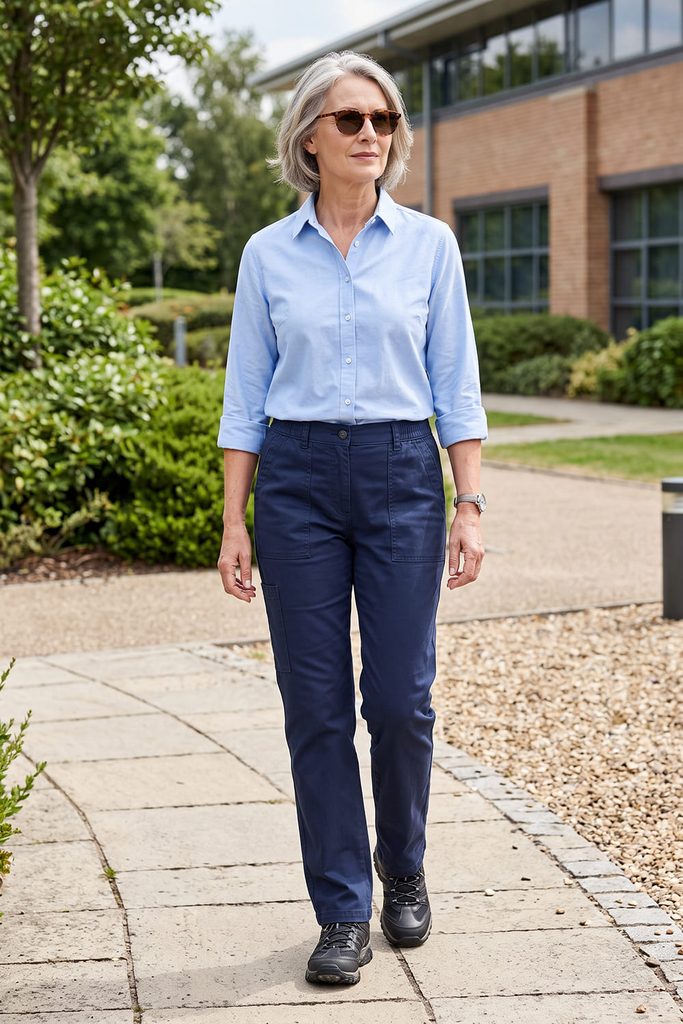
Navy utility trousers paired with a light blue button-down shirt create a simple outdoor work outfit that looks polished without being overly formal. Choose trousers with a comfortable waistband, useful pockets, and enough room through the hips and thighs for unrestricted movement.
A breathable cotton or cotton-blend shirt works well in warmer weather, while the sleeves can be rolled up when conditions allow. A lightweight undershirt can be worn underneath if additional coverage is needed.
Finish the outfit with supportive walking shoes or sturdy work footwear appropriate for the job. A practical watch and simple sunglasses can complete the look without adding unnecessary accessories.
This combination is particularly easy to adapt because the shirt can be replaced with different colors throughout the week while the navy trousers remain a dependable foundation.
2. Khaki Pants with a Soft Polo Shirt
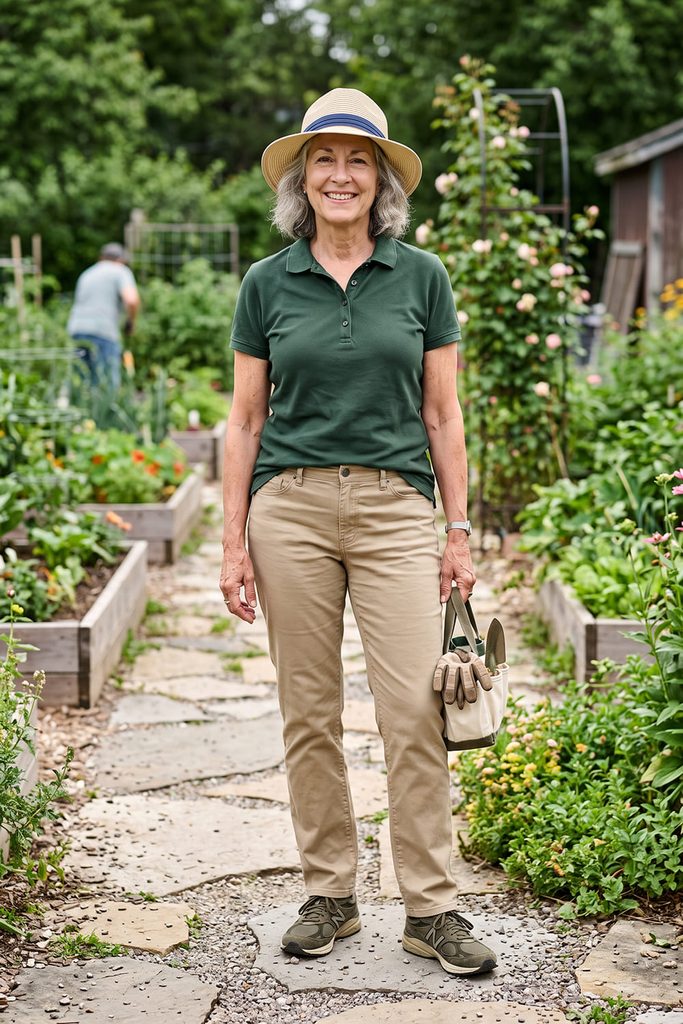
Khaki pants and a polo shirt offer a comfortable alternative to a traditional button-down outfit. The combination has a neat appearance while allowing plenty of freedom for outdoor tasks.
Choose straight-leg or softly tapered khaki pants made from a durable fabric with some stretch. Avoid excessively tight styles because outdoor work often involves bending, walking, reaching, or climbing stairs.
For the top, select a breathable polo in navy, forest green, burgundy, cream, or muted blue. A collar gives the outfit a more structured appearance than a basic T-shirt.
Supportive sneakers or work shoes can complete the outfit. On sunny days, a lightweight hat can provide practical coverage while adding a finished touch to the overall look.
3. Dark Jeans with a Lightweight Utility Jacket
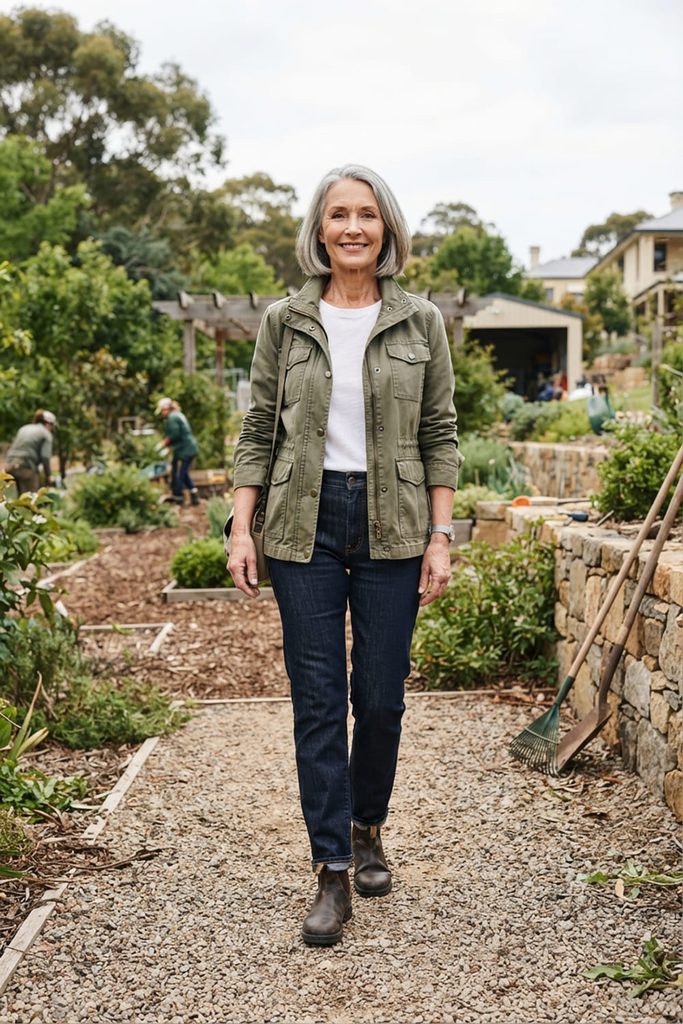
For outdoor workplaces where denim is appropriate, dark straight-leg jeans can create a practical and polished base. Pair them with a simple lightweight shirt and a utility jacket for additional protection against cool mornings and changing weather.
A utility jacket with several useful pockets can reduce the need to carry a large bag. Choose one with a comfortable fit that allows the arms to move freely.
Keep the layers relatively lightweight so the outfit does not become bulky during active work. A simple cotton top underneath can easily be removed as temperatures rise.
Complete the outfit with durable walking shoes, ankle boots, or other footwear suited to the terrain. Dark denim also works well with several jacket colors, making it a useful piece for a flexible outdoor wardrobe.
4. Olive Cargo Pants with a Cream Henley Top

Olive cargo pants can bring a practical outdoor character to a work wardrobe while still looking refined when the rest of the outfit is kept simple. Choose a streamlined cargo style rather than an excessively bulky design.
Pair the trousers with a cream or ivory Henley top. The soft neutral color creates contrast against the olive trousers and gives the outfit a relaxed but coordinated appearance.
A lightweight vest can be added during cooler weather. If the work involves considerable walking, choose shoes with adequate cushioning and traction. The pockets can be useful for small items, although workplace safety requirements should always determine what can actually be carried while working.
This outfit works especially well for gardening, outdoor property work, nature-related jobs, and other settings where practical clothing is important.
5. Straight-Leg Trousers with a Lightweight Long-Sleeve Shirt
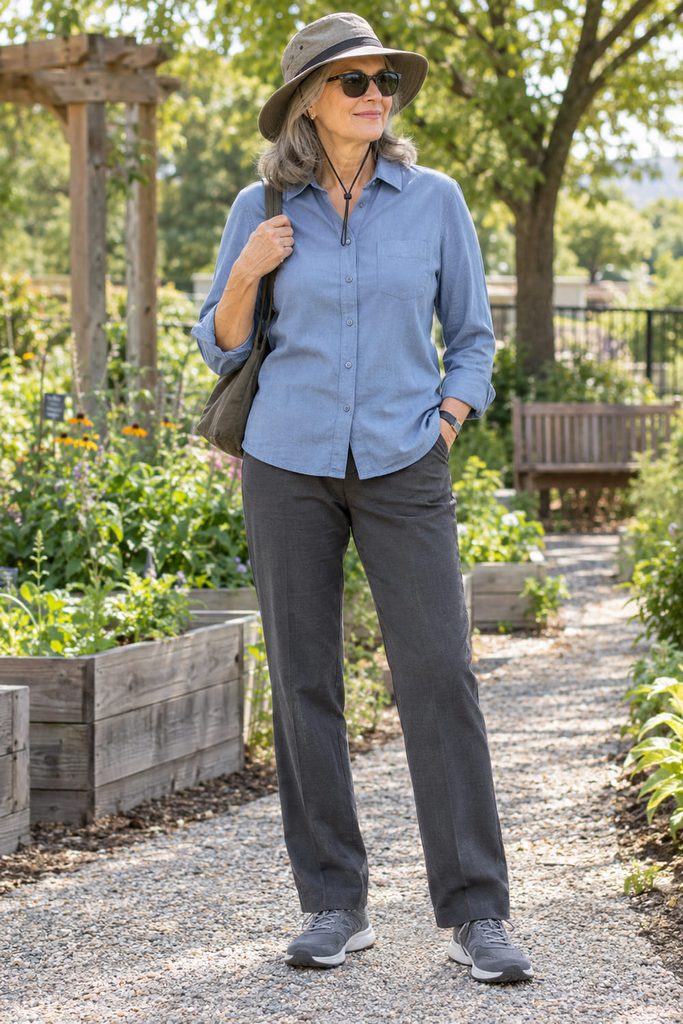
A lightweight long-sleeve shirt can be especially useful for women who spend extended periods outside. It provides more coverage than a short-sleeve top while remaining comfortable when made from breathable fabric.
Pair the shirt with straight-leg trousers in charcoal, navy, tan, or olive. A slightly relaxed fit makes the outfit easier to move around in without appearing oversized.
The shirt can be worn untucked for a relaxed appearance or partially tucked when you want more definition around the waist. Choose practical footwear based on the surface and demands of the job. Add sunglasses and a functional outdoor hat when appropriate.
This simple outfit can be adjusted throughout the year by changing the fabric weight and adding or removing layers.
6. Lightweight Vest Over a Long-Sleeve Shirt

A lightweight vest is an excellent layering piece for outdoor work because it provides warmth around the torso without restricting arm movement.
Wear a simple long-sleeve shirt underneath and pair both pieces with straight-leg work trousers. Navy, gray, olive, tan, and black are easy colors to coordinate.
Look for a vest with a comfortable arm opening and enough room to layer over the shirt without pulling across the chest or shoulders. This outfit is especially practical during transitional weather when mornings are cool but afternoons become warmer.
The vest can also provide additional pockets, although the amount and type of items carried should always be appropriate for the specific work environment.
7. Sun-Protective Shirt with Comfortable Work Pants
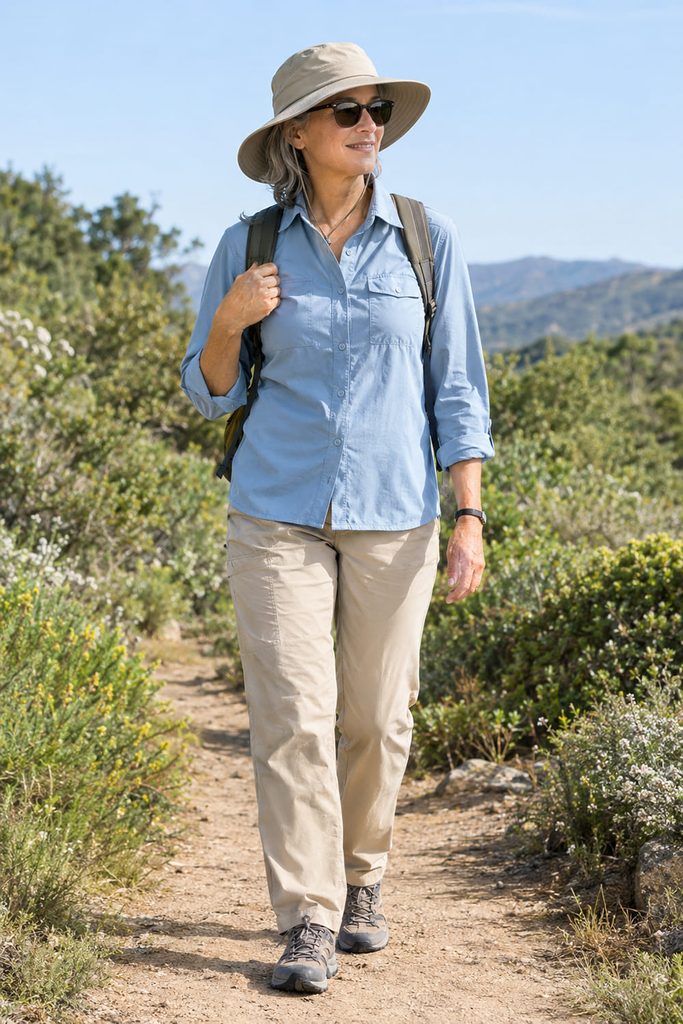
For jobs involving prolonged outdoor exposure, a long-sleeve sun-protective shirt can form the foundation of a practical work outfit. Choose a lightweight, breathable shirt that feels comfortable during extended wear.
Pair it with comfortable work pants in a neutral color. Straight-leg or relaxed-leg styles usually provide good freedom of movement. A wide-brimmed outdoor hat, sunglasses, and appropriate sun protection can be added when suitable for the work setting.
Keep the rest of the outfit simple. The focus should be on comfort, coverage, breathability, and mobility rather than unnecessary accessories.
For women who work outside regularly, having several shirts in different neutral or muted colors can make it easier to create a consistent wardrobe without buying many different styles.
8. Denim Shirt with Black Work Trousers
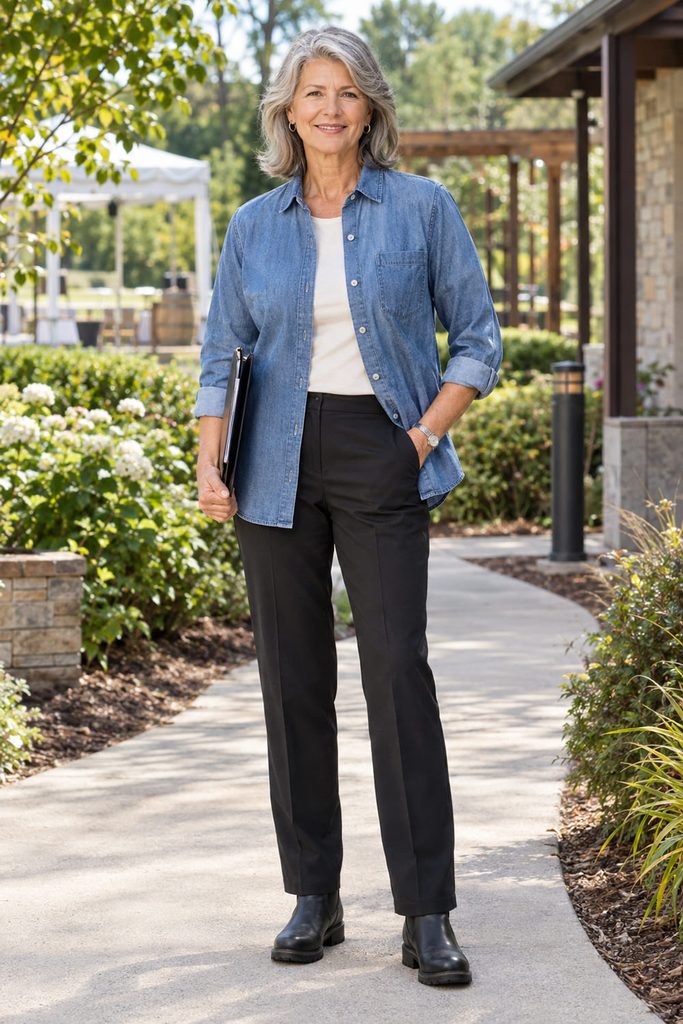
A denim shirt can give an outdoor work outfit a slightly structured appearance while remaining casual enough for many practical workplaces. Pair it with black work trousers for a clean contrast.
Choose a lightweight denim or chambray shirt rather than a heavy denim fabric if the work takes place in warm conditions. The shirt can be worn over a simple neutral top for flexible layering.
Black trousers provide a straightforward base and can be combined with different shirts, jackets, and shoes.
Comfortable boots or sturdy shoes finish the outfit. If the work environment requires protective footwear, select an appropriate safety-rated option rather than choosing footwear solely for appearance. This combination is particularly useful when you want something more polished than a basic T-shirt and work pants.
9. Burgundy Polo with Charcoal Trousers
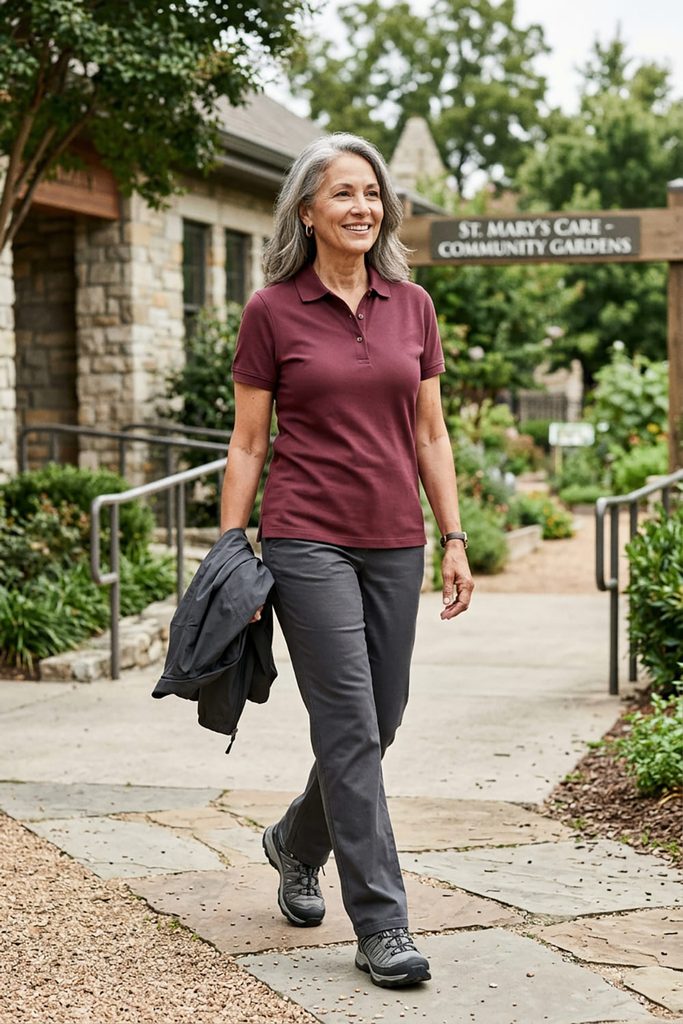
A burgundy polo shirt can introduce color to an outdoor work wardrobe without becoming overly bright. Pair it with charcoal trousers for a balanced and professional-looking combination.
Choose a polo made from a breathable fabric that remains comfortable during movement. The shirt should fit smoothly across the shoulders and bust without being restrictive.
Charcoal trousers are useful because they are less visually stark than black while still coordinating easily with many colors. A simple pair of supportive shoes completes the outfit. During cooler weather, add a lightweight charcoal, navy, or black jacket.
This is an easy outfit to repeat with different polo colors. Forest green, dusty blue, muted plum, and cream can all create different looks while maintaining the same practical foundation.
10. Beige Utility Jacket with Dark Straight-Leg Pants
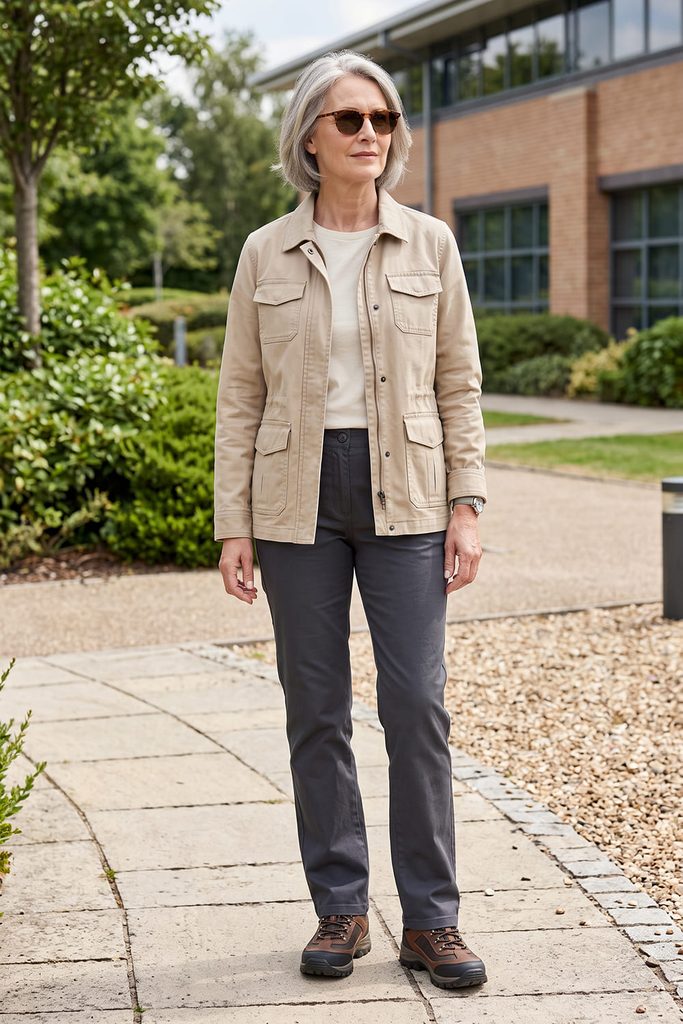
A beige utility jacket can make an outdoor outfit look polished while providing useful protection during cooler conditions. Pair it with dark straight-leg pants and a simple fitted or softly relaxed top.
The contrast between the light jacket and darker trousers creates a defined silhouette without relying on complicated styling. Choose a jacket with practical pockets and a comfortable cut. Avoid overly stiff fabrics if the job requires frequent arm movement.
Underneath, a cream, navy, gray, or muted green shirt can work well. Complete the outfit with supportive footwear suited to the workplace.
This combination is especially useful in spring and autumn when a jacket is needed in the morning but may not be necessary throughout the entire day.
11. Comfortable Jumpsuit with a Lightweight Layer
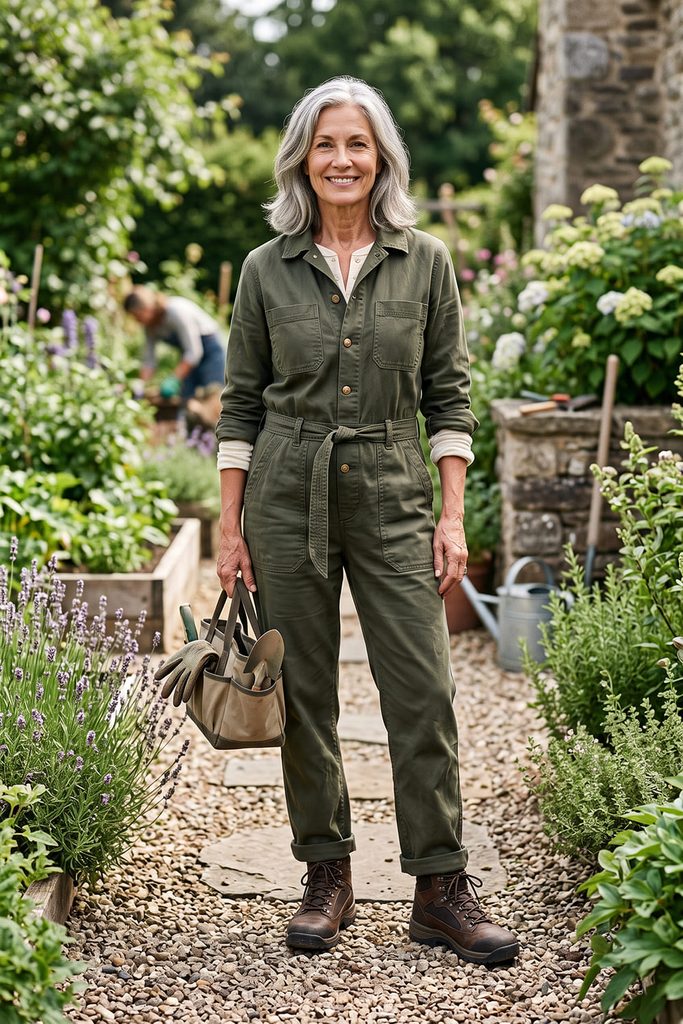
A work-appropriate jumpsuit can simplify outdoor dressing because it combines the top and bottom into one coordinated piece. Choose a design made specifically for movement, with a comfortable waist and practical pockets.
A dark olive, navy, charcoal, or khaki jumpsuit can provide a streamlined appearance while remaining practical. For cooler conditions, layer a lightweight long-sleeve shirt underneath or add a simple jacket over the top.
Pay particular attention to the fit. A jumpsuit should allow you to bend, walk, reach, and sit comfortably without pulling across the shoulders or waist.
Choose footwear based on the demands of the job, especially if the work involves uneven surfaces, wet ground, heavy equipment, or long periods of standing.
12. Soft Gray Trousers with a Forest Green Shirt

Soft gray trousers provide a versatile neutral base for outdoor work outfits. Pair them with a forest green shirt for a subtle combination inspired by natural surroundings.
Choose trousers made from a durable fabric with some flexibility. A mid-rise or comfortable high-rise design can provide support without feeling restrictive.
The forest green shirt can be a polo, button-down, or lightweight work shirt depending on the workplace. A navy or charcoal vest can be added when temperatures drop. Keep accessories functional. Sunglasses, a practical watch, and a suitable hat can complement the outfit when needed.
The combination of gray and forest green also makes it easy to create several coordinated outfits without relying on bright colors or complicated patterns.
13. Layered Shirt and Cardigan with Outdoor Trousers
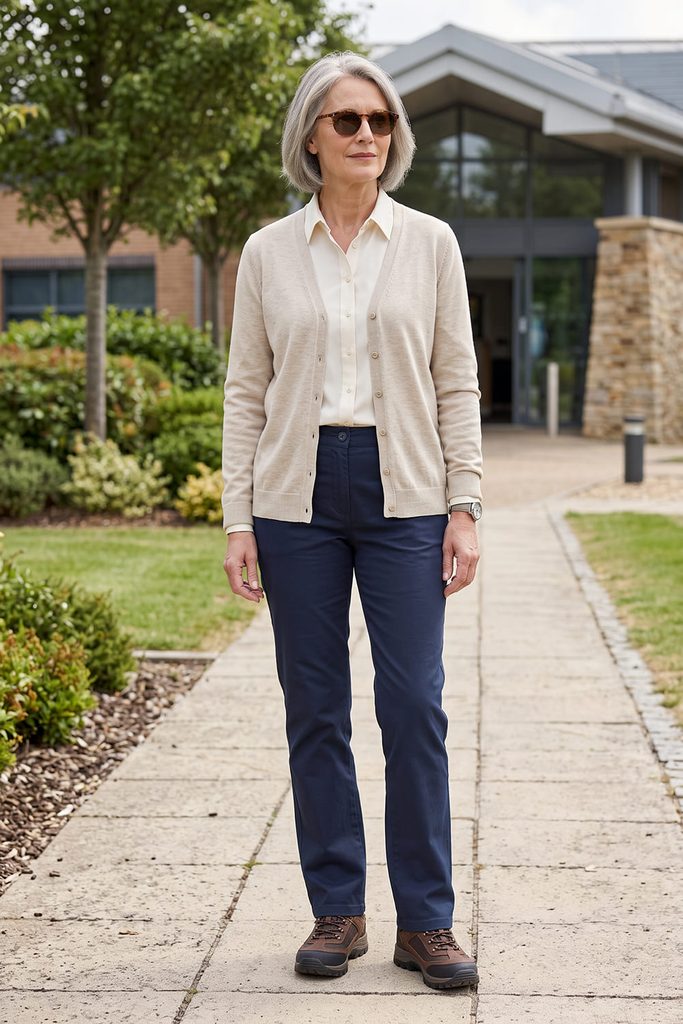
A cardigan may not be suitable for every outdoor job, but it can work well for women whose work involves moving between indoor and outdoor environments. Pair a simple shirt with a lightweight cardigan and practical trousers.
Choose a cardigan with a smooth, relatively lightweight knit that does not catch easily on equipment or surroundings. Navy, camel, gray, and oatmeal are particularly versatile colors. Underneath, a white, cream, blue, or soft patterned shirt can add visual interest. Straight-leg trousers and comfortable shoes keep the lower half practical.
If the outdoor portion of the job is physically demanding, replace the cardigan with a lightweight utility jacket or vest. The underlying outfit can remain the same.
This approach works well for property managers, educators, event workers, community staff, and other professionals who move between different environments.
14. Black Trousers with a Rust-Colored Outdoor Shirt

Rust is a warm, sophisticated color that can bring personality to a practical outdoor wardrobe. Pair a rust-colored work shirt with black straight-leg trousers for a strong but understated combination.
Choose a shirt made from a breathable fabric and look for a cut that allows unrestricted movement through the shoulders and arms. Black trousers create a clean foundation and can be reused with many different tops.
For cooler weather, layer a black or charcoal vest over the shirt. Supportive boots or work shoes can complete the outfit.
If your workplace requires high-visibility clothing, protective equipment, or specific uniforms, those requirements should take priority. The rust and black combination can then be adapted around the required workwear.
15. Navy Work Jacket with Khaki Straight-Leg Pants
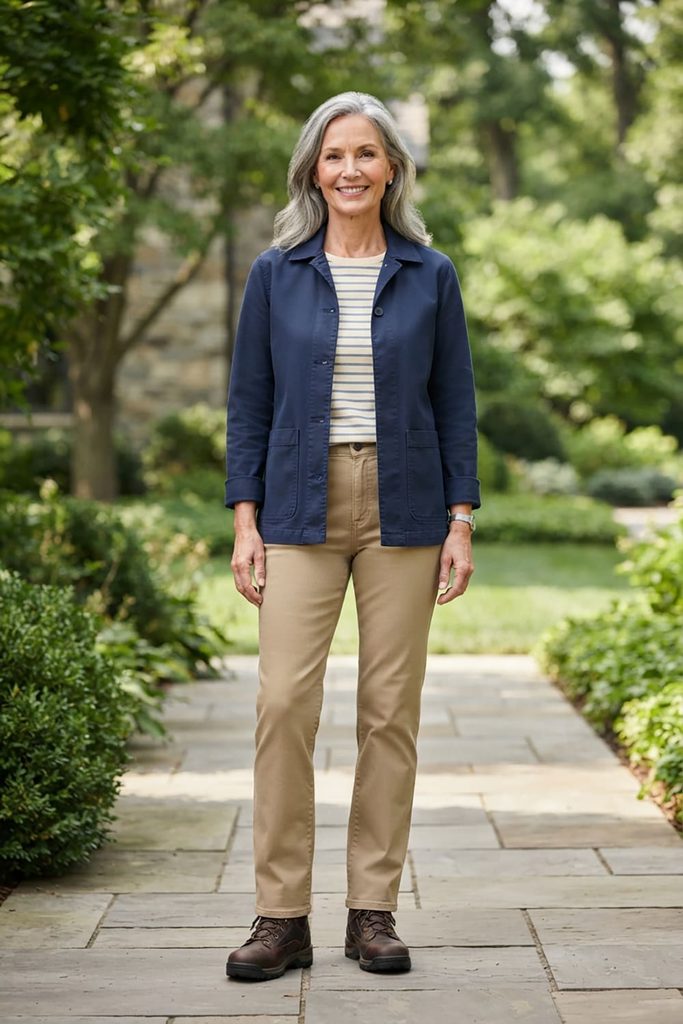
A navy work jacket and khaki pants make a classic combination for outdoor work. The colors provide contrast while remaining easy to coordinate with other wardrobe pieces.
Under the jacket, wear a simple white, cream, light blue, or striped shirt. Choose a lightweight jacket during mild weather or a warmer version when temperatures require additional insulation.
Khaki straight-leg pants should have enough room for comfortable movement. A small amount of stretch can be helpful for jobs that involve frequent walking or bending. Complete the outfit with practical shoes or boots appropriate for the work environment.
This combination is also useful as a foundation for a small outdoor work wardrobe because the navy jacket and khaki pants can be paired with many different tops throughout the week.
Guide to Choosing Outdoor Work Outfits for Women Over 50
Creating a good outdoor work wardrobe involves more than choosing attractive clothes. Each piece should serve a practical purpose while still making you feel comfortable and confident throughout the day.
Prioritize Comfortable Movement
Outdoor work can involve walking, lifting, bending, reaching, standing, or climbing. Clothing should accommodate these movements without pulling or restricting the body.
Trousers with a comfortable waistband and enough room through the hips and thighs can make a noticeable difference during long workdays. Avoid choosing clothing that looks polished when standing still but becomes uncomfortable as soon as you move.
Choose Fabrics According to the Weather
Fabric selection should reflect the climate and season. Lightweight breathable materials can be more comfortable during hot weather, while layered fabrics are useful when temperatures fluctuate.
For cooler weather, several lighter layers can often provide greater flexibility than one extremely heavy garment. The ability to remove a layer as temperatures change is particularly useful when outdoor work continues throughout the day.
Build Around a Few Reliable Colors
A practical outdoor wardrobe does not need dozens of colors. Start with dependable neutrals such as navy, charcoal, black, beige, khaki, and cream.
Then add a few muted accent colors such as forest green, burgundy, rust, dusty blue, or plum. This makes it easier to combine pieces without spending time deciding whether colors work together.
Pay Attention to Footwear
Footwear is one of the most important parts of an outdoor work outfit. The correct choice depends heavily on the job and environment.
Some workplaces may require protective footwear with specific safety features. Others may allow supportive walking shoes or outdoor boots. Consider traction, cushioning, weather conditions, and how many hours you will spend standing or walking.
Style should come after workplace requirements and practical safety needs.
Use Layers Strategically
Outdoor temperatures can change significantly throughout the day. A simple layering system can make your wardrobe more adaptable. A lightweight shirt can form the base, followed by a vest, cardigan, fleece, or utility jacket depending on the conditions.
Layers should allow comfortable arm movement. Avoid combining too many bulky pieces because they can make active work uncomfortable.
Consider Sun and Weather Protection
Women who spend significant time outdoors may need clothing that provides appropriate coverage from the elements. Depending on the environment, useful additions may include a suitable hat, sunglasses, breathable long sleeves, rain protection, or weather-resistant outerwear.
The exact requirements depend on the climate and type of work. Practical protection should always take precedence over decorative accessories.
Keep Accessories Functional
Outdoor work is usually not the right setting for excessive accessories. Simple pieces are easier to manage and less likely to interfere with physical tasks.
A practical watch, sunglasses, suitable hat, and compact work bag may be enough. Avoid loose accessories that can catch on equipment or become uncomfortable during movement.
Choose the Right Fit
Clothing for outdoor work should not be excessively tight, but oversized pieces can also become inconvenient.
Look for a relaxed but defined fit. The shoulders should sit correctly, sleeves should allow movement, and trousers should provide enough room for bending and walking. For women over 50, comfort does not require abandoning a polished silhouette. Well-fitting clothing can provide both.
Keep an Extra Layer Available
If you work outdoors regularly, keeping an extra layer nearby can make your workday more comfortable. A lightweight jacket or vest can be stored in a workplace locker, vehicle, office, or other appropriate location.
This is especially helpful during transitional seasons when the weather can change throughout the day.
Follow Workplace Safety Requirements
Personal style should always work within the requirements of your job. If your workplace requires protective footwear, high-visibility garments, helmets, gloves, uniforms, or other safety equipment, those requirements should be followed.
The outfit ideas in this article can be adapted around required protective equipment rather than replacing it.
Create a Small Capsule Wardrobe
You do not need a completely different outfit for every day. A small collection of durable basics can create many combinations.
For example, three pairs of practical trousers, several breathable shirts, one or two utility jackets, a vest, and suitable footwear can create numerous outfits by changing the combinations. Choose pieces that coordinate naturally so getting dressed for work becomes quick and uncomplicated.
Final Thoughts
Outdoor workwear for women over 50 can be practical, comfortable, and polished at the same time. The most successful outfits are built around clothing that allows natural movement while providing appropriate protection from weather and workplace conditions.
Straight-leg trousers, breathable shirts, utility jackets, lightweight vests, practical footwear, and simple layering pieces form a dependable foundation. Adding muted colors such as forest green, burgundy, rust, or dusty blue can bring personality without making the outfits difficult to coordinate.
Most importantly, choose clothing according to the actual demands of your work. A gardening job, outdoor teaching position, property management role, field position, and event job may all require different levels of protection and flexibility.
With a thoughtful collection of comfortable basics, women over 50 can create outdoor work outfits that feel appropriate for the job while still reflecting a personal sense of style.


