

How to Build a Capsule Wardrobe Step by Step for Women: 15 Steps
A full closet and nothing to wear is a planning problem, not a shopping problem. Most women wear the same favorite pieces each week while the rest hangs untouched and takes up space.
Learning how to build a capsule wardrobe in a clear order fixes that. You start with your real week, sort what you own, set colors, then fill only the gaps that stop outfits coming together.
This guide walks through fifteen calm steps. Work through one step at a time, in order, and try pieces on as you go instead of guessing from the rail.
By the final step you will own fewer pieces, see them all clearly, and get dressed in minutes. Our notes on how to build a casual capsule wardrobe pair well with this slower, fuller process.
Set aside two calm sessions rather than one long day. Sorting and color work suit the first session, while testing outfits and writing the gaps list suit the second one.
This post contains affiliate links. If you buy through them, we may earn a small commission at no extra cost to you. See our Affiliate Disclosure.
1. Write Down Your Real Week First
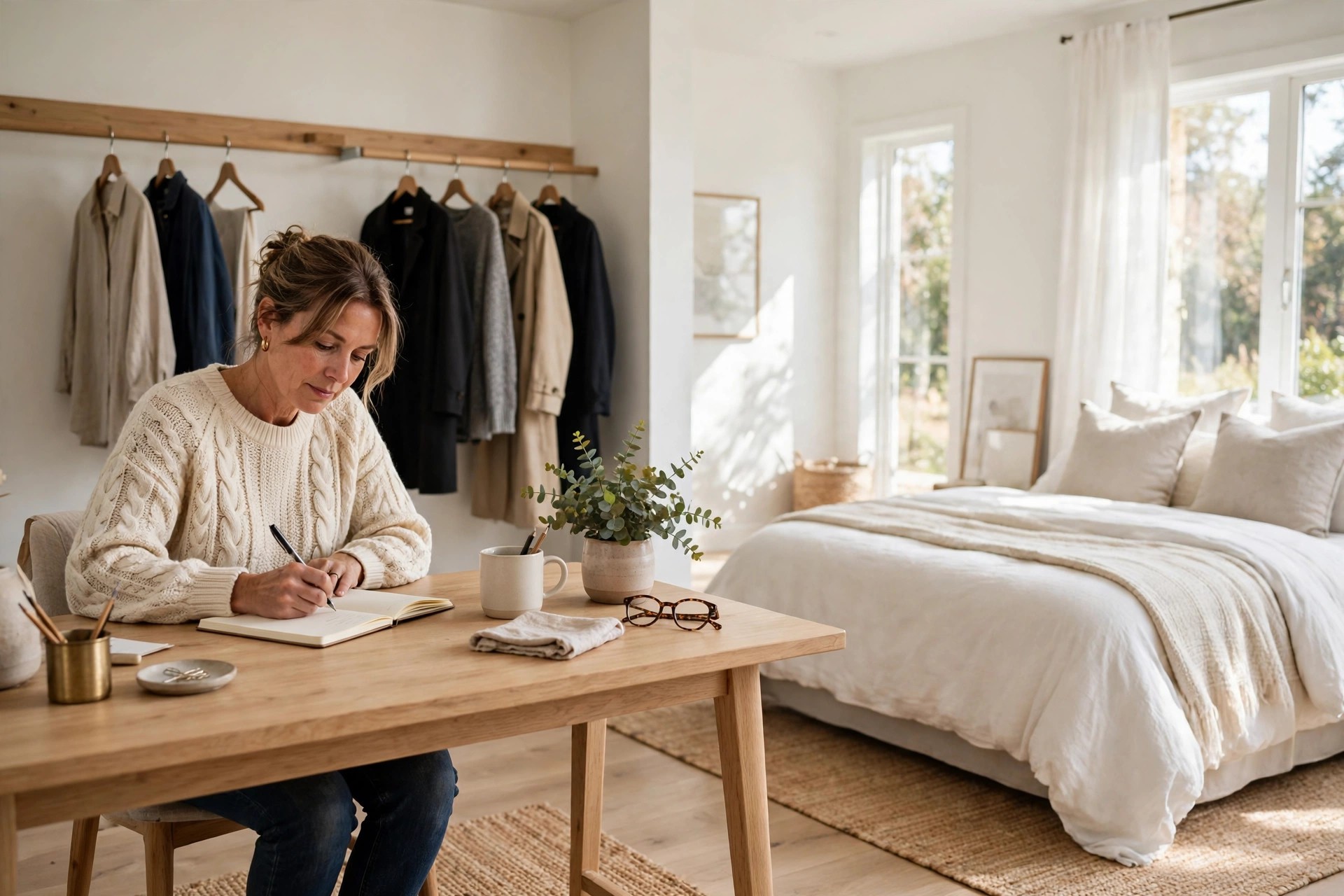
Before you touch a hanger, write down what a normal week actually looks like. Count work days, home days, school runs, dinners out, and quiet weekends at home.
Be honest about proportions. If five days are casual and two are smart, your capsule should match that split instead of leaning toward dressy pieces you rarely need.
Keep this page beside you for every later step. Each piece you keep or buy must earn its place by serving a day that truly happens in your week.
Post the page where you will see it while you sort, near the closet door or on the bed. Checking each later decision against your real week stops wishful keeping and wishful buying.
2. Empty One Section and Sort Honestly

Work one section at a time so the room stays calm. Take out all your tops first, lay them on the bed, and touch every single piece before deciding anything.
Sort into four clear groups: worn often, worn sometimes, not worn in months, and worn out. The not worn group tells you the most about your real taste and habits.
If you need a deeper sort first, follow our steps for how to declutter your closet before you continue. A clean sort makes every choice after this one much easier and faster.
Clear the bed before you begin and keep a laundry basket nearby for pieces that need a wash. Clean clothes are easier to judge fairly, and the room stays pleasant to work in.
3. Keep Only Pieces That Fit Today

Try on anything you are unsure about. A capsule built on clothes that might fit later will fail you on busy mornings when you need certainty, not hope.
Pieces that fit today, feel good, and suit your week stay. Pieces that pull, pinch, or need constant adjusting go to the donate bag, however nice they once looked.
Tailoring is the one exception. A good pair of trousers that needs hemming is worth keeping, with a set date to get the work done within two weeks.
A small tailoring pile is allowed, but it needs names and dates attached. Anything still waiting after a month was never a true keeper, and it can leave without guilt.
4. Choose Three Core Colors

Pick three core colors that already dominate your keep pile. Navy, black, white, gray, cream, and camel are common bases because they pair with almost everything you own.
Hold your favorite tops against your favorite bottoms. The colors that keep appearing together are your true base, even if you never planned them that way before today.
Write the three colors at the top of your list. From now on, every keeper and every new buy must sit inside this base or clearly support it.
Photograph your three core colors together in daylight. Phone screens shift shades, yet a quick photo still helps you spot the one piece that quietly fights everything else you own.
5. Add Two Accent Colors You Love

A base alone can feel flat by week two. Add two accent colors you already love wearing, such as burgundy, olive, soft blue, blush, or a warm rust tone.
Accents live mostly in tops, scarves, and one dress or skirt. They bring variety without breaking the system, because each accent still sits happily beside all three core colors.
Test before you commit. Drape an accent top over each core bottom. If it clashes with two of them, that color stays out of this capsule round.
Choose accents you would wear near your face on a tired day. Those are the colors that lift you without makeup tricks, and they will earn their rail space quickly.
6. Pick Your Bottoms Before Your Tops
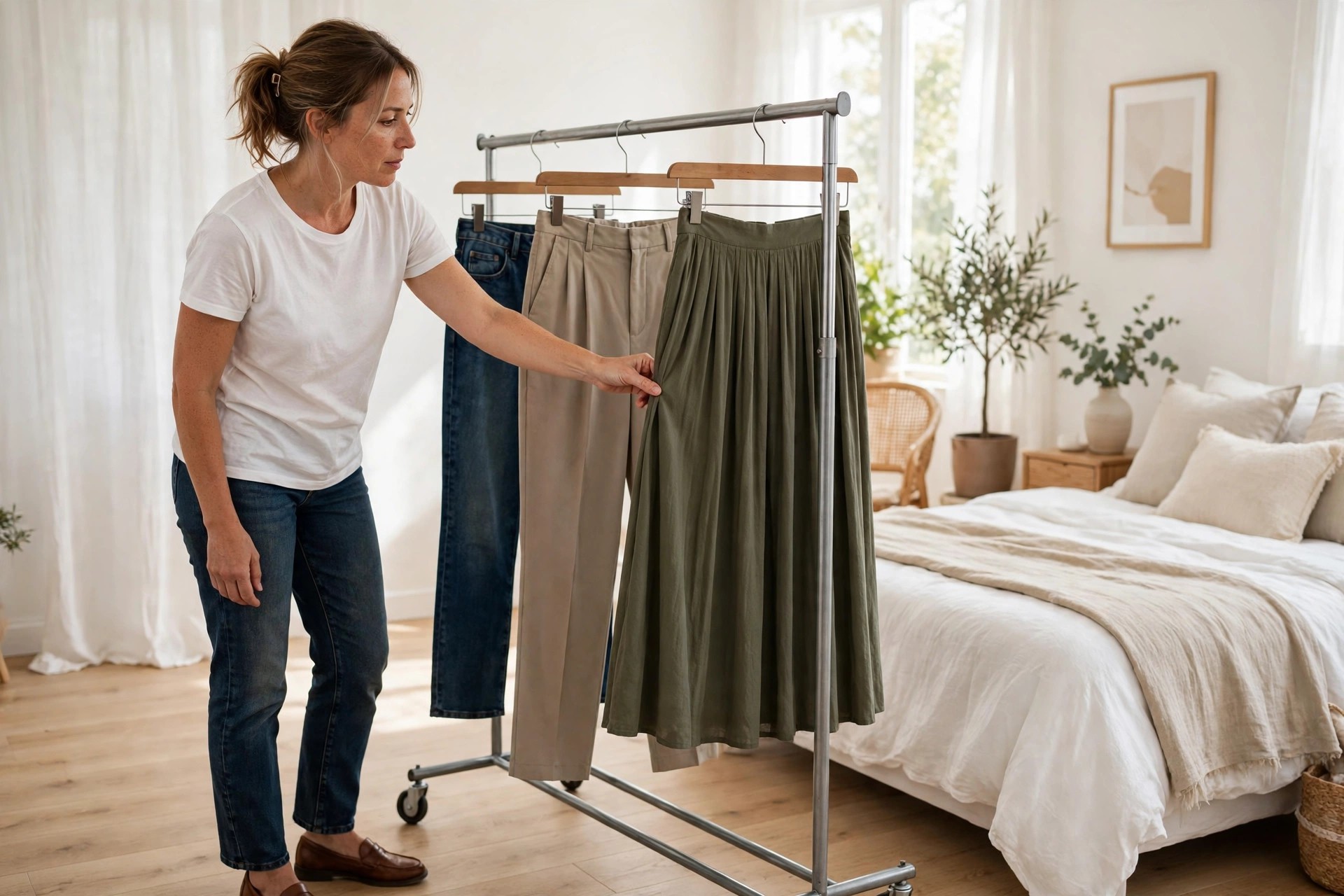
Bottoms shape more outfits than tops do, so choose them first. Most women do well with three to four: dark jeans, tailored trousers, a skirt, and one relaxed pair.
Check each bottom against your week. Trousers may cover work days, jeans cover home and weekends, and the skirt covers dinners and warmer days without extra effort.
Fit matters most here. Waistbands should sit comfortably all day, hems should clear your usual shoes, and pockets should lie flat instead of pulling across the hips.
Count your bottoms against your laundry rhythm. If you wash weekly, you need enough pairs to reach wash day in comfort, with one spare for spills, rain, and delays.
7. Choose Tops That Work With Every Bottom
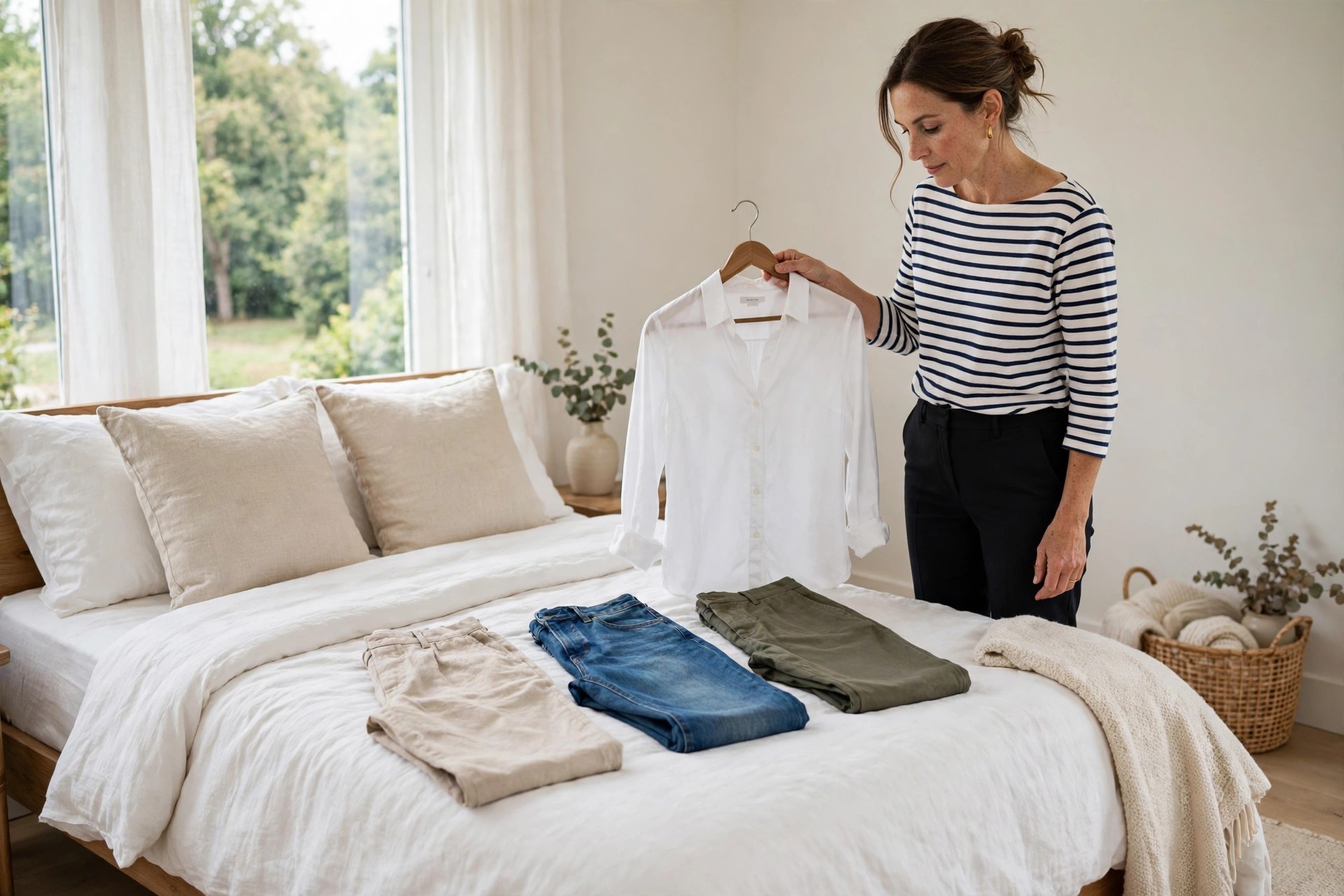
Now line your bottoms up and test tops against all of them. A top that only works with one bottom is a guest in this capsule, not a member.
Aim for six to eight tops: plain tees, a white shirt, a striped top, soft knits, and one blouse for smarter days. Spread them across your core and accent colors.
Check necklines against your layers too. Crews and V-necks sit neatly under blazers and cardigans, while a shirt collar should lie flat without bunching at the neck.
Sleeve length decides more than women expect. Tops that sit well under layers, without bulk at the arm, will be chosen far more often than fussy sleeves ever are.
8. Add One Reliable Dress or Jumpsuit

One dress or jumpsuit gives you a complete outfit on days when pairing pieces feels like too much. Choose a shape you already know suits you and your week.
A wrap midi dress in a core or accent color covers lunches, family events, and many church outfits for women needs with just a shoe change and a light layer over it.
Try it seated as well as standing. The fabric should not pull across the lap, and the length should feel right with both flats and low heels.
Check the dress against your calendar, not a fantasy event. If it covers school concerts, family lunches, and a work dinner, it has earned its single hanger here.
9. Choose Layers That Finish Every Look

Layers turn simple pairings into finished outfits. Most capsules need two or three: a blazer, a cardigan, and one coat that suits your climate and your commute.
Test each layer over your thickest knit. Sleeves should slide on without a tug, and shoulders should sit clean when the layer is open or closed.
Keep layer colors inside your base. A navy blazer and a camel coat, for example, will close nearly every outfit in this system without a second thought.
Hang layers where you can see them each morning. A blazer buried behind coats will not finish outfits, however well it fits the color base you chose earlier.
10. Pick Three Pairs of Shoes Only

Shoes quietly decide whether an outfit works. Three pairs cover most weeks: clean white sneakers, loafers or ballet flats, and ankle boots or low block heels for smarter days.
Walk each pair around the house with trousers and with the skirt. Pain in the shop becomes regret at home, and a capsule has no room for regret.
Match shoe colors to your base. Black, tan, and white pairs will rotate through every combination you build, including most fall casual outfits for women you already enjoy wearing.
Photograph each shoe beside the hem it will meet. Trouser length and shoe height work as a pair, and seeing them together now prevents morning surprises later on.
11. Test Every Piece in Three Outfits

This is the gate every piece must pass. Lay each item on the bed and build three full outfits around it using only pieces already in your capsule.
If a piece stalls at two outfits, look for the blocker. Sometimes a different shoe fixes it. Sometimes the piece simply belongs to another wardrobe and should leave.
Take phone photos of the outfits that work. These pictures become your morning shortcut later, and they prove the capsule functions before you spend anything at all.
Keep the failed combinations in mind, not in the closet. A piece that needs a special buy to work is asking for a second purchase to justify the first.
12. Make a Short Gaps List on Paper

After testing, real gaps become obvious. You might lack a knit for cold days, or trousers that bridge work and weekends. Write each gap down in plain words.
Keep the list short and specific: fabric, color, and job it must do. Navy knit, crew neck, warm enough for the office, works with jeans and trousers.
A written list protects your budget. In a shop, you can check any tempting piece against it in seconds and walk away from anything that is not listed.
Rank the gaps by how many outfits each one completes. The piece that completes four outfits goes first, ahead of the piece that finishes only one special look.
13. Shop Slowly and Try Pieces at Home

Buy one or two gap pieces at a time, starting with the one that completes the most outfits. There is no prize for finishing the capsule in a single weekend.
At home, try each new piece with your existing clothes, seated, standing, and with your usual shoes. Keep tags on until the three outfit test is passed.
Once your base feels solid, study how to mix and match 10 pieces into 20 different outfits to stretch the same pieces further. Good mixing matters more than owning more, every single time.
Set a waiting rule for anything not on the list: photograph it, leave the shop, and check the list at home. Most urges fade once the rail is in view.
14. Photograph Ten Outfits You Love

Build ten outfits you genuinely like and photograph each one in a mirror. Save them in one phone album named for this capsule so they stay easy to find.
Spread the ten across your week: work looks, home looks, one dinner look, and one outfit for the day you cannot predict. Variety on paper prevents panic later.
On rushed mornings, open the album and pick a photo instead of starting from zero. Getting dressed becomes copying, which is faster and calmer for everyone.
Update the album whenever a new piece joins. Ten loved outfits today may become twelve next month, and the album should always reflect what truly hangs ready.
15. Live in It for Two Weeks and Adjust
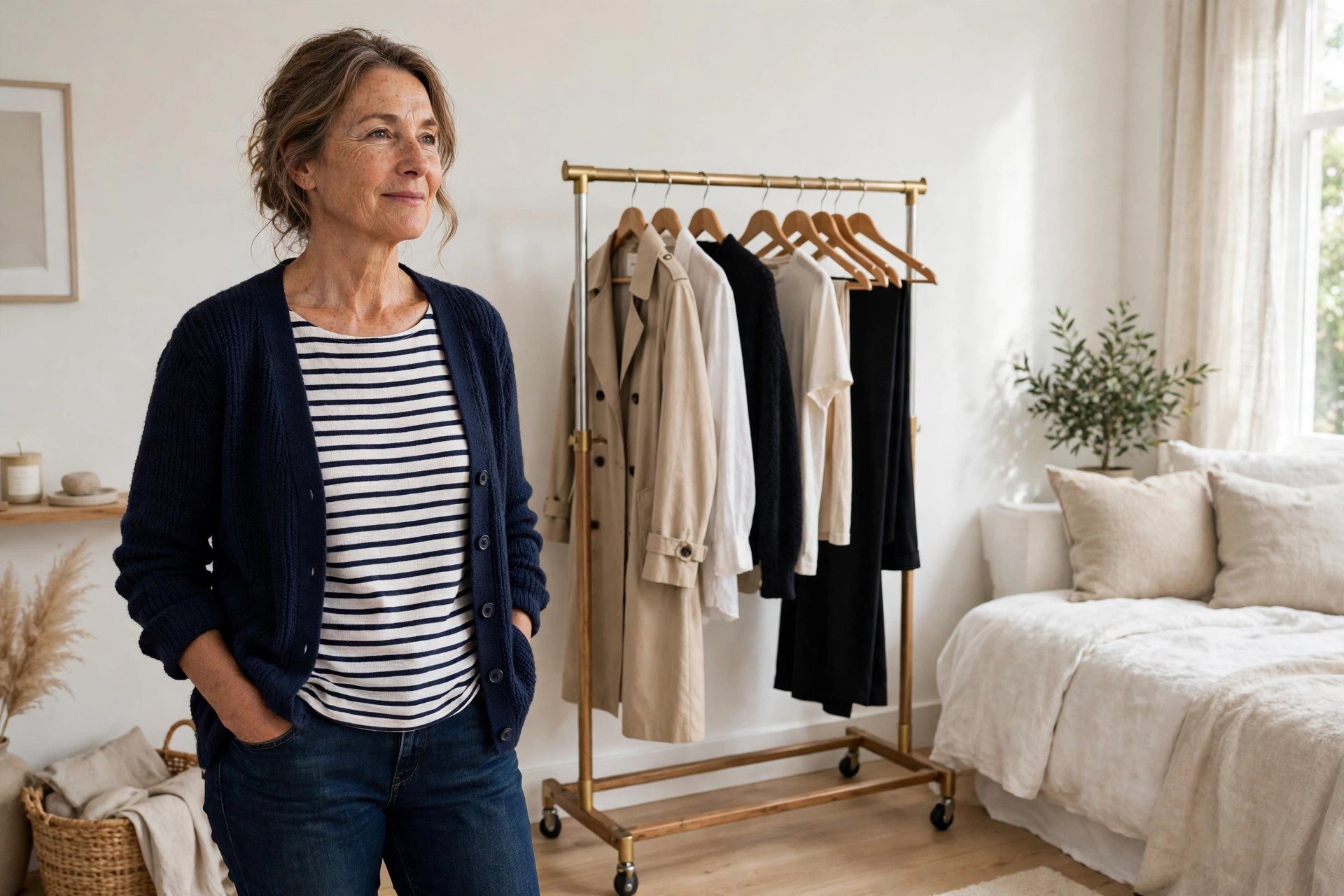
Wear only the capsule for two full weeks. Note every day that felt easy, and every day you wished for a piece that was not there at all.
Small notes beat big feelings. Write down the exact gap, like cold ankles or no smart top for a meeting, instead of deciding the whole system failed you.
After two weeks, adjust once: swap one weak piece, fill one proven gap, and stop. A capsule settles through wear, not through constant rebuilding and second guessing.
Mark a date one season ahead to repeat the two week test. Bodies, jobs, and weather shift, and a gentle review keeps the capsule matched to your life.
Your capsule is built when mornings feel quiet. Fewer rails, clear colors, and pieces that all shake hands with each other will carry most weeks without any drama at all.
Keep the gaps list, the outfit photos, and the two week notes. They turn your next small edit into a ten minute job instead of a fresh start.
Save this guide to your Capsule Wardrobe for Women board on Pinterest, and return to it whenever the rail starts to crowd again. Small, steady edits keep how to build a capsule wardrobe working for you.


