

How to Declutter Your Closet Before Starting a Capsule Wardrobe: 15 Steps
You cannot build a calm capsule inside a crowded closet. Pieces you never wear hide the ones you love, and every morning starts with digging instead of choosing.
That is why learning how to declutter your closet comes before any shopping list. These fifteen steps clear the rail in tidy stages, protect the good pieces, and leave clear space for the capsule.
Work in short sessions and keep every stage tidy as you go. Sorted piles, labeled boxes, and folded stacks make decisions easier and the room pleasant to work in.
You will finish with a clean rail, a short gaps list, and seed pieces ready to build on. Our guide to how to build a casual capsule wardrobe shows what to do with that clean start next.
Set a finish date within one week. A clear deadline keeps the sorted stages moving out of the bedroom and into their proper places around the home.
This post contains affiliate links. If you buy through them, we may earn a small commission at no extra cost to you. See our Affiliate Disclosure.
1. Set a Timer and One Clear Goal
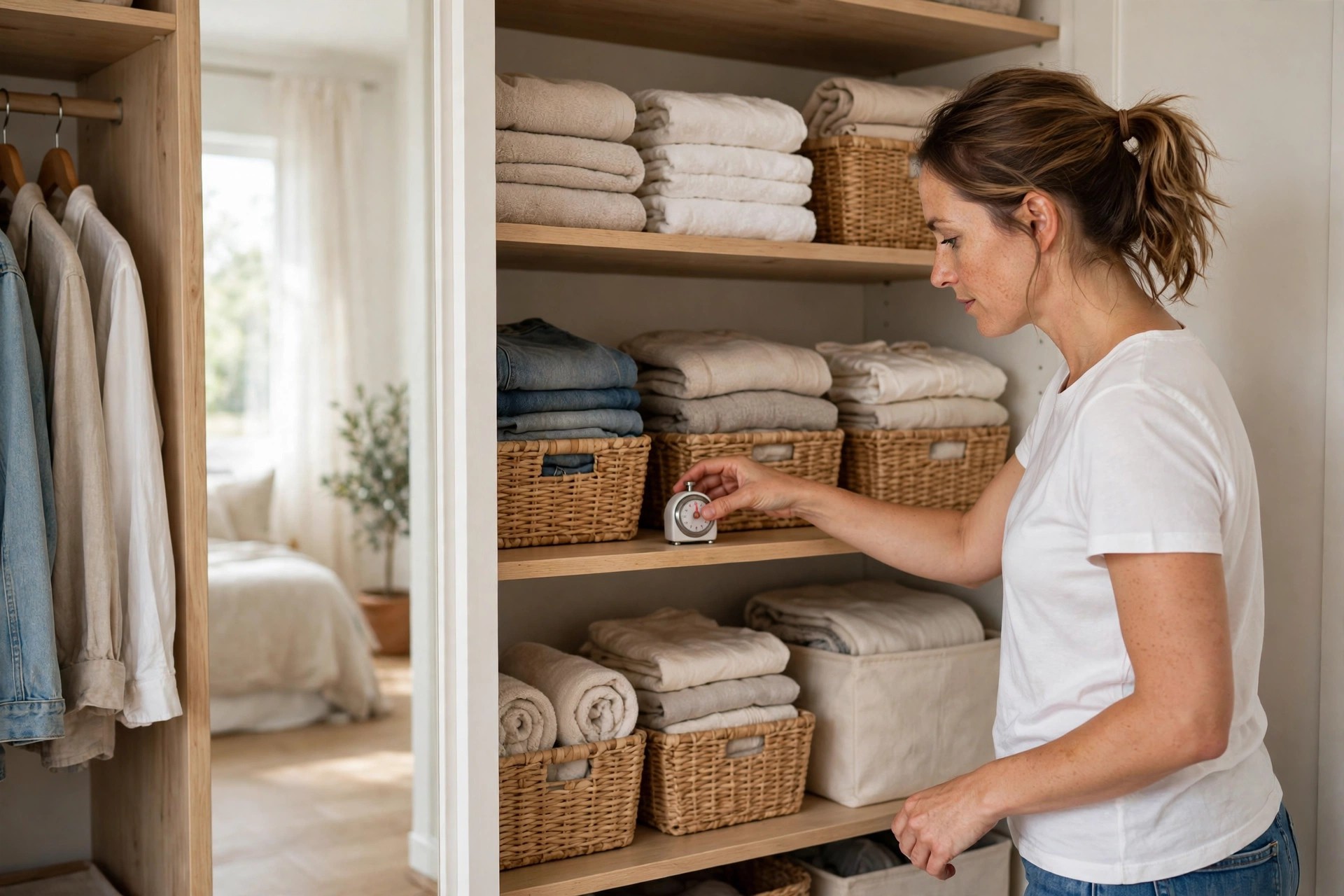
Pick one goal for today, such as clearing tops only, and set a timer for forty five minutes. A small, finished stage beats a whole closet half sorted by evening.
Write the goal on a sticky note and place it on the closet door. When a drawer tempts you to wander, the note brings you back to the one job.
Stop when the timer ends, even mid pile. Fold or hang what is sorted, bag what is leaving, and leave the space tidy for the next session tomorrow.
Tidy endings matter here. A calm room makes you willing to return, and steady short sessions clear a closet faster than one exhausting weekend ever will.
Small finished stages build trust in the process, and trust keeps you going tomorrow.
2. Gather Bags, Boxes and Labels First

Collect what you need before the first hanger moves: strong bags for donations, one box for mending, one box for storage, labels, and a marker that writes clearly.
Lay the bags and boxes in a neat row outside the closet. Each sorted piece then has a home the moment you decide, so piles never sprawl across the bed.
Label as you fill, not later. Future you should never need to open three boxes to find the knitwear you stored with such good intentions this spring.
Add a small notebook to the row. Jot down pieces that need buttons, hemming, or a proper wash, so care jobs do not get lost inside the sort itself.
Five minutes of setup now saves an hour of hunting through mystery boxes later.
3. Start With Shoes and Bags Only

Shoes and bags sort quickly and build early wins. Line pairs up neatly, check heels and soles, and keep only pairs you wore happily in the last season.
Bags follow the same test. Empty each one fully, wipe the inside clean, and keep shapes that suit your real days: work, errands, and one smarter option for evenings.
Worn out pairs leave today. Shoes that hurt after an hour will not become capsule staples, however smart they look sitting in a row on the shelf.
Store the keepers where you can see them at a glance. Visible shoes get chosen, while pairs buried in boxes are bought again by mistake later on.
Early wins matter, because they prove the closet can change in one short session.
4. Sort Tops Into Four Tidy Piles
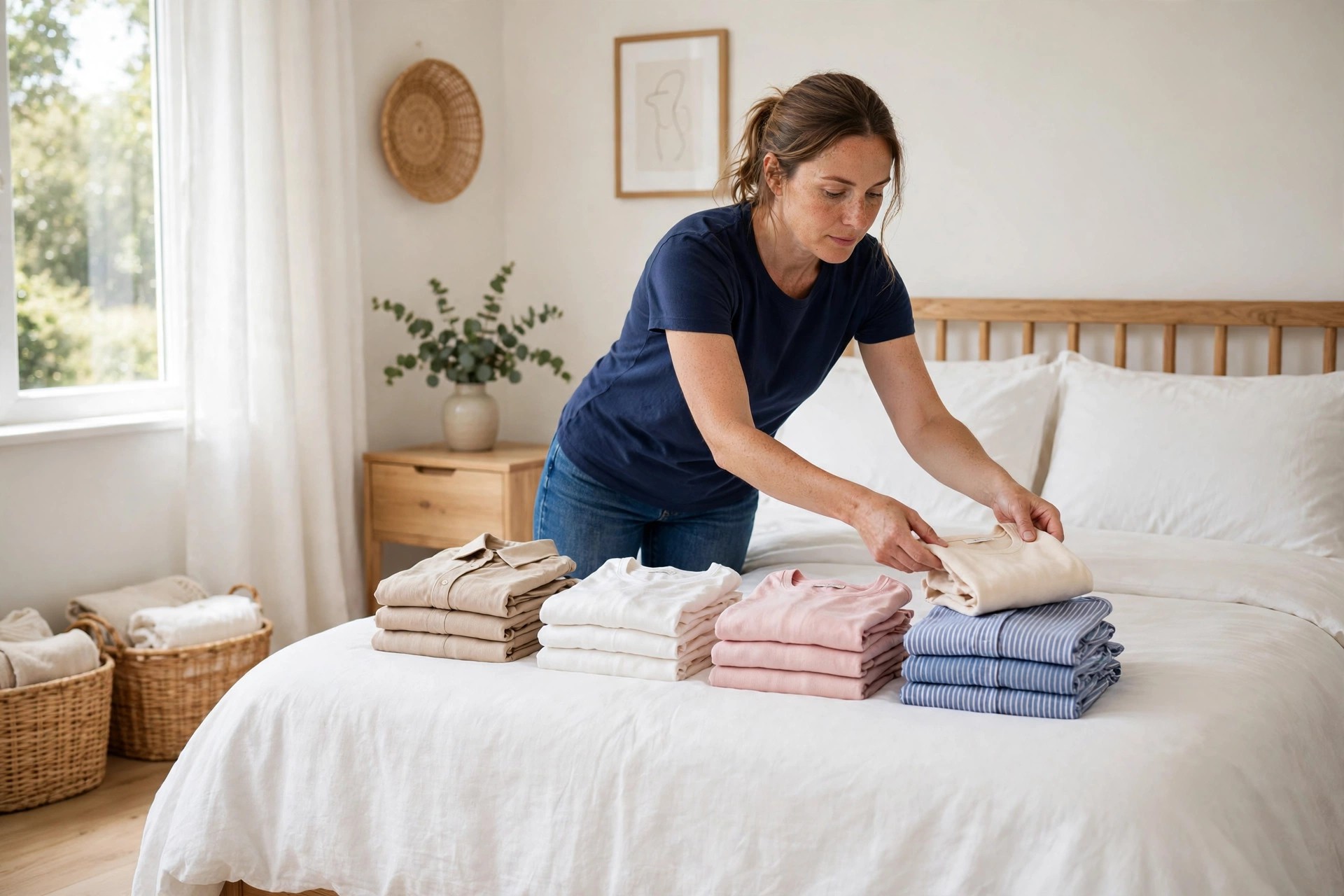
Lay all tops on the bed in one neat category sweep. Sort each into keep, donate, store for another season, or mend, and fold each pile as it grows.
Keep tops you reached for this month without thinking. Donate tops that need a special bra, a special bottom, and a special mood before they can leave the house.
Hold prints against your plain bottoms. A print that fights every pair of trousers you own is not versatile, and versatility is the whole point of this clear out.
By the end, your keep pile should look like a small shop rail you would happily browse. If a top would not catch your eye there, it goes.
Neat piles are not fussiness here. They are how clear decisions stay clear all afternoon.
5. Sort Bottoms and Check Every Fit
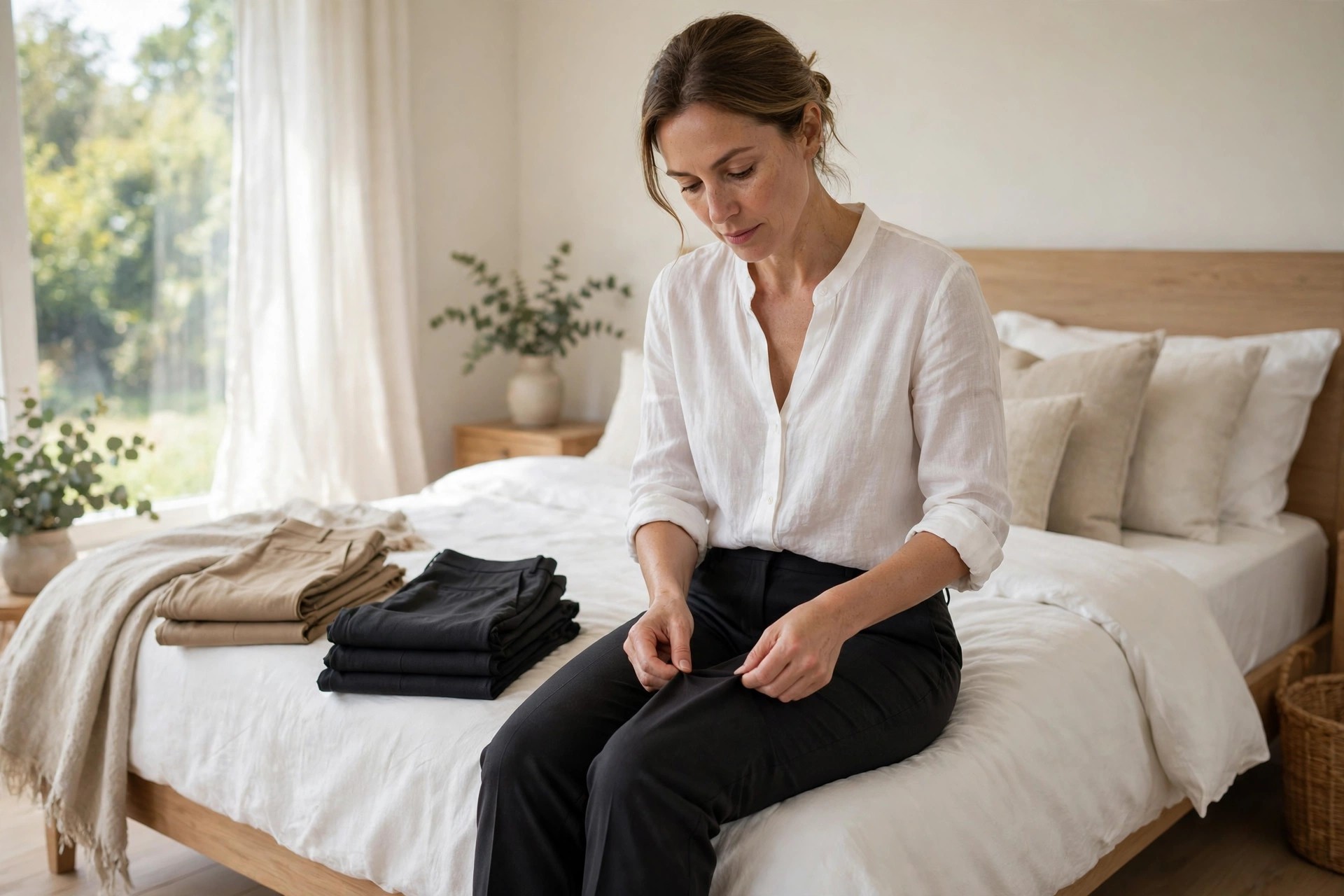
Bottoms decide comfort all day, so try every pair on. Sit, bend, and climb an short flight of stairs. Waistbands that dig now will dig harder by lunch time.
Keep bottoms in colors that match most of your keep tops. Dark jeans, one tailored pair, and a skirt in a base color cover a surprising share of most weeks.
Notice your repeat winners. Many women live in two fits, such as straight leg and wide leg, much like the rotations in jeans outfits for women over 40, and rarely miss the rest.
Hem lengths count as fit too. Pairs that only work with one shoe height limit your mornings, so mark them for hemming or let them leave today.
A bottom that fails the sit test will fail every long day that follows it.
6. Try On Dresses and Keep the Keepers

Dresses promise ease, so test that promise honestly. Each keeper should feel complete with one shoe choice and one light layer, without a committee of fixes first.
Check each dress seated, with your usual bag on your shoulder. Length, waist placement, and fabric behavior in real life matter more than a mirror pose ever will.
Occasion dresses you truly wear can stay in a small separate group at the end of the rail. They are guests here, not capsule members, and that is fine.
Let go of dresses kept for a body or a lifestyle from years ago. The rail should dress the woman you are this season, kindly and well.
One honest dress rail is worth more than ten dresses kept for someday occasions.
7. Face the Maybe Pile With Three Questions
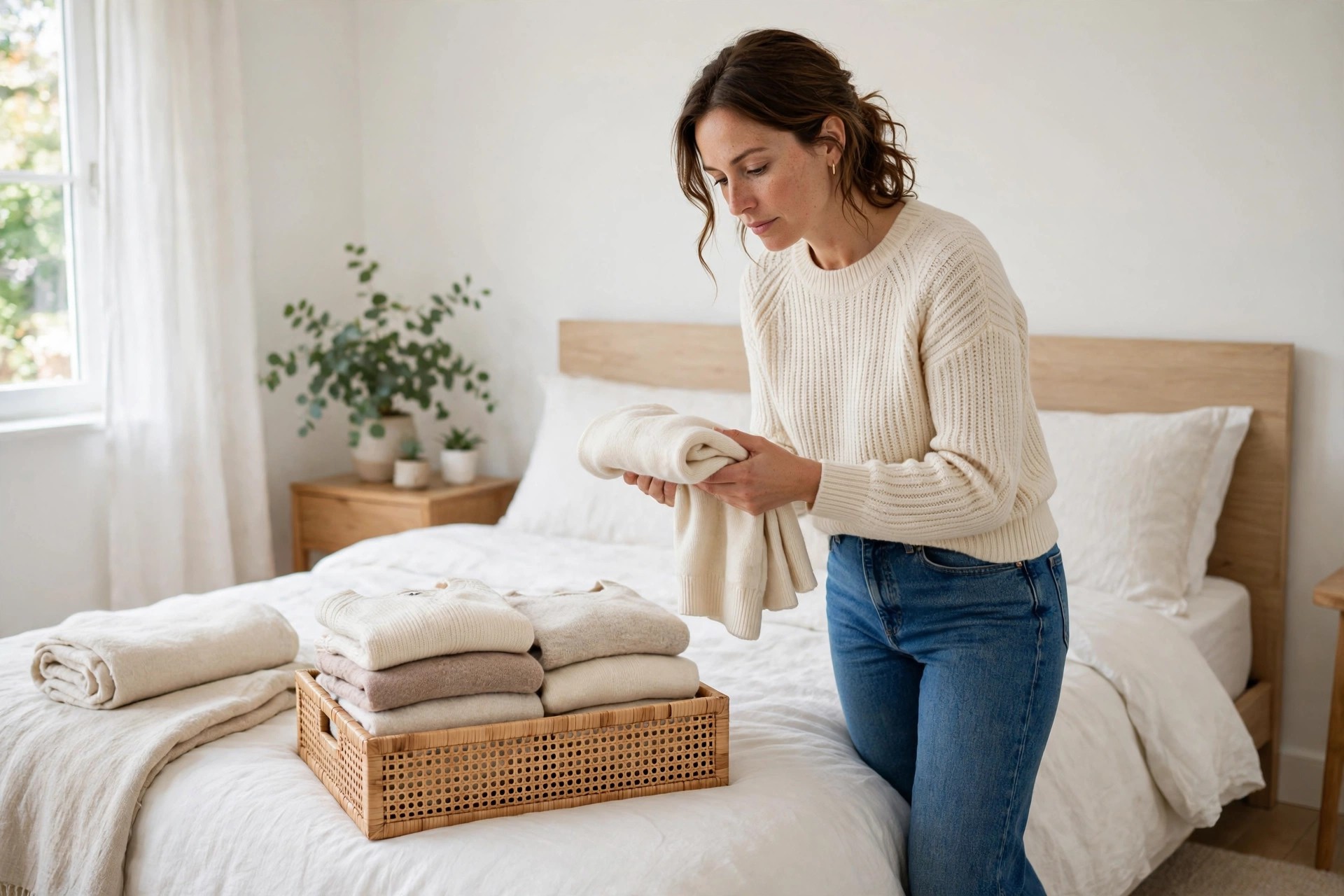
Every sort creates a maybe pile. Give each piece three questions: Did I wear it this season? Does it fit today? Does it pair with three keepers here?
Two no answers settle the decision. Move the piece to donate or storage at once, and feel how much lighter the rail looks after each honest answer.
If feelings run high, box the maybes with a date three months ahead. Pieces unmissed by that date can leave unopened, which keeps the decision kind and final.
Write the questions on a card and keep it on the bed for later categories. The same three questions will carry coats, knits, and occasion pieces too.
Keep the card visible until the last category is sorted and the rail is calm.
8. Handle Sentimental Pieces With Care

Some clothes carry people and days with them. A late mother’s cardigan or a honeymoon dress deserves respect, not a forced choice made on a tired afternoon.
Choose a small memory box with a kind limit, such as one box only. Photograph pieces that will not fit inside it, and keep the photo album on your phone.
Sentimental keepers live in the memory box, not on the capsule rail. That single rule protects both the memory and the working wardrobe you are building here.
If a piece still brings warmth, consider wearing it once more for a photo at home. A gentle goodbye makes donating far easier the following week.
A memory kept well needs very little space, and it asks nothing of your mornings.
9. Clean and Mend the Pieces You Keep

Keepers earn a quick refresh before they return to the rail. Shake out dust, wash anything that smells of storage, and check hems, buttons, and seams in good light.
Small mends come first: a loose button, a falling hem, a bobble covered knit that a fabric shaver can restore in minutes on the kitchen table.
Polish leather shoes and wipe sneaker soles clean while you work. Fresh looking pieces feel new again, which lowers the urge to shop for replacements later.
Keep a tiny mending kit in the closet from now on. Five minute fixes done at once stop small damage from quietly retiring good capsule pieces.
A keeper returned clean feels like a new buy, without spending anything at all.
10. Group Keepers by Color on the Rail

Hang keepers back in color order, light to dark, with each category together. The rail suddenly reads like a plan instead of a crowd of single pieces.
Color order exposes gaps at a glance. You may see four navy tops and no white shirt, or plenty of black and nothing soft for warmer days.
This is also where your capsule colors choose themselves. The shades that dominate the rail are the base your new pieces should match, as in fall casual outfits for women planning.
Leave the rail like this for a week of normal dressing. If finding outfits already feels easier, your sort has done the hardest part of the work.
A rail you can read at a glance makes the whole capsule feel possible already.
11. Fold Knits Instead of Hanging Them

Knitwear stretches on hangers and grows tired shoulders. Fold knits into short, neat stacks on a shelf or in a drawer, sorted by color like the rail.
Fold each knit the same way so stacks stay even and visible. You should see every color at once when the drawer opens on a dark morning.
Slip a cedar block or lavender sachet into the drawer. Stored knits stay fresh, and opening the drawer feels pleasant instead of musty and forgotten.
Heavy coats and blazers keep their hangers, since structure matters for them. The fold rule is for soft pieces only: knits, tees, and fine sweaters.
A drawer of folded color is a quiet pleasure on the busiest school morning.
12. Box Off-Season Pieces With Labels

Off-season pieces should leave the rail but stay easy to find. Wash each piece first, fold it neatly, and pack by category into clean, dry storage boxes.
Label every box with its contents and season in large, clear words. Summer tops and sandals in one box, winter knits and scarves in another, never mixed together.
Store boxes somewhere dry and reachable, such as a top shelf or under the bed. Attics and damp garages quietly damage the clothes you plan to wear again.
Photograph each packed box before it closes. A two minute photo record saves a full unpack when one warm week arrives in the middle of spring.
Good labels turn next season’s swap into a calm hour instead of a search party.
13. Move Donations Out the Same Day

A donation bag that lingers becomes a second closet. Take bags to the charity shop, donation bin, or a friend’s doorstep on the same day you fill them.
Selling takes longer, so set a firm rule: list pieces within three days, or they join the donation run. Good intentions should not rent space in your hallway.
Note what left and why in your notebook. Patterns appear quickly, like repeated print mistakes, and they protect your money during the capsule build that follows this sort.
Once the bags are gone, wipe the closet floor and shelves. A clean empty corner signals a finished job, and the new capsule deserves a fresh space.
A hallway kept clear is daily proof that the clear out truly finished well.
14. Leave Breathing Room on Every Rail

Resist filling the cleared space back up. Hangers should slide freely, with a finger of air between pieces, so every garment can be seen in one look.
Breathing room is practical, not decorative. Clothes crease less, outfits assemble faster, and new additions must truly earn a hanger before they join the working rail.
This space also guards your progress. When the rail starts to crowd again, that is your signal to review, guided by how to maintain a capsule wardrobe before clutter rebuilds.
Count your hangers and keep only that number in the closet. A natural limit turns one in, one out from a slogan into a simple daily habit.
Air on the rail is working space, and your future outfits will thank you for it.
15. List the Gaps Your Capsule Still Needs

Finish by writing the gaps the sort revealed. Name each missing piece plainly: its job, its color, and the keepers it must work with on your rail.
Keep the list short enough to fit on one page. Five honest gaps beat twenty wishes, and each gap should complete at least three outfits with your keepers.
Beware the traps in capsule wardrobe mistakes, especially buying before this list exists. Shopping without it rebuilds the crowd you have just spent days clearing away.
Carry the list on your phone and in the notebook. When every gap is filled and tested at home, your capsule build can begin on solid ground.
One page, five gaps, no extras. That is the shopping discipline this sort has earned.
A cleared closet changes the whole project. You can see your colors, reach your favorites, and name your real gaps without guessing or buying duplicates ever again.
Keep the memory box closed, the labels facing out, and the rail breathing. Those small habits protect the work you did across these fifteen steps.
Save this guide to your Capsule Wardrobe for Women board on Pinterest before your next sort. Knowing how to declutter your closet step by step makes the capsule itself far easier to build.


