

How to Dress Up a Plain Dress for an Evening Event: 15 Ideas
How to Dress Up a Plain Dress for an Evening Event: 15 Ideas
The invitation says evening, the closet says plain, and the dress hanging in front of you looks a little too quiet for the room you are about to enter. That plain dress is not the problem. It is the starting point.
Stylists build evening looks on plain bases for a reason. A simple dress in a solid color gives every added piece room to speak, so one good belt, one layer or one pair of earrings can set the whole tone.
This guide shows how to dress up a plain dress for an evening event in fifteen small, clear moves. Each idea uses pieces many women already own, and each one can stand alone or pair with one or two others.
Start with the dress on, in good light, and work down the list until the look feels like the event. You will stop sooner than you expect. Plain dresses rise fast once the first right piece lands in place.
This post contains affiliate links. If you buy through them, we may earn a small commission at no extra cost to you. See our Affiliate Disclosure.
1. Start With One Pair of Statement Earrings

Earrings work first because they sit beside your face, where evening light and conversation both live. A pair with length, sparkle or a clear shape lifts a plain neckline at once and asks for nothing else near the throat.
Choose the metal to suit the dress color. Gold warms black, navy and burgundy, while silver and clear stones cool and brighten gray, teal and deep green. Keep the rest of the jewelry quiet so the earrings hold the stage.
Our notes on how to rewear an occasion dress without repeating the look start with this same swap. A new earring choice is the fastest way to make a known dress read as a new outfit.
2. Cinch the Waist With a Metal or Satin Belt

A plain dress often hangs in one long line, and a belt breaks that line with intent. A slim metal belt, a satin sash or a smooth leather belt at the natural waist gives the dress a shape it did not have.
Place the belt and then look from a distance, not up close. The right width is the one you can see across the room. Very wide belts suit tall frames and simple sheaths, while slim belts suit softer, gathered dresses best.
Match the belt metal to your earrings and bag clasp for a planned feel. Three small agreements in metal tone make a plain dress look styled rather than decorated, and the whole outfit reads calm and finished at once.
3. Add a Cropped Evening Jacket or Bolero

A short jacket changes a plain dress from day shape to evening shape in one step. Cropped satin, a neat bolero or a short tailored jacket in black or a deep tone adds structure across the shoulders and arms.
Length is the whole trick. The jacket should end at or above the waist, so the dress line stays clean below it. A long, loose cardigan pulls the look back toward daytime, however soft and pretty the knit may be.
This layer also answers cold rooms and church or venue coverage with grace. The holiday outfits for women over 40 use short jackets the same way, pairing them with simple dresses for long party evenings.
4. Drape a Velvet or Satin Wrap Over the Shoulders

A wrap is the oldest evening layer, and it still works because it moves. Velvet in winter and satin or fine chiffon in warmer months add color, softness and a gentle shine that a plain matte dress welcomes at once.
Drape it simply. Over both shoulders and held by one hand, or worn loose across the back with the ends forward. Fussy knots and tight tying fight the fabric. Evening wraps look best when they look barely arranged.
Pick the wrap color as your accent for the night. A burgundy wrap over a black dress, with a matching lip shade, gives the whole outfit a clear story. Shoes and bag can stay quiet and let the wrap lead.
5. Swap Day Shoes for Heeled Sandals or Pumps

Shoes set the formality floor of any outfit, and a plain dress takes its cue from the feet. Swapping flats or day sandals for a heeled sandal or a pointed pump moves the same dress up two levels at once.
Metallic shoes earn their keep here. A gold or silver sandal suits nearly every dress color, catches evening light kindly and saves you matching a shoe dye to a dress shade. Choose a heel height you can stand in for hours.
Keep comfort in the plan. A lower metallic block heel looks as dressy as a thin high heel across a long event. Our how to pick an interview outfit guide makes the same point for work: polish and ease should travel together.
6. Trade the Day Bag for a Small Clutch

A large day bag tells the room you came from errands. A clutch tells the room you came for the evening. The swap is small in size and large in effect, and it finishes a plain dress more than most jewelry can.
Choose a clutch with one clear feature, such as a satin finish, a beaded front, a metal frame or a rich color. It should hold a phone, a card, a key and a lipstick. Anything larger starts to read as a day bag again.
Hold it in photos with both hands at the waist or in one hand at your side. A clutch carried with ease looks elegant. A clutch gripped like luggage does not. A minute of practice at the mirror settles the habit.
7. Tie a Silk Scarf as a Sash or Shoulder Drape

A silk scarf is three accessories in one square of cloth. Tied at the waist it acts as a soft sash with color and print. Draped over one shoulder it adds movement. Tied on the clutch it links bag and dress together.
Print is the point here. A plain dress can carry a bold scarf print that would fight a patterned dress, so choose the scarf you love most in your drawer. Florals, paisleys and clean geometrics all sit well on solid cloth.
Keep the knot simple and the ends even. A sash knot at the side of the waist reads neat from the front and the back. This is a kind trick for travel, since one scarf in a case rebuilds an outfit nightly.
8. Pin a Brooch at the Waist or Neckline

A brooch is a small piece with a long memory, and plain dresses give it a clean stage. Pinned at the waist it acts like a belt jewel. Pinned at a plain neckline it does the work of a necklace with more character.
Vintage and family brooches shine in this role. A piece that sits in a drawer all year can carry an evening and start kind conversations. Pin it through a firm part of the dress cloth so it sits flat and steady.
One brooch is enough. It is a full stop, not a comma, and a plain dress needs only one. If the brooch is large or bright, skip the necklace and let earrings stay small. The eye should land once, and land well.
9. Layer Two Fine Necklaces Over a Plain Neckline

A bare neckline on a plain dress is an open space, and fine layered necklaces fill it with light rather than weight. Two chains of different lengths, each slim, give an evening finish that suits most ages and dress shapes.
Match the chain line to the neckline. A V neck takes a pendant that follows the V. A round neck takes a shorter chain that sits on the skin above the cloth. A high neck needs no necklace at all, so choose earrings instead.
Keep the metals in one family for calm, or mix gold and silver with care if both pieces are fine and simple. The casual capsule wardrobe idea applies here too. A small, well chosen jewelry set serves many dresses across many evenings.
10. Lift Hair Up and Add One Hair Jewel
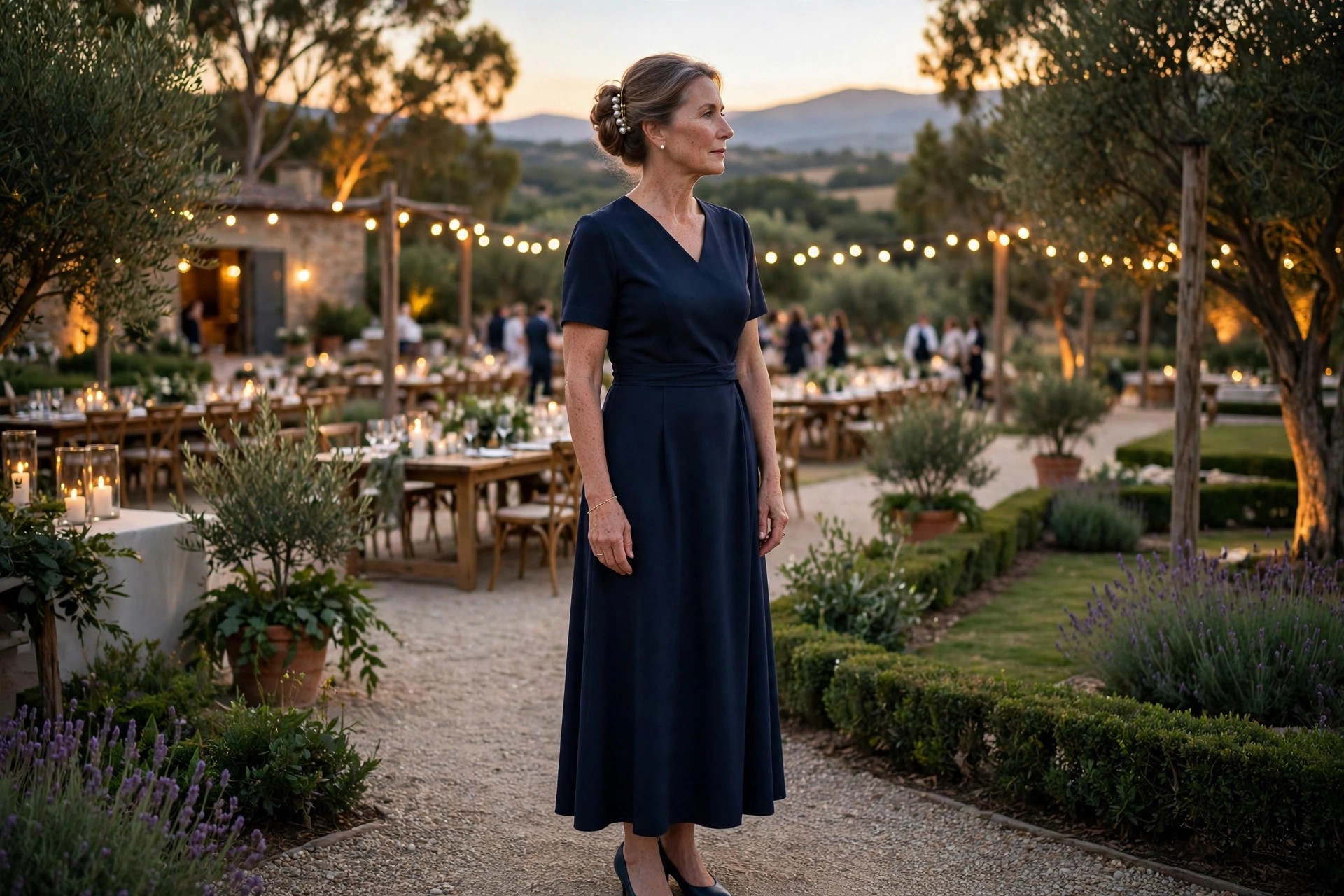
Hair changes the frame of a dress as surely as any accessory. Wearing hair up lengthens the neck, shows the shoulders and lets earrings and neckline details read clearly. A plain dress looks dressier the moment the hair leaves the shoulders.
Add one hair jewel to mark the change, such as a pearl pin, a comb or a clip with stones. Place it where the style turns, at the side of a bun or above a twist, and let it be the only hair piece.
This move costs nothing and photographs beautifully. It also suits warm rooms and long dancing hours. If you wore the same dress with hair down last time, hair up alone can make the outfit feel new to everyone in the room.
11. Let Lip Color Carry the Evening Note

Makeup is part of the outfit on a plain dress, because the face becomes the color accent. A deeper lip shade, a defined eye or a soft sheen on the cheekbones can do the work that a patterned dress would do alone.
Choose one feature to lead. A rich lip with a quiet eye reads classic beside a black or navy dress. A stronger eye with a soft lip suits a dress in a bright or pale shade. Both at full strength can crowd the face.
Match the lip family to the dress accent, such as a wrap, belt or clutch. When the lip and one accessory agree in tone, a plain dress looks planned from head to toe. It is a small link with an outsized effect.
12. Slip a Sheer or Lace Top Layer Over the Dress

A sheer blouse or a lace top worn over a plain dress redraws the whole top half. The dress becomes the base, the layer becomes the feature, and the outfit gains texture that no single plain dress can give on its own.
Keep the layer in a tone close to the dress or in classic black. A black lace top over a deep green or burgundy dress looks rich and settled. A layer in a fighting color splits the outfit into two arguments.
Fit matters with this trick. The layer should skim, not bag, and its hem should end at a clean point on the dress. Try the pairing seated as well as standing, since sheer cloth shifts when you sit and reach.
13. Add Long Gloves for a Formal Night
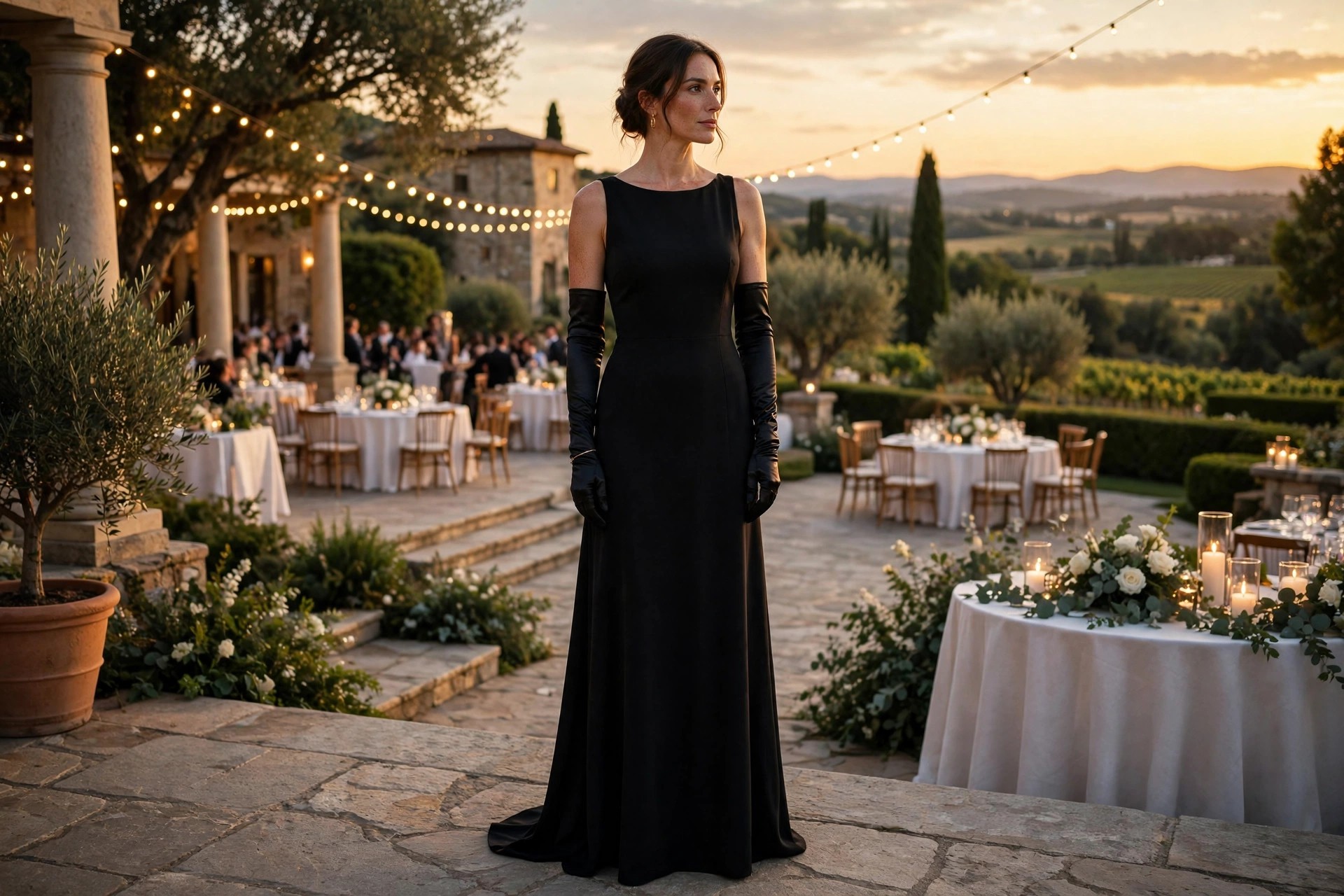
For a truly formal evening, long gloves change the register of a plain dress at once. Satin or fine matte gloves in black, or in a tone close to the dress, give a sleeveless or short sleeve dress a finished, formal frame.
Length should suit the sleeve. Gloves that end above the elbow pair with sleeveless dresses, while wrist length gloves suit a short sleeve. The glove and sleeve should meet or overlap cleanly, with no band of bare arm caught between them.
Practice the small skills at home. Gloves come off for eating and handshakes in some settings, and go back on smoothly with a little rehearsal. Keep the rest of the outfit simple, since gloves are a strong, graceful statement on their own.
14. Wear a Fine Knit or Shirt Layer Under a Sleeveless Dress
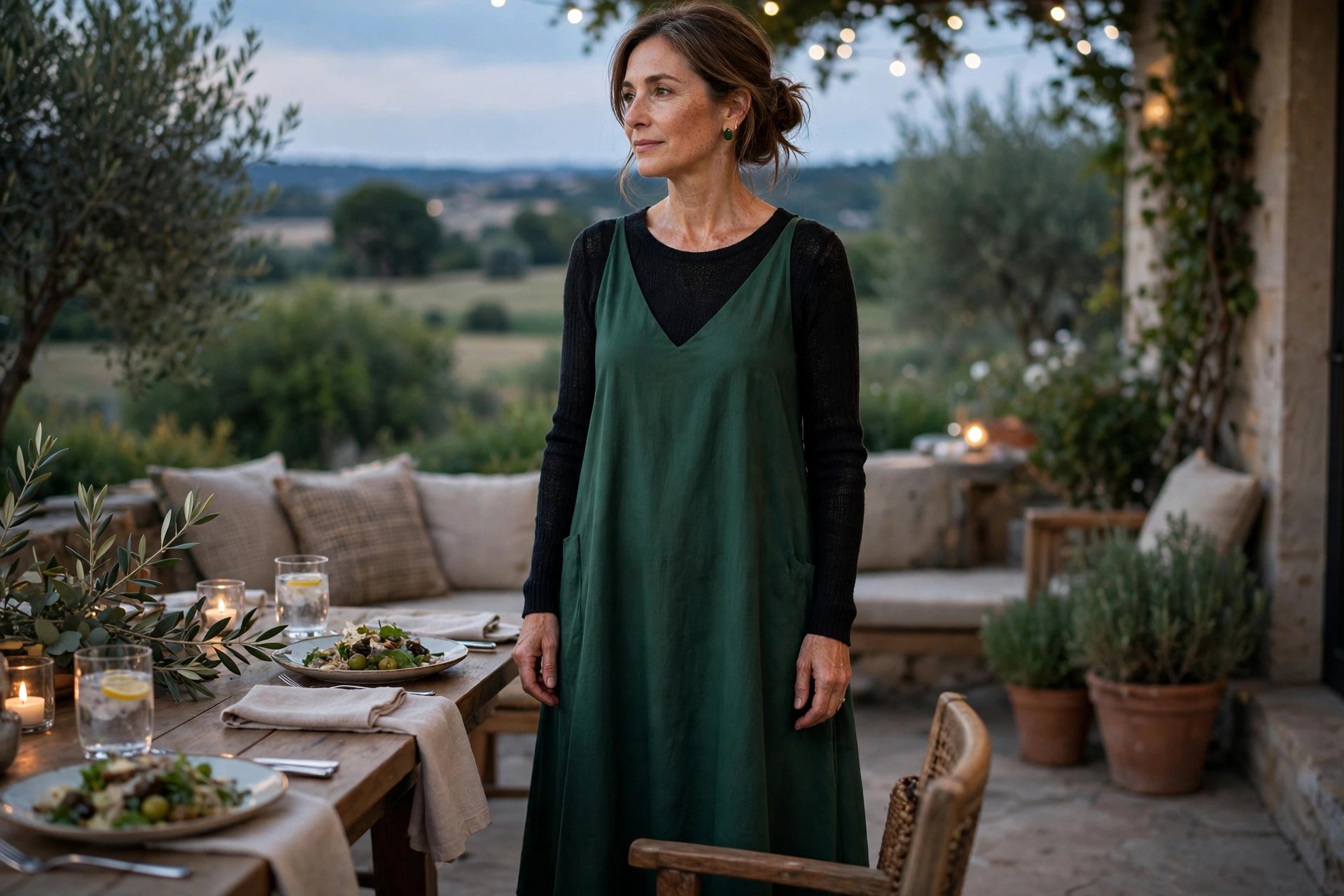
Layering under a sleeveless dress rebuilds it for evening and for cooler rooms. A fine black knit top or a silk shirt worn beneath adds sleeves, warmth and a new neckline line, while the dress keeps its shape over the top.
The under layer must be fine, not bulky. Thin knit, silk or smooth cotton with a close fit sits flat under a sheath or slip dress. Thick jumpers and loose tees bunch at the waist and spoil the clean line you are building.
This is also the kindest trick for a dress that feels too bare for the venue. Coverage arrives without a new dress. The fall casual outfits for women use the same layering logic for daytime dresses across the cooler months.
15. Finish With Sheer Hosiery and a Pointed Pump

Bare legs suit summer evenings, but sheer hosiery finishes a plain dress for formal rooms and cooler months. A sheer black or soft nude leg smooths the line from hem to shoe and makes a simple dress read as evening wear.
Pair the hosiery with a pointed pump for the longest, neatest line. The pointed toe extends the leg, the low heel keeps you standing with ease, and the closed shoe suits dinners, theatres and formal receptions of every kind.
Check the pairing in a full length mirror before you leave. Hem, leg and shoe should read as one calm line with no breaks of bright skin or clashing tone. When that line is clean, even the plainest dress looks complete.
A plain dress is a calm base, and calm bases take dressing up kindly. One strong piece at a time, a layer with intent, shoes and a bag that agree, and the quiet dress you doubted will carry the evening well.
Save these ideas for how to dress up a plain dress for an evening event to your Occasion Outfits for Women board. The next invitation will feel like a styling job you already know how to do, start to finish.


