

How to Find Your Style Again After 40: A Wardrobe Reset Guide in 15 Steps
The closet is full, the rail is crowded, and still the same three outfits come out every single week.
That feeling is common after 40. Life shifts, taste shifts, and the wardrobe keeps dressing a woman from five years ago.
This guide shows how to find your style again after 40, through fifteen plain reset steps done in order.
It is a method, not a shopping list. Most steps use the clothes, mirror and notebook you already have at home.
Give it two weekends and a few quiet, calm evenings. Small steps, done honestly, change the whole rail faster than one big clear out.
By the last step you will dress from a closet that looks like your life now, not the life you had before.
Keep a notebook beside you from the first step. The notes you write in week one become the guide you follow in month two.
This post contains affiliate links. If you buy through them, we may earn a small commission at no extra cost to you. See our Affiliate Disclosure.
1. Take Everything Out and Sort It Onto Three Rails

Empty the closet in sections and sort each piece onto one of three rails: worn often, worn sometimes, not worn at all.
Use three racks, three doors or three ends of one long rail. The labels matter less than the honest sorting.
Try nothing on yet. This step is about seeing the truth of what your real dressing habits look like in daylight.
Most women find the often rail is small and the never rail is large. That gap is the whole problem in one view.
Leave the rails up for two days if you can. Living beside them teaches you more than one rushed afternoon.
Take one photo of each rail. You will want the before picture when the reset is done.
2. Write Three Style Words for the Life You Live Now

Sit with a notebook and write down words for how you want to look on an ordinary day in your life now.
Pick three words only. Calm and neat, soft and bright, plain and sharp: any three that feel true when you say them aloud.
Write them inside the closet door or on the first page of the notebook, where you will see them while you dress.
These words become the test for every later step. A piece that matches none of the three has to argue hard to stay.
Words for a past life, like boardroom or festival, belong to that life. This list is for school runs, lunches, family days and evenings now.
If three words feel too few, write five and cut two. The cutting is where the real taste shows itself.
3. Photograph the Outfits You Already Wear Most

Put on the outfits from the often rail, one at a time, and photograph each in the same mirror and the same light.
Five or six photos will cover most of what you truly wear in a normal fortnight of life.
Look at the set together. Note what repeats: the same jean shape, the same two colors, the same shoe with everything.
Those repeats are not a rut. They are the clearest record of your taste that exists anywhere.
This is also where the method parts company with building a new wardrobe from zero. Here, your real outfits lead and everything else follows.
Keep the photos in one album on your phone. You will add to it at steps seven and fourteen.
4. Note the Colors That Appear Again and Again

Lay the often rail tops side by side and name the colors out loud, one garment at a time.
Most women find two neutrals and two brighter shades doing nearly all the work in their real outfits.
Write those four colors at the top of a notebook page. They are your working palette for the rest of the reset.
Colors that appear only on the never rail are clues too. A shade bought often and worn never is a habit, not a taste.
Hold your palette colors near your face in daylight. Keep the ones that make your skin look clear and rested.
A small palette is the same base used in how to build a casual capsule wardrobe, and it makes later shopping far simpler.
5. Check the Fit on Your Five Most Worn Pieces

Take the five pieces you wear most and check each one in the mirror, front, side and back.
Look for waistbands that slip, shoulders that slide, hems that pool and sleeves that end at an awkward point.
Fit is the quiet reason a loved piece gets worn less each year. Small pulls and gaps register even when we cannot name them.
Mark each piece: fine as it is, worth tailoring, or ready to retire. Be honest, because these five carry your whole style.
One tailoring visit for a most worn piece pays back every single week you wear it afterward.
Note the sizes and cuts that pass the check. That note becomes your shopping compass for the rest of the year.
6. Let Go of Clothes Kept for a Past Size or a Past Job

The never rail usually holds two quiet groups: clothes kept for a past size, and clothes kept for a past role.
Both groups dress a woman who is not in the room. Keeping them makes the closet feel full and the mornings feel thin.
Move them out kindly. Good pieces can go to a friend, a charity shop or a resale box, without any drama attached.
Keep one sentimental item if you must, stored in a box away from the working rail where it cannot crowd the mornings.
This step is about space, not judgment. A rail that holds only wearable clothes is calmer to face at seven in the morning.
The room you free here is the room steps seven and eight will use well.
7. Build Three Base Outfits From What Stays
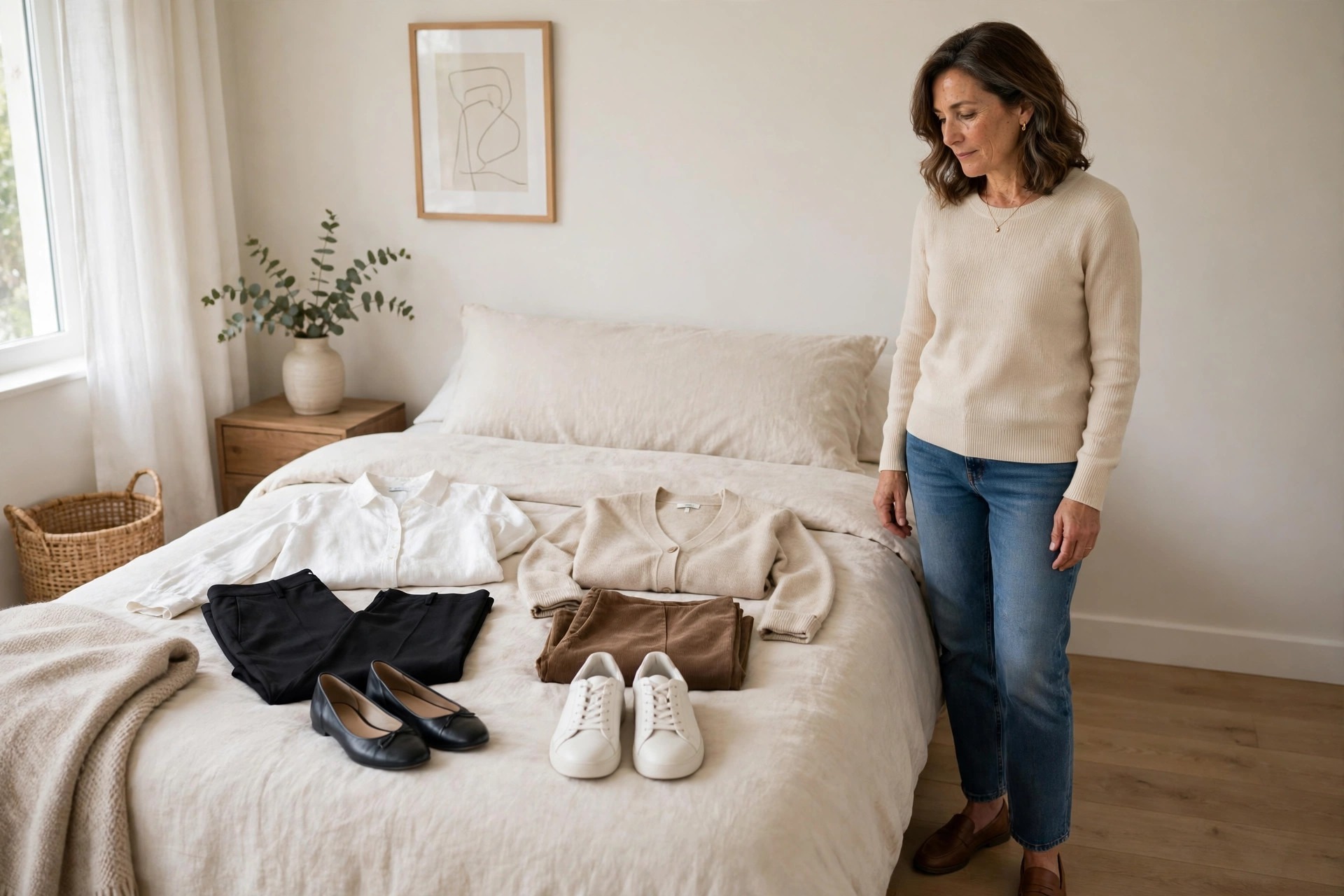
From the clothes that stay, build three complete outfits on the bed: one for everyday errands, one for lunch out, one for family time.
Each outfit needs a top, a bottom or dress, a layer and a shoe, all present and all fitting the body you have now.
Try each outfit on and photograph it for the album you started at step three.
If an outfit fails, change one piece at a time until it works. Small swaps teach faster than full restarts.
These three bases are the proof that the reset works. You already own the start of a wardrobe that suits your life.
Wear base one tomorrow. A reset that stays on the bed is just tidying, and this one is meant to be worn.
8. Find the One Gap That Blocks the Most Outfits

While building the bases, one missing piece usually blocks several outfits at once: a shoe, a layer, a belt, a plain top.
Write that gap at the top of a fresh notebook page and circle it. This is the only shopping the reset asks for so far.
A true gap repeats across outfits. A passing want appears once, in one outfit, and fades by the next morning.
Naming the one gap stops the vague feeling of having nothing to wear and gives it a single, fixable shape.
Hold the gap list to one item until it is filled. Lists of ten gaps turn a reset back into random shopping.
Women who love denim bases often find the gap sits there, and these jeans outfits for women over 40 help name it.
9. Try One New Shape in a Fitting Room

Choose one shape you have never worn, or not worn for years, and try it on in a store with no plan to buy.
A straight trouser if you live in skinny jeans, a midi skirt if you live in trousers, a soft blazer if you live in cardigans.
Take a photo in the fitting room mirror and look at it later at home, when the first reaction has settled.
New shapes feel strange for ten minutes and normal by the second wear. The photo tells you which one this is.
If the shape suits your three style words and your palette, it earns a place on the gap list for later.
One tested shape a season keeps a wardrobe current without any chasing of trends at all.
10. Set a Small Palette of Three Neutrals and Two Brights

Turn the color notes from step four into a fixed palette: three neutrals you wear well, plus two brights that lift your face.
Write the five shades on a card and keep it in your bag for shopping days and sale rails.
New pieces must match at least two palette colors already on your rail, or they stay in the store.
This one rule ends most random buys, because a lovely top in the wrong shade has nothing at home to stand with.
Neutrals carry the week and brights carry the face. That balance keeps outfits calm and still full of life.
Seasonal dressing follows the same rule, as the palette in these fall casual outfits for women shows across a whole season.
11. Restyle One Old Favorite in a New Pairing

Pick the piece you love most and have worn the same way for years, and give it a new partner today.
A blazer over a dress instead of trousers, a knit tied at the shoulder over a shirt, boots where flats always went.
Wear the new pairing out of the house, not just to the mirror. Real wear is the only honest test of a styling idea.
Photograph it and add it to the album. A favorite worn a new way feels like a new purchase that cost nothing.
If the pairing fails in real wear, note why in one line and move on. Failed tests are information, not mistakes.
This habit is the daily engine of the reset, and it pairs well with the trend rules in how to wear new trends over 60 without looking like a costume.
12. Plan Outfits for One Real Week Ahead
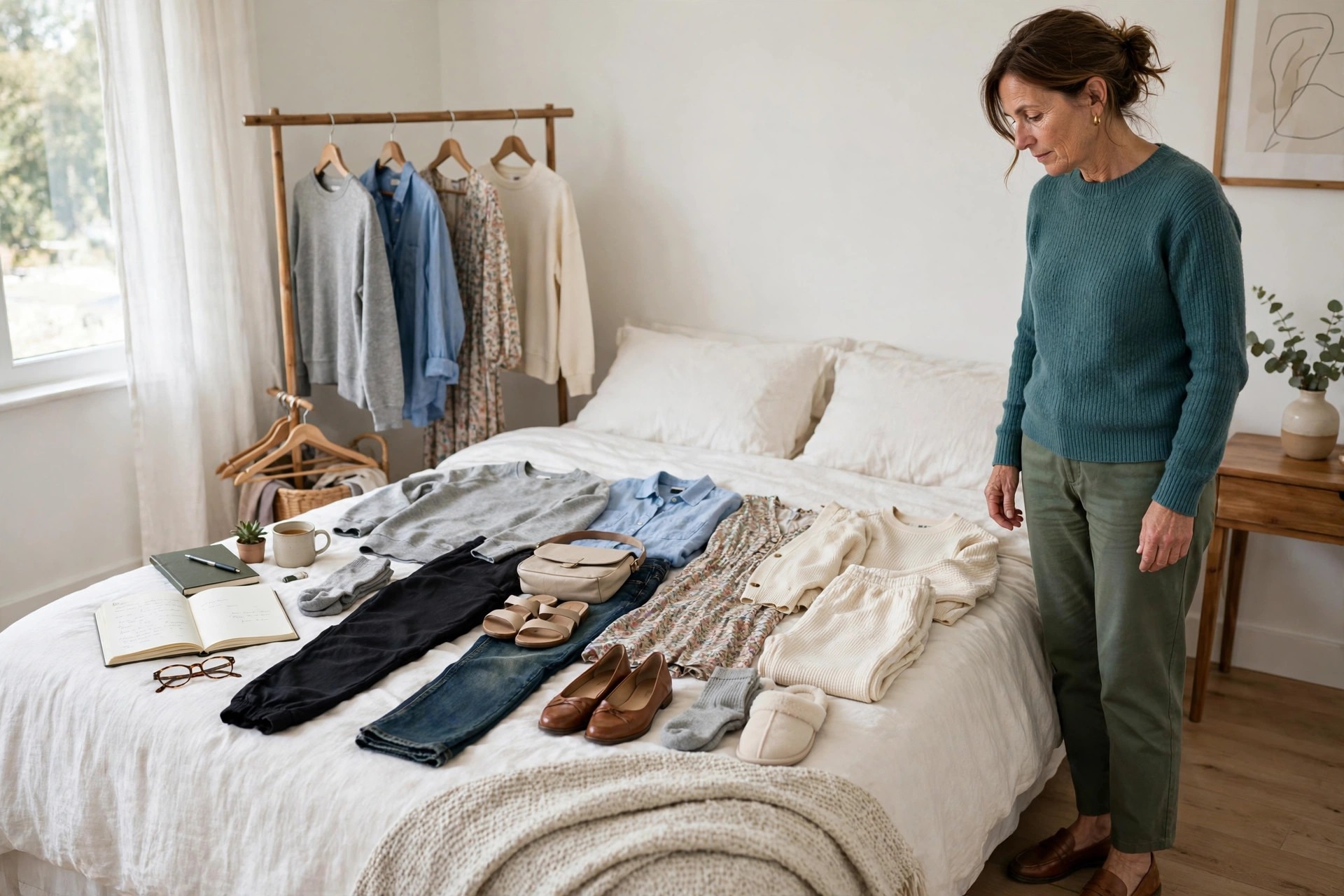
Open your diary for next week and plan one outfit per real plan: work from home day, school event, lunch, family visit, quiet day.
Write each outfit in the notebook in two lines, pieces and shoes, and check every piece is clean and on the rail.
Planning a week exposes the last weak points, like a coat that suits nothing or a shoe that suits one outfit only.
It also ends the morning scramble for a while, which is the daily gift most women say they wanted from the reset.
Keep the plans loose. Swap days when weather or mood changes, and note the swaps for the review at step fifteen.
For the dressier plans in that week, the polish notes in these outfits for women over 40 for a school or college reunion are worth a read.
13. Shop Only From Your Gap List, in Palette Colors

When you shop during the reset, the gap list and the palette card are the whole brief. Nothing else comes home.
In the store, hold each candidate against your palette card and name two outfits it completes on your rail.
If you cannot name two, put it back, however lovely it looks on the hanger or on another woman.
Try the piece with the shoes and layer it will actually live with, not with store styling that will not come home with you.
Buy one gap at a time and wear it within the week, while the outfits it completes are fresh in your mind.
Slow shopping feels odd for a fortnight and normal after that. The rail stays calm, and so does the budget.
14. Wear Each New Pairing Twice Before You Judge It

New pairings feel unfamiliar the first time, and unfamiliar is not the same as wrong.
Give every new pairing two full wears before you judge it, one at home territory and one out in the world.
By the second wear you will know the truth about comfort, fit and whether the pairing matches your three style words.
Photograph the second wear for the album, since the first wear photo often catches the trying on face, not the outfit.
Pairings that pass the two wear test join the base outfits. Pairings that fail go back to the rail as separate pieces.
This patience saves more money than any sale, because it stops good clothes being retired after one unsure morning.
15. Review After a Month and Write Down What Worked

A month after the reset, sit with the notebook and the photo album and review the whole experiment in one sitting.
Write three lines: the outfits worn most, the pieces never reached for, and the one gap still open on the list.
The never reached pieces get one more month. If they stay unworn, they join the next kind clear out without debate.
Note which style word served you best. Words can change as life changes, and the door list should change with them.
Keep the notebook in the closet. Next season the reset takes one afternoon, because the method is already written in your own hand.
That is a wardrobe that stays found, season after season, with very little effort spent keeping it that way.
A reset is not a new identity. It is your own taste, cleared of the pieces and habits that no longer serve it.
Keep the three rails honest, the gap list short and the camera roll current, and the closet stays settled for seasons.
That steady method is the heart of how to find your style again after 40: look, note, test, repeat.
Save this to your outfits over 40 board for later, and begin with step one on a quiet Saturday morning.


