

How to Light a Small Kitchen With One Ceiling Light
One ceiling light sounds like enough for a small kitchen, until the first evening you cook in it. Your shadow falls across the chopping board, the back corners go dim, and the stove seems to sit in another, darker room entirely.
The fix is rarely a rewiring job. Learning how to light a small kitchen with one ceiling light means helping that single fitting work harder, then adding small layers around it. Every idea here plugs in, sticks on, or screws into what you already have.
None of these ideas needs a landlord’s blessing for wiring, because none of them adds a wire. Most cost less than a takeaway dinner, and the whole list can be done in a weekend with a step stool and a screwdriver.
If you ever plan a full relight with new circuits, our guide to small kitchen lighting ideas covers whole schemes in depth. This page is for tonight instead: fifteen ways to make one ceiling light feel like a whole lighting plan, with no electrician booked.
This post contains affiliate links. If you buy through them, we may earn a small commission at no extra cost to you. See our Affiliate Disclosure.
Start With the Bulb: More Lumens From the Same Socket
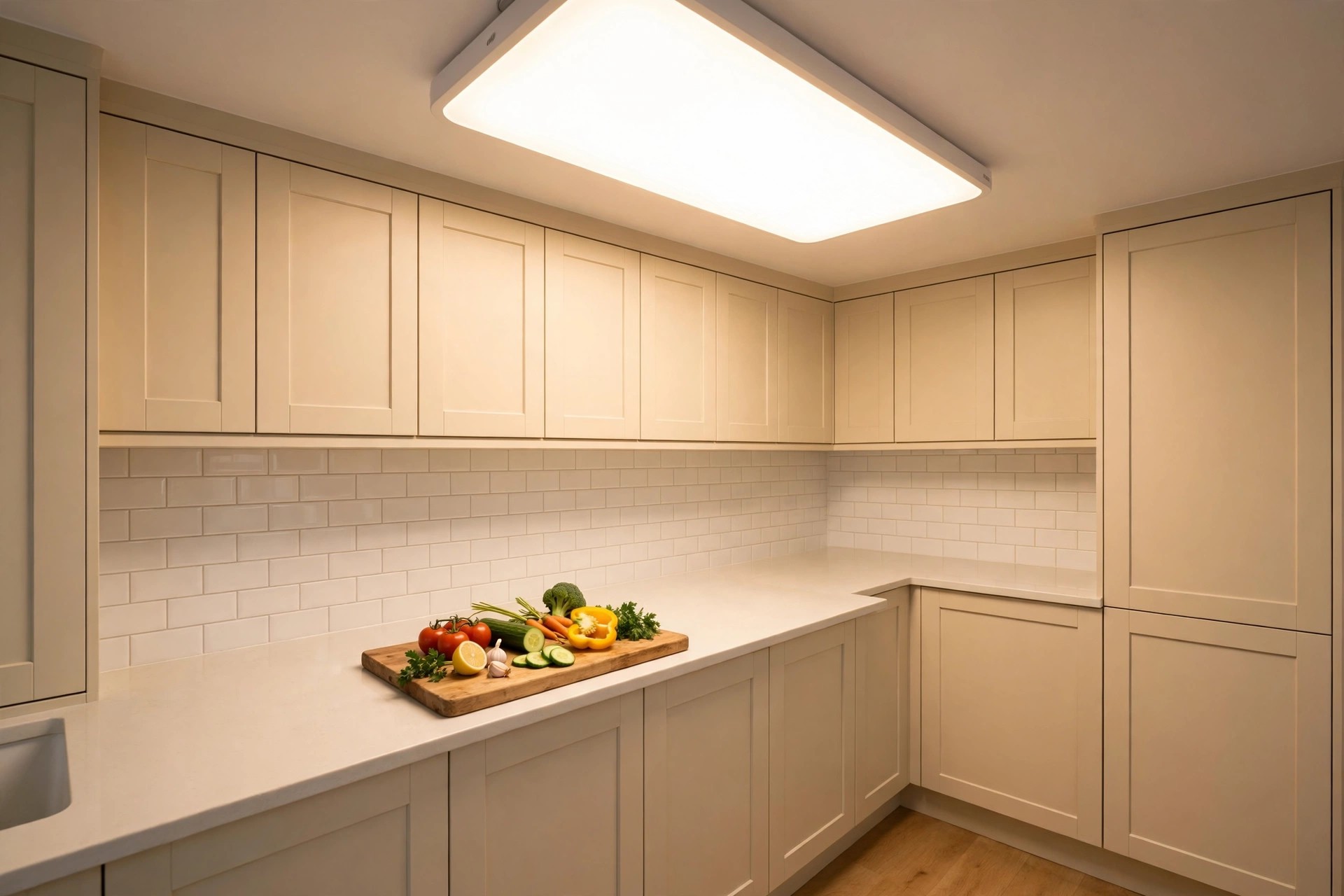
Most single ceiling fittings are not badly placed. They are just fitted with a bulb that is too weak for the room. A dim 60-watt style bulb leaves the corners dark and makes every counter feel gloomy by early evening.
Check the lumens on the box, not the watts. For a small kitchen, look for an LED bulb around 1,100 to 1,600 lumens, which is the range sold as a 75 to 100 watt replacement. It screws into the same socket.
The change takes two minutes and costs very little. Light reaches the sink and stove properly, and prep stops feeling like guesswork. If you only try one fix on this list, make it this one, then judge the rest afterward.
Pick a Warm Color Temperature So Food Looks Right
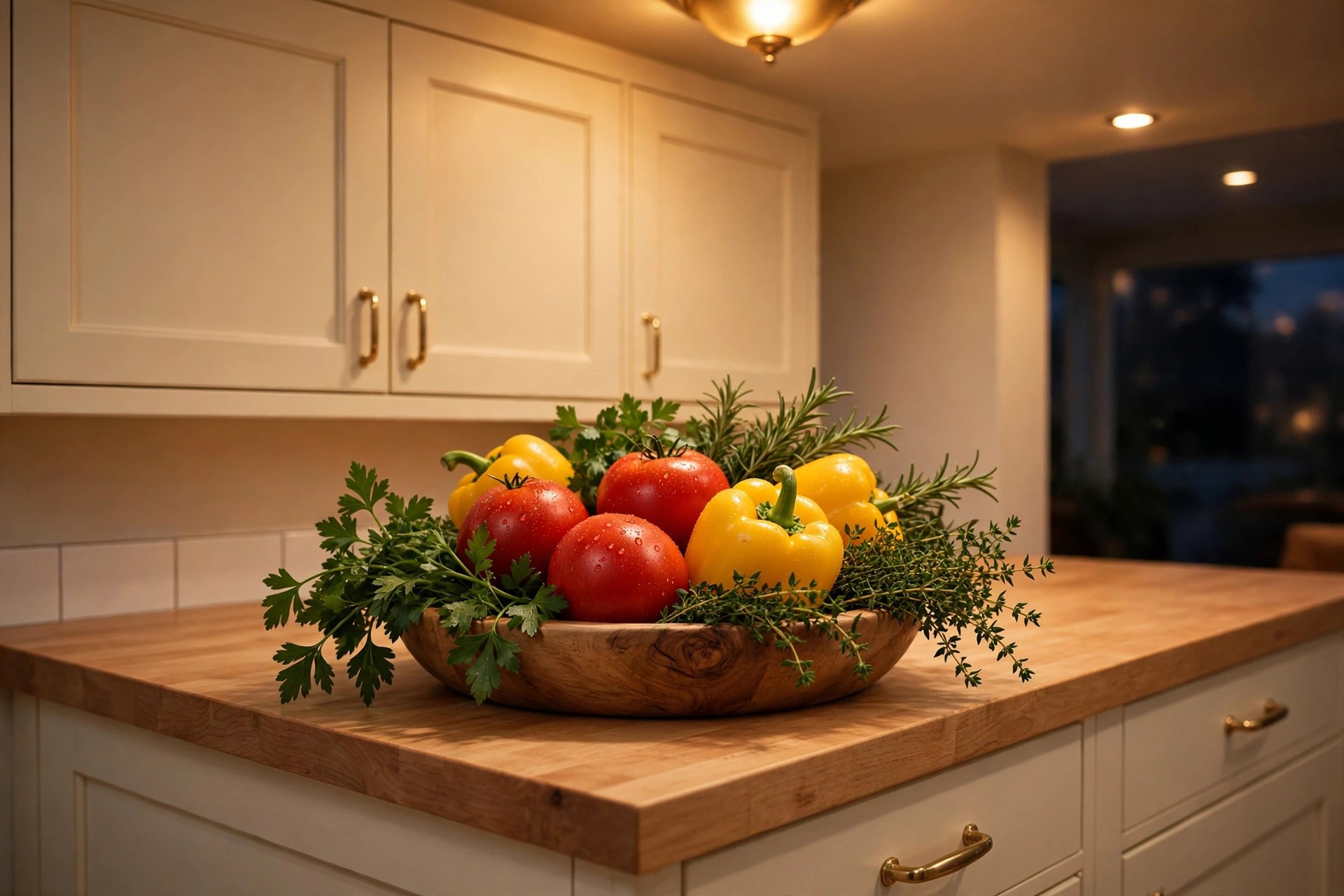
Two bulbs can give the same brightness and make dinner look completely different. Cool blue-white light, the kind marked 5,000K and up, turns chicken grey and salad dull. It also makes a small room feel like a clinic at night.
Choose bulbs marked 2,700K to 3,000K instead. That warm range flatters wood, cream paint and skin, and it keeps food colors honest. Also check the CRI number on the box and pick 90 or above for truer reds and greens.
Both numbers sit on every bulb box now.
Keep every bulb in the room in the same range once you start adding small lights later. Matching warmth makes the layers blend into one calm glow instead of a patchwork of orange and blue pools across the counters.
Fit a Wide Flush Mount on the Same Ceiling Box
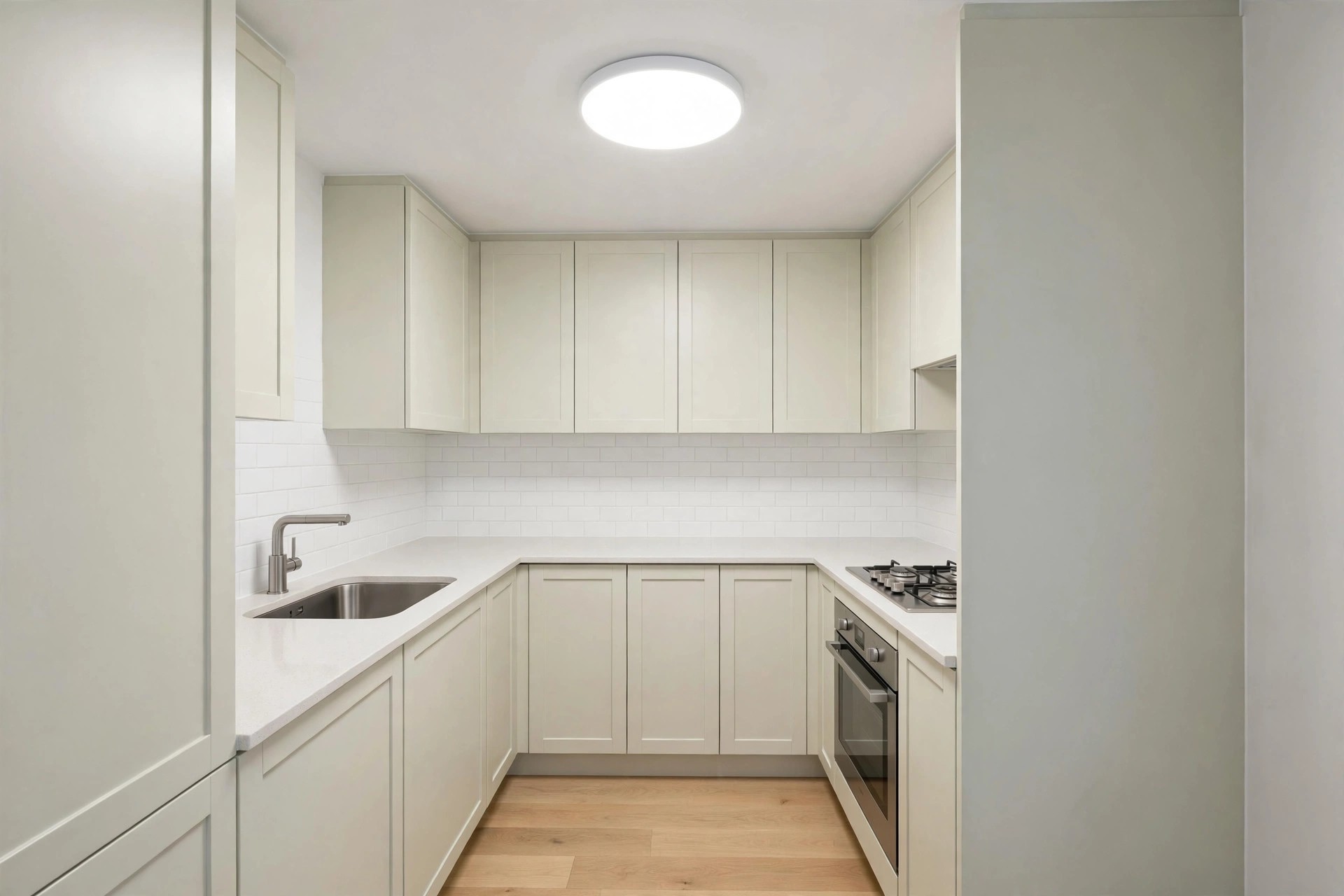
A narrow dome fitting throws a tight cone of light straight down and leaves the edges of the room in shade. A wide, flat flush mount spreads the same power sideways, so the whole kitchen shares it. The swap uses your existing ceiling box.
Turn the power off at the breaker, unscrew the old fitting, and match the wires color to color with the new one. Most flush mounts fit with two screws and a twist. No new holes, no extra wiring, no electrician visit needed.
Pick a fitting at least 12 to 16 inches across with a frosted cover that hides the bulbs. The wider the spread, the less your own shadow lands on the counter while you work. Renters should keep the old fitting stored safely.
Let the Light Out With a Clear Shade and Clean Glass

A dark fabric shade or a smoked glass dome can swallow half the light before it ever reaches the room. Add a layer of cooking dust on the glass and the fitting works at a fraction of its real strength every night.
Swap the shade for clear glass, white opal glass, or no shade at all if the bulb looks neat. Bare and clear options send light up to the ceiling as well as down, and the bounce softens shadows around the edges.
Then give the glass a wash every couple of months. Warm soapy water, a soft cloth, and five minutes bring back a surprising amount of brightness. It is the cheapest fix on this list, and most kitchens need it today.
A Smart Bulb Gives You Dimming Without a Dimmer Switch
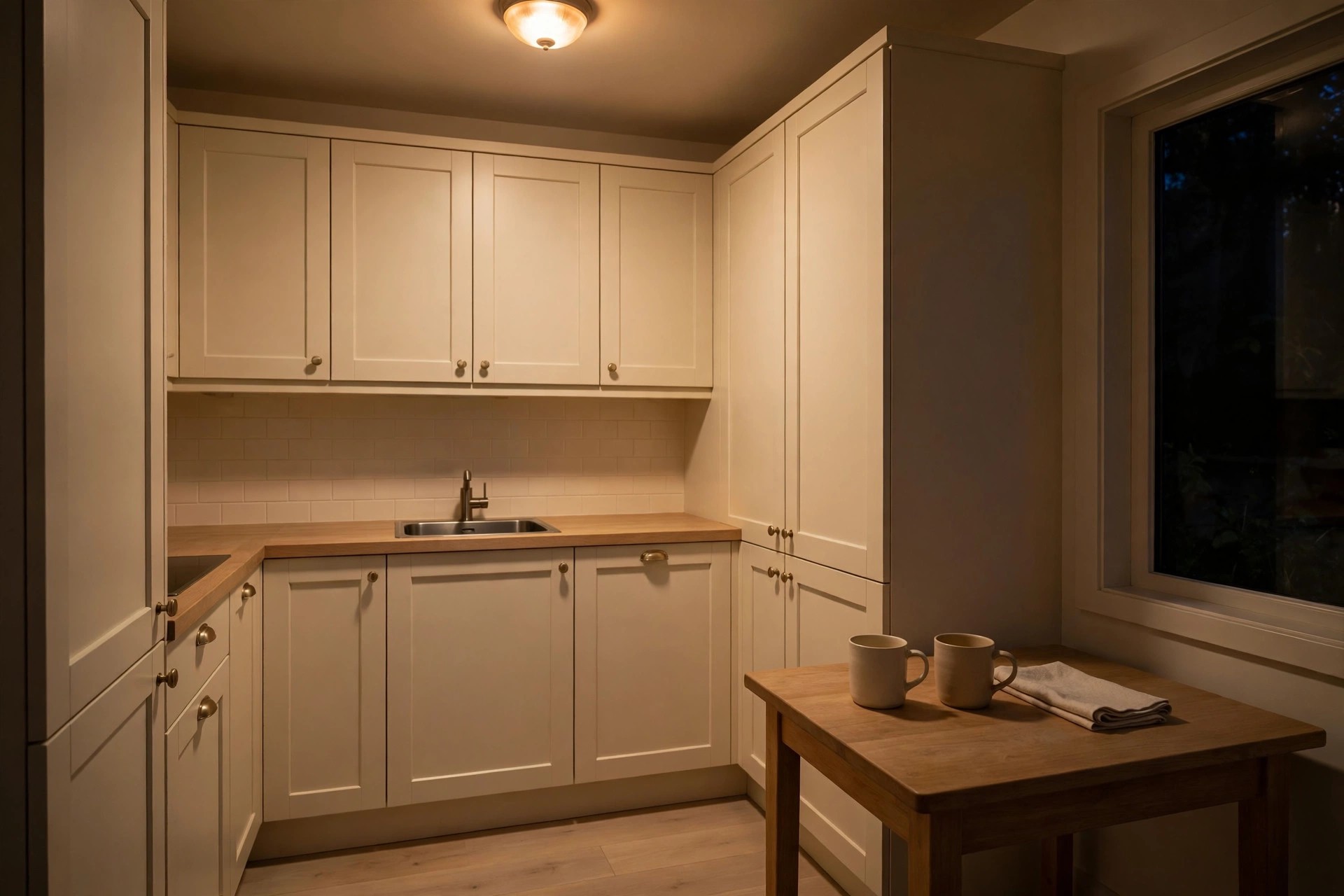
Full brightness is right for chopping onions and wrong for a slow Sunday breakfast. A smart bulb screws into your existing fitting and adds the dimmer your kitchen never had, controlled from your phone or a small remote on the fridge.
Set it bright and clear for morning prep, then warm and low for dinner. Many smart bulbs also shift color temperature as they dim, so late light feels like candlelight instead of a dim office. Schedules can greet you before coffee.
Renters like this one because nothing changes in the wiring and the bulb leaves with you. Keep the ordinary wall switch on, and let the bulb do the adjusting. One bulb covers the whole room in a small kitchen.
Stick Battery Light Bars Under the Cabinets
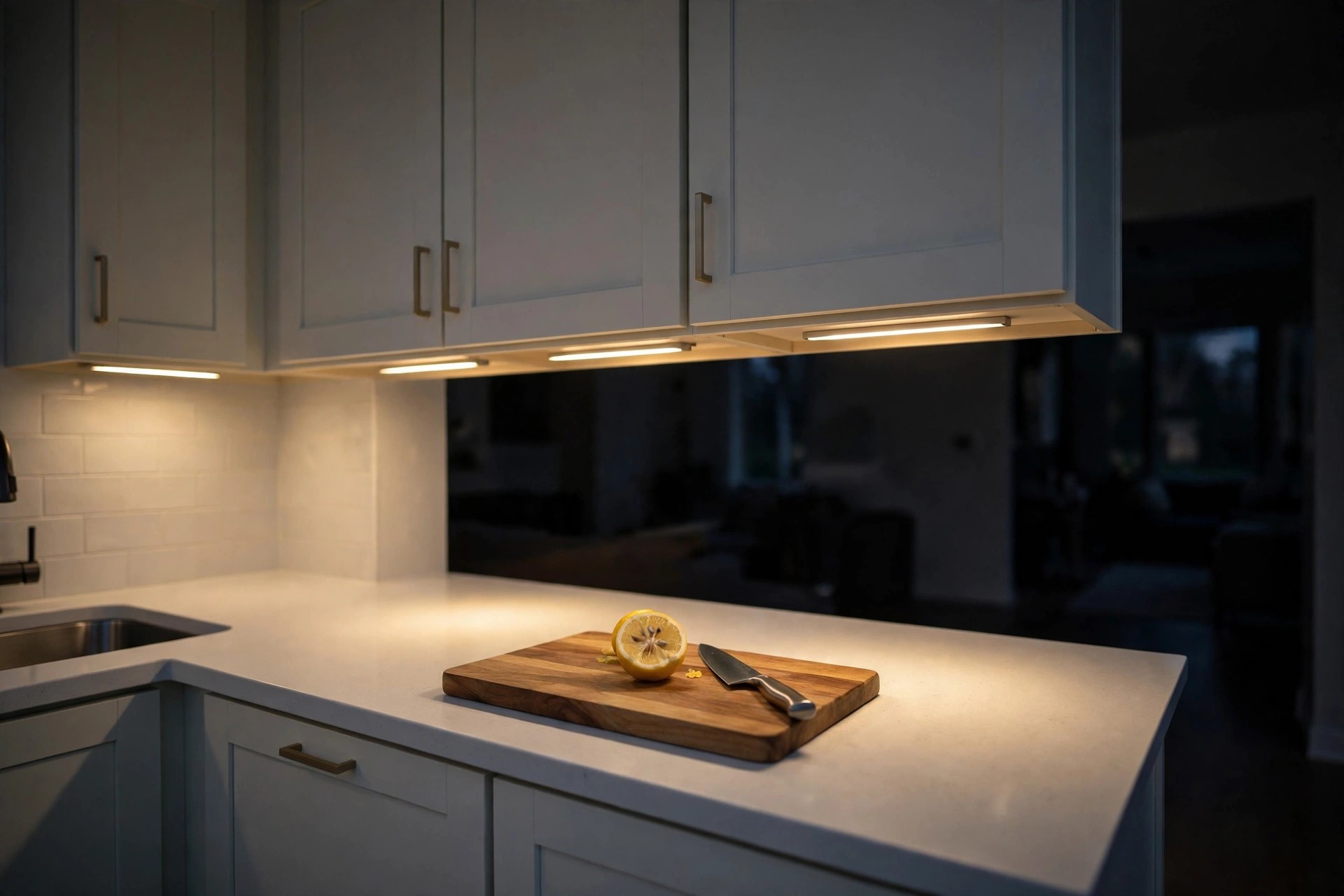
Stand at the counter at 6 p.m. and your body blocks the ceiling light, so the chopping board sits in your own shadow. That shadow is the real reason small kitchens feel dark, even with a decent bulb overhead working hard.
Battery light bars fix it for a few dollars each. They stick under the wall cabinets with adhesive pads, point straight down at the board, and need no outlet or wiring. Most recharge with a phone cable every few weeks.
Run one over the main prep stretch and one over the sink. The counters get honest task light, crumbs and spills show up before they spread, and the ceiling light can stay soft. Peel them off cleanly when you move out.
Motion Lights Inside Cabinets End the Dark Shelf Hunt
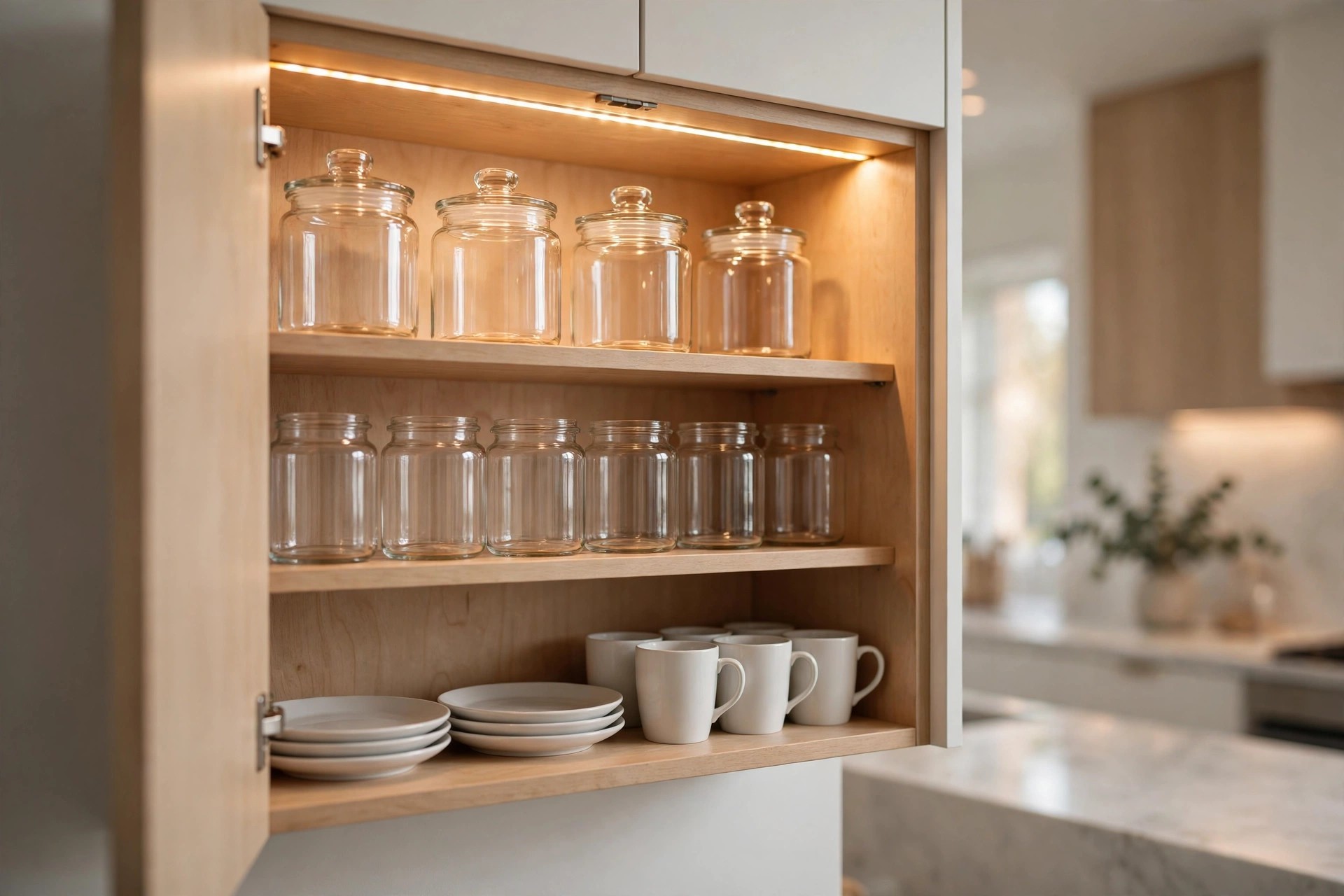
Open a deep wall cabinet at night and the front row of jars catches the light while the back row hides. You reach, knock something over, and still cannot find the cumin. Small kitchens waste a lot of minutes this way.
Small motion-sensor lights solve it quietly. Stick one inside the cabinet top or along the frame, and it wakes when the door opens, lighting every shelf. They are cheap, rechargeable, and the size of a matchbox in most cases.
They earn their keep in the pan drawer and the under-sink cupboard too. Because they switch off on their own, the battery lasts for weeks. It feels like a fitted kitchen upgrade, yet nothing is drilled and nothing is wired.
Run a Plug-In Strip Along the Cabinet Tops
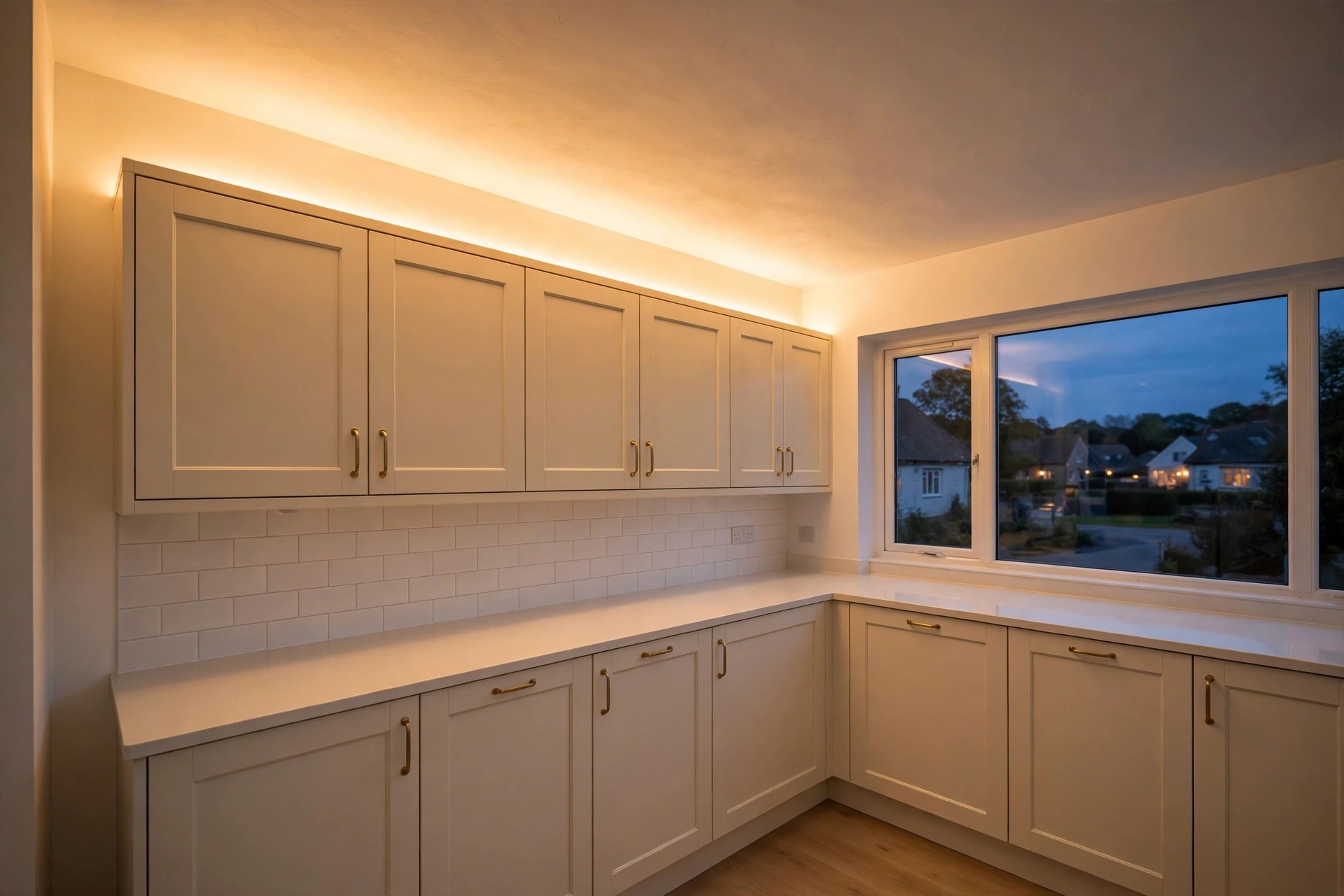
The gap between cabinet tops and the ceiling is dead space in most small kitchens, but it is prime lighting space. A plug-in LED strip laid along the tops throws light up, and the ceiling sends it back down as a soft wash.
There are no hard shadows with this kind of bounce, so the room feels calmer and a little bigger. The strip hides behind the cabinet face, so all you see is the glow. Dust the tops first, or the dust will announce itself.
Plug the strip into the nearest outlet and drop the cable behind a tall cabinet or the fridge. A simple inline switch or smart plug makes it easy to control. On its own at night, it is enough for a drink of water.
Hang a Plug-In Pendant Over the Sink
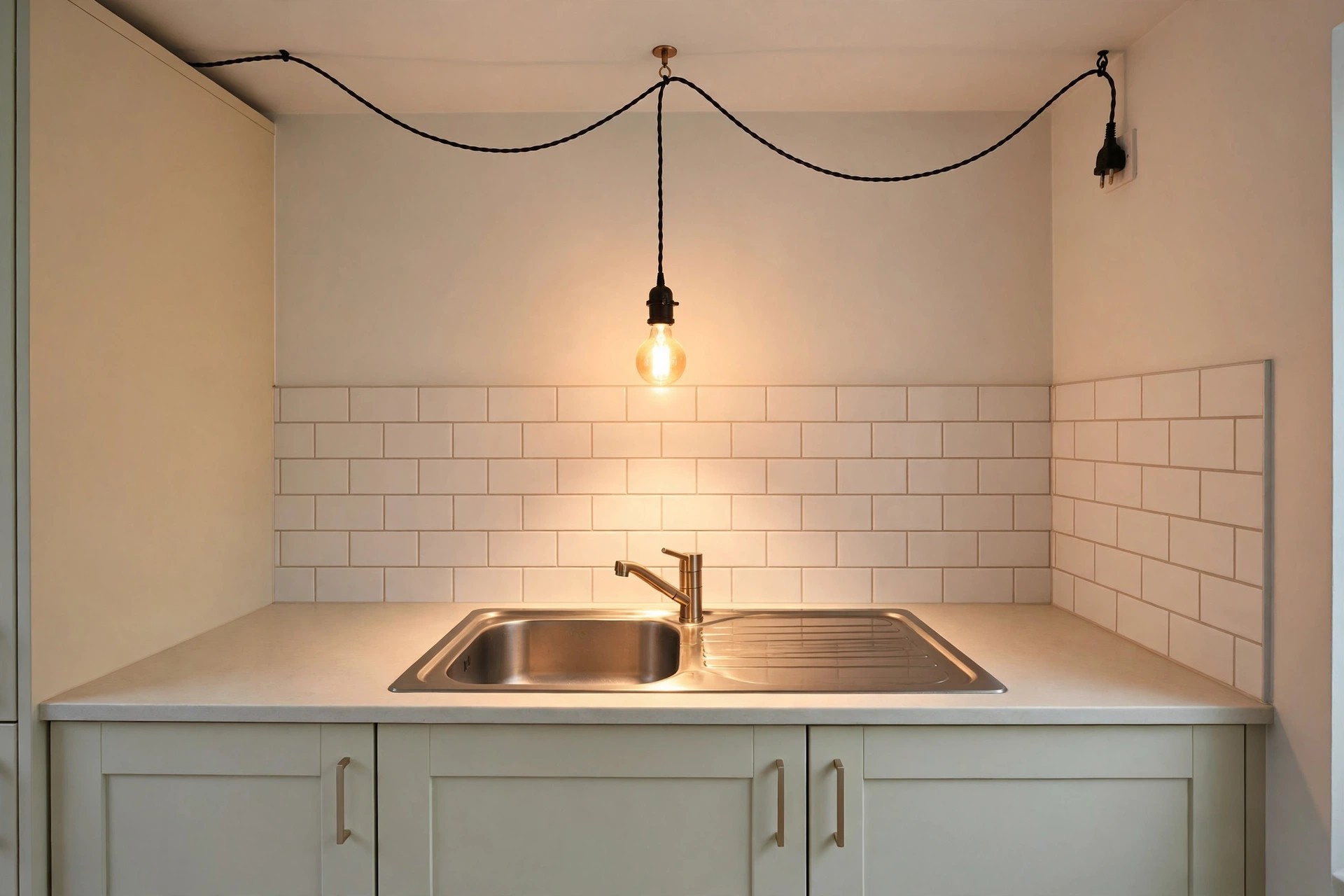
The sink is where glasses get missed spots and knives get washed by feel. A plug-in pendant puts light exactly there. Screw a small hook into the ceiling above the sink, hang the pendant, and swag the cord back to the wall.
The cord then runs down to an outlet, often behind the kettle or near the counter edge. Cable clips keep the swag neat and close to the ceiling. Pick a shade that aims light down, like metal or opal glass, for real task strength.
Renters can fill the tiny hook hole in minutes at move-out, and owners get a fixture look without opening the ceiling. Hang the shade low enough to help, high enough to clear your head while you rinse a big pot.
Park a Small Lamp at Your Prep Spot
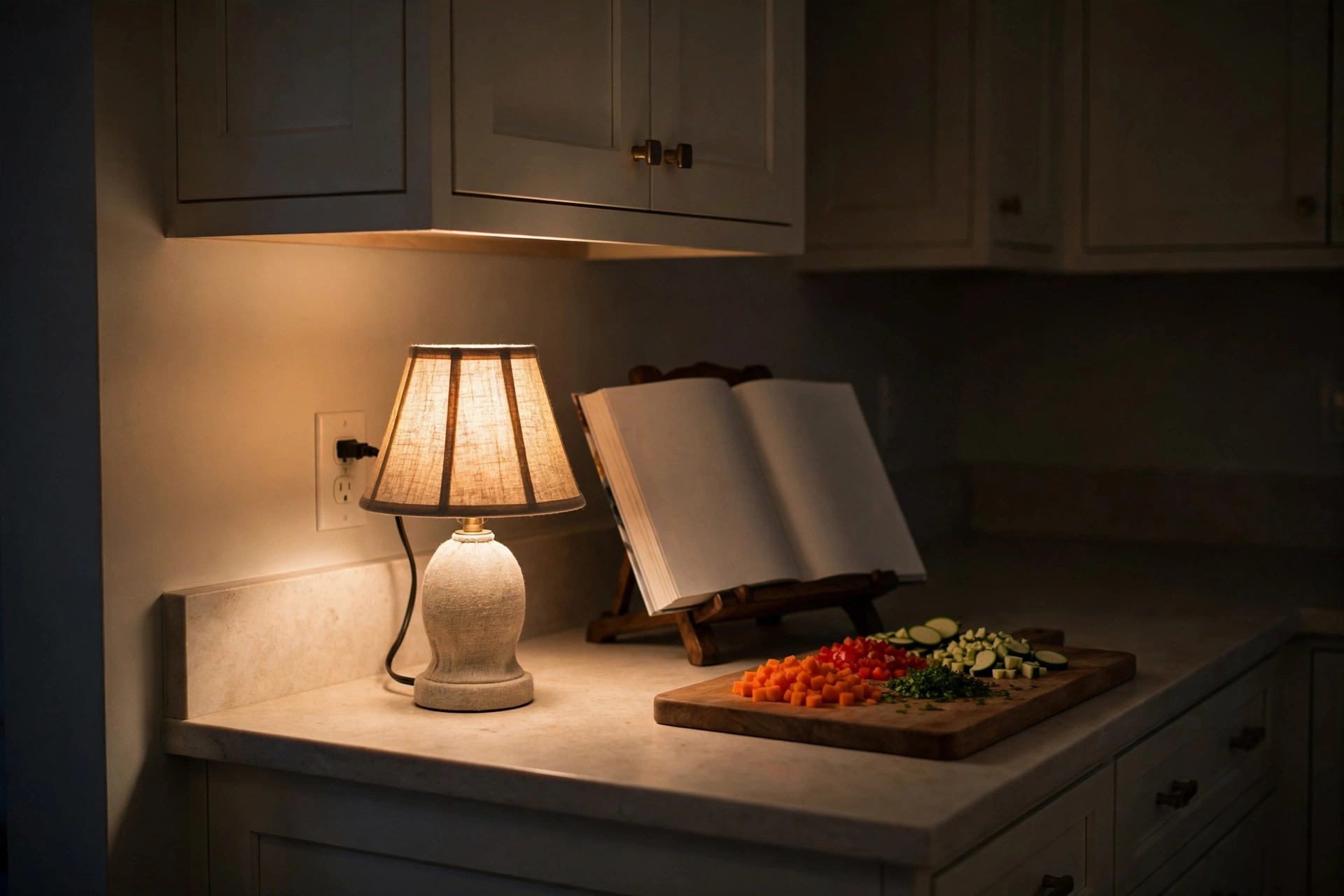
Think of the last time you read a faded recipe card or checked if chicken was cooked through under a dim ceiling bulb. A small lamp on the counter, the kind sold for a desk or bedside, ends that squinting for good.
Choose a compact lamp with a shade that points light down, and give it the corner of your main prep stretch. It shares the counter with the knife block in many kitchens and asks for about six inches of space only.
Plug it into the counter outlet and it is ready. The warm pool of light makes peeling, trimming and plating easier, and after dinner it reads as cozy decor instead of a work light. Pick a washable shade for splashes.
Put the Hood Light to Work Over the Stove
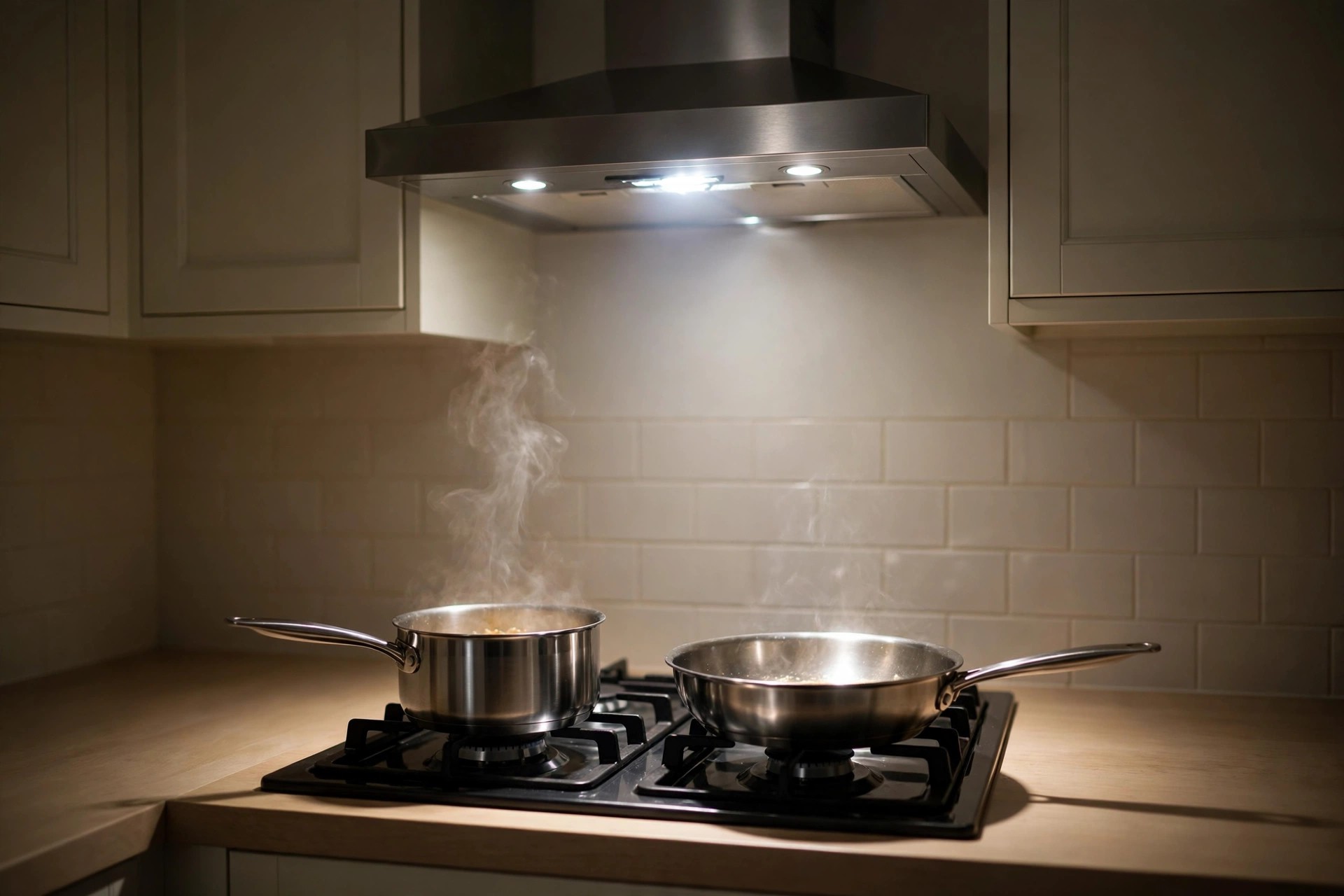
Here is a rule worth keeping: the darkest patch in most small kitchens is the stove, and the fix is already installed. Nearly every range hood hides a light, yet many cooks never switch it on unless something is boiling hard.
Swap its bulb for a bright warm LED rated for appliances, and the burners get strong, focused light. Steam, browning and simmer levels are easy to judge, and the backsplash behind the pans lights up like a little stage at night.
Use it every time you cook, not just for big meals. It also covers the counter beside the stove in many layouts. Between the hood light and the ceiling light, the hot half of the kitchen stops being the dim half.
Paint the Ceiling Bright White and Let It Bounce Light
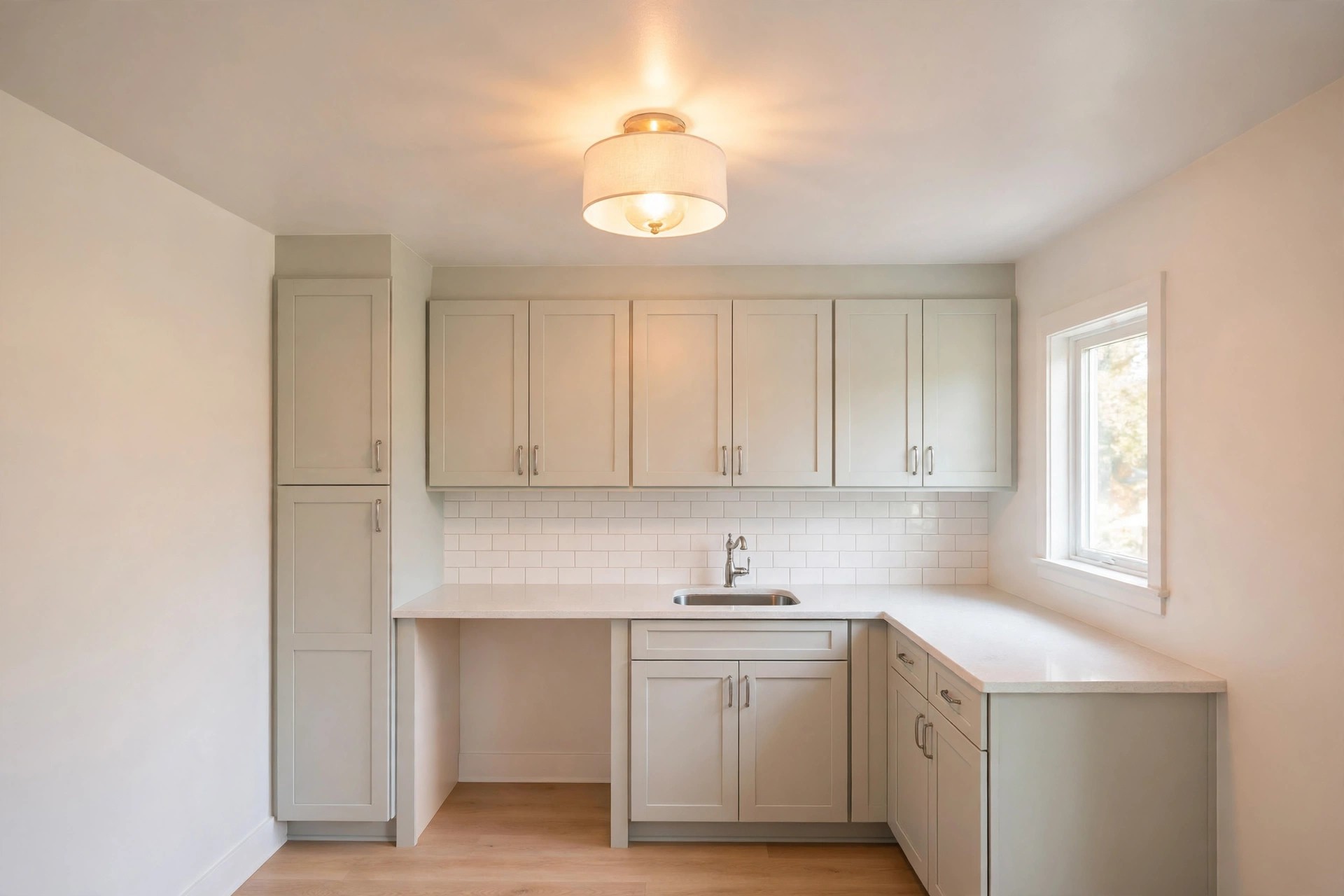
Your ceiling is the biggest reflector you own. A cream, grey or tired ceiling soaks up light from the fitting, while a bright white one throws much of it back into the room. The same bulb suddenly feels one size stronger.
Use a washable kitchen paint in a flat or matte finish so the surface spreads light softly instead of glaring. One coat often does it on a sound ceiling. Pale walls near the top of the room help the bounce travel further.
This is a weekend job with a roller and a step stool, no wiring involved. Owners get lasting value, and renters with a kind landlord can offer it as an upgrade. Either way, every other fix on this list works better afterward.
A Glossy Pale Backsplash Throws Light Back Onto Counters
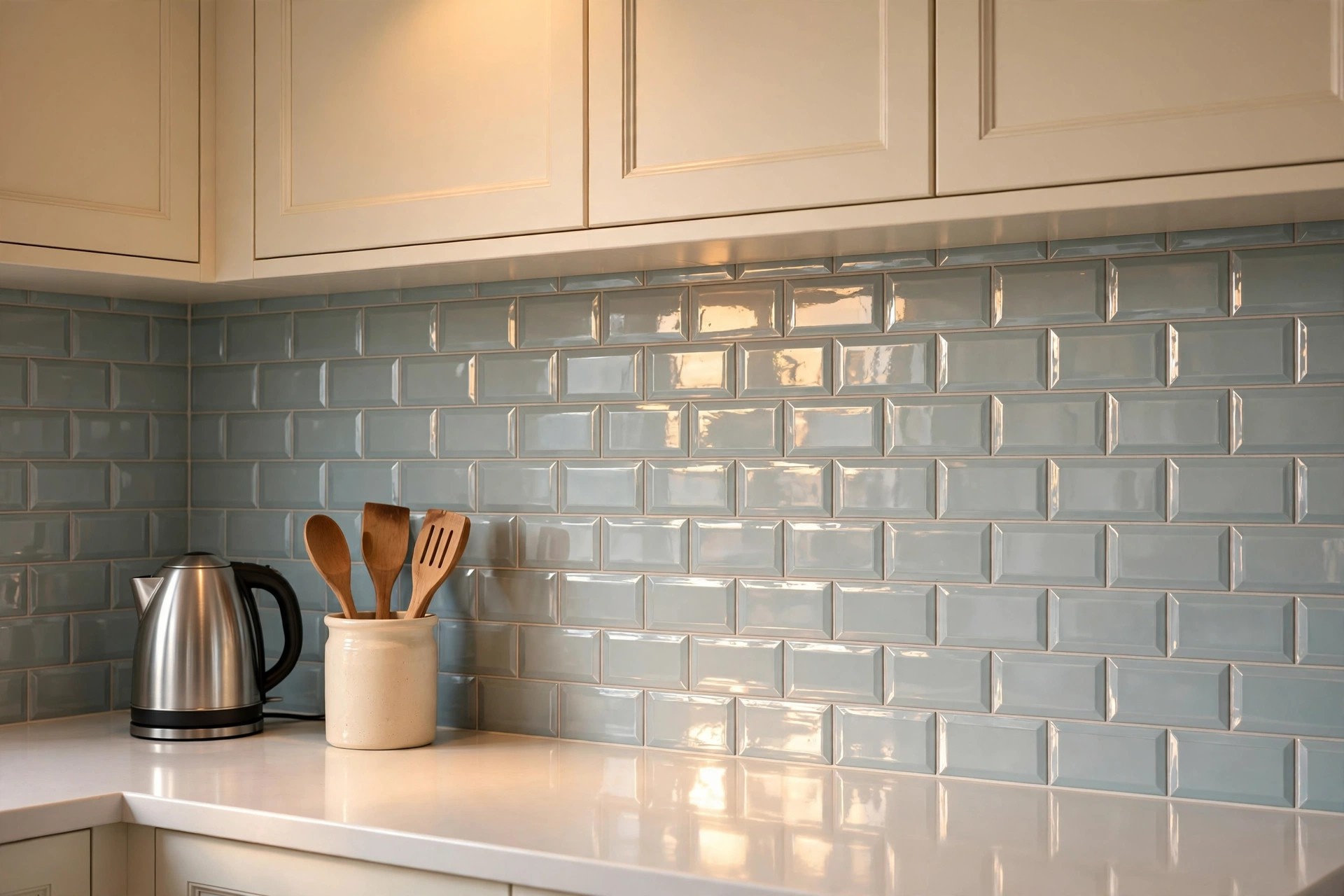
Watch a glossy tile backsplash on a sunny morning and you will see it working like a soft mirror. The same trick works at night. Gloss catches the ceiling light and skims it across the counter where you actually stand and cook.
Pale colors do the heavy lifting. White, cream and soft grey tiles bounce far more light than dark matte ones, and the sheen adds depth to a small wall. Peel-and-stick gloss panels give renters the same effect with no grout at all.
Color and finish choices like these shape the whole room, and our guide to small kitchen color ideas that make it look bigger walks through the best shades. Keep the counter itself pale too, so the light keeps moving.
Move Your Prep Zone Into the Light Pool
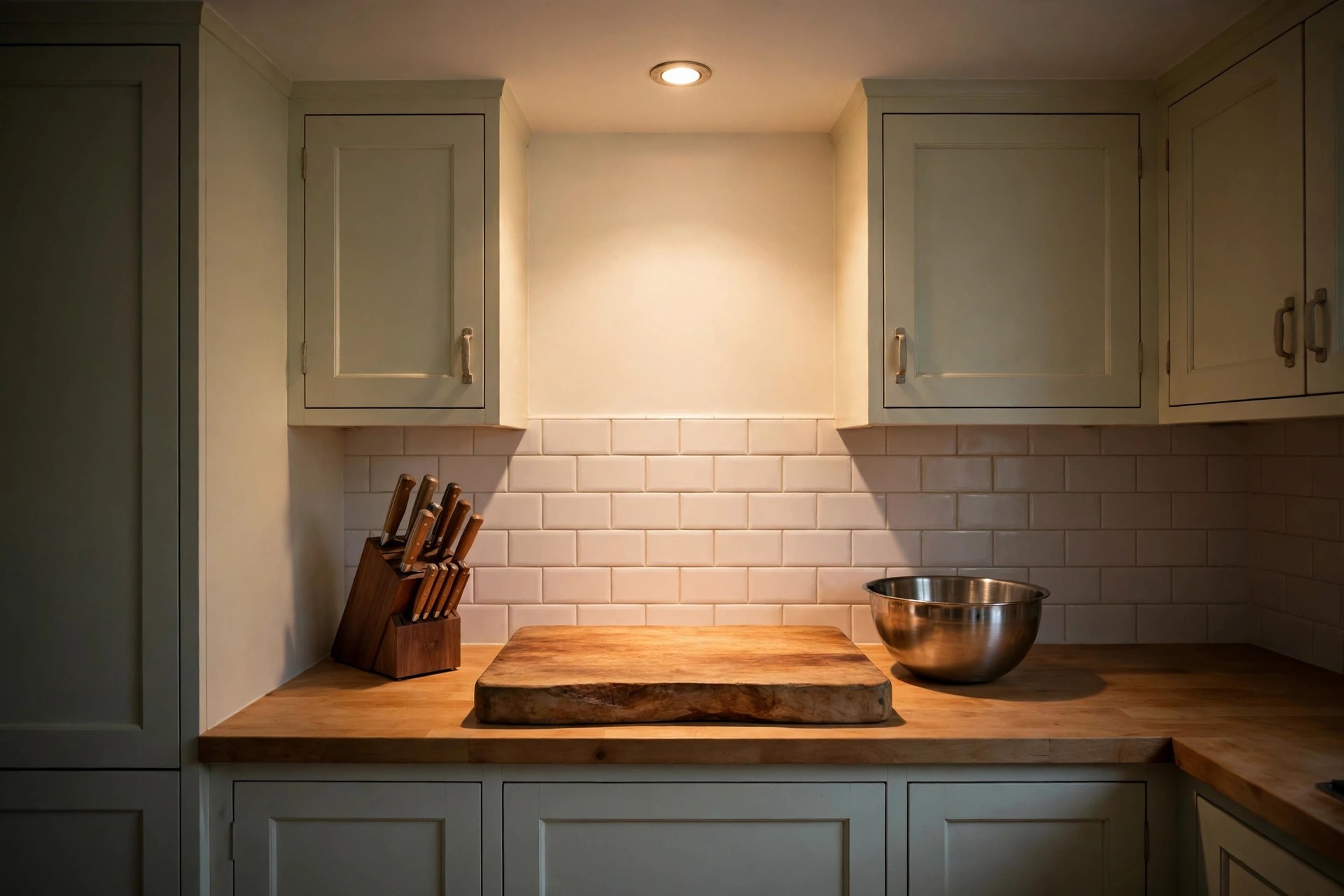
Every ceiling light has a bright pool under it and weaker edges. In many small kitchens the chopping board lives at the dim end of the counter while the bright middle holds a fruit bowl and a stack of post. The layout fights the light.
Swap them. Put the board, knife block and mixing bowl in the middle stretch under the fitting, and move pretty but passive things to the ends. Keep tall items like cereal boxes and big bottles out of the pool, since they throw long shadows.
Cooking speeds up when the work sits where the light lands. If your sink sits under the fitting instead, make the sink your wash and prep hub and dry dishes there. It costs nothing, and the change shows the first evening.
Sheers at the Window Let Daylight Back Up Your Light

Heavy curtains feel cozy, but in a small kitchen they steal half the daylight and force the ceiling light to work alone all day. The myth is that a dressed window needs thick fabric. A sheer gives privacy and keeps almost all the light.
Hang a white or cream sheer, a cafe curtain, or a pale roller blind that sits inside the frame. Clean glass matters too, since a film of cooking grease dulls the light before it enters. Herbs on the sill love the extra brightness.
For more window help, see our small kitchen window ideas and the styling notes in kitchen window decor ideas. Kitchens planned around the glass, like those in small kitchen ideas with window, show how far daylight can carry a small room.
Start where the payback is biggest: a brighter bulb, a shade that lets the light out, and one battery bar over the board. Those three moves will change how your kitchen feels on a dark evening, and none of them touch a wire.
From there, layer at your own pace. Add the cabinet strips when the evenings draw in, a lamp when a corner still sulks, and sheers when spring comes. Knowing how to light a small kitchen with one ceiling light is mostly this habit of layering.
Save this page to your small kitchen board for later, and work through one fix each week. By the end of the month, the single bulb will feel like plenty.


