

15 Modern Beige and White Bathroom Ideas for a Cozy Bathroom
A beige and white bathroom can feel modern without becoming cold or overly minimal. The trick is to use warm beige to soften the crispness of white, then bring in clean shapes, simple fixtures, natural textures, and uncluttered surfaces. Instead of filling the room with decoration, let the materials do most of the work.
Modern beige and white bathroom ideas are especially useful when you want a space that feels bright but still comfortable. Beige stone, warm tile, pale wood, white sanitaryware, and soft lighting can work together without making the room look flat.
You do not need a large bathroom to use this palette. A compact room can benefit from the same approach by keeping the fixtures streamlined and using lighter surfaces to reflect available light. From floating vanities to large-format tiles, these ideas offer practical ways to create a modern bathroom that feels warm, clean, and easy to maintain.
This post contains affiliate links. If you buy through them, we may earn a small commission at no extra cost to you. See our Affiliate Disclosure.
1. Use Large Beige Tiles With Crisp White Fixtures
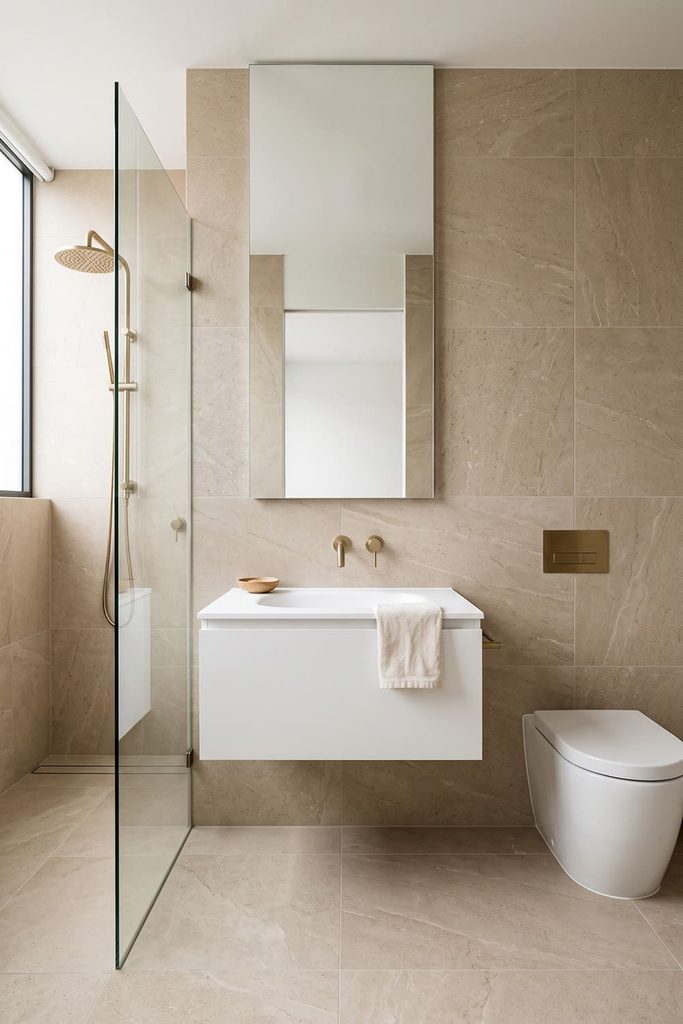
Large beige tiles can give a modern bathroom a calm foundation while white fixtures provide clean contrast. Choose tiles with a subtle stone texture rather than a heavily patterned design.
Use the beige tile across the floor and one main wall to create continuity. A white wall-mounted toilet, floating vanity, and white basin can then stand out without looking disconnected.
Keep the grout lines subtle and the accessories limited. A simple mirror and one or two warm-toned accessories are enough.
This combination works particularly well in smaller bathrooms because larger tiles create fewer visual breaks. If the room has limited natural light, choose a pale beige with a warm undertone so the space stays bright.
2. Install a Floating White Vanity Against Beige Walls
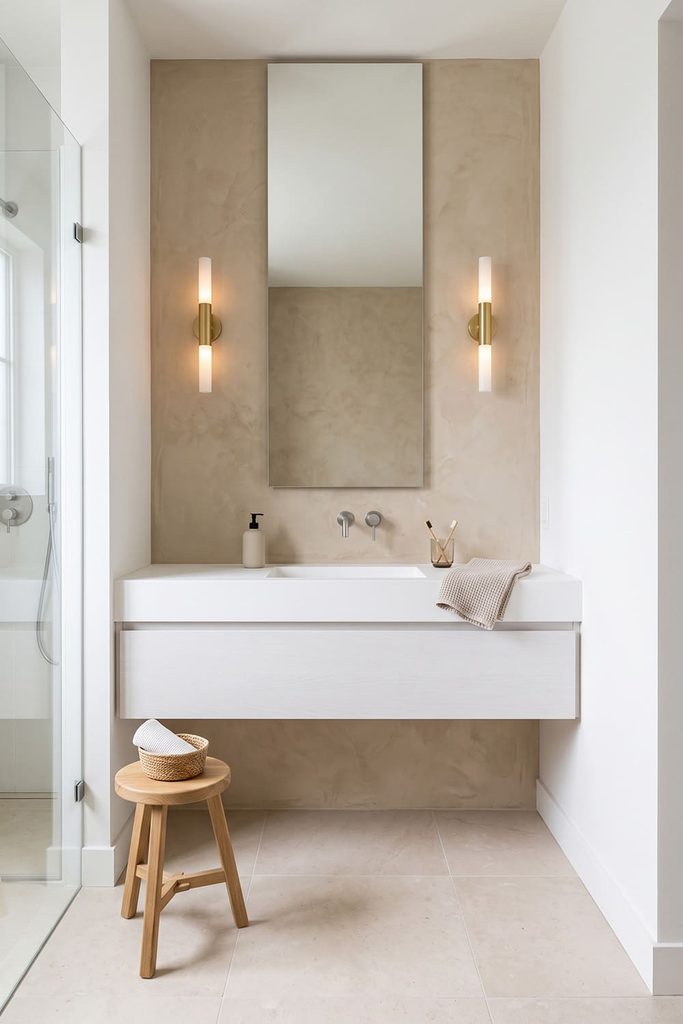
A floating white vanity creates a clean modern focal point against a warm beige wall. The gap underneath keeps the floor visible, making the cabinet feel lighter and less bulky.
Choose a flat-front design with integrated handles or push-open drawers for a streamlined appearance. A white countertop and sink can continue the same visual line.
For warmth, add a wood-framed mirror or a small natural wood stool nearby. Keep the counter mostly clear so the simple geometry remains visible.
A warm beige wall behind the vanity prevents the white cabinet from disappearing into the room. Soft lighting around the mirror can further emphasize the contrast between the two colors. This setup works especially well in narrow bathrooms where bulky furniture can make the space feel crowded.
3. Create a Beige Stone Shower With White Walls

Use beige stone-look tile inside the shower while keeping the surrounding walls white. The change in material defines the shower area without needing a heavy frame or decorative border.
Choose a matte beige tile with subtle variation for a natural appearance. Large-format panels or tiles can keep the shower looking uncluttered.
Pair the beige shower with a simple white vanity and frameless glass enclosure. Brushed metal fixtures can provide a small amount of contrast while keeping the palette restrained.
Add a recessed shower niche with the same beige material for shampoo and soap storage. This keeps everyday items organized and avoids adding extra shelves to the wall. The result is modern, practical, and visually calm.
4. Pair White Marble With Warm Beige Cabinetry

White marble can bring brightness and movement to a beige bathroom. Choose a vanity cabinet in warm beige or light taupe and pair it with a white marble countertop.
The marble’s subtle veins can connect the white surface to the warmer cabinet below. If the stone contains beige or grey details, repeat one of those tones in the flooring or wall tile. Keep the cabinet design simple. Flat fronts or slim recessed handles allow the countertop to remain the main feature.
A large mirror above the vanity can reflect the marble and make the room feel more open. Use warm lighting rather than very cool bulbs so the beige cabinetry retains its natural warmth.
5. Add a Beige Fluted Wall Behind the Vanity

Fluted wall panels can give a modern bathroom more texture without adding a complicated pattern. Use a pale beige finish behind a simple white vanity to create contrast.
The vertical grooves add shadows that change slightly as the light moves across the wall. This gives the neutral palette more depth without introducing another color. Choose a mirror with a simple rounded shape to soften the straight lines of the fluted surface. Keep the vanity countertop mostly empty.
If using real wood or moisture-sensitive materials, make sure the product is suitable for bathroom conditions and has the proper protective finish. This idea is particularly effective when the rest of the bathroom is intentionally simple.
6. Choose a Beige Floating Vanity With a White Basin
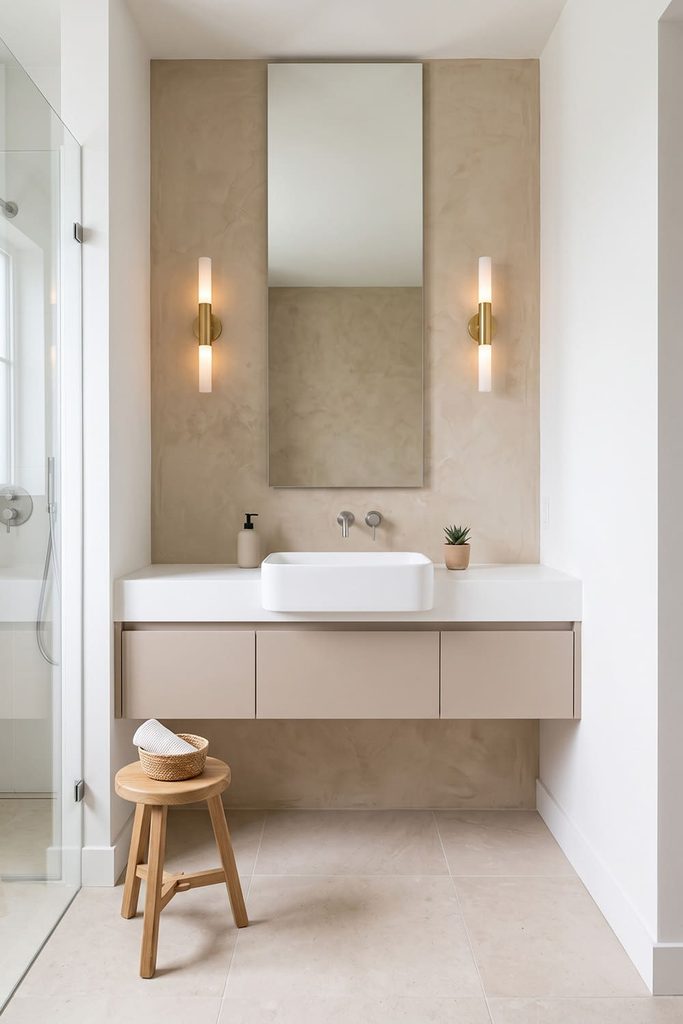
A beige floating vanity can become the warm focal point of a modern bathroom when paired with a bright white basin. Select a muted sand, mushroom, or warm greige finish rather than a highly yellow beige.
A floating installation keeps the floor visible beneath the cabinet and creates a cleaner silhouette. Choose drawers instead of open shelving if you want everyday toiletries hidden.
Pair the vanity with a large frameless mirror and a simple wall-mounted faucet. The combination keeps the wall visually open. Add a small ceramic tray or neutral soap dispenser to the countertop, but leave plenty of space. The clean surface is part of the modern look.
7. Use White Wall Panels With a Beige Floor
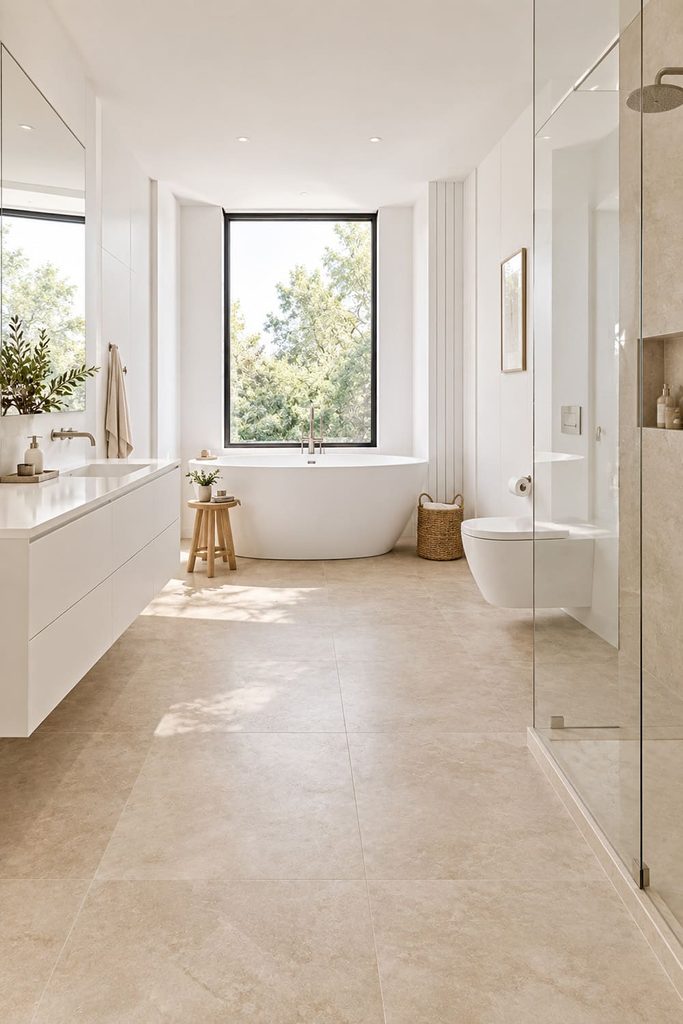
A beige floor can anchor an otherwise white bathroom without making the room feel heavy. Choose a warm stone-look floor with enough texture to add interest.
Keep the walls, vanity, bathtub, and major fixtures white. This creates a bright upper section while the beige floor gives the room a warmer foundation.
A wood stool or small natural basket can reinforce the earthy tone, but avoid adding too many brown accessories.
This approach is useful if you prefer a predominantly white bathroom but find all-white flooring too stark. The beige underfoot adds warmth without taking over the room. For safety, choose bathroom flooring with a surface appropriate for wet areas.
8. Combine Beige Microcement-Style Walls With White Fixtures

A smooth beige microcement-style finish can give a bathroom a modern architectural appearance. The continuous surface reduces visual breaks and creates a calm backdrop for white fixtures.
Use the beige finish across the walls and, where appropriate, a compatible flooring system. Pair it with a white wall-mounted toilet, white basin, and streamlined vanity. Keep hardware simple and avoid introducing several metal finishes.
The beauty of this approach comes from the uninterrupted surface, so unnecessary wall decoration can work against it. A large mirror and carefully positioned lighting may be all the room needs.
If using a true microcement system, choose one designed for wet areas and have it installed according to the manufacturer’s requirements.
9. Add Warm Beige Curtains to a White Bathroom
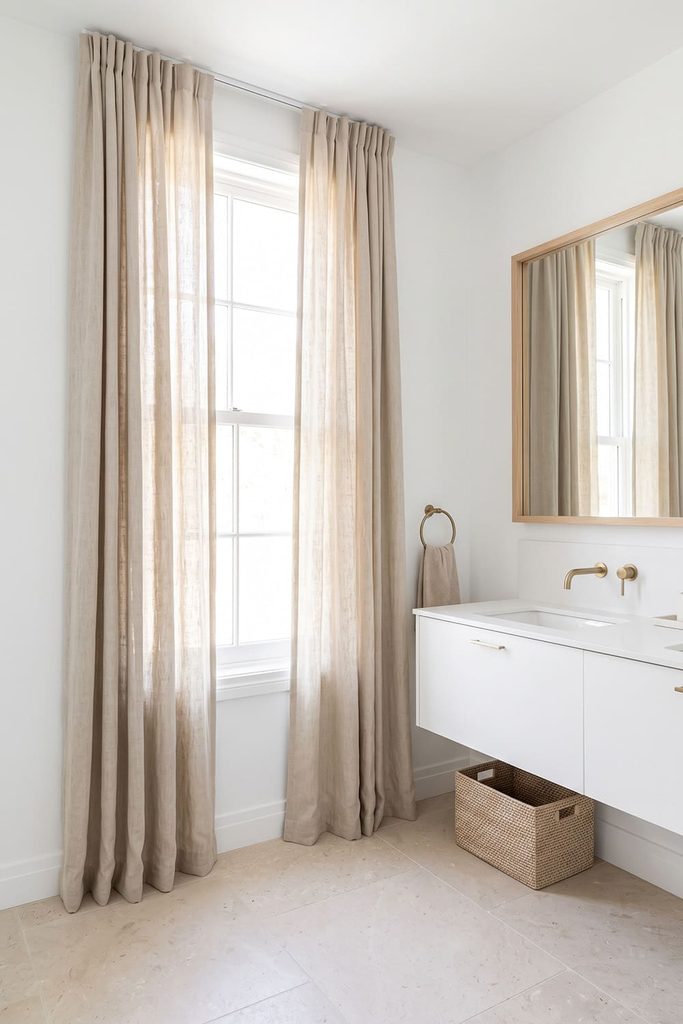
If your bathroom has a window, fabric can soften an otherwise hard combination of tile, glass, and ceramic. Choose a simple beige curtain or moisture-appropriate window treatment that complements the room’s warm tones.
Keep the fabric plain or lightly textured. Strong patterns can distract from the clean modern lines.
Pair the window treatment with white walls and a beige vanity or floor. Natural daylight will make the beige appear softer throughout the day.
Use a suitable bathroom-rated material where moisture exposure is high, and avoid placing ordinary fabric where it can remain damp. This small addition can make a modern bathroom feel more comfortable without adding permanent architectural changes.
10. Use a White Freestanding Tub Against Beige Tile

A white freestanding bathtub can stand out beautifully against a warm beige tiled wall. Choose a simple tub with a clean oval or rectangular profile for a contemporary appearance. Let the beige wall provide the background rather than adding a busy decorative feature around the tub.
A small wood stool can hold towels or bath accessories while bringing another warm texture into the room. Keep the area around the tub open so the silhouette remains visible.
If the bathroom is compact, choose a tub size that leaves comfortable circulation space around it. The modern look depends as much on breathing room as it does on the tub itself. Soft lighting can emphasize the contrast between the white fixture and beige surroundings.
11. Install Beige Floor-to-Ceiling Tile
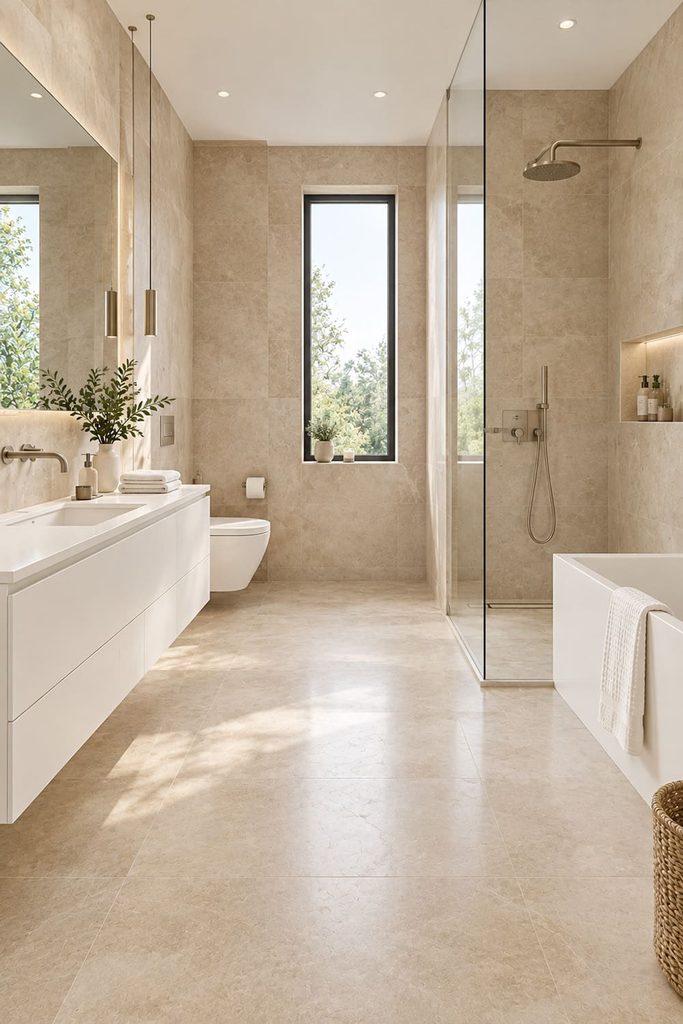
Using beige tile from floor to ceiling can create a strong sense of continuity in a modern bathroom. Choose one restrained tile design rather than mixing several patterns.
White fixtures then become clear focal points against the warm background. A floating vanity, wall-mounted toilet, and frameless shower can reinforce the clean architectural feel.
Use grout in a shade that works closely with the tile if you want the surface to appear more continuous. If you want the tile pattern to be more visible, choose a slightly contrasting grout. Add white towels and simple accessories to bring brightness into the room.
This approach works particularly well when the tile has subtle stone variation because the surface provides texture without requiring additional decoration.
12. Mix Beige Oak With White Cabinetry

Natural oak can act as a warm beige element in a white bathroom. Use it on a vanity drawer front, storage cabinet, mirror frame, or small bench. The wood grain brings natural variation to a palette that could otherwise feel too uniform.
Pair the oak with white walls and a white countertop. Keep the shapes modern with flat cabinet fronts and simple hardware. Avoid using several unrelated wood finishes. One consistent or closely related wood tone usually creates a cleaner result.
A beige stone floor can bridge the white and wood elements if you need another warm surface. Add a small plant or ceramic accessory for a final natural detail without overcrowding the room.
13. Create Contrast With Beige and White Wall Niches

Wall niches can provide useful storage while becoming part of the bathroom’s design. Use beige tile inside the niche and white tile around it, or reverse the arrangement depending on the existing palette.
The contrast makes the recessed space easier to notice without adding shelves that project into the room.
In a shower, use the niche for bottles and daily products. Near the vanity, a smaller niche can hold decorative items or folded hand towels. Keep the niche finish consistent with another surface in the bathroom so it does not look like a random accent.
A simple layout with clean edges works best for a modern bathroom. Avoid filling the niche with too many products because clutter can quickly undermine the streamlined look.
14. Add Black Details to a Beige and White Bathroom

A small amount of black can sharpen a beige and white bathroom while keeping the main palette warm and bright. Use it selectively on a mirror frame, faucet, shower hardware, or light fixture.
The black details create crisp points of contrast against the pale surfaces. Keep the number of black elements limited so they support the beige and white palette rather than becoming the main theme.
Choose a beige wall or floor with subtle texture, then use white fixtures to keep the room bright.
For a softer modern look, combine black hardware with natural wood. The wood helps bridge the strong contrast and keeps the room from feeling overly stark. This approach suits contemporary bathrooms with clean lines and simple architectural forms.
15. Layer Soft Beige, Warm White, and Natural Stone

A modern bathroom does not need to use only one beige and one white. Layer several close shades to create depth while keeping the palette controlled.
Start with warm white fixtures and a soft beige vanity. Add pale natural stone or stone-look tile with subtle variations in cream, sand, and taupe.
Use texture rather than extra colors to create interest. A woven basket, stone tray, wood stool, or textured towel can provide small changes in surface without disrupting the palette. Keep the lighting warm and balanced, especially around the vanity. Avoid filling every available surface with accessories.
The result is a bathroom that feels modern through its clean shapes while remaining warm through its materials and layered neutral tones.
Conclusion
Beige and white can create a modern bathroom that feels bright without becoming cold. The strongest designs use the two colors as a foundation, then add depth through stone, wood, tile texture, simple hardware, and clean-lined fixtures.
You can keep the bathroom mostly white with a beige floor, make a warm beige vanity the focal point, or use beige throughout the walls and let white fixtures provide contrast. The right choice depends on your room size, natural light, and existing finishes.


