
15 Beige and White Bathroom Tile Ideas for a Timeless, Elevated Look
Of all the decisions you’ll make in a bathroom, tile is the one you can’t just swap out on a whim. Paint can be redone in an afternoon, but tile is permanent, expensive, and unforgiving if you get it wrong. That’s exactly why beige and white have quietly become the safest, smartest choice for anyone who wants a bathroom that still looks incredible ten years from now.
But not all beige and white tile looks the same; the pattern, shape, and placement you choose can be the difference between a bathroom that feels builder-grade and one that feels custom. Here are 15 ideas to get it right.
1. White Subway Tile with Beige Grout

White subway tile is a bathroom classic, but swapping the usual white grout for a warm beige tone gives it a completely different, more modern feel. The beige grout lines create soft, visible definition between each tile, adding subtle warmth without straying from the timeless subway shape. This idea works beautifully on a shower surround or full accent wall, and it photographs especially well thanks to the gentle contrast between the tile and grout.
2. Beige Herringbone Floor Tile
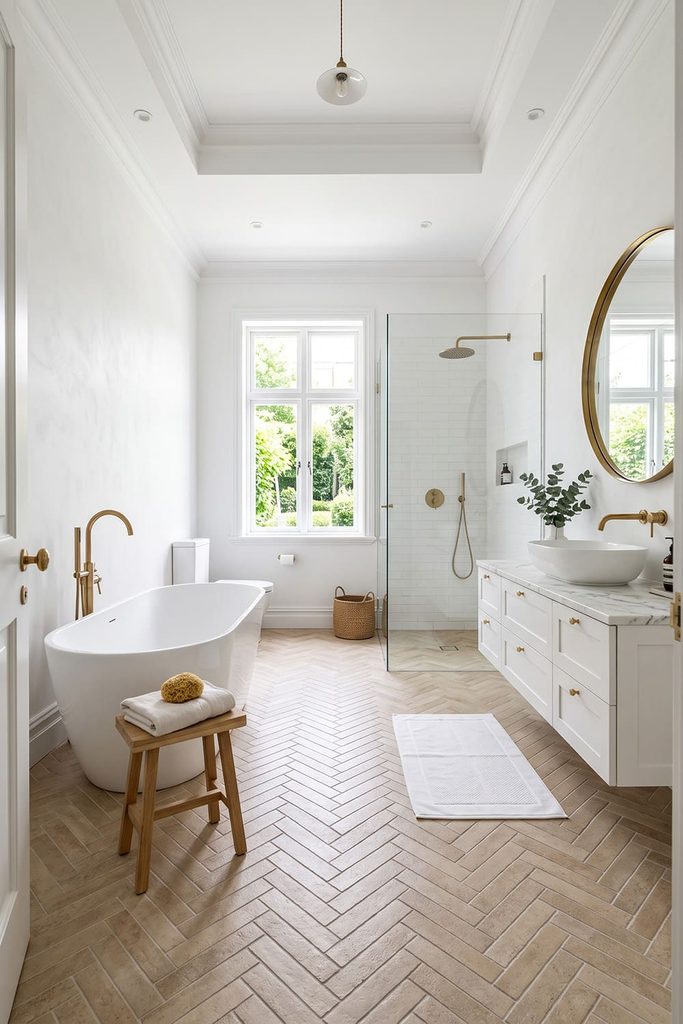
A herringbone pattern in warm beige tile adds movement and texture to a bathroom floor without introducing any extra color. The zigzag layout catches the light differently than a standard grid, giving even a small bathroom a more custom, high-end feel. This idea works especially well paired with plain white walls, letting the floor become the room’s main design statement. It’s a popular choice in modern farmhouse and transitional-style bathrooms.
3. White Zellige Tile with Beige Accents

Zellige tile, with its slightly irregular, handmade look, adds texture and depth even in a simple white colorway. Pair a white zellige shower wall with beige accents through the vanity, towels, or trim for a bathroom that feels artisanal and collected. The subtle variation in each tile catches light beautifully, giving the space a lived-in, imperfect charm that mass-produced tile simply can’t replicate.
4. Beige and White Checkerboard Floor

A checkerboard floor in beige and white tile brings a bold, graphic foundation to the bathroom while staying within a soft, neutral palette. This pattern works in both large and small checkerboard scales, depending on how dramatic you want the effect. Pair it with simple white walls and fixtures so the floor remains the clear star of the room. This idea suits both vintage-inspired and modern bathroom styles equally well.
5. Large-Format Beige Porcelain Tile

Large-format tile in a warm beige tone minimizes grout lines, creating a clean, seamless look that makes a small bathroom feel more spacious. Porcelain in particular is durable and easy to maintain, making it a practical choice for a high-traffic room. This idea works especially well when the same tile is used on both the floor and shower walls, creating a continuous, flowing look throughout the entire space.
6. White Hexagon Tile with a Beige Border

White hexagon floor tile is a bathroom favorite, and adding a beige border or trim line around the room’s perimeter gives it a custom, finished look. This small detail frames the space like a rug would, adding definition without any extra color. This idea works especially well in classic or vintage-inspired bathrooms, where small, detailed tile work has always been part of the design tradition.
7. Beige Marble-Look Tile for the Shower

Marble-look porcelain tile in soft beige tones brings a luxurious feel to the shower without the higher cost and maintenance of real stone. The subtle veining adds visual interest while staying within a calm, neutral palette. Pair with white fixtures and hardware for a clean, spa-like contrast. This idea is especially popular for primary bathrooms where a slightly elevated, hotel-like feeling is the overall goal.
8. White Tile with a Beige Accent Stripe

Adding a single beige accent stripe or border row within a larger white tile installation is a simple way to introduce color without committing to a full beige wall or floor. This idea works well in a shower surround, placed at eye level or as a border near the ceiling. It’s a subtle, designer-style detail that elevates a simple white tile job into something more considered.
9. Beige Terracotta-Look Tile

Terracotta-look tile in warm beige and clay tones brings an earthy, Mediterranean feel to a bathroom floor. Unlike real terracotta, tile versions are more durable and easier to maintain in a wet environment. Pair with white walls and simple fixtures to let the floor’s warmth stand out. This idea works especially well in bathrooms that want a relaxed, sun-washed, vacation-like atmosphere.
10. White Tile Halfway Up the Wall with Beige Above

A classic wainscoting-style layout, with white tile covering the lower half of the wall and beige paint or a different beige tile above, adds visual interest and a traditional, tailored look. This idea works well in powder rooms or smaller bathrooms, since the horizontal break can help the room feel more proportioned. Add a simple trim line to define where the tile ends and the wall color begins.
11. Beige Pebble Tile for the Shower Floor

Pebble tile in warm beige tones adds natural texture underfoot in the shower, along with a bit of extra traction. The organic, rounded shapes contrast nicely against straight-edged white wall tile above. This idea brings a spa-like, natural element into the bathroom, especially when paired with simple, minimal fixtures. It’s a small design choice that makes a noticeable difference every time you step into the shower.
12. White Tile with a Beige Mosaic Accent Wall

A single mosaic accent wall in beige tones, surrounded by simple white tile elsewhere, creates a focal point without overwhelming the whole bathroom. Choose a mosaic with some texture or subtle pattern for the most visual interest. This idea works especially well behind a freestanding tub or as a shower niche backdrop, giving the room a clear, intentional design moment.
13. Beige Basketweave Tile
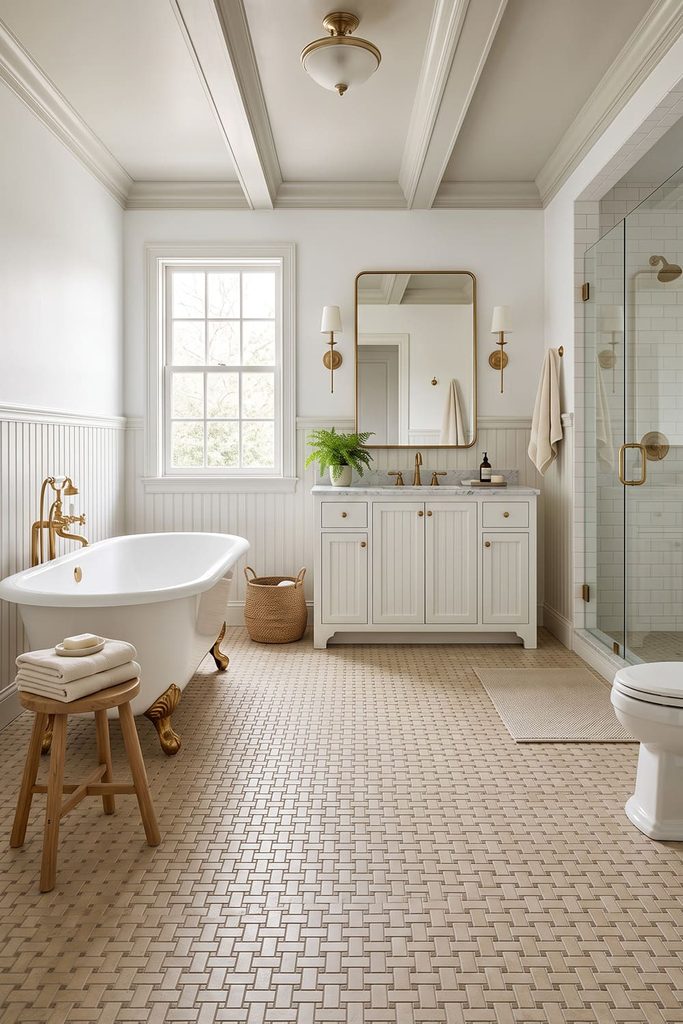
A basketweave pattern in beige tile adds subtle texture and movement to a floor or accent wall, without requiring any bold colors or busy patterns. This classic tile shape has a timeless, slightly vintage feel that works well in both traditional and transitional bathrooms. Pair with white fixtures and beadboard for a fresh, cottage-inspired look, or keep the rest of the room simple and modern.
14. White Tile with Beige Grout Lines Throughout

Choosing beige grout for white tile throughout the entire bathroom, not just one wall, creates a cohesive, warm undertone across the whole space. This idea is a simple way to soften an all-white tile job without adding any additional color or pattern. It’s especially useful in bathrooms with a lot of white tile already installed, since regrouting is a far smaller project than replacing the tile itself.
15. Beige and White Vertical Stack Tile Pattern

A vertical stack pattern, where rectangular tiles are laid straight up and down rather than in a traditional brick offset, creates a clean, modern look that also draws the eye upward. Mixing beige and white tiles in this layout adds subtle variation while keeping the pattern simple. This idea works especially well in a shower, where the vertical lines can make the ceiling feel higher than it actually is.
How to Choose Beige and White Bathroom Tile?
Choosing the right tile combination comes down to balancing pattern, scale, and undertone so the final result feels intentional rather than accidental.
Start with your room size. Large-format tile with minimal grout lines makes a small bathroom feel more spacious, while smaller tile shapes, like hexagons or mosaics, work well for adding detail in a larger space without overwhelming it.
Pay attention to undertones. Warmer beige tiles pair best with warm white tones, while cooler, grayer beiges look best alongside crisper, cooler whites. Bringing home physical samples and viewing them in your actual bathroom lighting is the best way to avoid a mismatch.
Grout color matters more than people expect. Beige grout with white tile softens the overall look, while white grout keeps things crisp and graphic. Consider how much maintenance you’re willing to do too, since lighter grout shows dirt more easily over time.
Think about where pattern makes the most sense. Bold patterns like checkerboard or herringbone work beautifully on floors, while simpler layouts often look best on walls so the room doesn’t feel too busy overall.
Finally, order samples before committing to a full order. Tile can look different under store lighting versus your own bathroom’s natural and artificial light, so testing at home always pays off in the end.
Final Thoughts
Tile might be a permanent decision, but that’s exactly why it’s worth taking the time to get it right. Beige and white gives you a palette that’s flexible enough to feel modern today and just as beautiful years from now, as long as you choose the pattern and placement thoughtfully.
Whether you go bold with a checkerboard floor or keep it simple with subway tile and beige grout, this combination has a way of making a bathroom feel calm, considered, and quietly luxurious. Save your favorite ideas from this list before your next renovation; future you will thank you.
Frequently Asked Questions
Does beige and white tile work in a small bathroom?
Yes, and it often works especially well. Large-format tile in beige or white minimizes grout lines and creates a seamless look that helps a small bathroom feel more open. Keeping the palette light and consistent also helps the space feel larger overall.
Should I choose beige or white grout for white tile?
It depends on the look you want. White grout keeps a crisp, clean, graphic appearance, while beige grout softens the look and adds warmth. Beige grout also tends to show less dirt and grime over time compared to bright white grout.
Is beige and white bathroom tile too plain or boring?
Not if you play with pattern and texture. Herringbone, basketweave, checkerboard, and mosaic layouts all add visual interest to a beige and white palette, proving that neutral colors can still create a bold, memorable design when the layout is chosen thoughtfully.


