

15 Modern Beige Living Room Ideas for a Warm, Modern Home
There’s a reason beige refuses to go out of style. Long after the trend cycles that made way for stark white minimalism and moody dark academia interiors, beige keeps quietly winning over homeowners who want a space that feels warm the moment they walk in. It’s the color of sun-bleached linen, of sand at low tide, of the inside of a well-worn leather chair — and in a modern living room, it does something few other palettes can: it makes a space feel both calm and collected, lived-in yet elevated.
Modern beige living rooms aren’t about playing it safe. Done well, beige becomes a canvas for texture — nubby bouclé, raw linen, warm oak, brushed brass — so the room reads rich rather than flat. It also happens to be the most forgiving color for resale, for changing your mind about accent colors twice a year, and for living with kids, pets, and the general chaos of daily life. Below are 15 ways to bring this look into your own space, whether you’re working with a blank canvas or updating a room that already leans neutral.
1. Layered Beige-on-Beige Tonal Palette
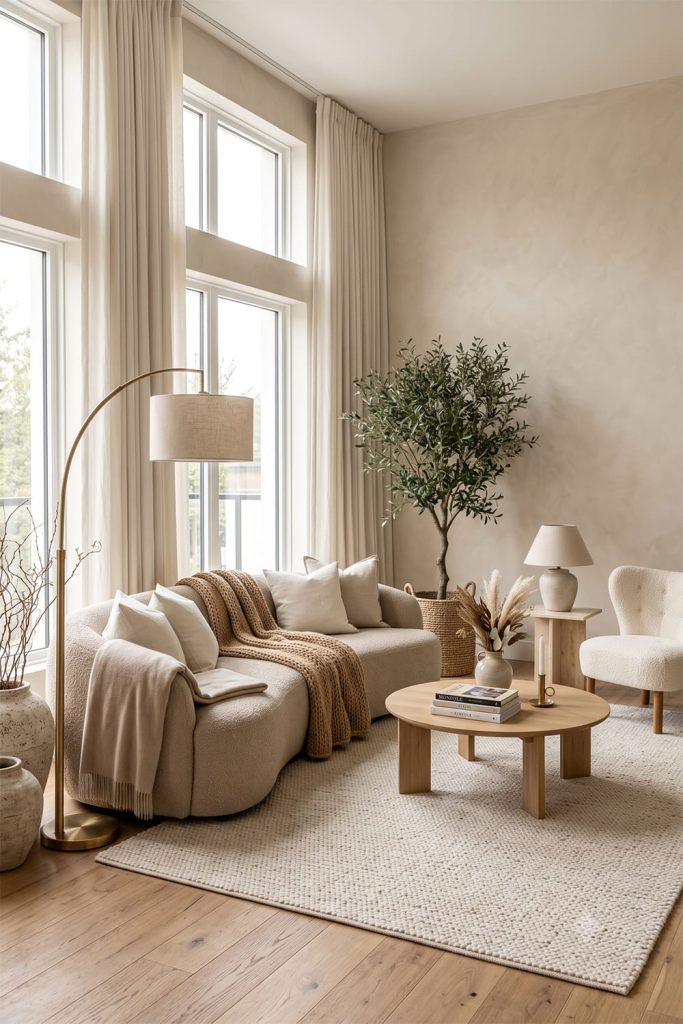
Instead of pairing beige with a contrasting accent color, stack multiple shades of beige on top of each other throughout the room. Try a warm oatmeal sofa, a slightly deeper camel throw blanket, and a bone-colored area rug underfoot, letting each piece sit close in tone but never identical. The trick is varying the undertones just enough that the eye can tell the layers apart without any single piece jumping out or fighting for attention. This tonal layering creates a genuine sense of depth and quiet sophistication that a single flat beige simply cannot achieve on its own, and it reads as intentional rather than accidental or incomplete.
2. Boucle Sofa as the Centerpiece
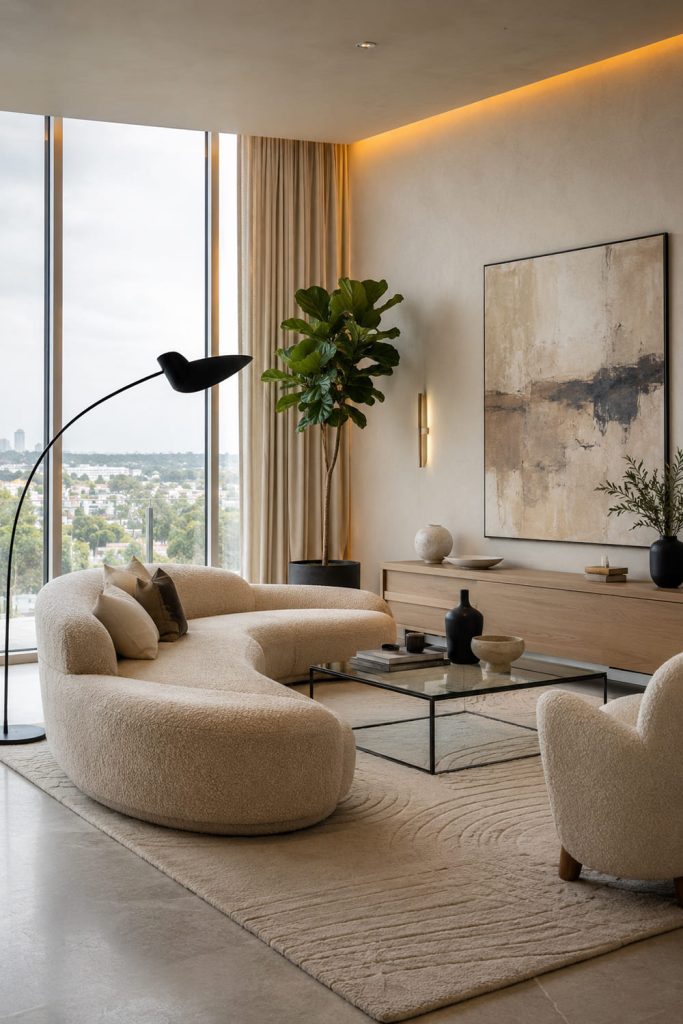
A bouclé sofa in warm beige has become the unofficial signature piece of the modern neutral living room, and for very good reason. The nubby, looped texture catches ambient light differently than smooth upholstery ever could, giving even a simple, understated silhouette real presence and character in the room. Pair it with sharp, architectural furniture around it, like a glass-top coffee table or a slim black metal floor lamp, so the inherent softness of the bouclé has something structured to visually play against. This contrast between texture and form is what keeps the whole seating area from feeling one-note or overly soft.
3. Warm Wood Tones for Contrast
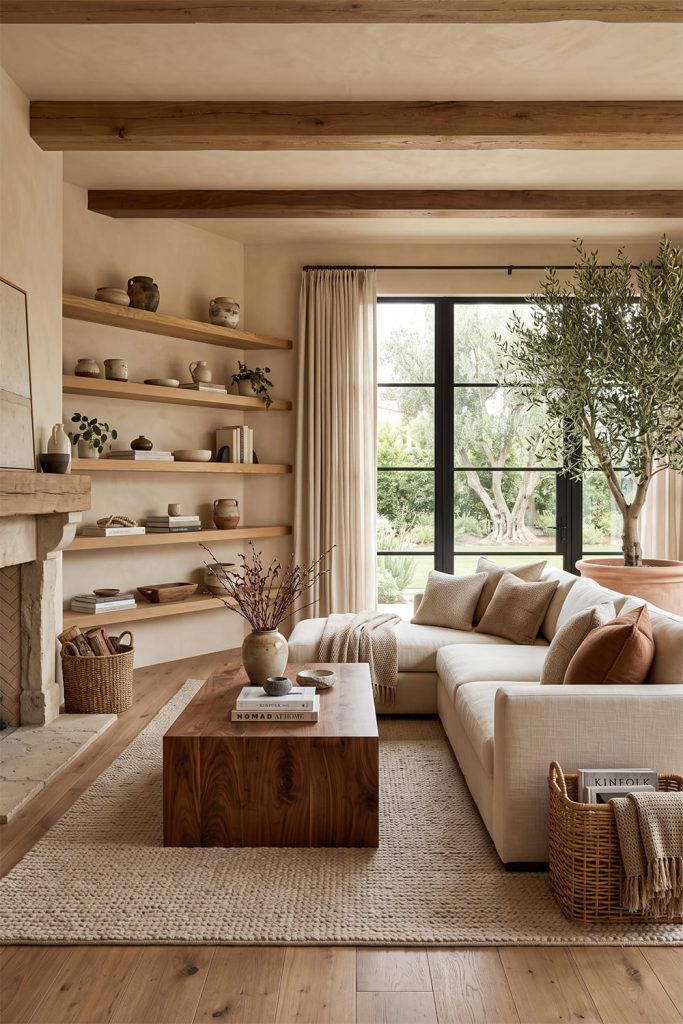
Beige walls and upholstered furniture need an anchor, and nothing does that job better than warm wood tones like oak, walnut, or reclaimed pine. A solid wood coffee table, an open shelving unit, or an exposed ceiling beam grounds the palette and keeps an all-beige room from feeling washed out or shapeless. Aim for wood pieces with visible, natural grain rather than a heavily painted or lacquered finish, since the material’s small imperfections add exactly the kind of organic texture this design style depends on. Even one or two wood accents can transform a flat room into a layered, grounded space.
4. Linen Drapery for Softness
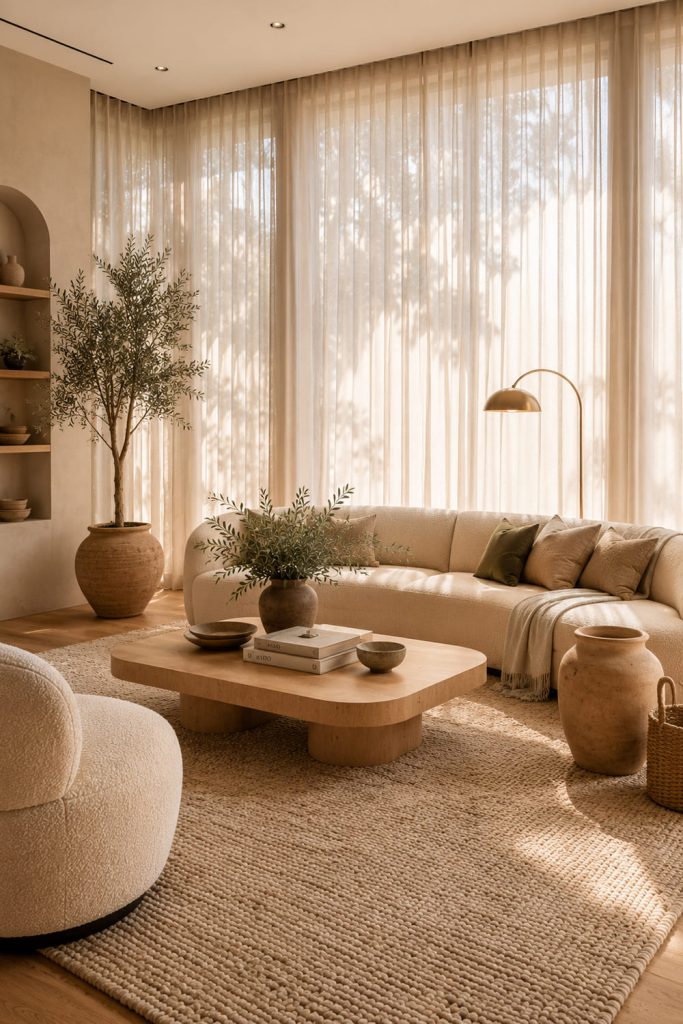
Heavy blackout curtains certainly have their place in a bedroom, but a beige living room calls for the lighter, softer texture of linen instead. Its slightly rumpled, imperfect weave filters incoming natural light into something soft and diffused rather than harsh or direct, while the fabric’s subtle slub adds visual interest to what might otherwise be a plain, uninterrupted wall of color. Floor-length linen panels chosen in a shade close to the wall color create a seamless, airy backdrop for the rest of the room. The result is a window treatment that feels breezy, relaxed, and effortlessly elevated.
5. Sculptural Beige Accent Chairs
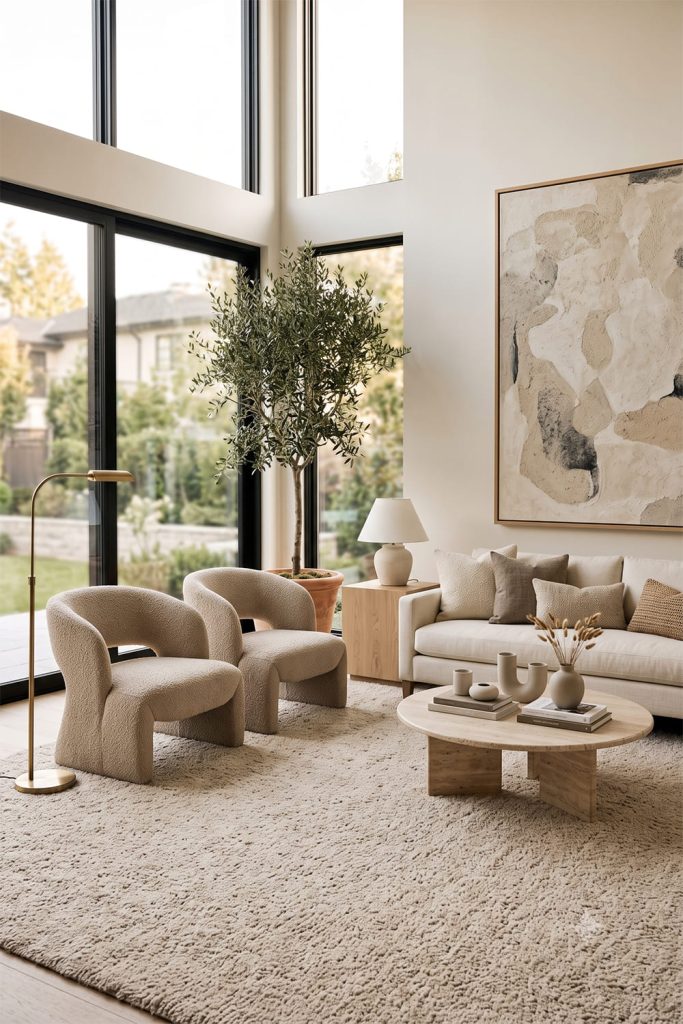
A single statement chair in a curved or sculptural silhouette, like a bouclé swivel chair or a curved-back accent chair, brings genuine personality into the room without stepping outside the established palette. Because the chair remains in the same tonal family as everything surrounding it, its distinctive shape gets to do all of the visual talking on its own. This is one of the easiest ways to introduce a truly design-forward moment into an otherwise understated, quiet space. Place it near a window or in an empty corner where its silhouette can be appreciated from multiple angles in the room.
6. Beige and Black Contrast Details
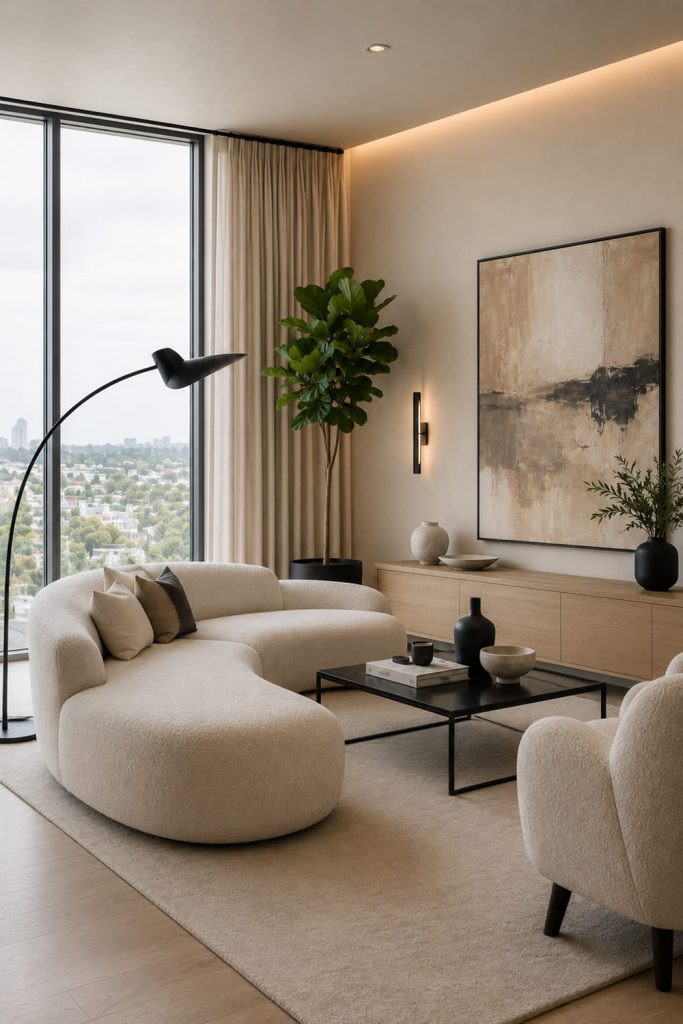
Beige doesn’t have to mean soft edges and quiet neutrality everywhere in the room. Adding small, deliberate doses of matte black, such as a slim picture frame, a pair of table lamps, or thin metal legs on a console table, gives the space real definition and structure. This subtle contrast keeps the room from feeling too monochromatic or sleepy, without disrupting the overall sense of calm the beige palette provides. The key is restraint: a few well-placed black accents read as curated and intentional, while too many can quickly overwhelm the softness that makes this style work.
7. Textured Jute or Wool Area Rug

A flat, low-pile rug can make an already-neutral beige room feel even flatter and less dynamic underfoot. Swap it out for a chunky jute weave or a nubby wool rug in a slightly different beige tone than the walls and furniture around it. The natural fiber texture adds real visual weight to the floor plane and helps tie together the other organic materials used throughout the space, like the wood furniture and linen drapery mentioned earlier. A textured rug like this becomes a quiet foundation that makes every other piece in the room feel more grounded and complete.
8. Curved Furniture Silhouettes

Modern beige living rooms increasingly lean into soft, rounded shapes, favoring curved sofas, round coffee tables, and arched mirrors over sharp right angles and hard edges. These organic curves naturally complement the inherent warmth of the beige palette and make the entire room feel more inviting, relaxed, and less rigid overall. This approach is especially effective in smaller living rooms, where curved furniture can also improve traffic flow and make tight corners feel less obstructive. Even swapping one rectangular piece, like a coffee table, for a rounded alternative can noticeably soften the whole room’s atmosphere.
9. Layered Lighting with Warm Bulbs
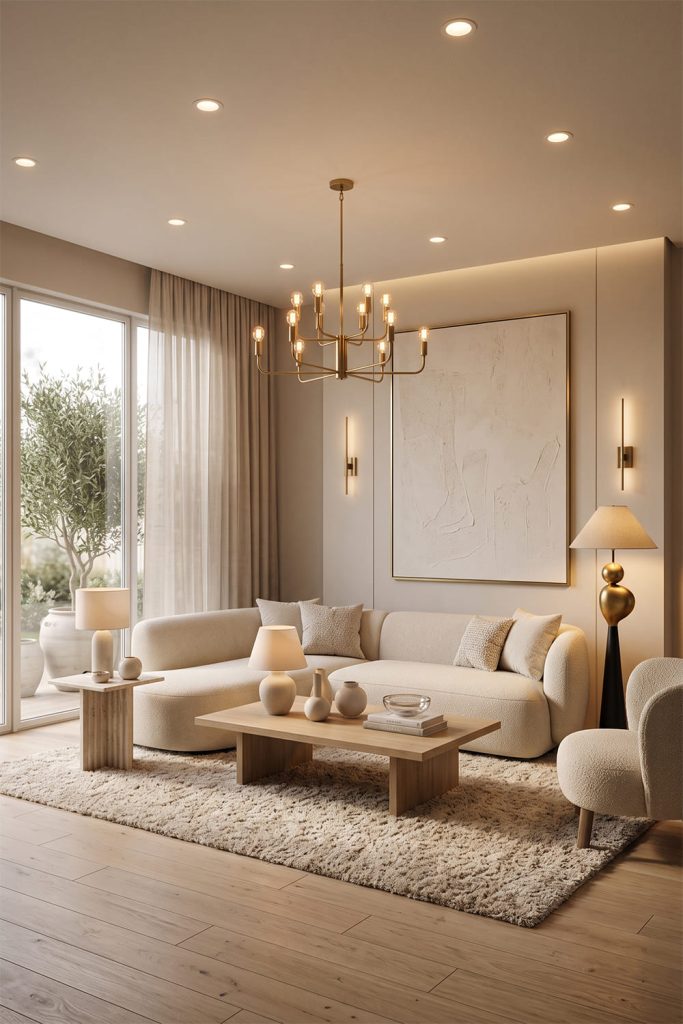
Beige rooms genuinely live or die by their lighting choices, so it pays to plan this carefully from the start. Skip relying on a single overhead fixture and instead layer in a floor lamp, a table lamp, and possibly wall sconces, all fitted consistently with warm-toned bulbs around 2700K. This approach keeps the beige from ever reading cold or gray once the sun goes down, and instead lets the whole palette glow with the amber warmth that makes this color feel so cozy in person. Good lighting is often the difference between a beige room that feels flat and one that feels rich.
10. Statement Beige Wall Paneling

Wall paneling isn’t reserved just for crisp white shaker-style walls anymore. Vertical slat paneling or fluted wood panels, painted or stained in a warm beige tone, add real architectural interest to an otherwise plain wall, especially when placed behind a sofa or television console. It’s a higher-effort update compared to most other ideas on this list, but it gives the room a genuinely custom, high-end look that flat paint alone simply cannot replicate. Once installed, paneling like this becomes the room’s clear focal point, and it pairs beautifully with the warm wood and metal tones used elsewhere.
11. Mixed Metals in Warm Tones
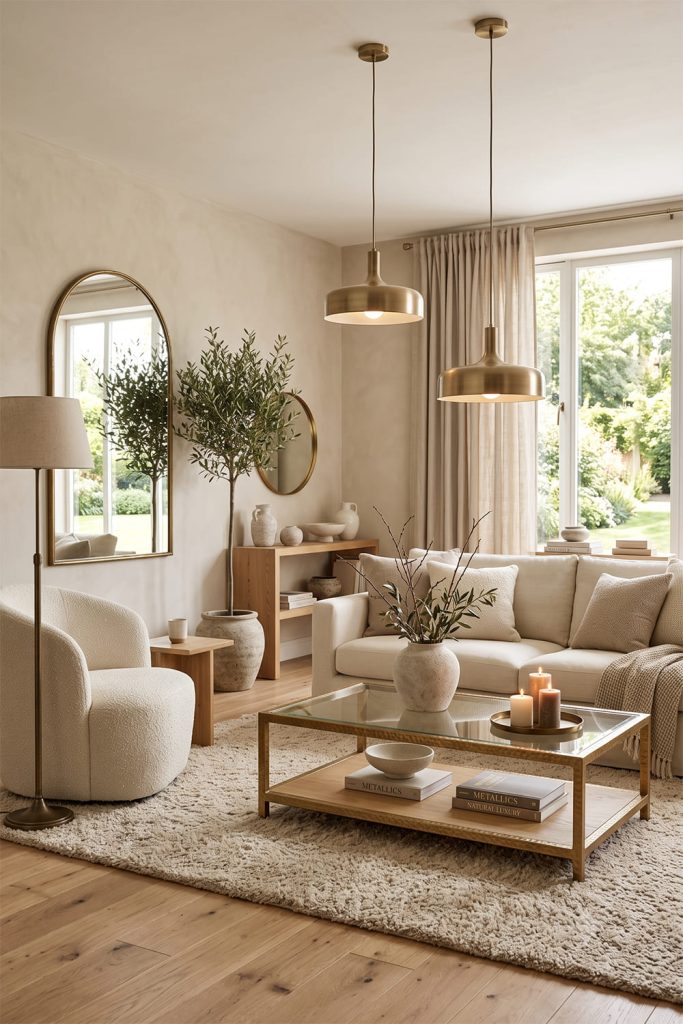
Instead of committing to a single metal finish throughout the room, mix brushed brass, aged bronze, and warm gold across your light fixtures, cabinet hardware, and smaller decor pieces. Against a beige backdrop, these warm metals pick up and reflect the ambient light beautifully, adding a subtle shimmer and richness without ever looking flashy or overdone. It’s best to stick with warm-toned metals rather than chrome or cool nickel, which can read as too clinical and jarring set against a soft beige palette. Even a few small metal accents can noticeably elevate the overall look of the room.
12. Oversized Art in Neutral Frames
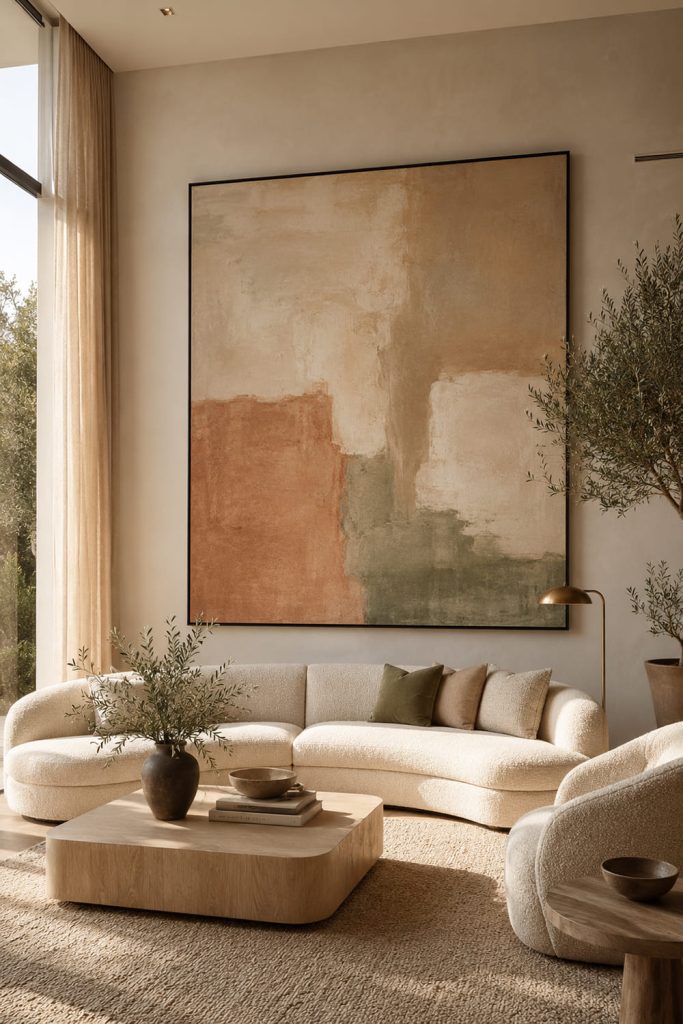
A large-scale piece of abstract or landscape art in muted, earthy tones like sand, terracotta, or sage gives a beige room a genuine focal point without introducing a jarring, out-of-place pop of color. Keep the frame itself in a natural wood or thin black finish so it doesn’t visually compete with the artwork inside it. Scale matters quite a bit here: one truly oversized piece almost always looks more intentional and polished than a cluttered gallery wall would in this particular style of room. Hang it above the sofa or console to anchor the entire seating arrangement.
13. Built-In Shelving Styled with Neutral Objects

Open shelving or a built-in bookcase styled thoughtfully with ceramics, woven baskets, and stacked books in muted, earthy tones adds both personality and practical storage without ever disrupting the room’s established palette. Resist the strong urge to fill every single shelf completely, since leaving some negative space between grouped objects is genuinely part of what makes styled shelving look intentional and curated rather than cluttered or accidental. Group items in odd numbers and vary their heights slightly for a more natural, collected-over-time look that still stays firmly within the beige and neutral color family throughout.
14. Indoor Plants for Organic Life

Green is really the one color that always works beautifully against beige, and living plants bring texture, life, and a welcome break in the palette that feels entirely natural rather than jarring or out of place. A large fiddle leaf fig or an olive tree positioned in the corner, paired with a woven or terracotta planter, softens the room’s harder edges and keeps an all-neutral space from feeling static or lifeless over time. Even a few smaller potted plants scattered across a shelf or side table can bring meaningful life into an otherwise very quiet, monochromatic room.
15. Beige Ceiling for a Cocooning Effect
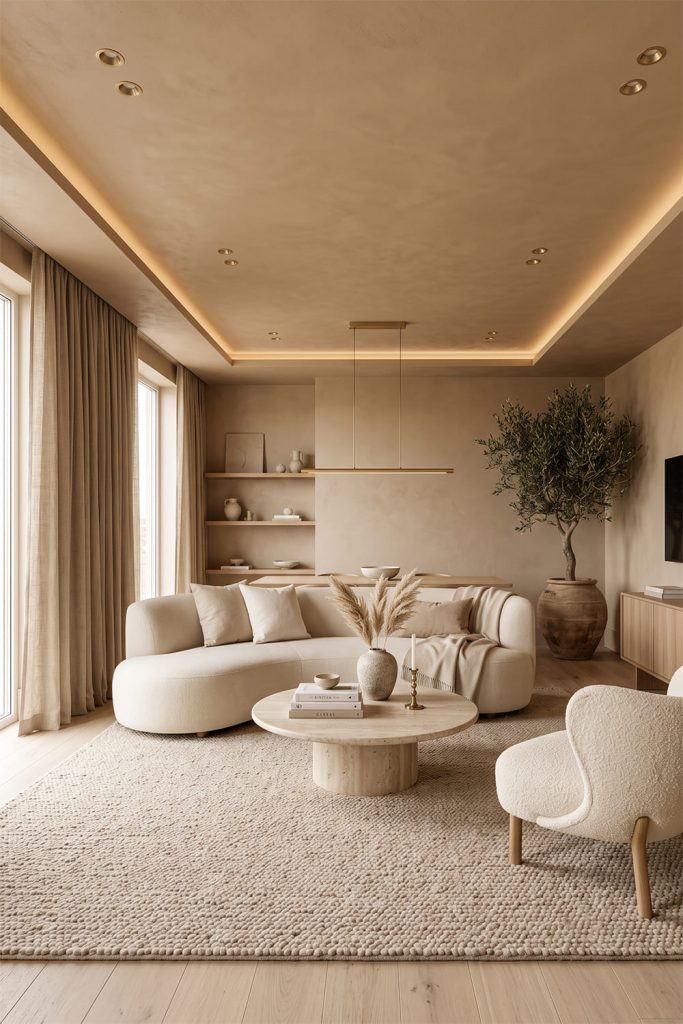
Painting the ceiling in the same warm beige used on the walls, sometimes called color drenching, makes the entire room feel enveloping and cohesive rather than boxed in by a stark white cap overhead. This particular technique works especially well in living rooms with lower ceilings or limited natural light, since it removes the harsh visual break between wall and ceiling and makes the whole space feel intentionally cozy instead of simply unfinished. It’s a bold move for some homeowners, but one that consistently pays off in photos and in the way the room actually feels to sit in.
Planning and Buying Guide
Start with your beige undertone. Beige isn’t one color — it can lean warm (yellow or peach undertones), cool (gray undertones), or pink. Before buying paint or furniture, hold swatches up in your room’s actual lighting at different times of day. Mixing warm and cool beiges in the same room is the most common mistake and the fastest way to make a space look muddy rather than cohesive.
Prioritize texture over pattern. In a beige living room, texture does the job pattern would do in a bolder palette. When shopping, run your hand over fabric samples and choose a mix: something nubby (bouclé, wool), something smooth (linen, leather), and something natural (jute, rattan, wood).
Budget for lighting early. Warm-toned bulbs and layered lighting fixtures aren’t a finishing touch here — they’re structural to how the whole color scheme reads. Set aside part of your budget for at least two lamps in addition to any overhead lighting.
Buy your largest pieces first. Sofa, rug, and any wall paneling or paint should be chosen before smaller decor. These set the tonal baseline everything else needs to match against.
Don’t skip contrast entirely. A room that’s 100% the same beige tone can feel flat in photos and in person. Build in at least one deeper or contrasting element — black hardware, a dark wood table, deep green plants — to keep the eye moving.
Final Thoughts
A modern beige living room works because it doesn’t rely on color to do the heavy lifting — texture, warmth, and thoughtful contrast do that instead. Whether you start small with a bouclé throw pillow and warm-bulb lamp or go all in with color-drenched walls and custom paneling, the ideas above can be mixed and matched to fit almost any budget or existing furniture collection. The result is a living room that feels timeless rather than trendy, and one that’s genuinely comfortable to spend time in.


