

15 North-Facing Balcony Ideas: Plants That Love Shade
Your balcony gets little direct sun, and every plant you bring home seems to sulk within a few weeks. The leaves stretch toward the light, the color fades, and the pots end up back inside.
That problem is common on a shaded side of a building, and it has a plain fix: pick plants that like low light. These north facing balcony ideas plants that love shade start with that one shift, then build a small space around it.
Shade does not mean a bare balcony. It means soft light, cooler air, and leaves that stay green longer. You can still have color, height, scent, and a chair worth sitting in.
Use the ideas below one at a time. Start with two or three pots, see how they settle, and add more only when watering feels easy. For broad planting help, see our small balcony garden ideas too.
1. Start With a Fern Corner in Tall Pots
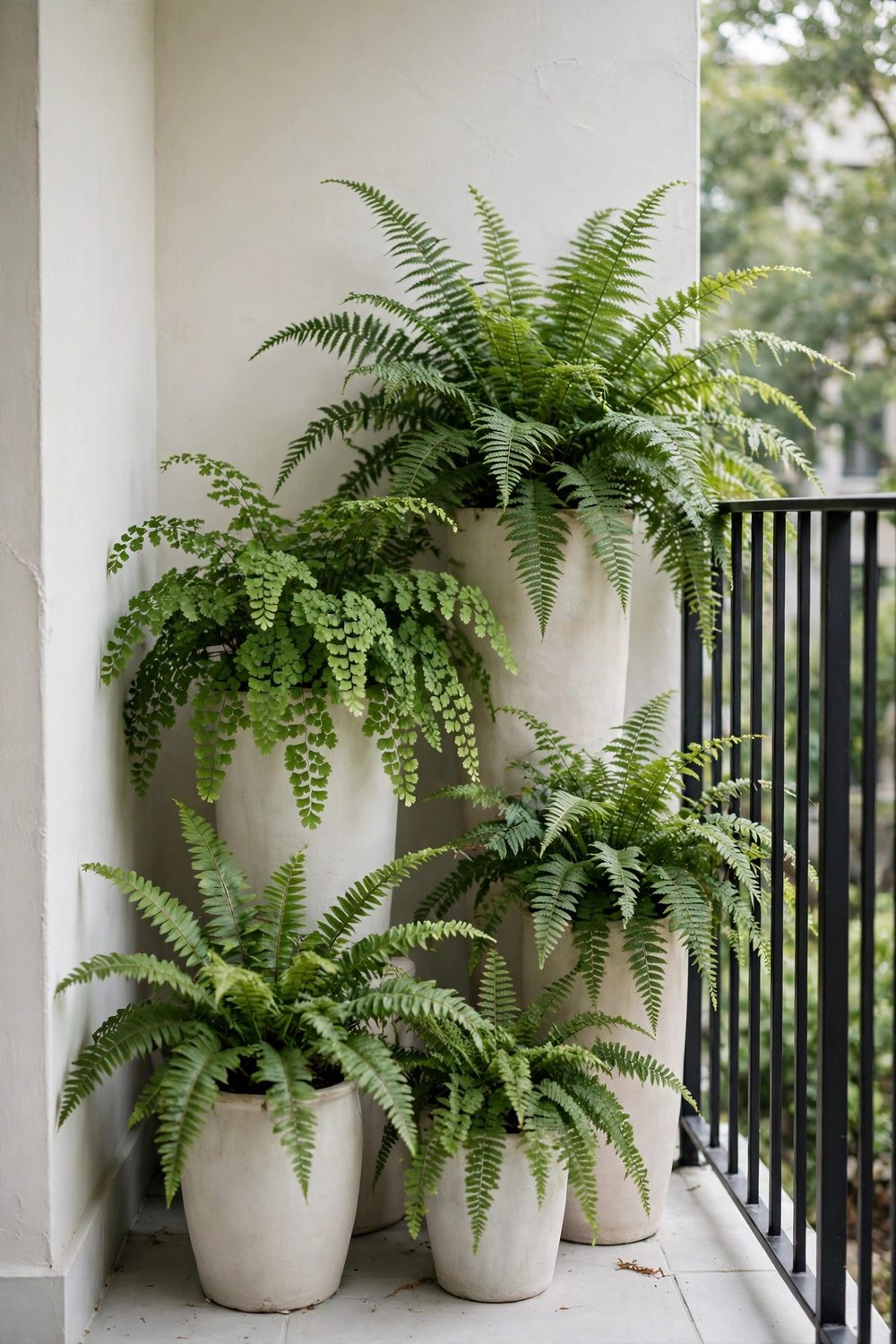
Most shaded balconies fail at the same point: sun loving plants are placed where the sun never lands. Ferns flip that problem around, since they like cool air and soft light.
Put two or three ferns in tall pots in the darkest corner, where the wall meets the railing. The tall pots lift the fronds to eye level, so the corner reads as a green screen rather than an empty gap.
Check the soil with a finger before you water, and keep a saucer under each pot. A damp saucer left on a wood deck can stain it, so lift the pot once a week and wipe below it.
2. Let Hostas Do the Heavy Lifting
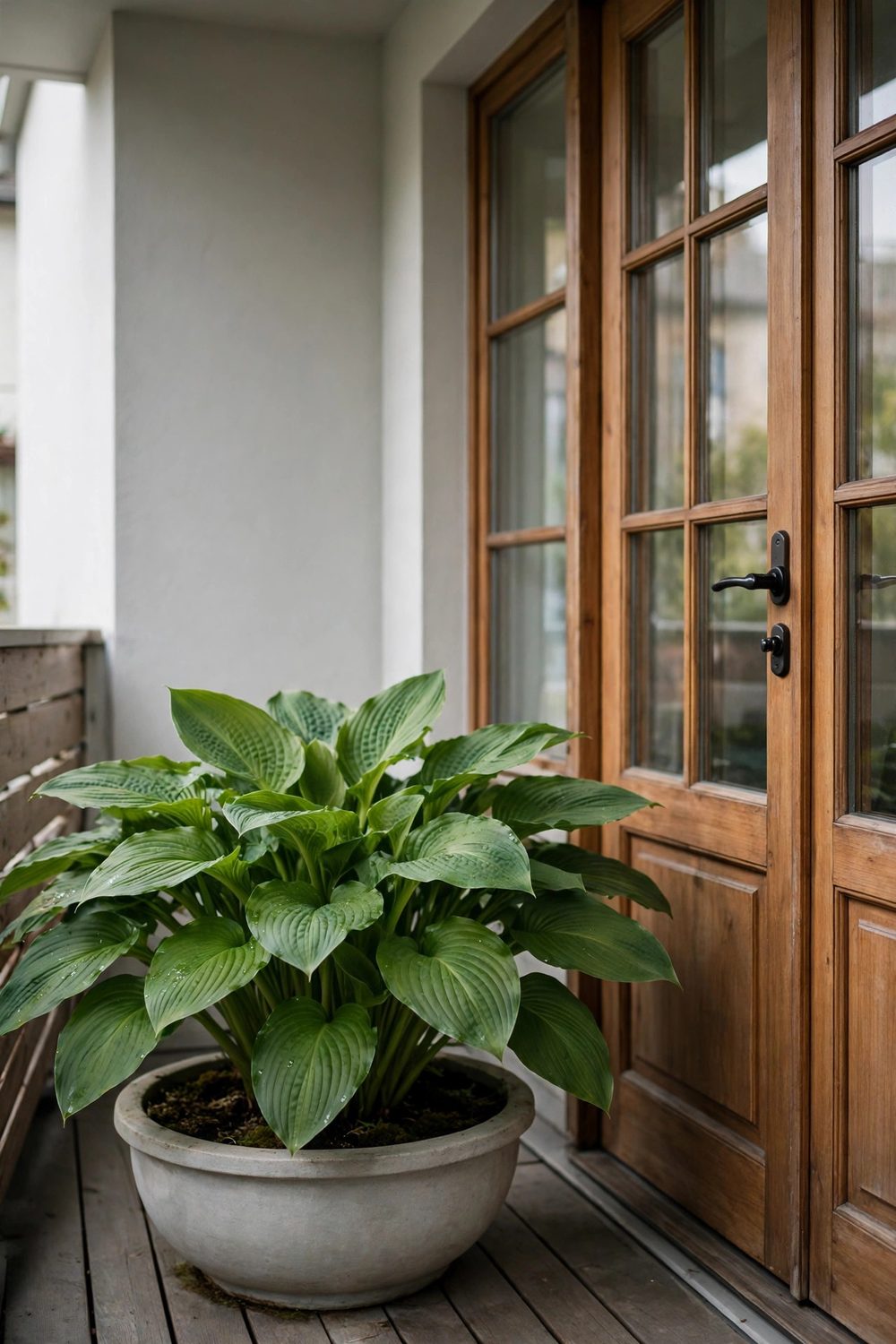
One large hosta can make a small balcony look full without a dozen small pots. The wide leaves give you shape, shade, and a calm green base for brighter plants nearby.
Choose a wide, low pot that will not tip in a gust, and place it where you see it from inside. A hosta by the door frames the view out, and it softens the hard edge of the railing.
Wind can tear large leaves on a high floor, so tuck the pot behind the railing line. If a leaf splits, trim it at the base and let new growth fill the gap.
Pick a pot color that matches your railing, so the plant stays the focus, not the container.
3. Grow Ivy Up a Simple Trellis
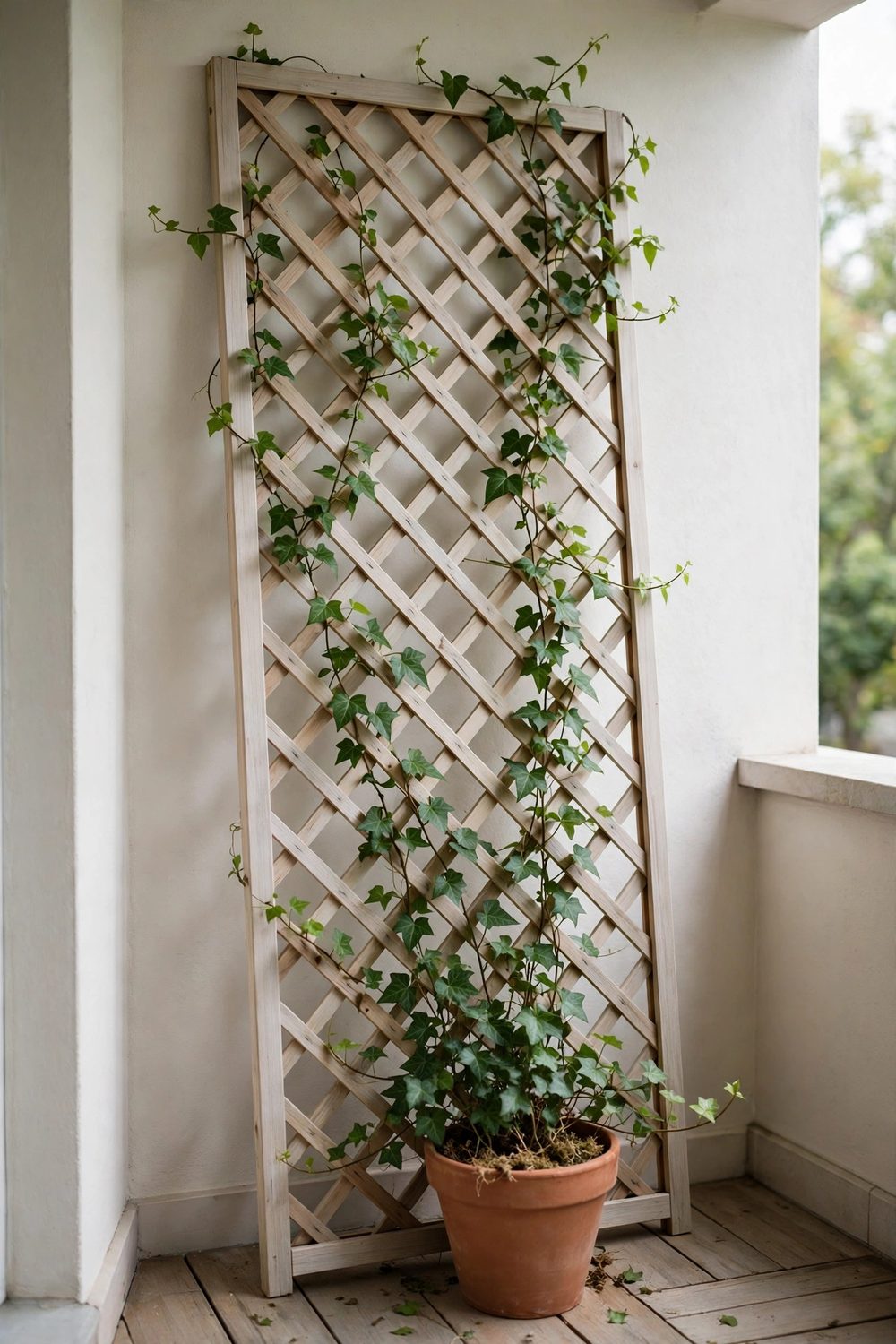
Lean a light trellis against the wall, fix it with removable hooks, and plant ivy at its base. Guide the longest stems through the trellis by hand each week.
Tie loose stems with soft twine, not wire, so the stems are not cut as they thicken. Leave the top of the trellis open at first, since a plant that hits the top early tends to bunch.
This works best on a wall that gets no harsh midday sun, and it hides a plain wall fast. Check the hooks each month, since a trellis full of wet leaves weighs more than an empty one.
4. Set Out Bowls of Impatiens by the Door
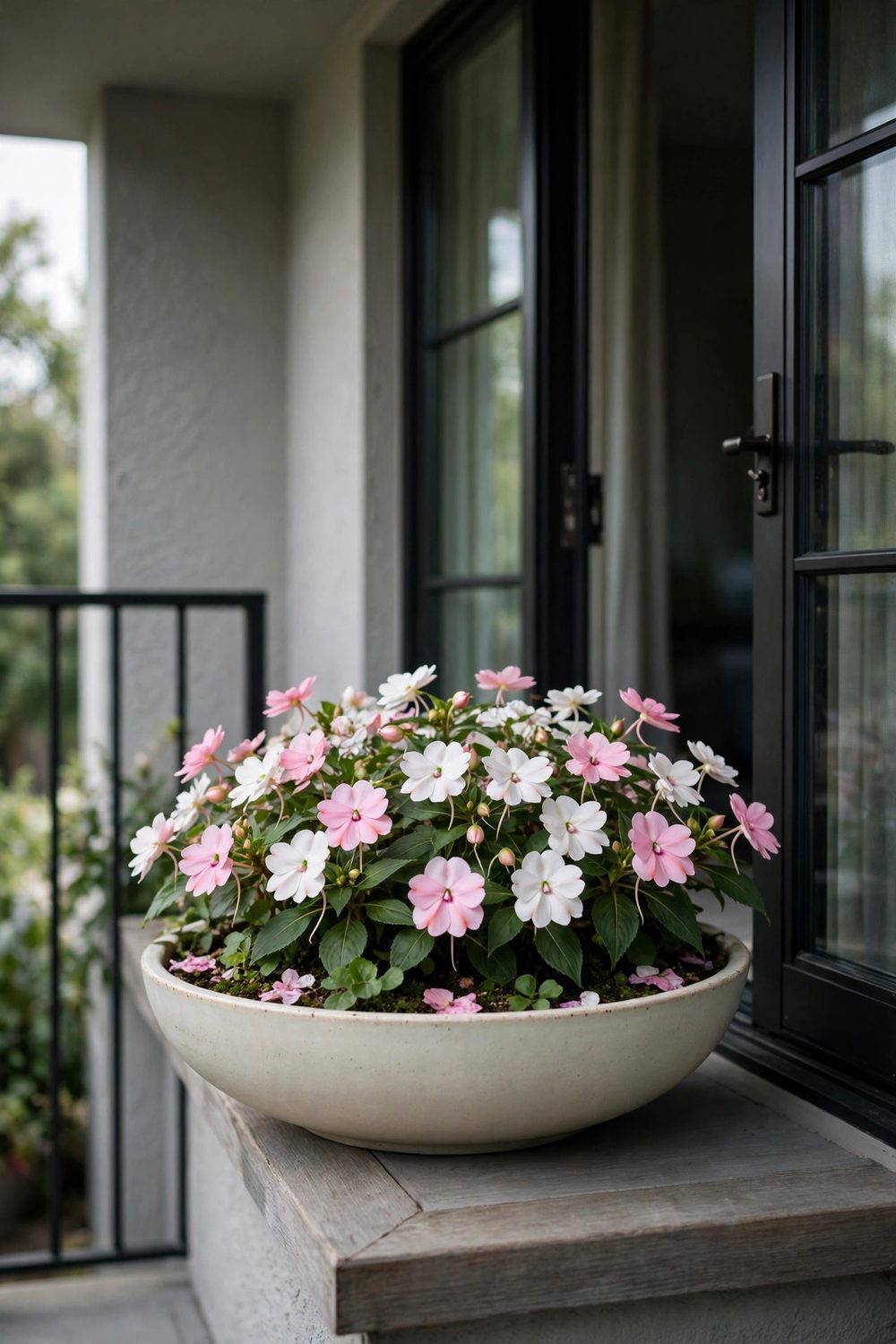
On a gray morning, you step out with a mug and the first thing you see is a low bowl of pink and white flowers by the door. That small hit of color changes how the whole balcony feels.
Impatiens like shade and steady water, so they suit a north side well. Plant them in a wide bowl rather than a deep pot, and keep the soil damp but not soggy.
Deadhead spent blooms with your fingers once a week while you wait for the kettle. It takes two minutes, and it keeps the bowl looking fresh instead of tired.
Keep a spare bowl ready, so you can swap a tired plant without leaving an empty spot.
5. Shade Does Not Mean Dull Leaves
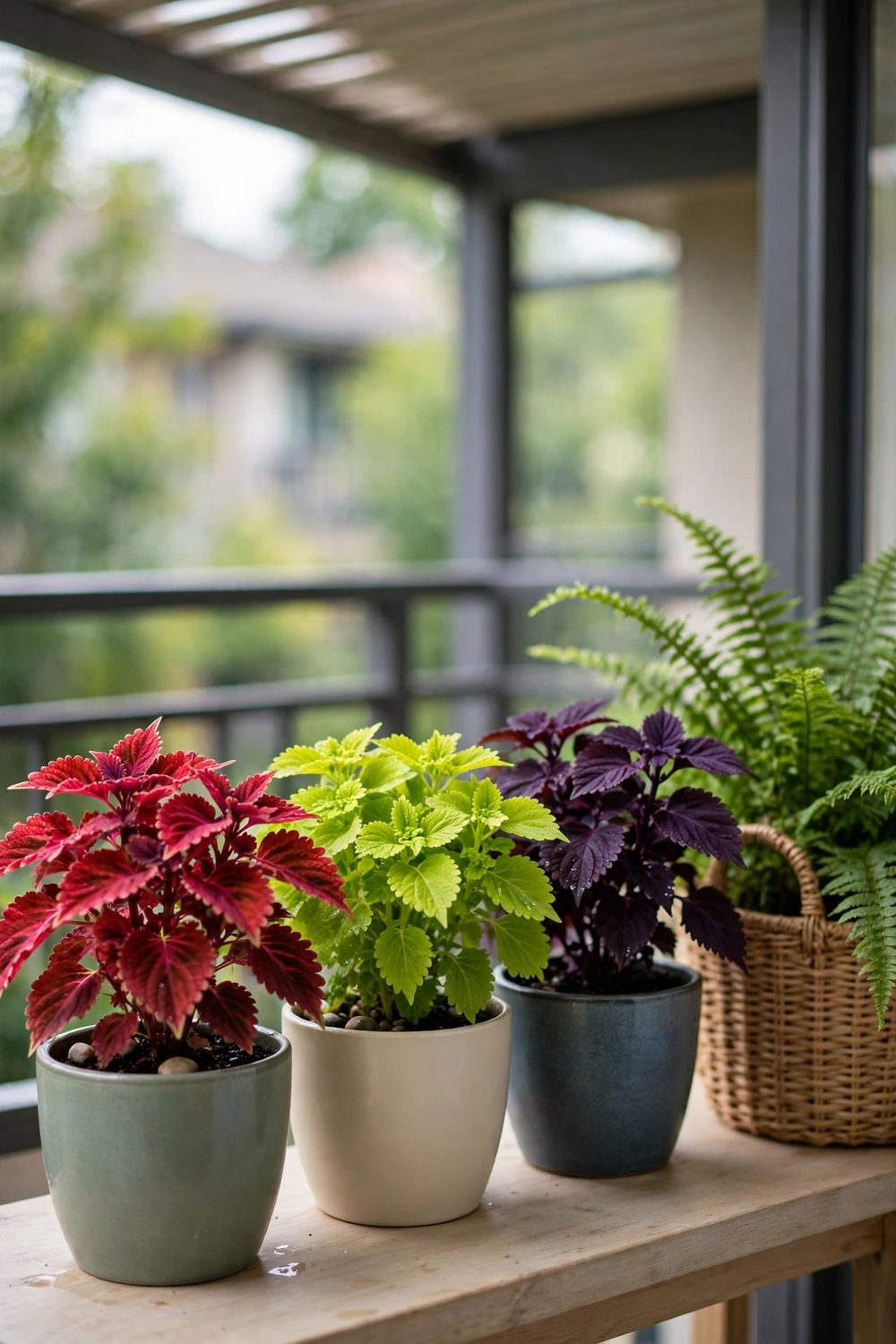
Many people think a shaded balcony can only hold plain green plants. Coleus proves that idea wrong, with leaves in red, lime, pink, and deep purple that hold color without direct sun.
Mix two coleus colors in one pot and let a plain green fern sit beside it. The contrast does the work, so you do not need a large number of pots to get a rich look.
Pinch the top of each stem when it starts to stretch, and the plant will bush out. A leggy stem left alone will lean toward the light and leave the pot looking thin.
Keep coleus out of strong wind, since thin stems can snap on an open high floor.
6. Build a Shaded Reading Nook With One Chair
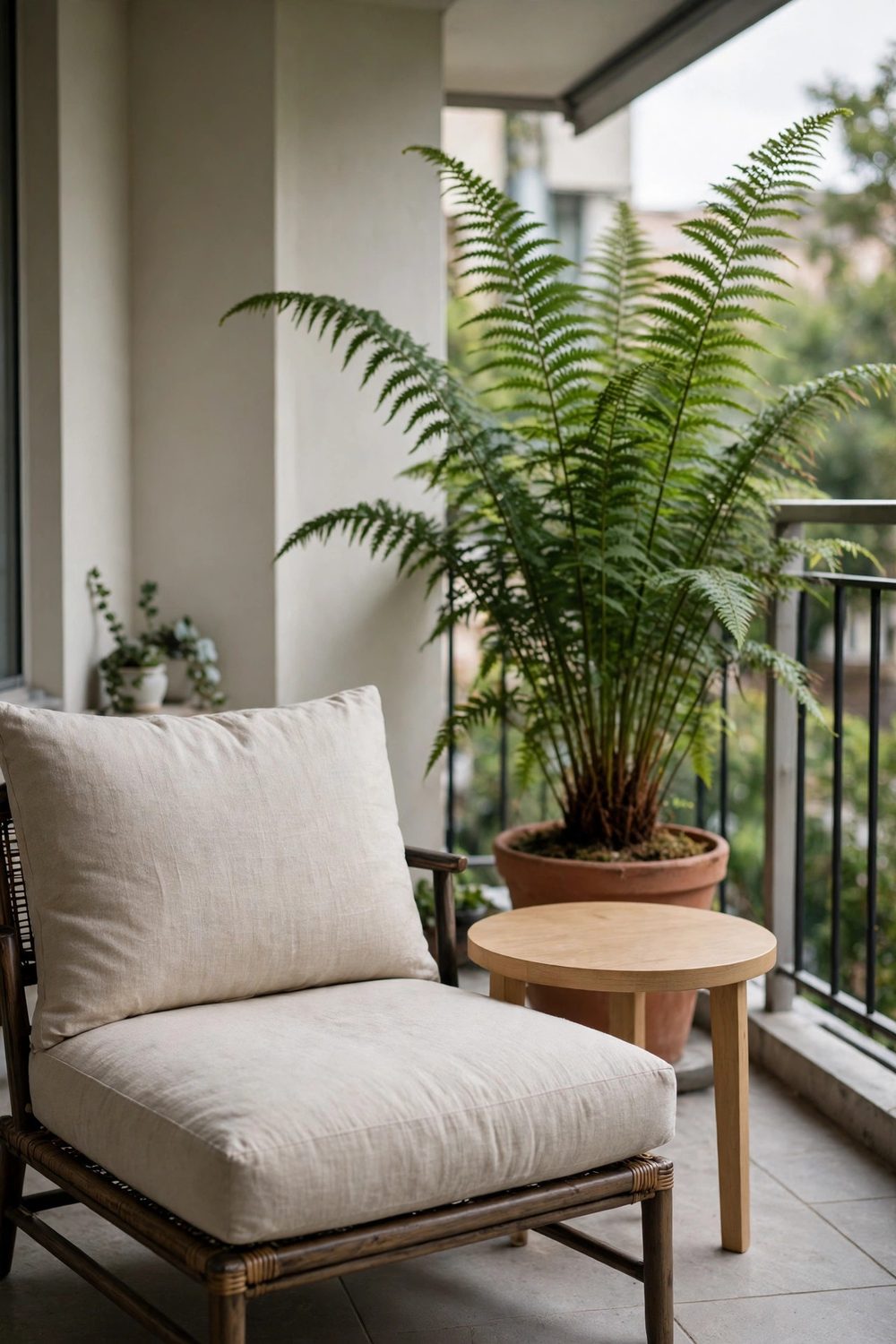
A low chair, a small side table, and a tall fern behind it make a nook that feels private even on a narrow balcony. The fern blocks the view from the side without blocking your light.
Keep the chair close to the wall so the walkway stays clear, and test the door swing before you settle the layout. A chair that blocks the door will annoy you every single day.
Shade is a real plus here, since a screen stays readable and a book page does not glare. If you want to work outside too, read our balcony office ideas for working outside in a small space next.
7. One Trailing Plant Per Hanging Pot
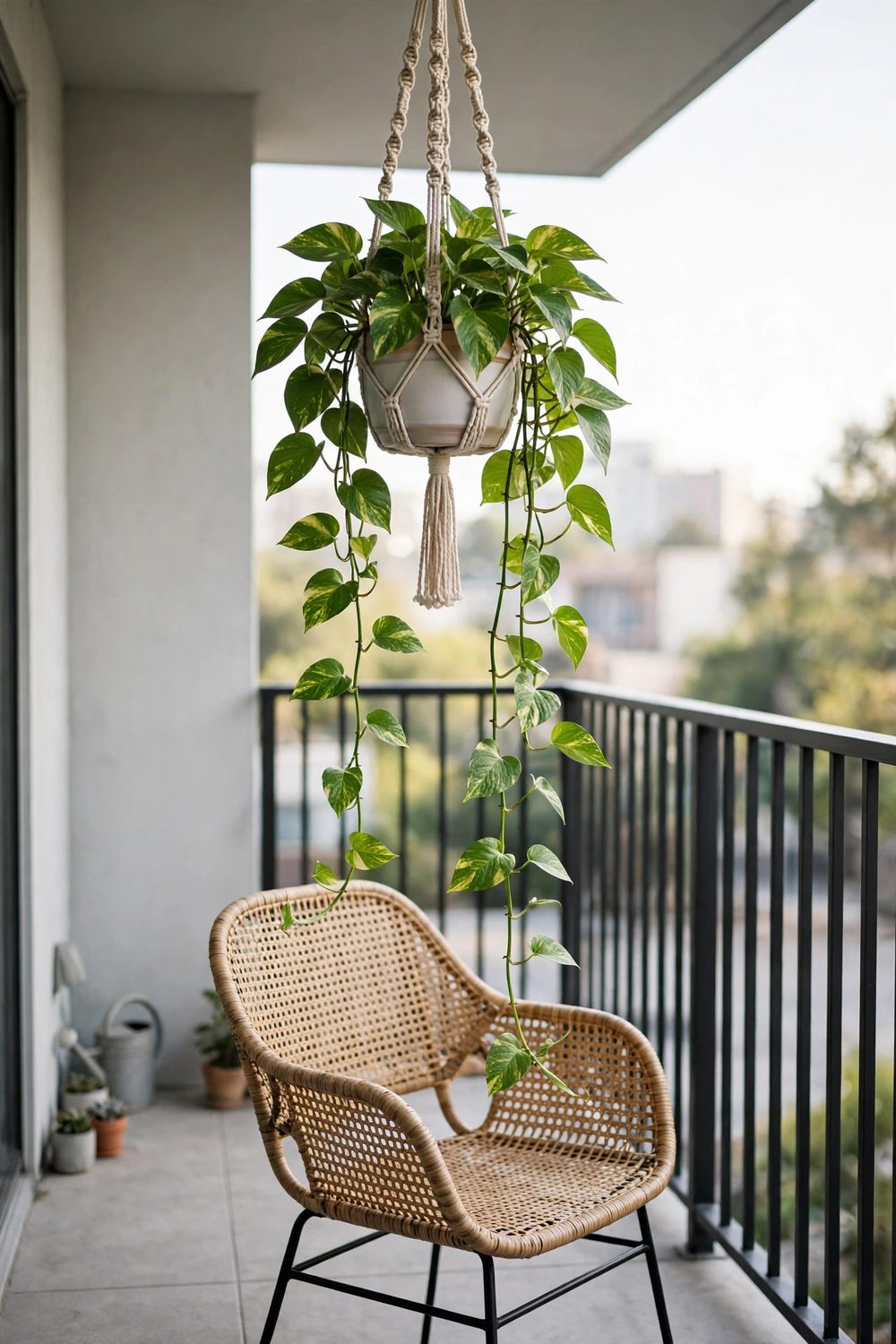
Keep it simple: one trailing plant in each hanging pot, nothing more. Pothos is a safe pick, since it tolerates low light and forgives a missed watering.
Hang the pot where the trails can fall clear of the chair and the door path. Trails that brush your head each time you pass will get trimmed in frustration, not in care.
Turn the pot a quarter turn each week so growth stays even. A pot left in one spot tends to grow toward the brightest gap and look lopsided.
Check the hook weight rating before you hang a watered pot, since a full pot is heavier than it looks.
8. Stop Watering on a Fixed Schedule
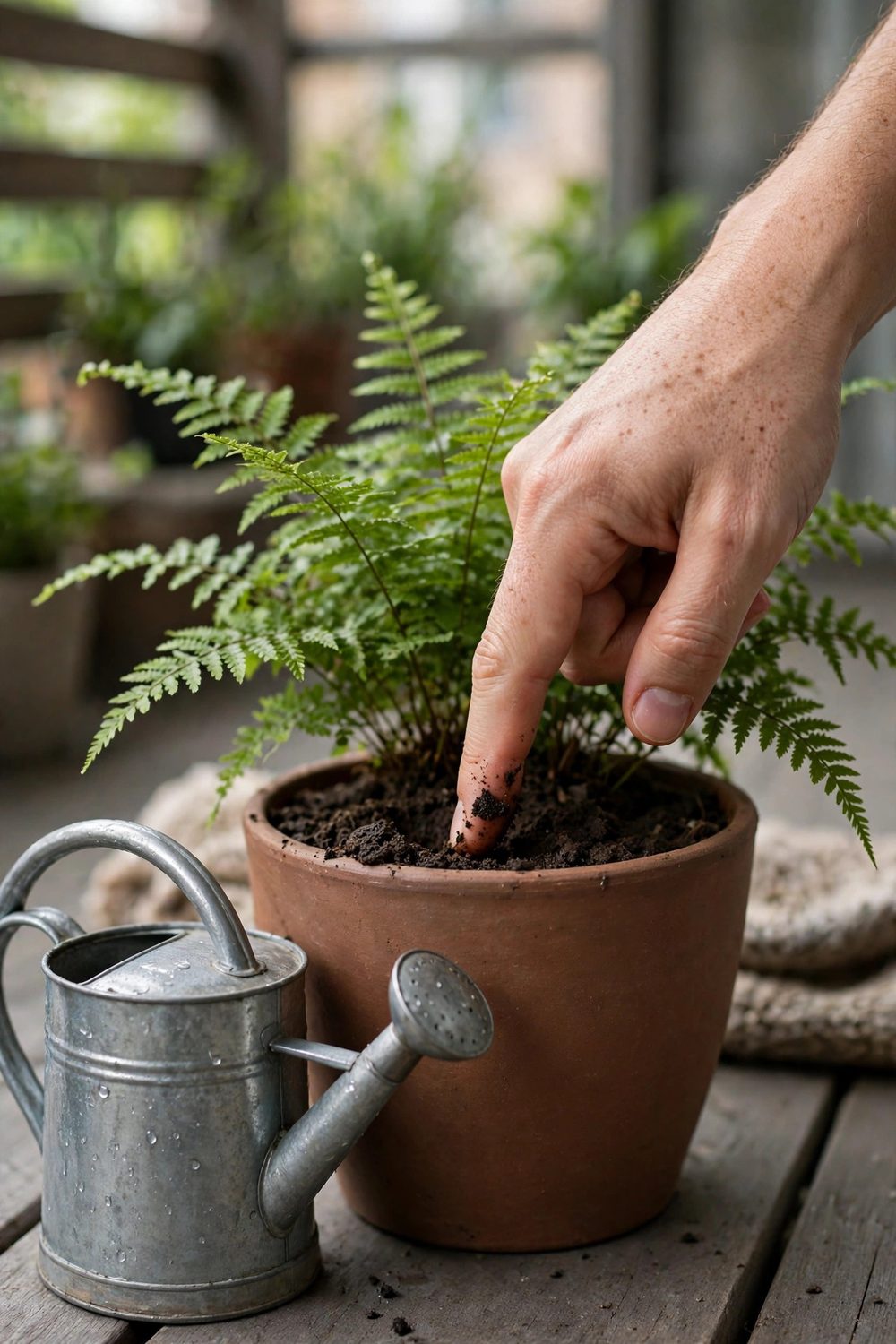
The most common mistake on a shaded balcony is watering every plant on the same day each week. Shade slows drying, so soil that looks dry on top can still be wet below.
Push a finger an inch into the soil before you water, and skip any pot that still feels damp. Pots near the wall dry slower than pots near the open railing, so they need less water.
Write the check on a small tag by the door if it helps you recall it. A quick soil check beats a calendar, and it keeps roots from sitting in water for days.
9. Fewer Big Pots Beat Many Small Ones
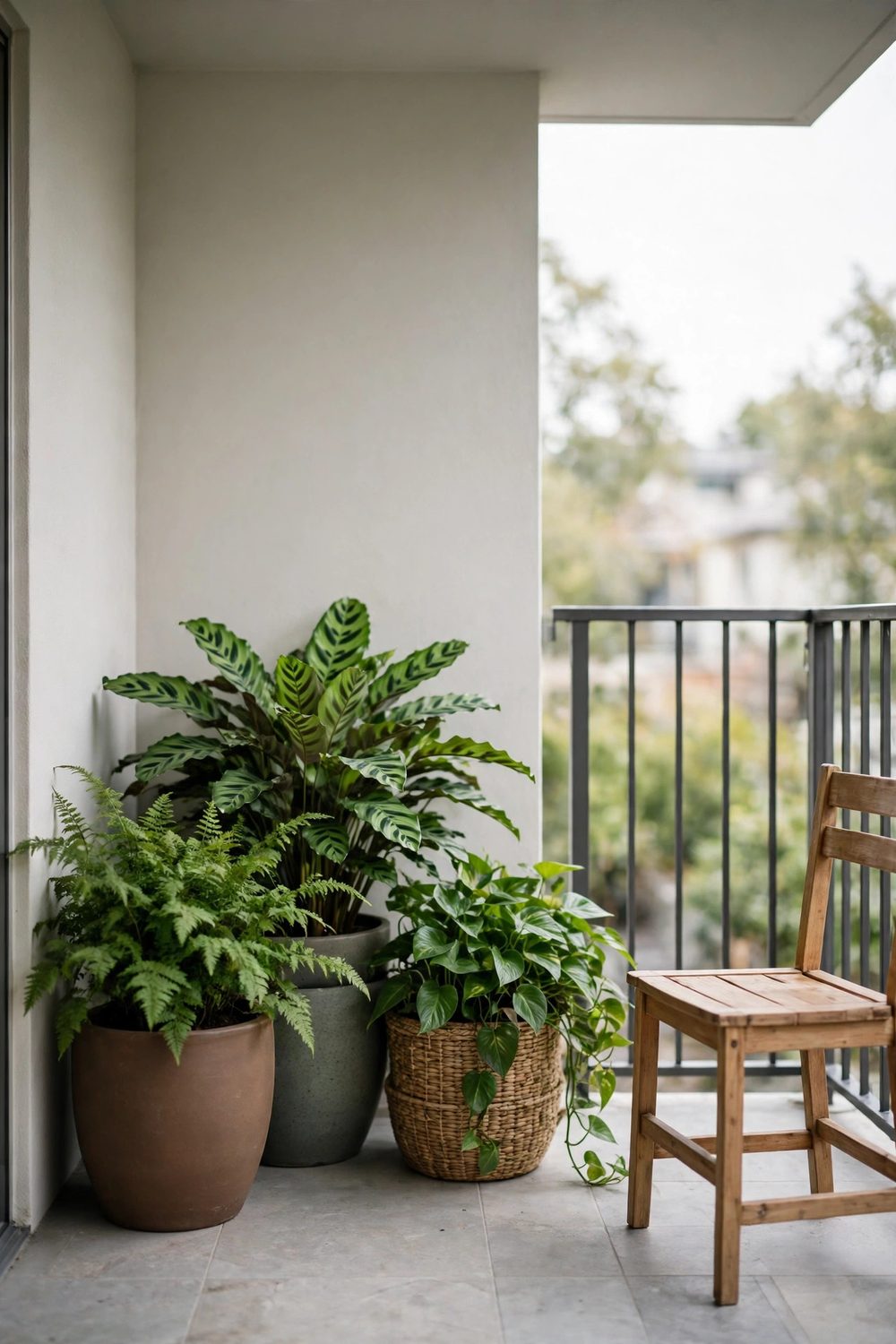
Ten tiny pots look busy, dry out at different rates, and leave no room for a chair. Three larger pots look calmer, hold water longer, and leave floor space free.
Small pots suit a rail planter or a shelf, where they stay out of the walkway. Large pots suit the floor corners, where their weight also helps them stay put in wind.
Before you buy, check the weight of a large pot once it is filled and watered. A pot you cannot slide on your own will be hard to move when you need to clean behind it.
Group the large pots in one corner first, then check that the chair still fits with ease.
10. Add Floor Cushions and Lanterns for Soft Evenings
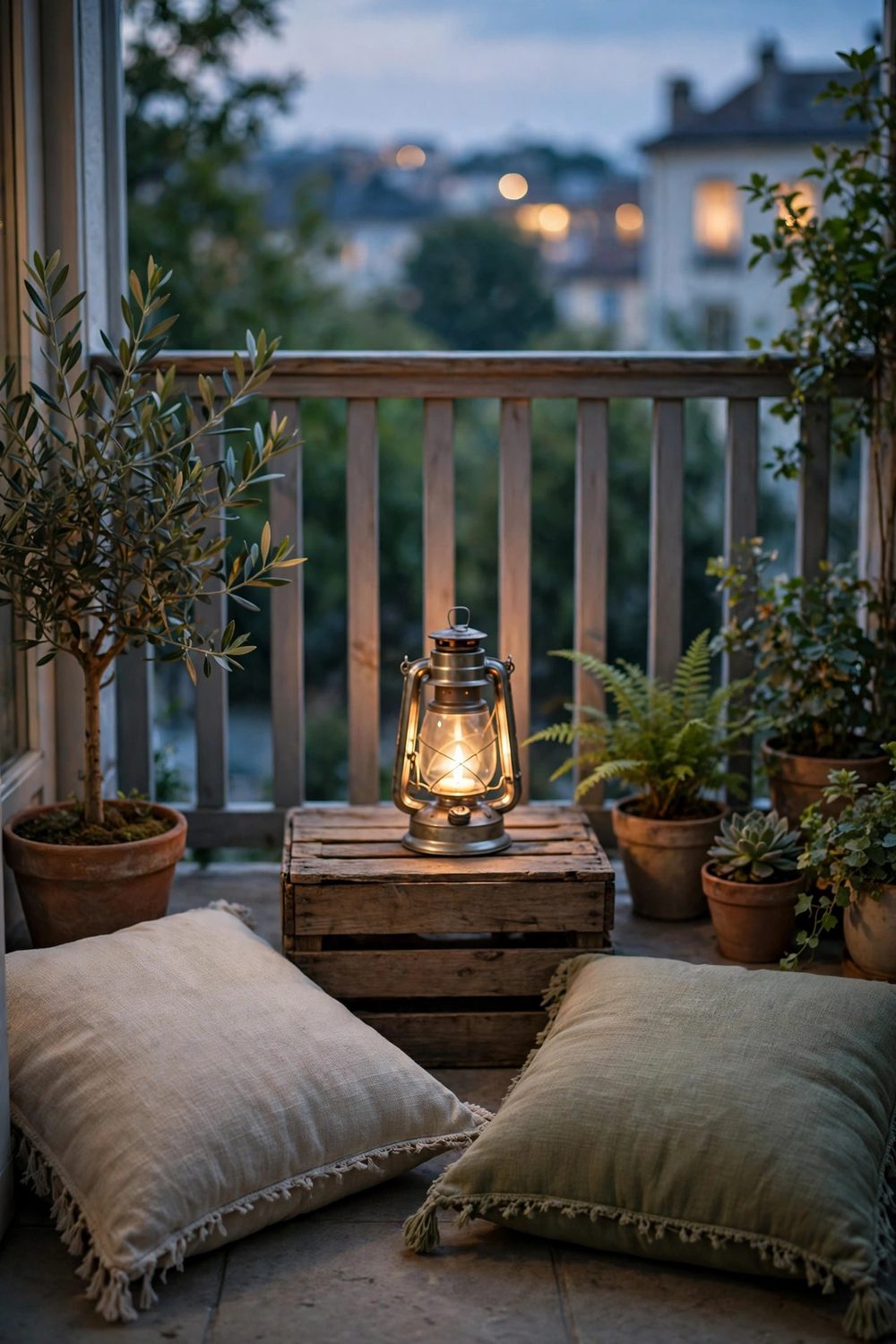
I once skipped the chairs on a shaded balcony and laid out two floor cushions instead, with a lantern on a low crate between them. The space felt lower, closer, and easier to sit in for a long talk.
Shade suits this setup well, since lantern light shows up early and cushions stay cool. Keep a small basket by the door for the cushions, so a sudden rain shower does not catch you out.
Place the lantern where it cannot be knocked by a foot, and keep it clear of dry leaves. For more low seating looks, see our boho balcony ideas with floor cushions and lanterns too.
11. Use White Flowers to Brighten Dark Corners
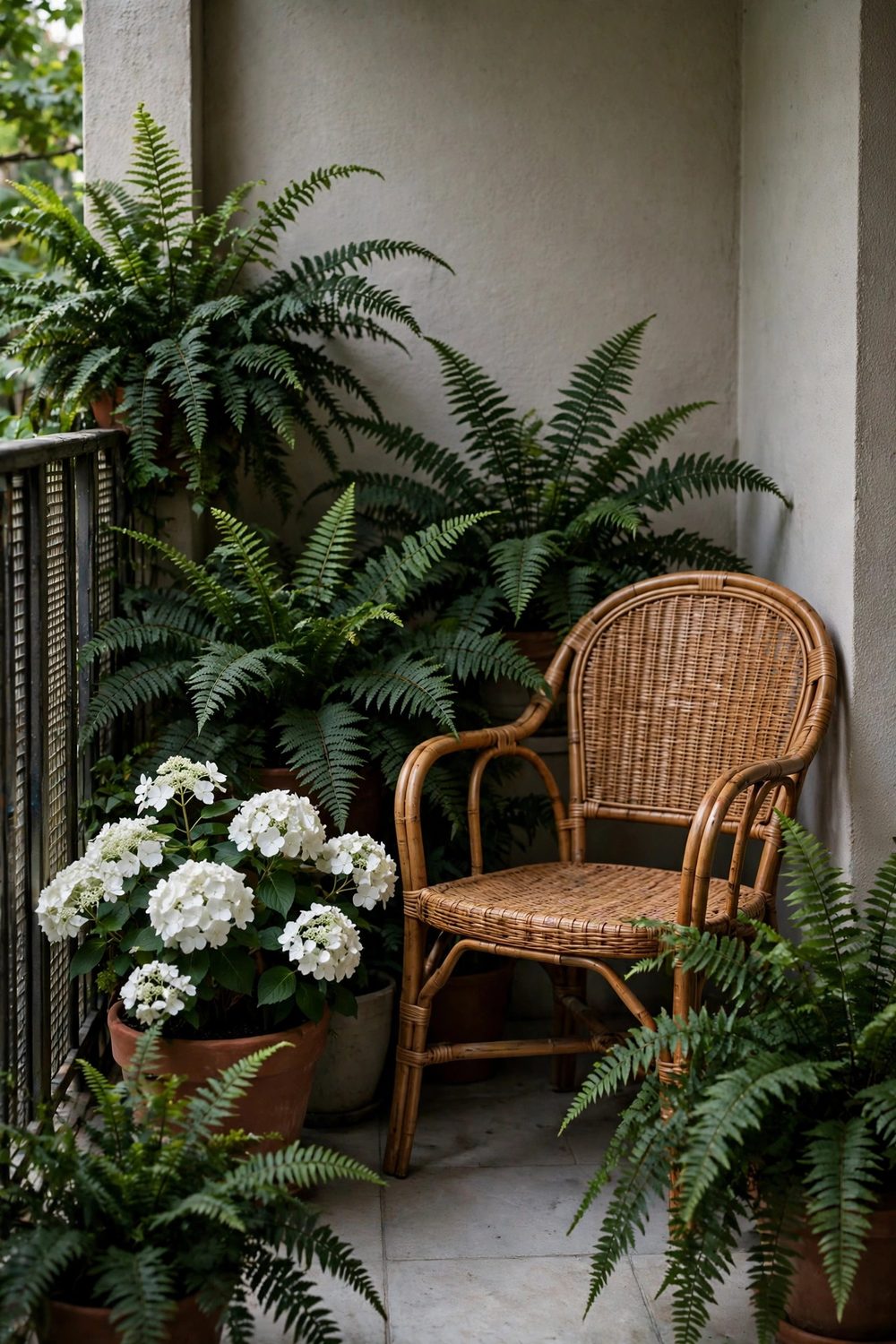
Dark corners swallow deep red and purple blooms, which can look muddy in low light. White and pale flowers stand out instead, and they glow a little at dusk.
Try white begonias or white impatiens in the darkest pot, with green foliage around them. The pale blooms act like a small light source, and the eye lands there first.
Keep the white pots near the seating area, not hidden behind tall plants. A bright spot you cannot see from your chair does little for the space.
Pair the white pots with dark green leaves, so the pale blooms stand out even more in low light.
12. Try Begonias for Color That Lasts
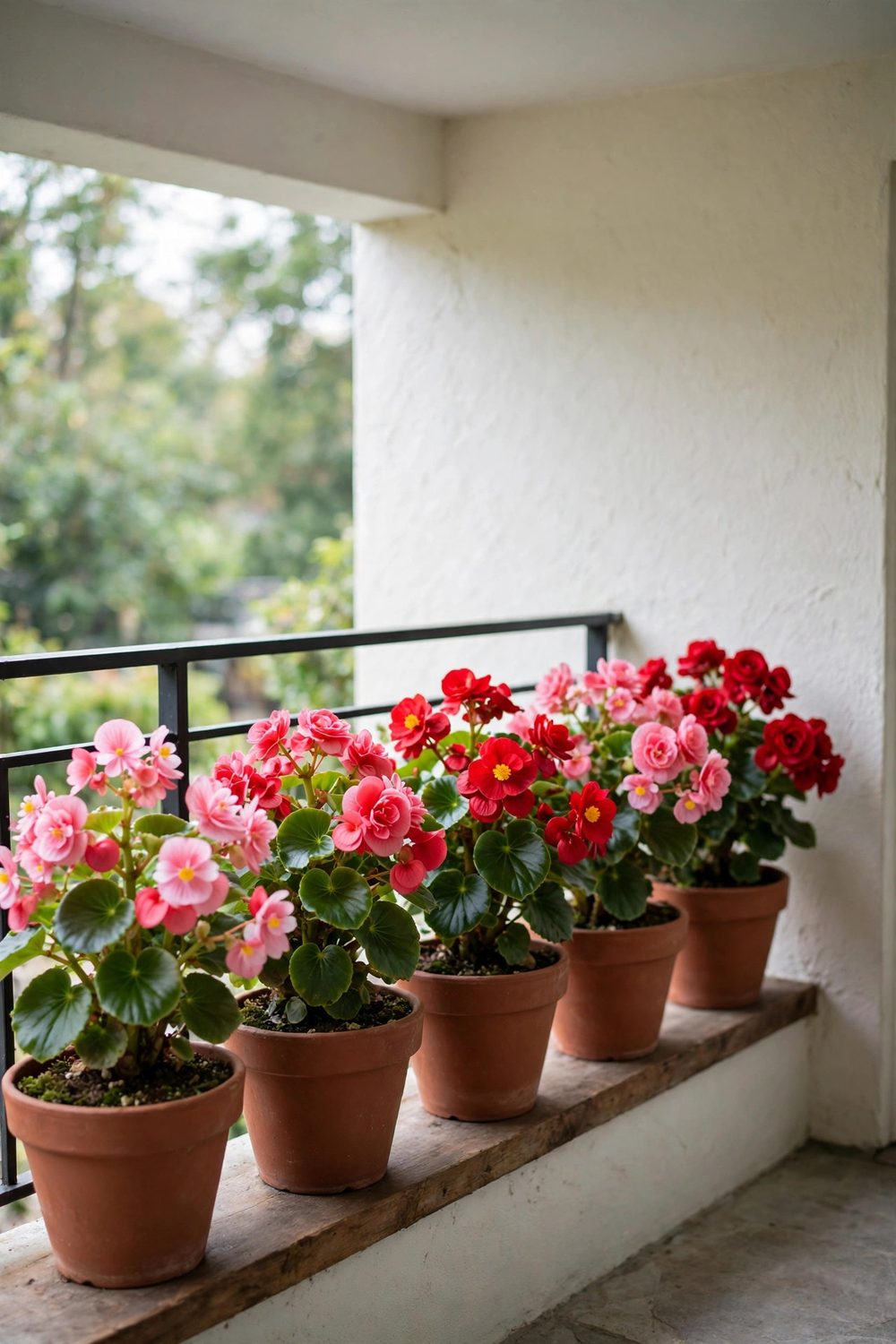
Begonias give you steady color on a shaded balcony without demanding full sun. Their waxy leaves also cope well with a cooler, damper corner.
Plant them in pots with drainage holes and a saucer, and place them where rain will not flood them. A pot under a drip line from the floor above stays too wet.
Remove yellow leaves as you spot them, since they draw the eye fast in a small space. A tidy begonia pot can carry a whole corner for months.
Place begonias where you pass them daily, so you notice dry soil or yellow leaves early.
13. Layer Tall, Mid, and Trailing Plants
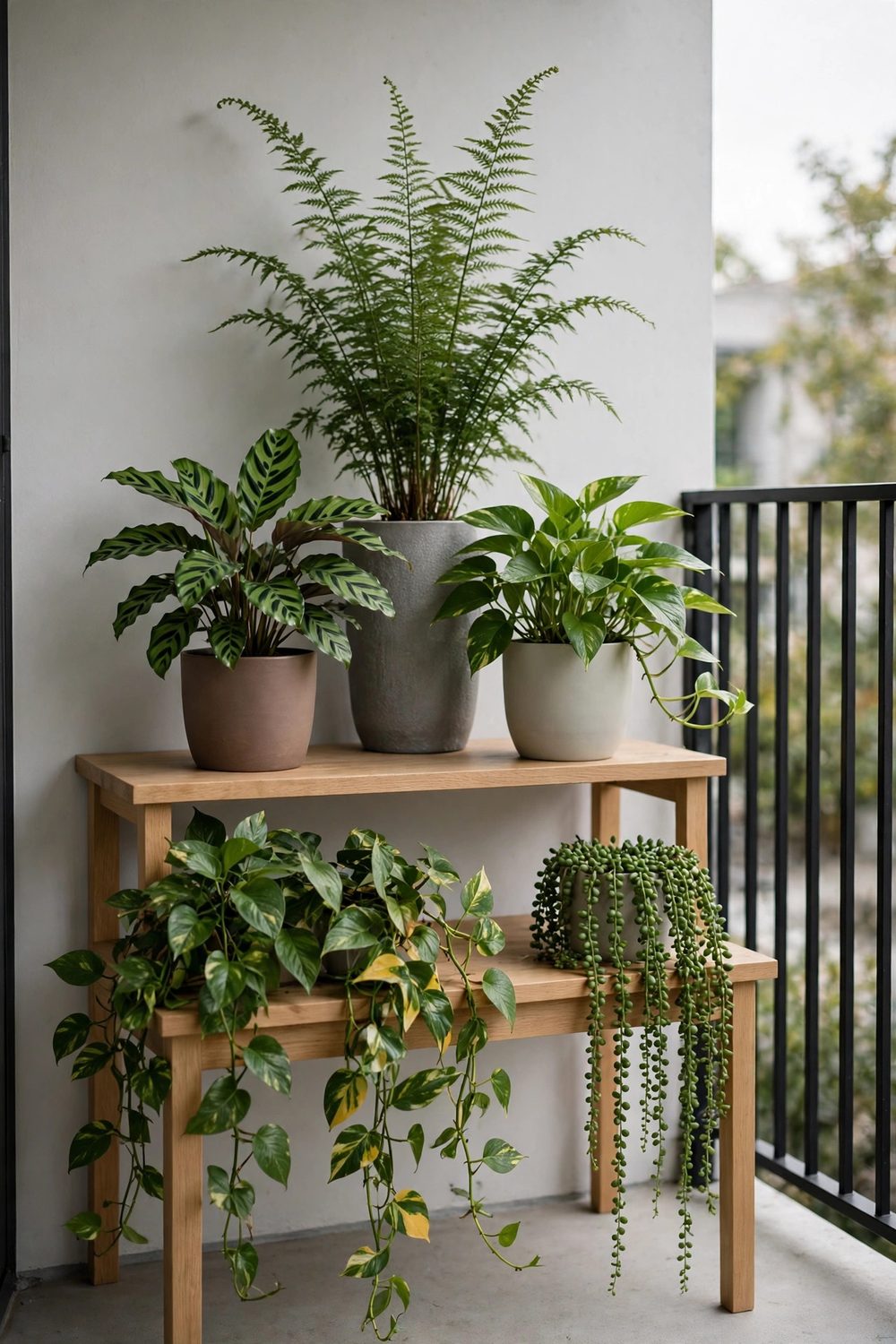
Start at the back with one tall plant, such as a fern in a tall pot. Add mid height plants in front of it, then a trailing plant at the edge of a shelf or rail planter.
Step back inside and look out through the door to check the layers. The tallest plant should frame the view, not block it, and the trailing plant should soften the front edge.
Keep each layer in its own pot so you can swap one plant without disturbing the rest. A layered group in one shared pot is hard to fix when one plant fails.
14. Keep a Small Shade Herb Corner in Its Own Pots
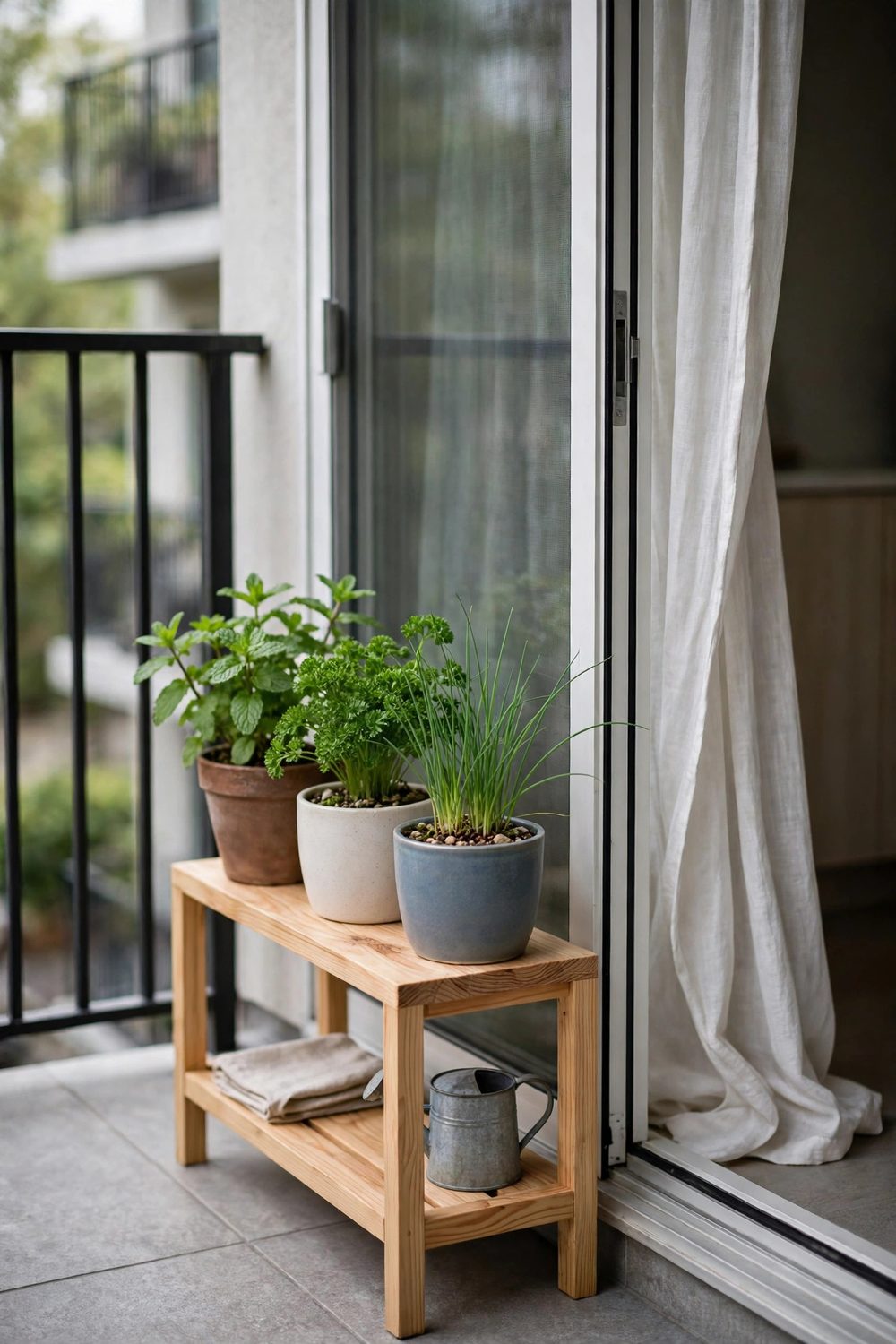
By the kitchen door, a row of three small pots holds mint, parsley, and chives. They get soft light all day, and snipping a few leaves for dinner takes less than a minute.
Mint needs its own pot, since it spreads fast and will crowd out its neighbors. Parsley and chives can sit side by side, but give each pot room to breathe.
Label the pots if the leaves look alike when young, and keep them near the door for easy picking. For seating near a planting corner, see our small balcony seating ideas as well.
Water herb pots in the morning, so leaves dry during the day and stay fresh for picking.
15. A Shaded Balcony Can Still Change With the Seasons
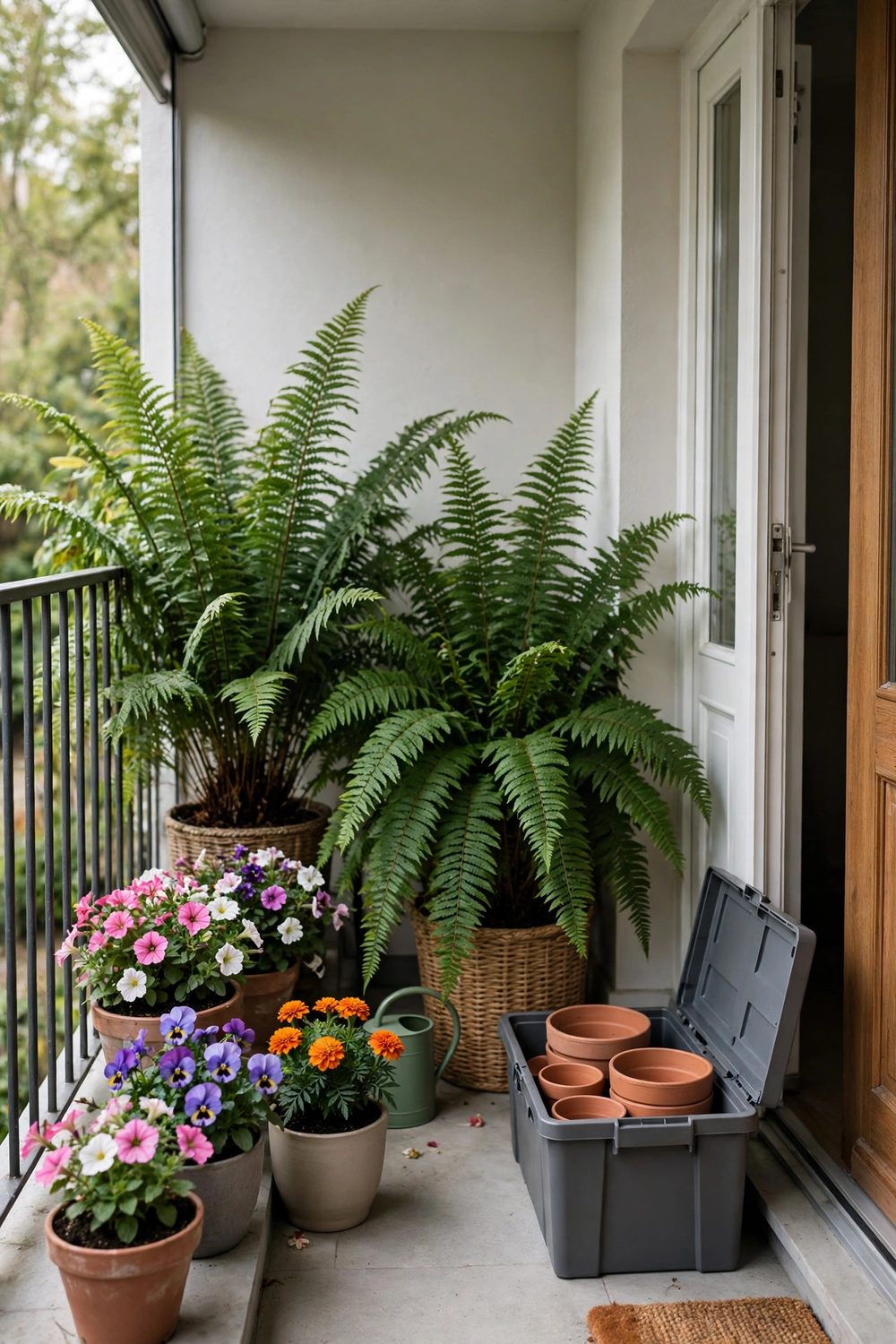
Some people think a shade balcony must look the same all year. In truth, you can keep the same ferns and hostas as a base and swap only the color pots.
Change the small color pots when they fade, and leave the large structure plants alone. That swap takes ten minutes and keeps the balcony feeling fresh without a full replant.
Store the spare pots in one box by the door, not scattered across the floor. A tidy store makes the next swap easy, and it keeps the walkway clear.
These north facing balcony ideas plants that love shade work best when you start small and watch what thrives. Two or three healthy pots beat a crowded balcony that needs constant rescue.
Pick one idea from this list, set it up this week, and let it settle before you add more. A shaded balcony rewards patience, and the plants will show you what they like.
Save this to your balcony board for later, so you can find your favorite plant picks when you shop. Then step outside, sit down, and enjoy the cool green space you made.


