

15 Raised Bed Garden Ideas for Seniors That Are Easy on the Back and Knees
Gardening should feel relaxing, not like a workout you need to recover from afterwards.
If bending to ground level, kneeling on hard soil, or stretching across a wide bed has started to take the pleasure out of growing herbs, salads, and flowers, a raised bed can change everything.
The best raised bed garden ideas for seniors bring the soil up to you, so planting, weeding, watering, and harvesting happen at a comfortable height, with far less strain on your back and knees.
You do not need a large garden or a complicated build to feel the difference. A single waist-high bed near the back door, a narrow planter along a fence, or a small salad table on the patio can hold a surprising amount of produce.
If you already enjoy growing in small spaces, you will recognise the same principles behind small balcony garden ideas — making the most of every inch, keeping everything within easy reach, and choosing beds that suit the way you actually live and move.
This guide starts with a planning section on height, width, paths, soil, and watering, then shares fifteen ideas designed to reduce bending, kneeling, and stretching.
Whether you garden standing, prefer to sit, or use a stool or mobility aid outdoors, there is an option here to adapt to your space and favourite crops.
This post contains affiliate links. If you buy through them, we may earn a small commission at no extra cost to you. See our Affiliate Disclosure.
How to Plan a Raised Bed Garden That Is Easy on Your Back and Knees, Step by Step
Start with height and width, because these decide how comfortable every future job will feel. For standing gardeners, a soil surface around hip or waist height usually feels natural, letting you work with relaxed arms instead of reaching down.
If you prefer to sit, a lower bed with a wide, flat edge may suit you better — test both by standing at a kitchen counter and sitting on a sturdy bench, and notice which posture you could hold happily for fifteen minutes.
Plan the width so you can reach the centre comfortably, without leaning forward or twisting; a bed used from one side only needs to be much narrower than one you can walk around.
Leave paths wide, level, and firm, with room to turn, set down a stool, or use a mobility aid, and site beds close to the house in good light.
Then think about soil and watering before you plant anything. Raised beds are usually filled with a general mix of topsoil and compost, kept light and crumbly so roots grow easily and hand tools glide through without forceful digging.
No complicated recipe is needed — a good general soil mix, topped up with compost each season, suits most vegetables, herbs, and flowers. Watering deserves equal thought, because carrying full cans is one of the most tiring garden jobs.
Plan for a nearby tap, a hose that reaches without dragging, or a simple drip system on a timer, and mulch the surface to hold moisture in and keep weeds down.
Finally, start small: one or two beds you can tend with ease will give you far more pleasure — and produce — than a large layout that feels overwhelming by midsummer.
1. Build Waist-High Raised Beds You Can Tend Standing Up
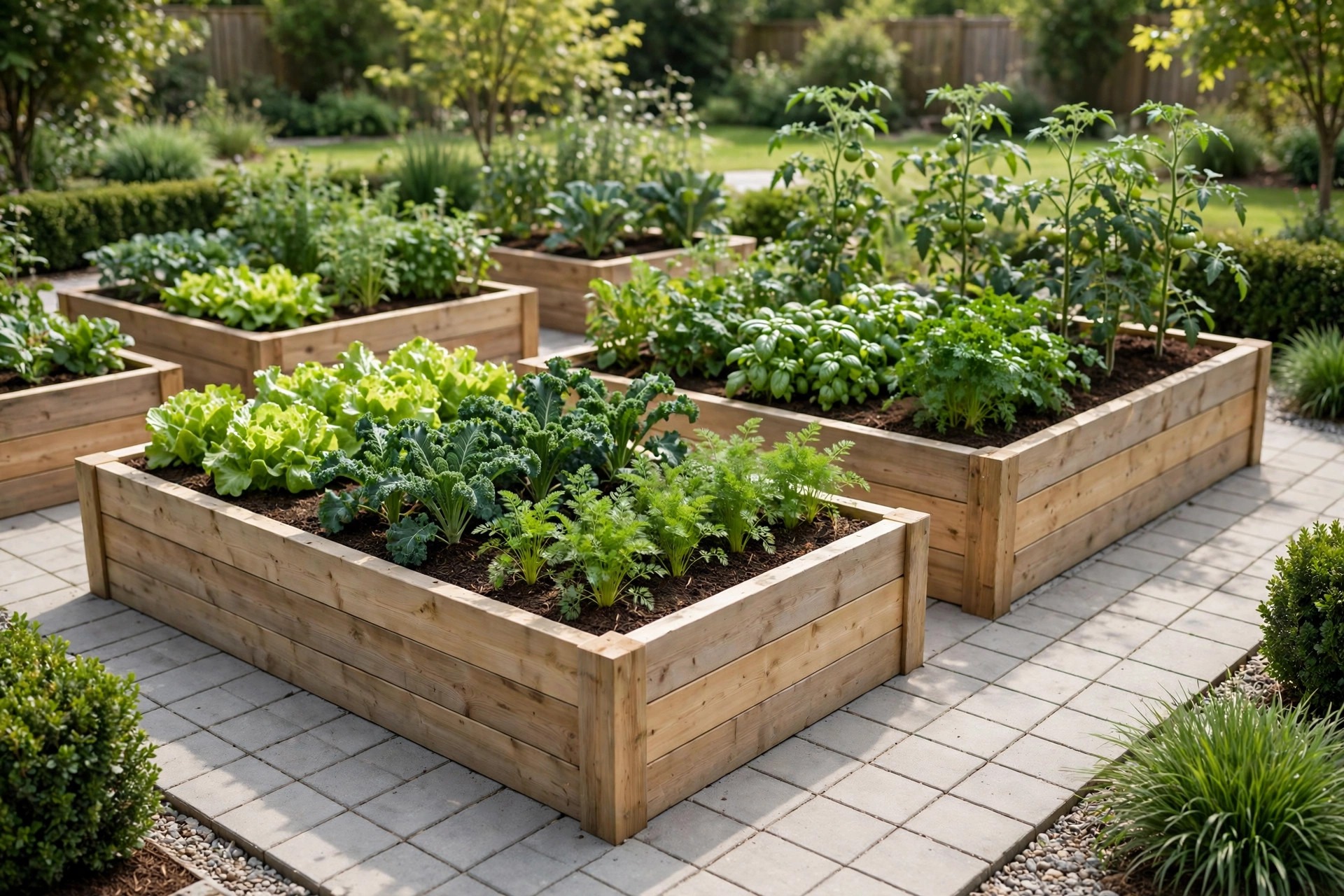
A waist-high bed is the classic answer for gardeners who want to avoid bending altogether. With the soil near your hips, sowing, thinning, weeding, and picking all happen while you stand upright with relaxed shoulders.
There is no crouching and, just as importantly, no getting down onto the ground and back up again. Waist-high beds suit crops you visit often — salad leaves, herbs, chillies, and cut-and-come-again greens — because frequent little harvests are exactly when repeated bending adds up.
Choose a sturdy, level frame, and consider a top rail to rest a hand or forearm on while you work in short, comfortable sessions.
2. Choose a Tabletop or Elevated Planter Bed
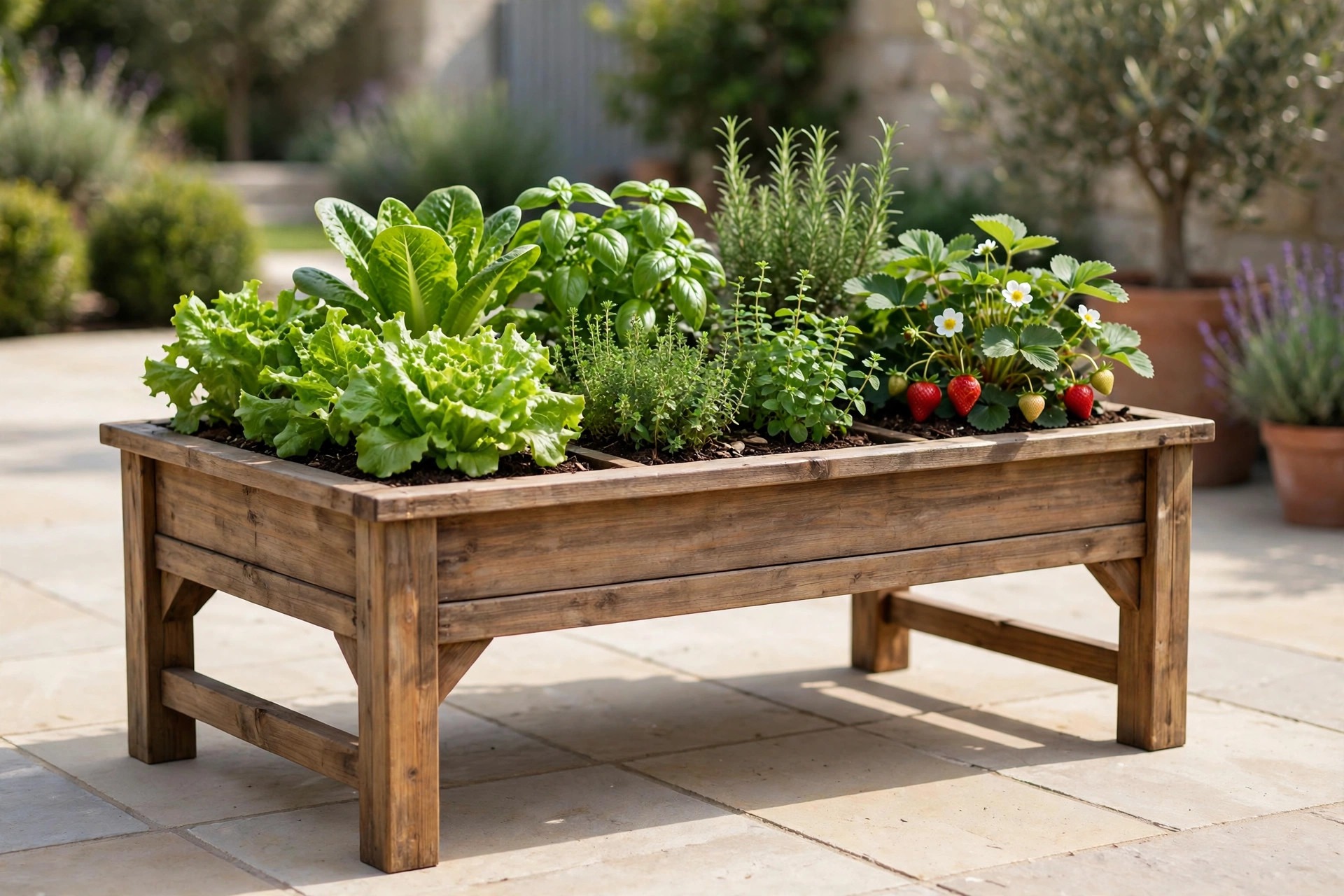
A tabletop planter lifts a shallower tray of soil on legs, like gardening at a workbench. That modest depth is ideal for shallow-rooted crops such as lettuce, spinach, radishes, spring onions, strawberries, and most herbs.
The open space underneath is a real advantage: you can stand close, pull up a tall stool, or tuck tools neatly below.
Tabletop beds are quick to set up and easy to move, making them a forgiving first step — and on a balcony they offer the same upright experience in miniature, a natural next step from small balcony plant ideas.
Set yours on a firm, level surface and check the drainage holes are clear before filling.
3. Add a Wide Sitting Edge You Can Perch On
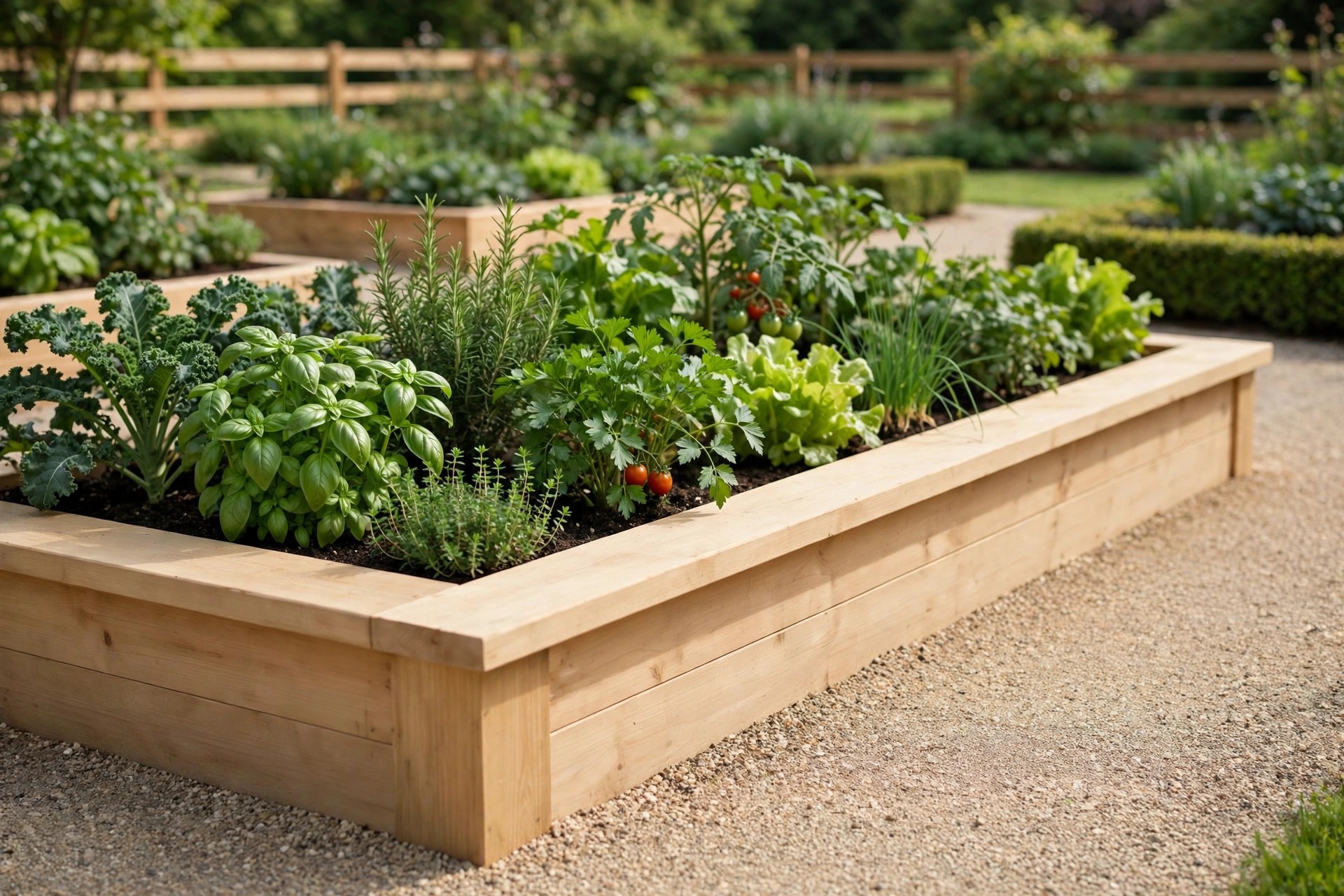
Sometimes the smartest comfort feature is the simplest: a wide, flat top edge that doubles as a seat.
A generous cap along the side of a bed gives you somewhere stable to perch while you sow, thin, or harvest, turning jobs that once meant kneeling into relaxed, seated work.
Sitting also brings your eyes and hands closer to the plants without stooping, which helps with fiddly tasks like pricking out seedlings.
Look for a smooth finish at a height that lets your feet rest flat on the ground, keep the edge clear rather than using it as a shelf, and add a washable cushion for longer sessions if you like.
4. Grow Up a Trellis So Harvesting Needs No Bending
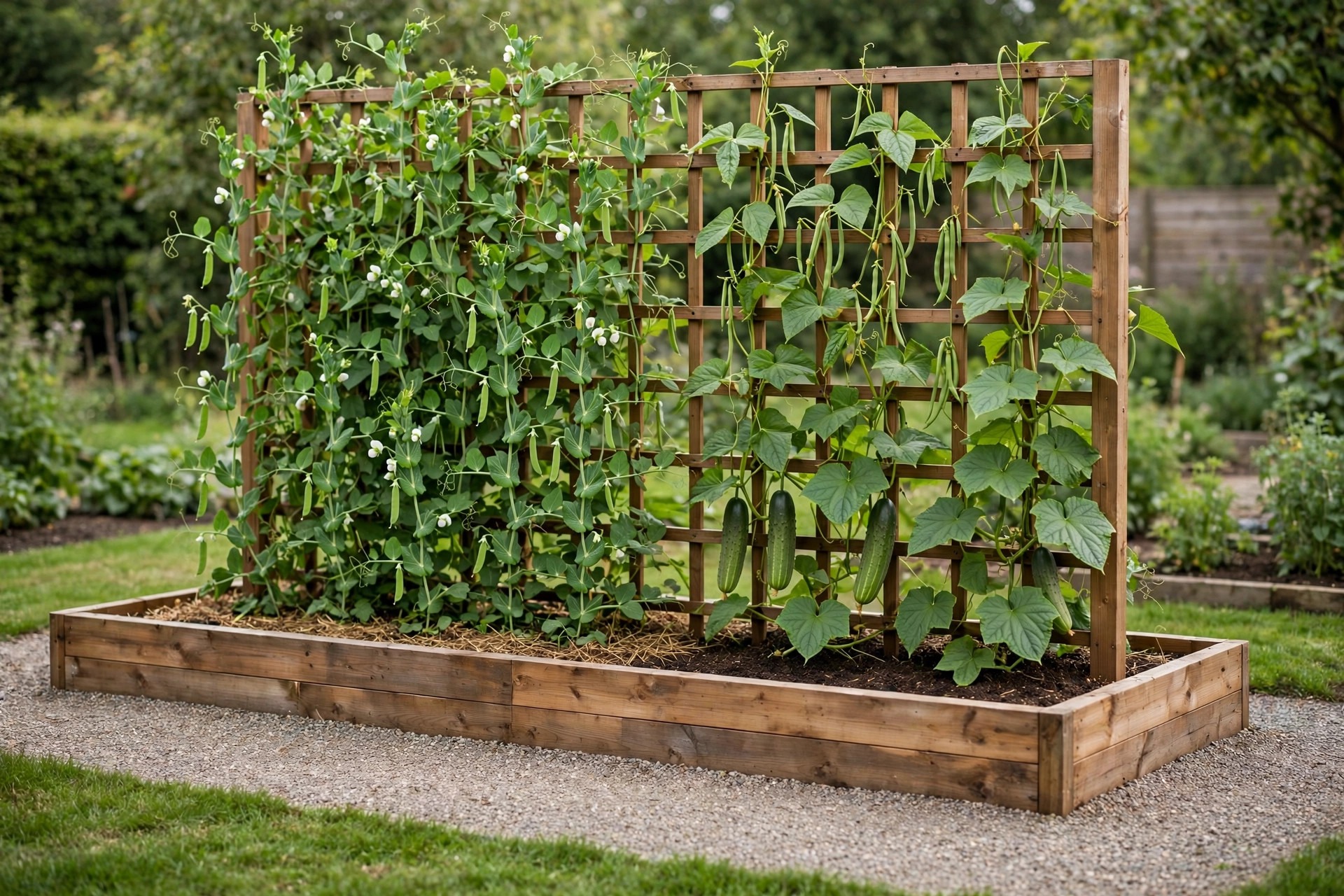
Climbing plants bring the harvest up to hand height.
Peas, climbing beans, cucumbers, and compact squash will scramble up a trellis or panel fixed securely at the back of a raised bed, and their pods and fruits hang where you can see and pick them without crouching.
Growing upward also lifts foliage off the soil, improving airflow and making ripe produce easier to spot.
Fix the support before planting, while the bed is empty, choose a structure sturdy enough for a fully loaded, windy day, and tie stems in loosely, little and often.
Site the trellis so it does not shade the rest of the bed, and keep your reach to the highest ties comfortable.
5. Design a Wheelchair-Height Bed With a Knee Recess
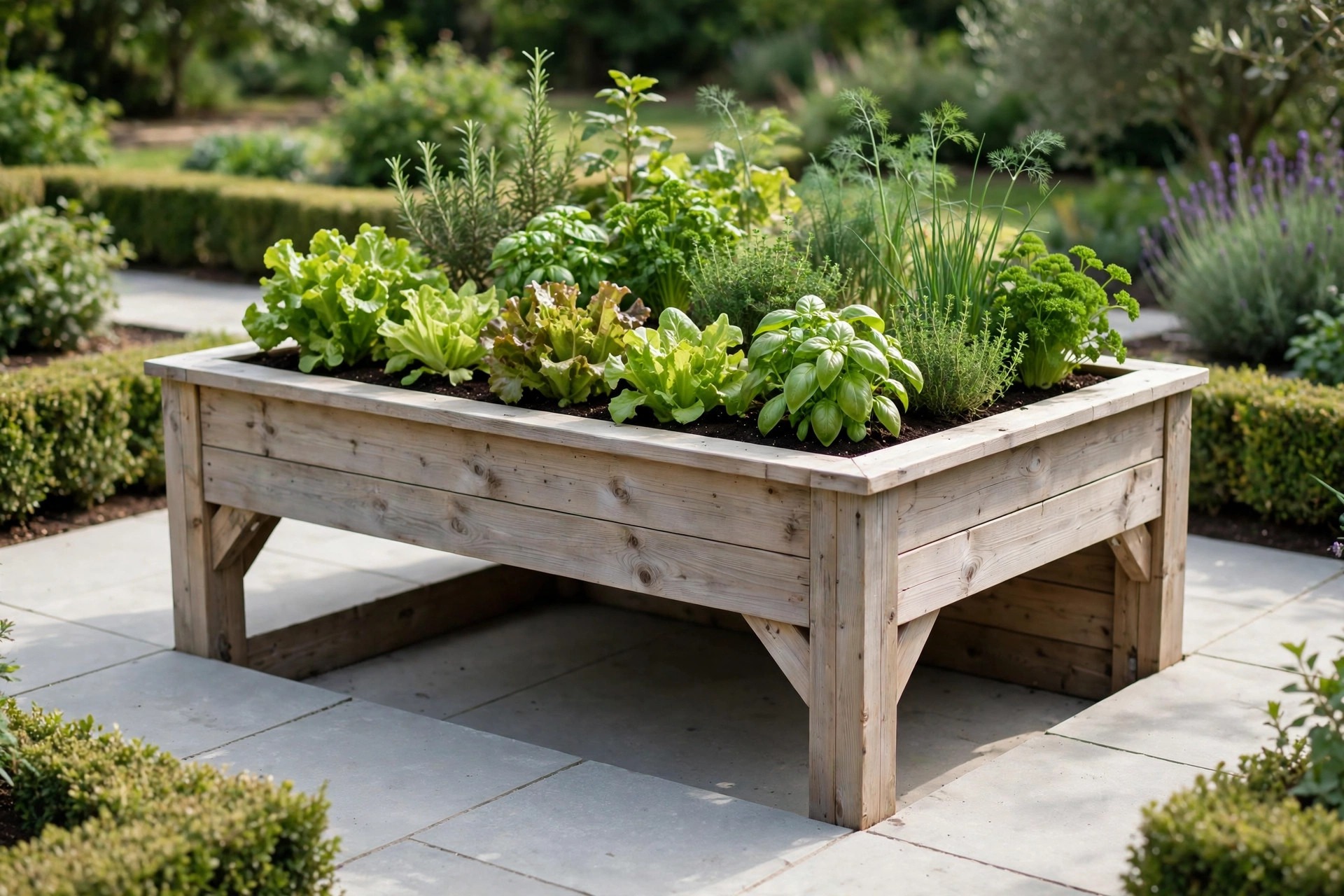
A bed designed for gardening from a wheelchair or chair needs two things together: a soil height you can reach across comfortably while seated, and open space underneath for your knees and feet, so you can get close instead of working at arm’s length.
A recessed, table-style front makes a dramatic difference, because your hands work directly over the soil, which is far less tiring for shoulders and back.
Keep these beds modest in width, consider a U-shaped layout that wraps planting space around your sitting position, and make sure the approach is firm and level with room to turn. Salads, herbs, and flowers thrive in this style.
6. Use Corner Beds You Can Reach From Two Sides
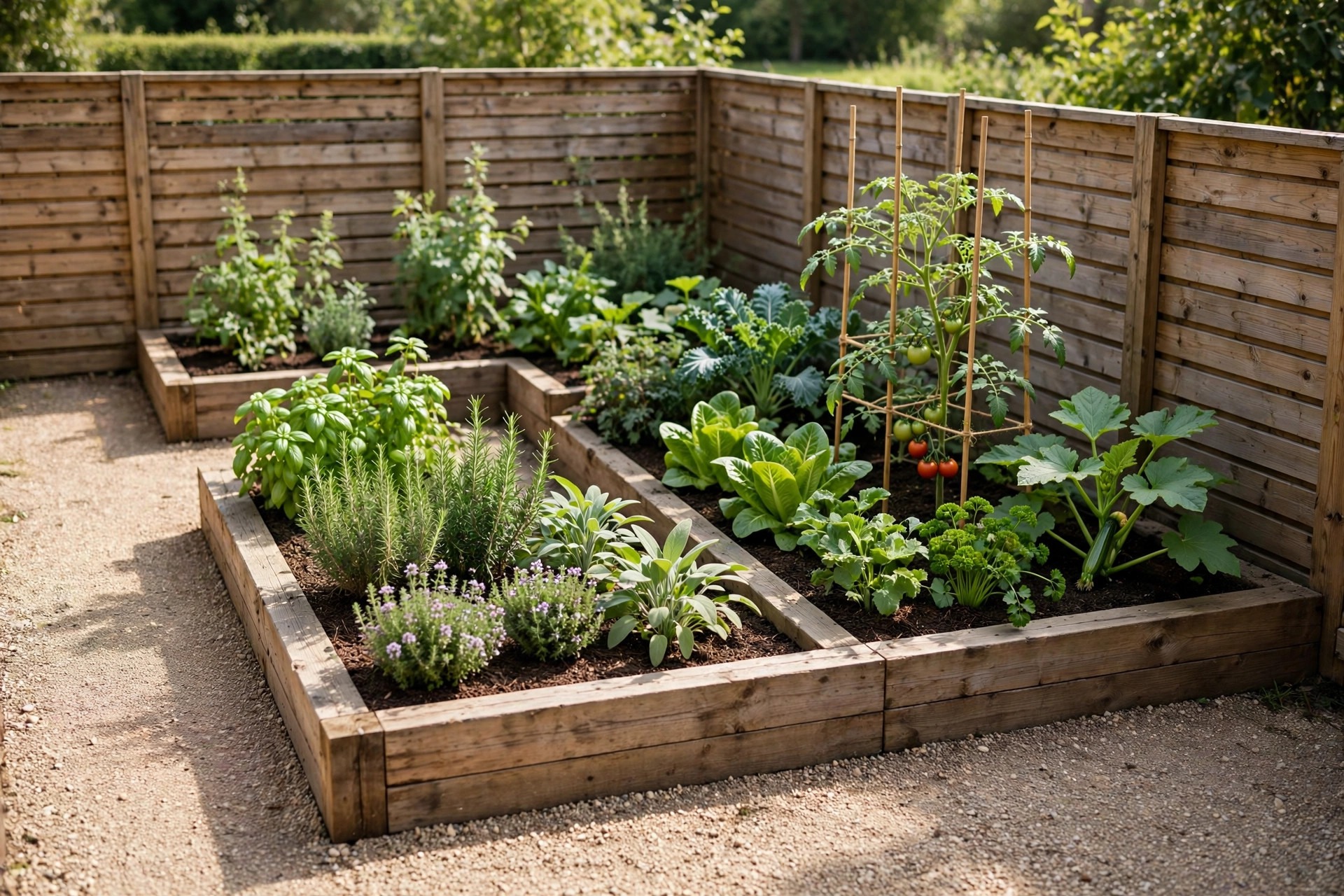
The corner where two fences meet is often wasted, yet it can be one of the most comfortable places to garden.
An L-shaped or angled corner bed lets you work from two sides, which halves the distance you ever need to reach — plants that would sit in the unreachable middle of a wide bed are suddenly close to one edge or the other.
Walls also hold warmth and block wind, which many herbs appreciate. Resist making the corner itself very deep; a gentle curve or diagonal front keeps it reachable, with taller plants in the deepest point.
A corner is a lovely spot for a fragrant herb collection in the spirit of a balcony herb garden, with firm surfacing on both sides.
7. Line Beds Along a Firm, Level Path
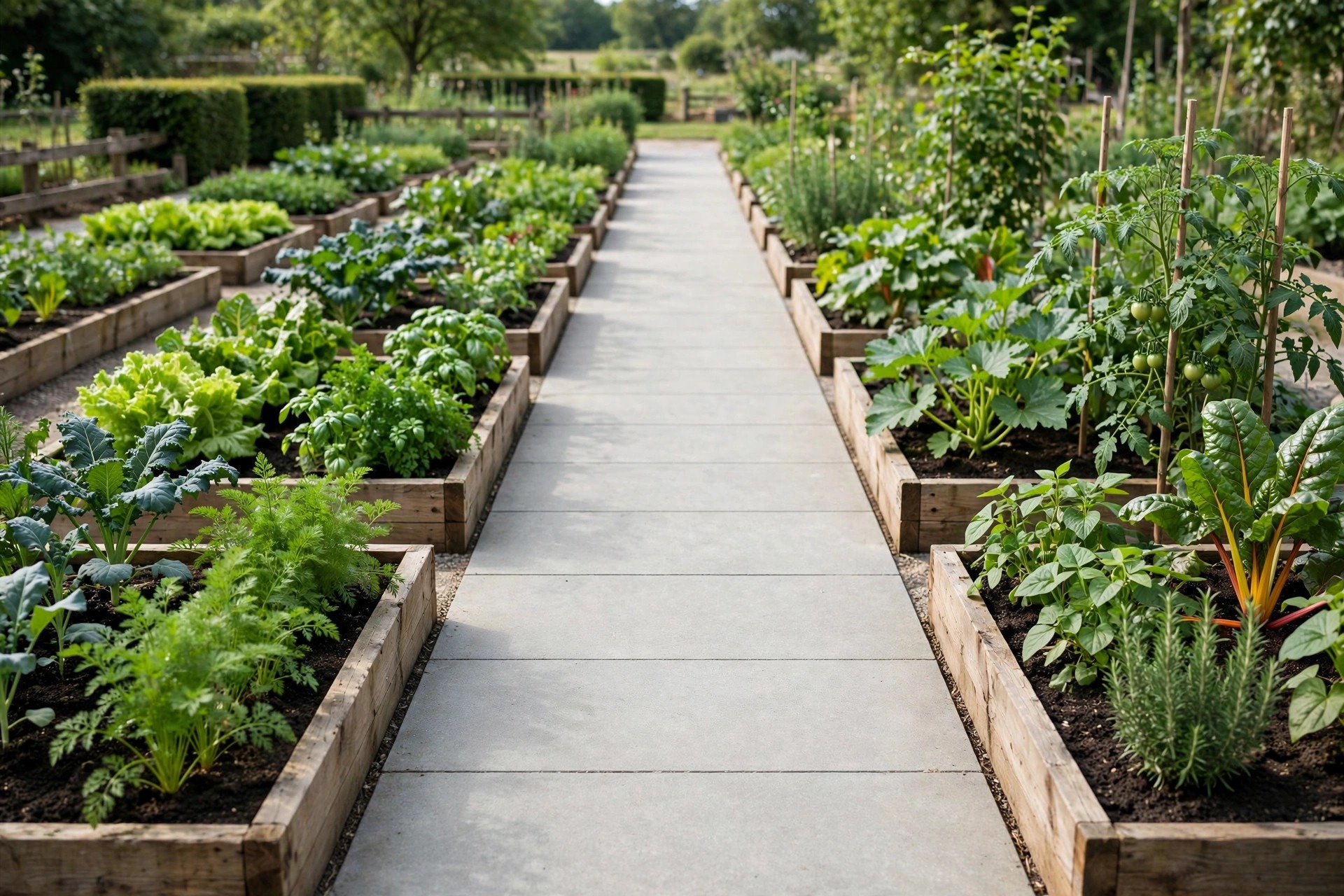
A beautiful bed is only comfortable if getting to it feels safe, so give the path as much attention as the beds themselves.
Lining raised beds along a firm, level path — paving slabs, compacted fine gravel over a solid base, or smooth decking — means every visit starts on steady footing in all weathers, without stepping on wet grass or uneven soil.
Think about the whole route from your back door: direct, free of steps and trailing hoses, and wide enough for a stool or walking aid.
Beds in a neat row along a clean path also give a small garden a calm, kitchen-garden feel, and make watering and harvesting quicker because everything is where you expect it.
8. Try a Self-Watering Wicking Bed
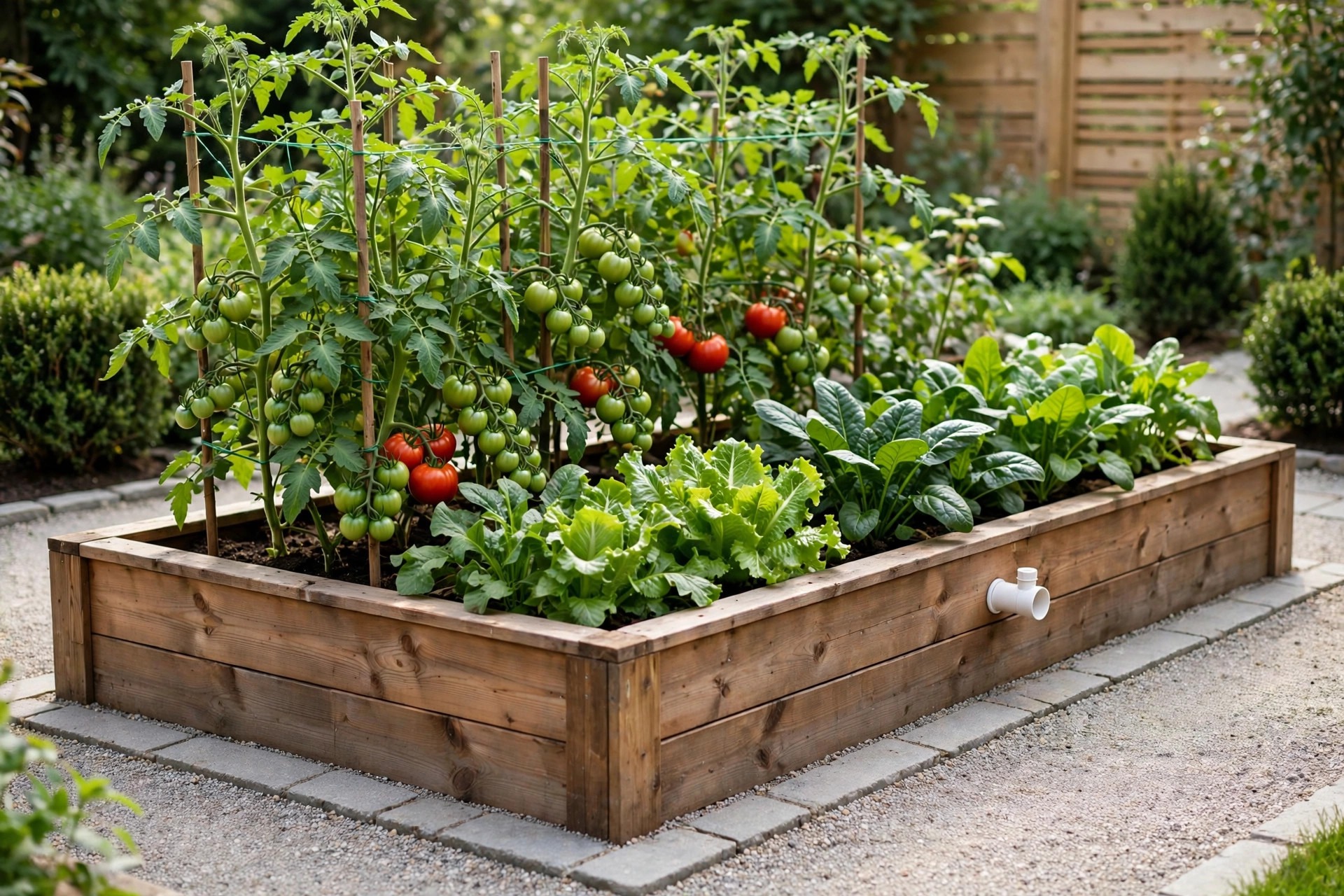
A wicking bed holds a reservoir of water beneath the soil, and the soil draws moisture upward as plants need it.
For a senior gardener the appeal is simple: far fewer trips with a watering can, far less standing with a hose, and soil that stays more evenly moist between top-ups.
You refill the reservoir through an inlet pipe at the side — often a job you can do seated, or with a short hose — and the bed looks after itself for days, depending on weather and crop.
Wicking beds suit thirsty vegetables like tomatoes, cucumbers, and leafy greens especially well. They take a little more setup, so many gardeners start with just one, and keep simpler beds for herbs and flowers.
9. Add Drip Irrigation So You Never Haul Cans
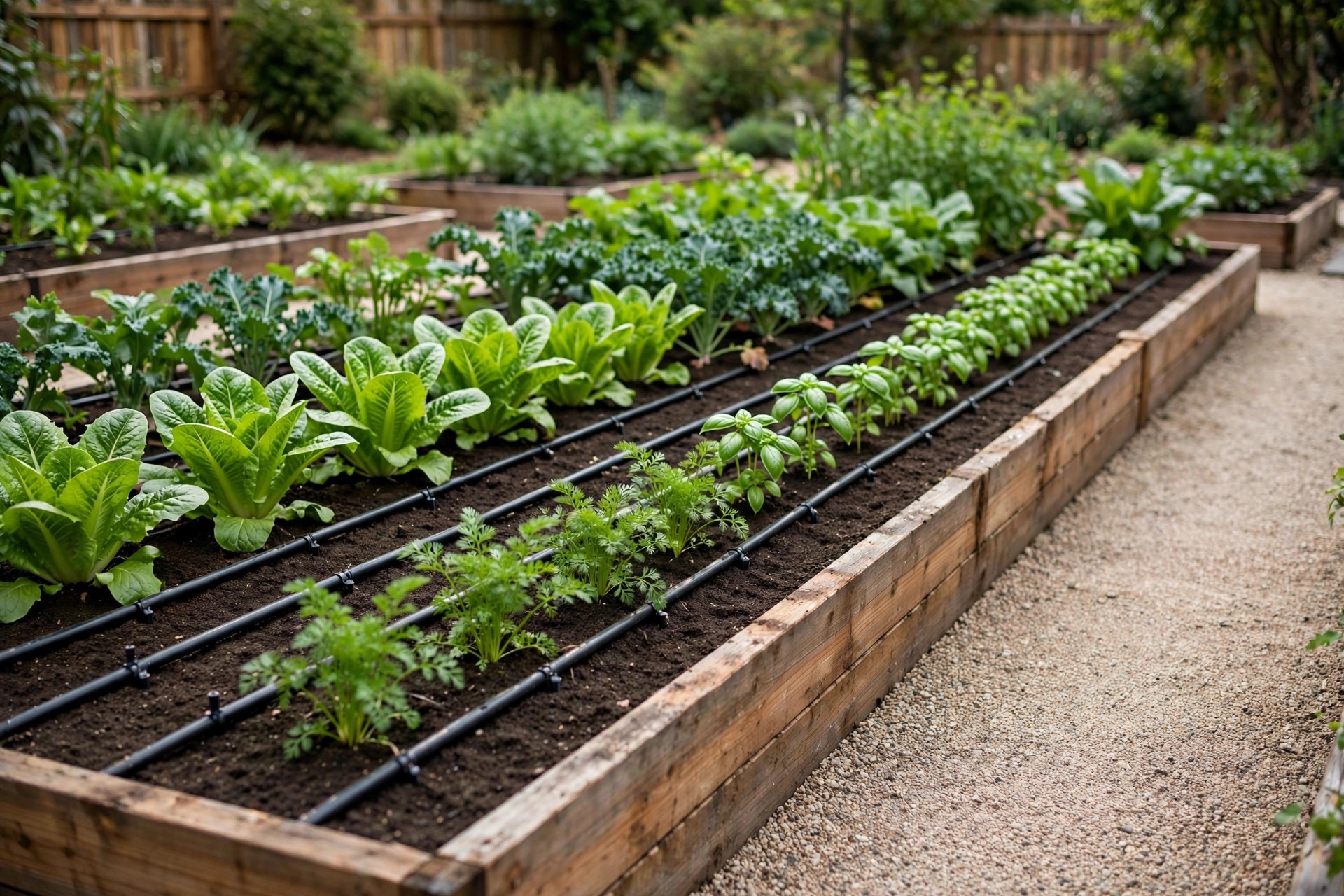
Drip irrigation offers much of the same freedom with simpler equipment. Narrow pipes or porous hose run along the soil surface and deliver water slowly, directly to the roots, at the turn of a tap or automatically on a timer.
There is no carrying and no standing holding a hose — you can be sitting comfortably while the beds water themselves.
Lay the lines out while the beds are newly planted, peg them down so they stay put, and start with one bed if you like, extending the system as confidence grows.
Drip watering also keeps foliage drier than overhead watering and puts water into the bed rather than onto the paths, so less is wasted.
10. Pair Each Bed With a Sturdy Garden Seat
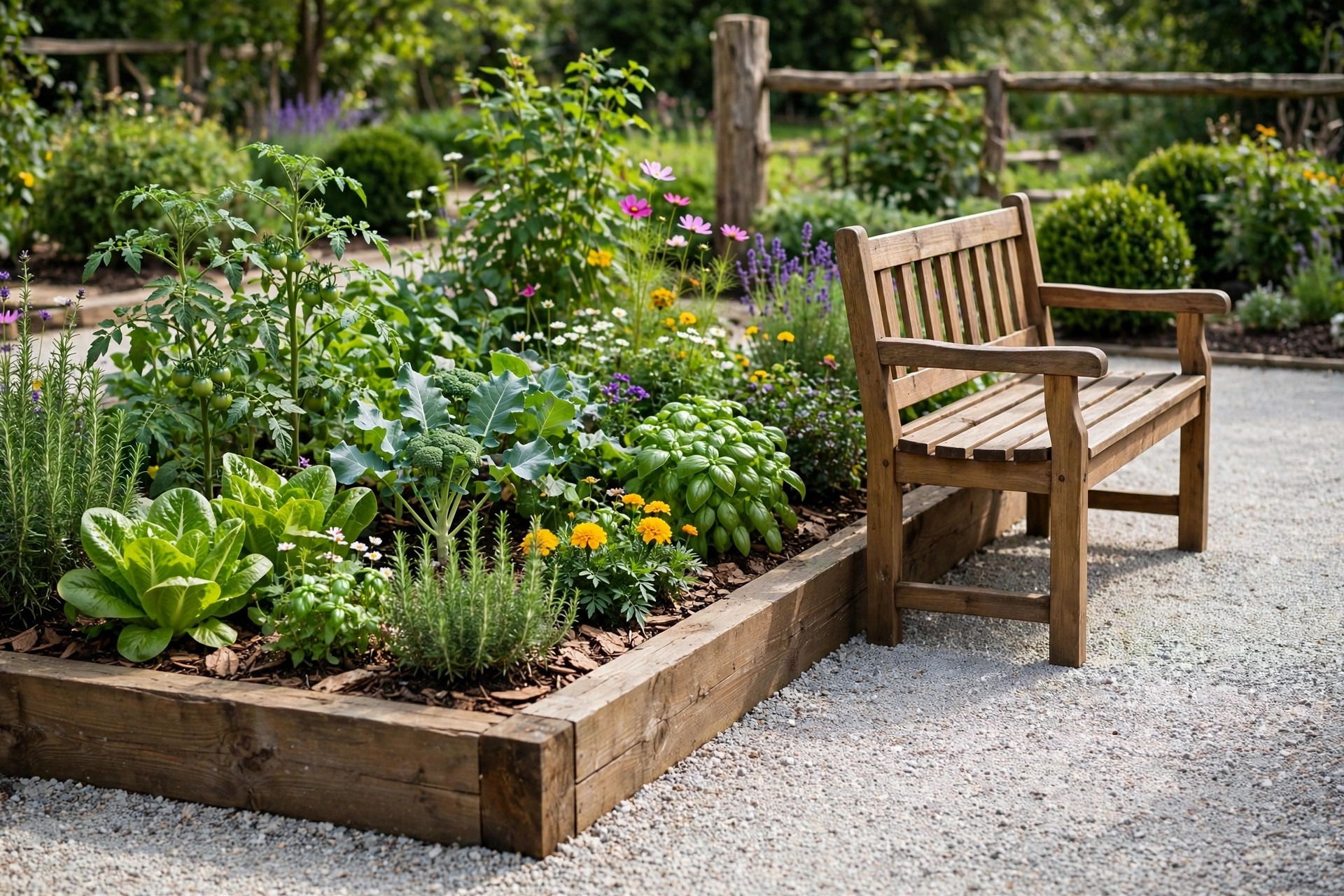
Even with a well-planned bed height, somewhere proper to sit transforms how long you can garden comfortably.
A sturdy seat beside each main bed — or one that moves easily between them — gives you a resting point for longer jobs like sowing a row or working through a harvest.
Many gardeners find they pace themselves better simply because the seat is there.
Choose a seat that feels rock-steady, at a height you can rise from easily; test this before committing, because a seat that is too low can be harder to leave than standing was.
Seats that double as tool storage save trips to the shed, and keeping the seat on the firm path, stored close at hand, makes sitting part of the gardening itself.
11. Pick Rolling Mobile Planters You Can Move to the Shade
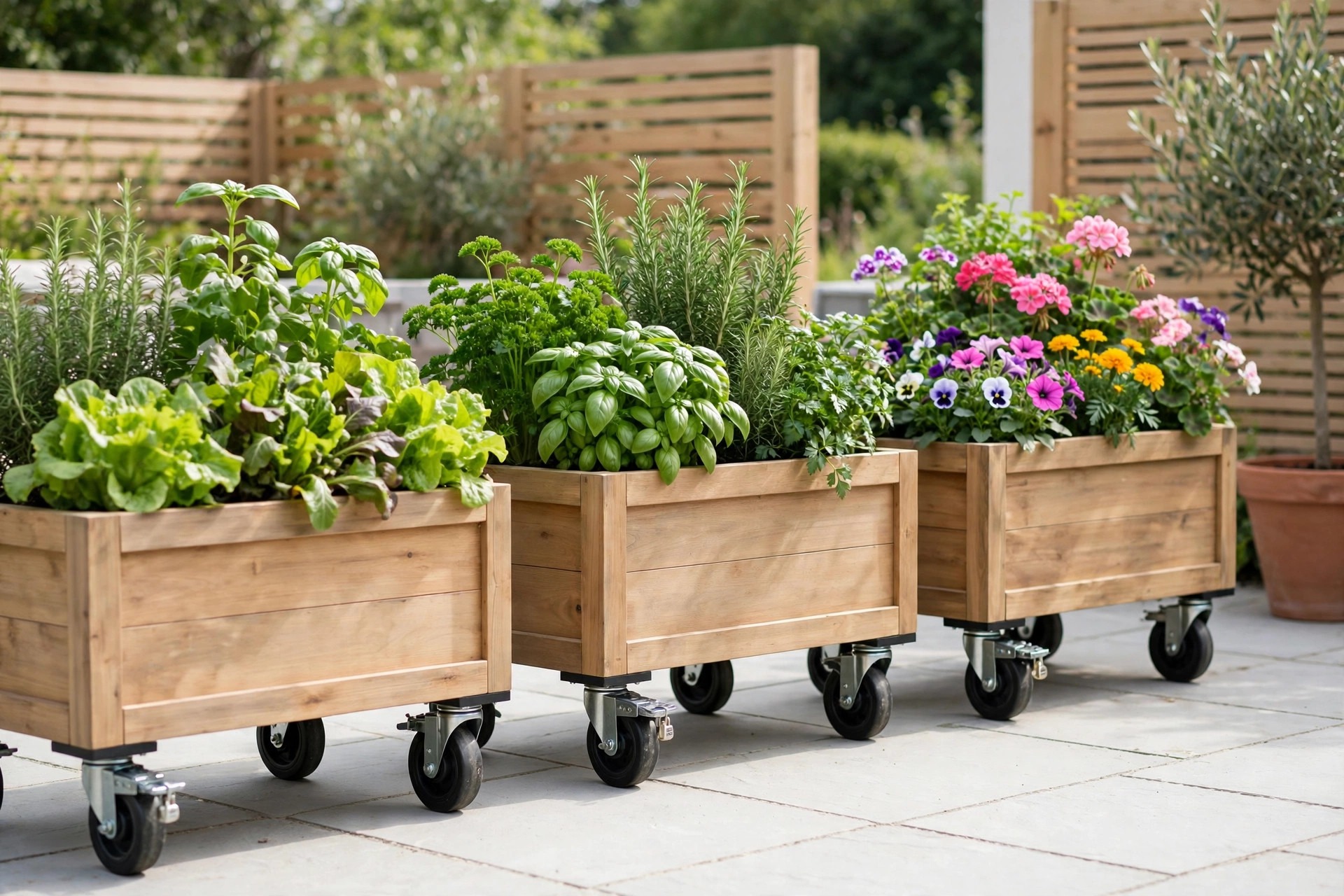
Rolling planters put your garden on sturdy castors, and that mobility solves several problems at once.
You can wheel a planter into morning sun and afternoon shade, move it close to the house when frost is forecast, or bring it beside your patio chair for a relaxed half hour of deadheading and picking.
For paved yards and terraces, mobile planters also mean no permanent building at all. Look for large, lockable wheels that roll smoothly over paving, and lock them once the planter is in place.
Keep sizes manageable — two smaller planters you can move without effort beat one huge trough — and group them together so watering becomes a single short stop for herbs, salads, strawberries, and annual flowers.
12. Place a Counter-Height Herb Bed by the Kitchen Door
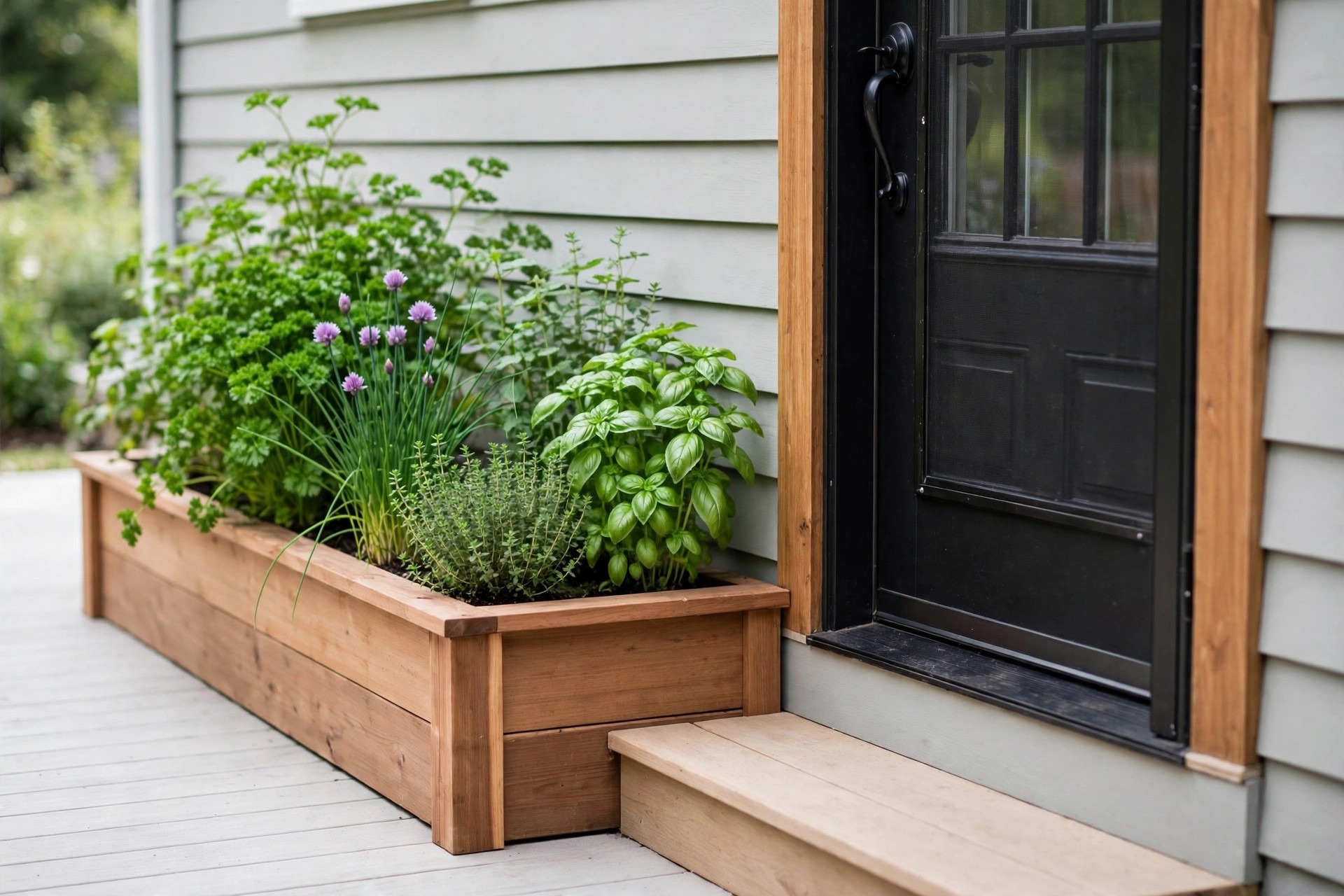
A counter-height herb bed beside the kitchen door is the hardest-working bed of all.
Parsley, chives, thyme, and basil — with mint kept in its own pot — grow at exactly the height your hands work at, steps from where you cook.
Snipping a handful for supper takes seconds and never means a trek down the garden in the rain.
Because you pass it constantly, you notice straight away when something needs water or a trim, and frequent small harvests keep soft herbs bushy rather than leggy.
A narrow design works best here, since you only ever tend it from the front, and it keeps the doorway and path clear.
With no outdoor ground at all, the same idea moves indoors — see the companion guide to indoor garden ideas for apartments with no balcony.
13. Set Up a Salad Table for Quick Daily Picking
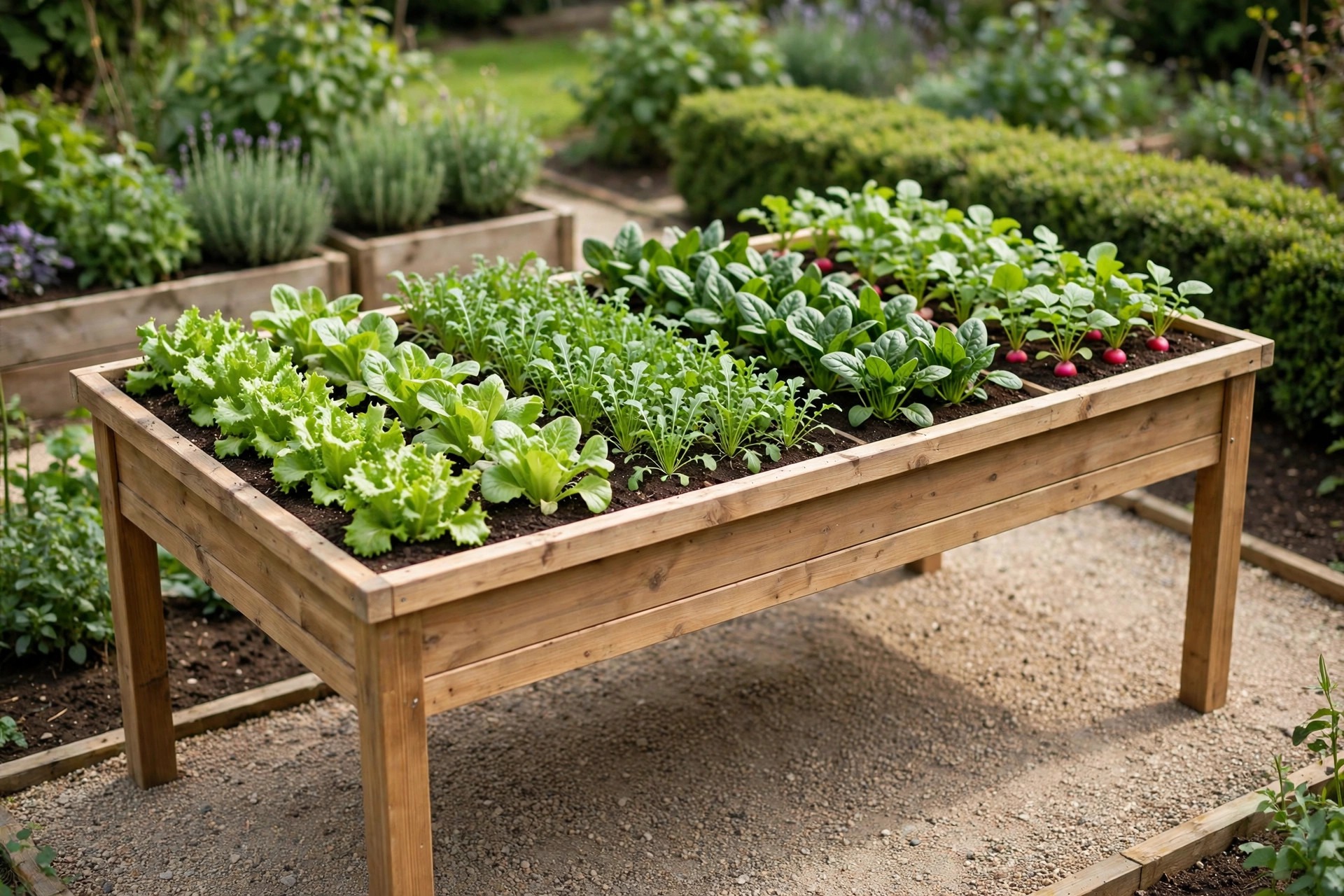
A salad table is a shallow, waist-high tray dedicated to crops you pick little and often: loose-leaf lettuce, rocket, baby spinach, pea shoots, and radishes.
The shallow soil is no limitation for these fast, shallow-rooted plants, and growing them on a table keeps leaves clean, makes slugs easier to spot, and turns the daily harvest into a pleasant moment.
It becomes a slow walk along the table with a small basket, snipping what you need for lunch.
Sow in short rows a week or two apart so fresh leaves keep coming, and harvest outer leaves first, leaving each plant’s centre to keep growing.
Place the table in light shade if your summers are hot, water gently and often, and pair it with one deep bed for larger vegetables.
14. Keep Beds Narrow Against a Fence for One-Side Reach
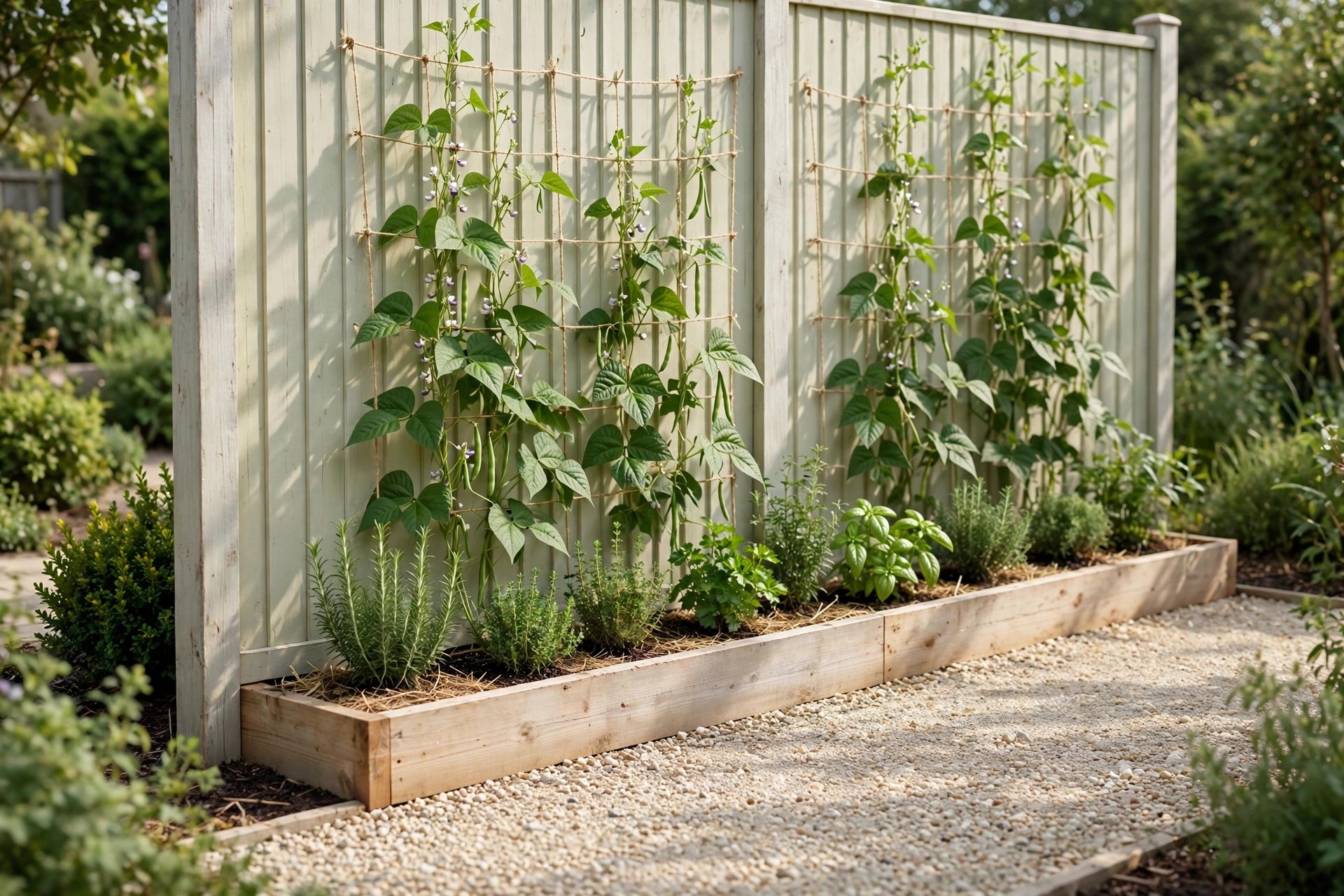
Not every garden has room to walk around a bed, and it does not need to.
A narrow raised bed against a fence or wall, designed from the start for one-side working, can be one of the most comfortable layouts of all — provided the width honestly matches your reach.
Worked entirely from the path, a fence bed uses awkward boundary strips productively, warms up against the wall, and gives climbing plants a ready-made support. The discipline is resisting extra width: every extra hand’s breadth becomes stretching and twisting when you weed the back row.
Instead, grow upward — beans, peas, and cordon tomatoes against the fence, with herbs and salads at the front edge — and you will harvest a remarkable amount from a modest strip.
15. Create Long Community-Style Beds With Rest Points
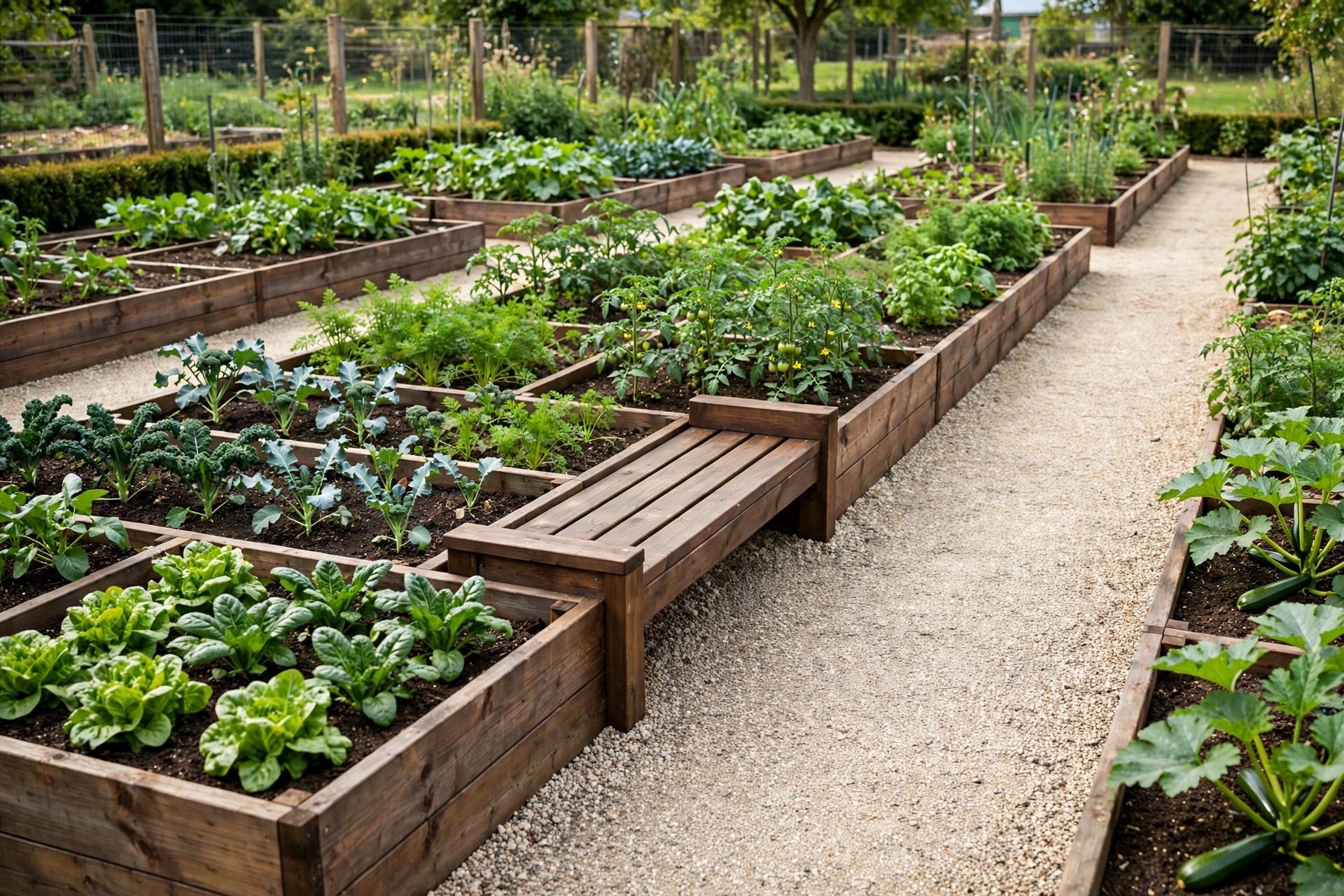
Community gardens have quietly perfected a layout worth borrowing at home: long raised beds with regular places to pause built into the plan.
At home, that means one or two long beds divided into sections by crop or by a low trellis panel, with a sturdy seat, a wide sitting edge, or a clear tool space at intervals along the length.
You work one comfortable section at a time and never face a whole plot demanding attention at once.
This layout also shines when family or neighbours garden with you, each person working at their own pace, and it suits anyone returning after a break, since one section is a complete, satisfying job. Planning a fresh growing area?
The simple layout approach in small front yard garden ideas for beginners pairs well with this one.
Common Mistakes to Avoid
Building the bed too wide to reach the middle. This is the most common mistake, and it quietly brings back all the bending the bed was meant to remove.
Before committing to dimensions, stand or sit where you will actually work and reach forward comfortably — that honest reach, not a catalogue size, should set the width.
A narrower bed you can tend with ease will always out-produce a wide bed whose centre becomes a neglected tangle of weeds and unpicked crops.
Making paths too narrow or too soft. Beautiful beds squeezed along a strip of muddy grass undo much of their own benefit.
Paths need to be wide enough for you, your stool, and any aid you use, and surfaced with something firm that stays steady in wet weather.
Soft, uneven, or cluttered paths are where confidence disappears, so treat the path as part of the build, budget for it properly, and keep it clear of pots, hoses, and clutter all season.
Placing beds far from water and far from the house. A bed at the bottom of the garden, a long carry from the nearest tap, will be watered less, visited less, and enjoyed less, however lovely it looks in spring.
Site main beds within easy reach of water, add drip irrigation or a wicking reservoir if needed, and keep your most-used bed — especially herbs and salads — as close to the door as light allows.
Convenience is not a compromise in garden design; for a bed you tend daily, it is the whole point.
Frequently Asked Questions
What is the best height for a raised bed for seniors? There is no single perfect height, because the answer depends on whether you prefer to stand or sit, and on your own proportions.
As a general starting point, many standing gardeners find a soil surface around hip to waist height comfortable, while seated gardeners often prefer a lower bed with a wide sitting edge or an open knee recess.
The most reliable test is personal: mimic the posture at a counter or bench at home, notice where your hands rest naturally, and let that guide the build rather than copying a standard size.
How wide should a raised bed be so I do not have to lean? Let your comfortable reach decide.
Stand or sit where you will work, reach forward as you would to weed the far side of a bed, and measure that distance honestly, without stretching or leaning your weight forward.
A bed worked from both sides can be roughly twice your comfortable one-side reach, while a bed against a fence should be no wider than your one-side reach alone.
When in doubt, go narrower — you can always add another bed, but you cannot easily un-build one that is too wide.
What should I grow first in a raised bed if I am new to it? Start with forgiving, rewarding crops you enjoy eating: loose-leaf salads, radishes, spring onions, courgettes, climbing beans, and easy herbs such as parsley, chives, and mint in its own pot.
These grow quickly, forgive minor mistakes, and give frequent small harvests that build confidence. Avoid filling your first bed entirely with slow or demanding crops.
One or two early successes will teach you more — and encourage you more — than a bed full of experiments.
How can I water raised beds without carrying heavy cans? Several gentle options work well, and you can combine them.
A drip line or soaker hose delivers water at the turn of a tap or on a timer, a wicking bed draws from a reservoir you top up occasionally.
A lightweight hose on a reel removes the carrying while keeping the flexibility of hand watering.
Mulching the surface also helps, because beds then need watering less often. Choose the system you will genuinely use — once installed, these systems ask very little of you.
Final Thoughts
The best raised bed garden is not the biggest or most elaborate one — it is the one shaped honestly around your body, your energy, and the way you like to spend time outdoors.
A comfortable height, a width you can truly reach, firm paths, easy watering, and a place to sit are not luxuries. They are the design itself, and once they are in place, the bending and kneeling that once overshadowed your gardening fade into the background.
Start with a single bed if that feels right. Grow salads at waist height, snip herbs from a planter by the door, or pick beans from a trellis without bending once, and notice how different the work feels.
Your garden should give you fresh air, gentle movement, good food, and quiet satisfaction — never a sore back as the price of admission.
With these raised bed garden ideas for seniors as your starting point, you can keep growing the plants you love, in comfort, for many seasons to come.


