

15 Small Living Room Ideas for Families With Toddlers
Your toddler runs for the sofa the second you turn your back, and the room is barely bigger than the rug. You want a place that still feels like yours, with room for blocks, books, and a tired parent to rest.
These small living room ideas for families with toddlers keep the focus on layout and storage. Each idea works in a tight room, uses pieces you can move as your child grows, and leaves a clear path for little feet.
Start with one change, not all fifteen. Swap the table, add the bins, or mark the play corner first. Small rooms feel calmer when every toy and every seat has a set place.
For a wider look at shared play space, see these living room and playroom combo ideas. They pair well with the toddler-first layout below.
This post contains affiliate links. If you buy through them, we may earn a small commission at no extra cost to you. See our Affiliate Disclosure.
1. Swap the Sharp Coffee Table for a Soft Ottoman
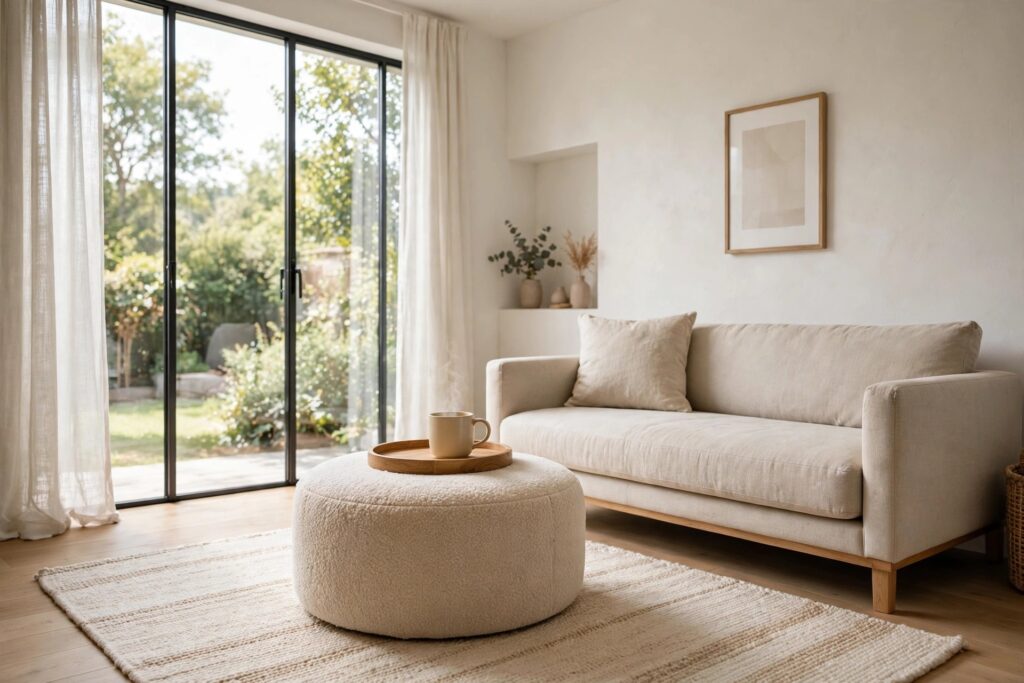
A hard corner at knee height sits where a toddler steadies herself to walk. A round, padded ottoman removes that corner from the daily path, and it still holds a tray for coffee.
Pick one with a firm top so a board book stays flat, and a soft edge all the way around. The tray lifts off at play time, which turns the same piece into a low seat or a footrest.
Keep the ottoman close to the sofa, not floating in the middle of the room. That one shift leaves the center open for crawling, stacking, and the nightly toy sweep.
At clean-up time, toys slide into a basket beside the sofa, not under the ottoman. You keep the soft surface clear, and your toddler keeps a place to climb up.
2. Keep One Clear Path From Door to Window
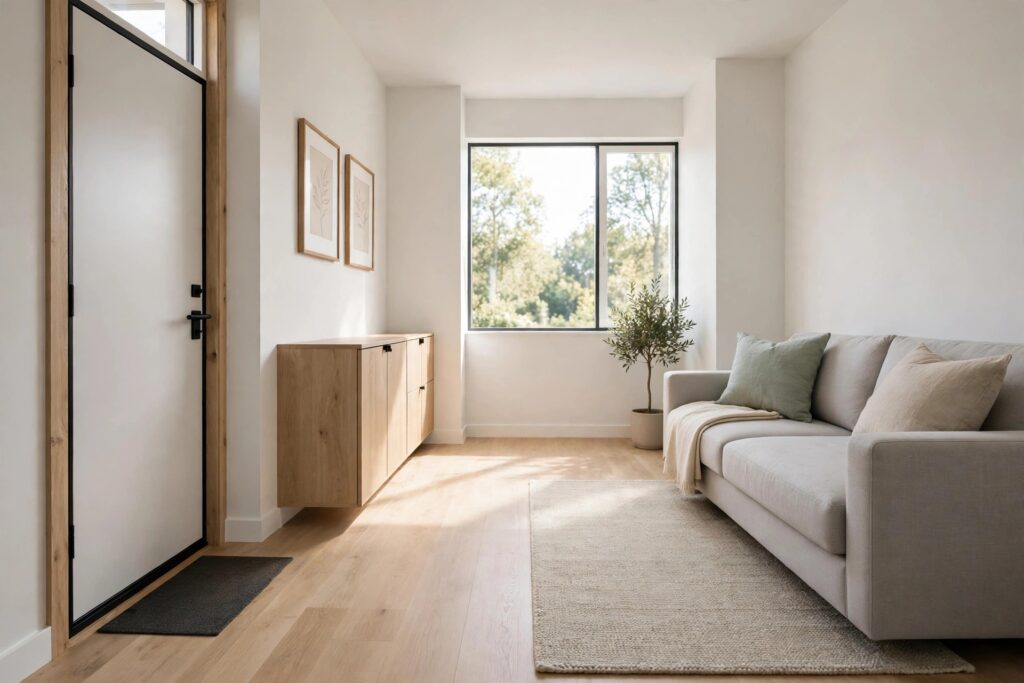
Start by walking the room the way your toddler does, from the door to the brightest spot. If a chair leg, a toy bin, or a rug corner blocks that line, move it to the wall.
One open lane changes how the whole room feels. Your child can push a toy cart straight across, and you can cross the room with a sleeping baby in your arms.
Push the sofa and the storage to the same side where you can, so the lane stays wide. A rug that stops short of the lane helps, since little feet learn where the path runs.
Check the lane again after each new toy arrives. If a ride-on toy now lives in the middle, give it a parking spot by the wall at the end of the lane.
3. Put Toys on a Low Shelf at Toddler Height
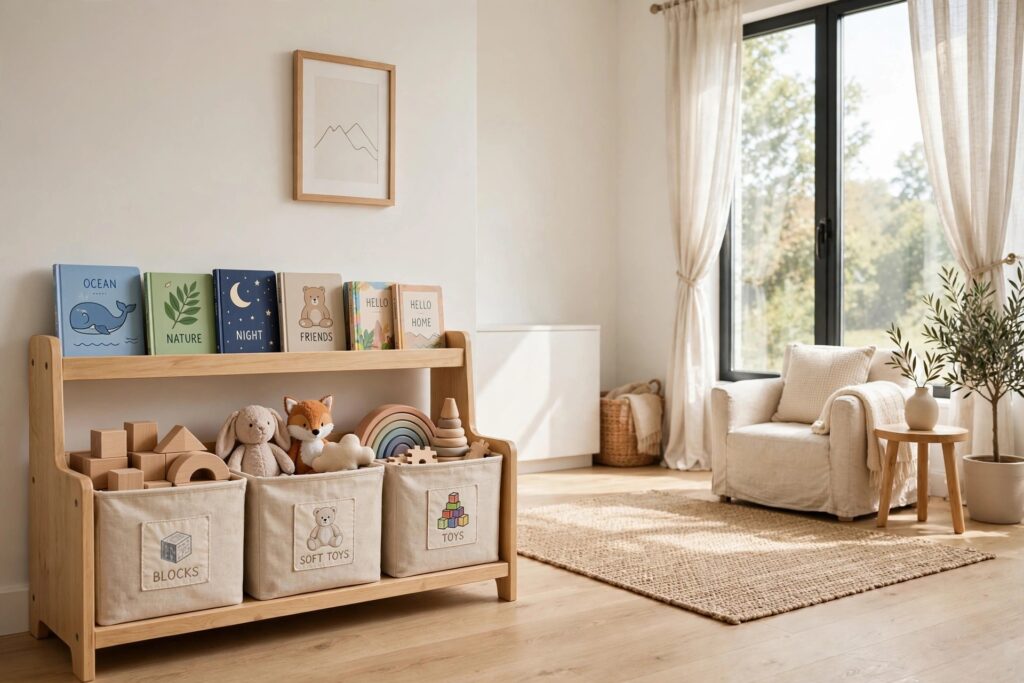
Your toddler will reach for what she can see, so put the daily toys where her hands can find them. A low shelf with two or three open bins beats a tall unit with doors she cannot open.
Use a picture label on each bin, such as a block, a car, or a doll. She may not read yet, but she can match the picture to the toy in her hand.
Keep the top of the shelf for adult things, well above her reach. Books you read together can sit on a middle shelf, so she points and you lift them down.
Rotate one bin out each week and bring a stored bin back in. The shelf stays short, the room stays calm, and old toys feel fresh again.
4. Dress the Sofa in Washable Covers
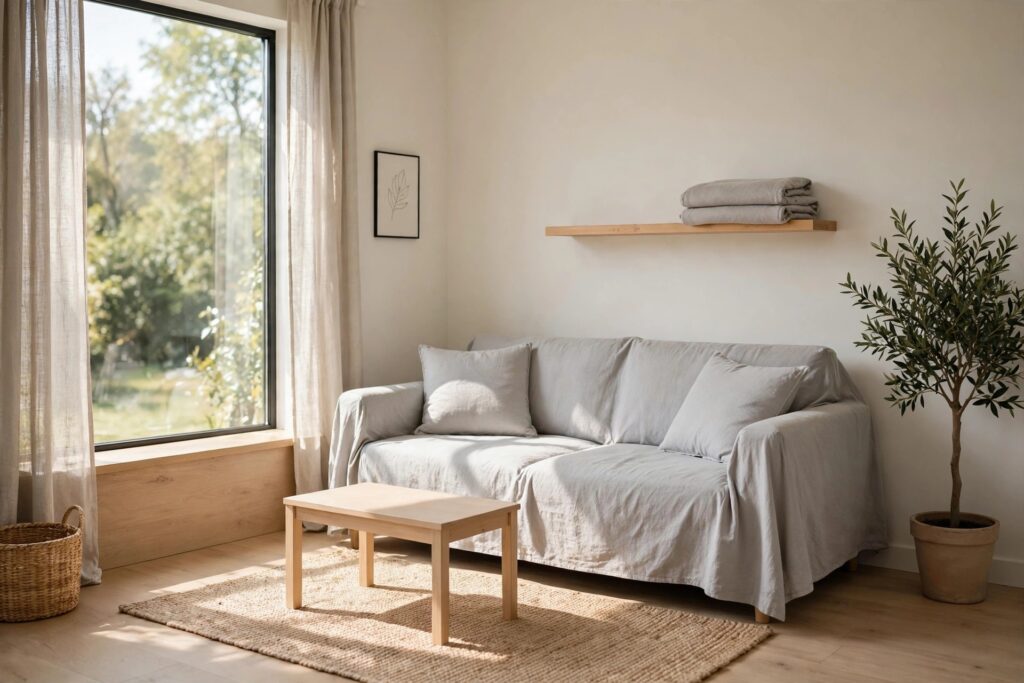
Juice, cracker crumbs, and sticky hands land on the sofa first in a small room. A washable slipcover lets you pull the cover off, wash it, and put it back without a long scrub.
Choose a plain color that hides a little wear between washes, and keep a second cover folded in the closet. When one is in the wash, the sofa still looks dressed.
Match the cover with washable cushion cases in the same tone. The room reads as one calm sofa, not a patch of spare blankets thrown over stains.
This idea works best with a firm sofa cushion that holds its shape under a cover. A sagging cushion will show through, so plump it well before you dress it.
5. Mark the Play Corner With One Soft Rug
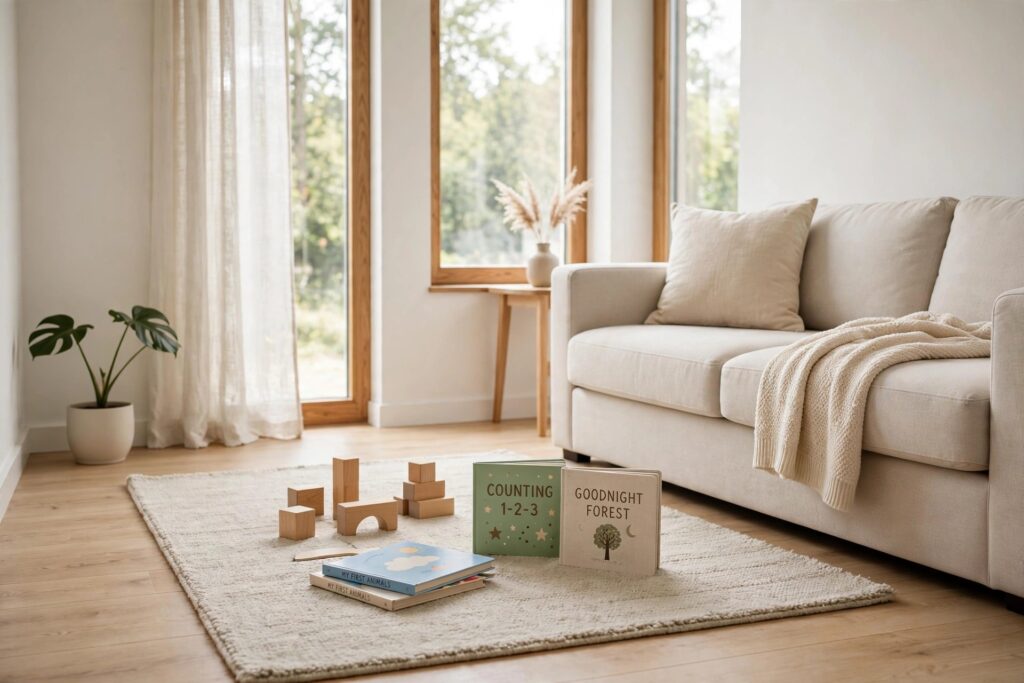
A rug edge can do the job of a wall in a small room. Lay one soft rug in a corner, and that corner becomes the place where blocks and books belong.
Pick a low pile rug that a toy car can roll across without tipping. Thick shag looks cozy, but small wheels catch in it and play stops fast.
Keep the rug close to the sofa so you can sit and watch from one seat. Your toddler plays where you can see her, and you do not need a second chair.
When play ends, toys go back onto the rug first, then into their bins. The rug line makes clean-up a short game, not a hunt through the whole room.
6. Use a Gate That Folds Flat Against the Wall
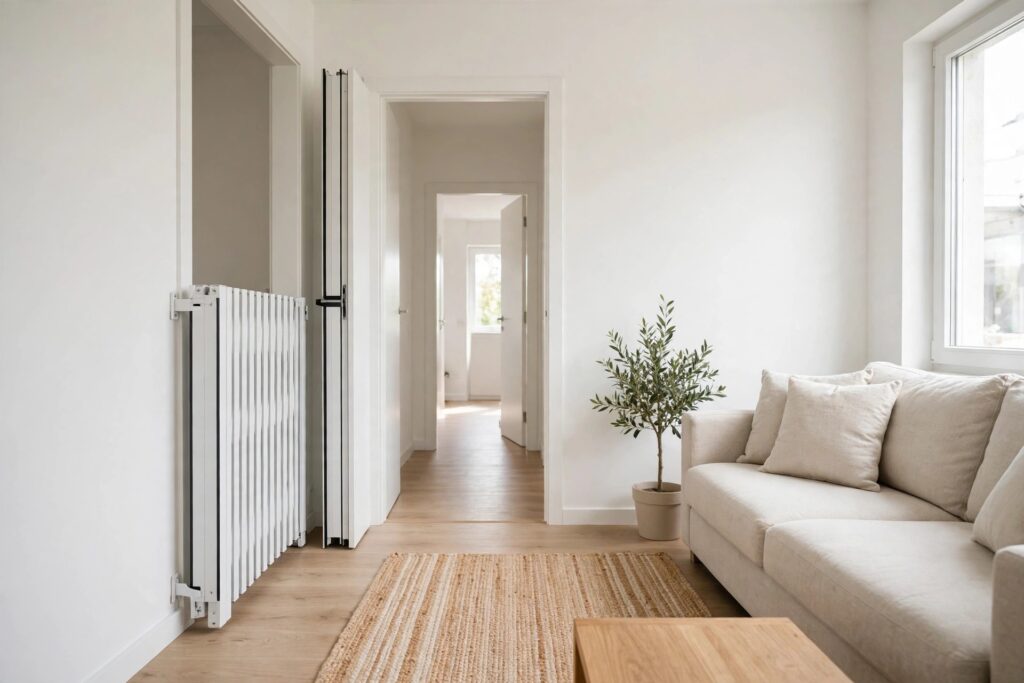
A gate that swings wide can eat a full corner of a small room. A folding gate that rests flat against the wall when open keeps that corner free for seating or storage.
Set the gate in the doorway you use least during the day, such as the hall to the kitchen. You close it for cooking time, then fold it back when the room opens up again.
Check that the folded gate sits flush, with no gap that invites a push toy behind it. A slim hook on the wall holds it flat, and small hands cannot reach the latch.
If your room has no spare doorway, try the same idea at the stairs or the hall entry. The point is a barrier that gives the room back when you do not need it.
7. Put Heavy Pieces Against the Wall and Light Toys Low
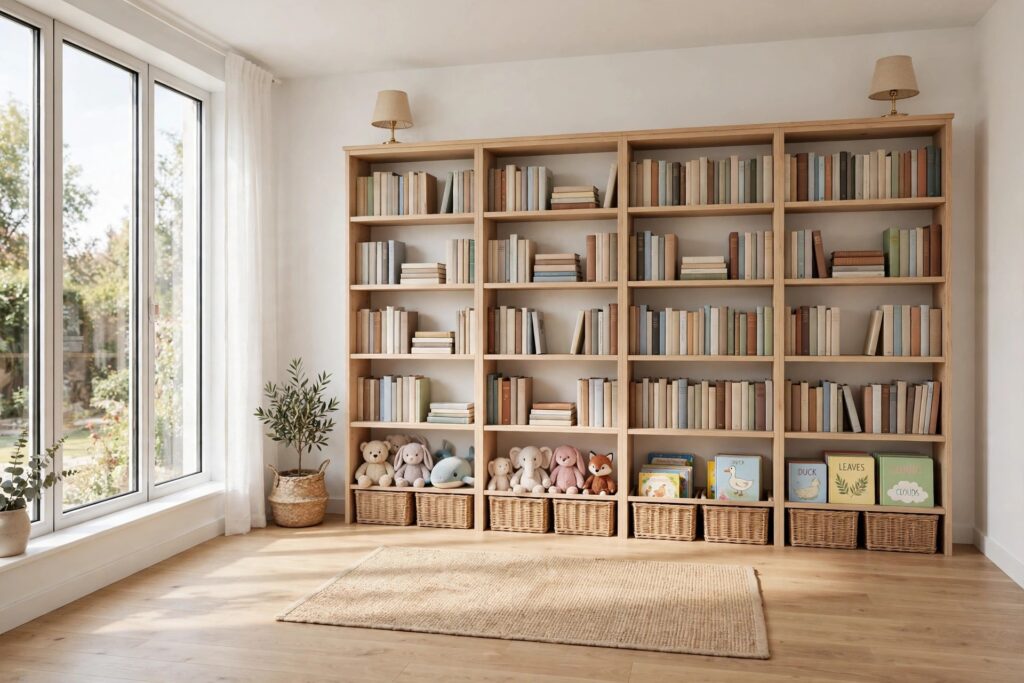
Many parents stack a tall shelf in the only free corner, then wonder why the room feels tight. Push heavy, tall pieces flat against the longest wall instead, and keep the floor line low.
That one move frees the middle of the room and gives your toddler a clear view across it. She can see you from the rug, and you can see her from the kitchen door.
Use the low zone for her things only, such as soft blocks, board books, and stuffed animals. The high zone holds adult books, frames, and lamps, out of the daily grab range.
This split also helps at tidy time. If a toy sits above knee height, it belongs to an adult shelf, and it goes back up before bedtime.
8. Store Extra Toys in One Closet Bin
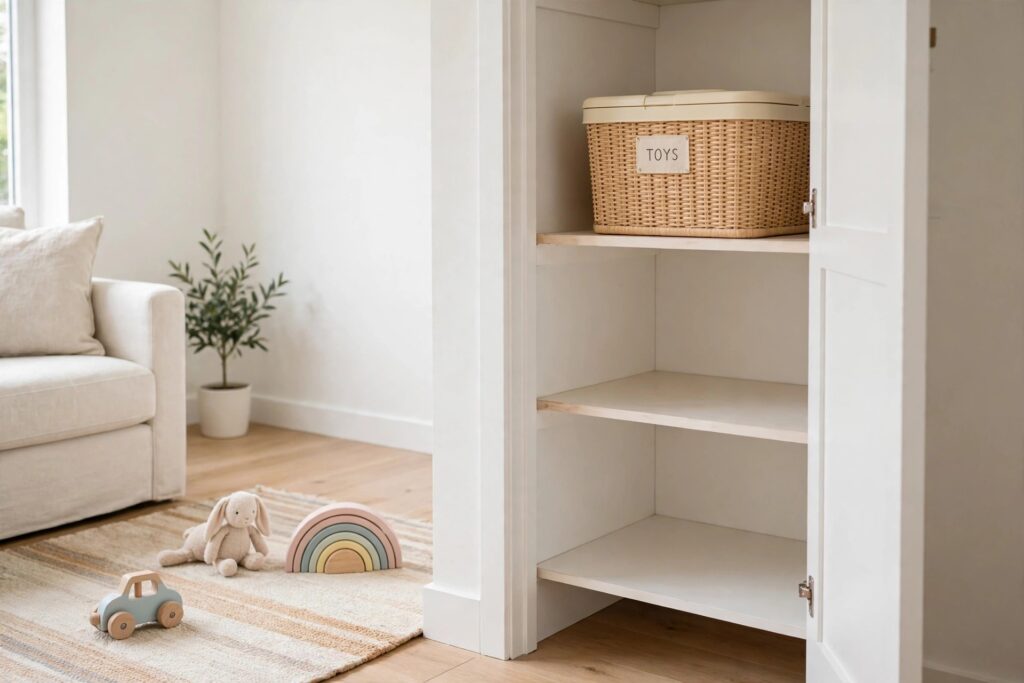
Too many toys out at once will fill a small room by lunch. Keep one lidded bin in a closet for the toys that are not in play this week, and swap a few at a time.
Label the bin by type, not by child, so any adult can find the cars or the puzzles fast. A bin that needs a hunt will stay shut, and the swap will never happen.
Try the swap on the same day each week, such as Sunday after nap time. Your toddler watches the new bin open, and the old toys leave before the room fills again.
If you have no closet near the living room, slide the bin under a bench or behind the sofa. The bin just needs a set home, not a large one.
9. Layer a Soft Mat Under the Play Rug
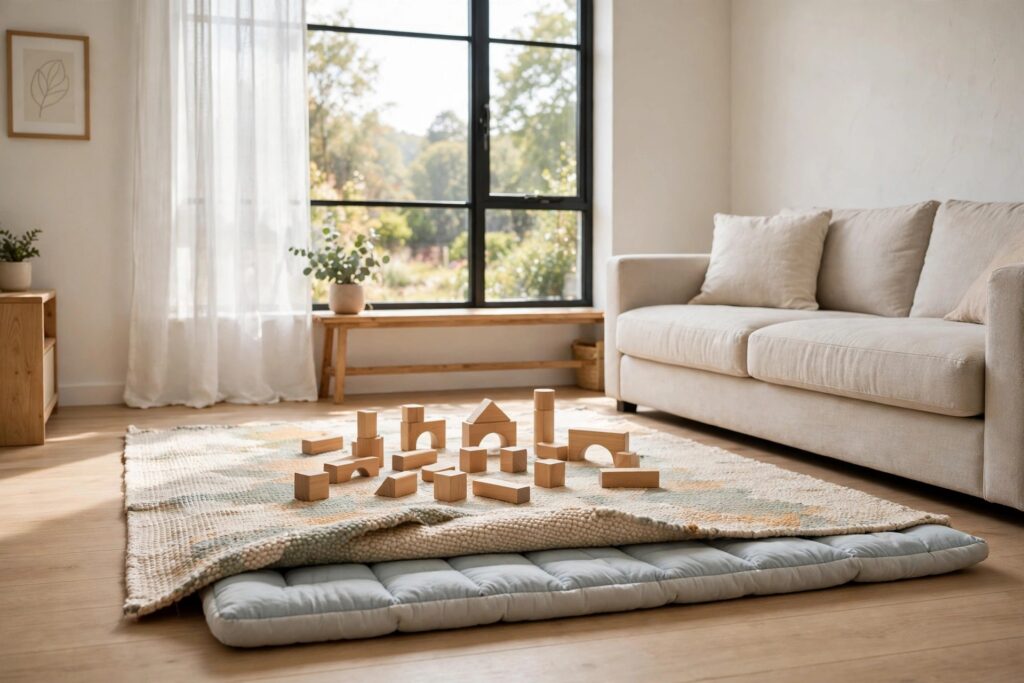
Hard floors feel cold for floor play, and a thin rug alone does little for knees. A soft play mat under the rug gives a cushioned base without adding a second rug to trip over.
Cut or fold the mat to fit just inside the rug edge, so no mat corner peeks out. A hidden mat keeps the room looking neat, and little feet stay on one flat surface.
This layer also quiets block play a little, since blocks land on a soft base. Your downstairs neighbors, if you have them, will notice the change too.
For more small-room floor plans, see these small living room ideas for apartments. The same rug and mat plan fits a tight apartment lounge.
10. Give Every Toy Type One Basket by the Sofa
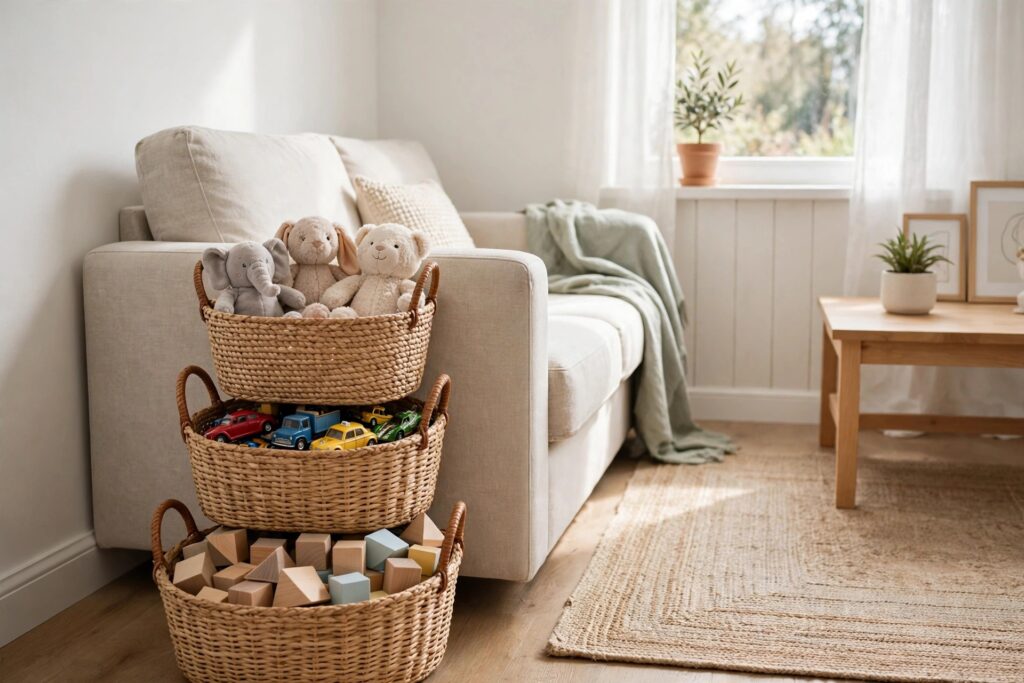
One big toy box turns clean-up into a deep dig, and small rooms show that mess fast. Three small baskets by the sofa arm work better, one for blocks, one for cars, and one for soft toys.
Your toddler can carry one basket to the rug, play, and carry it back. The short trip teaches her where each toy lives, and you avoid a full-room sweep.
Pick baskets with handles she can grip and lids you can lift with one hand. A basket that needs two hands will sit open, and toys will drift out of it.
At night, stack the baskets in the same order by the sofa. The row looks tidy from the door, and the morning starts with a clear rug.
11. Turn a Dead Corner Into a Floor Cushion Reading Nook
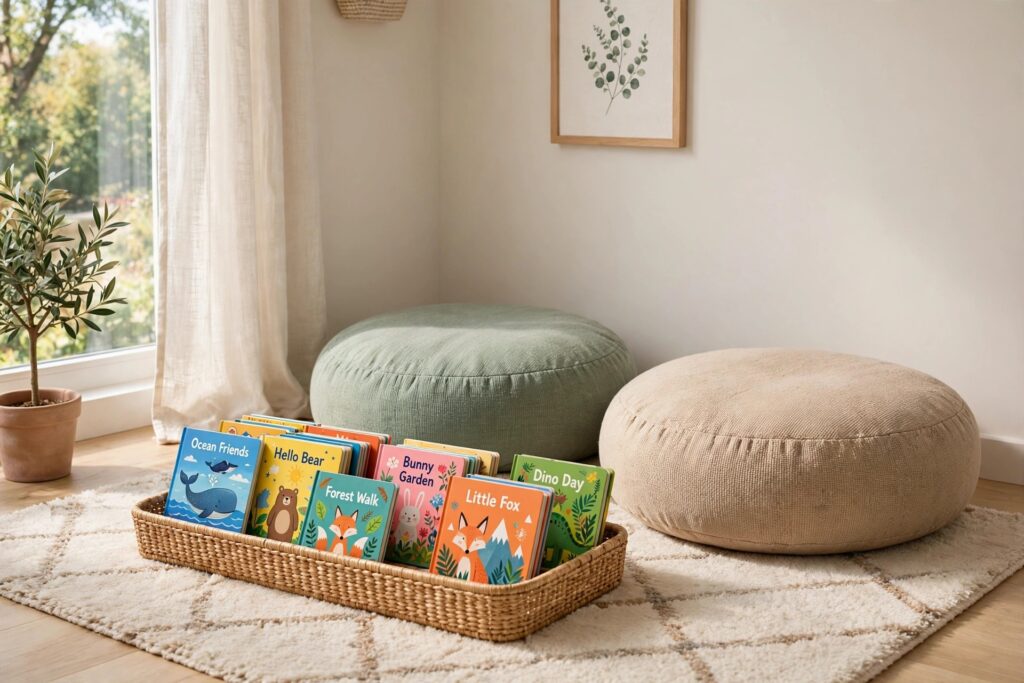
Every small room has a corner that holds nothing but a lamp cord. Put two floor cushions there, plus a low bin of board books, and that corner earns its keep.
Your toddler can flop onto a cushion with a book while you sit on the sofa nearby. The nook needs no chair, no table, and no extra floor space beyond the cushions.
Keep the book bin short, with books facing out so covers catch her eye. A tall bin will tip when she leans on it, and books will spill across the rug.
Swap the books when she tires of them, just as you swap the toy bins. A fresh cover or two keeps the same corner feeling new for weeks.
12. Add a Low Art Table With a Wipe-Clean Top
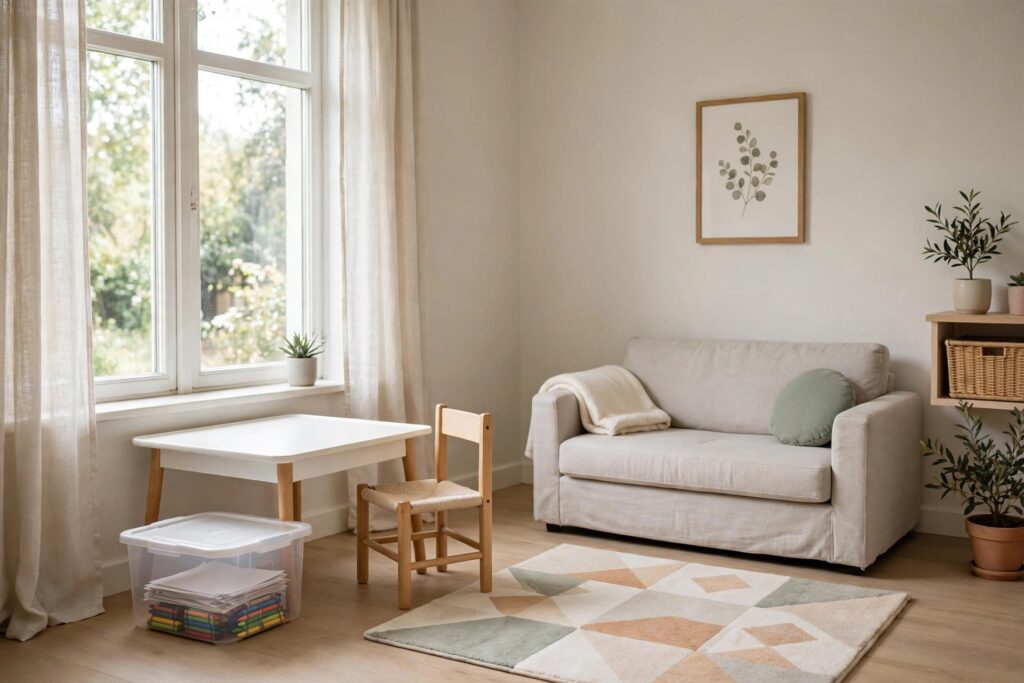
Crayons on the sofa cushions will stain a small room fast. A low table with a wipe-clean top gives art a set place, and it fits beside the play rug.
Choose a table at your toddler’s knee height, with two small chairs or one floor cushion. She can reach her paper without climbing, and you can wipe the top in seconds.
Store crayons and paper in a lidded tub under the table, not on top of it. When the tub closes, the table reads as a side table again, not an art station.
For long-room zoning that pairs with this corner, see these narrow living room ideas for long townhouse rooms. The same zone logic helps a tight lounge.
13. Hide Changing Supplies in a Lidded Basket
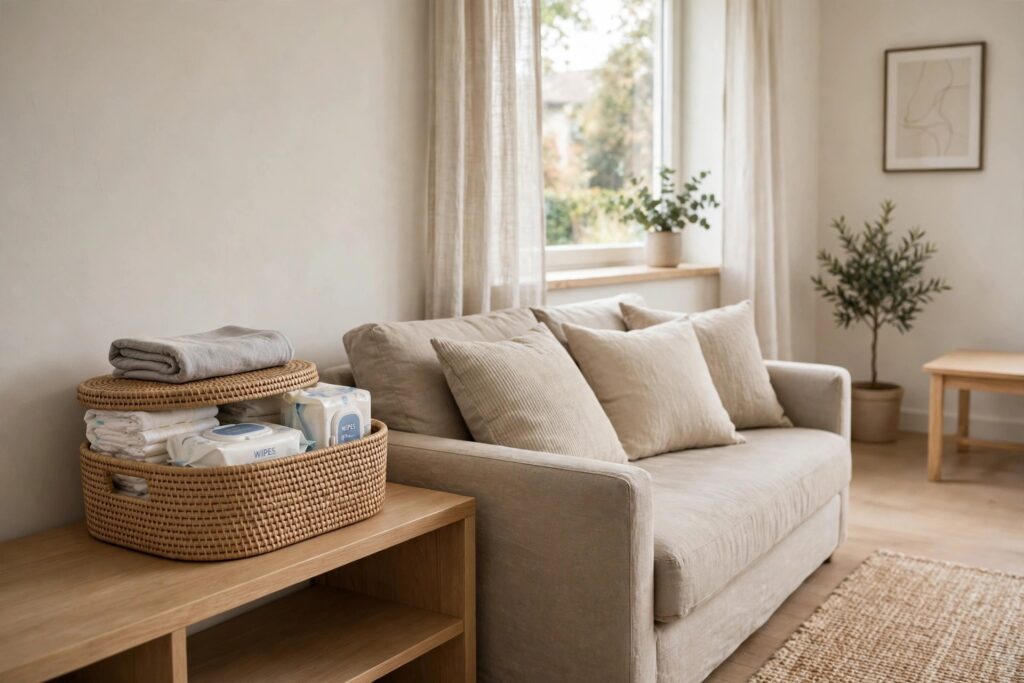
Diapers and wipes often end up in a plastic bag by the sofa, and that bag sets the tone for the room. A lidded basket in the same color as your cushions hides the supplies in plain sight.
Keep the basket on a low shelf near the sofa, with a small changing pad folded on top. You can reach it with one hand, and your toddler cannot scatter it in seconds.
Restock the basket during nap time, not when it runs empty mid-change. A full basket keeps changes calm, and the room never shows a half-open supply bag.
When diapers end, the same basket holds socks, hair ties, or small toys. It stays useful long after the toddler years, which suits a small room well.
14. Tuck Lamps and Cords Behind the Sofa
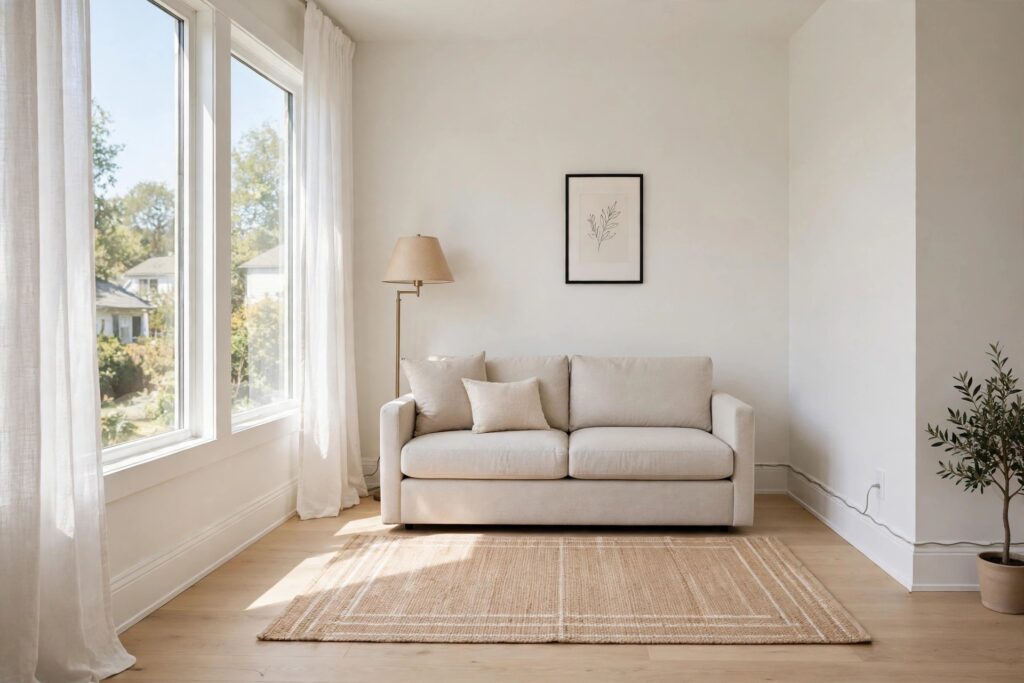
A lamp cord across the floor invites a pull, and a small room leaves little space to step around it. Move the lamp behind the sofa, so the cord runs along the wall, not the rug.
Use a slim table or a wall shelf behind the sofa for the lamp base. The light still falls over your reading chair, but the cord stays out of the play lane.
Bundle spare cord length with a short cord wrap, and push the bundle behind the sofa leg. A short, hidden cord beats a long cord draped across open floor.
Check the plan at your toddler’s eye level, not just your own. Crouch by the rug and look for cords, plugs, and lamp bases she could reach from the floor.
15. Keep One Grown-Up Seat Outside the Play Zone
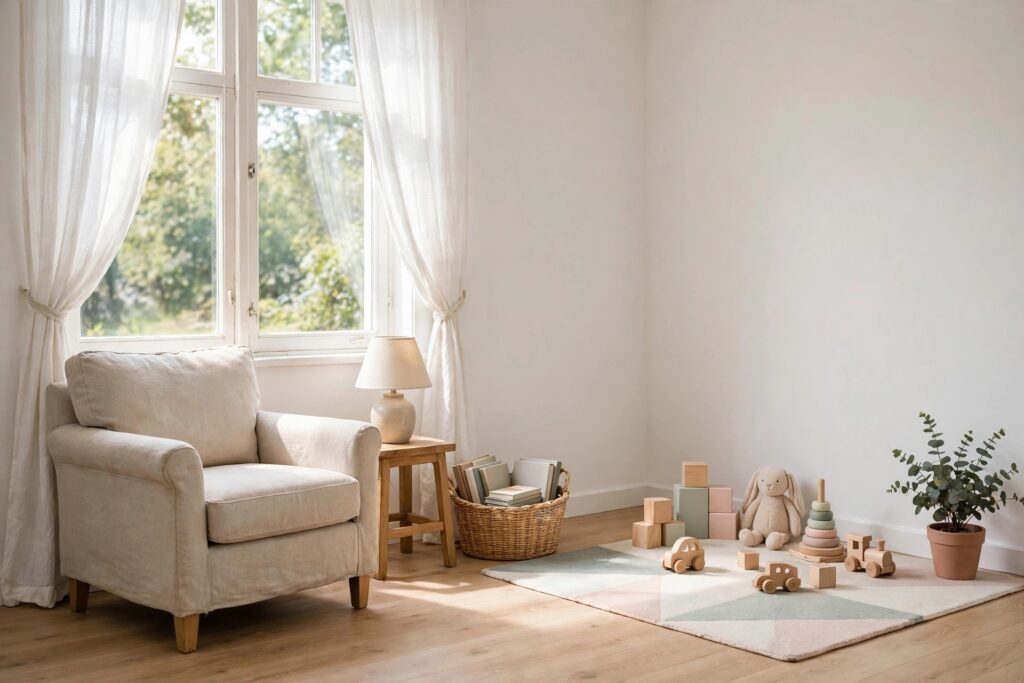
A room that serves only a toddler soon feels like a playroom, not a living room. Keep one adult chair, a small lamp, and a book basket outside the rug zone for evening time.
Place that chair near the window or the far wall, facing the room, not the play corner. You can watch your child and still read in a seat that feels like yours.
For durable fabric ideas that hold up to daily family use, see these small living room ideas for dog owners. The washable, hard-wearing picks suit toddler homes too.
Guard that chair at tidy time. If toys drift onto it, they go back to the rug bins, so the adult seat stays clear for the end of the day.
A small room with a toddler works best when soft edges, low storage, and one clear path do most of the work. Pick the change that fits your worst daily snag, such as the sharp table, the scattered toys, or the cord across the floor.
Try it for a week before you add the next idea. You will soon see which corner earns its space and which basket fills first, and that tells you what to change next.
These small living room ideas for families with toddlers grow with your child, from floor play to book time to art at a low table. Save this to your small living room board, and revisit it when the next stage arrives.
For layout help in a long, tight room, see these narrow living room layout ideas. They pair well with the clear path and corner zones used here.


